Home Blog Page 207

MND Local: San Miguel de Allende news roundup

3
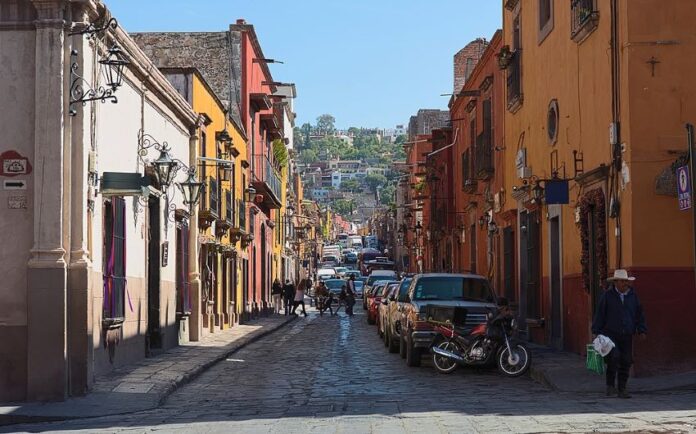
July brought infrastructure expansion, culture and heavy rains to San Miguel de Allende. (Cvmontuy / CC BY-SA 4.0)

The last few weeks have been big for San Miguel de Allende! 

Our city was named Best City in the World by Travel + Leisure again, and news broke that a new airport may be on the horizon. These developments add to a surge of international attention and expansion, from another luxury hotel opening its doors soon to major cultural events like the GIFF film festival starting this month.
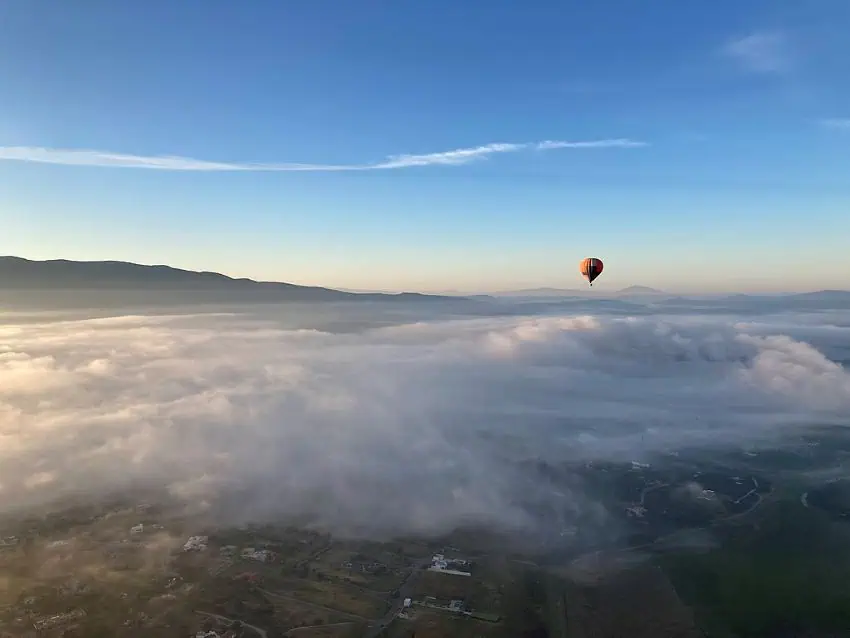
Hot air balloon over san migue de allende
San Miguel is a major tourist destination in Central Mexico. (Melissa Guadalupe Huertas / CC BY-SA 4.0)

But as San Miguel continues to grow, so do the questions. How do we preserve the soul of the city we love? What does all this development mean for locals, long-time residents and visitors?

San Miguel was named the World’s Best City, but what do you think makes it truly special?

San Miguel has earned global praise for its iconic architecture, vibrant arts and rich traditions. But as Ricardo Ferro Baeza, president of the local Congress Tourism Commission, put it, what truly sets it apart is its people, the ones who bring it to life.

So now we want to hear from you. Whether you live here full time, visit often, or have been here once:

Tell us what you love most about San Miguel and how you feel about all the international attention the city’s been getting.

Welcome to your SMA survey

Do you live in San Miguel full-time, part-time, or are you a visitor?

How do you feel about the city’s recent international recognition as the #1 City in the World?

How do you feel about the possibility of a new airport in or near San Miguel?

Your responses may be featured in an upcoming story exploring how the people who know San Miguel best — you, its residents and visitors — feel about the growth and changes shaping the city.

GIFF 2025 brings global cinema to San Miguel

GIFF 2025 poster
The Guanajuato International Film Festival runs through Aug. 4. (GIFF)

The 28th Guanajuato International Film Festival (GIFF) has returned. Until July 31, San Miguel will shine as a key venue, offering not only screenings but also a tribute to legendary artist Verónica Castro, an undeniable symbol of Mexican pop culture. 

In San Miguel, Castro will receive two major honors: the Women in Film and Television Mexico Award and the silver Más Cine award. After years away from the spotlight, her return promises to deeply move audiences who grew up watching her tenovelas, dramas and comedies.

While the full GIFF 2025 lineup includes over 200 films from 61 countries and events across Guanajuato city, Irapuato and San Miguel, the San Miguel portion stands out for its tributes, open-air screenings and cultural venues like Jardín Principal, Teatro Ángela Peralta and the Centro Cultural Ignacio Ramírez “El Nigromante.”

For the full schedule of screenings and events, check out the GIFF 2025 program here

San Miguel de Allende’s tourism sector expands once again

Pueblo Bonito vantage
Other Pueblo Bonito resorts include locations in Mazatlán and Cabo San Lucas. (Pueblo Bonito)

Tourism in San Miguel de Allende continues its upward trajectory, with new hotel developments and infrastructure projects signaling increased international interest. Notably, the highly anticipated Pueblo Bonito Vantage San Miguel de Allende is set to open on Aug. 15, promising to bring a fresh wave of ultra-luxury hospitality to the city.

Located in the tranquil and strategically developed Distrito Corazón area, Pueblo Bonito Vantage will offer 111 suites and 45 private residences designed in elegant neo-colonial style, blending San Miguel’s historic charm with modern comforts. Guests will be able to enjoy five distinct dining venues ranging from gourmet experiences to casual poolside lounges, as well as an expansive spa and wellness center. Pueblo Bonito’s event spaces will also make it an ideal venue for weddings, conferences and other high-profile gatherings.

Alongside Pueblo Bonito’s arrival, Meliá Hotels International has announced plans to expand into San Miguel by 2028, further confirming the city’s appeal as a destination for luxury and international tourism. Meanwhile, discussions about establishing a regional airport near San Miguel could enhance accessibility, potentially drawing more visitors and boosting the local economy.

San Miguel native rescued from Texas floods
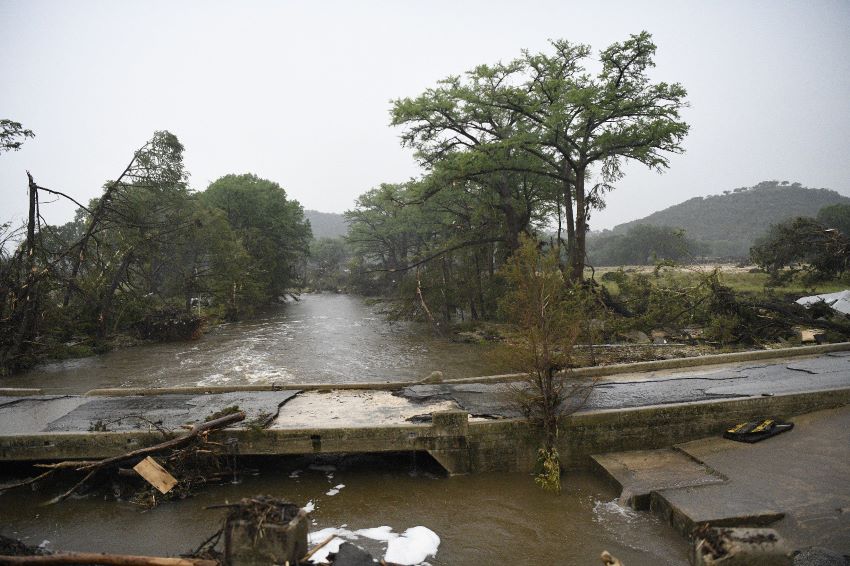
More than 100 people have been confirmed dead or missing in the central Texas floods. (World Central Kitchen)

A 19-year-old from San Miguel de Allende has survived the devastating floods in Texas that tragically claimed the lives of his father, stepmother and younger brother. Leonardo Jr., known as “Leo,” was found alive after being swept away by the Guadalupe River last week. He remains hospitalized as he recovers from the traumatic event.

In response, San Miguel de Allende mayor Mauricio Trejo Pureco confirmed that the municipal government has a dedicated support fund for migrants to support families like the Romeros. “Over a year ago, I said San Miguel had a fund to help our migrant brothers and sisters in case of tragedy or deportation,” Trejo stated. “It’s there to help ease the financial burden during already difficult situations like this one.”

The mayor also recently highlighted San Miguel’s broader migrant support initiative. Since the onset of more aggressive U.S. immigration policies, the city has activated a temporary employment program designed to welcome deported residents back with economic opportunity and community reintegration. “Here in your homeland, you are wanted. Here in your homeland, you are needed,” Trejo said. “Here you will find work… where you can bring all the skills or trades you learned in the United States to teach them here.”

One recent example: A deported Sanmiguelense received municipal funding to start a carpentry business and now plans to run a skills workshop for local youth.

Heavy rains trigger controlled release at Allende dam
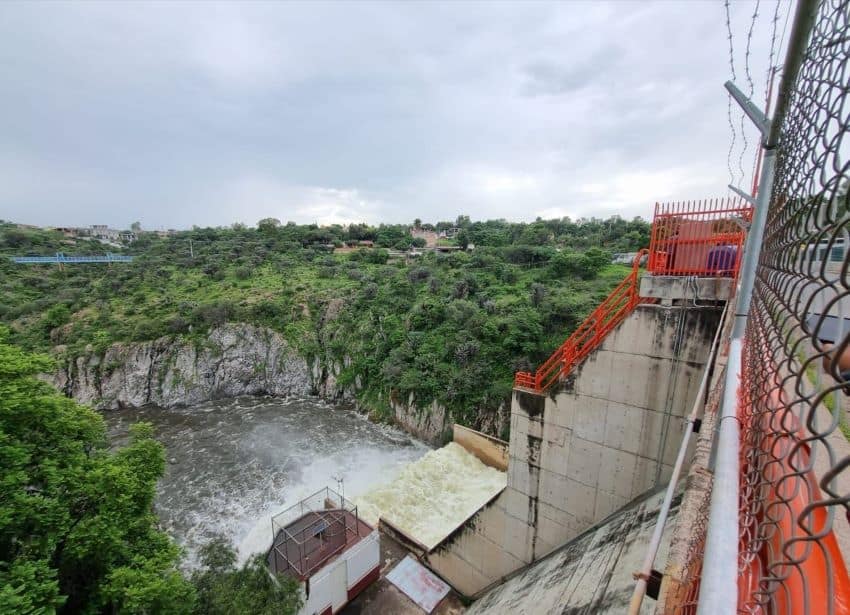
Presa Allende dam in Guanajuato
The Presa Allende dam can hold up to 170 million cubic liters of water. (Gobierno de Guanajuato)

In response to the season’s heavy rains, authorities began a controlled release from the Presa Allende dam on July 17 at 5 p.m., discharging water at a rate of 50 cubic meters per second after the reservoir reached over 93% capacity. This is a stark contrast to the same time last year, when the dam sat at 30%. Officials have issued flood alerts across San Miguel de Allende and nine other municipalities, asking residents to stay alert and avoid rivers. 

The Presa Allende is a vital resource for San Miguel de Allende, supplying much of the city’s water for homes, agriculture and businesses. It also helps regulate river flow to reduce flood risks during heavy rains and supports local ecosystems. Because of its central role, changes in the dam’s water levels have a direct impact on the community’s water security, economy and safety.

Did you know?

San Miguel de Allende is the current setting for “Leche Roja” (Red Milk) a poetic and experimental vampire mini-series based on the story of Eva, a 300-year-old vampire. Structured as a trilogy of short episodes, the first has already been filmed, while the second — set in San Miguel — draws on the city’s cinematic allure, from its cobblestone streets to its dramatic architecture. The final episode is planned for filming in Morelia, Michoacán.

So far, there’s no official word on which platform will distribute “Leche Roja.” The creators plan to debut it on the festival circuit before exploring online release options.

Mexico News Daily
What’s on in Oaxaca in August?

1
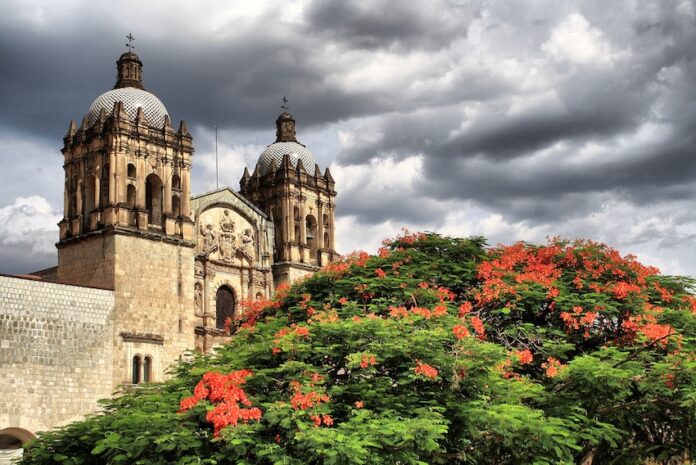
A cathedral in central Oaxaca city
As the Guelaguetza comes to an end, Oaxaca breaks into celebration, with festivals, ceremonies and mezcal galore! (Juan Flores)

After the excitement of Guelaguetza in July, August is a quieter time to visit Oaxaca. There is still some rain, but it is less humid and cooler in the evenings. It is a beautiful, lush time to explore in and around the city, including day trips to learn about mezcal or visit archaeological sites. There is also a wealth of exhibitions and events to experience. 

Espaterra 

Espadín y Tierra 2025, or Espaterra, seeks to preserve, promote and showcase the cultural, social and economic value of espadín mezcal, typically cultivated and produced by Oaxaca’s rural communities. The event is a space for meeting, memory and collective reflection of the 17 mezcal-producing regions of Oaxaca. Espaterra’s closing event, a colloquium on mezcal with researchers and palenqueros, including a screening of the documentary “45 grados: La industrialización del mezcal artensanal,” takes place on Aug. 1.

When: Aug. 1 at 10 a.m.
Where: UNAM-Oaxaca extension, Melchor Ocampo 102, Centro, Oaxaca de Juárez
Cost: Free entry but attendees must register here 

Dia de Plaza del Mezcal


View this post on Instagram


A post shared by @orugaoaxaca

This is the first edition of this moving event at Oruga, a photo gallery and mezcalería. “We are proud and happy to open the doors of this space to friends of the mezcal industry to share their knowledge, experiences and, of course, mezcal,” Oruga says. The event will include traditional mezcals from Indigenous communities.

When: Aug. 1 and 2
Where: Oruga, Av. José María Morelos 1207, Centro, Oaxaca de Juárez
Cost: Free

Last days of the Feria Artesanal de Arrazola

A traditional Oaxacan festival
(Santa Cruz Xoxocotlán)

San Antonio Arrazola is located 10 kilometers southwest of Oaxaca city, off the highway to Zaachila. Known as Arrazola, the community is famous for its beautiful alebrijes, figures made from different types of paper or carved and painted wood in bright, vibrant colors, representing fantastical jaguars, mermaids and nahuales. Although alebrijes are made using various techniques today, this community stands out for its use of wood carving, a skill passed down from generation to generation.

When: Until Aug. 3, 10 a.m. to 8 p.m.
Where: Andador Turístico de Arrazola
Cost: Free

San Mateo Mushroom Festival

Each year, the municipality of San Mateo Río Hondo holds a festival to celebrate mushrooms. At over 2,300 meters above sea level in Oaxaca’s Sierra Sur, Río Hondo is a fertile land of beautiful, misty landscapes. During the rainy season, mushrooms of various sizes, shapes and colors flourish, marveling locals and foreigners alike, who are drawn from all over the country and the world to learn about, taste and benefit from the properties of these fungi. Magic mushrooms are also in season. Over the three days there will be workshops, foraging excursions and tasting events.

When: Aug. 1 through 3
Where: San Mateo Río Hondo
Cost: Details available here

Feria Artesanal del Barro Negro in San Bartolo

San Bartolo Coyotepec is celebrating its Guelaguetza until Aug. 7. 30 minutes from Oaxaca city, just past the airport, San Bartolo is known for its tradition of black pottery. In the 1960s, a local artisan named Rosa Real Mateo de Nieto made a discovery that changed the local tradition: firing pieces at lower temperatures and then burnishing them with quartz before they were fully dry gave the fired clay a shiny, jet-black finish. More than half of San Bartolo’s population participates in black pottery production, and their annual fair celebrates this staple of the town’s culture.

When: Aug. 1 through 7, 10 a.m. – 7 p.m.
Where: Mercado de Barro Negro “Plaza Artesanal,” Benito Juárez 37, San Bartolo Coyotepec
Cost: Free

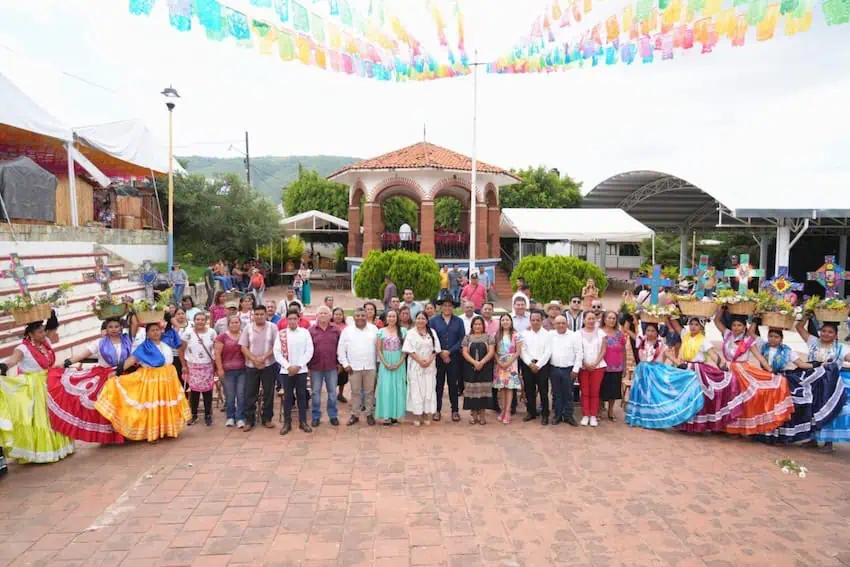
Feast of Our Lady of the Angels

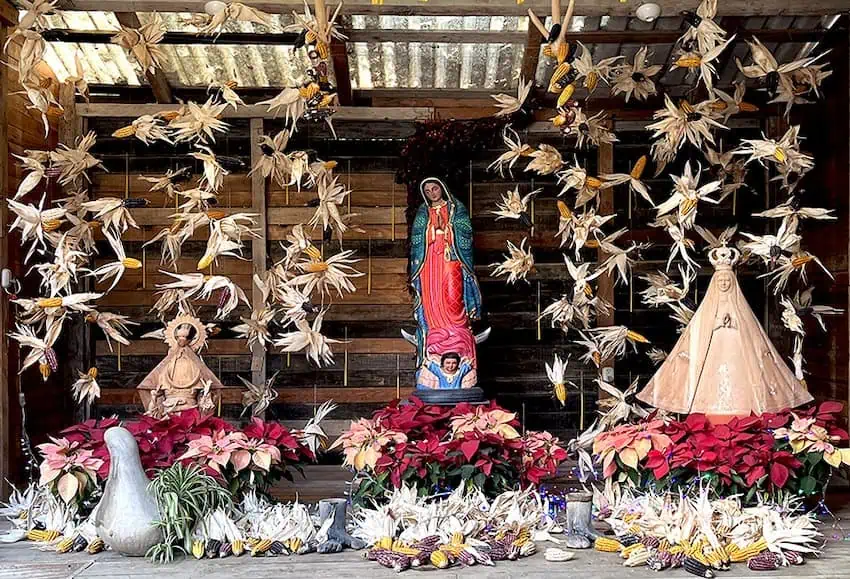
A traditional Mexican altar
(Casa Colibri)

Our Lady of the Angels is celebrated at the Ex-Convento de los Siete Principes with religious activities, calendas, music and fireworks. The church and the attached former convent were built in the 18th century and currently house the Oaxaca House of Culture (CCO), a cultural center. While the feast is celebrated throughout the Catholic world, it holds special significance for Franciscans and their devotion to Our Lady of the Angels. In Mexico, various churches and chapels are dedicated to this apparition of Mary, reflecting the spread of Franciscan influence and devotion. 

When: Aug. 15 at 8 a.m.
Where: González Ortega 415, Centro, Oaxaca de Juárez
Cost: Free 

José y el Toro plays Foro la Locomotora


View this post on Instagram


A post shared by José y el Toro (@josetorotoro)

Venezuelan singer-songwriter José y el Toro has established himself as one of the new exponents of bolero in Latin America, revitalizing the genre with a unique fusion of classic and modern elements. Through his narrative style and ability to capture the essence of love and nostalgia, José has resonated deeply with audiences on social media. Songs like “Reloj Ingrato,” “Cuando Cuando” and “Nunca Fuimos” have demonstrated his talent for connecting with people’s emotions through his compositions.

When: August 9 at 8 p.m.
Where: Foro la Locomotora, Av. José María Morelos 1309, Centro, Oaxaca de Juárez
Cost: 300 pesos

Day of the Taxi Driver

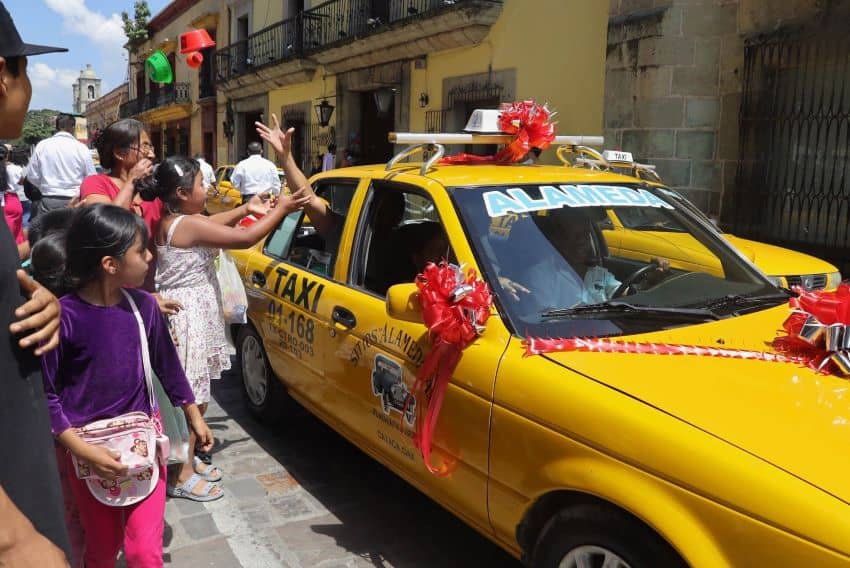
Pedestrians wave to decorated taxi in Oaxaca, cab driver throws gifts from window
(Carolina Jiménez/Cuartoscuro)

Taxi drivers decorate their cars with flowers and ribbons to parade through the city on Oaxaca’s Día del Taxista. It’s a loud celebration, with bands and fireworks starting early in the morning. 

The day is a chance for taxi drivers to celebrate their profession and for the community to acknowledge their role in transportation. Those in town should be aware that traffic will be affected.

When: Aug. 12, all day
Where: Across Oaxaca city
Cost: None

The Mazatecs through 20th-century German eyes

At the beginning of the 20th century, German anthropologist Wilhelm Bauer traveled to Oaxaca to collect artifacts and information about the Mazatec people. His work now forms the Mazatec collection of the Ethnological Museum of Berlin, which collaborated with the Juan de Córdova research library to create “Presencia mazateca en Berlín: Tras las huellas de Wilhelm Bauer-Thoma, 1903-1908.” This exhibition presents information and records of these artifacts, as well as historical photographs and documents that will allow present-day Mazatec communities to learn about these records of their history through a traveling exhibition.

Location: Biblioteca de Investigación Juan de Córdova, Av. de la Independencia 904, Centro Oaxaca de Juárez
Date: Through Aug. 15
Cost: Free

Feast of the Assumption celebrations

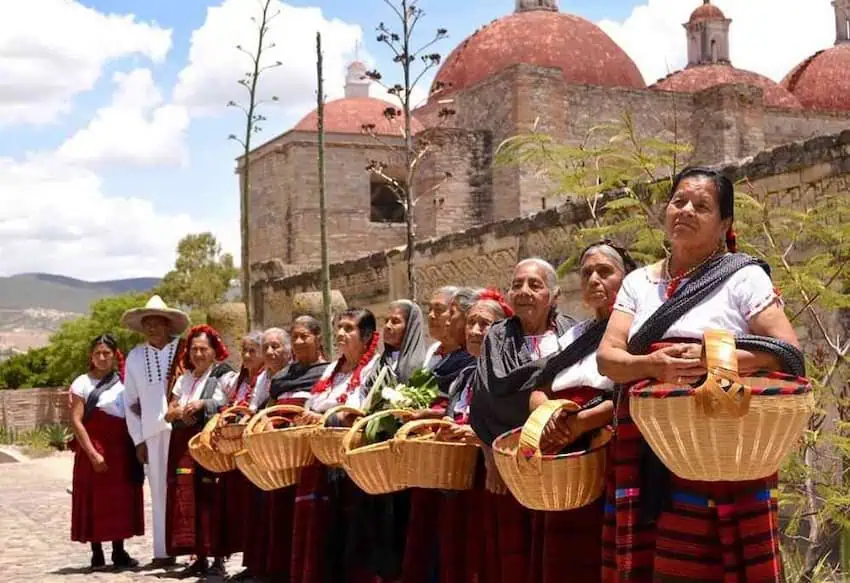
A group of elderly women stand in a line, holding baskets of food.
(Mexico Insider)

The Feast of the Assumption is celebrated at the Catedral de Oaxaca in the heart of the city. Also known as the Church of the Assumption, construction on the church began in 1535, and it was consecrated in 1733. As the Cathedral’s name indicates, the Cathedral is dedicated to Our Lady of the Assumption. Assumption Day commemorates the belief that when Mary, mother of Jesus, died, with her body taken into heaven to be reunited with her soul. The day celebrating the feast of Assumption includes religious activities, calendas, music and fireworks.

When: Aug. 15 at 7:30 p.m.
Where: Cathedral of the Assumption, Av. de la Independencia 700, Centro, Oaxaca de Juárez

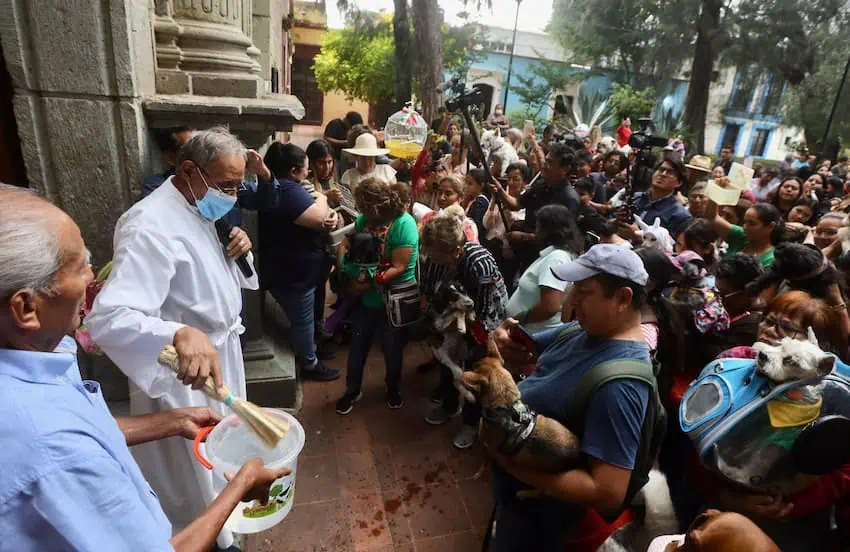
Blessing of the animals at Templo de La Merced

A crowd gathering at a cathedral to offer their pets for blessing
(Carolina Jiménez Mariscal/Cuartoscuro)

During the feast of San Ramón, people take their dressed-up pets to be blessed in the church of La Merced. It’s not just cats and dogs: there are birds, lizards, rabbits and sheep, among other critters. Many are dressed to impress, either in cute outfits or something more grand. To capture this fun tradition, I arrive early; If you get there around 3:30 p.m., you’ll be able to take pictures of the animals before the blessing begins. The blessing is a tradition rooted in honoring the service animals provide and seeking their good health and fertility.

When: Aug. 31 at 4 p.m.
Where: Templo de La Merced, Av. de la Independencia 1300, Centro, Oaxaca de Juárez
Cost: Free

Anna Bruce is an award-winning British photojournalist based in Oaxaca, Mexico. Just some of the media outlets she has worked with include Vice, The Financial Times, Time Out, Huffington Post, The Times of London, the BBC and Sony TV. Find out more about her work at her website or visit her on social media on Instagram or on Facebook.

What’s on in the Riviera Maya in August?

0
There's plenty to do in the Riviera Maya and Yucatán this month, so make sure to check out one of these fantastic events! (Cancún Mío)

This August on the Yucatán Peninsula, there’s swim races, a honey celebration, pirate scavenger hunts and the chance to get trapped in a bubble. And that’s just to start!

Cancún is hosting Mexico’s second largest Guelaguetza festival while Isla Mujeres is having a monthlong birthday party. So make the most of the last days of summer, and get out and about for these events in the Riviera Maya and Yucatán!

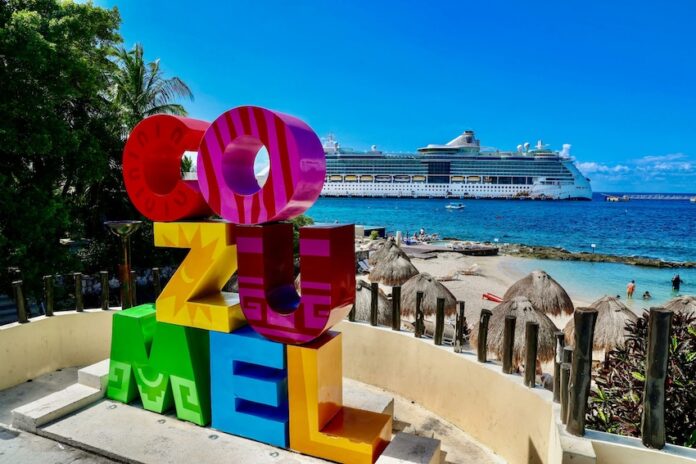
Oceanman Cozumel

Promotional digital poster for the Oceanman Cozumel event in Cozumel, Mexico taking place August 1-3, 2025. An aerial photograph of a part of the Cozumel coastline on which is superimposed details about the event and its associated events. The photograph shows the ocean on one side and a beach club-type swimming pool on the other.
(Oceanman)

Come cheer me on — yes, that’s right, I’m entered in Oceanman! This 10-kilometer open-swimming race is a fun activity that fills up fast with swimmers arriving on Cozumel from all over the world. Offering great beaches, awesome food at the beach club and, of course, the exciting atmosphere of an Oceanman event. All with gorgeous Caribbean views!

Dates: Aug. 1–3
Location: Playa Palancar Beach Club, Cozumel
Cost: free to attend, entries now closed 

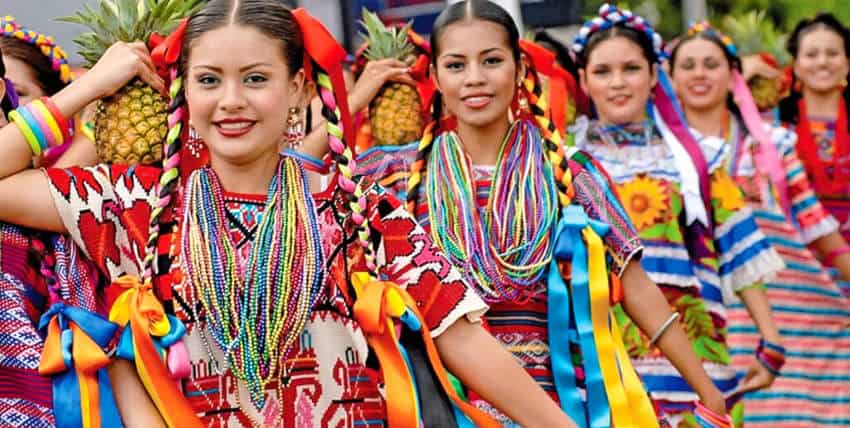
Oaxaca festival in Cancún

A group of smiling young Mexican women, adorned in vibrant traditional attire of indigenous Oaxaca, participate in a cultural celebration. In the foreground, two women with intricately braided hair decorated with colorful ribbons wear richly embroidered blouses and necklaces made of countless strands of multicolored beads. Some of the women hold a pineapple on their right shoulder. Other women in similar festive clothing are blurred in the background, suggesting a parade or dance.
(Club Solaris)

I would be heading to Cancún for this festival if I weren’t going to be in Cozumel swimming in Oceanman. The Guelaguetza, one of Mexico’s most iconic cultural celebrations, will be celebrated in Cancún in August. 

With its vibrant offerings of Oaxacan folklore, music, dance and cuisine, this is an opportunity to feel like you’re visiting Oaxaca, with over 80 artists. Pooches are welcome too. In fact, they encourage you to dress your dog in honor of Oaxaca’s famous Guelaguetza dancing dog, Mazapán! Fun for the whole family. 

Dates: August 1–3
Location: Parque de las Palapas. See here for more details about events.
Cost: Free

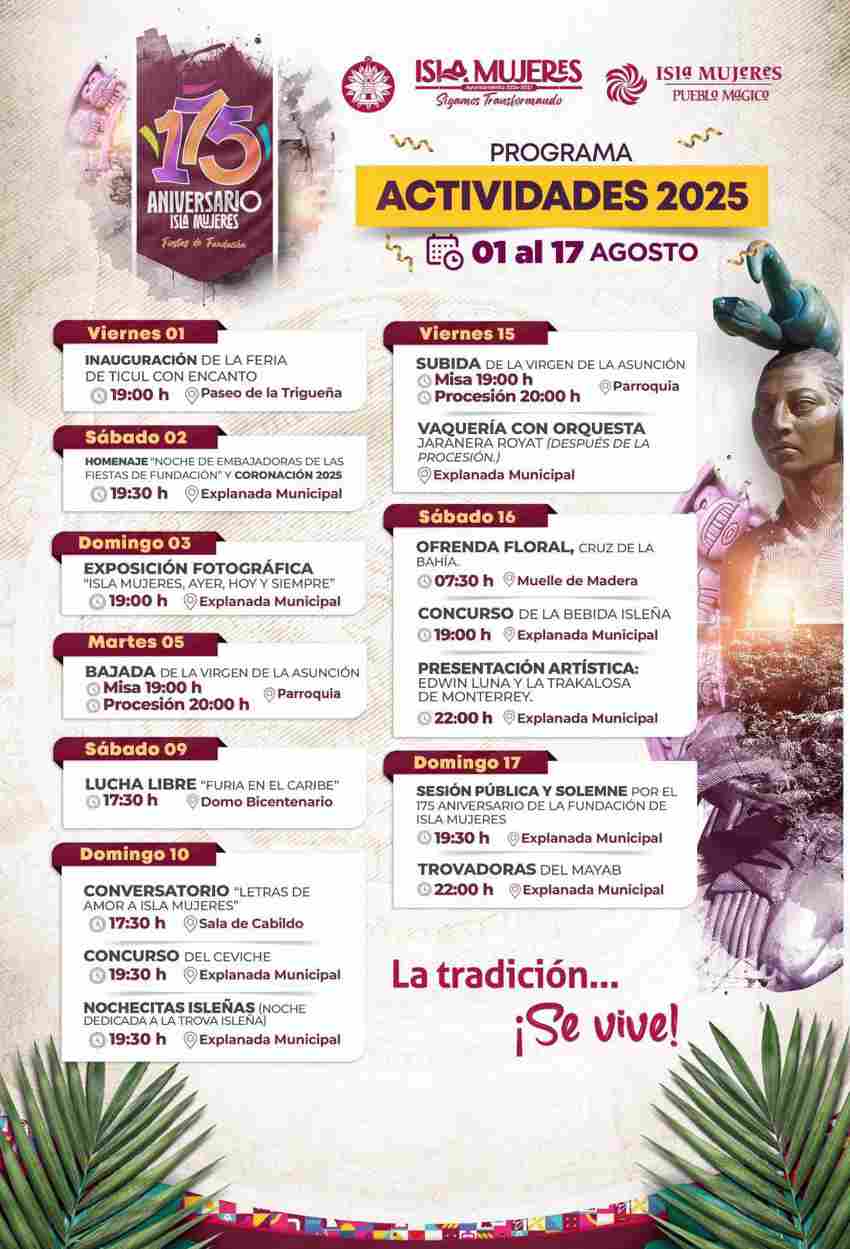
Founding of Isla Mujeres celebrations

A detailed promotional poster in Spanish for the 175th anniversary of the founding of Isla Mujeres, on the Riviera Maya, Mexico. The poster details events celebration Isla Mujeres' founding that run from August 1st to August 17th. The poster is visually rich, with a decorative header featuring the anniversary logo and faded images of ancient Mayas and island scenery.
(Isla Mujeres City Council)

Feliz Cumpleaños Isla Mujeres! Celebrate its 175th birthday this August with a monthlong lineup of activities — everything from art, dancing and lucha libre to gastronomy and concerts. And, naturally, plenty of processions. There’s something going on all the time during the first two weeks of August.

But August 17 is the focal point, when Isla Mujeres officially honors its birthday with ceremonies and concerts. There is also the big Descent of the Virgin procession on August 5. 

Dates: August 1–17
Location: various places on Isla Mujeres. See the full schedule here
Cost: Free

National Bee Day in Coba

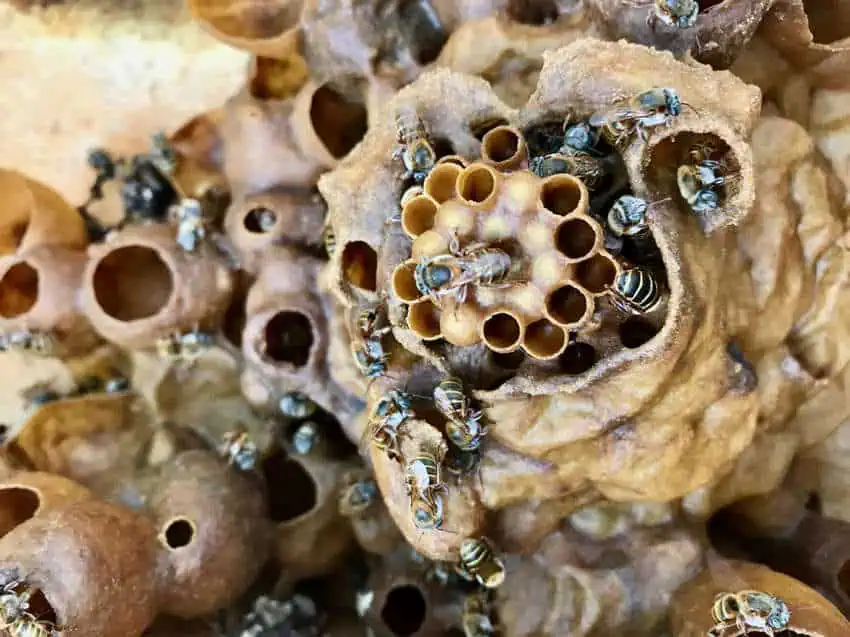
A close-up, high-angle shot of Melipona bees on their waxy, earthen-toned nest. Several bees are visible, some gathered around the distinct, smaller hexagonal cells of the comb, while others are scattered across the textured, organic surface of the hive, which features various openings and chamber-like structures.
(Bel Woodhouse)

Explore a Maya relationship dating back thousands of years — between man and the Melipona, a tiny stingless bee found in the quiet jungle village of Cobá. Taking place in Coba’s cultural center, this free event will teach you about the sacred Mayan practice of meliponiculture and its delicious offerings.

Try local honey-based recipes, and attend a cooking contest highlighting dishes, drinks and desserts sweetened with it. Kids, there’s also a drawing competition to express the ecological importance of bees. 

Dates: Aug. 9, 2 p.m.
Location: Casa de la Cultura, Cobá, outside Tulum
Cost: Free

Pirate Scavenger Hunt

This image is a promotional graphic for a pirate-themed scavenger hunt in Playa del Carmen, Mexico. The graphic features the event title in a bold, distressed font, reminiscent of a pirate flag. To the right of the text, a vintage brass compass is superimposed on a cobblestone street in Playa del Carmen. In the background, out of focus, colorful papel picado banners are strung across the street image.
(Eventbrite)

Grab friends and family and explore Playa del Carmen on a scavenger hunt. Fun for all ages, this event allows you to take as long as you want and see sites from ancient Mayan ruins to colorful local markets. Included are iconic local spots such as the Portal Maya, Parque Leona Vicario and the Palacio Municipal Bell Tower. Don’t forget your camera, there are points for the best photo, and it’s a great way to see Playa. 

Dates: Multiple; check available dates and buy tickets here
Location: Playa del Carmen
Cost: 280 pesos or US $14.99 

Cancún’s Beach Festival

A woman in a sun hat and red dress stands in the clear, turquoise water of a Mexican beach, arms outstretched looking out at the ocean's vanishing skyline
(Bel Woodhouse)

It’s fun in the sun as each August, Cancún celebrates its beautiful beaches with La Fiesta de la Playa. I can’t blame them, sugary-white-sand beaches are worth celebrating. 

You’ll find beach parties going on all along the hotel zone with live music, great food and lots of cocktail options available. Most hotels sell a day pass with all-inclusive food and drink so that you can party the day away. Just choose which place takes your fancy and grab your bikini!

Dates: August 11–13
Location: Various hotels and beach clubs in Cancun’s hotel zone
Cost: Free entertainment, optional day pass options to all-inclusives at varying costs

Tulum Lobster Festival 2025

A promotional poster for the "Festival de la Langosta Punta Allen 2025" (Lobster Festival Punta Allen 2025) in Tulum and in Punta Allen, Mexico. The poster features a large graphic of a red lobster atop a wave-like design with the festival title. Palm trees flank the lobster, and a sunny blue sky with clouds forms the background.
(Office of Economic Development of Tulum)

Seafood lovers, grab your bibs. It’s time to enjoy the flavor of local langosta at this year’s lobster festival. Open to all, it’s a celebration of the Caribbean’s spiny lobster, presented every way possible.

From rustic wood-fire cooking to elegant professional presentations, there will be cooking demonstrations, competitions and much more starting in the afternoons, showcasing the region’s culinary and cultural identity.

Pro tip: If you attend the Punta Allen events, be aware that this small, unspoiled fishing village has no banks or ATMs. Bring sufficient cash since most places in Punta Allen don’t accept electronic payments.

Dates: Aug. 15–17
Location: At Tulum’s Municipal Palace esplanade on Aug. 15, and in Punta Allen Aug. 16–17
Cost: Free to enter 

Last Dance of Summer

(Bahia del Rey/Facebook)

I’ve lived in this region for eight years, and dancing the night away is a perfect end to summer. So, head to Isla Mujeres’ Bahía del Rey beach club and make memories dancing to live acts — including local Afro-House electronica artist made good Katia Crown, now based in Miami — all in front of gorgeous ocean views!

This is a time of fewer tourists, warm waters and clear nights under the stars — the perfect time to enjoy with hot tunes and cold drinks. 

Dates: Aug. 16, 3 pm–midnight
Location: Bahia del Rey beach club, Avenida Rueda Medina, Bahía, Isla Mujeres
Cost: 432 pesos

Frida Kahlo Experience

A sepia-toned image of Frida Kahlo with her hair pulled back is overlaid with a white design graphic of her head made up of the words "VIVA LA VIDA." To the right it says in white letters: "FRIDA KAHLO By Woman Experiences." Similar lettering also saying Viva la Vida appears under the collarbone of the Kahlo image.
(Museo Frida Kahlo)

Open to all ages, I’ve got this one earmarked next time I’m in Tulum. Not just because I love Frida Kahlo, but because it’s an immersive guided tour that requires you to “open your eyes, ears, and nose,” which I am curious about. What is there to smell? 

You just can’t beat a good sensory experience in my book! 

Dates: Aug. 20, 3 p.m.
Location: Frida Kahlo Museum, Crucero de las Ruinas de Tulum, Tulum
Cost: Foreign adults: 400 pesos; Mexican adults: 300 pesos; Q.Roo residents with I.D.: 200 pesos

Get Lost in Art…Literally!

A woman in a red top and patterned skirt kneels on a rug, pretending to be trapped inside a large, transparent bubble, while surrounded by 3D optical illusion art depicting classic paintings with figures looking out from frames, and other bubbles floating around them.
(Bel Woodhouse)

I adore art and am officially putting this on the “fun things to do in Playa del Carmen” list. The 3D Museum of Wonders is fun no matter your age. Your guide will take photos, so there’ll be fun keepsakes like this to keep for free.

In these illusions, I got trapped in a bubble, played ballerina on top of a giant cake, stood on a rock pinnacle in the Grand Canyon, broke into a bank vault, drank wine poured by a god and much more! 

Dates: Any day between 8 a.m.—10 p.m.
Location: 10 Avenida between 8th and 10th street, Playa del Carmen.
Cost: Adults 700 pesos, kids 600 pesos

Bel Woodhouse, Mexico Correspondent for International Living, is an experienced writer, author, photographer and videographer with more than 500 articles published both in print and across digital platforms. Having lived in the Mexican Caribbean for over seven years now, she’s in love with Mexico and has no plans to go anywhere anytime soon.

Mexico to open 18 additional hospitals this year: Tuesday’s mañanera recapped

1
Sheinbaum July 29 2025
The president said on Tuesday that the investment in the 31 hospitals that will have opened by the end of 2025 is around 50 billion pesos, while the outlay for the 20 to open in 2026 and 2027 is about 40 billion pesos. (Daniel Augusto/Cuartoscuro)

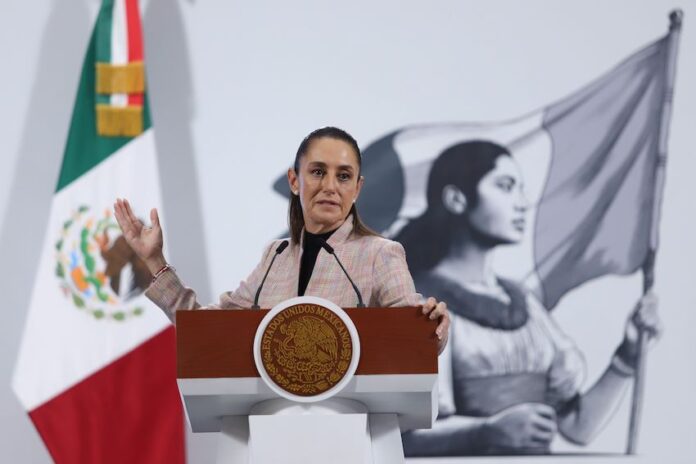
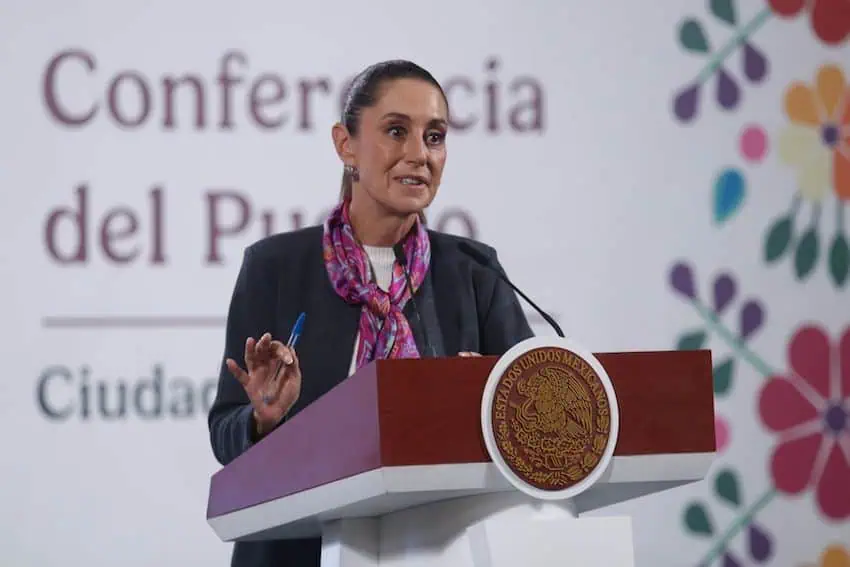
The opening of new public hospitals and workforce productivity were among the issues President Claudia Sheinbaum spoke about at her Tuesday morning press conference.

She also responded to a question about the new public transport cable car line set to be built in southern Mexico City.

Here is a recap of the president’s July 29 mañanera.

A 92-billion-peso investment in health care facilities

At the start of her press conference, Sheinbaum announced that Deputy Health Minister Eduardo Clark would speak about the new public hospitals that have opened since she took office last October, as well as those that will open before the end of the year.

“We’re talking about 31 new hospitals in the country,” she said, adding that the construction of “the majority of them” began during the 2018-24 government of former president Andrés Manuel López Obrador.

“They are 31 new, very important hospitals,” Sheinbaum said, noting that they are, or will be, operated by one of the Mexican Social Security Institute (IMSS), the Institute for Social Security and Services for State Workers (ISSSTE) or the IMSS Bienestar healthcare agency.

Clark noted that the government has already inaugurated 13 new public hospitals and nine public health care centers, or clinics, since it took office last October.

He said that an additional 18 hospitals and three clinics will open before the end of the year.

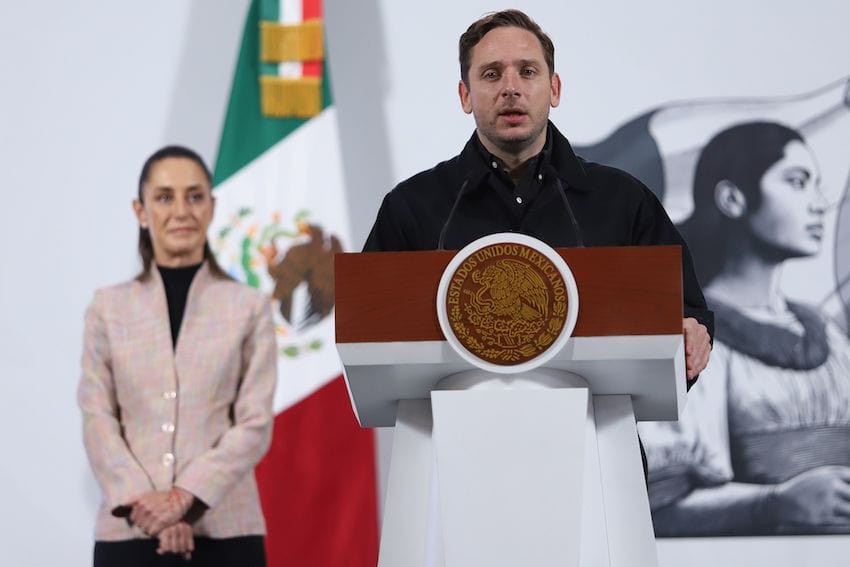
Eduardo Clark
Deputy Health Minister Eduardo Clark noted that the Mexican government has already inaugurated 13 new public hospitals and nine public health care centers, or clinics, since it took office last October. (Daniel Augusto/Cuartoscuro)

Among the 13 hospitals that have opened since October are ones in Ciudad Juárez, Tijuana, Ensenada and Orizaba.

Among the 18 slated to open before the end of 2025 are ones in Mexico City, Puebla, Tuxtla Gutiérrez, Ciudad del Carmen, Guanajuato city, Hermosillo, Acapulco and Mérida.

Clark noted that an additional 20 public hospitals are scheduled to open in 2026 and 2027.

Those 20 hospitals — some of which are already under construction — will be located in cities including Mexico City, Los Cabos, Oaxaca city, Saltillo, Culiacán and Chetumal.

“As you can see,” Clark said, “it’s an incredibly ambitious infrastructure plan.”

The deputy health minister also noted that the government is upgrading 256 operating rooms at public hospitals.

Sheinbaum said that the government is also hiring “all the specialist doctors and nurses” needed to perform surgeries in the upgraded operating rooms.

She said that the investment in the 31 hospitals that will have opened by the end of 2025 is around 50 billion pesos, while the outlay for the 20 to open in 2026 and 2027 is about 40 billion pesos.

The upgrades to the operating rooms will cost around 2.5 billion pesos, Sheinbaum said.

Combined, the investment the president referred to adds up to 92.5 billion pesos (US $4.9 billion).

Sheinbaum defends Mexican workers after reporter highlights Mexico has second second-lowest productivity in OECD

A reporter noted that Mexico ranked second to last for productivity among the 38 member countries of the Organization for Economic Cooperation and Development (OECD).

A bar graph published in the OECD Compendium of Productivity Indicators 2025 shows that Mexico ranks second last for “labor productivity in 2023,” behind only Colombia.

The 38 member countries were ranked according to “GDP per hour worked in current prices and PPPs,” or purchasing power parities.

In its compendium, the OECD said that “labor productivity is the most frequently computed productivity indicator.”

“It represents the volume of output produced per unit of labor input. The ratio between output and labor input depends to a large extent on the presence of other inputs, such as physical capital (e.g. buildings, machinery and transport vehicles) and intangible assets used in production (e.g. intellectual property products), technical efficiency and organizational change,” the organization said.

Asked whether she agreed with the OECD’s assessment that Mexico is the second least productive country in the organization, Sheinbaum responded that it “depends on how productivity is measured.”

She went on to say that she has recently spoken to the CEOs of automotive companies about the United States’ auto tariffs, and told reporters that one of those people told her that Mexico has “the most productive plants” in the world and that there are no workers like Mexican workers.

“We would have to see how, in particular, [productivity] is being measured, but Mexican workers are first-rate,” Sheinbaum said.

World’s longest cable car line to be built in CDMX 

A reporter asked the president whether she could provide additional details about the Mexico City government’s project to connect the southern boroughs of Tlalpan and Coyoacán with a new Cablebús line.

Sheinbaum and Mexico City Mayor Clara Brugada presented the Cablebús Line 4 project on Sunday. It will run 11.4 kilometers from the Pedregal de San Nicolás neighborhood in Tlalpan to the National Autonomous University (UNAM) in Coyoacán. Once completed, it will be the largest urban passenger cable car line in the world.

The president — a former mayor of Tlalpan who highlighted on Tuesday morning that she lived in the borough for 30 years — said that the new Cablebús line will significantly reduce travel times for Tlalpan residents.

“This area where the Cablebús will set off [in Tlalpan] is right at the foot of the Xitle [volcano],” Sheinbaum said, highlighting that residents of that part of Mexico City travel toward the center of the capital on just one highway — la carretera Picacho-Ajusco.

Once the new Cablebús line is built, people will be able to travel to the Universidad Metro station at UNAM from Pedregal de San Nicolás in 40 minutes instead of 2.5 hours, the president said.

The construction of the new cable car line will alleviate the stress those people experience due to being stuck in traffic or traveling on public buses, Sheinbaum said.

She noted that urban cable car projects were built in the Bolivian capital of La Paz and in the Colombian cities of Bogotá and Medellin before the construction of the first Cablebús line in Mexico City

“That’s where we got the idea from and we called it Cablebús,” said Sheinbaum, mayor of the capital when the first two lines of the Cablebús system opened.

She said that construction of the Tlalpan-Coyoacán line will take at least one and a half years and cost 4.5 billion pesos (US $240 million). She said that the Mexico City government will carry out a tendering process for the construction of the project, but the federal government will provide the required resources.

“There are two companies in the world that build cable cars of this type. An Austrian company … called Doppelmayr and an Italian company called Leitner,” Sheinbaum said.

By Mexico News Daily chief staff writer Peter Davies (peter.davies@mexiconewsdaily.com)

42 Brazilian companies eye major investments in Mexico amid US trade concerns

2
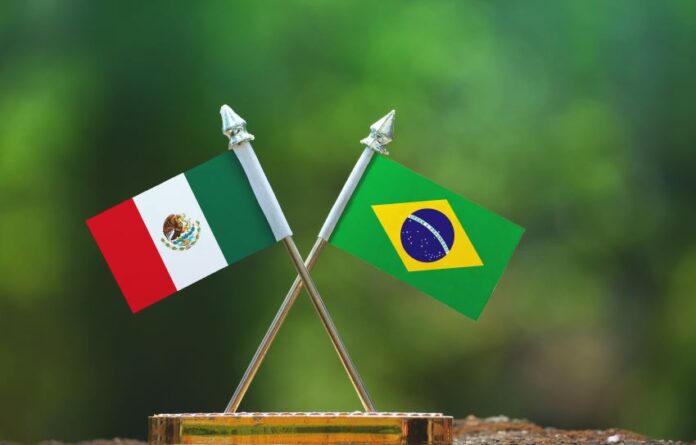
Small Brazilian and Mexican flags
A delegation led by Brazilian Vice President Geraldo Alckmin will visit Mexico on Aug. 27 and 28 to discuss amplifying the Mexico-Brazil trade agreement. (Shutterstock)

Facing uncertainty in their country’s trade relationship with the United States, a growing number of Brazilian companies are taking a serious look at investing in Mexico, the president of the Brazil-Mexico Chamber (Bramexcam), Liborio Rauber, said on Thursday. 

According to Rauber, more than three dozen Brazilian companies stand ready to invest in the development of factories, production lines, data centers and distribution centers in major Mexican cities like Monterrey, Saltillo, Querétaro, Tijuana, Guadalajara, Ciudad Juárez and Mexico City.

Mexico and Brazil eye expanded trade deal ahead of August meeting

“Today, at the Chamber, we are presenting 42 projects from Brazil from companies that want to open markets or make investments here in Mexico,” Rauber said. 

Currently, 48 Mexican companies are established in Brazil, though that number pales in comparison to the 716 Brazilian companies operating in Mexico. Mexican brands with operations in Brazil include the automotive Numak, the food company Bimbo and the telecommunications firm América Móvil. Rauber pointed out that roughly 19.7% of internet use by Brazilians goes through Claro, a company owned by América Móvil.

Also of note, the Mexican convenience store chain Oxxo has opened 500 stores across Brazil in just two years, though there are apparently a few glitches. “You know the difference between Oxxo in Brazil and Oxxo in Mexico?” joked Rauber. “There [in Mexico], the second cash register actually works and they have change.”

Rauber’s announcement of the 42 interested companies followed a call between Mexico’s President Claudia Sheinbaum and her Brazilian counterpart Luiz Inácio Lula da Silva (Lula) on Wednesday. The two leaders agreed that a delegation led by Brazilian Vice President Geraldo Alckmin would visit Mexico on Aug. 27 and 28. 

“We followed up on the agreement to welcome in Mexico authorities and business people from Brazil, with the aim of deepening our collaboration on various issues,” Sheinbaum wrote on social media.

Meanwhile, Lula said on social media that the pair had “discussed the expansion of the Brazil-Mexico trade agreement, highlighting the potential of the pharmaceutical, agricultural, ethanol, biodiesel, aerospace, innovation and education sectors as strategic areas in our bilateral relationship.”

Bramexcam represents companies across a wide range of sectors, including the automotive, aerospace, pharmaceutical, chemical and agribusiness industries.  

According to the business chamber, some of the principal exports between the two countries include:

Products exported from Brazil to Mexico:

  • Soybeans – US $547 million
  • Automobiles – $477 million
  • Steel – $453 million
  • Engines – $413 million
  • Lumber – $171 million

 Products exported from Mexico to Brazil: 

  • Auto parts – $628 million
  • Automobiles – $403 million
  • Chemicals – $233 million
  • Electronics – $192 million
  • Computers – $188 million

With reports from Forbes

Forget Gotham City: The next Batman lives in ancient Tenochtitlán

2
Aztec Batman
In the new 89-minute animated film, premiering in Mexican theaters on Sept. 18 and set to be released digitally on Sept. 19, Batman’s origin is completely altered and the setting of Gotham City is nowhere to be found. (IMDb)

Batman fans will get to see their hero in a completely new setting later this year — pre-Columbian Mexico.

In an audacious and innovative twist, the second international reimagining of the Dark Knight — “Aztec Batman: Clash of Empires” — is set in the 16th century among pyramids, ancient codices and Indigenous ceremonial rituals.

Unlike the 2018 Warner Bros. production of “Batman Ninja” which saw the modern-day Caped Crusader time-travel to feudal Japan, “Aztec Batman” is a period piece in which colonialism is intertwined with the Dark Knight’s vigilantism.

In the new 89-minute animated film, premiering in Mexican theaters on Sept. 18 and set to be released digitally on Sept. 19, Batman’s origin is completely altered and the setting of Gotham City is nowhere to be found.

Instead, the story is centered on a young Aztec boy named Yohualli Coatl, whose father, village leader Toltecatzin, is murdered by Spanish Conquistadors. The boy manages to flee to Tenochtitlán, the Aztec capital city, to warn King Moctezuma and his high priest, Yoka (think “The Joker”), of looming danger.

Director Juan Meza-León, a Mexican storyboard artist who also co-wrote “Aztec Batman,” said the new film seeks to be “as faithful as possible to the essence of the characters, whether it’s Batman, Joker or Two-Face [Hernán Cortés].”

Although the film features completely new characters with different origins — including Jaguar Woman (Catwoman) and Forest Ivy (Poison Ivy) — “you can still see the spirit of their comic counterparts,” Meza-León says.

“[Yoalli Coatl] goes through tragedy at the hands of the conquistadors. So that’s where you get the loss of the parents and also the loss of his village,” he told Anime News Network. “That motivates him and pushes him into a journey that, unbeknownst to him, is being led by the deities that guide him into becoming the bat warrior.” 

According to an HBO Max Latin America press release, Yohualli Coatl uses the temple of the bat god Tzinacan as a lair, where he trains with his mentor and assistant, Acatzin. There, Aztec Batman “develops equipment and weaponry to confront the Spanish invasion, protect Moctezuma’s temple and avenge his father’s death.”

The film featured a largely Mexican production team from Ánima Estudios, as well as Dr. Alejandro Díaz Barriga, an ethnohistorian who teaches at Mexico’s National Autonomous University (UNAM), in an effort to ensure visual and narrative authenticity.

Horacio García Rojas, who voices Yohualli Coatl, spoke glowingly about the film at San Diego Comic-Con 2025 over the weekend, saying he hoped the character would lead to new narratives that include a greater diversity of ethnicities, languages, races and beliefs.

Horacio García Rojas, who voices Yohualli Coatl, spoke glowingly about the film at San Diego Comic-Con 2025 over the weekend
Horacio García Rojas, who voices Yohualli Coatl, spoke glowingly about the film at San Diego Comic-Con 2025 over the weekend. (Comic Con/X)

“To know that brown-skinned boys and girls like me can see themselves in a hero who shares their same features, who carries in his skin the history of a past that is still alive, a hero who fights for his own, fills me with emotion,” he told HBO Max.

However, not everybody was enthralled with the reimagination of Batman as an Aztec hero.

The recent launch of the official trailer has prompted criticism, especially from Spaniards who complained the film stirs up anti-Spanish sentiment and reinforces the Black Legend, a negative vision of the Conquest and Catholicism.

With reports from Yucatán Magazine, Expreso and Informador

Mexico to launch simplified electronic visa platform in August

4
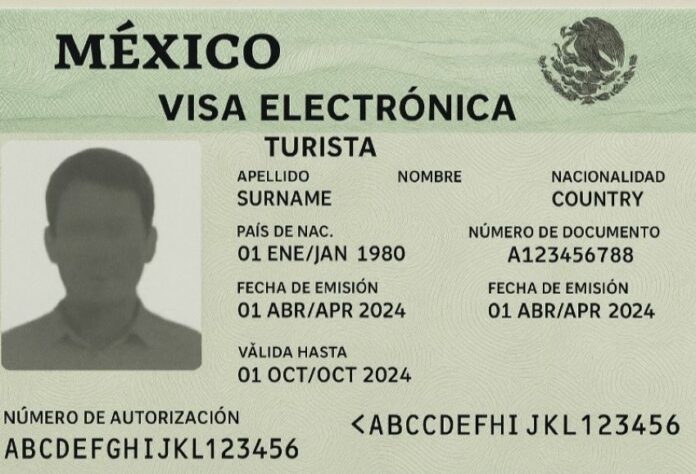
prototype e.visa
An advantage of the new e-visas is that tourists planning on arriving to Mexico by air who need a visa can apply for one online without visiting a consulate in person. (X)

Starting in August, Mexico will launch an electronic visa platform for foreign tourists that will streamline the application process by eliminating the need for in-person visits to consular offices and allowing applicants to complete all requirements online. 

Citizens of exempt countries or with a valid passport from the United States, Canada, Japan, the United Kingdom and the Schengen area, do not need a pre-authorized visa for a tourism visit and are therefore not impacted by the new e-visa.

The e-visa process will enable the Ministry of Foreign Affairs (SRE) to create digital files with biometric and electronic data, as well as digital certificates for each traveler.

The e-visa is not valid for travel by land or sea. It is intended for foreigners who require a visa to enter Mexico and only applies to foreigners entering via air for tourism, cultural or family purposes. It does not allow any work activities and is valid for a maximum of 180 days.

For visitors from most parts of Asia and Africa, the e-visa eliminates the need for an interview or a physical stamp in the traveler’s passport. Once approved, the visa can be downloaded online.

In a statement published in the Official Journal of the Federation (DOF) the National Migration Institute (INM) also sought to “simplify, unify and make transparent” several procedures related to the issuance of immigration documents: including obtaining a regional visitor card, regularization for humanitarian reasons, and notifications of marital status, name, nationality, and place of work.

Moreover, it reduced the maximum processing time for notifications of name or nationality changes to three days, and for issuing immigration documents to no later than 10 days.

The new e-visa will cost 575 pesos (US $32), payable online. Infants under two years old are exempt from the payment. 

In contrast, the US is hiking its visa prices

While Mexico is moving to make tourism visits more convenient, the price of most non-immigrant visas to enter the United States is set to more than double in 2026, as part of  U.S. President Donald Trump’s immigration policies. These visas include tourist, student and work visas.

“No-petition visas,” which include tourist and student permits, will increase from US $160 to $410 next year. Meanwhile, petition-based categories like those of temporary workers or trainees, will increase from $190 to $440 in 2026. 

In a statement criticizing the fee hikes, Geoff Freeman, president of the U.S. Travel Association (USTA), said: “Raising fees on lawful international visitors amounts to a self-imposed tariff on one of our nation’s largest exports: international travel spending.”

With reports from El País and EFE

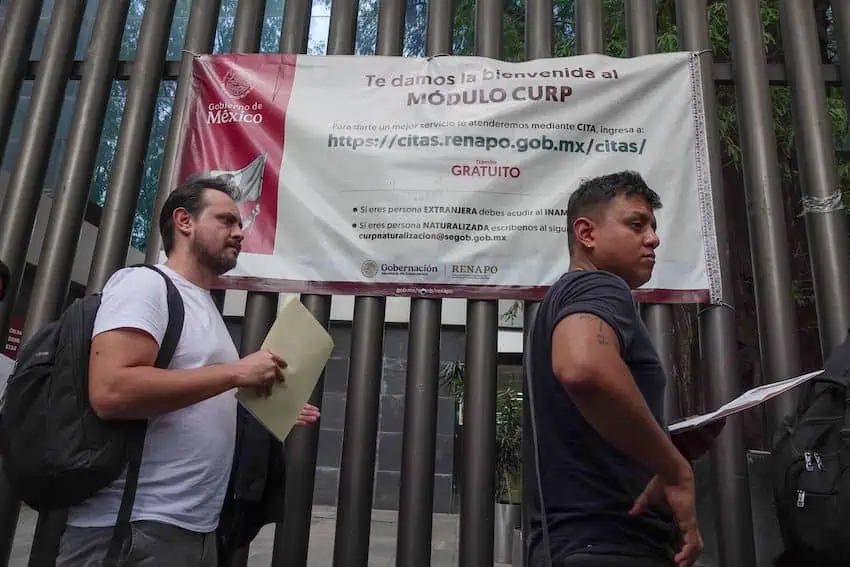
What is Mexico’s new biometric CURP and is it obligatory?

22
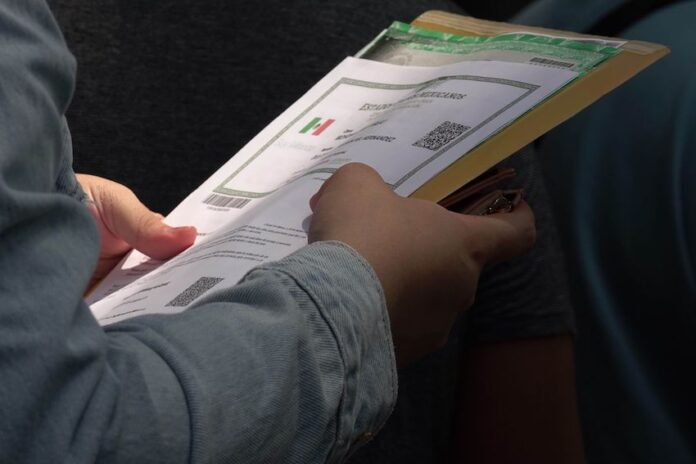
CURP paper
The creation of a biometric CURP is aimed at the fight against disappearances, organized crime and drug trafficking in Mexico. (Rogelio Morales/Cuartoscuro)

Mexico’s Congress last month approved reforms to existing laws that allow for the creation of an identity document that contains biometric data, including fingerprints and iris scans.

Supported by President Claudia Sheinbaum and the ruling Morena party, the reforms to the laws enabling the creation of a CURP biométrica (biometric CURP) took effect on July 17 after the publication of a decree in the federal government’s official gazette the previous day.

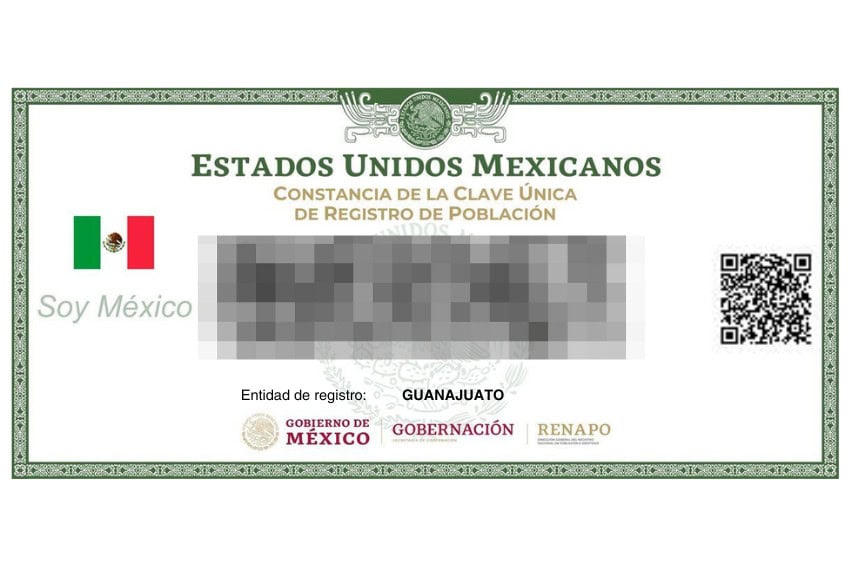
CURP
The Unique Population Registry Key (CURP), seen here in this federal document, is issued to each citizen or legal resident of Mexico and contains that person’s unique identity number.

The CURP, or Unique Population Registry Code, is an existing national identification code for all citizens and legal residents of Mexico. The biometric CURP is an enhanced version of the existing CURP, which was created in 1996.

There is significant controversy about the creation of a new identity document that contains biometric data, with critics raising a range of concerns about the collection and storage of personal information.

Here’s an explainer on the biometric CURP, which will be issued as a physical and digital document.

What prompted the decision to create a biometric CURP? 

The federal government’s main stated reason for the creation of a biometric CURP is to help combat Mexico’s missing persons crisis. Investigators will be able to access the biometric data of people who disappear in the future, provided that they applied for, and were issued with, a biometric CURP. That ability will ostensibly aid efforts to locate and identify those people or their remains.

Mexicans and foreigners who are currently classified as missing in Mexico obviously don’t have biometric CURPs, and therefore, the creation of the new identity document would not assist the search for those people.

More than 100,000 people are officially classified as missing in Mexico. President Sheinbaum has said that addressing the missing persons problem is a “national priority” for her government.

The creation of a biometric CURP is also aimed at the fight against organized crime and drug trafficking. In addition, it seeks to prevent the crime of identity theft.

The news outlet Deutsche Welle reported that the government has presented the biometric CURP as “a modern and efficient tool to strengthen security and the provision of services.”

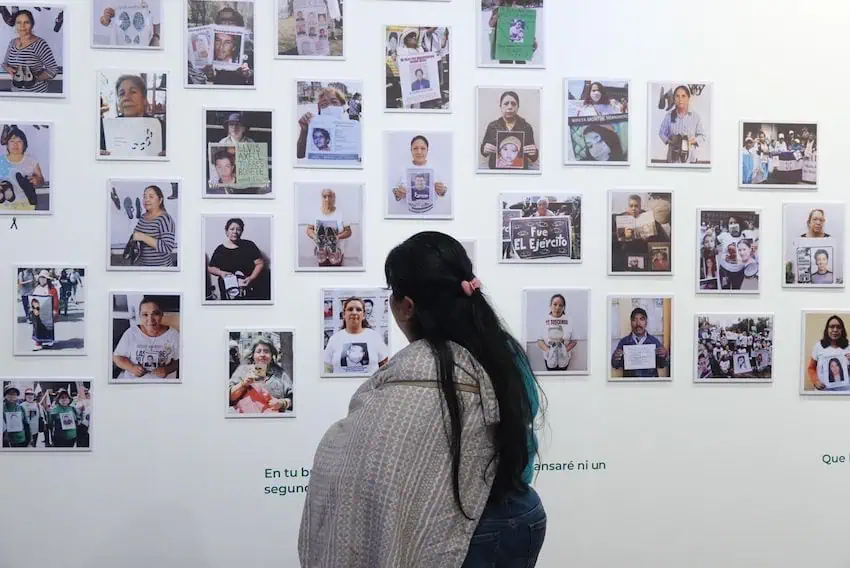
missing persons crisis
While the government defends the biometric CURP as a tool that will help investigators access data of future missing persons, it offers no solution for the more than 100,000 people already classified as disappeared. (Graciela López/Cuartoscuro)

The creation of the biometric CURP has also been framed as complementary to the government’s efforts to modernize Mexico’s bureaucratic systems and thus make them faster and more efficient.

What laws were changed to allow the creation of a biometric CURP?

The General Forced Disappearance Law and the General Population Law were both modified to allow for the creation of a biometric CURP.

What information will the biometric CURP contain? 

A biometric CURP will contain the following information/data about the person it pertains to:

  • Names and surnames
  • Date of birth
  • Sex
  • Place of birth
  • Nationality
  • A photograph
  • A digital signature
  • Fingerprints
  • Iris scans

Each person with a biometric CURP will have an alphanumeric code containing 18 letters and numbers, as is the case with a regular CURP.

Where will the data be stored?

The biometric CURP data will be stored in a “Unique Identity Platform,” which will be linked to other government databases containing a range of information about citizens and residents, including financial data.

What will citizens and residents of Mexico use their biometric CURP for?

Citizens and residents of Mexico will be able to use their biometric CURP to carry out a range of procedures and to access government and private services.

According to the newspaper El País, a biometric CURP will be needed for things such as registering for government social programs, completing banking procedures, enrolling in educational institutes and accessing medical care in the public health system.

The news website Expansión reported that the biometric CURP will also be used to validate individuals’ identities on some websites, including government ones.

According to the legal information website Justia México, a biometric CURP could also be used to validate a person’s identity when carrying out immigration procedures, such as those carried out by foreigners at National Immigration Institute (INM) offices.

Will it be mandatory for individuals to obtain a biometric CURP?

There is currently confusion and uncertainty about whether it will be mandatory for citizens and residents of Mexico to obtain a biometric CURP.

President Sheinbaum said last week that the government cannot “force” anyone to obtain a biometric CURP, but added that she believes that it is “important” to get one as the new identity document will “help in many issues,” including in addressing the missing person’s crisis in Mexico.

Interior Minister Rosa Icela Rodríguez has also said that obtaining a biometric CURP will not be mandatory.

However, laws that were changed to allow the creation of a biometric CURP stipulate that citizens and residents of Mexico will have to obtain one.

Not having a biometric CURP could potentially limit individuals’ capacity to carry out some (or many) bureaucratic procedures and access government and private services. Therefore, for many people, having a biometric CURP could become essential and, in effect, mandatory.

Curp office
Starting Oct. 16, individuals will be able to apply for a biometric CURP at Civil Registry offices and offices of the National Population Registry (Renapo). (Rogelio Morales/Cuartoscuro)

El País reported earlier this month that the biometric CURP will be “compulsory” starting in February 2026 and that the “conventional version” will cease to be accepted for “procedures and services that require identification.”

It is unclear whether the government will have the capacity to issue biometric CURPs to all citizens and residents who want, or need, one by that time.

When will individuals be able to obtain a biometric CURP?

Starting Oct. 16, individuals will be able to apply for a biometric CURP at Civil Registry offices and offices of the National Population Registry (Renapo).

People will also be able to apply for a biometric CURP online via the government’s Llave MX platform.

There will be no cost associated with applying for and obtaining a biometric CURP.

Some biometric CURPs have already been issued in certain municipalities in Veracruz, and in Mexico City and México state, where the identity documents have been issued to citizens in a pilot project.

To obtain a biometric CURP, individuals will have to present a range of documents, including their birth certificate, their current CURP and their INE voter’s card or passport.

Children will also be able to obtain a biometric CURP, provided they apply for one in the company of a parent or legal guardian.

What concerns are there about the biometric CURP?

Digital rights activists have raised concerns about “the collection, use, sharing and storage of personal data,” according to Context, a media platform affiliated with the Thomson Reuters Foundation.

“… Rights groups worry the changes will enable a mass surveillance system with little accountability,” Context reported.

Congress’s recent approval of other laws has increased the Mexican government’s capacity to surveil citizens. For example, the National Investigation and Intelligence System Law, which was approved by the Senate on July 1, gives the federal Security Ministry broad powers to access people’s personal and biometric data as well as their financial information, among other sensitive data.

José Flores, director of the Network in Defense of Digital Rights (R3D), a non-governmental organization, is among the activists who have raised concerns about the biometric CURP.

According to Context, he said that the biometric ID card will grant authorities access to a detailed footprint of a citizen’s activities, without requiring a court order.

“This puts us in a massive surveillance ecosystem with no provisions to identify wrong use of data, data breaches, identity theft or acts of corruption,” Flores said.

Citing “rights campaigners,” Context reported that recently-approved laws “do not outline how citizens can be notified when their data is viewed by authorities.”

“This means [biometric CURP] card holders do not know who is accessing their personal data or how it is being used,” Context said.

Senate grants Security Ministry broad data access powers, sparking ‘police state’ fears

Santiago Narváez, an R3D researcher, told Deutsche Welle that the “centralization of biometric data in Mexico is occurring in a context of high corruption, frequent leaks and lack of independent controls.”

Unlike a password, Narváez highlighted that a person’s fingerprints and irises cannot be changed if they are leaked (or hacked) and fall into the wrong hands.

“It’s a permanent risk,” he said.

Given that the biometric CURP will be used to access government and private services, “every office, every company” with access to people’s biometric data is “a possible focus of attack,” Narváez said.

For their part, families of missing persons have rejected the assertion that the creation of the biometric CURP will assist the location of disappeared people.

At a protest in early July, search collectives displayed placards with the message “Spying is not searching,” according to Deutsche Welle.

María Salvadora Coronado, whose husband disappeared in 2011, said that the creation of a biometric CURP and the recent approval of other laws “place us at greater risk because they [the government] will know where we are, what we’re doing, what we’re buying.”

“There are madres buscadoras [searching mothers] who have been murdered,” she noted.

How has Sheinbaum responded to the concerns?

Sheinbaum — the leading proponent of the biometric CURP initiative — has highlighted that the existing CURP system has been in place for an extended period of time, and rejected claims that the biometric CURP will become a means of spying on people in Mexico.

The president has repeatedly rejected claims that the government intends to spy and/or surveil ordinary citizens.

Last Thursday, she highlighted that banks already request biometric data from their customers for security reasons.

“They ask you for it in the banks’ apps, even your face,” Sheinbaum said.

She said that people can “have the certainty” that their personal and biometric data will be “safe.”

The government’s digital infrastructure has “all the necessary cyber-security systems,” Sheinbaum said.

President Sheinbaum says the federal government’s digital infrastructure has “all the necessary cyber-security systems,” but critics of the biometric CURP worry that the information could easily fall into the wrong hands. (Graciela López/Cuartoscuro)

She also said that people can rest assured that there will be no “misuse” of their personal and biometric data.

The federal government has stressed that the biometric CURP will not replace citizens’ INE voter card, the primary form of personal identification in Mexico.

Could foreign governments seek biometric data from Mexico? 

Yes.

Earlier this year, United States Secretary of Homeland Security Kristi Noem said that she had asked Sheinbaum “specifically to share biometric information [of migrants] with us.”

“And she’s willing to discuss that even though that in her country would be a little bit controversial,” Noem said in late March.

Sheinbaum subsequently said that she had not agreed to anything requiring the transfer of biometric data to the United States.

She also highlighted in early April that Mexico did “not have a biometric data ID system” at that time.

How will people’s biometric data be protected?

According to Justia México, “biometric personal data will be protected in accordance with the provisions of applicable laws and legal provisions on the protection of personal data.”

Do Mexican citizens support the addition of biometric data to their CURPs?

In a poll carried out this month, the El Financiero newspaper asked 500 Mexican adults whether they agreed or disagreed with the incorporation of biometric data to the CURP identity document.

Forty-eight per cent of respondents said they agreed, while 49% said they disagreed. The remaining 3% of those polled said they didn’t know whether they agreed or not.

El Financiero also asked the survey participants about how much confidence they had in the government’s capacity to safely store people’s biometric data.

Just under one-quarter of respondents (24%) said they had “a lot” of confidence in the government, while exactly one-quarter said they had “some” confidence.”

Twenty-one per cent of respondents said they had “little” confidence in the government, while 28% said they had no confidence in its biometric data-storing capacity.

With reports from Expansión, Context, El País, Deutsche Welle, El Universal, Infobae, Sin Embargo and El Financiero

Pemex posts first quarterly profit in a year despite decline in production

3
pemex profits
Crude and condensate production continued to fall — dipping 8.6% compared to last year’s second quarter — as well as natural gas production, which was down 3.7% compared to Q2 2024. (Shutterstock)

Mexico’s state-owned oil company Pemex reported its first quarterly profit in a year, booking a net profit of 59.52 billion pesos (US $3.17 billion) during the second quarter despite a decline in revenues.

The rise in Pemex’s fortunes was helped largely by the peso’s favorable exchange rate, but the company — the world’s most indebted energy firm — still faces considerable challenges.

Crude and condensate production continued to fall — dipping 8.6% compared to last year’s second quarter — as well as natural gas production, which was down 3.7% compared to Q2 2024. Pemex also reported a financial debt of US $98.8 billion at the end of the quarter and revealed that it owes providers US $22.79 billion. 

Still, as the peso rose against the dollar, the positive currency effects allowed Pemex to overcome a drop in revenues. 

Pemex disclosed in regulatory filings that second-quarter revenues declined 4.4% to 391.62 billion pesos (US $20.9 billion), citing reduced crude oil volumes and lower prices for refined products, including gasoline and diesel.

Lower gasoline production also prompted a rise in U.S. imports during the quarter, contributing to sinking revenues and fears that Mexico could become a net oil importer due to a consistent decline in production, underinvestment and mounting debt.

Even as Pemex faces a financial chokehold, the unexpected quarterly earnings report not only gives the company more time to breathe, but also provides impetus to a new government plan to prop up the beleaguered oil giant. 

The Finance Ministry announced last week that it would launch a new dollar-denominated debt issue, involving “Pre-Capitalized Notes,” a form of financing designed to strengthen Pemex’s balance sheet without a direct government guarantee. 

Mexico’s gas production falls short as US imports surge to record levels

Following last week’s announcement, credit rating agency Fitch placed Pemex on “rating watch positive,” describing the transaction as “credit positive” while lauding Mexico’s “willingness and ability to provide substantial support” to the oil company.

Even so, the online news platform Oil Price reported that “[Pemex’s] financial profile and earnings outlook remain persistently weak.” And according to Fitch, the oil company still faces “negative funds from operations, declining profit margins on the back of lower production and oil prices, as well as unrelenting losses in its downstream business.”  

After the quarterly results were published, company executives told investors Pemex was intent on increasing crude oil production to the government’s goal of 1.8 million barrels per day, news agency Reuters reported.

The executives said so-called mixed contracts would be offered to private companies, and Pemex would continue to rely on government support. The company received 80 billion pesos (US $4.26 billion) in government support in the first quarter. The funds were mainly used to pay down debt.

In this year’s first quarter, Pemex reported a net loss of US $2.3 billion. Last year’s losses amounted to roughly US $30 billion, Reuters reported, with fourth-quarter losses alone coming in at US $9 billion.

With reports from Reuters, Animal Político, El Financiero and Oil Price

My family runs a convenience store in México state: Here’s everything I’ve learned

4
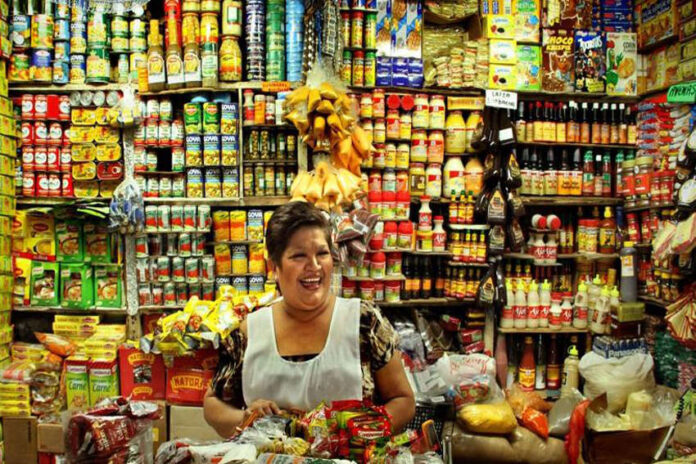
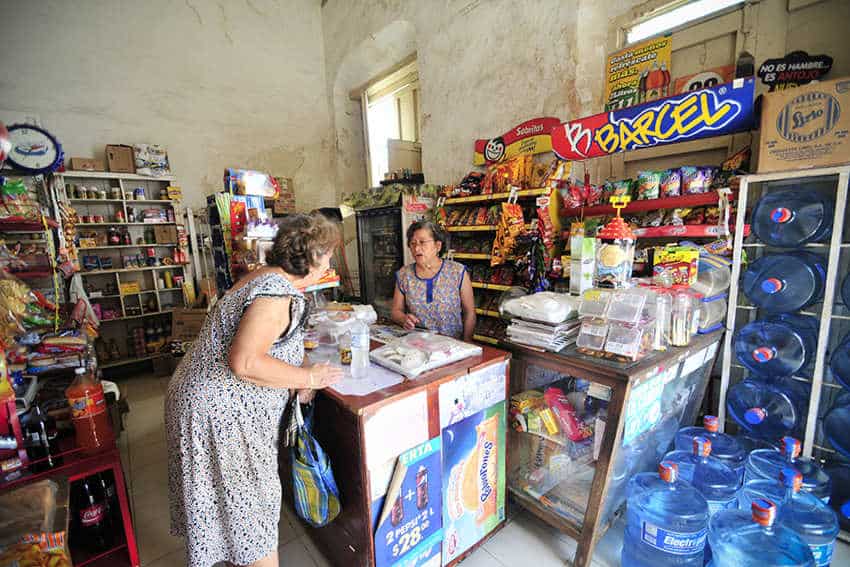
A Mexican middle-aged woman with a warm smile stands behind a counter laden with colorful packaged goods in her small, traditional Mexican grocery store. Shelves packed tightly with a wide variety of canned goods, bottles, and boxes rise behind her create a vibrant, somewhat cluttered backdrop. She wears a white apron dress over her sundress to protect it.
In Mexico, the corner tiendita is the place where everybody knows your name — and the snacks you like. (Al Momento)

Last week, we reported on the precarious situation facing Mexico’s beloved neighborhood stores, known as tienditas, as they battle rising inflation, low sales and criminal extortion. These vital community hubs, often run by women and their families, are struggling to survive, a survey by Mexico’s National Alliance of Small Businesses (ANPEC) revealed earlier this month.

Today, we delve deeper into the heart and soul of these traditional Mexican shops, moving beyond their economic challenges to discover why, despite the presence of globalized convenience stores like Oxxo and 7-Eleven, the local tiendita remains the true pulse of Mexico’s communities.

Adrián Balderas’ family has run a corner store — a traditional Mexican “tiendita” — for generations in Naucalpan, México state. After reading about the foreign fascination with Oxxo, Mexico’s ubiquitous, neon-lit, 24/7 answer to life’s cravings, Adrián spoke to Mexico News Daily about the real soul of Mexican snacking — and life — still found in the neighborhood shop down the street.

These little corner stores, the kind tucked under tin roofs and behind bars of sun-faded metal, do more than sell snacks — or toiletries or office supplies or any number of seemingly endless items. They connect people.

In a rustic, old-fashioned Mexican "tiendita" or small grocery store, two women are engaged in a transaction. One woman, with her back mostly to the viewer, is leaning over a wooden counter, appearing to be a customer. Facing her, from behind the counter, is another woman who seems to be the shopkeeper. The store is packed with various goods, including shelves filled with packaged items, bottled water jugs, and colorful snack advertisements.
The tiendita often serves as a community nexus, where neighbors run into each other and news gets shared. (Arena Pública)

In working-class neighborhoods, the owner will know your name, your kids’ names and probably even your dog’s name — and, if you’re lucky, will have an appropriate treat waiting for your daily visit. In traditional areas, they’ve watched multiple generations of families grow up. 

These stores function as more than just retail, forming an organ of the community they find themselves in. In these stores, recipes are swapped, people debate soccer scores and local news — good or tragic — makes the rounds.

“My grandmother started one year ago,” Adrián explains. “Now, my aunt runs it. It’s the town square, the place locals drift to when something out of the ordinary happens. It’s the place everyone goes to find out what’s going on.” 

It’s not just a sort of living register of births, deaths and marriages in small-town Mexico either. The benefit of a personal relationship between customer and owner means that you can bend the rules a little bit if you’re ever in an hour of need.

“There’s a ritual to it — the ‘fiado’ is a kind of honor-system tab. You come up short, say ‘Can I pay you tomorrow?’ and the owner sizes you up,” Adrián says. “If the trust’s there, you’re good. Break it, and the door quietly closes. No second chance. Try doing that in a supermarket,” he laughs. “This sort of thing could never happen at a chain store.”

Still, there’s no denying the convenience of an Oxxo. It’s fast, it’s everywhere and its inventory is solid, with chips, drinks, toiletries, condoms, aspirin — you name it. What’s on the shelves varies by store size and location. Don’t expect miracles, but you’ll usually walk out with what you need — and possibly even something you didn’t.

A tiendita in Mexico
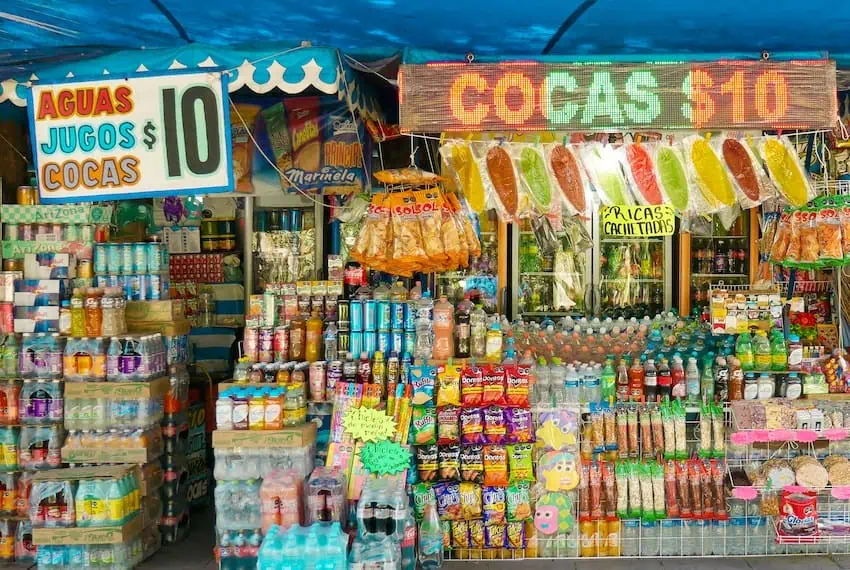
The tiendita is not just a last-minute lifesaver when you run out of something, it’s a treasure trove of great snacks — both name-brand types and locally made treats. (Unsplash)

A local guide to tiendita tips and tricks

Snacks 

Snacking on a budget is an essential part of life in Mexico. While the minimum wage may have risen under the previous government, so has the cost of living. This means that for most, getting the best bang for your buck is the number one consideration when hitting up the tiendita.

Even accounting for regional varieties, simple treats can be found in basically any one of the hundreds of thousands of tienditas in the country. 

For sudden cravings — especially the kind that hit mid-walk or late-night — go for the BitzJapanese-style peanuts. They’re salty, crunchy, cheap and addictive. Pick your poison: lemon, salted, natural, habanero or flaming hot. Good solo, even better with friends and beer.

Need something more substantial before a party? The microwavable burritos from Lonchibon, Del Cazo or Chata work are an absolute treat. They won’t change your life, but they’ll fill the gap. The Mega Burrito — filled with beans and beef — is my go-to. Warm it in-store, eat it on the move and you’re golden.

Throwing a party on a tight budget? Sabritones are your salvation. These beauties are spicy, tangy chili-lime puffs of pure Mexican nostalgia. Grab the family-size bag and a bottle of Valentina hot sauce — available everywhere, even from street vendors. If heat’s not your thing, there’s always Doritos Nacho or the eternally faithful Sabritas. These are the first casualties at any decent party, so plan accordingly.

Sweet fixes

Now for candy. Spicy tamarind classics like Pelón Pelo Rico are messy, sticky and totally worth it. But my personal favorite are Marimba, a hard cherry lollipop wrapped in spicy tamarind paste. It’s sweet, sour and hits with a slow burn. If tamarind isn’t your thing, then try the cherry lollipop from Rosa. 

A word about change

It’s been said before, but carrying only a 500-peso bill is an absolute rookie move. If you’ve been caught short, then spend at least 80 pesos and snag a drink before you leave. 

That’ll earn you smaller bills and coins, which you’ll want if you’re planning to buy something from a street cart later — you should be planning this. If you’ve gone for a chain store option, Oxxo always takes plastic, but outside of major areas, don’t bet on being able to use your card.

Be prepared

It’s a Boy Scout’s motto. If you’re planning on taking a road trip across Mexico, then know that Oxxo thrives in urban zones. Head out into rural areas, and you might be out of luck. Cash is king out there, especially in markets or local joints. And if you get the chance, buy from the mom-and-pop shops. You’ll find regional snacks and candies you won’t see anywhere else. You’ll taste something real.

Chris Havler-Barrett is the Features Editor at Mexico News Daily.