Home Blog Page 208

Oaxaca city’s joyous Vela de Xhavizende festival unites a diaspora far from home

0
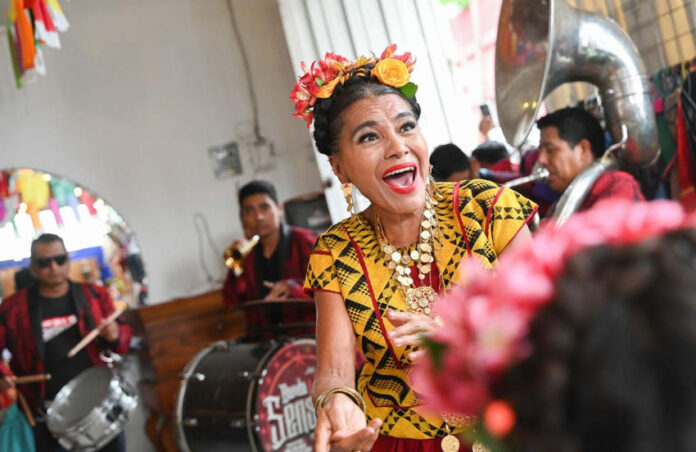
A joyous woman with flowers in her hair, wearing traditional Mexican attire and a necklace with large medallions, sings and dances while a band plays in the background.
The word "Xhavizende" is the Indigenous name for the city of Juchitán, where the migrant Juchiteco community that lives in Oaxaca city today is originally from. (Photos by Anna Bruce)

This year, celebrations for Oaxaca city’s annual Vela de Xhavizende — an annual multi-day event that celebrates the culture of the Indigenous people of Juchitán, Oaxaca, and their patron saint, St. Vincente Ferrer — opened Wednesday, featuring the traditional mass in celebration of the patron saint, followed by the colorful regada, a procession in which riders on horseback move through the streets of Oaxaca city throwing sweets and trinkets into the crowds, and ending this weekend with a gala vela event, as well as the traditional washing of the pots that cooked the food for the gala.

These types of celebrations are common throughout Oaxaca; just about every community has its own variant on the event, a syncretic festival that mixes the veneration of a Catholic patron saint with pre-conquest Indigenous traditions. This one in particular, the Vela de Xhavizende, originated nearly 200 kilometers away from Oaxaca city in Juchitán de Zaragoza, an eastern Oaxaca city of about 113,000, according to 2020 federal numbers.
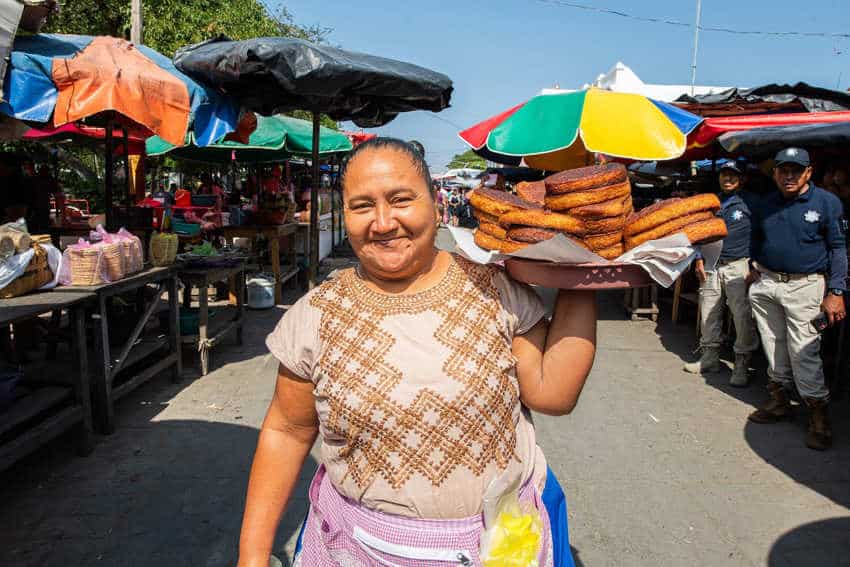
A smiling Oaxacan woman from Juchitan in a patterned blouse and apron holds a tray piled high with golden-brown fritters in an outdoor market with colorful umbrellas in he background.
Juchitán, Oaxaca, is a city in easternmost Oaxaca, in the Isthmus of Tehuantepec region. Its population is largely Indigenous Zapotec. (Government of Mexico)

The Vela de Xhavizende is meant to celebrate a 14th-century saint from Valencia, Spain, and also to bring good luck for the annual harvest. But what it’s also doing for this far-flung Oaxaca city community of Juchitecos, as they are called, is preserving their cultural heritage and sense of unity far from their original home.

Over the last several decades, Juchitecos who arrived looking for better work and educational opportunities have become a significant diaspora in Oaxaca city. Some estimates put them at about 10,000.

This celebration, which has taken place in Oaxaca city for over 35 years, is stewarded by the Association of Juchitecos Radicados en Oaxaca (Association of Juchitecos Living in Oaxaca). According to this year’s regada lead rider, Capitana María Sabina López Charis, her role as the “capitana” (captain) symbolizes “faith and celebration” as she leads her riders through the city’s streets.

López’s mother Nereyda is part of the association of stewards that organizes the festivities each year, and Nereyda and her daughters own Casa Juchitán, a Oaxaca city restaurant that champions traditional Istmeño food.

As I joined them for the mass and the regada this past week, López and her mother set aside a beautiful outfit for me, made up of an embroidered huipil, skirt, petticoat and gold filigree jewelry. López did my hair in braids and added flowers, which typically go with this style of dress. This is typical of Juchiteco celebrations, where everyone attending wears traditional attire. 

The family and friends getting ready at Casa Juchitán were given food and drink, including Juchiteco classics such as garnachas: mini tortillas fried in oil and served with tomato sauce, ground beef and chopped onion, sprinkled with dry, white cheese. A group of men (and a couple of younger boys) with their big brass instruments packed into the small restaurant to get food and big cups of fruit water (agua del día) and played as we made our final touches to our outfits.
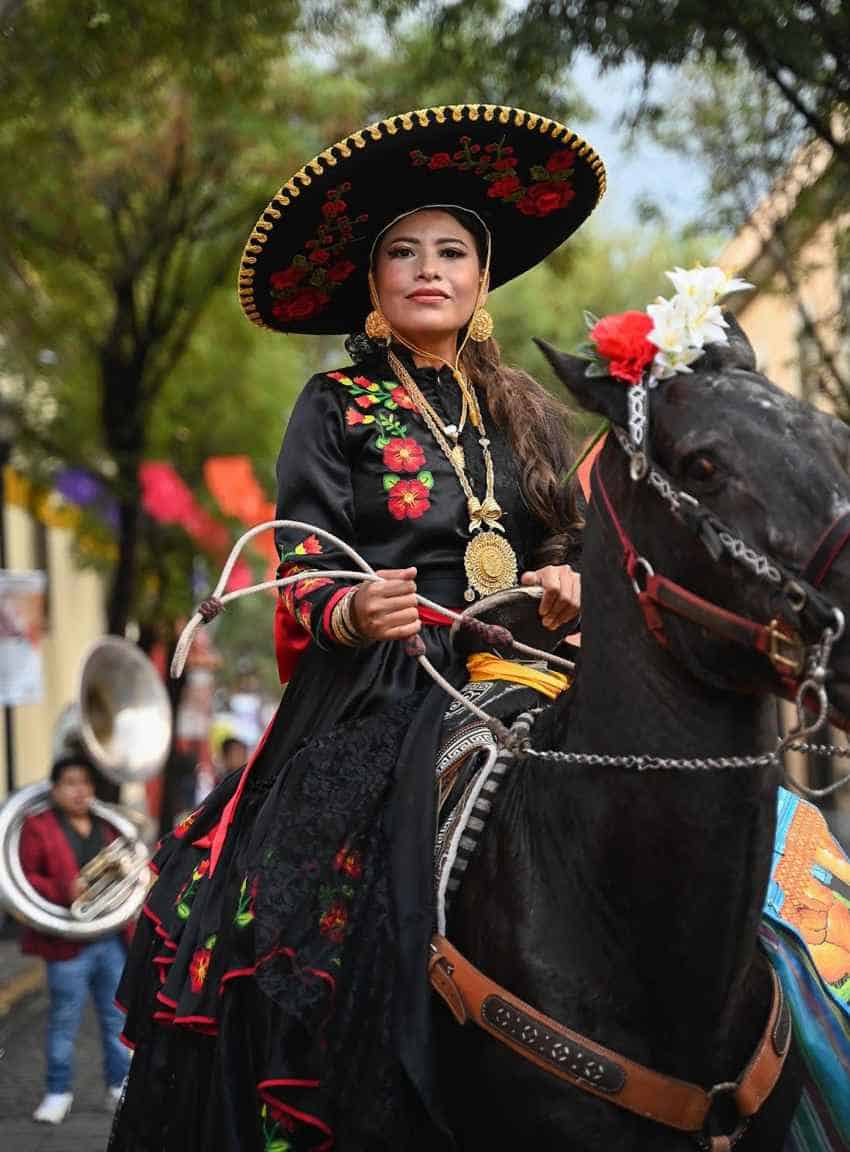
A woman in an elaborately embroidered black charro dress and a wide-brimmed sombrero adorned with flowers, wearing large golden jewelry, sits atop a dark horse and holds reins, looking towards the viewer. Colorful flags are strung across the street in the blurry background.
María Sabina López Charis, this year’s regada captain, in traditional attire, ready to lead her riders.

At 3:30 p.m., López mounted a black horse brought to the front of the restaurant, and we began the walk through the city towards Our Lady of Guadalupe church in El Llano park. Upon arriving, our group was joined by other Juchitecas in beautiful, vibrant dresses. The church was full, and the priest gave a dynamic, uplifting mass in honor of the patron saint. He blessed the residents of Juchitán and those who had organized the festivities. After the mass, the whole community gathered behind López to begin the regada.

In Juchitán, regadas have roots in pagan ritual. In the original versions of the event, besides the fruits thrown into the crowd, there were also ox-drawn carts carrying people, gifts and a “queen” of the vela. This sharing of wealth was thought to bring good luck for the next harvest. 

Vico Peralta, a member of the association of Juchitecos, explained.

“They are gifts for nature,” he said. “Before, they used only fruits that came from the region, and the inhabitants returned the gift to the earth, giving away their fruits. This was before the arrival of the Spanish. After the conquest, they converted to Catholicism, and, now, apart from honoring Mother Nature, they also honor St. Vincent Ferrer.”

These days, carts are replaced by trucks, and the gifts thrown are things like plastic bowls, keychains and sweets. 

We walked southward from the church for several blocks before turning right on Calle Mariano Abasolo, heading towards the Alcala pedestrian thoroughfare. With each block, the streets became more packed, with people crowding the sidewalk to get a glimpse — and perhaps get their hands on some gifts being thrown.
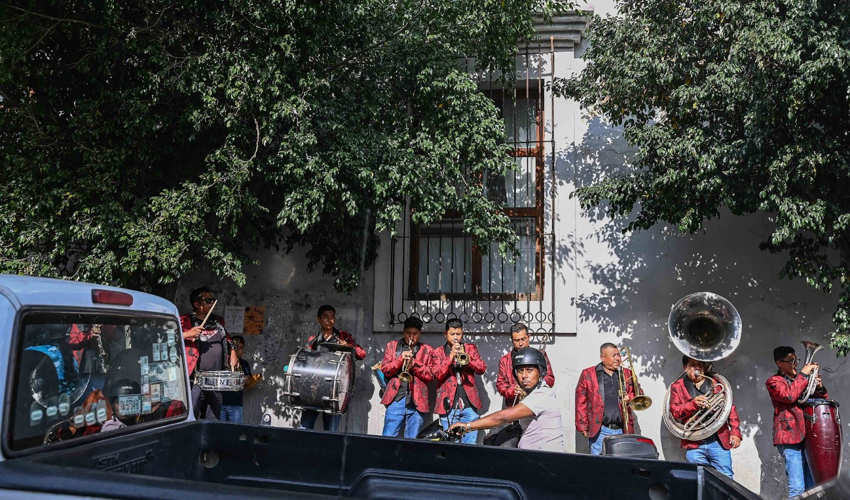
A group of male musicians in red jackets play various brass instruments and drums on a street, partially obscured by a parked truck and green trees, with a white building in the background.
The event is a joyous celebration of culture, featuring multiple troupes of dancers, bands and people marching in multiple processions.

By the time we reached the Templo de Santo Domingo church, the crowd completely overwhelmed us, partly because the regada coincided with the arrival of calendas — processions of musicians and dancers. 

Once the regada made it through, a small group with the band headed back to Casa Juchitán — where López and her family hosted a more intimate party late into the night.

Anna Bruce is an award-winning British photojournalist based in Oaxaca, Mexico. Just some of the media outlets she has worked with include Vice, The Financial Times, Time Out, Huffington Post, The Times of London, the BBC and Sony TV. Find out more about her work at her website or visit her on social media on Instagram or on Facebook.

Mexico’s export revenue shot up 10.6% in June, with manufacturing leading the way

1
cargo ready for shipping
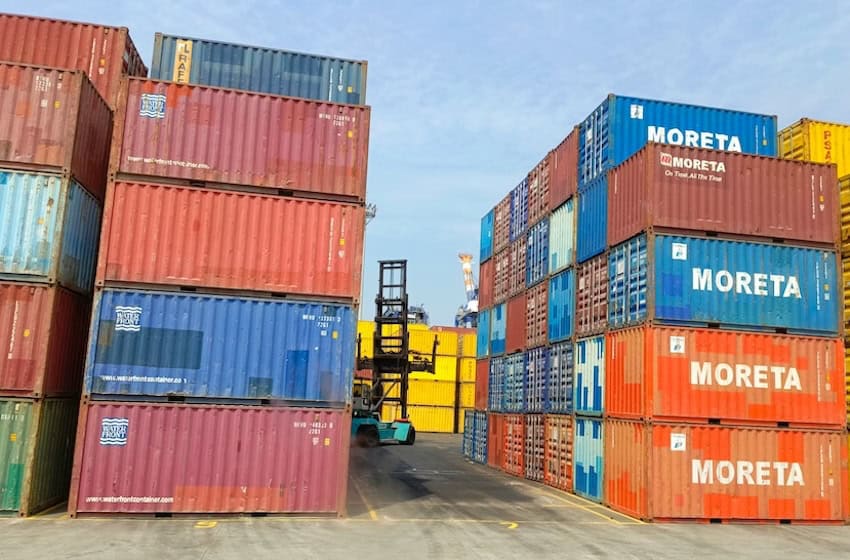
The 10.6% annual increase was the first in double-digits since U.S. President Donald Trump adopted a range of protectionist measures against Mexico. (Portcalls Asia/Unsplash)

Mexico’s export revenue increased by more than 10% annually in June, boosted by a significant spike in manufacturing sector earnings.

The national statistics agency INEGI reported Monday that export revenue totaled US $54.001 billion last month, a 10.6% increase compared to June 2024.

cargo crates
Earnings from the export of manufactured goods increased 13.5% annually to $49.68 billion, or 92% of total revenue. (Portcalls Asia/Unsplash)

It was the first double-digit annual increase in export earnings since November 2024, and therefore the first increase of that magnitude since United States President Donald Trump began his second term and adopted a range of protectionist measures against U.S. trading partners, including Mexico. More than 80% of Mexico’s export earnings comes from goods sent to the United States.

As usual, the lion’s share of the revenue in June came from the export of goods made in Mexico’s vast manufacturing sector.

Earnings from the export of manufactured goods increased 13.5% annually to $49.68 billion, or 92% of total revenue.

Within the manufacturing category, revenue derived from automotive sector exports increased 4.5% to $16.32 billion, even as the United States charged tariffs on vehicles and non-USMCA compliant auto parts made in Mexico. Earnings from auto exports to the U.S. increased 6%, while those sent to other markets declined 2.6%.

Earnings from the export of non-auto sector manufactured goods surged 18.5% annually in June to reach $33.36 billion.

Revenue derived from the three other export sectors measured by INEGI — oil, agriculture and mining — all declined in June compared to the same month of 2024.

Oil exports generated $1.45 billion in earnings, a 30.4% year-over-year decrease. Mexico sent about 34% less crude oil abroad in June compared to the same month of last year, and the price per barrel was around 13% lower than a year earlier, according to data published by INEGI.

Revenue from agricultural sector exports declined 2.2% annually in June to $1.71 billion, while mining sector export earnings fell 5.5% to $1.14 billion.

Export earnings up 4.4% in first half of 2025

INEGI also reported on Monday that Mexico’s export revenue increased 4.4% annually between January and June to $312.728 billion.

An aerial view of dozens of rows of new cars in a storage lot, ready for export
Revenue derived from automotive sector exports increased 4.5% to $16.32 billion in June, though overall, auto export earnings are down 4% at the mid-point of the year. (Shutterstock)

The data indicates that Mexico is on track to set a new record for export earnings in 2025. In 2024, export revenue exceeded $600 billion for the first time, totaling just over $617 billion.

In the first half of this year, manufacturing sector export revenue increased 6.2% annually to $283.02 billion. Auto sector export earnings declined 4% compared to the first six months of 2024, while revenue from the export of non-auto sector manufactured goods increased 12%.

Oil earnings declined 24.8% compared to the first six months of last year, while agricultural sector export revenue fell 7.7%. Mining sector export earnings increased 22% compared to the first half of 2024.

Spending on imports increased in June, and the first half of 2025

Mexico spent $53.487 billion on imports in June, a 4.4% increase compared to the same month of 2024, INEGI reported.

The outlay on imports in the first six months of 2025 was $311.295 billion, an increase of 0.2% compared to the same period of last year.

Mexico recorded a trade surplus of $514.4 million in June and $1.43 billion in the first six months of the year.

In 2024, Mexico recorded a surplus of over $170 billion with the United States, its largest trading partner. President Claudia Sheinbaum acknowledged last Thursday that Mexico’s large surplus with the United States is “one of the concerns of President Trump,” who earlier this month announced that the U.S. would impose a 30% tariff on imports from Mexico starting Aug. 1.

Sheinbaum said on Thursday that her government was doing “everything” it could to stop the new duty from entering into force, and declared that the trade imbalance with the U.S. “can be reduced through different mechanisms that don’t affect the economy of Mexico.”

With reports from El Economista and La Jornada

Puerto Vallarta rated third-safest city in Mexico

2
pedestrian bridge in Puerto Vallarta
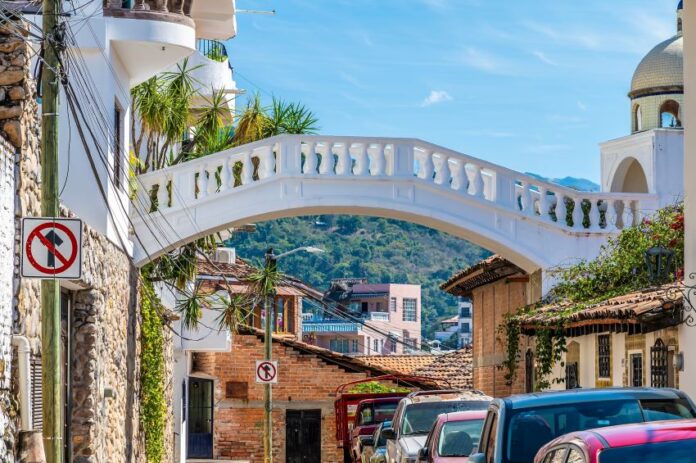
Only 21.4% of Puerto Vallarta's residents consider their city to be unsafe, a positive number that puts the Pacific beach resort in the top five of Mexican urban areas based on perception of public security, according to an INEGI survey. (Shutterstock)

The Pacific beach city of Puerto Vallarta has emerged as one of the safest cities in Mexico, alongside some of the country’s most affluent urban areas, according to an annual survey measuring the perception of public safety. 

The latest National Survey of Urban Public Safety, released by the national statistics agency INEGI on Thursday, revealed that the residents of Puerto Vallarta, in the state of Jalisco, view their city as very safe, with just 21.4% of the population raising security concerns. 

A father walking on a PV beach with buildings in the background
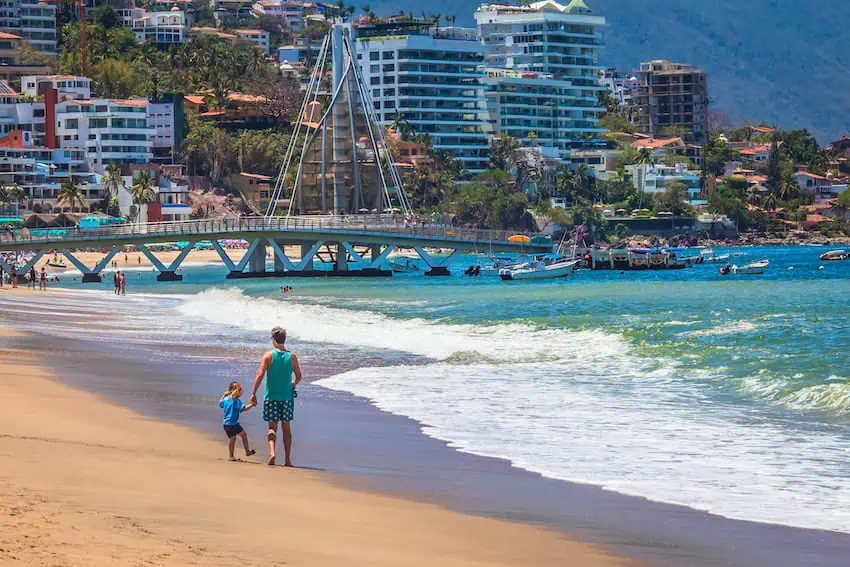
A father walking with his child on a Puerto Vallarta beach reflects the local perception that the city is one of the safest in Mexico. (Shutterstock)

Survey respondents viewed Mexico as a whole to be less safe than last year, with 63.2% of over-18-year-olds surveyed saying they considered it unsafe to live in their area, compared to 59.4% in June 2024. 

While the overall security perception has worsened, the average daily number of murders decreased by 21, to 65.6 in June, compared to 86.9 in September 2024, the last month of former president Andrés Manuel López Obrador’s term in office, according to the Executive Secretariat of the National Public Security System. 

The safest city according to perception was San Pedro Garza García, which is the wealthiest municipality in Mexico. 

The cities or municipalities with the lowest perception of insecurity according to the survey were:

  • San Pedro Garza García, Nuevo León – 11% (of surveyed residents viewed as unsafe)
  • Piedras Negras, Coahuila – 16.9%
  • Puerto Vallarta, Jalisco – 21.4%
  • Benito Juárez borough, Mexico City – 22%
  • Saltillo, Coahuila – 23.5%

There was a significant gender gap in the perception of safety in urban areas, with 68.5% of women reporting insecurity across Mexico compared to 56.7% of men.

A year after El Mayo’s capture, Sinaloa’s capital is seen as Mexico’s most dangerous city 

Meanwhile, 32.5% of participants expect crime and insecurity in their city to remain equally bad over the next year, 25.4% expect it will worsen, and 25.1% think it will improve. 

Survey participants viewed Culiacán, the capital of the northern state of Sinaloa, as the most insecure, with 90.8% of residents feeling unsafe, compared to 44.7% last year. 

The public perception of Culiacán’s security has deteriorated amid an ongoing war between the “Los Chapitos” and “Los Mayos” factions of the Sinaloa Cartel, which was triggered after Sinaloa Cartel co-founder Ismael “El Mayo” Zambada was allegedly kidnapped and taken to the U.S., where he was arrested in July 2024. 

With reports from Informador and El Financiero

Mexico’s divers dominate podium with 4 medals in Singapore

0
two swimmers holding medals
Osmar Olvera and Juan Celaya teamed up for a silver medal in the men's 3-meter synchronized springboard diving event at the World Aquatics Championships on Monday. (Conade/X)

The Mexican diving duo of Gabriela Agúndez and Alejandra Estudillo earned a silver medal in the women’s 10-meter synchronized platform diving event at the World Aquatics Championships in Singapore on Monday, delivering Mexico’s fourth diving medal and fifth overall.

Agúndez and Estudillo finished second to the Chinese duo of Minjie Zhang and Yuxi Chen. Agúndez had won a bronze medal in this event at the 2020 Olympics, while Estudillo — a springboard specialist — is new to platform diving.

two women with their swimming medals
Gabriela Agúndez and Alejandra Estudillo display their silver medals after finishing second in the women’s 10-meter synchronized platform diving event. (Conade/X)

Also on Monday, 21-year-old Osmar Olvera earned his third silver medal at this year’s World Aquatics Championships, as he and teammate Juan Celaya finished second in the 3-meter synchronized springboard diving event.

Over the weekend, Olvera won silver in the men’s 1-meter springboard competition and teamed up with Randal Willars, Zyanya Parra and Estudillo to claim silver in the Mixed Team diving event.

With the three medals earned thus far in Singapore, Olvera has firmly established himself as the leader of what is fast becoming Mexico’s most accomplished diving generation. The Mexico City native now has seven World Championship medals (one gold, five silver and one bronze) as well as a silver and bronze at the 2024 Olympics.

Olvera now has his sights set on surpassing Joaquín Capilla, Mexico’s best diver ever. With four Olympic medals, Capilla was the first Mexican athlete to win medals at multiple Games. Capilla won gold and bronze in 1956 in Sydney, silver in 1952 in Helsinki and bronze at the 1948 London Games.

“Los Angeles is three years away and this is a great way to start the road to the [2028] Olympics,” Olvera said, referring to the site of the 2028 Summer Olympic Games.

Olvera still has two events remaining in Singapore — the individual 3-meter springboard competition and the mixed synchronized springboard event.

Mexico’s performance in the Mixed Team event was the biggest surprise. Although Willars — an Olympian with five World Championship medals — and Estudillo are veterans on the world stage, Parra is a 15-year-old debutante.

Parra, who starred last year at the World Junior Diving Championships in Brazil, said her teammates helped make her comfortable during the event. 

“Osmar kept me calm the whole time and Randal shared tips with me to keep me from getting nervous,” she said.

Parra will be Olvera’s teammate in the mixed synchronized springboard competition.

Teen twins Mía and Lía Cueva will also be chasing a medal for Mexico, competing in the women’s synchronized 3-meter springboard event. The 14-year-olds teamed up to win silver at the World Aquatics Diving World Cup in Guadalajara in April. 

Artistic swimmer Diego Villalobos secured Mexico’s first medal at the World Aquatics Championships on July 20. The 20-year-old earned bronze in the men’s solo technical event at the Singapore Sports Hub, finishing just 13 points behind Russian gold medalist Aleksandr Maltsev.

The championships come to an end on Aug. 3.

With reports from La Jornada, El Universal and Riviera Maya News

Swipe before you swim: New Playas MX app helps beachgoers avoid contaminated waters

2
Of Mexico's 289 beaches, 273 are considered “clean."
Of Mexico's 289 beaches, 273 are considered “clean." (Unsplash)

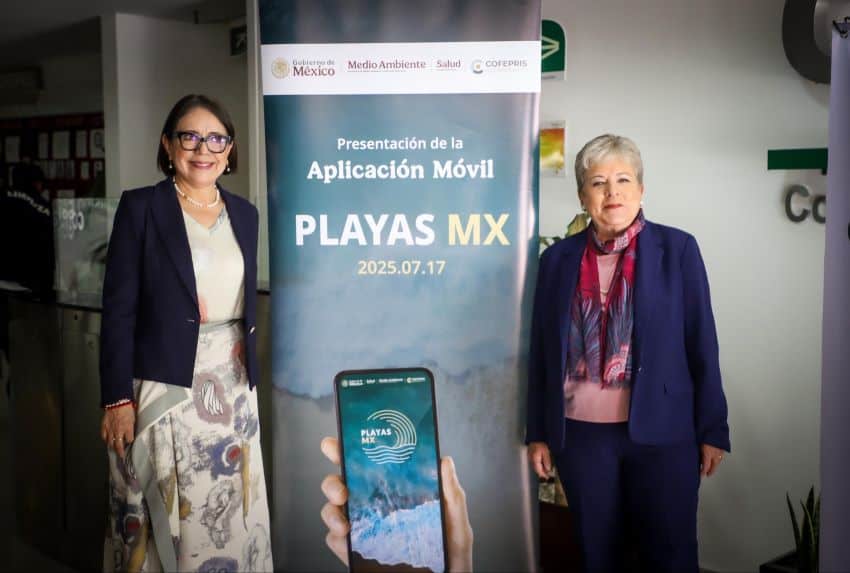
Heading to your favorite Mexican beach anytime soon? If so, you might first want to check Playas MX, a new smartphone application designed to provide real-time updates on seawater quality at 289 beaches in 17 coastal states.

Available for free through both Google Play and the App Store, the app was developed jointly by the Ministry of Environment and Natural Resources (Semarnat) and the Federal Commission for the Protection against Sanitary Risks (Cofepris).

During the platform’s official launch earlier this month, Semarnat head Alicia Bárcena said the app will allow “people to have timely information about the water quality of our beaches from their cell phones … Mexicans [have a] right to know which beaches they can go to without problems.”

Bárcena said the new app is in line with a government initiative launched on World Environment Day last month: the National Campaign for the Cleanup and Conservation of Mexico’s Beaches and Coasts, 2025-2030.

“We would like to achieve plastic-free beaches, and that’s why working in synergy with Cofepris seems fantastic to demonstrate the quality of the seawater that residents will encounter,” Bárcena said. “We want to reduce coastal pollution and, of course, restore ecosystems like mangroves.”

During her speech, Bárcena emphasized that “in Mexico, we have 12,000 kilometers of beaches and 3 million square kilometers of maritime surface, equivalent to 62% of the national territory.” 

With the app, people can get information — or provide it.

“People can tell us if a beach isn’t as clean as reported, or give us suggestions,” Bárcena added.

Playas MX app
Available for free through both Google Play and the App Store, Playas MX was developed jointly by the Ministry of Environment and Natural Resources (Semarnat) and the Federal Commission for the Protection against Sanitary Risks (Cofepris). (Alicia Bárcena/X)

The app displays monitoring results from 393 sampling points, reflecting data collected during the 2025 summer vacation season.

According to Cofepris, 94% of the beaches tested meet World Health Organization (WHO) standards: fewer than 200 colony-forming units of fecal enterococci per 100 milliliters. In all, there are 273 such “clean” beaches (some beaches had more than one testing point) — including a top 10 cited in Mexico News Daily. 

The remaining 16 beaches — located mainly in Guerrero, Michoacán and Jalisco — were deemed unsuitable due to bacterial contamination exceeding safe limits.

The worst-rated beaches are Tijuana Beach I (Baja California); El Real Beach (Tecomán, Colima); Carabalí, Hornos, Caletilla and Papagayo beaches (Acapulco, Guerrero); Cuale and Camarones beaches (Puerto Vallarta, Jalisco); Mismaloya Beach (south of Puerto Vallarta); La Bocana Beach (Huatulco, Oaxaca); and Nexpa, Boca de Apiza, Jardín, Las Peñas, Chuquiapan and Caleta de Campos (Michoacán coast).

National Beach Cleanup Strategy aims to eliminate plastic pollution

“Samples collected during the July period indicated that bacterial concentrations exceed the permissible limit of 200 MPN/100 ml, which represents a risk to the health of bathers,” authorities noted.

Exposure may cause “gastrointestinal, dermatological and respiratory infections.”

Armida Zúñiga Estrada, the head of Cofepris, the federal agency charged with protecting the public by regulating health-related risks, called the Playas MX app “a technological innovation that offers reliable data on the microbiological monitoring of primary contact water.”

The app features geolocated search, color-coded suitability indicators and a feedback section for users.

With reports from Milenio, El País and Sin Embargo

Want to buy property in Mexico? Make sure you invest close enough to a major airport

4
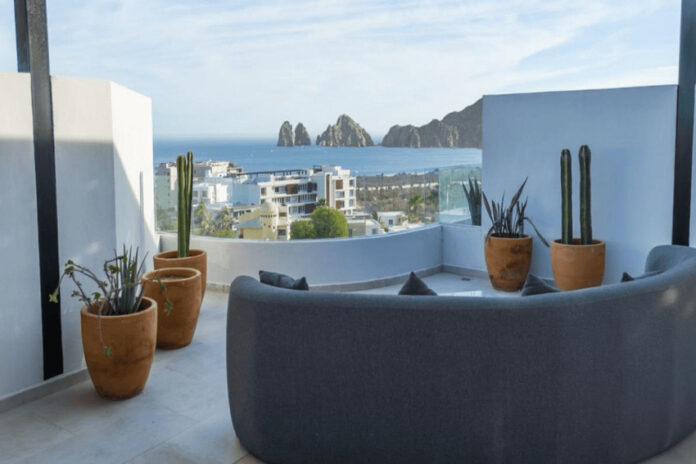
A modern rooftop patio features a curved grey sofa, potted cacti, and a panoramic view of the ocean, a city, and distant rock formations under a clear sky.
With Mexico ranking as the world's seventh most visited country in 2025, properties from Los Cabos to Mexico City offer profitable investment opportunities for rentals and resale. (Selva & Co Realty)

Whether for vacation, living or investment purposes, having a property to stay in or rent out that’s near a major airport is a great idea; a destination within convenient reach of the airport will automatically increase your property’s value.

According to the latest World Tourism Barometer from the UN World Tourism Organization (UNWTO), Mexico, featuring some of the world’s busiest airports, is currently ranking as the seventh most visited country in 2025. So, if you’re thinking about buying a vacation property for yourself or to rent out as a business investment, one thing you’ll want to consider is how close your purchase is to an airport.

To give you an idea of the possibilities out there, let’s take a look at some examples of excellent real estate investment options you can find within an hour of an international airport in some of Mexico’s most popular destinations.

Baja California Sur

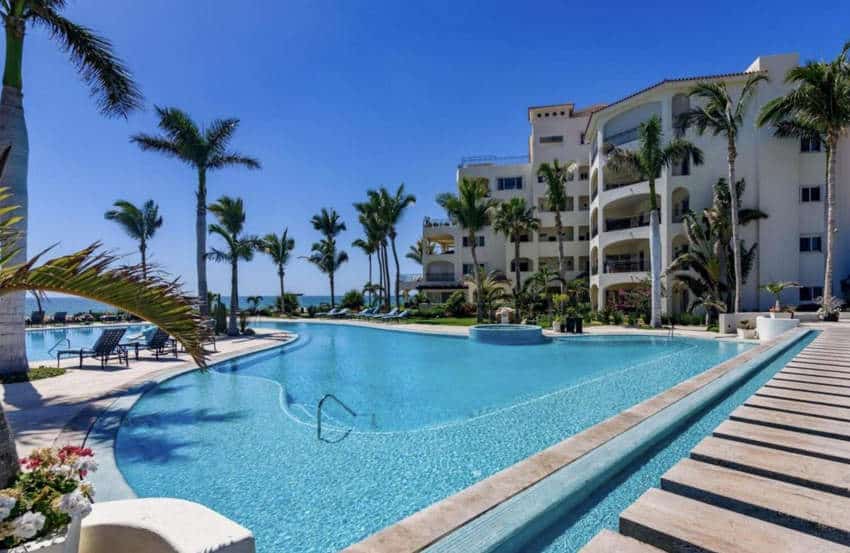
A large, curving swimming pool with clear blue water is surrounded by palm trees and a multi-story white building with balconies, all under a bright blue sky.
A property near San José del Cabo’s Costa Azul beach is a competitive vacation rental. (Selva & Co Realty)

This two-bedroom, two-bathroom apartment is an example of what’s available in the heart of San José del Cabo‘s desirable hotel zone, directly in front of stunning Costa Azul beach. It boasts the kind of tourist-friendly amenities you’ll want to look for in this sort of property, such as a common area with an exquisitely designed pool, breathtaking views, a gym and a tennis court. Spanning 158 square meters (1,700 square feet) in a prime location, this is a perfect example of an excellent investment property candidate you can rent out or resell easily.

A bit further out from the heart of the action, consider El Tezal, one of Cabo San Lucas’s most desirable residential areas. It’s a convenient half hour from Los Cabos International Airport. Here, there are properties like this competitively priced 128-square-meter (1,377 square feet), two-bedroom, two-bathroom apartment with fantastic beach views.

Quintana Roo

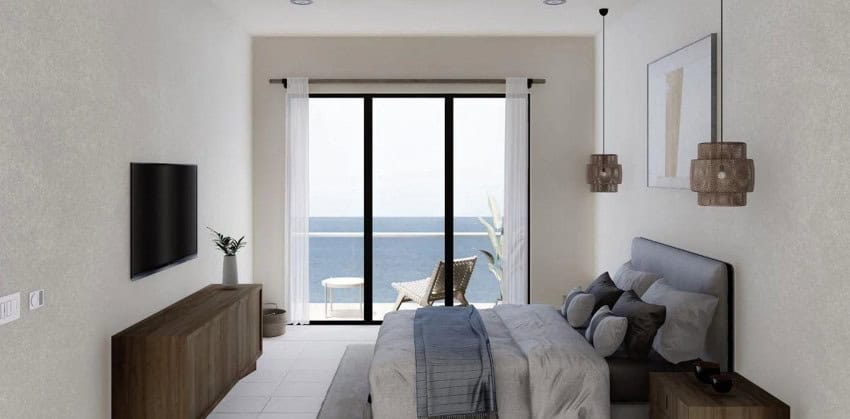
A modern bedroom with white walls features a bed with grey and blue bedding, a wall-mounted TV, and a sliding glass door leading to a balcony with an ocean view.
Sleep in peace by the ocean in your own getaway in quieter Cozumel. (Immuebles 24)

Quintana Roo has the blockbuster tourist destination of Cancún, of course, but you might also consider Cozumel, where you can find beachfront apartments like this 190-square-meter (2,045 square feet) standout, located on Cozumel’s west side — which sees little sargassum — close to Cozumel International Airport. It offers stunning views, tennis courts and excellent common areas, including a dining room, a gym and a pool. Are you seeing a pattern? These are the amenities to find in a place you plan to rent out to vacationers.

In addition to having quick access to Cozumel International Airport, you can easily access Cancún International Airport from Cozumel as well, via a one-hour ferry ride.

Playa del Carmen, located an hour from Cancún International Airport, is one of the cities in the Mexican Caribbean with the highest added value. Property prices here can naturally get steep, so if you’re looking for something a bit more affordable, look outside the hotel zone for something like this two-bedroom, two-bathroom apartment, located closer to where full-time residents live but still a taxi ride away from the heart of the party.

This modern property spans a more modest 89 square meters (957 square feet) but still includes a pool, gym and grill area in the complex. Located just 10 minutes from the beach and surrounded by picturesque, lush vegetation, this is the kind of destination popular with vacationers who want a quieter beach getaway not surrounded by partiers.

Yucatán

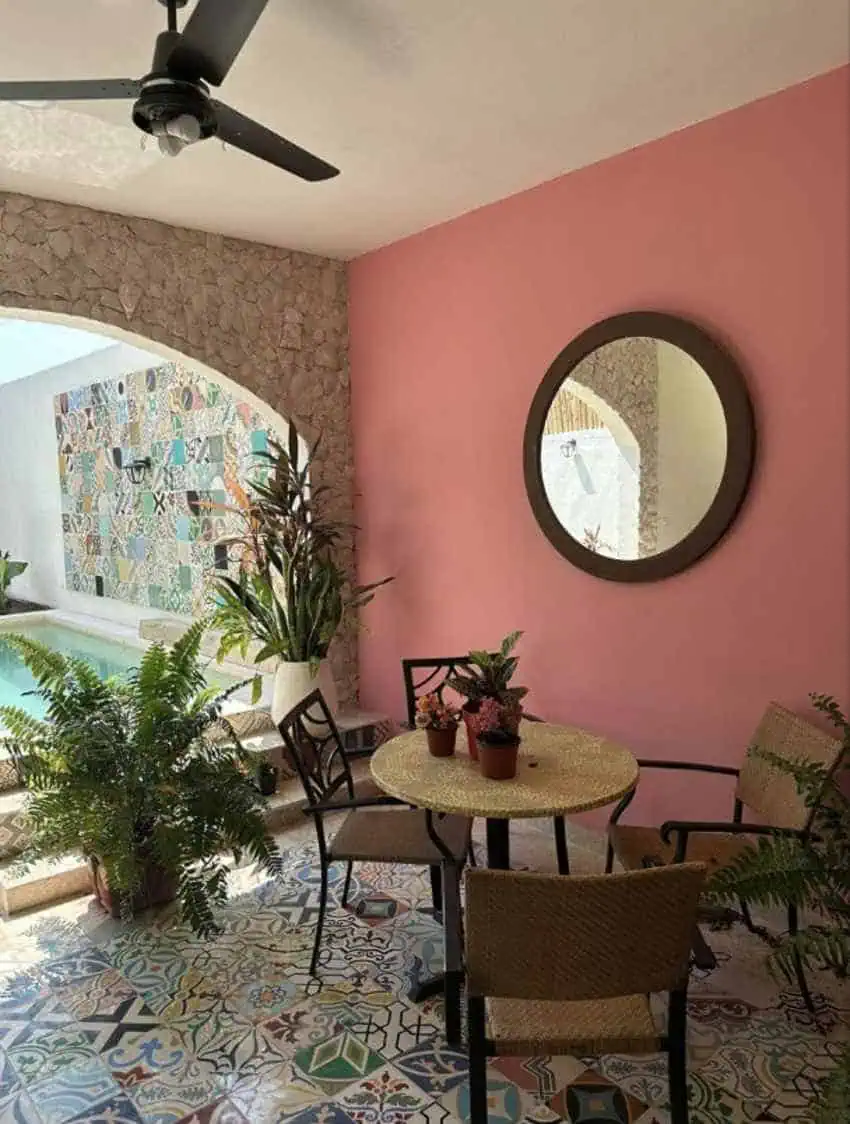
An inviting patio features colorful mosaic tiles on the floor, a pink wall with a round mirror, a small table and chairs, and an arched doorway leading to a pool area with a mosaic-tiled wall.
A modern home with traditional Mexican décor touches in downtown Mérida? Yes please! And still less than an hour from Mérida International Airport. (Global Realty Bienes Raíces)

Situated in the heart of lovely, safe downtown Mérida, this sort of home has significant added value. With amenities like a lovely lap pool, high ceilings, a blend of colonial and modern architectural styles and a spacious living room, this two-bedroom property is an excellent option for investment, for living in yourself full-time or for use as a vacation home. It’s also located less than one hour from Mérida International Airport.

Have you heard of Chelem, a fishing village not far from Mérida that’s becoming a more popular destination with expats? For those who like a quieter vacation or retirement destination, Chelem’s beautiful beaches, friendly locals and chill vibe is still a place you can find an ample, reasonably priced apartment like this four-bedroom, four-bathroom, 185-square-meter beauty right in front of the beach. It also includes a jacuzzi, a garden, a large terrace and an infinity pool with sea views in the common areas. The property also offers 24-hour security and even a bar.

Chelem appeals to folks who like to rent a beach house rather than stay in a resort. The town provides the charm of interacting with locals, but you won’t lack basic everyday services like supermarkets. It’s an acceptable 48 minutes from Mérida International Airport.

Jalisco

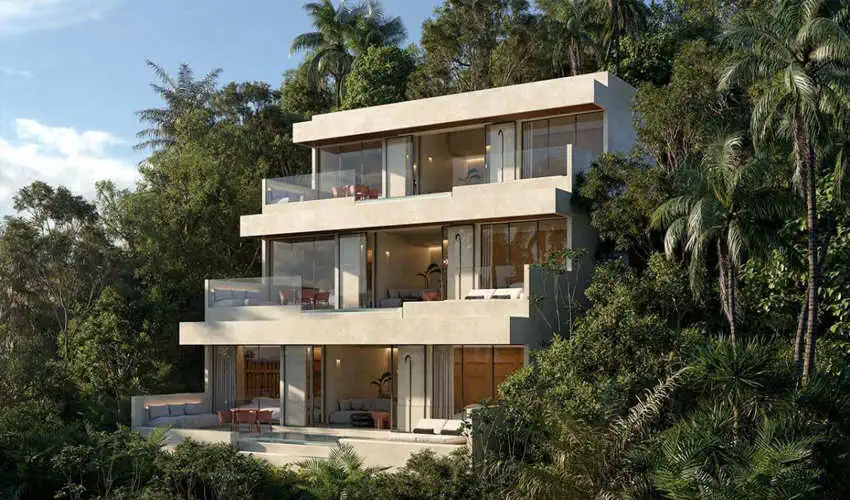
A modern, multi-story villa with large glass windows and balconies is nestled into a lush green hillside surrounded by dense tropical foliage and palm trees.
Sayulita, a beach town still surrounded by plenty of untouched jungle, attracts surfers and wellness seekers wanting a bohemian, less developed vibe. (MOOBI Expertos Inmobiliarios)

It’s still possible to find affordable luxury in the charming beach town of Sayulita, like this exceptional though tinier 60-square-meter apartment (645 square feet) with a view of the ocean, yet just an hour from Puerto Vallarta International Airport.

Here you can still find spectacular views of the ocean and the surrounding jungle. This development, for example, features its own infinity pool and beautifully designed common areas, which include a pool, restaurant and bar.

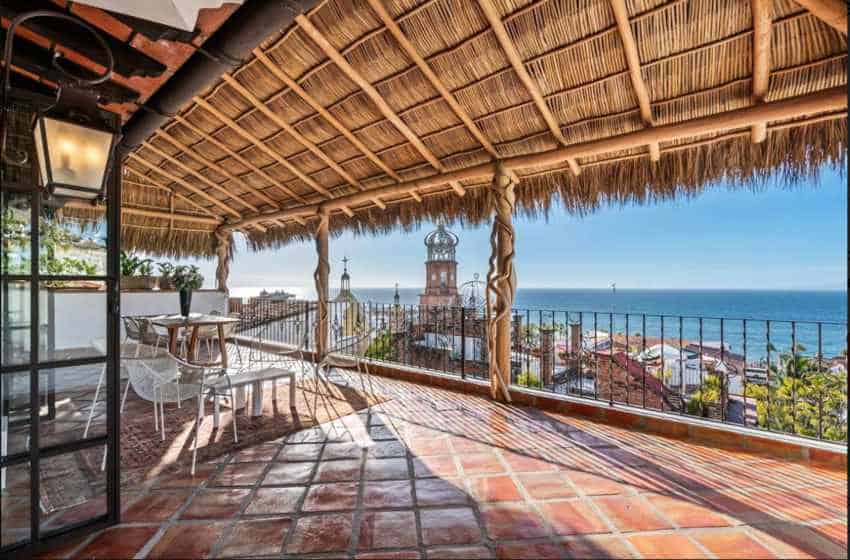
In Puerto Vallarta, there are still opportunities to be found like Casa Muñeca, a 4,232-square meter (45,552 square feet) home in the downtown. This sort of property — which embodies rustic colonial Mexican charm with its traditional adobe walls, high ceilings and talavera tiles — is the kind of property that vacation renters looking for a traditional, more authentic Mexico experience will love.

A spacious outdoor rooftop patio in a Puerto Vallarta home has a thatched roof and overlooks the ocean and a city, all under a clear blue sky.
View from the terrace of Casa Muñeca, the kind of expansive, well-located homes you can find in Puerto Vallarta’s Gringo Gulch. (Puerto Vallarta Sotheby´s International Realty)

Of course, you’ll pay a lot more for a property like this — closer to U.S. prices — but with three bedrooms and details like stunning views of the sea, a picturesque rooftop palapa, and a mother-in-law apartment on the ground floor, this property in PV’s Gringo Gulch neighborhood could be considered part of the city’s cultural heritage.

For more affordable options, there’s the town of San Juan Cosalá, just a half hour from the popular expat haven of Chapala and a mere 9 kilometers outside of Ajijic. Here you can find properties like Casa Trinidad, a 350-square meter (3,767 square feet), four-bedroom, five-bathroom home with a pool sited on a 717-square-meter (7,717 square feet) lot. Part of an exclusive development of eight luxury homes that share gardens and recreational areas, it’s a reasonable 50 minutes from Guadalajara International Airport.

Mexico City

A multistory building in Mexico City at night, with warm light spilling from its many windows, illuminating modern interiors.
Mexico City is a popular destination with plenty of new builds. But if you love Mexico’s historic architecture, buildings like this with traditional facades but with modernized interiors are available in some of the capital’s most central neighborhoods. (Espiral BR Desarrollos)

And finally, yes, you can still find great properties in the heart of Mexico’s capital, for far less than you’d pay for a condo in many comparable U.S. or Canadian metropolitan hubs.

This 10-apartment development, for example, located in the iconic Santa María La Ribera neighborhood, features two- and three-bedroom apartments with a throwback California Mission-style facade but with updated, modern interiors. Located in the central Cuauhtémoc borough, one of Mexico City’s most valuable areas, it’s the kind of property that you’ll always be able to rent or simply enjoy whenever you visit.

Ana Paula de la Torre is a Mexican journalist and contributor for Milenio, Animal Político, Vice, Newsweek en Español, Televisa and Mexico News Daily.

Affordable housing movement in CDMX gains ground with third anti-gentrification march

14
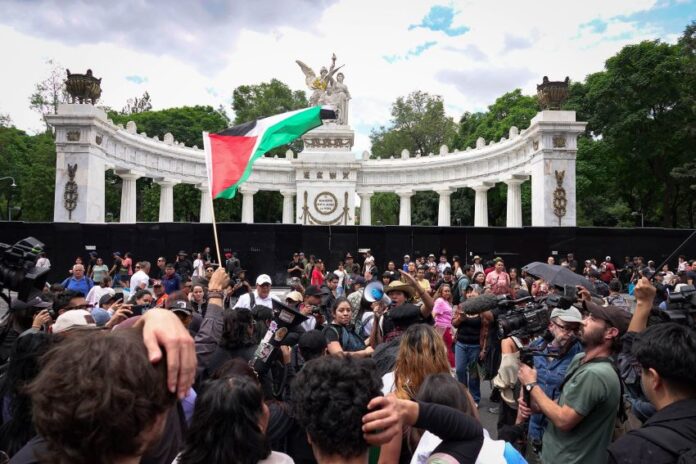
protesters in alameda park Mexico City
The protesters — including many university students — walked from the Alameda Central Park to the Zócalo, the capital's central square. (Rogelio Morales/Cuartoscuro)

Around 200 people participated in an anti-gentrification march in Mexico City on Saturday, the third such protest in the capital this month.

Unlike the July 4 and July 20 protests, Saturday’s march wasn’t significantly marred by violence, with city authorities reporting that it concluded “without incidents.”

The “Third March Against Gentrification” began at the Benito Juárez Hemicycle in the Alameda Central Park in the historic center of Mexico City on Saturday afternoon.

The protesters — including many university students — walked to the Zócalo, the capital’s central square, and subsequently returned to the departure point before the march concluded at the nearby Juárez metro station, the Mexico City government said in a statement.

The government said that the march “took place peacefully” and noted that “various collectives” and citizens expressed their “rejection of the phenomenon of social displacement and the increase in the cost of housing in different areas of the city.”

The protesters had planned to march to the United States Embassy on Mexico City’s famous Paseo de la Reforma boulevard, but took a last-minute decision to change the route.

On Friday, the U.S. Embassy issued a “security alert” ahead of the protest.

“Previous [anti-gentrification] demonstrations occurred in the Roma and Condesa neighborhoods on July 4 and the Tlalpan neighborhood on July 20. Some in those groups vandalized property and threw rocks at people perceived to be foreigners. U.S. government personnel are advised to avoid the demonstration area,” it said.

As anti-gentrification sentiment grows, a second Mexico City march targets World Cup speculation

Foreigners, especially U.S. citizens, have been blamed for causing, or at least exacerbating, gentrification in certain neighborhoods of Mexico City, such as Roma and Condesa.

‘Decent housing for Mexicans’; ‘Get out Airbnb!’

Among the placards held up by protesters during Saturday’s march were ones that read, “Decent housing for Mexicans”; “Get out Airbnb”; “The [historic] center is not for sale; and “Our neighborhood is not a warehouse.”

The final message alluded to the fact that scores of buildings in the historic center of Mexico City have been turned into warehouses to store goods sold at Chinese-operated shopping plazas.

Protesters also denounced the ubiquity of short-term accommodation in Mexico City’s downtown and other parts of the capital.

“Many buildings that were [long-term rental] apartments, offices or hotels before have been turned into properties exclusively dedicated to short-term rentals, Airbnbs in other words,” a young man identified only as Leonardo told the newspaper Reforma.

“In that process, families have been displaced,” he said.

The news outlet Sin Embargo reported that protesters also chanted anti-United States slogans during Saturday’s march. “To gentrify is to colonize,” said a message scrawled in graffiti on a roller shutter protecting a shop.

As was the case at the previous anti-gentrification protests this month, some demonstrators carried Palestine flags to demonstrate their support for the besieged residents of Gaza and their opposition to Israel.

At the end of the protest, members of the collective Frente Joven por la Vivienda (Youth Front for Housing) pledged to “defend our neighborhoods, our histories and our way of living,” Sin Embargo reported.

“… What unites us is not just anger, but also our hope for a better tomorrow,” they said, adding that they would continue their fight until “living in dignity isn’t a privilege, but a right.”

Weapons seized and Metro station vandalized 

While the Mexico City government reported that the march took place peacefully and concluded “without incidents,” it did acknowledge that police seized “various objects” that “could have been used to attack or cause damage to public furniture.”

The seized items included bats, chains and a hammer as well as a “backpack that contained a Molotov cocktail and aerosol paint,” the government said.

The confiscation of the weapons reportedly provoked scuffles between police and protesters.

The Mexico City government noted in its statement that police and other officials accompanied the protesters during the entire march. The government said that their presence — which was opposed by the protesters — prevented “confrontations” and encouraged “an orderly and safe protest.”

foreigner yelling at protesters
Foreigners, especially U.S. citizens, have been blamed for causing, or at least exacerbating, gentrification in certain neighborhoods of Mexico City, such as Roma and Condesa. (Rogelio Morales/Cuartoscuro)

However, police and other officials were unable to stop a group of protesters from defacing parts of the interior of the Juárez metro station with graffiti.

Gentrification — an issue that isn’t going away 

Saturday’s march came two weeks after Mexico City Mayor Clara Brugada announced that her government would create thousands of affordable housing units as part of a long-term strategy to tackle gentrification.

Last October, Mexico City’s Congress approved a reform that established a 180-day-per-year limit on online vacation rentals, including Airbnb, and prohibited government-built social housing from being rented to tourists via online rental platforms.

Such initiatives have been unsuccessful in quelling long-brewing anger about gentrification in Mexico City. Protesters on Saturday even accused the government of supporting the process of gentrification in the capital.

Although protests against gentrification have been held in Mexico City before this month — including one in November 2022 after then-mayor Claudia Sheinbaum entered into an agreement with Airbnb to promote the capital to digital nomads — the three demonstrations in quick succession in July indicate that the aforementioned anger is only growing.

Sheinbaum — Mexico’s president since last October and mayor of Mexico City when a wave of remote work-induced migration to the capital took place during the COVID-19 pandemic — recently acknowledged that “the phenomenon of gentrification must be addressed,” while denouncing xenophobia in the first protest this month.

According to the Youth Front for Housing, the “next step” in the fight against gentrification in the capital will be the staging of the first “Regional Conference against Gentrification and Dispossession” at the National Autonomous University (UNAM) on Saturday, Aug. 9.

Members of the collective said they aren’t against change per se, but are opposed to “change that excludes and erases us.”

“Gentrification is not development,” they said. “It’s dispossession disguised as progress.”

With reports from Sin Embargo, La Jornada, CNN en Español, Excélsior, Reforma, El Universal and El Financiero

Cozumel cruise ship dock indefinitely postponed amid environmental concerns

8
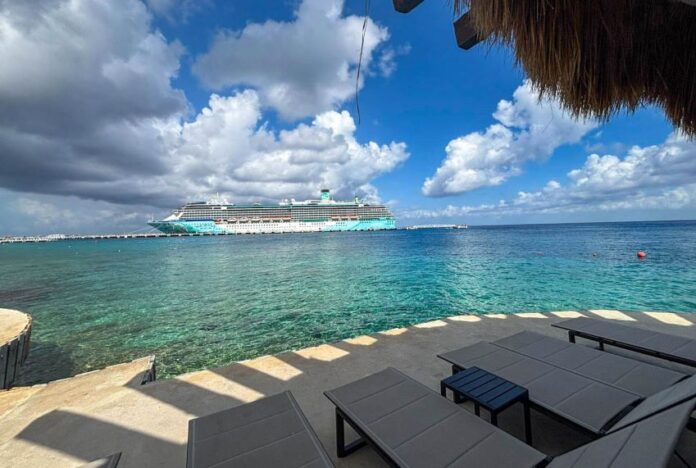
cruise ship offshore
The island of Cozumel, along Mexico's Caribbean coast, receives 66% of visiting cruise ship passengers. (Elizabeth Ruiz/Cuartoscuro)

Shifting political tides and growing ecological concerns have put plans for a cruise ship dock on hold in the Caribbean island of Cozumel in the state of Quintana Roo.

The suspension was announced last week by Muelles del Caribe, the company in charge of the project, after lengthy discussions with the federal Environment Ministry (Semarnat) and state authorities.

The new dock was originally approved by Semarnat in December 2021 and the ministry issued a concession title in January 2022, but the project has faced increasing opposition ever since.

Especially vocal were activists and local tourism operators who claimed the dock would damage the Villa Blanca coral reef located just outside the island’s national marine park.

Greenpeace called the project “the continuation of a massive, predatory tourism model driven by a handful of private interests that devours nature and excludes the local population.”

Emergency responders also voiced concern, saying the pier project — which would occupy 59,000 square meters of federal maritime zone — would obstruct Coast Guard routes and potentially inhibit rescue missions in southern waters.

In June, Semarnat agreed to undertake a new environmental impact study with a particular focus on the reef and the rights of the local population to a healthy environment.

Construction on the dock — which would have been Cozumel’s fourth pier for cruise ships — had not yet begun as Muelles de Caribe was awaiting the issuance of municipal permits.

During a July 4 visit to Cozumel, Environment Minister Alicia Bárcena said the project “was causing more problems than solutions.” (@aliciabarcena/X)

In a statement, the company said it had agreed to “a suspension” of the project.

“This determination reflects our firm commitment to social, environmental and corporate responsibility, and reaffirms our dedication to the sustainable economic development of the island of Cozumel and the state of Quintana Roo,” the company said in a press release.

However, on July 17, Cozumel Mayor José Luis Chacón said City Hall would not approve the new pier, adding that he had sent a letter to federal officials stating just that. 

Even without a new pier, activists worry about Cozumel being “over-touristed.” 

According to Cozumel authorities, in 2023, nearly 8.8 million people arrived on the island, which is home to roughly 110,000 people. In mid-April, officials were expecting upward of 80,000 tourists during Easter Week alone.

The proposed pier consists of an L-shaped dock covering 1.16 hectares with capacity for 362 meter-long ships. The project also features a terminal building for passenger boarding and disembarking and a road linking the dock to downtown Cozumel.

With reports from El Economista, Riviera Maya News, Greenpeace and Opportimes

What’s on in Los Cabos in August?

0
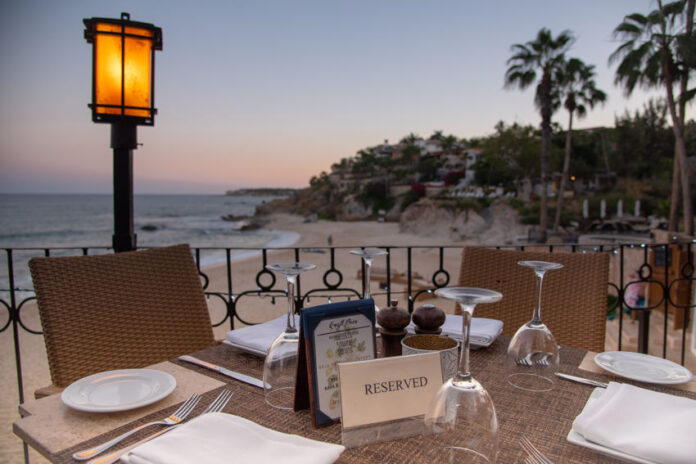
A reserved table at an outdoor restaurant overlooks a beach and ocean at sunset in Los Cabos, Baja California Sur, Mexico
August is a quiet time in Los Cabos, the perfect moment to take advantage of the array of the regular monthly events taking place. (Arturo Verea/Shutterstock)

August is the slowest month of the year for big events in Los Cabos, slower even than September, which at least offers the fiestas patrias associated with Mexico’s Independence Day. Indeed, outside of Bisbee’s East Cape Offshore, which started in July and concludes during the first few days of August, there are no major events scheduled in Los Cabos this month.

That’s not to say, however, that there aren’t plenty of things worth doing, and this seems an opportune time to spotlight some of the smaller, often recurring events at area hotels, resorts, bars and restaurants.

Cooking class at Acre

(Acre/Instagram)

Not only does this class offer the opportunity to tour the property of one of the most acclaimed farm-to-table restaurants in Los Cabos, but it also provides participants with a chance to learn how to prepare a few delicious Mexican specialties from scratch. 

Dates: Weekdays, 11 a.m.–2 p.m. in August
Location: Acre Restaurant and Cocktail Bar, C. Rincón de las Animas, Animas Bajas, San José del Cabo
Cost: 2,100 pesos per person

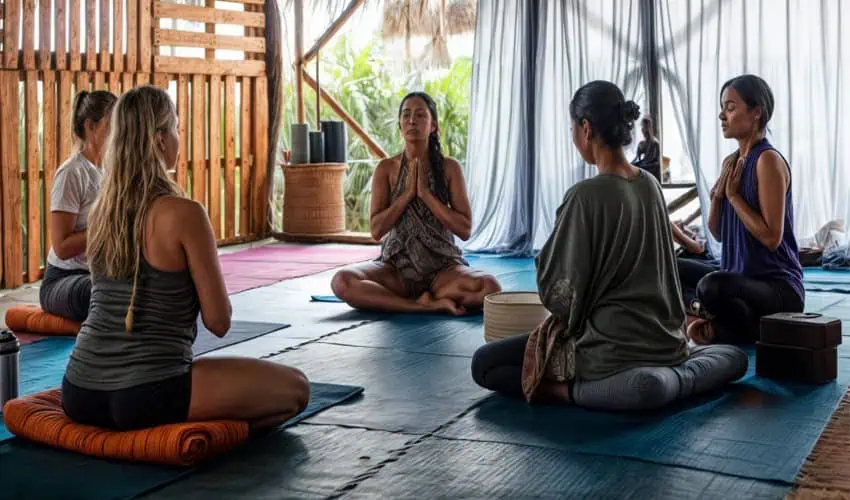
Yoga + Mimosas at Drift

Five women are seated cross-legged on yoga mats in a rustic, open-air studio with wooden slatted walls, practicing meditation with their hands in various positions on their chests.
(El Estar)

Best known as a 29-key boutique hotel in the heart of San José del Cabo’s Gallery District, Drift also prides itself on its weekly Yoga + Mimosas event, held each Saturday. The yoga and first mimosa are complimentary for those who RSVP, but rental mats for non-guests or brunch afterward at Drift Kitchen + Mezcal Bar are extra. 

Dates: Aug. 2, 9, 16, 23, 30
Location: Drift, Miguel Hidalgo 613, Gallery District, San José del Cabo
Cost: The class is free, but RSVP to ensure space availability

Martini and Jazz Nights at Humo

Some things never go out of style. For instance, jazz and martinis have each achieved classic and forever stylish status. Up to four signature examples of the iconic cocktail are featured on Saturday nights at elegant, Ritz-Carlton-based Humo.

Dates: Aug. 2, 9, 16, 23, 30
Location: Zadún, A Ritz-Carlton Reserve, Blvd. Mar de Cortez, San José del Cabo
Cost: Call (624-172-9000) for reservations

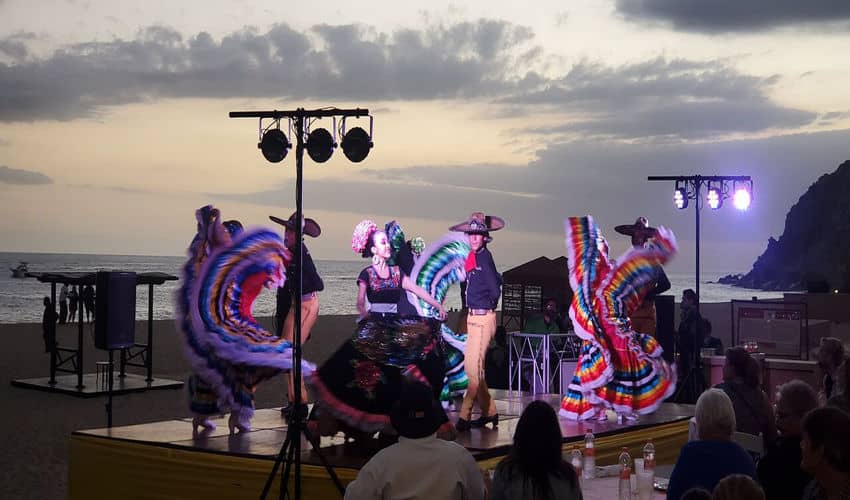
Fiesta Mexicana at Playa Grande

A group of dancers in colorful traditional Mexican dresses and sombreros perform on an outdoor stage on a beach at dusk.
(Trip Advisor)

Playa Grande, a beachfront resort under the Grupo Solmar banner, celebrates traditional Mexican music and dancing each Monday night with its Fiesta Mexicana. Mexican culinary favorites are also featured, with tacos and margaritas headlining the buffet and open bar.

Dates: Aug. 4, 11, 18, 25
Location: Playa Grande, Playa Grande 1, Cabo San Lucas
Cost: US $52 for adults, free for children 5 and under

Hook and Cook at Pueblo Bonito Pacifica

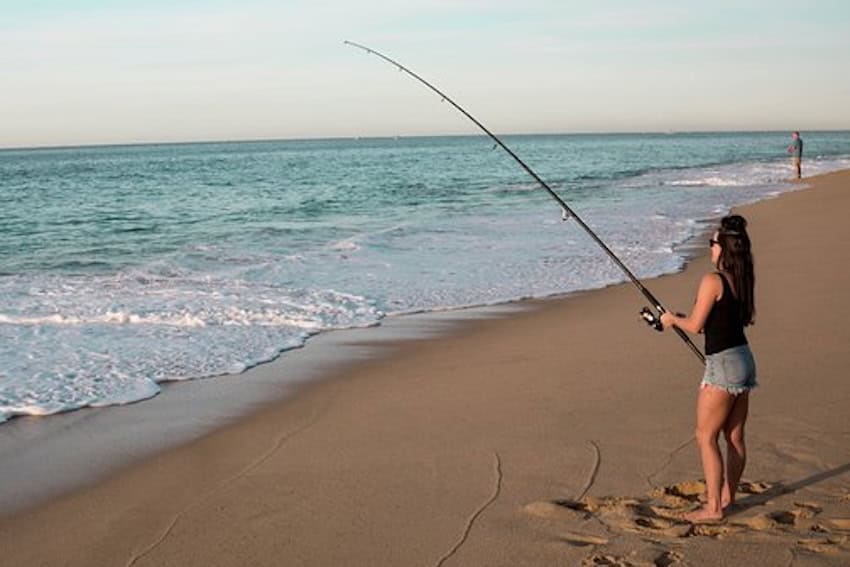
A woman fishing on the beach in Los Cabos
(Trip Advisor)

If you can’t catch dinner while shore fishing in the Pacific Ocean at luxury resort Pueblo Bonito Pacifica, don’t worry. Your chef guide has fresh fish and ceviche to serve up for this memorable breakfast activity.

Dates: Aug. 6, 13, 20, 27
Location: Pueblo Bonito Pacífica Golf & Spa Resort, Previo Paraíso Escondido, Cabo San Lucas
Cost: Call the resort for reservations and details (624-142-9696)

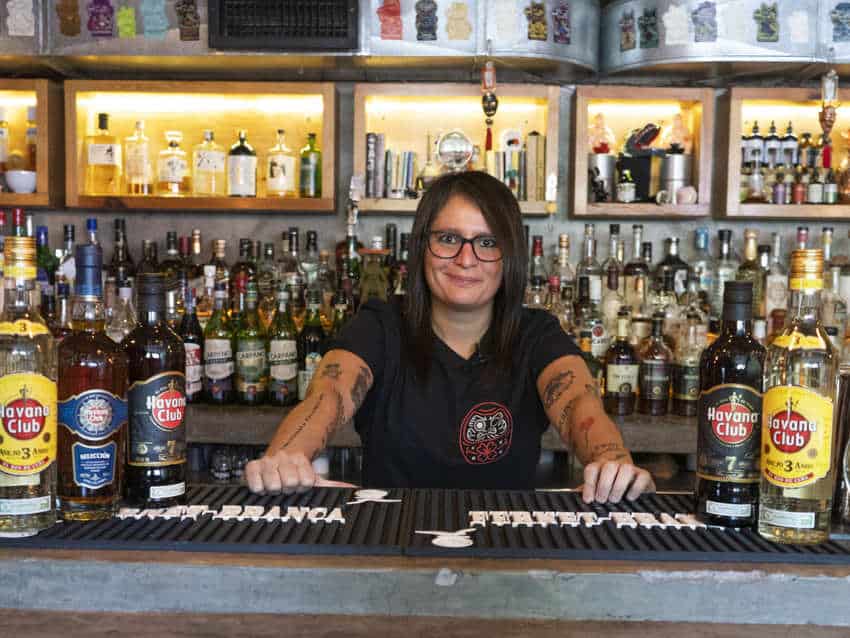
World’s 50 Best, Guest Bartender Claudia Cabrera, at Viceroy

A smiling bartender with tattooed arms and glasses, Claudia Cabrera, stands behind a bar filled with bottles of liquor.
(Havana Club)

Viceroy Los Cabos has been showcasing cocktails from some of the world’s best bartenders this summer. In June, it was Kevin Tocino from Aruba Day Drink in Tijuana. This August, it’s Claudia Cabrera from Kaito del Valle in Mexico City.

Dates: Aug. 7
Location: Viceroy Los Cabos, Zona Hotelera, San José del Cabo
Cost: Open to guests of the resort, rates start at US $500 per night

Boogie Nights at Rooftop 360

People enjoying a rooftop bar
(The Rooftop Guide)

Retro music from the 1980s and ’90s rules during weekly Boogie Nights at Rooftop 360, the bar with spectacular views set above Playa El Médano at Corazón Cabo Resort and Spa. Women enjoy two-for-one prices on domestic drinks from 8 p.m. to 9 p.m.

Dates: Aug. 7, 14, 21, 28
Location: Corazón Cabo Resort, Pelicanos 225, Col. El Médano Cabo San Lucas
Cost: No cover charge

Chris Sands is the Cabo San Lucas local expert for the USA Today travel website 10 Best, writer of Fodor’s Los Cabos travel guidebook and a contributor to numerous websites and publications, including Tasting Table, Marriott Bonvoy Traveler, Forbes Travel Guide, Porthole Cruise, Cabo Living and Mexico News Daily. His specialty is travel-related content and lifestyle features focused on food, wine and golf.

Where and why to find the last bastions of Puerto Vallarta’s history

2
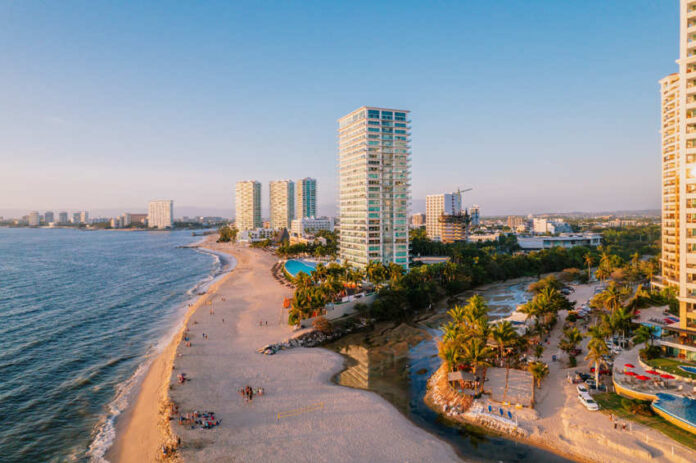
Aerial view of modern high-rise resorts and condominiums lining the sandy beach and coastline of Puerto Vallarta, Mexico, with Banderas Bay stretching into the distance.
Ever-increasing investment and development aimed at tourism has brought Puerto Vallarta to international prominence, but the rapid pace threatens to permanently erase any collective memory of its history. (Hello Cinthia/Shutterstock)

Puerto Vallarta has become one of Mexico’s most recognizable tourism success stories. Its skyline silhouette of hacienda-style, all-inclusive resorts alongside luxury condos is a testament to its appeal among both sunseekers and investors. But long before resorts lined the Marina or high-rises climbed the Conchas Chinas cliffs, this port town was a rural fishing and trading village tucked between jungle-covered mountains and the curve of Banderas Bay.

But that history is in danger of being forgotten, thanks to decades of investment and development in Puerto Vallarta as a tourism destination. But there are still traces of that history, if you know where to look.

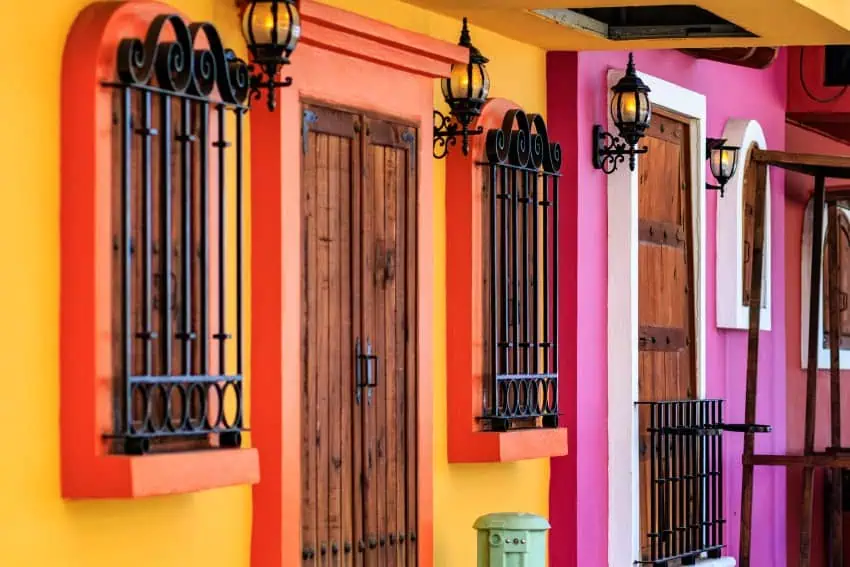
House facades on a street painted in different bright cheery colors with picturesque black wrought iron grids over many doors and windows and retro lamps made to look like gas lamps.
There is still history in Vallarta for those who try to seek it out. (Shutterstock)

To walk the cobblestone streets of its historic center today is to glimpse the enduring spirit of a Vallarta that existed before the tourism boom — one of riverside washerwomen, stevedores at the pier and evenings spent in the plaza sharing stories and tamales.

“‘Old Vallarta’ is a fond memory and a collective recollection filled with nostalgia,” says Lic. Moisés Hernández López, the city’s official chronicler. “It was a period marked by strong community relations, a human scale in everyday life and a pace distinct from what urban development would later impose.”

Though difficult to pinpoint to one decade, “old Vallarta” is generally considered the era between 1920 — when Las Peñas officially became the municipality of Puerto Vallarta — and the early 1960s, just before the arrival of modern tourism.

Hernández describes a tightly knit community shaped by both its natural surroundings and its isolation.

“Puerto Vallarta’s uniqueness lay in its geographic isolation, combined with a strong community identity. The town was a crossroads of maritime trade and agricultural life, where cooperation and solidarity were everyday realities,” he says.

The early economy relied on fishing, copra (coquito oil) extraction, tobacco, plantains and the high-end wood trade. Tile-making, brickmaking, and the physically demanding port work defined the town’s labor force. Infrastructure milestones such as the arrival of electric lighting and the telegraph brought progress, but never eclipsed the community’s collective spirit.

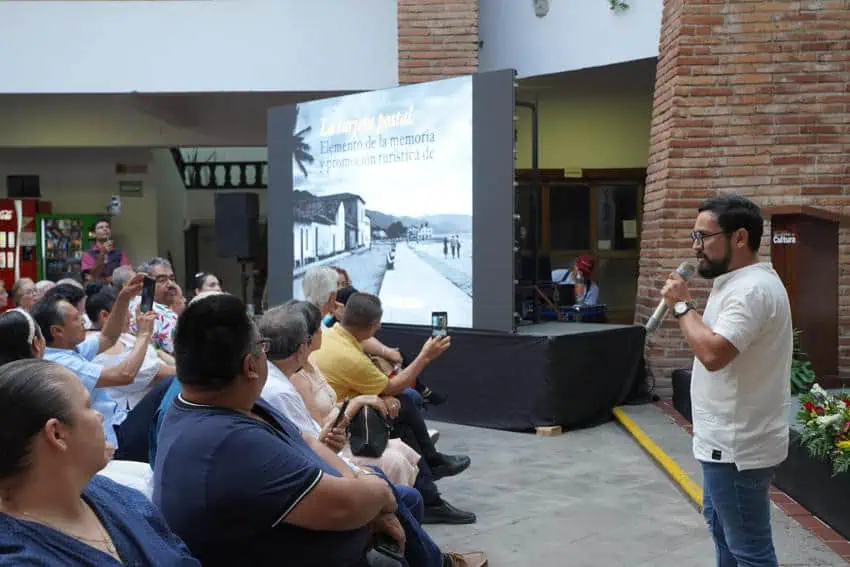
Moisés Hernández López, Puerto Vallarta's official chronicler, gives a lecture on the city's history, with an old photo of the town projected behind him and an audience listening intently.
Licienciado Moisés Hernández López is Puerto Vallarta’s official cronista, or chronicler. He is on a mission to preserve the memory of Puerto Vallarta’s history. (Moises Hernández López/Facebook)

That sense of cohesion still pulses in certain corners of the city. According to Hernández, Puerto Vallarta’s historic center — which is not, in fact, the Zona Romantica, but rather the area that stretches from Calle 31 de Octubre to the Cuale River — is one of the “last bastions” of the city’s earliest identity.

“It preserves the original layout of the old Villa de Las Peñas,” he explains, referring to the original 19th-century settlement that would become Puerto Vallarta.

Here, the parish church of Our Lady of Guadalupe rises above the rooftops, an enduring spiritual and architectural symbol. Hernández is quick to name the Saucedo Theater as another historic landmark worth attention.

Designed in 1922 by Italian architect Ángel Corsi — who also designed various historic buildings in Guadalajara — Puerto Vallarta’s Saucedo Theater became a gathering space for cinema, music and community events, with its significance lingering long after its lights dimmed.

As for the maritime heritage, the leading lights, popularly known as the Vallarta lighthouses, are still preserved. One is located on the malecón at Calle Morelos, and the other is on Matamoros Street at the foot of the hill. Both were built to guide ships and are now considered historical heritage sites. The Matamoros lighthouse, in particular, has been adopted as a popular lookout point for its views of the bay and the historic center.

But perhaps the deepest traces of old Vallarta are not found in stone or plaster, but in tradition. The December pilgrimages in honor of Our Lady of Guadalupe still wind through the streets, a tradition so integral to Vallarta’s identity that it has been recognized as intangible cultural heritage by the state of Jalisco.

Likewise, the paseadas of Las Palmas (picnic-style horseback rides hosted by long-established families) and the charrería equestrian tradition kept alive by local families like the Ibarrias, echo the town’s rural roots.

“There are still palaperos (trained constructors of palapas), tile-makers, and fishermen who carry on the old trades,” Hernández notes, though they face increasing pressure from modernization, he says.

“Simple but meaningful customs, such as chatting on the sidewalk, sharing food with neighbors, or participating in social gatherings, have gradually disappeared,” Hernández says. “The arrival of tourism transformed daily rhythms and altered the relationship between the space and its inhabitants.”

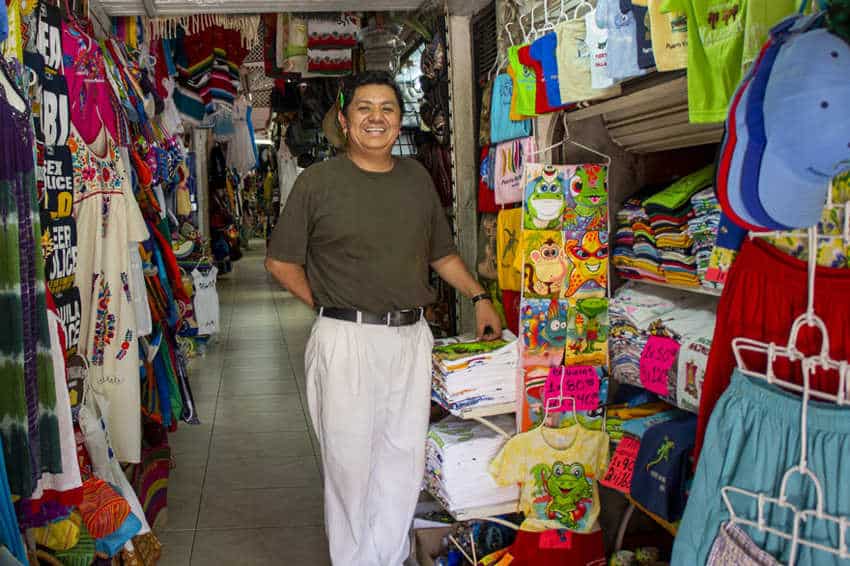
A smiling male vendor stands in his narrow market stall filled with colorful clothing and souvenirs in Puerto Vallarta, Mexico
One way to learn about Puerto Vallarta’s history is to talk to people who lived through it, says Hernández. Talk to longtime Vallarta residents you meet in everday life on the street or at the municipal market. (Puertovallarta.net)

And that, he warns, is the biggest threat to Vallarta’s soul: Rapid growth, land speculation and short-sighted development have often treated the city’s memory as expendable.

“The past has too often been seen as a hindrance to development, rather than as a foundation for the future,” he says. “But memory, when well managed, can be a valuable tourism and economic asset.”

Still, signs of hope remain. Preservation efforts have gained momentum, both from official bodies and grassroots collectives. The historic center is a protected zone, even if enforcement is inconsistent. Nonprofit groups and academics are working to catalog buildings in Puerto Vallarta, interview elders and train new generations of historians.

“There’s a growing network of artists, architects and scholars committed to preserving our heritage,” says Hernández. “And young people are beginning to show interest, too, recognizing that history isn’t something distant but something you can see in the window grills, the rooftops, and the voices of your neighbors.”

If you want to experience the old Puerto Vallarta, he suggests starting with an early morning stroll through the historic center. Cross the suspension bridge over the Cuale. Visit the market and taste its food. Climb the hill to the Matamoros lighthouse for a quiet moment of reflection. And, most importantly, talk to the locals — from the fishermen and the vendors to the abuelos on park benches.

“There, between words and silence,” he says, “you will find a true haven of Puerto Vallarta.”

As the city hurtles into its next chapter, shaped by foreign investment, real estate speculation and rapid expansion, these last bastions of Vallarta’s history serve as both anchor and guidepost. They remind us that heritage is not merely what we preserve in stone but also what we choose to carry forward in spirit.

Because without memory, even paradise can lose its way.

Meagan Drillinger is a New York native who has spent the past 15 years traveling around and writing about Mexico. While she’s on the road for assignments most of the time, Puerto Vallarta is her home base. Follow her travels on Instagram at @drillinjourneys or through her blog at drillinjourneys.com.