San Luis Potosí Economic Development Minister Jesús Salvador González welcomes SL MEX President Kyungsoo Koo, who announced his company's US $45 million investment in its local auto parts plant. (@sedecoslp/on X)
Korean automotive company SL MEX has made an initial investment of US $45 million to establish a new production plant in the Logistik II industrial park, located in Villa de Reyes, San Luis Potosí, about 50 kilometers south of the state capital.
The announcement was made by Governor Ricardo Gallardo Cardona, who noted that the establishment of SL MEX represents a firm step toward the diversification and modernization of San Luis Potosí state’s automotive industry.
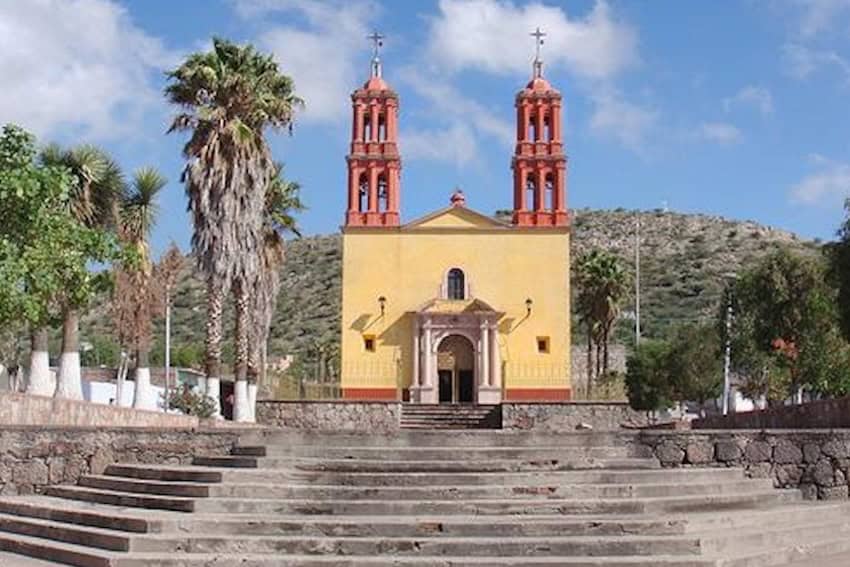
History-rich Villa de Reyes, SLP, home of the new SL MEX auto parts plant, is at once a candidate for Pueblo Mágico status and a thriving automotive industry center. (@villa_dereyes/X)
The plant, led by Kyungsoo Koo, president of SL MEX, is already built and operations are expected to begin in the coming months. It covers 8.9 hectares, including a building of more than 14,000 square meters.
The factory will manufacture automotive headlight modules for major global brands such as BMW, General Motors, Hyundai and Kia.
With 12 production lines and an installed capacity to manufacture up to one million modules per year, the company will generate 385 direct jobs, strengthening regional economic development and adding value to the automotive supply chain. SL MEX estimates annual sales of US $144 million by 2030.
The company’s investment adds to a positive nearshoring trend in San Luis Potosí, which attracted US $642 million in new investments during the first quarter of 2025, most of it by the automotive industry. The majority of the state’s foreign direct investment projects so far this year are associated with auto parts companies and vehicle manufacturers, including the production of electric vehicles and components such as lithium batteries.
🔧🚗 SL MEX consolida su presencia en San Luis Potosí con una inversión de 45 MDD
Con el respaldo del Gobernador Ricardo Gallardo, la empresa coreana instala su planta en Logistik II, Villa de Reyes, donde fabricará módulos de faros para BMW, GM, Hyundai y Kia. pic.twitter.com/66gtnpF3NM
SL MEX is the Mexican arm of SL Corporation, established in South Korea in 1954. The multinational company is headquartered in Gyeongsan, South Korea, and produces automotive lighting systems, as well as chassis, mirrors, and front-end modules.
It has plants in Korea, the United States, India, China, Brazil, and Poland. Its annual sales as a conglomerate are around US $4 billion.
The Senate vote culminated a years-long effort to ban the capture and exploitation of sea mammals in Mexico, spawned by public outrage over evidence of their mistreatment. (Adam Berkecz/Unsplash)
The Mexican Senate has unanimously approved a nationwide ban on dolphin and other marine mammal shows, culminating a three-year legislative effort sparked by public outrage over animal welfare violations.
The 99-0 vote on Monday amended the General Wildlife Law to prohibit “extractive exploitation” of marine mammals, except for verified scientific research.
“The research must be conducted or endorsed by an officially registered academic or research institution and have a protocol authorized” by the Ministry of Environment and Natural Resources (Semarnat), reads the amendment accepted by the legislators.
President Claudia Sheinbaum personally prioritized the new legislation during a special session of Congress, calling it essential to prevent animal abuse.
The session, which began Monday and is slated to run through July 2, was convened to address a set of urgent or pending legislative matters — in this case, more than 20 pending laws and reforms.
“We are against any violence, but animal abuse in particular is a reflection of what could later escalate in terms of violence,” Sheinbaum stated.
The legislative breakthrough — which also bans captive breeding except for reintroduction programs — follows intensified enforcement actions against violators, after months of lax implementation following the Chamber of Deputies’ initial 2022 approval.
In March, Mexico’s Federal Attorney for Environmental Protection (Profepa) suspended shows at the Barceló Maya after the emergence earlier this year of a 2020 video of a leaping Mincho landing hard on concrete, and amid reports of the deaths of two other dolphins, Alex and Plata, last year.
At that time, Profepa issued a press release noting that it “will begin conducting inspections at all dolphinariums in the country to ensure the dignified treatment of the animals they house.”
By the middle of May, Profepa had permanently closed Dolphinaris Barceló and fined the company more than 7.5 million pesos (US $395,000), according to the Riviera Maya News. The newspaper also reported that Mincho survived and still has adequate mobility, but at age 35, he is the oldest dolphin at his new dolphinarium and “he suffers from chronic keratitis in both eyes,” with 60% vision in his right eye and 0% in his left.
The Mincho incident sparked outrage and calls for the closure of dolphinariums across Mexico, where there are approximately 30 facilities, according to the newspaper El País. Most are located in Quintana Roo, but there are others in Guerrero, Veracruz, Baja California Sur, Nayarit and Mexico City.
The new law mandates humane lifetime care for existing captive mammals and imposes significant fines for noncompliance.
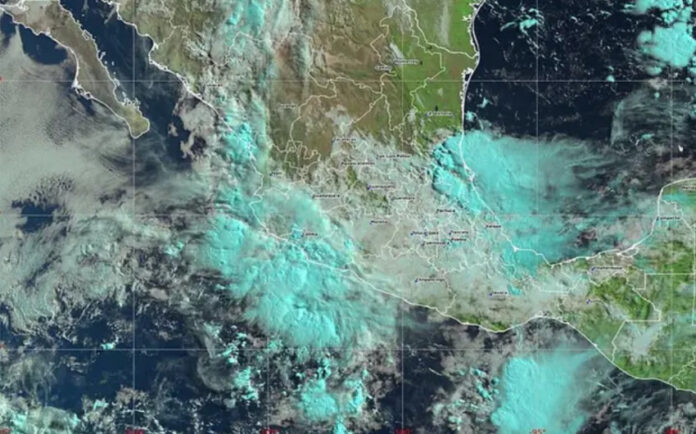
The storm has a 10% chance of developing into a tropical cyclone by Thursday, and a 70% chance of becoming a tropical cyclone next week. (SMN Conagua/X)
The National Weather Service (SMN) and the National Water Commission (Conagua) are tracking a storm system off the coast of El Salvador that is expected to bring heavy rain to the southwestern states of Chiapas and Oaxaca this weekend.
In a social media post early Tuesday, the SMN said it is monitoring a low-pressure system about 670 km south-southeast of the Suchiate River at the Mexico-Guatemala border. The storm was moving slowly in a west-northwesterly direction.
The storm has a 10% chance of developing into a tropical cyclone by Thursday, appearing off the coast of Oaxaca and Chiapas between June 27-29. Conagua is forecasting that the storm has a 70% chance of becoming a tropical cyclone next week by which time it will approach the states of Jalisco, Michoacán and Guerrero.
If the system becomes a tropical storm, it will be named Flossie.
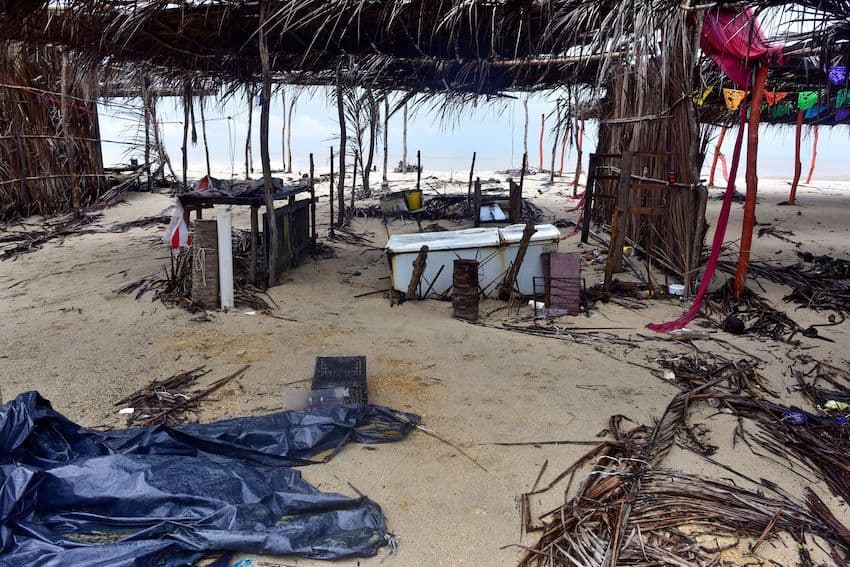
Oaxaca and Guerrero are still cleaning up after Hurricane Erick made landfall on Thursday, dumping considerable rain on those two states through Sunday. The National Civil Protection Commission (CNPC) said Erick damaged at least 26,000 homes in those two states, nearly 20% of the buildings in the 17 municipalities where it hit hardest.
The CNPC was still assessing the damage at 286 school buildings in the affected area, while federal authorities worked to re-open roads and highways, supply potable water and provisions and address health considerations to prevent epidemiological outbreaks.
The passage of Hurricane Erick last week damaged at least 26,000 homes in Guerrero and Oaxaca. (Carlos Carbajal/Cuartoscuro)
Mexico is confronted with the onset of the most active tropical cyclone season in recent memory. There have already been three named tropical storms (Alvin, Cosme and Dalila), one Category 1-2 hurricane (Barbara) and a Category 3 hurricane (Erick), the strongest hurricane to hit Mexico so early in the year.
While Oaxaca and Chiapas brace for drenching rains, storm surge and high winds in the coming days, meteorological models project the current storm could remain parallel to Mexico’s southwestern coast, eventually impacting Baja California Sur as a tropical storm. However, it could also veer west away from the coast.
Even if the storm does not make landfall, Conagua is forecasting it will produce heavy rains as far inland as Puebla in central Mexico and, as it continues on its northward path, states such as Colima, Nayarit, Sinaloa, Sonora, Chihuahua and Durango could see severe rainstorms.
In the meantime, seasonal rains will continue to drench much of Mexico, according to the SMN, as low-pressure systems are interacting with troughs of low atmospheric pressure from the Yucatán Peninsula north to the Mesa Central.
Heavy rains are forecast on Tuesday in Hidalgo, Puebla, Veracruz, Oaxaca, Chiapas and Tabasco. The newspaper Debate even headlined its story about rains in Mexico City and México state thusly: “Don’t go outside without a boat.”
The financial details have not been made public, but the move signficantly expands Fox's sports programming footprint in the Mexican market.
(Fox Sports/Caliente)
Fox Corporation has acquired Mexican sports streaming platform and television channel Caliente TV, expanding its sports programming footprint in Mexico and Latin America.
Financial details of the acquisition, announced on June 19, have not been disclosed.
León and Pachuca are two of the Liga MX men’s soccer clubs for which Caliente — and now Fox — has the TV rights. (Jorge Ortega/Cuartoscuro)
Fox said it wants to develop a multi-platform business, according to the news agency Reuters, and has plans to launch Caliente TV in Central America.
SportsPro media group reported that Fox plans to introduce new channels in Mexico and Central America, including a new pay-TV channel, as well as the long-awaited Fox One, a new direct-to-consumer (DTC) streaming service.
The Murdoch family-controlled company told Reuters that Fox One will launch during the summer before the U.S. professional football season kicks off, in an effort to reach audiences beyond its mainstay cable television business.
The media giant also plans to add a new subscription streaming offering that will complement its free ad-supported streaming television service, Tubi.
Carlos Martínez, executive vice president and managing director of Latin America for Fox, will take charge of the presentation of new sports channels and streaming platforms in Mexico and Central America, which are expected to employ more than 350 people.
Martínez has over three decades of broadcast industry experience in Latin America, holding executive roles at companies such as Turner, Discovery, Fox and Tubi, the company told Reuters.
“Fox’s investment to acquire Caliente TV reflects our commitment to building a leading sports streaming business in Mexico with massive audience reach, a robust sports rights portfolio and an impressive roster of exclusive sports leagues and talent,” said Martínez.
The move allows Fox to tap into the growing appetite for premium sports and bulk up its sports content as streaming becomes the top way for viewers to watch TV.
Last month, streaming surpassed the combined share of broadcast and cable TV viewing for the first time ever, according to a Nielsen report that tracked viewership.
What Fox gets from Caliente
Caliente TV provides local knowledge, Martínez said, and an established subscriber base.
It also boasts a rights portfolio that includes several prominent soccer leagues and tournaments, including the UEFA Champions League, the Concacaf Champions League, France’s Ligue 1 and the men’s and women’s Coppa Italia, Italy’s domestic cup tournament.
It also has rights to six top-flight Liga MX men’s soccer clubs — Tijuana, FC Juárez, Querétaro, León, Pachuca and Tigres — the most important property in the Mexican market. And it holds the rights to 10 Liga MX Women’s Clubs — Guadalajara, León, Pachuca, Tijuana, FC Juárez, Quéretaro, Atlas, Santos Laguna, Puebla and Mazatlán.
The additional soccer programming will broaden Fox’s portfolio of original sports content that already features the English Premier League and the FA Cup, as well as Big Ten Conference football and the United Football League.
Ford CEO Jim Farley was joined by state governors, U.S. Ambassador to Mexico Ron Johnson and other officials at a celebratory event in Mexico City on Monday night. (@MaruCampos_G/X)
Ford has now operated in Mexico for 100 years, and as part of the centennial celebrations on Monday, CEO Jim Farley announced that the company will expand its Global Technology and Business Center (GTBC) in México state.
Farley was joined by state governors, U.S. Ambassador to Mexico Ron Johnson and other officials at a celebratory event in Mexico City. The company — founded by Henry Ford in Detroit, Michigan, in 1903 — opened its first factory in Mexico in Mexico City in 1925.
Ford CEO Jim Farley greets Maru Campos, the governor of Chihuahua, where Ford has operated an engine plant since 1983. (@MaruCampos_G/X)
According to the newspaper Milenio, Farley said that the plan to expand the GTBC — located within the metropolitan area of Mexico City in Naucalpan, México state — is part of Ford’s efforts to develop its capabilities in Mexico. He didn’t specify how much Ford would invest to expand the center, which opened in 2022.
Farley spoke in extremely positive terms about Ford’s presence in Mexico, where the automaker has vehicle assembly plants in Sonora and México state, and engine production plants in Chihuahua and Guanajuato.
“Our factories in Mexico have set the standards for quality and productivity for Ford,” he said.
“… We will continue competing strongly here in Mexico, making and selling vehicles that customers want to drive and which satisfy their needs,” Farley said.
“To our dealers and employees: you are the reason we will continue investing in Mexico,” he said.
Ford sold just under 21,000 cars in Mexico in the first five months of the year, according to national statistics agency INEGI. The company exported more than 183,000 vehicles from Mexico in the same period, almost nine times the number it sold here.
In a press release, Ford México declared that it was celebrating “a monumental milestone” on Monday: 100 years since it became the first automotive assembler [in Mexico].”
“As the country’s first automobile manufacturer, Ford de México has played a fundamental role in the development of the industry and has contributed significantly to the economic and social fabric of Mexico,” the company said.
“Today, Ford de México is made up of more than 14,000 employees and 113 Ford and Lincoln dealerships. Mexico is home to iconic vehicles such as the Mustang Mach-E, Ford Maverick, and Ford Bronco Sport,” it said.
In addition to making vehicles in Mexico, Ford said it has played a “key role” in the country’s auto parts sector, “with facilities such as the plant in Tlalnepantla, [México state], helping the emblem ‘Hecho en México‘ gain global recognition.”
“Hecho en México” eran las palabras inscritas en el interior de las cajas de “autopartes originales de Ford” que recuerdo de mi adolescencia, cuando trabajaba con mi padre en el negocio familiar de autopartes. Hoy celebramos los 100 años de @FordMX en México: un siglo… pic.twitter.com/KD2fR8cLSK
— Embajador Ronald Johnson (@USAmbMex) June 24, 2025
Johnson, the U.S. ambassador to Mexico, said on the X social media site on Monday that “‘Hecho en México’ were words inscribed inside the boxes of ‘genuine Ford’ auto parts that I remember from my teenage years working with my father in our family’s auto parts business.”
“And today we celebrated 100 years of @FordMX in Mexico!” he added.
“Building jobs and communities together. Thanks Ford! And happy 100th Anniversary!”
The Global Technology and Business Center
In its press release, Ford said that its teams in Mexico “are deeply involved” in the “design, development, testing, validation and manufacture” of the company’s vehicles.
“Mexico is also a center for global services, providing experience to Ford’s global organization in critical areas such as information technology, product development, finances, marketing, sales and service, purchases, human resources and Ford Credit,” the company said.
“A clear example of Mexico’s talent is the Global Technology and Business Center (GTBC), established in 2022. As one of Ford’s three global centers, the GTBC in Mexico is a powerhouse for product development, services, and process engineering,” Ford said.
“… It houses the largest automotive engineering center in Mexico and one of the largest in Latin America, employing a team of engineers who work across the entire spectrum of automotive engineering,” the company said.
Ford also announced on Monday that it would expand its “Education in Movement” program in Mexico “through three different actions that will provide more opportunities for students.”
The company said it will allocate an additional US $2 million to its scholarship initiative for “outstanding students,” through which it supports young people attending educational institutions from primary school to university.
Ford also said it would build two new primary schools: one in Mexicali, Baja California, and another near the GTBC in México state. The company has funded the construction of 212 primary schools in Mexico over the past 59 years, but none since 2017, according to the El Universal newspaper.
Ford said that its third education-related “action” would be restoring and maintaining its existing schools.
“Investing in education is the promise of a better future and today it is possible thanks to every person who buys a Ford or Lincoln vehicle,” Farley said.
“Together we will continue building a future in which education is accessible, in which every child has the opportunity to dream and achieve their goals,” he said.
Grupo Pinsa was established over 30 years ago and is a major producer of canned tuna and sardines, with over 100 products under the Dolores, Mazatún and El Dorado brands. (Shutterstock)
Major Mexican food supplier Grupo Pinsa agreed to conserve a watershed in the northern state of Sinaloa to neutralize its water footprint, the company announced on Friday.
Grupo Pinsa signed an agreement with the National Forestry Commission (Conafor) and the community of La Noria on Friday to fund the protection of 1,375 hectares of forest in the upper Presidio River Basin, east of Mazatlán, for five years.
Head of Conafor Joanna Acosta Velázquez, representatives of the La Noria Community Assembly and Grupo Pinsa representatives Javier Humarán and Bernabé Herrera participated in the contract signing.
The replenishment of the water body is equivalent to the annual volume of water used by the company, and the move makes it the first company in Mexico to offset its total water footprint through watershed conservation.
“This agreement reflects our real and tangible commitment to the environment. It’s not just about compensating, but also about regenerating and protecting the sources of life we share with the communities,” said Grupo Pinsa’s CEO Víctor Manuel Ledón Lizárraga.
Grupo Pinsa was established over 30 years ago and is a major producer of canned tuna and sardines, with over 100 products under the Dolores, Mazatún and El Dorado brands, sold in Mexico, the United States and Europe. It is Sinaloa’s largest employer, contributing over 6,000 direct jobs.
The conservation strategy was approved as part of the Local Payment Mechanism for Environmental Services with Concurrent Funds (MLPSA FC) and is the largest MLPSA FC agreement approved in Sinaloa so far this year.
The water conservation organization Conselva, Costas y Comunidades, helped identify Grupo Pinsa’s offset needs using hydrological models and will serve as a technical advisor for the program.
The agreement “represents a model of water co-responsibility, in which the public, private and social sectors collaborate to address the water crisis with concrete, science-based actions,” the organization wrote on its Facebook page on Tuesday.
“The community of La Noria will be a direct beneficiary of the mechanism, receiving payments for conserving its territory and participating in activities such as reforestation, soil restoration, community surveillance and fire brigades. These actions are also expected to contribute to increasing water production in the micro-basin, positively impacting water availability for Mazatlán.”
Availability of surface water in the Presidio River has decreased by 56.6% in the last 13 years, while its aquifer has an annual deficit of 22.10 cubic hectometers, making it one of Sinaloa’s most overexploited bodies of water, according to official data.
The worsening water situation is due to deforestation, uncontrolled urban and agricultural growth, irregular extraction and the effects of climate change.
The recent agreement with Pinsa “is the result of more than a decade of technical and community work in the Presidio River basin,” said Executive Director of Conselva Sandra Guido Sánchez.
“It demonstrates that it is possible to build local solutions to a global crisis when the private sector assumes its shared environmental responsibility.”
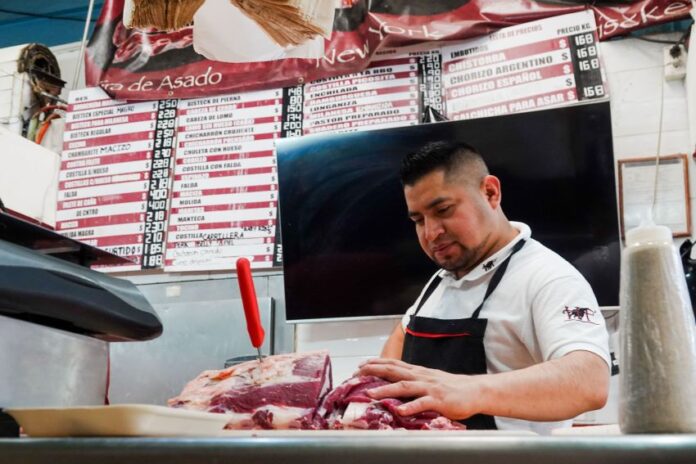
Meat prices increased 11.86% compared to a year earlier, while fruit and vegetables were 1.72% cheaper than in the first half of June 2024. (Galo Cañas/Cuartoscuro)
The Mexican economy is growing despite significant headwinds, but inflation is above the Bank of Mexico’s target range, according to the latest data from the national statistics agency INEGI.
On Monday, INEGI published data that showed that the Mexican economy grew 0.5% in April compared to the previous month and 1.4% in annual terms.
On Tuesday, INEGI reported that Mexico’s annual headline inflation rate was 4.51% in the first half of June, above the Bank of Mexico’s target of 3% with tolerance of one percentage point in either direction. The annual rate was lower than the 4.62% reading for the second half of May, but above the 4.42% rate for last month as a whole.
Growth data by sector
INEGI’s data showed that Mexico’s primary or agricultural sector grew 3.2% in annual terms in April, but declined 3.7% compared to March in seasonally adjusted terms.
The secondary sector, which includes manufacturing, mining, construction and electricity generation and distribution, declined 0.7% in annual terms in April, but grew 0.1% compared to March.
The tertiary or services sector grew 2.2% in annual terms in April and 0.9% compared to March.
Mexican goods that don’t comply with the USMCA free trade pact have been subject to a 25% tariff when entering the United States — Mexico’s largest trade partner — since early March.
Gabriela Siller, director of economic analysis at Banco Base, described the 0.5% month-over-month expansion of the Mexican economy as “good news,” noting that the growth rate was above the expectation of a 0.26% decline.
Modest growth in first 4 months of 2025
INEGI’s data showed that the Mexican economy grew 0.1% between January and April compared to the same period of last year.
The primary sector grew 6.5% in the period, while the tertiary sector expanded 0.7%.
The secondary sector declined 1.6% compared to the first four months of 2024.
All four sub-sectors of the secondary sector declined between January and April. The mining sector declined 8.9%; the construction sector contracted by 2%; the electricity/gas/water sector shrank 1.1%; and the manufacturing sector decreased 0.2%.
The World Bank is currently forecasting that the Mexican economy will grow just 0.2% in 2025. Increased trade barriers and greater uncertainty globally are expected to slow economic growth across Latin America, according to the World Bank’s June Global Economic Prospects report.
Headline inflation increased 0.10% in the first half of June compared to the second half of May. That figure was just below the 0.11% increase predicted by economists surveyed by Reuters.
The 4.51% annual headline rate was just below the 4.52% consensus forecast of economists polled by Reuters.
En la primera quincena de junio 2025, el Índice Nacional de Precios al Consumidor #INPC presentó un nivel de 140.292 y representó un aumento de 0.10% respecto a la quincena previa. Con este resultado, la inflación general anual fue de 4.51%.
INEGI also reported that Mexico’s core inflation rate, which excludes volatile food and energy prices, was 4.20% in the first half of June, up from 4.06% across May.
Meat prices increased 11.86% compared to a year earlier, while fruit and vegetables were 1.72% cheaper than in the first half of June 2024.
Prices for processed food, beverages and tobacco increased 4.82% annually, while non-food goods were 2.98% more expensive.
Mexicans paid 4.61% more for services than a year earlier, while energy costs, including those for gasoline and electricity, rose 3.92% in annual terms.
Will the Bank of Mexico cut interest rates again this week?
The publication of the inflation data for the first half of the month comes ahead of a monetary policy meeting of the Bank of Mexico (Banxico) board on Thursday.
The central bank has cut its benchmark interest rate by 50 basis points after all three monetary policy meetings held so far this year, most recently last month. Banxico’s key rate is currently set at 8.50%.
Siller, the Banco Base analyst, said on X that the central bank “should pause” its rate-cutting cycle given that headline inflation is “far” from its objective and core inflation increased in the first half of June.
Alberto Ramos, chief Latin America economist at Goldman Sachs, said that INEGI’s latest inflation data showed “uncomfortable core dynamics, particularly on services,” and asserted that Banxico will notice that.
The bank, he said, “will probably soften the guidance for August suggesting that the pace of rate cuts is likely to decelerate in coming meetings.”
“But for this week’s monetary policy meeting a 50bp cut is likely still in play,” Ramos said.
Twenty-one of 26 economists surveyed by Reuters before the latest inflation data was released predicted that the Banxico board will vote in favor of a 50 basis point cut at this week’s monetary policy meeting.
Bloomberg reported that Banxico “has suggested it may proceed with the same pace of cuts this Thursday,” but noted that “board members appear to be divided, with Deputy Governor Jonathan Heath saying the bank would do well to consider pausing before noting that policymakers would likely still proceed with a 50-basis-point cut.”
The news agency noted that Bloomberg Economics has “predicted that the bank could, out of caution, cut rates by only 25 basis points in June.”
The Bank of Mexico will announce the board’s decision shortly after Thursday’s monetary policy meeting. Any change to the bank’s benchmark interest rate will take effect on Friday.
With its new route to Monterrey from Madrid, Iberia will compete with Aeroméxico, currently the only operator of this air link. (Miguel Ángel Sanz/Unsplash)
Spanish airline Iberia has announced an ambitious international expansion as part of its 2030 Flight Plan, with an investment of €6 billion. Monterrey, Nuevo León, is one of the new key destinations included in this strategy.
The carrier’s expansion includes a direct flight between Monterrey and Madrid, becoming Iberia’s second nonstop destination in Mexico, in addition to Mexico City International Airport (AICM).
With its new route to Monterrey from Madrid, Iberia will compete with Aeroméxico, currently the only operator of this air link. It also reopens Iberia’s roster of destinations that are not capitals of large Latin American countries; in December, the airline will also resume its direct route between Cali, Colombia, and Madrid with three weekly flights.
The connections between Madrid and Mexico are enhanced by a direct link to a major holiday destination in Mexico: Cancún, via Air Europa, World2Fly and Iberojet.
According to the company, the expansion seeks to contribute to the development of Madrid’s Barajas Airport as a competitive intercontinental hub among its European counterparts. In addition to Monterrey, Iberia’s new flights include direct routes between Madrid and Toronto (Canada), Philadelphia (U.S.), Recife and Fortaleza (Brazil), and Orlando (U.S.), among others.
“Madrid is the new Miami.”
That’s the crux behind @Iberia‘s Flight Plan 2030, an ambitious business plan that will see it add dozens of new long-haul planes and destinations in the Americas from its Madrid hub in the next few years. https://t.co/axcxyfPgcvpic.twitter.com/2ty7fc8lye
“Thanks to Iberia’s profound transformation over the last decade and the efforts of all our people, we are achieving results that allow us to look to the future,” Iberia’s President and CEO Marco Sansavini said.
Monterrey is currently also connected to Europe via Paris. Both Aeroméxico and Air France offer either direct routes or flights with stopovers to the French capital.
Monterrey International Airport is one of Mexico’s main air hubs and the most important in the northern part of the country. In 2024, the airport surpassed one million international passengers in a year for the first time, reaching 1.17 million travelers. This represented an increase of 18.8% compared to 2023.
There's nothing like a Pueblo Mágico to remind you what's great about Mexico. Louisa Rogers has seen more than most. (Authentic Mexico Tours)
I visited my first Pueblo Mágico (Magical Town), Tulum, in 1981, long before Mexico’s eponymous governmental tourism program even existed. In the 44 years since, my husband and I have been to 53 more. Not bad! The problem is that there are 177, so we have a long way to go before we reach our idealistic goal of visiting them all.
Several obstacles lie in the way, the main one being age. Barry’s 82, I’m 73, and as my mother-in-law used to say, “You’re not getting any younger.”
Mexico’s Pueblo Mágico program celebrates the best of Mexico’s unique, characterful towns. (Real del Monte/Instagram)
What is a Pueblo Mágico?
The Pueblos Mágicos program, launched in 2001, promotes tourism in towns that offer natural beauty, cultural richness, history, archaeology, cuisine and the arts. Mexico’s federal Ministry of Tourism (Sectur) — in charge of permitting a town to don the moniker — is raising the bar this year for obtaining and maintaining Pueblo Mágico status, with upgraded standards set to take effect this year.
I’m happy to hear this, because we were disappointed by a couple of the towns, unclear why they deserved the designation.
We live in the city of Guanajuato, which is surrounded by the states of Querétaro, Jalisco, San Luis Potosí, Zacatecas, and Michoacán, so we’ve been to many pueblos mágicos in these states. Every January for years, before my father died, we’d visit him in the U.S. and fly back to a different city in Mexico.
In this way we were able to easily explore other more distant pueblos mágicos, like the coffee towns of Coatepec and Xico in the state of Veracruz. Here are a few of our favorites:
Valle de Bravo
Magical Towns like Valle de Bravo are pretty much by default supposed to be historic and picturesque. But they must have stuff to do as well. (Tomás Martínez/Unsplash)
On the weekend, Valle gets busy with wealthy escapees from Mexico City who have second homes there, but during the week it’s tranquil.
The town offers plenty to do, from walking around the lake and kayaking to visiting the monarch butterflies and climbing the nontechnical Nevada de Toluca and hiking around its volcanic lake.
Nearby are also two spiritual centers of different types: About 45 minutes from town is a Tibetan Buddhist temple, said to be the tallest in the Western Hemisphere. We arrived in the middle of seemingly nowhere to find a huge white stupa with brightly-colored Tibetan prayer flags, an intricate awning, and a golden Buddha. Another spiritual structure on the edge of Valle is Marantha, a 1970s Carmelite sanctuary, with three chapels and stained glass windows. Its serene grounds include landscaped gardens, fountains, benches, and religious sculptures.
Jalpan
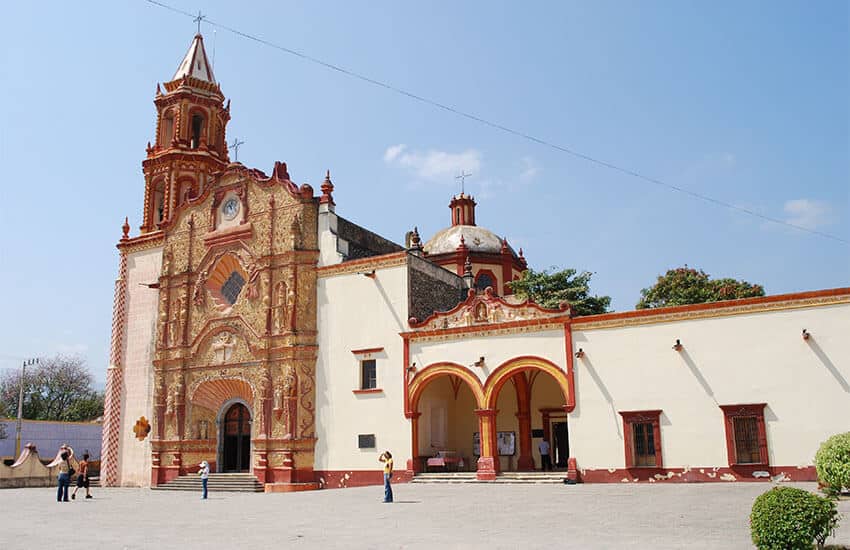
Jalpan is built around this plaza, created by Franciscan priests. (Alejandro Linares García)
The town isthe gateway to the Sierra Gorda, a mountainous area a few hours from the city of Querétaro. Picturesque Jalpan is built around a plaza and home to one of the five Franciscan missions built in the 17th century. The intricate and detailed mission is well worth a visit, but there’s much more to do around Jalpan, like visiting the other missions and the nearby Tancama ruins, which are among the most important pre-Hispanic settlements in the Sierra Gorda. Occupied between 200 and 900 C.E., the ruins are situated in a beautiful setting at the base of the Cerro Grande mountain.
Puente de Dios, the “Bridge of God,” is a beautiful two-mile walk along a riverbank, crossing the river several times on small wooden bridges. It leads to a limestone grotto and three waterfalls that flow down from the roof of a cave. The current from the three waterfalls is so powerful that thick floating ropes have been installed to help anchor swimmers.
Cuetzalan
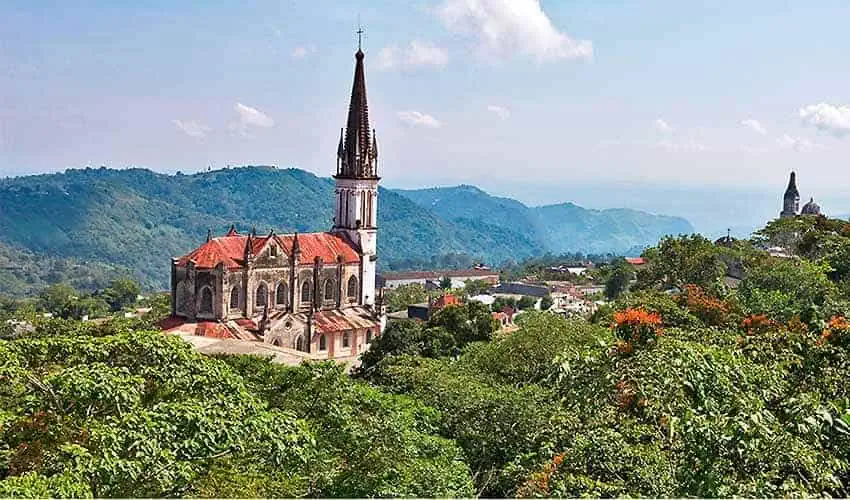
Quiet Cuetzalan is home to artisans and traditions unique to the Puebla region. (Government of Mexico)
A sleepy remote village about two and a half hours from Puebla, Cuetzalan is famous for its weekly market and the Nahua people, who still wear native dress. On weekends, voladores climb a 100-foot pole in the central plaza, tie themselves with ropes, and spiral down, twirling around the pole. One remains on the top of the pole, unanchored, dancing and playing a flute and drum, before he also spirals gracefully down. The spiraling is a ritual ceremony that began in pre-Hispanic times and has since been incorporated into Mexican Catholicism.
Near the village are waterfalls, natural pools, caves, woods, opportunities for ziplining, and a ruin. An American missionary couple we met told us we were the first foreign tourists they’d seen in two years. Indeed, I felt very far away from the modern world there.
San Sebastián del Oeste
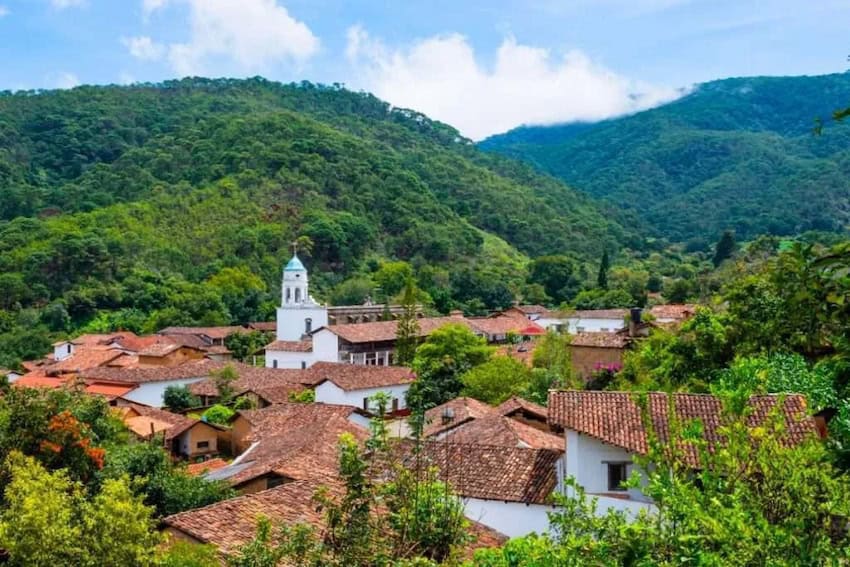
The former Jalisco mining town offers a glimpse into a Mexico gone by. (México Desconocido)
A 17th-century mining town, the village is perched high in the Sierra Madre mountains at 1,400m (4,600 ft), about 45 minutes from Puerto Vallarta. With its old colonial church, restored haciendas, and cobblestone streets, San Sebastián is often cited as a prime example of well-preserved colonial architecture in Latin America.
When Barry and I joined the local vaqueros in their cowboy hats sitting on the porch of the old historic hotel, I felt like I was in another century. We drank raicilla, the spirit cultivated locally from the agave plant, as we watched the festivities at the Saturday market below.
One of the reasons I like all these pueblos mágicos so much is that we saw almost no other tourists — Mexican or foreign. This is probably because we visited the towns midweek and because they’re either unknown, especially to foreigners, or not easily accessible.
Now that I’ve described them, I have a strong urge to return. But didn’t I just say our goal was to visit every pueblo mágico? We should be going to new ones, not revisiting ones I’ve seen. So many pueblos mágicos, so little time! This is what I call a delicious dilemma.
Louisa Rogers and her husband Barry Evans divide their lives between Guanajuato and Eureka, on California’s North Coast. Louisa writes articles and essays about expat life, Mexico, travel, physical and psychological health, retirement and spirituality. Her recent articles are on her website, https://authory.com/LouisaRogers
Mexican-Canadian and general ice hockey aficionado Ian Ostroff spoke to the Mexican Hockey Federation about the growth of the sport in the country. (All photos by the Mexican Hockey Federation)
Fifteen years ago, I walked into the Paseo Interlomas mall in Mexico City with my cousins and found something that took me by surprise: a regulation-sized ice hockey rink. At first I thought the rink was a last-minute idea the builders of Paseo added as a novelty — a new activity for families to try on the weekend different from what you’d normally find in Mexico City.
I’ve returned to Paseo Interlomas several times in the last decade, and in that time I’ve seen countless Mexican residents play and enjoy the game of hockey (fair warning, as a Canadian, there is only one kind to me so put the balls away.) I’ve also seen the sport’s profile rise here: when Mexico won gold at the 2025 U18 Men’s World Championship Division 3, I felt the same sense of pride hit me as when Canada’s men’s soccer team made the semifinals in the last Copa America.
Although the sport lags far behind even niche sports like rugby, ice hockey is beginning to find its feet in Mexico.
My curiosity about Mexico’s relationship with the sport led to a conversation with the president of the Mexican Ice Hockey Federation, Joaquín de la Garma.
A former architect, Garma has dedicated his life to growing the sport he loves in Mexico. It’s been challenging to introduce hockey to Mexican residents, he says, since the country’s national pastime is soccer, with baseball as a close second. But little by little, Garma and his staff have made progress.
“When I started as president of the Mexican Ice Hockey Federation, we had 600 to 700 members. Today we have about 5,000,” Garma said. “I have been very dedicated in trying to promote it among young kids and also with university students. Slowly, people are showing interest once they’re exposed to hockey and know how the game works.”
NHL teams like the Dallas Stars have offered Garma and the federation their support. Dwight Mullens, the developmental director of the Dallas Stars, organizes hockey clinics in Mexico City every month to help inspire young kids. Al Montoya, a former NHL pro who played for the Montreal Canadiens, has also done his part to nurture young talent on Mexican soil by teaching the skills players need to succeed on the ice. But support from abroad goes beyond hockey clinics.
“The Dallas Stars also help support us by giving kids hockey gear like skates and sticks,” Garma said. “We also have teams that play tournaments in Dallas, so that has been exciting for our federation.”
“This December, we are going to play in the second week of the Silver Stick, which is an important hockey tournament in the United States because it attracts talent in multiple divisions from Novice to Junior. We went the year before and took eight teams, which was 100 players. We knew it wouldn’t be easy to play there because of all the great programs in the U.S., but we gained a lot of experience and that will give us momentum to play well in future competitions.”
Mexico’s U18 national hockey team.
Recently, the Las Vegas Golden Knights also began working with the Mexican hockey federation to help promote the sport and potentially develop young talent.
Mexico’s senior men’s hockey team plays in Division 3 Group A, while the senior women’s team is doing a little better, competing in Division 2 Group B. To give you perspective, hockey nations like Canada, the United States and Sweden play in what’s known as the Championship Level, three divisions above.
Mexico may have a long way to go until they move up to the top flight, but their gold medal in the U18 Men’s World Championship has earned them the right to compete in Division 2 Group B. Perhaps all the clinics are proving to be instrumental in elevating Mexico’s hockey culture.
“The U18 tournament was hosted in Mexico City and having home ice advantage was beneficial to us in our preparation. Our team went undefeated in five straight games en route to gold, which is something I’m proud of since we played with heart,” Garma said.
“It’s also important to note we sold over 3000 tickets for the games, and I was happy to see the excitement among local Mexican fans. I believe that’s going to encourage more kids to play hockey in the future. The more opportunities we give Mexicans to be exposed to hockey, the more our fanbase and talent pool will grow in the coming years.”
Mexico has 16 hockey rinks in the country, including several in Mexico City, Querétero, Monterey, León, and Puebla. Cancun, Mérida, Villahermosa, and Tabasco, have also opened hockey rinks. Garma has made sure each rink is home to one club team and that each club plays for a national championship. The rinks are also open to the public, where kids can be around hockey and ignite their passion for the game.
“The future is bright because we’re seeing progress in both the development of our national teams and in the reception of fans,” Garma said. “We’re selling tickets for tournament games, getting kids involved, and gaining traction as an organization, so I think hockey is a growing sport in Mexico.”
The Mexican team has now competed against some professional nations, but a matchup against giants Canada and the United States is some way off.
“My dream is to make it a universal sport throughout the Americas, not just in Canada and the United States. But it’s going to take time for Mexico to catch up to that level of play. A part of that is competing against respectable hockey nations, and we’ve managed to play against countries like Poland, Great Britain, France, and Italy, which all have great professional leagues and players.”
“I’m also trying to recruit foreign players to come play in Mexico. We’re getting interest from players in Europe, but hopefully one day Canadian and American players will also want to play pro hockey in Mexico and help give us more credibility on a global scale.”
The semi-professional Liga Mexicana Elite de Hockey is the highest level of competition in the country. It currently has five teams and draws a respectable amount of fans. You can stream the games online from the Mexican Hockey Federation’s website. But you can also watch the games live if you’re in Mexico City, especially if you’re in the Santa Fe area.
Exposure to the sport is an ongoing process in Mexico, but if you think you might have what it takes to be a Latin Gordie Howe, now is the time to show the country what you’re made of.
Ian Ostroff is an indie author, journalist, and copywriter from Montreal, Canada. You can find his work in various outlets, including Map Happy and The Suburban. When he’s not writing, you can find Ian at the gym, a café, or anywhere within Mexico visiting family and friends.