Home Blog Page 266

How Guadalajara embodies Mexico’s entrepreneurial spirit

1
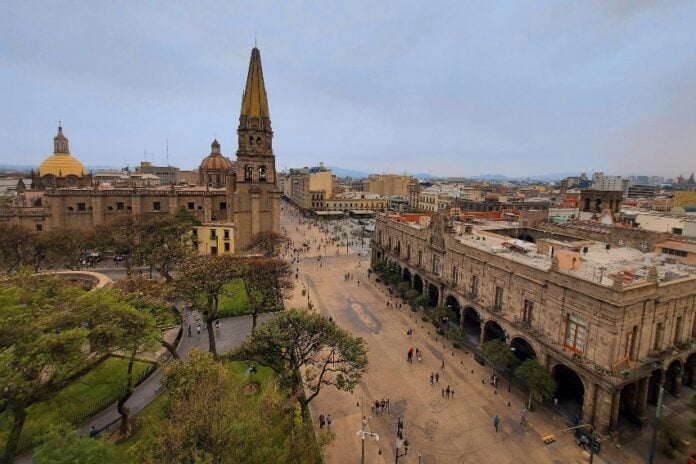
Guadalajara, Jalisco
Entrepreneurship runs high in Guadalajara, the capital of Jalisco. (Unsplash/Sergio Rodriguez)

I was having a conversation the other day with a friend from the U.S., and as we shared stories from our families and social circles, we realized just how many people I know who have their own businesses, starting with my own family.

In my family, the vast majority of family members are entrepreneurs. The spirit of building your own business was instilled by my grandfather, who, in turn, followed the example of his father. Even when times have been economically trying, the prevailing mindset has always been “let’s see what else we can sell” instead of “it’s time to find a job.”

The entrepreneurial mindset in Guadalajara
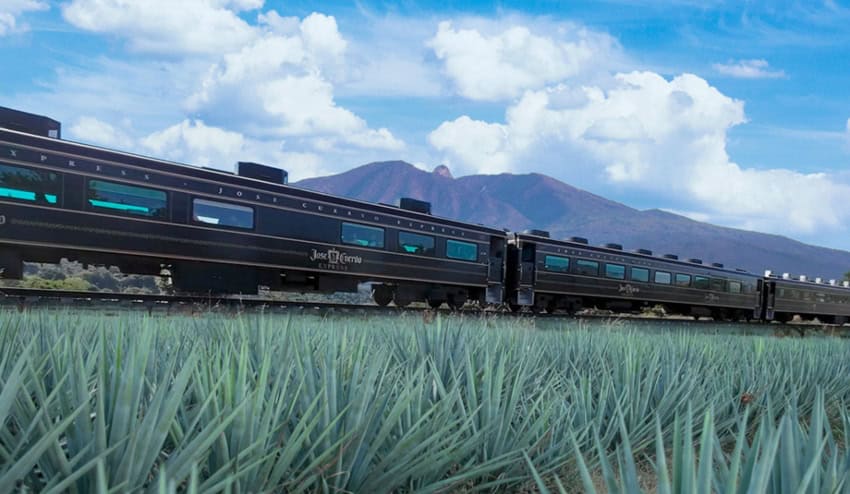
José Cuervo
José Cuervo is one of many well-known brands born in the fertile entrepreneurial spirit of Jalisco. (Mundo Cuervo)

This pattern also replicates among my friends. And while many have worked at some point for a company, most of them currently own a business, are married to a business owner or work in their family business.

Whether owners of micro or small to medium or even large companies, I grew up in an environment where employees were the exception rather than the rule. And as it turns out, this is not an isolated fact — data proves that most people in Guadalajara are business owners.  

According to a 2023 study by the Employers’ Confederation of the Mexican Republic (Coparmex), 79% of businesses in Jalisco are examples of local entrepreneurship, placing the state among the top three with the most business owners in Mexico. 

“Guadalajara’s entrepreneurial spirit is sustained by deeply rooted values: hard work, responsibility, family unity, and the pursuit of personal and collective progress,” Paloma Arámburo, a founding partner at Arámburo Muñoz Abogados and a Deputy Secretary of the Board of Directors at the Guadalajara Chamber of Commerce, told me.

“At the Chamber of Commerce, we have witnessed how this entrepreneurial spirit has been a constant that defines the city’s economic and social identity,” she added.

Historical factors for Guadalajara’s entrepreneurial spirit

According to Arámburo, the historical factors that have contributed to the city’s thriving entrepreneurial scene include its geographic location, which favored trade in the western part of the country.
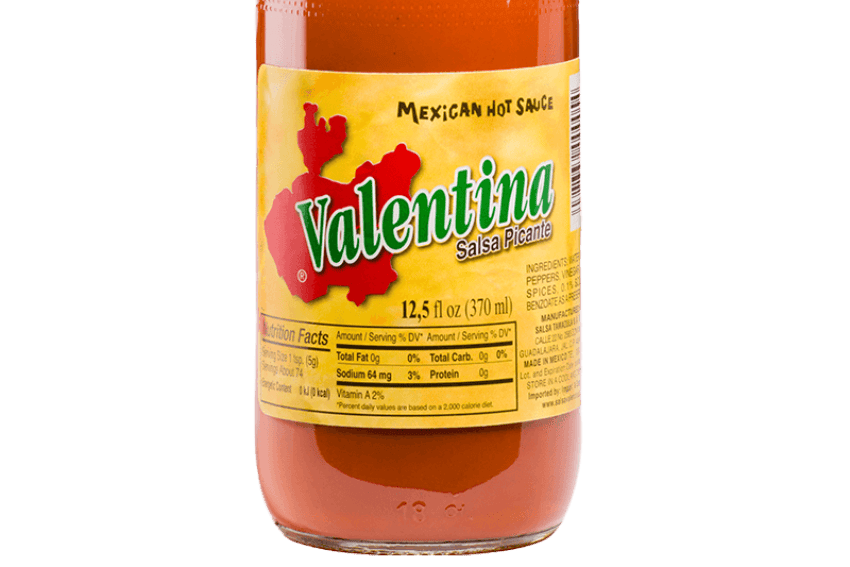
Valentina salsa
There’s no doubting that family-run Valentina salsa is from Guadalajara, Jalisco. The logo features a map of the state. (Valentina)

“Guadalajara was a strategic point of trade in the western part of the country,” Arámburo explained. “Its geographic location and productive focus generated an economic culture based on proximity, trust and collaboration, elements that fostered the formation and survival of family businesses. Many of them emerged from artisan workshops or small businesses that, over time, became pillars of regional development.”

Looking at the companies that have come out of Jalisco, it’s hard to deny the vibrant entrepreneurial spirit in the city. Many Mexican household brands, renowned both nationwide and abroad, hail from here. Think of Valentina, Tajín, Pelón Pelo Rico, Dulces de la Rosa, José Cuervo, Verde Valle, Omnilife and Pisa Pharmaceuticals, just to name a few. 

What’s interesting is that all of these companies are still run as family businesses and have been operational for at least two generations. 

 Lack of opportunities spurs entrepreneurship

“In Guadalajara, it’s common for several generations to participate in the family business, strengthening not only the company but also a sense of belonging and legacy,” Arámburo said. 

While there’s a long tradition of transgenerational family businesses, the city is still seeing new businesses opening up. 

Paloma Robles, Attorney at Law specializing in Corporate Governance for Family Businesses, thinks the wave of new businesses is a response to the lack of opportunities, not only in Guadalajara, but across the country. 
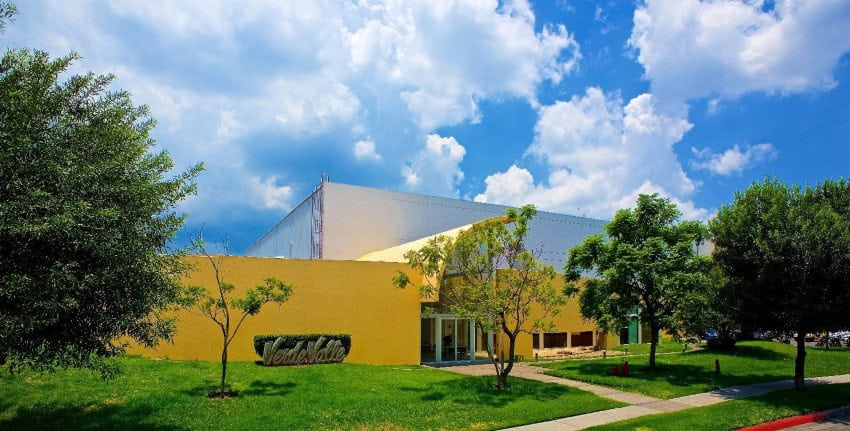
Verde Valle
Family-run Verde Valle is headquartered in Zapopan, part of the metropolitan Guadalajara area. (Verde Valle)

“Salaries are bad in Mexico, and for that reason, people feel forced to start their own business,” Robles said.

Looking at the country at large, it would seem Guadalajara’s entrepreneurial spirit is only a reflection of a much broader reality: Mexico’s economy as a whole is largely driven by entrepreneurial families. 

Recent data by the National Institute of Statistics and Geography (INEGI) and PricewaterhouseCoopers (PwC) reveal that between 85% and 90% of businesses in Mexico are family-owned, with the majority (99.8%) being micro or small businesses.

Family businesses and Mexico’s GDP

According to the book “Succession in the Family Business: Success Stories from TEC de Monterrey and Citibamex” from February 2022, family businesses are estimated to account for 75% of the country’s gross domestic product (GDP) and to provide over 70% of jobs.  

“Mexican culture is different in comparison to the United States,” Robles said. “In Mexico, it’s very common for parents to expect their children to manage a family business, whereas in the U.S., children are expected to become independent at 18. So there’s a huge cultural element in that regard,” she added.

What’s striking, however, is that 70% of family businesses in Mexico disappear after the founder’s death, while only 12% survive into the third generation. According to the Mexican Entrepreneurs Association, this is due to poor business management and a lack of financial planning.

New family businesses outnumber dying ones in Mexico
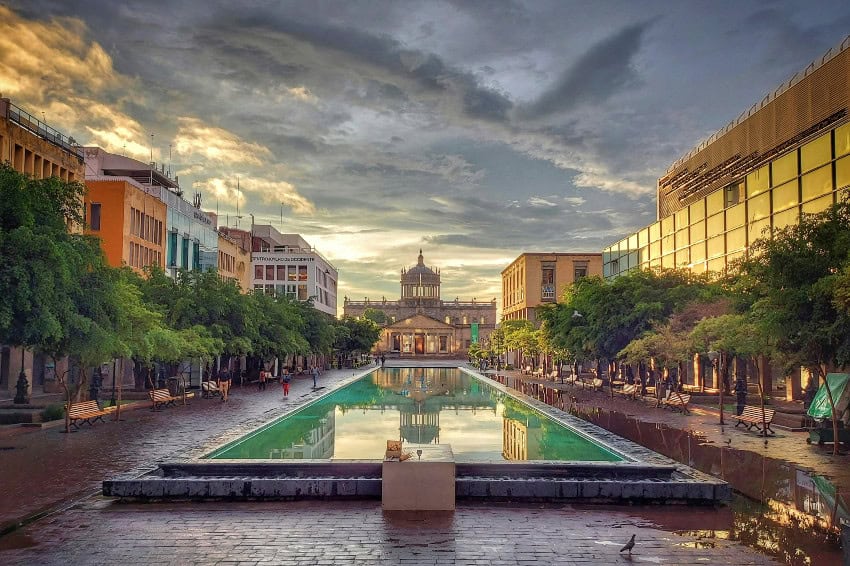
Guadalajara, Jalisco
Guadalajara is known as the “Silicon Valley” of Mexico due to its high rates of entrepreneurship. (Unsplash/Sergio Rodriguez)

Still, the entrepreneurial spirit persists, and according to INEGI, the proportion of businesses that were created between 2019 and 2023 increased in comparison with those that went under. For Arámburo, this spirit goes beyond low salaries and responds to a wish to find autonomy and create a fulfilling life on one’s own terms.

“Today, entrepreneurship also responds to a deeper search for autonomy, purpose and personal balance,” she said. “More and more young people are choosing to become entrepreneurs because they want to create projects that reflect their values, generate social or environmental impact, and have greater control over their time and professional development. In a city like Guadalajara — with an innovative, collaborative, and talented ecosystem — this drive finds fertile ground to flourish.”

Gabriela Solis is a Mexican lawyer turned full-time writer. She was born and raised in Guadalajara and covers business, culture, lifestyle and travel for Mexico News Daily. You can follow her lifestyle blog Dunas y Palmeras.
Sheinbaum takes aim at violent protesters in Revolution Day speech

6
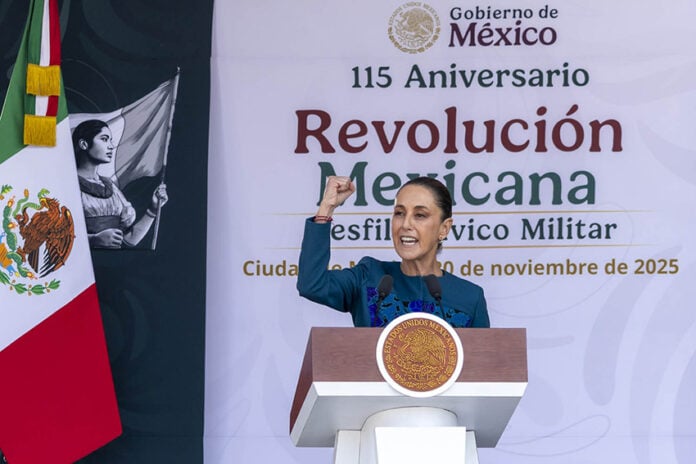
President Sheinbaum gestures during a speech on Revolution Day
The president railed against "those who cause violence" and hate in a speech during the annual Revolution Day parade on Thursday. (Juan Carlos Buenrotro/Presidencia)

President Claudia Sheinbaum used part of her Revolution Day address on Thursday to send a series of pointed messages to government opponents and critics, less than a week after large protests against her administration took place.

Speaking in Mexico City’s central square, the Zócalo, ahead of the civic-military parade to commemorate the 115th anniversary of the beginning of the Mexican Revolution, Sheinbaum took aim at “discourse that normalizes violence” as the “path” forward.

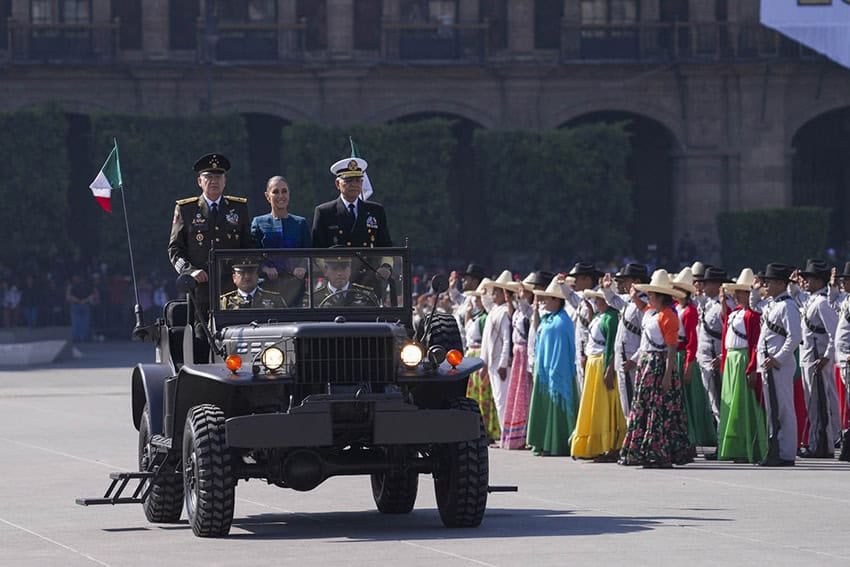
Sheinbaum and several Mexican generals ride in a military jeep in the Revolution Day parade
After her speech, the president participated in national Revolution Day parade in Mexico City, along with military leaders. (Hazel Cárdenas/Presidencia)

“Those who call for violence are mistaken,” she said five days after a group of so-called “black bloc” protesters attacked police in the Zócalo at the end of a “Generation Z” march against her administration that attracted more older adults than younger Mexicans.

“Those who encourage hate are mistaken. Those who believe force can replace justice are mistaken,” continued Sheinbaum, whose government accused foreign right-wing individuals and organizations, as well as Mexican opposition figures, of promoting the protests that took place last Saturday in Mexico City and dozens of other cities across the country.

The president also asserted that various other people are “mistaken,” including those who call for a “foreign intervention” to combat organized crime, those who think “women are weak” and those who believe that the “fourth transformation” political movement she leads is asleep at the wheel.

In addition, those who think that “campaigns of slander and lies” will resonate among the Mexican people and those who think “the people are stupid” are also wrong, Sheinbaum said.

The government has faced criticism from opposition parties, the participants in last Saturday’s protests and others over its anti-crime efforts, even though arrests are up and homicides are down, according to official statistics. It has also faced claims of complicity with organized crime and assertions that it is a “narco-government,” even though it has arrested large numbers of alleged crime group members, seized large quantities of narcotics, dismantled a significant number of clandestine drug labs and sent 55 organized crime figures to the U.S.

A major catalyst for last Saturday’s protests was the Nov. 1 assassination of Uruapan mayor Carlos Manzo, an outspoken anti-crime crusader who had urged the federal government to take a more active and aggressive approach to combating Mexico’s notorious criminal organizations. On Wednesday, federal Security Minister Omar García Harfuch announced the arrest of an alleged mastermind of the attack on the mayor.

‘There is a government that listens, respects and responds to its people’

In the first part of her speech, Sheinbaum recalled the armed uprising against “the dictator Porfirio Diáz” in the early 20th century, and said that the Mexican Revolution was “enshrined in the 1917 Constitution, the most advanced in the world in terms of social justice.”

The same constitution remains in effect today, although it has been significantly modified.

Sheinbaum dedicated another part of her address to praising her own government.

The president said that “four transformations have marked the history of Mexico” — independence from Spain, 19th century liberal reforms known collectively as “La Reforma,” the Mexican Revolution and the “fourth transformation” that she and others say began when former president Andrés Manuel López Obrador took office in late 2018.

People dressed in historical costumes ride a parade float labeled Villa and Zapata
Historical figures like Pancho Villa and Emiliano Zapata, represented here, as well as archetypes like peasants and soldiers, feature prominently in Revolution Day parades in Mexico. (Hazel Cárdenas/Presidencia)

“The transformation that began in 2018 is strong because there is honesty, results and love for the people,” Sheinbaum said.

“… Mexico is living a moment that previously seemed impossible. Today power is not used to subjugate, but to serve,” she said.

“There are no longer impositions or privileges; there is constitution, there is democracy and there is a government that listens, respects and responds to its people,” Sheinbaum said.

She also asserted that “today freedoms are not only granted from above,” but “exercised from below, from every neighborhood, from every community.”

“… No one is silenced in Mexico anymore, no one is persecuted for thinking differently and that is an achievement of the people of Mexico,” Sheinbaum claimed.

“Today, government is no longer a space for the few. It’s no longer a club for the privileged. Today it represents everyone — those who study, those who work, the shopkeepers, the young people, the Indigenous people and women, but above all it represents those who have the least, the modest people,” she said.

A much smaller ‘Gen Z’ protest took place in CDMX on Thursday 

Less than an hour after Sheinbaum spoke in the Zócalo, a group of protesters embarked on the second “Generation Z” march in six days in Mexico City. While some 17,000 people took part in Saturday’s march from the Angel of Independence monument to the Zócalo, the turnout on Thursday was much lower, with around 200 participants of various ages, according to media reports.

Police officers temporarily stopped the contingent of protesters from entering the historic center of Mexico City to avoid any interruption to the military parade that was taking place, and to prevent any possibility of a confrontation between demonstrators and military personnel. The protesters eventually made it into the downtown area, but police prevented them from entering the Zócalo, where military parade infrastructure, including stands and screens, was being taken down.

Middle aged Mexicans march down Paseo de la Reforma with Mexican flags
The second “Gen Z” protest on Thursday drew roughly 200 participants, many of them slightly older than the march organizers’ target demographic. (Mario Jasso / Cuartoscuro.com)

The march was largely peaceful, although the Milenio newspaper reported that some “presumed protesters” attacked police officers at the intersection of Paseo de la Reforma, the capital’s most famous boulevard, and Juárez Avenue. Scuffles between the alleged protesters and police were filmed and posted to social media.

As was the case on Saturday, some protesters carried the Straw Hat Pirates’ Jolly Roger, a flag that features in the Japanese manga series “One Piece” and which has become closely associated with “Gen Z” protest movements around the world. Others carried Mexican flags and flags that called for “justice for Carlos Manzo.”

The El Universal newspaper reported that the protesters demanded that the federal government establish “a Mexico without narcos.”

One protester, 29-year-old Neptalí Roa, told the EFE news agency that “the repression” during the protest on Saturday — some police officers are accused of committing abuses against protesters — and the closure of a number of metro stations were the reasons why the turnout was low on Thursday.

In stark contrast to the message Sheinbaum conveyed in her speech, Roa claimed that “the government is scared of its people” and doesn’t want to listen to them “because it doesn’t want to face up to reality.”

EFE reported that 16-year-old Ángel Morales — described as one of “the few” young people present in the march — said that he and other protesters want “a change” in Mexico, and evidently not that which Sheinbaum says she and her government are bringing to the country.

“We’re not associated with any [political] party or any association. We just want a better future for us,” he said.

By Mexico News Daily chief staff writer Peter Davies (peter.davies@mexiconewsdaily.com)

Mexico is now the top buyer of U.S. goods, beating out Canada

4
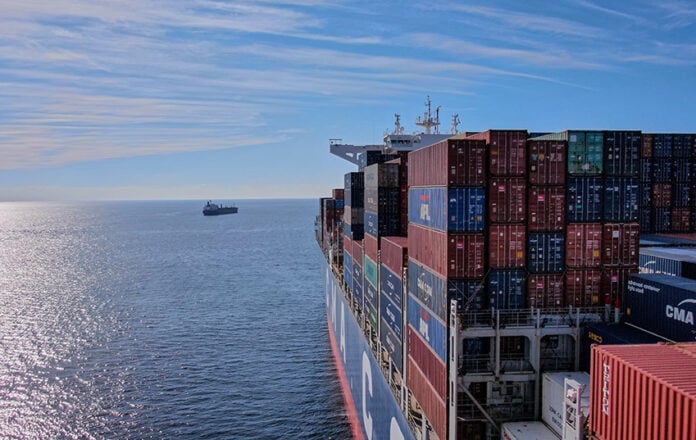
A cargo ship heads out to sea, leaving the Mexican port of Manzanillo
The U.S. has long been the top buyer of Mexican exports. Now for the first time, the relationship is reciprocal. (Shutterstock)

In 2023, Mexico became the world’s top exporter of goods to the United States, surpassing China.

Now it also the top buyer of U.S. goods, outpacing Canada, according to U.S. government data published on Wednesday.

In the first eight months of 2025, Mexico imported goods from the U.S. worth US $226.4 billion, according to data published by the U.S. Census Bureau.

Mexico’s outlay on U.S. goods in the period was 0.3% higher than Canada’s expenditure on imports from its southern neighbor. China ranked as the third largest importer of U.S. goods, with an outlay of $73.6 billion between January and August.

The El Economista newspaper reported that Mexico has previously ranked as the top buyer of U.S. goods in “isolated months,” but not over an extended period, as has been the case this year.

“This is the first time in history that Mexico is the largest export market for the United States,” the Business Coordinating Council (CCE), an umbrella organization of Mexican business groups, said in a statement.

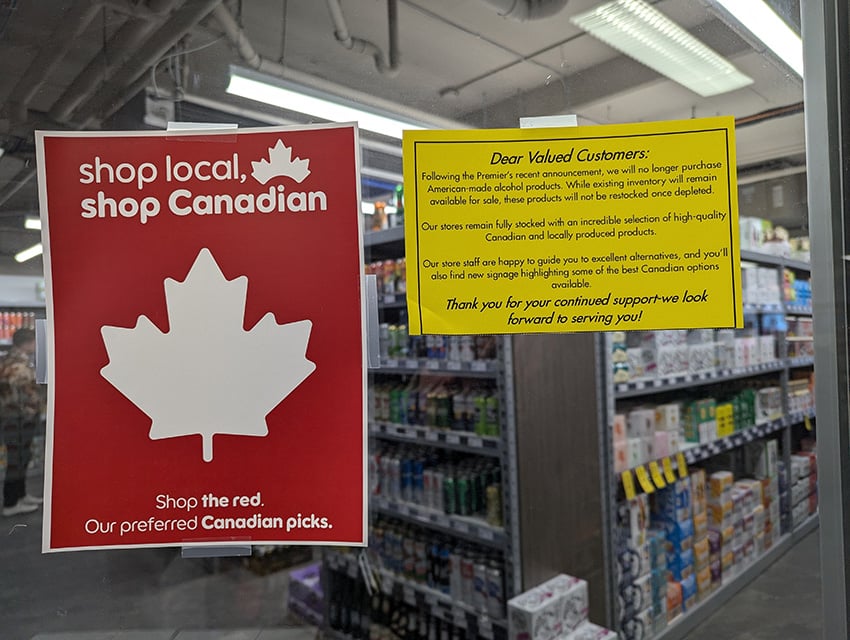
A shop sign urges Canadian to buy national rather than imported products
A successful “Buy Canadian” campaign has reduced U.S. exports to Canada, clearing the way for Mexico to become the top buyer of U.S. goods. (Shutterstock)

Mexico’s outlay on U.S. goods increased 0.6% annually in the first eight months of the year, while Canada’s expenditure on such products declined 3.9%. A “Buy Canadian” movement emerged in response to tariffs imposed by U.S. President Donald Trump on a range of Canadian goods.

The total value of U.S. exports in the first eight months of the year was $1.43 trillion pesos, meaning that 15.8% of the United States’ export revenue came from goods shipped to Mexico.

According to an infographic based on Census Bureau data that was shared to social media by Mexican Ambassador to the U.S. Esteban Moctezuma, Mexico is the top export market for many U.S. industries, including meat and livestock processing; oil, gas and energy extraction; iron and steel manufacturing; and electrical and electronic equipment.

The CCE noted that Mexico is a large importer of U.S. cereals, electronics, steel and iron products, vehicles, machinery and fuel (including gasoline and natural gas).

According to the Office of the U.S. Trade Representative (USTR), the United States’ leading exports to Mexico are “electrical machinery, machinery, energy products, vehicles, and plastics, together with over $30 billion [annually] in agricultural products, including corn, pork and pork products, dairy products, and soybeans.”

The CCE said that Mexico is the “main export destination” for 24 U.S. sectors and the “second most important market” for 50 additional ones.

“In total, Mexico occupies the first or second position as a buyer in 75% of U.S. export industries,” the organization said.

The CCE also noted that Mexico was the first or second largest export market for 26 U.S. states in 2024. For Arkansas, Texas, Kansas, Nebraska, New Mexico, Colorado, Arizona, California and Oregon, it ranked No. 1.

Alfonso Muñoz, an economist at the Mexico City consulting firm CMM, told The New York Times that the publication of the data showing that Mexico is now a larger buyer of U.S. goods than Canada marks an “inflection point.”

“There is a very high complementarity between the economies of Mexico and the United States,” he said.

According to the Times, Muñoz also said that “the trend was expected to hold as long as there were no major economic crises or interruptions to the current trade agreement among the United States, Mexico and Canada.”

The USMCA free trade pact, which replaced NAFTA in 2020, is scheduled for review in 2026.

Mexico’s exports to US increase 6%

The latest U.S. Census Bureau data also showed that the United States imported goods from Mexico worth $354.89 billion between January and August, a 6.1% increase compared to the same period of 2024.

Mexico captured 24% of US import market that China lost between 2018-2024

Mexico — which sends around 80% of its exports to its northern neighbor — thus retained its position as the the world’s top exporter to the United States, ahead of Canada and China.

According to the USTR, Mexico’s leading exports to the United States are “vehicles, machinery, electrical machinery, and medical devices, together with over $48 billion [annually] in agricultural products, including fresh vegetables, beer, distilled spirits, and fresh fruit.”

Most Mexican goods can enter the U.S. tariff free, despite Trump imposing duties on certain Mexican products this year, including steel, aluminum and vehicles.

In contrast, many Chinese goods are subject to very high tariffs when entering the U.S.  Canadian products that don’t comply with the USMCA face a 35% duty when entering the U.S., 10 points higher than that imposed on Mexican goods not covered by the free trade pact.

The value of both Canadian and Chinese exports to the U.S. declined in annual terms in the first eight months of the year.

Mexico and the US are each other’s largest trade partner 

Two-way trade between Mexico and the United States was worth $581.3 billion between January and August, a 3.9% increase compared to the same period of 2024.

Mexico had a trade surplus with the U.S. of $128.4 billion in the period.

Two-way trade between the United States and Canada fell 4.5% between January and August to $485.4 billion.

Trade between the U.S. and China also declined, plummeting 21.5% to $292.6 billion. Canada is the United States’ second largest trade partner, while China ranks third.

U.S. Census Bureau data also shows that the United States’ trade with Mexico accounts for around 15.5% of the world’s largest economy’s total trade with all nations globally. That figure underscores the immense significance the North American neighbors are of to each other.

The economies of the two countries have become highly integrated in the three decades since NAFTA took effect. The integration is now so great that Mexico and the United States are said to be part of a “co-production system,” in which they provide essential inputs to each other that allow final goods to be produced in various industries, including the automotive, electronics and aerospace sectors.

With reports from El Economista, El Universal and The New York Times 


Your turn to weigh in:

Is the growing interconnectedness of the Mexican and US economies a positive development? Let us know your reasoning in the comments.

Mexico’s U-17 men’s team misses World Cup trophy, but gains new friendships

0
Mexico U-17 team at World Cup 225
Prospects looked promising as the Mexican teenagers celebrated their thrilling upset victory over Argentina at the FIFA Under-17 World Cup in Qatar. But things went south against Portugal, who eliminated 'El Tri.' (FIFA)

One win away from the quarterfinals in the FIFA Under-17 men’s World Cup, the Mexican team saw its run ended in painful fashion: a 5-0 loss to Portugal on Tuesday in Doha, Qatar.

Though the Mexican players departed with some new friendships (details below) the lopsided defeat sparked a slew of negative reactions online, and abruptly ended a campaign that had days earlier shimmered with promise.

After narrowly advancing with a third-place group finish, Mexico began the knockout rounds with an eye-catching 5-4 victory in penalty kicks over Argentina after the score was tied 2-2 through regulation.

Though there are no world rankings for under-17 teams, the powerful Argentine squad had coasted to a 3-0 record in round-robin play by outscoring its opponents 11-2.

Mexico’s victory over the pre-tournament favorite was viewed as huge, and it also provided two of the tournament’s biggest highlights: Mexican goalkeeper Santiago López saving the opening penalty kick, and then converting the deciding kick himself.

Coached by Carlos Cariño, Mexico impressed many by advancing out of a tough group as one of the best third-place teams and then knocking out the South American giants.

However, it all went up in smoke in the Round of 16 against Portugal.

Mexico fell behind 1-0 on a penalty kick in the 15th minute, and things got worse 20 minutes later when José Navarro, a talented but aggressive defender, was given a red card after a video review for violent conduct — forcing Mexico to play a man down the rest of the match.

Portugal went up 2-0 early in the second half, then added three more goals in a disastrous final 10 minutes for Mexico that included the expulsion of López. The Mexican goalkeeper’s frustration boiled over in the 88th minute when he pushed an opposing player — reducing Mexico to nine men by the final whistle.​

The beginning of a beautiful friendship

While memes and satirical commentary swept Mexican social media in response to the loss, another story unfolded beyond the scoreboard.

In a poignant post-match scene, Japan’s under-17 team, tournament companions at the team hotel, bid farewell to Mexico with applause, gifts and handwritten messages. 

The friendship between the teams quickly became a talking point worldwide.

“The gesture went viral on social media thanks to a video showing the Japanese and Mexican soccer players exchanging words, gifts and applause,” one report noted. “The farewell became a symbol of respect and cultural unity, showing that youth football is also a space for solidarity and shared learning.”

Many players for Japan — set to play in the quarterfinals against Austria on Friday — spoke warmly of the support received from the Mexican squad.

For Mexico’s players, the exchange allowed them to return home with memories of sportsmanship and camaraderie.

The performance by the under-17 men’s team came just weeks after Mexico’s women’s team also played in the under-17 World Cup, in Morocco.

After losing 1-0 to the Netherlands in the semifinals, Mexico rebounded in the third-place game with a 3-1 victory in penalty kicks over Brazil following a 1-1 regulation tie.

South Korea beat the Netherlands 3-0 in the title match.

With reports from Infobae, ESPN México, Récord and CONCACAF

US sanctions Canadian snowboarder accused of leading a murderous Mexican crime ring

0
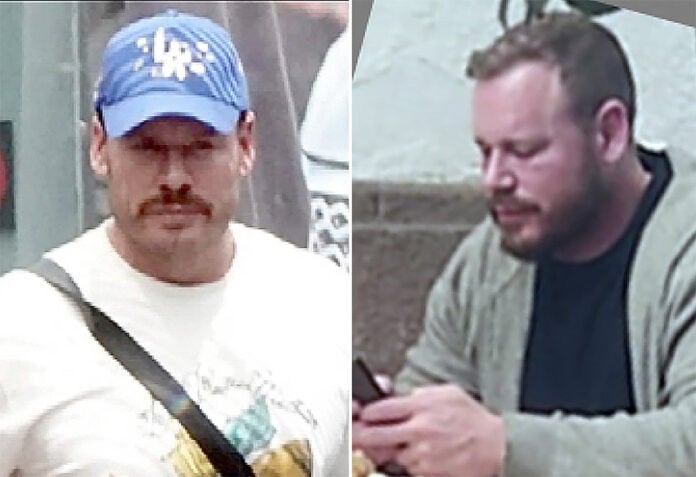
Ryan James Wedding
Ryan James Wedding, shown here in photos from last year, is wanted by th FBI for drug trafficking and is thought to be living in Mexico. (U.S. Justice Department)

The Mexican government is collaborating with the U.S. Treasury Department in a financial crackdown targeting alleged drug trafficker Ryan James Wedding. A former Canadian Olympic athlete, Wedding is one of the FBI’s Ten Most Wanted Fugitives and is thought to be hiding in Mexico.

Labeled an “extremely violent criminal,” Wedding is wanted for his alleged involvement in an international drug trafficking, money laundering, and murder network targeting federal witnesses.


The 44-year-old former Olympic snowboarder was sanctioned by Treasury’s Office of Foreign Assets Control (OFAC) on Wednesday, alongside nine individuals and nine entities closely associated with him.

At the same time, the U.S. Justice Department announced the arrest of 10 people connected to the case, pursuant to a nine-count federal grand jury indictment.

“Ryan Wedding controls one of the most prolific and violent drug trafficking organizations in the world and works closely with the Sinaloa Cartel,” said U.S. Attorney General Pamela Bondi. “We will not rest until his name is taken off the FBI’s Top 10 Most Wanted List.”

Additionally, the U.S. raised the reward for Wedding’s capture to US $15 million, with other rewards offered for information leading to the arrests of unknown assassins who murdered a potential witness last January in Medellín, Colombia.  

Authorities insist Wedding has issued orders to kill various individuals, including the 2023 murders of two members of a family in Canada in retaliation for a stolen drug shipment.

The former Olympian spent three years in U.S. prisons on cocaine possession charges and was later arrested in Canada on cocaine trafficking charges in 2015, but managed to flee to Mexico.

Since then, he has become “a modern-day iteration of Pablo Escobar,” according to U.S. officials.

“Ryan Wedding and his associates allegedly imported tons of cocaine each year from Colombia through Mexico, and then distributed it on the streets of U.S. communities,” FBI Director Kash Patel said.

The Financial Intelligence Unit (UIF) of Mexico’s Finance Ministry said reports indicate Wedding operates in Canada, the United States, Colombia, Italy and the United Kingdom.

“The existence of linked companies, international transfers, asset movements and possible operational links associated with transnational illicit activities has been detected,” the UIF said in a statement.

According to documentation from the OFAC, the investigation revealed the triangulation of funds through shell companies and the coordinated use of corporate structures both in Mexico and abroad to facilitate the movement, concealment, and management of assets. 

Among the nine Wedding associates sanctioned are his wife Miryam Andrea Castillo, Édgar Aarón Vázquez and Carmen Yelinet Valoyes.

Castillo was born in the state of Nuevo León and is alleged to be involved in money-laundering operations. Vázquez, believed to be a former Mexican law enforcement officer with ties to senior Mexican law enforcement officials, allegedly provides protection for Wedding within Mexico.

Yaloyes, a Colombian national who reportedly runs a high-end prostitution ring in Mexico, allegedly assisted Wedding with the murder of the witness in Medellín.

Three of the nine companies sanctioned — México VRG Energéticos, Grupo RVG Combustibles and Grupo Ares Imperial — are based in Mexico.

With reports from La Jornada, the Canadian Broadcasting Corporation, ESPN and the BBC

99 facts you need to know about Mexico: 61-80

4
A couple kisses through face masks on the Mexico City Metro
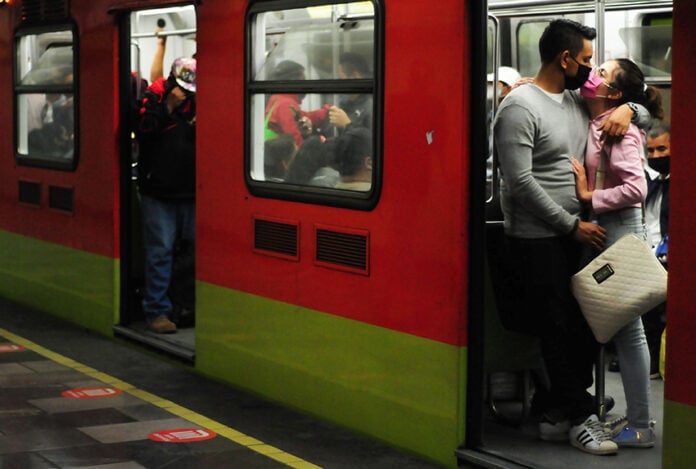
Mexicans report high levels of life satisfaction, with six out of 10 people saying they were happy with the state of their love life — presumably including this couple, seen stealing a kiss on the Mexico City Metro. (Daniel Augusto / Cuartoscuro.com)

In honor of World Statistics Day on Oct. 20, Mexico’s national statistics agency INEGI published a small book presenting the 99 facts you need to know about Mexico.

All week, we will be sharing the book’s contents translated into English.

Here is part 4! Read facts 41-60 here.

61) In 2021, 6 out of 10 people in Mexico said they were satisfied with their love life.

(Source: INEGI, National Survey of Self-Reported Well-being – ENBIARE, 2021)

Life satisfaction across various areas — including relationships — remains high in Mexico, reflecting the value placed on close personal and family ties. Positive affective experiences are a key factor in the country’s global happiness rankings and quality-of-life perceptions.

62) In 2020, Mexico’s population was 126 million; 25 million were children ages 0 to 11.

(Source: INEGI, Population and Housing Census – CPV, 2020)

Children account for a significant share of the country’s demographic structure, shaping priorities in education, health and social services. Mexico’s population is still relatively young, though the proportion of children has slowly declined as overall growth slows and median age rises.

63) Xeric scrubland (matorral xerófilo) is the most common biome in Mexico, characterized by the presence of agaves and cacti. It covers 29.4% of the national territory.

(Source: INEGI, Land Use and Vegetation – USYV, 2021)

These arid-adapted biomes, found mainly in northern and central regions, support unique biodiversity and traditional livelihoods. Despite their ecological and economic value, xeric scrubland is sensitive to overgrazing, development and climate change.

64) In 2024, 1.7 million births were registered in Mexico. Of those, 49.4% were female and 50.6% male.

(Source: INEGI, Registered Birth Statistics – ENR, 2024)

Birth rates continue to decline, but the sex ratio at birth remains balanced — around 105 boys for every 100 girls. This trend shapes future population dynamics and poses new challenges for education and family policy.

65) Between April and June 2025, the average hourly income earned was 66.2 pesos.

(Source: INEGI, National Survey on Occupation and Employment – ENOE, second quarter 2025)

Average hourly earnings reflect rising wage floors in recent years, but many workers — especially those in informal or service sectors — may still earn less than this figure. Minimum wage changes, inflation pressures and wide sectoral disparities all shape Mexico’s labor income dynamics.

How much do minimum-wage and informal workers earn in Mexico City? We asked.

66) In 2022, the main physical impact for female caregivers was fatigue (39.1%). For male caregivers, it was reduced hours of sleep (17.3%).

(Source: INEGI, National Survey for the Care System – ENASIC, 2022)

Caregiving imposes different physical and mental strains on women and men. Women most often report fatigue and exhaustion, while men are more likely to experience sleep loss or disruption. These effects reflect unequal burdens and have further consequences for work, health and social life.

67) In 2024, January was the month with the highest share of registered deaths, accounting for 9.7% of the yearly total.

(Source: INEGI, Registered Death Statistics – EDR, 2024)

Mortality in Mexico shows strong seasonal variation, with more deaths recorded in winter months such as January, often related to respiratory illnesses and chronic conditions. Recognizing this pattern supports better health planning and resource allocation.

68) In 2024, Mexico was home to 1,003 movie theaters.

(Source: INEGI, National Directory of Economic Units – DENUE, 2024)

Mexico’s movie theaters are a central part of urban and regional cultural life, with the number of cinemas recovering after pandemic closures. Though digital platforms continue to grow, cinemas remain as a community gathering place, for film festivals and for local employment.

69) In 2024, Mexican households spent an average of 420 pesos per month on entertainment, such as mobile device applications, video game consoles, board games and more.

(Source: INEGI, National Survey on Household Income and Expenditures – ENIGH, 2024)

Digital entertainment and gaming are a growing share of monthly household budgets, reflecting Mexico’s rapid adoption of mobile and online platforms. Internet access continues to drive consumer shifts, especially among younger, urban populations.

Over 80% of Mexicans are now internet users, up 9.7 points from 2020

70) In 2023, the societal actors who inspired the most trust were family members, at 87.4%. This proportion increased compared to 2021 (86.7%).

(Source: INEGI, National Survey on Government Quality and Impact – ENCIG, 2021 & 2023)

Family remains the institution Mexicans trust most, even as trust in other individuals and groups (such as media or government) has fluctuated. Strong family ties continue to underpin social life and attitudes toward well-being and security in Mexico.

71) What are the most widely spoken Indigenous languages in Mexico? In 2020, the top contenders were Nahuatl (22.4%), Maya (10.5%), Tseltal (8.0%) and Tsotsil (7.5%).

(Source: INEGI, Population and Housing Census – CPV, 2020)

These four languages alone account for nearly half of all Indigenous language speakers in the country, reflecting Mexico’s rich linguistic diversity. While nearly 7.4 million people speak an Indigenous language, some smaller languages are critically endangered due to social, economic and demographic shifts.

72) In 2024, two out of 10 women in Mexico felt unsafe in their own home.

(Source: INEGI, National Survey of Victimization and Perceptions of Public Security – 2024)

While most insecurity concerns are reported in public spaces, a significant number of women also experience fear or discomfort in private settings. Perceptions of safety are strongly influenced by the threat of violence, which remains much higher for women than men across all surveyed environments.

National survey shows Mexicans’ perceptions of insecurity lowest in 10 years

73) In 2024, diabetes mellitus was the second leading cause of death nationwide, with 112,641 registered fatalities.

(Source: INEGI, Registered Death Statistics – EDR, 2024)

Diabetes remains a major public health challenge in Mexico, consistently ranking just behind heart disease as a cause of mortality. The chronic illness affects millions of adults, especially those over age 40, and leads to high rates of kidney failure, cardiovascular disease and severe complications if not well controlled.

74) Mexico has a total of 4,591 registered insular features including reefs, sandbars, cays, islands, islets and rocky formations.

(Source: INEGI, Coastline Data – LIC, 2015)

These marine and coastal elements are vital for Mexico’s biodiversity, economic activity, and territorial integrity. The country’s insular territory shelters unique ecosystems, supports fisheries and tourism, and is a key focus for environmental conservation and maritime governance.

75) Between April and June 2025, 76.5% of employers and supervisors were men, reflecting labor market inequality.

(Source: INEGI, National Survey on Occupation and Employment – ENOE, second quarter 2025)

Women remain significantly underrepresented among employers and business owners in Mexico’s labor market. This reflects broader gender gaps in workplace authority, entrepreneurship and access to capital, despite rising labor force participation among women over the past decade.

76) In 2023, 52.0% of the population had some form of savings. Of those with savings, 47.1% had less than half of one paycheck set aside.

(Source: INEGI, National Survey on Financial Wellness – ENSAFI, 2023)

Most savers in Mexico maintain very modest reserves — often not enough to cover an emergency or unexpected expense. Financial insecurity and low savings capacity remain widespread, especially among women and lower-income households, underscoring ongoing challenges in economic resilience and planning.

77) In 2020, 4.9% of workers in Mexico used a bicycle as their main means of transport to get to work, while 33.1% traveled by private vehicle.

(Source: INEGI, Population and Housing Census – CPV, 2020)

Private cars remain the dominant commuting mode in most of the country, though bicycle usage is rising in urban centers due to new infrastructure and sustainability policies. Encouraging alternative transportation methods will be key to reducing traffic, air pollution and travel costs.

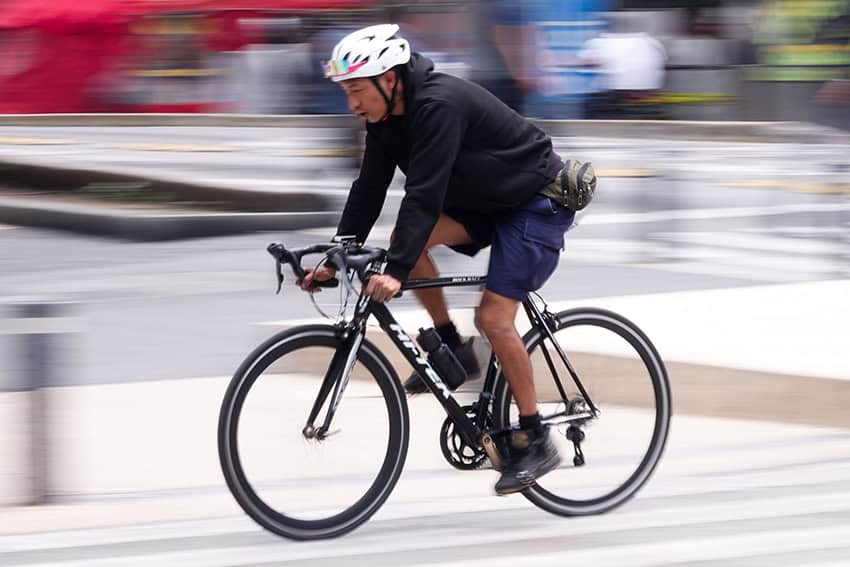
Just under 5% of Mexicans commute by bicycle, while 33% commute by car. (Graciela López / Cuartoscuro.com)

78) In 2022, just over 19 million hectares of agricultural land in Mexico were rainfed fields (those that depend entirely on rainfall for water).

(Source: INEGI, Agricultural Census – CA, 2022)

Approximately three-quarters of all farmland in Mexico is rainfed rather than irrigated, making agriculture highly vulnerable to drought and climate variability. Most of these crops are managed by small producers. Limited irrigation infrastructure is a major development and food security challenge for the country.

79) In 2023, beauty salons, clinics and barbershops ranked as the second most common type of business in the country, with 275,618 establishments.

(Source: INEGI, Economic Census – CE, 2024)

The beauty and personal care industry in Mexico has seen rapid expansion, with thousands of new salons opening each year. This growth reflects changing consumption habits, a growing service sector, and increasing demand for beauty and wellness services across urban and rural areas.

80) A single highway can take you across much of Mexico: The Mexico–Nogales route stretches 2,378 km, connecting the center of the country with the northern border.

(Source: INEGI, National Road Network – RNC, 2024)

The Mexico-Nogales highway (Federal Highway 15) is one of the country’s longest and most important transport corridors. It links Mexico City with Nogales, Sonora, facilitating trade, travel, and economic integration from the capital to the U.S. border.

Mexico News Daily

Guadalajara and Monterrey will host playoff games to determine the remaining World Cup teams 

0
Estadio Akron in Guadalajara
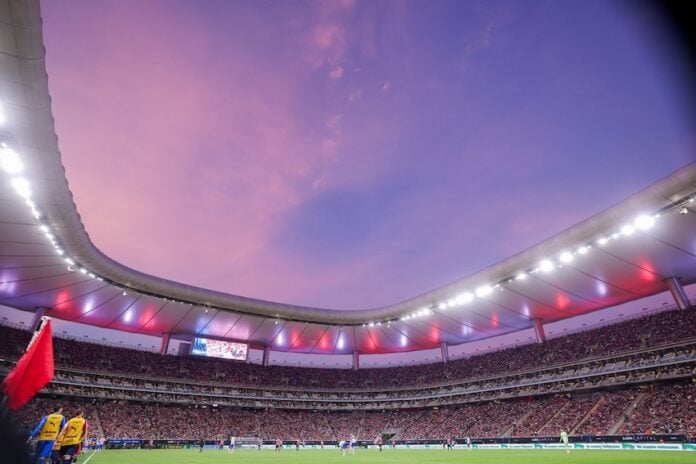
Estadio Akron, Guadalajara's jewel of a soccer venue, will not only be the site of World Cup matches in the summer, but it will also host two World Cup qualifying tournament games in March. (@EstadioAKRON/on X)

Guadalajara and Monterrey will get a head start on next summer’s World Cup excitement when they play host to the FIFA interconfederation playoff series in March.

The playoff will feature six national sides from five soccer confederations battling for two spots in the 48-team World Cup field.

Estadio BBVA

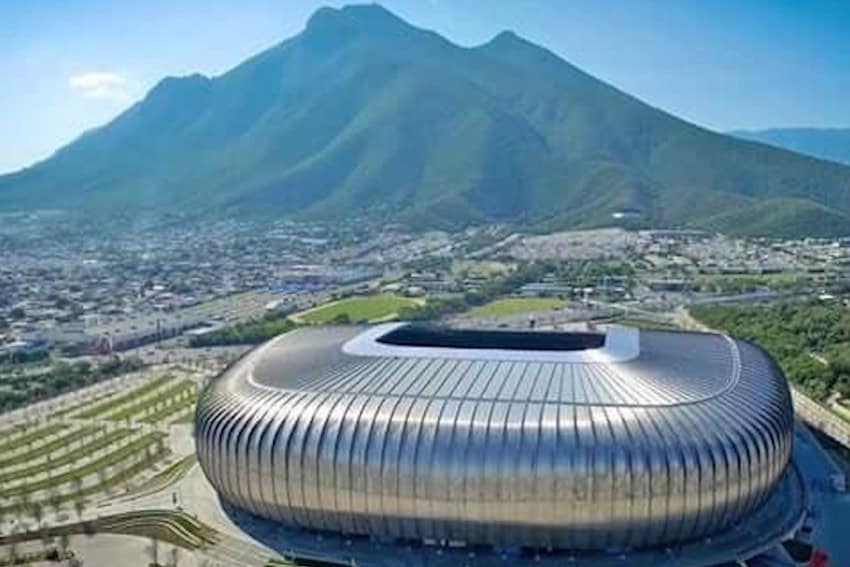
One of the two host venues for the World Cup qualifying tournament in March, Estadio BBVA, in the Guadalupe municipality of the greater Monterrey area, offers soccer fans a view of the noble Cerro de la Silla. (@la_okocha/X)

Guadalajara’s Estadio Akron and Monterrey’s Estadio BBVA will stage the qualification tournament — which will begin on March 23 — with each stadium hosting two matches.

“These iconic stadiums are the perfect stages for what promises to be a thrilling event filled with passion, drama and excitement,” FIFA president Gianni Infantino said.

Forty-two World Cup spots have been filled after qualifying rounds in the six confederations concluded this week. Whereas the European confederation (UEFA) will hold its own World Cup playoff with 16 teams squaring off for four additional berths, the other five confederations will have a chance to secure an extra spot in the interconfederation playoff.

The six nations that will compete in Mexico are Iraq (Asian Football Confederation), Congo (Confederation of African Football), Jamaica (Confederation of North, Central America and Caribbean Association Football, or Concacaf), Suriname (Concacaf), Bolivia (South American Football Confederation) and New Caledonia (Oceania Football Confederation). 

As the host confederation, Concacaf was granted an extra team in the playoff. 

The match schedule — arranged via a blind draw held Thursday in Zurich — pits New Caledonia vs. Jamaica, with the winner facing Congo (ranked No. 56 in the FIFA World Rankings) for one World Cup spot. The other bracket has Bolivia facing Suriname, with the winner advancing to a meeting with Iraq (ranked No. 58) for the other spot.

It has yet to be decided which games will take place at which of the two sites.

After the draw, ESPN predicted that Congo and Bolivia will emerge as winners. 

Estadio Akron and Estadio BBVA will each host games at next year’s World Cup. The former will be the site of  four group-stage matches, while the latter will play host to three group games and a round-of-32 match.

The third venue for World Cup matches in Mexico — Mexico City’s Estadio Banorte — is undergoing renovations that are expected to be completed in March 2026. 

The historically significant stadium — host to the inaugural World Cup matches in 1970 and 1986 when it was still called Estadio Azteca — has been designated to host the inaugural match of the 2026 World Cup. It will celebrate its reopening with a friendly match between the Mexican national team and Cristiano Ronaldo’s Portugal.   

With reports from The Associated Press, SB Nation and The Sporting News

Security Ministry arrests alleged mastermind behind killing of Michoacán anti-crime crusader

7
A detained man wearing a hoodie stands next to two uniformed SSPC agents.
The Security Ministry has announced the arrest of one of the alleged conspirators behind the Day of the Dead assassination of Uruapan Mayor Carlos Manzo: Jorge Armando "N," also known as "El Licenciado." (SSPC)

Federal Security Minister Omar García Harfuch announced Wednesday that an alleged mastermind of the Nov. 1 assassination of Uruapan mayor Carlos Manzo had been arrested.

García Harfuch told a press conference that Jorge Armando “N” — who was detained in Morelia, Michoacán — had been identified as “one of the masterminds” of Manzo’s murder as well as “one of the leaders of the criminal cell that planned the homicide.”

The suspect, also known as “El Licenciado” (The Graduate), is alleged to be affiliated with the Jalisco New Generation Cartel (CJNG). An alleged local leader of the CJNG, René Belmonte Aguilar, was arrested in Uruapan in August.

García Harfuch said that authorities had also identified two men who, in the “hours before the attack” on Manzo, “accompanied the assailant,” Víctor Manuel Ubaldo Vidales, a 17-year-old boy who was killed by a municipal police officer after he was detained for allegedly shooting the mayor multiple times.

The security minister said that those two men, identified as Fernando Josué “N” and Ramiro “N,” were found dead on Nov. 10 on the Uruapan-Paracho highway in Michoacán.

García Harfuch said they were “apparently” killed to “impede the development of the investigations” into the assassination of Manzo. He said that Ramiro “N” had a criminal record for weapons offenses and was linked to a “criminal group with a presence” in Michoacán.

The assassination of Manzo — an outspoken anti-crime crusader who had urged the federal government to ramp up the fight against organized crime — triggered protests in Michoacán and precipitated the creation of Plan Michoacán, a federal plan to pacify the state.

Assassination was coordinated on messaging app

García Harfuch said that authorities found the two deceased men’s telephones the day after their bodies were located on the Uruapan-Paracho highway.

He said that an analysis of the telephones allowed authorities to establish that Ramiro “N” was part of a group on a messaging app — reportedly WhatsApp — that was used to plan and coordinate the attack on Manzo.

García Harfuch said that authorities also established that Jorge Armando “N” “held the command role” in that group “as he was the person who issued the instructions to carry out the execution.”

He said that authorities went through the group chat and observed that at 6:06 p.m. on Nov. 1, Ramiro “N” sent a video from the central square in Uruapan where Manzo was shot during the Festival of Candles, a Day of the Dead event.

“In the message he reported that he was at the site to locate the mayor,” García Harfuch said.

Outspoken anti-crime mayor assassinated in Uruapan, Michoacán’s second-largest city

“At 7:45 p.m., the members of said [messaging app] group said that Carlos Manzo was at the Festival of Candles and was transmitting live on social media. At approximately 8 p.m., Ramiro indicated that the authorities had subdued the shooter and Carlos Manzo was being treated [for his wounds],” he said.

García Harfuch said that before the attack occurred, Jorge Armando “N” told members of the messaging app group that Manzo should be targeted even if he was in the company of other people. The mayor was at the Festival of Candles with his family, and held his young son in his arms shortly before he was shot. A Uruapan councilor, Víctor Hugo de la Cruz, was injured in the attack.

García Harfuch also said that Jorge Armando “N” told those involved in the attack on Manzo to “hide to avoid being detained.”

“… The analysis of these conversations, intelligence work and various investigative procedures allowed [authorities] to follow the trail” and ultimately identify, locate and arrest Jorge Armando “N,” he said.

“… This arrest represents a key step toward breaking up the criminal structure responsible for this attack. We reiterate that there won’t be impunity,” García Harfuch said.

“The government of Mexico maintains an absolute commitment to justice and to the safety of the families of Michoacán. The investigations continue, there will be more arrests and this criminal network that commits homicides, extortion, uses young people and generates violence in the region will be completely disbanded,” he said.

Report: Jorge Armando ‘N’ conveyed orders from a high-ranking CJNG leader  

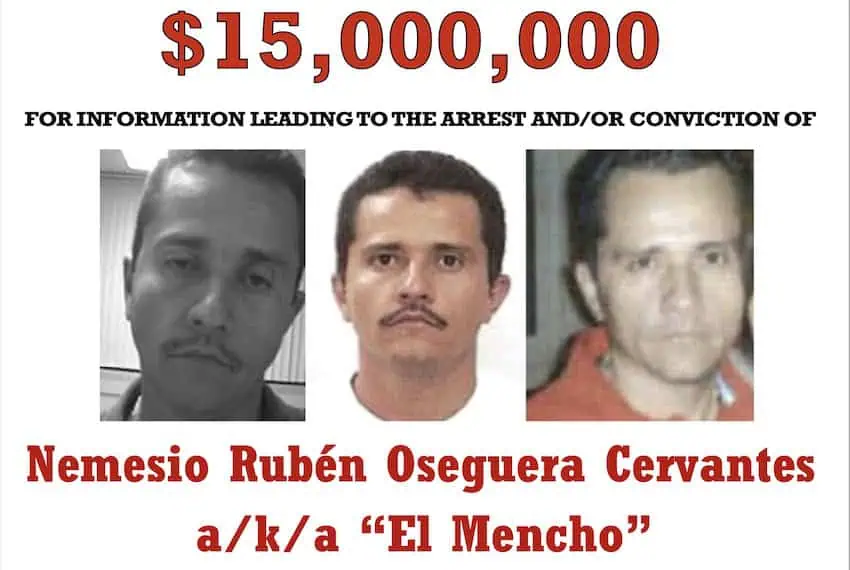
Citing federal sources, the Milenio newspaper reported on Thursday that Jorge Armando “N” operated under the orders of Ramón Álvarez Ayala, a man identified by the federal government in 2021 as the second in command of the CJNG, after Nemesio “El Mencho” Oseguera Cervantes.

Milenio wrote that Álvarez, known as “El R1,” has a “direct line of communication” with El Mencho, an elusive kingpin wanted in both Mexico and the United States.

The U.S. State Department is currently offering US $15 million for information leading to the arrest and/or conviction of "El Mencho," who is the author attributed to yesterday's attack on Mexico's National Guard.
The alleged conspirator, whose arrest was made public this week, allegedly operated under Ramón Álvarez Ayala, second-in-command to CJNG chief El Mencho. (U.S. State Dept.)

The newspaper also wrote that Jorge Armando “N” conveyed to his sicarios (assassins) “the orders of El R1 to assassinate Manzo on Nov. 1 during the Day of the Dead festival in the main square of Uruapan.”

Milenio said that it obtained an image of a message sent after the mayor’s murder in which Jorge Armando “N” wrote:

“The boss sends his thanks and asks us to ensure no one is detained.”

The boss he was referring to was apparently Álvarez Ayala, who bases his operations in Uruapan, according to Milenio.

With reports from El Universal and Milenio 

Foreign investors have sold off US $7B in Mexican government bonds this year

0
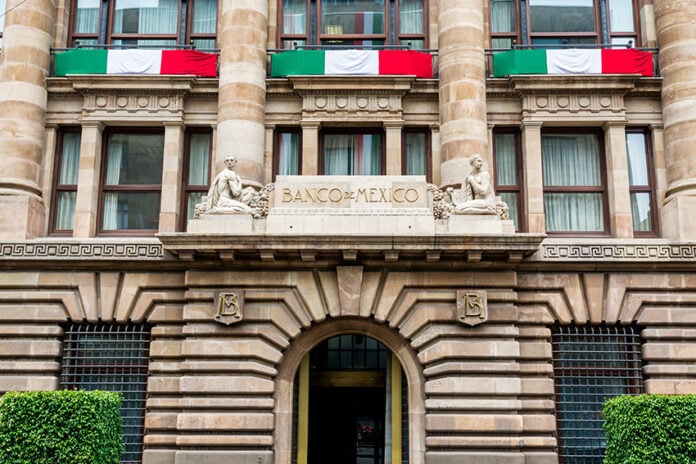
The entrance of the Bank of Mexico
New data from the central bank shows that foreign investors have pulled back from Mexican government bonds amid global trade and tariff uncertainty. (Shutterstock)

During the first ten months of 2025, foreign investors withdrew more than 130 billion pesos (US $7 billion) in bonds backed by the Mexican government, marking one of the largest outflows of foreign capital from government instruments in recent years. 

According to data from the Bank of Mexico (Banxico), at the end of 2024, some 1.8 trillion pesos (US $99.5 billion) in Mexican government bonds were held by foreign investors.


In contrast, by the end of October of this year, the amount declined to 1.7 trillion pesos (US $92.4 billion) after investors sold off government bonds worth 43.6 billion pesos (US $2.3 billion) in October alone, marking seven consecutive months of capital outflows.

The Trump effect?

According to the central bank, in January, the month Donald Trump returned to the U.S. presidency, foreign investors sold off 29 billion pesos (US $1.5 billion) worth of Mexican government bonds.

February saw a rebound, with purchases amounting to 49 billion pesos (US $2.6 billion), followed by 17.2 billion pesos (US $925 million) in March.

However, since then, there have only been outflows. In April, foreign investors sold off 27.8 billion pesos (US $1.52 billion) of bonds. May sales reached 46 billion pesos (2.53 billion), followed by losses of 4.9 billion pesos (US $272 million) in June, 9 billion pesos (US $489 million) in July, 10 billion pesos (US $544 million) in August and 32 billion pesos (US $1.7 billion) in September.

Analysts at Banamex noted that foreign holdings of bonds now account for 12% of the total, the lowest level since 2010. 

The outflow coincides with a period of global financial volatility, marked by geopolitical tensions stemming in part from tariffs and trade policies imposed by the United States administration, as well as uncertainty over the upcoming review of the United States-Mexico-Canada Agreement (USMCA). 

Another key factor is the decline in interest rates for financial instruments like Federal Treasury Certificates. In 2025, these rates stood at around 11%, but due to ongoing cuts have lowered interest rates to approximately 7%.

If the trend continues, analysts predict an adjustment in interest rates and greater volatility in the Mexican peso, especially as elections and the renegotiation of the USMCA approach.

Central bank again drops interest rates a quarter-point, but continued easing is no certainty 

While government bonds have fallen out of favor with foreign investors, capital is still flowing into the country through other routes. Foreign direct investment (FDI) in Mexico increased 14.5% in the first nine months of 2025 to reach just over US $40.9 billion — a new record for the time period, President Claudia Sheinbaum said Thursday.

“The willingness to invest in our country is reaffirmed,”she wrote in a social media post. “We’re going to end 2025 very well.”  

With reports from La Jornada and La Verdad Noticias

The Tour de France (sort of) comes to Mazatlán

0
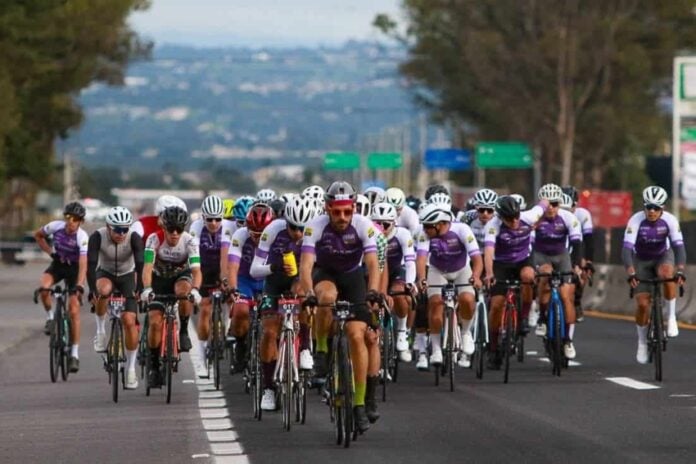
L'Étape Mazatlán by Tour de France
L'Étape Mazatlán by Tour de France took place earlier this month in the "Pearl of the Pacific." (Gobierno del Estado de Sinaloa)

On November 9, L’Étape Mazatlán by Tour de France 2025 turned the Pacific coast into the heart of international cycling. The event welcomed cyclists of all levels, offering three routes: the Sprint (37.7 km), the Short (65 km), and the Long (112.4 km).

The event was a festival of sport and families, as national and international cyclists rode coastal routes in a spirit of community. Warm, clear weather graced the entire day, while security measures, technical support and logistical efforts ensured a safe experience for competitors, visitors and local residents.

We went to Mazatlán's 'Tour de France': Here's what we saw

Families lined the streets to cheer, visitors enjoyed Mazatlán’s cuisine and scenery, and cyclists experienced the thrill of a Tour de France-style race in an energetic and welcoming atmosphere.

Mexico News Daily’s Eduardo Esparza went to take in the sights and sounds of the malecón. Here’s what he found.

Eduardo Esparza is a professor, filmmaker and professional photographer from Mazatlán, Sinaloa. His first feature film, “Con un pie en la gloria,” will premiere this summer.