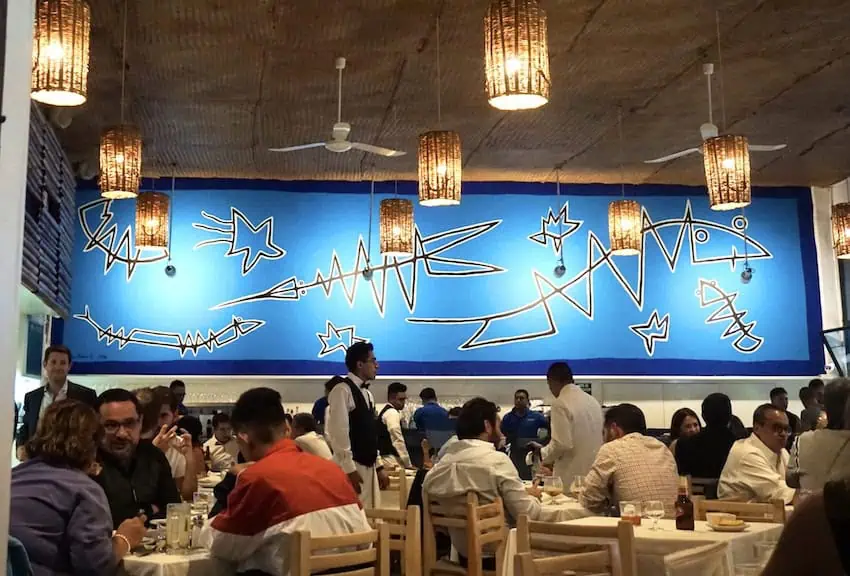
It can be hard to get a table at the hottest restaurant in Mexico City, so we've provided instructions on how to make your own culinary gem at home. (Contramar/Instagram)
It is a dish of balance, of opposing forces colliding deliciously. One side wears a dark, smoky adobo, rich with guajillo and ancho chiles. It tastes like the past, like ancient markets and smoke curling up from clay comals. The other side is bright, sharp, alive —tomatillos and cilantro and lime juice slapping your tongue awake. And the fish, poor thing, is just lying there, cut open, serving as the great battlefield for these dueling flavors.
When it comes to Mexico City restaurants, Contramar is a certified institution. (Global Gluttons)
And yet, despite the contrast, the dish does not feel like war. It feels like a marriage of opposites, the yin and yang of Mexican cuisine. It is a reminder that contradiction is beautiful, sweet and sour, red and green — these things should be together, always. To choose just one is to miss the point entirely.
Of course, this is not the only dish in Mexico that does this. There is also huevos divorciados, which literally translates to “divorced eggs.” A fried egg on one side, drowning in red salsa. A fried egg on the other, bathed in green. A single tortilla in the middle, like a marriage counselor, trying to keep things civil. The name implies separation, but the dish tells a different story: that both salsas belong on the plate, on the eggs, in your mouth, in your life. Because without one, the other would be incomplete.
Back to Contramar’s grilled fish. All that matters is this: when the waiter sets the plate down in front of you, or if you decide to make this recipe, there is no need to choose a side. Just take your fork, take a bite, and let both flavors wash over you, together. They do not fight. They do not clash. They do not cancel each other out. Instead, they make each other stronger.
Contramar-style red & green salsa grilled snapper
A perfection fusion of spice, flavor and flair await your tastebuds. (Contramar/Instagram)
This recipe recreates the famous Contramar grilled fish, featuring a split fillet coated with two vibrant salsas: a smoky red adobo on one side and a fresh green salsa on the other.
Ingredients
For the Fish:
1 whole butterflied fish (red snapper or similar) – about 1.5 kg (3–4 lbs), skin-on
2 tbsp olive oil
Salt and pepper, to taste
For the Red Adobo Salsa:
3 dried guajillo chiles, stemmed and seeded
1 dried ancho chile, stemmed and seeded
2 cloves garlic
1/4 cup white vinegar
1 tomato
1/2 tsp ground cumin
Salt, to taste
For the Green Salsa:
6 tomatillos, husked and rinsed
1 serrano or jalapeño pepper
1/4 cup fresh cilantro
1 tbsp lime juice
1/2 tsp salt
Instructions
1. Make the Red Adobo Salsa:
Toast the dried chiles in a dry skillet over medium heat for about 30 seconds per side.
Place the toasted chiles in a bowl with hot water and let them soak for 10 minutes.
Drain and blend with garlic, tomato, vinegar, tomato, cumin, and salt. Add a splash of water if needed for a smooth consistency.
2. Make the Green Salsa:
Boil or roast the tomatillos and serrano until softened (about 5 minutes if boiling, 10 minutes if roasting).
Blend with cilantro, lime juice, and salt until smooth.
3. Prepare the Fish:
Preheat a grill or grill pan to medium-high heat.
Brush the fish with olive oil and season with salt and pepper.
Spread the red adobo salsa over one half of the fish and the green salsa over the other half.
4. Grill the Fish:
Place the fish skin-side down on the grill. Cover and cook for 10–15 minutes, or until the flesh is opaque and flaky.
Serve immediately with lime wedges, more salsa, and warm tortillas.
Stephen Randall has lived in Mexico since 2018 by way of Kentucky, and before that, Germany. He’s an enthusiastic amateur chef who takes inspiration from many different cuisines, with favorites including Mexican and Mediterranean.
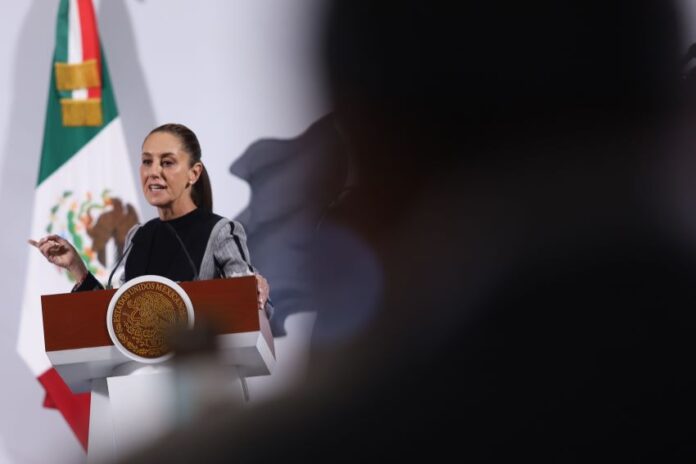
President Claudia Sheinbaum also told reporters at her daily press conference Tuesday about her plans for Mexico's southern border and the possible additional extraditions of cartel figures to the U.S. (Daniel Augusto/Cuartoscuro)
On the eve of what U.S. President Donald Trump says is “Liberation Day” in the United States, President Claudia Sheinbaum said that her government is “ready” to respond to U.S. tariffs on Mexican exports.
At her Tuesday morning press conference, Sheinbaum also spoke about her plans for Mexico’s southern border and left the door open to more extraditions of cartel figures to the United States.
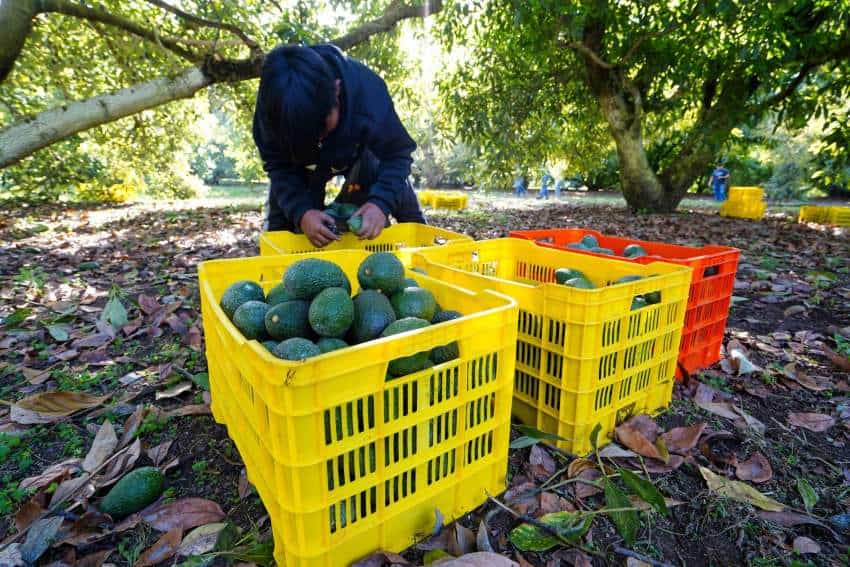
On Wednesday, more Mexican exports — including the popular avocado — will almost certainly be subject to tariffs in the U.S. (Juan José Estrada Serafín/Cuartoscuro)
Sheinbaum: No certainty about US tariffs
Sheinbaum reiterated that her government will wait until April 3 to respond to the United States’ tariffs on imports from Mexico.
President Donald Trump is scheduled to announce “reciprocal tariffs” on imports from all its trading partners on Wednesday afternoon as he seeks to restore balance to what he sees as the longstanding unfair treatment of the United States.
Sheinbaum said that her government will wait to see “what is exactly the position that the United States government takes on April 2.”
“Know that we are ready,” she added.
“We meet two or three times a week with the [government’s economic] team to strengthen the different [retaliatory] measures. What we essentially want to do is protect the people of Mexico and employment,” Sheinbaum said.
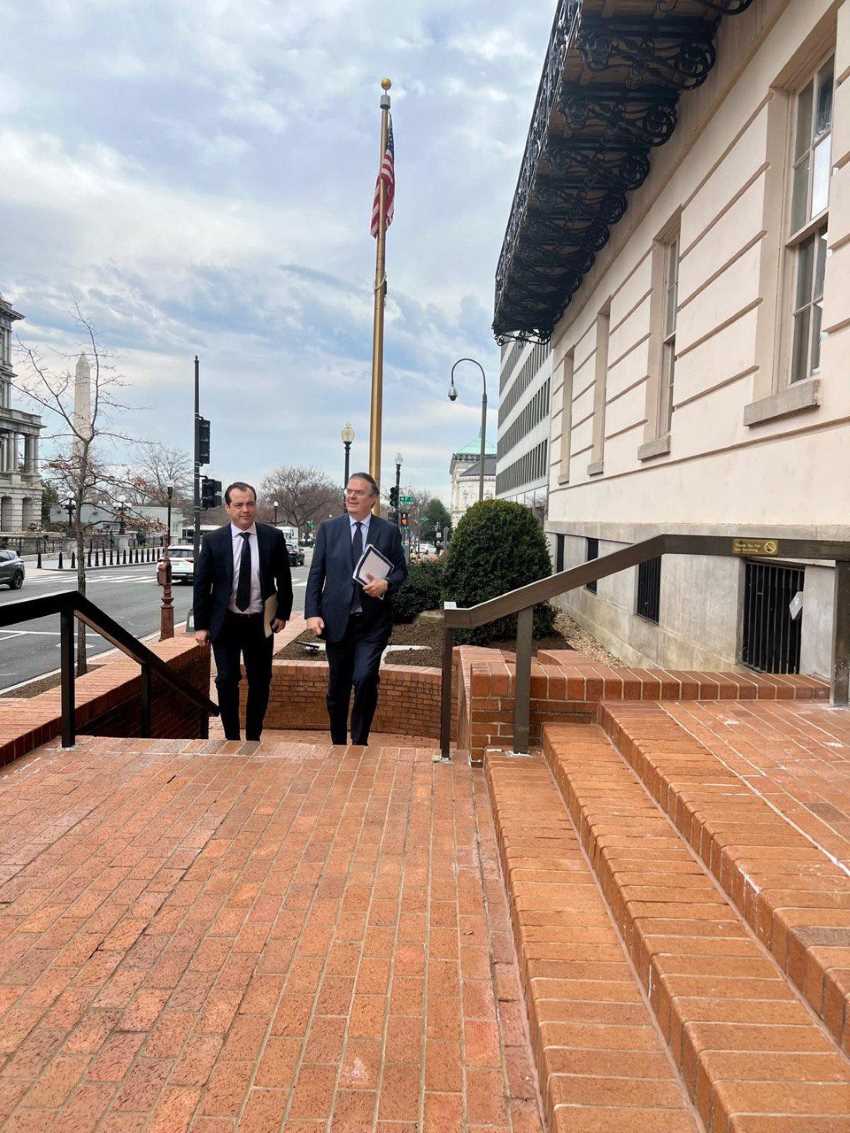
Mexico’s Economy Minister Marcelo Ebrard, right, has been meeting several times over the last month with U.S. officials in Washington, D.C., to try and convince the U.S. to not impose tariffs on Mexico, and Sheinbaum said she has been meeting with her economic team weekly to decide how Mexico will respond after Wednesday. (Economy Ministry/X)
She said later in the press conference that her government doesn’t believe in “an eye for an eye” and “a tooth for a tooth” approach “because that always leads to a bad situation.”
It’s not a matter of tit-for-tat retaliation, but rather “what is best for Mexico,” said Sheinbaum, who has repeatedly spoken out against U.S. tariffs and is a strong advocate of the integration of the North American economy.
She stressed that Mexico and all other countries around the world have no “certainty” about the tariffs Trump will announce on Wednesday. Some reports have indicated that the United States could impose 20% across-the-board tariffs on imports, but that hasn’t been confirmed.
Sheinbaum said that U.S. tariffs — which have already been imposed on Mexican steel and aluminum and on Mexican goods not covered by the USMCA — place the North American free trade pact “in doubt.”
“If the USMCA says ‘no tariffs’ and there are tariffs, obviously the USMCA is not being complied with,” she said.
Sheinbaum favors development over soldiers on Mexico’s southern border
Sheinbaum said that in her meeting with United States Secretary of Homeland Security Kristi Noem last Friday, she told the U.S. official that “the best way” to attend to the issue of migration across Mexico’s southern border is to create “a development hub between Guatemala and Mexico.”
U.S. Secretary of Homeland Security Kristi Noem visited President Sheinbaum in the National Palace on Friday. (Mario Jasso/Cuartoscuro)
Sheinbaum said that the creation of a development hub, or industrial zone, on the southern border “is part of the project we have with the Interoceanic Train.”
Sheinbaum noted that one line will go to Ciudad Hidalgo, Chiapas, on the Mexico-Guatemala border, and highlighted that her government is working with its Guatemalan counterpart to extend the line into Guatemala.
She said that the government is already in the process of developing two development hubs in Tapachula, a city just north of the border with Guatemala.
“Better that than having soldiers on the entire southern border,” Sheinbaum said.
The Mexican National Guard stationed at Mexico’s southern border in Tapachula, Chiapas. (Damián Sánchez Jesús/Cuartoscuro)
Sheinbaum also said that she told Noem about the government’s policy of carrying out “humanitarian rescues” of migrants, a euphemism for the detention of such people as they travel through Mexico en route to the United States.
The policy prevents migrants from reaching northern Mexico, she said, adding that the people are “attended to in our territory” — perhaps given a work visa and provided with assistance to find employment — or repatriated, if that is their wish.
On Monday, Noem also said that Sheinbaum “has an opportunity to do some things” — such as sharing information on criminal background checks for migrants — and suggested that doing so could help Mexico reach a deal with the U.S. to avoid tariffs on its exports to its northern neighbor.
On Tuesday, Sheinbaum stressed that she wouldn’t yield to pressure from the United States.
“We coordinate, but we do not subordinate ourselves,” she said, adding that she only “responds” to one authority — “the people of Mexico.”
More cartel figures could be extradited to the US
A reporter asked the president whether the United States has asked Mexico to extradite more cartel capos and criminals wanted in the U.S.
The United States has requested the extradition of a number of suspects in Mexico, Sheinbaum said, but noted that the request was made some time ago.
Asked whether the extradition of people wanted in the United States could be expedited, Sheinbaum said that depended on the “joint work” of Mexico and its U.S. neighbor.
Since Sheinbaum took office, Mexico has been more receptive to U.S. requests to extradite Mexican cartel members to the U.S. A high-profile example seen here is Rafael Caro Quintero, center, a cartel kingpin the U.S. government has sought for decades. He was extradited in February. (X)
“No special request has been made,” she added.
The Milenio newspaper reported on Tuesday that the United States has its sights set on the extradition of another 29 drug traffickers in Mexico, 18 of whom are already in custody.
Those wanted in the U.S. include alleged members of criminal organizations such as the Sinaloa Cartel and the Jalisco New Generation Cartel.
By Mexico News Daily chief staff writer Peter Davies (peter.davies@mexiconewsdaily.com)
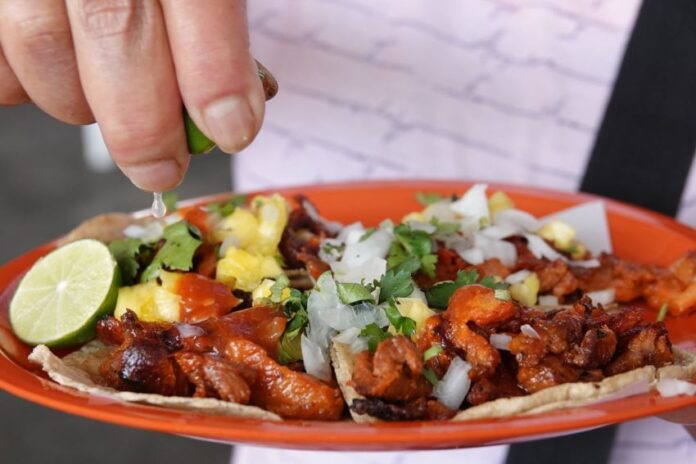
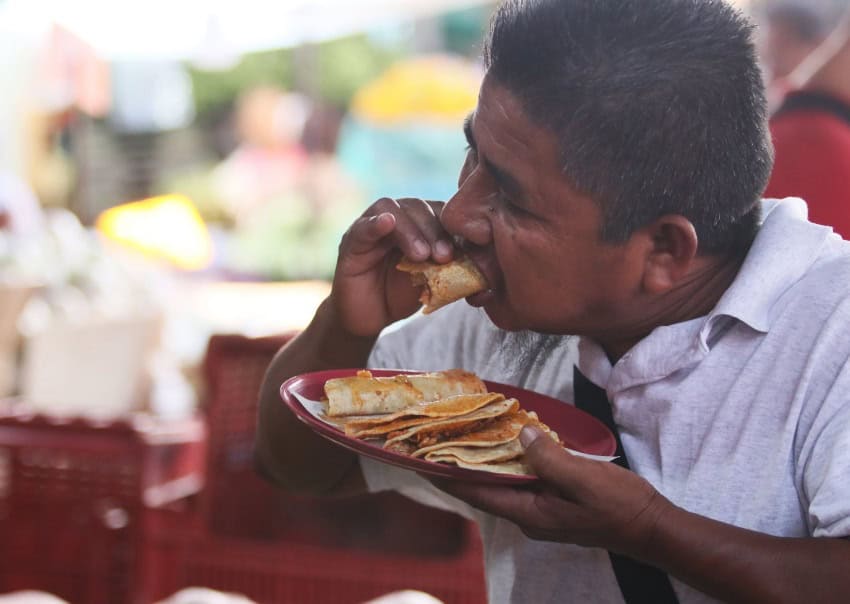
Although the origin of the taco in Mexico is not entirely clear, it's definitely a popular food among Mexicans. (Graciela López/Cuartoscuro)
Taco restaurants, or taquerías, generate an estimated 50 billion pesos (US $2.46 billion) annually, according to the newspaper El Economista, which reported the figure on the International Day of the Taco on Monday.
In Mexico City, the average resident has a taquería within an estimated 400 meters of their home or workplace. The industry employs over 30,000 people in the capital, representing 57% of informal food sector jobs in the city, according to El Economista.
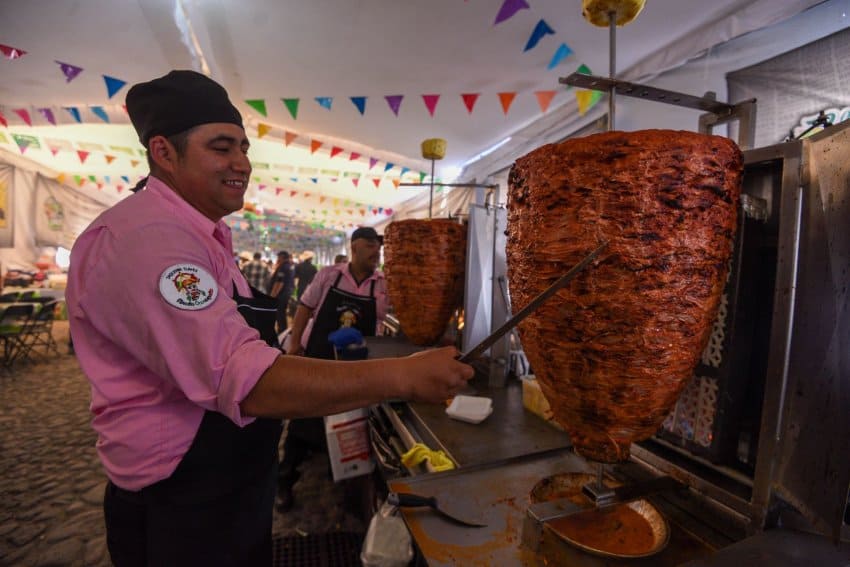
The taquería industry employs over 30,000 people alone in Mexico City. (Crisanta Espinosa Aguilar/Cuartoscuro)
The word “taco” may derive from the Spanish word for dowel, referring to a plug to fill a hungry stomach, or from the Nahuatl word tlacoyo.
Whatever the origin, the taco has become an international powerhouse. In 2024, Remitly, a money-transfer platform, assessed the number of posts shared on TikTok to determine the most popular street foods around the globe, and tacos came out on top with 1.8 million posts.
Food apps boost the taco economy
Food ordering apps, such as Uber Eats and China’s DiDi Food, sold over 64 million tacos in 2024, according to El Economista.
Last year, Uber Eats reported orders of more than 24 million tacos, with over 8 million placed in Mexico City alone. Meanwhile, DiDi Food reported orders of over 40 million tacos nationwide, marking a 27% increase from the previous year.
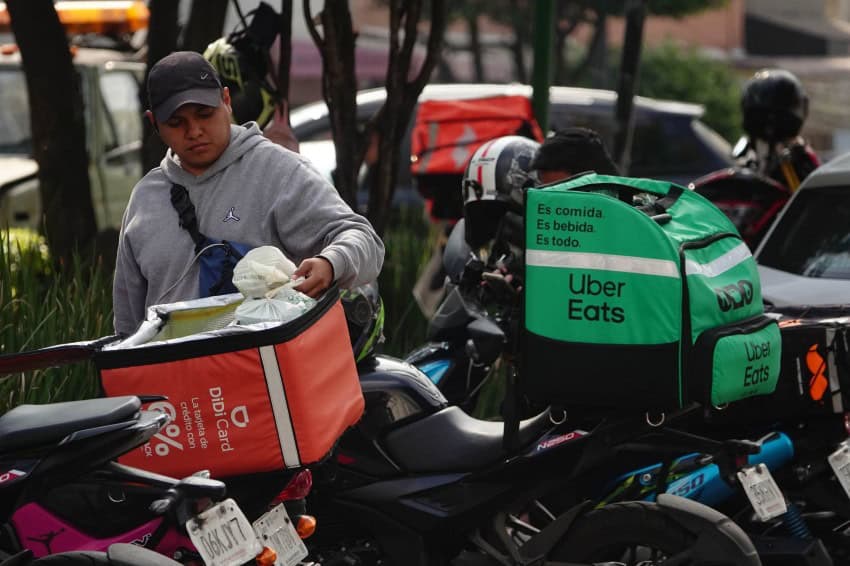
The emergence of restaurant delivery apps like Uber Eats has made the taco even more accessible to consumers whenever the craving hits. (Rogelio Morales Ponce/Cuartoscuro)
In addition to popular meat tacos, such as tacos al pastor, vegan options have risen in popularity.
The top taco orders on DiDi Food in 2024 were:
pastor (7.5 million)
barbacoa (3.5 million)
dorados (3 million)
steak (2 million)
birría (2 million)
Potato tacos were the most popular vegan option.
DiDi Food works with more than 23,400 restaurants offering tacos, and over 100,000 taco options are available for under MX$80 ($4).
International Day of the Taco
March 31 is celebrated as the International Day of the Taco — a tradition that began in 2007 when the Mexican media group Televisa launched an advertising campaign promoting the day with the slogan “Because everyone likes tacos.”
The idea soon gained popularity, and now many taco restaurants around the globe hold special promotions or events on March 31.
In Cancún, at least 20 taco shops collaborated on Monday to celebrate the iconic Mexican dish. Taquerías drew hundreds of visitors and gave away approximately 5,000 tacos throughout the day.
Taco Chilango Festival
Mexico City will host Chilango Magazine’s third annual Taco Chilango festival on April 5 at the Monument to the Revolution from 11 a.m. to 10 p.m. The event will feature 70 of the top taquerías in the city to showcase their tacos, including tacos de pastor, suadero, carnitas and barbacoa, cochinita pibil tacos and more.
Admission is free, and the event will include live music, special shows and contests.
During last year’s second edition of the Taco Chilango festival, Mexico City broke its own Guinness world record for the most tacos served in an hour, at 8,450 tacos.
Los Alegres del Barranco, shown here, were probably not smiling when the United States canceled their tourist and work visas in response to their most recent performance. (Los Alegres del Barranco/Facebook)
The regional band Los Alegres del Barranco faces legal and professional fallout following a weekend performance in which they paid tribute to Nemesio “El Mencho” Oseguera Cervantes, a notorious drug lord.
On Monday, the United States reportedly revoked the Mexican band’s work and travel visas, and Mexican authorities are pursuing possible criminal charges.
🚨 Polémica en Guadalajara: Durante el concierto de Los Alegres del Barranco, apareció la imagen de “El Mencho” en las pantallas, generando indignación.
Las autoridades investigan mientras crece la preocupación por la normalización del crimen organizado en la cultura popular. pic.twitter.com/eF1hkad5Qh
During a concert in Guadalajara, Jalisco, on Saturday night, the band played one of their most popular corridos, “El del Palenque.”
The corrido — a traditional Mexican narrative ballad often depicting real people or events — pays homage to “El Mencho” and the Jalisco New Generation Cartel (CJNG), which he allegedly leads.
As the band performed the song, images of “El Mencho” were displayed on the big screen behind the stage, eliciting cheers from the audience. Later, they performed a song about former Sinaloa Cartel boss Joaquín “El Chapo” Guzmán while flashing his image on the big screen.
“El Chapo” is currently serving a life sentence in a U.S. federal prison.
Los Alegres del Barranco is scheduled to perform on April 4 in Tulsa, Oklahoma, and on April 5 in Austin, Texas. According to the newspaper El Universal, a representative of the U.S. Department of Justice said the band’s visas were canceled for “promoting a group defined as terrorists in the United States.”
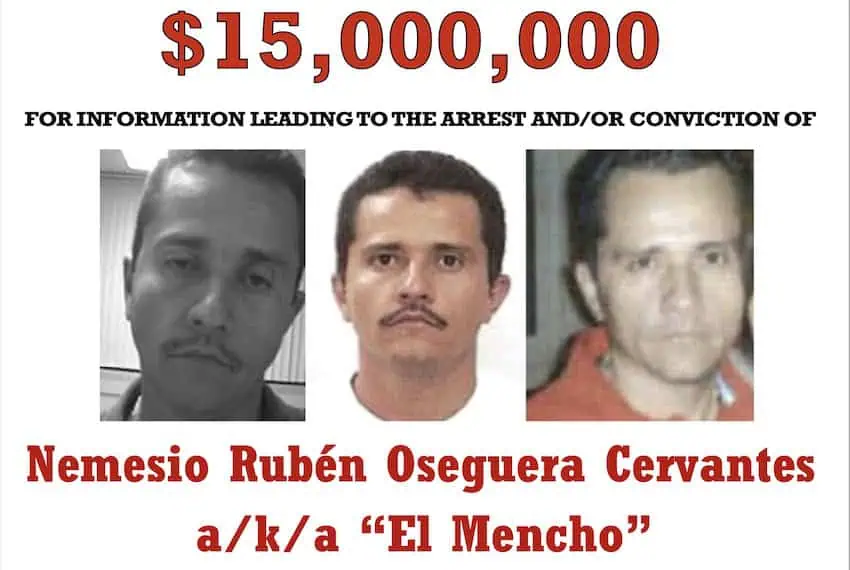
The U.S. State Department is currently offering US $15 million for information leading to the arrest and/or conviction of “El Mencho,” who is allegedly leading the Jalisco New Generation Cartel (CJNG). (state.gov)
In a social media post, Jalisco Governor Pablo Lemus said “outrage [following the spectacle] is not enough.” He said the band and its producer will be summoned to testify, lamenting that they were “advocating violence.”
The Jalisco State Prosecutor’s Office has opened an investigation into the band citing the charge of “apología del delito” (“glorification of crime”) A conviction could result in a prison sentence of up to six months.
On Monday, Mexican President Claudia Sheinbaum condemned the band for its homage to a wanted criminal and suggested federal authorities might open an investigation. She also said organizers of the event should be called to the carpet.
The UdeG was vilified for allowing the glorification of a criminal to take place on its premises.
University Rector Ricardo Villanueva said the university had no control over the content at the event, but said the university would consider inserting clauses in future contracts to prohibit expressions that incite violence or glorify crime.
Governor Lemus backed the idea, proposing that event organizers and producers should be required to sign “a letter of commitment … to avoid making such references, otherwise they will face monetary and criminal sanctions.”
Several Mexican states have enacted measures to restrict or sanction the public performance of narcocorridos, but Jalisco is not among them.
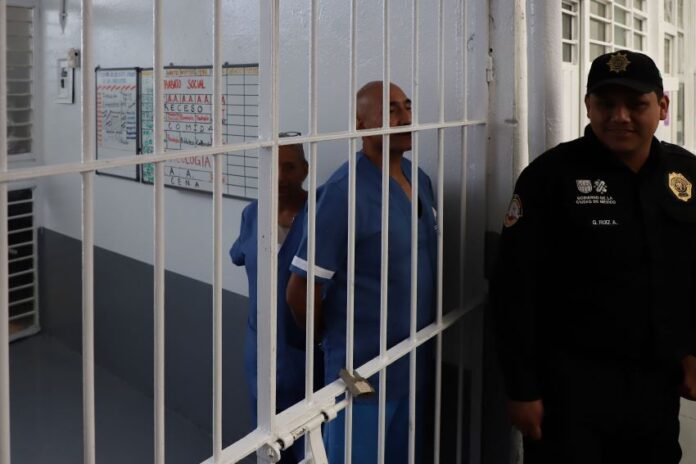
El Torito is Mexico City's drunk tank for impaired drivers, but it's not all that bad a place to be. (Daniel Augusto/Cuartoscuro)
If you’re caught driving and drinking in Mexico City, chances are you’ll get to spend a night in the Administrative Sanctions and Social Integration Center, where people who exceed the legal alcohol limit can be detained. Never heard of it? Odds are you have, but by a different name: El Torito.
The reasons someone may be taken to El Torito include failing a breathalyzer test, drinking alcohol in prohibited areas or obstructing public roadways. While all states across Mexico have a dedicated area for these kinds of infractors, only people in Mexico City and a few cities in the country, including Guadalajara, call it El Torito. You’re probably wondering why.
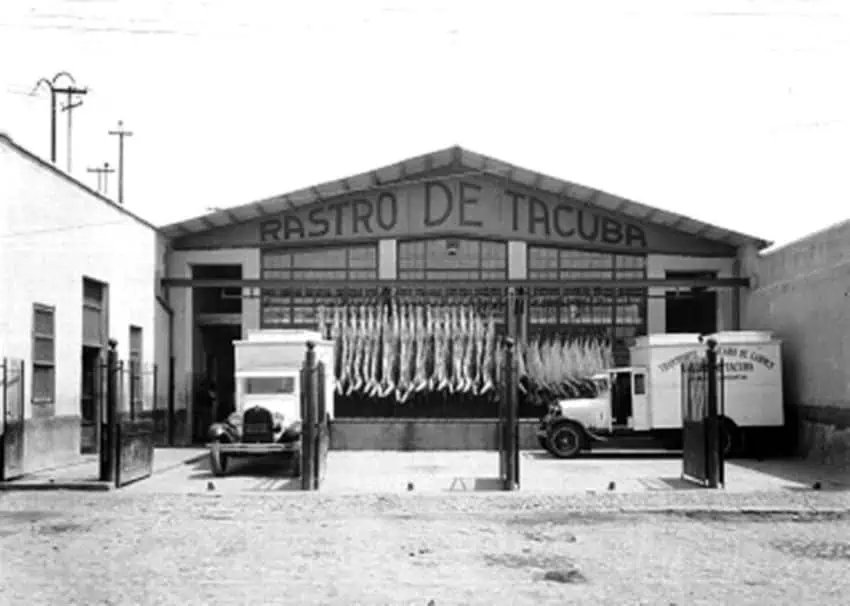
The Tacuba slaughterhouse, where El Torito now stands, in the early 20th century. (INAH)
Why is it called El Torito?
All other cities that call their drunk tanks El Torito do so because of the one in Mexico City, whose nickname has historical significance linked to the site’s past. Located in the neighborhood of San Diego Ocoyac, in Miguel Hidalgo, it was inaugurated on October 28, 1958, by President Adolfo Ruiz Cortines.
The center was established on the site of a former slaughterhouse, hence the name “El Torito,” which literally means “the little bull.”
How do people end up in El Torito?
At “retenes” (checkpoints), strategically located across the city, police officers randomly select drivers to take a breathalyzer test. Those whose blood alcohol concentration exceeds 0.8 grams per liter or whose breath alcohol level exceeds 0.4 milligrams per liter are taken to El Torito.
Drivers under the influence of narcotics, intoxicants or psychotropic drugs are also taken to the center, where they spend between 20 and 36 hours, while their vehicle is taken to a “corralón,” or city impound lot.
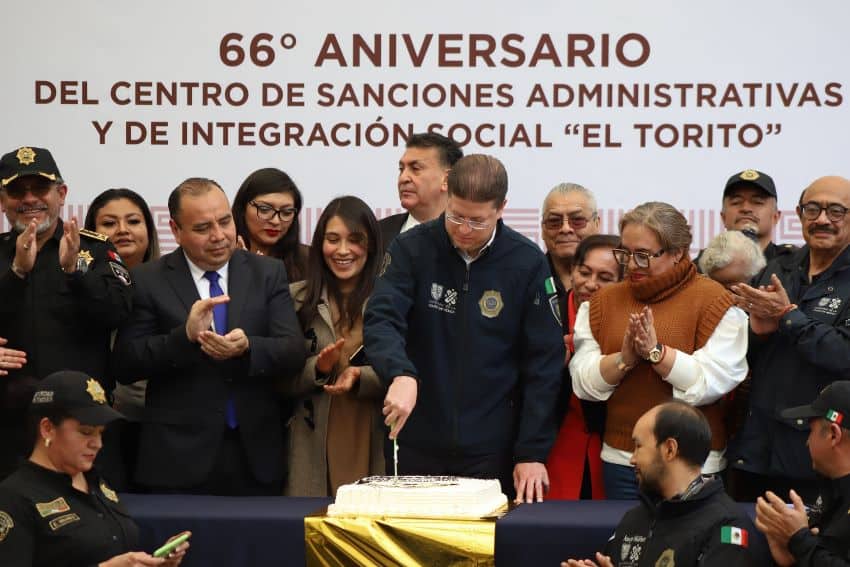
The El Torito staff celebrates the center’s 66th anniversary in October 2024. (Daniel Augusto/Cuartoscuro)
The breathalyzer is part of the Drive Without Alcohol program, which began in 2003 with the goal of preventing alcohol-related road accidents. According to authorities, this program has reduced fatalities by 70%.
The administration of El Torito prides itself on the humane treatment of inmate, and the center’s scope is not strictly punitive. During their stay at El Torito, detained drivers receive medical and psychological attention, as well as integration activities to prevent recidivism. The center can hold up to 72 men and 52 women, the latter of whom are assigned to a women’s wing run by female personnel. El Torito sees its greatest number of inmates during the holidays— but the menu is also exceptionally good those days.
What inmates eat at El Torito?
Local media typically covers the number of inmates during holidays, and the menu for those days.
The menu on Christmas Eve 2024 included rice, romeritos with potatos and prawns, fried beans and fresh juice. Meanwhile, the food served on New Year’s Eve included pasta soup with cream, pozole with lettuce, radish and tostadas and fresh juice.
Among Trump's list of requests is for Mexico to provide biometric data on migrants who cross its borders. (@POTUS/@Sec_Noem/X)
United States Secretary of Homeland Security Kristi Noem suggested Monday that President Claudia Sheinbaum could reach a deal with U.S. President Donald Trump to avoid tariffs on Mexican goods if Mexico complies with a list of U.S. requests.
During an interview broadcast on Fox News, chief political anchor Bret Baier asked Noem whether she believes Sheinbaum is “doing enough to defeat the cartels down there.”
La secretaria Kristi Noem dijo que dio algunas opciones sobre seguridad a la presidenta Claudia Sheinbaum durante su reunión del viernes; calificó a la mandataria mexicana como “extraordinaria”.pic.twitter.com/4E4bHQcFC3
“I gave her some options of more she could do. She’s participated a lot on our southern border, but we want her to secure her southern border with Guatemala,” Noem said.
“We want her to share some more information with us. Right now we don’t scan every single shipment that comes into this country over air freight. We have some information sharing that could happen on criminal background checks so I gave her a list of things that President Trump would be very happy to see and she was remarkable,” she said.
Noem said that her meeting with Sheinbaum was “very productive” and lasted almost two hours, much longer than the scheduled 30 minutes.
“She did sign some of those agreements with us, and I asked her specifically to share biometric information [of migrants] with us and she’s willing to discuss that even though that in her country would be a little bit controversial,” Noem said.
“She’s putting a good faith effort, but President Trump is clear. He doesn’t want people to keep talking, he wants to see action and she has an opportunity to do some things that I will give a report to the president on, and see if we can deal with the tariff situation that may be facing her people,” she said.
.@PressSec Karoline Leavitt: “On Wednesday it will be ‘Liberation Day’ in America as President Trump has so proudly dubbed it…the president will be announcing a tariff plan that will roll back the unfair trade practices that have been ripping off our country for decades.” pic.twitter.com/igw3zgVRfg
“We’re going to be very nice, relatively speaking, we’re going to be very kind,” Trump told reporters on Monday.
The Washington Post reported on Tuesday that “White House aides have drafted a proposal to impose tariffs of around 20 percent on most imports to the United States, three people familiar with the matter said, as President Donald Trump pushes for the most aggressive overhaul of the global economic system in decades.”
Sheinbaum said last week that her government will provide “a comprehensive response” to the United States’ tariffs on April 3, once it knows whether Mexican goods will face additional duties.
“We don’t want to give a response to each issue, but rather a comprehensive response,” said the president, who pledged to “always protect Mexico.”
On Tuesday, she reiterated that her government will wait to see what happens on Wednesday while maintaining dialogue with its U.S. and Canadian counterparts.
Asked at her morning press conference about potential retaliation to additional U.S. tariffs on Mexican goods, Sheinbaum said:
“We don’t believe in an eye for an eye, a tooth for a tooth because that always leads to a bad situation.”
With regard to Noem’s remarks, Sheinbaum stressed on Tuesday that she did not agree to anything requiring the transfer of biometric data and that she “only responds to the people of Mexico.”
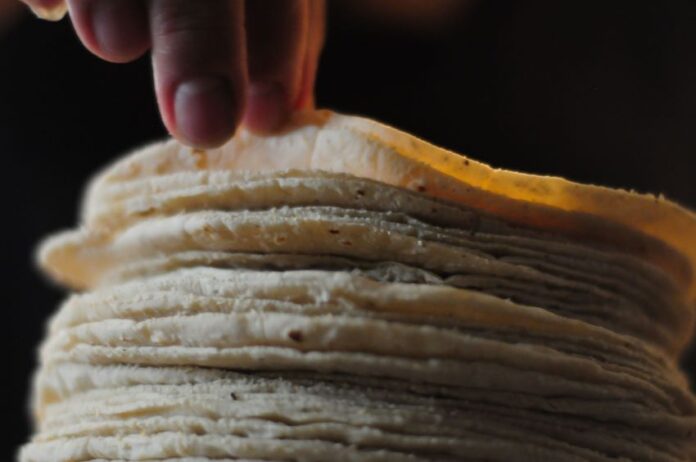
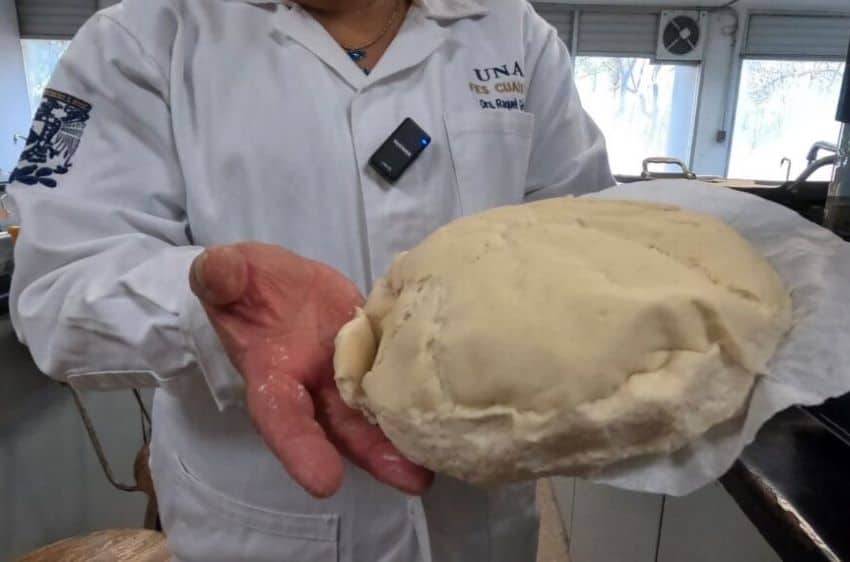
The National Autonomous University of Mexico (UNAM) has developed a tortilla low in calories but dense in nutrients. (Daniel Augusto/Cuartoscuro)
Researchers at the National Autonomous University of Mexico (UNAM) have developed a nutritionally fortified tortilla to help address the country’s obesity and malnutrition problems.
The tortillas are made through a double fermentation process and are fortified with protein, calcium, fiber, folic acid, probiotics, and prebiotics. The double fermentation process reduces pH (a measure of acidity and alkali) and increases the food’s shelf life so that artificial preservatives are not necessary.
The tortilla dough was created by professors and students at UNAM’s Food Engineering and Industrial Chemistry department at its Cuautitlán campus. (UNAM Global TV)
The addition of probiotics — living microorganisms — is beneficial to the health of the consumer, says Dr. Raquel Gómez, a microbiologist and a member of the UNAM research team.
“Living microorganisms are beneficial to our health,” she said. “They decrease plasma levels of lipids and chronic inflammation, which causes illnesses such as diabetes mellitus, obesity, Alzheimer’s, Parkinson’s and even cancer.”
The probiotics pass into the consumers’ gastrointestinal tract, where they help protect the so-called “good bacteria” in the body and promote digestive health.
Gómez said the tortillas are low in calories and eating two of them is equivalent to drinking a glass of milk. In fact, the tortillas are enriched with milk proteins, and the double fermentation process also eliminates the need for anti-clumping agents.
The researchers — professors and students at UNAM’s Food Engineering and Industrial Chemistry department at its Cuautitlán campus — say the tortillas can last more than one month at room temperature and over three months when refrigerated.
The increased shelf life and high nutritional value make the tortillas a viable alternative for remote communities where malnutrition and lack of electricity are issues.
The researchers also hope the new tortilla will provide nutritional support to Mexicans in remote, vulnerable communities with little access to fresh, quality food. (Margarito Pérez Retana/Cuartoscuro)
However, the double fermentation process means that, after a certain length of time, it is necessary to sprinkle a bit of water on the tortilla before it is reheated so it can recover its original texture and malleable properties.
Gómez said the tortillas are made by mixing all the ingredients and letting the masa, or dough, sit for two or three hours before it is shaped into tortillas and cooked.
The researchers tested the masa for humidity and texture to make sure it was sufficiently malleable to stretch and shape without tearing. Gómez said the use of probiotics and the double fermentation process made the masa more elastic and spongy without subtracting at all from the taste and smell.
The cooked tortillas were analyzed to ensure that the probiotics survived the entire process and chemical analysis was carried out to determine the amount of proteins, carbohydrates, fats, vitamins and minerals that remained.
The study was done exclusively with wheat flour, but Gómez said there is no reason that corn flour could not be used.
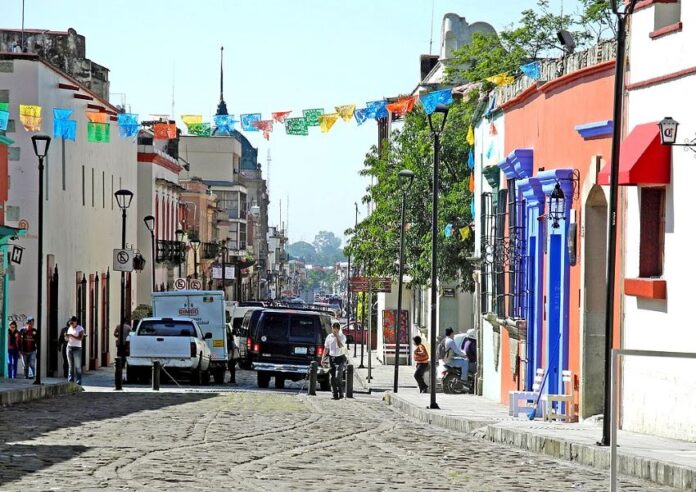
There's food, drink and endless art to enjoy in and around Oaxaca city this April. (LBM1948/CC BY SA 4.0)
April is usually a fairly quiet time of year in Oaxaca. It is getting warmer with temperatures averaging around 30 C (86 F) in the city. It is a lovely time to explore, as the famous jacaranda trees are still in full bloom. This year Semana Santa (Holy Week) is celebrated in April. From the moment you arrive in the city, you can find symbols of the upcoming celebrations. Shops and homes are decorated with purple and white ornaments, which were hung, announcing the arrival of Lent.
The testimony of a collective organization for water autonomy that demonstrates that, when the community comes together, change is possible. This is the final installment of a viewing series that began with International Water Day on March 22 at Matamoros 404, a cultural center and transdisciplinary arts space. After the screening, there will be an opportunity to discuss issues of water security and environmental sustainability.
Dates: April 4 at 7 p.m. Cost: No cover Location: Mariano Matamoros 404, Centro, Oaxaca de Juárez
These hot, dry Oaxacan afternoons are perfect for sipping on a cold beer. And what could be more perfect than sipping a locally made one on top of a beautiful rooftop? 18 breweries, one mead project and one kombucha project will gather at the Casa de Barro cultural and commercial center to celebrate craft beer made in Oaxaca.
Each brewery will feature at least two different styles of beer, ranging from lagers, IPAs, red ales, stouts and sours, among others. There will also be DJs and live music throughout the event. Coordinated by the Asociación de Cerveceros de Oaxaca, it is an opportunity to try different styles of locally crafted beer, eat delicious food and dance the evening away.
Dates: April 4 and 5, 12:30 to 11 p.m. Cost: 70 peso cover Location: Reforma 703, Centro, Oaxaca de Juárez
This exhibition at Oaxaca’s beautiful photography museum showcases work by esteemed photographer Alberto “El Negro” Ibáñez. During his career, Ibáñez has explored the cultural and ethnic diversity of Oaxaca and the world Originally from Santa Cruz Xoxocotlán, Ibáñez says that over the past thirty years he has focused on documentary photography.
The artist focuses his photography on portraits, which, he says, means “confronting a society, a person.” This exhibition captures a picture-postcard life of Paris at the turn of the millennium. A must-see exhibition that reveals the city from an intimate and surreal perspective through subway scenes, nightlife, gay pride and portraits reflected in urban window displays.
Dates: April 5 at 12 p.m. Cost: Entry is free Location: Centro Fotográfico Manuel Álvarez Bravo, Manuel Bravo 116, Centro, Oaxaca de Juárez
If you are keen to find a night of dance and electronic music in Oaxaca city, then Estación Morelos is a great venue to be aware of. This April, they’re hosting a Closed Society Record’s event, the third edition of “Under Control.” The night will feature performances and music from 3Gallos, Bibi8, Lanyster, Martsal and MGNO.
Dates: April 5 at 8 p.m. Cost: No cover, but online registration is required. Location: Av. José María Morelos 1309, Centro, Oaxaca de Juárez
You can’t go more than a block or two in downtown Oaxaca without finding a printmaking workshop or exhibition. This artform is a significant art movement in Oaxaca and the aesthetic behind many forms of resistance. Ludwing Franco is a local artist whose art is inspired by his traditions and culture. During the workshop Franco will share a brief history and context of print-making in Oaxaca and the world more generally. Then he will guide you to make your own design. The workshop costs includes all materials needed to make your own engraving and prints, as well as a free signed print by Franco. Artisanal coffee and mezcal will be available throughout the session.
Dates: April 9, 3 to 5 p.m. Cost: 1,230 pesos Location: Tlayudona, Manuel Bravo 210 C, Oaxaca de Juárez
Insitu, one of Oaxaca’s foremost mezcalerías, will host an exhibition from photographer Anna Bruce and tattoo artist Edgar Gopar, including Gopar’s interventions on Bruce’s photographs from the world of mezcal production. The photos are selected from over a decade of Bruce’s close work with the agave spirits community in Oaxaca state.
Gopar explains that his “inspiration, in essence, is the photos themselves,” “those windows that took me to a moment where the spirit of the maguey-mezcal was present.” A courtesy mezcal is available on arrival, and Gopar will be tattooing. A Rambling Spirits bartender will collaborate with Insitu’s managing bartender David Castillo for some bespoke cocktails
Dates: April 12, 5 to 11 p.m. Cost: Free entry Location: Reforma 306, Centro, Oaxaca de Juárez
Holy Week processions
(Galo Caños Rodríguez/Cuartoscuro)
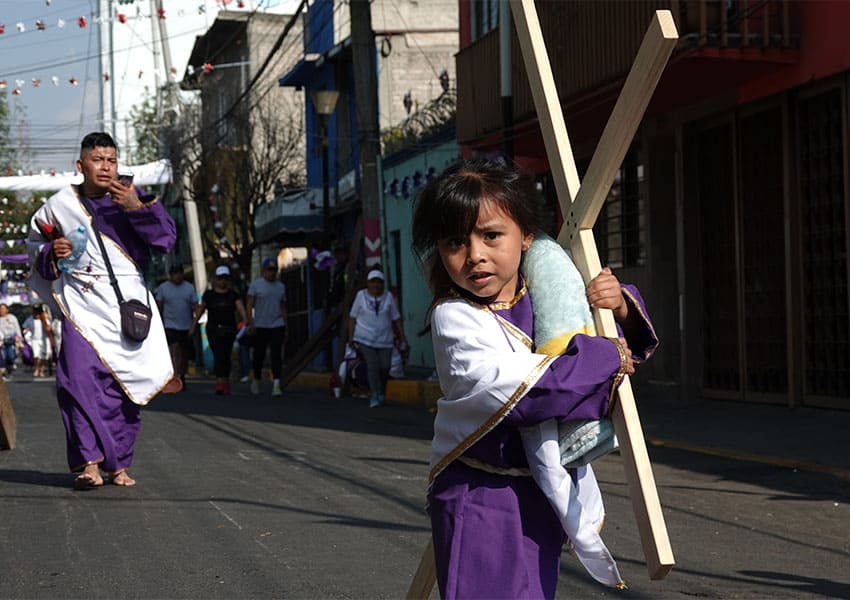
April 13 is Palm Sunday, which marks the first day of Holy Week. In the capital, it is customary to visit churches just to see the decorations and offerings. One of the main days of reverence in Oaxaca is Good Friday. During the day, you will find the various stagings of the ‘Stations of the Cross’ in the streets of the city and in the afternoon you can follow along with the majestic Procesión del Silencio at 5 p.m. During the procession, participants walk in complete silence, carrying lit candles and wearing tunics and hoods, symbols of penitence and humility. The procession winds through the Historic Center. You can see depictions of Christ’s passion and biblical scenes evoking Jesus’ death and resurrection.
Dates: April 13 through 20 Cost: Free Location: Throughout Oaxaca city
Bread and Leatherworking Festival in Santo Domingo Tomaltepec
Santo Domingo, about 30 minutes from Oaxaca city, shares its culinary and artisanal traditions in the 12th annual Expo-Feria del Pan y la Talabartería. Attendees will be able to discover the community’s baking and saddlery traditions, as well as participate in activities such as tasting traditional foods such as liver, yellow pork empanadas, enchiladas, memelitas and more.
Fifteen bakeries and ten leather workshops will participate. Belts, keychains, wallets, bags, purses, and other leather products will be available for purchase, as will the town’s traditional drink, Catalan, made with anise. A cultural program will also be held, featuring dancing, music as well as a cycling race.
Dates: April 20, 8 a.m. to 8 p.m. Cost: Free entry Location: Explanada Municipal, Santo Domingo Tomaltepec
Latin Mafia at Auditorio Guelaguetza
(Ticketmaster)
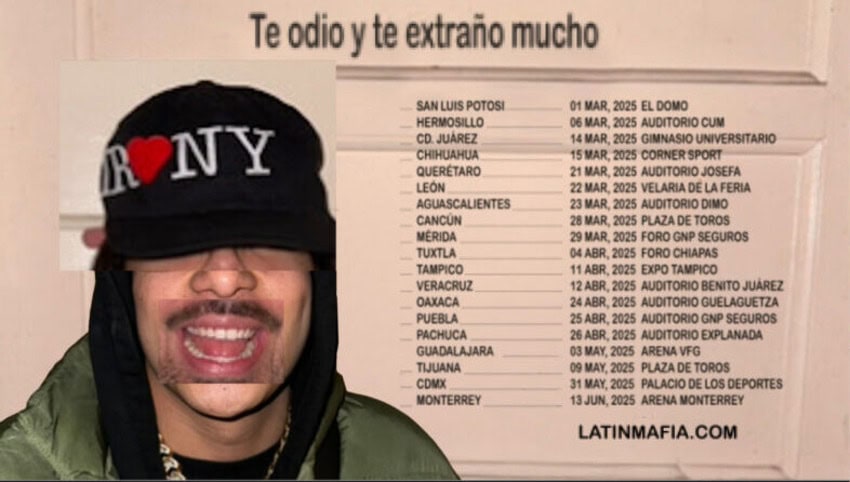
In April 2024, Mexican indie pop group Latin Mafia made their U.S. debut performing at Coachella. The group consists of twin brothers Milton and Emilio de la Rosa on vocals, produced by older brother Mike de la Rosa. Their music has been described as a reggaeton, R&B, trap and house hybrid. On April 24, they take the stage at the Auditorio Guelaguetza as part of their “Te odio y te extraño mucho” tour.
Dates: April 24 at 9 p.m. Cost: Tickets start at 490 pesos Location: Auditorio Guelaguetza, Carretera Panamericana s/n, Oaxaca de Juárez
Tlacolula de Matamoros, a majority-Zapotec municipality, is about 45 minutes from downtown Oaxaca city. At this annual festival, you can try traditional mezcals by 40 mezcaleros and delicious ice creams with natural flavors. The festival will have a pavilion of artisans, food samples, and tours with visits to mezcal palenques, including tastings, so that visitors can learn about the culture of the drink. The festival also offers mixology courses, with a wide range of options for enjoying this municipality and its surroundings. Families who make the sorbet-like nieve will be showcasing classic and unconventional flavors such as grasshoppers, chepil, maguey worms, bougainvillea and pan de cazuela, among others.
Dates: April 25 through 27 Cost: Free entry Location: Parque Municipal, Tacolula de Matamoros
Anna Bruce is an award-winning British photojournalist based in Oaxaca, Mexico. Just some of the media outlets she has worked with include Vice, The Financial Times, Time Out, Huffington Post, The Times of London, the BBC and Sony TV. Find out more about her work at her website or visit her on social media on Instagram or on Facebook.
People in Mexico are so polite, it can sometimes be hard to have an honest and frank conversation. (Jametiene Reskp/Unsplash)
When my friend called me to tell me thatshe’d lost my dog, we first had a regular conversation for a full ten minutes. Then came the kicker: “I’m so ashamed to tell you this, but…”
Honestly, I’d personally have lead with, “Hello, I am calling because I lost your dog.” Is time not of the essence in these cases?
You’d think if you were calling to break the bad news, you’d get to the point, right? Not in Mexico. (Randy Laybourne/Unsplash)
But first, we talked about my trip. I told her about the article I was writing. She told me about her week at work. We might have talked about our altar preparations for Day of the Dead.
When I ask another friend if she wants to go out and do something, she never asks if I’ll give her a ride. She says she would love to, only she doesn’t have money for a taxi. Honestly, I’d rather she just say, “I’m a little short on taxi money. Any chance you could pick me up and take me home?”
But this is a cultural preference of mine, and not the cultural preference of most people around me.
My partner manages a popular tap room that’s currently running with only a third of the people they actually need. They hire people often, and those same people leave without a word often. No two-week notice, no “Hey, this isn’t working out for me.” Usually, they simply stop showing up. When they do this, they don’t respond to messages or answer the phone, either.
Final example: a guy once didn’t show up for a date with me because — he told me later — it was raining really hard. But on the day of our date, he didn’t show up or say a word about it: no apology, no excuse. The next week, he wanted to reschedule, assuming an easy forgiveness for a very minor sin. Dude!
Mexicans hate, hate, hate giving bad news. They don’t want you to panic. They don’t want you to sigh in frustration. They especially don’t want you to get mad.They don’t want to tell you “no.”
Archive footage of a Mexican attempting to say “no.” (Moisés Pablo/Cuartoscuro)
But if they can find a way to soften bad news — or better yet, not say it at all — they will.
For me and many of my compatriots, acting like you’re just going to have a normal conversation before asking for a favor especially seems disingenuous. “You didn’t really want to talk to me, you just wanted to borrow money!”
Okay, but what if they alsowanted to talk to you? Mexicans are good at buttering people up, sometimes with what feels like literal butter. Things may be transactional, but that doesn’t mean they have to be unpleasant, right?
Because just coming out and saying things is not usually the best way to do things around here. Not to be crude, but the best metaphor I can think of for pleasantries is… lubricant.
Dive right in, and it will be unpleasant and uncomfortable for the person on the receiving end. It’s practically violent, really. They might hide their grimace, but believe me, it’ll be just under the surface. Don’t have time to have a whole conversation before asking for something or giving information they won’t like? At least start with a “buenos días” or a “buenas tardes.” At least.
This woman has just received bad news without so much as a “como estas?” to soften the blow. (Jonatas Domingos/Unsplash)
Here’s the question we usually have in response: are they being disingenuous? Everyone’s capable, of course. But most Mexicans really are educated to be polite and exchange pleasantries in all types of situations. Whereas I’d be suspicious of a friend in the U.S. applying this technique, here I’ve come to expect it.
“Geez, not even a ‘buenos días’?” I might think these days.
So what do we do with this information as foreigners, especially those of us who have and appreciate a much more direct style?
Sometimes I am direct myself — after some pleasantries, of course — with those close to me, or those I have to work with. “Please just tell me directly. It really is okay, and it will really help me.”
Because on this, I can’t ignore my own cultural bias completely: avoiding giving bad news is, to me, just lying. Plus, obscuring the truth just slows everything down, because when there’s a problem, I want to get it solved quickly. My partner always says that the truth always comes out, eventually. This is true, and I’m of the bad idea that sooner is always better than later.
Still, I don’t make the rules around here, so like it is for immigrants everywhere in the world, there’s a bit of “go along to get along” that has to happen.
All jokes aside, it’s important to remember that what we see as directness maybe interpreted as rudeness by others. (Canva)
Now, even when I’d really like to dive in to what it is I want to talk about or ask, I remember: the spoonful of sugar really is needed to make the medicine go down. Without it, people might be so put off by the bad taste that they can’t appreciate the substance in the least. Honestly,it’s easy to inadvertently offend Mexicans. And who wants to do that?
So let loose with those pleasantries. Talk about the weather. Ask about their families. Find out if they’ve got any fun weekend plans they’re looking forward to.
And when someone asks you for a favor after a bunch of pleasantries, remember that they’re exercising a cultural value we all admire: extreme politeness. Dive in and enjoy it. And if you want to say “no,” in the end, that’s okay — just try to be suave about it.
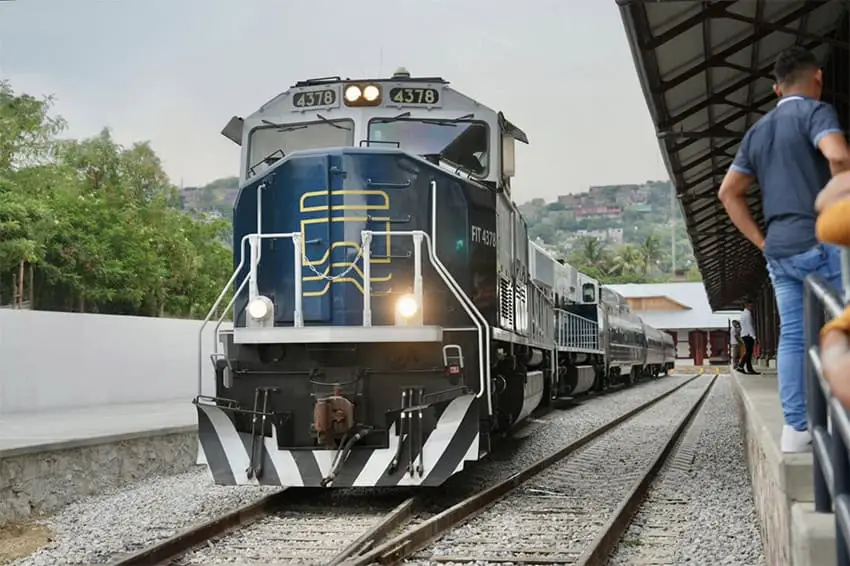
President Sheinbaum highlighted the first shipment of vehicles across Mexico's trans-isthmus shipping corridor during her Monday presser. (Hazel Cárdenas/Presidencia)
A milestone in the operation of the railroad across the Isthmus of Tehuantepec, a National Electoral Institute ruling and her ever-soaring popularity were among the issues she spoke about.
‘It’s an exceptional project — it provides an alternative to the Panama Canal’
Sheinbaum acknowledged that a maiden shipment of vehicles — 900 Hyundai cars from South Korea — was transported across the Isthmus of Tehuantepec by train over the weekend.
She said that “some products” had already been transported across the isthmus between Salina Cruz, Oaxaca, and Coatzacoalcos, Veracruz, but it was the first time that vehicles were taken across the 308-kilometer-long modernized railroad between the two ports.
The modernized railroad is the centerpiece of the Interoceanic Corridor of the Isthmus of Tehuantepec (CIIT) infrastructure project.
Sheinbaum said that the port in Salina Cruz is “still being developed” with public and private investment. Even so, “larger ships” have begun docking there thanks to the breakwater built during the presidency of Andrés Manuel López Obrador, she said.
Sheinbaum added that a grain storage terminal will be built at the Salina Cruz port and “other actions” will be undertaken to “strengthen the port.”
“And when the port of Salina Cruz is finished, it will have a lot more activity,” she said.
According to the Oaxaca Ministry of Economic Development, the shipment of Hyundai cars is destined for the east coast of the United States. Transporting the cars from Korea to their final destination via Salina Cruz and Coatzacoalcos — where they are re-loaded onto a ship — reduces the total shipping time by five days in comparison with a voyage that includes traversing the Panama Canal, according to the ministry. It said that total logistics costs are 15% lower, and highlighted that it takes nine hours to transport the vehicles across the isthmus by rail.
The Interoceanic Train is the key to the now-operational trans-isthmus shipping corridor. (Gobierno de Oaxaca)
Former Navy Minister José Rafael Ojeda Durán asserted in 2023 that Mexico would become a “world shipping power” thanks to the construction of the trade corridor between the Pacific Ocean and the Gulf of Mexico across the Isthmus of Tehuantepec.
Sheinbaum to challenge INE ruling against promotion of judicial elections
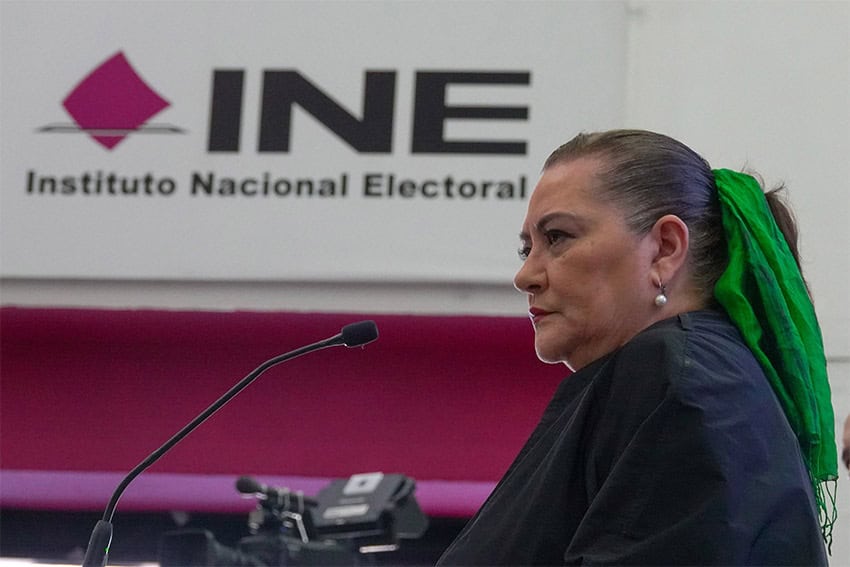
Sheinbaum told reporters that her government has not yet been formally notified of the decision by the National Electoral Institute (INE) to prohibit federal, state and municipal governments, public institutions and individual officials from promoting Mexico’s first ever judicial elections.
“We haven’t been notified yet,” she said, adding that such a rule only takes effect after notification of those affected.
Sheinbaum said that her government has simply been reminding people that the elections are coming up, not campaigning on behalf of any candidates.
She made it clear that she doesn’t agree with the INE’s ruling, and on both Sunday — when the ban took effect — and Monday when she didn’t comply with it.
President Sheinbaum said her government would challenge the National Electoral Institute (INE) ruling that prohibits public institutions from promoting the upcoming judicial elections. (Rogelio Morales/Cuartoscuro)
“We’re not going to promote voting for one person or another, but simply participation [in the elections],” Sheinbaum emphasized.
She told reporters that the federal government will challenge the INE’s decision at the Federal Electoral Tribunal “because we believe it’s important that the executive power and the legislative power, without directing [citizens to vote for] one person or another, … participate in the dissemination of this transformational event that will take place in Mexico on June 1.”
Sheinbaum and other federal officials say that the election of judges is necessary to rid the judiciary of corruption and other ills such as nepotism.
Critics of the judicial elections argue that the election of judges will erode the independence of Mexico’s judiciary because it will come to be stacked with judges sympathetic to the ruling Morena party’s agenda, thus removing a vital check on executive power.
Another poll, another sky-high approval rating for the president
The president — as she invariably does when flattering poll results are mentioned at her mañanera — thanked the people of Mexico for their support.
She added that her government will “never betray the people.”
Sheinbaum said that the high levels of support she enjoys reflect a “very different” reality in Mexico to that perceived or promoted by “the famous commentariat of intellectuals from the past linked to the regime of the past — that before 2018.”
López Obrador took office in late 2018, marking the commencement of the so-called “fourth transformation” of public life in Mexico, of which the current president says she is building “el segundo piso,” or second story.
By Mexico News Daily chief staff writer Peter Davies (peter.davies@mexiconewsdaily.com)