Home Blog Page 408

Mexican Slang 101: Regional Food 

0
Pambazos
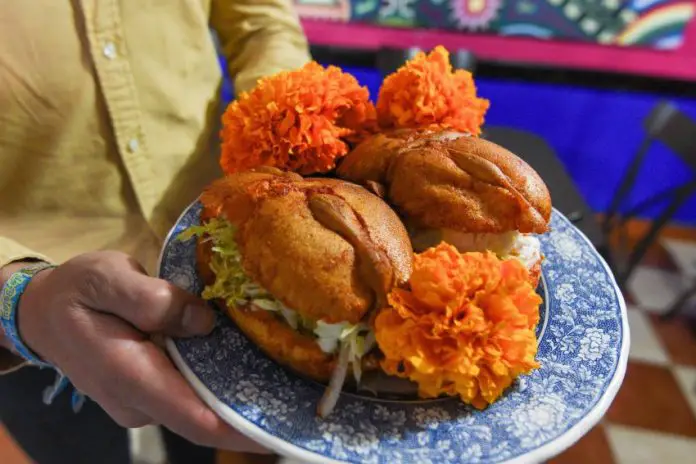
A novelty pan de muerto pambazo. (Cristanta Espinosa Aguilar/Cuartoscuro)

Mexico is home to one of the great global cuisines, and while the international image may not extend past burritos and beans, the country’s food is regionally-specific and steeped in history and flavor. Of course, Mexican food slang is every bit as diverse too.

The author of “The Mexican Slang Dictionary,” Alasdair Baverstock, has a few suggestions for the lesser-known dishes.

Aguachile – noun. Raw seafood dish, similar to ceviche, in which the curing lime sauce is flavoured with chili and other spices.

Alambre – noun. A dish in a taquería in which the taco filling and the tortillas are served separately, allowing the diner to taquear of their own accord.

Aporreado – noun. A dish typical of the Tierra Caliente, in which dried beefsteak, egg, beans, tomatoes and spices are stewed together. Also known as aporreadillo.

Barbacoa – noun. Slow-cooked meat dish, usually goat or mutton. The root of the English word ‘barbeque,’ Mexico’s best barbacoa is found in the Bajío — connoisseurs say specifically in the state of Hidalgo.

Traditionally prepared in deep ovens — often excavated into the earth itself — a fire is set at the bottom of the pit, followed by the stacked meat, wrapped in agave pencas. The whole is buried and left to cook over the course of many hours. As a result, barbacoa is a dish most-commonly eaten for breakfast or lunch. Cuts from the animal vary, but include costilla (rib), espaldilla (shoulder) and espinazo (spine), often served with pancita — offal prepared in the stomach — and consomé, the juices from the meat collected at the bottom of the oven and mixed with chickpeas.

Burrito – noun. A Norteño staple consisting of a flour tortilla wrapped around a filling. It is worth noting that while the burrito is a dish commonly associated with Mexican cuisine, the Tex-Mex version found in el Gabacho is seldom found in Mexico, where burritos generally have only one filling, and are much smaller.

Carnitas – noun. A traditional dish most famously from the state of Michoacan, carnitas is a pork confit, i.e. meat cooked in the animal’s own fat. Literally meaning ‘little meats’, it is prepared in one large cazuela, with the individual cuts cooked at different stages of the process. Generally eaten in taco form, the cuts include maciza (lean meat), buche (stomach), cuerito (skin), costilla (rib) and trompa (snout). For newcomers to carnitas, a taco surtido, or ‘mixed taco,’ is a good entry point.
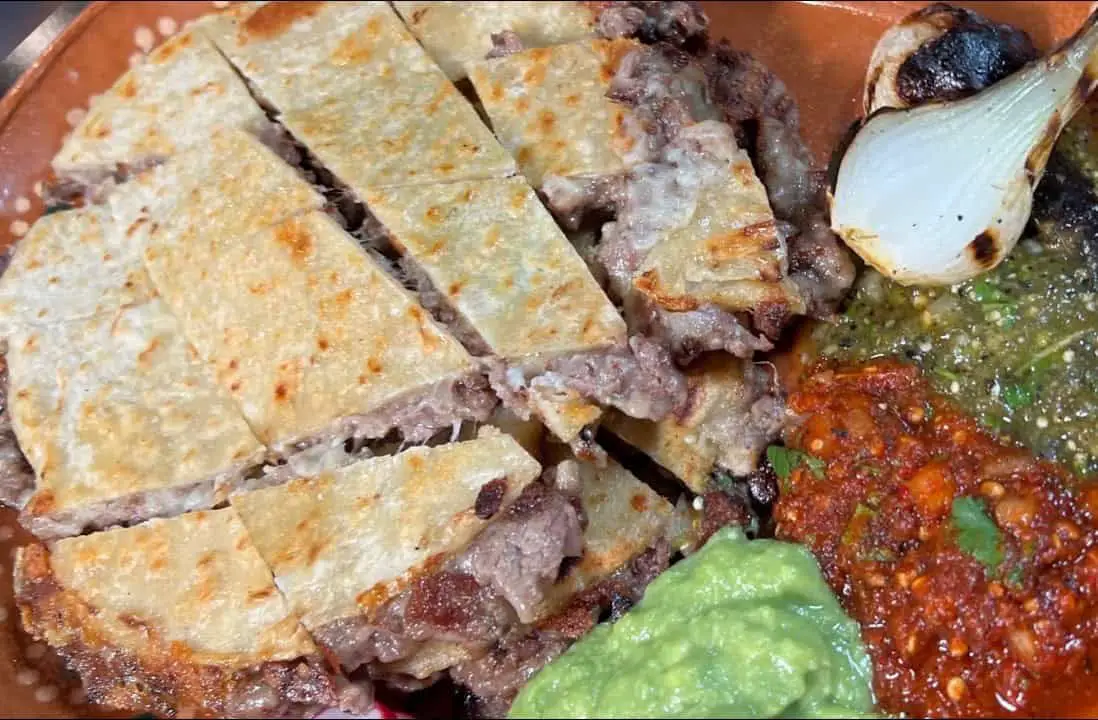
Chavindeca. (YouTube screen capture)

Chavindeca – noun. A Calentano dish consisting of meat and cheese sandwiched between two large grilled corn tortillas.

Chongos – noun. A dessert known as ‘burned milk.’ It is sweetened whole milk, which is evaporated, leaving behind the sugary curds. A rare and delicious dish, if you can find it.

Criadillas – noun. Testicles, when served as a dish.

Fraile – noun. A Campeche dessert consisting of meringue and fried churro-like tortilla, stuffed either with coconut or Edam cheese.

Jericalla – noun. A dessert, similar to flan, consisting of a thick custard which is set and then burned on top to caramelize, like crème brulée.

Marquesita – noun. A street dessert originating in the Yucatán Peninsula, in which crêpe batter is pressed into a large pancake in a specially-made waffle press, and rolled up into a tube with any of a variety of toppings – although most feature Edam cheese.

Montado – noun. A dish typical to northern Mexico, particularly Chihuahua, in which beans and cheese are sandwiched between two flour tortillas, and then topped with a filling, creating what is essentially a stuffed double-tortilla taco.

Pambazo – noun. A torta which has been coated in a chili sauce and cooked on a comal. A traditional dish around the country’s independence celebrations, although it can be found year-round.

Paste – noun. The Mexican version of Britain’s Cornish pasty, i.e. a wheat flour empanada, most commonly filled with beef, potato and chilis, but which has broadened to a wide range of fillings and is generally smaller than its Anglian ancestor. The word itself is an evolution of the word pasty, a foodstuff brought to Hidalgo — specifically the mountain town of Real del Monte, close to Pachuca — by Cornish miners in the in the early 19th century.

Polcan – noun. A Yucatecan dish, consisting of a fried corn dough ball which is cut open and filled with one of a variety of stuffings.

Tlayuda – noun. Oaxacan dish consisting of a wide, crunchy corn disk, topped with asiento, beans, vegetables, meats and salsa.

Torta ahogada – noun. A ‘drowned sandwich’; a dish typical to Guadalajara, in which a torta is put in a bath of the same carnitas consommé which has resulted form the meat’s preparation. It is served in a bowl or deep dish and eaten with a spoon.
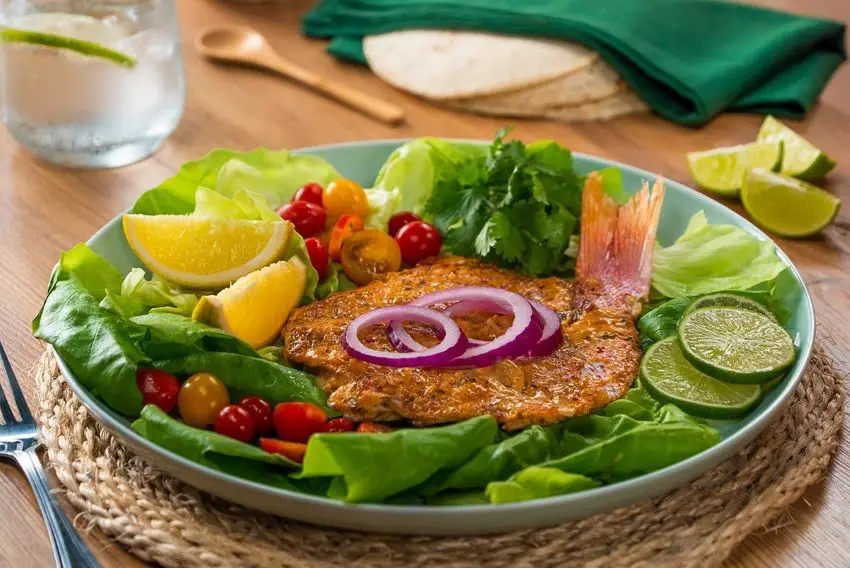
Pescado Zarandeado. (Kiwilimon)

Zarandeado – adj. A food preparation style, in which a fish is basted in a blend of spices, and then grilled over charcoal. Most commonly found on the Pacific Coast.

The Mexican Slang Dictionary

You can buy “The Mexican Slang Dictionary” on Amazon in the United States, Canada and Mexico. MND readers can find the physical book stocked in bookstores:

Mexico City               

Under The Volcano Books, La Condesa
Antonia Book Store, La Condesa
Casa Bosques, La Roma

San Miguel de Allende        

Aurora Books, Guadalupe

Puerto Escondido

Villa Mozart y Macondo, La Rinconada

Alisdair Baverstock is the Mexico City-based author of The Mexican Slang Dictionary.
Sheinbaum says USMCA threats have ‘no future’: Thursday’s mañanera recap

7
Claudia Sheinbaum at a podium addressing a crowd of Mexican legislators in Mexico's National Palace
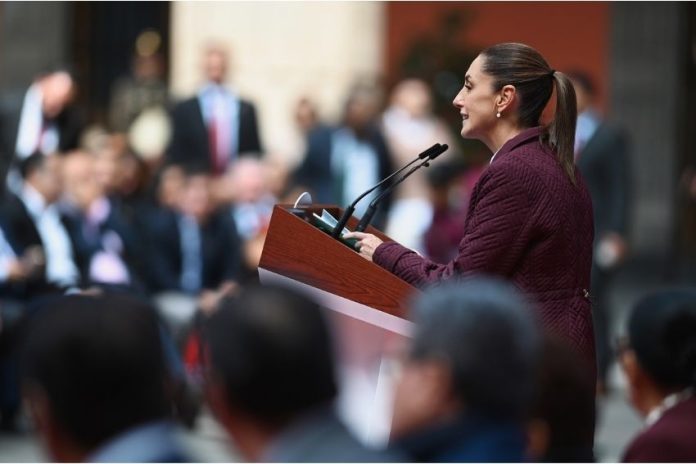
President Sheinbaum also invited Morena Party coalition legislators to the National Palace Thursday to congratulate them on their work "for the good of our country." (Claudia Sheinbaum/X)

President Claudia Sheinbaum spent part of her morning press conference on Thursday responding to remarks made this week by U.S. Ambassador to Mexico Ken Salazar and Doug Ford, premier of the Canadian province of Ontario.

She also responded to social media chatter that former president Andrés Manuel López Obrador ordered senators to reelect Rosario Piedra Ibarra as head of Mexico’s National Human Rights Commission (CNDH).

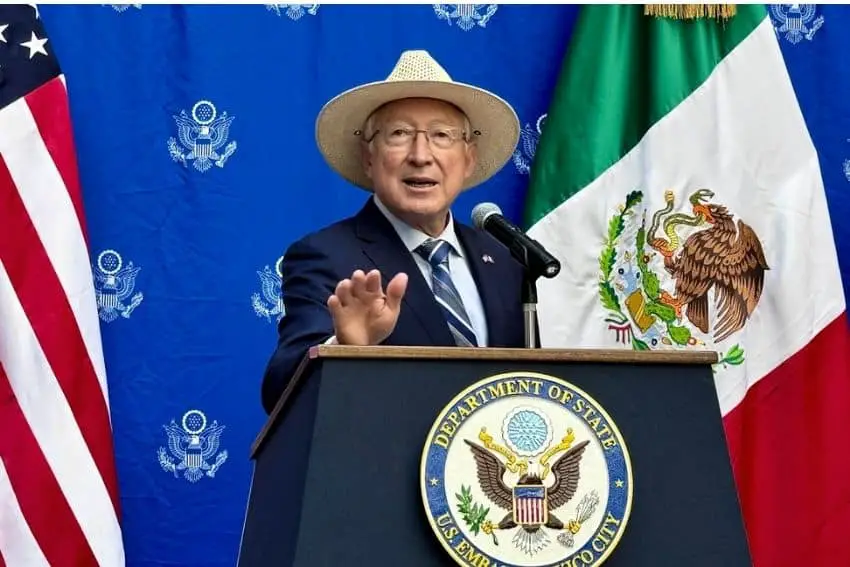
US Ambassador Ken Salazar standing at a podium with the US and Mexico flags behind him as well as a blue curtained wall that has a repeated pattern of the logo for the US Department of State.
U.S. Ambassador to Mexico Ken Salazar made headlines in Mexico Wednesday after a press conference in which he asserted that Mexico’s “hugs not bullets” security policy has been a failure. (Ken Salazar/Twitter)

Sheinbaum: There are differences in what the US ambassador says from one day to the next 

At the very start of her engagement with reporters, Sheinbaum was asked about Ambassador Salazar’s assertion on Wednesday that Mexico’s “hugs, not bullets” security strategy has failed.

“First, it’s worth saying that there are differences between what the ambassador of the United States says one day and what he says another day,” she said.

“That was the case, for example, with the judicial reform. On one occasion he said he thought it was good. A week later he said it was going to be very bad for Mexico,” Sheinbaum said.

“…One cannot say one thing and then another. [That’s the] first issue. Second issue: Mexico is a free, independent, sovereign country,” she said.

Responding to Salazar’s claim that López Obrador was responsible for a breakdown in bilateral security cooperation over the past year, Sheinbaum noted that Mexican and U.S. officials collaborated on a range of security issues during the previous term of government, including the fight against the trafficking of drugs and weapons.

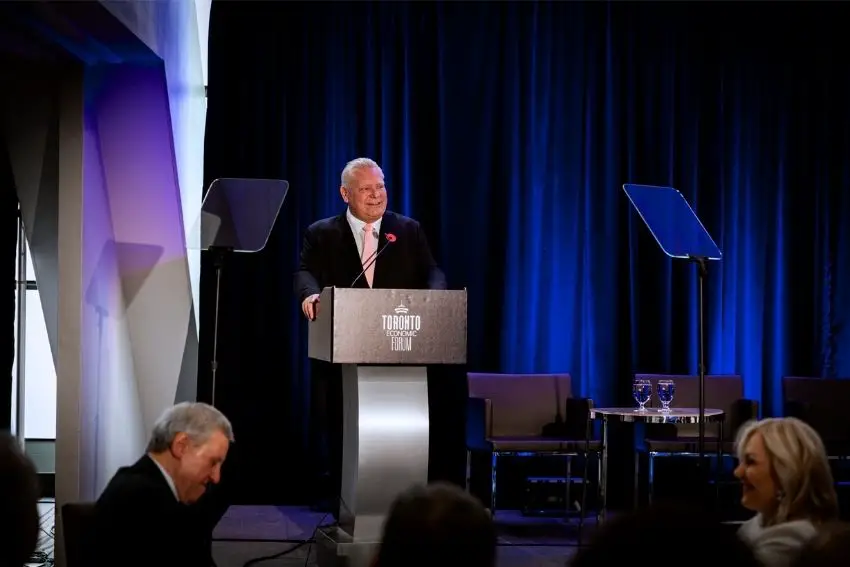
Ontario Premier Doug Ford at a podium onstage during 2024's Toronto Economic Forum
Ontario Premier Doug Ford, seen here at the Toronto Economic Forum earlier this month, has suggested that Canada should end the USMCA and deal directly with the US because he said Mexico serves as a “back door” to Chinese products entering Canada. (Doug Ford/Twitter)

“There is coordination and there will continue to be coordination because it’s very important as we have a shared border,” she said.

“… But not subordination. … Mexico is a free, independent, sovereign country. We coordinate with each other, we work together, but there is no subordination,” Sheinbaum said. “… It’s a relationship of equals.”

Proposal to terminate USMCA ‘has no future’

Later in the press conference, a reporter noted that Ontario Premier Doug Ford proposed the termination of the USMCA, the free trade pact between the United States, Mexico and Canada.

“It’s a proposal that has no future,” Sheinbaum said.

“Remember that when the USMCA was signed, Mexico advocated for Canada because there was, at times during the negotiation, the intention of the United States to only sign with Mexico, and at that time, Mexico said: ‘No, we’re three countries,’ and it was signed by the three countries,” she said.

“So, that proposal has no future,” Sheinbaum reiterated. “There is no need to worry.”

Sheinbaum once again stressed that Mexico, the United States and Canada all benefit from the USMCA, which is up for review in 2026.

“… We complement each other, we don’t compete with each other,” she said.

Do you really think AMLO is interested in who the president of the CNDH will be?

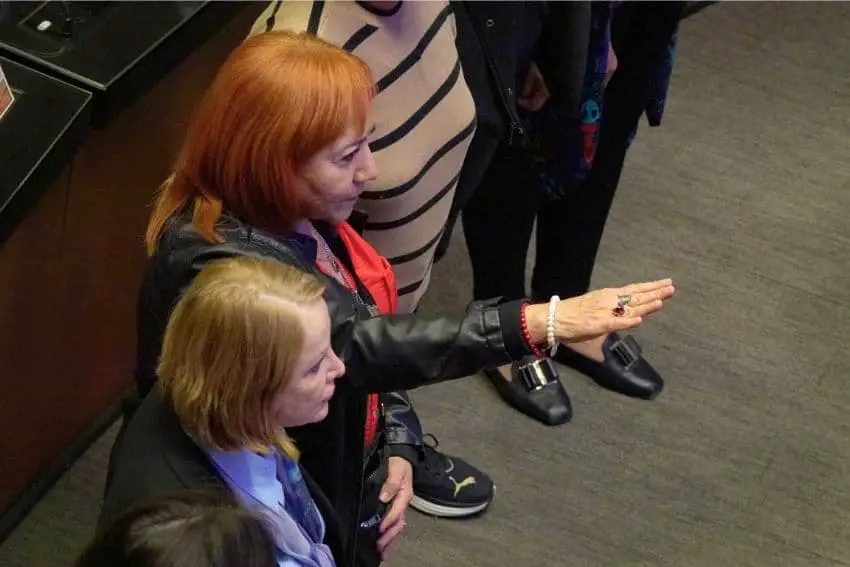
A red haired middle-aged Mexican woman in a black leather jacket holding her arm out formally as she is sworn into office on Mexico's senate floor. Next to her is another woman who is blonde and wearing a blue dress shirt. Both are looking forward to something off-camera.
Rosario Piedra Ibarra is sworn in as Mexico’s National Human Rights director in the Mexican Senate chambers on Wednesday after her reelection by the Senate. (Rogelio Morales Ponce/Cuartoscuro)

Toward the end of her Thursday mañanera, Sheinbaum told reporters that she had read comments on social media that claimed that former president López Obrador had instructed senators to vote in favor of Piedra Barra serving another five-year term at the helm of the CNDH.

“He already retired from public life, he’s writing his book, he’s [working] on other tasks of the transformation,” she said after noting that the former president now lives on his ranch in Palenque, Chiapas.

“Do you really think that – from Palenque – he’s interested in and thinking about who’s going to be president of the CNDH?” Sheinbaum asked rhetorically.

Some observers of Mexican politics have opined that AMLO would, from behind the scenes,  indeed continue to influence the ruling Morena party, which he founded – and even Sheinbaum herself – although López Obrador said before he left office that that wouldn’t be the case.

By Mexico News Daily chief staff writer Peter Davies (peter.davies@mexiconewsdaily.com)

New WestJet flight routes connect Canadian cities to Tulum

0
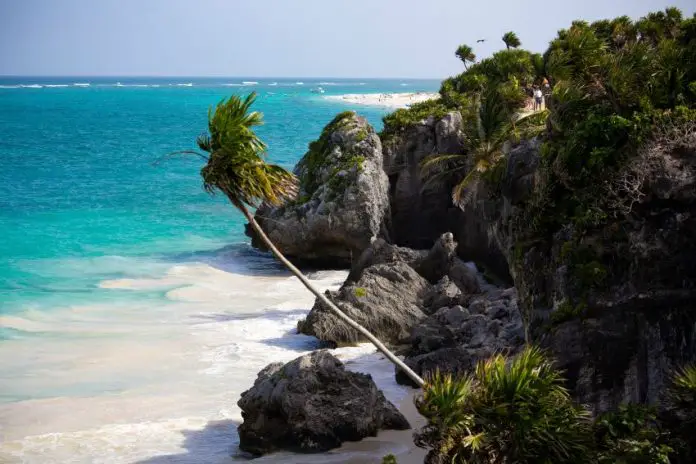
A view of the Tulum beach
This year WestJet is offering direct connections from Calgary and Toronto to Tulum, on a seasonal basis.(Tanja Cotoaga/Unsplash)

Tulum’s Felipe Carrillo Puerto International Airport celebrated the inauguration of two new flight routes to the popular beach resort from Canada as flights from Toronto and Calgary arrived this past weekend.

The WestJet flights — on offer through April 26, 2025 — depart once a week from the Calgary International Airport and twice a week from Toronto Pearson International Airport to the town nestled on the Caribbean coastline in the state of Quintana Roo.

Quintana Roo Tourism Minister Bernardo Cueto extolled the new routes as an important achievement for Tulum, saying they will help consolidate its position as a top-notch global tourist destination.

“The arrival of WestJet not only increases connectivity options for our international visitors, but also opens up new opportunities for economic development, employment and the strengthening of local tourism infrastructure,” Cueto said, according to the newspaper El Economista.

Daniel Fajardo, WestJet vice president of network and schedule planning, declared that the new routes add to the airline’s “robust network of service offerings to and from Mexico’s Riviera Maya.”

“WestJet is pleased to further enhance our connections to sun destinations this winter with new seasonal service to Tulum from Calgary and Toronto, allowing guests from coast-to-coast to explore the beauty of Mexico’s Riviera Maya,” he said, according to Riviera Maya News.

A WestJet plan flies over mountains
WestJet will offer Tulum-Calgary and Tulum-Toronto connection through late April. (Justin Hu/Unsplash)

In conjunction with the new Canada-Tulum flights, WestJet Vacations is offering flight and accommodation packages to 35 major hotels close to the airport, the airline said.

Cueto added that the new Westjet routes are just the beginning of what promises to be continuous growth for Tulum which he described as “a unique destination … at the vanguard of global tourism.”

Westjet, headquartered in Calgary, becomes the second Canadian airline to fly to the Caribbean resort city since Air Canada began operating three flights to Tulum in May.

In July, Colombia’s Avianca Airlines announced it will begin offering direct flights three times a week from Bogotá to Tulum on Dec. 10.

With reports from El Economista and Riviera Maya News

Bank of Mexico announces its fourth key interest rate cut of 2024

0
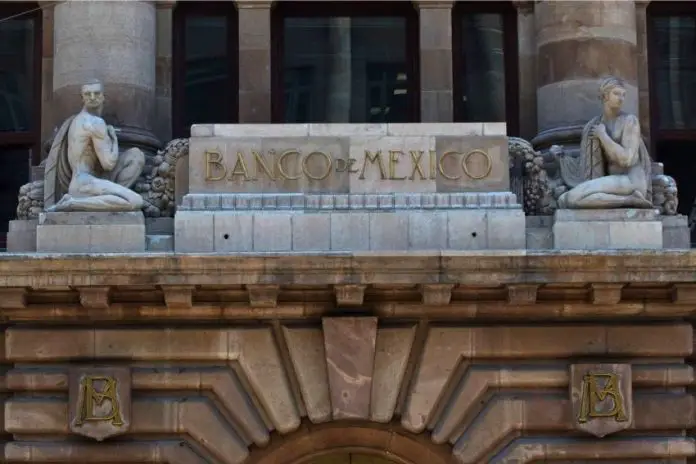
The top of the facade of the Bank of Mexico building in Mexico City, which features a sculptured man and woman in ancient Roman-style dress on either side of a block of stone saying Banco de Mexico
The easing of inflation could allow the Bank of Mexico to cut interest rates more than previously planned. (Rogelio Morales Ponce/Cuartoscuro)

The Bank of Mexico (Banxico) announced a 25-basis-point cut to its key interest rate on Thursday, marking the fourth time that borrowing costs have been reduced this year.

The central bank’s benchmark rate will thus be 10.25% once the latest reduction takes effect on Friday.

US Federal Reserve building
Banxico’s interest rate cut came a week after the U.S. Federal Reserve lowered its federal funds rate. (Shutterstock)

Banxico’s announcement came after its governing board held a monetary policy meeting on Thursday. Governor Victoria Rodríguez Ceja and all four deputy governors voted in favor of a 25-basis-point cut a week after the United States Federal Reserve lowered its federal funds rate by the same margin to a range of 4.50%-4.75%.

In a statement, Banxico noted that annual headline inflation “rebounded” to 4.76% in October, but highlighted that the core rate, which it said “better reflects inflation’s trend, continued decreasing and registered 3.80%.”

The central bank targets 3% inflation but tolerates a 2–4% range.

Banxico also said that “the inflation outlook has been improving after the significant shocks caused by the pandemic and the war in Ukraine.”

“The behavior of core inflation” – which declined for a 21st consecutive month in October – “reflects this improvement,” Banxico said.

The central bank’s governing board also voted in favor of 25-basis-point interest rate cuts at its monetary policy meetings in March, August and September.

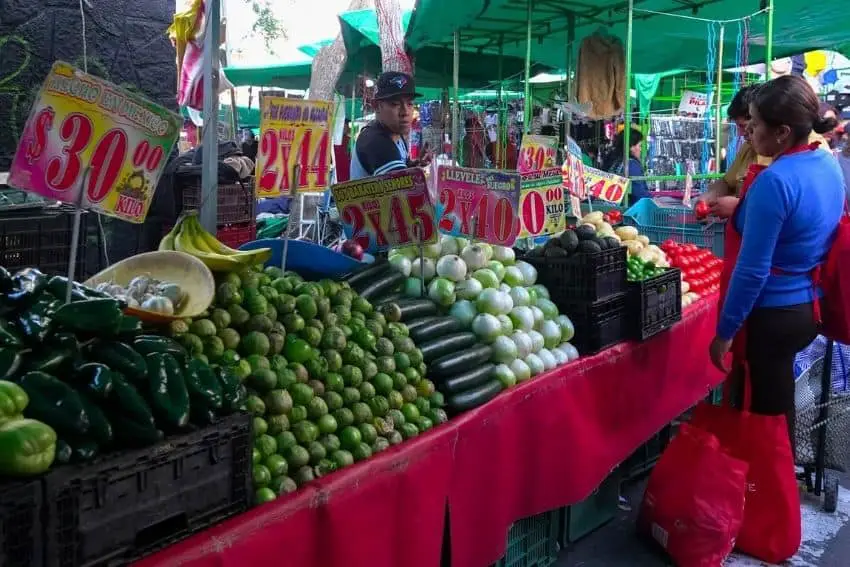
Woman at Mexican outdoor market looking at displays of various vegetables, including tomatillos, cucumbers, onions and avocados with small posters above each showing prices
Mexico’s central bank said that its decision to lower the key interest rate was in part influenced by overall reductions in inflation. (Rogelio Morales Ponce/Cuartoscuro)

Before the cut in March, Banxico’s key interest rate was set at a record high 11.25%, rising to that level in March 2023 at the end of a 21-month tightening cycle during which a total of 15 hikes — totaling 725 basis points — were made in an attempt to combat high inflation.

In its latest statement, the central bank said that “looking ahead,” the governing board “expects that the inflationary environment will allow further reference rate adjustments.”

“… Actions will be implemented in such a way that the reference rate remains consistent at all times with the trajectory needed to enable an orderly and sustained convergence of headline inflation to the 3% target during the forecast period,” Banxico said.

The bank anticipates that annual headline inflation will decline to 3.9% in the first quarter of next year and continue to fall to reach 3.4% in Q2 of 2025, 3.1% in Q3 and 3% in Q4.

Mexico News Daily 

Mexico is now the biggest buyer of US food and ag exports

3
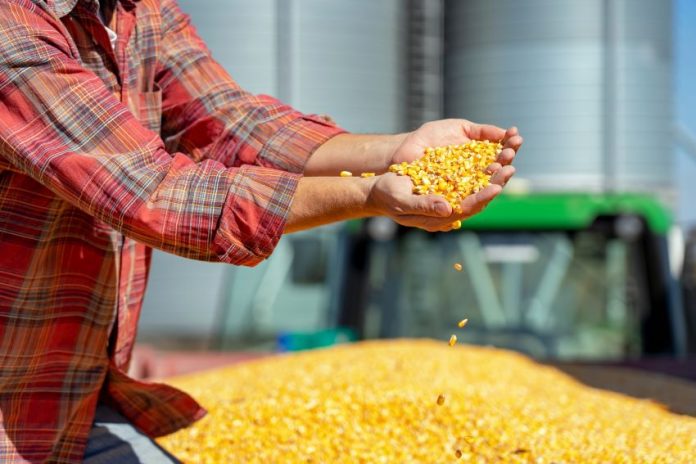
A U.S. farmer standing in front of a tractor and a pile of grain, holds up a handful of yellow corn
Corn was the No. 1 agricultural product that Mexico imported from the U.S. in fiscal year 2024. (Shutterstock)

Mexico displaced China as the No. 1 recipient of U.S. food and agricultural exports as sales climbed 7% during the 2024 fiscal year, reported the Food and Environmental Reporting Network (FERN), citing U.S. Census Bureau data.

Together, Mexico (US $30 billion) and Canada (US $29 billion) accounted for one-third of U.S. food and ag exports of $173 billion for the year. They are forecast to repeat as the top two markets in fiscal 2025, with China (US $ 25.7 billion) again in third place, FERN reported.

Mexico’s imports of U.S. food and ag products this year were $2 billion more than in fiscal year 2023. Leading the way were purchases of corn totaling 24.5 million metric tons — a new record that accounted for 40% of all U.S. corn exports for the year.

Mexico is the largest consumer of U.S. corn. According to the latest “Grain: World Markets and Trade” report by the U.S. Department of Agriculture (USDA), U.S. corn volume to Mexico in fiscal year 2024 “is the largest single-year trade volume to any destination in history and accounted for just over 40% of total U.S. corn exports.”

However, both U.S. growers and Mexican buyers have concerns about the future of corn trade. While U.S. corn producers await a ruling on a U.S. challenge to Mexico’s ban on genetically modified (GM) white corn, they are also bracing for the prospect of a fresh U.S.-China trade war under incoming U.S. President Donald Trump, according to the news agency Reuters.

In 2023, Mexico banned GM corn for human consumption, including in tortillas and dough. The ban was intended to eliminate glyphosate from Mexico’s food supply chain, which the Mexican government views as harmful to people.

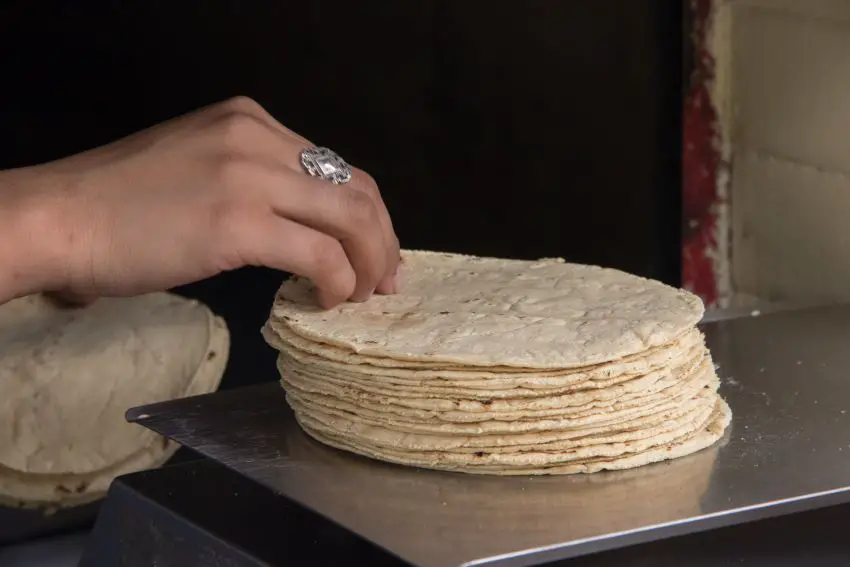
A kilo of corn tortillas
Former President López Obrador banned the use of GM corn for human consumption in a 2023 decree. (Victoria Valtierra/Cuartoscuro)

The U.S. responded by threatening trade retaliation before initiating a dispute settlement panel under the United States-Mexico-Canada Agreement (USMCA). The panel is scheduled to release its preliminary and final reports in the coming weeks.

In February 2024, Mexico relaxed some restrictions and delayed the introduction of the ban until 2025. Mexico has argued that they have not actually implemented a ban, but rather they are applying an end-use limitation on corn in order to protect the diversity of its native maize.

Mexico does not appear ready to back down should the USMCA panel rule against it, even though the U.S. supplied almost all of Mexico’s imported corn.

Since taking office in October, President Claudia Sheinbaum has voiced support for food sovereignty, backing a plan that includes larger domestic production of non-GM white corn and beans. “It’s about producing what we eat,” she said, according to FERN.

Meanwhile, U.S. agricultural producers are still reeling from the 25% tariffs China slapped on U.S. farm imports from soybeans to sorghum during the 2018 trade war in retaliation against duties imposed by the first Trump administration.

With reports from Food and Environment Reporting Network and Reuters

Flaming SUV crash on CDMX’s Paseo de la Reforma kills driver

0
A mangled silver passenger vehicle after a car crash. It's located between a house and a large cement flowerpot from which can be seen growing tree trunks and green plants. Emergency officials are in the background behind the crashed vehicle.
According to preliminary reports, the driver burned to death inside the vehicle, which caught on fire after the crash. (Social Media)

The driver of a BMW SUV died early Thursday when his vehicle burst into flames after crashing into a roadside concrete barrier on Mexico City’s famous Paseo de la Reforma avenue.

The accident occurred before sunrise on a section of Reforma avenue in the city’s Miguel Hidalgo borough.

Mexico City’s Fire Department put out the flames that engulfed the vehicle early Thursday morning but not in time to save the driver’s life.

The BMW was reportedly traveling at high speed when it crashed into the barrier, which doubles as a roadside planter box. The vehicle also appeared to crash into the facade of a residential property.

The Mexico City Security Ministry (SSC) said in a statement that police were alerted to the crash by radio and subsequently made their way to the point where Paseo de la Reforma meets Retorno Julieta, a cul-de-sac in the Lomas Bezares neighborhood.

“The police officers observed a vehicle in flames and a person inside,” the SSC said, adding that the area around the crash was cordoned off and that firefighters extinguished the blaze.

The driver of the vehicle had no vital signs and was “burned,” the SSC said.

The ministry didn’t identify the victim, but media reports said that a man was at the wheel of the vehicle when it crashed.

Paseo de la Reforma lanes heading toward the Mexico City-Toluca highway were closed for a period after the accident occurred.

With reports from El Universal, Milenio, Infobae and N+

Mexico’s ‘hugs, not bullets’ security strategy has failed, says US Ambassador Ken Salazar

21
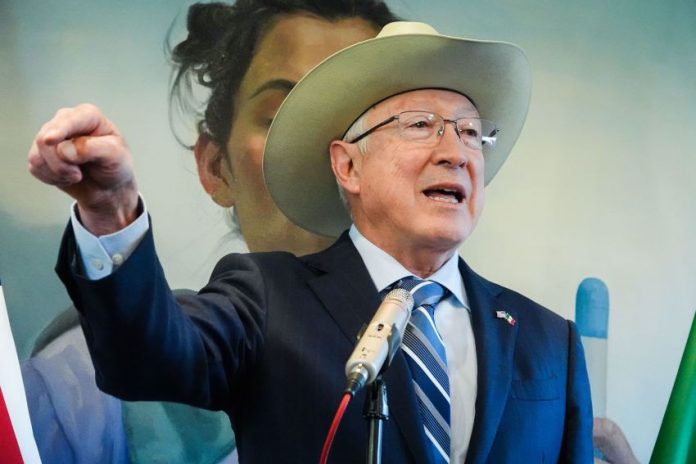
U.S. Ambassador to Mexico Ken Salazar gestures while speaking at a podium
The U.S. envoy's critical remarks prompted Mexico to send a diplomatic note to the U.S. Embassy. (Galo Cañas/Cuartoscuro)

United States Ambassador to Mexico Ken Salazar lashed out at the previous federal government on Wednesday, declaring that its “hugs, not bullets” security strategy failed and blaming former president Andrés Manuel López Obrador for a breakdown in bilateral security cooperation.

His remarks — perhaps the most pointed of his tenure to date as ambassador — prompted the Ministry of Foreign Affairs (SRE) to send a diplomatic note to the United States Embassy in Mexico.

“In the note, Mexico expresses its concern over the statements made by the U.S. ambassador to our country,” the SRE said in a statement.

In a press conference at his official residence in Mexico City, Salazar also took aim at what he characterized as a Mexican government narrative that there is no major security problem in Mexico.

“To say there isn’t a problem is to deny the reality,” he said.

“The reality is there is a very big problem in Mexico and that’s why the [security] plan of President [Claudia] Sheinbaum has to be successful,” Salazar said.

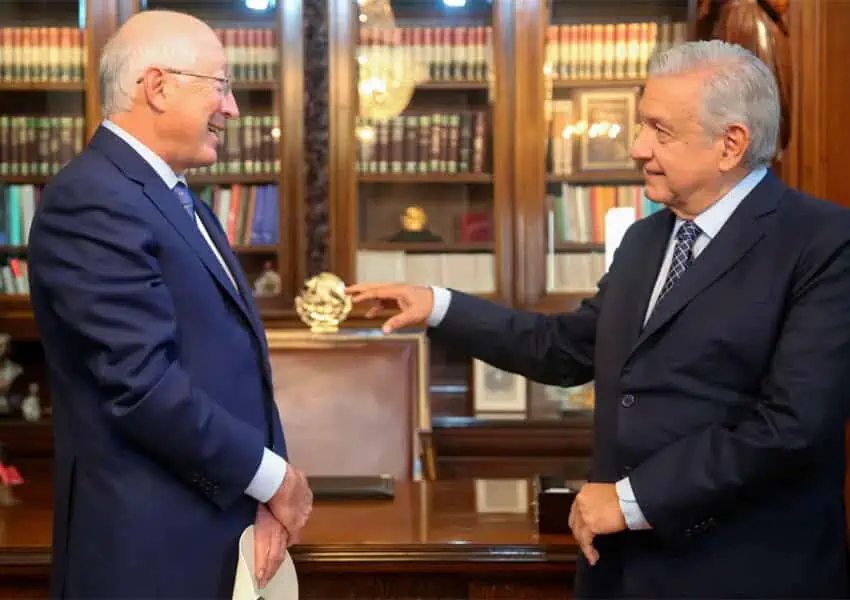
U.S. Ambassador Ken Salazar with AMLO
AMLO and Salazar’s previously friendly relationship soured this year, as Salazar prepares to leave his post. (Lopezobrador.org.mx)

The ambassador, a frequent visitor to the National Palace while López Obrador was president, bluntly declared that the “hugs, not bullets” (abrazos, no balazos) security strategy implemented by the previous government “didn’t work.”

The United States supports the prevention part of the strategy — the attention to the root causes of crime through social programs — but Mexico also needs to apply the law to ensure there is no impunity for criminals, Salazar said.

“Security is the most important thing, the hinge of a democracy,” he said. “The people of Mexico mustn’t live with fear.”

Salazar charged that security coordination between the United States and Mexico “unfortunately … failed in the past year, in large part because the previous president didn’t want to receive support from the United States.”

“He closed the door on [security] investment of more than US $32 million because he didn’t want this investment to arrive in Mexico to help the Mexican people,” he said.

Support from the U.S. government was “rejected because of ideological problems or other explanations” not based on the reality of the security situation Mexico faces, Salazar said.

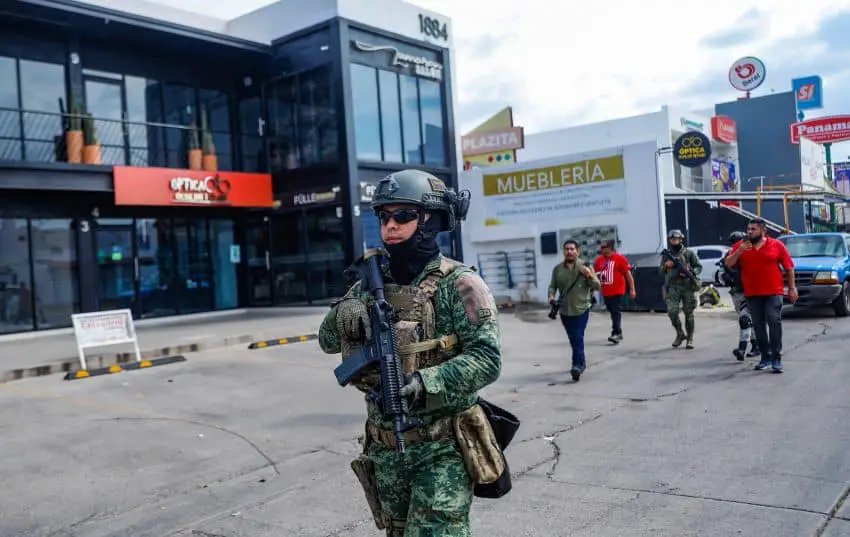
To emphasize what he sees as the gravity of Mexico’s insecurity problem, the ambassador referred to the ongoing violence in Sinaloa, where infighting between rival factions of the Sinaloa Cartel has claimed scores of lives in recent months.

He also said that “the reality is that the people of Mexico … don’t live in safety.”

Security operations in Culiacán due to Sinaloa Cartel infighting
Salazar cited ongoing cartel turf wars in Sinaloa as evidence that former President López Obrador’s security strategy has failed. (José Betanzos/Cuartoscuro)

Business people, “members of the press like you, those who work on street corners” and “those who have ranches” all face security risks, Salazar said.

“Like the cattleman in Sinaloa who was killed on the weekend because he was a leader,” he said.

Among the other incidences of violence Salazar referred to was the murder of a priest in Chiapas last month and the killings of two elderly Jesuit priests in Chihuahua in 2022.

He also hit back at López Obrador’s assertion in September that that the United States government was partly to blame for the wave of cartel violence in Sinaloa.

“Blaming others, blaming the United States, … that’s not what is needed to reach security,” Salazar said.

His forthright assessment of Mexico’s security situation and declaration that the “hugs, not bullets” security strategy failed will likely be among his final public remarks as ambassador as he won’t remain in the position once Donald Trump returns to the White House in January.

Salazar, a former United States senator and secretary of the interior during the Obama administration, was nominated by U.S. President Joe Biden in 2021, and arrived in Mexico City in September of that year.

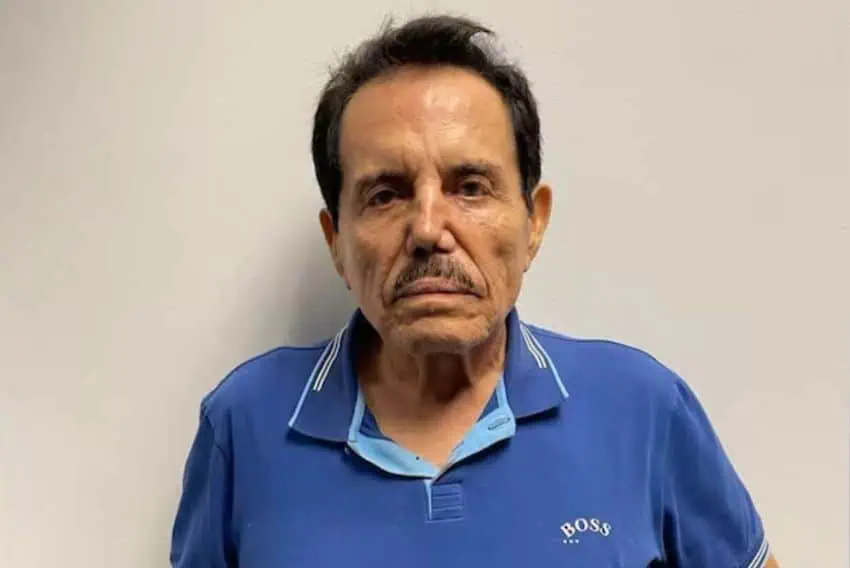
His close relationship with López Obrador soured earlier this year after he made critical remarks about the government’s judicial reform and due to what the Mexican government regarded as a lack of transparency about the arrests of alleged Sinaloa Cartel drug traffickers Ismael “El Mayo” Zambada and Joaquín Guzmán López at an airport near El Paso, Texas, in late July.

López Obrador announced in late August that the Mexican government’s relationship with the United States Embassy in Mexico was “on pause.”

Ismael "El Mayo" Zambada mugshot
The alleged kidnapping of drug kingpin “El Mayo” Zambada and his arrest in the U.S. has been a major point of tension between Mexico and the U.S. this year. (Cuartoscuro)

“How are we going to allow [Salazar] to opine that what we’re doing is wrong,” AMLO said at the time.

On Wednesday, the ambassador said the Sheinbaum administration needs to work on strengthening the security relationship between Mexico and the United States as it goes about implementing its security strategy.

That strategy, outlined by Security Minister Omar García Harfuch last month, continues to focus on combating the root causes of crime through social programs, but may allow for greater use of force against criminals, at least if recent weeks are an indication of what’s to come.

Salazar also stressed the need for “corrupt people” to be weeded out from state governments as well as the importance of creating “a strong justice system” that includes effective police forces made up of well-paid officers.

“You can’t pay a police officer almost nothing and expect that he’s going to do his work,” he said.

“… Police turn to corruption because they’re not paid enough to live on,” Salazar said.

The Sheinbaum administration, he added, “has to invest resources in … security.”

“… Republican austerity, as they say, won’t work to achieve security for the people of Mexico. They have to invest,” Salazar said.

The ambassador briefly addressed the victory of Trump and the Republican Party in the United States elections last week, saying that the loss for the Democratic Party “should hurt.”

With regard to Trump’s threats to impose tariffs on Mexican exports and deport millions of undocumented migrants, Salazar simply said that “a lot of what is said” while politicians are campaigning doesn’t eventuate.

He didn’t say when his term as ambassador will conclude, and it could be some time before Trump appoints a replacement, but it’s safe to say that Salazar is on his way out — and he evidently isn’t afraid to speak his mind as he departs.

With reports from Reforma, El Financiero and El País 

Guide: How to get the best deals this Buen Fin weekend

0
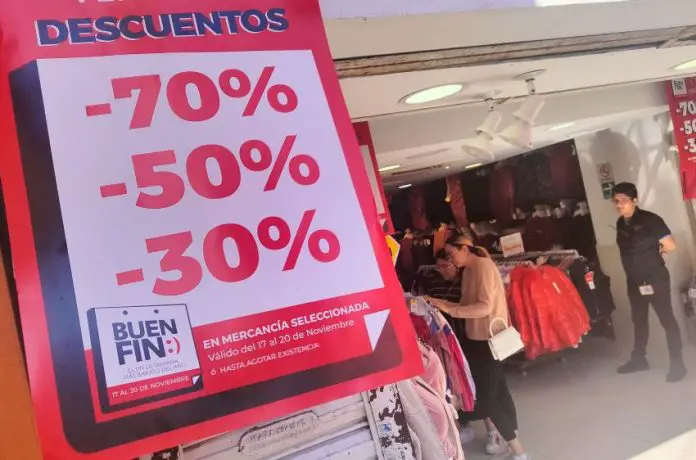
A poster advertises discounts of 30% to 70% in a clothing store for Buen Fin 2024
Retailers expect the event to generate up to US $8.25 billion in revenue this year. (Daniel Augusto/Cuartoscuro)

Buen Fin 2024, Mexico’s biggest shopping event of the year, is about to kick off and consumers across the country are preparing to snatch up deals on their favorite products.

Short for El Buen Fin de Semana or Good Weekend, Buen Fin is a nationwide shopping festival held every year, akin to Black Friday in the United States.

This year, Buen Fin will take place over the Revolution Day long weekend, running Friday, Nov. 15, through Monday, Nov. 18.

Experts say the best day to shop is Friday morning, as more products will be available. Due to the low demand at that time of day, prices will be lower, they said. If buying online, sales will start at 12 a.m. early Friday morning.

Shopping malls in Mexico often open at 11 a.m., while shops outside a shopping mall may open at 9 or 10 a.m. Customers with a particular destination in mind should check the store’s hours of operations ahead of time.

To help shoppers make informed purchases, the Federal Consumer Protection Agency (Profeco) offers an online guide where shoppers can check prices for 492 products in categories that include kitchen, household appliances, audio and sound equipment, TV and video, and computers. Profeco’s guide displays the average price per product and the pricing history collected since September 2024.

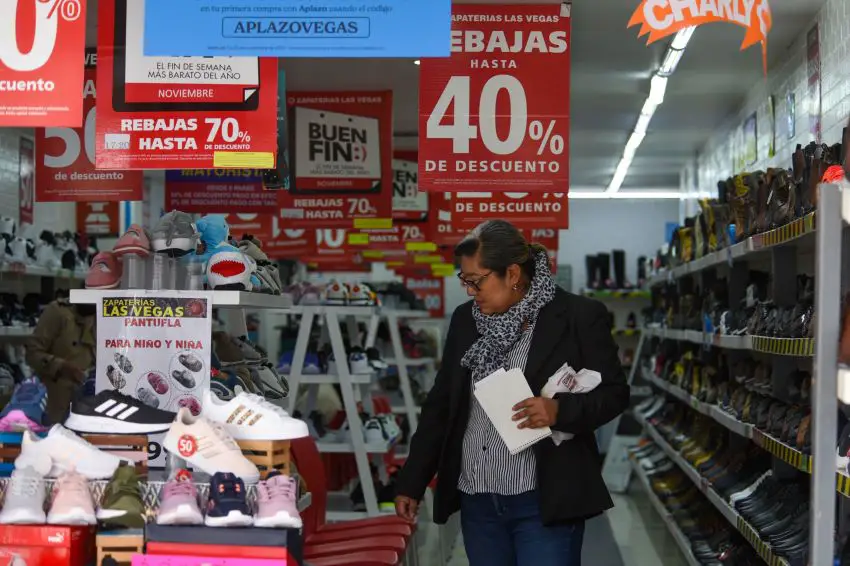
A shopper looks at shoes in a store filled with Buen Fin discount advertisements
The best time to shop is Friday morning, before deals sell out. (Crisanta Espinosa Aguilar/Cuartoscuro)

Profeco cautioned consumers to make online purchases only from secure and reputable websites, advising them to avoid buying items through social media platforms. It also advised buyers to verify that offers are legitimate and to be wary of misleading advertisements.

Buen Fin was created in 2011 to boost family economy and commercial activity across the country. It brings together a wide range of businesses that offer discounts and promotions on a variety of products.

Some of the participating stores include Liverpool, Coppel, El Palacio de Hierro, Sanborns, Sears, Soriana, Home Depot and hundreds of other online and brick-and-mortar establishments. Amazon, Mercado Libre and Shein are among the online retailers joining the sale marathon.

According to consulting firm Kantar, Mexicans planning to make online purchases will spend an average of 4,670 pesos (US $227), up 24% compared to last year when the average expenditure was 3,771 pesos (US $183). Meanwhile, physical stores expect an average outlay of 7,304 pesos (US $354), an increase of 27% compared to last year, when consumers spent an average of 5,748 pesos (US $279).

Overall, retailers expect to generate up to 165 billion pesos (US $8.1 billion), during the Buen Fin event, the Confederation of National Chambers of Commerce, Services and Tourism (Conacaco-Servytur) said.

This year, they hope to boost local producers and the “Hecho en México” brand, which labels all products made in Mexico and which President Claudia Sheinbaum is seeking to expand.

With reports from Excélsior, El Universal and Forbes

Is the next Guillermo del Toro hiding out in Mexico City’s Cineteca Chapultepec?

0
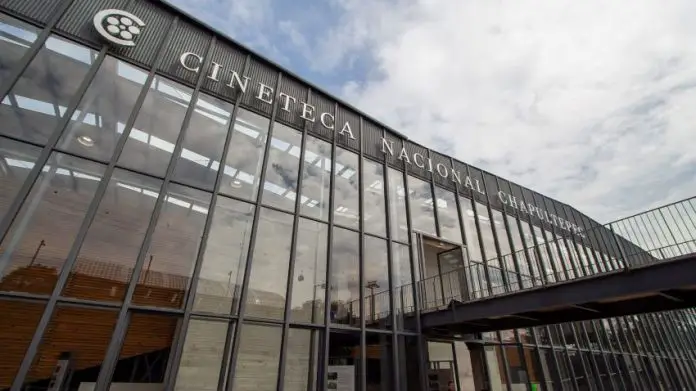
Cineteca Chapultepec
The newest Cineteca is open at last. The Chapultepec Park site will promote Mexican cinema and support the next generation of filmmakers in the country. (Gobierno de la Ciudad de México)

Mexico has inaugurated a dazzling new national film center, the Cineteca Nacional Chapultepec. After years of intense planning and hard work, this innovative complex in the fourth section of Chapultepec Park finally opened its doors on Sept. 24, 2024. Then-president Andrés Manuel López Obrador and president-elect Claudia Sheinbaum presided over the inauguration, declaring that “Chapultepec belongs to all Mexicans.”

The Cineteca Nacional Chapultepec is a sanctuary dedicated to independent and arthouse cinema. In a city dominated by commercial giants like Cinépolis and Cinemex, this venue offers a refreshing alternative, showcasing films that often go unnoticed on mainstream screens.

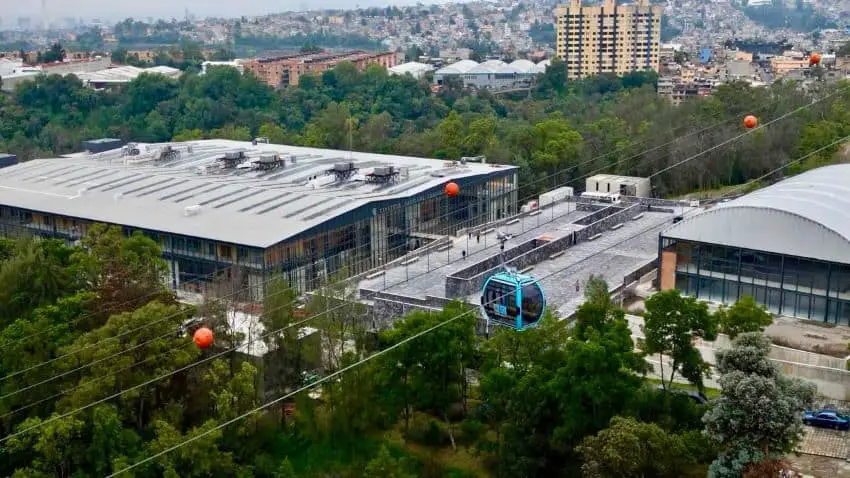
The Cablebús flies over the new Cineteca. (Gobierno de México)

A niche for true cinephiles

The Cineteca Nacional Chapultepec takes its cue from a tough act to follow: the iconic Cineteca Nacional in Coyoacán. This original venue became a cultural powerhouse after its 2012 remodel, which boosted its popularity to over a million visitors each year. 

Known for its dedication to independent and artistic films, as well as its workshops, exhibitions, and other activities celebrating the art of filmmaking, the original Cineteca set a high standard. This successful approach now serves as the blueprint for the Chapultepec location, extending the same vibrant programming and creative spirit to a broader audience.

A cinema like no other

The Cineteca Nacional Chapultepec, sprawling across nearly 12 hectares, is a grand cultural complex designed to impress. With eight screening rooms ranging from cozy 125-seat theaters to expansive halls accommodating 357 viewers, this venue can seat up to 1,800 people per day. What sets it apart is its cutting-edge technology: every room features 4K laser projectors for stunningly sharp visuals and Dolby Atmos surround sound systems that captivate the senses. Few venues in Mexico offer such high quality.

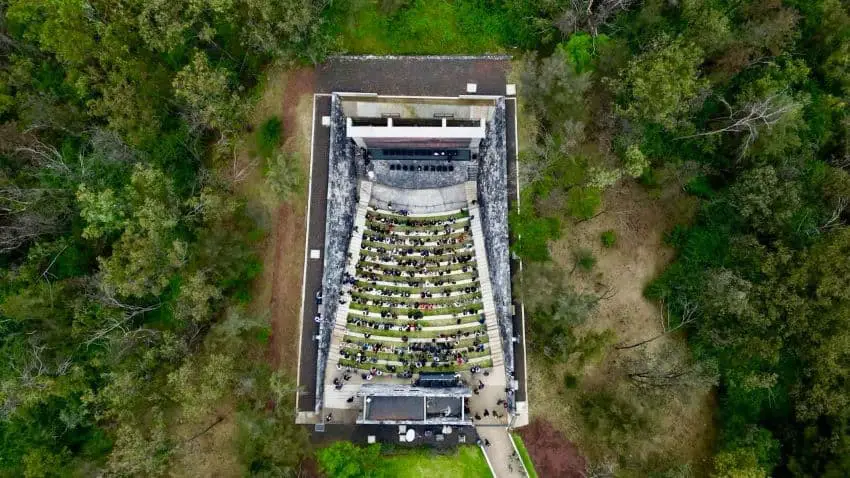
The Foro al Aire Libre (Outdoor Forum) offers a fresh twist on the movie-going experience. Designed like an auditorium, it features 16 tiers of seating with a capacity for up to 357 people. The space is equipped with state-of-the-art 7.1-channel sound and a massive projection screen measuring 39 feet wide by 23 feet tall. Its automated dimmable lighting system allows for clear projections even during daylight hours. 

Bird's eye view of outdoor forum at Cineteca Chapultepec
A bird’s eye view of the Foro al Aire Libre. (Instituto Mexicano de la Cinematografía)

Of course, no trip to the movies is complete without snacks, and the new Cineteca delivers here as well. Visitors can satisfy their sweet tooth at the candy stores, enjoy a warm coffee at the café, browse an impressive selection of books at the bookstore or sit down for a full meal at the on-site restaurant.

A safe haven for Mexico’s treasures

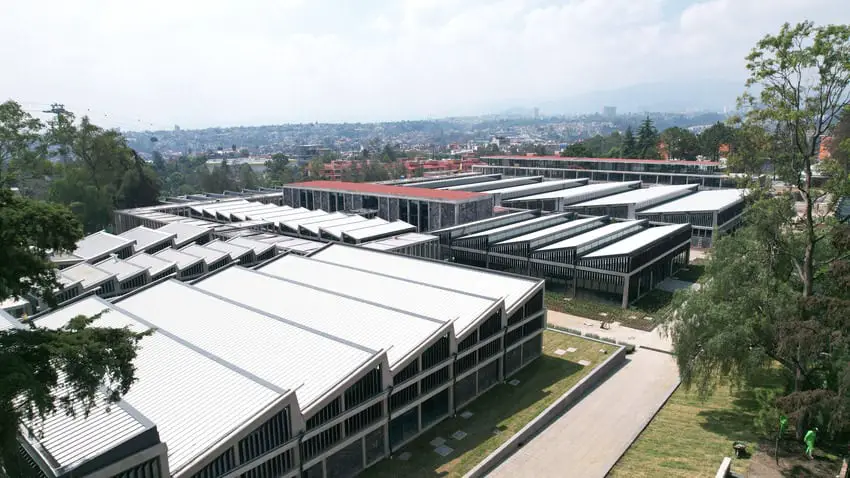
This site also hosts the new Bodega Nacional de Arte (National Art Repository). This impressive facility, consisting of 13 buildings, will host artistic workshops and serve as a secure home for the invaluable collections of the National Institute of Fine Arts and Literature (INBAL), Mexico’s leading institution for the promotion and preservation of fine arts and literature. 

The Bodega focuses on preserving and restoring artistic and cultural treasures, safeguarding some of the nation’s most significant works for generations to come.

Part of a bigger plan

This arts complex was developed as part of the federal government’s Bosque de Chapultepec: Naturaleza y Cultura project, which is giving the entire park a serious glow-up. This ambitious initiative, which drew criticism from some sectors for drawing on a significant part of the reduced national culture budget, is transforming one of the world’s largest urban parks.

bird's eye view of bodega nacional de arte at cineteca chapultepec
The new Bodega Nacional de Arte. (Gobierno de la Ciudad de México)

The project revolves around three pillars: Social, environmental and cultural. The social focus is on making the park more welcoming and better connected to the surrounding city; one of its central elements was connecting the previously isolated sections of Chapultepec itself through initiatives like the construction of Line 3 on the Cablebús and the pedestrian that now links Sections I and II of the park across the Anillo Periférico highway.  The environmental angle revitalizes its landscapes, reintroduces native species and ensures sustainable water management. Meanwhile, the cultural component, which includes the new Cineteca, was intended to turn Chapultepec into a hotspot for creative expression.

From military area to cultural oasis

The space that the Cineteca Chapultepec occupies was once part of Campo Militar 1-F, a restricted military installation where weapons and ammunition were assembled. The new project seeks to reclaim government-controlled spaces and turn them into public treasures for all to enjoy. 

Much like the repurposing of Los Pinos, the former presidential residence that then-President López Obrador transformed into a public cultural complex early in his administration, this project aligns with the promise to provide Mexicans with access to spaces once reserved for the elite. “This project will primarily allow the working-class neighborhoods that face Chapultepec to have the park within reach because that’s not how it was before,” the former president said at the complex’s inauguration in September. 

Learn filmmaking for free at the CCC, thanks to Netflix

The new Cinema Training Center (CCC) is an integral part of the new Cineteca Nacional Chapultepec. This state-of-the-art film education center is designed to accommodate up to 280 students, offering cutting-edge facilities and programs to nurture emerging talent in the cinematic arts. In addition to positioning itself as a leading film school, it is also making waves by announcing an exciting partnership with none other than Netflix.

The Netflix Fund for Creative Equity in Mexico, launched this past August, is investing 22 million pesos to open doors for underrepresented communities in the entertainment industry. This program aims to discover and nurture the next wave of diverse talent while charging no tuition fees. For aspiring filmmakers, this means that a world-class education in cinematography is now within reach.

Accessible to all

Ticket prices to film screenings have been set at an affordable 70 pesos for general admission and just 50 for students, seniors and anyone under 25. Getting to the Cineteca is also a breeze. Public transportation options include the Cineteca Chapultepec station on the Cablebús’s newly-opened Line 3 and the still-incomplete Vasco de Quiroga station on the Mexico City-Toluca commuter train.

The Cineteca Nacional Chapultepec offers an unparalleled blend of cinema, culture and nature, making it a must-visit destination in Mexico City. Whether you’re a film enthusiast, an art lover or simply looking for a unique outing, this cultural gem promises an experience like no other.

Sandra Gancz Kahan is a Mexican writer and translator based in San Miguel de Allende who specializes in mental health and humanitarian aid. She believes in the power of language to foster compassion and understanding across cultures. She can be reached at: sandragancz@gmail.com

Celebrating cempasúchil after Day of the Dead

0
(Anne Bruce)

By the second week of November, most of the celebrations for Día de Muertos are past, but in Oaxaca, the musky fragrance of marigold flowers still lingers in the air.

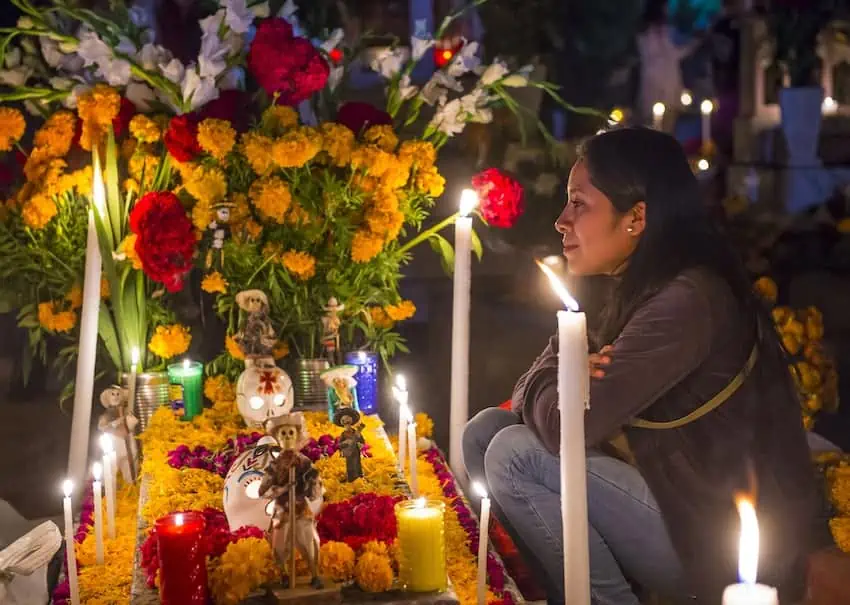
Día de Muertos is a vibrant time to visit Mexico and Oaxaca in particular. People celebrate the dead with ofrendas, decorating graves, homes and altars to receive the spirits of their departed loved ones. Offerings include photos of the dead, candles, bottles of mezcal and tequila, food sugar skulls and thousands of orange marigolds, known as in Mexico as cempasúchil.

Traditional altars can be seen all over Oaxaca city center during Day of the Dead. (Shutterstock)

Day of the Dead celebrations can be traced back to the Mexica. They honored the goddess Mictecacihuatl, or the Lady of the Dead, who is said to have allowed spirits to travel back to earth to visit family. They remembered their deceased with offerings, including flowers.

The word cempasúchil, comes from the Nahuatl words cempoalli, meaning “twenty,” and xochitl, or “flower.” Therefore marigolds are the “flower of twenty petals.” The legend goes that these flowers were gifted to the Mexica people by the sun god, Tonatiuh, so that they might honor their dead.

Flowers symbolize the brief, ephemeral beauty of life. They are an essential element of the Day of the Dead ofrenda. They are used in the construction of the floral arches, garlands, wreaths and crosses. As well as decorative uses, these sun-colored flowers are also used in Day of the Dead rituals.

Though many different flowers are used in Day of the Dead celebrations, cempasúchil is particularly significant.

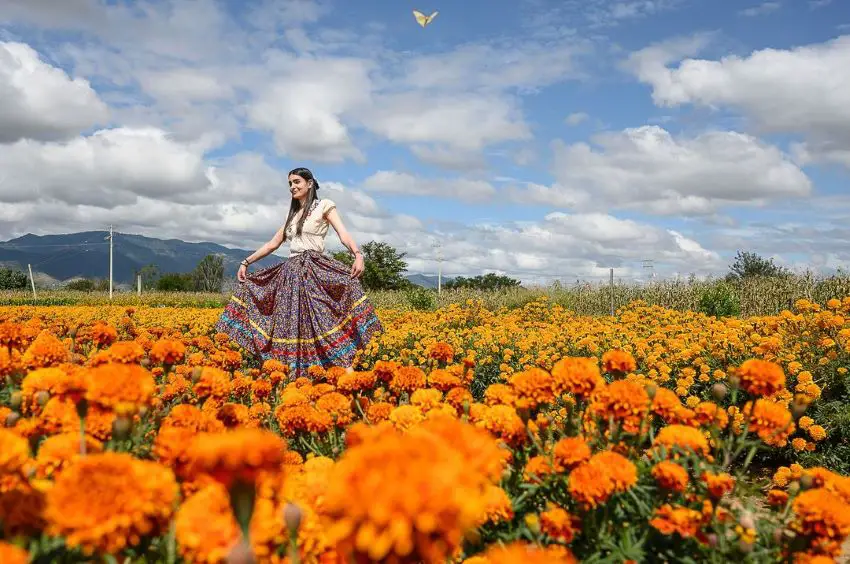
A field of cempasúchil flowers in Oaxaca. (Anne Bruce)

With their bright color and rich fragrance, cempasúchil are believed to attract souls of the dead. Families will scatter the orange petals to lay a path from their front doors to the home altar. In smaller towns, people may create a floral path from the cemetery to their front doors guiding the dead back home.

The petals of the marigold are also thought to have cleansing properties. A cross on the floor allows for souls to be cleansed when they pass it.

Visiting the beautifully adorned altars and giving cempasúchil as offerings is how visitors can respectfully participate in the Day of the Dead celebrations. Building your own altar to celebrate past loved ones is also a thoughtful way to immerse in this tradition.

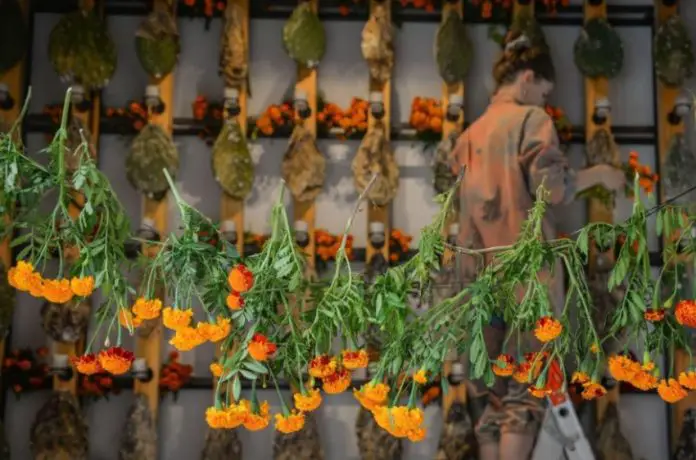
Once the Days of the Dead have past, the vivid altars, arches and garlands of bright cempasúchil are taken down. Although fresh flowers may be fading, they can still be saved and used. Drying and storing the flowers can be a great way to decorate the next year. They will hold some of their color and musky odor.

(Anne Bruce)

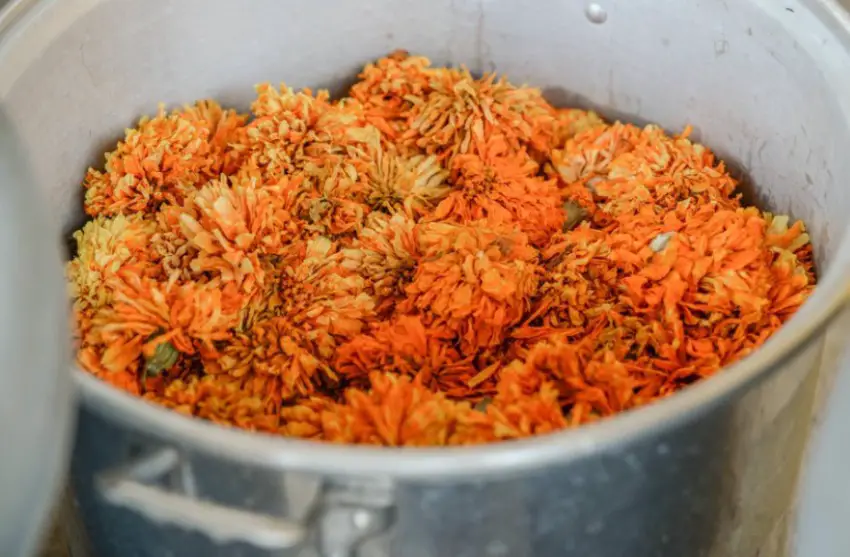
Dried cempasúchil can also be used for dyeing textiles. If you visit the weaving town of Teotitlán del Valle, Oaxaca following Día de Muertos, you will find piles of these orange flowers. They are allowed to dry and used year round to make a deep yellow dye.

To extract the dye you just need to add the dried flowers to boiling water, like a big pot of tea! After just a few moments the yellow dye emerges from the flowers. To get a bold result of dyeing cotton, you need to prepare the fabric using a mordant, then just add to the pot of stewing flowers. After about an hour you should have a rich yellow textile.

As well as the traditional, artisan work found in Teotitlán del Valle, many contemporary Oaxacan designers explore dyeing with cempasúchil at this time of year. Orígen Textil produces beautiful garments, as well as offering workshops to learn about using natural dyes like cempasúchil.

Cempasúchil flowers can also be infused to make a tea — or a syrup for a seasonal cocktail. They can also be distilled with agave to make a delicious style of mezcal. The process of making mezcal distilled with flowers bears some similarity to the traditional ‘pechuga’ mezcals, also made following Day of the Dead.

(Anna Bruce)

Adding the petals, or whole flower heads to the distillation of agave will lend the final spirit amazing floral aromas and a complex taste profile reminiscent of ‘amargo’ spirits. It is delicious as a sipping mezcal or mixed into refreshing cocktails.

Mezcal brands like La Jicarita, Bozal and Salvadores have been producing this cempasúchil spirit.

Speaking to Salvadores founder Sal Palacios, he explained that their cempasúchil edition was inspired by Day of the Dead. “The aromas of the cempasúchil during Día de Muertos really brings nostalgia in my heart. So I decided to make a spirit distilled with cempasúchil, with tejocote and mandarins.”

He enjoys drinking the Salvadores Cempasúchil neat, in a vela glass, “taking the time for the mezcal to speak to me, bringing memories.”

Brooks Bailey designs cocktails for Rambling Spirits. He suggests using the Salvadores cempasúchil as the base for your negroni, with campari and dry white vermouth, garnished with a spray of expressed orange zest. Freeze a marigold flower in the ice cube to make this cocktail extra special!

Anna Bruce is an award-winning British photojournalist based in Oaxaca, Mexico. Just some of the media outlets she has worked with include Vice, The Financial Times, Time Out, Huffington Post, The Times of London, the BBC and Sony TV. Find out more about her work at her website or visit her on social media on Instagram or on Facebook.