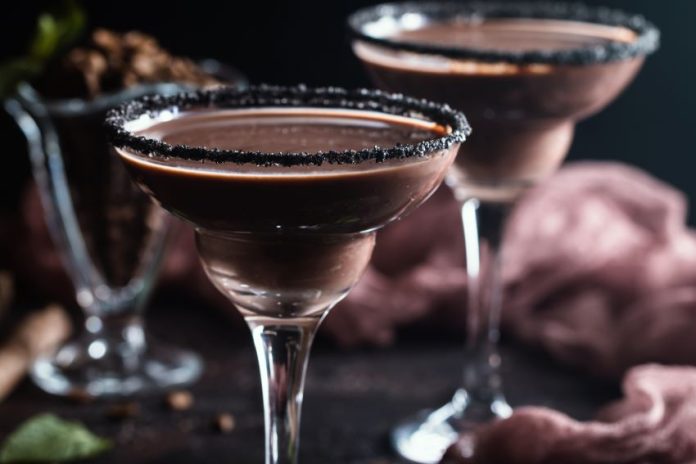
Truly the drink of gods, this chili chocolate martini will rapture you away with every sip. (Shutterstock)
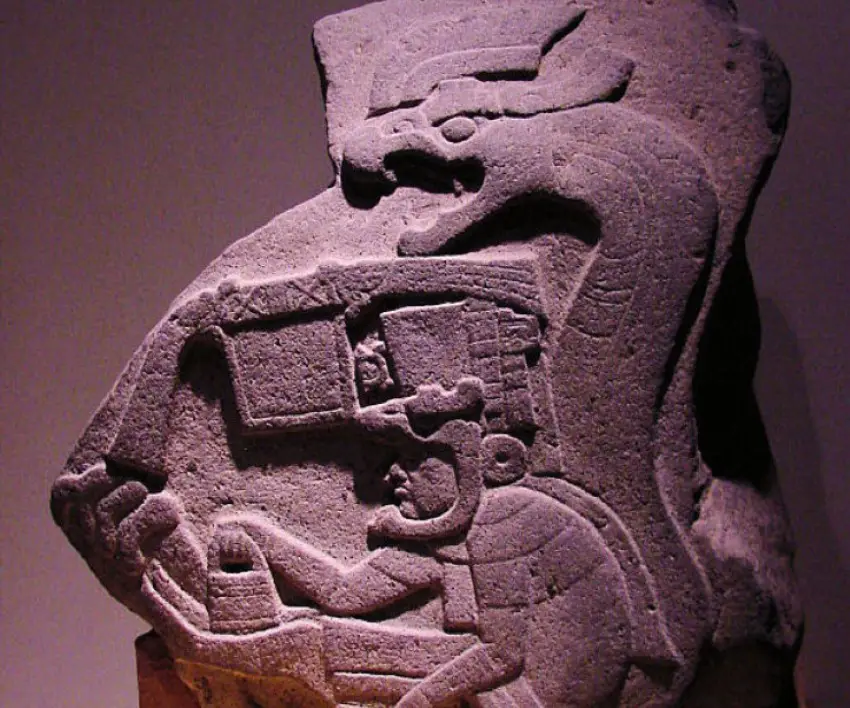
The Olmec Dragon wasn’t actually a dragon, of course. He was a ruler, a god-king. People called him “the Olmec Dragon” because he liked the name, and no one dared to argue. He sat on his stone throne, a steaming cup of dark cacao and crushed chilis in his hand, his nightly ritual. The brew was bitter, hot, and powerful, just the way he liked it. Each sip, he felt, brought him closer to the gods.
But lately, the stars had been acting strange. Lights zigzagged across the sky, flickering like the world’s strangest torch procession. He figured the heavens were simply acknowledging him, their chosen leader. As he sipped his drink that night, he noticed a low hum filling the courtyard. Then, a figure appeared — a shimmering, shifting shape, eyes with as many points as the night sky.
The Olmec Dragon, a god-king of early Mexico. (Wikimedia Commons)
“Dragon,” the figure said, its voice somehow echoing and whispering at once. “We have come to judge you.” The Olmec Dragon wasn’t easily rattled. He tightened his grip on the cup and raised his chin. “Judge me? I am the Olmec Dragon, the god-king of these lands. Who are you to judge me?”
The figure tilted its head, almost amused. “Oh, Dragon. We are the ones who gave you this drink — the brew of cacao and chili. Each sip was meant to prepare you to lift your people, to bring them closer to the stars.” It sighed. “And yet, you kept it for yourself.”
The Olmec Dragon blinked, suddenly feeling small. He looked down at his cup, which now seemed heavier, colder. “I thought… it was mine to drink.” The figure’s eyes softened. “No, Dragon. It was meant to be shared, to guide your people. Now, they will find their own way.”
The Olmec Dragon felt himself lift from his throne, weightless. He looked down one last time at his people, moving below like tiny insects, unaware their god-king was leaving. He drifted into the night sky, just another flicker of starlight. In the end, his people would ascend without him — just as the gods intended.
Chili Chocolate Martini Recipe
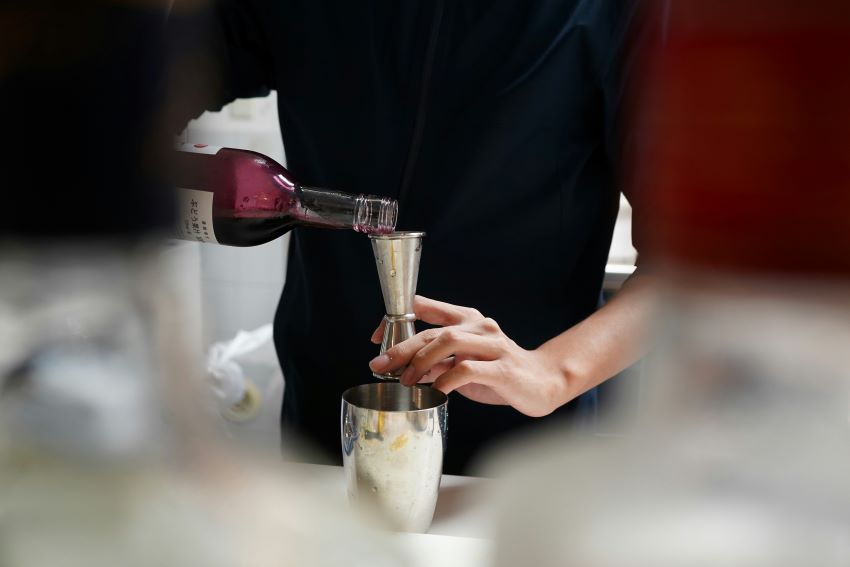
(Yosuke Ota/Unsplash)
Ingredients:
1 oz dark chocolate liqueur
1 oz vodka
1 oz cream (or half-and-half for a lighter version)
½ oz chili liqueur (or a pinch of cayenne pepper if chili liqueur is unavailable)
½ oz simple syrup (optional, for added sweetness)
Ice cubes
Cocoa powder or grated chocolate, for garnish
Fresh chili slice or twist of orange peel, for garnish (optional)
Instructions:
Prepare your glass: Chill a martini glass by filling it with ice water while you prepare the drink. Alternatively, place the glass in the freezer for a few minutes.
Mix the drink: In a cocktail shaker, add ice cubes, chocolate liqueur, vodka, cream, chili liqueur (or cayenne pepper), and simple syrup.
Shake it up: Shake vigorously for 15-20 seconds until well mixed and cold.
Serve: Empty the chilled martini glass of any ice water, then strain the drink into the glass.
Garnish: Lightly dust with cocoa powder or grated chocolate on top. Optionally, add a thin slice of fresh chili or a twist of orange peel for extra flair and aroma.
Enjoy: Sip slowly and enjoy the balance of chocolate sweetness with the gentle heat from the chili!
Tips:
Adjust heat: If you like it spicier, add a bit more chili liqueur or a small pinch of cayenne.
Extra chocolatey: Drizzle chocolate syrup around the inside of the glass before pouring in the drink for a more decadent chili chocolate martini.
Cheers to an out of this world (wink), spicy, chocolatey treat!
StephenRandall has lived in Mexico since 2018 by way of Kentucky, and before that, Germany. He’s an enthusiastic amateur chef who takes inspiration from many different cuisines, with favorites including Mexican and Mediterranean. His recipes can also be found on YouTube.
Has the recent election result got you feeling frustrated? Psychologist Jenna Mayhew shares her top tips for dealing with stress and anger. (Rene Deanda/Unsplash)
Have recent political events made you feel stressed or uncomfortable? Jenna Mayhew has been working as a psychologist in Mexico for eight years. At her practice, Hola Therapy, she has made it her mission to help foreigners living in Mexico, Mexicans with a foreign partner, foreigners with links to Mexico and Mexicans with links to foreigners or foreign countries.
Now, Jenna answers MND readers’ questions on the pressing issues of relationships, mental health and navigating changes that come with relocating to and living in Mexico.
Jenna Mayhew (center) and the team at Hola Therapy. (Jenna Mayhew)
Dear Jenna,
I’m an American living temporarily in Mexico. When the U.S. election results were announced, I felt heartbroken, defeated, and angry at everyone who voted for Trump, and everyone who didn’t vote. What’s the best way to deal with news like this when there’s nothing you can do to change the situation?
First, let me acknowledge that the feelings you’re experiencing are valid. Regardless of your nationality or political preferences, when someone enters power with views we don’t agree with and could make decisions that impact our lives, it’s natural to have a strong emotional reaction. It’s important to recognize that you’re not alone in this. In our practice, we’ve seen how deeply these events impact people.
Here are some strategies to help you navigate these intense emotions and find ways to heal:
For many, the aftermath of the election results is akin to mourning. Whether you feel hopeless, fearful, or even betrayed, these emotions are a form of grief. And just as with any loss, it’s okay to cry, feel upset, and take time to process. Grief is deeply personal, and it can be experienced in many forms — from sadness and frustration to numbness or even anger. Don’t rush yourself through it. Allow yourself the space to mourn what you’ve lost, even if it’s just the hope you once had in the future.
2. Stay present
It’s easy to fall into the trap of predicting the future, especially when you’re feeling fearful or uncertain. While it’s important to acknowledge that there are risks and challenges ahead, ruminating on worst-case scenarios only drains your energy and creates unnecessary stress. Acknowledge the uncertainty, but don’t let it paralyse you. Remember, the future is unknown, and worrying about it now only robs you of peace and clarity in the present.
3. Limit the news and social media
One common maladaptive coping strategy we’ve noticed is the endless consumption of news and social media. It’s easy to get caught in a cycle of outrage, fear, and frustration – things that are actively promoted by these platforms. News and social media, especially in the aftermath of events like this, can feel like an addiction, fueling our anger and despair without offering any real solutions.
Take a step back. Limit your consumption. If you need to check in, try to limit it to a set time each day. Try unfollowing or muting accounts that perpetuate feelings of anger and fear. Instead, seek out content that nurtures your mental health — whether that’s peaceful, empowering, or simply relaxing. It’s not about avoiding reality; it’s about protecting your emotional well-being so that you can act from a place of clarity rather than exhaustion or outrage.
4. Channel your anger into action
(Sebastian Herrmann/Unsplash)
Anger is a powerful emotion — it’s the body’s way of signaling that something is wrong and needs to be addressed. While feeling angered by political outcomes is natural, it’s important not to let anger turn into helplessness or inertia. Action is the antidote to that feeling of powerlessness.
But, there’s a balance to strike. Posting angry messages online or engaging in inflammatory arguments can sometimes feel like taking action, but without actual change, this can often leave us feeling more hopeless. Instead, channel your anger into something constructive. Volunteer, donate, or participate in local activism. This doesn’t just apply to U.S. politics — it could be supporting causes in Mexico or your community. Engaging in meaningful action can help you feel like you’re part of a larger solution, rather than a spectator to a painful situation.
5. Practice self-care and nurture your mental health
In times of stress, it’s crucial to take care of your physical and mental health. It’s tempting to slip into self-soothing mode (alcohol, substance misuse, eating junk food, scrolling instead of sleeping, not socialising etc). Do the opposite. Prioritise eating well, sleeping enough, and moving your body. Go for walks in nature, take deep breaths, and find moments of joy — even if they’re small. Your emotional resilience comes from your ability to care for yourself in tough times. Even activists — who spend their lives fighting for change — understand that rest and recovery are vital for sustainable action.
Relaxing walks in nature can help you to regulate your emotions. (Cristina Gottardi/Unsplash)
Self-care is also about creating space to experience joy, especially in moments of despair.
6. Find your community
Even if you feel far from home, connecting with others who share your values or experiences can be deeply healing. Reach out to friends, join supportive groups, or find spaces where you can express your emotions and feel heard. If you’re feeling disconnected from your country of origin, remember that you can still build community in the place you are now. And don’t forget to lean on loved ones—whether that’s family, close friends, or even a therapist. Social connection is key to resilience.
Moving forward: finding a path toward healing
Ultimately, healing is a personal journey. The world has always been full of challenges, but it’s also full of people who fight for change — who channel their anger into action, their grief into transformation. You can take inspiration from them, whether it’s through activism or simply choosing to live joyfully despite the turmoil around you.
This is your chance to decide what action, however small, looks like for you. The grief, anger, and uncertainty you’re feeling are natural, but they don’t need to define you. You have the power to find moments of peace, joy, and connection — even in the most challenging times.
And remember: it’s okay to feel heartbroken, it’s okay to rest, and it’s okay to take time to heal.If you feel overwhelmed, it’s always okay to seek professional support as you navigate this complex emotional terrain. There are resources, people, and ways to heal—sometimes it’s about finding the right path for you.
Jenna Mayhew is an Australian psychologist based in Mexico, with over 20 years of experience in Australia, England and Mexico. She is the founder of Hola Therapy, a bilingual practice dedicated to supporting the immigrant and cross-cultural communities in Mexico.
Hola Therapy aims to give back to the community and one way they achieve this is by providing by clinical and financial support Misión México Foundation. https://www.misionmexico.org Misión México Foundation is a charity in Tapachula, Chiapas, Mexico. They provide a stable, therapeutic environment for some of the state’s most vulnerable children, with a focus on safety, emotional recovery and education.
If you have enjoyed the “Ask Jenna” column, please consider giving back by making a small donation to the Misión México Foundation
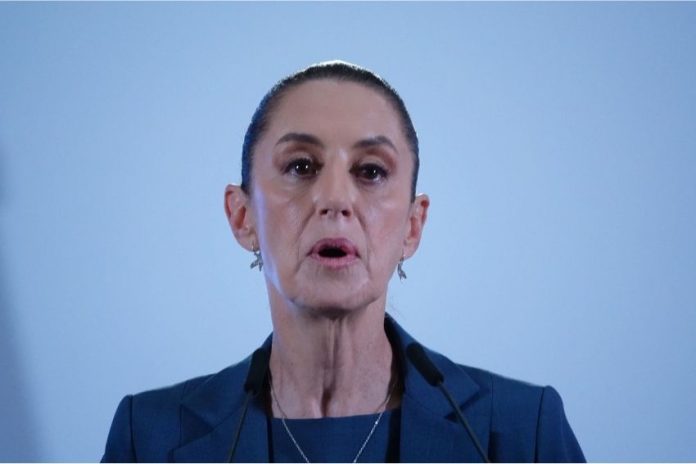
President Sheinbaum fielded many questions from reporters about how she planned to react to a second Donald Trump presidency in 2025. (Galo Cañas Rodríguez/Cuartoscuro)
Tuesday marked exactly six weeks since President Claudia Sheinbaum was sworn in, while Donald Trump will take office as the United States’ 47th president in just under 10 weeks.
At her press conference this morning, Sheinbaum fielded yet more questions related to Trump’s victory in the U.S. presidential election last Tuesday.
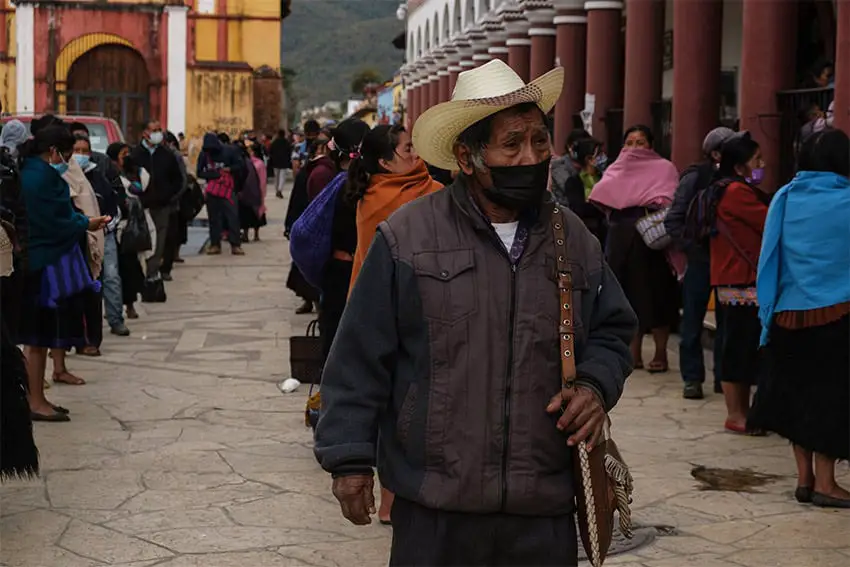
Families line up in San Cristobal, Chiapas, to receive remittances, or money sent to Mexico from relatives working in the U.S. Trump’s threat of mass deportations, if realized, could put a significant dent in remittances – and Mexico’s economy. (File photo/Isabel Mateos Hinojosa for Cuartoscuro)
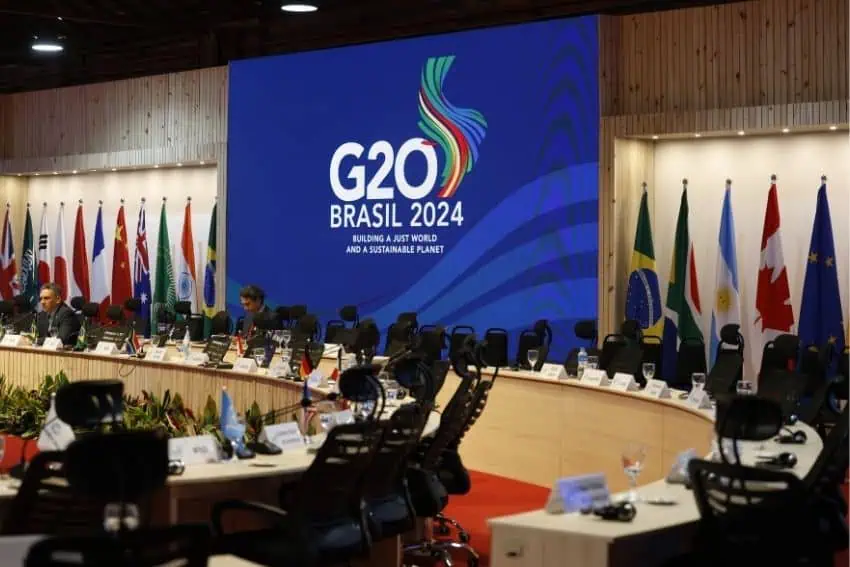
Among other issues, she spoke about Mexico’s security outlook and briefly mentioned her attendance, and nonattendance, at upcoming international summits.
‘We hope there is no impact’ on remittances, Sheinbaum says ahead of US deportation operation
During her engagement with reporters, Sheinbaum was asked about Trump’s plan to deport large numbers of undocumented migrants in the United States as well as the impact that plan will have on Mexico’s reception of remittances.
In response, she said that the Mexican government is “strengthening” its consulates in the United States in order to better assist Mexican migrants who may be at risk of deportation.
“I say to our brothers and sisters in the United States that we’re always going to defend you; you should go to the consulates,” Sheinbaum said.
She reiterated that her government is hoping to meet with Trump’s transition team before the former U.S. president takes office for a second term in January.
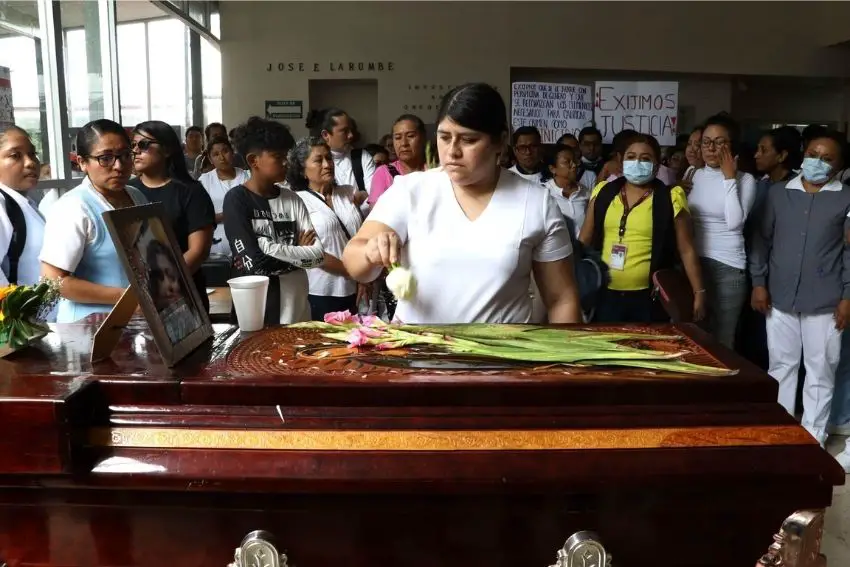
Family in Oaxaca city holds funeral ceremonies on Nov. 5, 2024, for Judith Vianney Toledo Santos, a 29-year-old nurse who was found murdered earlier this month. President Sheinbaum pledged at Tuesday’s press conference that Mexico’s security outlook will improve, but not overnight. (Carolina Jiménez Mariscal/Cuartoscuro)
With regard to the potential impact of deportations on remittances to Mexico, Sheinbaum simply said, “We hope there is no impact.”
That remark could be interpreted as wishful thinking, confidence that Mexico will be able to persuade the Trump administration to reconsider the plan to deport millions of workers or even optimism that the next U.S. government’s actions won’t match Trump’s campaign rhetoric.
The deportation of a significant percentage of those undocumented Mexicans could have a major impact on the remittances totals Mexico receives on a monthly and annual basis and completely cut off a much-needed source of income for many Mexican families.
Mexico’s security situation will improve, pledges Sheinbaum
Toward the end of a security-focused press conference, Sheinbaum asserted that the government, in time, will achieve “results” in its fight against crime.
“We’re going to provide results,” she said, through “coordination” with state and municipal authorities and the government’s national security strategy, which is based on four core tenets including attention to the root causes of crime and the strengthening of intelligence and investigation practices.
The improvement in security in Mexico – where high levels of violence plague various parts of the country – won’t happen “from one day to the next,” but “results” will come, Sheinbaum said.
One reporter asked the president whether she will participate virtually in the Asia-Pacific Economic Cooperation (APEC) leaders’ forum, which will take place in Lima, Peru, this Saturday and Sunday.
Sheinbaum responded that a representative from the Economy Ministry will attend the annual meeting but didn’t specify who.
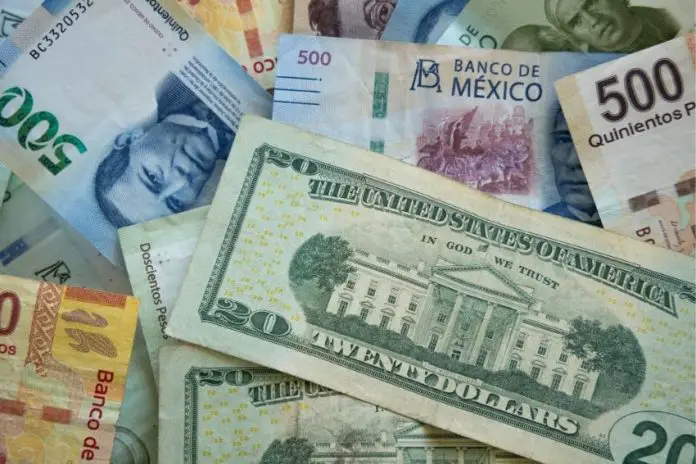
Wise already supported converting foreign currencies to Mexican pesos. Now, the reverse is also true. (Shutterstock)
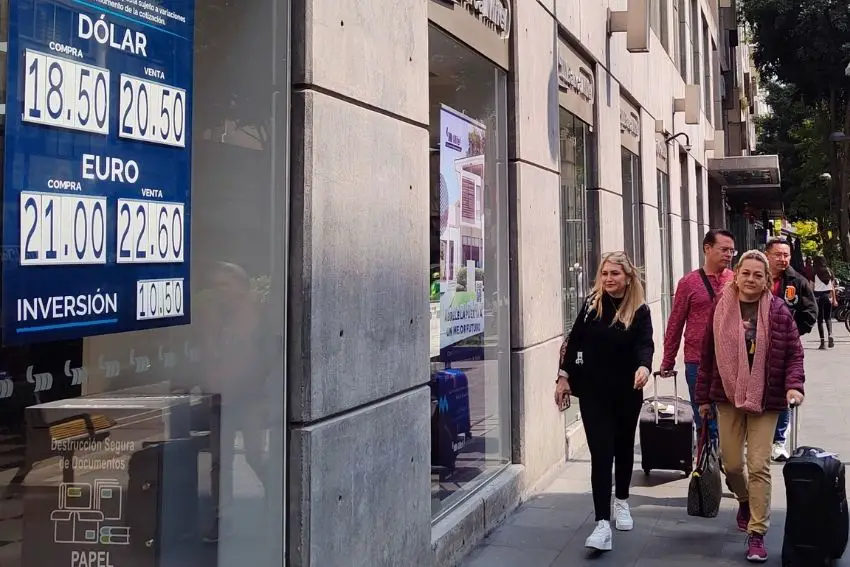
The Mexican peso depreciated against the US dollar for a third consecutive day on Tuesday, as uncertainty over the impact a second Trump presidency will have on Mexico continues to weigh on the currency.
Donald Trump’s campaign promises to levy heavy tariffs on Mexican exports and order mass deportations have been wreaking havoc with the Mexican peso, which has been surpassing 20 pesos to the dollar since shortly after the U.S. election on Nov. 5. (Daniel Augusto/Cuartoscuro)
At 5:30 p.m. Mexico City time, one greenback was trading at 20.60 pesos, according to Bloomberg.
The Bank of Mexico’s closing rate on Tuesday represented a 1.3% depreciation for the peso compared to its position against the dollar 24 hours earlier.
Janneth Quiroz, director of analysis at the Monex financial group, said on X on Tuesday morning that Donald Trump’s latest announcements about who will serve in his government had affected the peso.
“Trump announced that Mike Waltz will be his national security adviser,” Quiroz said, adding that the federal lawmaker is known for his “aggressive and nationalist comments.”
She also noted that Trump “plans to choose Senator Marco Rubio as his secretary of state.”
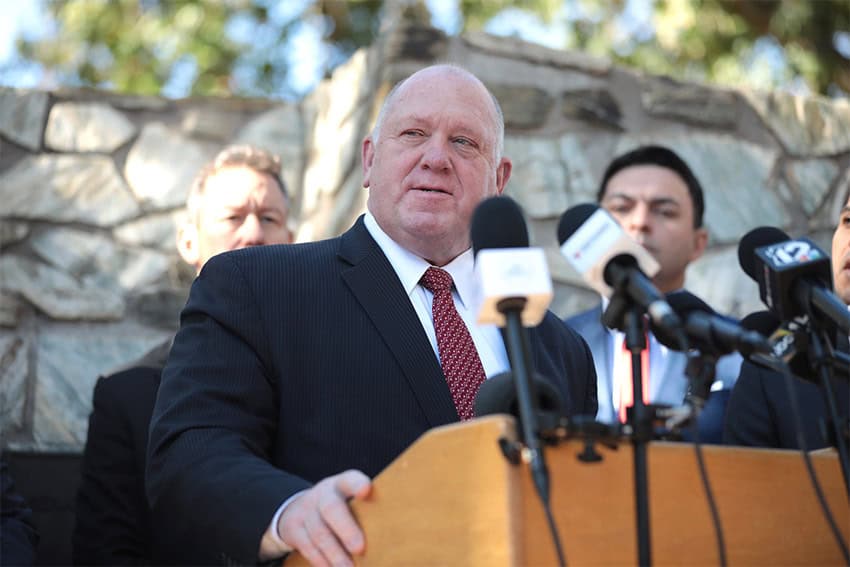
The soon-to-be 47th president of the United States announced Sunday that former acting director of the U.S. Immigration and Customs Enforcement Thomas Homan will be his “border czar.”
Among U.S. President-elect Donald Trump’s cabinet picks are Thomas Horman as the incoming administration’s “border czar.” (Gage Skidmore/Flickr)
Analysts at Mexican bank CI Banco said that investors are “very attentive” to Trump’s cabinet appointments, noting that they are concerned about the impact the agenda of the incoming U.S. administration will have on the Mexican economy.
Among the policies Trump has proposed that could have a major impact on Mexico and its economy are tariffs on Mexican exports to the United States and mass deportations of undocumented Mexicans in the U.S.
In addition to uncertainty about the impact of a second Trump presidency on Mexico, a general strengthening of the dollar contributed to the peso’s depreciation on Thursday.
The foreign exchange news website FX Street reported that the expectation that the Bank of Mexico (Banxico) will forge ahead with a 25-basis-point interest rate cut at its monetary policy meeting on Thursday was also a factor in the depreciation of the peso.
However, the peso depreciated significantly after the comprehensive victories of Claudia Sheinbaum and the ruling Morena party in Mexico’s June 2 presidential and congressional elections. Since the recently elected Mexican lawmakers assumed their positions on Sept. 1, Congress has approved a number of constitutional reforms, including a controversial judicial overhaul that allows Mexicans to elect thousands of judges, including Supreme Court justices.
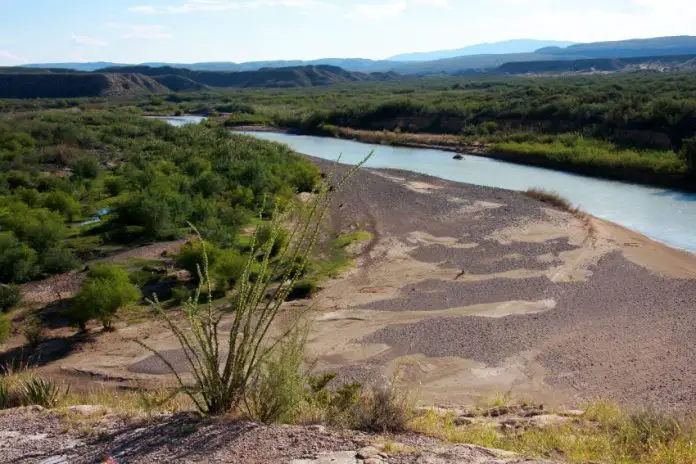
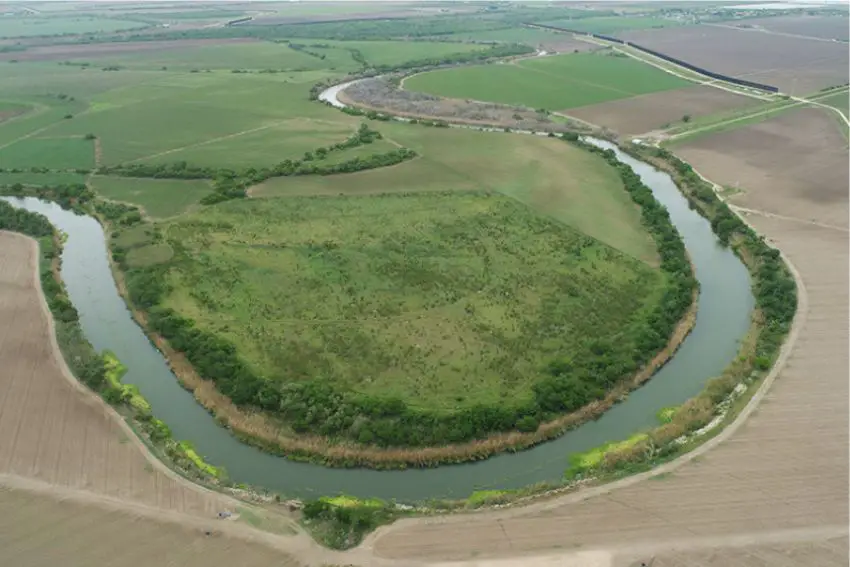
Mexico and the U.S. share the resources of the Rio Grande river according to a water treaty established in 1944, one that did not anticipate today's much hotter, drier world. (Wikimedia Commons)
Amid growing water scarcity on both sides of the Rio Grande river in recent years, Mexico and the U.S. have come to an agreement aimed at ensuring more regular delivery of water from Mexico to the United States.
The new agreement, which amends an 80-year water treaty between Mexico and the U.S. to share the Rio Grande, comes as Mexico nears the end of a five-year cycle with a likely deficit in its treaty obligations to deliver Rio Grande water to the U.S.
Drought conditions in northern border states like Chihuahua have made it difficult for Mexico to live up to its water obligations to the U.S. This photo is from June 2024. (Blanca Carmona/La Verdad Juárez)
The Rio Grande river is a natural border between the U.S. and Mexico, running through both southern Texas and through the northern Mexico states of Durango, Chihuahua, Coahuila, Nuevo León and Tamaulipas.
The International Boundary and Water Commission (IBWC), which oversees the U.S.-Mexico water treaty, said in a statement that the new measures will provide Mexico with “tools and flexibility to deliver water earlier in the five-year cycle.”
The IBWC is trying to prevent a water deficit crisis, in which Mexico doesn’t deliver its required amount of water from the Rio Grande by the end of the five-year cycle, which ends on Oct. 24, 2025. Under the terms of the 1944 treaty, Mexico is obligated to deliver a total of 1.75 million acre-feet of water by October 24, 2025, absent extraordinary drought or a serious infrastructure accident, according to the IBWC statement.
One acre-foot is enough water to flood one acre of land a foot deep, which means Mexico must deliver about 570 billion gallons of water during each five-year period.
Amid some of the most severe drought-driven water shortages in nearly 30 years, Mexico has fallen behind on water deliveries by about 980,000 acre-feet during this cycle, according to the newspaper Rio Grande Guardian, leading to fears that it will not be able to make up the amount by the end of the cycle.
It’s not the first time Mexico has fallen short in its water obligations, which go to farmers in Texas. The last five-year cycle, from 2015–2020, was the first time in decades that Mexico managed to end the cycle without a deficit. The history of recurring deficits has bred tension between the two nations.
Mexico’s Rio Grande water obligations provide irrigation to farmers in the Rio Grande Valley of southern Texas, a situation that creates tensions between the U.S. and Mexico when Mexico is unable to meet its obligations. (Texas Farm Bureau)
IBWC Minute No. 331, “Measures to Improve the Reliability and Predictability of Rio Grande Water Deliveries to Benefit the United States and Mexico” on Nov. 7 will now provide Mexico with several options to catch up on its water debt, including earlier-than-scheduled water deliveries that would allow Mexico to take advantage of its northern border region’s rainy season.
One of the aforementioned “tools and flexibility” referred to by IBWC would also allow Mexico to give up some of its water allotment under the treaty.
Farmers downstream in Texas’ Rio Grande Valley and across the river in Mexico’s Tamaulipas state have been plagued with water scarcity issues, but Mexico and U.S. officials expressed confidence that the new measure will provide greater reliability and predictability in water allocations to users in both countries.
Mexico’s Foreign Relations Ministry wrote in a statement that “the agreement strengthens bilateral cooperation with regard to critical issues such as water storage, the environment and water conservation in the Rio Bravo Valley.”
Mexico refers to the Rio Grande river as the Río Bravo.
The original treaty calculated water availability based on data from the first half of the 20th century. It foresaw short-term droughts, but not multiyear megadroughts, according to the news channel CNN.
The agreement encapsulated in BWC Minute No. 331 was reached after 18 months of negotiations, Reuters reported, underscoring the immense difficulties of navigating how to share shrinking water resources in a hotter, drier world.
Be Grand Ocean Nuevo Nayarit, designed by the firm Legorreta, will be the brand's first beachfront apartment complex. (Be Grand Ocean)
The real estate developer Be Grand announced its plans to invest 4.2 billion pesos (US $203.8 million) in the construction of two new luxury apartment buildings in the western state of Nayarit and Mexico City.
The investment will be split between a fifth Be Grand Alto tower in Polanco, and a first-of-its-kind Be Grand Ocean Nuevo Nayarit, the firm’s inaugural beach destination property.
The firm will put over 2.2 billion pesos ($106.6 million) towards the construction of a fifth Be Grand Alto tower in Polanco, Mexico City. (begrand/Instagram)
The new developments follow several announcements about Be Grand’s expansion plans in other parts of Mexico.
“Potential investors had been telling us we were too concentrated in Mexico City,” Director of Be Grand Nicolás Carrancedo said in a 2023 interview with Bloomberg. “So, [the new developments] are all part of our plans to diversify.”
In June, the company announced a goal of developing 5,000 luxury apartments in Mexico over the next five years, in response to the resurgent housing market in many metropolitan areas of the country.
Nationwide, housing prices saw a nominal increase of 26.7% between 2015 and 2023, when adjusted for inflation. This real estate boom is driven by robust upper-middle-class demand and a steady flow of foreign homebuyers.
“Our client … is a working professional, successful, busy. They are looking to buy a house and not have to worry about it, they don’t have the time,” Carrancedo told the news magazine Expansión in 2023. Be Grand properties range in price between 3 million (US $146,000) and 12 million pesos (US $583,500), approximately double the average home cost in Mexico.
As part of the company’s expansion plans, Be Grand recently bought a 50% stake in six apartment buildings in Mexico City and Monterrey,which will be launched under the firm’s newest brand — Vitant by Be Grand.
In addition, Be Grand is building a complex of four residential towers in Guadalajara — its first location in Jalisco — requiring an initial investment of 2.5 billion pesos (US $121.2 million).
According to Carrancedo, some of the company’s recent developments have been positioned at a lower price point to appeal to a broader market.
The strategy behind Vivant by Be Grand, for example, involves renovating existing apartment buildings and offering smaller units at price points ranging from 1.5 (US $73,000) to 6 million pesos (US $292,000).
Be Grand is a Mexican company that offers a portfolio of high-quality properties in AAA-rated areas, including 18 in Mexico City, six in Spain, and six between Guadalajara and Monterrey.
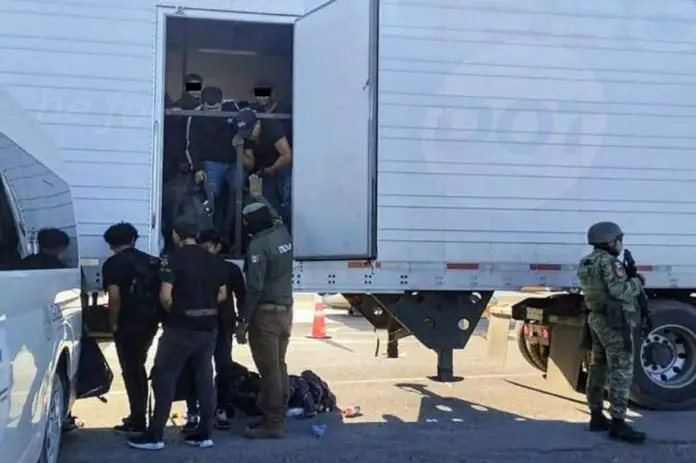
Undocumented migrants hiding in a tractor trailer near Ciudad Juárez, Chihuahua, being escorted out by Mexico's military and National Migration Institute. (Defensa)
In a 24-hour period last week, Mexican authorities found 331 undocumented migrants in two separate incidents.
On Thursday, Oaxaca state officials, the Mexican Navy and the National Guard carried out a raid on a property in the municipality of Juchitán de Zaragoza in the Isthmus of Tehuantepec where they found 74 migrants — including at least 19 minors — being held for ransom.
In the Oaxaca case, authorities arrested two people suspected of having kidnapped the undocumented migrants found in a house in the municipality of Juchitán de Zaragoza. (Oaxaca Attorney General’s Office)
The authorities apprehended two suspects found on the premises — both of whom were described as foreigners — on charges of kidnapping and extortion. An unspecified number of “high-caliber weapons” was also found and confiscated, according to the newspaper Milenio.
Oaxaca Government Secretary Jesús Romero López said the operation was carried out after authorities received an anonymous tip. Neighbors confirmed that armed men and a large number of vehicles were present in the area in the days before the rescue operation.
A day later on Friday, at a highway checkpoint in the northern state of Chihuahua, National Immigration Institute (INM) agents found a large number of migrants packed into two trailers.
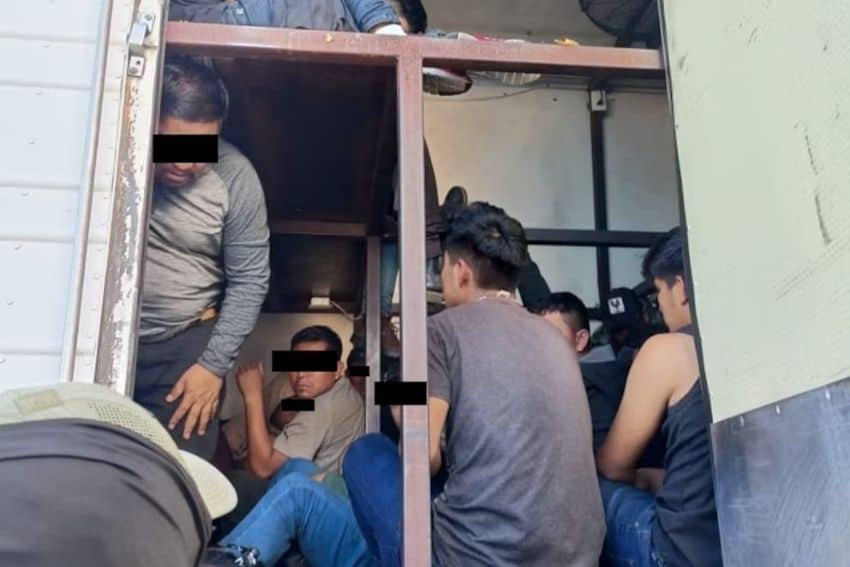
The INM notified the Defense Ministry, which set up a perimeter before moving in on the rig. The soldiers found 257 migrants who were packed into the twin trailers. Soldiers maintained control of the scene while INM agents processed the migrants to confirm their legal status.
The incident at the Sotelo de Juárez checkpoint just south of Ciudad Juárez occurred just two days after Chihuahua police rescued 27 migrants being held in a hotel. The migrants — many starving and dehydrated — were turned over to the INM.
These events occurred as migrants traversing Mexico are being forced to rethink their plans since Donald Trump won reelection as U.S. president on Nov. 5, after pledging to carry out large-scale deportations of undocumented migrants.
In the Chihuahua, a twin tractor-trailer truck was outfitted in order to stack over 250 undocumented migrants. (Defensa)
According to the news agency Reuters, a migrant caravan of about 3,000 people headed for the United States last week had shrunk to about 1,600 in a matter of days after Trump’s victory.
During his 2017–2021 term, Reuters reported, President Trump established “policies that left hundreds of thousands of migrants stranded in camps along the Mexican border, reshaping U.S. immigration politics.”
Current U.S. President Joe Biden adopted a program allowing migrants to seek asylum appointments before reaching the U.S. by using an app, but Trump has promised to end that program.
Despite the anticipated changes in policy, many migrants will keep traveling through Mexico with hopes of getting into the United States, activists say.
“People will seek new paths; it’ll be more dangerous, but it won’t stop them,” Heyman Vázquez, a Catholic priest and pro-migrant activist in Chiapas, told Reuters.
The newspaper El Financiero reported that the commencement of Sheinbaum's six-year term in October "injected optimism" into Mexicans in terms of their perception of the national economy. (Elizabeth Ruiz/Cuartoscuro)
Consumer confidence in Mexico hit a new record high in October, the first month of the six-year term of President Claudia Sheinbaum.
The national statistics agency INEGI reported Monday that the consumer confidence index (ICC) rose to 49.4 in October, an increase of 2 points compared to September and 3.4 points compared to the same month of 2023.
A score of 50 on the ICC represents an equal balance between optimism and pessimism.
The 49.4 score in October — calculated based on responses to a range of questions in the National Survey on Consumer Confidence (ENCO) — is the highest reading since the first ENCO was conducted in 2001.
The previous high was 48.5 in February 2019, three months into the six-year term of former president Andrés Manuel López Obrador. The month-over-month increase on the ICC in October was the highest since November 2021.
It appears likely that the swearing-in of Sheinbaum as Mexico’s first female president on Oct. 1 buoyed confidence.
The newspaper El Financiero reported that the commencement of her six-year term “injected optimism” into Mexicans in terms of their perception of the national economy and their own purchasing power.
ENCO results in detail
INEGI, in conjunction with the Bank of Mexico, conducted the ENCO at 2,336 homes in cities across all 32 federal entities during the first 20 days of October.
The survey asked respondents about:
Their current household economic situation compared to a year earlier.
Their expected household economic situation over the next 12 months.
Their opinion about Mexico’s current economic situation compared to 12 months earlier.
Their opinion about Mexico’s expected economic situation over the next 12 months.
Their current capacity to purchase furniture, a television, a washing machine and other home appliances compared to their capacity 12 months earlier.
Their responses — derived from the options of much better, better, the same, worse and much worse with regard to the first four questions, and greater, the same or lesser with respect to the fifth — were weighted and used to formulate the ICC score.
The annual increase in the national economic outlook sub-index was 7.4 points, even though economic growth in Mexico is forecast to continue to slow in 2025. (Moisés Pablo/Cuartoscuro)
The biggest driver of the month-over-month increase in consumer confidence was a jump of 4.2 points in the sub-index that measures people’s outlook for the Mexican economy over the next 12 months. The score for that sub-index rose to 55.4, indicating cautious optimism even though economic growth in Mexico is forecast to continue to slow in 2025.
The annual increase in the national economic outlook sub-index was 7.4 points.
The four other sub-indexes also increased in October compared to September and compared to a year earlier. Three of the five sub-indexes had scores above 50.
The highest sub-index score was a record-high 60.8 for the one that measures people’s opinions on their expected household economic situation over the next 12 months. The lowest sub-index score was 31.6 for the one that assesses people’s current capacity to make a home appliance purchase.
The survey also found that Mexicans were more optimistic in October than a month earlier about their capacity to save some of their income, go on a vacation in the next 12 months and buy a car (new or used) in the next two years.
What’s the outlook for consumer confidence?
The Monex financial group said in an analysis that “going forward, we don’t rule out a rebalancing in consumer confidence.”
It cited factors that could have both a positive and negative impact on confidence.
A decline in inflation and interest rate cuts could improve consumer confidence, while one factor that could cause it to deteriorate is an economic slowdown, Monex said.
The financial group also said that “the political agenda” in the United States during the second Trump presidency could have an impact on consumer confidence in Mexico.
Cold front No. 9 will move over Mexico’s northeast and east, bringing rainfall to 19 states between Tuesday and Thursday. (Margarito Pérez Retano/Cuartoscuro)
Parts of Mexico will see freezing temperatures, strong winds and rainfall as cold front No. 9 enters the country this week.
The National Meteorological Service (SMN) has forecast that the cold front will move over Mexico’s northeast and east, bringing rainfall between Tuesday and Thursday to the following states:
Heavy rainfall (25 to 55 millimeters): Chiapas, Jalisco and Quintana Roo.
Showers (5 to 25 millimeters): Colima, México state, Guerrero, Michoacán, Oaxaca, Tabasco and southern Veracruz.
Intervals of showers (0.1 to 5 mm): Baja California, Campeche, Coahuila, Nuevo León, San Luis Potosí, Sonora, Tamaulipas and Yucatán.
Meanwhile, parts of Oaxaca, Chihuahua, Coahuila, Durango, Nuevo León and Sonora will see dust devils and strong winds ranging between 50 and 70 kilometers per hour. Chiapas, the Gulf of California, Jalisco, Michoacán and Nayarit, may experience gusts of winds between 40 and 60 kilometers per hour.
Coastal areas in Baja California and Baja California Sur will potentially see waves ranging between one and three meters tall.
The SMN has warned that rainfall may lead to reduced visibility, landslides and flooding of rivers and streams. Weather authorities urged residents to follow the recommendations of Civil Protection officials, as strong winds may knock down trees and advertisements.
Northern and central Mexico will see temperatures drop to between -10 and 5 degrees Celsius this week with the arrival of cold front No. 9. (Graciela López/Cuartoscuro)
In addition to rainfall, parts of Mexico will see subzero temperatures while others will see maximum temperatures of 40 degrees Celsius.
Freezing temperatures are expected in the following states:
–10 to -5 degrees Celsius: High-altitude regions of Chihuahua and Durango.
-5 to 0 degrees Celsius: High-altitude regions of Baja California, Morelos, Puebla, Sonora and Tlaxcala.
0 to 5 degrees Celsius: High-altitude regions of Baja California Sur, Chiapas, Mexico City, Coahuila, México state, Hidalgo, Jalisco, Michoacán, Nuevo León, Oaxaca, Tamaulipas, Veracruz and Zacatecas.
In contrast, high temperatures are expected in the following regions:
35 to 40 degrees Celsius: Coastal areas of Chiapas, Colima, Guerrero, Jalisco, Michoacán, Nayarit, Oaxaca and Sinaloa.
30 to 35 degrees Celsius: Baja California Sur, Campeche, Coahuila, Quintana Roo, San Luis Potosí, Tabasco, Yucatán, and low-altitude areas of Sonora, Nuevo León, Morelos, Tamaulipas, Veracruz and Zacatecas.
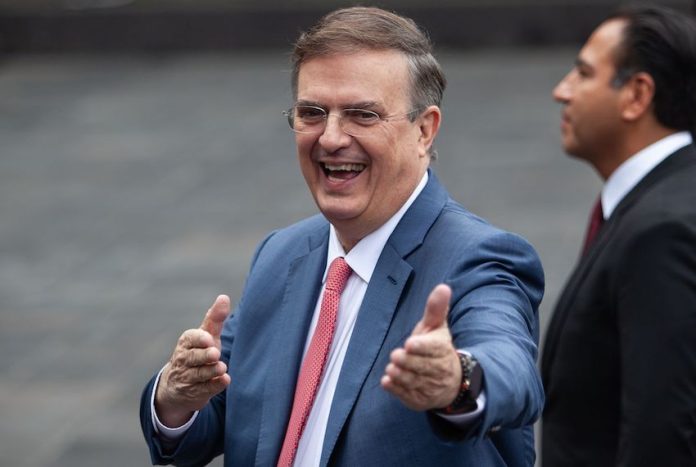
Economy Minister Marcelo Ebrard said Monday that Mexico would impose retaliatory tariffs on imports from the United States if the incoming Trump administration slaps tariffs on Mexican exports.
“If you put a 25% tariff on me, I’ll have to react with tariffs and I’m your main importer, together with Canada,” he said in an interview with Radio Fórmula.
ENTREVISTA Marcelo Ebrard (@m_ebrard) saca su ‘as bajo la manga’ ante amenazas comerciales de Trump: “Si nos ponen aranceles, vamos a poner aranceles, y eso tendrá un costo muy grande para su economía; somos su principal socio comercial”. #FórmulaNoticias con @lopezdorigapic.twitter.com/Rn5FasUxJd
“… And what does that lead you to? A gigantic cost for the North American economy,” Ebrard said.
His remarks came a week after Donald Trump pledged to “immediately” impose a 25% tariff on all Mexican exports to the United States if the government of Mexico doesn’t stop what he called an “onslaught” of criminals and drugs to the U.S.
Ebrard pointed out that Mexico is the United States’ top trade partner, and declared that the “first impact” of imposing tariffs on Mexican imports would be to “increase inflation” in the U.S.
He highlighted that Mexico exports a wide range of products to the United States and therefore tariffs wouldn’t just affect products made by the Mexican automotive industry but those produced by “many other” sectors as well.
Ebrard said that 25% tariffs on Mexican exports would cause prices in the United States to increase the day after they are imposed.
“I’m not talking about the medium term,” he said.
“This is an important limitation that has to be considered because we’re the No. 1 [trade] partner,” Ebrard said.
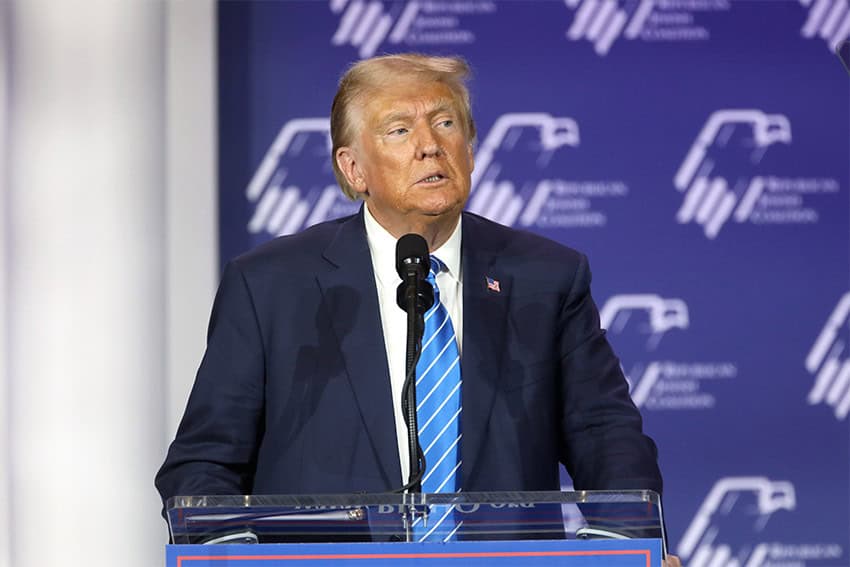
Donald Trump pledged to “immediately” impose a 25% tariff on all Mexican exports to the United States if the government of Mexico doesn’t stop what he called an “onslaught” of criminals and drugs to the U.S. (Gage Skidmore/CC BY-SA 2.0)
Trade between Mexico and the United States — which have tariff-free access to each other’s markets under the terms of the USMCA — accounted for a record-high 15.9% share of total U.S. trade between January and September.
Ebrard said that not even Trump’s “main promoters” would agree with imposing tariffs that would have such a large impact on the U.S. economy and consumers.
“That doesn’t mean that he can’t put them on the table, but structurally we have conditions to play in Mexico’s favor,” he said.
He said he told Ebrard, foreign affairs minister at the time, that the U.S. would impose a 25% tariff on all Mexican exports if Mexico didn’t agree to what he wanted.
During Trump’s first term as president, the two countries subsequently reached a deal that averted tariffs and resulted in Mexico deploying federal security force members to both its southern and northern border. (Damián Sánchez Jesús/Cuartoscuro)
“And he looked at me and said, ‘Sir, it would be an honor to have 28,000 soldiers on the border, it would be an honor to have Stay in Fricking Mexico,’ Trump said, referring to the United States policy that required migrants seeking asylum in the U.S. to remain in Mexico until their U.S. immigration court appearance.
“… I’ve never seen anybody fold like that; they said it would be an honor to have 28,000 free soldiers, and for two years we did, and that’s one of the reasons we had the best numbers in the history of the border. Thank you very much, Mexico,” he said.
Trump appears determined to exert the same sort of pressure on Mexico during his second term as U.S. president, saying the day before the U.S. presidential election that he would inform President Claudia Sheinbaum of his 25% tariff plan “on day one or sooner.”
He said his plan has “a 100% chance of working” because if the 25% tariff threat “doesn’t work,” he’ll increase it to 50%, 75% or even 100%.
Tonatiuh Guillén, head of Mexico’s National Immigration Institute (INM) for the first six months of former president Andrés Manuel López Obrador’s six-year term, told The New York Times last week that what Trump is proposing now is a new version of “the same increased pressures on Mexico.”
“Mexico gave in to the pressures back then, and the question is whether Mexico will give in again. I think the likelihood it will is high,” he said.
“Mexico gave in to the pressures back then, and the question is whether Mexico will give in again. I think the likelihood it will is high,” the ex-director of Mexico’s INM said in an interview with NYT. (Diego Simón Sánchez/Cuartoscuro)
Trump has also threatened to impose hefty tariffs on all vehicles made in Mexico, a move aimed at protecting the United States auto industry and dissuading Chinese automakers from attempting to enter the U.S. market via Mexico.
It remains to be seen whether he will follow through with his tariff threats, but they were a central part of his campaign rhetoric, and in his victory speech the president-elect said he would “govern by a simple motto: promises made, promises kept.”
The New York Times reported Tuesday that the consequences of U.S. tariffs on Mexico’s auto industry “would be profound, affecting the price in the United States of popular models like Ford Maverick pickups, Chevrolet Equinox sport-utility vehicles and several variations of Ram trucks.”
The Times also said the proposed tariffs “could severely disrupt suppliers” and “might also be a setback for the already slowing electric vehicle business.”