Home Blog Page 411

The doctor fighting dengue in Oaxaca

2
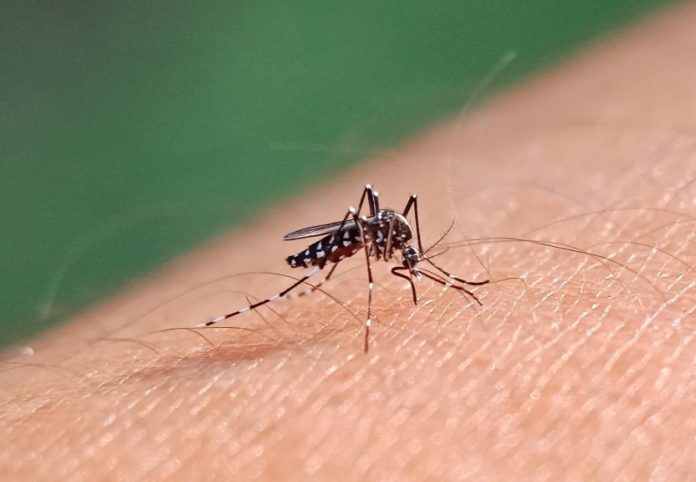
Dengue mosquito
Mexico's current dengue outbreak comes as part of the worst worldwide outbreak ever recorded. Doctors in Oaxaca are leading the fight to neutralize it. (Niny2405/Shutterstock)

Every morning at the Dr. Aurelio Valdivieso General Hospital in Oaxaca city, infectious disease specialist Dr. Yuri Roldán Aragón visits patients. They may not be aware that the doctor they speak to is a living figure in medical history: in 2009, Roldán treated Mexico’s patient zero for the H1N1 influenza virus, alerting the world to a disease that would eventually cause the swine flu pandemic.

Today, Roldán’s primary concern is to find a pharmaceutical that can help those who are experiencing severe symptoms with the dengue virus, as patients with hemorrhagic dengue are currently treated with the same medications as those with basic dengue, such as paracetamol.

Dr. Yuri Roldán. (Universidad Autónoma Benito Juárez de Oaxaca)

Dengue keeps breaking records 

According to the European Centre for Disease Prevention and Control, around 13 million dengue cases and over 8,500 dengue-related deaths have been reported worldwide since Jan. 1, 2024. Nearly 12 million of these cases have been reported in the Americas, almost double the number registered in the region in 2023, which itself was the worst year ever recorded for dengue worldwide.

The Pan American Health Organization (PAHO) issued an epidemiological notice in the first week of October, encouraging nations in the Americas to strengthen their dengue response strategies as cases spread throughout the continent. With 2024 expected to be a record year for incidence and the start of the dengue season in South America, PAHO emphasizes the importance of surveillance, early detection and adequate care in reducing severe cases and deaths.

Out of the over 11 million cases, 54 percent were lab confirmed, with 18.2 thousand of those affected having severe dengue, as stated in the epidemiological PAHO report of Oct. 4. In Mexico, 359,755 dengue cases were registered by the Health Ministry (SSa) between weeks one and forty of 2024. Most patients are cured within one to two weeks. Severe headaches, eye pain, articular and muscle pain and rashes are among the symptoms, which can range from moderate to severe and incapacitating. Symptoms often occur three to seven days following an infected mosquito bite. According to the journal of the Mexican School of Public Health (ESPM), 75 percent of people affected show no symptoms. 

As stated by Yuri Roldán, the number of dengue cases started to grow in September of last year— he himself became sick. Much to his surprise, cases did not decline during the winter, as usually happens each year. The temperature did not drop enough to kill the disease-carrying insects, a reality which Roldán attributes directly to climate change.

Public health anti-dengue campaign
Public health workers in 2023, at the time the worst year for dengue on record. (Damián Sanchez/Cuartoscuro)

Last winter and spring were likewise marked by a long period of severe drought. During the dry season, many people began storing water in containers inside their homes, creating a breeding habitat for mosquito larvae.

Given the increase in incidence and the prevalence of all four dengue strains in parts of the country, Roldán is particularly interested in finding a medicine to treat patients who are already ill, especially now that the DENV-3 strain has reemerged in Mexico after a decade.

According to the Health Ministry, comorbidities such as prior infections with another dengue strain, pregnancy or conditions such as diabetes, asthma, hypertension and kidney disease may cause the disease to progress to severe dengue.

Understanding the uniqueness of dengue 

Dengue infection can be more or less severe depending on which serotype, or strain, a person is infected with. According to Yuri  Roldán, one of the distinctive features of dengue is that if a person is bitten today by serotype 1, they would contract the disease, become resistant to it for the rest of their life and be protected against the other serotypes for a limited time.

Over time, however, these antibodies, which initially provided cross-protection against other serotypes, recognize the new virus serotype as a relative. Rather than helping to neutralize it, they promote its infiltration and reproduction, resulting in the production of more viruses and the onset of inflammation, thereby worsening the disease.

Roldán is exploring immunomodulatory medicines in order to find a medication to control the inflammation that patients experience.

Box of Dengvaxia vaccine, in background person's hands holding vials of the vaccine
Dengvaxia was first introduced in 2015. (McGill Journal of Global Health)

Dengvaxia, developed by the Sanofi Pasteur laboratory in France, is now the only vaccine approved in Mexico to prevent infection with all four dengue strains, or serotypes. The main disadvantage of this vaccine is that it can only be safely provided to people aged nine to 45 who have already contracted dengue. Because of these guidelines, it is not provided for free to the entire population of Mexico: it is only available through the private sector and costs $2,700 pesos each treatment, with three doses required. 

Qdenga, also known as TAK-003, manufactured by Japanese laboratory Takeda, is another dengue vaccine that protects against all four serotypes. It is not currently accessible in Mexico, however, as it is awaiting approval from Cofepris, the federal health regulator.

Cooperation across countries is crucial in addressing epidemics and pandemics, with doctors from various countries working together to discover treatments. The Mexican Emerging Infectious Disease Clinical Research Network (LaRed), to which  Roldán belongs, is an example of this. “We are preparing for any future infectious diseases that we may encounter,” the epidemiologist says.

Social anthropologist and photojournalist Ena Aguilar Peláez writes on health, culture, rights, and the environment, with a strong interest in intercultural interactions and historical and cultural settings.


The All-Terrain Gringa

0
Sarah DeVries as a truck
Living in Mexico requires you to be versatile, and enjoy its many facets. (Canva)

There’s something they don’t really tell you about the joys of being an outsider: you can fit in everywhere precisely because you don’t fit it anywhere. 

There’s something liberating about realizing this and knowing that no matter where you go, people might look at you as if you were a dog that suddenly started speaking. If you expect it, you can ignore it, which is a good way to not have a bunch of feelings about it.

Sarah DeVries as a talking dog
How Mexicans see Sarah DeVries. Allegedly. (Canva)

I thought about this a couple of weeks ago as I was running a bunch of errands with my partner. The first stop was Liverpool for some dress clothes. We were headed to a wedding that weekend!

Liverpool is a popular department store, and it’s pretty fancy. It always seemed a little pretentious to me, actually. Who do they think they are, selling a simple tablecloth for 3000 pesos? I mean, really. Sometimes just to tease, I call it “charco de agua” — puddle of water. Get it? The actual Liverpool, I hear, is a pretty unpretentious place.

In general, businesses that give themselves English names to sound fancier crack me up, especially when the spelling or punctuation is wrong. Did you know that in downtown Xalapa, for example, you can grab a slice of pizza at the Pizza Shoop? Afterwards you might want to do some shopping at a Gift’s Shop. Gold!

A name in English doesn’t mean you’ll necessarily be able to make yourself invisible, though. But that’s okay. Sometimes it’s just quite nice to walk through a perfectly clean and well-lit environment with free, four-star bathrooms. Sears here is equally fancy. It, along with several other American companies, has successfully reinvented itself into a solid upper-middle class establishment in Mexico. When you need to feel like you’re in the United States for a bit, actually, I suggest a stroll through the mall! There’s no shame in it; sometimes we just need a little break from the urban jungle.

Sears and the Angel of Independence
Sears, it’s fancy here. (Sears)

After spending some time surrounded by 2500 peso polo shirts, we went to a downtown Veracruz market. This is the urban jungle I speak of.

We were on the hunt for, among other things, a catrina dress for my daughter’s Day of the Dead school play. If you took a view from the middle of the street in this market, you’d see that store fronts are completely covered by the various stands. What stores are behind them? Well, you’ll have to traipse through the market tunnels to find out! Everything is dusty, and old, loud buses barrel down the road.

As you walk along through the tunnels, merchants speak to you. Pretty much all of them. “Feel free to look, there’s no commitment.” Sometimes, they’ll simply start providing you with a running list of their wares. A mere “gracias” as you continue on your way will suffice, and in Veracruz, they seem perfectly happy with it even if you don’t stop to buy something. “Okay, have a good day!” many will shout after you.

One of the most striking things about Mexico to me is the variety of environments you might find yourself in, many as different as night and day. You might have breakfast sitting on a gritty bench at a market with strangers. The tablecloth will be plastic, and the cook, waiter, and cashier are all the same person. Only cash is accepted, but the food is usually very good and very cheap.

For lunch, you might find yourself at a fancy restaurant with air conditioning and a play area, each table with a QR code you must use to look at the menu on your phone. Whichever you choose might just depend on which “Mexico” you feel like visiting that day. 

There are seemingly an infinite number of environments. Explore them all! Unless it’s explicitly made for tourists, it all counts as “the real Mexico.” 

Sarah DeVries is a writer and translator based in Xalapa, Veracruz. She can be reached through her website, https://sarahedevries.substack.com/ 

Mexican auto sector’s trade surplus with the US is bigger than ever

0
Hands grip the wheel of a Ford car as it drives down a highway
In just the first nine months of 2024, Mexico's auto sector trade surplus with the U.S. was US $104 billion. (Fancey Media/Shutterstock)

The Mexican auto sector enjoyed a significant advantage in balance of trade with its U.S. counterpart during the first nine months of 2024, setting a new trade surplus record in the process.

For the first time ever during the first three-quarters of a calendar year, Mexico’s auto sector trade surplus with the United States surpassed US $100 billion.

From January to September this year, Mexico exported nearly US $137.1 billion dollars worth of automotive goods to the United States, while receiving back auto products valuing just $33.1 billion. The result is a startling $104 billion trade surplus for Mexico.

The Mexican auto sector has enjoyed a steady increase in balance of trade with the United States since 2014 when the trade surplus in the sector was US $46 billion ($72 billion in exports versus nearly $26 billion in imports).

So while Mexico’s auto industry exports to the U.S. have nearly doubled in the past 10 years, sector imports from the U.S. have only increased by 30%. However, the American Automotive Policy Council (AAPC) insisted the trade figures underestimate the amount of U.S. content in Mexican exports, according to the newspaper El Economista.

While the AAPC recognized that Mexican imports have increased, it didn’t see the “official” trade imbalance as a cause for alarm.

A red Chevy Silverado pickup truck in a productin line inside a factory
Mexico’s auto exports to the U.S. have surged over the past decade. (Guanajuato Puerto Interior)

The AAPC pointed out that the US-Mexico-Canada trade agreement (USMCA) — signed in 2020 — increased the regional value content from 62.5% to 75%. This requirement suggests the real trade deficit is substantially lower, it said.

Protectionism concerns

While touting the trade figures, Mexico’s auto sector remains wary of the steps Donald Trump might take when he takes over as U.S. president in January.

The Mexican Automotive Industry Association (AMIA) has urged the Mexican government to prepare to defend the sector against any protectionist measures Trump may take.

“It is imperative that we pay attention to Trump’s public policy proposals and take the necessary actions” to protect the USMCA, AMIA president Odracir Barquera told the newspaper El Sol de México.

Barquera said Mexico is an essential part of the North American supply chain and the United States needs Mexico to compete with China and Asian producers.

According to the AMIA, North America currently produces 17% of all vehicles made in the world, trailing Asian carmakers, which make 55%. At the same time Mexico is the world’s No. 7 producer of light vehicles and is poised to climb past South Korea to No. 6 by the end of this year.

On the topic of the upcoming USCMA revision process, “we trust the Economy Ministry to adequately represent our interests and maintain an open dialogue with the auto industry,” Barquera said.

Barquera said that though he didn’t anticipate wholesale revisions, Trump’s campaign promises and the precedent he set during his first term in office (when he imposed tariffs on imported steel) has forced the AMIA to be ready for any possibility.

With reports from El Economista and El Sol de México

Sheinbaum reacts to Trump’s ‘border czar’ appointment: Monday’s mañanera recapped

47
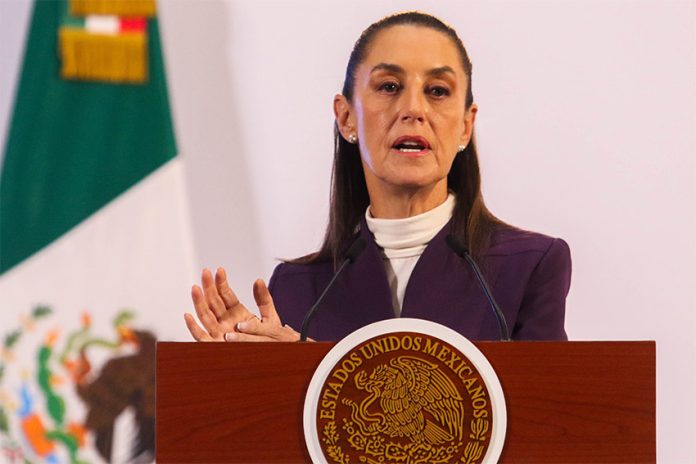
President Claudia Sheinbaum speaks at a microphone
At her Monday morning press conference, Sheinbaum pledged to defend Mexicans in the U.S. (Victoria Valtierra/Cuartoscuro)

After visiting the states of Durango and Zacatecas on the weekend, President Claudia Sheinbaum was back at the National Palace in Mexico City on Monday for another morning press conference, or mañanera.

Among the questions she received from reporters was one on a political appointment announced by Donald Trump on his social media site Truth Social, and one on a ruthless attack in Querétaro city that claimed 10 lives on Saturday night.

Sheinbaum reacts to Trump’s ‘border czar’ announcement 

Early in her Q&A session with reporters, Sheinbaum was asked about United States’ President-elect Trump’s announcement on Sunday that former acting director of the U.S. Immigration and Customs Enforcement Thomas Homan would be his “border czar.”

“We’re going to seek to get in contact with President Trump’s transition team,” she responded.

“… We’re always going to defend the Mexicans on the other side of the border,” Sheinbaum said, noting that they’re “necessary for the United States economy.”

Homan, one of the architects of the first Trump administration’s family separation policy, said in a 60 Minutes interview in October that deportations during the second Trump administration wouldn’t be “a mass sweep of neighborhoods” to detain undocumented immigrants in the United States, among whom are millions of Mexicans.

Trump's newly appointed 'border czar' Tom Homan speaks at a microphone
U.S. President-elect Trump said that once he assumed office, former acting director of U.S. Immigration and Customs Enforcement Tom Homan would be in charge of that country’s borders. (Gage Skidmore/Flickr)

“It’s not going to be building concentration camps. I’ve read it all. It’s ridiculous. It’ll be concentrated. They’ll be targeted arrests,” he said.

Asked whether there was a way to carry out mass deportations without separating families, Homan responded:

“Of course there is. Families can be deported together.”

Querétaro bar attack targeted ‘one person,’ president says 

Sheinbaum confirmed that one person was arrested after 10 people were killed at a bar in Querétaro city on Saturday night.

She also said that the aggressors were “going for one person,” but didn’t provide additional details.

Media reports citing federal officials said that the target of the attack was Fernando González Núñez, a presumed Jalisco New Generation Cartel (CJNG) member known as La Flaca. The CJNG has been fighting the Santa Rosa de Lima Cartel in Guanajuato — which borders Querétaro — for years.

Sheinbaum said that federal Security Minister Omar García Harfuch contacted Querétaro authorities immediately after the attack on Saturday night to determine what federal support they required.

She also said that members of the federal government’s security cabinet will attend her press conference on Tuesday and provide more information about the massacre in the usually peaceful city of Querétaro.

By Mexico News Daily chief staff writer Peter Davies (peter.davies@mexiconewsdaily.com)

Over 1,000 mariachis gather in Mexico City to break world record

2
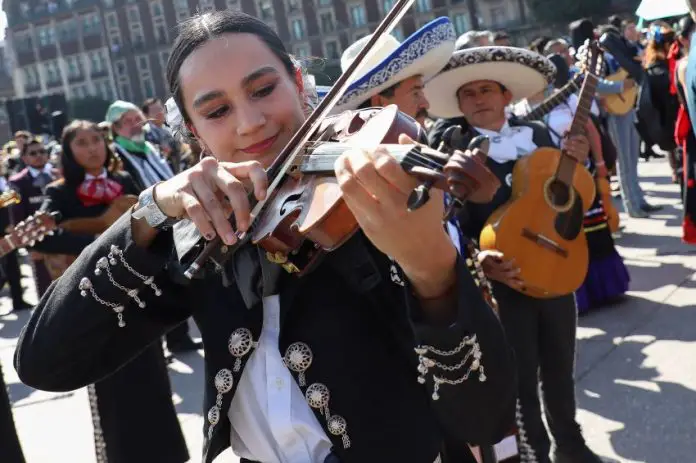
A woman in a mariachi outfit plays the violin, surrounded by other mariachi musicians as they attempt to break the Guinness World Record for largest performance
The Zócalo gathering sought to break the world record for largest mariachi performance, set in Guadalajara in 2013. (Daniel Augusto/Cuartoscuro)

On Sunday, over 1,000 mariachi musicians gathered in Mexico City’s Zócalo seeking to break the Guinness World Record for the most mariachis playing simultaneously.

The event, which marked the closure ceremony of the city’s first International Mariachi Congress, gathered over 1,000 mariachis from different cities across the country at Mexico City’s Constitution Plaza, also known as the Zócalo.

The previous record of 700 mariachis was set at a 2013 gathering in Guadalajara, the capital city of Jalisco and birthplace of mariachi music. After event organizers submit evidence, it takes Guinness World Records 12 weeks on average to officially confirm a new record.

Playing trumpets, violins and other traditional instruments, the mariachis opened the gathering by playing “El Son de la Negra,” by Mexican composer Blas Galindo in unison.

However, according to news outlet Infobae, it was their performance of “Cielito Lindo” that sought to break the Guinness World Record. To end the lively music display, the entire ensemble played “El Rey.”

An event to preserve and honor mariachi music

In interviews with local media, musicians praised the first edition of the International Mariachi Congress, which aimed to promote Mexico’s iconic music genre among new generations, who some musicians said are losing interest in ranchero music.

“It is important to rescue our music and not let it die,” Alejandro Hernández, a young mariachi musician, told the local newspaper El Sol de México.

Jesús Morales Castro, the main violinist of the mariachi group of the Autonomous University of the State of Hidalgo (UAEH), said that it is an honor to represent Mexico through its music and to safeguard the genre.

Women mariachis also played at the assembly.

Though mariachi groups were originally a male-only genre,female mariachi groups began to appear in the 1950s, the same decade when Mexican women were able to vote for the first time.

“We feel proud that we broke (the record). It is an honor because we are Mexicans,” Aida Juárez, a female mariachi with 20 years of experience, told the Associated Press.

The first edition of the International Mariachi Congress was organized by the Mexico City Chamber of Commerce (Canaco CDMX) in collaboration with the Society of Authors and Composers of Mexico, the Ministry of Culture and the Mexican Union of Mariachis.

César Cravioto, Mexico City’s Governance Minister, said that local authorities, mariachis and business owners will attempt to break the record again next year.

With reports from Infobae, El Sol de México and Associated Press

Virgin Atlantic to launch London-Cancún flight from Heathrow

0
View of the tail of a Virgin Atlantic plane.
The new route will enhance connectivity for passengers traveling from the British capital to Latin America. (Virgin Atlantic/Facebook)

British airline Virgin Atlantic will resume direct flights between Cancún and London for the first time since 2019, the company announced in a statement.     

Starting on Oct. 19, 2025, Virgin Atlantic will operate the flight three times per week from London Heathrow (LHR) on Wednesdays, Fridays and Sundays during the winter season. 

The carrier emphasized that the new route will enhance connectivity for passengers traveling from the British capital to Cancún, thanks to codeshare partner LATAM and SkyTeam partner Aeroméxico. The partnership will increase access to various destinations in Latin America, including capital cities like Mexico City, Santiago (Chile), Buenos Aires (Argentina) and Lima (Perú).  

The route will be operated on the Airbus A350, featuring 16 Upper Class, 56 Premium and 325 Economy seats. 

Quintana Roo Governor Mara Lezama reacted to the announcement by saying, “This triumph in tourism will bring more shared prosperity … and will also position Quintana Roo as one of the preferred destinations in the world.”

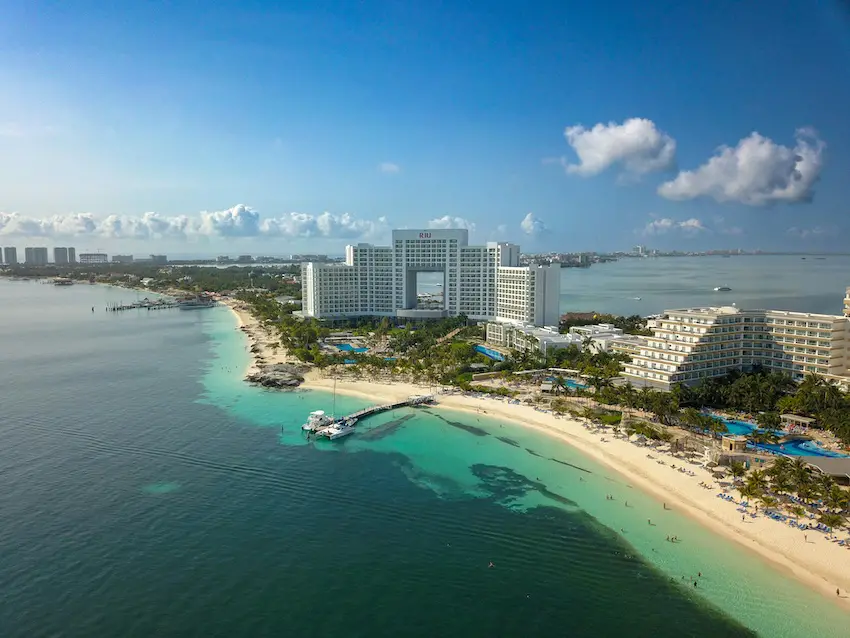
Panoramic view of Cancún's beaches.
The new flight results from negotiations between Virgin Atlantic and Mexican officials during the World Travel Market 2024. (Mylo Kayes/Pexels)

Juha Jarvinen, Chief Commercial Officer at Virgin Atlantic, also praised the agreement: “We’re delighted to be returning to Cancún, offering customers a new destination for some winter sun,” Jarvinen stated. “We can’t wait for more of our customers to enjoy Virgin Atlantic’s trademark fiesta and flair on their way to Mexico.” 

More airlines to offer nonstop service to Cancún

According to Bernardo Cueto, Quintana Roo’s tourism minister, the new route results from negotiations between Virgin Atlantic and Mexican officials during the World Travel Market 2024, which took place in London from Nov. 5-7.  

Mexican media have reported that local officials reached other agreements with airlines, including British Airways, Virgin Atlantic, Qatar Airways and Iberojet, to boost direct connectivity to the Mexican Caribbean. 

The new route will be the only nonstop service between LHR and Cancún. British Airways currently serves Cancún on a seasonal basis from London Gatwick Airport.

Cancún is one of Latin America’s most visited destinations. In 2023, the beach resort city saw 32.7 million visitors, up 7.9% compared to 2022. According to official data, last year was Cancún’s best-performing year since the city’s foundation 53 years ago.

With reports from Aviation Week, AviationA2Z and Excelsior

Mercado Libre to invest US $2.5B in Mexico in 2025

0
A delivery person in a yellow shirt holds a brown package with the Mercado Libre logo
The recent announcement is Mercado Libre's second multi-billion-dollar investment pledge this year. (Mercado Libre/X)

Mercado Libre, Latin America’s e-commerce and financial services giant, announced plans on Thursday to invest US $2.5 billion in its Mexico operations this year and next, marking its largest-ever expenditure in the country.

The move comes just eight months after a separate pledge from the company to invest $2.45 billion in Mexico in 2024, highlighting the firm’s strong position in the Mexican market.

President Claudia Sheinbaum met with Mercado Libre founder and director Marcos Galperin and his team at the National Palace, accompanied by Economy Minister Marcelo Ebrard and the governor of Hidalgo, Julio Menchaca.

Sheinbaum shared news of the meeting in a post on Facebook, saying, “We are promoting a process of digitalization to encourage investment in Mexico.”

MercadoLibre, Inc. (MELI), founded in 1999, is an Argentine company headquartered in Montevideo, Uruguay. It has become Latin America’s largest e-commerce site and Mexico is its second-largest market.

During the meeting, Ebrard said that the platform is the “most important in Mexico,” and emphasized that the investment in 2025 will be higher than that of 2024.

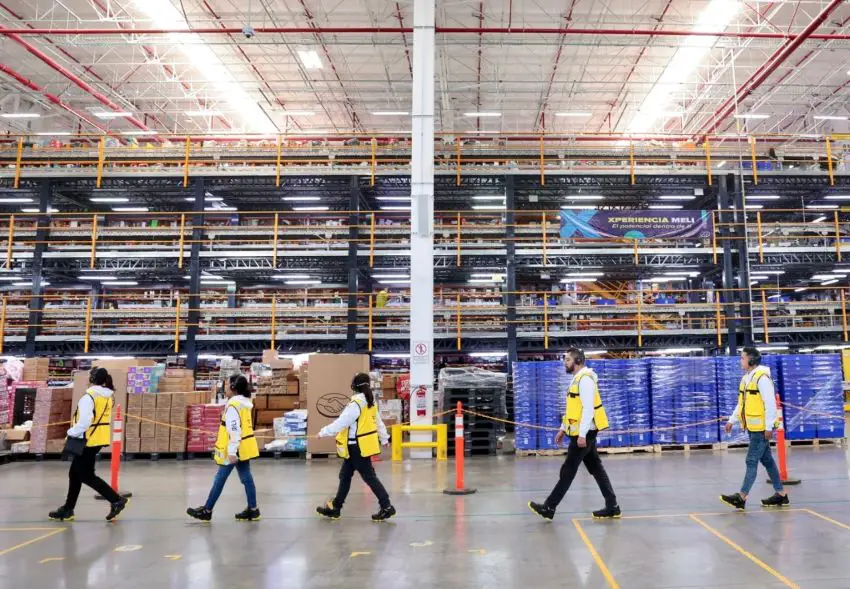
Mercado Libre employees walk in front of tall shelves in a warehouse
The record investment is destined for Mercado Libre’s distribution center in Hidalgo. (Mercado Libre/X)

“The investment for the next year is estimated to exceed US $2.5 billion,” Ebrard said,  a record figure that demonstrates the company’s commitment to the Mexican market.

The new investment will support the expansion of the firm’s logistics center in Hidalgo.

“In the state of Hidalgo alone there will be 7,000 [new] employees,” Ebrard said.

Mercado Libre’s investment in the Mexican market has been growing steadily year on year, after a $1.5 billion investment in 2022 and a further $1.6 billion in 2023. The company is Mexico’s largest online retailer, holding a 15.4% market share in 2023, compared to Amazon’s 11.2% share.

The company also has a growing electronic payment system, Mercado Pago, which helps consumers make secure transactions both on and outside of the platform.

In Mexico, Mercado Libre has five planes currently in operation and employs over 30,000 people in its distribution centers and various local operations. The firm is now building new facilities in Querétaro, Hidalgo and other key areas.

The expansion of its logistics sector is expected to help improve delivery times and boost customer satisfaction, as well as make small and medium businesses more competitive in e-commerce.

According to the company, over 26 million unique sellers use Mercado Libre to sell their products in Mexico. The Mexican site received around 576 million visits in 2022, making it one of the country’s most-visited websites, Merca20 reported.

With reports from Merca20, Milenio and El Universal Hidalgo

Study: Mexicans more likely to migrate to US following extreme weather events

3
Climate change is a big factor in Mexicans' decisions to migrate to the United States, according to a new comprehensive study
For their study, the researchers examined data from 48,313 people in 84 Mexican farming communities from 1992 to 2018. They focused on some 3,700 individuals who crossed the border without documents for the first time, and why they made the decision to do so. (Isabel Mateos/Cuartoscuro)

Extreme weather and worsening drought conditions are driving migration between Mexico and the United States, according to new research published in the Proceedings of the National Academy of Sciences (PNAS). 

The study links climate change with increased undocumented crossings from agricultural regions in Mexico — where drought has escalated in recent years — and suggests that more Mexicans will risk an illegal crossing as droughts, storms and other hardships persist.

Rows of cilantro on a farm in Puebla
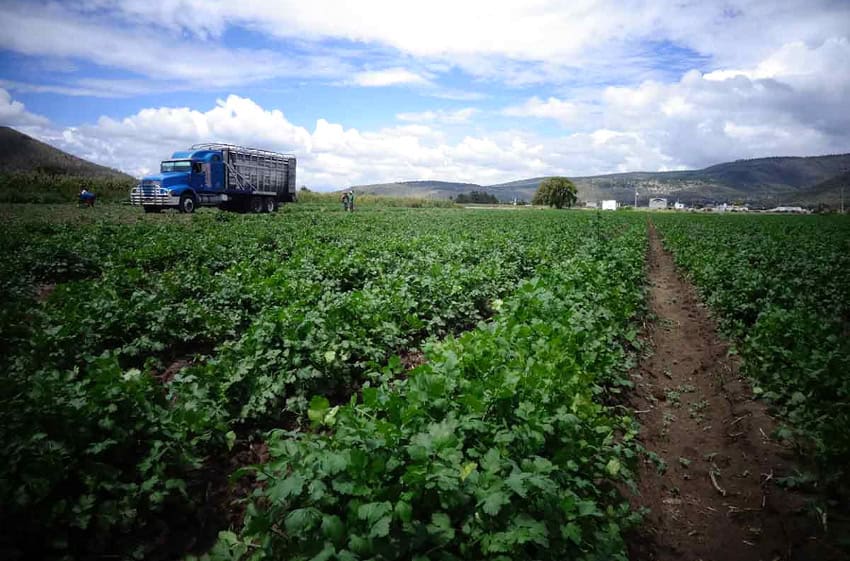
In June, drought, extreme heat and hail storms all contributed to crop failures in major cilantro-producing states, including Puebla and Hidalgo. (Senasica)

Migration “is not a decision that people take up lightly … and yet they’re being forced to make it more, and they’re being forced to stay longer in the United States” as a result of weather extremes, said Filiz Garip, co-author of the study and a Princeton professor of sociology and international affairs.

The new research was published the same week that Republican Donald Trump was elected to serve a second term as president of the United States. Trump has called climate change a “hoax” and promised mass deportations of an estimated 11 million people in the U.S. illegally.

For their study, the researchers examined data from 48,313 people in 84 Mexican farming communities from 1992 to 2018. They focused on some 3,700 individuals who crossed the border without documents for the first time, and why they made the decision to do so.

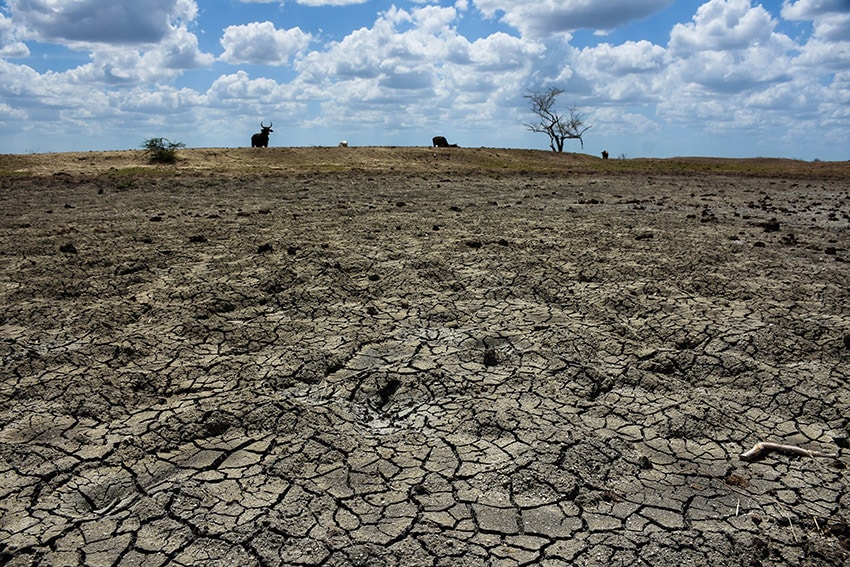
Findings reveal that communities experiencing drought had higher migration rates compared to communities with normal rainfall. And people were less likely to return to Mexico if drought and extreme weather had persisted in their communities.

Among the communities studied, the most common crop was corn, which is particularly reliant on rainfall and temperatures.

The study’s findings reveal that farming communities experiencing drought had higher migration rates compared to communities with normal rainfall. (Wikimedia Commons)

Globally, 143 million people are likely to be uprooted over the next 30 years by rising seas, drought, searing temperatures and other climate catastrophes, according to a U.N. Intergovernmental Panel on Climate Change report.

Hélène Benveniste, a professor in Stanford University’s Department of Environmental Social Sciences, said the new study provides community-specific data that’s “rarely available” on such a large scale. She also praised how the report examined a person’s full migration journey, including their return.

The finding that return migration decisions were delayed by weather stress in origin communities is “important and novel,” said Benveniste, who studies climate-related human migration and was not involved in the study. “Few datasets enable an analysis of this question.”

Increased surveillance and enforcement along the U.S.-Mexico border make returning home — and moving back and forth — more difficult, pointed out Michael Méndez, assistant professor of environmental policy and planning at the University of California, Irvine.

“So much of our focus has been, in a way, on the border and securing the border,” added Kerilyn Schewel, co-director of Duke University’s Program on Climate, Resilience and Mobility. “But we need much more attention to not only the reasons why people are leaving, but also the demand for immigrant workers within the U.S.”

https://cuartoscuro.com/fotos/individual/935909/234485
Annual mean temperatures in Mexico have risen by 0.6° Celsius since 1960 and are projected to climb by up to 3° Celsius by 2060, according to the study. (Michael Balam/Cuartoscuro.com)

In Mexico, the ongoing drought has threatened livelihoods and food security.  This year’s drought has seen record-low rainfall and unprecedented heat.

Annual mean temperatures in Mexico have risen by 0.6° Celsius since 1960 and are projected to climb by up to 3° Celsius by 2060, according to the study.

Water scarcity concerns in Mexico remain even after a rainy summer. And the extreme conditions are not just impacting farmers; earlier this year, media outlets reported that Mexico City could reach a “Day Zero” in a matter of months due to over-extracted groundwater and historically low reservoir levels.

Earlier this year, a number of dams were below 20% capacity, endangering crops like corn and sorghum. Coffee beans were also at risk due to drought. And in the Yucatan Peninsula, drought was impacting plants and animals, leaving dry stretches of lagoons and wetlands, according to the NADM.

With reports from Associated Press, France 24 and The Hill

Navy rear admiral murdered in port of Manzanillo

3
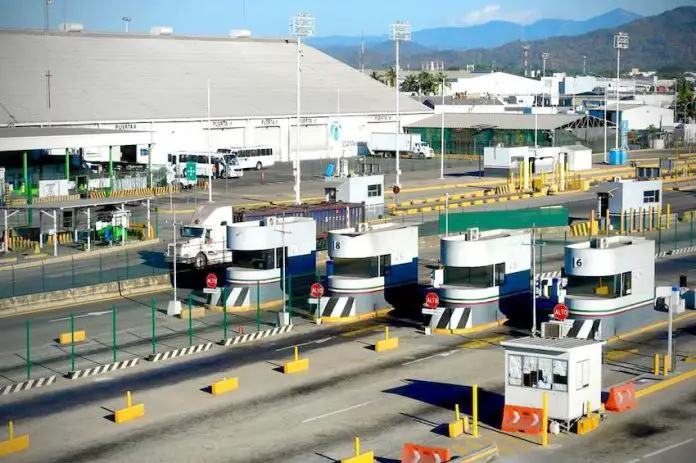
Port of Manzanillo, Colima
Gunmen on a motorcycle shot Rear Admiral Fernando Rubén Guerrero Alcántar as he traveled in his own private vehicle along Avenida Lázaro Cárdenas in Manzanillo on Friday morning. (Cuartoscuro)

A high-ranking member of Mexico’s navy was killed in the port city of Manzanillo, Colima, on Friday.

Gunmen on a motorcycle shot Rear Admiral Fernando Rubén Guerrero Alcántar as he traveled in his own private vehicle along Avenida Lázaro Cárdenas, a seafront boulevard in Manzanillo, home to Mexico’s largest port.

Rear Admiral Fernando Rubén Guerrero Alcántar died in his SUV of gunshot wounds.
Rear Admiral Fernando Rubén Guerrero Alcántar died in his SUV of gunshot wounds. (X)

Guerrero, who died inside his SUV, was not in uniform at the time of the attack, according to sources cited by the newspaper Reforma.

The Associated Press reported that he would be one of the highest-ranking military officers to be killed in Mexico since 2013, when a vice admiral was murdered in Michoacán.

No arrests were reported after the murder, which occurred at around 11:30 a.m. Friday.

Mexico’s Naval Ministry (SEMAR) said in a statement that it “deeply” regretted the death of one of its members.

SEMAR also sent condolences to the family, friends and colleagues of the fallen officer.

“At this painful time, [the Ministry] will provide all necessary support to his loved ones and will collaborate with authorities to clear up the events,” SEMAR said.

The small Pacific coast state of Colima was Mexico’s most violent state in 2023 in terms of murders per capita.

Criminal control of the port of Manzanillo — a major entry point for fentanyl precursor chemicals from China — is highly coveted by crime groups, as are trafficking routes that run north and northeast from the Pacific coast state. The navy controls maritime customs offices at Mexican ports, and frequently seizes narcotics on land and at sea.

Guerrero’s murder came 10 days after two navy personnel were attacked in Manzanillo, one of whom was killed, and three days after a member of the navy was murdered in Iguala, Guerrero.

Another member of the navy was killed in Manzanillo in August.

With reports from Reforma, El Universal and AP

Are Mexican brownies better than the original?

4
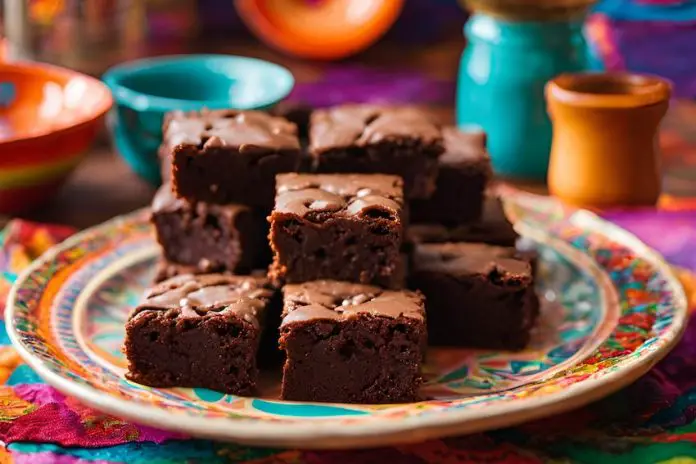
Mexican brownies
Mexican Brownies. Now with added chile. (Canva)

When I think “brownies,” I don’t think “Mexican” first. I think of little girls in cute brown uniforms, with brown beanies atop their heads… Or I think of those luscious, decadent, fattening, melt-in-your-mouth chocolatey, culinary delights that I can’t get enough of! But from where did these tasty morsels originate?

They are American, dating back to 1893, Chicago, when a wealthy socialite by
the name of Bertha Palmer asked the chef at the Palmer House Hotel to invent a
dessert that kids could put in their boxed lunches when they attended the Chicago
World’s Fair. (Bertha’s husband, Potter, built the hotel in 1871 and gave it to his wife as
a wedding present.) The original product was dense, fudgy, filled with walnuts and
topped by an apricot glaze.

We’ve covered a few all-American treats in this column, but the brownie must be amongst the most iconic. (Toa Heftiba/Unsplash)

But let’s not leave Bangor out of the mix. The story goes that a housewife in
Bangor, Maine, attempted to make a chocolate cake but forgot the baking powder, resulting in an unleavened, rich, chocolatey concoction that became known as “Bangor
Brownies.” The recipe first appeared in the Boston Globe, 1905.

Brownies may have been popular back then, but they didn’t take off until
chocolate became more accessible in the U.S. in the ‘20s and afterward, they started to
make their way south-of-the-border, but with a few twists.

As we know, Mexicans like to spice things up a bit and that even applies to their
chocolate, which may be infused with cinnamon and a hint of cayenne pepper, which
adds warmth and depth of flavor — a mix of sweet and spicy — which Mexicans love!

So might we say that Mexican brownies are better than the ones we grew up
with? Make a couple of batches and then you decide. The Mexican brownie recipe included here is from Aaron Sanchez and is considered one of the best. Nothing is changed. Disfruta!

Aaron Sanchez’s Mexican Brownie Recipe

(Chef Aaron Sánchez/Instagram)

Ingredients:

  • 2 sticks (1 Cup) (227 g) unsalted butter, plus more for greasing baking dish
    (mantequilla san sal)
  • 2 Cups (400 g) granulated sugar (azúcar estándar)
  • 4 large eggs (huevos)
  • 2 tsp. (8.4 g) vanilla extract* (extracto de vainilla)
    * Mexican brands noted for intense flavor: Villa Vainilla; Vainilla Totonac’s; Molina
    Vainilla
    ⅔ Cup (65 g) unsweetened cocoa powder (cacao en polvo sin azúcar)
  • 1 Cup (120 g) all-purpose flour*
    * Use only American flour, which may be ordered online.
  • 1 tsp. (4 g) ground Mexican cinnamon (canela)
    ¼ tsp. (0.45 g) cayenne pepper (pimienta de cayena) or piquin chili powder
    (chile piquín en polvo)
  • ½ tsp. (1.5 g) kosher salt (sal kosher) or any large-grain salt.
  • ½ tsp. (2.4 g) baking powder (polvo para hornear)

Instructions:

First:

  • Preheat your oven to 350°F (175°C).
  • Grease a 9×13-inch baking dish with butter.
  • Line dish with parchment paper for easy removal (leaving a little paper to hang over
    opposite ends to act as handles).

Next:

  • In a medium saucepan, melt butter over medium-low heat. Remove from heat and let cool slightly.
  • sugar, eggs, and vanilla until well combined.
  • In another bowl, mix cocoa powder, flour, cinnamon, cayenne pepper, salt, and baking
    powder together until well combined,stirring until just combined.
  • Pour the brownie batter into the prepared baking dish and smooth it out evenly.
  • Bake for 25 to 30 minutes or until a toothpick inserted in the center comes out with a
    few moist crumbs.
  • Allow the brownies to cool in the pan for about 20 minutes before lifting them out using
    the parchment paper. Slice into squares and enjoy!

Disfruta!

Deborah McCoy is the one-time author of mainstream, bridal-reference books who has
turned her attention to food, particularly sweets, desserts and fruits. She is the founder
of CakeChatter™ on FaceBook and X (Twitter), and the author of four baking books for
“Dough Punchers” (available @amazon.com). She is also the president of The
American Academy of Wedding Professionals™ (aa-wp.com).