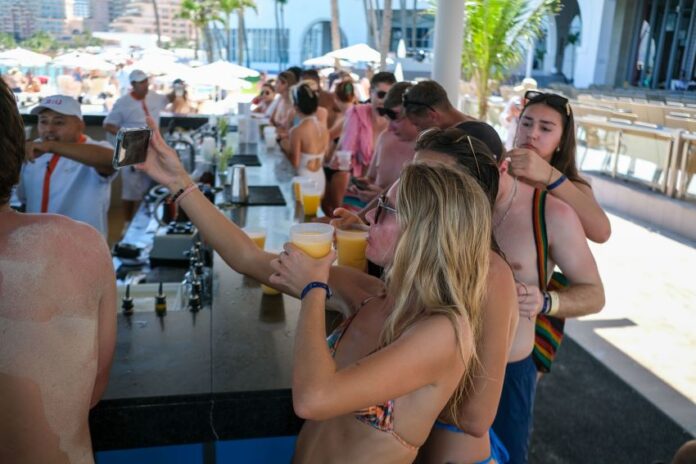
Over 6 million foreign tourist visited Mexico in the first quarter of the year, a significant increase over 2024. (Elizabeth Ruiz/Cuartoscuro)
Mexico registered a 3.5% increase in foreign visitors arriving by air during the first three months of the year, with U.S. arrivals leading the way.
The Tourism Ministry reported that more than 6.1 million foreign tourists arrived at Mexican airports during the first quarter, with more than 3.9 million holding U.S. passports. Canadians were next, with just over 1.2 million visitors. Argentinians were third on the list with 114,719.
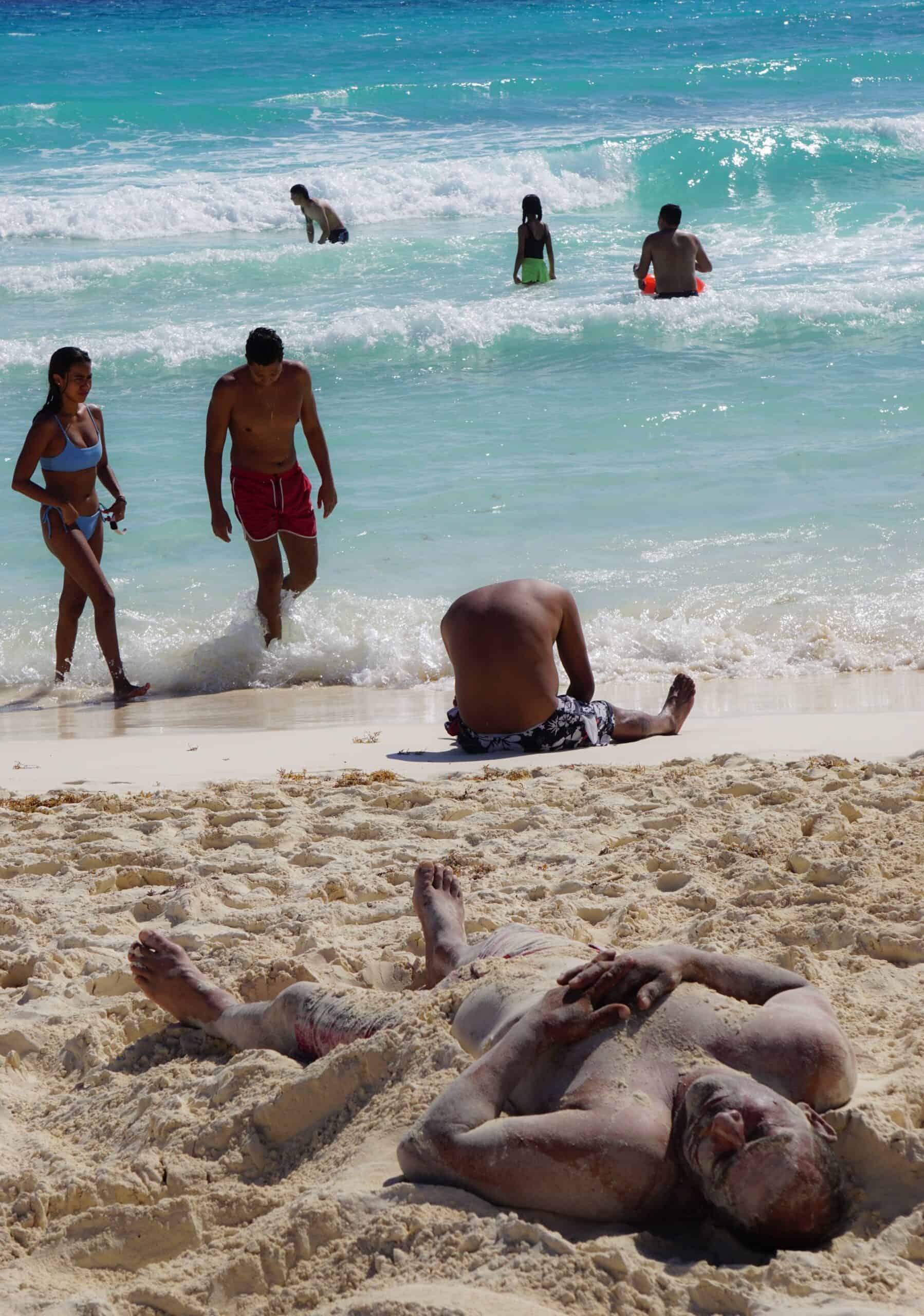
Among the millions of foreign visitors to Mexico, some find time to relax on Cancún’s famous beaches. (Elizbeth Ruiz/Cuartoscuro)
Tourism Minister Josefina Rodríguez said the Q1 data demonstrates the importance of the economic relationship among the three North American countries, adding that it is critical that Mexico “broadens, maintains and strengthens” ties with the U.S. and Canada.
In that vein, Rodríguez touted Mexico’s first tourism office in the country’s consulate in San Diego. The current exhibit there features tourist attractions in the state of Oaxaca.
Compared to Q1 2024 when 5.25 million U.S. tourists flew into Mexico, air arrivals by U.S. visitors during the first three months this year increased by 5.1%. At the same time, 13% more Canadians flew to Mexico during Q1 2025 than in the same period last year. Argentine arrivals increased by 32.5% over Q1 2024.
Air arrivals by U.S. citizens in Q1 2025 were nearly 35% higher than in Q1 2019, while combined U.S., Canadian and Argentine arrivals this year were 28.6% better than during Q1 2019, Rodríguez said.
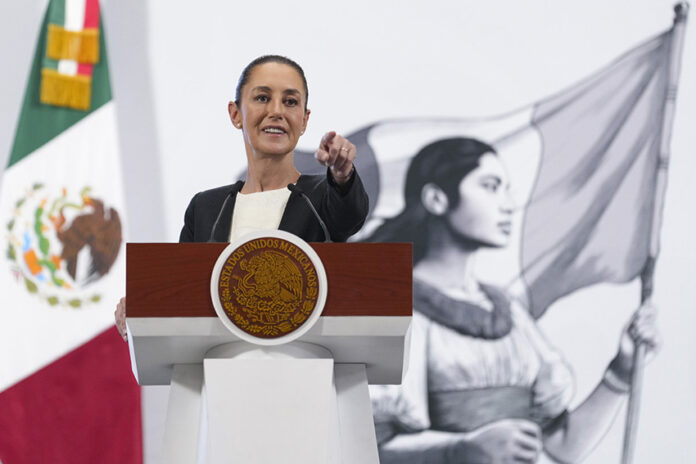
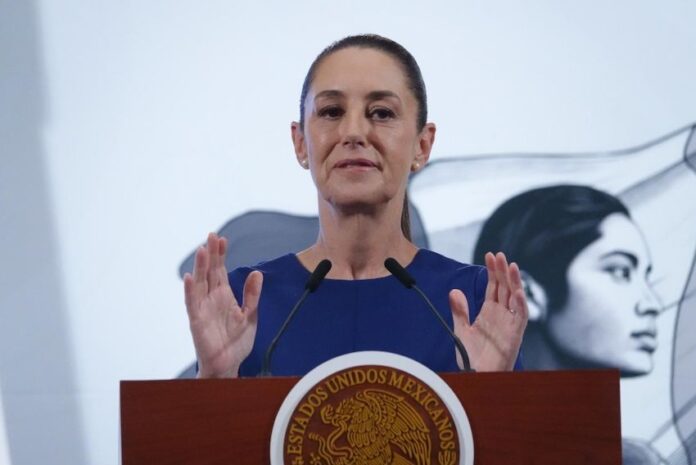
President Sheinbaum's Thursday presser focused on all things security. (Presidencia)
High-ranking security officials attended President Claudia Sheinbaum’s Thursday morning press conference to present the latest data on homicides, arrests and seizures of drugs and firearms.
Sheinbaum herself declared that the decline in homicides since she took office is the result of the new security strategy her government has implemented.
Homicides down almost 25% in April compared to last month of AMLO’s presidency
Marcela Figueroa Franco, head of the National Public Security System (SNSP), reported that there was an average of 65.3 homicides per day in April, according to preliminary data.
The figure represents a decline of 24.9% compared to September 2024, the last month of the six-year term of former president Andrés Manuel López Obrador.
Figueroa highlighted that last month was the least violent April since 2016 in terms of homicides.
27% decline in murders between 2018 and 2025
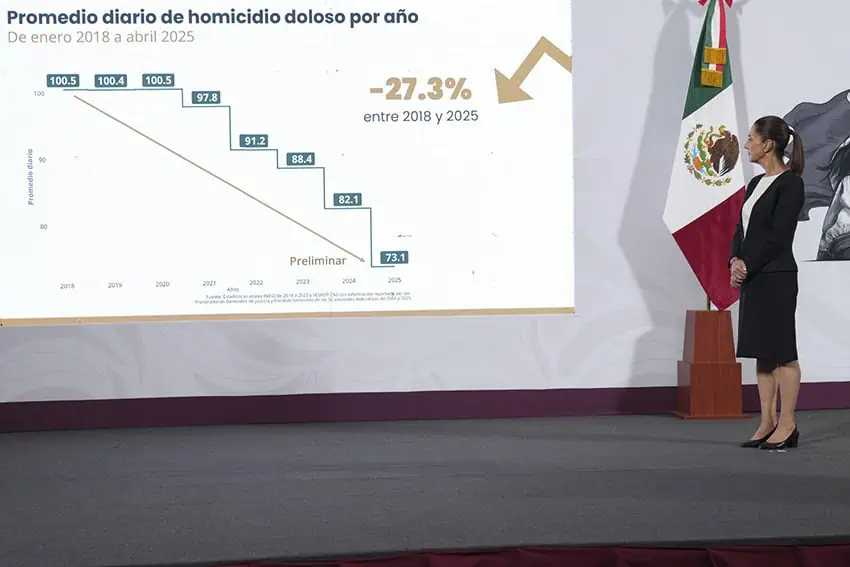
The SNSP chief also presented data that showed that the daily average of homicides this year is 27.3% lower than the daily average in 2018, during which Enrique Peña Nieto was president for the first 11 months.
Homicides are down 27% since six years ago, officials said. (Presidencia)
There was an average of 73.1 homicides per day between Jan. 1 and April 30, 27 fewer than the average of 100.5 murders per day throughout 2018.
Compared to 2024, homicides are down 11% so far this year.
Guanajuato leads Mexico for homicides
Figueroa reported that Guanajuato recorded 1,260 homicides between Jan. 1 and April 30, a figure that accounts for 14.4% of all murders in Mexico in the first four months of the year.
According to the data she presented, 8,770 people were murdered between January and April. A strong majority of homicides in Mexico are related to organized crime.
The number of murders in Guanajuato in the first four months of the year is more than double the number in Baja California, Mexico’s second most violent state so far in 2025.
Baja California, which includes the border cities of Tijuana and Mexicali, recorded 610 murders between January and April, accounting for 7% of the national total.
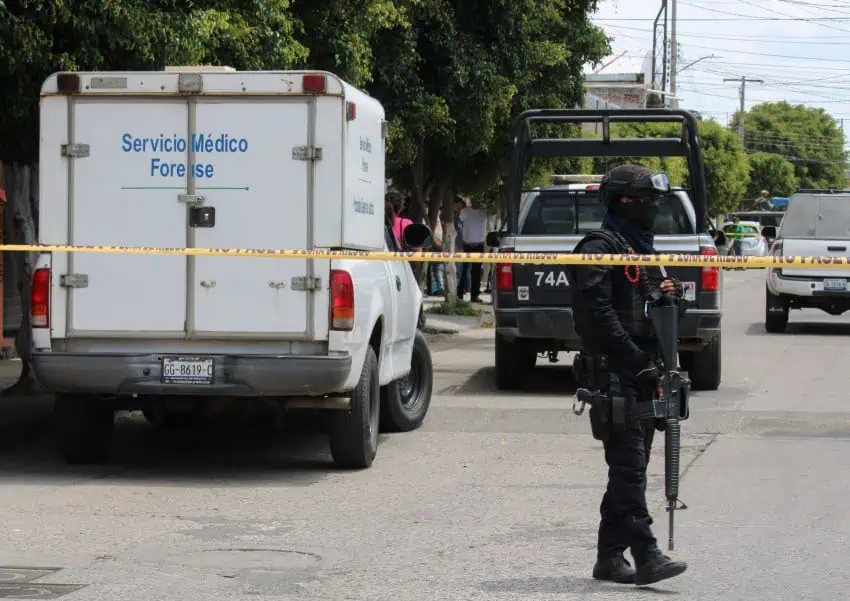
Police guard a crime scene in Celaya, Guanajuato, the state with the highest total number of homicides in the first four months of the year. (Diego Costa/Cuartoscuro)
The next five most violent states in terms of total homicides were:
México state: 601 homicides or 6.9% of the national total.
Chihuahua: 589 homicides or 6.7% of the national total.
Sinaloa: 521 homicides or 5.9% of the national total.
Jalisco: 495 homicides or 5.6% of the national total.
Guerrero: 493 homicides or 5.6% of the national total.
Just over 52% of all murders in Mexico in the first four months of the year occurred in the seven most violent states.
Thirteen states recorded fewer than 100 homicides between January and April, of which Yucatán was the least violent with just five murders.
More than 20,000 people arrested for high-impact crimes since Sheinbaum took office
Security Minister Omar García Harfuch reported on the “advances of the national security strategy during the first seven months of this administration.”
He said that more than 20,000 people have been detained for “high-impact crimes” such as murder, kidnapping, drug trafficking and extortion since the federal government took office on Oct. 1.
García Harfuch said that 154 tonnes of illegal drugs and more than 10,000 firearms have been seized in the same period.
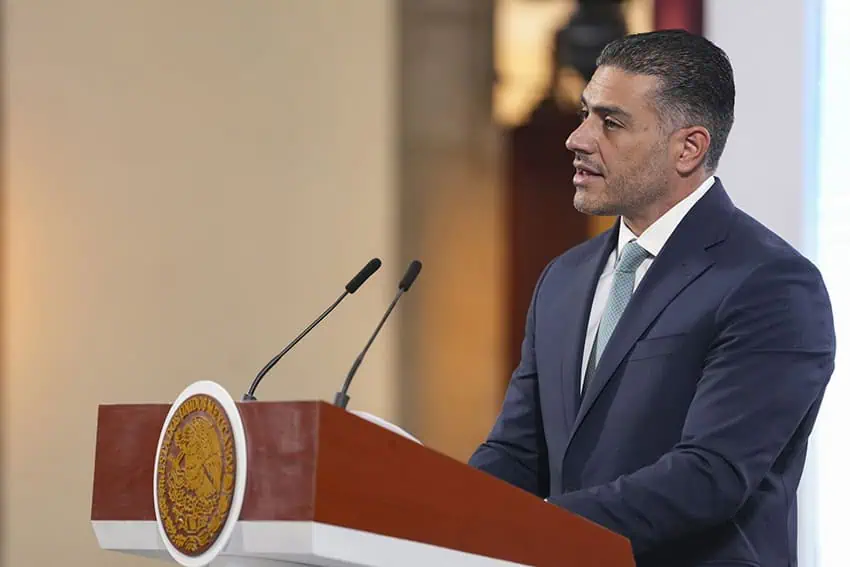
More than 20,000 people have been detained for serious crimes since the current administration took office, according to Security Minister Omar García Harfuch. (Presidencia)
Among those arrested during the past seven months are “operators for criminal organizations … who generated high levels of violence,” he said.
“… We’re sure that these arrests will have an impact in the reduction of the crime rate in their [former] areas of operation, as is already seen in various federal entities of the country,” García Harfuch said.
He also highlighted that the Army and Navy have dismantled 896 clandestine drug laboratories across 19 states since Sheinbaum was sworn in as president last October.
The destruction of the labs means “less violence in the streets, fewer criminals affecting the tranquility of families, less harmful substances that place the health of our young people at risk and fewer resources for criminal organizations,” García Harfuch said.
Sheinbaum: Reduction in homicides due to new security strategy
Sheinbaum, whose government has demonstrated a greater willingness to proactively combat organized crime groups than the López Obrador administration, praised the Army, Navy and National Guard for the work they do every day to protect Mexican citizens.
She attributed the decline in homicides since she became president to the implementation of the new national security strategy.
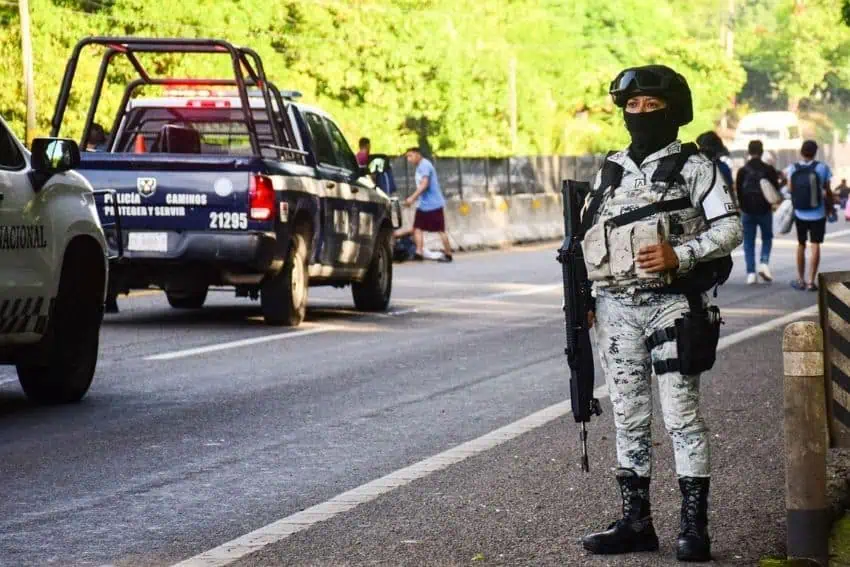
Sheinbaum attributed the reported decrease in crime to policies that have strengthened the National Guard, among other factors. (Damián Sánchez Jesús/Cuartoscuro)
“Attention to the causes [of crime], strengthening of the National Guard, strengthening of intelligence and investigation, and the coordination of all areas [of law enforcement]” have contributed to the decline in murder numbers, Sheinbaum said.
“Who carries out the [security] tasks everyday? Of course municipal and state police but in terms of federal forces it’s the National Guard, the soldiers — female soldiers as well — … and marines,” she said, adding that the security force members “are willing to give their lives to defend the lives of other Mexicans.”
By Mexico News Daily chief staff writer Peter Davies (peter.davies@mexiconewsdaily.com)
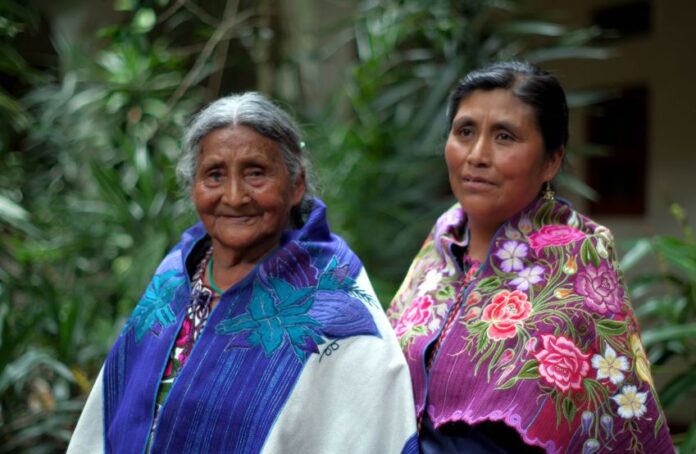
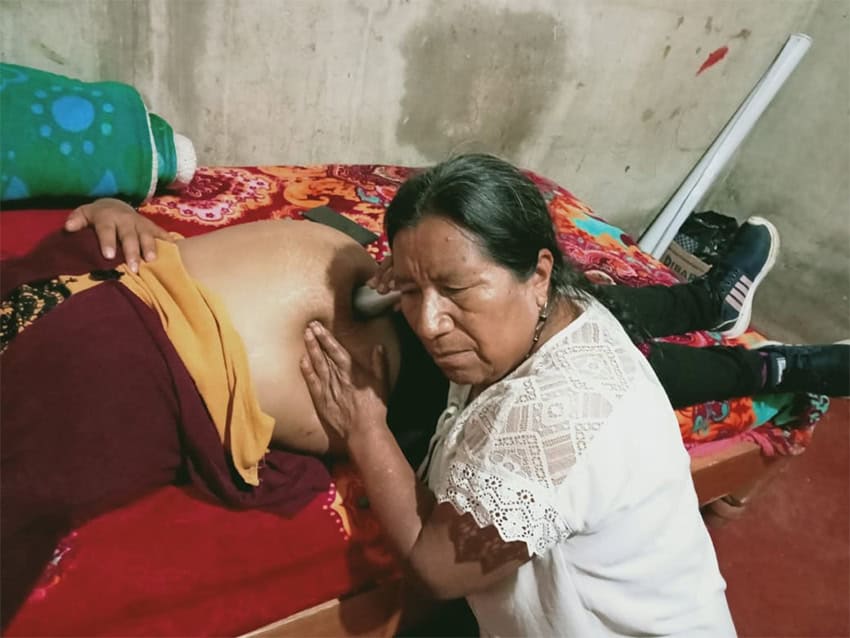
Indigenous midwives in Chiapas say new rules make it difficult for mothers who use midwives to get birth certificates for their babies, violating the right to birth registration. (IMSS/Cuartoscuro)
The Chiapas Midwives Movement Nich Ixim (Corn Flower) has denounced the National Midwifery Registry, saying it complicates the process of registering newborns attended by midwives.
The claim follows recently published regulations for health facilities and midwifery recognition, which the movement calls “a threat” to the existence of traditional midwifery.
A Chiapas midwife listens for the heartbeat of a baby near its due date. (Movimiento Nich Ixim/Facebook)
“Midwives have existed since the beginning of humanity,” Nich Ixim said. “Receiving and caring for life has always been necessary and will continue to be necessary.”
The group has argued that the regulation is based on a biomedical model that imposes control, regulation and conditioning requirements on traditional midwifery. The group said one such requirement is the National Midwifery Registry, which does not consider midwives’ knowledge or methods of care and makes it difficult for those born and cared for by midwives to access their birth certificates.
The movement, which includes 600 midwives from 45 municipalities in the southern state of Chiapas, demanded compliance with Article 389B of the General Health Law, which stipulates that midwives may issue birth certificates.
The group said that not granting birth certificates is a violation of the human right to birth registration.
Nich Ixim said that since the movement’s creation, traditional midwives have experienced historical discrimination. Thus, the group requested that healthcare providers, including managers and security guards, receive training to ensure they can provide intercultural and respectful care to guarantee access to health care without discrimination.
According to Nich Ixim, Chiapas has more midwives than any other state in Mexico, with estimates suggesting there are over 5,000 in the state. The group says that one in three births in the state is attended by a midwife, and in Indigenous communities, midwives attend the majority of births.
Although the Mexican government has legally recognized midwifery in Chiapas, midwives still lack full recognition that respects and protects their work without imposing barriers alien to their tradition.
“Midwifery in Mexico is an ancestral practice that is part of the cultural identity of our Indigenous peoples and rural communities,” Nich Ixim said in a statement. “Midwives are guardians of ancestral knowledge, bearers of wisdom that has enabled generations to be born in conditions of respect and dignity.”
Both headline and core inflation — which excludes food and energy prices — rose to 3.93% in April. (Andrea Murcia/Cuartoscuro)
Mexico’s annual inflation rate increased for a third consecutive month in April, official data showed on Thursday, but it remains within the Bank of Mexico’s target range, leaving the door open to an interest rate cut next week.
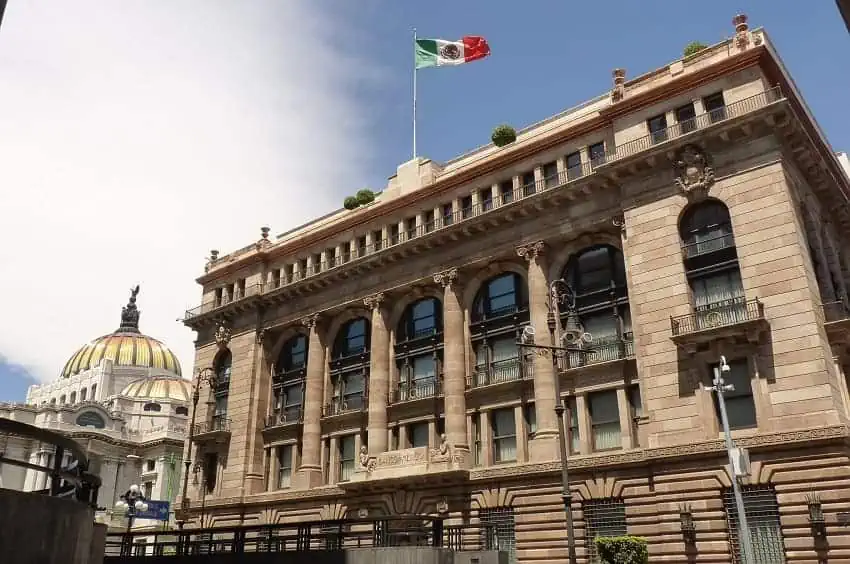
In 2022, the annual headline rate peaked at a two-decade high of 8.7% in August and September. The Bank of Mexico (Banxico) began a 21-month monetary policy tightening cycle in June 2022 that included 15 interest rate hikes totaling 725 basis points.
The Bank of Mexico raised interest rates to over 11% before beginning to loosen monetary policy last year. (Wikimedia Commons)
The governing board of the central bank will hold its next monetary policy meeting next Thursday, May 15.
Bloomberg reported that the headline inflation reading in April — just within the Bank of Mexico’s 2%-4% target range — likely keeps another 50-basis-point cut “on the table.”
Reuters reported that the latest data “should allow the Bank of Mexico to keep lowering borrowing costs in Latin America’s second-largest economy.”
“… Although economic growth is not part of Banxico’s mandate, analysts believe a weak outlook stemming from trade tensions triggered by U.S. President Donald Trump’s sweeping tariffs adds to the argument for it to keep easing monetary policy,” the news agency said.
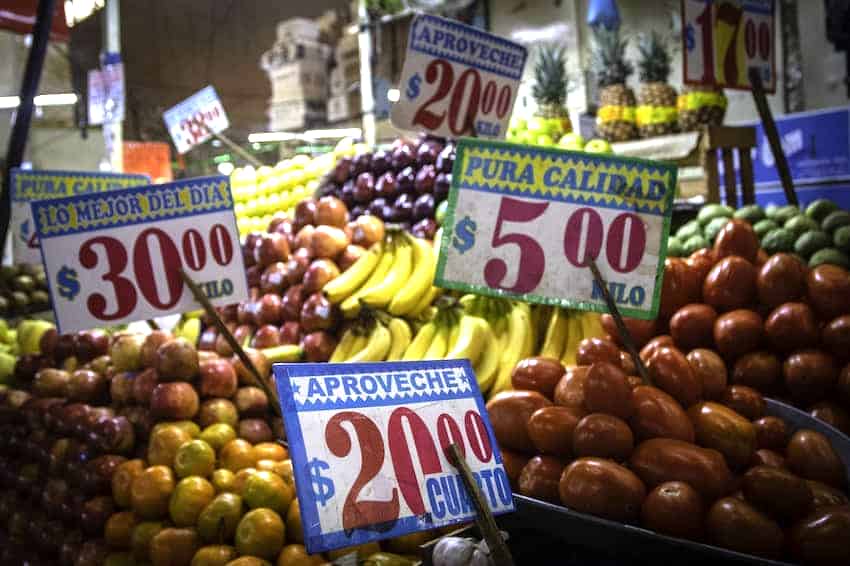
Early this year, prices for fruits and veggies went down while meat prices went up. (Cuartoscuro)
Deputy Bank of Mexico Governor Jonathan Heath said Wednesday that the current economic situation in Mexico makes it “highly likely” that the central bank will continue to lower its key interest rate.
He said in a Banorte podcast that the prevailing interest rate of the Federal Reserve in the United States, and the difference between that rate and that of Banxico, won’t have much of an impact on monetary policy decision making in Mexico until the second half of the year.
The significant difference between the Bank of Mexico’s key interest rate and that of the Fed helped boost the Mexican peso against the US dollar for an extended period, but the peso weakened last year due to a range of factors, including the ruling Morena party’s comprehensive win in the elections last June, Congress’ approval of a controversial judicial reform and Trump’s victory in the U.S. presidential election last November.
The peso has performed better this year, appreciating from about 20.6 to the dollar on Dec. 31 to 19.57 to the greenback at 11 a.m. Mexico City time on Thursday.
Cheaper fruit and vegetables, more expensive meat
INEGI’s data showed that fruit and vegetable prices fell 2.45% on a year-over-year basis in February, while meat prices increased 8.25%.
Processed food, beverages and tobacco were 4.42% more expensive in April than in the same month last year, while prices for non-food goods rose 2.4%.
Services were 4.56% dearer compared to April 2024, while energy prices, including those for gasoline and electricity, increased 2.99% on an annual basis.
Pemex boats tow floating booms to contain and clean up oil floating on the surface in the Gulf of Mexico. (Luis López/Cuartoscuro)
State oil company Pemex has reportedly repaired two pipeline leaks at its Dos Bocas maritime terminal, after allowing four days to pass before publicly acknowledging an oil spill had occurred.
Pemex officials on Wednesday finally confirmed media reports of the oil spill, explaining in a press release that crude had leaked from an underwater pipe linking one of its offshore platforms to Olmeca refinery in the port of Dos Bocas, located in the Gulf coast state of Tabasco.
Playas públicas de #Paraíso, #Tabasco, cerradas por contaminación con hidrocarburo y chapopote en casi 17 km de costa, afectando pescadores y prestadores de servicios.
Pescadores señalan posible derrame cerca de boyas petroleras en puerto Dos Bocas.
— Fuerza Informativa Azteca (@AztecaNoticias) May 5, 2025
Local residents and fishermen reported that the oil slick had caused extensive damage to aquatic fauna in the Gulf, as well as to mangroves in the municipality of Paraíso, Tabasco. Beaches in the area were blackened and La Jornada newspaper reported that several oyster farms were contaminated.
In a press statement, Pemex said the leak occurred on Saturday when pipes from its Akal-C platform failed. Mapping by the oil company confirmed that spillage had damaged a 7-kilometer stretch of coastline.
Later Wednesday, Pemex said the leaks had been repaired by installing two metal clamps. It was conducting tests to ensure the watertightness of the pipeline. The company said it expected to resume operations at Dos Bocas on Thursday
Pemex said it had already begun addressing the spill. “Pemex personnel and specialized equipment immediately carried out a clean-up,” the company said in a press release. The company also notified the Safety, Energy and Environment Agency (ASEA) as well as the Environment Ministry in order to initiate remedial actions as required by law.
The spilled oil has made its way from the Gulf into Mecoacán Lagoon and Seco River, affecting marine animals and mangroves. (Luis López/Cuartoscuro)
The company said that it was working with local communities to establish preventative measures and to facilitate the resumption of fishing and tourism activities. Residents of Playita El Mirador, a tourist reserve and beach just east of Dos Bocas, complained that they were forced to cancel services during the holiday weekend due to the oil slick.
This oil leak comes a little over a week after an incident temporarily halted operations at the Olmeca refinery, adjacent to the Dos Bocas terminal.
Sheinbaum dismissed reporters’ inquiries about the possibility of intentional damage to the refinery’s catalytic cracking unit that uses fluidized catalysts to crack heavy hydrocarbon molecules into gasoline molecules.
Although it nominally began operations in 2022, the Olmeca refinery remains in the start-up phase, testing and commissioning ahead of full commercial operation. It has yet to meet the production goals set by Sheinbaum’s predecessor, even as Sheinbaum said last month that it was processing 100,000 barrels per day.
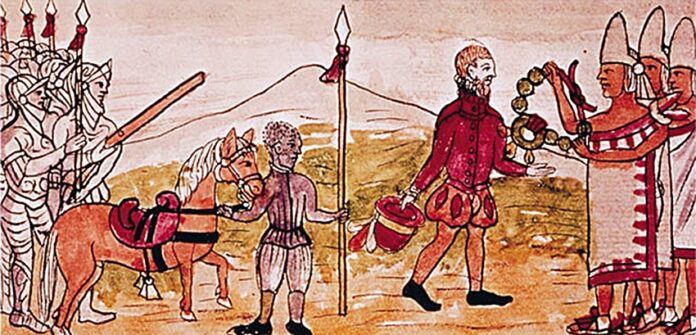
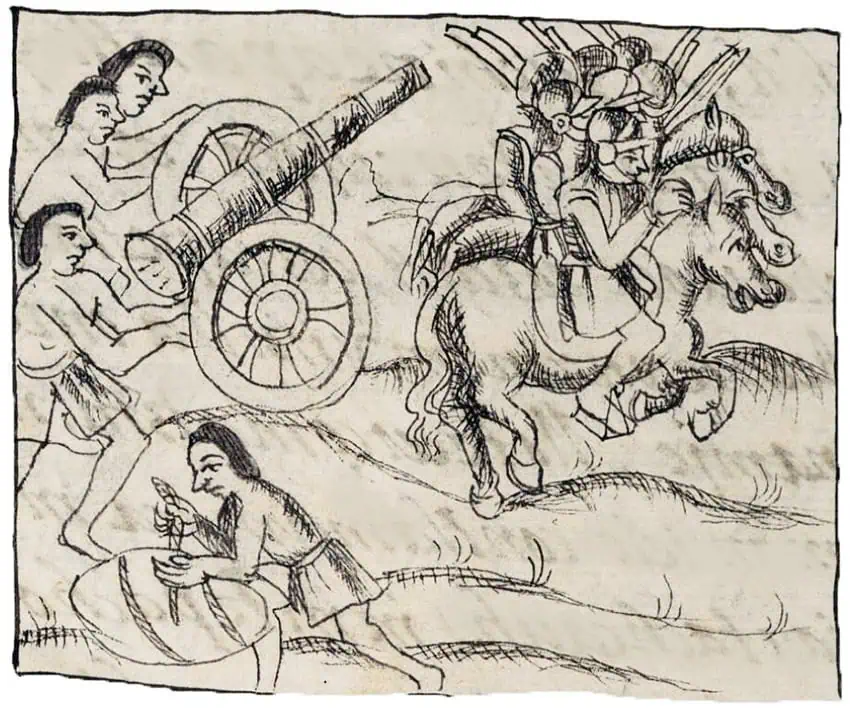
The Aztec Rhapsody is a unique attempt by a modern Mexican to write an epic poem about the Spanish conquest of Mexico, in the style of ancient epic poems like The Iliad or the Song of Roland. (The Duran Codex)
Throughout history, a few gifted souls have managed to turn momentous events into epic poems. We have the Iliad, the Odyssey, the Epic of Gilgamesh and now the Aztec Rhapsodies.
The theme of the rhapsodies is the fall of the Mexica empire as seen through Mexican eyes, and it’s a tale even more bizarre than the fall of Troy.
The Aztec Rhapsodies depict the Spanish conquest of the Mexica.
As the legend goes, a handful of unwashed Spaniards who didn’t know the local language walked into one of the best-organized cities in the world — a city protected by the most ferocious warriors in the Americas — and captured its leader without a hitch. That, indeed, is a story worth telling.
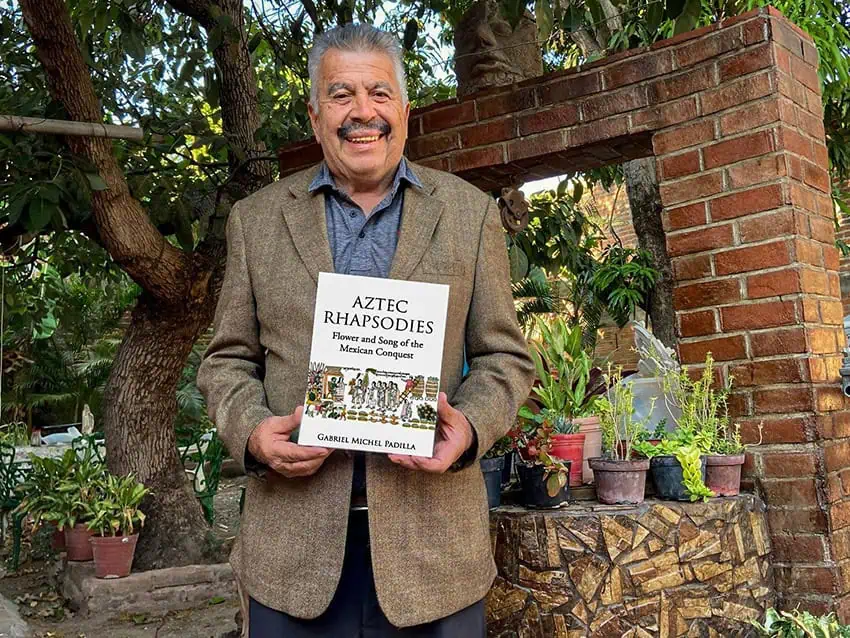
The tale is told in verse over 132 pages with more than 100 illustrations, taken mainly from 16th-century codices. “Aztec Rhapsodies, Flower and Song of the Mexican Conquest,” was published in 2024. It is now available on Amazon, both in print and Kindle form. And yes, it is in English!
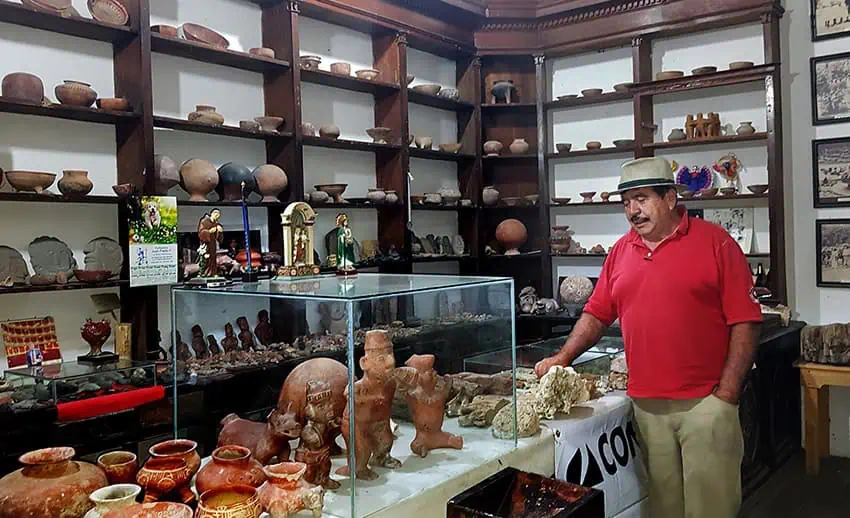
The author of this most unusual work is Gabriel de la Asunción Michel Padilla, curator of a fascinating little museum in the town of El Limón, Jalisco, located halfway between Guadalajara and the Pacific coast.
Michel’s well-illustrated book of 48 rhapsodies begins with the landing of the Spaniards in Cuetlaxtlan (today’s Veracruz) in the year 1519. The book begins with these lines:
In the house of the flowers, of the music,
by the blossomy mansion of Mixcóatl,
where are hatched and sung anthems of battle,
here is woven in words, here is recited,
how ominously landed in Cuetláxtlan,
Castilian men proceeding from the east,
at the coastland governed by Pinotéuctli,
nearby the limits of the godly water,
the threshold of the sea, of twisted tides.
The following chapters relate Moctezuma’s reaction to the presence of those Castilian men, how he sent magicians and sorcerers to do them in — unsuccessfully — and how, fearing they were gods, he welcomed them to his palace.
Gabriel Michel Padilla’s epic poem of the Spanish conquest of Mexico, “Aztec Rhapsodies,” is available through Amazon or directly from the author. It is available in Spanish and in English. (Amazon)
We learn how the Spaniards allied themselves with the many tribes that hated the Aztecs, of the fierce battles that ensued, of the scourge of smallpox… and the day that the Spaniards grabbed Moctezuma by the arms and forced him to show them the storehouse of the national treasure.
Of particular interest are the Aztec descriptions of guns and cannon and their impact upon Moctezuma:
Specially did it cause him to faint
when he heard how the guns discharged the shot,
how it resounded and thundered, terrifying.
There was fright, consternation, eardrums burst,
when the Spaniards ordained fire of the shot.
From within, a rock came forth, a round pebble,
It went along sparkling, it rained fire.
The smoke that came from it was fetid, foul.
When it went into the brain, the head was wounded.
When it struck a hill, it made a hole.
It was as if the mountain were demolished.
If the shot reached a tree, it turned into a sliver.
It was something amazing, awe-inspiring.
It was as if someone blew it away.
I asked author Gabriel Michel what inspired him to write an epic poem on the Spanish conquest.
“Many years ago,” he told me, “I was a seminarian, and in my studies of Greek, I came upon Virgil’s Aeneid, the epic poem which tells the story of the fall of Troy and the founding of the Roman Empire. At the age of 13, I told myself: “This is what I should be doing. I should apply this to my own country.”
Widely recognized for his extensive research and publications on the history, ethnography and anthropology of the Sierra de Amula region in Jalisco, Michel Padilla is also the founder of the Museo Licho Santana in El Limón, Jalisco. (John Pint)
At that point, Michel began his lifelong study of the Spanish conquest of Mexico, starting with Bernal Diaz de Castillo’s “True History of the Conquest of New Spain.”
“Later on,” said Michel, “I examined the writings of those who had been conquered, and I was truly astonished by what I found.”
Michel first wrote his own version of the Conquista in prose and then, bit by bit, rewrote it in verse, inspired, he says, by the writings of St. John of the Cross, whom he considered the very best poet of Spanish literature.
English speakers may glean the most from “Aztec Rhapsodies” by simultaneously reading chapters of the book “The Broken Spears: The Aztec Account of the Conquest of Mexico” (2006) by historian Miguel León-Portilla. Both books tell the same story, but in a very different manner.
Michel Padilla with his book. (John Pint)
Like all epic poems, “Aztec Rhapsodies” is meant to be read aloud. Give it a try!
Should you ever travel through Jalisco, you may want to stop in El Limón to visit Gabriel Michel and his fascinating museum Museo Licho Santana, which offers a fine collection of everything from pre-Hispanic figurines to prehistoric fossils — such as an intact Ice Age gliptodont.
John Pint has lived near Guadalajara, Jalisco, for more than 30 years and is the author of “A Guide to West Mexico’s Guachimontones and Surrounding Area” and co-author of “Outdoors in Western Mexico.” More of his writing can be found on his website.
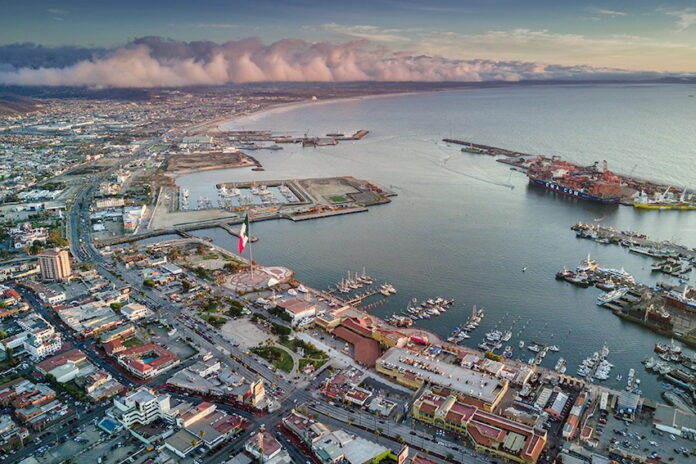
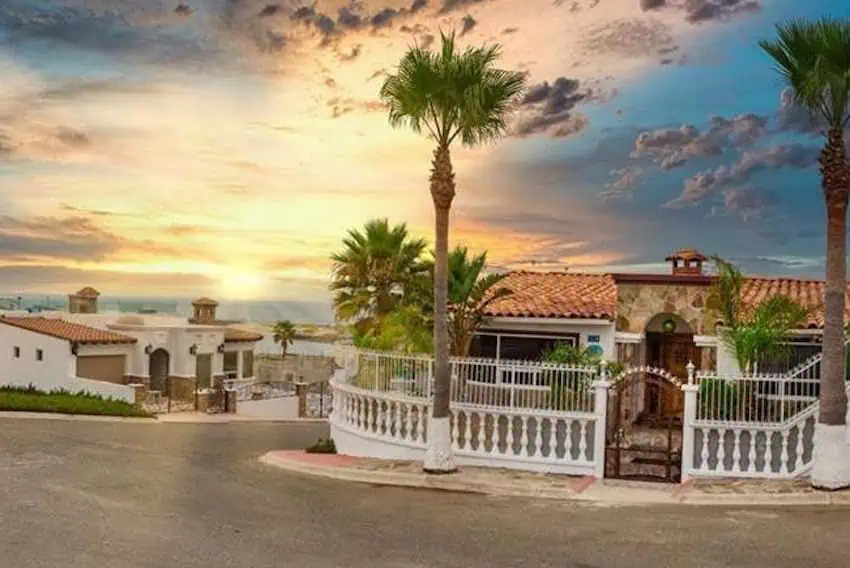
Moving to Baja California might not quite turn out like you think. That could be a great thing. (Conexstur)
As I had been visiting the northern region of Baja California, Mexico for my entire life before I moved to the Ensenada area in 2017, I did not anticipate many surprises. However, I was wrong, and had I known these things, I most likely would have made the move far sooner.
Property costs are lower than you think
(realtor.com)
The multi-million-dollar beach homes typical of U.S. real estate markets in any state might make you believe that living on a beach will forever be out of your financial reach. But look at similar seaside residences just a short hop across the border, and it’s no longer a 7-figure transaction. That borderline can literally save you millions of dollars.
To be sure, Baja expat old timers bemoan how much coastal rents and real estate prices have escalated. Nonetheless, both are still a fraction of what it would cost in the States for a comparable home in a similarly spectacular locale.As much as rents have risen, there are still deals to be found if you know how and when to look.
Another factor in your favor is Baja landlords’ general tendency not to regularly raise rents like they do in the States. Your housing costs can become an even better deal over time as they’re likely to remain stable. For instance, nearby friends just signed their annual lease on a beachside rental for the ninth consecutive year. The rent has never gone up a cent during that period.
The truth about safety in Baja
(Eric Golub/Wikimedia Commons)
My expat friends and I were surprised to find that we feel far safer in Baja than we do in the United States. Regarding safety in northern Baja, as in all of Mexico, there is an enormous gap between public perception and reality.
Because this region includes so many border towns, including the sprawling metropolis of Tijuana, crime statistics here appear higher than in other regions of Mexico. The key distinction is the fact that most of the crime in northern Baja California is not directed at tourists or foreigners but is related to organized criminal and drug cartel activity. Violent crime tends to be concentrated in specific neighborhoods associated with illegal activities, usually far removed from the areas where most travelers and expats visit.
In reality, northern Baja California is generally as safe as many popular destinations worldwide, including many U.S. cities. But those pesky statistics, including those from the U.S. government, would have you believe otherwise.
It’s not that crime never spills over outside of these neighborhoods; it can and occasionally does, just as it does in the United States. But it’s not the norm.
Statistics aside, millions of people visit Baja California every year, the vast majority without incident, underscoring that while there are certainly safety concerns, they are not universal. Routine precautions — such as avoiding risky locations, especially after dark, not displaying valuables, and sticking to well-trafficked areas — can significantly reduce the likelihood of encountering problems. Awareness and common-sense precautions go a long way toward ensuring safety in Baja or anywhere else.
Living in northern Baja is not only about lowering expenses, it’s about increasing the quality of life. Continuing from point 3, so much geographical diversity also means endless recreational opportunities. Besides the obvious watersports and natural attractions, you’ll find thriving mixed communities of locals and expats that support all kinds of extracurricular activities including, but not limited to, outdoor markets, art walks, music and food festivals, charity causes to volunteer for, community theater, social clubs of all kinds, and more. Should you choose, your social calendar can easily be filled every day of the week. If you’re bored in Baja, it’s your own fault.
Expats will also find a strong old-fashioned sense of community, something that seems to be lacking north of the border these days. People look out for each other and help each other in big and small ways. I affectionately call the small village south of Ensenada where I live my Mexican Mayberry. There are communities like it all over Northern Baja, even in larger cities.
How easy it was to relocate
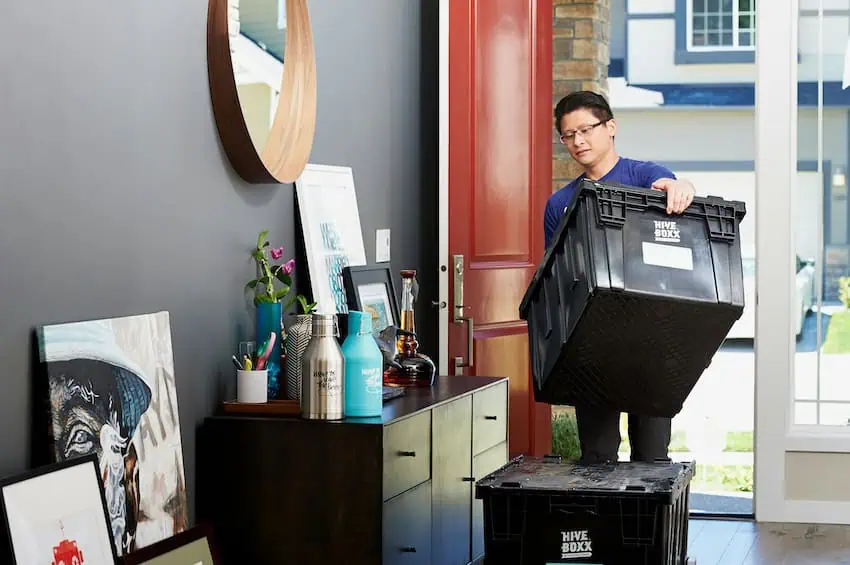
(Hiveboxx/Unsplash)
Had I known how easy making the move to Baja would be, I would have done it years ago.
Northern Baja’s proximity to the U.S. simplifies many logistical concerns and expenses that would otherwise be daunting and complex. Want to keep your American bank accounts, phone service, mailing address, or healthcare? No problem.
Unlike other Mexican states, you can maintain your U.S. vehicle registration even if you become a legal permanent resident! Additionally, your U.S. vehicle will not require a temporary import permit (TIP).
Perhaps best of all, you can easily drive to Baja. This alone can significantly reduce the costs associated with an international move. And if you ever decide that Baja isn’t for you, you can simply pack up your stuff, drive back over the border, and resume your old life. However, you probably won’t want to!
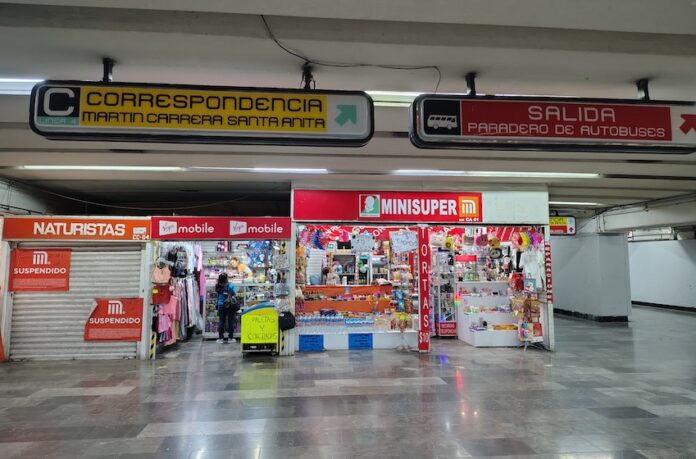
All told, there are around 2,000 "commercial spaces" in the Mexico City Metro — and the renting out of these spaces brings in significant revenue for the Sistema de Transporte Colectivo (SCT). (All photos by Peter Davies)
“I got in a metro car and I haven’t been able to get out. I’ve been living for more than three or four months here in the underground, in the metro. I’ve passed through Zócalo, Hidalgo, Chabacano a million times. I’ve wanted to go out the door but there’s always someone who pushes me back in. … I eat candy, chocolate, chewing gum and lifesavers. I already have six needle kits, eight box cutters and too many lighters.”
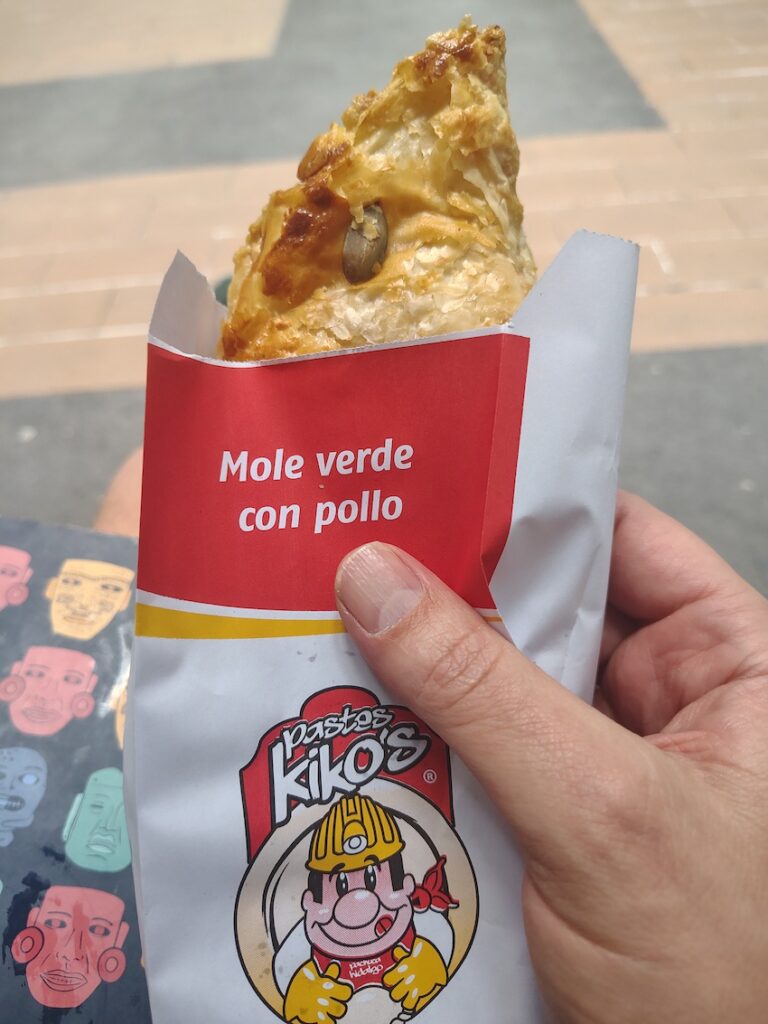
Journalist Peter Davies kicked off his market research in the metro with a fresh (?) green mole chicken pasty.
“¡Agua de litro y medio a 10! “¡Bolsas de botanas a 5!”
“1.5-liter bottle of water for 10 pesos!” Bags of snacks for 5 pesos!”
These are the kinds of hawkers’ cries that reverberate around the passageways of the Mexico City Metro — a massive public transport system, but also an immense subterranean marketplace where formal and informal vendors and service providers meet the diverse needs of the millions of daily riders.
Amaranth bars, headphones, stuffed toys, jeans,Japanese peanuts, espresso machine coffee, skincare products, McDonald’s soft serve cones, churros, tortas gigantes, tacos, sexual enhancement pills, lingerie, newspapers, books and oh-so-many different kinds of chatarra (junk food).
All these products — and countless others — are available for purchase in the Mexico City Metro system.
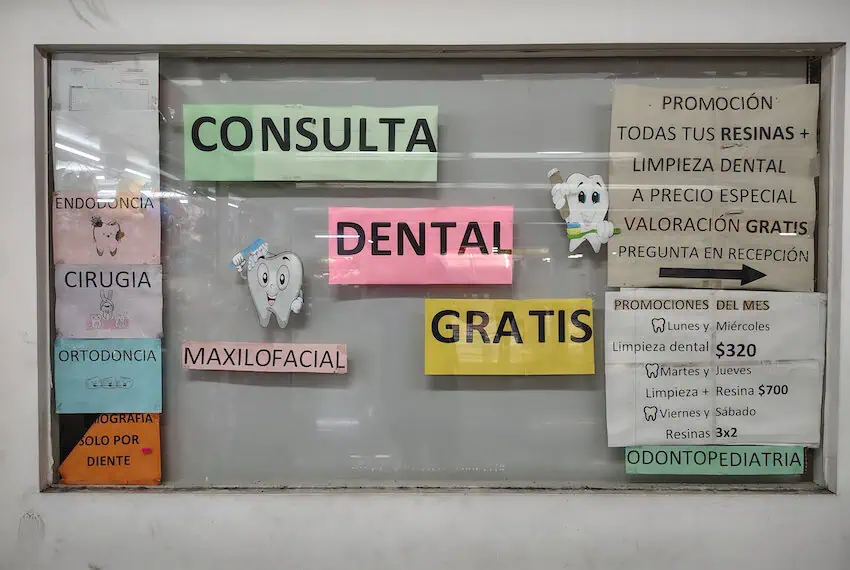
Need a therapeutic massage after a long day at work? You can get one without leaving the Mexico City Metro system. Want to get your teeth professionally cleaned before heading into a big job interview or out on a first date? You can do that in the metro as well. Have a call of nature? You can pay for the privilege of relieving yourself at one of the public restrooms located in various stations, and thus support what is already a verylucrative business.
A dental office within Mexico City’s metro system.
All told,there are around 2,000 “commercial spaces” in the Mexico City Metro — and the renting out of these spaces brings in significant revenue for the Sistema de Transporte Colectivo (SCT), the formal name of the city government-owned metro. There is also a significant number of informal vendors in the metro — in the stations, and on the trains — although their presence has declined in recent years.
Over the past couple of weeks, I’ve ridden the metro on numerous occasions and stopped in at various stations to observe firsthand — and participate in — the commercial activity that takes place on a daily basis in this subterranean precinct of Mexico’s megalopolis. Just as there isan abundance of art and expressions of culture in the metro, so too is there plentiful buying and selling.
The evolution of commerce in the metro
“If you ride the metro more than a few times, the cry of ‘a 10, a 10, a 10, a 10, a 10, a 10, a 10!…10 pesos te vale, 10 pesos te cuesta’ will soon become permanently etched on your brain.”
Everything mentioned in the Café Tacuba lyrics at the beginning of this article — and much, much more — was available to metro passengers, right in front of them as they criss-crossed this enormous city. A subgroup of vagoneros known asbocineros — because of the large speakers (bocinas) they carried around on their backs to amplify the music on the pirated CDs they were selling — were ubiquitous, and very annoying for some passengers.
Sadly — in my opinion at least — bocineros have since disappeared from the metro (goodbye burned CDs, hello Spotify!), and the number of vagoneros has dwindled, the result of various city crackdowns oninformal vendors, including amajor one in 2021 and 2022, andthe ever present risk of being fined, sentenced to community work, having your merchandise confiscated or even being thrown in jail for up to 24 hours.
Defiant wagon wheeler-dealers, as we might call the vagoneros in English, are still about, still playing the cat-and-mouse game, but the days of one immediately replacing another in a metro car — or even waiting for the other to finish their promotional spiel before proceeding with their own — are over, at least for now.
During a recent day of metro riding — on which,inspired by a TikToker, I planned to buy everything offered to me inside the train cars — I only came away with a mini bottle of Yakult and two Bubu Lubu chocolate bars a woman placed on my knee before coming back to collect my payment.
That is not to say that I didn’t have a fruitful day of subterranean shopping: I bought a range of things at businesses in various stations, including unpaste de mole verde con pollo (a green mole chicken pasty), a spiky blue ball for my three-year-old son and a stick of roll-on deodorant (it gets hot and sticky in the bowels of Mexico City).
Commerce in transit: How Mexico City’s metro is a lifeblood for business
The soul of commerce in the metro: the vendors
I watched a policewoman walk across the concourse of Metro Garibaldi-Lagunilla to a teenage boy holding a large stack of polystyrene containers. After she made a purchase (and fortunately not an arrest), I wandered over to see what he was selling.
A kind of Mexican-Asian fusion snack pack — an entire meal in fact — was among the youthful peddler’s offerings: a cream cheese-filled chicken milanesa, sushi rolls (one of which had a deep-fried crust), a straggly salad and something else I still haven’t definitively identified.
I decided instead to buy a more economical pack of “sushi” rolls (for 50 pesos), enveloped with cucumber rather than the customary seaweed.
“Can I ask you a few questions?” I ask after I hand over the cash.
“I’m in a hurry,” he replies. “I’ve got to keep moving.”
I pace through the station alongside the adolescent, whom I soon learn is 15 years old and named Ángel.
“I saw a policewoman buy a meal from you,” I mention.
“Other police officers take all my meals and kick me out of the station,” Ángel responds, and in doing so explains why he has to move swiftly to deliver his meals to his clientes.
Among those customers are vendors who spend their entire workdays underground and savor a hot (or at least lukewarm) meal brought in from the outside world.
“¿Tienes mariscos hoy?” (Do you have seafood today?) one frequent customer enquires as we walk. “I’ll bring it to youahorita,” Ángel responds.
Ángel’s Mexican-Asian fusion snack pack: a cream cheese-filled chicken milanesa, sushi rolls (one of which had a deep-fried crust), a straggly salad and…something else.
Ángel tells me he’s still in school but earns good money when he comes underground to sell the meals he picks up from an outside fonda (diner), a job he has been doing since the tender age of 12.
The adolescent ambulante (roving vendor) is one of several metro merchants I spoke to for this story.
At Metro Chabacano, I met Ana, a young woman in charge of a kiosk where books are sold just inside the turnstiles at one of the station entrances.
Also in Chabacano — a busy station where three different lines converge — I spoke to Rolando, an employee of one of the metro’s many tiendas naturistas, where products such as chili and garlic shampoo, shark cartilage capsules and“Praw Praw Sex” pills are on sale.
“Why are there so many ‘natural products’ stores in the metro?” I ask Rolando, who has worked at the same tienda in Metro Chabacano for 22 years.
Rolando tells me that his best sellers are natural products used to treat diabetes, whichafflicts millions of Mexicans. Like any good salesman, he says he has full confidence in the natural remedies he stocks.
Ana, an employee of the Chabacano book stand for the past few years, tells me she sells 15 to 20 books a day. She highlights that the business is “on the way” for commuters, making it convenient for them to pick up something to read, or buy a gift, as they head for the platform to catch a train, or to their homes at the end of the day.
Ana sells between 10 and 20 books per day at her Metro bookshop.
Ana notes that sales declined during the pandemic, when fewer people were using the metro and more people were working from home, and also acknowledges that commuters are more commonly glued to their cell phones than buried in books these days.
Indeed, whether a book vendor is located above ground or below, the challenges they face in the 21st century are the same. Still, book stores and stands in the metro are survivors, even as book sales decline. There is even a bookstore-filled tunnel linking the Pino Suárez and Zócalo stations in the historic center of Mexico City. Called “Un paseo por los libros” (A stroll through books), the literary underpass willcelebrate its 30th anniversary in 2027.
Many other metro businesses fail to even get close to that kind of longevity. As is the case above ground, in the bustling streets of this city or any other, commerce in the metro is in a near constant state of flux. New businesses open up, old ones close down, your favorite vagonero is there one day, the next day he is gone.
A commercial hub, inside and out
With millions of passengers entering and exiting the Mexico City Metro’s 163 stations on a daily basis, it can make good business sense to set up a commercial enterprise at or near the entrances to the capital’s subway system.
Proximate to the portals to the underground, these outdoor spaces are the domain of taco stands serving hungry people in a hurry, of shoeshiners who can make your black brogues glisten, and of countless other businesses.
Step outside Metro Allende in the capital’s historic center and you’ll be mobbed by touts drumming up business for nearby eyewear stores. Some stations merge into makeshift marketplaces — mazes of merchandise and antojitos (tacos, quesadillas and the like) sizzling on griddles.
Outside Metro La Villa-Basílica, located in the city’s north nearthe Basilica of Our Lady of Guadalupe, sidewalk commerce is dominated by vendors of religious artifacts who sell to the millions of people who flock to the world’s most visited Catholic pilgrimage site every year.
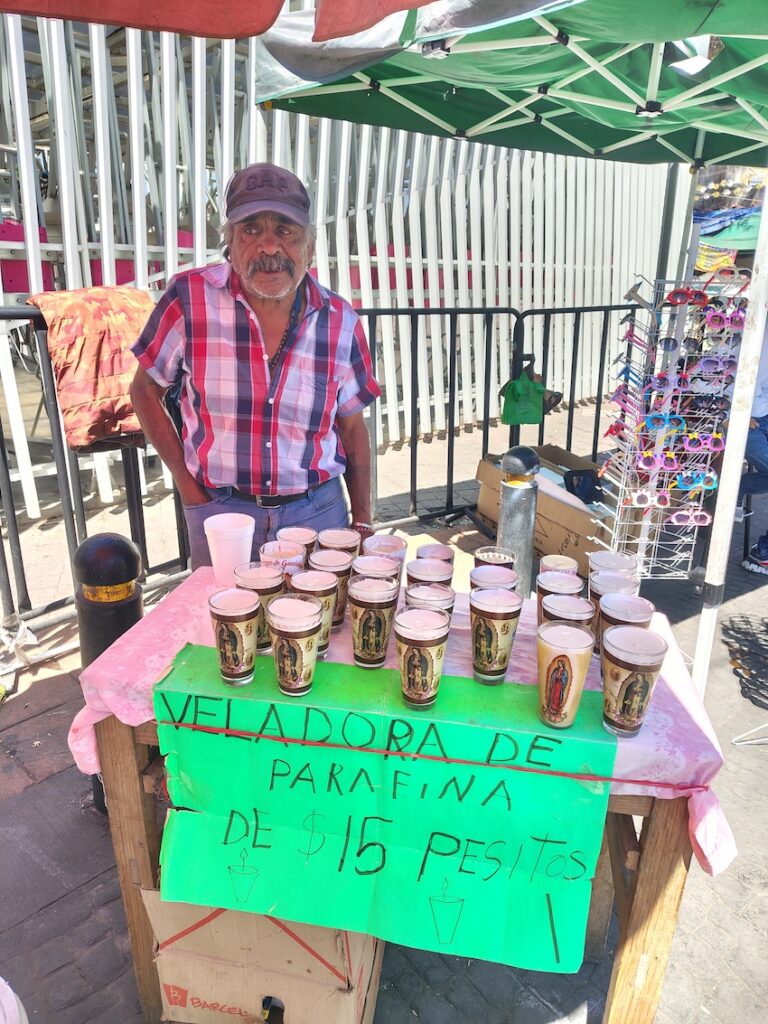
It was here that I met Miguel Gutiérrez, a vendor of candles in glass holders emblazoned with the image ofthe Virgin of Guadalupe.
You can never be too far away from the presence of Lupita in Mexico City, and the Metro is no exception.
“I sell 60 candles on a good day,” says Miguel, who laments that business is often much, much slower.
Still, like the many other formal and informal vendors inside and outside the metro, who collectively make the transit system a much more interesting, colorful and louder place, he will get up tomorrow, and the next day, and return to his little patch of Mexico City to try his luck again.
After all, as thebiblical aphorism goes, “He who does not work, neither shall he eat.”
By Mexico News Daily chief staff writer Peter Davies (peter.davies@mexiconewsdaily.com)
Sheinbaum noted on Wednesday that Trump's opinion is that the USMCA is much better than NAFTA, and declared that she agreed with him. (Graciela López/Cuartoscuro)
At her Wednesday morning press conference, President Claudia Sheinbaum spoke about the USMCA free trade pact, the long-standing proposal to build a new cruise ship pier on the island of Cozumel and her plans for Mother’s Day this Saturday.
Here is a recap of the president’s May 7 mañanera.
Sheinbaum: No sign that the USMCA is going to ‘disappear’
A reporter asked Sheinbaum to comment on the remarks United States President Donald Trump made about the USMCA free trade pact on Tuesday during an appearance before reporters with Canadian Prime Minister Mark Carney.
Asked whether the USMCA is “dead,” Trump — who has recently imposed a range of tariffs on imports from Mexico and Canada — responded:
“No, it was actually very effective and it’s still very effective, but people have to follow it, you know that’s been a problem, people haven’t followed it. … As you know it terminates fairly shortly, it gets renegotiated very shortly, but I thought it was a very positive step from NAFTA. NAFTA was the worst trade deal in the history of our country, probably in the history of the world, and this was a transitional deal and we’ll see what happens. … We’re going to be starting to possibly renegotiate that if it’s even necessary, I don’t know that it’s necessary anymore.”
Although Trump said that the USMCA “terminates fairly shortly” — it is in fact scheduled for review in 2026 — Sheinbaum told reporters that there is no “sign” that the three-way trade pact is going to “disappear.”
She highlighted that Mexican goods that comply with the USMCA don’t currently face tariffs when shipped to the United States “with the exception of … vehicles, steel and aluminum.”
“… We continue working within the USMCA, so much so that we were favored, along with Canada, insofar as the majority of products don’t have tariffs, because of the USMCA,” Sheinbaum said.
That was a reference to the United States’ decision to not impose so-called “reciprocal tariffs” on goods from Mexico, and to exempt Mexican auto parts from duties that apply to auto parts from other countries.
Mexico is currently attempting to negotiate exemptions from the steel, aluminum and vehicle tariffs as well.
Sheinbaum noted that Trump’s opinion is that the USMCA is much better than NAFTA, and declared that she agreed with him.
A reporter asked the president about opposition to the construction of a fourth cruise ship pier on the Caribbean island of Cozumel, located off the coast of Playa del Carmen, Quintana Roo.
Opposition to the plan has recently intensified, and a protest march against it is scheduled to take place on Cozumel this Friday, according to the La Jornada newspaper.
The news website Publimetro reported on Wednesday that the Cozumel municipal government “has remained silent” amid “this new wave of rejection, while federal opposition lawmakers have requested that the federal government stop any attempt to reactivate the project without a broad prior discussion.”
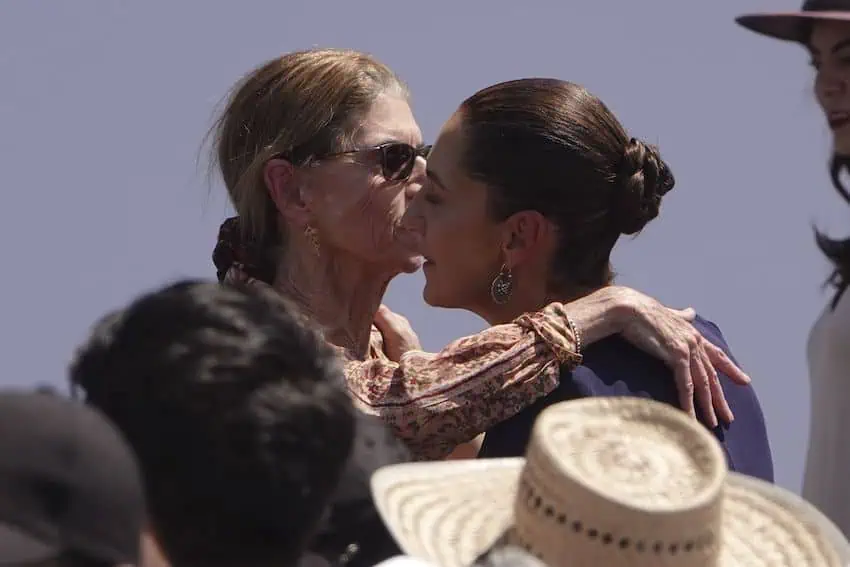
Sheinbaum hugs her mother, Annie Pardo. (Magdalena Montiel/Cuartoscuro)
Sheinbaum to host her mom at the National Palace for Mother’s Day
Sheinbaum noted that she will visit Acapulco this Friday and go to the state of Morelos — located immediately south of Mexico City — on Saturday. She said that the trip to Morelos will be brief as she is going to invite her mother, Annie Pardo, to have a meal at the National Palace for Mother’s Day on Saturday.
Pardo, a biologist who had a long career at the National Autonomous University of Mexico (UNAM), said in a recent interview with the newspaper Milenio that she is “super proud” of her daughter — Mexico’s first female president — but concerned that “she doesn’t sleep much because she’s very hard-working.”
By Mexico News Daily chief staff writer Peter Davies (peter.davies@mexiconewsdaily.com)
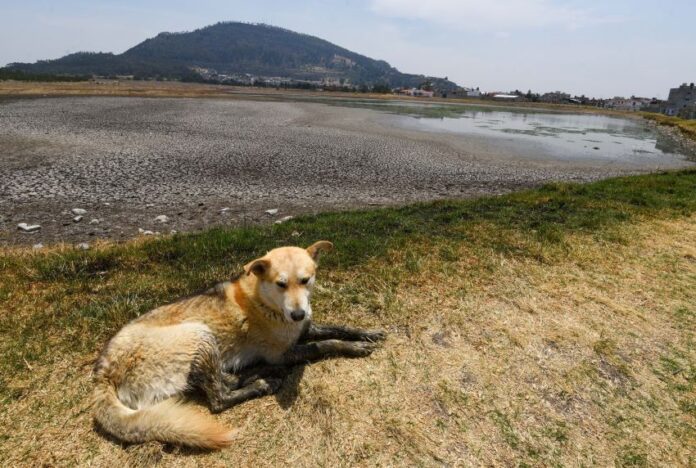
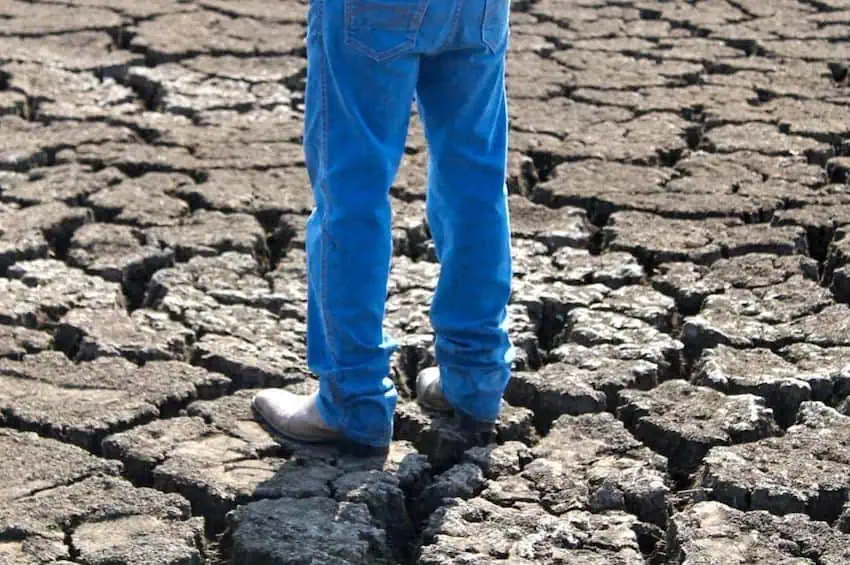
The current extended dry season has raised the threat of heat-related deaths and drought-related water shortages. (Crisanta Espinosa Aguilar/Cuartoscuro)
Almost half of Mexico — 596 municipalities — was experiencing some level of drought by the end of April, the National Water Commission (Conagua) reported in its fortnightly Drought Monitor on Sunday.
Conagua bases its assessment on the international five-category system, which ranges from abnormally dry or D0 (a precursor to drought, not actually drought), to moderate (D1), severe (D2), extreme (D3) and exceptional (D4) drought.
Changing atmospheric conditions have eased the drought slightly on the Baja California Peninsula, but the entire state of Chihuahua has been especially hard-hit by the extended dry season. (Cuartoscuro)
At the end of April, 46.5% of Mexico fell into the D1 to D4 categories, while 34.1% of the country was unaffected. This marks a rise from January, when these figures stood at 40% and 50.2%, respectively.
During the second half of April, above-average rainfall in parts of the Baja California Peninsula and the northeast, center and south of the country, combined with the entry of moisture from the Pacific Ocean, the Gulf of Mexico and the Caribbean Sea to slightly ease the drought conditions in the Baja California Peninsula and central Coahuila.
In May 2024, drought affected 70.76% of Mexico’s territory, with 51% experiencing severe, extreme or exceptional drought. While that percentage was higher than the current condition, more weeks with little to no rain could push the figure up rbefore the end of the dry season.
Chihuahua gripped by extreme drought
Chihuahua, on the U.S. border, was the only state in Mexico to experience extreme and exceptional drought across its entire territory, according to Conagua. A total of 64% of the state fell into the extreme drought category and 36% was experiencing exceptional drought.
A total of 67 municipalities in Chihuahua were affected, with 25 experiencing extreme drought and 42 exceptional drought.
Since 2014, the cumulative number of deaths caused by extreme temperatures is 1,052, according to the Health Ministry, with 79% of cases occurring since 2021, when water shortages began to worsen nationwide.
In January, Conagua predicted that Mexico’s 2025 dry season could last around six months, from late November 2024 to May 2025, hitting especially hard those states that had not fully recovered from the 2024 drought conditions.
In response to ongoing drought and water scarcity, President Claudia Sheinbaum introduced Mexico’s National Water Plan (PNH) 2024–2030 in November and earmarked 20 billion pesos (US $979 million) for water projects across the country in 2025.