Home Blog Page 47

MND Local: Riding high in Tijuana and a new luxury resort in Valle de Guadalupe

0
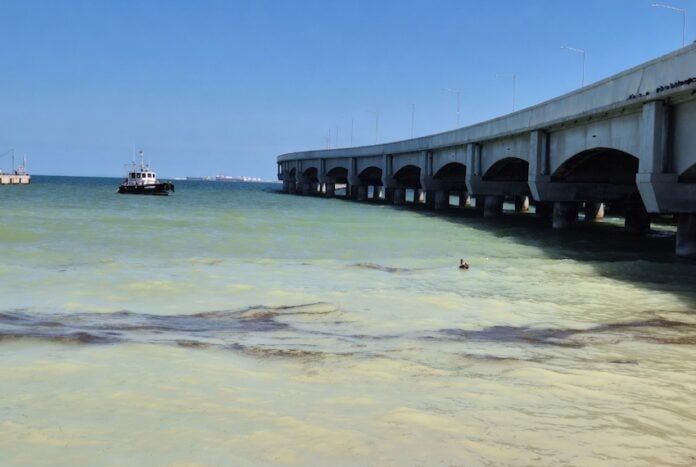
Elevated highway in Tijuana
The first of the two phases of the Viaducto Elevado, or elevated highway, is now complete in Tijuana. (Claudia Sheinbaum/Instagram)

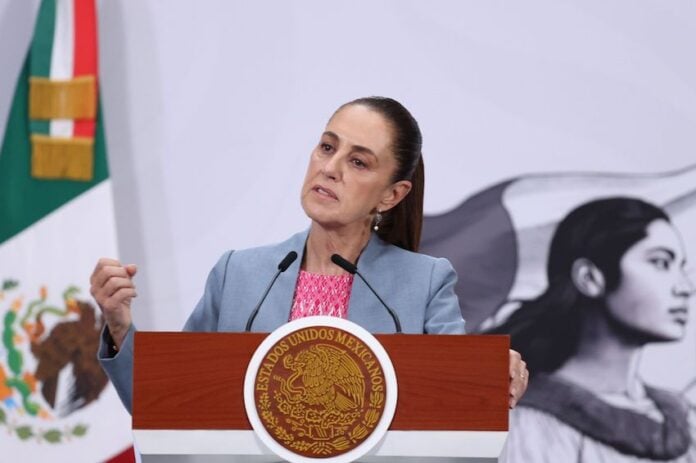
Baja California always welcomes visits from the President of Mexico, not only for reasons of patriotism, but because such visits invariably herald the ribbon-cutting on some significant new project. That was certainly the case when President Sheinbaum visited Tijuana on Friday, Jan. 30, 2026, to inaugurate the first stage of the city’s new toll-free elevated highway, or Viaducto Elevado.

First phase of the new elevated highway completed in Tijuana

The goal of the 11.3-kilometer (seven-mile) elevated highway between Playas de Tijuana and Tijuana International Airport is to increase connectivity while simultaneously reducing traffic congestion among key points in Tijuana, notably the San Ysidro border crossing and downtown Tijuana, which lie between the two endpoints. 

Inauguration of the Viaducto Elevado in Tijuana
Among those on hand to inaugurate the first phase of the Viaducto Elevado at the El Soler tunnel were President Claudia Sheinmbaum (center) and Baja California Governor Marina del Pilar Ávila. (Claudia Sheinbaum/Instagram)

Tijuana, it must be remembered, is not only the “Gateway to Mexico” but a key cog in the CaliBaja mega-region, which sees US $200 million in cross-border trade daily and $70 billion yearly. So, more efficient traffic is not only good for the state of mind of motorists but also beneficial for the local economy.

The 14 billion peso project (approximately US $800 million) was originally greenlit by Sheinbaum’s predecessor, Andrés Manuel López Obrador, in 2023. But after three years of planning and construction, and the creation of more than 6,400 direct and indirect jobs, the first 7.2-kilometer (4.5-mile) phase of the highway wasn’t completed until Sheinbaum’s time in office. In fact, she was one of the first to drive on the just-completed first phase during her recent visit, which stretches from Playas de Tijuana to near the border crossing, with two lanes now open in either direction.

Phase two update and a political point to make

The second 4.1-kilometer (2.5-mile) phase from the border crossing to the airport is expected to open within the next month.

The first word in Viaducto Elevado refers, of course, to the bridge support for the elevated highway, a fact which led to a memorable quote from Mexico’s president at the inauguration, and one surely made with the U.S. president in mind. “For Mexicans, bridges are always better than walls. Building bridges is our principle.”

New luxury hotel to open in Valle de Guadalupe

Valle de Guadalupe is the wine capital of Mexico, the premier wine-producing valley among seven in the state that accounts for 70% of the nation’s total. But it’s not just fine wine that makes Valle de Guadalupe such a special place, or such an attraction for tourists. It’s the food pairings available at some of the region’s and the nation’s best restaurants, including five with Michelin stars.

Valle de Guadalupe receives the majority of the one million or so tourists who visit Baja California wine country each year, a number that has increased significantly in recent years. About 35% of these tourists are international, with most coming across the border from Southern California and beyond on weekends — Valle de Guadalupe is only about 90 miles by car from San Diego.

Montage location for new resort in Baja California
The new Montage Valle de Guadalupe will open in 2028 in the heart of Baja California’s wine country. (Montage International)

Those seeking fine lodgings on such trips will have a luxurious new option in the coming years: the Montage Valle de Guadalupe. The 62-room property with exclusive hillside, vineyard and private wine estate residences is due to open within the grounds of Bruma Wine Resort in 2028, it was recently announced

When complete, it will be the second Montage property in the Baja California peninsula, joining the acclaimed Montage Los Cabos, which opened in 2018. Montage properties are also located in Punta Mita and Mexico City. 

Amenities and attractions

Many amenities will be offered at the new resort, including a signature restaurant, a Spa Montage with fitness center, a sports center, bars and lounges, and a 4,000-square-foot wedding lawn, among other expansive event spaces. However, given the setting in the heart of Baja wine country, the most eagerly anticipated attractions will likely be those that come in a bottle, or at least are wine-related.

Bruma Wine Resort, one of the more recent of the valley’s 150 or so wine producers — it opened in 2017 — has established a strong reputation for its red, white and sparkling wines, thanks to the efforts of winemaker Lulú Martínez Ojeda. Although born in Ensenada, she received her wine education in Bordeaux, training at Château Brane-Cantenac. Meanwhile, on-site restaurant Fauna, helmed by chef David Castro Hussong and pastry chef Maribel Aldaco Silva, has been ranked among Latin America’s 50 Best Restaurants.

Carnival planning in Ensenada

Ensenada and La Paz are the most significant sites for pre-Lenten Carnival celebrations on the Baja California peninsula — both drew over 200,000 attendees in 2025 — with traditional parades and related events in the cities dating back to the late 19th century. Ensenada’s Carnival, for example, has been held since 1891, when the town had only about 600 residents. 

Unusually this year, the dates for Carnival in Ensenada have been moved back from Feb. 12-17 — traditional across the Catholic landscape in 2026 — to March 12-17, in the midst of Lent. According to the Ensenada Municipal Institute of Culture, Arts and Humanities (IMCUDHE), the change of dates was made in the interest of logistics and coordination, so that there was more time to finalize contracts, schedule parades and lock-in performers.

Carnival queen in Ensenada
There will be a queen of Carnival in Ensenada this year, even if the dates of the celebration have been pushed back. (Hotel Casa del Sol/Instagram)

As always, there will be parades and floats, king and queen contests, nightly concerts and the opening “burning of bad mood” in which an effigy is burned to clear away any negativity or bad vibes.

Those aiming to attend Carnival in La Paz in Baja California Sur, by contrast, should note that its dates remain Feb. 12-17. 

Chris Sands is the former Cabo San Lucas local expert for the USA Today travel website 10 Best and writer of Fodor’s Los Cabos travel guidebook. He’s a contributor to numerous websites and publications, including Tasting Table, Marriott Bonvoy Traveler, Forbes Travel Guide, Porthole Cruise, Cabo Living and Mexico News Daily.

Photographer chronicles Mexico’s iconic VW Beetles in San Cristóbal exhibition

3
Volkswagen Beetles still proudly prowl the streets of San Cristóbal de las Casas. (Paul O'Connor)

When I first took a vacation in San Cristóbal de las Casas, I didn’t expect it would re-ignite my love for photography. Over the last five years, I have captured numerous VW Beetles and their owners trundling through the narrow streets of the old city. The “Vocho,” as the locals affectionately call the domed car, stands out from just about every other vehicle on the road.

It has a unique shape, which is ideal for a photographer trying to contrast the old car against the historic colonial architecture or the numerous examples of vibrant street art. As San Cristóbal is a Pueblo Mágico, I used a touch of magical realism to imagine the Vocho as the only vehicle in the city.

Finding an exhibition space

San Cristóbal de las Casas
San Cristóbal de las Casas, the Volkswagen Beetle and magical realism are a perfect combination. (Paul O’Connor)

If I thought that waiting for the right light and circumstances to capture the best images was difficult enough, it was nothing compared to organizing an exhibition of my work. A full eight months before my planned exhibition dates in January 2026, I contacted the main galleries of San Cristóbal de las Casas. Forms were duly stamped with impressive-looking signatures and then double-stamped with notifications of confirmed dates.

However, when I arrived in the city in early January, I discovered that the main gallery was closed for renovations. It was a real setback. But thanks to my agent in Mexico, we succeeded in securing another, smaller gallery at short notice. On Jan. 29, the ribbon was cut by the President of “Bad Crew,” a local Vocho owners club and the Nauyaca Galleria on Real de Guadalupe was quickly packed out. A convoy of customized Vochos passing the gallery helped promote the exhibition.

The title of my exhibition is “El último de los Vochos” (the last of the Vochos), which I chose because the last classic car rolled off the Mexican production line back in 2003. This means that every single classic Vocho is more than two decades old, and many I had photographed were double that age. The question asked is how much longer can the Vochos survive on the road?

Keeping the Vocho spirit alive

Due to low emission regulations combined with their age, Vochos are now a rarity in Europe, mostly owned by classic car enthusiasts. So I figured capturing the Vochos being used as a daily vehicle by everyday people would be a useful record of the vehicle. Luckily, the visitors to my exhibition agreed and I had a very enthusiastic response. A few visitors scanned the photos to see if I had captured their own Vocho, and when I heard a squeal, I knew someone had spotted one they recognized. Some of the photos I had put into box frames with small metal models of Vocho included to give the photographs an extra element.

VW Beetle in San Cristóbal de las Casas
The spirit of the Vocho is alive and well in San Cristóbal de las Casas, even though the last one rolled off the production line in 2003. (Paul O’Connor)

One local reviewer wrote, “I encountered a detailed and meticulous exhibition in which even the lamps were decorated with style. It was a head-to-head artistic style that hadn’t been seen for more than a generation. The admiration and elegance of this kind of theme were evident and had been recreated with great care. It was hard not to get carried away by the same feelings.”

Where to see the exhibition

The Exhibition will run in Nauyaca Galleria until Feb. 12, before moving to two other galleries. Different displays will be exhibited at the central art gallery, Centro Cultural Carlos Jurado and also at a popular nightclub, El Paliacate Espacio Cultura. Visitors will gain free entry until the end of the month. I plan to build up to next year, which is the 60th anniversary of the year the first Vocho was produced in Mexico. In 2027, hopefully, there be an exhibition in Mexico City if I can find a gallery willing to support me.

For more details, click here.

Paul O’Connor is a photographer.

Homicides were down 34% in January: Tuesday’s mañanera recapped

1
President Sheinbaum standing next to a graph showing a reduction in homicides in January 2026
According to the Mexican government, January 2026 was the least violent January in terms of homicides since 2016. (Graciela López/Cuartoscuro)

Security was a central focus of President Claudia Sheinbaum’s Tuesday morning press conference.

Security officials presented the latest data on homicides and arrests, while Sheinbaum spoke about her government’s security strategy.

Homicides decline in first month of 2026 

National Public Security System chief Marcela Figueroa told reporters that the daily homicide rate in Mexico in January was the lowest of any month in the past 17 months — i.e., since September 2024, the final month of Andrés Manuel López Obrador’s presidency.

She also said that last month was the least violent January in terms of homicides since 2016.

The data Figueroa presented showed there was an average of 50.9 homicides per day last month, a decline of 34% compared to January 2025.

On average, there were 36 fewer homicides per day last month than in September 2024, the security official highlighted.

Figueroa also said that since Sheinbaum took office, there has been a “sustained downward trend” in homicide numbers.

Last month, she presented preliminary data that showed that homicides declined just over 30% last year compared to 2024. However, there is significant skepticism about the accuracy of the government’s homicide numbers.

Guanajuato remains Mexico’s most murderous state 

Figueroa presented data that showed that over half of all homicides in Mexico last month (50.6%) occurred in just seven states.

Guanajuato — Mexico’s most violent state in recent years in terms of total murders — recorded 138 homicides in January, a figure that accounted for 8.8% of the national total of 1,577.

Ranking second to seventh for total homicides last month were:

  • Baja California: 133
  • Chihuahua: 124
  • México state: 108
  • Sinaloa: 106
  • Morelos: 98
  • Guerrero: 91

Among the 32 federal entities, Mexico City ranked 13th for total homicides with 64 in January.

Yucatán and Zacatecas recorded the equal lowest homicide count in January, with just three murders in each state.

Zacatecas recorded largest annual decline in murders in January 

Figueroa highlighted that homicides in Zacatecas declined 88% last month compared to January 2025. In the early years of this decade, Zacatecas was plagued by violence.

Marcela Figueroa Franco
National Public Security System chief Marcela Figueroa emphasized the remarkable decline in homicides seen in Zacatecas, which reported only three homicides in January. (Graciela López/Cuartoscuro)

However, homicides in the northern state declined 71.1% last year, according to data presented last month.

After Zacatecas, the states that recorded the largest annual decreases in homicides in January were:

  • San Luis Potosí: -83.9%
  • Quintana Roo: -73.2%
  • Tabasco: -68.8%
  • Aguascalientes: -66.7%

Twenty-six of Mexico’s 32 federal entities recorded fewer homicides last month than in January 2025, according to the data presented by Figueroa.

Among the other states that recorded year-over-year declines were those that ranked 1-7 for total homicides last month.

Homicides declined 62.3% in January in Guanajuato; 28.9% in Baja California; 19.5% in Chihuahua; 30.3% in México state; 27.9% in Sinaloa; 9.3% in Morelos; and 25.4% in Guerrero.

More than 43,000 people arrested for ‘high-impact crimes’ since Sheinbaum took office

Security Minister Omar García Harfuch told reporters that “since the beginning” of Sheinbaum’s administration, the federal government has implemented a security strategy that “prioritizes attention to the causes [of crime], the strategic use of intelligence, criminal investigation, and coordinated territorial operations” involving various institutions including the army, the navy, the National Guard and the Security Ministry.

Consequently, “criminal structures” have been weakened, “priority targets” have been detained and the incidence of “high-impact crimes” such as murder and kidnapping has declined, García Harfuch said.

Between Oct. 1, 2024 and Jan. 31, 2026, he said that 43,438 people were arrested for allegedly committing high-impact crimes.

In the same period, García Harfuch said that authorities seized over 327 tonnes of drugs and 22,800 firearms, while the army and navy dismantled more than 2,000 methamphetamine laboratories.

Is security in Mexico improving or are the numbers being manipulated?

Sheinbaum highlights security strategy advances 

Asked what she attributed the reduction in homicides and other crimes to, Sheinbaum pointed to progress that has been made in three “main areas” as part of the implementation of her government’s security strategy.

She said that the National Guard — an almost seven-year-old security force — is now “consolidated,” intelligence and investigative practices have been strengthened and there is “greater coordination” between state authorities and “all the institutions of the government of Mexico.”

“Obviously, attention to the causes [of crime] has also been strengthened,” Sheinbaum added.

The current federal government has taken a more proactive approach to combating crime than the 2018-24 administration led by López Obrador.

U.S. Ambassador to Mexico Ron Johnson reportedly said in September that the Sheinbaum administration had made a “bold change” in security strategy in Mexico by ramping up operations against drug cartels. On social media, he has praised Mexican authorities for the high-profile arrests they have made, even as U.S. President Donald Trump calls on Mexico to do more to combat cartels and the drugs they traffic.

On Jan. 12, four days after Trump said that the United States was going to start targeting Mexican cartels on land, Sheinbaum touted her government’s security results during a call with the U.S. president.

She subsequently said that U.S. military action in Mexico could be ruled out.

By Mexico News Daily chief staff writer Peter Davies (peter.davies@mexiconewsdaily.com)

Retail chain Coppel to invest US $830M, open 80 new stores

4
Coppel store, Coppel department store facade and signage, BanCoppel, Afore Coppel, Agustín Coppel Luken, Enrique Tamayo, Guadalajara, Jalisco, México, January, 14, 2026.
The funding forms part of an 80-billion-peso ($4.6 billion) 2026-2030 transformation plan. (Shutterstock)

Grupo Coppel plans to invest over 14.3 billion pesos (US $830 million) this year, the company’s CEO, Diego Coppel Sullivan, announced on Monday.

The Mexican retail firm will use the funds to expand its commercial infrastructure, strengthen its technological capabilities and increase the share of renewable energy use in its operations.

“This investment reflects our commitment to the country and allows us to continue moving toward our goal of consolidating a more agile omnichannel platform and fulfilling our purpose of improving the lives of millions of Mexican families,” said Sullivan.

The funding forms part of an 80-billion-peso ($4.6 billion) 2026-2030 transformation plan, announced in June 2025.

The investment will be divided as follows:

  •   43% for commercial infrastructure (6.2 billion pesos / $360 million)
  •   31% for technological transformation (4.5 billion pesos / $260 million)
  •   26% for energy transition (3.6 billion pesos / $210 million)

The financing is expected to support the creation of 2,500 direct jobs in 2026, adding to Grupo Coppel’s existing workforce of over 130,000 and consolidating the company’s position as one of the top 10 employers in Mexico.

The firm will remodel almost 100 branches and distribution centers, as well as open more than 80 new stores, to reach 2,000 stores across Mexico by the end of the year.

Coppel, which sells clothing, electronics and home goods, has pursued a major expansion strategy since 2020. (Coppel)

Certain stores will be tailored to focus on specific product lines, with the opening of motorcycle dealerships and fashion-focused stores, to strengthen and diversify the product and service offerings.

Coppel’s modernization plans

Investment in technological transformation will help Coppel to improve its digital platform and incorporate artificial intelligence solutions in logistics and supply chain management to improve customer experience. 

The firm expects digital sales to contribute 20% of its total sales by the end of the decade.

The expansion of Coppel’s digital capabilities will also enhance its financial service offerings for the more than 12 million customers of its banking institution, BanCoppel.

In support of a green transition, Coppel aims to increase the contribution of renewable energy to the running of its operations to 30% by 2030, through investments in solar panels across 900 buildings. It also aims to deploy a fleet of over 1,100 hybrid and electric vehicles by this time.

With reports from Milenio and El Economista

Families demand relocation of 2 schools near Dos Bocas refinery, citing contamination and noise

0
families protest schools near refinery Dos Bocas
The families were reportedly promised that the schools would be moved further away from the refinery when construction on the refinery first started seven years ago. (Número Cero/Facebook)

Citing environmental and civil protection concerns, more than 200 families in the Gulf state of Tabasco are demanding that schools near the Dos Bocas refinery be relocated.

In announcing their petition to President Claudia Sheinbaum and Governor Javier May, parents say the proximity of the refinery exposes their children and school employees to serious health risks.

The Agustín Melgar Kindergarten and the Abías Domínguez Alejandro Elementary School stand in the shadow of the Olmeca Refinery, known as Dos Bocas, in the Lázaro Cárdenas del Río neighborhood of the municipality of Paraíso.

The families say they have been trying to get the schools relocated since construction on the refinery began nearly seven years ago, but have failed to get an honest hearing. 

At a press conference last week, they stated that they submitted a letter to Education Minister Mario Delgado on Nov. 19, 2024, formally requesting the relocation of the schools and the implementation of urgent protective measures, but have yet to receive a response.

The schools are located less than 500 meters from high-risk facilities, such as the sulfur recovery plant, from which hydrogen sulfide, a highly toxic and potentially deadly gas, could be released. Even so, there are no prescribed safety protocols, alarms or clear evacuation routes at the schools.

Prompted by national media coverage of the press conference, Governor May responded on Tuesday, saying the authorities are addressing the parents’ concerns.

While complaining that the issue has become overpublicized, May said his government “is always open to dialogue.”

Without addressing the possibility of relocating the schools, the governor said he has offered to allow parents to tour the refinery to learn about its operations and security protocols.

“The refinery was built to the highest certification standards and latest generation technology, so there is no risk of affecting its surroundings,” he said, adding that there is no scientific evidence to confirm the alleged contamination.

The parents insist that since the refinery began operations, the smell of gas and the deafening noise are constant irritations. They say the presence of black smoke and falling particles has become commonplace, as have symptoms of dizziness, nausea and respiratory problems in their children, forcing the evacuation of the schools on several occasions.

With reports from Animal Político, Aristegui Noticias, El Universal and El Heraldo de México

Mexico to produce mRNA vaccines under new agreement with Moderna

3
Sheinbaum at the signing of an agreement with vaccine producer Moderna
Sheinbaum said that "Mexican researchers in biomedicine and other areas" will participate in the joint research "in order to be able to develop other vaccines that are of interest to us in our country." (Eder Villalpando/Presidencia)

Mexico’s Health Ministry, state-owned medical company Birmex, Mexican pharmaceutical company Liomont and U.S. pharmaceutical firm Moderna have signed an agreement to collaborate on vaccine production in Mexico and related scientific research.

President Claudia Sheinbaum announced the pact in a video that was filmed at the National Palace in Mexico City and posted to social media on Monday night.

“Today is a very important day for our country,” she said before announcing that “we are signing” an agreement with Moderna, Liomont and Birmex, a state-owned company whose full name is Laboratorios de Biológicos y Reactivos de México (Biological and Reagent Laboratories of Mexico.)

“We’re signing an agreement for the production of vaccines here in Mexico. It’s not just the production of vaccines for COVID-19, but also other kinds of vaccines,” said Sheinbaum, who noted that Moderna is “one of the global companies” that makes mRNA vaccines, which are now set to be produced in Mexico.

“And perhaps the most important thing is that there will be joint scientific research development,” she said.

Sheinbaum said that “Mexican researchers in biomedicine and other areas” will participate in the joint research “in order to be able to develop other vaccines that are of interest to us in our country.”

“For example, the dengue vaccine, or even a vaccine against cancer,” she said.

“All this research will be carried out in our country with the objective, as I promised, … [of Mexico] really becoming a scientific powerhouse in various areas of knowledge,” Sheinbaum said.

The president was accompanied by representatives from Birmex, Liomont and Moderna, and Health Minister David Kershenobich, as she made the announcement.

Moderna CEO: ‘We are proud to support Mexico’

Moderna issued a statement on Tuesday announcing it had signed “a Memorandum of Understanding (MoU) for a long-term strategic agreement” with the Mexican Government, Birmex, and Liomont “to enhance Mexico’s health sovereignty and mRNA manufacturing resilience.”

Moderna said that “the five-year agreement will include the supply of Moderna’s respiratory vaccine portfolio, as well as technology transfer to Liomont, a Mexican pharmaceutical company with state-of-the-art manufacturing facilities, to produce mRNA-1273, Moderna’s COVID-19 vaccine, and establish a reliable in-country supply of respiratory vaccines.”

“In alignment with ‘Plan Mexico,’ a Mexican government initiative to increase investment and build local production capacity, Moderna and the Mexican Government will also collaborate on local clinical research and development programs based on Mexico’s health priorities and work to strengthen its pandemic preparedness framework,” the Massachusetts-based company said.

Moderna CEO Stéphane Bancel said the company is “proud to support Mexico in its mission to strengthen national health security.”

“Through this agreement, we will be able to provide the Mexican people with access to our respiratory vaccines and critical pandemic response capacity,” he said.

“This collaboration also reflects the growing demand for these vaccines in Mexico, and we are excited about the opportunity to support public health needs while driving sales growth through geographic diversification,” Bancel said.

Mexico News Daily 

Landmark works of Mexican art, unseen for 2 decades, go on view in Mexico City

1
Diego Rivera's 1943 portrait of Natasha Gelman, who assembled the Gelman collection along with her husband, Jacques Gelman. (Secretaría de Cultura)

Sixty-eight landmark works from the renowned Gelman Collection of 20th-century Mexican art — including paintings by Frida Kahlo and Diego Rivera — will go on view in Mexico this month for the first time in nearly two decades.

The exhibit is set to open Feb. 17 at the Museum of Modern Art (MAM) in Mexico City’s Chapultepec Park and close May 17. 

It marks the start of a new international tour for what the Ministry of Culture calls “one of the most representative collections of 20th-century Mexican modern art.”

Assembled by collectors Jacques and Natasha Gelman beginning in the 1940s, the 68 works form part of a larger 160-piece ensemble that was placed under the management of the Madrid-based Banco Santander Foundation just last month.

The collection has largely been out of public view since 2008.

The Mexico City show will feature paintings and photographs that helped define modern Mexican identity, from muralism to avant-garde experimentation. The exhibit’s title is “Modern Narratives: Emblematic Works from the Gelman Santander Collection.”

Jacques Gelman was born to well-to-do Jewish parents in St. Petersburg, Russia, and left in the 1920s after the Bolshevik Revolution, eventually moving to Mexico and meeting his future wife, Eastern European émigré Natasha Zahalka.

Together they built several significant collections, including European modern art, pre‑Columbian sculpture, and, most famously, their collection of Mexican modern art, with key works by Kahlo, Rivera, Rufino Tamayo, María Izquierdo and others. 

“It is very significant and symbolic that the itinerary of this new stage begins in the country of origin of the artists who make it up and where the collection was created,” Culture Minister Claudia Curiel de Icaza said in a press release.

Originally, the exhibit was to debut this summer in Spain, where Banco Santander is headquartered. However, 27 of the works are National Artistic Monuments under Mexican law, restricting their mobility and prompting the upcoming Mexico City show.

Frida Kahlo is represented by 10 oil paintings, including “Self-Portrait with Necklace” (1933), “Diego on My Mind” (1943) and “Self-Portrait with Monkeys” (1943).

Rivera’s 1943 oil “Calla Lily Vendor” anchors the section on the tensions between tradition and modernity.

Works by Tamayo, Izquierdo, José Clemente Orozco, David Alfaro Siqueiros, Gunther Gerzso, Carlos Mérida, Jesús Reyes Ferreira and Lola Álvarez Bravo round out the show, which is divided into four sections: portraits, nature, Mexican identity and the paradoxes of modernity. 

With reports from El País, La Jornada and The Art Newspaper

Security Minister: Abducted miners were mistaken for members of a rival cartel faction

13
Omar García Harfuch at a podium
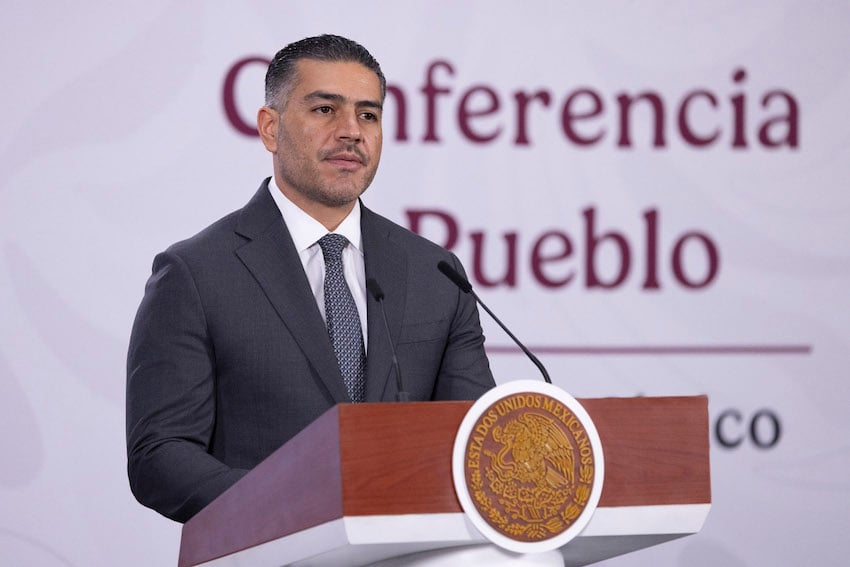
Security Minister Omar García Harfuch gave an update on the case at President Claudia Sheinbaum's Tuesday morning press conference. (Graciela López/Cuartoscuro)

Federal Security Minister Omar García Harfuch said Tuesday that four people arrested in connection with the abduction of 10 mining company workers in Sinaloa last month told authorities that the victims were mistaken for members of a rival cartel faction.

In recent days, authorities located 10 bodies on a property in Concordia, Sinaloa, the same municipality where the employees of Canadian mining company Vizsla Silver were abducted on Jan. 23.

Bodies of 3 kidnapped miners found in a mass Sinaloa grave

To date, five of the bodies have been identified as belonging to missing miners.

At President Claudia Sheinbaum’s Tuesday morning press conference, a reporter asked officials whether they had information about the motive of the crime allegedly committed by members of the Los Chapitos faction of the Sinaloa Cartel.

“With the first arrests that the army carried out, of four people allegedly responsible for the abduction, what they say is that [the victims] were mistaken … with members of an opposing group,” García Harfuch said.

“Those are the first statements [of the people detained]. We’re going to have more information and of course we’re going to have more people arrested,” he said.

García Harfuch told reporters that the four people arrested are “from the cell of Los Chapitos,” and noted that that faction of the Sinaloa Cartel is engaged in a “fight” with the Los Mayos faction of the same criminal group.

Los Chapitos is controlled by the sons of imprisoned drug lord Joaquín “El Chapo” Guzmán Loera. Its long-running battle with Los Mayos intensified after the leader of that faction, Ismael “El Mayo” Zambada, was arrested in the United States in July 2024 after he was allegedly kidnapped and forced onto a U.S.-bound private plane by Joaquín Guzmán López, one of Guzmán Loera’s sons.

The 10 employees of Vizsla Silver went missing last month from a housing development near the company’s silver-gold Panuco project in Concordia, a municipality that borders the municipality of Mazatlán.

map of Panuco mining area
The abducted miners worked with the highly touted Panuca gold-silver project and were taken from their housing in nearby Concordia. (Vizsla-Silver)

Vizsla Silver said in a statement on Monday that it had “been informed by a number of families that their relatives, our colleagues, who were taken from the Company’s project site in Concordia, Mexico, have been found deceased.”

“We are devastated by this outcome and the tragic loss of life,” said Michael Konnert, the company’s president and CEO.

“Our deepest condolences are with our colleagues’ families, friends and co-workers, and the entire community of Concordia,” he said.

García Harfuch: Vizsla Silver had not reported acts of extortion or threats against employees  

Asked whether authorities had reports of mining companies being extorted or their personnel being intimidated or threatened, García Harfuch responded:

“In this specific case, we haven’t previously had a report or complaint that they had been extorted or that one of the members of this company was bothered by any criminal group. We didn’t have it on record.”

However, in April 2025, Vizsla Silver suspended operations at its silver-gold project in Concordia due to the prevailing security conditions in the area.

The company said at the time that “out of an abundance of caution,” it had “temporarily paused field work at the Panuco project due to current security conditions in the area.”

Vizsla Silver didn’t specify the nature of the security conditions that prompted it to suspend work, but violent crime is common in Sinaloa, one of Mexico’s most dangerous states.

One month and one day after it announced the suspension, the company said that it had “resumed all field work activities” at the Panuco project.

“With security conditions now normalized in the region we have resumed our on-site work programs at Panuco,” Konnert said last May.

With reports from El Universal, La Jornada and Milenio 

Could Estadio Azteca be stripped of its World Cup inauguration?

1
CIUDAD DE MÉXICO, 13DICIEMBRE2025.- A poco más de tres meses del partido programado entre la selección de México vs Portugal, los trabajos en la periferia del ahora llamado estadio Banorte, avanzan a marchas forzadas, para lograr terminar en tiempo y forma.
Estadio Azteca traded naming rights to Banorte for the bank's help in financing renovations required by FIFA for a World Cup host stadium. But the work was plagued with problems from the beginning and continues to run behind schedule. (Rogelio Morales/Cuartoscuro)

With renovations at Estadio Azteca running behind schedule, some are warning that FIFA could strip the iconic stadium in southern Mexico City of World Cup hosting duties.

Are they simply alarmists, or are their concerns warranted?

Emilio Azcárraga, president of Grupo Ollamani, owners of Estadio Azteca, said he was confident that the renovations would be completed in time for the World Cup, but also said he was “not sure” if the deadlines would be met. (Galo Cañas/Cuartoscuro)

A quarterly financial report submitted to the Mexico Stock Exchange last week by Grupo Ollamani president Emilio Azcárraga indicates that the consortium itself believes a “possible disqualification or relocation of key matches by FIFA” is a genuine risk for its soccer business.

In the report, Ollamani, which owns Estadio Azteca, the Mexico City soccer club América and Grupo Televisa’s casinos, listed as a concern the “failure to meet deadlines for the remodeling works and unforeseen costs.”

Last Friday, Azcárraga visited the stadium — officially renamed Estadio Banorte after the bank tendered a 2.1 billion peso (US $121 million) loan to fund the renovation project — and delivered conflicting messages about the status of the project.

While expressing optimism that the renovations would be completed on time, he added that he was “not sure” about the chances of meeting the target dates. He also admitted that the work is behind schedule.

Given the current situation, Azcárraga explained that the project will be divided into three stages. The first would conclude at the end of March, with the official reopening set for March 28, when Mexico is scheduled to host Cristiano Ronaldo’s Portugal in a friendly

The second phase, focused on the minimum renovations necessary to meet the June 11 inauguration date when El Tri is scheduled to face South Africa, would begin on March 29. 

Once the tournament is over, the third and final phase would begin to complete the remaining renovations, which Azcárraga said are mostly outside the stadium, including the development of a parking lot.

Poised to become the first stadium to host three separate inaugural World Cup matches, Estadio Azteca was closed in June 2024 with the promise that it would be completely renovated in time for the 2026 World Cup.

However, Azcárraga explained, there were difficulties from the outset related to the need for constant maintenance, which had been lacking for years.

“But now things are much calmer and progressing,” he insists.

These are all the upgrades coming to Mexico City ahead of the World Cup

In addition to lighting and all-new media facilities, the renovation project required the demolition of sections of the stands to relocate locker rooms, the replacement of seats to conform to FIFA standards and the modernization of hospitality areas, among other things.

In order to prepare the final logistics at each venue, FIFA will take full possession of the host stadiums in Mexico, the United States and Canada in early May. 

If it determines that conditions at Estadio Azteca seriously compromise the optimal development of the opening match, the decision to relocate could be made. 

With reports from El País, Marca, Deportes RCN and Esto

Medical inflation and tax changes are increasing health insurance premiums by up to 40%

1
Facade of GNP Saguaros
In Mexico, approximately 14-15 million people (10% of the population) pay for major medical expense insurance (gastos medicos mayores). (GNP)

Private health insurance in Mexico is getting more expensive in 2026 due to a combination of high medical inflation and recent tax changes, which have increased premiums by between 20% to 40%. 

Economist Alejandro Gómez, founder of the Group of Advisors in Economics and Public Administration, told the newspaper El Economista that these adjustments could deter people from contracting private insurance, reduce their coverage amounts to pay less, or, in the worst-case scenario, lead to cancellations.

In Mexico, approximately 14-15 million people (10% of the population) pay for major medical expense insurance (gastos medicos mayores). According to Gómez, about 20% — equating to about three million individuals — might consider canceling their policies this year. 

Erick Ocampo, head of the Government and Public Sector Committee of the Mexican Association of Insurance and Bonding Agents (AMASFAC), explained to El Economista that this 20% at risk of dropping their policy has basic coverage, meaning that they have insured amounts below 1 million pesos (US $58,144), with deductibles of up to 100,000 pesos ($5,800) and co-insurance policies of up to 20%.

“These are people who can no longer optimize their insurance; they can’t lower the insured amount to 500,000 pesos, [no insurer] is going to give them that, because they won’t get paid anything at all,” Ocampo said. 

What caused the increase in premiums?

Record medical inflation and recent changes to the Value Added Tax (VAT) code for insurance companies have contributed to this year’s increase in prices. 

According to the 2026 Medical Cost Trends Report by Aon, Mexico is projected to have the highest medical cost inflation globally in 2026, with an estimated average rate of 14.8%. This percentage not only surpasses last year’s increase (14.5%), but is also significantly higher than the country’s projected overall inflation rate of 3.2%.

An ambulance pulls up to a hospital
In 2024, 76.5% of Mexico’s population aged 18 to 70 did not have any type of insurance, according to the National Survey on Financial Inclusion. More than 15% said cost was a limiting factor. (Christus Muguerza/Facebook)

In its report, Aon pointed out additional drivers of the price increase, including a growth in demand for private care and the limited coverage of certain treatments by major medical insurance companies. 

Aon identified musculoskeletal and back pain disorders, gastrointestinal diseases and accidents as the main medical conditions that put high pressure on health plans.  

Meanwhile, starting this year, insurance companies can no longer claim or deduct VAT on services and goods paid for when providing compensation for hospitalizations and other services. Furthermore, this measure is applied retroactively to the 2025 fiscal year. This means insurance companies will have to review their declarations and, if necessary, submit supplementary declarations to regularize any discrepancies.

Experts in the sector estimate that the VAT change alone is responsible for at least 10% to 20% of the price increase in premiums for medical expenses.  

With reports from MGM Noticias and El Economista

Has your Mexican health insurance increased in price this year?

Thanks for responding!