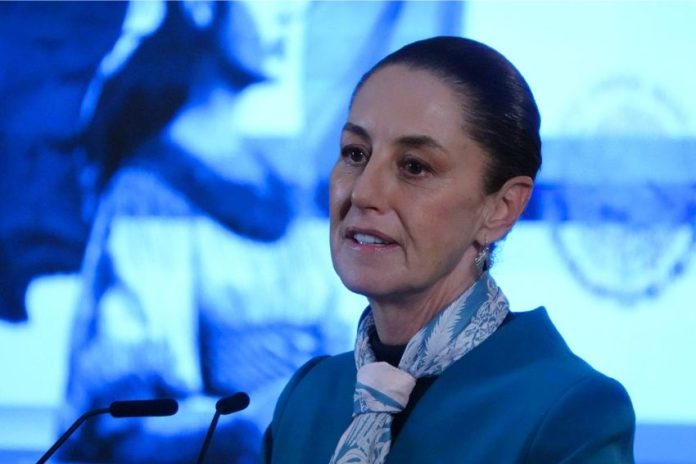
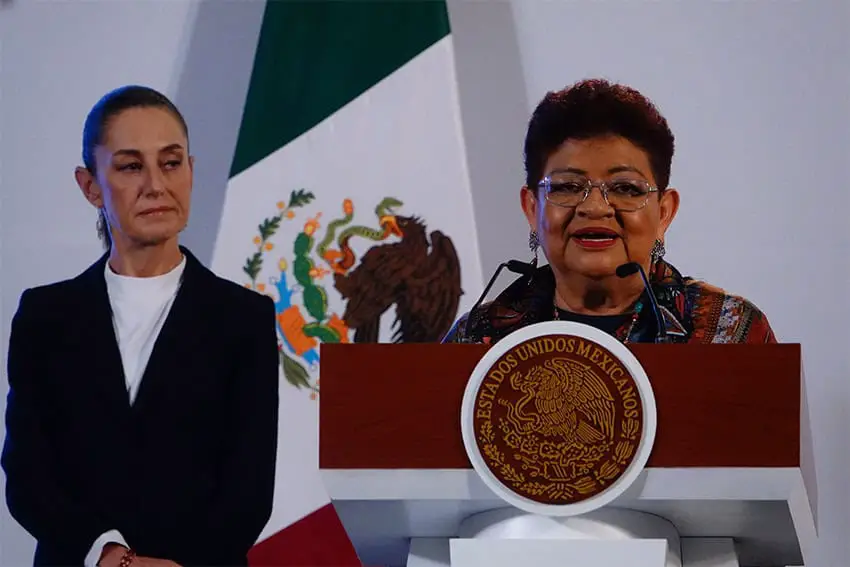
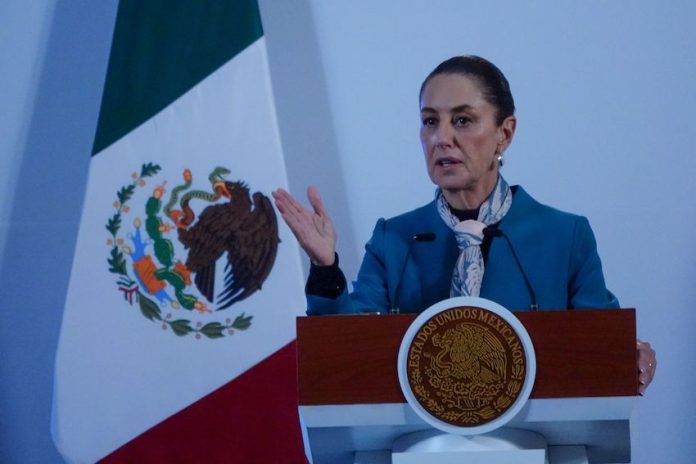
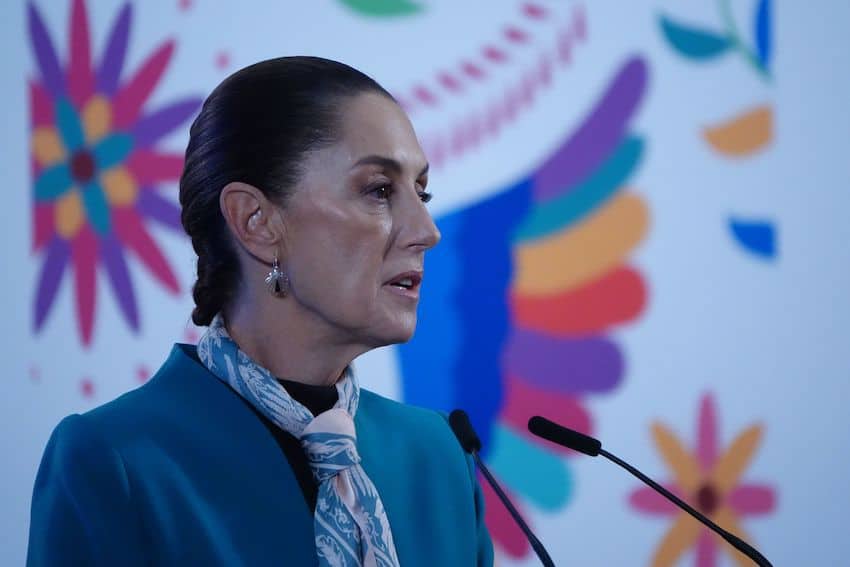
On Wednesday, Sheinbaum unveiled some details of her electricity transition plan. (Galo Cañas Rodríguez/Cuartoscuro)
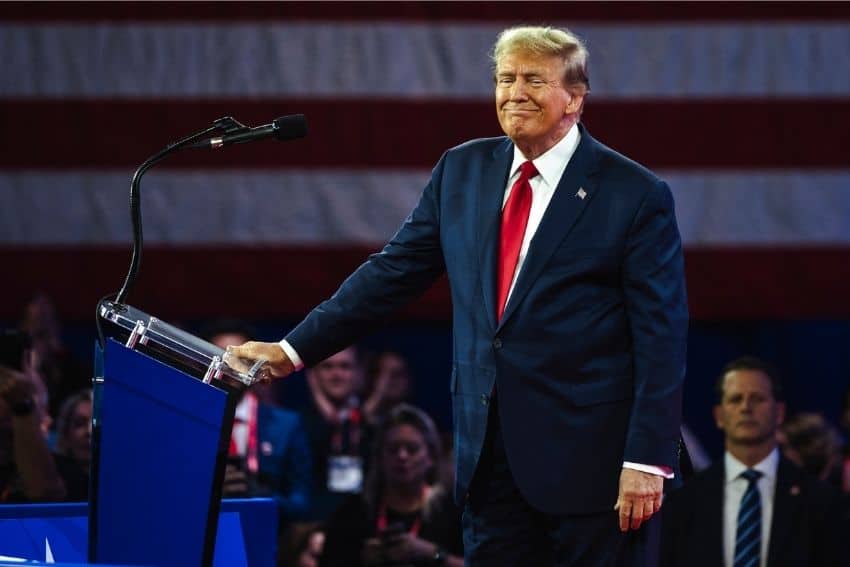
Just hours after it became clear that Donald Trump had won the presidential election in the United States, President Claudia Sheinbaum held her Wednesday morning press conference at the National Palace in the historic center of Mexico.
Here is a summary of her remarks about Trump’s victory, energy sector reform and other issues, during her latest mañanera.
Sheinbaum’s daily press conference began soon after most U.S. media outlets definitively called the U.S. presidential election for Donald Trump. (File photo/Jonah Elkowitz for Shutterstock)
‘No reason for concern’ about a second Trump presidency
“To all Mexicans, there is no reason for concern. To our compatriots [in the U.S.], to their relatives here, to Mexican business people: there is no cause for concern,” she said despite Trump’s tariff threats and pledge to carry out a mass deportation operation.
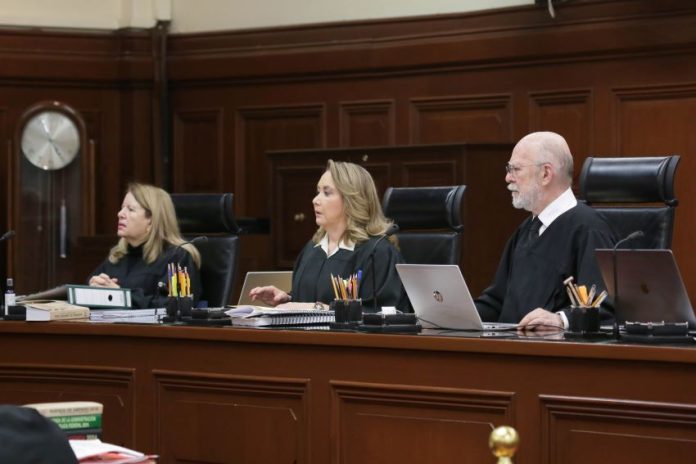
Sheinbaum noted that four of 11 Supreme Court justices voted against a proposal to partially invalidate the recently enacted judicial reform, ensuring that large-scale judicial elections can go ahead next year as planned.
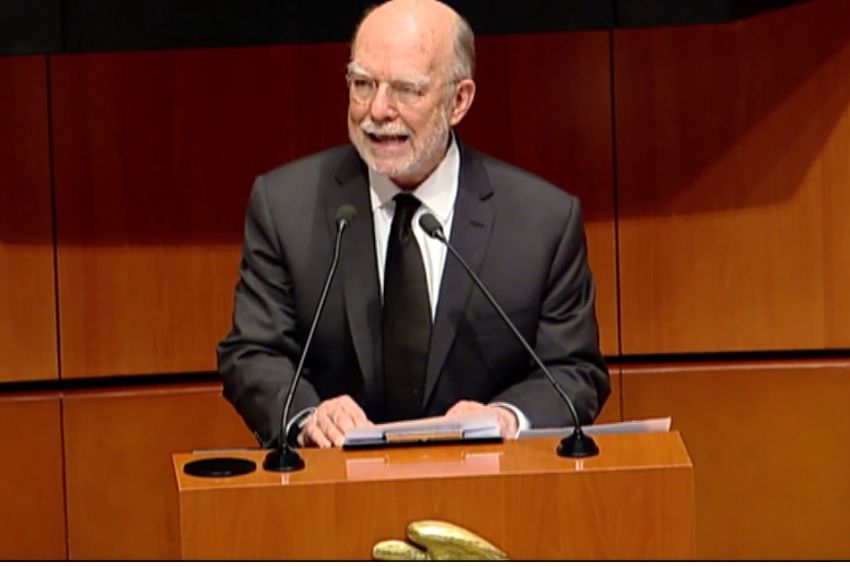
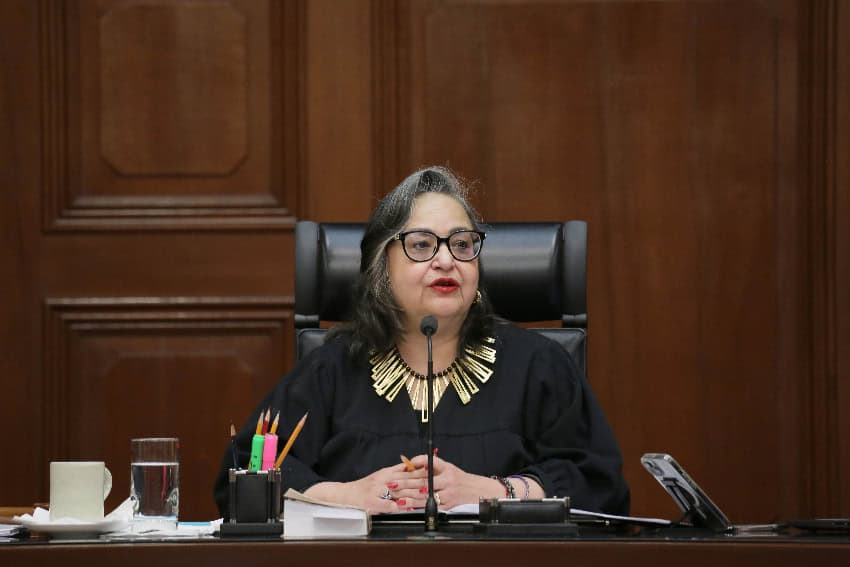
“Who voted against [the proposal]? Justice Yasmín Esquivel, Justice Loretta Ortiz, Justice Lenia Batres and also Justice Alberto Pérez Dayán,” she said.
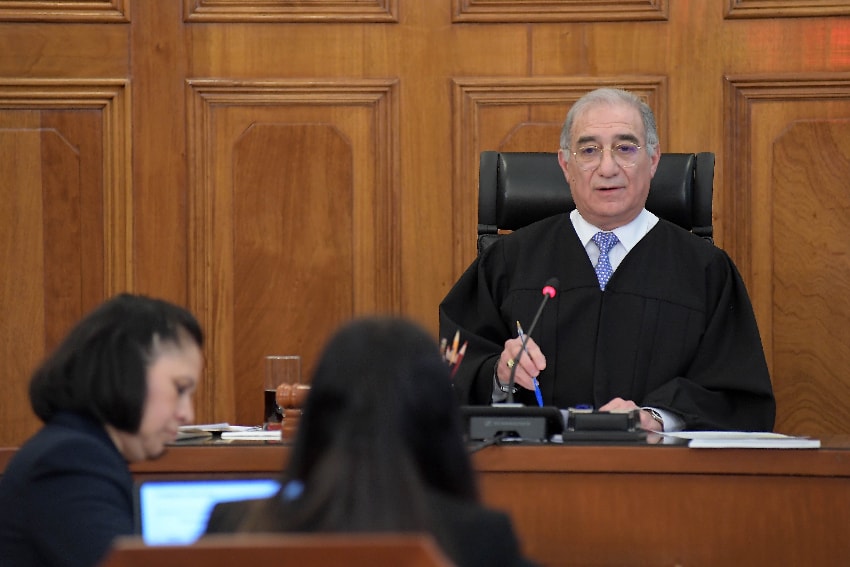
Justice Pérez Dayán in a session of Mexico’s Supreme Court in February. (Cuartoscuro)
“I invite you to listen to the intervention of Justice Pérez Dayán. … What he said is, ‘I don’t agree with the reform, but that doesn’t mean that my personal opinion implies that a project of unconstitutionality can be accepted because [the reform] is already in the Constitution,'” Sheinbaum said.
“… There is coherence in the justice’s vote. … We might have differences with the justice, but in this case reason prevailed, the Constitution prevailed, the rule of law prevailed,” she said.
“… It was good news yesterday … for all Mexicans,” Sheinbaum said.
The energy transition and ‘clear rules’ for electricity sector investors
“We’re going to move ahead in a sustainable and very determined way in the energy transition,” Sheinbaum said.
“We will reduce the impact on the environment and the emissions that cause global warming.”
Earlier in the president’s press conference, Energy Minister Luz Elena González presented the government’s National Electricity Sector Strategy.
Part of that strategy is having “clear rules” for private investment in the sector, González said.
“Private participation in electricity generation will be maintained with a percentage of up to 46%,” she said.
The state-owned Federal Electricity Commission (CFE) has a guaranteed 54% stake in electricity generation, as per a recently promulgated energy reform.
CFE director Emilia Calleja told Sheinbaum’s press conference that US $23.4 billion will be invested in the utility over the next six years. Over half of that amount – $12.4 billion – will go to electricity generation projects, including renewable ones, she said.
Sheinbaum said that the CFE will continue “growing” and become stronger during her six-year term.
“How? With already proven financial schemes, with which we’re going to continue increasing … [electricity] generation. And a very significant percentage of that will be from renewable energy sources,” she said.
By Mexico News Daily chief staff writer Peter Davies (peter.davies@mexiconewsdaily.com)
BYD's president of Mexican operations confirmed the Chinese auto company's plan to build a Mexico plant to the El País newspaper Tuesday. (BYD Mexico/Facebook)
Chinese electric vehicle (EV) giant Build Your Dreams (BYD) announced Tuesday its plans to follow through with building its first plant in Mexico, no matter the outcome of the U.S. election.
Doubts had surfaced in September after a Bloomberg News report alleged that BYD had postponed its plans for a Mexico plant indefinitely due to uncertainty about the U.S. election. As the Republican candidate for U.S. president, Donald Trump has repeatedly promised to impose prohibitively huge tariffs on Chinese imports.
BYD’s Americas head said that BYD plans to build a factory in Mexico but stresses that this is for the Mexican market and not for export to the US.
She said the US market is too complicated, including the politics, whereas in China if you don’t go electric, “you have no future.” pic.twitter.com/07bmyQeRDw
In February, BYD Executive Vice President Stella Li told Yahoo Finance in no uncertain terms that BYD has no plans to enter the U.S. market via Mexico.
At the time of the Bloomberg report, BYD officials denied that they had wavered in their resolution to build the announced Mexican plant.
“BYD has a very strong interest in the Mexican market, and to give the people here our products, we intend to build a factory here,” Ray Zou, president of BYD’s Mexican operations told the newspaper El País.
The company has no intention of exporting vehicles from the Mexico plant to the U.S., El País reported, although some experts have theorized that BYD building a plant in Mexico is a strategy to attempt to skirt U.S. tariffs on Chinese products by importing their cars to the U.S. from inside the USMCA free-trade zone.
BYD will reveal the new plant’s location soon, reported Forbes.
“Since the swearing-in of the new Mexican government,” Zou added, “we have had more close conversations with the authorities to determine the best location.”
By the end of the year, BYD will confirm the details of its manufacturing plant in Mexico, which is expected to produce 300,000 units and create over 10,000 jobs.
José Miranda, director of Marketing and Communications for BYD’s Americas operations, stated that the U.S.’s imposition of duties on products from China would not influence BYD’s investment decisions in Mexico.
BYD presented a new SUV model for Mexico on Tuesday called the BYD Yuan Pro, with prices starting at 599,880 pesos ($29,472).
Several automotive companies, including BYD, Zeekr, MG Motor and Yadea, have stood firm on plans to invest in Mexico, with many developing manufacturing plants.
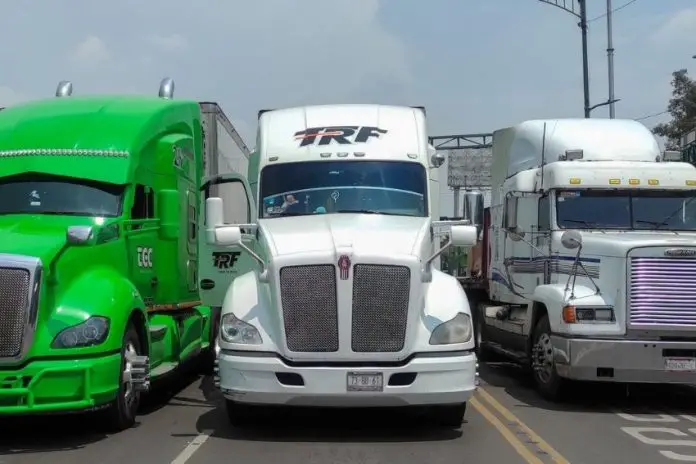
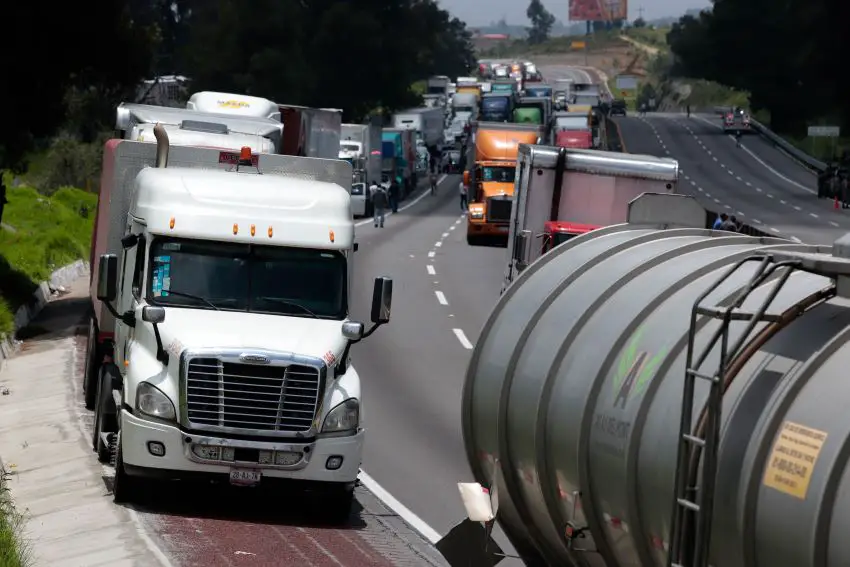
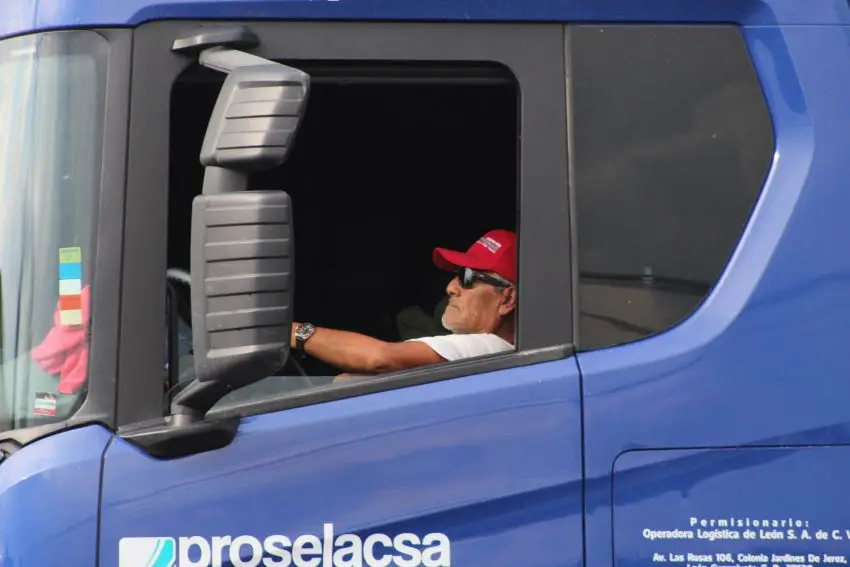
Mexican cargo truckers blocking Mexico City's streets in September. They were protesting the prevalence of hijackings and thefts on their routes. (Victoria Valtierra Ruvalcaba/Cuartoscuro)
The National Guard will soon collaborate with Mexican companies that track stolen vehicles in order to increase the recovery of cargo transport vehicles stolen by criminals in highway theft.
The Guard, in conjunction with the National Association of Vehicle Tracking and Protection Companies (Anervp), will focus on Mexico’s five worst states for cargo vehicle theft, where many of the robberies happen as hijackings on Mexico’s highways, according to the association’s new head, Luis Villatoro Martínez.
Tractor trailer trucks on the Mexico-Puebla highway, considered one of the most risk-prone in Mexico for cargo vehicle hijackings. (Mireya Novo/Cuartoscuro)
In an interview with the publication Forbes México, Villatoro said that México state, Puebla, Michoacán, Guanajuato and San Luis Potosí report the highest rates of theft of cargo- transport vehicles, with 70% of incidents happening in those states.
“We will have more feedback from the National Guard, the Federal Public Security Ministry and authorities in [these] five states,” Villatoro said.
So far this year, Anervp has recovered over 838 million pesos (US $41.6 million) worth of cargo transport vehicles, including 1,225 tractor-trailers, trailers, dry vans, cars, pickup trucks and motorcycles. This resulted in the arrest of 180 alleged criminals and the confiscation of 29 properties allegedly linked to organized crime activities.
Better security on Mexico’s highways needed to attract nearshoring
Over the last few years, the most pressing security concern for foreign companies operating in Mexico has been violent cargo truck hijackings on major highways. According to some estimates by business chambers in the country, an average of 50cargo trucks are hijacked each day in Mexico.
The Reliance Partners’ Cargo Truck Hijacking Data Portal, which compiles official data published by Mexico’s federal government, reported that 2023 saw 7,862 hijackings, up 3% from 2022. Wal-Mart, Ford, Danone, Chevrolet, Apple, Amazon and other foreign companies have all experienced cargo truck hijacking incidents in Mexico, according to the portal.
2023 saw 7,862 hijackings of cargo transport vehicles on Mexican highways, up 3% from 2022. Rising trends in such theft could scare off companies interested in nearshoring, one expert warned. (Alaín Hernández/Cuartoscuro)
Cargo theft on Mexico’s highways not only implies economic losses for companies but also, said vice president of the Mexican Institute of Foreign Trade Executives (Imece) Luis Masse Torres, a challenge that could hinder the burgeoning nearshoring trend in Mexico.
“The first thing these [foreign] companies will notice when they do their risk analysis is that Mexico poses significant dangers regarding highway insecurity,” Messe told newspaper El Economista. “Faced with the very high possibility of losing merchandise or having accidents, surely these companies will think twice or three times before establishing themselves in Mexico.”
What are the top 10 states in Mexico for highway cargo thefts?
According to the National Public Security System (Sesnsp), 10 states accounted for more than 90% of highway thefts in Mexico last year:
México state
Puebla
Michoacán
San Luis Potosí
Morelos
Jalisco
Tlaxcala
Nuevo León
Veracruz
Oaxaca.
According to the Mexican Alliance of Transport Organizations, the three highways targeted most by criminals in Mexico are the Mexico-Puebla, México-Querétaro and Veracruz-Mexico highways.
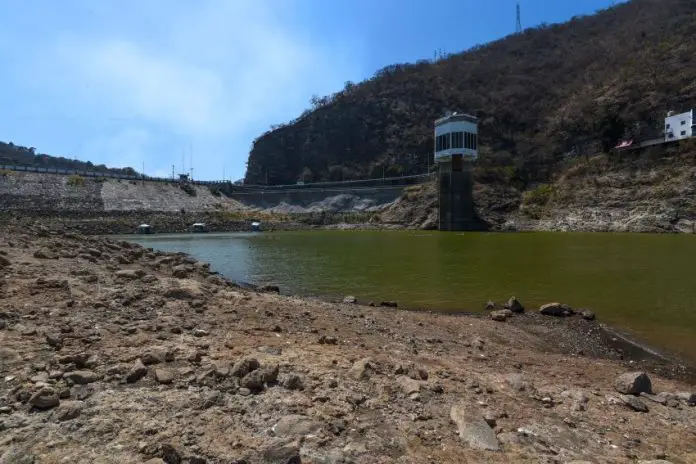
Two years of reduced withdrawals will allow the Cutzamala System's reservoirs to recover from the extended drought, Brugada said. (Crisanta Espinosa Aguilar/Cuartoscuro)
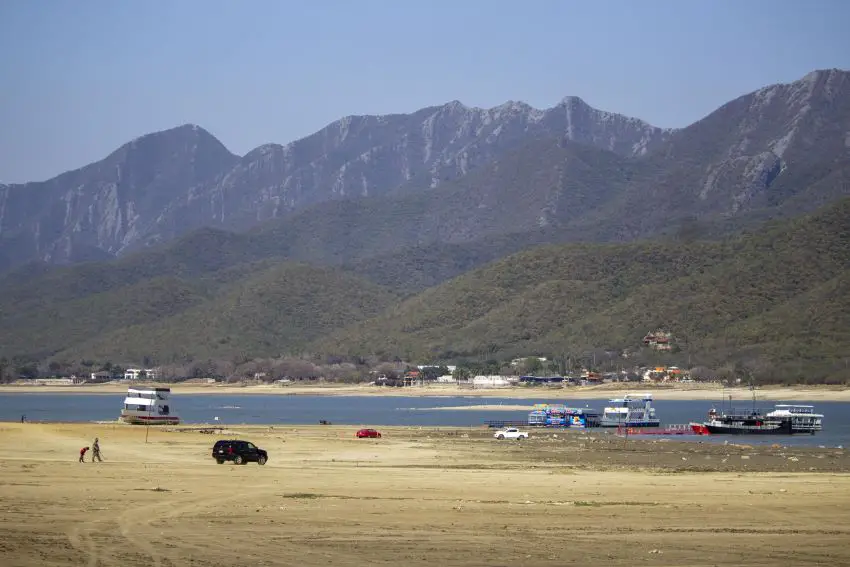
As Mexico bids farewell to a very rainy summer season, the country is still experiencing historically low water reserves.
According to the National Water Commission (Conagua), the total water storage of Mexico’s 210 main dams is 80.1 billion cubic meters — 64% of their total capacity — a figure that is 12% lower than the historical average of 91.3 billion cubic meters.
Forty-two dams in Mexico are at or beyond their full capacity, according to Conagua, but 52 are below 50% of their storage capacity. (Gabriela Pérez Montiel/Cuartoscuro/)
Conagua reported that from Jan. 1 to Nov. 3, the country recorded 697.5 millimeters of rainfall, an average amount according to records from 1991 to 2020.
According to data from the Technical General Subdirectorate of Conagua, the 2024 rainy season “will statistically end on Nov. 30.”
Mexico’s water reserves in numbers
Forty-two dams in Mexico are at or beyond full capacity, according to Conagua, amounting to 8.8 billion cubic meters of water. Meanwhile, 77 of Mexico’s dams reached 75% to 100% of their storage capacity totaling 35.1 billion cubic meters.
In contrast, 32 dams are between 50% and 75% of their storage capacity, amounting to 28 billion cubic meters. Finally, 57 dams recorded levels below 50%, totaling 8.2 billion cubic meters.
As of Nov. 4, the reservoir with the highest water levels was the Marte R. Gómez dam in Tamaulipas, with a 122% storage level.
Conagua also reported that the three reservoirs that make up the Cutzamala System — which supplies around 28% of the capital’s water — are at 67% capacity, with a total volume of 524.5 billion cubic meters.
Drought conditions in Mexico
According to the drought monitor published by Conagua and the National Meteorological System (SMN), as of Oct. 31, at least half of the country is not suffering from drought conditions.
However, parts of the Baja California Peninsula, Sonora, Chihuahua, Sinaloa, Durango and Coahuila are still seeing exceptional levels of drought.
In Chihuahua, which is experiencing drought conditions throughout the entire state, authorities have declared a state of emergency for the second year in a row. Furthermore, authorities expect Chihuahua to receive 40% less rainfall in 2025 than in 2024.
Seven of 11 justices voted in favor of a proposal to limit key aspects of the recently enacted judicial reform, one vote short of the special majority required to pass it.
(SCJN/Cuartoscuro)
The Supreme Court (SCJN) on Tuesday rejected a proposal to invalidate key parts of the recently enacted judicial reform, setting the stage for the direct election of more than 1,000 judges next year.
After opposition political parties filed a lawsuit against the controversial judicial reform, Justice Juan Luis González Alcántara Carrancá drew up a proposal under which only Supreme Court justices and electoral magistrates would be elected and all other judges would continue to be appointed based on qualifications and experience.
Supreme Court Justice Juan Luis González Alcántara Carrancá proposed to invalidate the provision in the judicial reform that allows all Mexican judges and magistrates to be elected. (Screen Capture)
After hours of debate, seven of 11 justices voted in favor of the proposal, one vote short of the special majority required to pass it.
A subsequent attempt by Chief Justice Norma Piña to lower the number of votes required to approve the proposal to six failed.
Three justices who are widely regarded as supportive of the federal government’s agenda voted against González’s draft ruling, as did Justice Alberto Pérez Dayán.
“I am in no way unaware of the consequences the constitutional reform in question will have on … legal certainty, … the division of powers and the principles of judicial independence,” Pérez said.
“… I personally resent it,” he added.
González himself opposed Norma Piña’s effort to set a lower threshold for the approval of his proposal, asserting that “the rules of the game” cannot be “established mid-play.” (Cuartoscuro)
Piña’s proposal to reduce the number of votes required to approve González’s draft ruling to six was rejected by six justices. Six votes will only be considered a supermajority in the Supreme Court once the number of justices declines to nine following judicial elections next year.
González himself opposed Piña’s effort to set a lower threshold for the approval of his proposal, asserting that “the rules of the game” cannot be “established mid-play.”
His draft ruling sought not just to limit the election of judges to Supreme Court justices and electoral magistrates, but also to strike down a “faceless judges” provision that allows judges to remain anonymous when ruling on cases involving organized crime.
Given the Supreme Court’s rejection of the proposal, preparations for large-scale judicial elections to be held on June 1, 2025, can continue.
Almost 1,500 judges, including nine Supreme Court justices, are set to be elected next year from candidates put forward by the president, the Congress and the judiciary itself.
The SCJN’s dismissal of González’s proposal also prevented a potential constitutional crisis, as the federal government had indicated that it wouldn’t comply with a ruling against the judicial reform.
President Claudia Sheinbaum and other federal officials maintained that the Supreme Court doesn’t have the authority to strike down a constitutional reform (or parts thereof) that has already been approved by Congress, ratified by a majority of state legislatures and promulgated by the president.
“The constitution is the maximum law,” Sheinbaum said last week.
Ernestina Godoy, legal counsel to the president, said approved constitutional reforms are not subject to judicial revision. (Rogelio Morales/Cuartoscuro)
Last Thursday, she promulgated the so-called “constitutional supremacy” reform that prevents legal challenges against constitutional amendments. She could have used that reform to justify non-compliance with a Supreme Court ruling against the judicial reform.
Sheinbaum — who made her support for that reform clear before her landslide victory in the June 2 presidential election — argues that the election of judges is necessary to rid the judiciary of corruption and other ills such as nepotism.
Critics of the judicial reform argue that the election of judges will erode the independence of Mexico’s judiciary because it will come to be stacked with judges sympathetic to the ruling Morena party’s agenda, thus removing a vital check on executive power. Sheinbaum rejects the argument.
Reactions to the SCJN’s decision
Ernestina Godoy, Sheinbaum’s top legal advisor, acknowledged on social media that the Supreme Court rejected “the project of unconstitutionality against the reform to the judicial power.”
“It is now a reality. Judges, magistrates and Supreme Court justices will be elected by popular vote starting next year,” she wrote on X.
Godoy also said that the election of judges is “an advance for democracy, justice and the participation of the people.”
The judicial reform “will benefit all of us,” she added.
Ricardo Monreal, Morena’s leader in the lower house of Congress, described the Supreme Court’s rejection of González’s proposal, as “very important.”
“… Law prevailed, the Constitution prevailed, the moderation and wisdom of some of the justices prevailed,” he said.
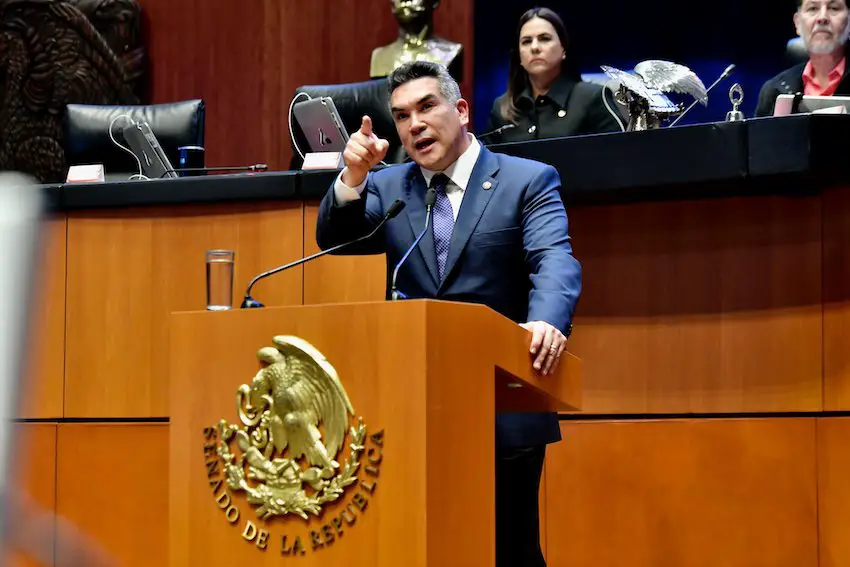
Senator Alejandro Moreno said that Justice Pérez “threw his name into the dustbin of history,” and accused Morena of attempting to eliminate “counterweights” and the “opposition.”(@alitomorenoc/X)
Senator Alejandro Moreno, national president of the Institutional Revolutionary Party (PRI), criticized Justice Pérez for what he called his “sudden change of position.”
In a post to X, he called the justice a “coward” and a “traitor to the people of Mexico.”
Pérez “threw his name into the dustbin of history,” Moreno added.
The PRI leader also took aim at Morena, accusing it of attempting to eliminate “counterweights” and the “opposition.”
PRI lawmakers “will continue demanding, by all means, more democracy, more justice and more freedom,” he wrote.
Senator Marko Cortés, president of the National Action Party, said on X that he “deeply” regretted the decision taken by the Supreme Court.
The court’s decision “threatens our democracy,” he wrote.
“We will not stop defending the division of powers, we will continue fighting for justice and equity,” Cortés added.
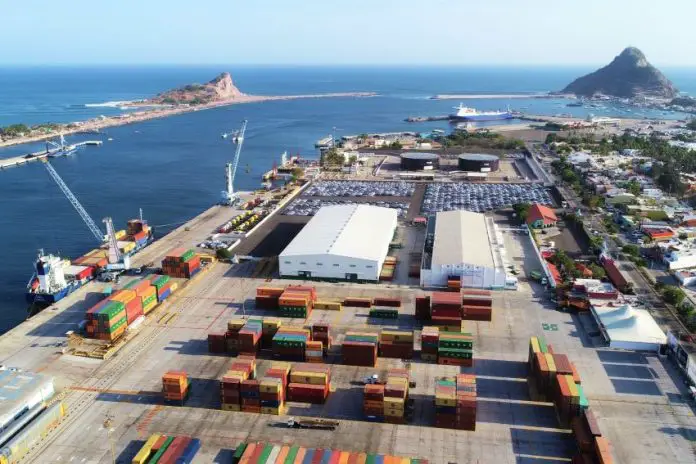
The news magazine Expansión reports that Mazatlán port officials hope to exceed 180,000 new vehicle imports by the end of 2024. (Puerto de Mazatlán/Facebook)
The massive influx of Chinese vehicles to Mexico in the past two years has increasingly saturated the country’s Pacific coast ports.
Adjustments in logistical operations and substantial investments in infrastructure have helped normalize port services, but experts agree that more is needed. Some are eyeing the port of Mazatlán, Sinaloa, as a potential solution to the problem.
According to the newspaper El Financiero, nearly half of new imported vehicles coming into Mexico are arriving from China. (@GobDMazatlan/X)
Until 2022, Mexico’s Gulf coast ports dominated the auto import business, with most vehicles arriving from Europe and Brazil. Now, according to the newspaper El Financiero, nearly half of new imported vehicles coming into the country’s ports arrive from China.
Arrivals at Lázaro Cárdenas (Michoacán), Mazatlán (Sinaloa) and Manzanillo (Colima) on Mexico’s west coast have surged, with Mazatlán becoming the main beneficiary.
Official data shows Lázaro Cárdenas as the No. 1 recipient of new auto imports, however, Mazatlán has climbed to No. 3 with arrivals rising from an annual average of roughly 25,000 to more than 130,000 auto imports through September of this year.
The news magazine Expansión reports that Mazatlán port officials hope to exceed 180,000 new vehicle imports by the end of 2024.
Autos chinos llegan a México apilados como ‘Legos’
Desde colocar autos en posición vertical dentro de contenedores hasta adquirir camiones propios para su traslado, la saturación logística en los puertos ha llevado a implementar soluciones creativas.
As a result of this import boom, investors are scrambling to upgrade facilities while also attending to the satellite industries, such as warehouses and storage yards, that are increasingly popping up around the Sinaloa resort city.
However, new challenges have arisen.
Chinese shippers have found it more cost-effective to ship the vehicles in containers (arranging them vertically) rather than on the traditional ROROs (roll on/roll off cargo ships). This means cranes are needed to offload the containers while a different apparatus is needed to remove each vehicle.
The increased arrivals also require more efficient operations, another factor in Mazatlán’s favor.
Founded in Great Britain in 1924, MG Motor was acquired by Chinese SAIC Motor Corp in 2007 and has made significant inroads in the car market in Mexico. (Shutterstock)
While Lázaro Cárdenas has better infrastructure, Chinese auto importers must compete with a larger cast of importers there. As Mazatlán’s port operations began to grow, Chinese automakers looking to expand in Mexico, such as MG Motor, saw benefits to arriving at the Sinaloa port.
“The advantage we have in unloading (vehicles) in Mazatlán is a more stable flow,” Josimar Hernández, manager of MG México, told Expansión. “We can unload some in Lázaro Cárdenas and others in Mazatlán, depending on inventory needs.”
Should Mazatlán become a specialized automotive port? Experts weigh in
As demand for Chinese vehicles in Mexico continues to rise — El Financiero reported that demand has risen from 9.6% in 2019 to 18% in 2023 — one industry expert thinks Mazatlán should consider becoming a specialized port.
Mario Veraldo, co-founder of logistics firm MTM Logix, believes converting Mazatlán into an automotive port could be a winning move.
Mauricio Ortiz, director of the port’s cargo services provider Terminal Marítima Mazatlán (TMAZ), told Expansión that such a reorientation is worth considering, especially because TMAZ views the automotive sector as a key segment of port operations.
New infrastructure investments in Sinaloa
As reported by Expansión, TMAZ is preparing investments of US $30 million to upgrade infrastructure and build external storage facilities at the port over the next five years. But Ortiz says he expects nearshoring volumes — particularly in the automotive sector — to increase during those five years.
“What we are seeing with the relocation of [Chinese] auto assembly plants indicates they have interest in providing for the Mexican and Latin American markets,” he said. “First they build up import volume, generating critical demand, and then they’ll make decisions related to factory installation.”
Several Chinese automakers have expressed interest in nearshoring manufacturing to Mexico, including BYD and MG, which will put additional pressure on parts volume at Mexico’s Pacific ports.
The port, a joint venture of Mexico-based Caxxor Group and Texas-based Puerto Verde Holdings, is still in the studies and permitting stage. However, according to Sinaloa’s Economy Minister Javier Gaxiola Coppel, there is interest from U.S. investors in financing the initial stage of construction, which is estimated to require approximately $400 million.
In November, Gaxiola Coppel will travel again to Texas to continue negotiations, as reported by the news outlet Punto MX. There, he will meet with representatives of the governments of Durango, Coahuila, Chihuahua and Nuevo Leon regarding the “T-MEC corridor,” which seeks to improve logistics infrastructure between Mexico and the United States.
This new port — reported to have the potential to become “the most important in the country” — is viewed by state officials as complementary rather than a rival to Mazatlán.
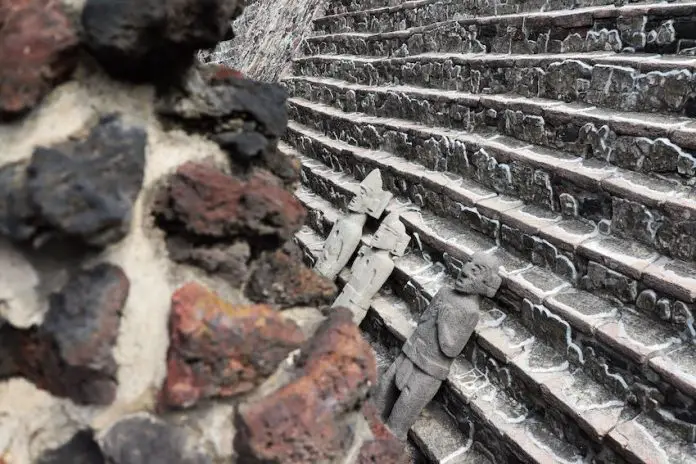
Part of a larger complex and city, the Templo Mayor (Great Temple) was at the center of the political and religious life of the Mexica (Aztec) society. (Daniel Augusto/Cuartoscuro)
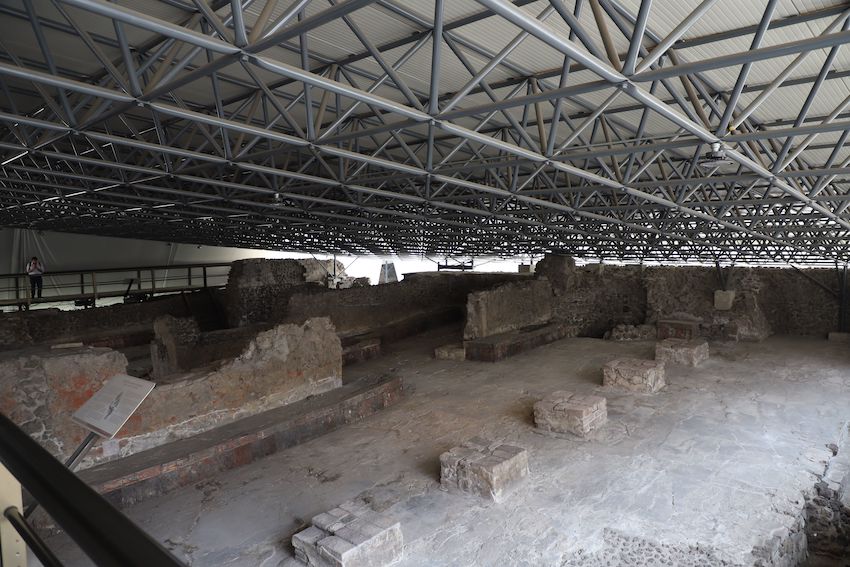
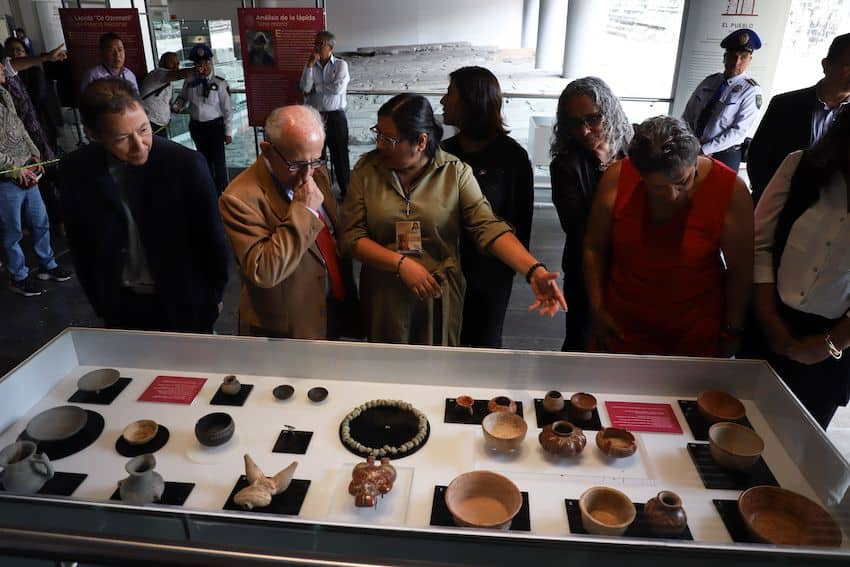
The Templo Mayor archaeological zone, a sacred site in the heart of Mexico City containing remnants from the ancient metropolis of Tenochtitlán, has fully reopened to the public following extensive repairs to its roof, damaged by a rare hailstorm in 2021.
In conjunction with last week’s reopening, there is a new exhibition in the Templo Mayor Museum that includes more than 100 artifacts recently repatriated from the United States — among the more than 14,000 returned to Mexico during the six-year term of President Andrés Manuel López Obrador.
The updated roof shields the oldest remnants of the site, including the shrines dedicated to war and sun god Huitzilopochtli and rain and fertility god Tlaloc. (Daniel Augusto/Cuartoscuro)
The items on display include stone, ceramic and organic materials that were recovered through an undercover operation by Homeland Security agents in the U.S., according to an Oct. 31 press release from Mexico’s National Institute of Anthropology and History (INAH).
The centerpiece is the “Ce ozomatli” (one monkey) tombstone which was donated to López Obrador last year. The round stone piece, with shell and turquoise inlays, includes the date “ce ozomatli,” indicating a predisposition for crafts and manual labor for those born under this date on the Nahua calendar.
The updated roof — a restoration milestone achieved under a joint project of INAH and the Mexico City government — now shields the oldest remnants of the site, including the shrines dedicated to war and sun god Huitzilopochtli and rain and fertility god Tlaloc, dating back to approximately 1390 AD.
Part of a larger complex and city, the Templo Mayor (Great Temple) was at the center of the political and religious life of the Mexica (Aztec) society. The temple itself consisted of four pyramids and the two shrines where Huitzilopochtli and Tlaloc were venerated with elaborate pageantry and sacrificial offerings.
It was destroyed by Spanish invaders during the Conquest and fall of Tenochtitlán in 1521, and a Catholic cathedral was built with many of the same stones next to where it once stood. A key archeological finding in 1978 helped shed light on the site and the Mexica civilization.
Today the museum includes more than 3,000 important artifacts of Mexica culture.
In conjunction with the site’s reopening, there is a new exhibition in the Templo Mayor Museum that includes more than 100 artifacts recently repatriated from the United States. (Daniel Augusto/Cuartoscuro)
The new roof installation required careful handling due to the site’s fragile relics and limited accessibility within Mexico City’s historic center.
“The site has not only improved physically, but has regained its relevance in the cultural narrative of the country and, above all, of Mexico City,” INAH Director Diego Prieto Hernández said in a press release. “The preservation of heritage is not limited to techniques and methods. It also involves understanding the meaning that these places have [within] the richness of our history.”
The Oct. 31 reopening also included a Day of the Dead altar dedicated to the states of Guerrero, Oaxaca, Puebla and Veracruz.
Officials said the museum — the third-most visited INAH museum in Mexico City with an average of more than 500,000 visits per year — anticipates a renewed wave of visitors. The exhibit of repatriated items is open daily except Mondays, and will run through February 2025.
Sheinbaum has not shared an official statement regarding Trump's victory, saying "It's prudent to wait" until vote counting has concluded in the United States. (Galo Cañas/Cuartoscuro)
Donald Trump’s victory in the United States presidential election on Tuesday is not a cause for concern for Mexicans in Mexico or the United States, President Claudia Sheinbaum said on Wednesday.
“To all Mexicans, there is no reason for concern. To our compatriots [in the U.S.], to their relatives here, to Mexican business people: there is no cause for concern,” Sheinbaum told reporters at her morning press conference.
“We are a free, independent, sovereign country and there will be a good relationship with the United States. I’m sure about that,” Sheinbaum said. (Galo Cañas/Cuartoscuro)
Her reassurance came despite Trump’s pledge to carry out “the largest deportation operation in American history” — an undertaking that could affect millions of undocumented, and documented, Mexicans in the United States — and his threats to impose tariffs on Mexican exports.
Sheinbaum said she would wait for vote counting to conclude in all U.S. states before issuing an official government statement on the results of the United States elections.
“It’s prudent to wait,” she said.
After seeking to reassure Mexicans about the impact of a second Trump presidency, Sheinbaum declared that Mexico “always moves forward.”
“We are a free, independent, sovereign country and there will be a good relationship with the United States. I’m sure about that,” she said.
Trump, the Republican Party’s presidential candidate, will be sworn in as the United States’ 47th president on Jan. 20 for a four-year term that will conclude in early 2029, the penultimate year of Sheinbaum’s six-year term.
His victory over Democratic Party candidate and Vice President Kamala Harris had a significant impact on the Mexican peso, which depreciated to 21.79 on Wednesday morning before strengthening slightly.
“We’re being invaded by Mexico,” he said at a rally in North Carolina, adding that he would inform Sheinbaum of his tariff plan on “day one or sooner.”
In an address in Detroit in October, Trump said that “upon taking office,” he would “formally notify Mexico and Canada” of his “intention to invoke the six-year renegotiation provisions of the USMCA.”
“… I’m going to have a lot of fun,” he said in reference to his plan to renegotiate the three-way trade pact he signed during his first presidency.
It remains to be seen what changes to the USMCA Trump will seek to make and what impact his proposed protectionist policies will have on the trade relationship with Mexico, the world’s biggest exporter to the United States.
Sheinbaum has stressed that the USMCA benefits Mexico, the U.S. and Canada, and asserted that the three countries “complement” each other rather than “compete” with each other.
With regard to Trump’s most recent tariff threat, Sheinbaum asserted Tuesday that there is a lack of information in the United States about “the effort Mexico has made to reduce migration” to its northern neighbor.
A Thanksgiving classic moves into a new neighborhood in this pumpkin pie chimichanga recipe. (Element5 Digital/Unsplash)
Thanksgiving, the holiday where everyone enjoys a feast and every stomach takes on a challenge, is the perfect time to shake things up. In these hours of turkey carving and cranberry sauce arguments, there is room for a little Mexican twist on tradition. That’s where you come in, ready to amaze your family with pumpkin pie chimichangas. Not the usual slice of pie they’ve had forever, but a crispy, cinnamon-flavored, pumpkin fiesta.
The day starts with the kitchen filled with the smells of flour and spices, and the stove making its soft hissing sounds. You lay out the tortillas like blank canvases and spread the spiced pumpkin filling. A sugar and cinnamon mix is sprinkled like magic dust. You can’t help but grin, thinking of Aunt Myrtle, the keeper of all family recipes, gasping when she sees this unexpected treat.
Leftover Halloween pumpkins? Try using them in your chimichangas. (Foursquare)
The chimichangas fry in hot oil, turning golden brown and crispy. You sprinkle them with cinnamon sugar. The sweet smell drifts into the dining room, making everyone curious. ‘What’s that?’ someone asks, half excited, half unsure, as if the answer might change everything they know about their dessert reality.
You bring them out on a platter, the edges crunchy and inviting. Forks are picked up, careful bites are taken, and then— silence. That special quiet that only comes when people are truly surprised by how good something is.
“Wow,” Aunt Myrtle finally says, her eyes wide. “It’s…” She’s looking for the right word, one that sits between delight and new.
And you, knowing that the best Thanksgiving memories aren’t printed on place cards but told in stories around the table, nod. “Exactly.”
Pumpkin pie Chimichangas!? #thanksgiving #shorts
Pumpkin pie chimichangas
Ingredients
For the filling
1 cup canned pumpkin puree
1/2 cup cream cheese, softened
1 cup chopped marshmallows
1 tsp vanilla extract
1/2 tsp ground cinnamon
1/4 tsp ground nutmeg
Pinch of salt
For the chimichangas
6 large flour tortillas
1 egg, beaten (for sealing)
Vegetable oil for frying
For the topping
1/2 cup granulated sugar
1 tsp ground cinnamon
Whipped cream (optional)
Caramel sauce (optional)
Instructions
Make the filling: In a medium bowl, mix the pumpkin puree, cream cheese, chopped marshmallows, vanilla extract, cinnamon, nutmeg and a pinch of salt until smooth and well combined.
Assemble the chimichangas: Lay out a tortilla and spoon about 2-3 tablespoons of the pumpkin filling onto the center. Fold the sides of the tortilla in and then roll it up tightly like a burrito. Brush the edge with the beaten egg to seal the seam. Repeat for all tortillas.
Fry the chimichangas: In a deep skillet or pot, heat about 2 inches of vegetable oil over medium heat until it reaches 350 F (175 C). Carefully place the chimichangas seam-side down into the oil. Fry for about 2-3 minutes per side or until golden brown and crispy. Remove and place on a paper towel-lined plate to drain excess oil.
Coat with cinnamon sugar: While the chimichangas are still warm, mix the granulated sugar and ground cinnamon in a shallow dish. Roll each chimichanga in the cinnamon sugar until fully coated.
Serve: Top with a dollop of whipped cream and a drizzle of caramel sauce if desired. Serve warm and let me know what you think!
StephenRandall has lived in Mexico since 2018 by way of Kentucky, and before that, Germany. He’s an enthusiastic amateur chef who takes inspiration from many different cuisines, with favorites including Mexican and Mediterranean. His recipes can also be found on YouTube.
A majority of Mexicans believe Sheinbaum would have a better relationship with Kamala Harris as president of the United States than with Donald Trump, according to a poll conducted by El Financiero. (@KamalaHarris/X)
The president has said there will be a “good relationship” with the United States regardless of the election outcome.
At Sheinbaum’s morning press conference or mañanera, on Nov. 5, the president was predictably asked about Trump’s threat to “immediately” impose a 25% tariff on all Mexican exports to the United States if the government of Mexico doesn’t stop what he called an “onslaught” of criminals and drugs to the U.S.
Here is a recap of Sheinbaum’s remarks in response to that question, and one other, at the National Palace on Tuesday morning.
Sheinbaum: There is insufficient information in the US about Mexico’s efforts to stem migration
“There will be a good relationship” with the United States, Sheinbaum said when asked about the tariff threat Trump made at a rally in North Carolina on Monday.
She subsequently claimed that neither Republican Party politicians nor Democratic Party representatives have “sufficient information” about “the effort Mexico has made to reduce migration” to the United States.
Sheinbaum cited the provision of employment to migrants and their “humanitarian return,” or deportation, to their countries of origin as examples of things the Mexican government has done to stem migration through Mexico to the United States.
“From December 2023 to October, the end of October, there has been a 75% reduction in migrants arriving at [Mexico’s] northern border,” she said.
Authorities working to combat risk of ‘disorderly growth’ in Tulum, Sheinbaum says
In response to a question from a Quintana Roo-based journalist, Sheinbaum said that there is a risk of “disorderly growth” in the Caribbean coast town of Tulum because of the presence of new transport infrastructure in the area, namely the Tulum airport and the Maya Train railroad.
On Sunday, the Tulum International Airport celebrated receiving its one-millionth passenger since opening in December 2023. (@MaraLezama/X)
“What we want is for Tulum to continue being a space linked to nature and for there not to be impacts on the tropical jungle and natural resources,” she said.
“So we’re working on that, both with the [Quintana Roo] governor and the mayor,” Sheinbaum said.
The objective, she said, is for Tulum to continue welcoming visitors but at the same time prevent any adverse impact on “nature” as well as “disorderly growth.”
There is a “similar case” in Puerto Escondido, Oaxaca, Sheinbaum added.
The Pacific coast beach town also faces the risk of growing in a disorderly fashion “if there is not “territorial reorganization,” she said.
By Mexico News Daily chief staff writer Peter Davies (peter.davies@mexiconewsdaily.com)