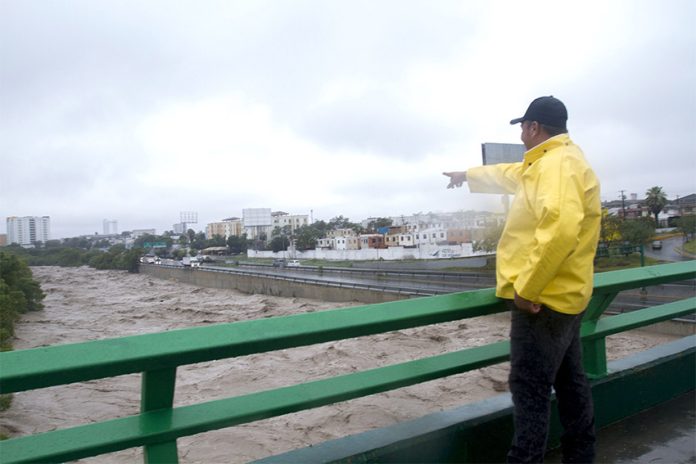
A man overlooks a full waterway in Monterrey, Nuevo León, shortly after Tropical Storm Alberto hit the northern city. (Gabriela Pérez Montiel/Cuartoscuro)
Recent torrential downpours and a generous rainy season have significantly increased reservoir levels across Mexico, helping water stores recover from a prolonged drought.
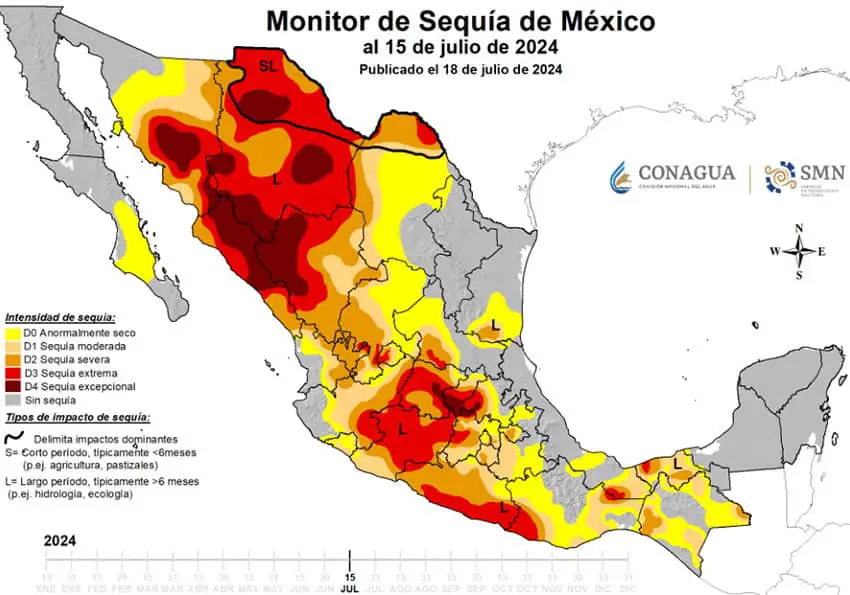
As of July 15, the area of the country affected by drought was down to 51.2%. On the map, drought is represented by the colors pink, orange, red and maroon. Yellow indicates less severe dry conditions. (Conagua)
This week, the National Water Commission (Conagua) reported that the country’s 210 principal reservoirs had risen from 38% to 42% capacity as of July 15. Those 210 reservoirs represent 92% of Mexico’s water storage capacity.
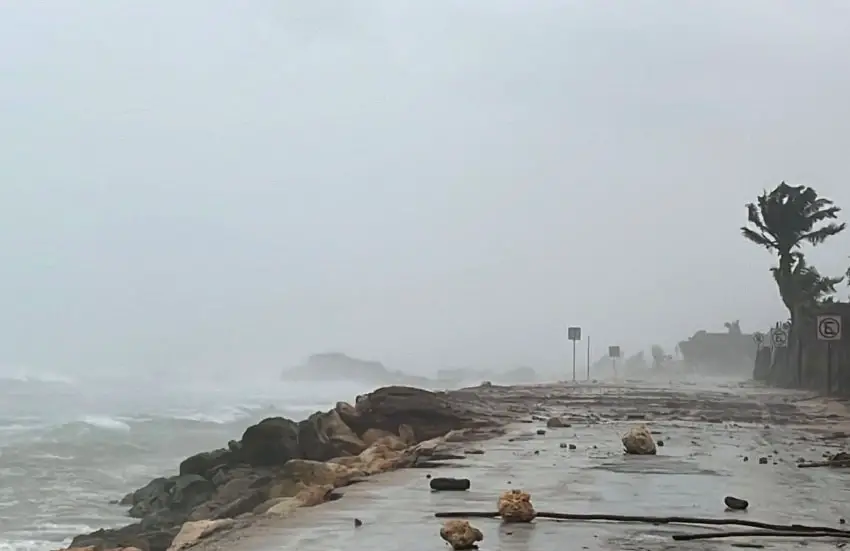
June’s rainfall was aided by several meteorological events — including Hurricanes Alberto and Beryl — during the second half of the month. Tropical Storm Chris in early July also contributed as rainfall from June 15 to July 14 was 64% above average.
The rains have also helped the Cutzamala hydraulic system recover. Conagua reported that the three principal reservoirs of the system, which supplies 25% of Mexico City’s water, saw capacity rise from 26.9% to 29.1% during the first two weeks of July.
The weekend forecast also looks wet as Tropical Wave 11 will wash over western Mexico, drifting inland to the Bajío region and the Valley of México.
Hurricane Beryl brought plentiful rain to southern Mexico in late June and early July. (Mara Lezama/X)
Weather forecaster Meteored says Tropical Wave 12 will blow across the Yucatán Peninsula on Friday night and continue past Chiapas and Tabasco to the Isthmus of Tehuantepec on Saturday. Meteorologists expect the system to reach Mexico City on Sunday.
The excessive rains also forced the authorities to mount several emergency operations, Conagua reported.
Authorities released water from a dam in Jalisco to relieve stress, and officials in Veracruz responded to the failure of a water-pumping station. Emergency personnel also had to scrub clean 2,300 meters of drain pipe in southern Sonora after heavy rains clogged its ducts with sand and silt.
Still, Mexico requires more rain to offset the extended drought that had impacted 89% of Mexico’s territory. Nearly 60% of the country was experiencing severe to exceptional drought on June 1, and total precipitation through May was 50% below average, making it the second-driest May ever recorded, on top of being the hottest May on record.
Even with the rains, the unseasonable heat has not dissipated entirely. Temperatures soared past 47 C in Baja California and Sonora from July 8-14. And on July 9, the Baja California border city of Mexicali set a new record when the mercury hit 52.4 C.
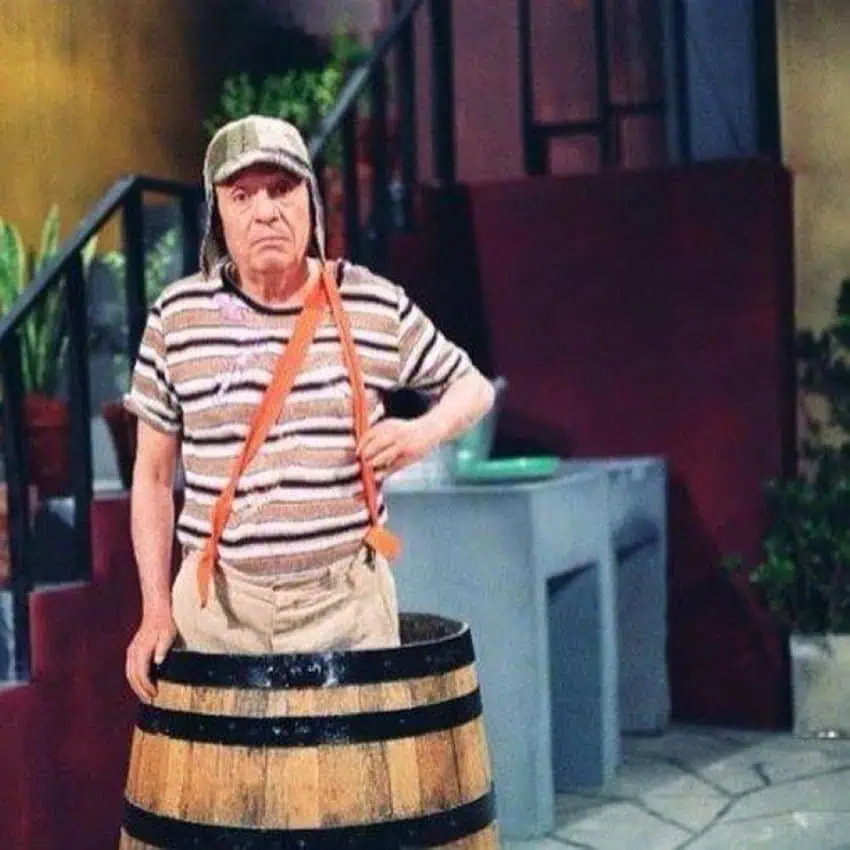
Best known for his starring turn as "El Chavo del 8", Roberto Gómez Bolaños was the face of Mexican comedy for decades - but today his estate is in legal trouble. (Chespirito Oficial/Instagram)
“El Show de Chespirito” was a slapstick comedy created for a young audience. It initially aired from 1970 to 1973 and then again from 1980 to 1995, featuring iconic characters in situational sketches. Back then, there weren’t many television channels to choose from, so everyone watched whatever Televisa was airing. Broadcast every Monday at 8 p.m., I fondly remember watching it with my siblings at the dinner table.
Roberto Gomez Bolaños, the creator
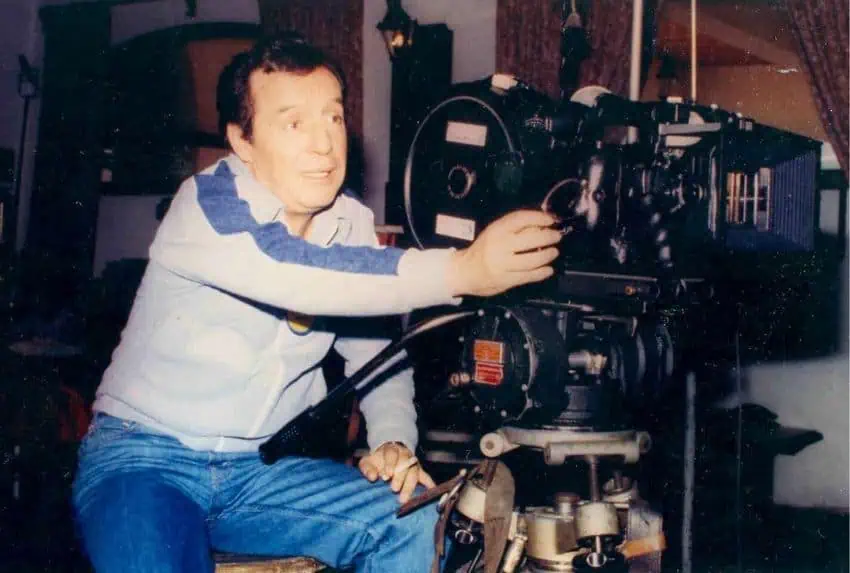
In the 1950s, Roberto Gómez Bolaños began his career as a writer for an advertising agency before transitioning to writing for TV shows. He adopted the nickname Chespirito because someone who admired his writings called him “Shakespirito,” meaning “little Shakespeare.”
Roberto Gómez Bolaños, nicknamed “Chespirito,” was the writer, producer, star and director of a number of leading Mexican TV characters. (Chespirito Oficial/Instagram)
In the 1970s, Bolaños created “El Show de Chespirito,” for which he served as writer, director, and leading actor. The show featured a colorful cast of characters, all brought to life by a handful of talented actors who switched between roles.
This ensemble’s versatility and charm contributed significantly to the show’s enduring popularity. At its peak, “Chespirito” was a cultural phenomenon that captivated an estimated 350 million viewers per episode across Mexico and Latin America.
El Chavo del 8, the mistreated orphan
However, the messages conveyed by Chespirito would fail children’s programming standards these days. The star of the “Chavo del 8” segment was an orphaned boy living inside a wooden barrel on the patio of a humble neighborhood. The community made fun of him for being poor and unwanted. All he ever craved was a ham sandwich, which he rarely got.
Continually wearing the same dirty and torn outfit, El Chavo was a sad, lonely, hungry kid. While I hope everyone viewed this segment as a lesson in how not to treat those in need, I’m afraid it normalized neglect with a laugh track instead.
Chespirito’s most iconic creation was “El Chavo del 8,” a mocking caricature of poverty in Mexico, played for laughs. (Chespirito Oficial/Instagram)
Neighbors harshly scorned El Chavo for every blunder, despite his young age. Whenever he got caught, he’d lower his gaze, shrug, and apologize with the catchphrase “fue sin querer queriendo” (meaning “I did it unintentionally on purpose”). This phrase, delivered with a mix of innocence and connivance, became iconic.
When facing an overwhelming threat, El Chavo would suffer a garrotera. In this condition his knees and arms would weaken, and he’d adopt a frozen, absent gaze. The only way to snap him out was to throw water in his face. I like to believe that anyone suffering such dissociative symptoms today would be provided with proper mental healthcare.
El Chapulín Colorado, the useless superhero
Gomez Bolaños also played the Chapulín Colorado character too. This stumbling rescuer wore a bright red unitard that covered him from head to toe and showcased his scrawny figure. He wore his yellow underwear on top of his pants, a parody of Superman. His vinyl antennas allowed him to sense danger, and he fought off criminals with a squeaky plastic hammer called chipote chillón.
Using the special effects available for television at the time, he would sometimes take chiquitolina pills that would shrink him to 8 inches tall, enabling him to escape tricky situations. Despite his gadgets, El Chapulín Colorado was more talk than action, often speaking in scrambled proverbs. This added to the hopelessness of the characters in danger when he spontaneously appeared upon asking: “Who will help me now?”
The hapless Chapulín Colorado. (Chespirito Oficial/Instagram)
Profesor Jirafales, the teacher you don’t want for your kids
Featuring some iconic characters, this class was taught by the sole member of the faculty. Profesor Jirafales was portrayed by the actor Ruben Aguirre. Constantly smoking a cigar, he frequently lashed out angrily at the children, humiliating them for not knowing the answer to random questions. He frequently screamed “ta ta taaaaaa” in a fit of rage, attempting to restore order when the classroom turned into chaos.
Doctor Chapatín, the inept physician
Bolaños also portrayed Doctor Chapatín, a senile medical professional. He was the only doctor available yet hopelessly incapable. Known for his hot temper, signs of dementia, and significant hearing loss, Doctor Chapatín would often say “me da cosa” (meaning “it gives me the creeps”) to avoid unpleasant tasks. When angered, he didn’t hesitate to whack anyone nearby with his bag, especially if they dared call him old. This character’s exaggerated flaws highlighted the show’s critique of professional incompetence and the absurdity of relying on such experts.
Legal battles are no funny business
In the early 70s, Roberto Gómez Bolaños and Florinda Meza met while she was performing on his show. Their professional relationship blossomed into a personal one, despite Bolaños being married with six children. This relationship led to significant tension, as Bolaños’ first family never accepted Meza. The couple maintained a long-term partnership, both personally and professionally, and eventually married in 2004.
There have been numerous lawsuits over copyright issues. Years after ending production, many actors wished to continue portraying their beloved characters in other projects. Bolaños took them to court, arguing that he created and owned them. His death in 2014 prompted many tributes, and multiple unsettling truths emerged.
Bolaños and longtime partner Florinda Meza. (Florinda Meza/X)
Since Bolaños’ death, his son Roberto Gómez Fernández has been heavily involved in managing and protecting his father’s legacy. Fernández became the head of Grupo Chespirito, which oversees the rights to his father’s works. Fernández has been involved in several legal disputes, notably with Televisa, which resulted in the cessation of the airing of “Chespirito” programs in 2020.
The legal dynamics between Florinda Meza and Roberto Gómez Fernández have been complex and contentious. Meza has been actively involved in legal battles to protect her husband’s legacy and her own rights. She has initiated legal action against Gómez Fernández, particularly regarding the production of a biographical series about Bolaños’ life. She claims that the series did not secure her consent and she is portrayed with no regard for truth or respect.
The complex legacy of this iconic show blends its enduring charm with the darker aspects of its behind-the-scenes dynamics. The show’s silliness and memorable catchphrases continue to hold a special place in the hearts of millions. The legacy of Roberto Gómez Bolaños lives on, both celebrated and critiqued, as one of the most influential figures in the history of Mexican television.
Sandra Gancz Kahan is a Mexican writer and translator based in San Miguel de Allende who specializes in mental health and humanitarian aid. She believes in the power of language to foster compassion and understanding across cultures. She can be reached at: sandragancz@gmail.com
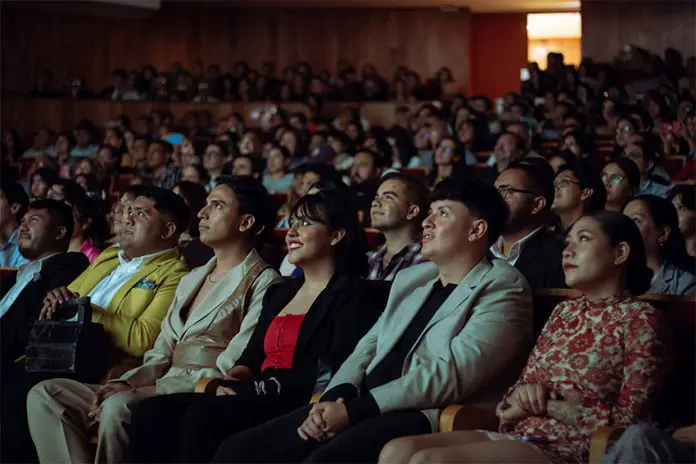
A rapt audience watches a film at last year's Guanajuato International Film Festival. (GIFF)
The Guanajuato International Film Festival (GIFF) is leaping into the future of cinema and diving into Mexico’s movie-making past during its 11-day run in León, San Miguel de Allende and Irapuato.
The 27th edition of the acclaimed festival will run from July 19 (today) through July 21 in León, followed by San Miguel de Allende from July 22 to 25 and Irapuato from July 26 to 29.
This year’s lineup includes 192 films, of which 157 will be in competition and 16 will be world premieres. Mexican shorts and feature-length films will have a major presence on the program, with 34 of them making their national debuts on the pantalla grande, the big screen.
One of the international films of note is “Black Dog,” a Chinese drama that two months ago won Un Certain Regard, the second-most prestigious award at the Cannes Film Festival. It’s about an ex-con forging a relationship with a stray dog in advance of the 2008 Summer Olympics in Beijing.
Another film to look for is “Explanation for Everything,” a Hungarian film about a male student trying to study for exams while falling hopelessly in love with a girl. It won best film at last year’s Venice Film Festival in the category for up-and-coming films and filmmakers.
“Brief History of the Family,” an official selection at this year’s Sundance Film Festival, is about a middle-class Chinese family trying to cope with problems. The film was made in China — the guest country of honor at this year’s GIFF.
The Chinese film “Brief History of a Family” by director Jianjie Lin is one of the films that will be highlighted, since China is a guest of honor at the festival this year. (GIFF)
In addition to presenting films from 49 countries, this year’s Guanajuato International Film Festival will look to the future of the industry with an exhibition on virtual reality that includes 16 “immersive” films.
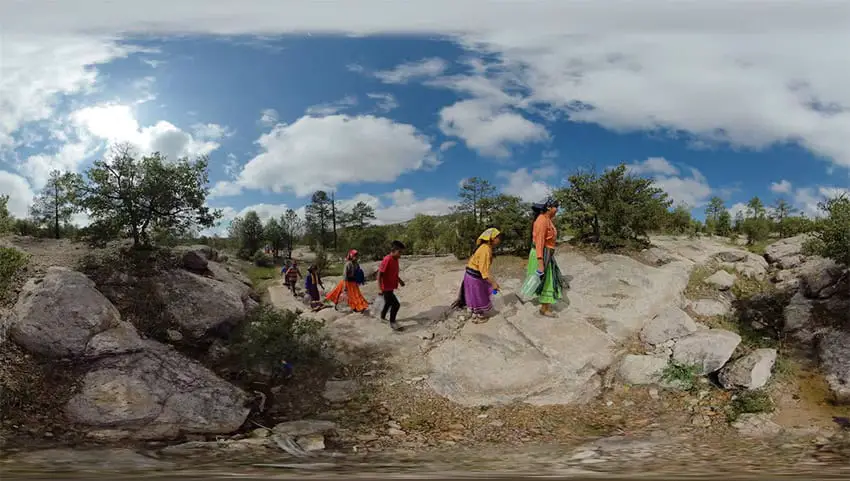
Two of those films are Mexican productions, including “GAWI,” which means “Mother Earth” in Tarahumara, an Indigenous Uto-Aztecan language. According to the festival program, the 10-minute dreamlike film “is an immersive virtual reality experience co-created with the Rarámuri community in northern Mexico [that offers] an intimate experience of how a Rarámuri state of mind and soul can feel.”
Another VR offering, “Flotando con los espíritus” (“Floating with Spirits”), is a 31-minute film in which viewers will experience the ancestral knowledge and mystical cosmogony that flows into two Indigenous sisters in the mountains of Oaxaca as they prepare for Day of the Dead.
“Rethinking and re-envisioning a film in 360 [degrees] takes you out of your comfort zone as a filmmaker,” said Sarah Hoch, the director and co-founder of the festival that she started alongside husband Ernesto Herrera in 1998. “It opens our minds, our language, the possibilities of telling stories and enriches our creative experience.”
“GAWI” is a dreamlike Rarámuri film/virtual reality experience. (GIFF)
The festival in recent years has also taken to creating workshop and panel discussions around a certain aspect of technology. Last year, it was artificial intelligence; this year it is quantum computing — which combines computer science, physics and mathematics to solve complex problems in no time at all.
GIFF will examine quantum computing’s growing impact on filmmaking, said Hoch, who was born in Kansas but has permanently resided in San Miguel de Allende since 1972.
Looking backward in addition to ahead, the festival will honor several emblematic figures from the history of Mexican cinematography: director Arturo Ripstein, actors Joaquín Cosío, Adriana Paz and Claudia Ramírez, and screenwriter Marina Stavenhagen.
Ripstein, 80, who is of Polish Jewish descent, is often called the “Godfather of independent Mexican cinema.” The Mexico City native and his films have won nine Ariel Awards, including five for best picture and two for best director.
If you have the streaming service Kanopy, check out Ripstein’s amazing “Tiempo de Morir” (“Time to Die”), winner of the best picture Ariel in 1967 (English subtitles are included).
Five of his other films will be shown in the festival: “El castillo de la puro” from 1973, “La viuda negra” from 1977, the director’s cut of “Profundo carmesí” from 1996, “La calle de la amargura” from 2015 and “El diablo entre las piernas” from 2019.
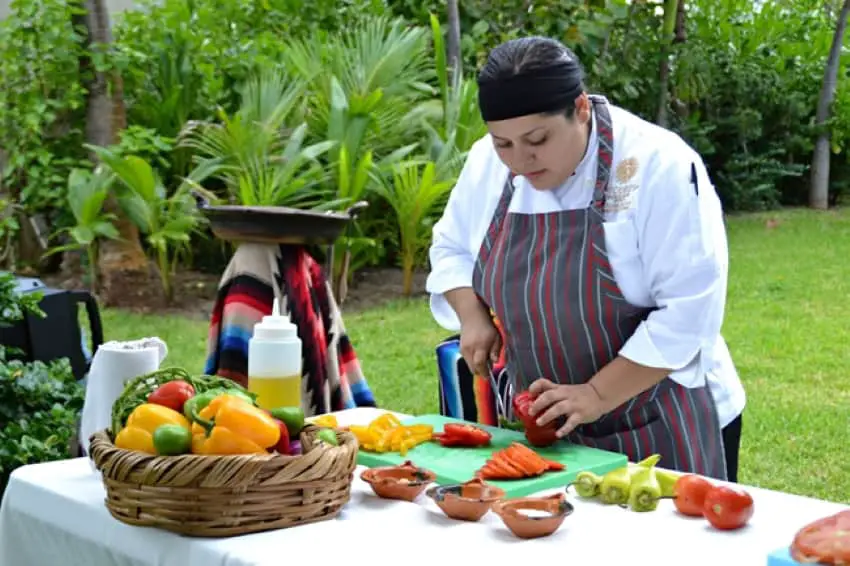
Award winning chef Elena Reygadas is the face of a new scolarship program from Santander bank, which aims to help women wanting to become high class chefs. (Elena Reygadas)
“Ask us questions,” Chef Norma Listman says to a group of 10 or so women in their early twenties. “This is a really special encounter that Chef has brought together … Ask us anything that you want.”
The young women hesitate but get bolder as the conversation flows. Listman is talking about Chef Elena Reygadas, who sits a few feet away in the middle of a sharing circle at the Huerta Tlatelolco urban garden. One of Mexico City’s foremost chefs, Reygadas was named Best Female Chef in the World by the World’s 50 Best Restaurants in 2023.
Elena Reygadas, founder of Mexico City’s influential Rosetta restaurant, “is among those most dedicated to moving gastronomy into a positive direction,” said the World’s 50 Best Restaurants in selecting her as 2023’s best female chef. (The World’s 50 Best Restaurants)
There are many other famous chefs sprinkled among the crowd as well, including Listman herself, who has caused serious waves in the CDMX dining scene with her Indian-Mexican fusion restaurants Masala y Maiz and Mari Gold. But despite the star power today, there are no flashy presentations or hyped-up egos. Instead, these famous women are sitting on the ground, in the shade of the garden’s fruit trees, listening intently to a group of young culinary students from across Mexico voice their fears and dreams.
Each young woman present is either in culinary school or has just graduated. All are here because they applied for and won a scholarship through a collaboration between Chef Reygadas and Santander Open Academy, which provides over 70,000 scholarships a year to Mexican university students across the country.
Reygadas started this scholarship program in 2022, as an attempt to support gender equality in Mexico’s kitchens.
“From the time I started working formally in restaurant kitchens I was surprised that they were so dominated by men, given that women have been the ones to maintain and transmit the food knowledge and culture,” Reygadas tells me later. “I decided to start a scholarship project for young female culinary students to support them from the very start of their education and in that way fight for equality and strengthen their leadership.”
The scholarship program is helping to support aspiring Mexican women in finding success in high-end kitchens. (Viator)
In the program’s first year, it was able to support three female students, who each received a 40,000-peso scholarship. With Santander’s help, the number of scholarship recipients expanded to 20 for the 2023-2024 cycle. Winners come from 14 different Mexican states and are invited to the capital to meet the chefs who judged the competition. For some of them, this is their first time outside their home state or having flown on an airplane.
“When I told [my mom] that I had been invited to Mexico City to meet these chefs,” says María Fernanda Cortez Mendoza, “and I showed her on social media all the things they had accomplished, I think it was the first time that she thought that my decision [to go to culinary school] wasn’t a mistake.”
The young women here are facing their futures with excitement and anxiety. They are also generally in awe that these super-famous chefs have been so cool and approachable during their visit — it’s felt more like an exchange than a press conference. They are particularly taken with Chef Reygadas, who most of them have admired since beginning their studies.
“That’s the idea,” says Elena when yet another woman talks about how great it’s been to get to know her on a personal level. “That this [would create] empathy among women with a similar passion, and not just be about social media and publicity. That this would be a chain reaction, and that you would be able to transmit the same thing to the women of your communities.”
Many of the women in the program have already taken the first steps on their journey to culinary fame. (ECPI university)
Some of these young women already have their first jobs in the industry, some have worked at internships in restaurants or hotels for culinary school, some are starting small independent businesses. All have gotten a first-hand glimpse at how tough it can be for women in their field.
“Guys in my class brush off our opinions because we are women.”
“Men say that I’m just being hormonal when I get upset.”
“Our professor told us we had better be ready for it to be tough as women in the business, especially if we were pretty.”
The conversation oscillates between the trials and tribulations of working in a kitchen to broader societal issues like respecting the culinary heritage of communities and how the European patriarchal structure of male-run kitchens has been imposed on Mexico’s matriarchal culinary traditions.
Questions fly through the air:“How can I speak up about injustices when I don’t want to lose my job?” “What do you do when people hate on you on social media?” “What advice would you have given your younger self?” The chefs respond with advice and examples from their own lives, both at the beginning of their careers and now. Nods of recognition as well as waves of laughter travel around the circle.“We romanticize the act of cooking and creating,” says Listman, “but there are many things about this industry that need to change and as women, we have to demand [those changes].”
Reygadas has three other restaurants and cafés in Mexico City. Panadería Rosetta, a bakery, allows her to indulge has passion for bread. (Galo Cañas Rodriguez/Cuartoscuro)
María Fernanda Rodríguez Martínez is using part of her money to start an artisanal ice cream brand incorporating the flavors of her home state of Tabasco. Mariana Quintanar Guzmán is working on a mobile bakery that will combine classic French pastry-making with Mexican flavors and ingredients. Lila Tayen Domínguez González hopes to one day travel through the rest of Latin America, researching ingredients.
Further financial support is also up for grabs: an annual legacy scholarship through the same program will provide a 300,000 peso prize for one lucky aspiring chef to study and work abroad.
As a new crop of students join the ranks of the recipients — the 2024 winners will be announced at the end of July — the meet-up this May was proof of the importance of not only monetary support for women in the industry but also the connections these women will take into the future of their careers.
“It’s comforting that we’re here and getting to know one another, creating support [networks],” Mariana Quintanar says about meeting the other scholarship recipients. “Like if I go to Tabasco now I won’t feel alone, or Guerrero or Michoacan. We’re being enriched by new knowledge and new friendships.”
Lydia Carey is a freelance writer and translator based out of Mexico City. She has been published widely both online and in print, writing about Mexico for over a decade. She lives a double life as a local tour guide and is the author of Mexico City Streets: La Roma. Follow her urban adventures on Instagram and see more of her work at www.mexicocitystreets.com.
AMLO diplomatically expressed his concern over Trump's most recent anti-migrant comments, saying he'd send 'his friend Donald Trump' a letter. (Presidencia de México)
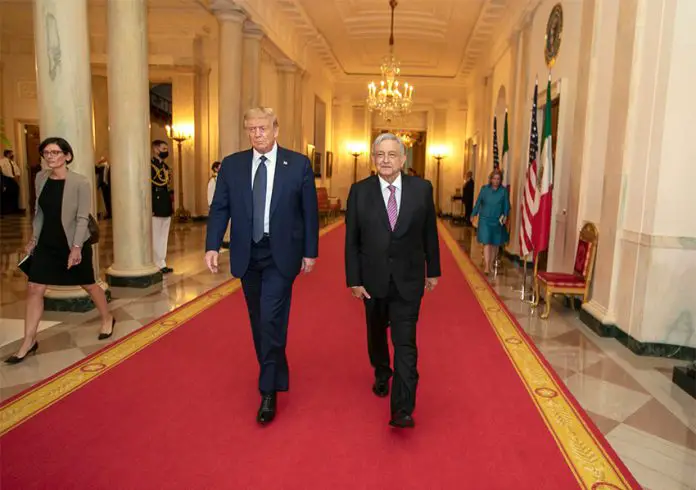
President Andrés Manuel López Obrador said Friday that he would send a letter to former United States president Donald Trump about migration and the importance of economic integration in North America, after Trump gave a fiery anti-migrant speech at the U.S. Republican National Convention.
“I’m going to send a letter … to my friend Donald Trump because I think they’re not informing him well about the migration issue and also about the importance of maintaining economic integration between the United States, Mexico and Canada,” AMLO told reporters at his morning press conference, in response to the U.S. presidential candidate’s speech.
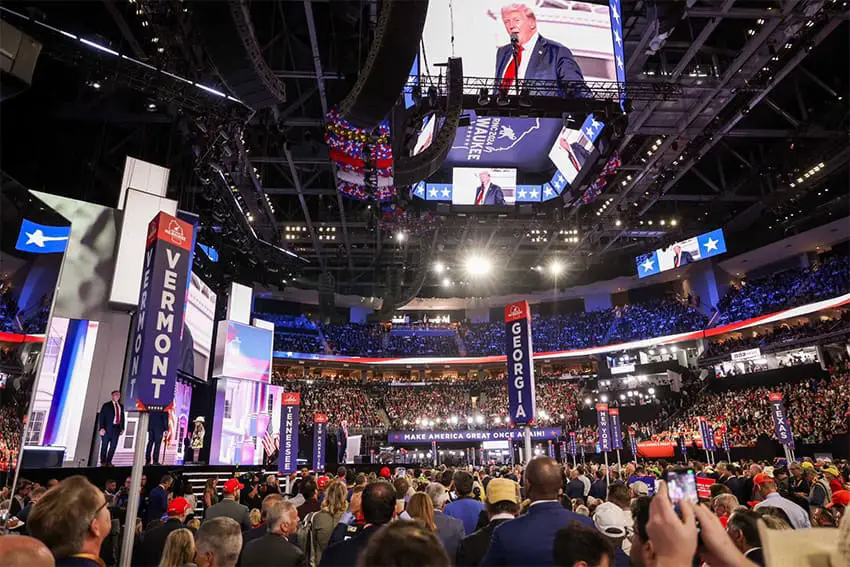
His remarks came after Trump told attendees at the Republican National Convention in Milwaukee that he intended to close the United States’ southern border with Mexico on “Day 1” if elected to a second term as U.S. president.
López Obrador said he would “prove” to Trump that migrants aren’t smuggling drugs into the United States.
“This is a despicable lie,” he said. “Migrants go to the United States to work, honorably.”
López Obrador also said he would remind Trump that the United States “was established and became a power thanks to migrants from all over the world.”
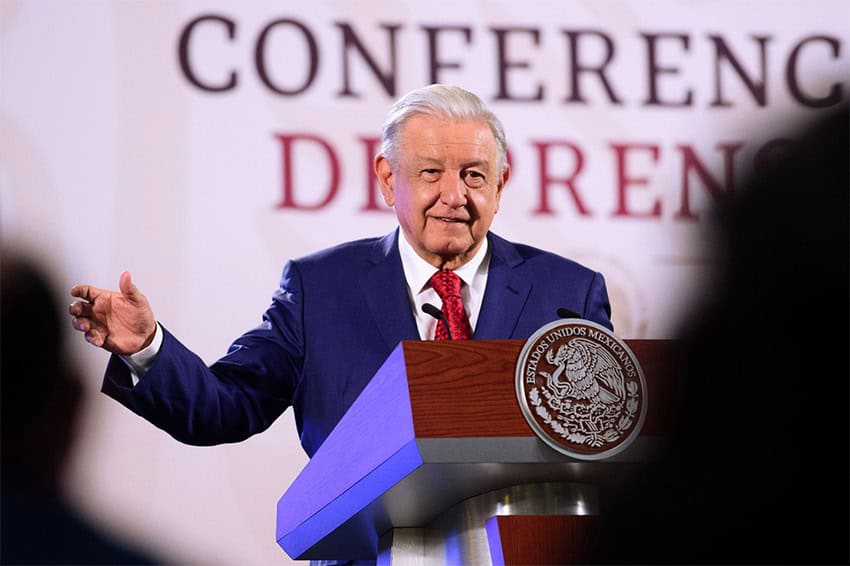
President López Obrador responded to Trump’s speech at his regular Friday morning press conference. (lopezobrador.org.mx)
“They arrived and made a very prosperous country. This must be made clear,” he said.
AMLO, who maintained a cordial relationship with Trump during his 2017-21 presidency, said he would also inform the Republican Party presidential candidate that “economic integration helps us, and nothing is resolved by closing the border” between Mexico and the United States, which are each other’s largest trade partner.
“What’s more, [the border] cannot and must not [be closed],” he said.
“They wouldn’t put up with it. Not the farmers, not the manufacturers, not the investors in the United States, not the workers in the United States,” AMLO said.
“It would affect us as well, but it would affect them more,” he said.
As Trump is “an intelligent man with vision,” López Obrador continued, “I know he will change his way of thinking.”
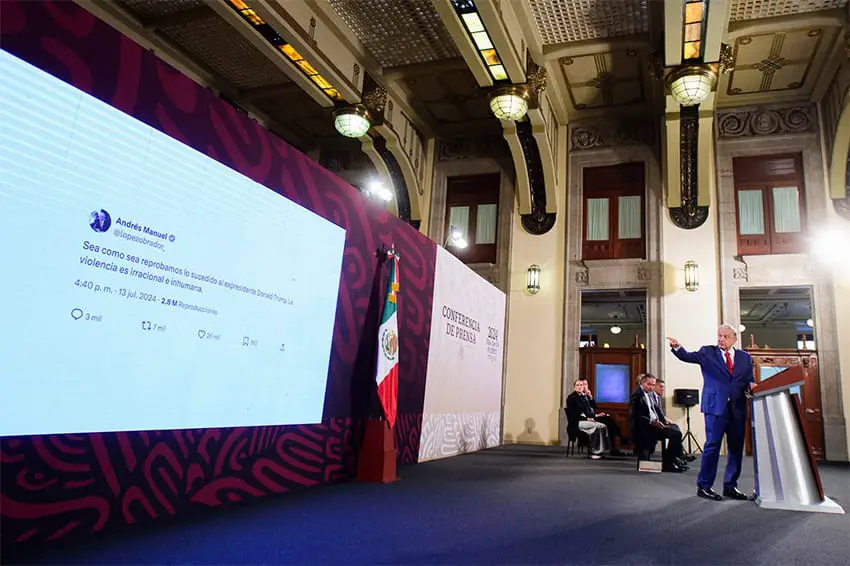
López Obrador once again condemned the shooting that injured the U.S. presidential candidate at a recent campaign rally. (lopezobrador.org.mx)
After once again lamenting the assassination attempt on Trump last Saturday and claiming he was the first world leader to condemn the attack, AMLO said he would send his letter to the Republican party candidate next week.
“It’s not about fighting, it’s about speaking the truth and having knowledge of reality,” he said.
Smugglers move large numbers of guns from the United States into Mexico, where they often end up in the hands of criminal organizations that send illicit drugs and migrants north.
What did Trump say about Mexico during his nomination acceptance speech?
Just five days after his right ear was grazed by a bullet shot by a 20-year-old gunman as he spoke at a campaign rally in Pennsylvania, Trump formally accepted the presidential nomination of the Republican Party.
During a lengthy nomination acceptance speech at the Republican National Convention on Thursday night, the 45th U.S. president made a number of implicit and explicit references to Mexico. Below is a selection of those remarks.
On migrants entering the United States via the border with Mexico
“We also have an illegal immigration crisis, and it’s taking place right now, as we sit here in this beautiful arena. It’s a massive invasion at our southern border that has spread misery, crime, poverty, disease, and destruction to communities all across our land. Nobody’s ever seen anything like it.”
On his plan to end the immigration “crisis”
“I will end the illegal immigration crisis by closing our border and finishing the wall, most of which I’ve already built.”
Trump told the crowd that if elected, he would close the border with Mexico. (Donald Trump/Facebook)
“… At the heart of the Republican platform is our pledge to end this border nightmare, and fully restore the sacred and sovereign borders of the United States of America. And we’re going to do that on Day 1. That means two things on Day 1, right? Drill, baby, drill and close our borders.”
On the USMCA trade pact
“I got rid of NAFTA the worst trade deal ever made and replaced it with USMCA, which is, they say, the best trade deal ever made.”
On Chinese automakers’ (proposed) production of cars in Mexico
“Right now as we speak, large factories, just started, are being built across the border in Mexico. So, with all the other things happening at our border, and they’re being built by China to make cars and to sell them into our country, no tax, no anything. The United Autoworkers ought to be ashamed for allowing this to happen and the leader of the United Auto Workers should be fired immediately and every single autoworker, union and nonunion, should be voting for Donald Trump because we’re going to bring back car manufacturing and we’re going to bring it back fast.”
* Chinese automakers including BYD and Solarever Electric Vehicles have announced plans to open plants in Mexico. But construction has not yet commenced on any of the announced plants.
Mexico's preliminary growth data for June makes for a cloudy economic growth outlook for 2024. (Cuartoscuro)
The Mexican economy grew just 0.9% in annual terms in June, according to preliminary data published by the national statistics agency INEGI on Friday.
On a month-over-month basis, the Mexican economy was stagnant, recording 0% growth in June.
The tertiary or services sector, which includes tourism, is expected to show 1.6% annual growth in June, while the manufacturing sector saw a contraction. (Cuartoscuro)
INEGI said in a press release that final data is expected to show that the secondary or manufacturing sector of the economy recorded a 0.1% contraction in June compared to the same month of 2023.
Final data is expected to show that the tertiary or services sector grew 1.6% annually in June.
INEGI didn’t publish data for the primary or agricultural sector.
The 0.9% economy-wide annual growth rate in June represents a slowdown from a 1.2% expansion in May.
Analyst forecasts economic growth of 1.6% in first half of 2024
Gabriela Siller, director of economic analysis at Mexican bank Banco Base, said on X that the latest economic data indicates that the Mexican economy grew 1.21% annually in the second quarter of the year and 0.12% compared to the January-March quarter.
“These figures are normally revised at a later date,” Siller acknowledged.
“… Considering possible revisions, the Base financial group estimates that the GDP of Mexico grew 0.20% quarterly and 1.29% annually in the second quarter,” she wrote.
Siller highlighted that Banco Base’s forecast annual growth figure for the second quarter would represent a slowdown from 1.93% growth in Q1. She also said that an annual growth of 1.29% in Q2 would be the lowest rate for any quarter since Q1 of 2021.
Mexico’s economic growth has been expected to slow in 2024, but forecasts are now even less optimistic based on the data published so far for the year. (Cuartoscuro)
If final data shows that the economy did in fact grow 1.29% annually in Q2, annual growth in the first six months of the year will be 1.61%, Siller said.
“This is concerning because in election years the Mexican economy [normally] grows more in the first half of the year. The only exception is 1988,” the Banco Base analyst wrote.
She forecast that annual economic growth this year will be 1.6%, down from 3.2% in 2023.
The pace of economic growth in Mexico is widely forecast to slow this year, in part due to a slowdown in the United States economy.
IMF lowers 2024 growth outlook for Mexico
Earlier this week, the International Monetary Fund (IMF) revised downward its 2024 growth forecast for Mexico “due to moderation in demand.”
The IMF lowered its growth forecast for Mexico and also for the United States for 2024 after a “slower-than-expected start to the year.”(IMF)
The Washington-based financial institution is forecasting that the Mexican economy will grow 1.6% in 2025.
The IMF also cut its 2024 forecast for the U.S. economy — Mexico’s largest trade partner — lowering its growth projection to 2.6% from 2.7%. The downward revision reflects “the slower-than-expected start to the year,” the IMF said.
Other ‘need-to-know’ economic data for Mexico
The USD:MXN exchange rate was 18:04 at 11 a.m. Mexico City time on Thursday, according to Bloomberg.
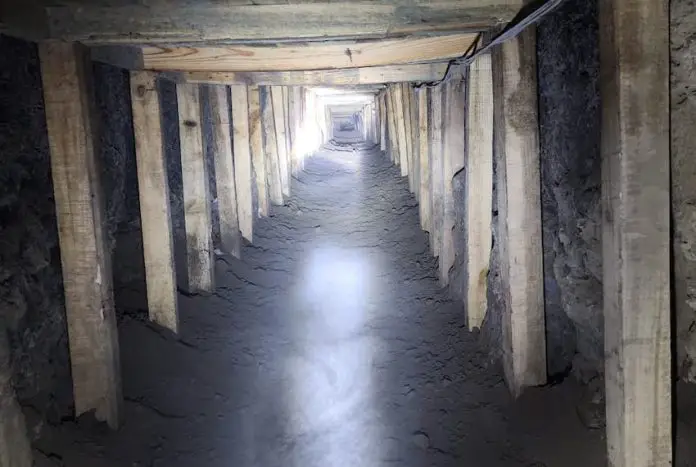
It is unknown how long the tunnel was being used by gas thieves in México state.(@FiscaliaEdomex/X)
State and local authorities seized control of an 85-meter-long tunnel that was being used to steal from a Pemex gasoline duct in México state.
The “mega tunnel” was located inside a house in San Bartolo in the municipality of Acolman, a few miles south of the Teotihuacán pyramids and archaeological complex.
#Resultados. La #FiscalíaEdoméx, en conjunto con la @SS_Edomex y la Dirección de Seguridad Pública Municipal de #Acolman, ejecutaron técnica de investigación de cateo en un domicilio ubicado en el poblado de San Bartolo de esta demarcación, donde fue localizado un túnel realizado… pic.twitter.com/j9hFi27190
The state Attorney General’s Office (FGJE) issued a statement on Thursday detailing the operation that led to the discovery of the underground passage after a warrant was issued to search the San Bartolo property.
The statement explained that the warrant was obtained after Acolman authorities notified the FGJE about suspicious excavation activities in San Bartolo.
During the inspection, the police discovered an access point to a tunnel three meters below the surface. Agents descended into the 1-meter wide tunnel and found five taps protruding from the ceiling of the passageway. The taps were connected to a fuel duct.
The FGJE did not disclose whether there was an access point at the far end of the tunnel, nor did it speculate how long the tunnel might have been used to steal fuel, popularly known as huachicoleo.
The area around the property was cordoned off and Acolman’s civil protection agency was on scene to determine if there was danger of an explosion and if the area should be evacuated.
The FGJE was preparing to turn the case over to the Federal Attorney General’s Office (FGR) as fuel theft is a federal crime. There were no arrests reported as of Friday morning.
This marks the second fuel theft tunnel located in the municipality of Acolman this year, after state and local authorities discovered evidence of huachicoleo in the Santa Catarina ejido.
The 200-meter long tunnel in Santa Catarina was far more sophisticated than the one in San Bartolo. The length of the passageway was strung with light bulbs as well as high-pressure hoses and pumping equipment. The tunnel featured a cement floor and a series of wooden support poles and ended at taps connected to a Pemex pipeline.
Earlier this month, Pemex reported that huachicoleo in México state was primarily targeting jet fuel and illegal taps had also been discovered within Mexico City.
In March, the United States announced it would partner with Mexico in a new semiconductor initiative to strengthen and grow the Mexican semiconductor industry.
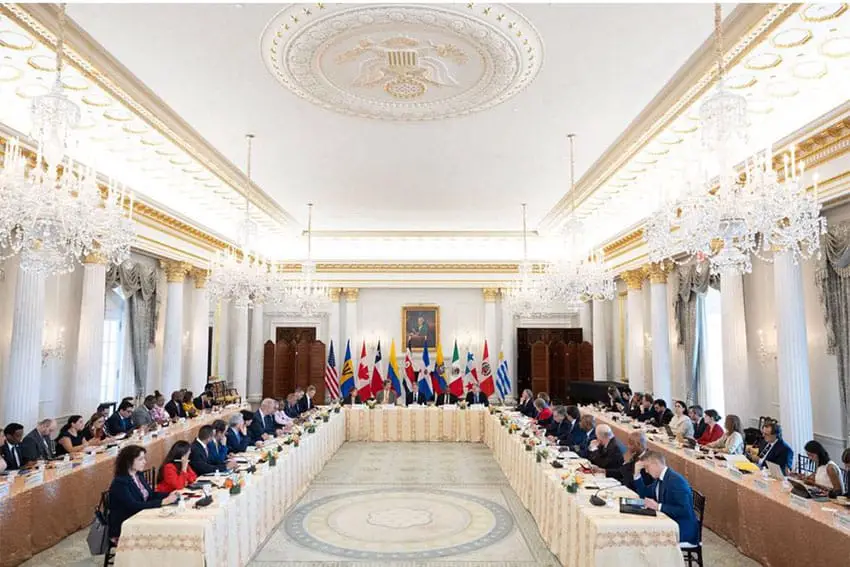
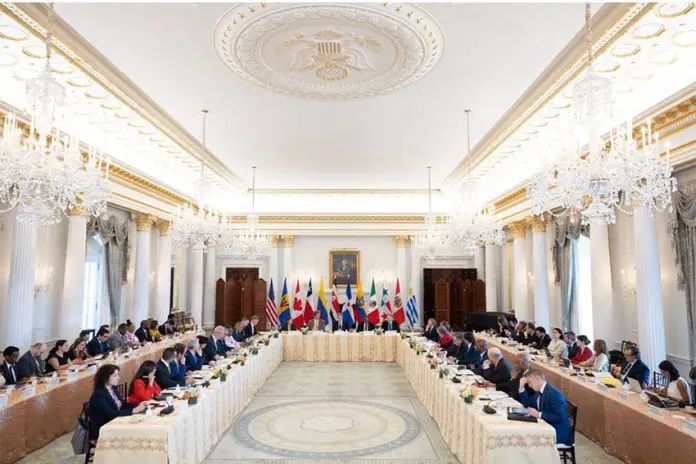
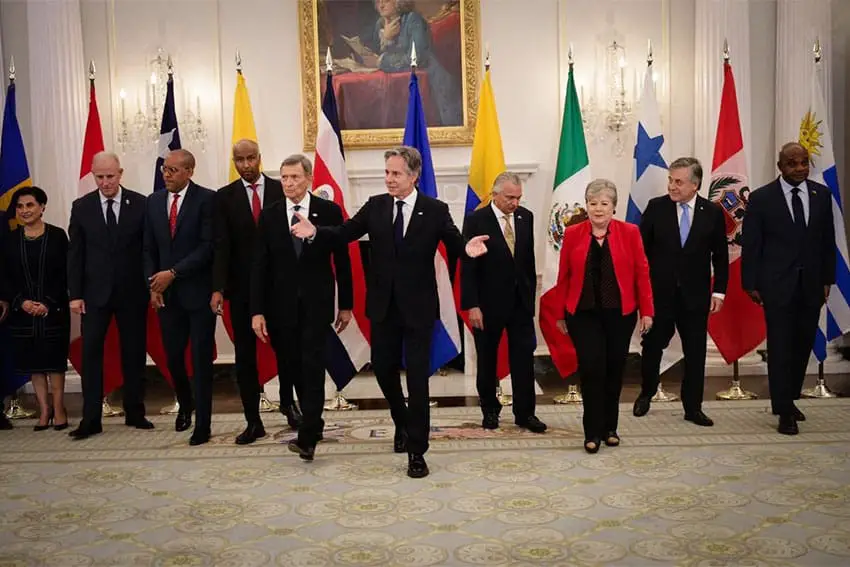
US Secretary of State Antony Blinken announced the Western Hemisphere Semiconductor Initiative at a meeting for foreign ministers of the member countries of the Americas Partnership for Economic Prosperity, which took place at the White House on Wednesday. (US government)
And just this week, U.S. Secretary of State Antony Blinken said that Mexico will be one of three Latin American countries to initially benefit from the Western Hemisphere Semiconductor Initiative, a program supported by the US $280 billion CHIPS Act.
As a result, Mexico appears destined to become a significant player in the global semiconductor industry, which is currently dominated by Asian countries such as Taiwan, South Korea and China.
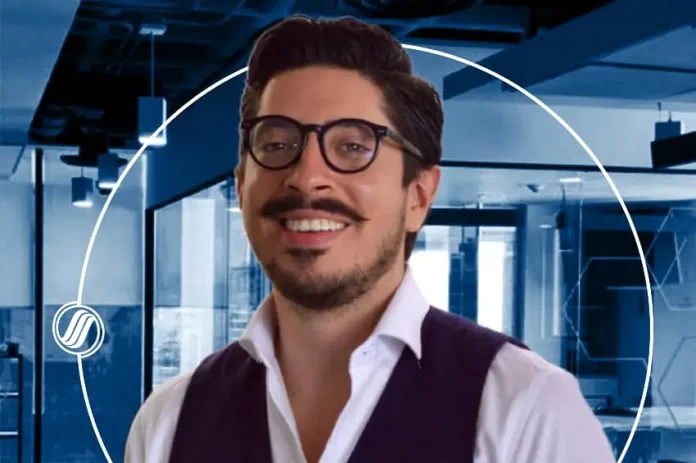
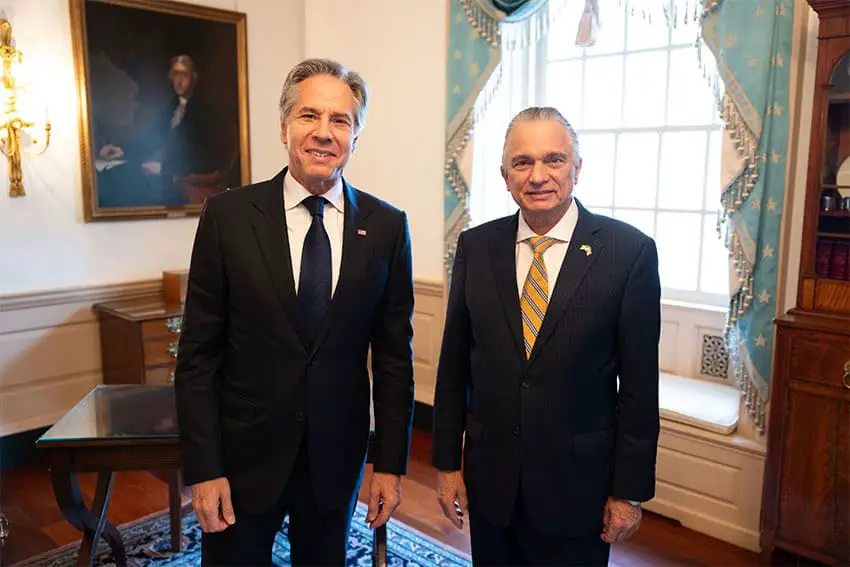
One person keeping a close eye on the developments — and involved in high-level discussions on plans for an integrated North American semiconductor ecosystem — is Pedro Casas Alatriste, executive vice president and CEO of the American Chamber of Commerce of Mexico (AmCham).
Mexico News Daily caught up with Casas while he was in San Francisco earlier this month to attend SEMICON West, North America’s premier microelectronics event.
What can you tell us about SEMICON West?
“SEMICON West is the biggest semiconductor investment fair in the world,” Casas said, explaining that 600 exhibitors from around the world were in attendance along with “more than 30,000 participants.”
“… Surprisingly enough there wasn’t any Mexican delegation coming here so we decided to take the lead and organize [one]” he said.
En @ConsulmexSFO celebramos el 1er “Nearshoring in Mexico Seminar” en el marco de #SemiconWest.
• 80+ pax interesadas en invertir en 🇲🇽 en semiconductores
• Presencia del Subsecretario Valverde y subsecretarios de múltiples estados @SE_mx
• @united anunció nueva ruta MTY-SFO pic.twitter.com/pBmj4D0PU3
Casas told MND that AmCham put together a Mexican delegation of around 20 businesspeople and government officials from the states of Nuevo León, Chihuahua, Sonora, Jalisco, Baja California and Mexico City.
In a presentation, the delegates presented Mexico as a semiconductor investment destination and promoted “the qualities of the country … [in order to] incorporate ourselves much more in the semiconductor supply chain in North America,” said Casas.
The U.S. and Mexico announced a semiconductor partnership in March. What has happened since then?
“A lot of very interesting things” are happening, Casas told MND.
AmCham, he said, has already participated in two Mexico-U.S. semiconductor forums this year, one in Guadalajara and the other in Tijuana. The chamber, which aims to facilitate economic integration between Mexico and the U.S., will attend a third bilateral forum in Ciudad Juárez in October, Casas said.
U.S. and Mexican government officials, representatives of semiconductor companies and academics were among the attendees at the two previous forums, he explained.
“[We told them] here are our plans for labor and human capital, for training; here’s what we’re going to do to coordinate the participation of the private sector with academia … these are the areas of opportunity to invest… [and] this is how long it’s going to take for us to be a key player … in [semiconductor] designing,” Casas said.
Where do you think the North American semiconductor industry will be in five years?
“From what I’m seeing here at SEMICON and what I’m seeing in Mexico, I truly think we’re going to see an accelerated change in the region … because everything is now aligned,” Casas said.
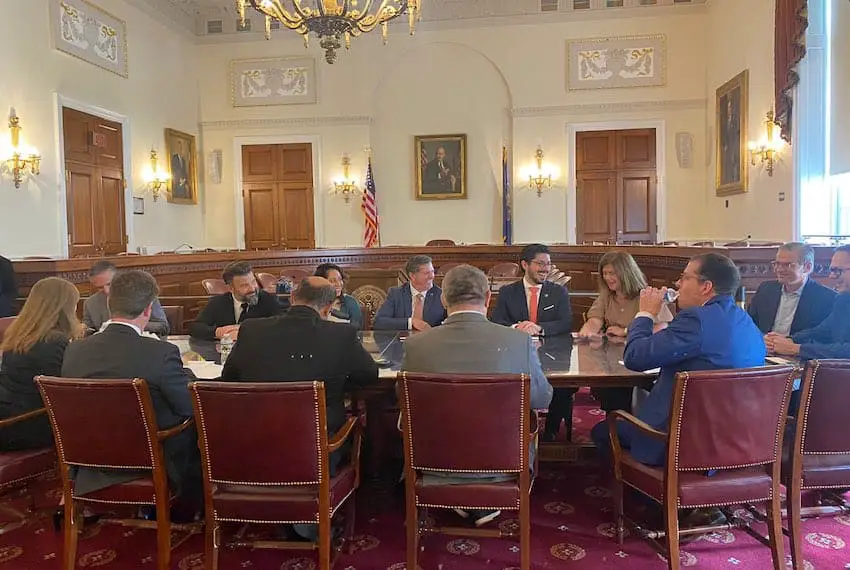
Casas (center-right) at a recent meeting with the World Bank and members of the United States Congress. (@PedroCasas/X)
“We have the political will, we have the economic opportunity, we have the incentives and we also have the pressing need [to act], not only economically but also in terms of national security and … [to reduce] dependence on a small number of players,” he said, referring to North America’s reliance on Asian semiconductor manufacturers.
“So everything is aligned to make this change fast. Basically what I see in five years is a very well-integrated supply chain with a clear vision toward the future,” Casas said.
In the not-too-distant future, Casas predicts there will be newspaper headlines highlighting “the North American success in semiconductors.”
You appear confident that Mexico has the capacity to support a much larger semiconductor sector. Is that the case?
“We’re right on the verge of not being capable of making the most out of this, but definitely we can,” Casas said.
“If we don’t do anything we won’t have the capacity. … Nonetheless, I do see ourselves making the right decisions, and hopefully with the new [Mexican] administration we can see an important change in terms of how we can better invest in the energy sector, water, security, rule of law and talent,” he said.
” … This is a historic opportunity for many reasons, and I see for the first time a clear alignment,” Casas said.
“… This is something that has bipartisan support, this is something that has regional support. From any angle you look at it, there is no reason to doubt that there is going to be an integrated North American supply chain” for semiconductors, he added.
The production of semiconductors requires a lot of water. Are you concerned about the establishment of semiconductor plants in Mexico when there is a shortage of water in some parts of the country?
Casas pointed out that the agricultural sector is the largest water user in Mexico by far, so “if we invest there, that’s where we’re going to see a huge change in water availability in our country.”
“The recipe is quite clear — we need to invest in technology so that we do not waste tonnes of water [in the agriculture sector],” he said.
US Secretary of State Antony Blinken announced the Western Hemisphere Semiconductor Initiative at a meeting for foreign ministers of the member countries of the Americas Partnership for Economic Prosperity, which took place at the White House on Wednesday. (US government)
Mexico already has a semiconductor partnership with the United States, and the country is now part of a regional semiconductor industry initiative that U.S. Secretary of State Antony Blinken says will “turbocharge” its capacity to assemble, test and package the critical electronic components.
In his opening remarks at a meeting in Washington, D.C., on Wednesday attended by officials from the 12 member countries forming the Americas Partnership for Economic Prosperity, Blinken announced the creation of the Western Hemisphere Semiconductor Initiative.
U.S. Secretary of State Blinken, sixth from left, told the foreign ministers that the U.S. wants to “turbocharge” member countries’ capacity to assemble, test and package semiconductors. The initiative would start with Mexico, Panama and Costa Rica. Foreign Affairs Minister Alicia Barcena, third from right, attended for Mexico. (US government)
“Thanks to funding from the bipartisan CHIPS Act, this initiative will turbocharge countries’ capacity to assemble, to test, and to package semiconductors, beginning with Mexico, Panama and Costa Rica,” he said.
Blinken also said that the United States will hold a semiconductors symposium in Mexico in September “to identify ways that the region can play a larger role in the global supply chain for this critical technology.”
Semiconductors: A key component in electronic devices
Asian countries such as Taiwan, South Korea and China are the main manufacturers of semiconductors, essential components in smartphones, computers, drones, electric vehicles and medical devices.
The United States wants to reduce its reliance on semiconductors from Asia by investing heavily in its own semiconductor industry. Its plan is to assist other countries in the region in increasing their capacity in the sector.
The U.S. Department of State announced in March that it would partner with the Mexican government to “explore opportunities to grow and diversify the global semiconductor ecosystem” under the five-year US $500 million International Technology Security and Innovation (ITSI) fund, part of the CHIPS Act of 2022.
The Western Hemisphere Semiconductor Initiative
The U.S. Department of State (DOS) released a statement on the regional initiative.
.@SecBlinken: A través de la Alianza de las Américas, impulsamos inversiones y empleos de alta calidad en el hemisferio. Junto al sector privado y sociedad civil, estamos comprometidos con un crecimiento económico inclusivo para una región más próspera, democrática y segura. pic.twitter.com/i6R0MXS3yK
In Blinken’s speech to Americas Partnership members, excerpted here, he emphasized the benefits of the member nations working as a unit.
“Today, to bolster semiconductor production capabilities across the Western Hemisphere, the U.S. Department of State, in collaboration with the Inter-American Development Bank (IDB), has unveiled the CHIPS ITSI Western Hemisphere Semiconductor Initiative,” the DOS said.
The department described the initiative as “groundbreaking” and noted, as Blinken did, that it will enhance “semiconductor assembly, testing, and packaging (ATP) capabilities in key partner countries, beginning with Mexico, Panama, and Costa Rica.”
The DOS said that the IDB “will support public-private partnerships and implementation of OECD recommendations tailored to enhance the semiconductor ecosystems in targeted countries.”
It said that the initiative will commence in 2024 and run through 2026.
“This initiative will strengthen regional capabilities and set a precedent for inclusive economic growth and global technological advancement,” the DOS said.
Reaction to the initiative
“Mexico will be king of semiconductors,” asserted a headline in a Publimetro article that struck an optimistic tone about the new regional initiative.
Writing in the El Financiero newspaper, columnist Jeanette Leyva Reus was also optimistic about the announcement, asserting that “there is every appearance” that a “new stage” in the construction of semiconductor plants is coming.
Mexico will receive semiconductor sector investment without even asking for it, she wrote.
Gabriela Siller, director of economic analysis at Mexico’s Banco Base, said on X that if the new semiconductor initiative comes to fruition, “it will bring a lot of foreign investment to Mexico.”
“Of course, electricity, water and highway infrastructure needs to be improved,” she added.
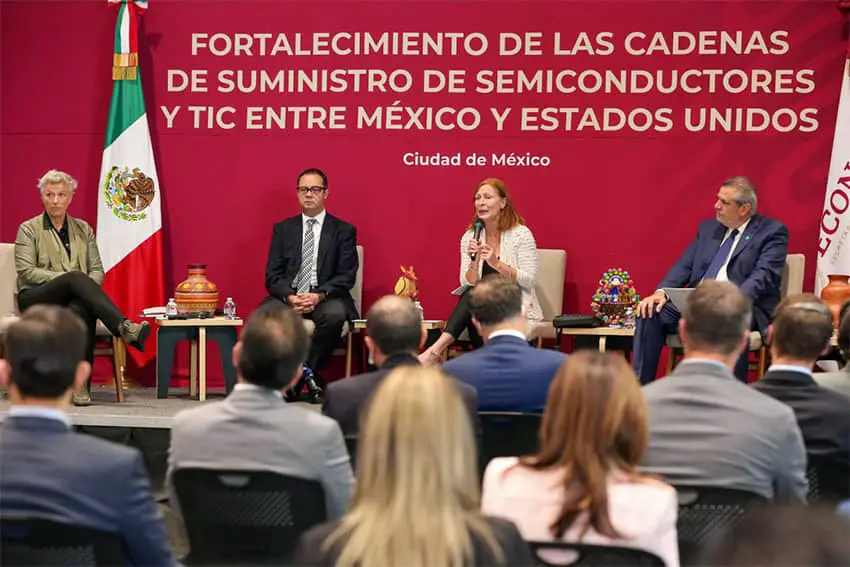
Mexico has been interested in developing its role as a semiconductor partner since before the creation of the Americas Partnership. In April 2022, then Economy Minister Tatiana Clouthier signed an accord with US tech company Intel committing to knowledge and innovation transfer and training of Mexican talent in the semiconductor industry. (Moisés Pablo Nava/Cuartoscuro)
China experts weigh in
Paul Triolo, partner for China and technology policy lead at global business strategy firm Albright Stonebridge Group, was far less upbeat about the potential benefits the initiative will bring to Mexico and other Western Hemisphere countries.
The South China Morning Post, which spoke to the Washington D.C.-based executive, reported that Triolo “was skeptical about how easy it would be to implement the plans announced by US officials.”
He told the Hong Kong-based newspaper that the Western Hemisphere Semiconductor Initiative would likely focus on the packaging and testing of semiconductors, but not on front-end manufacturing — i.e. the creation and processing of the semiconductor wafer.
“No major … firms are likely to want to establish a presence in these countries,” Triolo said in reference to Mexico, Panama and Costa Rica.
Even in the United States, “major front-end manufacturing firms that have received funding under the CHIPS Act are struggling to build advanced … facilities,” he told The South China Morning Post, explaining that the main impediment is the shortage of skilled workers to build and operate the plants.
Triolo said that even building a significant semiconductor packaging ecosystem in Mexico, Panama and Costa Rica could be “very challenging given the scale of investment required, unclear sources of trained personnel and [doubts about] the long-term ability of the U.S. to support such an effort.”
Blinken with Costa Rica Foreign Minister Arnoldo André at Wednesday’s meeting. In 2023, Intel committed to building the company’s only semiconductor chip assembly and testing facility in the West. However, China and technology policy expert Paul Triolo said that no major tech firms were likely to invest in semiconductor manufacturing facilities in Mexico, Costa Rica or Panama due to a lack of skilled workers in those countries. (Government of Costa Rica)
China’s state-owned newspaper reacts
The Global Times, a state-owned Chinese newspaper considered a Chinese Communist Party mouthpiece, also weighed in on the Western Hemisphere Semiconductor Initiative. Its report said the program “may be just ‘lip service’ from the U.S.”
“The Western Hemisphere Semiconductor Initiative comes as Washington tries to reignite the flame of semiconductor manufacturing in the U.S. The government is flexing all policy muscles to boost domestic semiconductor manufacturing by suppressing its competitors. So, it is almost impossible for the U.S. to give full support to other countries’ efforts in advancing semiconductor manufacturing,” the report said.
“… Although the U.S. may bring Latin American countries some small-scale investment in back-end semiconductor manufacturing, we don’t think it will be very helpful in boosting the development of manufacturing in Latin American countries,” The Global Times said.
Launched by United States President Joe Biden in 2022, the Americas Partnership for Economic Prosperity — from which the new semiconductor initiative stems — is seen as a U.S. effort to counter growing Chinese influence in Latin America. It includes the United States, Canada, Mexico, Chile, Colombia, Barbados, Costa Rica, the Dominican Republic, Ecuador, Panama, Peru and Uruguay.
Upcoming semiconductors symposium in Mexico
The opportunities arising from the Western Hemisphere Semiconductor Initiative and Mexico’s bilateral semiconductor partnership with the United States are on the agenda for the Americas Partnership Semiconductor Symposium, which will be hosted by the U.S. Department of State and Mexico’s Economy Ministry in Mexico City on Sept. 5 and 6.
The challenges that must be overcome to ensure success will also be on the agenda.
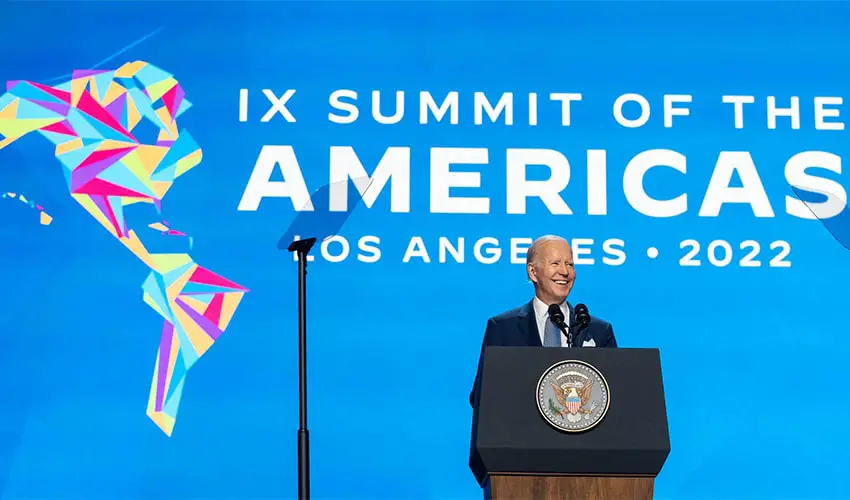
The Americas Partnership was first announced by U.S. President Joe Biden at the Summit of the Americas in June 2022. (Erin Scott/White House)
The DOS said in a statement that the symposium “will focus on expanding and diversifying the semiconductor assembly, testing, and packaging (ATP) ecosystem in Americas Partnership countries.”
“A secure semiconductor supply chain ecosystem in the Western Hemisphere is critical to the Biden Administration’s goals, including the successful implementation of the CHIPS Act,” the department added.
It said that the symposium will “bring together industry, particularly small and medium-sized suppliers, governments, academia, and labor to identify key challenges, explore emerging opportunities, and develop strategies for sustainable growth and collaboration in this critical industry.”
“These efforts will work towards achieving one of the Americas Partnership’s priority goals of bolstering the semiconductor industry and capacity in the Western Hemisphere,” the DOS said.
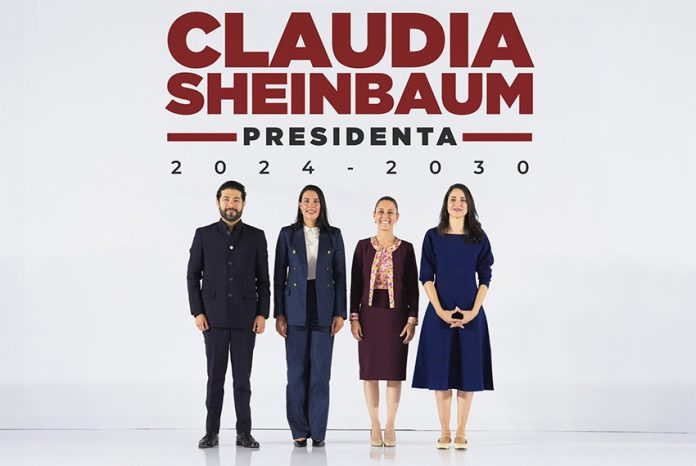
The newest names in Sheinbaum's cabinet are Marath Bolaños López leading the Labor Ministry, Josefina Rodríguez Zamora as Tourism Minister and Claudia Curiel de Icaza as Minister of Culture. (Claudia Sheinbaum/X)
President-elect Claudia Sheinbaum announced three more appointments to her cabinet on Thursday, introducing the heads of the labor, culture and tourism ministries.
The cabinet appointments of “three brilliant young people” — as Sheinbaum referred to them in a social media post on X — are part of her preparation to take office as Mexico’s first female president on Oct. 1, following her June 2 victory as the candidate for the Morena Party.
Sheinbaum, who has been gradually unveiling her cabinet picks, stated that only the ministers of Defense and the Navy remain to be announced. Those are expected to be made in September.
The newest appointees are Marath Bolaños López, 40, as Labor and Social Welfare Minister; Claudia Curiel de Icaza, 44, as Culture Minister; and Josefina Rodríguez Zamora, 34, as Tourism Minister.
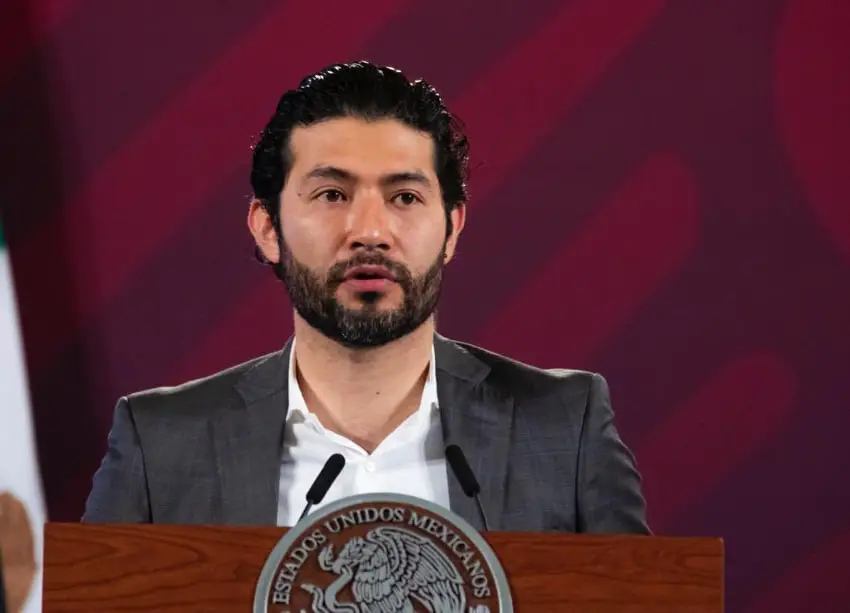
Current Labor Minister Marath Bolaños López will continue in his current role. (Marath Bolaños/Twitter)
A former private secretary to the Minister of Foreign Affairs and a deputy for the Morena caucus in Congress, Bolaños will continue as the Labor and Social Welfare Minister, a position he has held since last June 2023.
A significant figure in the current administration’s labor reforms, he has been praised for his role in enhancing labor rights, increasing the minimum wage, reforming pensions and regulating outsourcing.
Bolaños, who also teaches at the National Autonomous University of Mexico (UNAM), expressed gratitude for the opportunity to continue his work.
“The Labor Ministry has a lot to contribute to continue benefiting workers,” he stated. “We know the way, we have the compass well set and we know where to go because for the good of all, the poor come first.”
Claudia Curiel de Icaza
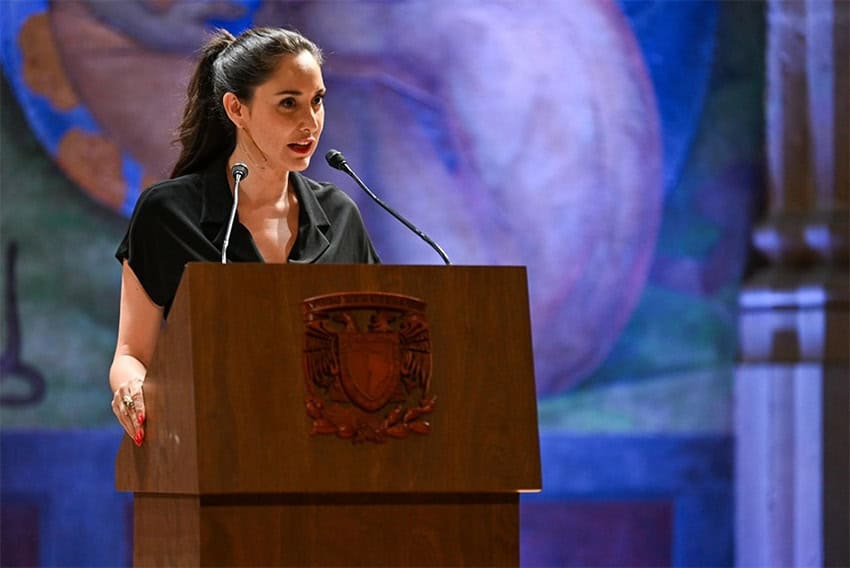
Curiel de Icaza, who has nearly 20 years of experience in cultural promotion and management, will take over as the Culture Minister, a position she also held in the Mexico City government when Sheinbaum was mayor from December 2018 to June 2023.
She holds a degree in history from UNAM and is a specialist in arts education.
Claudia Curiel de Icaza will lead Sheinbaum’s Culture Ministry. (Claudia Curiel de Icaza/Instagram)
In the capital, she was instrumental in implementing community culture projects.
“Culture is a tool for transformation and offers us a vision of the future,” she said in talking about her new role. “We will be plural, inclusive and collective.”
Josefina Rodríguez Zamora
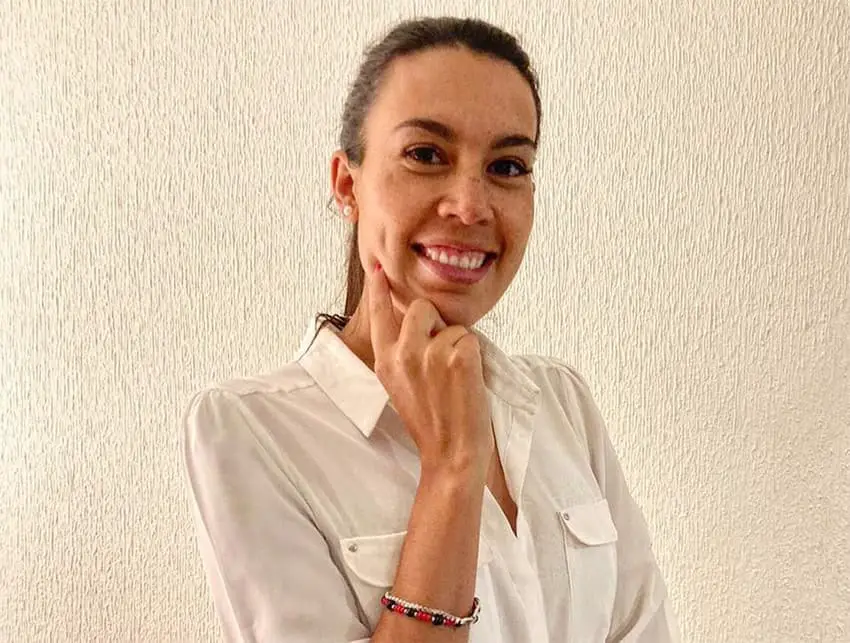
The next Tourism Minister served in the same role in the state of Tlaxcala, where she created the campaign “Tlaxcala, Sí Existe” (Tlaxcala, yes it exists). The campaign plays on a popular meme that the diminutive state is a myth to promote Tlaxcalas’s attractions, culture and tourism opportunities.
Rodríguez has a business administration degree from the Ibero-American University of Puebla and a master’s in senior management from the University of the Valley of Tlaxcala. At 34, she is the youngest of Sheinbaum’s cabinet appointees.
In her new role, she said she wants to develop tourism that benefits Mexico’s Indigenous communities and young people.
Josefina Rodrìguez Zamora, the youngest of the cabinet appointees, will lead the Ministry of Tourism. (Josefina Rodríguez Zamora/Facebook)
“Tourism is the leading employer sector for young people and the second largest for women,” she said. “We will continue with the regional development of our destinations.”
Sheinbaum’s cabinet appointees so far
Based on the appointments made to date, Sheinbaum’s cabinet — made up of 10 women and 10 men — is as follows: