Home Blog Page 800

Popocatépetl volcano: central Mexico’s volatile guardian

0
Popocatepetl Ozumba Edomex
Popocatepetl looms over Ozumba, México state, providing a great view but also great danger. Urbanization in Puebla and the Mexico City metropolitan area has crept closer and closer to the volcano's slopes. (MGM25/Wikimedia)

Mexico City residents often forget that they live nearly on the doorstep of one of the world’s most dangerous volcanoes. The city’s infamous smog rarely allows even a glimpse. 

But Popocatépetl has dominated the geography, history and culture of the region. It remains iconic for Mexico, and its recent activity makes experts and the government nervous. 

Popocatépetl is both exceedingly majestic and dangerous, which influences how humans relate to it. Its name comes from Nahuatl and means “smoking mountain.” 

For Mesoamericans, it was the source of both fire and water, as rain clouds gather there. The Florentine Codex notes that even decades after the imposition of Catholicism on the native peoples in the area, pilgrimages to both petition and appease the volcano continued.

Today, the volcano is often called simply “(El) Popo” and “Don Goyo.” The first is a shortening of the difficult Nahuatl, but the second has a story. 

“Goyo,” a nickname for Gregorio, is probably from an early colonial renaming of the mountain. But according to legend, it comes from the appearance of an old man near the town of Santiago Xalitzintla, Puebla, who introduced himself as Gregorio Chino Popocatépetl and is believed to be the spirit of the mountain. 
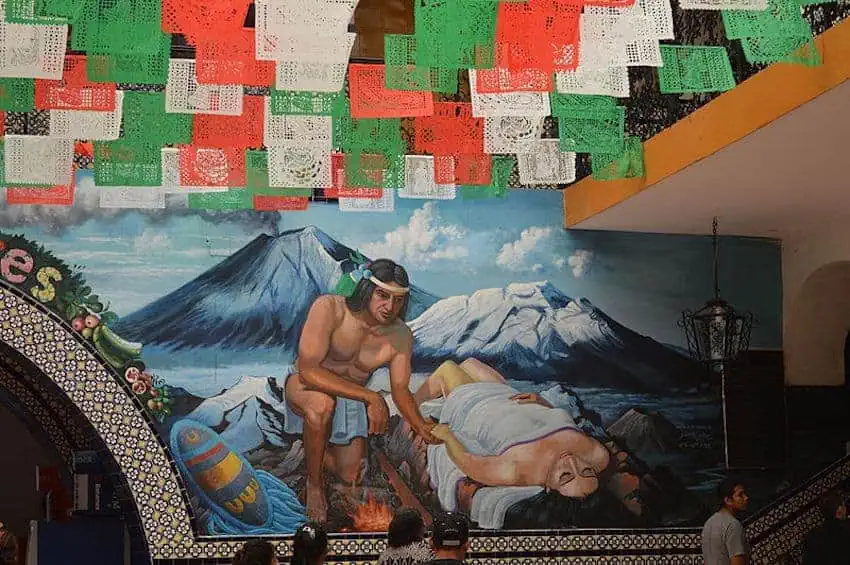
Mural section depicting the myth of Popocatépetl guarding Iztaccihuatl for eternity, located at the municipal palace of Atlixco, Puebla. (Alejandro Linares García/Wikimedia)

Either way, the volcano continues to receive offerings and pilgrimages today, just now in the guise of Saint Gregory’s feast day. 

Popocatépetl appears in numerous artworks from the region, and is featured in the English-language novel “Under the Volcano” (1947) by Malcolm Lawry. If you have seen the image of an Aztec warrior carrying a limp maiden, it is a reference to a “Romeo and Juliet”-like story that explains why Popo is active and its “partner” volcano, Iztaccihuatl, is not.

Most modern humans generally dismiss the supernatural, but I’ll mention here that Popocatépetl’s crater is the focus of stories of UFOs that may have a base within, despite the heat.

Don Goyo may no longer command worship — but it still should be respected. With over 46 active ones, Mexico is no stranger to volcanoes, but none have such a population density living so nearby.  

Popocatépetl is an active stratovolcano — like Hawaii’s Mauna Loa and Indonesia’s Krakatoa — and it’s the second tallest active volcano in North America (5,425 meters). It and Iztaccihuatl separate the Valleys of Mexico and Puebla. 

Popocatépetl arose over 730,000 years ago, according to scientists. Humans arrived only 10,000 years ago, and since then, archeological finds and written records evidence the volcano’s impact on them (us).  
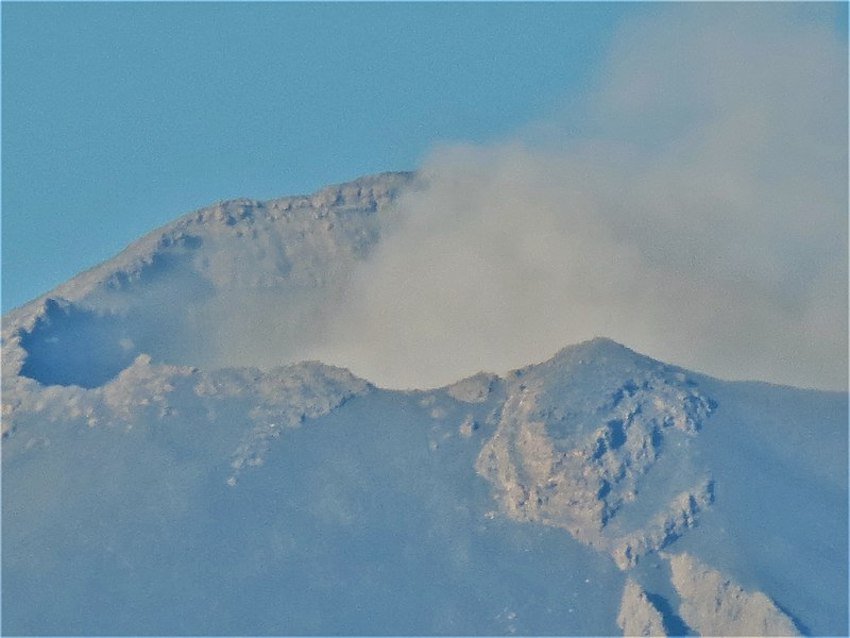
Popocatepetl crater
Steam rises from the crater of Popocatépetl. The crater and the entire volcano are far better seen from the Puebla side because of the crater’s tilt and much less smog. (Luis Alvaz/Wikimedia)

An eruption is believed to have spurred migrations that resulted in Teotihuacán. Eruptions have been recorded as early as the 1300s. 

Hernán Cortés was impressed by the two volcanoes, describing them as  “…two marvelously high mountains whose summits at the end of August are still covered with snow so that nothing else can be seen of them. From the higher of the two, both by day and night, a great volume of smoke often comes forth…” 

Since the fall of Tenochtitlán, Popocatépetl has had 15 significant eruptions, but none (yet) have had major destructive consequences. One reason is that its last plinian eruption (i.e. extremely explosive — think Mount Vesuvius in A.D. 79) occurred in A.D. 800, when the valleys did not have the population density they have now. 

The area around the Popocatépetl and Iztaccihuatl volcanoes is the Izta-Popo National Park, but unlike parks in the United States and Canada, visitation is extremely limited.

After 70 years of inactivity, Popocatépetl came back to life. First, its glaciers began to melt, but it was the December 21, 1994, eruption that got everyone’s attention. 

Since then, a column of smoke from El Popo has been visible on most days, along with ejections of steam, ash and rock. 
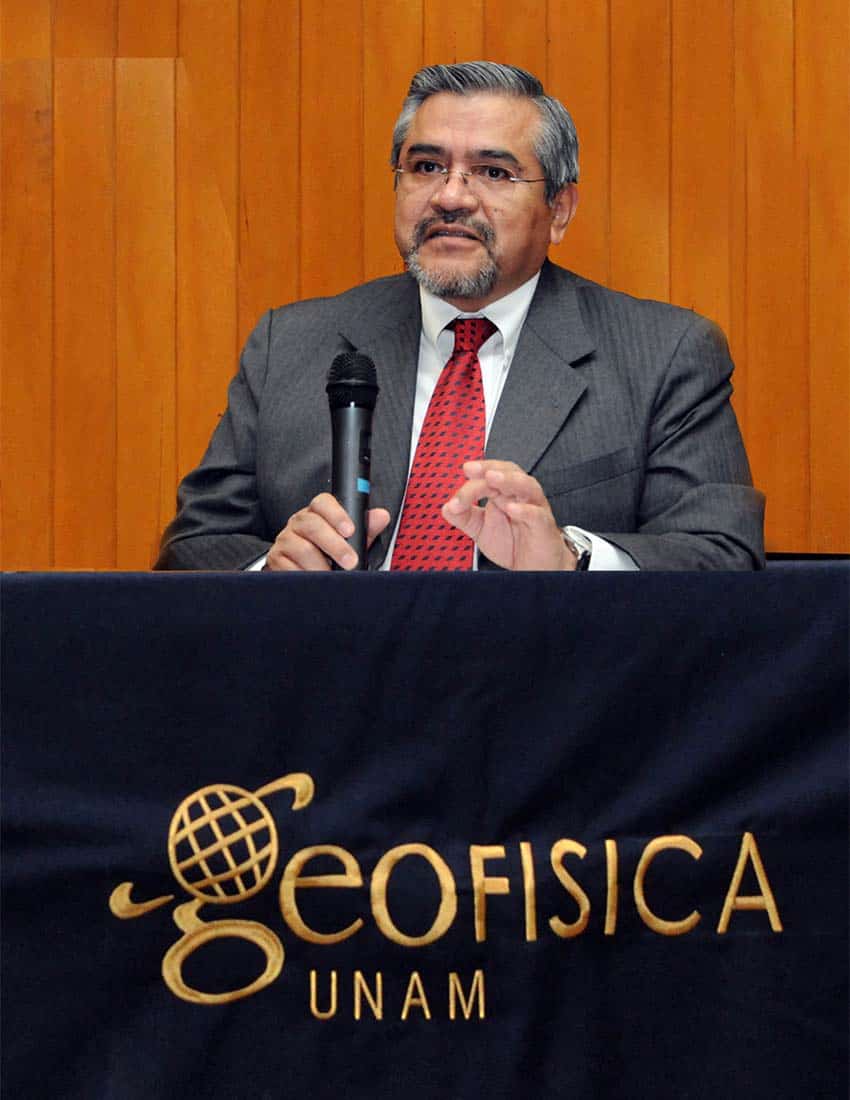
Dr. Hugo Delgado Granados of the National Autonomous University of Mexico
A major eruption of Popocátepetl would affect 25 million people in the volcano’s vicinity, says Dr. Hugo Delgado Granados of the National Autonomous University. (UNAM)

There is always the risk of a major eruption, says Dr. Hugo Delgado Granados of the Geophysics Institute of UNAM. Such an eruption could obliterate everything within 15 km and cause serious damage as far as 100 km away — a radius that’s home to about 25 million. And urbanization is creeping up the slopes as Mexico City and Puebla continue to grow. 

Ash is the main issue for the region. Right now, there is a 12-km exclusion zone around the crater because of fallout. Light ash has fallen much further away, either toward Puebla or Mexico City, depending on seasonal wind patterns. 

Popocatépetl has caused some headaches for airlines, but more ash accumulation could snarl land traffic as well — and if rain is involved, the resulting sludge would clog drainage systems. 

Lava from Popocatépetl’s crater is not a major threat. There is plenty of magma under the valleys, but their danger comes from small “pop-up” volcanoes (like Paricutín in Western Michoacán), that are extremely hard to predict.

Volcanoes like Popocatépetl can give some warning of an upcoming eruption, which is why monitoring, warning systems and evacuation plans are essential to prevent tragedies.

Mexico’s main warning system is a stoplight-like advisory system called the semáforo de alerta volcánica, which currently is in yellow (caution) — Phase 2. Since 1994, the general advisory has been as high as yellow-3 (the status just before red), with the 12 km exclusion zone in red. 
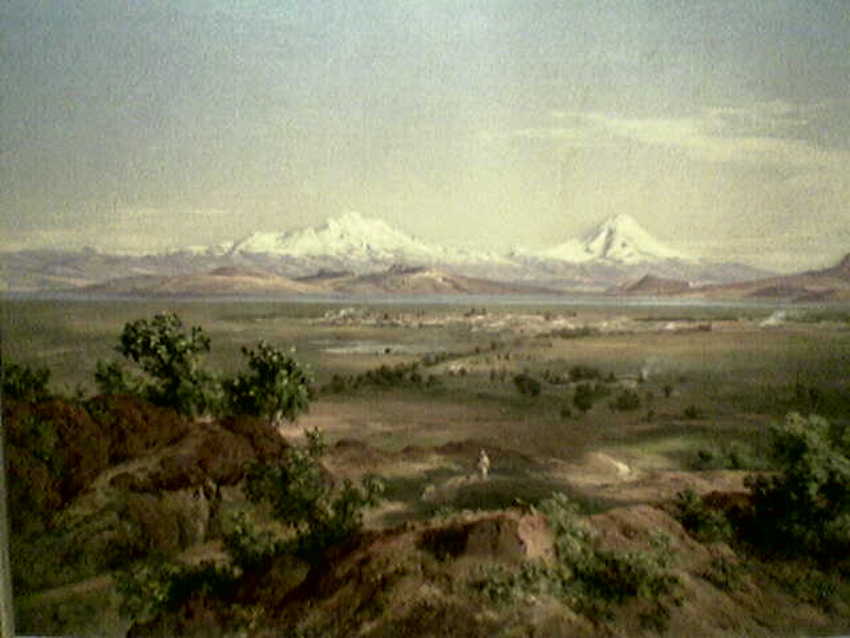
CDMX C19, Popocatepetl
19th-century painting by landscape artist José María Velasco. In addition to showing the volcanoes with clear visibility, the piece also shows just how small Mexico City used to be. (Maurice Marcellin/Wikimedia)

Today, it is possible to see what Popocatépetl is up to 24/7. Popocatépetl’s crater is a favorite of Webcams de México, where you can look at it anytime and receive alerts in social media when something interesting happens.

Although evacuation routes are well-marked, a major evacuation would be challenging at best, both because of the number of people and due to the fact that the Valley of Mexico is crowded, with few ways out. 

Could Mexico evacuate everyone in time in the worst-case scenario?

Delgado Granados says that there are many factors to consider but also that monitoring systems and evacuation plans are being constantly upgraded. He also points out that in 1994, Mexico was able to evacuate 70,000 people in less than three days, despite being caught relatively by surprise.

Leigh Thelmadatter arrived in Mexico over 20 years ago and fell in love with the land and the culture in particular its handcrafts and art. She is the author of Mexican Cartonería: Paper, Paste and Fiesta (Schiffer 2019). Her culture column appears regularly on Mexico News Daily.

Energy experts question wisdom of Iberdrola power plant purchase

0
Iberdrola combined cycle generation plant in Mexico
Twelve of the Iberdrola plants being sold are combined cycle generation plants like this one. (Iberdrola)

The wisdom of the federal government’s decision to buy 13 power plants from the Spanish company Iberdrola for approximately US $6 billion has been questioned by two energy experts who spoke with the Reforma newspaper.   

The government announced Tuesday that it had reached an agreement with Iberdrola to purchase 12 combined-cycle plants and one wind farm. President López Obrador hailed the deal as a “new nationalization” of the Mexican electricity industry. 

Iberdrola building
The Spanish company will continue to operate in the country but with a focus on the renewable energy market. (Depositphotos.com)

Carlos Flores, head of new markets at solar energy company Lightsource BP, and Rosanety Barrios, independent energy analyst and former federal official, agreed that the price for the 13 plants is high, given that about two-thirds of them have been operating for between 10 and 25 years. Therefore, the plants have a limited useful life ahead of them – an average of 18 years, according to the Finance Ministry.

“From an economic perspective, the transaction doesn’t make much sense for the government,” Flores said. 

In the interview, Flores asserted that the government was paying too much because building the same number of new plants “would cost around US $8 billion.”

Barrios described the purchase as an “indulgence” given that the majority of the electricity the plants generate is already sold at a cheap price to the state-owned Federal Electricity Commission (CFE).

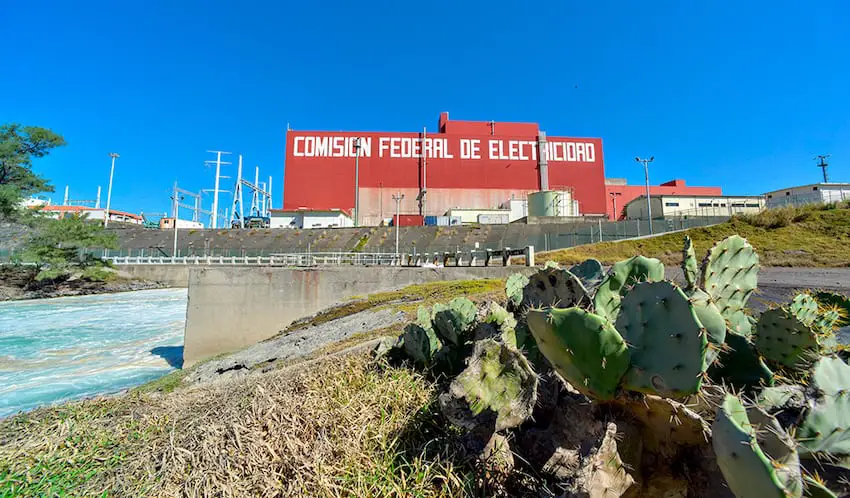
A CFE plant in Alto Lucero de Gutiérrez Barrios, Veracruz. (CFE)

Most of the plants the government is buying are deemed “independent energy producers” or PIEs, but contracts obligate them to sell their energy to the CFE. “The truth is, these plants already belonged to the CFE,” Barrios said. 

The analyst said it “would be better” for the government to buy or build new plants rather than ones that have already been in use for years.

President López Obrador said that the purchase, which the government intends to complete via a private asset manager called Mexico Infrastructure Partners, will increase the CFE’s share of the electricity generation market from just under 40% to 55.5%. 

However, a Mexico City-based think tank challenged that claim, as well as the president’s “nationalization” statement.  

AMLO
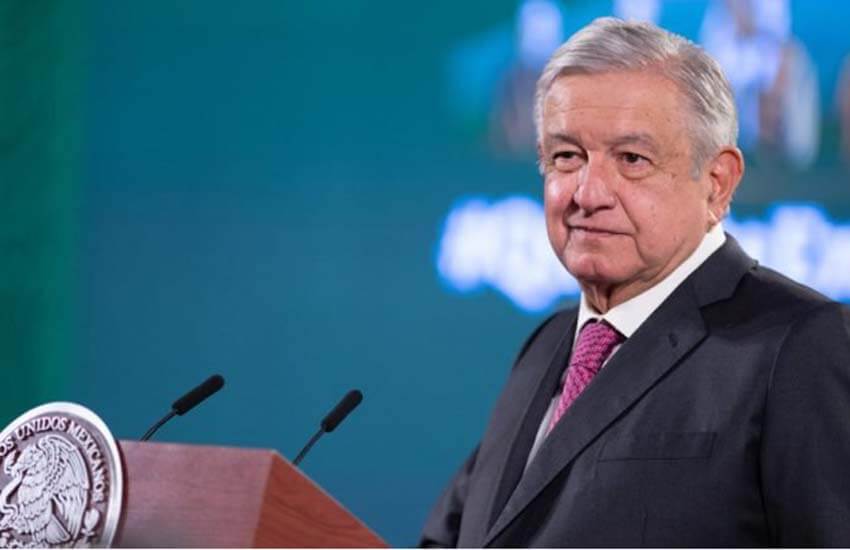
In 2022, President López Obrador enacted a reform to guarantee the Federal Electricity Commission 54% electricity market participation. (Gob MX)

The Mexican Institute for Competitiveness (IMCO) noted that the majority of the funds for the purchase will come from the government’s National Infrastructure Fund and other public institutions, but asserted that because the sale is to a “private trust,” the legal ownership of the plants “will remain private.” 

“… Legally, the ownership of the plants and the management of the trust will be private, unconnected to the federal government and the Federal Electricity Commission. In other words, the CFE is not increasing its participation in the electricity generation market,” IMCO said.

Like Barrios, the think tank pointed out that the majority of the electricity generation capacity that Iberdrola is selling is “already under the control of the CFE, given that the PIEs already form part of the company’s generation matrix.”

“… This sale doesn’t represent a nationalization of the industry nor does it change the operation of the wholesale electricity market. It only changes the ownership of a basket of plants between private entities,” IMCO said. 

The think tank also questioned why the government was using public resources to buy power plants that are mostly dependent on fossil fuels “at the expense of investments that accelerate the energy transition in the country.”

With reports from Reforma

US sends 12 soldiers for joint training exercises with Mexican army

0
US-Mexico joint operations in a training exercise.
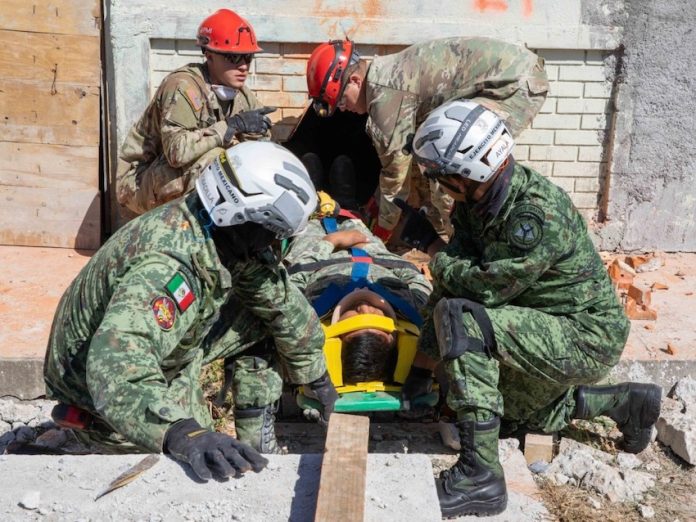
U.S. and Mexican soldiers assigned to the 19th Motorized Cavalry Regiment rescue a simulated casualty while conducting training during exercise Fuerzas Amigas 2022 in Reynosa. (U.S. Army)

A group of United States soldiers is currently believed to be on Mexican soil – not to combat cartels, as some U.S. lawmakers have proposed – but to undertake a joint training exercise with the Mexican army. 

On the request of the Ministry of National Defense (Sedena), the federal Senate granted authorization to President López Obrador to allow 12 members of the United States army to enter Mexico to participate in a training exercise at the Mexican army’s National Training Center in Saucillo, a municipality in southeastern Chihuahua. 

Mexican soldiers
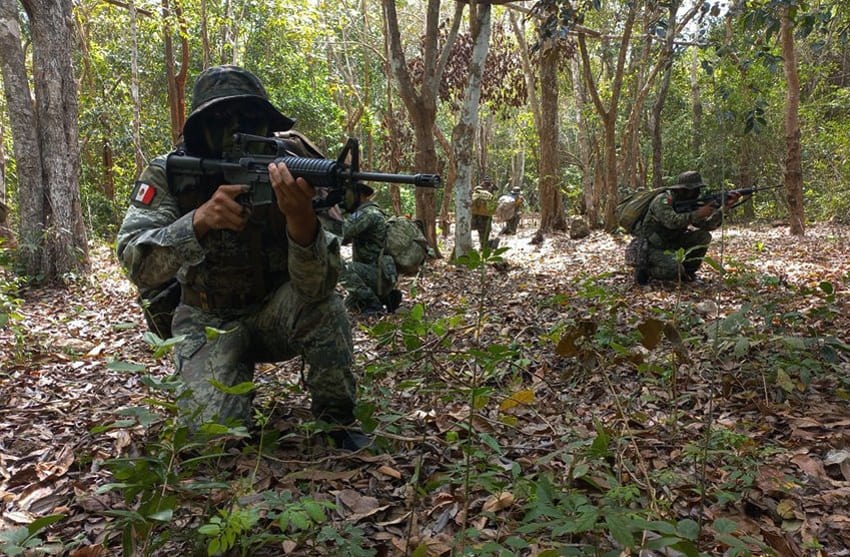
Mexican soldiers training. (@Sedena/Twitter)

The exercise was scheduled to commence Thursday, April 6 and will conclude on May 11. 

The Senate authorization, outlined in a decree published in the government’s official gazette on Wednesday, gave López Obrador the power to allow the U.S. soldiers to enter Mexico on April 5 and depart the country on May 12. 

The Mexican and United States armies have participated in joint training exercises before, including one last October at a military facility in Reynosa, Tamaulipas. 

The aim of that exercise, according to the U.S. army, was to “foster and strengthen the existing military-to-military partnership between the U.S. and Mexican militaries while conducting disaster response operations along the U.S.-Mexico border.”

Sedena hasn’t disclosed any specific information about the current training exercise, which is taking place at a time when some Republican Party lawmakers, such as Senator Lindsey Graham, are advocating the use of the United States military in Mexico to combat cartels that smuggle fentanyl and other narcotics into the U.S. 

López Obrador has categorically rejected that proposal, but has indicated his willingness to continue cooperation with U.S. authorities in the fight against drug trafficking.   

“We’re going to continue helping because it’s a matter of humanism and [illicit fentanyl use] is a pandemic that greatly affects United States residents, particularly young people,” he said Tuesday.   

“Cooperation between governments for the benefit of our people should be maintained, but [we say] no to subjugation, no to subordination, because Mexico is an independent, free, sovereign country.”

With reports from Infobae and El Economista

Mexico negotiates to revoke sanctions for failure to protect vaquita

0
Illegal gillnet fishing has brought the vaquita porpoise to the brink of extinction.
Illegal gillnet fishing has brought the world's smallest cetacean to near-extinction. WWF

Mexico is in negotiations to reverse trade sanctions imposed for its failure to protect the endangered vaquita porpoise.

President López Obrador sent eight officials from the Ministry of Environment and Natural Resources (Semarnat) to Geneva, to discuss the sanctions with the Convention on International Trade in Endangered Species of Wild Fauna and Flora (CITES).

The vaquita porpoise is threatened by the use of gillnets, in which they can become entangled and drown. (@DefensaAnimal/Twitter)

CITES sanctioned Mexico on March 27, preventing member countries from trading with Mexico in 3,148 species of animals and plants. 

The measures are intended to pressure Mexico into protecting the critically endangered vaquita porpoise, whose numbers have dropped to as few as ten in the wild. It is the world’s smallest cetacean (the family of marine mammals including dolphins and whales).

The vaquita is native to the Gulf of California, where it is threatened by illegal fishing. The porpoises often die tangled in nets used to catch totoaba fish, which are highly coveted on the Chinese black market for their supposed medicinal properties.

Mexico has received multiple warnings for its failure to crack down on this illegal fishing. It proposed a draft action plan on Feb. 27, which CITES dismissed as inadequate.

The week after the sanctions, while negotiating in Geneva, Semarnat released a statement saying they were working with the Navy and the Agriculture and Rural Development Ministry to review fishery protection measures.

“In recent days, more than 4,700 meters of totoaba nets and a boat were secured and destroyed,” the statement said.

It added that concrete blocks had been installed to deter illegal boats from entering the vaquita’s core habitat and that new technologies were being introduced to promote sustainable fishing methods.

However, Mexican officials have also protested that sanctioning Mexico for illegal totoaba fishing is “inequitable.”

“Mexico is not solely responsible and is not the only one that should have to spend on this,” the Federal Attorney for Environmental Protection, Blanca Alicia Mendoza Vera, told Expansión newspaper.

She argued that CITES should create a fund to prevent illegal totoaba fishing and require market and transit countries, such as the United States and China, to contribute.

“We require the participation, support and collaboration of transit and destination countries,” she said.Cooperation must be close and determined, not only in speech, but also by providing resources.”

With reports from Infobae and La Jornada

Chinese carmaker Jetour to invest up to US $3B in Mexico plant

0
The Dashing model hybrid SUV will go on sale in Mexico in 2024. (@sh_fred/Twitter)

Chinese state-owned automaker Jetour intends to invest around US $3 billion in Mexico to install a plant at which electric and gasoline-powered vehicles will be made.

Víctor Villanueva, the company’s director in Mexico, announced the plan at a brand launch event last week. 

Jetour Mexico
Victor Villanueva at the Jetour Mexico branch launch event. (@HolaJetourMX/Twitter)

“[The plant] will be in a strategic place, maybe the Bajío [region] or Aguascalientes. There are several options, it’s not decided yet,” he said. 

Several foreign automakers, including General Motors, Honda and Nissan, already have factories in the Bajío region, which includes the states of Guanajuato, Querétaro and Aguascalientes.  

José Centeno, a board member at LDR Solutions, a partner of Jetour, said that the site of the new plant will be decided in the next two months. The plant, which is expected to begin operations some time in 2024, will be Jetour’s first in the Americas. 

Centeno said that the company intends to manufacture gasoline-powered vehicles in Mexico for the South American market, and electric vehicles for sale in the United States and Canada. 

Jetour is also aiming to capture a share of the Mexican vehicle market even before it establishes its plant here. Villanueva said that the automaker will begin sales on April 15 and intends to “change the image of China” from one of an “imitator” to one of an “innovator.” 

Jetour said in late March that it would establish 30 dealerships in 21 cities and regions throughout Mexico. The first vehicles to hit the Mexican market will be the Jetour X70 SUV and the X70 plus SUV. 

The former will sell for 489,900 pesos (about US $27,000) while the latter will cost 629,000 pesos (about US $35,000), according to the Jetour México website. The “Dashing” model, a hybrid SUV, is set to go on sale in Mexico in 2024. 

Jetour is hoping to attain a 3% share of the growing SUV market in Mexico, where the Chevrolet Capita was the best selling vehicle in that category last year. 

With reports from El Economista

105 abducted people found in search operation in San Luis Potosí

0
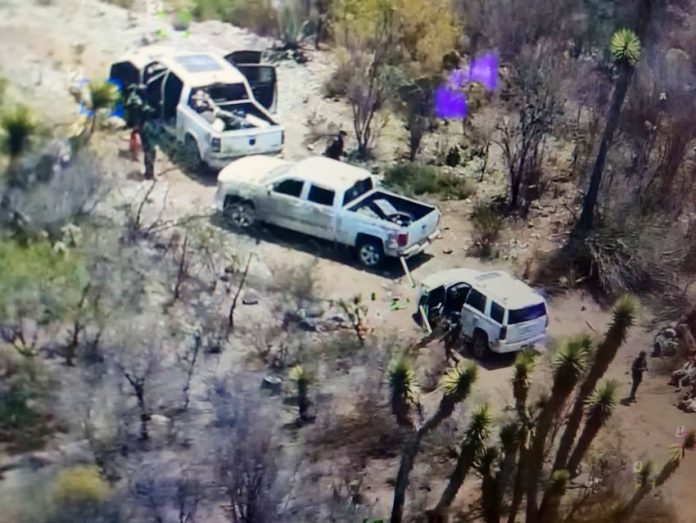
Helicopter footage of the vehicles used in the kidnapping
Security forces in Guanajuato released footage of the rescue of the first group of 35 found near Matehuala.(@SeguridadGto/Twitter)

At least 105 people held against their will were located at various locations near Matehuala, San Luis Potosí on Thursday and Friday. The search operation began after 23 people, described initially as tourists by some media outlets but later confirmed to be migrants, were reported missing after departing San Felipe, Guanajuato on Monday evening.

As of Friday afternoon, the state prosecutor’s office in San Luis Potosí said that they had rescued the 105 victims, including the original group missing from Guanajuato, in five operations in the area. One death was reported by the authorities; one of the group’s two drivers, 36 year-old Joel Juárez Sánchez, was apparently killed by the kidnappers. Two suspects were also detained.

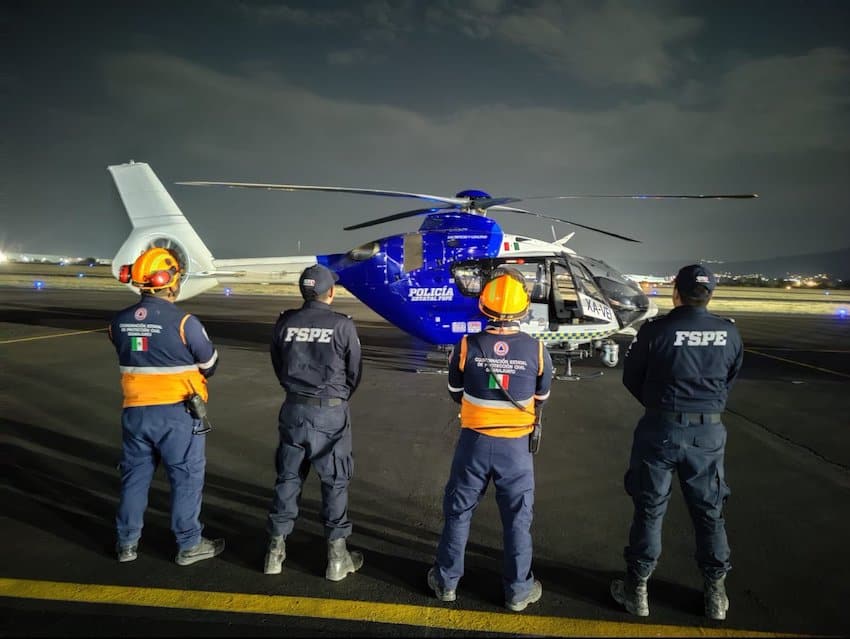
Search and rescue teams used helicopters to locate the missing.
Helicopter teams from 3 states formed part of the 20-hour search-and-rescue operation. (@diegosinhue/Twitter)

Two helicopters from Guanajuato’s Ministry of Public Security using infrared search-and-track technology were deployed in the operation to find the missing people, which was directed by a team that included the Mexican army and the National Guard, plus state and local authorities. 

The first group of 35 people was reportedly found with three rented vans in a high desert area off the San Luis Potosí–Matehuala highway in the northern part of the state. México Highway 57 is a main route between Mexico’s central and northern states. Law enforcement also found a bus carrying 46 people that had apparently been hijacked on its way towards Nuevo León. The remaining victims were found at a hotel and a safehouse.

That the abductees were migrants – reportedly from El Salvador, Venezuela and Honduras, and also from Mexico – was only discovered after they were rescued. According to officials, the group was looking to reach the northeastern state of Coahuila, before attempting to enter the United States. 

On Tuesday, one of the group reportedly contacted the car rental company to say they had been kidnapped, and that their captors were asking 60,000 pesos ($3,292 US) for each of them. The ransom demand was not confirmed by San Luis Potosí authorities, a spokesman said.

Missing person poster for Joel Juárez Sánchez
36-year-old driver Joel Juárez Sánchez was found dead, reportedly killed by the kidnappers. (Twitter)

The group had been held hostage by armed men in five vehicles, authorities said. 

Further confusion occurred on Wednesday, when authorities reported the rescue of 16 people wandering on a highway near Matehuala. They were believed to be part of the abducted Guanajuato group, but hours later officials said they had departed from the state of México before being robbed in the area. 

As for the rescue on Thursday, the San Luis Potosí state prosecutor’s office said officials rescued people “who were being held captive by a group of offenders” and that “five trucks and a series of weapons were seized and [were handed over to] local and federal authorities.”

The office added: “As far as it has been possible to clarify, the vast majority of these victims were being transported due to a labor-migration situation, which could be confirmed after interviews with the aggrieved.”

The migrants were said to be in good condition after being held hostage, authorities added. Some of them said they had come from the state of Guanajuato, and identified themselves as migrants traveling for work, a San Luis Potosí spokesman said.

With reports from Milenio, El País  El Universal San Luis Potosí and AFP

Mexican women in tech tell their stories in new book

0
Mexican women in tech in Guadalajara
Group photo of the women featured in "Mujeres que dejan huella," a new book about women working in the high-tech industries of Guadalajara. (John Pint)

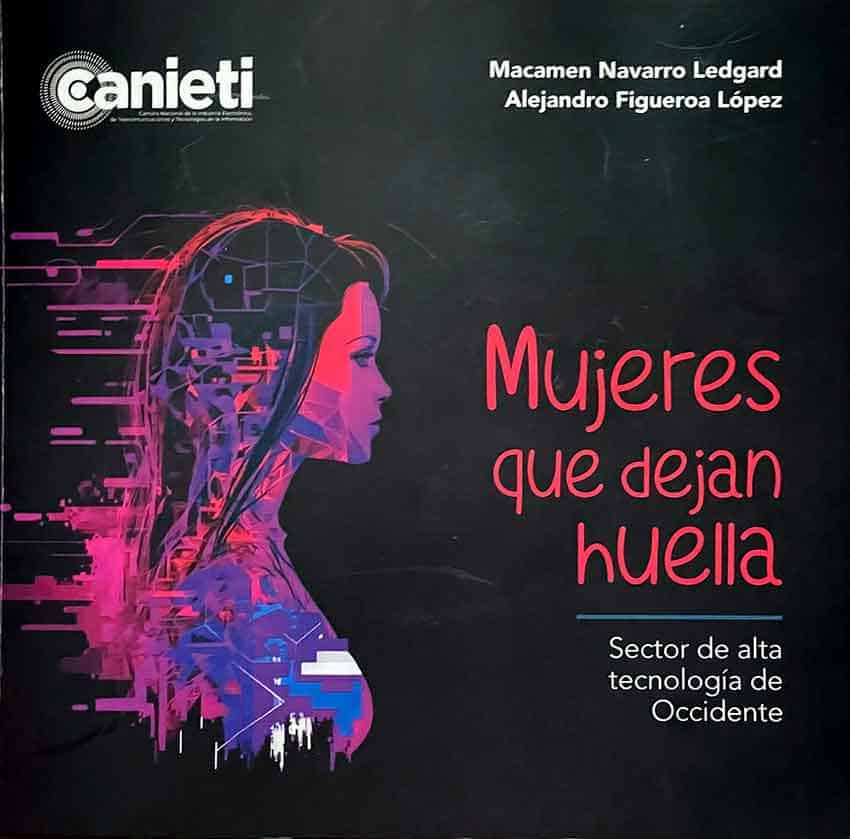
“Mujeres que dejan huella” (Women Who Leave a Mark) by Macamen Navarro and Alejandro Figueroa is a book about women working in the high-tech industries of Guadalajara. But it’s not just for techies or business people.

“Don’t get me wrong,” says co-author Macamen Navarro, “We think just about anybody would find this book interesting, but we particularly hope that it will inspire new generations of girls in Mexico. This book is about women who are making a difference.”

The book “Mujeres que dejan Huella” presents the stories of 26 leading women in the high tech industries of “Mexico’s Silicon Valley.”

“We want to tell their stories to motivate even more girls to take up a career in this field because in Mexico only 30 percent of high-tech students are women. And when it comes to those currently holding high-tech jobs, the number is far smaller. So, we’d like to see many more girls get interested in this sector.” 

“At the same time, we want both men and women in the field to learn something about their colleagues. For example, I belong to CANIETI, the National Chamber of Electronics, Telecommunications, and Information Technology, and I noticed that it’s always men who are getting promoted there. When I ask, ‘Why is that?’ they reply: ‘Because there aren’t any women for us to promote. Just give us one name!’”

“Well,” Navarro told me with a broad smile, “here I’m giving them 26 names of women who are successful and well placed. These are vice presidents and directors of global companies, making important decisions every day, right here in Western Mexico.”

During the interviews, Navarro asked the women what games they played as little girls, if they suffered from bullying, or at what moment they became aware of the skills they possessed. 

Dina Grijalva, Director of CANIETI West, with authors Macamen Navarro and Alejandro Figueroa. (John Pint)

“All of this,” she told me, “can help mothers today to identify what abilities their children have right from when they are little, and to direct them toward careers where they could be successful and not force them into fields where they don’t have skills.”

Navarro spent just over an hour asking questions like these. “And with [their answers], we put together each woman’s story,” she says.

If you ask such questions to children, you may not get much of an answer, but, Navarro discovered, if you ask those same questions later in life, people may end up using their self-awareness as a tool to connect things.

“This,” said Navarro, “may bring up all kinds of unexpected emotions, because it awakens deep, hidden feelings. For example, one of these women suffered from cancer. When I asked her about it, she began to cry, but she said, ‘This is strange, I’ve talked about my cancer many times, but I’ve never felt what I’m feeling right now.’ And I told her, ‘It’s because I brought you back to when you were a little girl. You are remembering a happy child playing, studying, having a boyfriend, getting a job, getting married, having children – happy, happy, happy. And then suddenly there’s a strong shock, and it’s that jump from one thing to the other that catches you by surprise.”

Macamen Navarro Ledgard is Chief Delivery Officer at Qualtop, Guadalajara, a leader in Information Technology and Software Development. (John Pint)

Navarro then read me a story from a chapter dedicated to a woman named Claudia Covarrubias. 

As a child, Claudia wanted to attend school, but to do so, she had to leave her parents and go study in the pueblo of El Grullo, Jalisco, located 140 kilometers southwest of Guadalajara.

When the day came for Claudia to leave her family, she cried all morning and all the way to El Grullo.

Every Monday she would have to go to an internado, a boarding school, in El Grullo and stay there until Friday.

On one of those Sundays, before Claudia set off to El Grullo, her father took her aside to talk to her. He and his wife wanted to give their daughter a chance that they had never had, a chance to go to school. But they didn’t want to force her.

Her father proposed that Claudia ask herself exactly what she wanted to do with her life. If she wanted to continue going to school, she could get up early on Monday and knock on her parents’ bedroom door. Or, she could keep sleeping, and whenever she got up, her mother would start teaching her how to do all the household chores, as well as all the jobs related to running a rancho.

That night, Claudia couldn’t sleep. She imagined herself in the future, wearing huaraches, and married at a young age to a Norteño who worked in the USA and only came home to get her pregnant. Then, she remembered the times her father talked to her about finances and Wall Street. Suddenly, in her mind’s eye, Claudia saw herself in New York, wearing a pearl necklace and chic high heels.

Quote from Claudia Covarrubias of Hewlett Packard: “If you dream, you can be successful, but for big dreams there’s no discount.”

That very night, at 11 years old, Claudia made the most important decision of her life. She got up at 5 a.m., got ready to go to school, knocked on her parents’ door, and swore to them that never again would she cry about having to go to El Grullo.

“Today,” said Navarro, “this woman is the Chief Financial Officer for Latin America and Global Channel Finance Lead of Hewlett Packard Enterprise.”

Navarro told me that every time she asks little girls who their role model is, they always mention people like Gandhi and Marie Curie.

Navarro likes to reply, “They were truly great people, but they are dead. Instead, these 26 women are alive. You can get to know them; you can ask them questions; you can follow them on social media. They’re here among us and they are working on the technology that we use today and that we will use in the future.”

“I’ve judged competitions where girls present software applications they’ve developed on their own,” continued Navarro. “And after congratulating them for their ingenuity, I’ll ask a girl: ‘What carrera (career) are you thinking about? What are you going to study?’ She’ll think for a second and then say: ‘I’m going to study accounting.’ And I say, ‘But why?’ And she will reply: ‘That’s what my father wants me to study.’”

Navarro always asks, “But why don’t you study technology?”

And the girls say, “My father says that’s not for women.”

“That,” concludes Navarro, “is why I wrote this book: so when a girl hears ‘That’s not for women,’ she can hand the book to her father and say: ‘Mira, Papá, (Look, Dad) here are 26 women working in technology… and I bet they’re making more money than their accountants.’”

Anyone interested in acquiring “Mujeres que dejan huella” should contact Patricia López at CANIETI [plopez@canietigdl.com.mx], or by telephone, 333 030 7206.

The writer has lived near Guadalajara, Jalisco, since 1985. His most recent book is Outdoors in Western Mexico, Volume Three. More of his writing can be found on his blog.

Large fire extinguished in Mexico City’s giant wholesale market

0
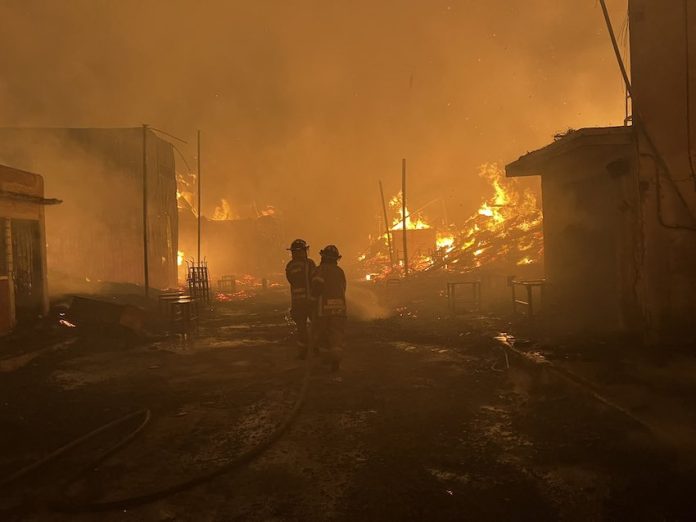
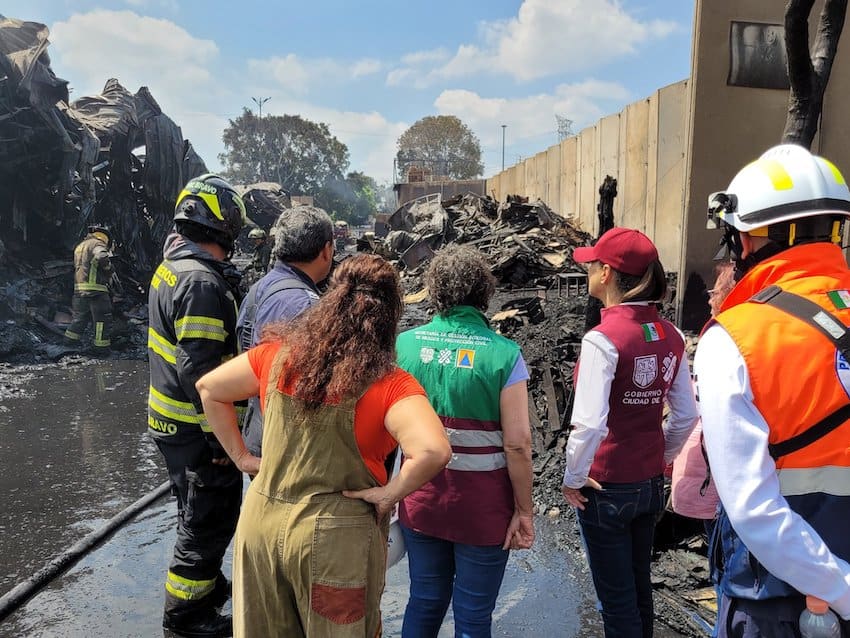
firefighters tackle the blaze at Central de Abasto, CDMX
Firefighters battled until the early hours of the morning to bring the fire under control. (@JefeVulcanoCova/Twitter)

A fire ripped through a large section of Mexico City’s main wholesale market Thursday night, but no fatalities or injuries were reported. 

The Mexico City Fire Department said just after 1 a.m. Friday that the fire at the Central de Abasto in the eastern Iztapalapa borough had been completely extinguished. 

Officials inspect the site of the fire in the central de abasto.
Despite damage to 43% of the containers section, officials have announced that the Central de Abasto will open as usual on Friday. (@VenegasUrzua/Twitter)

Some 200 firefighters from nine fire stations responded to the blaze.   

The market said in a statement that the fire broke out at about 7 p.m. in the “empty containers area,” where cardboard boxes, wooden crates and other receptacles are sold, but didn’t identify the cause of the blaze. 

The Central de Abasto said that 5,640 square meters of the 13,000-square-meter empty containers section – 43% of its total area – were affected. 

The “timely intervention” of firefighters and security and civil protection authorities ensured that no lives were lost and no one was injured, the market said. The fire was declared extinguished around 12.40 a.m.

Considering the size of the fire and the quantity and type of material in the area, the blaze was put out “quite quickly,” said Mexico City fire chief Juan Manuel Pérez Cova. 

The market’s statement said that the Central de Abasto and its entire community “express their profound solidarity” with the vendors from the empty containers area who suffered “material losses.”

It also said the market would operate normally on Friday, although the empty containers area will be closed.

The Central de Abasto is spread across 327 hectares, an area 51 times bigger than the capital’s central square, according to the Mexico City government, which describes the facility as the world’s largest market.

A wide range of fresh produce and other goods are sold at the market, where thousands of workers labor from dawn to dusk 365 days a year.

With reports from Reforma

Quintana Roo expecting over 1 million tourists during Easter break

0
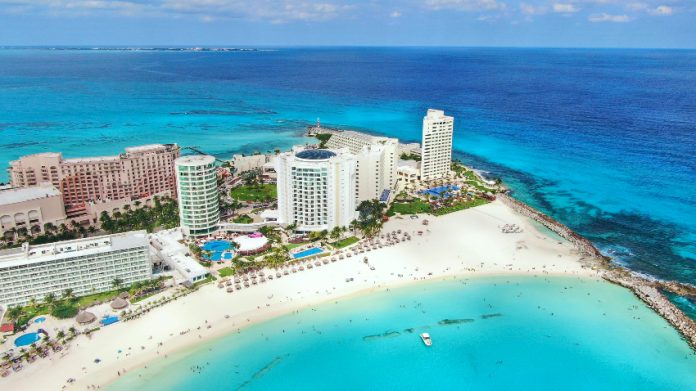
Cancún, Quintana Roo
Cancún's beaches will be filled with tourists over the holiday break. (@GobQuintanaRoo/Twitter)

More than 1.2 million tourists are expected to flock to the state of Quintana Roo, home to popular resorts including Cancún, Tulum and Playa Del Carmen, over the Easter break. 

Maria Lezama Espinoza, governor of Quintana Roo, said that the state was on track for a successful year.

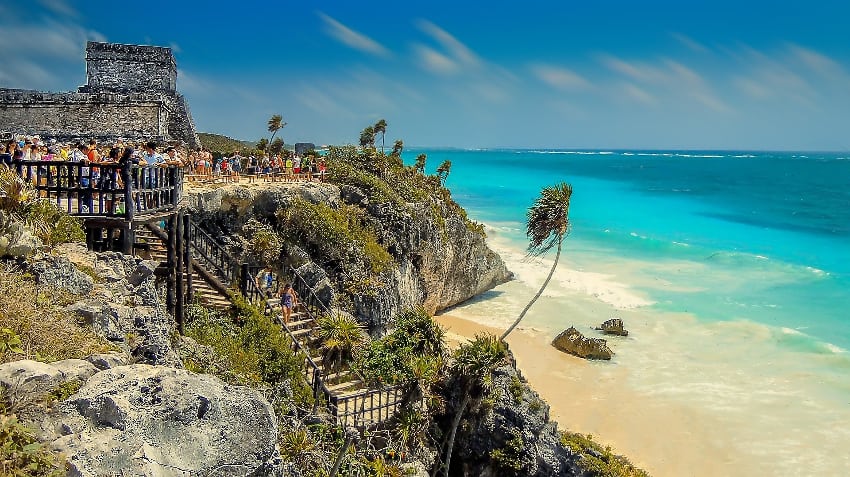
Tulum, Quintana Roo
Tulum is one of Quintana Roo’s most iconic destinations. (@GobQuintanaRoo/Twitter)

“Statistics tell us that 2023 will be a great year for the destinations of the 11 municipalities; the number of visitors to the archaeological zones has grown by up to 25 percent,” she said. 

Quintana Roo is a popular tourist destination thanks to a combination of outstanding natural beauty and fascinating history. Areas such as the Sian Ka’an biosphere reserve – a UNESCO heritage site – give visitors a glimpse into the region’s rich biodiversity, and the hundreds of cenotes, or water-filled natural sinkholes, also attract many visitors.

The world-famous ruins at Tulum, overlooking the Caribbean, is one of the state’s major historical attractions, along with the Cobá and Muyil ruins. 

Twenty-seven cruise ships are expected to arrive at the island of Cozumel – off the coast of Playa Del Carmen – in the first week of April alone. This is a 20% increase over the number of ships registered in 2022. Thousands more will fly into Cancun from the United States and cities across Mexico.

Cozumel cruise ships 2023
Authorities say cruise ship traffic has so far been 20% higher than in 2022. (@AshishSPatel/Twitter)

Data from the Tourism Ministry suggested that there had already been nearly 2 million tourists in the first month of 2023 alone – with significant growth in visitors to Holbox, Bacalar and Cozumel.

In preparation for the holidaymakers, authorities have cleared more than 8,000 tons of sargassum – the foul-smelling seaweed that has blighted beaches in the area in recent years. As of Friday, the Sargassum Monitoring Network reported 8 of 100 beaches in Quintana Roo as sargassum-free, and 53 having “very low” levels.

“The analyses have allowed for a prediction of a decline in the sargassum biomass for 2023, even reaching the levels registered in 2019,” according to Jaime González Cano as reported by Infobae. “But atmospheric conditions and the behavior of ocean currents are important factors in the accumulation and distribution of seaweed along the Quintana Roo coastline.” 

The government has also mounted a large security operation in tourist hotspots around the country, as well as on federal highways and at airports. 

With reports from La Jornada Maya and Infobae

A tour of Xochicalco, an ancient fortified city built in a turbulent time

0
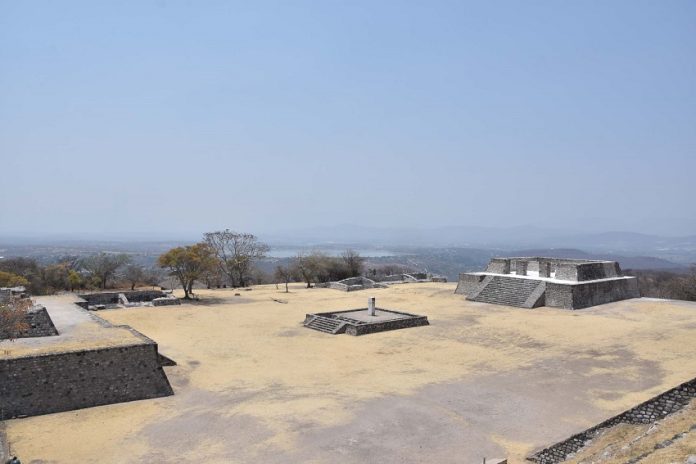
Plaza of the Stele of the Two Glyphs
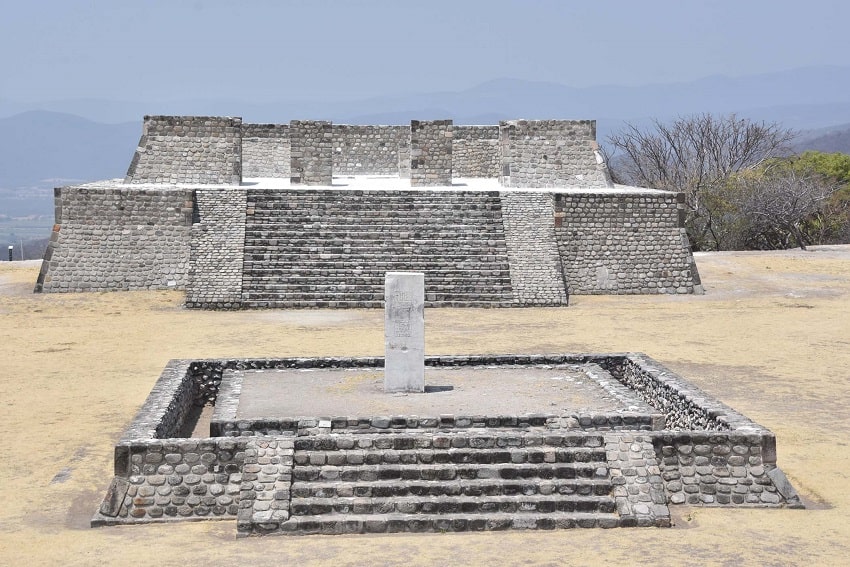
Photo from atop the Great Pyramid showing the entire plaza. (Joseph Sorrentino)

When Teotihuacán, one of the largest and most powerful pre-Hispanic city-states collapsed around 750 A.D., a number of other city-states were ready to step in and fill the void. One of them was Xochicalco, which may even have had a role in Teotihuacán’s fall.

What’s left of Xochicalco, which was once one of central Mexico’s most important commercial and religious centers, is spread across three hills, about 38 km (25 miles) southeast of Cuernavaca, Morelos. 

A wall in Xochicalco.
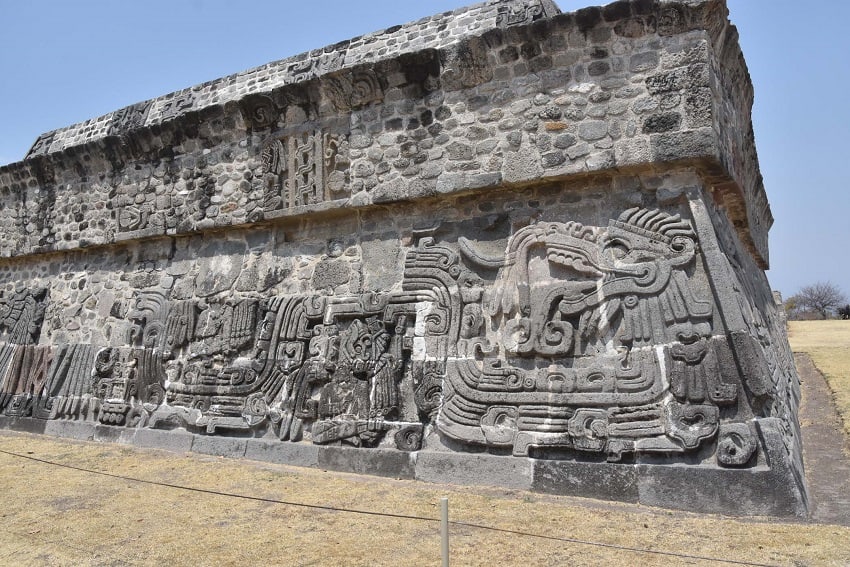
The feathered serpent motifs found in Xochicalco speak to the cultural influence of Teotihuacán. (Joseph Sorrentino)

According to the National Institute of Anthropology and History (INAH), Xochicalco, whose Nahuatl name means “In the Place of the House of Flowers,” was founded between 650 and 700 A.D. by the Olmeca-Xicalancas, Mayan traders from Campeche.

At its peak, it’s estimated that the city covered just over 700 hectares (1,750 acres) and was home to a population of between 15,000 and 20,000. Xochicalco existed for a relatively brief period of time: the city was burned and destroyed around 900 A.D., possibly by an internal uprising.

Xochicalco was built on three levels. The lowest level contains the residences where most of the population lived. This level is surrounded by walls, indicating that the city was built with defense in mind. The next level contains an area called the Market Ensemble, centered around the Plaza of the Stele of the Two Glyphs. This plaza contains two temples, one on the east side and one on the west, with the titular stele standing on a small altar between the two. Evidence suggests that this plaza was the city’s original ceremonial site.

Ancient ancient roads lead from the valley below up to this site, perhaps indicating that, rather than being a place restricted to elites and priests, it was open to residents.

The Stele of the Two Glyphs in Xochicalco.
The Stele of the Two Glyphs is believed to have been erected in honor of the god Quetzalcóatl. (Joseph Sorrentino)

The stele’s two glyphs have been translated as “10 Reed” (although one source translates it as “10 Cane”) and “9 Reptile Eye,” which are dates. There was no information at the site as to what the dates represent, but it’s thought that the stele was erected to honor Quetzalcóatl, one of Mesoamerica’s most important pre-Hispanic gods. The god was so important, in fact, that standing nearby is the impressive Temple of the Feathered Serpent, another name for Quetzalcóatl.

That temple, which may have been dedicated to the warrior caste, is sculpted with eight stylized serpents, two on each side, that are covered with feathers. These carvings were certainly influenced by Teotihuacán, where similar carvings can be found. Shells are also depicted on the temple’s sides, representing water and likely Tlaloc, the god of rain and water.

Among several of the serpents’ undulations are seated figures that are thought to depict Mayans because of their deformed heads – cranial deformation was practiced by Mayan elites. Glyphs representing speech come out of the figures’ mouths, possibly signifying praise. 

The Great Pyramid, the tallest structure in Xochicalco, is located on the north side of the ruins and was dedicated to Tlaloc. The highest level of the city contains more temples and other buildings – most likely residences for priests and the ruling class – and the Ramp of Animals, which was paved with 271 stone slabs engraved with images of birds, mammals, serpents and insects. Visitors can’t walk on the ramp and it can be a little difficult to see the carvings clearly, but some of the stones can be observed in the site’s museum.

A ball game court in Xochicalco.
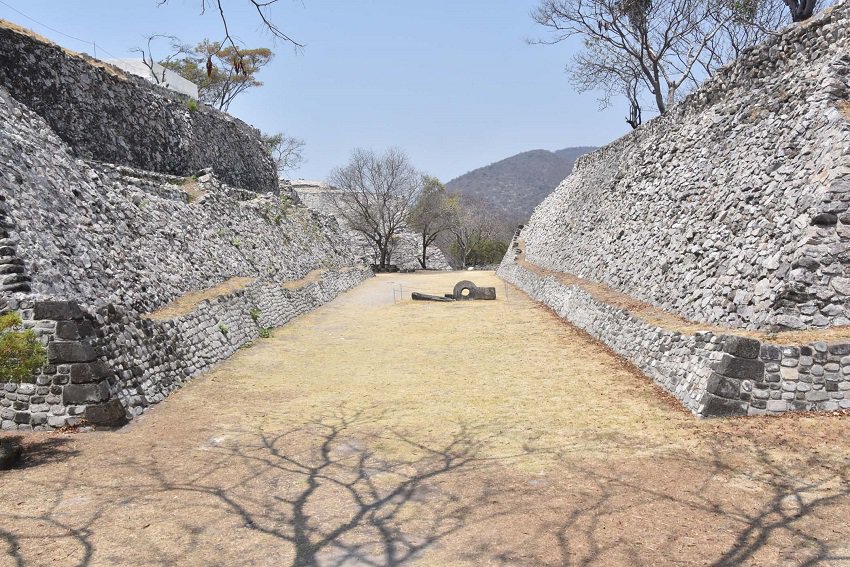
Xochicalco had three ball courts which are thought to have been used during religious ceremonies. Variations of the ballgame were played across ancient Mesoamerica. (Joseph Sorrentino)

Three ball courts are located in the northern, eastern and southern parts of the ruins. It’s thought that each of these served a different function, although all are believed to have been utilized during religious ceremonies. 

One of Xochicalco’s most amazing features is a cave on the west side of the city known as the Cave of the Astronomers. Whether the cave is natural or man-made is unclear, but it was used as an observatory and was almost certainly a place where religious ceremonies were held. 

A chimney-like structure called a zenith tube was built into the roof of the cave, allowing observers to track the sun’s movement and the solstices. This tube lets in a beam of light during the sun’s zenith – a time when the sun is directly overhead – each year on May 14 and 15 and again on July 28 and 29 (there are many photographs of this phenomenon online).

Several sources indicate that direct sunlight enters the cave for 105 days (between the April 30 and August 15), leaving 260 days when the cave is in darkness – the Mesoamerican sacred calendar comprised thirteen months of twenty days each, for a total of 260 days. Although most scholars believe this cave was used to track the sun’s movements, at least one researcher has argued for that it served as a lunar observatory. 

Unfortunately, the sign pointing to the cave had “Temporarily Closed” stamped on it when we visited. 

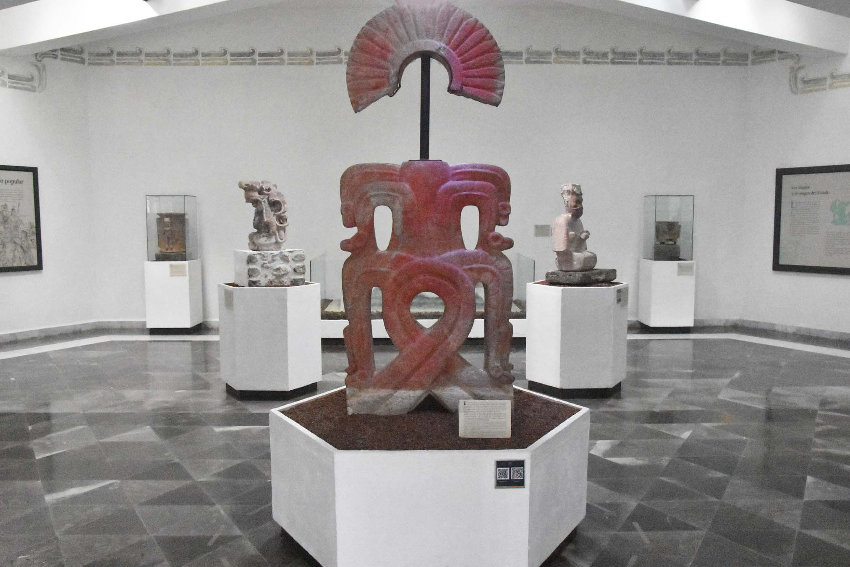
Xochicalco’s museum has six exhibition galleries displaying numerous objects excavated from the ruins. Interestingly, it was the world’s first ecological museum upon its inauguration in 1996: the interior is illuminated by natural light, rainwater is collected in an underground cistern and wastewater is treated and used to water the gardens surrounding the museum. 

Xochicalco stela
The Red Lord, a seated figure who represents the patron god of the ruling class. (Joseph Sorrentino)

Xochicalco was named a UNESCO World Heritage Site in 1999 and is definitely worth a visit. Some basics to be aware of: come with a full tank of gas because there are very few gas stations on the highways leading to the ruins. When you arrive, go to the museum to buy your ticket, which is $90 pesos ($5 USD). There are some trees around the ruins but not much shade, so bring a sun hat, sunscreen and lots of water. We went in late March and were surprised at how hot it was; we sucked down a liter of water between us.

Figure on just under two hours to cover the ruins. Bring snacks and maybe lunch. We went to Cuentepec, about 20 minutes away, and only found one stand selling quesadillas. There are many small stands along Route 166 that serve simple fare and at least two restaurants in Alpuyeca, about 30 minutes from the ruins.

Joseph Sorrentino, a writer, photographer and author of the book San Gregorio Atlapulco: Cosmvisiones and of Stinky Island Tales: Some Stories from an Italian-American Childhoodis a regular contributor to Mexico News Daily. More examples of his photographs and links to other articles may be found at www.sorrentinophotography.com He currently lives in Chipilo, Puebla.