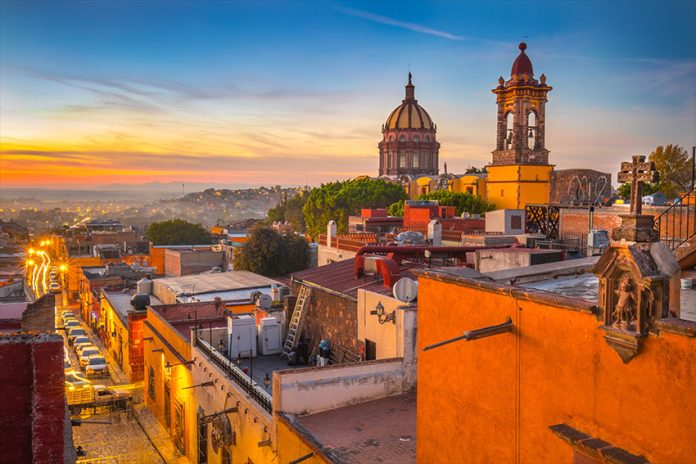
Founded in 2006, the San Miguel Writers' Conference brings literary talent from around the world. Depositphotos
Novelist Janelle Brown, author of “I’ll Be You,” “Pretty Things,” and other bestselling novels, will be the first keynote speaker at the annual San Miguel Writers’ Conference and Literary Festival, which starts Feb. 13.
New York Times bestselling author Janelle Brown (Janelle Brown/ Twitter)
It all started when Susan Page, former director of women’s programs at the University of California, Berkeley, moved to San Miguel in 2004 and noticed that despite the great number of writers settled in the city, there was no venue for author readings and gatherings. She decided to give them visibility, and that same year, the San Miguel Literary Sala was born.
To date, the Literary Sala still hosts year-round events, featuring both out-of-town and local authors, poets and speakers.
About a year later, member Jody Feagan decided that there should be a writers’ conference in San Miguel. In 2013, they integrated a Spanish-speaking division, and today the event is bilingual and tri-cultural. It annually attracts repeat attendees. One reviewer quoted on the conference’s site called the event “one of a handful of must-attend writers’ conferences in the literary world.”
Other keynote speakers this year include Suzette Mayr, winner of Canada’s Giller Prize for “The Sleeping Car Porter,” Linda Spalding, author of “The Who and Where of Re-creation” and Jean Kwok, author of the bestselling novel “Girl in Translation,” whose immigrant life story was the subject of a television documentary. Mexican author Brenda Lozano (“Witches”) will also be presenting.
Mexican author Brenda Lozano (Brenda Lozano Twitter)
The event will be held at the Real de Minas Hotel from Feb. 13–17 and will also include workshops, book signings, master classes and other literary events.
The conference is also holding a separate “post-conference” event with author Margaret Atwood (“The Handmaid’s Tale”) on Feb. 21 at the La Casona meeting center. The intimate event will be an onstage conversation between Atwood and her friend and fellow Canadian author, Merilyn Simonds (“The Convict Lover”).
Today, the San Miguel Writers’ Conference & Literary Festival attracts distinguished authors, established and emerging writers, industry experts reaching professionals and avid readers from Mexico, the United States and Canada.
Tickets can be bought here. For those who cannot attend in person, a reduced number of online tickets are also available.
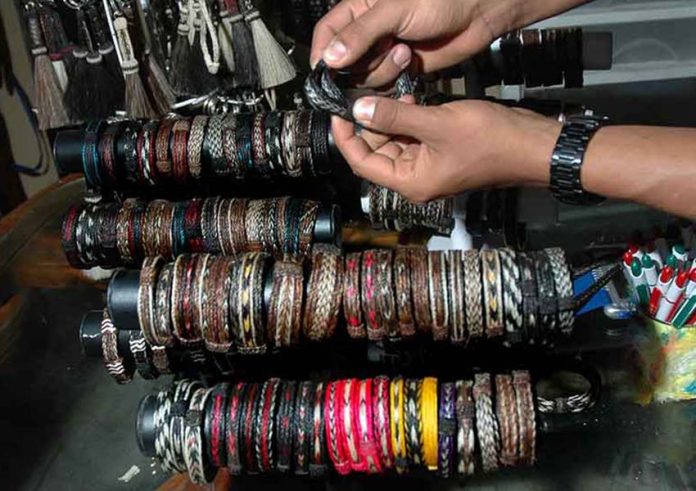
Artisans in the town of Cajititlán, Jalisco, have become known for making beautifully detailed items from horsehair that would otherwise be discarded by farmers. They make everything from bracelets to tassels and more.
Little Lake Cajititlán lies 25 kilometers south of Guadalajara. Sprinkled along its shore are small communities of very talented artisans. After visiting several of them, I came to the largest town around the lake, also named Cajititlán.
I knew of no dominant craft there and suspected that its “specialty” must be its big tianguis (market), where the crafts of all the other communities were sold every week.
“Doesn’t Cajititlán produce a handicraft all its own?” I asked a local man.
A mural in Cajititlán shows the town’s malecón (esplanade).
“No, no,” he said… “except for Consuelo. She makes nice things out of crin and cerda.”
Crin, I learned, refers to a horse’s mane, while cerda is the beautiful long hair of its tail. Naturally, I was curious to see what an artistic person could make out of these.
It was 2012, and my wife and I found Consuelo Cervantes working on her craft at home. Upon discovering how curious we were about what she was doing, she began to show us all kinds of beautiful and ingenious handcrafts she’d made: from the mane, she made key fobs and tassels, and from the tail, elegant belts that any charro would be proud to show off.
“We normally go to rodeos and similar events, where we sell our products to people who love horses,” Consuelo explained. “So our customers don’t come to us — we go to them.”
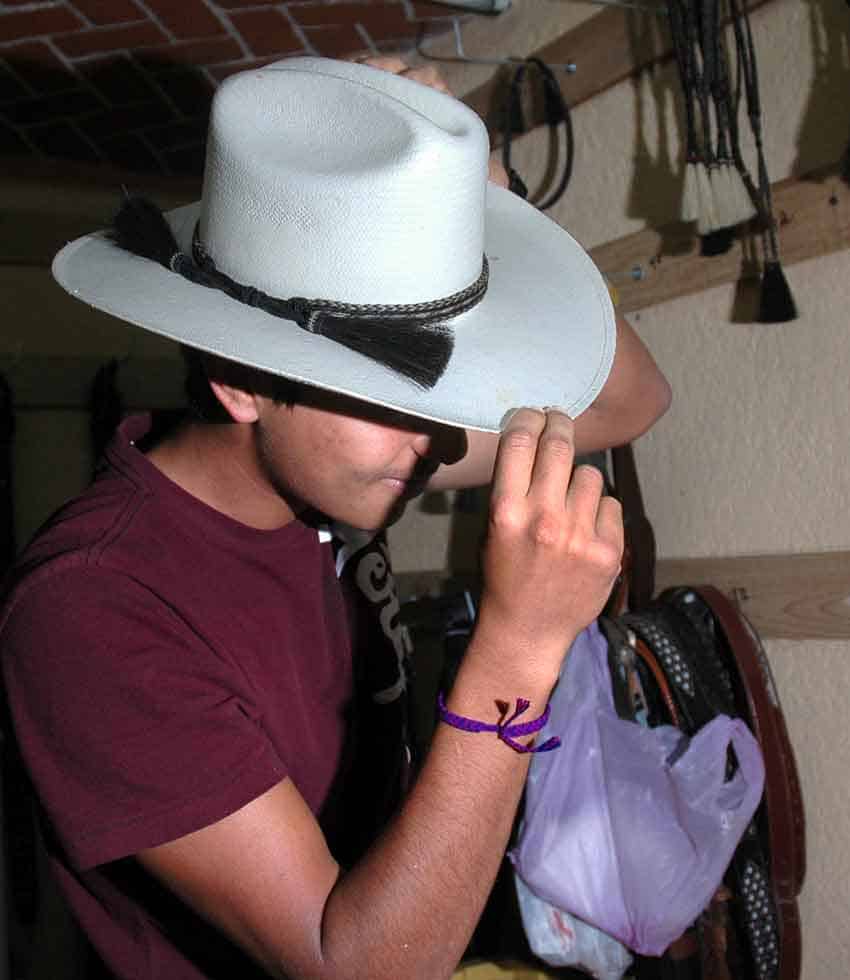
The hatband on this fine sombrero is one of Taller Rodriguez’s creations.
It was hard to believe the beautiful belts they were selling were actually made of horsehair until Consuelo took us to a back room and showed us how easily she could weave a few long strands of a horse’s mane into tresses, which were then interwoven with others, eventually resulting in a belt or bracelet displaying beautiful patterns.
“But how did you learn to do all this?” I asked.
“You won’t believe it, but it was actually thanks to a gringo from Ajijic who came here in 1979. His name was Jim Marthai, and he had been taught to weave horsehair by indigenous people in the United States. So it was from him I learned these skills, and I, in turn, have taught others.”
Jim Marthai, I later learned, passed on years ago, but his legacy has flourished in Cajititlán.
Now, in 2023, Consuelo’s family no longer works out of a back room in their home. They receive the public at Taller Rodríguez, one of two workshop showrooms in Cajititlán regularly displaying and selling horsehair crafts.
I asked Consuelo’s son Cristián where they get their raw material.
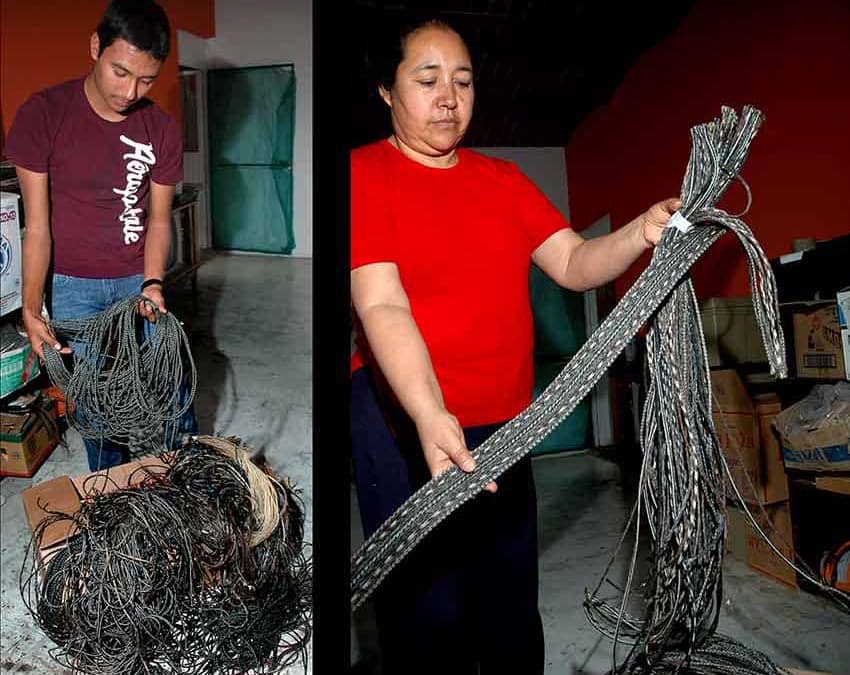
Consuelo Cervantes de Rodríguez and her son Diego with the raw materials used in their artisan workshop and the fabric it becomes.
“From ranchos,” he said, “many, many ranchos. You see, they regularly cut a horse’s mane and tail — maybe every three months — so they won’t grow too long and get caught in thorns and cacti and maleza (brush).
“They used to throw this hair away, but now they save it for us. So we buy it by the kilo, and when we get it, we wash it, we disinfect it, maybe we dye it and then, finally, we start to weave it. Washing a kilo of crin or cerda takes about two hours. Then we put it out in the sun to dry, which may take three to four hours.”
Cristián said that the family started out making simple things like bracelets and hat bands for sombreros, “but then, as time went by, we began to invent, to innovate.”
“Now, for example, we’re making beautiful, unique handbags, which we’re exporting to the U.S., Italy and Spain. We used to mainly sell our products at charreadas (rodeos), but now we are going to venues like the Feria de Libros (Book Fair), where people are fascinated because they’ve never seen something made out of horsehair.”
Cristián proudly added that his family had developed techniques for creating riding saddles out of strong, beautiful horsehair fabric.
“In fact,” he said, “there are only four horsehair saddles in the whole world, and we’re the ones who made them!”
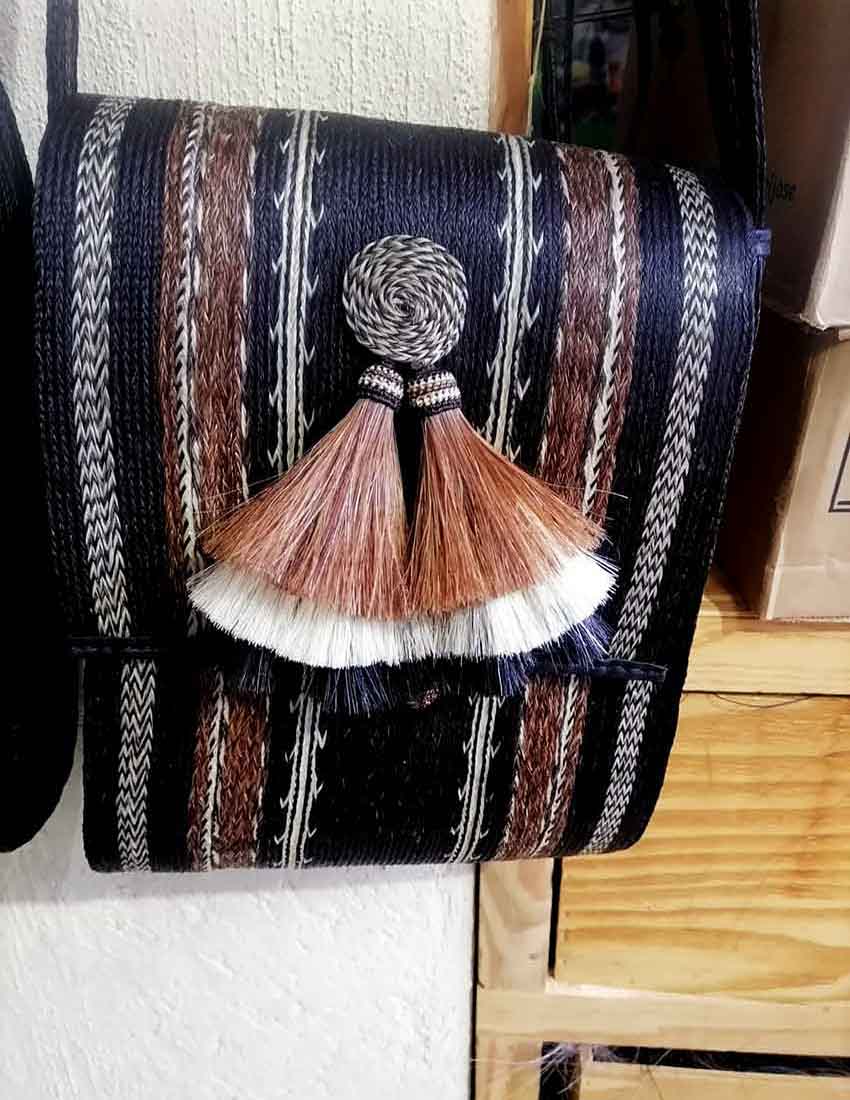
Two-tassel purse made of horsehair.
In 2017, a saddle made by Taller Rodríguez won first prize for arts and crafts in Jalisco. In subsequent years, their saddles won more prizes, until, in 2021 in Mexico City, the family accepted the highest trophy of all for Mexican artisans: the Galardón Presidencial, the Presidential Award.
“Just the weaving of that saddle,” commented Cristián, “took four of us three full months to do. It contains between 400 and 500 meters of woven horsehair. and then on top of that, there are the straps and flaps and everything else that goes into a saddle!”
Another of Taller Rodríguez’s innovative projects was its decoration of the giant letters in town spelling its name — CAJITITLÁN. These giant letter landmarks spelling a city/town’s name is a common sight in Mexico, and a favorite landmark for visitors, who like to take photos of themselves in front of it.
“We covered each letter with woven horsehair,” Cristián’s brother Sergio told me. “It was for another competition that was only at the municipal level. They asked each town around the lake to create something typical of the local craft. …And my brother said, ‘Why don’t we cover each of those huge letters with cerda?’”
Every letter ended up being covered with around 72,000 hairs! Taller Rodríguez won the competition, but their glory was short-lived:
“Maybe you could say we were too successful,” Sergio said. Those letters were so beautiful that people stole most of them! In the end, the municipality had to replace them all with the usual painted letters — so all our work was in vain. That’s Mexico for you!”
The last photo of the horsehair-covered letters before several of them were spirited away by admirers.
Check out the Rodríguez family’s Facebook page for their latest creations, especially the purses, which Austrian painter and former fashion designer Ilse Hable Taylor called “stylish and lovingly detailed: truly works of art.”
The writer has lived near Guadalajara, Jalisco, since 1985. His most recent book is Outdoors in Western Mexico, Volume Three. More of his writing can be found on hisblog.
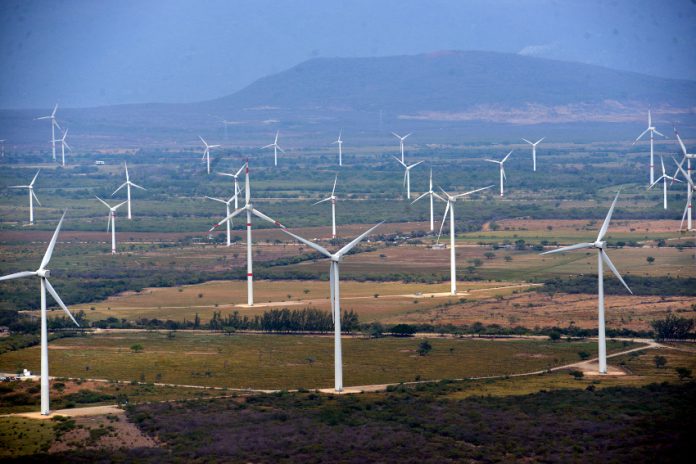
The president anticipates US funds to finance the new wind farms. (Wikimedia Commons)
President López Obrador announced Wednesday that he expects the United States to finance the construction of four wind power plants in the Isthmus of Tehuantepec.
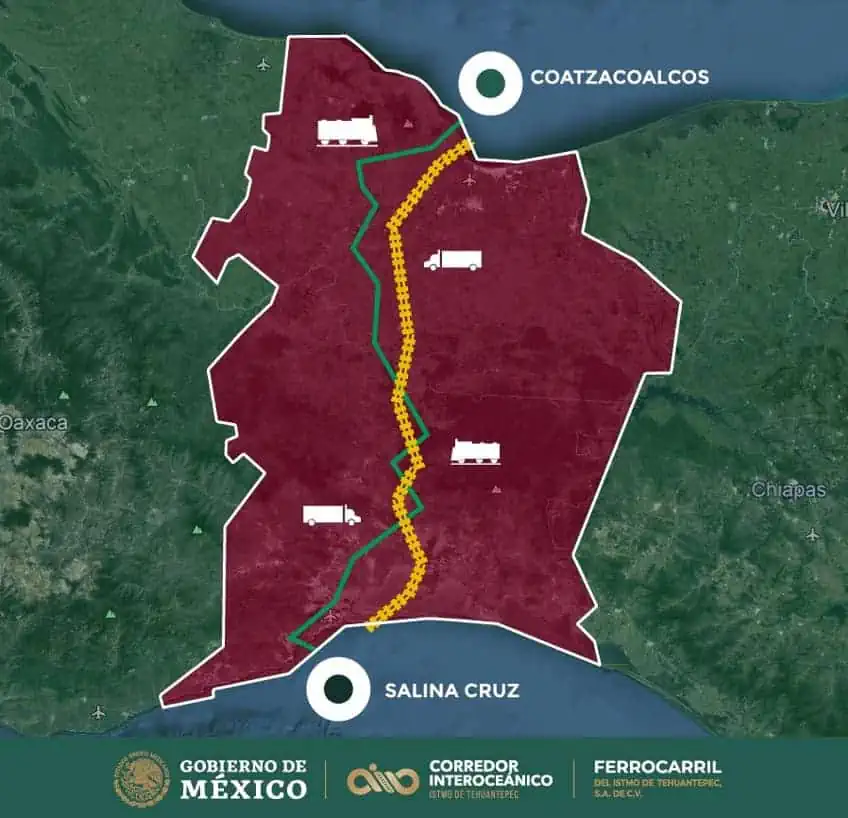
The plants are part of AMLO’s plan to build 10 industrial parks across the isthmus – the narrow section of southern Mexico between Oaxaca and Veracruz – linked by a renovated railroad project connecting the Pacific and Gulf coasts.
Renovation work on the rail line in 2020. (Gob MX)
“There is a commitment, if the conditions are met, that four of the 10 parks are used for the generation of electricity by wind,” AMLO said. “It is an agreement with the U.S. government to contribute to facing the problem of climate change.”
He explained that U.S. banks or the U.S. government would finance the project through interest-free loans, and that companies from both countries will take part in the construction. The finished plants would be run by Mexico’s state-owned Federal Electricity Commission (CFE).
AMLO said he expected U.S. climate envoy John Kerry to visit the area in March to launch the project, accompanied by U.S. legislators and the U.S. ambassador to Mexico, Ken Salazar.
The wind energy industry has previously accused AMLO’s government of causingstagnation in Mexico’s wind power sector through regulation that favors state-owned companies over private clean energy producers.
Mexico’s wind power capacity grew by only 2.2% in 2022, compared with 7.1% in 2021 and 24.7% on average over the last 12 years. Meanwhile, the CFE’s use of coal for electricity generationincreased last year by 55%.
Foreign Affairs Minister Marcelo Ebrard speaks with US climate envoy John Kerry at the COP 27 summit last November. (Marcelo Ebrard Twitter)
AMLO’s nationalistic energy policies have caused trade tensions with the U.S. and Canada, as well as casting doubts on his pledge to double the country’s renewable energy capacity by 2030.
Energy policy was a key topic at the North American Leaders Summit, held in Mexico City last month. At the summit, the leaders of Mexico, the U.S. and Canadapledged to take “rapid and coordinated measures to tackle the climate crisis” and to “accelerate the energy transition.”
These aims are already playing out in the northern border state of Sonora, where the U.S. is investing in theSonora Clean Energy Plan. This seeks to boost solar power generation, lithium mining and electric vehicle manufacturing in Mexico’s northwest. The Puerto Peñasco solar power plant is expected to begin first phase operations in April.
During Wednesday’s press conference, AMLO continued to stoke rumors that U.S. electric carmaker Tesla is building a plant in Mexico, either in the state of Nuevo León or the state of Hidalgo. In December, the newspaper Milenio reported that Tesla would unveil its plans for a Nuevo León factory in January, but no official announcement has been made.
AMLO also stressed that the planned wind farms in the Isthmus of Tehuantepec would create jobs and development in Mexico’s poorer southern states.
“We are investing in the south and southeast, which was completely marginalized, and development is being balanced,” he said.
However, previous moves to build wind farms in the isthmus have metresistance from local residents. In particular, members of Oaxaca’s indigenous Zapotec community have opposed multinationals building wind farms on their communal lands, saying the companies failed to properly consult local people about the impact of the projects.
Welcome to Suite Tallulah, the ultimate pied-à-terre located in the heart of San Miguel de Allende, just steps away from Parque Juárez and the Jardín (main square). This cozy, tastefully furnished home is now available for sale at an unbelievable price of US $375,000 and it’s a must-see for anyone looking to own a piece of paradise in this vibrant town.
The welcoming, thoughtfully designed living room of Suite Tallulah (CDR San Miguel)
Who is the intriguing woman behind this stunning property? Meet Cheryl “Finn” Finnegan, a true design visionary, who revolutionized the fashion industry with the launch of her iconic San Miguel-based luxury jewelry brand Virgins, Saints & Angels (VSA) back in 1999.
With a fresh and imaginative approach, she fused traditional Mexican artesania with gothic religious iconography to create something truly unique – a homage to powerful female icons.
This idea was ahead of its time, captivating the hearts and minds of fashion lovers everywhere, and garnering a devoted following of celebrity fans, including Madonna, Britney Spears, Alicia Keys, Lady Gaga, and John Galliano.
With a passion for creativity and a love for San Miguel, Cheryl fondly recalls the humble beginnings of her company in 1999. “It all started with a custom-made belt-buckle embellished with the Virgin Guadalupe in a small, dimly-lit, dusty workshop. All of a sudden we had an extended family of craftsmen, each adding their own individual touches and energy to every unique piece.”
Each exquisite piece of jewelry is handcrafted by local artisans, honoring the powerful imagery and beauty of San Miguel. And now, she’s bringing her creative expertise to the world of real estate with Suite Tallulah.
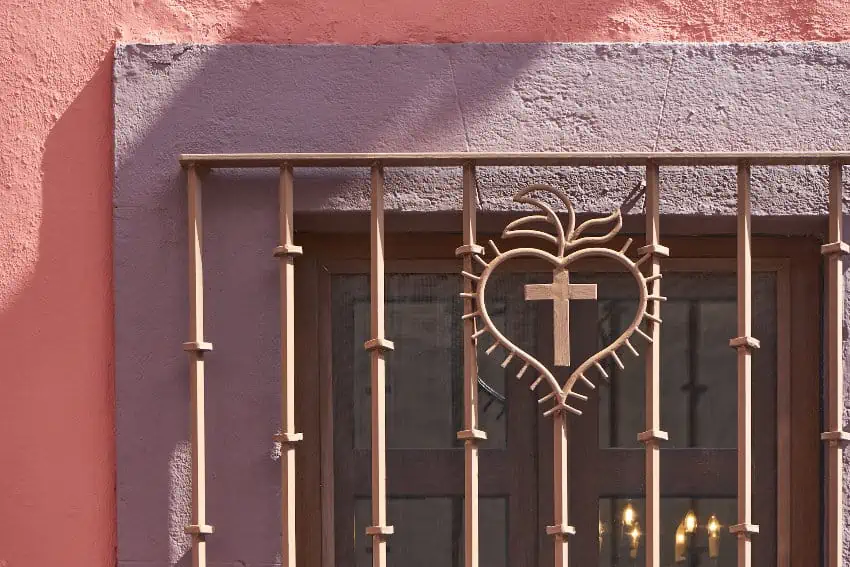
The VSA logo in ironwork on the facade. (CDR San Miguel)
Lovingly named after her daughter, Suite Tallulah is eclectic and inviting, with a comfortable and lived-in feel. The enchanting facade and breathtaking ironwork, adorned with the signature Virgins, Saints & Angels heart logo, foreshadow the magic waiting inside.
Key Features:
This charming one-bedroom pied-à–terre offers affordable luxury in the center of San Miguel de Allende at the unbeatable price of US $375,000
Beautifully furnished and decorated with a mix of old-world charm and modern style by celebrated luxury jewelry designer, Cheryl ‘Finn’ Finnegan of iconic brand Virgins, Saints & Angels, worn by celebrity admirers, including Madonna and Britney Spears
The spacious one-bedroom boasts its very own walk-in closet and dressing area with French doors opening onto a small patio and a breathtaking private roof terrace with panoramic views of San Miguel
An ideal option as a lucrative rental for anyone looking to invest in property in the center of San Miguel de Allende
View from the rooftop terrace of Suite Tallulah (CDR San Miguel)
“There’s a lot of love in that house. You wouldn’t believe how many people have proposed on Suite Tallulah’s rooftop and then come back year after year,” says Cheryl.
From the cozy living room with its timeless cantera fireplace, skylights, and vintage tiled floors, to the kitchen with its open shelving and built-in cabinets, visitors immediately feel right at home. And with a half-bath conveniently located on the first level, you have everything you need right at your fingertips.
Kitchen area of Suite Tallulah (CDR San Miguel)
Privacy, security, and peace have been prioritized here with the addition of world-class noise canceling, triple-glazed windows and doors throughout the property.
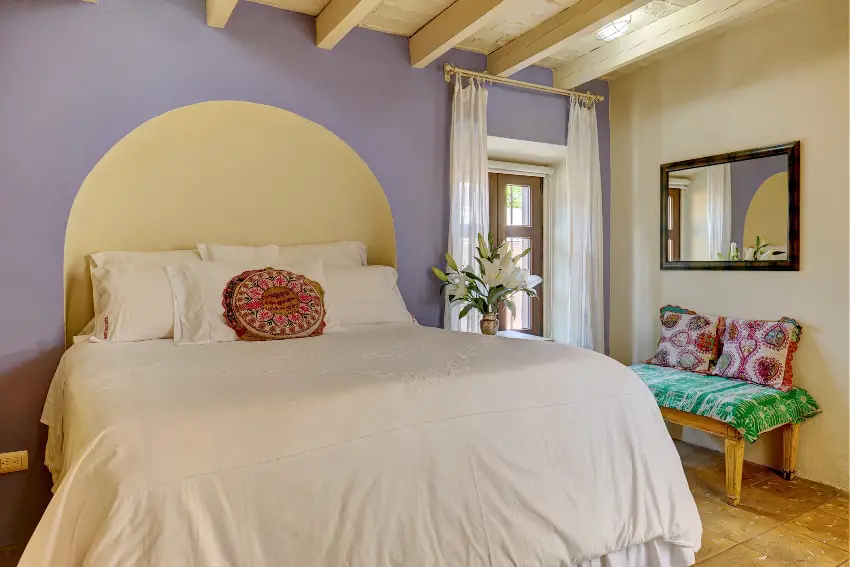
The bedroom upstairs boasts charming details, including French doors that open out onto a small patio with a beautiful fountain, and a large walk-in closet with a dressing area, with views overlooking the cobbled San Miguel streets.
The bathroom has a generous bathtub and a chandelier suspended over the sink, adding an extra touch of luxury.
Inviting bedroom of Suite Tallulah (CDR San Miguel)
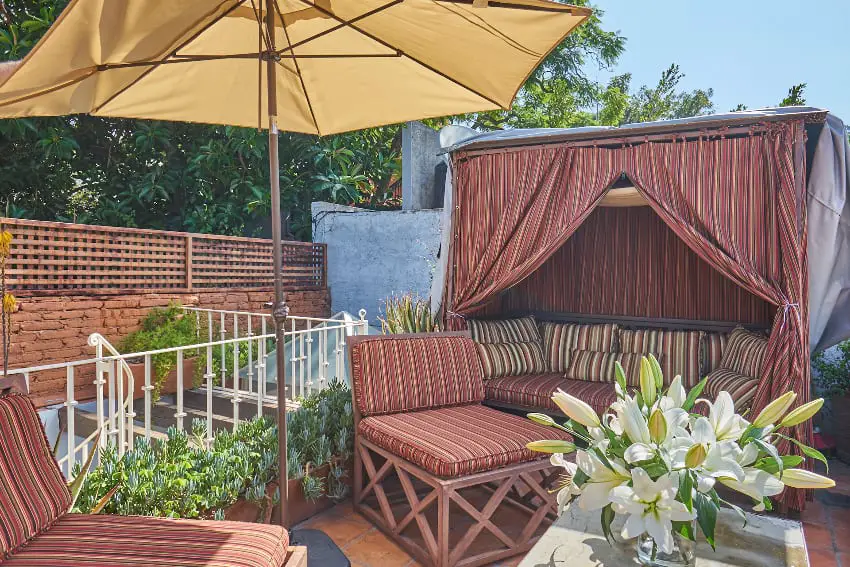
And finally, the cherry on top of this elegant cake: the exceptional rooftop terrace.
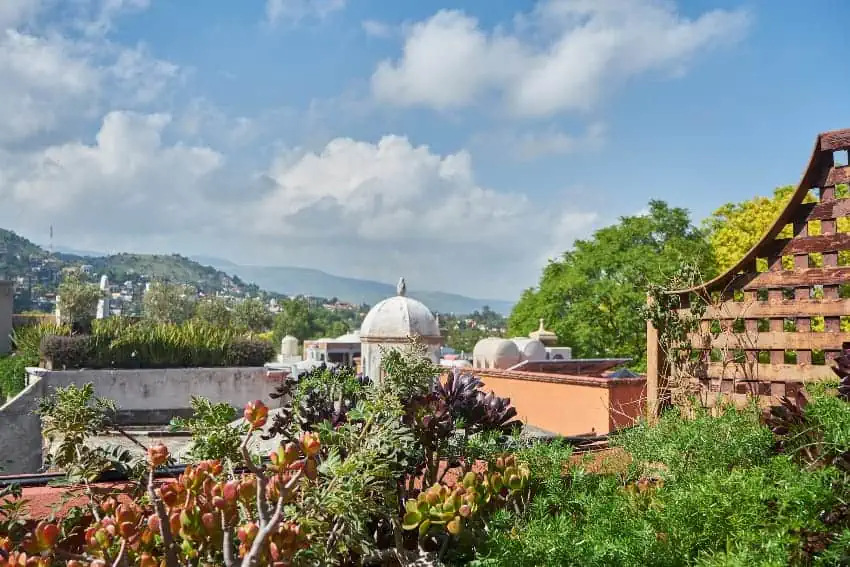
Furnished with a tented sofa, and surrounded by a variety of local plants, this outdoor oasis is the perfect place to relax and enjoy the stunning views of Centro and the hills surrounding the city.
Suite Tallulah is a true gem, a mix of old-world charm and modern style. With its affordable price, prime location, and gorgeous views, it’s the perfect home for anyone looking to make their dreams of living in Mexico a reality.
Rooftop terrace of Suite Tallulah (CDR San Miguel)
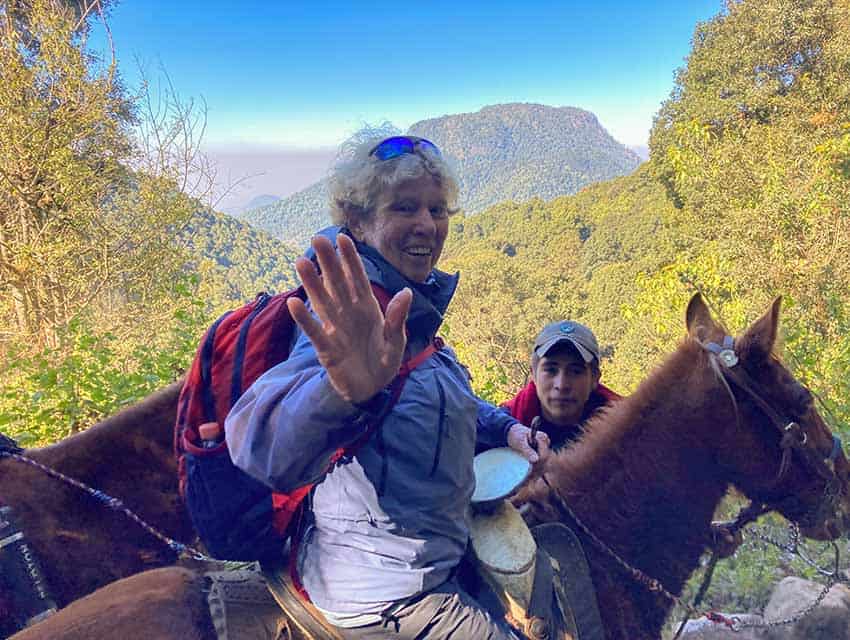
The secret to having a great family trip to Mexico's monarch butterfly sanctuaries is finding the one that's the right fit for your group. (Photos: Debbie Slobe)
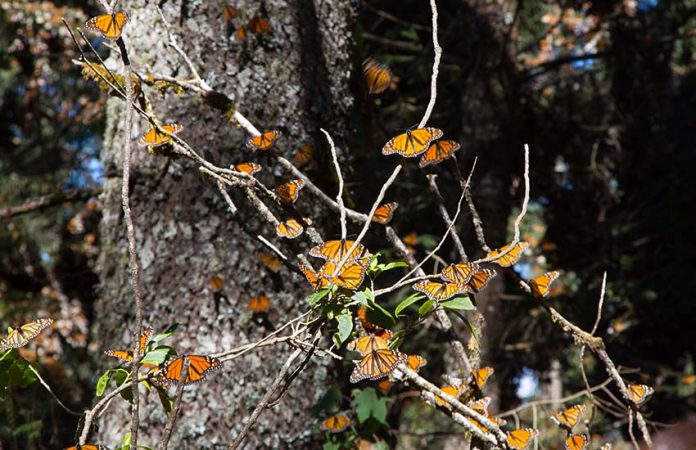
It’s high season for monarch butterfly viewing in Mexico — the time of year when millions of butterflies arrive to their wintering grounds in the central highlands. These amazing insects migrate upwards of 3,000 miles to their winter habitat in the mountains in México state and Michoacán.
They’re here from November through March, so there’s still time to see them this winter.
We made the trip to the monarch sanctuaries of Cerro Pelón and Sierra Chincua in January with our 10-year-old daughter, friends from the U.S. and their two kids (ages 10 and 13), as well as their grandmother in her 70s. We were pleasantly surprised to find out just how accessible and family-friendly the experience was.
First of all, you don’t have to get up at the crack of dawn to see the butterflies. In fact, they aren’t active until midday, when the sun is strong enough to warm their bodies.
Secondly, you don’t have to hike long distances. While their colonies are high up in the mountains, most sanctuaries have horses you can ride to the top. Thirdly, you don’t need binoculars or spotting scopes like with most other wildlife viewing. In fact, the butterflies fly so close — some will land on you — you need to watch your step so you don’t hurt any.
Now back from our adventure and still abuzz with beautiful butterfly memories, I thought I’d share some tips for how to make your experience even more enjoyable if visiting the sanctuaries with kids (and grandparents).
One of the writers’ most enthusiastic pieces of advice is to get to the sanctuaries early in the day so you and your group can enjoy the magic of the monarchs without battling crowds.
Plan to stay a few days
It’s a good 3–4 hours from either Mexico City or Morelia to the nearest sanctuaries. A seven-or-more-hour round-trip car ride (with kids!) to spend just a few hours with the butterflies really isn’t enough. And if you arrive too late, there’s a crush of tourists. Instead, stay a couple days in the area and pick a few sanctuaries.
We based ourselves in the town of Macheros, México state, where we stayed three nights at the Cerro Pelón Butterfly B&B. It’s adjacent to the least-visited sanctuary of them all — Cerro Pelón, and owned by a local family that’s been protecting the butterfly colonies for decades. Managers Joel and Ana Moreno, whose father, uncle and cousin worked as forest rangers here for more than 30 years, are continuing their family’s legacy.
Their beautiful B&B and guiding service caters to butterfly tourists worldwide, and their nonprofit, Butterflies and Their People, supports a new generation of forest guardians.
With a pool, a big lawn where the kids can play, cozy rooms with fluffy robes, piles of fleece blankets (it gets cold at night!) and stuff to fix yourself a warm drink, this was the perfect home base for our group of eight.
Pick the right sanctuary for your family
Each sanctuary offers visitors a unique experience, and some require a bit more effort than others to reach the butterflies. For families with younger kids and less mobile adults, El Rosario or Sierra Chincua is a good option, with its easier hiking trails and 15–20 minute horseback rides to the butterflies. There are bathrooms, food and craft stands, picnic areas and parking at the bottom.
If visiting here, I’d recommend staying at the lovely Pueblo Mágico of Agangueo, Michoacán, a half-hour drive from either site. Have older kids or active older adults? Cerro Pelón is a must; it feels more like an adventure than the other sites.
No matter what the fitness levels and amenities preferences of your group, you’ll want to say yes to the guided horseback rides to the butterfly colonies.
It’s a little over an hour on horseback to the colonies, and a climb of 2,000 feet. (You can also hike it.) The view at the top feels much more intimate than at the more developed sanctuaries.
Trust me: hire the horses
All sanctuaries require you to go with a guide. You can either hike to reach the colonies or go by horseback with the guide leading the horse. If you’re wondering which way to go on this, trust me, you want a horse — especially if you are traveling with kids. All the colonies are at about 10,000 feet in elevation, so even a short hike at that altitude can be taxing.
Since the Cerro Pelón ride is the longest, I’d recommend visiting this sanctuary first if you are visiting more than one; if your bum is too sore to get back on a horse the next day, the hike on foot will be easier at the other sanctuaries. We opted for the horses every time, and the kids had a blast.
Don’t visit on weekends
The sanctuaries are far less crowded in the middle of the week. We visited Cerro Pelón on a Monday and were among just a small group of people quietly viewing the butterflies at the top of the mountain. It was magical, sitting and watching the butterflies fly all around us. Our whole group was mesmerized; even the kids never once said they were bored.
We visited Sierra Chincua on a Tuesday and arrived just before the crowds got too big. It was a lovely viewing experience as well.
Bring creative tools for capturing the experience
Our younger girls spent time each afternoon drawing colorful butterflies, and the teenager brought her camera to take close-up butterfly photos. I thrilled at the sight of our kids entertaining themselves without screens after our day’s adventures. One of them even said that they were glad not to have Wi-Fi at the B&B so that they could just have fun and create. (We didn’t tell them the B&B had perfectly good internet.)
On the way from Mexico City to the Cerro Pelón butterfly sanctuary on the Mexico-Toluca highway, La Marquesa — an amusement park of sorts — has food, hiking, swimming, quad bikes and many other enthralling activities for kids, including this “gerbil ball.”
Hire a driver to get you there
After weighing all the options for getting to Cerro Pelón — buses, Ubers, taxis, etc. — we opted to hire a private van and driver. It cost us US $760 round-trip from Mexico City, but it wasn’t much more than the two Ubers we would have needed.
A van and driver meant we could stop whenever we wanted, and everyone had lots of space to spread out or nap. We arranged our driver through our B&B, so you might get a better deal if you find one on your own, but the turnkey service was so worth it and our driver was such a pro.
Our driver, Hector, made a stop at La Marquesa — a national park in Toluca off the Mexico-Toluca highway — where you can ride horses or quad bikes, fish, go boating and more. Or, do what our kids did: tumble around in a giant, inflatable gerbil ball!
Our time with the monarchs was one we’ll never forget. And now that we know how family-friendly it can be, we are already thinking about a return trip with our daughter’s grandparents next year.
Debbie Slobe is a writer and communications strategist based in Chacala, Nayarit. She blogs at Mexpatmama.com and is a senior program director at Resource Media. Find her on Instagram and Facebook.
Revenue in the data center market globally is expected to reach US $342B this year, according to Statista.(Depositphotos)
Microsoft is developing a data center in the state of Querétaro that will seek to optimize the company’s digital services and that will further fortify the state’s position as an important data center hub.
The company’s vision is to build the world’s largest cloud infrastructure, and Querétaro’s data center region, designated Mexico Central, will be a part of it. The center will rank number 62 in capacity worldwide and is the first Microsoft data center region in all of Spanish-speaking Latin America.
Querétaro governor Mauricio Kuri during an immersive tour of Microsoft México headquarters on Tuesday. (Mauricio Kuri Twitter)
“With the establishment of the new Microsoft data center region, we are committed to becoming the flagship of the cloud in Mexico, taking advantage of new investment opportunities for the industry,” Querétaro governor Mauricio Kuri said during a tour of Microsoft headquarters in Mexico.
Microsoft’s Latin America president Rodrigo Kede and CEO of Microsoft Mexico, Rafael Sánchez Loza, said that during the construction phase, 1,000 jobs have already been created.
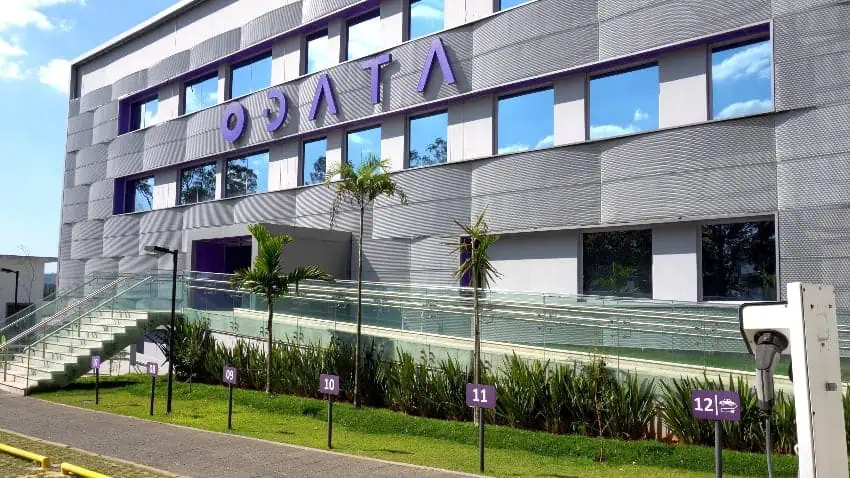
Last year, the Sustainable Economic Development Ministry of Querétaro announced that more than 15 data center projects statewide were in the negotiations stage. The Brazilian company Odata invested US $79 million in 2022 to build the first phase of Mexico’s largest data center to date.
Brazilian company Odata has built the largest data center in Mexico to date. (Odata)
Microsoft currently operates more than 200 data centers around the world.
“Bringing this type of initiative to Mexico is one more step in our commitment to innovation,” said Sánchez.
According to the Microsoft México CEO, the project seeks to catalyze “a substantial transformation in Mexico.”
The center will be a residence for Microsoft cloud solutions and is expected to be a data processing point for the financial, government and health sectors; the goal is also to help entrepreneurs with small and medium-sized companies to grow and modernize.
According to Microsoft, the new region will operate based on sustainable development goals, using renewable energy and cooling. It will also use a water recycling system.
“Querétaro is one of the engines of the Mexican economy, and we see digitization as a key platform to continue growing,” Governor Kuri said.
The bill proposes creating an Airspace Monitoring and Protection Center, with personal from six federal agencies and coordinated by the Defense Ministry.
The Chamber of Deputies voted Wednesday to approve a law that will give Mexico’s armed forces control over Mexican airspace.
TheMexican Airspace Protection Law authorizes the Defense Ministry (Sedena) to oversee air traffic monitoring and to use its resources to “deter threats that violate national security in airspace.”
Specifically, the bill proposes an Airspace Monitoring and Protection Center which will draw personnel from six federal agencies – Sedena; the Navy; the Infrastructure, Communications and Transport Ministry (SICT); the Security Ministry; the Finance Ministry; and the Interior Ministry — coordinated by the Sedena.
This center will monitor unusual aircraft activity often associated with organized crime, including turning off transponder codes, unexplained route changes and failure to communicate with air traffic control services. Suspicious aircraft may then be intercepted by Sedena.
The new system was proposed by President López Obrador under the argument that there is currently a legal vacuum regarding the protection of airspace.
Morena federal Deputy Amairany Peña said that the law will “combat drug trafficking, arms and wildlife trafficking, human trafficking, terrorism and other transnational crimes of high social impact.”
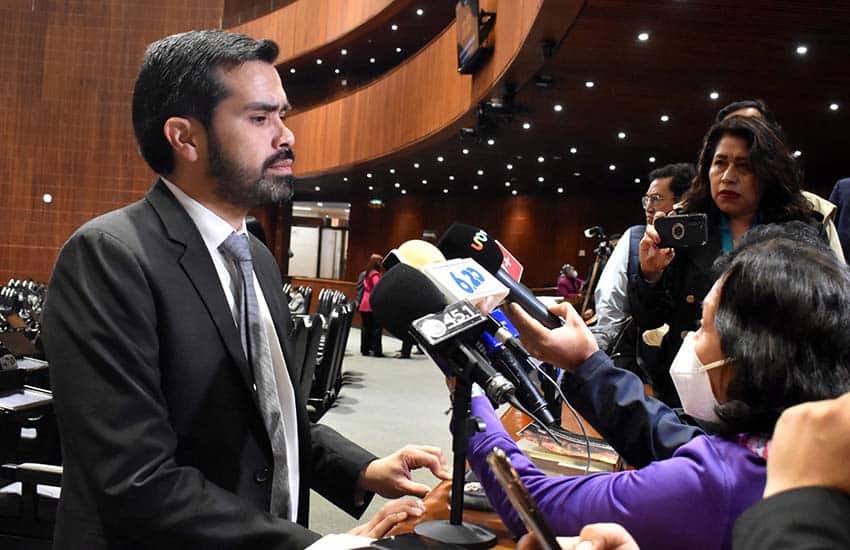
Citizens’ Movement Party Deputy Jorge Alvarez speaks to reporters about his party’s opposition to the bill. (Photo: Citizens’ Movement)
Defense Commission Chairman Ricardo Villarreal of the National Action Party (PAN) stressed that a security alert is reported on average every 36 hours for aerial activity associated with organized crime. Between December 2018 and November 2021, there were 720 notices for suspicious aircraft to be monitored or intercepted.
Villarreal acknowledged that, although Sedena already participates in intercepting aircraft, the current legal framework makes it difficult to prosecute the crew or owners.
The Chamber of Deputies approved the law with 263 votes in favor, 26 against and 195 abstentions.
The vote was split broadly on party lines, with Morena and its allies voting in favor, the Va por México coalition of the PRI, PAN and PRD abstaining and the Citizen Movement (MC) voting against.
Explaining her party’s opposition, MC deputy coordinator Mirza Flores Gómez said, “What this ruling really seeks is to advance the consolidation of the militarization of our country.”
The MC argued in a dissenting motion that many of the issues raised in the proposed legislation are already addressed by the Civil Aviation Law.
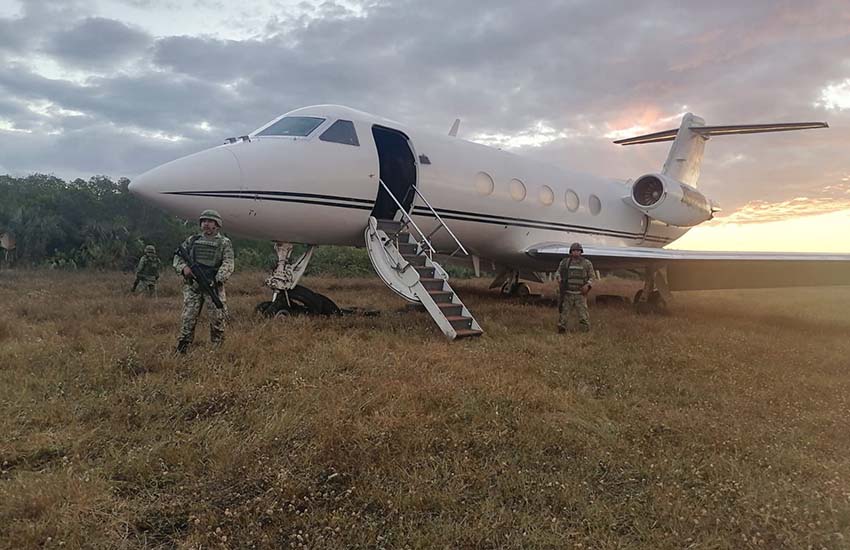
The army and air force already monitors Mexican airspace in the pursuit of contraband smugglers at strategic security points like Mexico’s borders. Armed forces tracked this plane after it flew illegally into Chiapas airspace in Dec. 2021. (Photo: Sedena)
“In this sense, there is no relationship between the problems indicated and the need to create a law that militarizes airspace and civil aviation,” said the motion.
The MC has consistently opposed moves by AMLO that increase the power of the military, such as the recent reform that extends Sedena’s authority over the National Guard.
The bill will now progress to the Senate, where it will be debated in the coming days.
The interest rate hike is in response to continued high inflation. (Depositphotos)
Mexico’s central bank has lifted its benchmark interest rate by 50 basis points to a new record high of 11% after both headline and core inflation rose in January.
Bank of México (Banxico) board members voted unanimously in favor of a 50-basis-point hike at a monetary policy meeting on Thursday. The meeting took place just hours after the national statistics agency INEGI reported annual headline inflation of 7.91% in January and core inflation of 8.45%.
The rate hike, which followed a 50-basis-point increase in December, was double that predicted by most economists as well as double that announced by the United States Federal Reserve last week. It was the first time in seven monetary policy decisions that Banxico outpaced the Fed, and the unexpected move caused the Mexican peso to gain ground against the U.S. dollar.
The peso was trading at about 18.8 to the greenback on Thursday afternoon.
Banxico has now lifted its key rate by 700 basis points since the current tightening cycle began in June 2021. The rate is now at its highest level since the bank introduced a new monetary policy regime in 2008.
In a statement announcing its latest hike, Banxico said its governing board “considered the challenges stemming from the ongoing tightening of global financial conditions, the environment of uncertainty, the persistence of accumulated inflationary pressures and the possibility of greater effects on inflation, as well as the monetary policy stance already attained in this hiking cycle.”
“In particular, it deemed that, given the dynamics of core inflation, on this occasion it is necessary to continue with the magnitude of the reference rate adjustment of the previous policy meeting, in order to be in a better position to tackle a still complex inflation environment,” the bank said.
Banxico targets an inflation rate of 3% with tolerance of one percentage point in both directions.
It said Thursday that it expects inflation to converge to its target in the final quarter of 2024, but noted that the projection is subject to a range of risks including “pressures on energy prices or on agricultural and livestock product prices” and “exchange rate depreciation.”
The central bank anticipates headline inflation will drop below 5% by the end of 2023 before declining throughout next year to reach 3.1% in the fourth quarter of 2024.
Banxico said that its next upward adjustment to its interest rate “could be of lower magnitude” compared to that announced Thursday. Its board will hold its next monetary policy meeting on March 30.
The latest INEGI data shows that headline inflation rose 0.09 percentage points from 7.82% in December, while core inflation increased 0.1 points from 8.35%. The 7.91% headline inflation rate is the highest start-of-year rate since 2001.
Processed food, beverages and tobacco were 14.1% more expensive in January than a year earlier, while the cost of fruit and vegetables was 10.2% higher.
INEGI data also showed that meat prices rose 9.7% in the 12 months to January 2023, while those for non-food goods increased 7.5%. Services were 5.5% more expensive, while energy prices including those for fuel and electricity were up 3.4%.
Inflation has remained stubbornly high despite the central bank’s aggressive tightening cycle and efforts by the federal government to put downward pressure on prices.
However, headline inflation has eased since hitting a more than two-decade high of 8.7% in August and September of 2022.
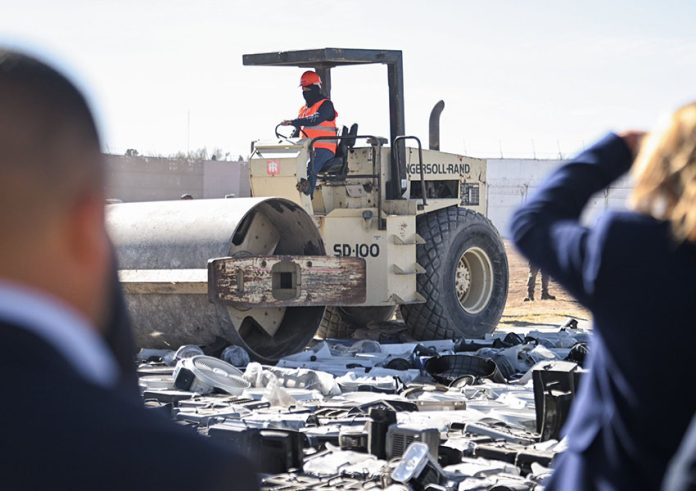
State authorities used a steamroller to destroy thousands of electronics, home appliances and even a mechanical bull found inside the prison in a secret room outside the reach of security cameras. (Maru Campos/Twitter)
The prison in Ciudad Juárez that was the site of a massive escape on New Year’s Day is back in the news this week after some stunning revelations about what was hiding inside.
Turns out that Cereso No. 3 prison was stocked with contraband such as guitars, drums, refrigerators, grills, plasma televisions, video game consoles and air conditioners — and even a mechanical bull — according to Chihuahua Gov. Maru Campos and other state officials.
“The privileges are over,” Campos declared on Tuesday.
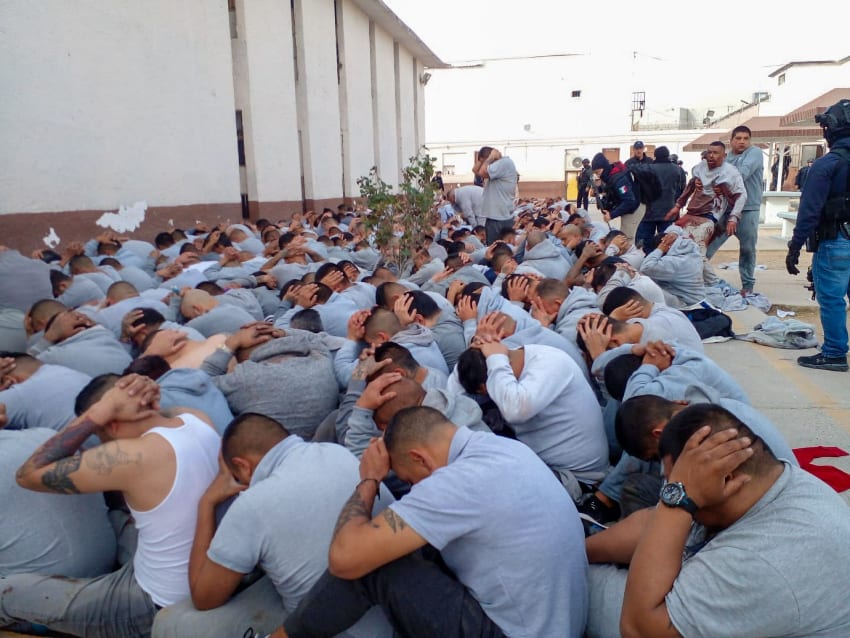
The Jan. 1 raid on Cereso No. 3 prison in Ciudad Juárez resulted in deaths of guards and inmates, and the escape of 30 prisonsers. (Cuartoscuro)
In the days and weeks afterward, state law enforcement authorities carried out an inspection of Social Readaptation Center (Cereso) No. 3, where they found a cache of items that looked “more like what could be seized at an underground party than a prison,” as the newspaper El País put it.
Campos revealed that approximately 2,800 objects were found and destroyed, including dozens of speakers, horns and other instruments, privacy screens, washing machines, and electric fans and heaters — in addition to the previously mentioned objects.
There was also a “snake in a terrarium” and “thousands of pairs of sneakers,” El País reported. “Weapons, drugs and cash were taken for granted.”
Officials said they also found religious articles, such as posters of Aztec deities and Santa Muerte — i.e., Saint Death, a spiritual icon popular in cartel culture. One official said US $85,000 in cash was found among the “VIP cells,” where various calibers of weapons were also located.
Also discovered was a secret door through which the various prohibited objects apparently entered the facility. Just over a meter tall, the door — now sealed with iron bars by state authorities — was found behind a garbage bin in a room supposedly used exclusively by staff.
“It is a door that leads to the outside” and was beyond the range of security cameras, said Gilberto Loya, the head of the state SSP. “It’s a place where anything could come and go, from people to whatever you wanted to put in and get out of there.”
State authorities said they now believe that this is where all the confiscated objects entered. There was no information available on when the door was built.
The prison, and all of the state’s prisons were turned over to the control of state authorities on Jan. 31, according to Campos. Previously, they had been in the charge of the state Attorney General’s Office.
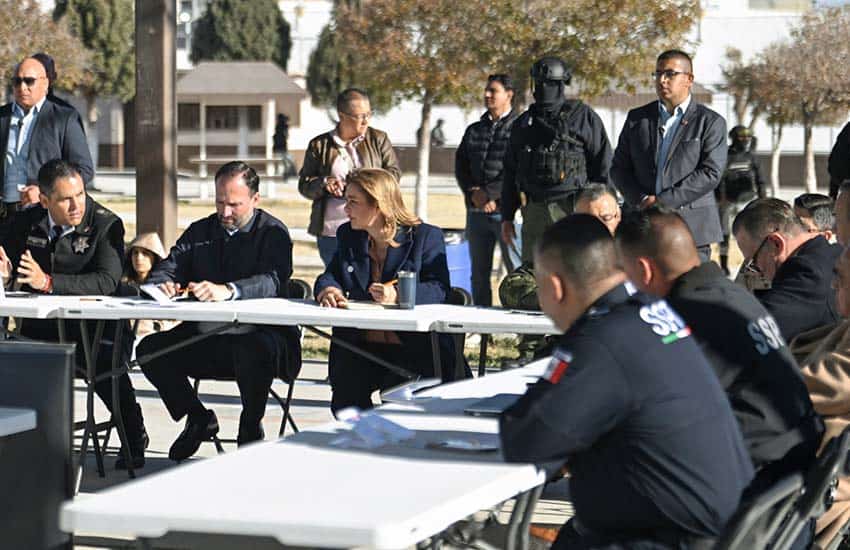
Some of the prisoners who escaped on Jan. 1 are still at large. Chihuahua Governor Maru Campos, center, announced on Jan. 31 that the prison — notorious for being run by its prisoners — would no longer be under the charge of the state Attorney General’s Office. (Photo: Maru Campos/Twitter)
“This is not about a transfer, but about taking command in the Ceresos to have better control and offer greater security to the Chihuahuans,” Campos said on Twitter. Prisons throughout Mexico are referred to as Ceresos. “It is for no other reason.”
For years, human rights organizations have warned that the Ciudad Juárez prison was controlled by the inmates themselves and that there was very little surveillance.
In its 2019 annual report, the Chihuahua State Human Rights Commission stated: “Security is practically under the control of the inmates themselves. In some modules, some even had keys to areas such as classrooms and dining rooms.”
Some 3,900 inmates live in Cereso No. 3, well above the population for which the prison was built, officials said.
Loya said that “once the cleanup inside Cereso 3 is finished, the infrastructure of the place will be rehabilitated, because it was detected that extensions had been made in many cells.” In addition, access to corridors will be reinforced with padlocks, he added.
The early-morning prison break on Jan. 1 occurred after gunmen attacked the prison seeking to free Ernesto Alfredo Piñón de la Cruz, alias “El Neto.” Piñón is the local leader of a gang known as Los Mexicles.
Ten guards and seven inmates were killed in the battle to free Piñón, and of the 27 to 30 prisoners who escaped in the melee between guards and prisoners that ensued (different accounts give different numbers), 14 are still at large, according to Luis Rodríguez Bucio, President López Obrador’s newly appointed federal undersecretary for Security and Citizen Protection.
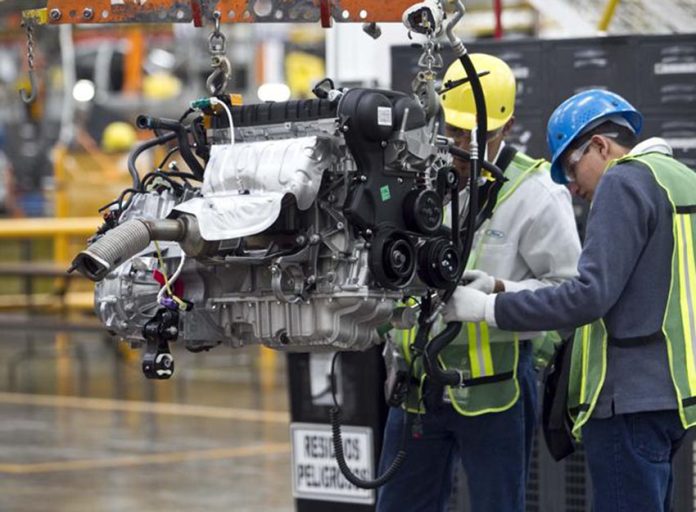
Employees at a Ford Motor Company factory in Chihuahua. (Photo: Government of Mexico)
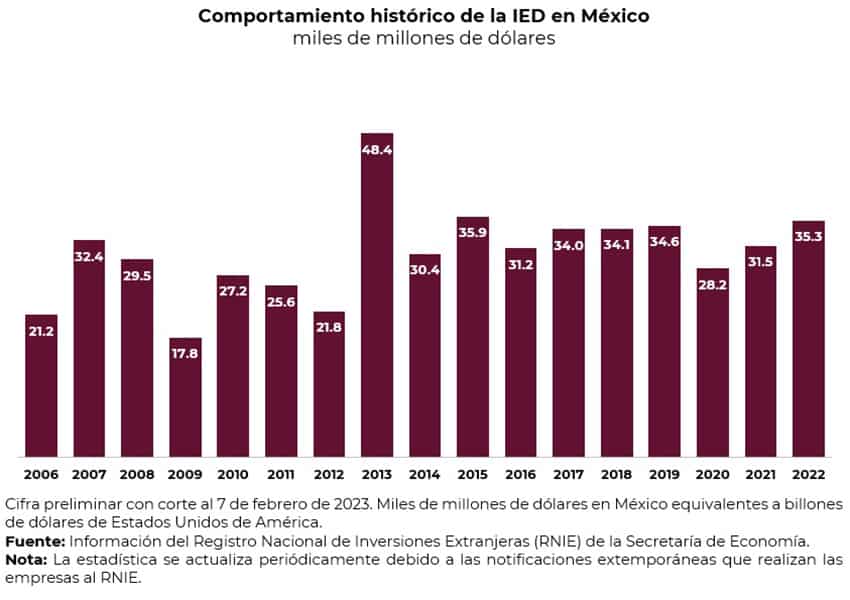
Foreign direct investment (FDI) in Mexico increased 12% in 2022 to just under US $35.3 billion, official preliminary statistics show.
The Economy Ministry (SE) reported a preliminary FDI figure of $35.29 billion on Wednesday, up from $31.54 billion in 2021.
Total direct foreign investment in Mexico totals since 2006, in billions of dollars. In the period show, foreign investment peaked in 2013, but 2022’s numbers are the best since 2015. (Source: Economy Ministry)
The result is the best for Mexico since 2015, when FDI was $35.9 billion.
In a statement, the SE reported that 48% of FDI last year was new investment in Mexico, while 45% came from reinvestment of profits. The remaining 7% was “loans and payments between companies of the same corporate group,” the ministry said.
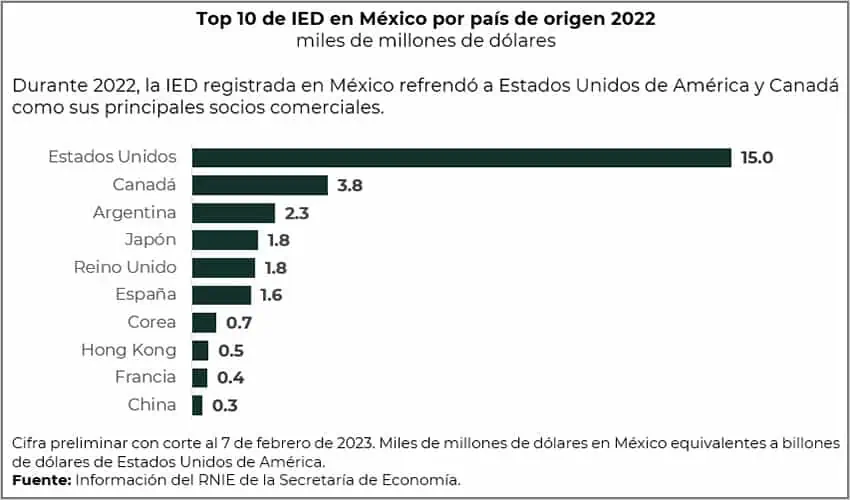
The United States was the top foreign investor in Mexico last year, with $15 billion in FDI coming from that country’s companies and people.
The next biggest investors were Canada, $3.8 billion; Argentina, $2.3 billion; Japan, $1.8 billion; United Kingdom, $1.8 billion; and Spain, $1.6 billion.
South Korea, Hong Kong, France and China rounded out the top 10, but their individual contributions to FDI were below $1 billion.
The SE said that the five federal entities that received the highest FDI in 2022 were: Mexico City, $10.9 billion; Nuevo León, $4.4 billion; Jalisco, $2.9 billion; Baja California, $1.9 billion; and Chihuahua, $1.9 billion.
Mexico’s top 10 investor countries in 2022 in billions of dollars. The U.S. tops the list at US $15 billion. Spain, which since 2018 had invested over US $4 billion, saw a sharp drop in 2022 to 1.6 billion. The UK (Reino Unido) invested slightly more, although its numbers also fell, from a historic peak of 1.8 bn in 2021. (Source: Economy MInistry)
Mexico’s manufacturing sector was a big winner, receiving $12.7 billion in FDI, or 36% of the total. The SE said that manufacturers of vehicles, electronic components and auto parts were among the biggest recipients of foreign investment.
The transport sector received 15% of FDI while the financial services and mass media industries got 13% each. The remainder of the investment went to a range of sectors, including retail, mining, construction, accommodation and electricity.
The nearshoring phenomenon — the relocation of companies to Mexico to be close to the United States market — benefited the Mexican economy in 2022, with significant investment flowing into states in northern Mexico and the central Bajío region.
Mexico City has also benefited from nearshoring, the newspaper Reforma reported Tuesday. Honeywell and Siemens are among the companies that have recently expanded their operations in the capital, according to Mexico City Economic Development Minister Fadlala Akabini.