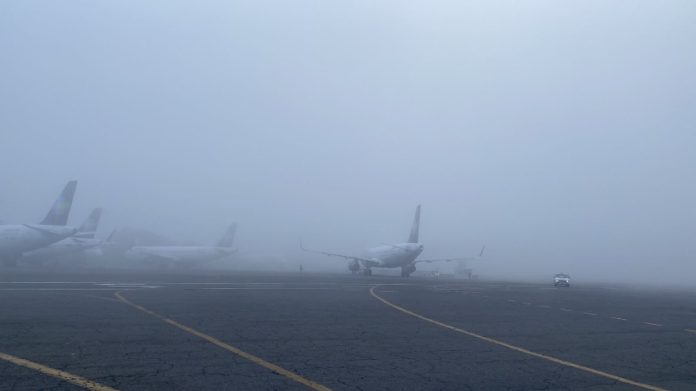
A fog bank caused flight delays this morning at Mexico City International Airport (AICM) Volaris Twitter
The Mexico City International Airport (AICM) had a difficult morning on Wednesday with fog and an immigration system failure disrupting operations.
The airport said on its official Twitter account at 8:25 a.m. Central Time that a “fog bank” would affect “some flights” and advised travelers to consult with their airlines about the status of their flight. Just over an hour later it reported that landing and take-off operations returned to normal just after 8:30 a.m.
Aeroméxico said on Twitter that some of its flights were affected by the fog and directed passengers to check the status of their flights on the airline’s website. Volaris made a similar announcement on Twitter above a photograph of the fog-shrouded airport.
Volaris also said that some of its flights were affected by “adverse weather at the Toluca Airport,” located about 20 kilometers northeast of the downtown of the México state capital.
The AICM also announced on Twitter that its immigration system experienced a “technical failure” early Wednesday. International passengers have faced delays to enter the country as the immigration procedures facilitated by the system were being completed manually, the airport said just after 8.30 a.m.
The AICM said that its management was working with the National Immigration Institute and the telecommunications company Telmex to restore the system as soon as possible.
Over 60% of respondents to a 2022 Mexico News Daily survey experienced delays at the baggage carousel while traveling through AICM, with three in five of those people waiting for an hour or more for their luggage to appear.
The federal government declared in March that both AICM terminals have reached saturation point. The Felipe Ángeles International Airport, which opened north of the capital on March 21, was built to ease pressure on the Mexico City airport, but flight numbers remain low eight months later.
After easily stepping over a low barrier to the Kukulcán pyramid, the woman climbed to the top. Upon returning to the ground, onlookers attacked her. Social media
A word of advice for anyone planning to ascend the Temple of Kukulcán while visiting the Chichén Itzá archaeological site in Yucatán: don’t.
A woman who choose to defy the ban on climbing the pyramid was met by an angry mob of tourists when she descended from the 24-meter-high structure.
Footage posted to social media on Monday showed tourists dousing the scofflaw with water, pulling her hair and hurling abuse at her as she was escorted out of the ancient Mayan site, Mexico’s most visited archaeological zone so far in 2022, according to INAH. Some even called for the woman to be jailed or lynched.
Videos also showed the tourist climbing up the pyramid after stepping over a low barrier, eventually reaching the top of the Temple of Kukulcán, also known as El Castillo. She made her way down after a security official partially climbed the pyramid and ordered her to do so.
The woman, who nationality is not currently known, was caught on video during her illegal climb.
The woman’s nationality hasn’t been definitively established, although several reports said she was foreign. At least one identified her as Spanish. However, the news website Infobae reported that she appeared to be Mexican.
Climbing the ancient stairs of the pyramid at Chichén Itzá – one of the “New 7 Wonders of the World” – has been prohibited since 2008 due to concerns about the potential for damage to the structure. According to a report by the newspaper El País, the woman who defied the ban was turned over to local authorities and could be fined as much as 172,87o pesos (about US $8,900).
Continuing a decade-old tradition, social media users dubbed the offender “Lady Chichén Itzá.”
The titles “lady” and “lord” have been used on social media in Mexico since 2011 to identify and publicly shame people who have acted in questionable or controversial ways or with an attitude that reflects a sense of entitlement.
The first member of the hashtag nobility was #LadyPolanco, a woman caught on camera screaming insults at a police officer in the upscale Mexico City neighborhood of the same name.
Mexico City was the recipient of the largest amount of FDI this year at 32% of the total. deposit photos
Foreign direct investment (FDI) in Mexico increased 29.5% in the first nine months of the year compared to the same period of 2021, according to preliminary statistics published by the Economy Ministry (SE) on Monday.
Just under US $32.15 billion flowed into the country between January and September, SE reported, an increase of $7.3 billion compared to the first nine months of last year.
The comparison is based on preliminary data for both 2021 and 2022. Final data typically shows that FDI was higher than first reported.
It was the first time since comparable records were first kept in 1999 that preliminary data has shown that FDI in Mexico exceeded $30 billion in the first nine months of a year. The data also showed that foreign investment in Mexico in the first nine months of the year exceeded the total for all of 2021, when FDI totaled just over $31.6 billion.
Manufacturing was the economic sector to receive the most FDI, followed by transport and mass media. Shutterstock
SE said that 45.2% of the $32 billion total was new investment, 43.7% was reinvestment of profits and 11.1% was movement of funds between companies.
The biggest foreign investor in the Mexican economy between January and September was the United States, with 39.1% of total FDI coming from that country. The next largest investors were, in order, Canada, with 9.5% of total FDI; Spain, 7.1%; Argentina, 4.9%; and Japan, 3.9%.
The manufacturing sector received 36.3% of the investment, SE’s preliminary data showed, well ahead of transport and the mass media, which got 14.5% and 13.6%, respectively. Financial services, retail and mining were among the other sectors that benefited from FDI in the first nine months of the year.
The manufacturing sector’s primacy coincides with a growing nearshoring phenomenon in Mexico. An increasing number of foreign manufacturing companies are setting up shop in Mexico, or planning to establish a presence here, in order to take advantage of the proximity to the United States, the world’s largest economy.
Northern and Bajío region states are particularly attractive in that respect, but none can compete with Mexico City when it comes to bringing in cash from foreign investors.
SE said that 86.2% of the FDI total in the first nine months of the year went to just 15 of the 32 federal entities. Mexico City received 32% of the total, or about $10.3 billion, and was thus easily the most popular destination for foreign money. Nuevo León, an industrial powerhouse, ranked second with 8.7% of the total, followed by Jalisco (7.5%), Chihuahua (5.2%) and Guanajuato (5.2%).
In the second half of the Mexico-Poland match, goalkeeper Guillermo Ochoa made a dramatic save against a penalty kick, keeping the two teams at 0-0. Guillermo Ochoa/Twitter
Mexico and Poland played out a scoreless tie in their opening FIFA World Cup soccer match in Doha, Qatar, on Tuesday after Mexican goalkeeper and captain Guillermo Ochoa saved a penalty kick early in the second half.
Polish striker Robert Lewandowski came down in the penalty area in the 54th minute of the encounter at Doha’s Stadium 974, prompting Australian referee Chris Beath to award Poland a penalty kick after consulting with the video assistant referee. Replays showed that Mexican defender Héctor Moreno was tugging at the Pole’s shirt when he fell just outside the six-yard box.
Mexico came close to taking the lead in the 64th minute when forward Henry Martín headed an elevated through ball toward the goal, but Polish goalkeeper Wojciech Szczesny was able to deflect the ball away.
Young Mexican fans watching Tuesday’s Mexico-Poland game react with excitement at the moment that El Tri’s goalkeeper Guillermo Ochoa blocked Robert Lewandowski’s penalty kick in the second half.
El Tri, as Mexico’s national team is affectionately known, had a total of 14 shots at goal, four of which were on target, according to the official match statistics. Based on those statistics, Mexico was the superior team, as Poland only had two on-goal shots out of nine attempts, but games aren’t won on stats, and the scoreline ultimately showed that nothing could separate the two sides.
Both teams take one point from the fixture and now sit behind Saudi Arabia in Group C after the Middle East Kingdom upset Argentina 2-1 earlier on Tuesday.
Mexico’s next match is against Argentina and the might of its star player Lionel Messi this Saturday at 1 p.m. Central Time.
The man of the hour: Mexico’s goalkeeper Guillermo Ochoa.
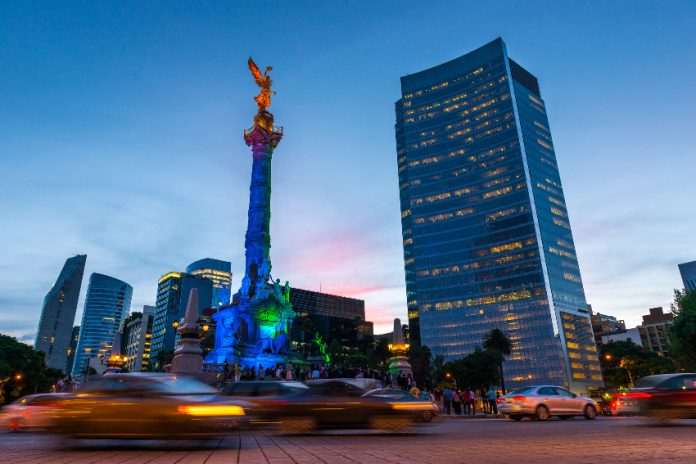
Among the millions of Mexicans watching on from afar were thousands who packed into the FIFA fan fest at Plaza de la República, the square surrounding the Monument to the Revolution in Mexico City. Footage posted to social media showed the fans nervously watching on as Poland prepared to take its penalty kick, and then breaking into wild celebrations when Ochoa saved the ball – and Mexico’s first match day at this 22nd edition of the FIFA World Cup, the first to be held in the Arab World.
President López Obrador said the companies had not complied with the terms of their contract at the Monday morning press conference. Foto: Moisés Pablo Nava / Cuartoscuro.com
Two companies have initiated legal action against the federal government after their contract to build a section of the Maya Train railroad was terminated.
A consortium made up of Grupo México and Spanish firm Acciona filed two lawsuits related to the early termination in July of their contract to build the Playa del Carmen-Tulum section of the railroad, the newspaper Reforma reported Monday.
One lawsuit filed in September directly challenges the termination of the 17.8-billion-peso (US $912.4 million) contract the consortium was awarded in early 2021, while the other suit filed last month challenges the severance payment, or finiquito, the two companies were to be paid by the National Tourism Promotion Fund (Fonatur), which is managing the US $10 billion railroad project.
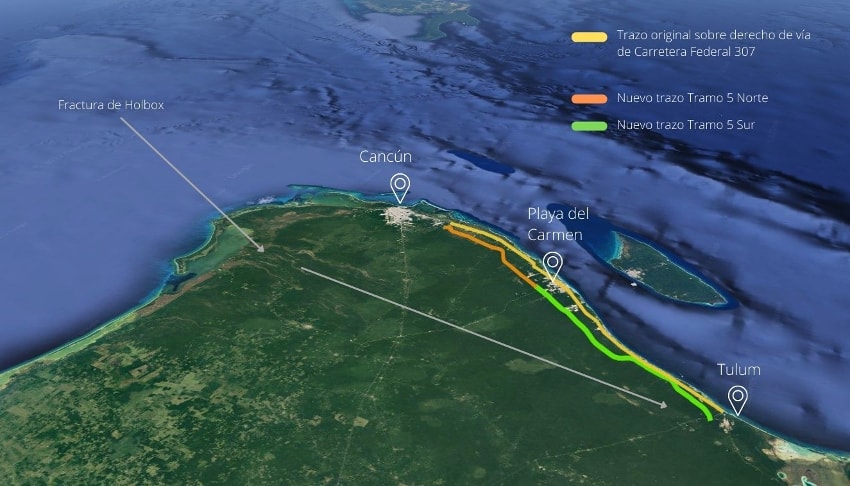
The Ministry of National Defense (Sedena) was given responsibility for building Tramo 5 Sur, as the southern part of Section 5 of the railroad is known, after the consortium’s contract was terminated. That means the army is in charge of construction of the entire stretch of railroad between Cancún and Tulum, popular tourist destinations in the Caribbean coast state of Quintana Roo.
A rendering of the Tulum station on Tramo 5 Sur (section 5 south) of the Maya Train route. Secretaría de Turismo/Fonatur
President López Obrador said Monday that Sedena had contracted other private companies to work on Tramo 5 Sur after the contract awarded to Grupo México and Acciona was terminated.
“There was a breach in the contract … of Grupo México. So an agreement was reached that other companies were going to participate because [Grupo México and Acciona] weren’t complying [with the terms of the contract], that was the reason,” he said.
“They were notified that we needed to urgently finish that section, and it was [subsequently] assigned to three [other] companies,” López Obrador said.
The president said he was unaware that Grupo México and Acciona had initiated legal action against the government before Reforma reported on the lawsuits. He asserted that nothing illegal has occurred.
In a statement issued later on Monday, Grupo México said that the consortium it formed with Acciona “has carried out all the actions required by Fonatur to formalize the closure of the contract and proceed to conciliation and payment for the completed work.”
It said that the early termination of the contract was due to “the technical impossibility of completing the project in 11 months and delivering it in July of 2023.”
Tramo 5 Sur was originally slated to run near the coast but was moved inland after the Playa del Carmen business community complained that the construction of the railroad parallel to Federal Highway 307 would effectively divide the city in two. Large swaths of the Mayan Jungle have been cut down to create a passage for the rerouted section.
Grupo México rejected López Obrador’s claim that the consortium had breached its Maya Train contract, and asserted that it was able to avoid committing a breach in the future by declining to take on a rerouted project whose completion deadline is unreasonable.
Section 5 (north and south) was rerouted from near the coast to the interior earlier this year. Photo credit: Causa Natura
“The seriousness and professionalism of the consortium led it to decline [the project] due to the complexity and haste imposed on the completion of the project,” it said.
“… The consortium didn’t commit any breach during the life of the contract,” added Grupo México, a conglomerate owned by the billionaire businessman Germán Larrea.
It also said that all its actions directed at the finalization of its contract followed a legal and administrative procedure established in accordance with Fonatur’s requirements and “within a framework of dialogue and good faith.”
Grupo México didn’t specifically mention the legal action it has initiated against the government, but noted that it had “accepted the proposal of the government that the finiquito [amount] be derived from the analysis and conciliation that will take place with military engineers.”
That suggested that the consortium was at least prepared to withdraw its second lawsuit in favor of negotiation with the government. However, Grupo México stressed that it “maintains its absolute conviction that the finiquito must be transparent, in accordance with the facts and legality.”
Reforma reported that Fonatur offered to pay a finiquito of 37.9 million pesos, while López Obrador claimed that the consortium wants a larger payout. He said the government would seek to reach an agreement with the two companies, but stressed that Fonatur would only pay a fair amount.
“A fair [amount] will be paid because it’s no longer the time of before,” López Obrador said, alluding to the corruption he says was rife under previous governments. “The budget belongs to the people, it’s the people’s money, officials are simply administrators of the people’s money,” he said.
When the government terminated the contract it awarded to Grupo México and Acciona, it authorized the transfer of 30.4 billion pesos (US $1.56 billion) to Sedena to complete construction of Tramo 5 Sur. That amount is about 70% higher than the value of the contract awarded to the two-company consortium.
A total of seven railroad sections will be built to link cities and towns across five southeastern states: Tabasco, Campeche, Yucatán, Quintana Roo and Chiapas. Tourist, commuter and freight trains are slated to run on the 1,500 kilometer railroad, which is scheduled to begin operations in 2023, despite doubts about whether it can be finished by then.
The fair, which runs at the Expo Guadalajara until Dec. 4, will host authors, literary professionals and publishers from all over the world. FIL
After it had to go virtual in 2020 and put on a reduced in-person event in 2021, both due to the COVID-19 pandemic, the Guadalajara International Book Fair (FIL) is finally returning to its normal programming this year, beginning Saturday in the Expo Guadalajara.
Founded 36 years ago by the University of Guadalajara, the FIL is considered the most important fair of its type in Ibero-America.
For this year’s edition, which will run until Dec. 4, FIL’s program will include more than 3,000 activities, featuring the participation of 600 authors from around the globe and academic discussions of the most relevant current events and literary activities for both children and adults.
The 2022 edition will also feature the city of Sharjah, United Arab Emirates, a neighboring emirate to Dubai and the cultural capital of the UAE. With activities ranging from music to visual arts and movies, attendees in Guadalajara will get a glimpse of Middle Eastern culture.
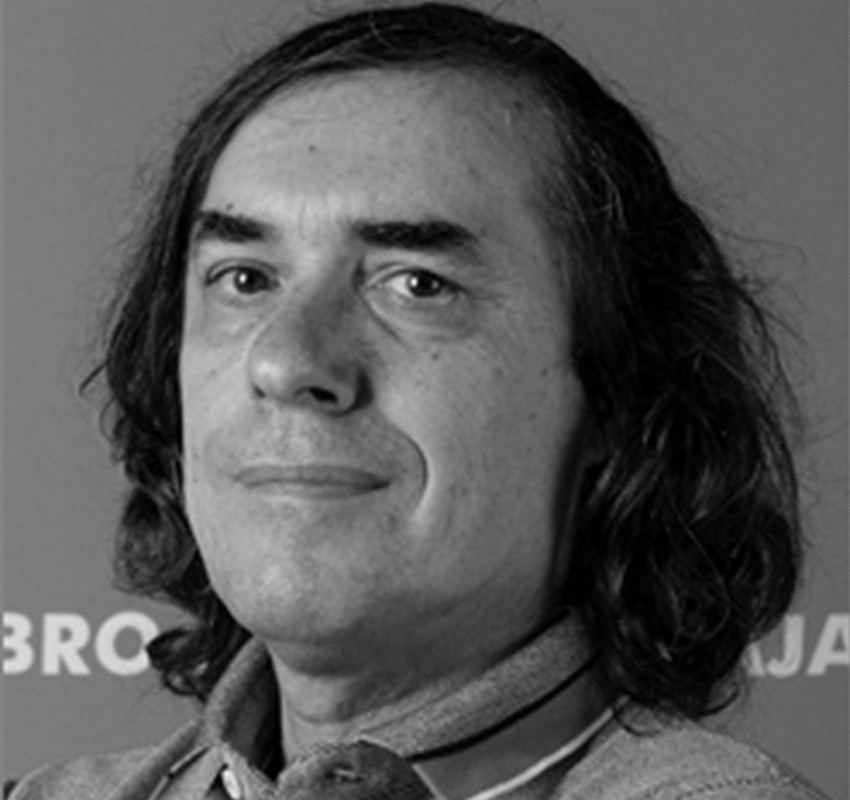
Among several author prizes to be awarded, Romanian storyteller and poet Mircea Cărtărescu will receive the 2022 prize for Literature in Romance Languages. FIL
Among other countries and regions around the world with a literary presence at the fair will be several countries of Latin America, as well as of Israel, Norway, Italy, Quebec, Catalonia and Galicia.
The FIL will also present a number of author awards and tributes — including the 2022 FIL Prize for Literature in Romance Languages, to be given to Romanian storyteller and poet Mircea Cărtărescu, and the prestigious Sor Juana Inés de la Cruz award to Mexican writer Daniela Tarazona.
General admission presale tickets, are currently 25 pesos for adults and and 20 pesos for children. The presale ends Nov. 22.
Nidec already has production bases for a variety of products in Nuevo León, Tamaulipas, San Luis Potosí and other states. Via Cluster Industrial
The Japanese company Nidec plans to invest around US $715 million in the construction of a plant in Mexico that would produce motors for electric vehicles, Nidec’s CEO Shigenobu Nagamori said in an interview with Nikkei, a Japanese news agency.
Since its founding, Nagamori said, Nidec has maintained a policy of local production for local consumption, implying that the new plant would serve the North American market.
The plant wouldn’t be Nidec’s first investment in Mexico. The company already manufactures engines for conventional vehicles in Nuevo León, Tamaulipas, San Luis Potosí, Guanajuato and Querétaro.
Nidec makes traction motors for electric vehicles using a system they call “E-Axle,” which combines a motor, an inverter and a reducer. They can be installed in any vehicle and serve the same function as an engine for gasoline-powered cars. The company already manufactures “E-Axle” motors in China and Europe.
Although it has not yet been announced where Nidec’s plant would be built, construction is expected to begin during or after the next business year starting in April.
Baja California Sur also stands to benefit from the nearshoring trend; 25 Asian companies are looking to relocate to the state because they “see the attraction of being close to the most important market, which is the United States,” Alonso Gutiérrez, the state’s Deputy Economy Secretary, said at the Mar de Cortés Summit over the weekend.
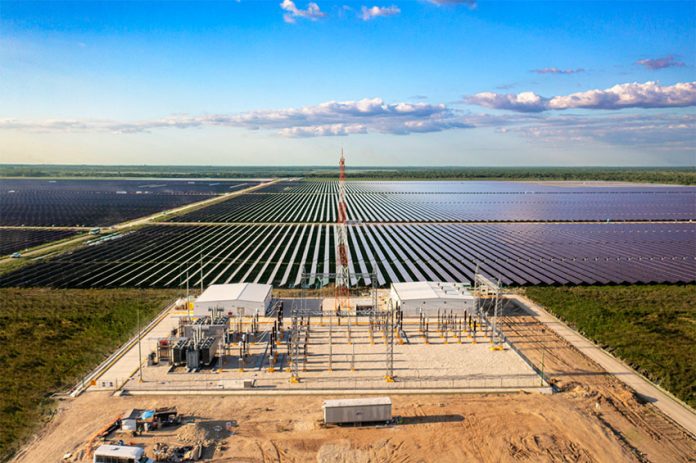
La Pimienta solar plant in Carmen, Campeche. Atlas Renewable Energy
A new solar park with the capacity to generate enough electricity to meet the annual needs of over 300,000 households has begun operations in Campeche.
Built by United States-based company Atlas Renewable Energy in the southwestern municipality of Carmen, the US $440-million La Pimienta plant officially opened last Thursday.
Atlas said in a statement that the facility is now “fully operational,” adding that its 300-megawatt (MW) capacity makes it the second largest solar plant in Mexico. A 754-MW solar farm operated by the Italian company Enel in Coahuila is currently Mexico’s largest.
Atlas noted that La Pimienta will supply energy to the state-owned Federal Electricity Commission (CFE) under a 15-year contract “to support the power needs of the Yucatán Peninsula.”
The new solar plant covers more than 650 hectares and has a capacity of 300 megawatts. Atlas Renewable Energy
“… La Pimienta is composed of more than a million solar panels, which are spread across 651 hectares. The solar plant will generate about 789 Gigawatt hours annually, which could be compared to supplying enough energy to benefit more than 300,000 families,” the company said.
“La Pimienta represents the first large-scale solar renewable energy investment in Campeche, with the participation of high-caliber institutions including the Inter-American Development Bank (IDB), [Mexico’s] National Bank of Public Works and Services (Banobras), MUFG Bank, Sumitomo Mitsui Banking Corporation (SMBC) and Société Générale.”
Camilo Serrano, general manager for Atlas in Mexico, said at last week’s opening that the company is “very proud that our largest project to date is now fully operational.”
“This project is very special for us, as we are able to supply clean energy to the Yucatán Peninsula and avoid the emission of more than 1.7 million tons of CO2,” he said.
Serrano indicated that wind energy could also be generated at La Pimienta project at some point in the future.
Campeche Governance Minister Aníbal Ostoa Ortega and the United State’s consul general in Mérida, Dorothy Ngutter, attended the opening ceremony, at which the latter emphasized the U.S. government’s commitment to clean energy projects in Mexico.
Foreign Affairs Minister Marcelo Ebrard said at the United Nations Climate Change Conference in Egypt earlier this month that Mexico would collaborate with the United States to double its capacity to produce renewable energy over the next eight years.
In its statement, Atlas said that construction of La Pimienta created over 1,000 jobs, many of which were filled by locals. The company highlighted that it “trained 355 local women in technical skills and hired 165 of them, raising female representation [in the construction of the solar park] from a traditional 2% to 15%.”
Sellers at "Palacio de la Flor" in Mexico City have begun the sale of poinsettia flowers. Foto: Juan Pablo Zamora Pérez / Cuartoscuro.com
Flower growers from seven states around the country have started the harvest of the nochebuena flower (also known as poinsettia) in time for the holiday season.
A growing staple of the Christmas season worldwide, it is believed that the nochebuena flower was discovered by the Mexica leader Moctezuma in the southern parts of Mexico, who then took it to his palace in Tenochtitlan to use in ceremonies and rituals.
Later, with the arrival of the Spanish conquerors, the Franciscan monks used the plant to decorate altars and started calling it nochebuena since it bloomed during the Christmas festivities (Christmas Eve is known as nochebuena in Spanish). The flower was first introduced to the United States in 1825 by U.S. ambassador to Mexico, Joel Roberts Poinsett, and came to be known as “poinsettia”.
Because the cultivation process takes approximately six months, producers started preparing the land to plant cuttings in May in order to have the flowers ready for November.
Morelos, Mexico City, Puebla, Jalisco, the State of México, Michoacán, and Oaxaca are the largest producers of nochebuenas, with the leading municipalities being Xochimilco, Cuernavaca, and Atlixco.
According to data from the Agricultural and Fisheries Information Service (SIAP), the 2021 sale of nochebuena flowers reached 17 million plants worth 668.5 million pesos (around US $34.4 million), which were planted in an area of 257 hectares. However, 2020 and 2021 were difficult years for growers, registering losses of up to 50% according to José Francisco León Santiago, director of a nursery in Atlixco, Puebla, as quoted in El Universal newspaper.
Puebla, which ranks as the third-highest in production of poinsettias, is pushing to become the leader in production of the seasonal flower. To that end, the first edition of the Ruta de las Mil Flores (Route of a Thousand Flowers) was inaugurated last week – an event that expects to sell more than 2 million flowers and that will run until the end of the season. For this holiday season, Puebla’s Ministry of Economy forecasts revenues of up to 130 million pesos (US $6.7 million).
Poinsettias grow wild from Sinaloa to Chiapas, and there are 30 varieties today – including white, yellow, and pink – which are exported to countries like the United States, Japan, China, France and Spain.
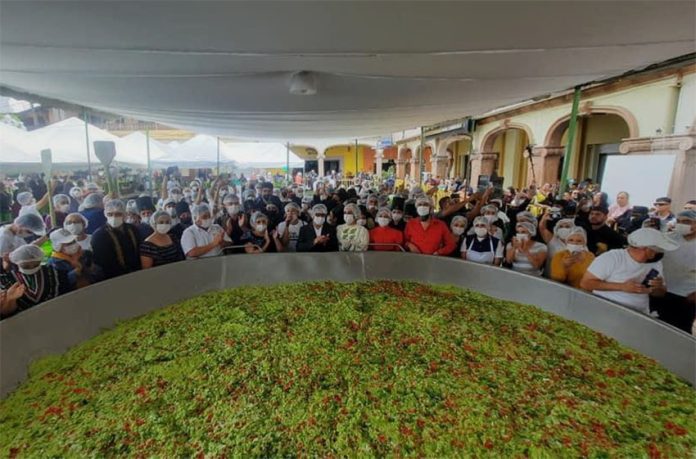
The near-five-tonne guac made Sunday included 10 tonnes of Peribán-grown avocados (weighed before the skin and seeds were removed) as well as huge quantities of onion, tomato, serrano pepper, lime and cilantro. It was put together in just over three hours at Peribán’s inaugural Avocado Expo, which concluded Sunday.
Long lines of participants skinned and de-seeded 10 tonnes of avocados to make the guacamole. Facebook / Ayuntamiento de Peribán
Mercedes Cervantes, president of the expo’s organizing committee, said that locals were very happy with the giant guacamole — a word that comes from the Nahuatl ahuacamolli, which means avocado sauce.
“The result was very good. Peribán has outdone itself, it’s a great joy for us,” she said. “Our main goal is to promote Peribán, which is known [in Mexico] but not internationally. We want people to know that Peribán produces avocados of the highest quality and flavor.”
There were no Guinness World Record officials on hand to certify the new record on the spot, but streamed footage of the production process allowed the organization to verify it from afar, according to a report by the newspaper El Heraldo de México.
By Sunday evening, Guinness World Records had officially recognized that the guac was the world’s largest, local authorities said on Facebook.
The massive serving of guacamole was shared among attendees at the Avocado Expo in Peribán, an avocado-growing municipality on the border with Jalisco where one innovative company is transforming avocado waste into biogas and organic fertilizer.
Despite its immense size, the guac was “well balanced” with a perfect combination of ingredients, according to Francisco Farías, who attended the expo with his family.
Among the record-holders are María José Cristerna — the Mexican “Mexican Vampire Lady” — who has more body modifications that any other woman in the world, and over 14,000 boxing enthusiasts who participated in the largest ever boxing lesson, held in Mexico City’s central square, the zócalo, in June.