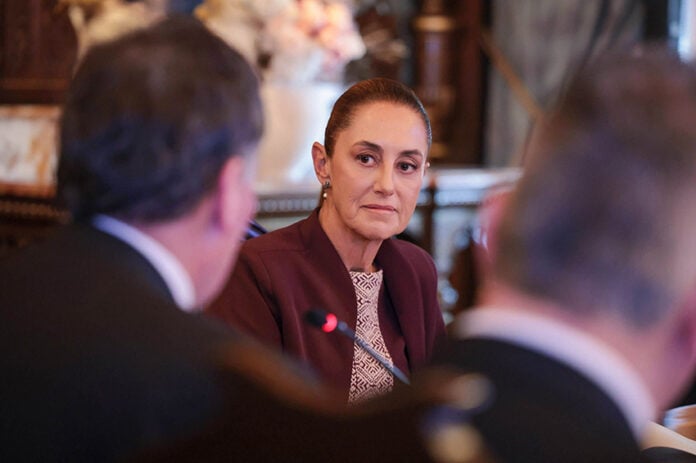
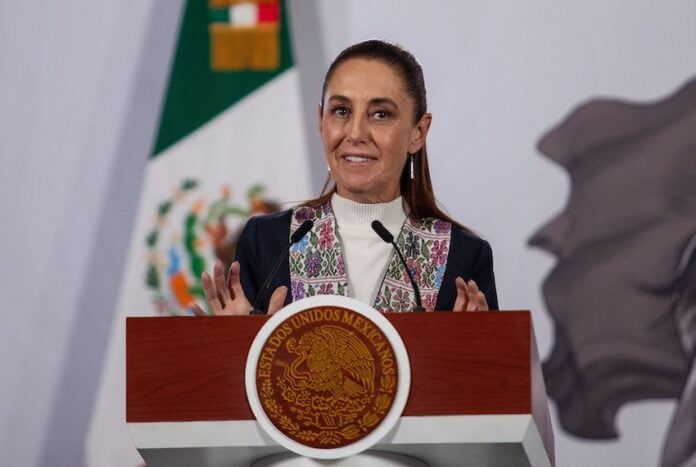
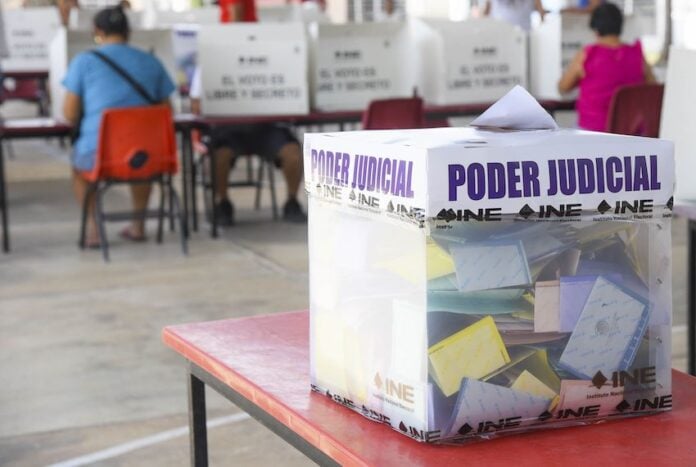
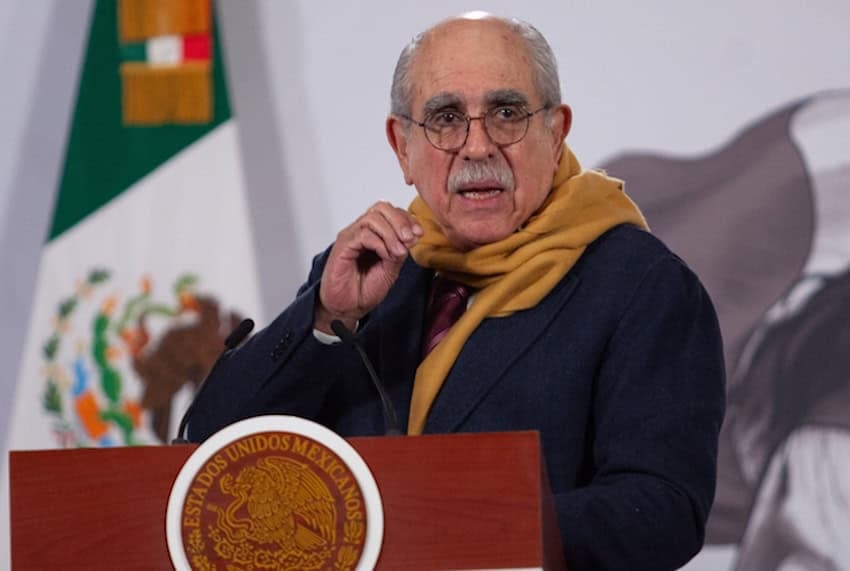
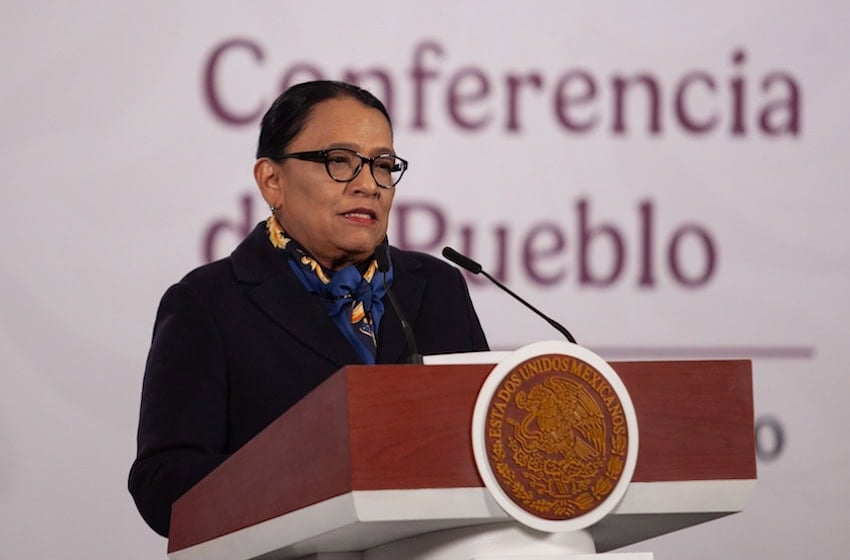
In a recent survey, Mexicans expressed broad support of the recent military operation that killed CJNG cartel boss 'El Mencho.' (Presidencia via Cuartoscuro)
A national survey has found that seven out of 10 Mexicans have a favorable opinion of the military operation that led to the capture and death of Nemesio “El Mencho” Rubén Oseguera Cervantes, founder and top leader of the Jalisco New Generation Cartel (CJNG). At the same time, nearly half of respondents said their approval of the president increased following the operation.
Conducted by De las Heras Demotecnia, a Mexican company that conducts political and electoral research, the survey also found that 88% of respondents were aware of El Mencho’s death.
The level of awareness reflects the media and political dimension of the federal deployment, which involved armed forces and federal authorities in one of the most significant actions against organized crime in Mexico in recent years.
When asked how participants rated the military operation against the CJNG and its leader, 69% of respondents gave the operation a rating of eight or higher out of 10. The average rating was 8.3.
Despite the violence, arson attacks, and numerous road blockades attributed to alleged members of the CJNG following El Mencho’s death, public opinion over President Claudia Sheinbaum’s remains largely favorable, with over 55% of respondents saying their opinion improved or remained positive.
When asked whether their opinion of President Sheinbaum improved or worsened after the operation, 48% of participants said their opinion improved; 7% responded that it remained just as good; 8% indicated that it remained just as bad; 20% responded it worsened and 17% either didn’t know or chose not to answer.
In political terms, Sunday’s military action strengthens the narrative of state territorial control. However, the killing of El Mencho does not mean that the CJNG, a transnational criminal organization with operations on almost every continent, will disappear.
It is yet to be seen who will succeed El Mencho and how the internal succession process will affect stability in the rest of the country. Displays of violence in regions where the CJNG operates will ultimately depend on the institutional capacity to prevent internal realignments and disputes between cartel cells.
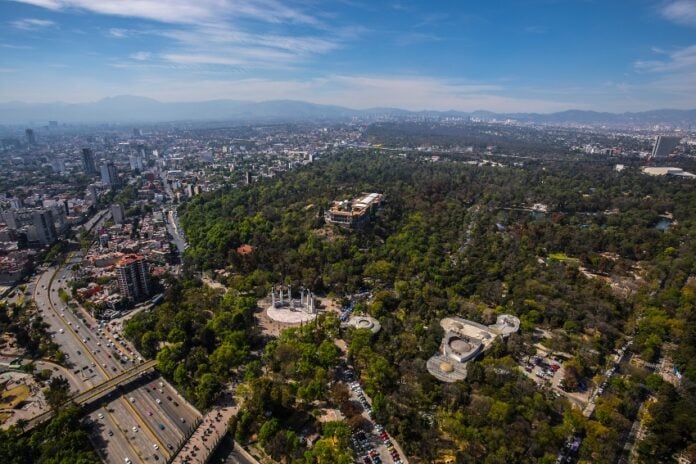
Bosque de Chapultepec is a massive green space beloved by Mexico City residents. (Gobierno CDMX/Wikimedia Commons)
My favorite place in Mexico City is my backyard: Bosque de Chapultepec (Chapultepec Forest). Obviously, the forest and urban park — famously twice the size of New York’s Central Park — is not my actual backyard. But it might as well be. I live a five-minute walk from this nature paradise and gleefully visit it almost daily.
First, some impressive context
Chapultepec is so massive, approximately 1,700 acres, that it’s divided into four sections, which we’ll dive into later. Yes, it’s home to the only royal castle in the Americas, and that’s undeniably historic and cool. But the true star of Chapultepec isn’t the architecture or landmarks. It’s the nature.
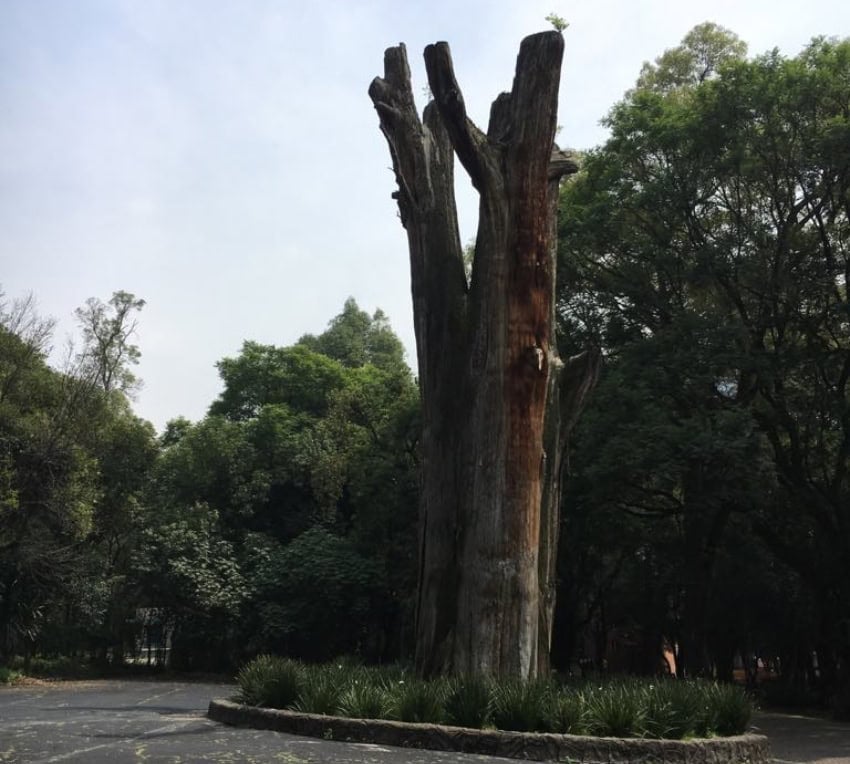
“El Sargento,” the ancient Montezuma cypress tree that died in Bosque de Chapultepec in 1969. (Chapultepec.org)
With roughly 200,000 trees and hundreds of documented plant, fungi and wildlife species, Chapultepec is often called “the lungs of Mexico City,” offering fresh air and green space in the middle of one of the busiest cities in the world. Among its most revered residents are the ancient ahuehuetes, or Montezuma cypress, sacred trees that have stood for 500 to more than 700 years — quietly anchoring the city to its pre-Hispanic past.
And people come. A lot of them. Chapultepec receives an estimated 20 million visitors each year, with busy weekends and holidays drawing well over 200,000 people a day.
And because this is Mexico — magical and sometimes wildly absurd — no other massive green space I’ve ever visited has an iconic mascot quite like Chapu does. If you’ve been, you’ve seen them: the colorful changuitos miones (peeing monkeys), perched cheekily atop visitors’ heads, squirting water as if to remind you not to take anything too seriously.
A brief history of Chapultepec
Long before it became Mexico City’s most beloved green escape, Bosque de Chapultepec was already sacred ground.
The name Chapultepec comes from Nahuatl and roughly translates to “grasshopper hill.” For the Mexica (Aztecs), the hill and surrounding forest were both spiritually powerful and strategically vital, thanks to the natural springs that supplied fresh water to Tenochtitlán. Aqueducts built centuries before European arrival once carried water from Chapultepec directly into the heart of the empire, and remnants of that ancient system can still be found today.
Chapultepec’s history stretches back even further. Archaeological evidence shows people living along the shores of Lake Texcoco here as far back as 3,000 years ago, long before the Mexica made it a sacred retreat. Over time, Mexica rulers transformed the forest into a place of rest, ritual and power. Emperors, including Moctezuma II, planted trees, shaped the landscape, built baths and early zoological gardens, and used the hill as a royal refuge. Many of the ancient ahuehuete trees still standing today trace the original boundaries of that pre-Hispanic park.
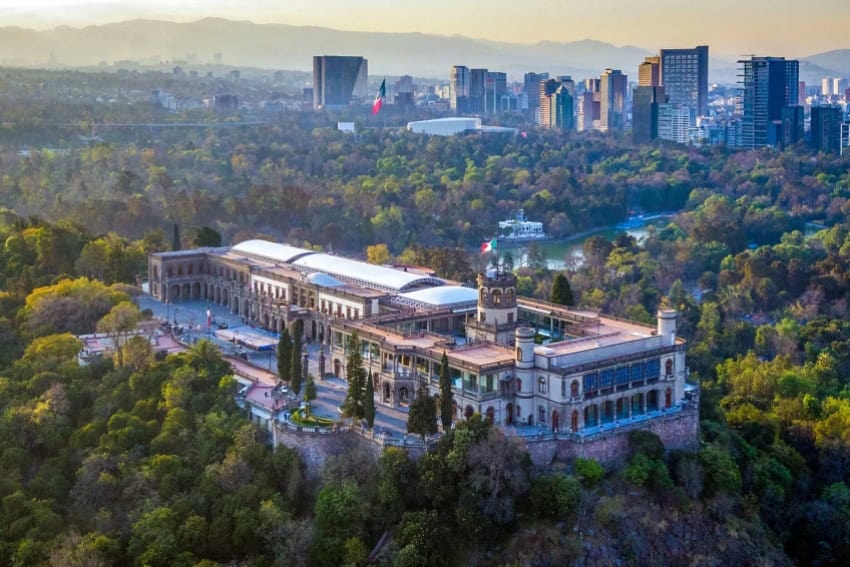
Chapultepec Castle is a must-visit attraction in Mexico City. (Sisgeo/Wikimedia Commons)
The Spanish conquest reshaped Chapultepec’s role entirely. It became the site of one of the final battles in 1521, and later a privileged retreat for colonial elites. In 1785, construction began on what would become Chapultepec Castle, built atop the hill and surrounded by forest largely reserved for the powerful.
Chapultepec continued to mirror Mexico’s political shifts. It served as a military academy, a battleground during the Mexican-American War, an imperial palace, and later the official presidential residence. It wasn’t until the late 19th and early 20th centuries, during a period of modernization, that Chapultepec began to transform into a public park, with landscaped paths, lakes, monuments and museums.
Chapultepec had fully become a shared civic space. Presidential functions moved out, cultural institutions moved in, and the forest expanded, allowing Chapultepec to remain not just a park, but a living archive of Mexico’s history.
The park is divided into four sections. Here’s an overview of my personal favorites in each one, along with a few highlights not to be missed.
Section I: My everyday Chapu
Section I is the most visited of Chapultepec’s four sections, largely because it holds many of the park’s most iconic attractions and is also the most accessible. The main entrance, Puerta de los Leones, sits along Reforma, and walking in from here always feels a bit cinematic. Almost immediately, you’re greeted by the monument to the Niños Héroes, honoring the six young cadets who lost their lives during the Battle of Chapultepec in the Mexican-American War.
Just behind the monument, the castle rises above the trees, which somehow makes the entrance feel even more epic. While I usually enter Chapu through a side entrance near the metro, I still walk along the main path that leads past the monument. Parque México and Amsterdam Avenue get a lot of hype, but for my daily walks, Chapultepec wins every time. When pollution levels cooperate, I like to jog along Gran Avenida and often end my walks with a short meditation under a tree. I can’t recommend this enough.
Depending on my mood and how much time I have, I’ll sometimes stop by the Audiorama to unwind, unplug and let the classical music do its thing. If you go, make sure to say hello to the ahuehuete known as “El Sargento” just outside. Planted in 1460 by order of Emperor Moctezuma, the tree stood for more than 500 years and grew nearly 40 meters tall before it finally died in 1969. Even now, its presence feels grounding.
I also love picnicking near the Totem Canadiense or around the José Martí monument. Nearby is Los Pinos, the former presidential residence until 1940, now a museum and cultural space that’s fascinating to explore even without an exhibit. Close by, the Cablebús connects different sections of Chapultepec to Santa Fe from above. It’s fast, inventive and surprisingly peaceful, and I highly recommend using it if you’re exploring more than one section.
Other popular stops in Section I include Chapultepec Castle, the National Museum of Anthropology, the Botanical Garden, the zoo, the lake and Librería Porrúa.
Section II: Art, water and wide-open space
One of the biggest perks of Section II is that dogs are allowed, which immediately gives it a different energy. It feels looser and more lived-in, with people lingering longer rather than passing through.
One of my favorite stops here is Lago Algo, a space that’s part farm-to-table restaurant, part contemporary art venue, all set right on the water. I’ve come here for brunch and loved it, then wandered straight into whatever exhibit they had on view at the time. They’re constantly hosting thoughtful exhibitions and cultural events, so if artsy vibes are your thing, it’s worth checking their website or Instagram before you go.
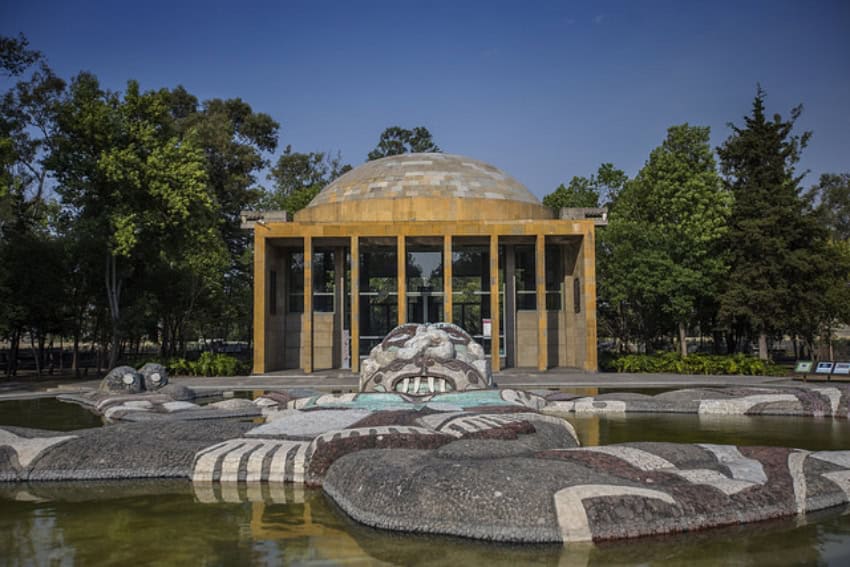
Nearby is the Museo Cárcamo de Dolores, a small but fascinating museum dedicated to Chapultepec’s relationship with water. Outside stands a monumental sculpture of Tlaloc, the Mexica god of rain and water. Inside, you’ll find a structure that once carried water through the space itself. The walls were painted by Diego Rivera, though the water didn’t end up being kind to the murals. Today, an audio installation recreates the sound of water flowing through the building, making for a quiet, unexpected visit.
Small but fascinating, Museo Cárcamo de Dolores in Bosque de Chapultepec. (Gobierno de Mexico)
Section II is also home to more playful attractions. Aztlán 360, an 85-meter Ferris wheel opened in 2024, offers sweeping views of the city and anchors the revamped Aztlán Parque Urbano. Nearby are classics like Papalote Museo del Niño and the Museo de Historia Natural.
Section III: Where the city disappears
Section III feels like stepping out of Mexico City altogether. The first time I wandered into this part of Chapultepec, I genuinely felt like I was no longer in the city but deep inside a forest far away from it. The trees grow denser, the paths feel less intentional, and the noise of traffic finally drops away. This is Chapu at its most untamed.
There isn’t much to “do” here in the traditional sense, and that’s exactly the point. Section III is ideal for slow wandering, quiet walks, a peaceful solo picnic and moments of stillness. It’s also one of the best places in the city to practice “forest bathing,” or shinrin-yoku, a Japanese concept centered on simply being present in nature. It’s not about hiking or exercise, but about engaging your senses, breathing deeply, and letting the forest regulate your nervous system. This part of Chapultepec practically invites you to do just that.
When I’ve visited, there were no vendors selling food or drinks, so it’s best to come prepared with water or snacks if you plan to linger. Personally, I love that about it. Other than your attention, Section III asks very little of you.
Section IV: Chapu’s newest chapter
Section IV is the newest addition to Bosque de Chapultepec, officially incorporated into the park in the early 2020s after formerly being military land. Added as part of the Chapultepec: Naturaleza y Cultura project, it represents the park’s most recent evolution.
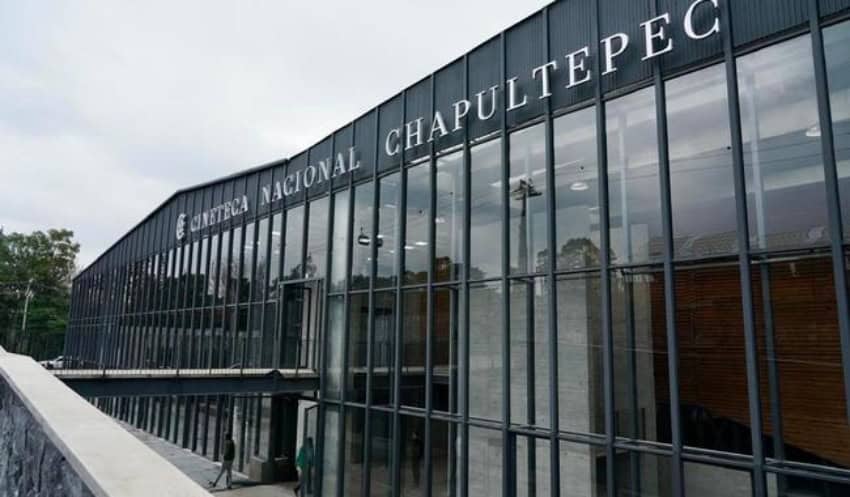
The main draw here is the Cineteca Nacional Chapultepec, the second location of the beloved Cineteca Nacional in Coyoacán. The programming leans artsy and international, with thoughtfully curated films and occasional exhibitions. Compared to the original location, it still feels calm and uncrowded, which only adds to the experience.
Cineteca Nacional Chapultepec, the second location of the beloved Cineteca Nacional in Coyoacán. (Cineteca Nacional Chapultepec)
Section IV doesn’t yet have the density of attractions found in the earlier sections, but it offers a glimpse into where Chapultepec is headed next. It’s a reminder that this park isn’t frozen in time. It’s still growing, still expanding, and still making room for new ways to experience culture and nature side by side.
Chapultepec, my love
I’m a sucker for parks and green spaces, and wherever I travel, I always find myself drawn to them. Not in a box-checking way, but because parks reveal how a city rests, plays and takes care of itself. I’ve been lucky to experience many beautiful ones, but Chapultepec stands apart. Its layers of history, culture and everyday life make it feel deeply alive.
What I love most about Chapu is that it has always been a place of leisure, not just power or history. It’s a space where Mexico City feels comfortable being playful in public, where fountains & mascot souvenirs can be a little absurd, where families linger for hours, and where nature is woven into daily life. This is where I come to slow down, breathe and reconnect. That’s why it feels like my backyard. Not because it’s close to home, but because it’s where I return to myself.
Rocio is a Mexican-American writer based in Mexico City. She was born and raised in a small village in Durango and moved to Chicago at age 12, a bicultural experience that shapes her lens on life in Mexico. She’s the founder of CDMX IYKYK, a newsletter for expats, digital nomads, and the Mexican diaspora, and Life of Leisure, a women’s wellness and spiritual community.
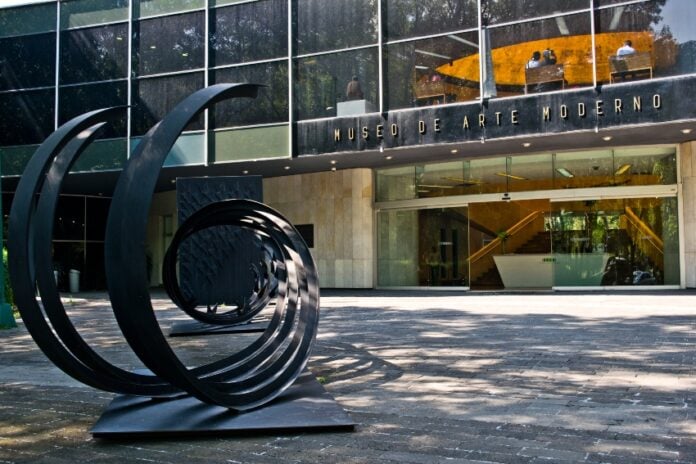
A selection of the Gelman collection will be displayed in an exhibit at the Museo de Arte Moderno in Mexico City through May 17. (Gobierno CDMX)
Amidst the bustle of the Mexican fair in Madrid, a bureaucratic subplot was unfolding: The greatest private collection of Mexican modern art was being handed over to a Spanish bank for an indefinite period. This was the mysterious and once “lost” Gelman collection, in which big artists like Frida Kahlo, María Izquierdo, Diego Rivera, David Alfaro Siqueiros and others found a home for their artwork.
But before going abroad, it was announced that the Gelman collection will have a three-month exhibit at the Museo de Arte Moderno in Mexico City.
Jacques and Natasha Gelman
Jacques and Natasha Gelman assembled one of the world’s greatest art collections, but controversy has surrounded it since their deaths. (Gelman Collection)
As the children they couldn’t have, Jacques and Natasha Gelman raised their collections to be among the most important of the 20th century. Although two collections grew together, parallel to the interests of Jacques and Natasha, we should rather consider them part of a trio because they created a third collection of pre-Columbian sculpture whose location is nowhere to be found to this day.
Let’s talk about the ones we do know about: The Gelmans were passionate about European art, as both came from Eastern Europe, which led them to build a collection of the European Masters. A selection of 47 paintings displayed works by Matisse, Picasso and Miró, and was exhibited at the Metropolitan Museum of Art (MET) in 1989. In 2001, the MET became the permanent home of this collection after the Gelmans’ death, following negotiations with executor Robert Littman. As William S. Lieberman wrote in his introduction to the catalogue:
“Although acquired for personal enjoyment and never intended as a survey, the Gelmans’ choice of European paintings and drawings is astonishingly coherent. Its quality is superbly sustained, and I find it difficult — perhaps impossible — to suggest any other private selection similarly defined in focus that is of comparable caliber.”
The art collections
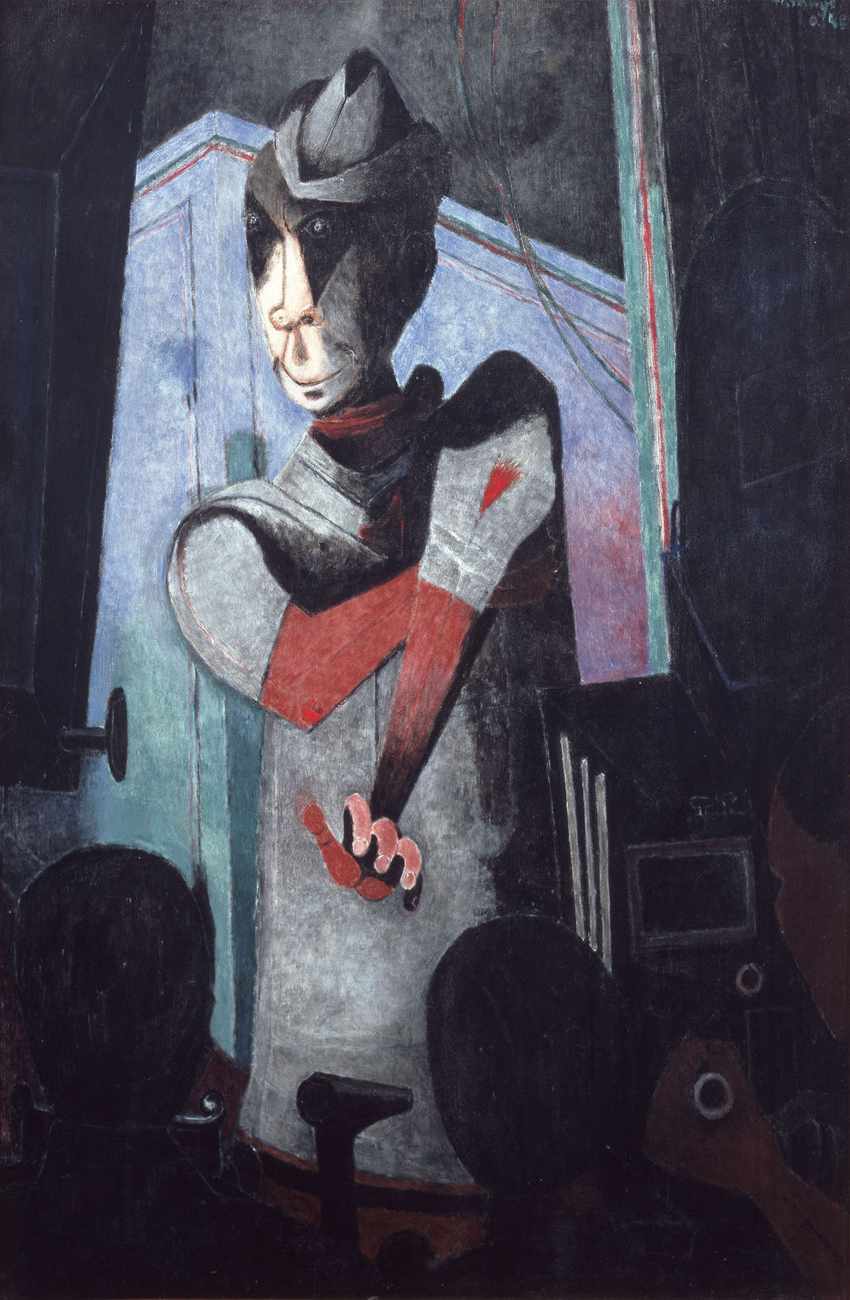
A portrait of the legendary Mexican actor Mario Moreno as his beloved character Cantinflas, painted by Rufino Tamayo. (Fundación Santander)
On the other hand, the couple gathered artworks from their chosen home, Mexico, where they met after Jacques emigrated here in 1938. They later married in 1941. This was the year when their collections were born.
Upon his arrival in Mexico, Jacques became one of the most important producers of Mexican film history. Along with actors Mario Moreno and Santiago Reachi Fayad, he helped to create Cantinflas, an iconic character in “Golden Age” Mexican Cinema.
Gelman became wealthy from the movies, as well as a good friend of Moreno. As they grew closer, Moreno introduced Gelman to the group of intellectuals he belonged to, which included Rufino Tamayo, David Alfaro Siqueiros and Diego Rivera and Frida Kahlo.
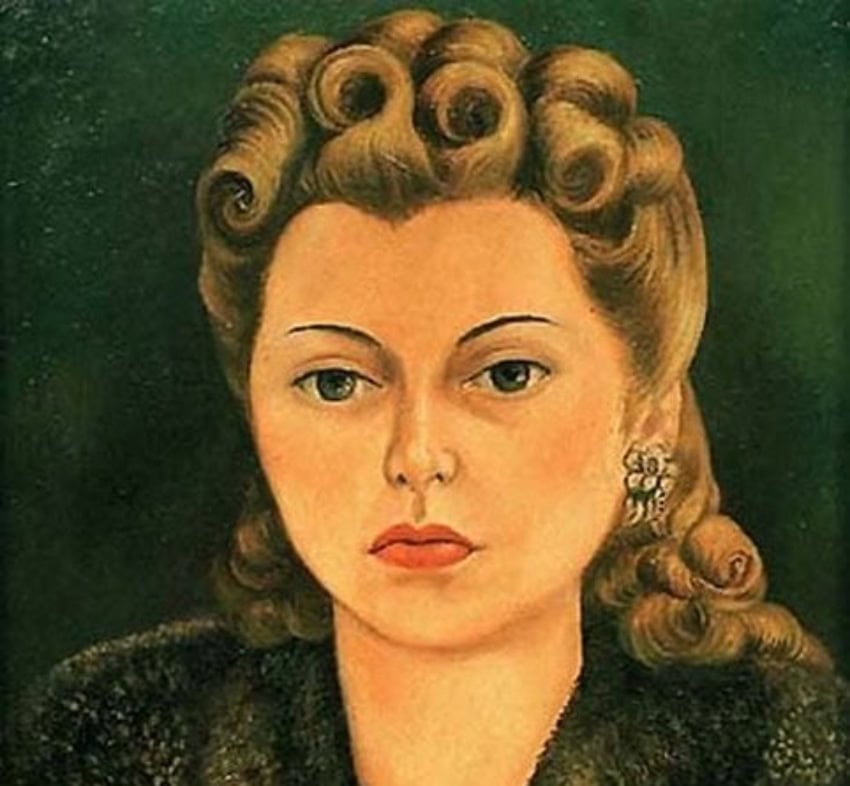
From here, the Gelmans started not only collecting art but also commissioning portraits from these artists. Natasha was painted by Rivera, Kahlo and Siqueiros, among many other artists, making these artworks statement pieces of the collection.
“There are two kinds of collectors: those who own a collection and those who are owned by it. Jacques and Natasha Gelman were the latter,” said art historian Pierre Schneider, a friend of the Gelmans.
A lost archive
A portrait of Natasha Gelman, done in 1943 by Frida Kahlo. (Facebook)
Jacques and Natasha dedicated their lives to the Mexican collection, but the story took a turn after Jacques died in 1986. An 88-year-old widowed Natasha began to suffer from Alzheimer’s disease. That was when a secondary character became the face of the collection and, therefore, of the doubts that came to surround it: Robert Littman.
Littman was no newcomer in the art world. He had been the director of Museo de Arte Contemporáneo Rufino Tamayo and an art advisor to the late Televisa owner Emilio Azcárraga and his wife, Paula Cusi. Littman had been acquainted with Jacques, a Tamayo Museum board member, since the early 1980s, when Littman joined the museum board.
Littman was, for years, a great friend to Jacques and Natasha, so it was not entirely surprising that he was named the trustee for the Gelman estate, though there are some loose ends to this version of the story. Littman began taking liberties that the Gelmans may not have agreed with, such as expanding the collection after both were deceased and selling pieces of it, even though Natasha and Jacques had stated that all the pieces should stay together.
Littman’s stewardship of the Mexican collection
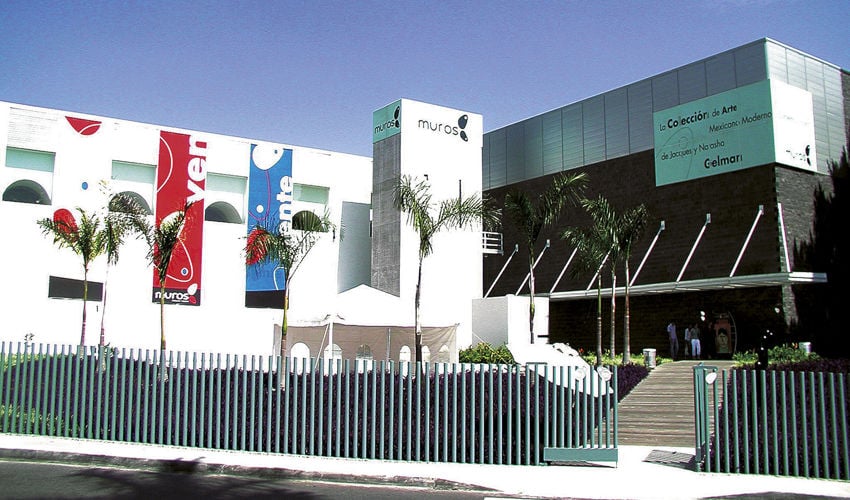
The Gelman Mexican collection was briefly exhibited in 2004 in the Gelmans’ last home of Cuernavaca, at the newly created Muros cultural center. But controversy took it out quickly.
After the Gelmans’ deaths, the Mexican government offered to design a space for their permanent exhibition at the Museo Nacional de Arte (MUNAL), and just like at the MET, that space would bear the Gelmans’ names. But Littman refused, saying that Natasha had asked that the collection remain in private hands. So instead, the Fundación Cultural Parque Morelos was founded to be in charge of managing the artworks.
“The understanding between us was that the collection would eventually find a safe and secure state-of-the-art private facility to house it within the borders of Natasha’s adopted land, Mexico,” explained Littman in the catalogue of the Gelman collection, edited for its first exhibition in 2004 at the Muros center in Cuernavaca.
Littman stated that the collection was “coming home” because the pieces had finally found a permanent, private abode in Cuernavaca, where the Gelmans spent their last years. But there was a lot of buzz around this museum because it was built on the land that had once belonged to the old Casino de la Selva, a historic building in Cuernavaca. The movement for the historic building’s protection and the rumors around the Gelman collection made this exhibit ephemeral, lasting just a few weeks.
After that, Littman (using his newly created Fundación Vergel) continued to be in charge of the collection, but not without issues. The artworks stepped out of the public eye, making them difficult to track with only hints now and then: an exhibit in Australia, a strange auction at Sotheby’s, an allegation from Natasha’s brother and only heir, and even a claim by Mario Moreno’s family, who declared Jacques and Mario had arranged for the latter to be in possesion of the pieces once Gelman died. That, of course, never happened.
After all these issues, Littman ultimately sold the collection to Lorenzo Zambrano, a member of the family that founded CEMEX, an important building materials company in Mexico.
A broken last will
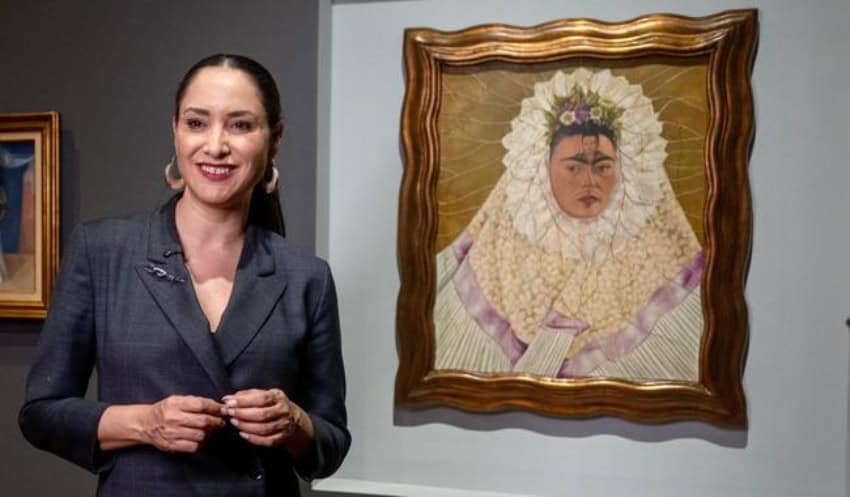
Mexico’s Secretary of Culture, Claudie Curiel de Icaza, inaugurated the new exhibition, “Relatos modernos: Obras emblemáticas de la Colección Gelman Santander,” currently showing at the Museo de Arte Moderno in Mexico City on Feb. 16. (Gobierno de Mexico)
Now we have a completely different scenario: Fundación Santander, the cultural wing of the Spanish bank, recently announced that the Gelman collection would be exhibited at its new facilities for an undetermined period.
This breaks one of Natasha’s requests that the artworks stay in Mexico, although it is not an isolated case: Dolores Olmedo’s collection (which also includes works by Mexican masters) was in a similar situation when it was almost removed from its official site in Xochimilco, Mexico City. The reopening of her museum is planned for 2026.
As for the collection’s new manager (Zambrano is still the owner), Santander has stated that everything about the transition has gone smoothly and under the supervision of the Instituto Nacional de Bellas Artes y Literatura (INBAL). But doubts have been raised about whether the temporary, undefined period of custodianship by Santander should happen at all.
A short stop in Mexico City
The announcement of the collection’s display at Museo de Arte Moderno in Mexico City has definitely taken us by surprise, since neither Bellas Artes nor the Santander Foundation mentioned it in the first press releases. Now, 68 of the 160 pieces that will be sent to Spain will be available for viewing in Mexico in the exhibit “Relatos modernos. Obras emblemáticas de la Colección Gelman Santander,” which will be open from Feb. 17 to May 17, 2026.
Lydia Leija is a linguist, journalist and visual storyteller. She has directed three feature films, and her audiovisual work has been featured in national and international media. She’s been part of National Geographic, Muy Interesante and Cosmopolitan.
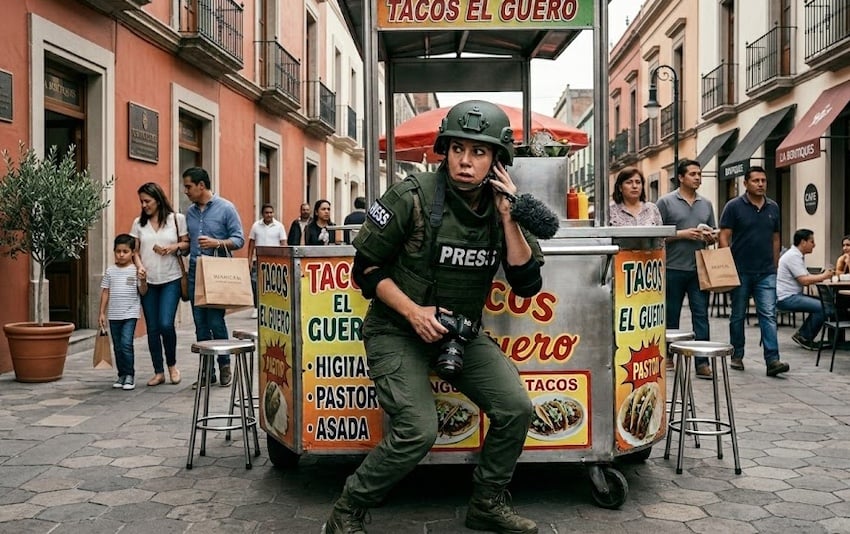
CABO SAN LUCAS — As violence grips the imagination of U.S. cable news, a rotating cast of American correspondents continued their courageous on-the-ground reporting from the swim-up bar of a five-star Los Cabos resort this week, pausing occasionally to describe Mexico as “a nation on the brink.”
“The situation here is frankly terrifying,” Fox News correspondent Brad Whittaker told viewers Tuesday, adjusting his linen shirt as a waiter arrived with his second poolside margarita. “Ordinary Mexicans are living in fear.” Behind him, several ordinary Mexicans could be seen arranging towels on sun loungers.
“Day 3 of the conflict and the people of Tijuana are running low on tacos”
Within hours of the Mexican government asserting control over Mexico, no fewer than twelve U.S. television crews had touched down in Jalisco, spreading out across the state to document a collapse that locals were, frustratingly, completely oblivious to. CBS correspondent Jennifer Mallory delivered a solemn live shot outside a shuttered shopfront, which locals confirmed was closed because it was Wednesday afternoon.
“The mood here is one of barely concealed dread,” Mallory reported, as a family behind her took a selfie in front of a fountain.
ABC News ran continuous breaking news coverage under the banner “MEXICO MELTDOWN,” crossing live to their correspondent in Cancún, who described the atmosphere in Guadalajara as “extremely volatile” from a distance of some 700 miles, pausing twice to reapply sunscreen.
The New York Times dispatched a four-person investigative team, which filed an 8,000-word piece on the fragility of the Mexican state that quoted eleven U.S. security consultants, three Mexican government officials, and zero people from Jalisco.
CNN, for its part, assembled a panel of experts to discuss what comes next, a segment that featured the phrases “power vacuum,” “tipping point,” and “this changes everything” a combined nineteen times in forty minutes.
On the ground in San Miguel de Allende, lifestyle influencer @Expat_Awakening_Brad posted a seventeen-minute Instagram Live from the courtyard of the local Starbucks, interviewing American and Canadian retirees about how they were coping with the psychological toll of the crisis.
Mexican security analysts noted that similar coverage had followed every major cartel disruption since 2009, and that the cartel had subsequently continued to operate on each occasion. This observation did not make it onto the panel.
Tourism officials noted that U.S. visitor numbers remain near record highs, suggesting that American tourists are considerably less alarmed by Mexico than American journalists are.
Puerto Vallarta hotel occupancy remains at 94 percent.
Sheinbaum said she spoke to Trump about the operation targeting "El Mencho" and mentioned to him that Mexico received intelligence from the U.S. government that assisted it. (Andrea Murcia/Cuartoscuro)
Much of President Claudia Sheinbaum’s Wednesday morning press conference was taken up by the presentation and discussion of the federal government’s electoral reform proposal, which will be submitted to Congress next week. (Read MND’s report here.)
During her Q&A session with reporters, Sheinbaum revealed that she spoke to U.S. President Donald Trump the day after Jalisco New Generation Cartel leader Nemesio “El Mencho” Oseguera Cervantes was fatally wounded during a military operation in Jalisco.
She also acknowledged that high-ranking Mexican and U.S. officials held a security meeting at the National Palace on Tuesday.
Sheinbaum reveals she spoke to Trump after operation targeting ‘El Mencho’
Sheinbaum said that Trump called her on Monday to ask her, “‘What’s happening in Mexico? How are things? Are you OK?'”
She said that the call — which took place the day after the death of “El Mencho” triggered a violent cartel reaction across 20 states — lasted eight minutes.
Sheinbaum said she spoke to Trump about the operation targeting “El Mencho” and mentioned to him that Mexico received intelligence from the U.S. government that assisted it.
She also said she told the U.S. president that bilateral security coordination is going “very well.”
“… That’s how it was, the short call, to see how things were in Mexico,” Sheinbaum said.
📞La presidenta @Claudiashein informó que anteayer sostuvo una llamada telefónica con Donald Trump en la que preguntó por la situación del país.
La mandataria dio a conocer que por el momento no contempla una reunión con el republicano. pic.twitter.com/s2DiGYbdAB
She said that she and Trump currently have no plan for a bilateral, in-person meeting.
The operation against Oseguera in an exclusive residential estate in Tapalpa, Jalisco, on Sunday came as the Trump administration continues to pressure Mexico to do more to combat cartels and the narcotics they traffic to the United States.
“Mexico must step up their effort on Cartels and Drugs!” Trump wrote on social media the day after “El Mencho” was killed.
During his State of the Union address on Tuesday night, he appeared to play up the United States role in the operation against Oseguera, saying “we’ve also taken down one of the most sinister cartel kingpins of all — you saw that yesterday.”
“I regret that Sheinbaum took action against ‘El Mencho’ solely because of pressure from the U.S. government. Across all of Mexico, we know that this operation was carried out because the U.S. government was exerting pressure and pointing out that cartels rule Mexico,” she said in the Senate.
“Sheinbaum was forced to do something because she could no longer withstand the pressure. It’s a shame that Sheinbaum doesn’t act out of conviction,” Téllez said.
The PAN senator is in favor of the U.S. military coming into Mexico to combat cartels, and has asserted that “the cartels are partners of Morena,” the party that was founded by former president Andrés Manuel López Obrador and which Sheinbaum represented in the 2024 presidential election.
The US ambassador and drug czar met with Mexican officials
Sheinbaum noted that U.S. Ambassador to Mexico Ron Johnson and Sara Carter, director of the U.S. Office of National Drug Control Policy (ONDCP), met with members of the federal government’s security cabinet on Tuesday.
“It was a friendly meeting,” she said, adding that it was not organized “recently,” but had been planned for some time.
The meeting was held as part of the security “understanding” Mexico has with the United States,” Sheinbaum said.
The president, who said she didn’t attend the meeting, acknowledged that Carter congratulated the Mexican government for the operation against “El Mencho.”
“That’s what they told me this morning,” she said, referring to members of the security cabinet.
The cabinet — which includes Mexico’s military leaders, the security and interior ministers and the federal attorney general — said on social media that the “high-level meeting” was “very productive.”
The cabinet said that Mexico and the U.S. reaffirmed their commitment to “bilateral collaboration for the benefit of our nations within a framework of respect for sovereignty and cooperation based on mutual trust.”
Johnson said on social media that the U.S. and Mexico are “working together to stop the scourge of fentanyl and dismantle the networks that poison our communities.”
The ONDCP said that Carter and Johnson “met with Mexican military and security leadership to commend them on the successful operation targeting Nemesio ‘El Mencho’ Oseguera Cervantes.”
“‘El Mencho’ led Cártel Jalisco Nueva Generación (CJNG), a Foreign Terrorist Organization responsible for trafficking illicit drugs into the United States and threatening our national security. President Trump is delivering on his promise to strengthen our national security and save American lives!” Carter’s office added in a social media post.
By Mexico News Daily chief staff writer Peter Davies (peter.davies@mexiconewsdaily.com)
The proposed electoral reform amends the Constitution and therefore needs two-thirds majorities in both houses of Congress, meaning Morena will have to keep its two congressional allies (the Green and Labor Parties) in line to get the reform passed without defections from the main opposition party, the PAN. (Michael Balam/Cuartoscuro)
Reducing the number of federal senators from 128 to 96 and cutting election costs by 25% are among the objectives of the federal government’s electoral reform proposal.
The constitutional reform proposal was unveiled on Wednesday, ahead of its submission to Congress next Monday.
As executive president of the Presidential Commission for Electoral Reform, longtime politician Pablo Gómez is one of the architects of the proposed reform. (Andrea Murcia/Cuartoscuro)
“Rosa Icela [Rodríguez], the interior minister, will present the proposal,” President Claudia Sheinbaum said at the start of her morning press conference, noting that the proposed reform has 10 key points.
Fewer lawmakers, lower election costs
Rodríguez explained that the government is proposing that the Chamber of Deputies continue to be made up of 500 lawmakers, all of whom would be directly elected by citizens, including proportional representation (plurinominal) candidates, whose names would have to appear on ballots.
Among the proposed changes to the makeup of the lower house of Congress is that eight Mexicans who live outside Mexico would become deputies.
Rodríguez said that the government is proposing a reduction in the number of senators from 128 to 96. The proposal entails the elimination of senators who are elected via proportional representation based on their party’s share of the national vote.
Rodríguez said another proposal is that the cost of elections be slashed by 25% by reducing the amount of resources allocated to the National Electoral Institute, political parties, local electoral bodies and electoral tribunals.
In 2024, when Mexico’s last federal election was held, 61 billion pesos (US $3.55 billion) was spent on “Mexico’s electoral systems,” said Pablo Gómez Álvarez, head of the presidential commission for the electoral reform. He asserted that Mexico’s per-voter election expenses are higher than those of any other country.
Presenting the third “point” of the proposed reform, Rodríguez said that the government wants greater oversight of resources allocated to and used by political parties and candidates, a measure that, in part, aims to prevent organized crime groups from funding campaigns.
The other aims of the proposed reform are to:
Facilitate the voting process for Mexicans abroad.
Reduce political parties’ permitted per-day advertising time on TV and radio.
Regulate the use of artificial intelligence “in relation” to elections and ban the electoral-related use of bots on social media.
Modify the vote-counting system.
Increase “participatory democracy,” including via the use of electronic voting.
Prevent elected positions being filled by relatives of existing officeholders starting in 2030.
Ban politicians from seeking immediate reelection to all positions of public office starting in 2030.
The last two points have already been approved by Congress in separate legislation, but the government nevertheless decided to include them in this reform proposal in order to “reiterate” their importance.
Sheinbaum: ‘We don’t want a state party, we don’t want a single party’
Sheinbaum noted that the reform proposal seeks to eliminate “party lists for proportional representation” of deputies and senators that are not subject to endorsement or rejection by voters.
Mexico’s current plurinominal lawmakers — 200 in the Chamber of Deputies and 32 in the Senate — were not directly elected by citizens, but rather acquired their positions via selection by the parties they represent. Under the government’s proposal, the names of plurinominal candidates selected by parties would appear on ballots.
Sheinbaum said that polls and consultations with citizens have found that people don’t want leaders of political parties to remain as deputies and senators without winning their position via the popular vote.
“We don’t want a state party, we don’t want a single party,” she said, responding to claims put forward by opposition parties even before the proposed electoral reform had been unveiled.
Interior Minister Rosa Icela Rodríguez will officially deliver the electoral reform proposal to Congress next week. (Andrea Murcia/Cuartoscuro)
“We want the political diversity of our country to be recognized in accordance with the votes cast in the election,” Sheinbaum said.
“There is just one thing in particular — everyone has to go out into the territory to earn their votes, everyone. Nobody can stay at home, relaxing, waiting to be number 1 on … [a party’s] proportional representation list,” she said.
“… Everybody has to seek the popular vote — those who go for direct [election] and those who go for the representation that corresponds to the percentage of their party [vote].”
Sheinbaum said that reducing election costs is also a “popular demand,” adding that savings could be allocated to education, health care and welfare programs.
“[There is] excessive spending on elections in Mexico, we have to reduce it,” she said.
“… There are a lot of needs in the country, many,” Sheinbaum said before asserting that cutting costs will not have a detrimental impact on elections or the autonomy of the National Electoral Institute.
Will the reform proposal pass Congress?
As the proposal seeks to modify the Mexican Constitution, it must be approved by two-thirds of lawmakers in both houses of Congress in order to become law.
Thus, the ruling Morena party will need to convince its two congressional allies, the Labor Party (PT) and the Green Party (PVEM), to support the proposal. Those two parties have expressed reservations about proposals to cut electoral funding and change the way in which proportional representation candidates are elected.
Morena may need to make concessions to those parties to get the legislation through Congress.
Sheinbaum said she did not yet know whether the reform proposal will be submitted first to the Chamber of Deputies or the Senate. Both houses of Congress could modify the constitutional bill before voting on it.
The national president of Mexico’s main opposition party, the National Action Party (PAN), said on social media on Wednesday that the PAN won’t support an electoral reform that doesn’t include sanctions for parties that use money that comes from organized crime.
“Without free and fair elections, there is no democracy,” Jorge Romero Herrera wrote on X.
According to Reuters, PAN Senator Ricardo Anaya said he believed the government’s arguments concerning party lists and funding were a “smokescreen.”
“The government’s goal is not to have more democracy, it is to have control of the electoral processes,” he said.
By Mexico News Daily chief staff writer Peter Davies (peter.davies@mexiconewsdaily.com)
Mexican filmmaker Ernesto Eimbcke directed "Moscas" ("Flies") which won two awards at the recently concluded Berlinale film fest. (Shutterstock/DDCM)
Mexican cinema left a strong mark on the recently concluded 76th Berlin International Film Festival, where the features “Moscas” and “Chicas tristes” earned awards for presenting stories of intimacy, youth and violence from Mexico.
“Moscas” (“Flies”), directed by Fernando Eimbcke won the festival’s Ecumenical Jury Prize and the Berliner Morgenpost Reader Award.
It was also in competition for the Golden Bear, the festival’s top prize, which went to “Yellow Letters” by German director İlker Çatak.
Meanwhile, “Chicas tristes” (“Sad Girls”) won two best film awards in Generation 14plus, a category dedicated to young audiences. One, the Crystal Bear, was awarded by a youth jury, and the other, the Grand Prix, was decided upon by a jury of film professionals and came with a prize of 7,500 euros (151,870 pesos).
Fernanda Tovar’s feature-length directorial debut, which she also wrote, is about two teenage friends confronting the aftermath of sexual violence.
The 90-minute film drew praise from jurors for its calm, uncertainty and strength, and for depicting friendship and solidarity frame by frame.
Producer Daniel Loustaunau said the awards were dedicated “to all the resistance movements and young people who fight against genocide, forced displacement and violence,” in comments to the newspaper El Universal.
Eimbcke’s “Moscas” is a 99-minute drama-comedy that follows an introverted woman who shares her home with a father and his young son so they can be near their wife/mother, who is hospitalized with advanced cancer.
The film, which charts an unlikely bond that grows out of grief and routine, has already secured distribution in Germany, France, Spain, Portugal and Switzerland, according to El Universal.
Onstage in Berlin, Eimbcke — whose coming-of-age film “Olmo” drew praise but didn’t win any prizes at the 2025 Morelia International Film Festival — used his acceptance speeches to link the emotional core of “Moscas” to global crises.
He denounced the persecution of migrant children by U.S. Immigration and Customs Enforcement and cited the case of a 5-year-old Ecuadorian boy detained with his father in Minnesota. The man born in Mexico City in 1970 also urged action over the war in Gaza.
“More than 17,000 children have been killed in Gaza in the last two years. I must raise my voice and I ask all governments and organizations to raise their voices as well,” he said in remarks reported by the newspaper La Jornada. “This award is dedicated to all children around the world.”
Beyond the prizes, Mexican work was visible across the Berlinale — a shorthand name for the Berlin International Film Festival.
Other Mexican works included the youth-focused short “When I Get Home” and the short documentary “Miriam,” as well as nine Mexican filmmakers who were selected for the Berlinale Talents training program.
Jobs lost to automation won't be evenly dispersed across sectors. Most at risk are positions in administrative services, retail, routine manufacturing and transportation. (Daniel Augusto/Cuartoscuro.com)
Some 30% of formal jobs in Mexico are at high risk of automation if companies adopt Artificial Intelligence (AI) solutions, according to a recent report by Banamex.
The report from the bank’s Economic Studies Department, dubbed “AI and the Mexican Labor Market: An Analysis of Sectoral Impact,” warns that the adoption of AI will not affect all sectors equally. The jobs most at risk are in administrative services, retail, routine manufacturing, and transportation.
Nuevo León Governor Samuel García, shown here participating in the recent event “AI + Accelerated Investment,” is an advocate of Artificial Intelligence and one of Mexico’s most successful state leaders in attracting foreign investment. (Daniel Augusto/Cuartsocuro.com)
In contrast, jobs that require complex human interaction, creativity, negotiation, or non-routine physical work are less replaceable and will more likely be complemented, rather than replaced, by AI.
Banamex economist Rodolfo Ostoloza, who conducted the research, noted that “Mexico faces significant institutional deficits […] requiring profound reforms to maximize the benefits and mitigate the risks of AI.”
He suggests retraining displaced workers and equipping them to complement AI, with the objective of “transforming the threat of job displacement into a productivity opportunity.”
Informal employment, which accounts for almost 55% of the Mexican workforce, could temporarily absorb those who lose their jobs in the formal sector. However, the report notes that “it comes at the significant cost of perpetuating low productivity, excluding workers from social protections and limiting tax collection.”
According to projections from the World Economic Forum (WEF) and studies by ManpowerGroup, more than 78 million new jobs are expected to be created globally by 2030. These positions will be concentrated in high value-added areas such as cybersecurity, Big Data analytics, renewable energy, and the growing demand for professionals in mental health, well-being, and user experience.
So far, Mexico reports that 69% of companies have increased their investment in automation, with effects on IT, sales and marketing.
Alberto Alesi, managing director of ManpowerGroup for Mexico, the Caribbean and Central America, said earlier this year that the transition towards automation globally reflects a structural change in which technology acts as a catalyst for new job opportunities. However, he notes that it depends on the talent’s ability to adapt to the new demands.
Banamex concludes that Mexico has a window of opportunity to prepare before the mass adoption of AI. The report highlights that the difference will be in investing in education, training, social protection and digital infrastructure so that AI works as a tool for inclusive development and not as an engine of greater inequality.
Asked whether Mexico would therefore resume the shipment of oil to Cuba, the president indicated that her government would make an announcement on the matter soon. (Foreign Affairs Ministry)
Mexico has sent a new shipment of humanitarian aid to Cuba, a country plagued by fuel and food shortages and frequent blackouts.
The Ministry of Foreign Affairs (SRE) said on Tuesday that two Mexican Navy ships carrying 1,193 tonnes of provisions had set sail for Cuba from the Gulf coast port city of Veracruz.
The Papaloapan and Huasteco logistics support vessels are expected to take four days to reach Cuba, meaning they should arrive this Saturday.
The SRE said that the Papaloapan is carrying 1,078 tonnes of provisions, including beans and powdered milk. The ministry said that the Huasteco is carrying 92 tonnes of beans and 23 tonnes of other foodstuffs that were donated by “various social organizations.”
The SRE said that the food aid has been dispatched to Cuba on the instructions of President Claudia Sheinbaum, who has pledged to continue supporting the communist-run Caribbean island.
“The people of Mexico maintain their tradition of solidarity with the peoples of Latin America, and in particular with the people of Cuba,” the ministry said.
“Our country has always provided assistance to our sister nations in need,” the SRE said, noting that Mexico has contributed to the response to recent natural disasters in various countries of the Americas, including Chile and the United States.
The departure of those two vessels on Feb. 8 came 10 days after U.S. President Donald Trump announced that the United States would impose additional tariffs on goods from countries that supply oil to Cuba.
Sheinbaum said that the move — apparently aimed at accelerating regime change in Cuba — “could trigger a humanitarian crisis of great reach, directly affecting hospitals, food supply and other basic services for the Cuban people.”
Mexico — the largest supplier of oil to Cuba in 2025 — suspended shipments of oil to the communist-run island in order to avoid the imposition of additional tariffs on its exports to the United States.
🇲🇽 🇨🇦 🇨🇺 ÚLTIMA HORA: La presidenta mexicana, Claudia Sheinbaum, confirmó esta mañana que el fallo de la Corte Suprema de Estados Unidos eliminó la amenaza arancelaria contra México por los envíos de petróleo a Cuba. Al preguntársele si se reanudarían las exportaciones, Sheinbaum… pic.twitter.com/YfTWWORVcW
Asked whether Mexico would therefore resume the shipment of oil to Cuba, the president indicated that her government would make an announcement on the matter soon.
“I have to say emphatically that people are going hungry in Cuba,” she said.
In addition to people rummaging through rubbish to find something to eat and “starving” seniors begging for money so they can buy food, other sectors of the Cuban population, including children, young people and pregnant women, are also suffering from a “nutritional deficit,” said Sánchez, founder of the Cuban news site 14 y medio.
“Many of them [only] eat once a day,” she said.
“Others, unfortunately can’t satisfy their desire to put something in their mouth during the day,” Sánchez added.
“… All this creates a series of very serious health problems,” she said.
The New York Times reported last Friday that people in Cuba “are struggling with frequent blackouts, shortages of gasoline and cooking gas and dwindling supplies of diesel that power the nation’s water pumps.”
“Trash is piling up, food prices are soaring, schools are canceling classes and hospitals are suspending surgeries,” reported the Times in an article headlined “A New U.S. Blockade is Strangling Cuba.”
“While President Trump has pledged to halt any oil headed to Cuba, the Trump administration has stopped short of calling its policy a blockade. But it is functioning as one,” the report said.
France 24 reported on Wednesday that “in response to the energy crisis, the Cuban government is implementing a four-day workweek and restricting fuel sales.”
“Ordinary Cubans are struggling to adapt. Vehicle owners are limited to 20 liters of petrol purchased through an app with long wait times,” the television network reported.
No fuel, no tourists: What's at stake for Cuba? | The Current
Frances Robles, a New York Times journalist who has reported extensively on Cuba, said Wednesday that “the situation in Cuba right now is just unsustainable.”
“… The government doesn’t have gasoline, you have shortages at state food stores, and you have blackouts that are lasting hours and hours every day,” she said.
“… Most experts say it’s nearly impossible to know how long they can last without oil coming into Cuba. But what is already a really bad crisis is expected to escalate to unprecedented proportions within a matter of weeks,” Robles said.
“… One thing that has really surprised me in all the interviews that I’ve done is that a lot of people actually do think that this could be the year the [Cuban communist] regime ends — either because of social unrest on the streets or because of some kind of negotiated solution that the Cuban government is going to be forced to accept,” she said.
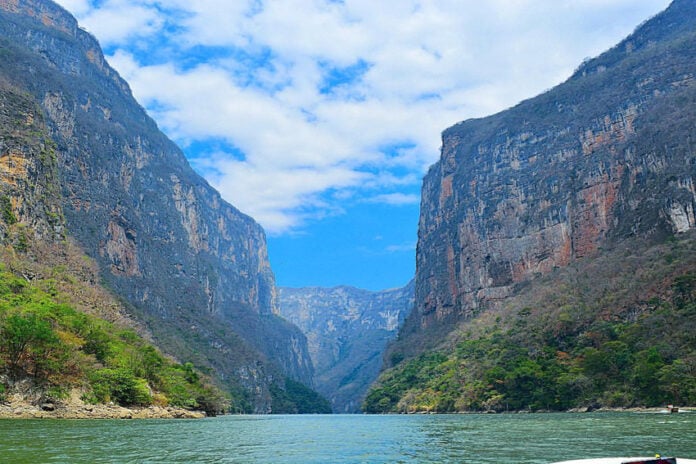
Mexico's Sumidero Canyon National Park in Chiapas is just one of countless breathtaking sites of natural beauty to be found all over Mexico. (Government of Mexico)
When Nemesio “El Mencho” Oseguera, leader of the Jalisco New Generation Cartel, was killed by Mexican special forces on Sunday, it was just two days after I had returned home to Canada from my latest Mexican trip to see family and have some fun. As a Mexican Canadian, I visit Mexico fairly regularly.
Armed with photos and videos of good times I’d had in Mexico City and Puerto Escondido, I was ready to tell all my friends and coworkers on Monday morning how incredible Mexico is. Then El Mencho happened.
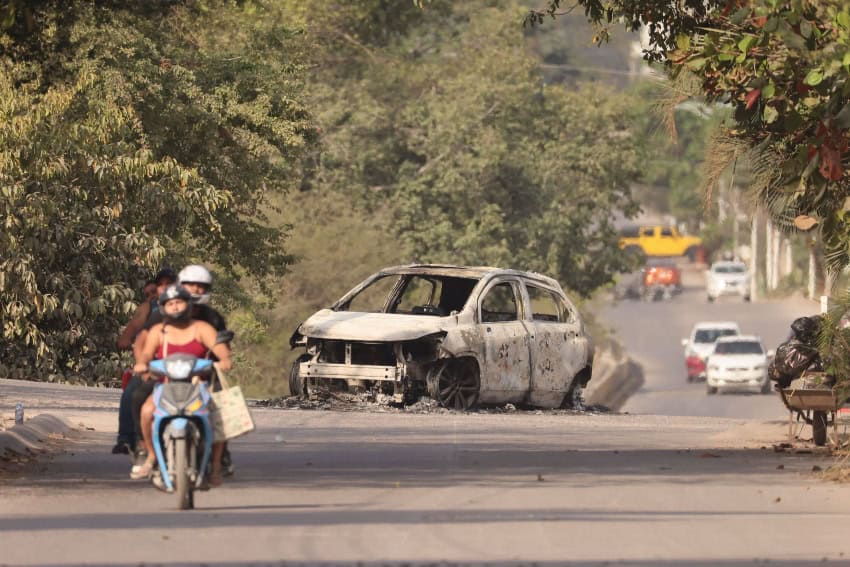
Cleanup efforts are underway in Puerto Vallarta as the popular Pacific Coast tourist destination and other cities in Jalisco seek to get back to normal following Sunday’s unrest. (Héctor Colín/Cuartoscuro)
A change of image overnight
Soon after his death was reported, televisions and newspapers around the world were filled with images of Mexican cities in lockdown, of fiery road blockades, of shootouts. So by the time I resumed my daily life on Monday, all people back home in Canada wanted to ask me about was the cartels.
It disappoints me, since El Mencho’s death and the resulting unrest reinforces negative stereotypes about Mexico for those who have never been there. Friends have been asking me in the last 24 hours more than ever if Mexico is safe. And it angers me that I can’t debunk their concerns since they’re not exactly unwarranted this week.
Even more frustrating is that now, whenever I speak glowingly about the country I love, people who have never been to Mexico can knock it down simply by bringing up El Mencho.
Since I’ve been in elementary school, I’ve always told my friends, and whoever would listen, about my wonderful memories of Mexico. And when some of them have brought up negative stereotypes — everything from cartel violence to kidnappings to dangerously unsanitary food vendors — I’d often respond that that wasn’t my experience in Mexico, because it’s true and also because I wanted others to enjoy Mexico the way I have for the last three decades.
But how can I refute people’s concerns now, after we’ve all seen cars set on fire in Puerto Vallarta? How can I only speak about the many positives of Mexico when a friend in Guadalajara couldn’t leave his Airbnb for security reasons? Or when there were mass road blockades and school cancellations due to safety concerns in multiple Mexican states?
Mexico is getting ready to host the FIFA Men’s World Cup in June. The violence that erupted Sunday in planned host city Guadalajara and many other Mexican cities in response to the killing of El Mencho has raised concerns worldwide about the athletes’ safety.
Will the World Cup be affected?
Unfortunately, this isn’t the first time something like this has happened in Mexico, and frankly, it likely won’t be the last. The capture of Sinaloa Cartel head El Chapo in 2016 comes to mind. There’s also the first time Mexican authorities captured El Chapo’s cartel boss son, Ovidio, in 2019 and so much cartel violence erupted in Culiacán as a result that the president told the police to release Ovidio, for the public’s safety. But neither of those events has stopped me or millions of people a year from visiting Mexico.
Somehow, though, the El Mencho killing feels different. A part of that is obvious: Guadalajara is one of Mexico’s cities planning to host the World Cup in four months. Will things settle down before then? Things are basically quiet there now, but what happens if El Mencho’s cartel, the Jalisco New Generation, regroups — or if factions begin a violent turf war? The fact that I can’t say these things won’t happen is really troubling.
I saw firsthand on my recent trip how much Mexico is preparing for the World Cup this June: All the construction happening in Mexico City’s Benito Juárez Airport alone made it evident. But after the messy takedown of El Mencho, all the effort and goodwill Mexico has put into being a great co-host may go to waste. There are already issues with how the United States is treating the responsibility of hosting a World Cup, but I never thought Mexico would also pose its own set of problems.
Still, there’s a real chance that by then, the dust will have long settled and foreigners will be visiting Mexico again without a clear and present fear of cartel violence. The optimist in me also hopes that everyone who visits the host cities for the World Cup — Guadalajara, Mexico City and Monterrey — will leave with a positive impression of Mexico. The CJNG has never represented the whole country, and to have that label hanging over Mexico’s head thanks to one man is unfair.
Mexico: Too good to give up on
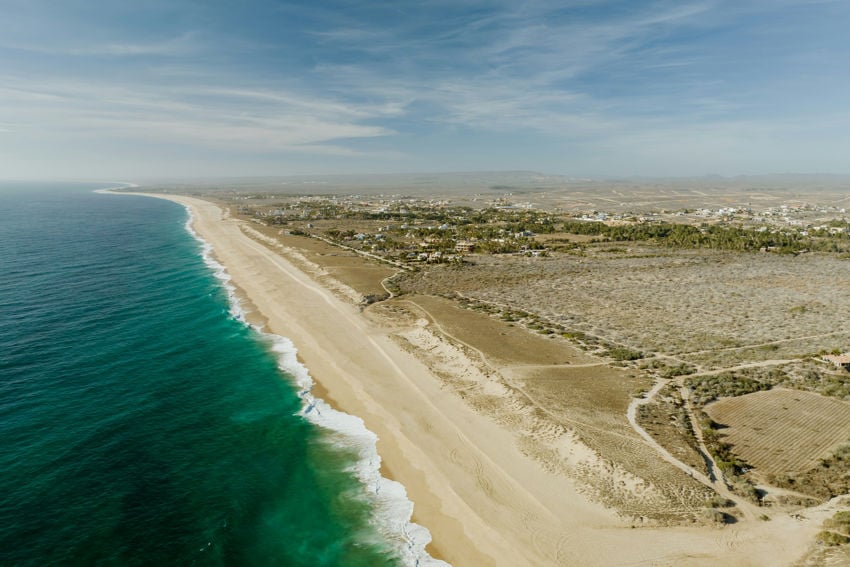
The pristine shoreline in the Pueblo Mágico of Todos Santos, Baja California Sur. (Josh Withers/Unsplash)
So, do I think Mexico will eventually overcome this moment and continue being a beloved place to visit? Yes, if only because it’s too good to ignore: the historic charms of Mexico City; the technology and innovation in Monterrey; the food culture and old traditions of Oaxaca; the ancient Maya sites all over Quintana Roo; pretty colonial towns like Merida; and, yes, the vacation energy of places like Puerto Vallarta. I haven’t even scratched the surface of all that Mexico has to offer with this list, and that’s precisely my point.
While the insecurity associated with El Mencho’s death may be front page news this week, Mexico is not down for the count.
Not only is Mexico too amazing to leave behind, the Mexico that I and so many others love is nothing if not resilient. It knows how to pick up and rebuild.
And so, despite what the world — and my friends back home — may think of Mexico right now, what I can and do say to folks who ask is that Mexico is still home to stunning natural beauty, a history going back millenia that’s studied worldwide and creative arts unlike anywhere else, all of which the cartels have never been able to destroy, or scare visitors away from for too long, no matter how many El Chapos, El Menchos and El Mayos come and go.
That’s because no matter how it might feel right now, the cartels don’t define Mexico; Mexico’s people do — the majority of whom are the kindest, hardworking, generous — and happiest — people out there.
And when El Mencho is inevitably forgotten and in the dustbin of history, this is this Mexico I’ll still be telling my friends about.
Ian Ostroff is an indie author, journalist and copywriter from Montreal, Canada. You can find his work in various outlets, including Map Happy and The Suburban. When he’s not writing, you can find Ian at the gym, a café or anywhere within Mexico visiting family and friends.