Home Blog Page 92

The tragedy of Libertad, Lake Chapala’s luxury steamboat

2
Lake Chapala
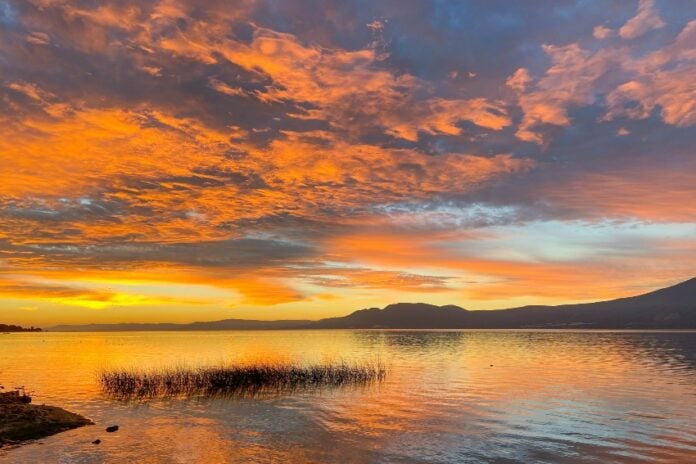
Beautiful Lake Chapala in Mexico has a tragedy in its past. (Unsplash/Paulina Vazquez)

Very few people know today that a steamship once sailed on the waters of Mexico’s largest lake. Her name was Libertad (Freedom), and her splendorous life would end abruptly on March 25, 1889, when she sank carrying 200 passengers. 

Libertad was the first steamboat to sail Lake Chapala and one of the greatest symbols of modernity in Western Mexico. The ship was inaugurated in 1868 by the Chapala Lake Steam Navigation Company, founded and managed by Scottish businessman Duncan Cameron. 

Libertad and Ocotlán
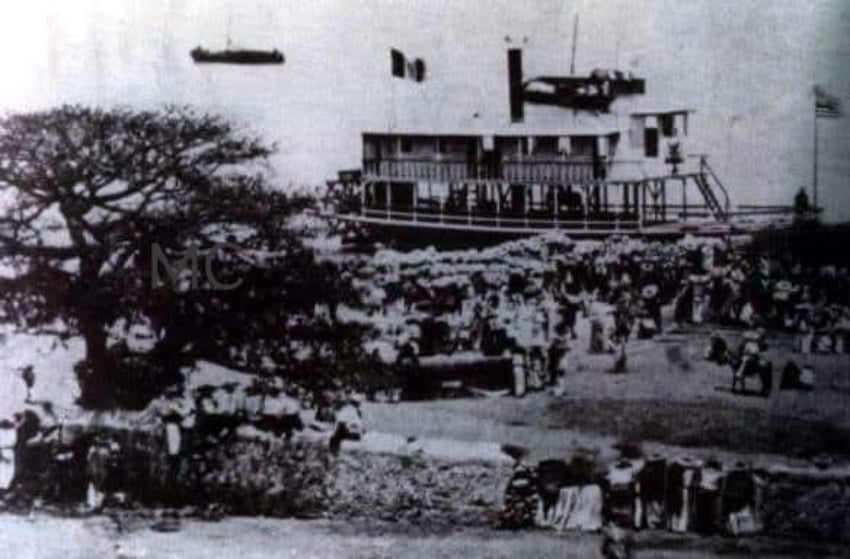
Steamboat Libertad
For two decades in the 19th century, the steamship Libertad was a popular way to travel on Lake Chapala. (Facebook)

During its golden years, Libertad was used for Sunday outings and social events from the region’s upper classes. It also carried goods from the area, such as fruits and seeds that would be merchandised to other parts of Mexico through the Ocotlán train station. 

Back then, Ocotlán was a strategic city for commerce and travel as it had a modern train station that was part of the national railway network. Ocotlán was the gateway to other parts of Mexico, including Guadalajara, Mexico City and even Ciudad Juárez in the north. 

Picture wealthy tourists from Jalisco and neighboring states stepping down from train cars at Ocotlán’s modern train station, eager to be taken to the dock to board Libertad. Once on board, travelers were treated with refreshing drinks and snacks while a band played popular songs of the time.   

Libertad’s layout and voyages 

The steamship made voyages between Ocotlán and La Barca, stopping in Chapala, Jocotepec, Jamay and Tuxcueca. Along the way, tourists enjoyed scenic views that featured mango and papaya orchards, lakeside villages and herons flitting among floating lilies. Thanks to two chain drives that powered the propeller blades at the stern, Libertad could navigate at up to 15 kilometers per hour.

The ship had three spacious levels. The first one housed the boiler, which stored firewood, coal and corncobs, while also providing space for cargo and crew. The second level was dedicated to passengers and could carry up to 100 people. Finally, the third level housed the captain’s cabin. 

Reports of the time say that Sundays were particularly busy, with many families looking to board Libertad and sail along the Ribera. It was precisely on a spring Sunday that, due to high demand and relaxed rules, Libertad welcomed more passengers than it could safely host. 

The day of the tragedy
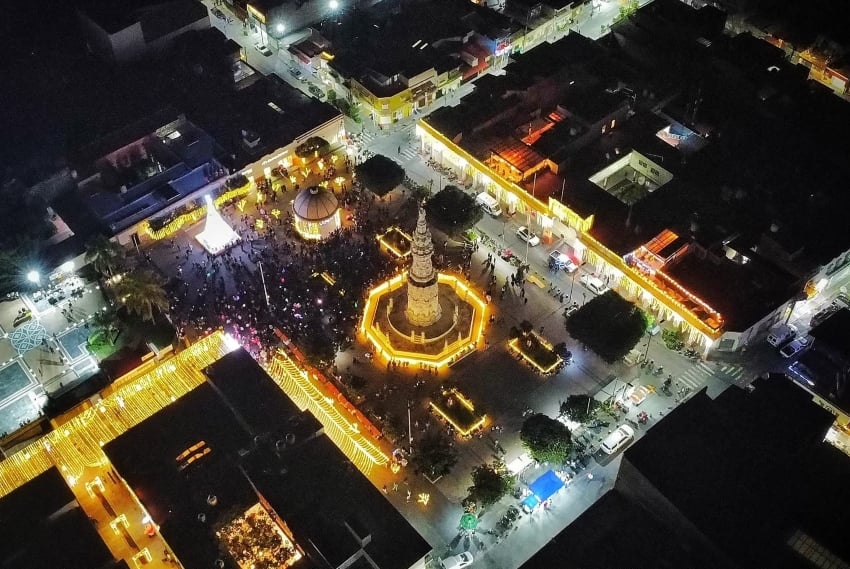
Jamay, Jalisco
Legend has it, the desecration of a temple in Jamay, Jalisco, led to divine retribution in the sinking of the Libertad. (Gobierno de Jamay)

Reports from that time say that on the day of the tragedy, the steamship was carrying some 200 passengers, including children. Legend has it that the cause of the disaster was not overbooking but rather a form of divine punishment, as the passengers had desecrated a church in Jamay.

Eyewitness accounts reveal that the passengers spent the entire morning sailing. Upon arriving in Jamay, they entered the church and began to dance. Witnesses reported that some of them desecrated the saints by placing cigarettes in their mouths and mocking the religious images.

As the steamship returned to Ocotlán before sunset, intoxicated passengers began dancing and running on an already overloaded upper deck. The violent movements caused the ship to rock, allowing water to enter the vessel.

The sinking of the Libertad

Reportedly, the ship was approaching the port of Ocotlán at approximately 4:30 pm, as it sailed the Zula River. But some 15 meters from the dock, many passengers — either frightened or eager to disembark — crowded onto the starboard side (bow), causing the ship to list. The vessel then struck a submerged tree trunk, causing those on board to fall into the water. Within minutes, the ship sank completely after water entered the boiler, creating a jet of steam that trapped those on the first deck.

The river was immediately filled with people, with entire families being swept away by the current. Laments and cries for help contrasted sharply with the merriment and laughter of just moments before.

The tragedy claimed the lives of 28 people, including children.

Teatro Degollado in Guadalajara
The heroes of the Libertad tragedy were honored in a special ceremony at Guadalajara’s Teatro Degollado. (Roman Lopez/Unsplash)

Many townspeople who participated in the rescue efforts were honored as heroes in a special ceremony on Sept. 16, 1889, at the Teatro Degollado in Guadalajara. Fifteen residents of Ocotlán received medals from General Ramón Corona, the state governor. 

A second life

Following the accident, the vessel was ultimately salvaged and taken to Chapala, where it was blessed in an effort to remove the negative impression left on the victims and residents of Ocotlán. This blessing also aimed to atone for the sacrilege committed by the passengers in the Jamay temple. 

Yet, locals refused to board Libertad again, and its owners were obliged to take it to Lake Pátzcuaro in the neighboring state of Michoacán, where it was renovated and renamed as Don Vasco. The boat had a second life and sailed on Pátzcuaro Lake well into the 20th century. 

Gabriela Solis is a Mexican lawyer turned full-time writer. She was born and raised in Guadalajara and covers business, culture, lifestyle and travel for Mexico News Daily. You can follow her lifestyle blog Dunas y Palmeras.
Residency in Mexico: What foreign buyers and sellers need to know

4
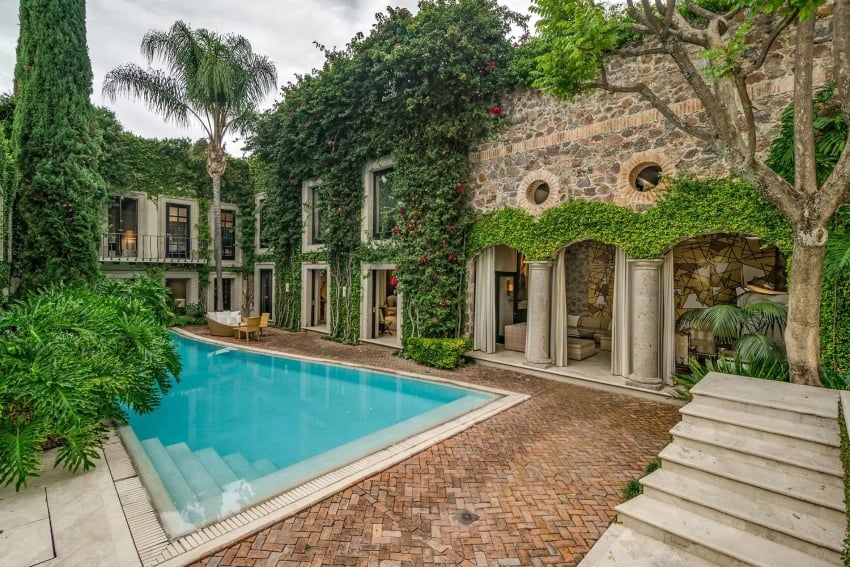
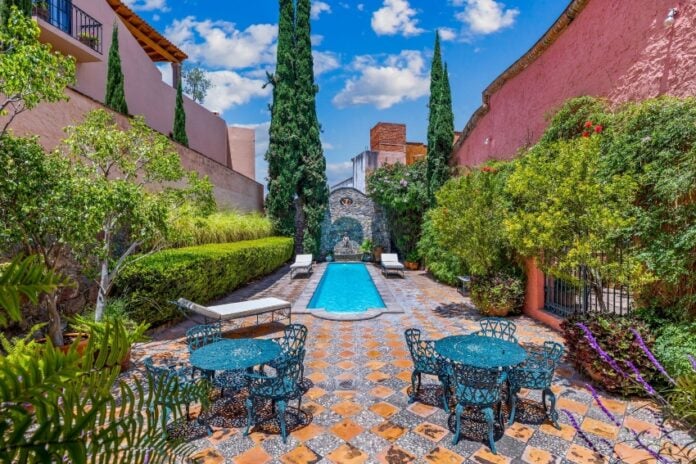
Home in San Miguel de Allende
If you're buying or selling a home in Mexico, residency has benefits. (CDR San Miguel)

Many foreigners who choose to make Mexico their long-term home eventually find that residency offers more than legal permission to stay. It influences daily life, access to services, and even the financial outcome when buying or selling property. 

Although Mexico allows nonresidents to own real estate, holding legal residency often simplifies the process and can significantly affect capital gains tax obligations at the time of sale.

How to get legal residency

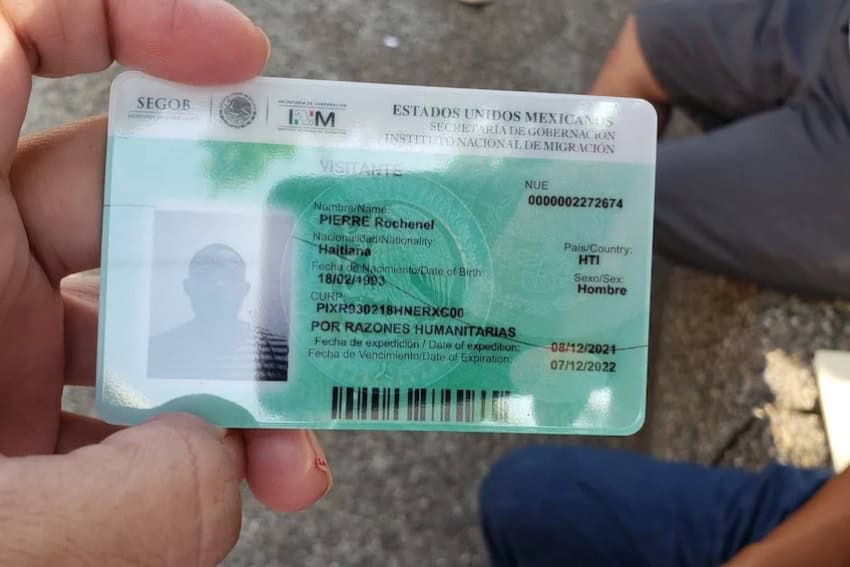
Residency card in Mexico
There are two residency card options in Mexico, each with different expectations and benefits. (INM)

Mexico offers two main residency options: temporary and permanent. Both allow foreigners to stay in the country beyond the 180-day tourist permit, but each category carries different expectations and benefits.

Temporary residency is generally issued for one year at the beginning of your immigration to Mexico and may be renewed for up to four years. After that period, most residents become eligible to convert to permanent residency, which does not expire and removes the need for renewals. Permanent residents may work in Mexico without obtaining an additional work permit, although they must register with the tax authority and notify immigration afterward.

In all cases, the residency process begins at a Mexican consulate outside of Mexico and is completed at an immigration office (INM) once the applicant enters the country with the approved visa. 

Some consulates will issue permanent residency directly — for example, to retirees, spouses of Mexican citizens, or parents of Mexican-born children. Many consulates, however, decline to grant permanent residency to applicants below retirement age the first time around unless they qualify through family relationships or specific categories. 

In some cases, applicants who already hold temporary residency and live in Mexico may be permitted to convert to permanent residency earlier than the four-year period, depending on the criteria applied at their local immigration office.

What you’ll need to apply

The financial requirements for residency are based on either monthly income or savings and investments. These thresholds, published by the Secretaría de Relaciones Exteriores, vary slightly between consulates and may change at any time because they are tied to Mexico’s minimum wage or UMA values — the latter being a monetary number updated annually that is used to calculate fines, payments and tax obligations in Mexico. 

Even if a person is convicted of corruption and serves jail time, the money and/or assets they obtained as a result of their crime are not "normally" recovered in Mexico.
To receive a resident card in Mexico, you must show a minimum monthly income or bank balance. Once acquired, residency makes access to banking in Mexico easier. (Shutterstock)

Under the commonly applied standards, temporary residency generally requires a monthly income of about US $4,393 or an average balance of more than $73,215 over 12 months. 

Permanent residency typically requires a monthly income above US $7,322 or an average balance above $292,859 over 12 months. All financial documents must match the applicant’s passport information exactly, without any variations in spelling or punctuation.

At a Mexican consulate outside the country, applicants present their financial documents, identification and any materials related to employment, investment or family ties. If the application is approved, the consulate places a visa sticker on the applicant’s passport. This visa allows entry into Mexico for the second phase of the process, which must be completed within a limited number of days. 

Once inside the country, applicants visit the National Migration Institute (INM) to submit photographs, fingerprints and final documents. Temporary residents renew this information annually; permanent residents do not.

The advantages of residency when buying and selling property

Residency is not required to purchase property in Mexico. Foreigners may buy real estate anywhere in the country, including along the restricted coasts and borders, which technically is off-limits to foreigners. In these restricted zones, however, non-Mexicans typically use a fideicomiso, a bank trust that legally holds title on behalf of the foreign buyer, allowing a purchase. 

Outside the restricted zones, property can be titled directly in the buyer’s name.

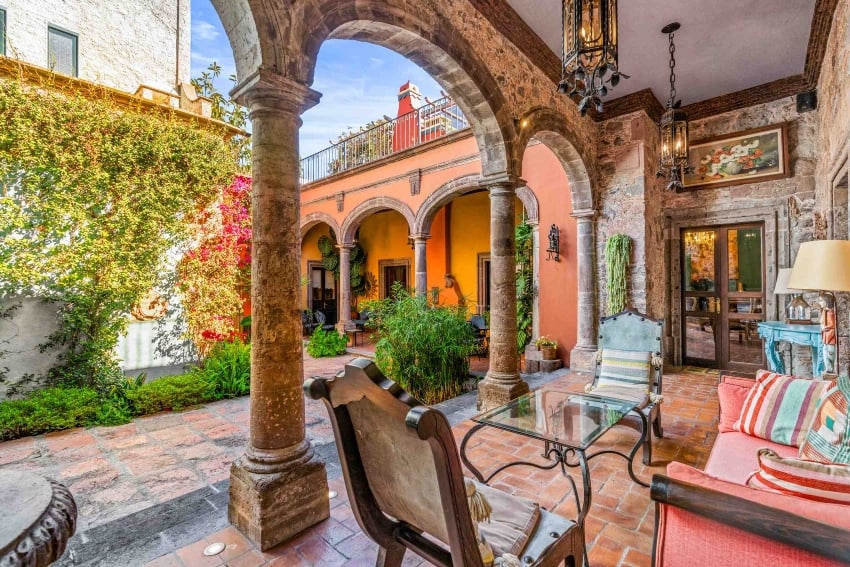
Home in San Miguel de Allende
Having a residency card makes real estate transactions in Mexico go smoother. (CDR San Miguel)

Even though residency is not a prerequisite for ownership, and foreigners may purchase real estate with only a valid tourist entry card, having a residency card can make transactions smoother. 

Banks, escrow companies and notaries frequently prefer a residency card for identification. Residency also eliminates concerns about leaving the country when a tourist entry card expires, which can be disruptive during closings, renovations or long-term stays. 

Avoiding capital gains tax

The most significant advantage of residency appears when selling property. Under Mexican tax law, temporary and permanent residents may qualify for a full or partial exemption from capital gains tax when selling their primary residence. For many homeowners, this exemption represents substantial savings, particularly in cities where property values have appreciated quickly. 

Non-residents, by contrast, generally face much higher tax liabilities: They may be taxed at a flat 25% of the total sale price, with no deductions, or at approximately 35% of the net gain, depending on how the notary calculates the transaction.

To qualify for the capital gains exemption, however, the seller must meet several conditions: 

  • The property must be the seller’s principal residence, not a vacation home, rental investment or raw land. 
  • The seller must be able to prove occupancy, often through recent utility bills, a residency card, voting documents — in the case of Mexican citizens — or other forms of acceptable proof. 
  • The seller must not have used the exemption on another property within the period allowed by law, typically once every three years. 

When all requirements are met, the notary may apply the exemption, reducing or eliminating the capital gains tax due.

Home in San Miguel de Allende
Having a residency card may even help you avoid paying capital gains tax when you sell a property in Mexico. (CDR San Miguel)

Nonresidents, including foreigners who rely on tourist permits, generally do not qualify for this exemption and often face significantly higher tax liabilities at closing. For long-term foreign residents who intend to eventually sell their home in Mexico, obtaining residency well in advance makes sense.

Not just at tax time: A residency card makes daily life easier 

Residency also simplifies many aspects of daily life for foreign homeowners. It allows easier access to banking, facilitates the registration of utilities and services and supports compliance with tax obligations related to rental income. While nonresidents can handle these tasks, the processes tend to be more straightforward for those with a residency card.

For many foreigners, the decision to pursue residency depends on how they plan to live in Mexico. Buyers who expect to spend most of the year in their home, or who anticipate selling it in the future, gain the most from being a legal resident. Investors who plan to manage multiple properties or conduct long-term business in Mexico also benefit from holding residency.

All applicants should keep in mind that immigration rules, UMA values, minimum wage-based calculations and financial thresholds can change at any time. Unlike what you may be used to back home, requirements also vary from one consulate to another and from one immigration office to another in Mexico. Before applying, it is important to confirm up-to-date requirements through official channels or with qualified professionals.

Glenn Rotton is a real estate agent with eight years of experience in San Miguel de Allende. Originally from Seattle, he has lived in Mexico for twelve years with his husband, Kiang Chong Ovalle, and their dog, Angus. Read more about Glenn here.

Sheinbaum reminds Trump of the United States’ immigrant roots: Thursday’s mañanera recapped

15
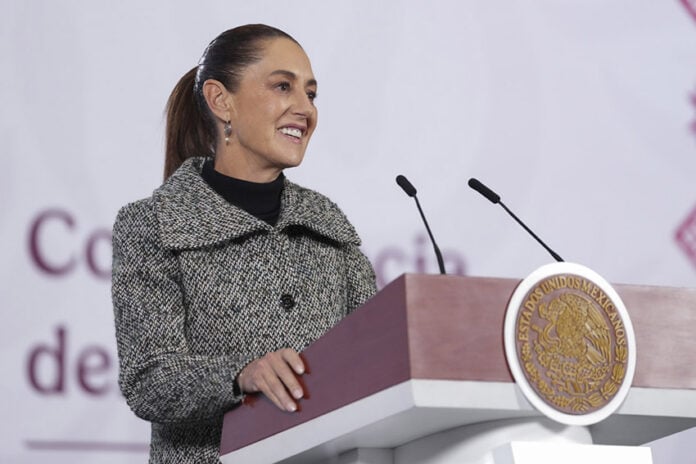
President Sheinbaum at the podium of her morning press conference
"We're always going to defend ... our brothers and sisters" in the United States, Sheinbaum said after Trump characterized migrants as drug dealers, gang members and murderers. (Hazel Cárdenas / Presidencia)

At her Thursday morning press conference, held on International Migrants Day, President Claudia Sheinbaum hit back at remarks U.S. President Donald Trump made about immigrants in the United States.

Later in the press conference, she fielded a question about U.S. sanctions against a notorious Mexican criminal group.

Sheinbaum responds to Trump’s remarks about migrants 

A reporter asked Sheinbaum her opinion on the remarks Trump made about migrants during a speech on the U.S. economy he delivered on Wednesday night.

In the speech, Trump said that during the Biden administration the United States “border was open” and “our country was being invaded by an army of 25 million people, many who came from prisons and jails, mental institutions and insane asylums.”

“They were drug dealers, gang members and even 11,888 murderers,” he said.

Trump also said that “we inherited the worst border anywhere in the world, and we quickly turned it into the strongest border in the history of our country.”

LIVE: Trump addresses the nation (full speech)

In addition, he said “we’re deporting criminals” and asserted that Somalians “have taken over the economics of the state [of Minnesota] and have stolen billions and billions of dollars from Minnesota, and indeed from the United States of America.”

Sheinbaum — who has previously condemned the criminalization of migrants — said that she and her government colleagues don’t agree with Trump’s remarks.

Mexicans and people from “many other places in the world arrive in the United States seeking a better life and better income in order to send [money] to their families,” she said.

Sheinbaum also highlighted that the United States “grew with migration.”

“It’s the origin of our neighboring country, … they arrived from Europe, from many places and built the nation it is,” she said.

Sheinbaum also highlighted that “Mexicans help the United States economy in many areas,” including in the agriculture, construction and services sectors.

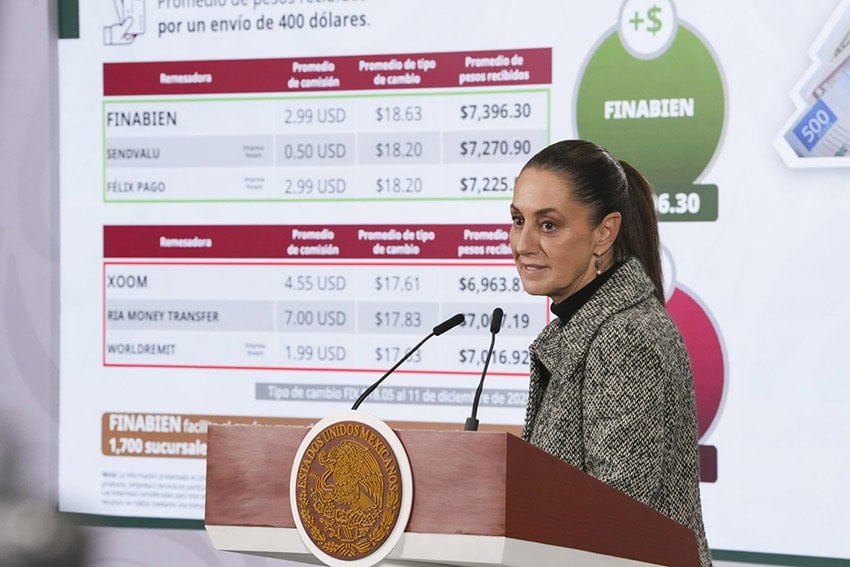
Sheinbaum in front of a projection showing information about Finabien remittance card fees
In addition to defending Mexicans in the U.S., the president also touted government Finabien cards as a low-cost way for Mexicans abroad to send money home. (Hazel Cárdenas / Presidencia)

“Also in many areas where there weren’t Mexicans [before],” she added before specifically citing “research centers” and noting that Mexican scientists and academics live and work in the United States.

“So, we seek another view [of migration] and we’re always going to defend … our brothers and sisters” in the United States, said Sheinbaum, who has voiced her opposition to Trump’s deportation agenda on several occasions.

US action against Santa Rosa de Lima Cartel is ‘not something new,’ says Sheinbaum

A reporter noted that the U.S. Department of the Treasury announced on Wednesday that it had sanctioned the Guanajuato-based Santa Rosa de Lima Cartel (CSRL).

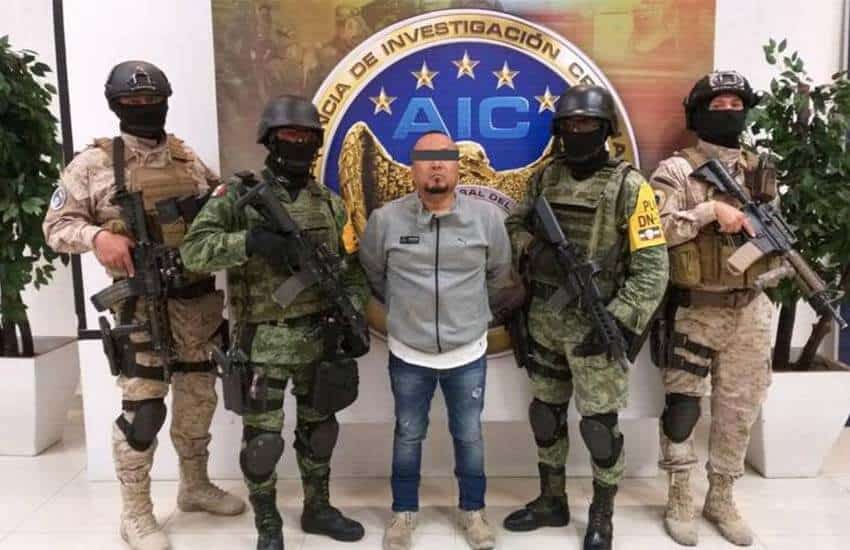
In a statement, the Treasury Department announced that its Office of Foreign Assets Control (OFAC) had also sanctioned José Antonio “El Marro” Yépez Ortiz, the CSRL leader who was arrested in 2020 and sentenced to 60 years in prison in 2022.

Treasury said that CSRL “derives the vast majority of its illicit revenue from fuel and oil theft in the Mexican state of Guanajuato,” and noted that the conflict between the criminal group and the Jalisco New Generation Cartel “for control of fuel and oil in Guanajuato has made the state one of the deadliest in Mexico.”

“CSRL’s activities also help enable a cross-border energy black market, undermine legitimate U.S. oil and natural gas companies, and deprive the Mexican government of critical revenue,” the statement said.

José Antonio "El Marro," Yépez
The U.S. announced sanctions this week against the Santa Rosa de Lima Cartel and its leader, José Antonio Yépez Ortiz, who is currently incarcerated in Mexico’s Altiplano maximum-security prison. (File photo)

OFAC’s sanctions on CSRL and Yépez Ortiz include the blocking of “all property and interests in property” they have in the United States.

Asked what information her government had about the sanctions, Sheinbaum responded that the United States’ action against CSRL is “not something new,” telling reporters that U.S. bank accounts linked to members of the Guanajuato-based crime group were frozen several years ago.

“Now there is an additional sanction, but the freezing of accounts occurred some time ago,” she said, noting that the head of the government’s Financial Intelligence Unit had informed her and her security cabinet colleagues of the situation prior to the mañanera.

Asked about the Treasury Department’s accusation that Yépez “continues to be active in CSRL from within prison,” Sheinbaum responded that it is the responsibility of the Security Ministry to investigate crimes allegedly committed from jails.

By Mexico News Daily chief staff writer Peter Davies (peter.davies@mexiconewsdaily.com)

Mexico City’s Postal Palace opens special mail route to the North Pole

3
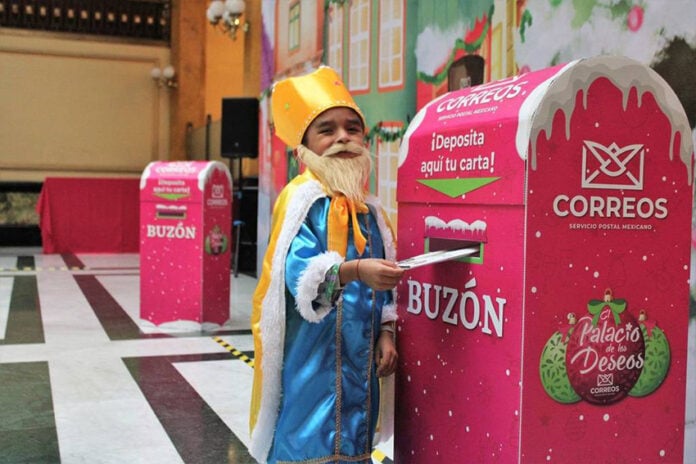
child mailing letter
It's the time of year when children mail their letters to the Three Kings and to Santa Claus, and those who live in Mexico City can get help from the Postal Palace, converted for the season into the Palacio de los Deseos, or Palace of Wishes. (Correos de México / Facebook)

The towering marble halls of Mexico City’s historic main post office have once again transformed into the “Palace of Wishes,” inviting children to send free letters to Santa Claus and the Three Wise Men this holiday season.

The program — run by Correos de México, the postal service of Mexico — launched this week and will run through Jan. 5, 2026.

The base of operations is Mexico City’s grand Palacio Postal, or Postal Palace, located in the Historic Center across the street from the Palacio de Bellas Artes. It’s an active postal facility as well as a popular place to visit for its ornate architecture and interior.

From 10 a.m. to 4:30 p.m. daily, children can attend a workshop there that teaches how to address envelopes correctly, the role of sender and recipient information, and the importance of postage.

Staff will explain all this while youngsters prepare their letters destined for the North Pole or the Wise Men (Reyes Magos). 

In Mexico, children have long written letters to the Three Wise Men, asking for gifts to be delivered on Jan. 6, Día de Reyes, or Three Kings Day in English.

That’s when children in Mexico traditionally receive holiday presents, said to be from the Magi (often called the Three Wise Men or Three Kings), who are described as having brought gifts to the baby Jesus.

This is in contrast to the United States, Canada and other countries where presents are typically exchanged on Dec. 25.

In recent years, however, many Mexican children also write to Santa Claus, often sending separate wish lists to both, and receiving presents on Christmas morning (or Christmas Eve) as well as Jan. 6.

Participation at the Postal Palace is free, though a Christmas kit — including special stationery and one seasonal postage stamp — is available for 30 pesos (US $1.67). The kit is available at post offices all over Mexico.

To receive a reply, children writing from anywhere (not just the Postal Palace) must include their own address, the destination of their “wish letter” (Santa Claus or the Three Wise Men) and proper postage.

Violeta Abreu González, director of Correos de México, recently unveiled the new, 15-peso seasonal stamp, one inspired by the Mexican tradition of Christmas posadas a candlelit neighborhood procession that reenacts Mary and Joseph asking for shelter, ending with prayers, food and beverages, and a star-shaped piñata.

The stamp includes images of romeritos (a holiday dish of tender seepweed sprigs bathed in mole poblano), buñuelos (fritters dusted with cinnamon sugar), ponche (a warm fruit punch that’s often spiked) and aguinaldos (small goody bags).

“Celebrating like this is not a new custom,” Abreu González said as quoted by the media outlet Chilango.com. “It is an identity that has been passed down from generation to generation and that new families must keep alive.”

Organizers said responses to children may take about a month, as Santa and the Wise Men receive many, many letters from around the world.

With reports from Chilango.com and El Heraldo de México

Central bank cuts interest rate to 7% citing weak economic activity

0
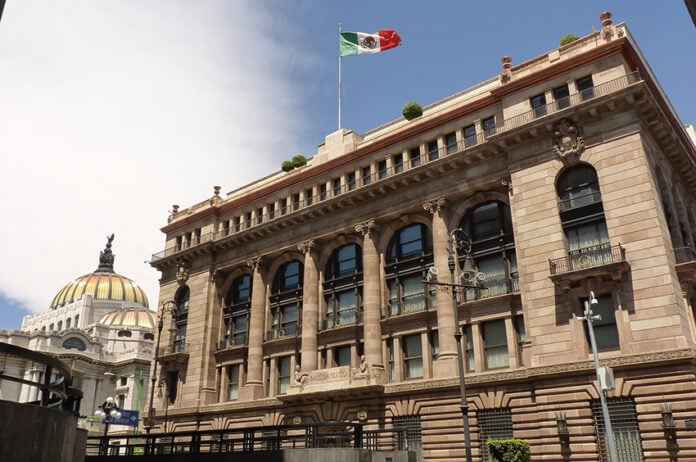
The Bank of Mexico building in Mexico City
Though interest rate cuts can contribute to inflation, the Bank of Mexico said inflation should ease by late 2026. (Wikimedia Commons CC BY-SA 3.0)

The Bank of Mexico’s governing board voted on Thursday to lower the bank’s benchmark interest rate by 25 basis points to 7%, the lowest level in more than three years.

Four of the five members of the central bank’s board, including Governor Victoria Rodríguez, voted in favor of a 25-basis-point cut. Deputy Governor Jonathan Heath voted in favor of maintaining the bank’s key rate at 7.25%.

The widely-expected interest rate cut was the Bank of Mexico’s eighth successive easing of monetary policy in 2025. The bank has now lowered its benchmark interest rate after 12 consecutive monetary policy meetings dating back to August 2024.

With those 12 cuts, the central bank’s key interest rate has gone from 11% to 7%.

The last time the Bank of Mexico’s interest rate was lower was in early 2022 prior to a 50-basis-point reduction to 7% in May of that year.

The latest cut was endorsed in a 4-1 vote despite a recent increase in inflation, which ticked up to a 3.80% annual rate in November.

The Bank of Mexico (Banxico) acknowledged that increase in a statement announcing the latest interest rate cut, but said that “headline inflation is still expected to converge to the [3%] target in the third quarter of 2026.”

The bank said that its governing board’s decision to cut the benchmark interest rate by 25 basis points was “consistent with the assessment of the current inflationary outlook.”

“In particular, it took into account the behavior of the exchange rate, the weakness of economic activity, and the possible impact of changes in trade policies worldwide,” Banxico said.

It said that the board “will evaluate the timing for additional reference rate adjustments,”  taking into account “the effects of all determinants of inflation.”

“Actions will be implemented in such a way that the reference rate remains consistent at all times with the trajectory needed to enable an orderly and sustained convergence of headline inflation to the 3% target during the forecast period,” Banxico said.

The inflation outlook  

Banxico is forecasting that Mexico’s annual headline inflation rate will be 3.7% across the final quarter of the year and remain at that level through the first quarter of 2026. Those forecasts are up slightly from the 3.5% projections the central bank made last month.

Banxico anticipates a reduction to a 3.3% headline rate in the second quarter of next year, followed by an additional easing to 3% in Q3 of 2026. The central bank forecasts that the headline rate will remain at 3% in the fourth quarter of 2026 and throughout 2027.

The bank said that its forecasts are subject to both upside and downside risks.

On the upside are:

  • A depreciation of the Mexican peso, which was trading at 18.01 to the US dollar shortly after 2 p.m. Thursday.
  • Persistence of core inflation, which rose to an annual rate of 4.43% in November.
  • Cost-related pressures.
  • Disruptions due to geopolitical conflicts or foreign trade policies.
  • Climate-related impacts.

The identified downside risks to Banxico’s inflation forecasts are:

Mexico News Daily 

Veracruz coffee producers call for a halt to ‘fraudulent’ coffee imports

0
A pile of coffee beans
Veracruz growers say a lot of imported coffee is simply stopping over in Mexico for later re-export, harming local production and lowering prices in the process. (Shutterstock)

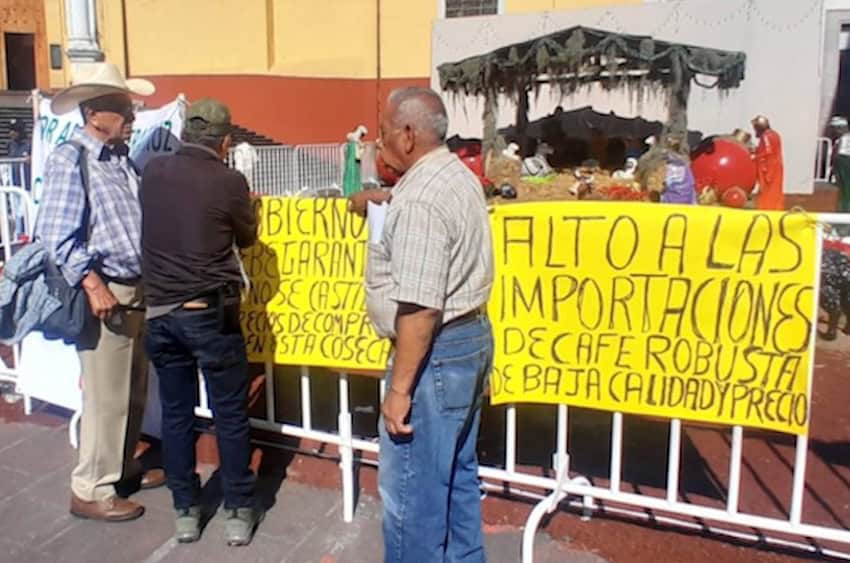
Coffee producers in the state of Veracruz are demanding a halt to imports they say are hurting production and pushing down prices.

Coffee farmers from the Coatepec region of the Gulf Coast state demonstrated in front of the Governor’s Palace in the capital of Xalapa on Monday, alleging export fraud and denouncing a lack of support from state and federal authorities.

coffee protest
The Veracruz growers are also aiming their protest at what they consider unfair competition from lower quality and more cheaply priced foreign imports. (Plumas Libres)

Fernando Celis, adviser to the National Coordinator of Coffee Growers Organizations, said that while Mexico is exporting more coffee than in recent years, it is not exporting coffee of domestic origin. 

As such, protesters were demanding that the government halt coffee imports from Brazil, Vietnam, Uganda and Indonesia, which, they say, are being labeled as Mexican coffee to avoid U.S. and European import tariffs.

“This is a fraud perpetrated by trading companies and validated by the Economy Ministry,” Celis said. 

National coffee production during the 2024-2025 harvest was 3.9 million sacks and national consumption is 3.15 million sacks, according to the Veracruz-based digital newspaper e-consulta.com. However, 3 million sacks of coffee were exported, despite a surplus of just 750,000 sacks.

“The influx of foreign coffee beans is displacing domestic production, causing a drop in prices,” Celis said, explaining that robusta coffee produced abroad is cheaper.

In the last month, Celis said, the price of a quintal (100 kilos) of coffee fell from US $400 to US $350, representing losses for domestic producers of between US $7 and US$10 per quintal.

Producers demanded that the government implement protective measures for Mexican coffee and guarantee fair prices that allow coffee-growing communities to be sustainable.

In addition to pressure from imports that directly harm local producers, protesters also complained about budget cuts and institutional neglect that has left the sector vulnerable.

In September, the government dissolved the National Institute for Rural Sector Training and Development and, in mid-2023, the National Development Finance Corporation,nwhich oversaw funding for agricultural producers, was closed down. In 2020, the politics of austerity instituted by the Andrés Manuel López Obrador administration resulted in the elimination of one of the two undersecretariats in the Agriculture Ministry.  

In September, Veracruz producers criticized another government program that seeks to promote instant coffee, saying it offered below-market prices. 

With reports from La Jornada and e-consulta.com

Mexico greenlights 20 new renewable energy plants in push to transform the nation’s power grid

9
Wind turbines in the Santa Catarina Wind Park near Monterrey, Nuevo León
Five of the newly announced projects are wind farms like this one in Monterrey, while the other 15 are solar farms. (Shutterstock)

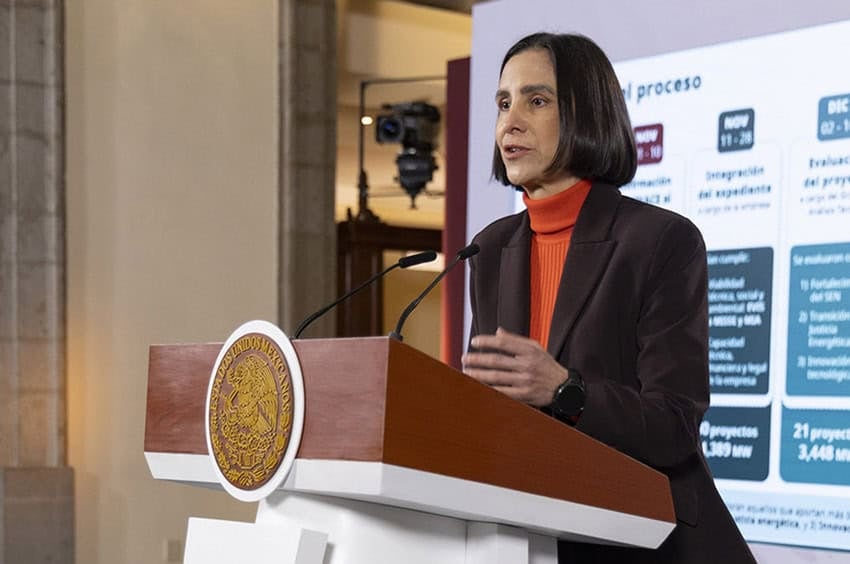
Private companies will invest US $4.75 billion to build 20 renewable energy projects across 11 Mexican states, Energy Minister Luz Elena González announced Wednesday. To complement the private initiatives, the government is building or planning three more solar plants and investing nearly $2 billion in transmission infrastructure.

Speaking at President Claudia Sheinbaum’s morning press conference, González said that the 20 private projects — which were rapidly approved by the Energy Ministry (Sener) — will add 3,320 megawatts of electricity generation capacity and 1,488 megawatts of storage capacity.

Energy Minister Luz Elena González
Energy Minister Luz Elena González announced plans for 20 new solar plants and wind farms on Wednesday. (Juan Carlos Buenrostro / Presidencia)

Fifteen of the 20 projects are solar power plants (2,471 MW), while the other five are wind farms (849 MW).

González said that the projects were proposed by private companies in response to Sener’s call for solar and wind proposals in October. She said that a total of 98 proposals were submitted, of which 20 were given the green light.

González didn’t name the companies whose proposed projects were approved.

She said the 20 projects “represent an investment of US $4.752 billion” or “around 90 billion pesos.”

González said that construction will commence “immediately” because land for the projects has been secured and permits have been issued.

She noted that the approval process was completed much more quickly than is usually the case, but asserted that “technical rigor” in the evaluation of the projects wasn’t sacrificed.

“It was an extremely careful and impartial process, aligned with [our] planning, that resulted in 20 projects in various regions of the country,” González said.

She said that the projects will be built in Campeche, Hidalgo, Yucatán, Guanajuato, Oaxaca, Tamaulipas, Quintana Roo, Puebla, Veracruz, Zacatecas and Querétaro.

Gónzalez said that the “vast majority” of the projects will commence operations in 2028, with the remainder to be ready either in 2027 or 2029.

A second call for proposals 

Via its call for proposals in October, the Energy Ministry was seeking to find private companies to build renewable projects that together would add around 6,000 additional megawatts of generation capacity.

Given that the 20 approved projects will only add just over half that amount, Sener will put out another call for proposals next month.

“On the instructions of the president we will be putting out a second call for proposals at the end of January because we believe it is possible to align in a transparent way the country’s [electricity] generation needs with the possibility of private investment,” Gónzalez said.

By law, the state-owned Federal Electricity Commission (CFE) has a 54% share of electricity generation in Mexico, while private companies are limited to producing the remaining 46% of the country’s power supply.

CFE will invest $4.3 billion in 5 new power plants 

In a separate presentation at Sheinbaum’s Wednesday morning press conference, CFE general director Emilia Calleja Alor spoke about the state-owned company’s electricity generation projects.

She said that the CFE will invest US $4.32 billion to build five new combined cycle power plants. They are:

  • A $1.38 billion, 1,013-MW plant in Tula, Hidalgo.
  • An $804.8 million, 495-MW plant in Salamanca, Guanajuato.
  • An $804.2 million, 583-MW plant in Altamira, Tamaulipas.
  • An $856.6 million, 581-MW plant in Mazatlán, Sinaloa.
  • A $473.9 million, 240-MW plant in Los Cabos, Baja California Sur.

Calleja said that the projects, whose construction is set to begin next year, will provide “greater support to the national electricity system.”

A combined cycle power station in Valle Hermoso, Tamaulipas
Combined cycle power plants like this one in Valle Hermoso, Tamaulipas, typically use natural gas to generate electricity. Though the fuel is not renewable, combined cycle plants are significantly more efficient than conventional power stations. (Carlos Valenzuela CC BY-SA 4.0)

Together they will add 2,913 megawatts to Mexico’s electricity generation capacity.

Calleja explained that “in the majority of the cases” the new “generation units” will be built on properties where the CFE already has power plants.

“This will allow us to take advantage of already-installed infrastructure,” she said.

“… This will expedite development times and reduce technical risks, implementation times and costs,” the CFE chief said.

“… Together these projects respond to a real need of the electricity system and form part of the National Energy Plan, which anticipates the energy transition toward renewable sources,” Calleja said.

Additional investment in Puerto Peñasco solar plant 

Calleja also said that the CFE is investing $710 million in stages 3 and 4 of the Puerto Peñasco solar energy plant. She said that construction of the additional stages will add 580 MW of generation capacity, bringing the plant’s total capacity to 1,000 MW.

The CFE chief said that construction of the third stage will begin next week, and construction of the fourth stage will commence in February.

“With these stages, the CFE will complete the largest solar energy complex in Latin America, reaching a total capacity of 1,000 megawatts,” Calleja said.

“This complex will generate enough clean electricity to light up an entire city the size of Guadalajara or Mérida, or the state of Baja California. With this, we will also prevent more than 1 million tons of CO₂ emissions per year,” she said.

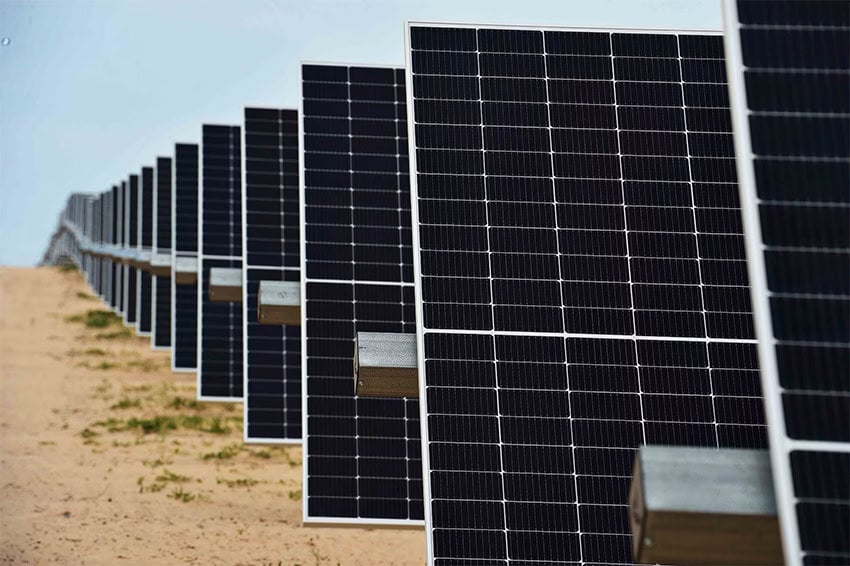
Solar panels at the plant in Puerto Peñasco
Once complete, the Puerto Peñasco solar plant will be the largest in Latin America, CFE director Emilia Calleja said. (Presidencia)

Calleja also presented two new solar energy projects that the CFE will build in the northern border state of Coahuila. A total of $826.2 million will be invested in the two projects, which will have a combined generation capacity of 556 MW.

Construction is scheduled to commence next year, with completion expected in 2028.

Calleja also spoke about 66 “priority” transmission projects, in which the CFE is planning to invest $1.9 billion between the final quarter of this year and the end of 2026.

‘Energy is needed for the development of the country’

Later in the press conference, Sheinbaum stressed that “energy is needed for the development of the country.”

“… Development requires electrical energy. It also requires other types of energy, like gas, for example, but it mainly needs electricity,” the president said.

“… So we’re guaranteeing sufficient electrical energy for the development of the country.”

Sheinbaum also noted that Plan México  — the government’s ambitious economic initiative — “needs energy.”

“If we want to produce more in Mexico, we need more energy. So this [investment] scheme allows us to guarantee that there is energy,” she said.

“… In addition to all this, … we’re investing in transmission lines because if you generate [electricity] how do you transmit the energy? How does it get from one place to another? Via the famous transmission lines,” Sheinbaum said.

With reports from El Financiero, El Universal and La Silla Rota

The Christmas gift that Puerto Vallarta gave me

6
Puerto Vallarta
Puerto Vallarta's lights shine a little brighter at Christmas. (Visit Puerto Vallarta)

My first Christmas in Mexico was in 2021. I’d moved to Puerto Vallarta much earlier that year, and my expectations for the holiday came from Instagram and travel magazines. 

I imagined streets twinkling with impossibly bright lights strung from palm trees, children laughing over colorful piñatas, and parades filling the Malecón and Old Town with music and fireworks. 

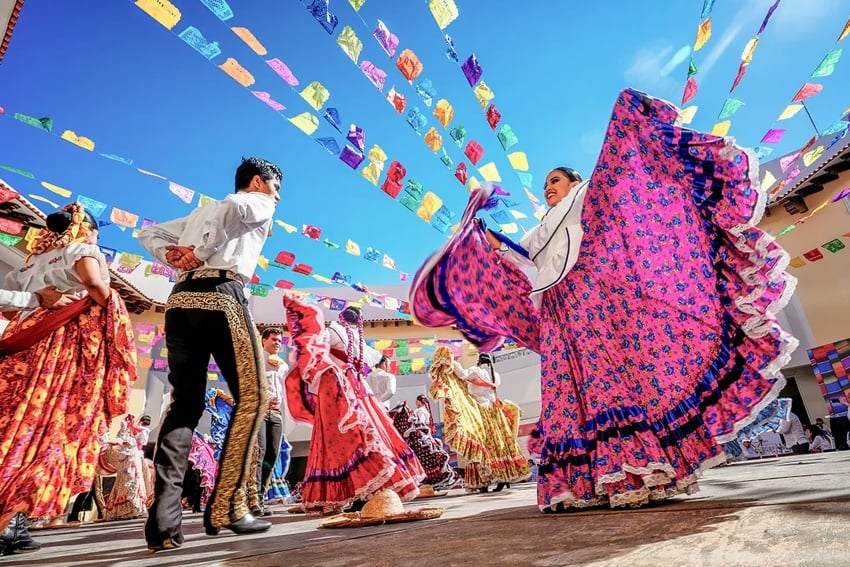
Traditional dancing in Puerto Vallarta
You can find parades and traditional dancing in Puerto Vallarta during the holiday season. But there’s a quieter side, too. (Vallarta Adventures)

I wanted a local Christmas, and I pictured it as a cultural performance I could admire and photograph. What I found instead was something quieter, slower and far more alive than any staged spectacle. 

A local Christmas

The signs of the season revealed themselves gradually. I began seeing poinsettias spilling from windowsills and paper lanterns hanging along narrow streets. 

Daily life shifted without fanfare. I witnessed a posada, part of the nine-day tradition that re-enacts Mary and Joseph’s search for shelter. 

It was beautifully intimate. Families gathered in the streets, carrying candles and small statues of the Holy Family. They sang, prayed, and knocked on doors, moving from house to house in a procession that felt both solemn and joyful. 

At first, I lingered at the edge of the crowd, camera ready. But then someone invited me to join them. As I walked alongside neighbours I’d never met, I began to understand the significance of being part of something so full of care, community and tradition; something much larger than myself. I realised this wasn’t a performance at all. It was an act of communal devotion. 

Two doors down from me lived a family of three generations. I’d pictured Nochebuena, or Christmas Eve, as an elaborate public event, but this family spent the evening at home. They invited me to join them. 

‘A story told through hands and memory’

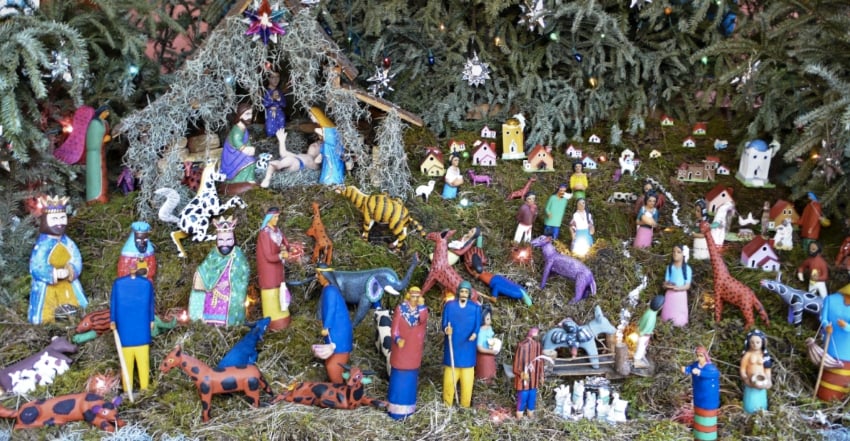
Nativity scene
Figures carefully placed in a nacimiento, or nativity scene. (Gobierno de Mexico)

I marvelled at the nacimiento, the nativity scene they were building. It began filling an entire room. Figures were being placed with care, and small hand-crafted details were added to reflect local life and history. 

All generations participated, sharing stories and laughter as they worked. The scene became a story told through hands and memory. 

Their food told its own story. I’d imagined elaborate, picture-perfect feasts meant to impress visitors. Instead, I found their kitchen alive with family warmth, the smell of corn masa, and the quiet concentration of hands rolling tamales. 

I watched them work together in a rhythm both practical and tender. Children spread masa on corn husks while parents and grandparents folded them with practised precision. Their conversations flowed as easily as the warm ponche they sipped from small bowls. 

We sat down for dinner late at night. The table was overflowing, candles flickering, and carols rising softly. Gifts were exchanged quietly. 

The tamales they shared with me were delicious, but what stayed with me was the intimacy of their preparation. Each dish embodied memory and shared history. This wasn’t food made to be admired; it was food made with love. 

‘An expression of generosity and community pride’

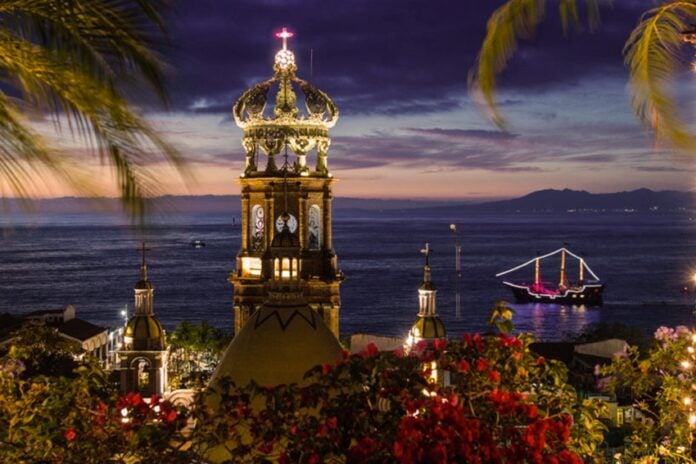
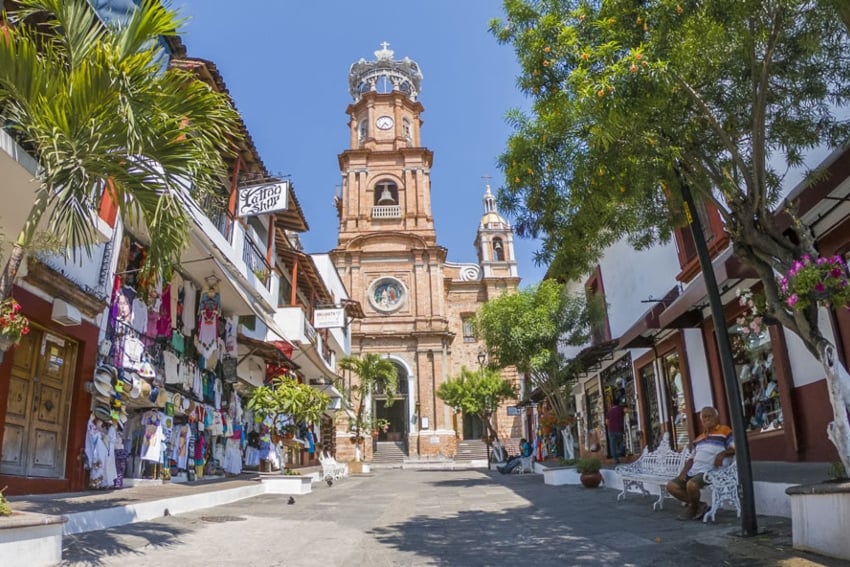
Parroquia de Nuestra Señora de Guadalupe in Puerto Vallarta
The Parroquia de Nuestra Señora de Guadalupe is iconic in its beauty. (Visit Puerto Vallarta)

We went to Mass in the Parroquia de Nuestra Señora de Guadalupe. Iconic in its beauty, it overflowed with worshippers that night. The air smelled of incense, and the voices of the congregation rose in unison. 

It was profoundly moving. I felt the weight of centuries of devotion in every note and every whispered prayer. 

Everywhere I walked that Christmas season, the streets glowed. Houses were strung with flickering lights, and songs echoed from plazas. 

To an outsider, it might seem like a show for maximum effect. But for locals, it was an expression of generosity and community pride. Each light and each song were invitations to connect. 

‘A lived experience of family, faith and community’

Even Santa Claus, or Papá Noel, took on a local flavour. He appeared alongside the Baby Jesus or La Virgen de Guadalupe, a reminder that Christmas in Mexico blends imported customs with deep-rooted faith. Commercial imagery co-existed with devotion and storytelling rather than overtaking them. 

The more I experienced, the clearer something became. Mexican Christmas isn’t a spectacle for outsiders. It’s a lived experience of family, faith and community. 

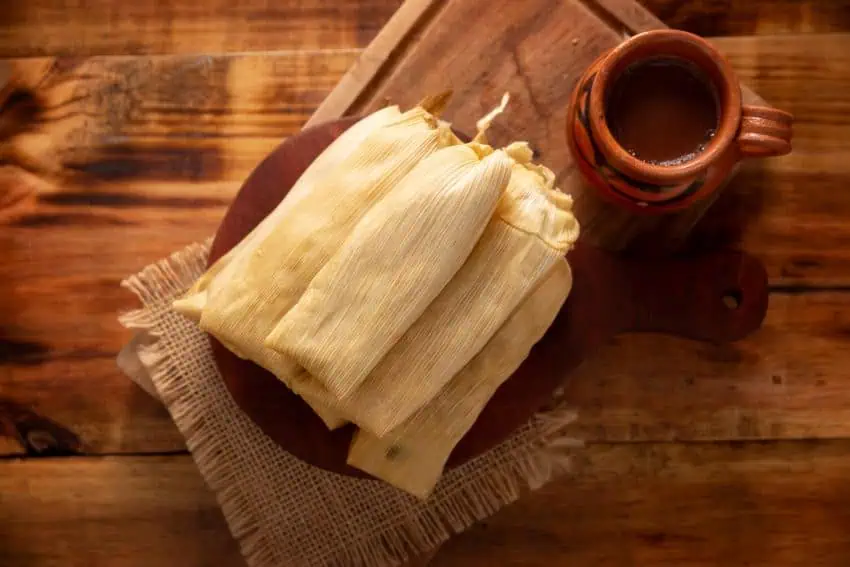
Tamales served on a plate with (possibly) champurrado.
Nothing is more Mexican than a tamale, and nothing is better at Christmas. (Shutterstock)

You find it in the hands that fold tamales, the voices that rise in unpracticed songs, the neighbours who open their doors, and the silent prayers lifted in candlelight. It’s about connection, continuity, and celebrating life in its smallest, most enduring forms. 

I stopped seeing Christmas in Mexico as a show and began to feel it as a rhythm to join. I’ve learned to fold tamales, to hum along to songs I don’t fully understand, and to carry a candle through the streets in the warm night. 

I’m no longer a tourist seeking spectacle. I’m a participant in a centuries-old tradition, momentarily woven into its fabric. 

‘The beauty of Mexican Christmas’

And I’ve learned something essential. The beauty of Mexican Christmas doesn’t lie in the markets, the lights, or the costumes, but in the ordinary acts of togetherness. It invites participation and presence. It’s about people and the quiet, persistent joy of being together. 

Christmas in Mexico isn’t meant to be observed from the outside. It’s meant to be felt from within. And being welcomed into that circle of warmth and devotion has changed me. 

It’s taught me that the truest celebrations aren’t grand or loud, but shared in simple moments of presence and care. 

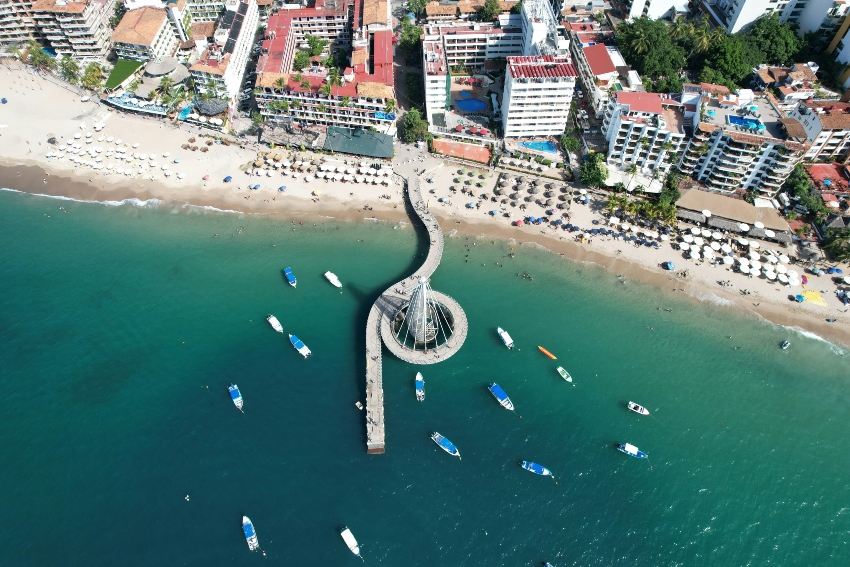
Puerto Vallarta beachfront
Puerto Vallarta is one of the best Christmas gifts you could hope to receive. (Unsplash/Emmanuel Appiah)

And that, I think, is the greatest gift I could ever have hoped to receive.

Charlotte Smith is a writer and journalist based in Mexico. Her work focuses on travel, politics, and community. You can follow along with her travel stories at www.salsaandserendipity.com.

A recycling plant, touted as ‘an act of justice,’ is rejected by Hidalgo residents

0
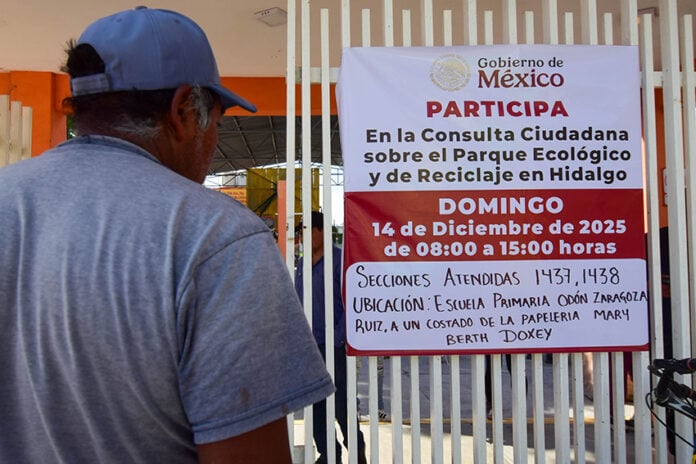
A man reads a sign inviting citizens to participate in the "Consulta Ciudadana sobre el Parque Ecológico y de Reciclaje en Hidalgo"
Though the turnout for the referendum was abysmally low, the Sheinbaum administration said it would honor the result and look for alternative sites for the recycling plant and environmental park. (Francisco Villeda/Cuartoscuro.com)

Residents of the Mezquital Valley north of Mexico City rejected plans to build a recycling plant that the government had labeled “an act of justice” for the state of Hidalgo.

Fewer than 9% of registered voters participated in last Sunday’s public referendum, in which 63% voted against the government’s Circular Economy Park project. President Claudia Sheinbaum quickly announced that her administration would look for another site to develop the plant. 

“We will always respect the will of the people,” she said on Monday, adding that “this referendum reaffirms the democratic conviction of the Fourth Transformation, whose motto is ‘with the people everything, without the people nothing.’”

With much fanfare, Sheinbaum had announced plans for Mexico’s first Circular Economy Development Hub for Well-being (Podecibi) in September, promising to gradually eliminate 450 open dumps, benefiting the more than 600,000 inhabitants of the Hidalgo municipalities of Tula de Allende, Atitalaquia and Tlaxcoapan.

With development slated to begin in January, the federal government had set aside 1.72 billion pesos (US $95.7 million) for the project — 1.3 billion pesos for a recycling plant for reusing solid waste and 420 million pesos for an environmental park. 

Congress approved a new General Law on Circular Economy on Dec. 10, as part of a growing commitment to keep materials and products in circulation rather than the traditional use-and-discard approach. All that was then needed was public approval, setting the stage for Sunday’s referendum.

The Environment Ministry and the state government spearheaded an aggressive “Vote Yes” campaign, featuring ads blaming previous “neoliberal” governments for turning the Tula-Atitalaquia region into a “sacrifice zone” — that is, a geographic area that suffers disproportionate environmental harm from industrial activities for the economic benefit of others.

And indeed, the region was declared a sacrifice zone in 2019 due to high levels of pollution in the soil, air and water caused by the presence of thermoelectric plants, refineries and more than 300 industries.

However, opponents of the project blasted the government for a lack of transparency and claimed the government’s propaganda campaign was misleading, emphasizing that the authorities had yet to conduct an environmental impact study as required by law.

Greenpeace México denounced ads that declared it approved the plan, issuing a public statement saying representatives had attended one informational meeting but had never expressed support. 

In a Dec. 11 social media post, Greenpeace México said it rejected the project — which included the burning of plastic waste and tires via a process known as pyrolysis, which can generate highly toxic compounds and hazardous waste — and criticized the government’s failure to include the public in the decision-making process.

Environmental groups also criticized the new circular economy law, saying Congress relied solely on input from industry, refusing to involve civil society in the truncated approval process which did not include deliberations in legislative committees. Activists also decried the fact that much of the action depends on self-regulation within the industry itself. 

On Sunday, participants were asked to respond to this question: “Every person has the right to a healthy environment for their development and well-being. Do you agree with the construction of the Ecological and Recycling Park in Hidalgo to expand green areas, reduce garbage dumps and decrease the pollution they generate?” 

The end result? Nearly two-thirds (63.1%) of the 12,259 people who participated voted against the project with residents of the municipalities of Atitalaquia and Tlaxcoapan overwhelmingly rejecting the plan.

With reports from El País and Animal Político

How Oaxaca’s blind sculptor works with his inner eye

3
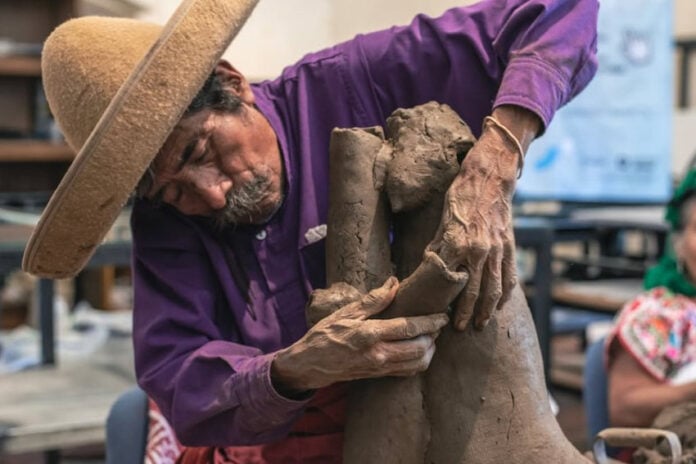
Artisan and sculptor Jose Garcia Antonio of Oaxaca, Mexico, in his studio leans over a large piece of clay he is sculpting into the shape of a human figure. He's wearing a purple button down shirt and a traditional cloth sombrero.
José García Antonio, a renowned master ceramics artisan, at his studio in the small Oaxacan town of San Antonino Castillo Velasco. (Manos Que Ven/Instagram)

The morning arrived fresh in Oaxaca, with that clean air that only exists in the first hours of the day, when the sun is just beginning to warm the streets and the hills surrounding the city. I climbed into the car with my camera slung over my shoulder and my heart filled with the anticipation that always precedes true encounters. 

I didn’t know exactly what I’d find in San Antonino Castillo Velasco, a nearby town of Zapotec origin; all I had was a name — José García — and the promise of meeting a clay artisan whose story had reached me the way all good stories do: by word of mouth, wrapped in admiration and mystery.

There is something sacred in the craft of clay, something that connects the artisan to the very origins of humanity. Clay was the first thing we shaped, the first thing we transformed into something more than mere matter.

When I arrived, the town was quiet. Some people were walking in the streets, dogs were dozing in the shade of the trees, and the smell of burning firewood hung in the air. I asked about José García, and everyone knew who he was.

The same woman, rendered again and again

I knocked on the door, and a woman came out to greet me, her face lit up by a deep smile. She led me to her husband, who greeted us. His eyes, though open, had that opacity that betrays the absence of sight. José García, who lost his sight due to glaucoma, often known for his sculptures as “The Lord of the Sirens,” extended his hand to me with a warm smile, and in that simple gesture, I felt all his hospitality.

Under a corrugated metal roof that provided a shield from the sun but still let in the light, was José’s workshop. It wasn’t an ostentatious space, but it had that beauty that only places where things are created with soul possess. The house was large, and through the different rooms were wooden shelves filled with clay figures. Throughout the patio, pieces in various stages were freshly molded, still damp, air-drying, or already fired, bearing that terracotta hue.

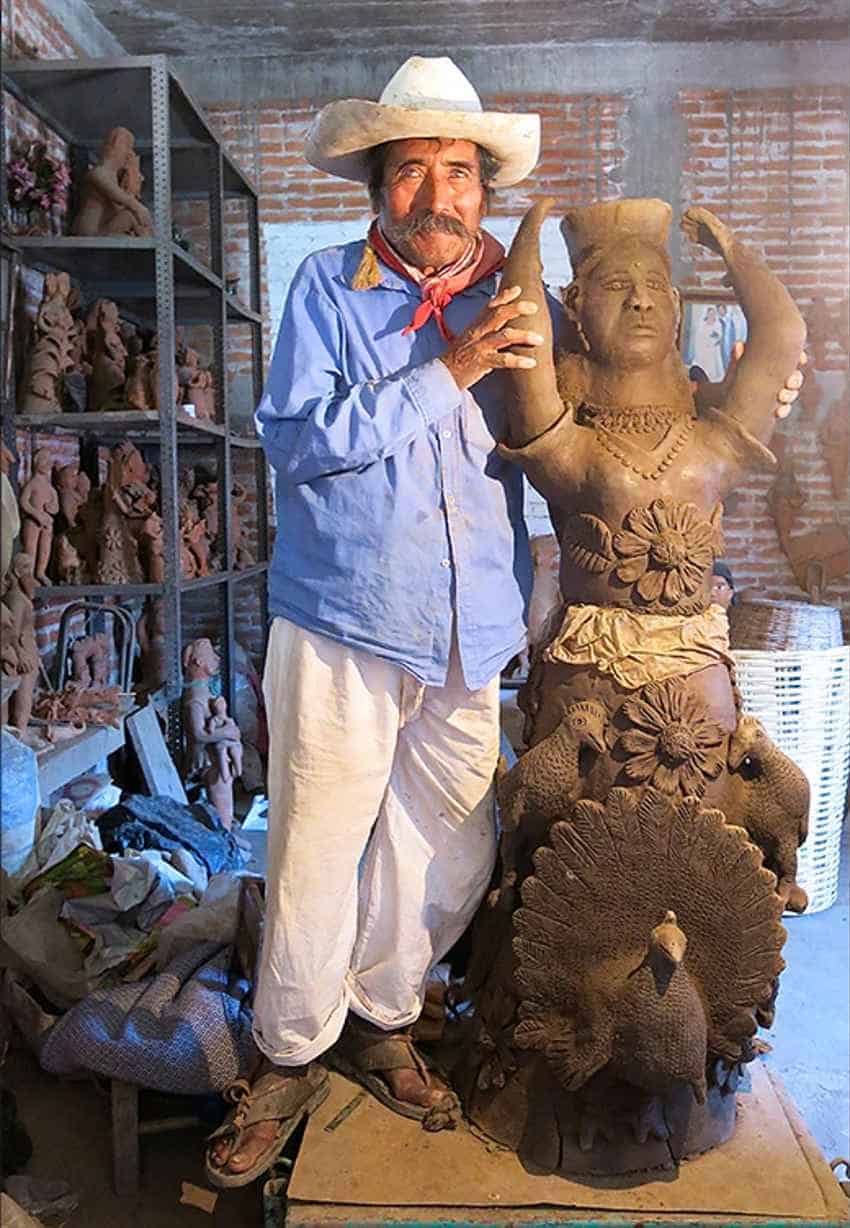
But what caught my attention most was the repetition of these figures. Many of them depicted the same woman over and over, in different poses and dresses but always recognizable. Some stood with their hands on their hips; others were seated, as if resting after a long day; some carried pitchers or baskets.

Mexican asulptor Jose Garcia Antonio stands in his redbrick-lined Oaxaca workshop. He's posing with a brown life-sized clay sculpture of an older stocky woman in traditional dress with her arms raised. The sculpture is behind another shorter clay sculpture of three peacocks.
José Antonio García’s artwork has been recognized by the state of Oaxaca. He is nicknamed “Lord of the Sirens” because of his many clay sculptures of women. (Feria Maestros del Arte)

There were dozens of them, each unique in its details but all sharing the same essence, the same spirit.

“She’s my wife,” José told me, as if reading my mind. His voice had that soft tone of someone speaking about the most sacred things. “I’ve been doing it for years.” 

Sculpting by heart

He sat on his workbench, a low wooden seat polished by years of use, and held in his hands on the clay piece he had already shaped. He didn’t need to see to know exactly what to do. His fingers moved with a sureness that only muscle memory can provide, that wisdom that resides inside the body.

His hands worked as he spoke, kneading, shaping, smoothing. I watched as his fingers palpated the clay, recognizing every curve, every proportion. There was no doubt or hesitation in his movements. He knew every move by heart.

I remained silent, watching him work. There was something deeply moving about watching him bring the clay to life, creating the woman he loves over and over again. It wasn’t just craftsmanship; it was an act of devotion, a phrase made of clay and water, a way of speaking without words.

I raised the camera and began taking photographs. I captured his hands working the clay, the concentration on his face, the way his fingers moved with an almost dance-like grace. But above all, I tried to capture something intangible: the love that flowed from his hands into the clay, the devotion that transforms a simple lump of earth into a testament of gratitude.

Social anthropologist and photojournalist Ena Aguilar Peláez specializes on cross-cultural interactions within historical and cultural contexts. She writes about the environment, human rights, culture, and health.