Home Blog Page 98

Why are there two Basílicas to Our Lady of Guadalupe?

1
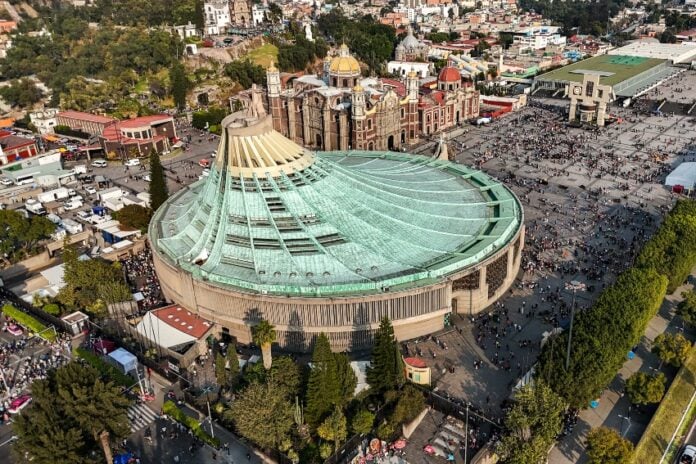
The new and old Basilica de Guadalupe buildings, side-by-side in Tepeyac
The new (left) and old Basilicas of Our Lady of Guadalupe in Tepeyac, Mexico City. (ProtoplasmaKid/Wikimeda Commons)

If you’ve ever spent December 12 in Mexico City, you have seen it adorned with flowers, flags and figures of the Virgin of Guadalupe. Every year (and even during the pandemic), those devoted to La Morenita — The Dark-Skinned Virgin  — travel long distances to reach the Basilica of Guadalupe, the most visited Catholic site in the world after the Vatican.

It is estimated that around 10 million people undertake this pilgrimage, often with entire communities coming together. Buses, pickup trucks and trailers transport people to the sanctuary located on Tepeyac Hill. Prayers are offered to Our Lady of Guadalupe for children to be born healthy, for work to come quickly and for the sick to be healed. 
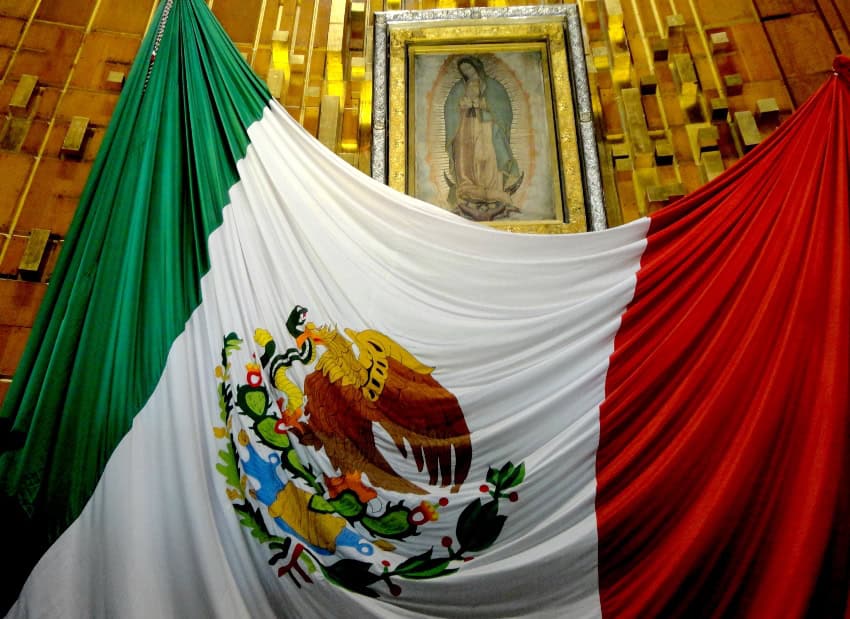
New Basilica of Guadalupe
The New Basilica of Guadalupe in Tepeyac, where pilgrims journey to see the image of the Virgin of Guadalupe. (Juan Carlos Fonseca Mata/Wikimedia Commons)

For those who grew up on the northern edge of the city, the devotion lived during these days feels absolutely magical: People fill the streets, coming from every corner of Mexico; the faithful stop traffic dead in the Tepeyac religious complex.

The Villa de Guadalupe complex currently comprises la Capilla del Cerrito, la Capilla del Pocito, the old basilica and the new basilica. Of the many architects who have contributed to this complex, Pedro de Arrieta and Pedro Ramírez Vázquez stand out for their work. Fittingly, their shared name, Pedro, comes from the Latin word for “stone.”

Where does the popularity of the Virgin of Guadalupe actually come from?

Coatlicue, Cihuacóatl, Tlaltecuhtli and Xochiquétzal are just a few of the faces of the goddess Tonantzin, worshipped by the Mexica (the autonym for the Aztec civilization) at Tepeyac. All these deities represent the feminine forces of fertility and creation. 

Therefore, when Gonzalo de Sandoval, one of conquistador Hernán Cortés’ captains, promoted devotion to Our Lady of Guadalupe — the patron saint of the city of Extremadura, Spain — at Tepeyac, the local population saw her as another manifestation of the sacred figures they had honored for centuries. Yet it would take a few more decades before her most famous image appeared. It is precisely this painted picture that is preserved in the Villa of Guadalupe. 

Syncretic and enduring, the figure of Tonantzin has been reinterpreted throughout history. Today, many images draw on Mesoamerican tradition and blend it with Catholic symbolism to create a mestiza deity that reflects the origins of the people who venerate her. The reappropriation of Indigenous elements by communities today has produced new forms of syncretism that balance Catholic and Mesoamerican spirituality.

The first basílica, by the first Pedro

Now known as the Templo Expiatorio a Cristo Rey, the old basilica was begun in 1695 under the direction of architect Pedro de Arrieta. This first version of the sanctuary opened its doors in the spring of 1709, with a novena to inaugurate it. 
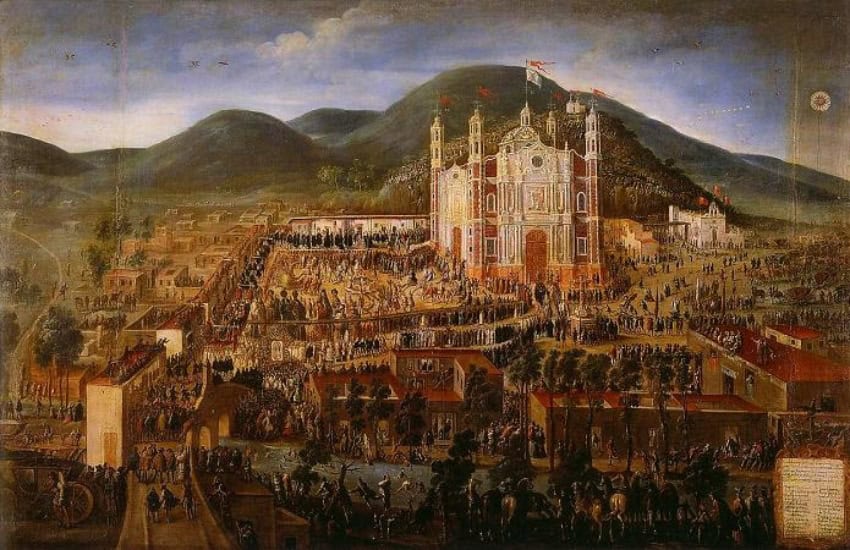
Painting of the old Basilica de Guadalupe in Tepeyac
The Old Basilica of Guadalupe as it looked in 1709, the year it first opened its doors. (Public Domain)

Like much of Mexico City, the basilica was built on a lakebed, which caused significant structural damage to the building over the years. But it was the construction of the neighboring Capuchinas convent that eventually made the temple unsafe and largely inaccessible to visitors.

In the 19th century, the restoration began, turning the baroque building into a neoclassical church. From 1804 to 1836, renowned architect Manuel Tolsá oversaw the project, directed the changes, and even designed a new altarpiece with help from architect José Agustín Paz. The process took longer than expected because of an interruption from 1810 to 1822, caused by the War of Independence.

Then, in 1921, amid rising anticlerical tensions in the early 20th century, the temple was the setting of a bombing. In what some call physics and others call a miracle, the image of the Virgin of Guadalupe suffered no damage in the attack. 

According to physicist Adolfo Orozco, who conducted a study on the case, the attack exploded with such violence that all the windows nearby were broken, but the canvas’ protective glass remained intact. The faithful say a bronze crucifix placed in front of the Virgin protected the image from harm.

The ephemeral basilica

During the 50th anniversary of the Virgin’s coronation, in 1970, Fray Gabriel Chávez de la Mora realized that there was not enough space for visitors. People had to wait long hours to see the Virgin, standing in the sun, so he came up with an idea: an ephemeral basilica. 

Though unconventional at the time, Chávez de la Mora decided to place an enormous tent in the church’s atrium. This structure would allow more people to gather for Mass during this special day. 
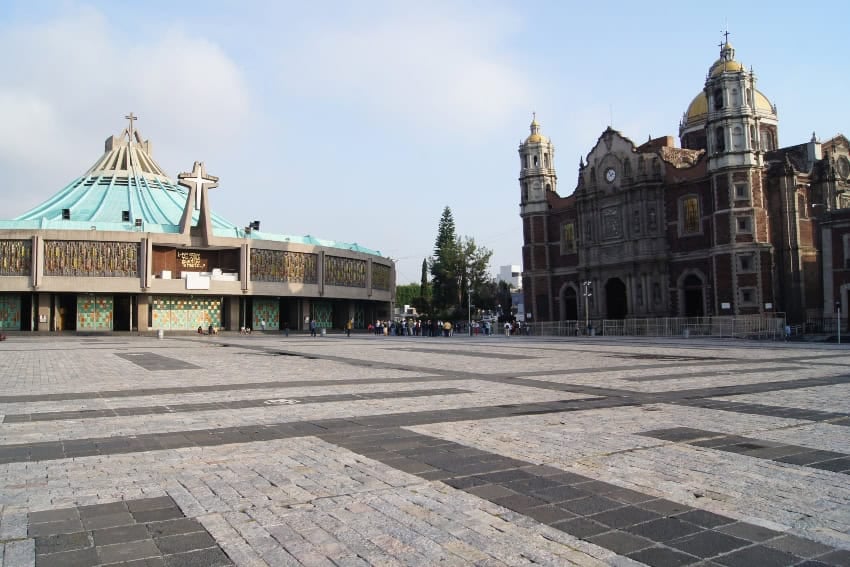
Basilicas de Guadalupe in Tepeyac
The new and old basilicas are both open to the public. (Sebastian Wallroth/Wikimedia Commons)

He quickly realized the expansion should not be temporary, so he called in architects Pedro Ramírez Vázquez and José Luis Benlliure.

The second basílica, by the second Pedro

In the course of his life, Vázquez built two temples: one guards the country’s archaeological treasures (the National Anthropology Museum), the other guards its faith. 

In designing the second basilica for Chávez de la Mora, the architect wanted to reference the earlier ephemeral basilica the friar had created, as a reference to the massive crowds of Our Lady of Guadalupe and the need to accommodate them.

Along accessibility lines, Ramírez Vázquez designed the sanctuary’s interior without columns so that the Virgin could be seen from every corner. To him, nothing should stand between the worshippers and their object of faith. 

On the outside, the architect tried to depict the crown at the top and a cross with extended arms, ready to receive every pilgrim. However, the modern image of the new basilica sparked mixed reactions: Visitors were accustomed to the traditional architecture of the first basilica, with its small spaces and neoclassical elements. 

As decades went by, however, the new structure was accepted, though older people still remember the first temple dearly. 

If you are ever in Mexico City in mid-December, head to the Tepeyac to witness a spiritual commitment to Our Lady of Guadalupe older than both basilicas.

Lydia Leija is a linguist, journalist, and visual storyteller. She has directed three feature films, and her audiovisual work has been featured in national and international media. She’s been part of National Geographic, Muy Interesante, and Cosmopolitan.
Did you know when you hit a Christmas piñata, you’re battling the 7 deadly sins?

7
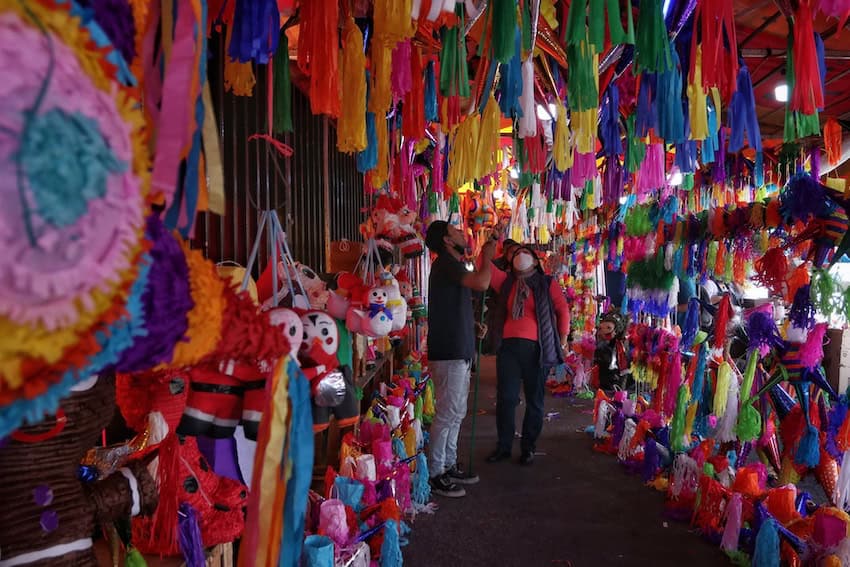
Piñatas
The origin of piñatas dates back to the 16th century, when Augustinian friars received authorization from the Vatican to celebrate Christmas Masses. (MenMag/Wikimedia Commons)

During Panquetzaliztli, as the Mexica (a group of Indigenous Mexicans that also included the Aztecs) called the month of December during the height of their empire, legend said that Huitzilopochtli, the powerful god of war, appeared once more among those who worshipped him. As he was the patron deity of Tenochtitlán, the ancient inhabitants of the Mexica capital worshipped him for 20 days, raising banners on tree branches and at their most important temples, hence the name in Nahuatl meaning “the raising of banners.”

Throughout these sacred days, the Mexica gathered around their temples to await the arrival of the winter solstice. Toward the end of the festivities, families shared lavish dinners in their homes and molded corn figurines in honor of the god of war. 

piñatas in Mexico
We’ve been celebrating the winter solstice for eons, haven’t we? At some point in time, the Mexica introduced piñatas into these celebrations. (Rogelio Morales/Cuartoscuro)

The festivals honoring Huitzilopochtli served as a template for Catholic priests to impose their own December festivities on the Mexica during the colonial period. They either combined or replaced the Mexica Empire’s existing traditions with those used in Europe. 

Incredibly, this violent evangelization gave rise to the piñata.

What are the piñata’s origins?

When the Spanish invaded Mexica territory, one of the Catholic December traditions the friars imposed, according to the Mexican Agricultural and Fisheries Information Ministry, was the Aguinaldo Masses — a series of nine consecutive masses in anticipation of Christmas that later became the posadas, which still exist today.

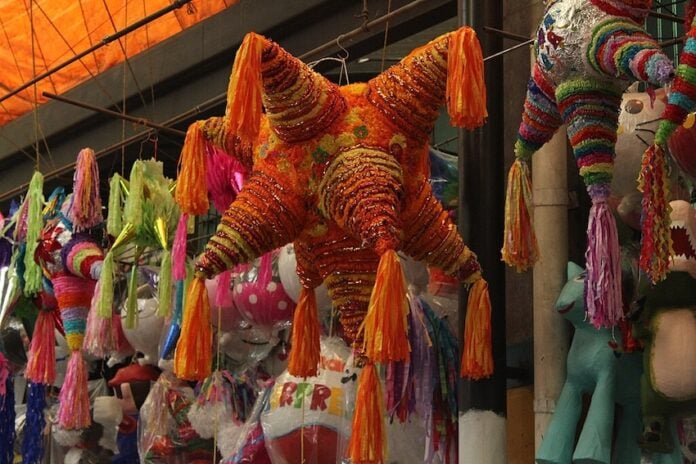
During these Aguinaldo Masses, the friars introduced the use of the piñata, which existed in Spain but was also similar to an existing Mexica ceremony to celebrate Huitzilopochtli. Originally, the piñata was made entirely of clay. A common pot was covered with colorful tissue paper, which represented superfluous pleasures. The piñatas were topped with seven conical points, symbolizing the seven deadly sins of the Christian faith: lust, gluttony, envy, pride, greed, wrath and sloth.

After the Christmas Mass, these sins would be destroyed with sticks while the person was blindfolded. When the clay broke, sweets, seasonal fruits and coins would spill out of the piñata as a reward for overcoming earthly temptations. These, in turn, allude to the riches of the kingdom of heaven, which would come to faithful Catholics after death.

How did the piñata originate?

Although Mexico is stereotypically associated with piñatas and sombreros, this traditional element of the end-of-year festivities did not originate here. On the contrary, there is considerable debate about who originally came up with the piñata. Marco Polo’s accounts suggest that he saw them in China during his voyages, suggesting a Chinese origin. However, those same records also refer to the Mongols as monsters and beasts.

piñata in Mexico
After mariachi and tequila, possibly the first thing that comes to a foreigner’s mind when thinking about Mexico is a piñata, right? (Andrea Fischer)

Etymologically, the word piñata has Italian roots, originating from the Italian word pignatta, which translates to “fragile pot.” Historian Adrián Murillo documents that, during the Middle Ages, the Spanish used this word to refer to the act of breaking a small pot on the first Sunday of Lent. 

The piñata of this era, however, was not decorated with colors, nor did it have its classic conical points.

The piñata-breaking ritual still works today as follows: Everyone at the posada forms a circle around it. The children take turns hitting it with a stick, while the others sing in unison to cheer them on. Sometimes, the child is blindfolded to make the piñata harder to hit. The blindfold is said to represent the Catholic faith, while the stick alludes to the power of God. When the song ends, it’s someone else’s turn.

Colonial evolution

According to Mexico’s Ministry of Agriculture and Rural Development, the colonial version of the song went like this: “I don’t want gold / Nor do I want silver / What I want is to break the piñata.” Today, however, this song is no longer in use.

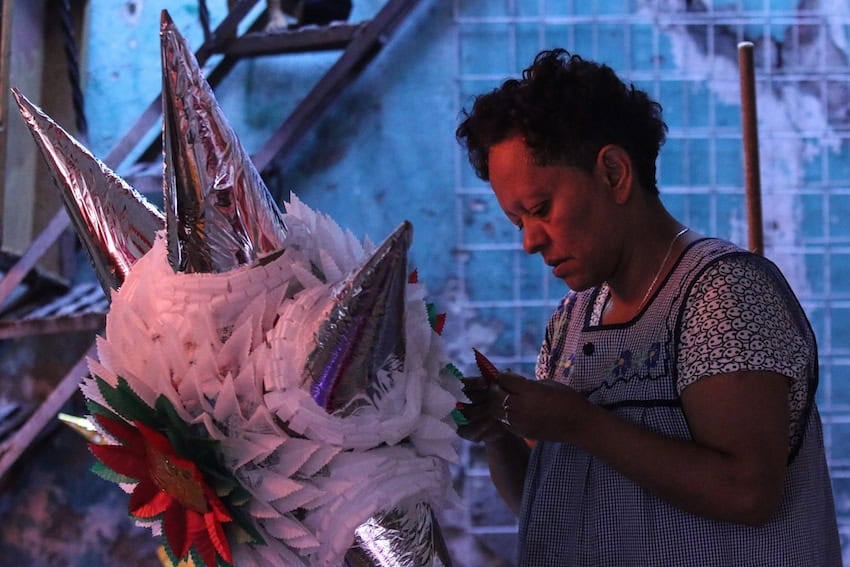
Contemporary posadas still center around breaking a piñata. And while Mexicans today do buy papier-mâché piñatas for children’s parties, those piñatas are generally shaped like animals or cartoon characters. These days, piñatas with the seven spikes are only seen in December. 

Although the original piñatas were clay pots, it’s increasingly rare to see clay piñatas at posadas, for a very modern reason: It’s safer to break a papier-mâché structure than a clay one, which for centuries has injured more than one unsuspecting person.

piñatas
“¡Dale, dale, dale! / ¡No pierdas el tino!,” is definitely a childhood anthem for any kid in Mexico. (Andrea Murcia Monsiváis/Cuartoscuro)

Perhaps, from the unearthly realm of Teteocan, Huitzilopochtli smiles ironically, watching people hit a papier-mâché structure, hoping to receive the riches of Christianity’s celestial kingdom. After all, they continue to gather during the sacred days that, millennia ago, were dedicated to worshipping the god of war.

Andrea Fischer contributes to the features desk at Mexico News Daily. She has edited and written for National Geographic en Español and Muy Interesante México, and continues to be an advocate for anything that screams science. Or yoga. Or both.


Sheinbaum defends Mexico’s sweeping new tariffs: Thursday’s mañanera recapped

1
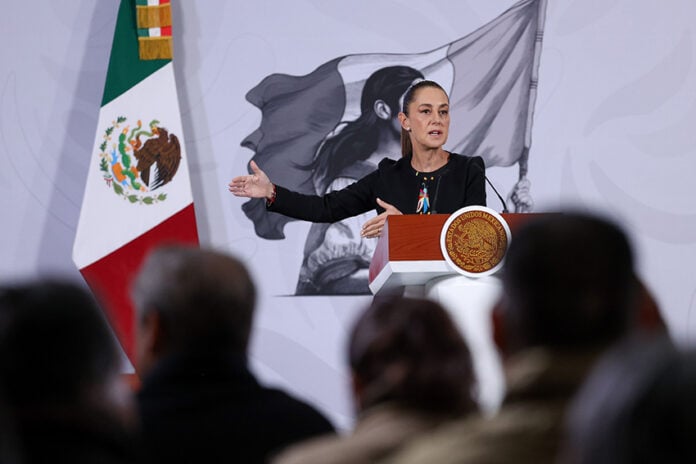
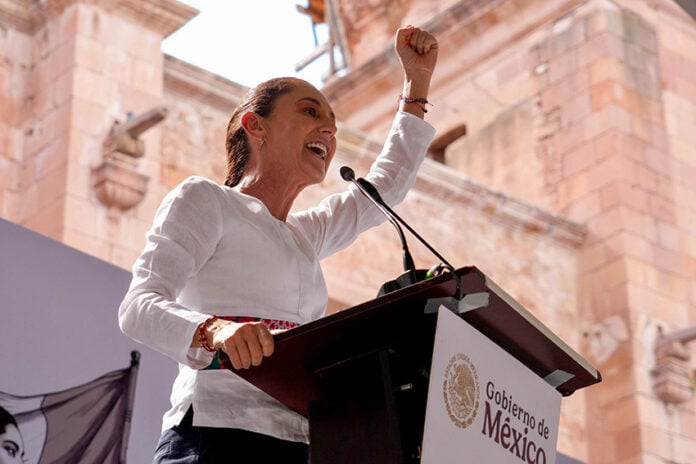
President Sheinbaum gestures from the podium of her morning press conference
The new tariffs don't target China, but rather "the countries with which we don't have trade agreements," President Sheinbaum said Thursday. (Galo Cañas / Cuartoscuro.com)

Mexico’s soon-to-be enacted tariffs, a 1944 water treaty and tourism promotion in China were among the topics spoken about at President Claudia Sheinbaum’s Thursday morning press conference.

Here is a recap of the president’s Dec. 11 mañanera.

Sheinbaum: Tariffs don’t specifically target China 

Sheinbaum said that the tariff bill that has now been approved by both houses of Congress “is not aimed at China,” whose exports to Mexico have increased significantly in recent years, leaving Mexico with a large trade deficit with the world’s No. 2 economy.

“That’s very important,” she said. “It’s [aimed] at the countries with which we don’t have trade agreements.”

The legislation passed by the House of Representatives and the Senate on Wednesday will, as of Jan. 1, implement or increase tariffs on imports of more than 1,400 products from China and other countries with which Mexico doesn’t have trade agreements, including India, South Korea, Thailand and Indonesia. A central aim of the tariffs is to protect Mexican industrial sectors, some of which struggle to compete with cheap imports from Asia.

Sheinbaum said that the implementation of the new and higher tariffs is part of the strategy outlined in Plan México, the federal government’s ambitious economic initiative that was presented in January.

“What is the strategy? To produce more in Mexico,” she said.

Sheinbaum acknowledged that many of the tariffs she originally proposed in a bill sent to Congress in September were lowered after consultation with Mexican and foreign business representatives.

“There was also communication with South Korea, there was communication with China. Our ambassador in China was very active in explaining the reasons [for the tariffs], and the original proposal changed significantly,” she said.

Asked about the Chinese government’s call for Mexico to promptly “correct its wrong practices of unilateralism and protectionism,” Sheinbaum said that her government engages with its Chinese counterpart on trade in “work meetings” with China’s Ministry of Commerce.

“We recently proposed that there could be a high-level meeting … about different issues, and the idea is that these meetings can take place,” she said.

“Our interest is not to generate conflict with any country in the world. And we respect China a lot and have very good relations with them,” Sheinbaum said.

“The reason for these adjustments in the Law [on General Import and Export Taxes] has to do with strengthening the national economy,” she added.

Bilateral water talks continue 

Sheinbaum said that her government remains in talks with the Trump administration over Mexico’s obligation to deliver water to the United States.

The latest talks began after U.S. President Donald Trump threatened on Monday to impose an additional 5% tariff on Mexican goods if Mexico doesn’t promptly release a significant quantity of the water it owes to the United States under the terms of a 1944 treaty.

Mexico faces new tariff threat from Trump over water debt

Sheinbaum subsequently expressed confidence that “we’re going to reach an agreement for the benefit of the United States and for the benefit of Mexico.”

On Thursday morning, she said that progress has been made, but noted there would be another bilateral meeting later in the day.

Sheinbaum said that “there has to be recognition from both countries” that Mexico endured “five years of drought” during the last five-year cycle of the water treaty.

In each five-year cycle, Mexico is required to send 1.75 million acre-feet of water across the northern border from six tributaries of the Rio Grande. However, it only delivered just over half that amount in the 2020-25 cycle.

Sheinbaum said that Mexico’s failure to deliver all the water it was supposed to transfer to the U.S. during the last five-year cycle was not because it didn’t want to.

Rather, she said, it was because “there was drought — because there wasn’t water, it’s as simple as that.”

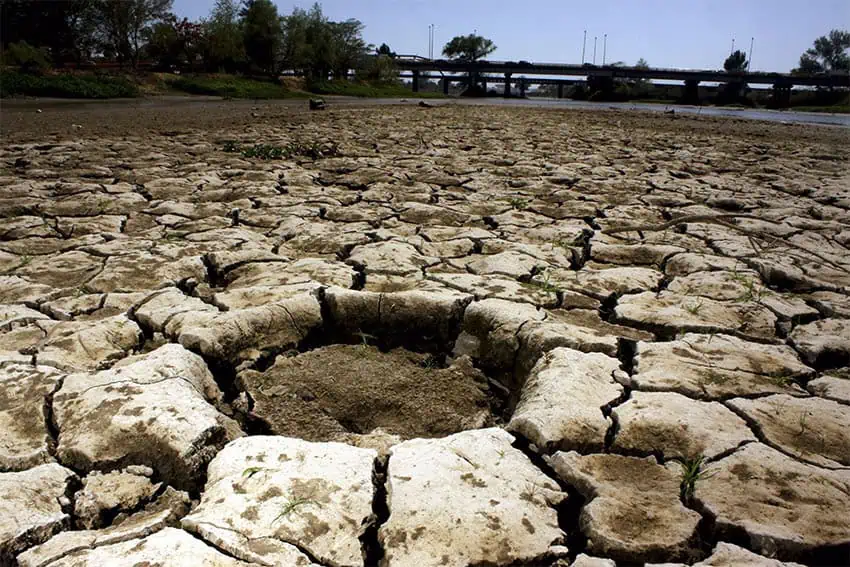
Cracks run through the dirt in a dried-out reservoir, representing intense drought in northwest Mexico
Despite a generous rainy season, drought and dry conditions persist along much of the Mexico-U.S. border, according to the National Water Commission. (Cuartoscuro)

Sheinbaum noted that the 1944 treaty establishes that if a country fails to meet their water obligation to their neighbor, it can make up the shortfall in the next five-year cycle.

“That’s what we’re working on,” she said.

How soon Mexico can make up the shortfall “depends on how much rain we have,” Sheinbaum said.

Mexico’s tourism promotion strategy in China 

While the Mexican government is seeking to limit the entry of Chinese goods to Mexico it would like to see more Chinese people visiting the country.

Tourism Minister Josefina Rodríguez acknowledged that goal on Thursday morning, telling reporters that the ministry she leads will commence a campaign of “constant promotion” in “emerging” tourism markets, including China, in 2026.

She noted that the number of Chinese visitors increased 10.6% annually in the first 10 months of the year, and offered an insight into how Mexico is being promoted as a tourism destination in China.

International visitation is up over 13% this year

Rodríguez noted that Mexico held a tianguis turístico (tourism fair) in Beijing this year, and revealed that it will attend two international tourism events in China next year.

She said that some Chinese tourists come to Mexico because of their interest in Day of the Dead celebrations. Rodríguez highlighted that Coco, the 2017 film that is inspired by Day of the Dead, was very popular in China.

“And all this makes the Chinese market want to come to learn about the culture. We share many ancestral things,” she said.

Rodríguez also said that Mexico’s tourism promotion strategy in China is different to that employed in other countries.

“As you know, you can’t look at Instagram, you can’t look at Facebook [in China]. So, the strategy is very different,” she said.

Rodríguez explained that the Tourism Ministry is working with “Mexican influencers who have lived in China for many years” — and presumably appear on digital platforms that are more readily accessible to Chinese citizens — as well as Mexican restaurants in China.

Those influencers and restaurants are “helping us to say: This is Mexico,'” the tourism minister said.

By Mexico News Daily chief staff writer Peter Davies (peter.davies@mexiconewsdaily.com)

American skydiver unhurt after awkward landing in downtown Mexico City 

4
scene of parachutist landing
The wayward skydiver hit the ground safely, but his parachute refused to free itself from the traffic light structure, despite help from concerned passersby. (Screenshot from C5 security footage)

A late-night skydiving stunt over the heart of downtown Mexico City ended when a U.S. man’s parachute snagged on a traffic light above a major avenue, startling a few pedestrians and drivers but causing no injuries.

Authorities and local media identified the man as 36-year-old American Miles Pack, who was later taken to civic court and released without charges after officials determined there was no damage to city infrastructure.

The incident happened in the early hours of Tuesday morning at the intersection of Avenida Juárez and Avenida Balderas — one block from the city’s oldest public park, the Alameda Central, which is adjacent to the Palacio de Bellas Artes.

At the time, traffic in the normally busy corridor of the Cuauhtémoc borough was sparse.

Video from the capital’s C5 surveillance system showed the skydiver landing safely on the street while his parachute remained tangled on the metal arm of the traffic light, hanging over Avenida Juárez about a two-minute walk from the Diego Rivera Mural Museum.

Images shared on social media by C5 chief Salvador Guerrero Chiprés showed two people helping the man try to free the parachute while emergency crews arrived at the scene.

The Mexico City Ministry of Citizen Security said officers checked Pack, confirmed he was uninjured and verified that the traffic signal, though left wobbly, was not damaged.

Traffic personnel briefly cordoned off the intersection while responders ensured the hanging lines and fabric did not pose a risk, and authorities said the incident did not significantly affect traffic flow at that hour.

News and police reports only say the incident happened “in the early morning” or the “madrugada” (pre-dawn hours) of Tuesday, Dec. 9 without specifying an exact time.

Local reports said Pack told officers he had jumped from a small plane to make the descent over the historic center, where skydiving is not allowed.

Officials noted that skydiving is a regulated activity and not permitted over dense urban areas in Mexico City.

After being presented to a civic judge in the Cuauhtémoc borough, Pack was released once authorities confirmed there were no injuries or material damage.

The unusual scene, which was quickly shared online via the security footage, spread widely on social media as the latest offbeat stunt in the capital.

With reports from Infobae, BBC, El Financiero and Storyful

Loreto, the Baja Peninsula Pueblo Mágico, makes the BBC’s top 20 list of world destinations

3
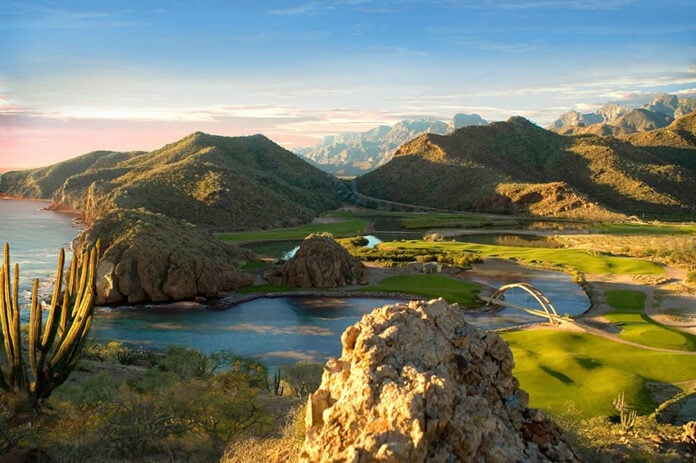
Coastal hills and a golf coarse in Loreto, Baja California Sur
Nestled between mountains and sea, the town of Loreto has been highlighted by the BBC for its natural beauty, its tranquility and its strong sense of community. (Visit Mexico)

If you’re not familiar with Loreto, the oldest city on the Baja California peninsula, the U.K.’s BBC has some advice for you: Go there.

The Pueblo Mágico (Magical Town) of Loreto has just earned a spot on the BBC’s annual travel list of the 20 places to go in 2026.

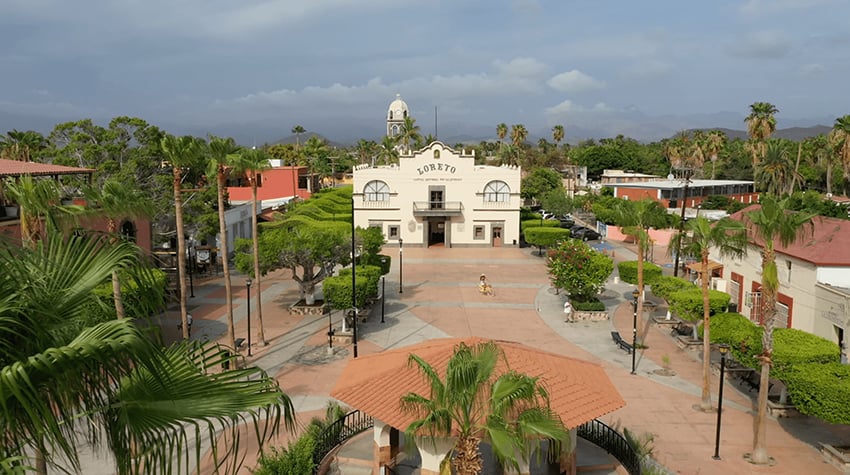
Loreto Baja California Sur town center
The starting point for much of the Spanish Jesuits’ colonization of the Californias, Loreto and its surrounding area still boast  many examples of mission architecture. (Visit Mexico)

This semi-hidden destination on the east coast of Baja California Sur was singled out for its natural landscape, wildlife biodiversity, aco-adventure, and community-led conservation efforts.

“Loreto feels both small-town intimate and majestically expansive,” the BBC said. “It’s a place where travelers “can join a hopeful story of ecosystems recovering and communities leading the way.” 

Tucked between the Sea of ​​Cortez and the Sierra de la Giganta mountain range, the town and its surroundings offer dramatic landscapes that include sea, desert, and mountains.

This near-isolation of Loreto is ideal for travelers seeking nature and culture in a quieter setting than other Mexican destinations such as Los Cabos or the Riviera Maya.

Beyond its natural attractions, Loreto has an important historical heritage, though not all of it is universally admired today. It was from Loreto that Jesuit missionaries began the long journey of colonization of Baja and Alta California, including uninvited evangelization of the Indigenous people there.

That project left behind some notable examples of mission architecture in Loreto and its surroundings. Some of these architectural gems include the Mission of Our Lady of Loreto and the Museum of the Missions, among others. 

It’s Loreto’s outstanding conservation efforts, however, that are most highlighted by the BBC.

“Here, conservation is woven into daily life,” the broadcaster said, noting that local fishermen are now trained naturalist guides who lead kayak trips around desert islets and whale-watching tours. 

 “Visitors can help identify migrating blue whales, join coastal clean-ups, or take part in annual conservation festivals that fill the plaza with music, food and storytelling,” the BBC added. 

 With an estimated population of 18,000, and over 300 days of sunshine, Loreto’s growing appeal lies in its peaceful and safe atmosphere, its warm climate, and its diverse marine  and land wildlife — all of which landed Loreto on the BBC’s must-visit list alongside such famous and far-flung destinations as the Cook Islands, the Scottish Hebrides and Indonesia’s Komodo Islands.

Mexico News Daily

International visitation is up over 13% this year

0
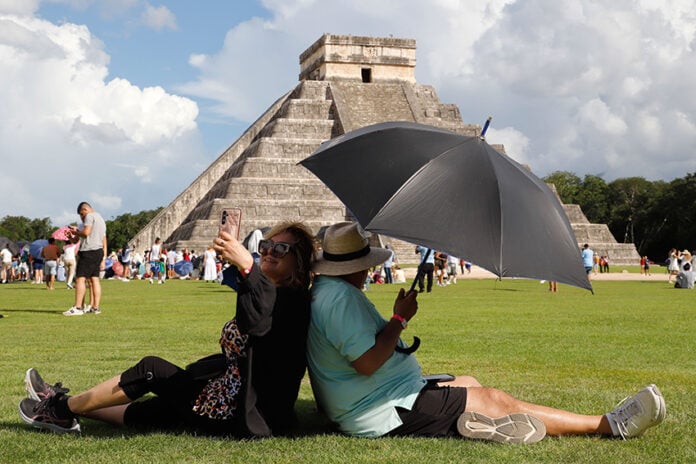
A woman takes a selfie while sitting back to back with a man holding a shade umbrella in front of a Chichén Itzá pyramid in Mexico
Tourists enjoy the view of Chichén Itzá's main pyramid during the fall equinox in September. (Martín Zetina / Cuartoscuro.com)

Almost 80 million international visitors came to Mexico in the first 10 months of 2025, representing a double digit increase compared to the same period of last year.

“Mexico is in fashion,” declared Tourism Minister Josefina Rodríguez before she presented the latest data on international arrivals at President Claudia Sheinbaum’s Thursday morning press conference.

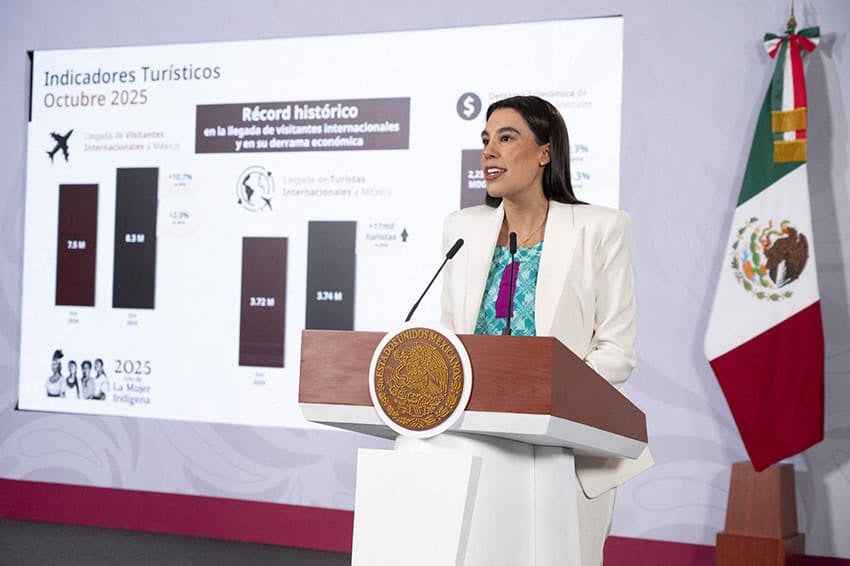
Tourism Minister Josefina Rodríguez shares a slide showing tourism data at a press conference
October was a record-breaking month for visitation, Tourism Minister Josefina Rodríguez said on Thursday. (Saúl López / Presidencia)

Rodríguez reported that Mexico welcomed 79.3 million international visitors between January and October, an increase of 13.6% compared to the same period of 2024.

International visitors refers to tourists who spend at least one night in Mexico as well as day trippers from neighboring countries and cruise ship passengers.

Rodríguez said that 38.4 million international tourists came to Mexico between January and October, an annual increase of 5.8%, while 8.9 million cruise ship passengers visited the country, up 11.8% compared to the first 10 months of last year.

Mexico was the world’s sixth most visited country in 2024, behind France, Spain, the United States, Turkey and Italy.

Rodríguez also reported that international visitors contributed US $28.2 billion to the Mexican economy between January and October, 6.5% more than in the same period of 2024.

She said that the “strength of the tourism indicators” reflect not just the growth of Mexico’s tourism industry, but also “international confidence in Mexico, its stability and the vision promoted by the government of Mexico.”

“… Every [percentage] point that we advance in the arrival of visitors … [and] in [the entry of] foreign currency is a clear sign that the country is on the right path,” Rodríguez said.

A record-breaking October  

Rodríguez said that new records were set in October for the number of international visitors and the amount of money they spent in Mexico.

She said that 8.3 million international visitors came to Mexico in October, an annual increase of 10.7%.

Rodríguez described the increase in international visitors’ spending in Mexico as “incredible,” noting that their expenditure of $2.44 billion represented a 9.3% increase compared to October 2024 and a 50.3% spike compared to the same month in 2019, before the COVID pandemic ravaged the Mexican economy — and its tourism industry — in 2020.

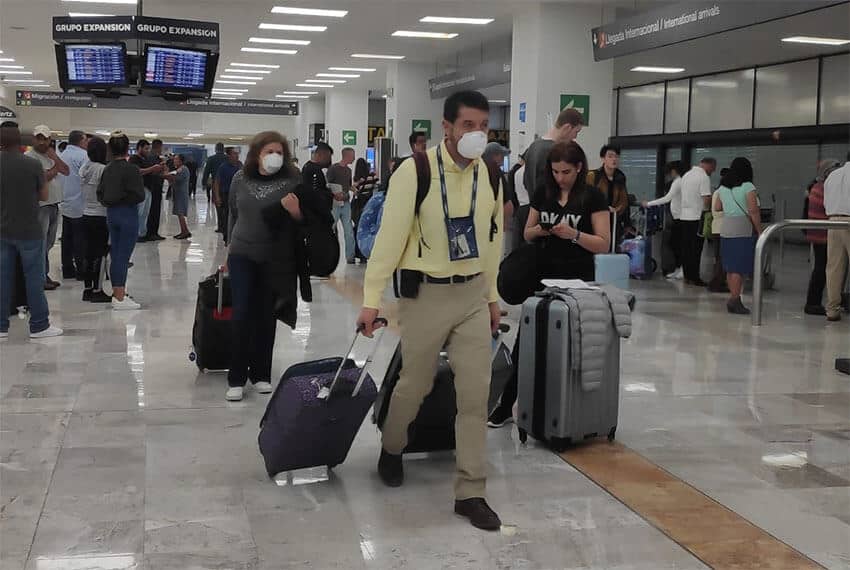
Travelers with face masks at the the Mexico City International Airport.
Mexico’s tourism industry has now more than recovered from the economic havoc wreaked by COVID-19 pandemic. (File photo)

The tourism minister also reported that 3.74 million international tourists spent time in Mexico in October, a 0.1% increase compared to the same month of last year.

Air arrivals  

Rodríguez reported that 47.98 million people came into Mexico on international flights in the first 10 months of the year, an increase of 1.4% compared to the same period of last year. The figure includes foreign and Mexican passengers.

The tourism minister presented data that showed that the number of Italians entering the country by air between January and October rose 14.8%, the highest increase of any nationality.

According to the data she displayed, the number of Argentinians who came into the country on international flights increased 14.3% annually in the first 10 months of the year, while arrivals were also up from South Korea (+11.6%), Canada (+11.4%), China (+10.6%) and the United States (+0.6%). The U.S. is the largest source country of tourists to Mexico.

Rodríguez also reported that passenger numbers on domestic flights in Mexico increased 3.2% annually between January and October to reach 52.43 million.

Mexico’s top 10 airports 

Rodríguez reported that 157.2 million Mexican and foreign passengers used Mexico’s airports in the first 10 months of the year, a 2.5% increase compared to the same period of 2024.

Mexico’s busiest airports in terms of passenger numbers between January and October were:

  1. Mexico City International Airport: 36.9 million passengers.
  2. Cancún International Airport: 24.4 million passengers.
  3. Guadalajara International Airport: 15.3 million passengers
  4. Monterrey International Airport: 13 million passengers.
  5. Tijuana International Airport: 10.6 million passengers.
  6. Los Cabos International Airport: 6.2 million passengers.
  7. Felipe Ángeles International Airport: 5.8 million passengers.
  8. Puerto Vallarta International Airport: 5.6 million passengers.
  9. Mérida International Airport: 3.2 million passengers.
  10. Bajío International Airport: 2.7 million passengers.

Mexico News Daily 

Mexico City hotel prices spike nearly 1000% ahead of the World Cup

5
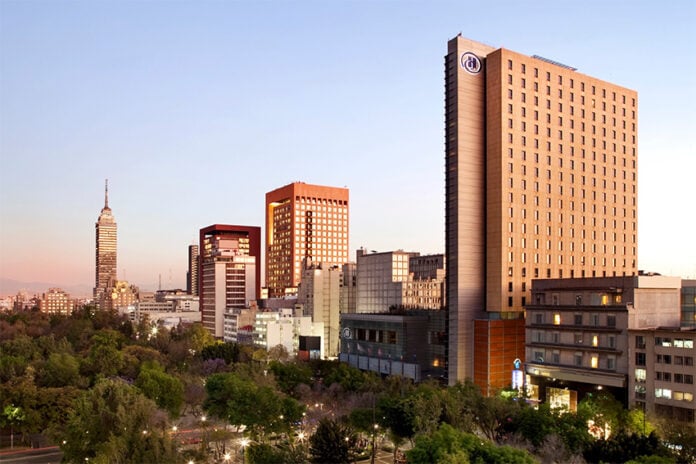
The Hilton Reforma in Mexico City
Prices at the Hilton Mexico City Reforma, seen here, more than doubled from US $337 to $1,106 a night for the World Cup's opening game on June 11. Despite the price increases, most bookings quickly sold out. (Hilton Mexico City Reforma)

Hotels across North America are dramatically hiking prices for rooms ahead of the 2026 FIFA World Cup, according to an analysis conducted by The Athletic, the sports journalism department of The New York Times.

The study reveals that room rates in Mexico, Canada and the U.S. — the co-hosts of the global soccer tournament — spiked by an average of more than 300% in early June when 16 host cities will be staging their opening matches.

According to the analysis, room rates at 96 Marriott and Hilton hotels in North America soared after FIFA unveiled the 104-match schedule on Saturday following Friday’s draw.

The average per-night rate around an opening game in each of the 16 host cities rose to US $1,013 — up from US $293 just 21 days earlier, the study revealed. That’s a 328% increase.

The Athletic found that the most significant percentage increase was in Mexico City, where the inaugural match of the tournament pitting Mexico vs. South Africa will take place on June 11 at Estadio Banorte.

The most egregious example is the Marriott resort Le Meridien Mexico City Reforma which has a listing for US $157 per night in late May. That same room will cost US $3,882 the week of the opening match, a 2,372% increase.

Six Mexico City hotels near Estadio Banorte — the site of five matches — have listings that average US $1,572 per night ahead of the opening match. That’s an astonishing 961% increase from rates for mid-May stays that would set you back just US $172, according to the analysis.

The surge in room rates in the two other Mexican host cities was also considerable. Monterrey hotel fares climbed on average by 466% (second-most among the 16 host cities), while Guadalajara saw fees rise by 405% (fourth-most).

As The Athletic noted, it is not unusual for hotel prices to rise around mega events. At the Paris Olympics last year, the French capital saw a year-over-year room rate increase of 141%. 

However, The Athletic observed,” the scale of the increases … immediately after the World Cup schedule was confirmed appears to be much more sizable.”

The trade publication Inside World Football also voiced concern, writing that it feels like real fans are being priced out of the World Cup, describing the exorbitant rates as “opportunism.”

The Athletic’s methodology involved identifying the per-night price for a two-night stay around the opening match at six randomly selected hotels in each of the 16 host cities. That price was then compared to the equivalent rates offered exactly three weeks earlier by the same hotels.

Despite the skyrocketing room rates, demand for hotel rooms is undeniable. The Athletic discovered that only three of the 46 hotels listed on the Marriott Bonvoy app were not described as sold out.

With reports from The Athletic, Mediaite and The New York Post

Forbes again names Claudia Sheinbaum one of the world’s 5 most powerful women

1
President Sheinbaum
It is the second straight year that President Sheinbaum has been ranked in the top 5 of Forbes' list of the 100 Most Powerful Women. This time, it was about more than her historic victory as the first woman elected president in Mexico, but also based on her handling of economic development issues and crisis resolution. (Presidencia / Cuartoscuro)

For the second consecutive year, President Claudia Sheinbaum finds herself in heady company, ranked in the top five of Forbes magazine’s annual 100 Most Powerful Women in the World list.

Mexico’s president was named the fifth most-powerful woman in the world, based on a formula using metrics such as money, media impact, influence and spheres of power.Forbes wrote that “nearshoring — a business strategy of relocating production to countries geographically close to the end market — has put Sheinbaum at the center of the manufacturing transformation in North America.”


View this post on Instagram


A post shared by EL CEO (@elceo__)

The magazine also credited Sheinbaum for having made history in 2024 by becoming the first woman elected president in Mexico. That achievement was also cited last year when she was ranked the fourth most powerful woman on the Forbes list.

Forbes pointed out that while global approval ratings for female political leaders are declining, Sheinbaum has been able to buck the trend. 

An Enkoll poll conducted for the newspaper El País in September found that Sheinbaum achieved a 78% approval rating, surpassing her predecessor and mentor Andrés Manuel López Obrador.

But in keeping with Forbes’ observation, the latest El País poll found that Sheinbaum’s approval rating had dipped 4% “after a month of conflicts in which the government lost control of the public agenda.”

Women are increasingly finding themselves at the center of power, Forbes wrote, “directing capital that determines the trajectory of artificial intelligence, managing supply chains governments compete to secure, and steadying institutions under historic pressure.”

The top five women on this year’s list hold positions of political authority. And while women only govern three of the world’s 25 largest economies, Forbes said they lead “tipping points” that define the geopolitical order.  

For the fourth consecutive year, Ursula von der Leyen, president of the European Union, and Christine Lagarde, president of the European Central Bank, topped the list. 

Japanese Prime Minister Sanae Takeichi, who took office in October, is a newcomer, coming in at No. 3 and bumping Italian Prime Minister Giorgia Meloni and  Sheinbaum down to fourth and fifth.

Forbes has compiled and published its 100 Most Powerful Women in the World list since 2004.

Such recognition is not new for Sheinbaum. A year ago, she was recognized by The Financial Times newspaper as one of the 25 Most Influential Women of 2024 and in April the Mexican president earned a spot in Time magazine’s’ 100 Most Influential People list.

With reports from Forbes, El País and Proceso

China urges Mexico to reverse 50% tariffs ‘as soon as possible’

13
A plume of smoke rises from a cargo tanker at sea
After passage by the Senate on Wednesday, the new tariff law is headed to President Sheinbaum's desk for her approval. (Hennie Stander/Unsplash)

The government of China has called on Mexico to abandon its plan to impose new and higher tariffs on a wide range of Chinese products.

A spokesperson for China’s Ministry of Commerce on Thursday urged Mexico to “correct its wrong practices of unilateralism and protectionism at an early date,” according to Chinese state news agency Xinhua.

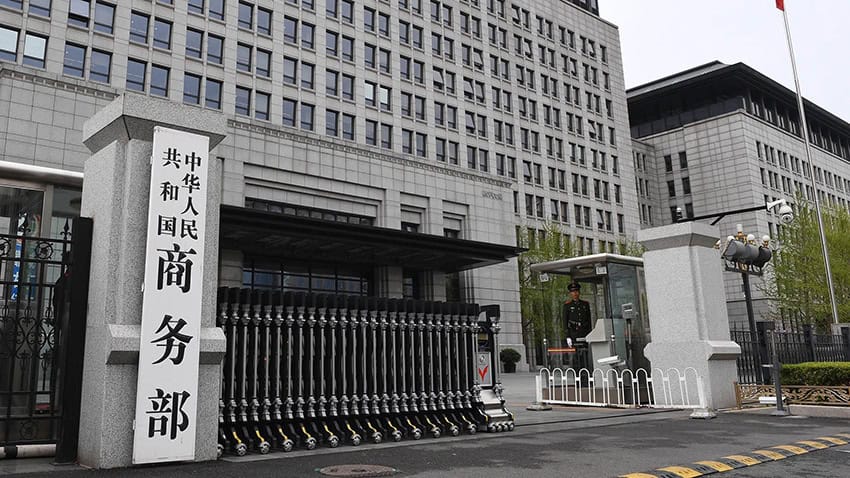
A grey building with Chinese lettering
The Chinese Ministry of Commerce urged Mexico to rethink it’s latest import duties. (China State Council Information Office)

The appeal came after Mexico’s Chamber of Deputies and Senate approved legislation on Wednesday that will increase, or implement for the first time, tariffs on imports of more than 1,400 products from China and other countries with which Mexico doesn’t have trade agreements, including India, South Korea, Thailand and Indonesia.

The tariffs — which cover more than a dozen sectors including auto parts, light vehicles, plastic, toys, textiles, furniture, footwear, clothing, aluminum and glass — range from 5% to 50%. They are scheduled to take effect in January, following promulgation by President Claudia Sheinbaum.

According to Xinhua, the Commerce Ministry spokesperson said that the tariffs approved by the Mexican Congress “will substantially harm the interests of relevant trading partners, including China.”

The spokesperson acknowledged that some downward “adjustments” were made to the tariffs originally proposed by Sheinbaum in a bill she submitted to Congress in September.

Still, China clearly sees Mexico’s protectionist plan as an affront, and an action designed to appease the United States ahead of the 2026 USMCA review.

“We hope that the Mexican side will attach great importance to this matter and act prudently,” the Commerce Ministry spokesperson said.

The spokesperson also “emphasized that China highly values the China-Mexico economic and trade relationship and actively promotes the healthy and stable development of trade and investment cooperation,” according to Xinhua.

In addition, the spokesperson noted that “to safeguard the interests of relevant Chinese industries, the Ministry of Commerce initiated a trade and investment barrier investigation against Mexico at the end of September in accordance with the law, and the investigation is underway.”

Meanwhile, Reuters reported that “Mexico’s decision to raise tariffs as high as 50% will affect [US] $1 billion worth of shipments from major Indian car exporters, including Volkswagen and Hyundai, despite industry lobbying to persuade New Delhi to prevent such a move.”

The news agency said its reporting was based on information from two sources and a letter it reviewed from an industry group, the Society of Indian Automobile Manufacturers.

Volkswagen, Hyundai and various other automakers have plants in India, while U.S. automakers that export vehicles to Mexico from plants in China will also be affected by the tariffs.

With the new and higher tariffs that mainly target goods from Asian countries, the Mexican government is seeking to provide greater protection for Mexican industry — which includes sectors that struggle to compete with cheap imports — and increase domestic output.

It is also aiming to reduce reliance on imports from Asian countries, especially China, a country with which Mexico has a significant trade imbalance.

Ebrard: ‘They’re not political measures, they’re economic and trade measures’

In an interview on Thursday with Radio Fórmula, federal Economy Minister Marcelo Ebrard said it was clear that countries such as China, South Korea, India and Indonesia are not happy that Mexico is imposing tariffs on their exports.

He said that Mexico would hold talks with such countries with a view to “improving trade conditions,” but declared that the Mexican government wouldn’t be lifting the tariffs approved by Congress.

Those tariffs, Ebrard said, “are not political measures, they’re economic and trade measures.”

Aranceles a China y países de Asia no son un balazo en el pie: Ebrard

The economy minister emphasized that Mexico is “trying to protect” Mexican industry from cheap imports.

China and certain other countries are “using very low prices, in some cases below inventory [value],” he said.

Ebrard also noted that Mexico has “unbalanced” trade relationships with “several” of the countries it is imposing higher tariffs on — most notably China, whose exports to Mexico were worth US $62.1 billion in the first half of 2025, more than 13 times higher than its outlay on Mexican goods.

He said that Mexico is mainly targeting “finished goods,” including vehicles, with its new tariffs, rather than intermediate goods, which he noted are needed to “produce, assemble and export.”

Tariffs on vehicles from China and other Asian countries will be as high as 50%, according to the legislation approved by Congress.

Ebrard said that more than 30% of all manufacturing jobs in Mexico depend on the auto sector.

“You’re talking about more than a million, maybe 1.3 million, jobs,” he said, emphasizing the need to protect the Mexican auto sector, which generates a significant portion of Mexico’s export revenue.

Congress approves new tariffs on goods from China and non-FTA countries

Ebrard highlighted that cars coming into Mexico from Asia “don’t provide anything” to the Mexican economy, and indicated that that the flow of such vehicles into the country needs to be combated before its too late.

“The pace of growth of … [these vehicles] is amazing,” he said, referring mainly to the sales of Chinese cars in Mexico in recent years.

Ebrard said that the tariffs approved by Congress only affect 8% of Mexico’s foreign trade and are aimed at protecting “very specific sectors,” including the auto and textile industries, which has lost jobs due to the prevalence of cheap imports.

He said that all countries seek to protect their domestic industries, including those that “are telling us today not to do it.”

“All countries have policies to protect certain sectors,” Ebrard added.

When interviewer Ciro Gómez Leyva put it to him that he was using the arguments of U.S. President Donald Trump to justify the tariffs, the economy minister responded:

“What we’re trying to do is surgical measures. We’re not imposing generalized tariffs because if we wanted to impose tariffs on all of Mexico’s foreign trade like the United States is doing with other countries, it would be very complicated for our economy. … The argument of President Trump is different, the argument of President Trump is that everything has to be made in the United States.”

Ebrard acknowledged that “a lot of modifications” were made to the original tariffs bill after consultation with Mexican industry. Tariffs for many goods were lowered from the proposal Sheinbaum sent to Congress in September.

The legislation approved is “quite reasonable” and “I’m not thinking it will change in the short term,” Ebrard said.

With reports from Xinhua, Radio Fórmula and El Financiero  

Oaxaca’s Copalita Trail: trekking the Zapotec way

4
Copalita Trail
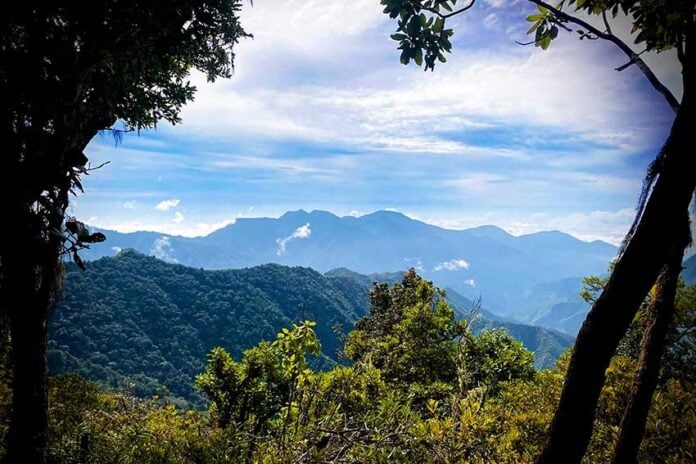
View along the Copalita Trail, while trekking with Zapotec guides. (John Pint)

The Copalita Trail is 100 kilometers long — 70 kilometers of walking and 30 of rafting—and includes five nights of camping “in a million-star hotel.” It starts in high mountains at 3,200 meters (10,500 feet), passes through five ecosystems, takes you down the Copalita River, and ends at sea level on a gorgeous Pacific Coast beach.

The trek is a project of nine Zapotec communities in Oaxaca and has much to do with environmental education and conservation. It was organized by biologist Marco Antonio González some fourteen years ago.

Visiting Zapotec villages

Paulina Ascencio and Arturo Sánchez
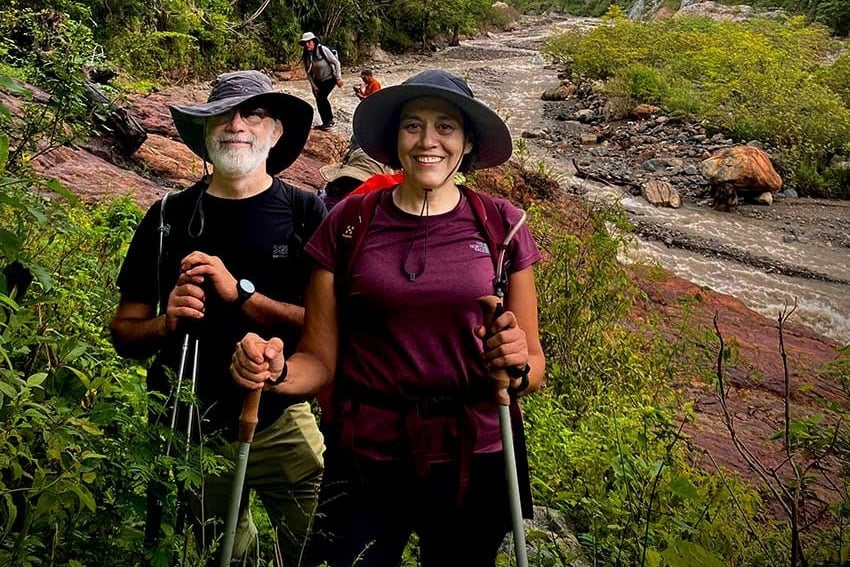
Guadalajara couple Paulina Ascencio and Arturo Sánchez were among those who signed up for the five-day, 100-kilometer-long trek. (John Pint)

The Zapotecas consider the trekkers collaborators rather than clients, and refer to them as “visitors.” At no point during the experience does money change hands and it is unthinkable that a trekker would tip anyone.

These caminatas are fully orchestrated. Six local guides accompany the trekkers at all times and the route they follow varies according to the circumstances of the moment, in a very Mexican fashion.

A couple from Guadalajara, Paulina Ascencio and Arturo Sánchez, signed up for the trek in October of this year.

“It started in Oaxaca City,” Arturo told me. “Marco Antonio gave us an orientation and we were then driven seven hours to San Sebastián Río Hondo, where we enjoyed a meal prepared over a wood-burning stove: carne asada, frijoles and hand-made tortillas … delicious! Then we were driven to our campsite near San Juan Ozolotepec, which had tents and dry toilets.”

“The next day,” continued his wife, Paulina, “we walked 16 kilometers through an area simply bursting with biodiversity. The variety of mushrooms we saw was astounding.”

From guacamole to grasshoppers

“As for the food on this trip,” she continued, “it was incredibly good: guacamole, cottage cheese, yellow mole, frijoles with avocado leaves, grasshoppers, bananas roasted on hot coals and delicious wild-mint tea! And throughout those six days, not a soul had stomach problems!”

Cloud forest of Oaxaca
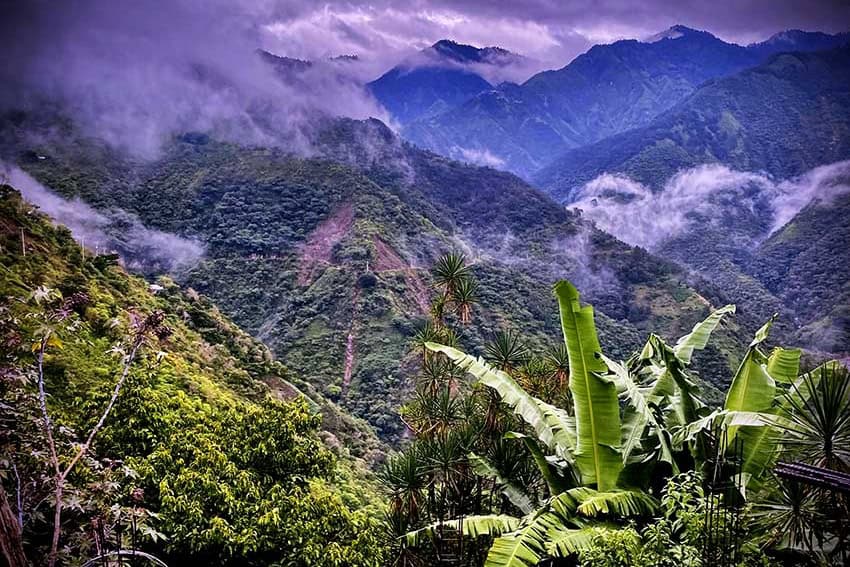
In the cloud forests of Oaxaca, where some of Mexico’s best coffee is grown. (John Pint)

The first day of hiking brought the group to Rancho Obispo near San Francisco Ozolotepec, which is only 200 meters lower in altitude than the first campsite.

Ozolotepec in these place names means “Hill of the Jaguar” in Nahuatl. For the Zapotecs and Mixtecs of Oaxaca, the jaguar represented strength, mystery and the underworld.

A horse for an ambulance

The following day, the “visitors” were on the trail for nine hours, during which they lost 2,000 meters of altitude. Also on the trail were mules carrying their equipment, along with a horse dubbed La Ambulancia.

“It was green, green, green and down, down, down with spectacular views!” says Paulina Ascencio. “Now we were in an agricultural area where they use the traditional milpa system: corn, beans and squash, all growing together. This is also the area where they grow Café Pluma, which is said to be the very best coffee produced in Mexico.

“And at last we reached a river. What a joy it was to put our tired feet into the bubbling water.”

Then it began to rain, which slowed the group down. Eventually, the rain turned into a ferocious storm and a dramatic river crossing.  After 12 hours of hiking, they arrived at San José Ozolotepec, altitude 1,223 meters, a town that can only be reached on foot. Here they slept in a churchyard because the normal campsite had been damaged by a hurricane.

River walking

Egg cooked on hoja santa
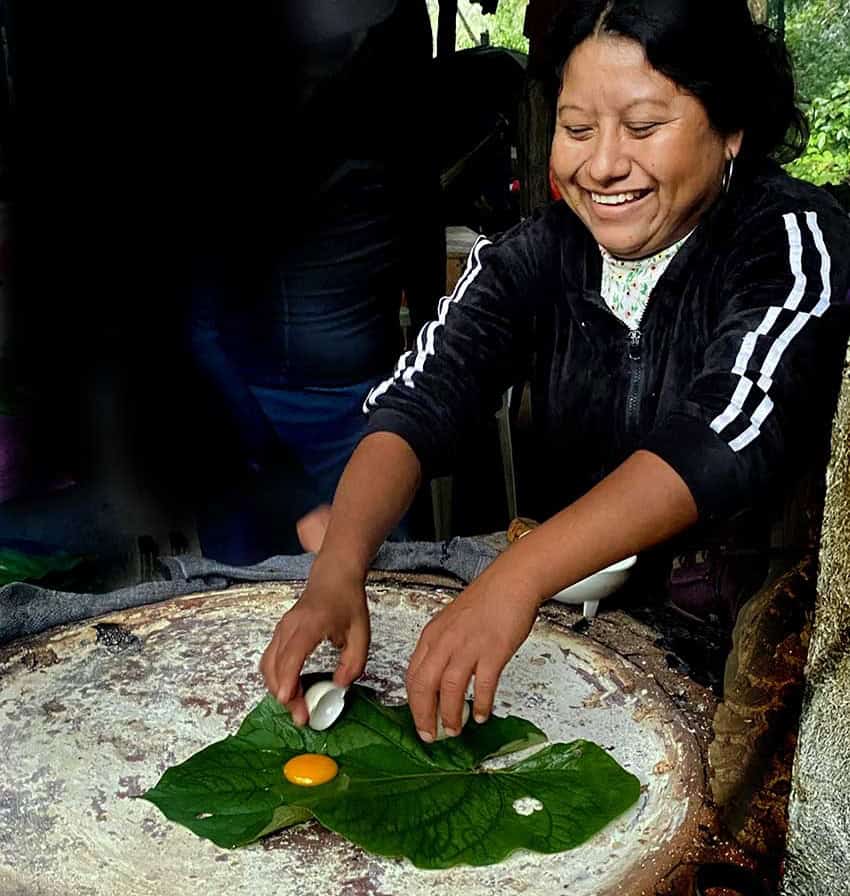
If you’ve never tried an egg cooked on a hoja santa leaf, you’re missing one of life’s great joys. (John Pint)

There are normally only six hours of hiking on day four, following a river through mango orchards and coffee plantations, leaving plenty of time to visit local caves with rock art going back to Neolithic times. In reality, this little group of hikers ran into a second day of heavy rain, which doubled the amount of walking time.

Says Paulina Ascencio:

“At 9 p.m., we arrived at San Felipe Lachilló, dripping wet, but feeling great. The next day, we went to a nearby spring of wonderfully transparent water, which is channeled into several big swimming pools. They call this place Yuviaga. Above the spring, there is a kitchen where we had the best food of the trip. Take the eggs, for example. They start with a large green leaf called hoja santa, which they put on the hot comal. Once the leaf is pliable, they break an egg on it, wrap the egg in the leaf and roast it. Then you eat it with frijoles, salsa and nopales. Delicious!”

Jungles and junk food

The final day of hiking included only 12 kilometers of walking and took the trekkers through an old coffee plantation, followed by jungles filled with huge trees, after which they arrived at San Miguel del Puerto, the first town they had seen on the entire excursion.  

“We walked into a little shop,” said Arturo, “and couldn’t resist buying junk food and beer. Thus fortified, we came to our last campsite at a place called Mandimbo, which has an incredible botanical garden. Here we saw many of the plants we had been eating throughout the trek. They even showed us a bromeliad named after this village. Then we walked to the campsite, at the top of a little hill, underneath a beautiful palapa, where all of us took showers around the back, under a hose.”

The last day of the trek features rafting down the Copalita River, a haven for hundreds of bird species, finishing up on La Bocana Beach, known for its great surfing waves and mud baths, at a restaurant famed for its delicious mariscos (seafood). From here, a bus takes people to their hotels in Huatulco.

Copalita Trail
There’s no telling what edible delicacies one might find while hiking the Copalita Trail in Oaxaca.

Does this sound like your kind of adventure? If so, you’ll find full information on the Camino Copalita website, which is in English. Happy trekking!

John Pint has lived near Guadalajara, Jalisco, for more than 30 years and is the author of “A Guide to West Mexico’s Guachimontones and Surrounding Area” and co-author of “Outdoors in Western Mexico.” More of his writing can be found on his website.