
Let us know how you did!
All about agua in Mexico
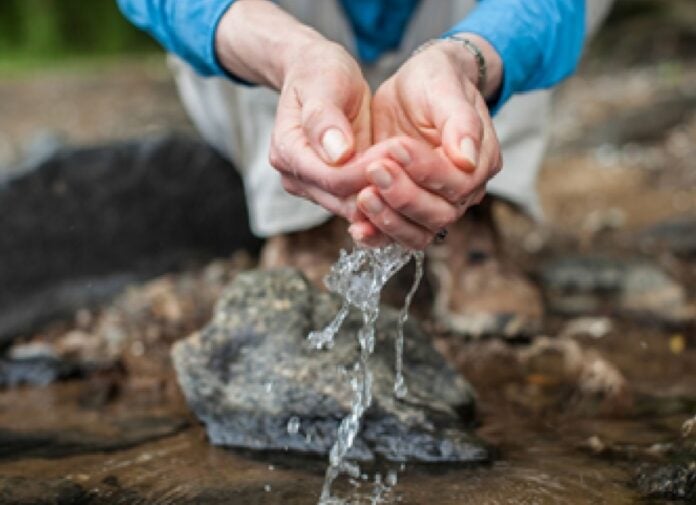
Many years ago, I saw a short video. It was supposed to be funny in that clever “hindsight is 20/20” way. In it, two boys who would today be in their 70s sit by a stream of clear running water. One of them dips a bottle into it and says, “One day, I’m going to sell this water to people in bottles.” The other boy looks at his friend like he’s crazy. “But water’s free. Who would ever buy water in a bottle?” he says incredulously.
Who, indeed.

Well, here we are, all buying water in bottles. Its market share worldwide is now at nearly US $350 billion. But it’s sure worth thinking about alternatives to this reality. Wouldn’t it be something if we could go back to saying, “Water in a bottle, for money? But it falls from the sky and gathers on and below the ground for free!”
The reality of water in Mexico
The reality is, of course, that water is not free. And even when we’re prepared to pay for it, it’s not necessarily forthcoming. In Xalapa, where I live, tandas de agua (water rationing schedules) have been a thing for years now. Doing too much laundry on the wrong day or accidentally leaving a toilet running for a few hours means you could be out of luck for a few days afterward.
If you were here in the spring of 2024, you might remember some scary potential scenarios. Talk of “Day Zero” — the day that Mexico City would officially run out of water — was everywhere.
And yet, there were certain entities in Mexico who, curiously, never seemed to run out of water, even as the communities surrounding them rationed. For several weeks that spring, I personally remember a scarcity of even bottled water and garrafones. Curiously, there was no shortage of Coca-Cola and other sodas: those were stocked up as usual.
In the very-worth-reading report “Los Millonarios de Agua“ (“Water Millionaires”), authors Wilfrido A. Gómez Arias and Andrea Moctezuma point out a perhaps unsurprising fact: 3,304 “water millionaires” (1.1% of users) use 22.3% of all the water available in Mexico.

Wow.
A new water law in Mexico
Water is the important resource, of course. Whoever controls it literally controls everything. It even surpasses money in importance: money might be an important resource, but money is just a symbol. Water is a resource we cannot live without.
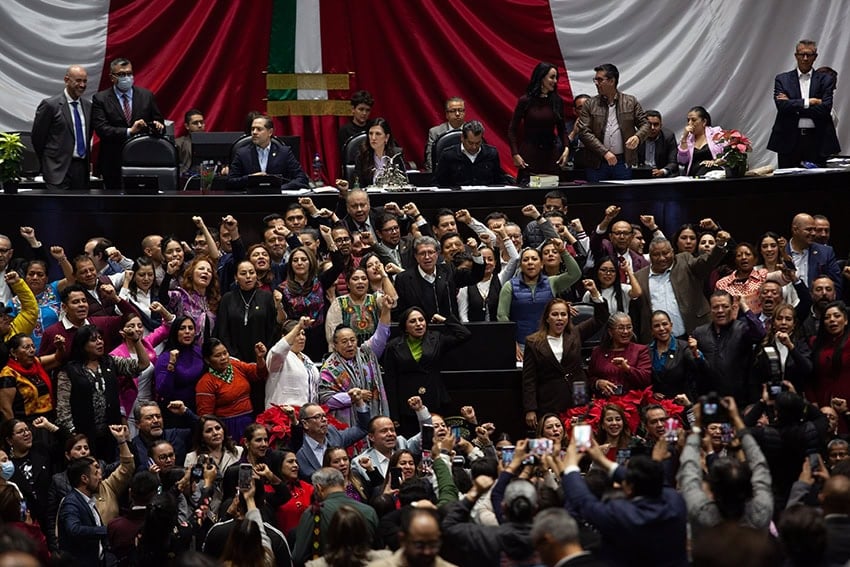
Now, we’ve got a new water law that’s caused quite a bit of uproar, specifically among farmers. It’s meant as an antidote to correct a President Salinas-era law, circa 1992, that essentially privatized water concessions. This allowed individuals and institutions to basically administer their own water from national territory with no involvement from water authorities at all. From there, they could basically do whatever they wanted in terms of access to their allotted amount of water…even sell it. This new law is an attempt to rein that in. It’s not a good look, after all, when everyone is rationing except a select, very wealthy few.
Farmers have fought the law, saying it will impede them from selling or passing on their land to their children. The government, for its part, has assured them that they will still be able to do so. The only circumstance in which they’d have to get a new concession would be if the use of the water changes.
Who gets access to water and who doesn’t?
My main question about the law is this: Are the water millionaires, accounting for about 1% of companies and individuals, still going to be able to extract over one-fifth of the country’s water?
Will resort pools and golf courses stay full and green while the surrounding areas continue to ration? From what I can tell, most likely. Concessions won’t be able to be transferred to others without state involvement. Fine. Is Coca-Cola or Nestlé going to be trying to transfer their concessions? My guess is no.
And if that’s true, then how exactly does this law guarantee water as a human right? It’s not that it causes harm — it’s that it doesn’t seem to really do anything to change the status quo. We’ll still be paying for water. We’ll still be rationing while the big players continue to use their concessions.
‘One water, one law’

So what does it mean exactly for water to be seen as a “human right” rather than a “good”?
I’m with the “One Water, One Law” crowd on this one. “The law they’re proposing is a simulation,” said María González Valencia, director of the Mexican Institute for Community Development (IMDEC). “It keeps the old privatizing structure intact and treats water as a market, not a human right.”
Well, exactly. If they can still extract water and sell it back to us while we ration, what exactly is changing? And will heavier state involvement in water concessions be an area in which Mexico is magically not corrupt? I know that sounds cynical, but it’s an honest question: What’s the plan for making sure this all goes down like it’s supposed to?
I’m glad, though, that they’re at least trying to deal with the issue. It needs to be dealt with — it’s literally a matter of life or death.
How much further could they go? “One Water, One Law” advocates have some good ideas: “Participants demanded publication of a full list of concession-holders delinquent on their fees and urged that new permits be conditioned on sustainable use,” wrote the author of an article on the movement, Tracy L. Barnett, in MND. “Others proposed regional water councils with citizen participation to monitor local supply, and mandatory rain-harvesting systems for public buildings to reduce pumping from Lake Chapala.”
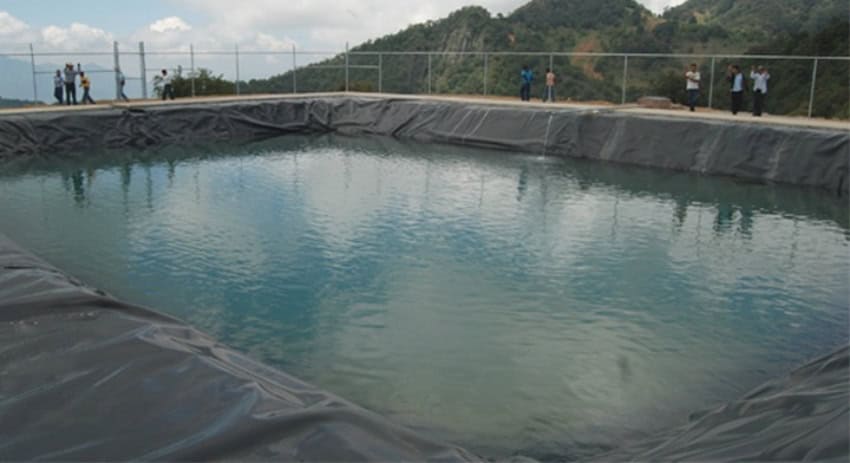
And here’s an idea, surely shared by many, that I’ve hoped for for a long time now. We don’t all have access to wells, but it rains on us all at least sometimes. Water catchment and purifying systems — Mexican-grown! — already exist. If the government were to subsidize the installation of those systems in homes and buildings around the country, that could ensure an important lifeline.
Wouldn’t it be something if Mexico became a model around the world for its handling of water for a growing population?
Trying to rein in some of these big guys by cutting off the possibility of treating water as a commodity without government oversight is a start.
But let’s take this all the way; there’s so much more we could do.
Sarah DeVries is a writer and translator based in Xalapa, Veracruz. She can be reached through her website, sarahedevries.substack.com.
A last minute guide to New Year’s Eve plans in Mexico City

Planning a memorable New Year’s Eve celebration in Mexico City? This comprehensive guide covers the best last-minute options for dining, parties and experiences to ring in 2026 with pizzazz.
Upscale New Year’s Eve restaurants in Mexico City
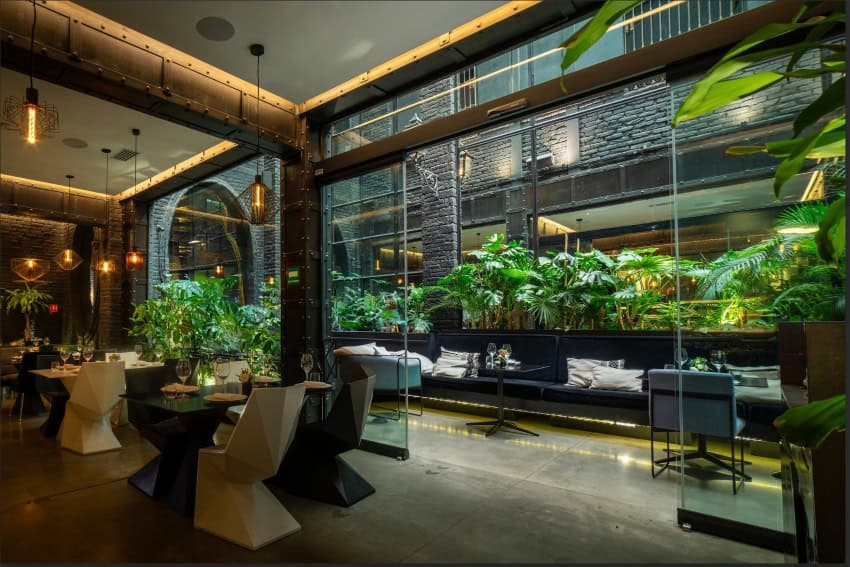
Fónico – “Fónico a la Gatsby” NYE Party
Perfect for: Couples, special occasions, groups
Atmosphere: Fine dining with Art Deco glamour and vintage vibes
What to expect: This high-end Mexican restaurant occupies a heritage mansion in Roma Norte, where Chef Billy Maldonado reinterprets northwestern Mexican flavors with modern creativity. The restaurant offers tasting-menu presentations and craft cocktails in a Gatsby-era aesthetic.
NYE celebration: Two seatings available – early seating 6:00-8:30 p.m. (1,950 pesos) or late party seating from 9:30 p.m.-4:00 a.m. (2,980 pesos, 4,100 with open bar). The late seating includes live music and a festive party atmosphere.
Reservations: OpenTable | Fonico Website
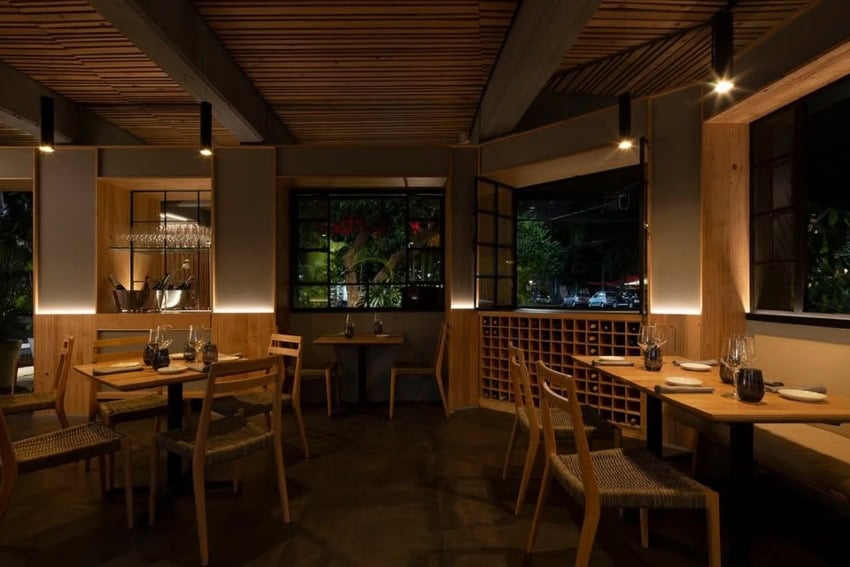
Galea Mediterranean Cuisine NYE Tasting Menu
Perfect for: Food enthusiasts, couples, intimate celebrations
Atmosphere: Michelin-recognized Italian cuisine with classy ambiance
What to expect: This acclaimed Italian restaurant in Roma honors artisanal techniques and conscious hospitality, crafting each dish with precision in an intimate setting. Galea has earned recognition from the Michelin Guide and features Mediterranean-inspired cuisine led by Chef Rafael Zaga and Chef Michelle Catarata.
NYE celebration: Single seating 5:00-8:30 p.m. (maximum 3-hour stay). Choose between a 3-course menu (1,500 pesos) featuring eggplant tartlet, langoustine ravioli and truffle mille-feuille, or a 5-course menu (2,700 pesos) showcasing black truffle porchetta and caramelized milk bread with Reblochon cheese.
Reservations: Galea Reservations
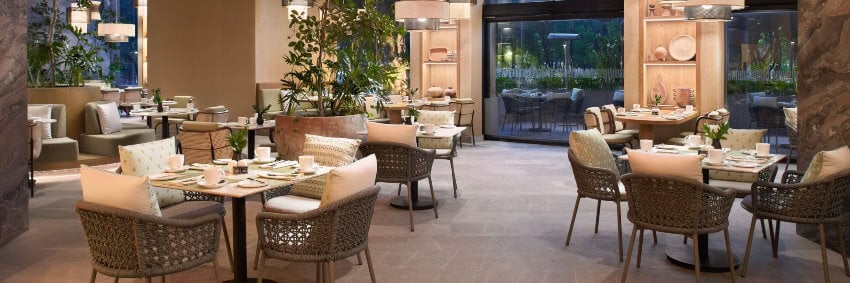
JW Marriott Polanco – Sendero Restaurant NYE Gala
Perfect for: Couples, families, multi-generational celebrations
Atmosphere: Refined hotel dining with contemporary Mexican cuisine
What to expect: This polished restaurant inside JW Marriott Polanco features contemporary Mexican and Latin American dishes built around local, seasonal ingredients in an elegant, comfortable dining room. The refined atmosphere works equally well for romantic dinners and family gatherings.
NYE celebration: Buffet dinner 7:30 p.m.-11:30 p.m. includes sparkling wine and traditional 12 grapes. Dinner starts at 2,900 pesos per person (850 for children under 12). Room packages are available with the gala dinner and a New Year’s Day brunch featuring endless mimosas.
Reservations: Sendero OpenTable | JW Marriott Polanco
Speakeasy & Sophisticated Party Venues for NYE
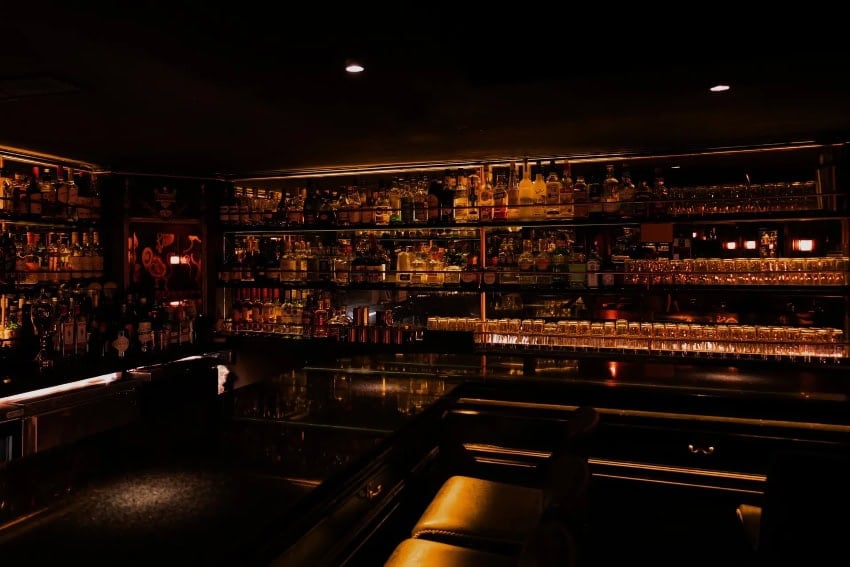
The Midnight Monkey New Year’s Eve Celebration
Perfect for: Couples, jazz enthusiasts, refined party-goers
Atmosphere: Intimate 1920s speakeasy with live jazz and burlesque shows
What to expect: This exclusive speakeasy recreates the Prohibition era with authentic Art Deco style, hidden-bar atmosphere and live entertainment. The venue features classic cocktails and immersive golden-age experiences in an intimate setting.
NYE celebration: Starts at 10:00 p.m. with premium open bar, gourmet canapés, live music and “the countdown that sets the tone for 2026.” The party is set to last until 2:00 a.m.
Reservations: Midnight Monkey | OpenTable
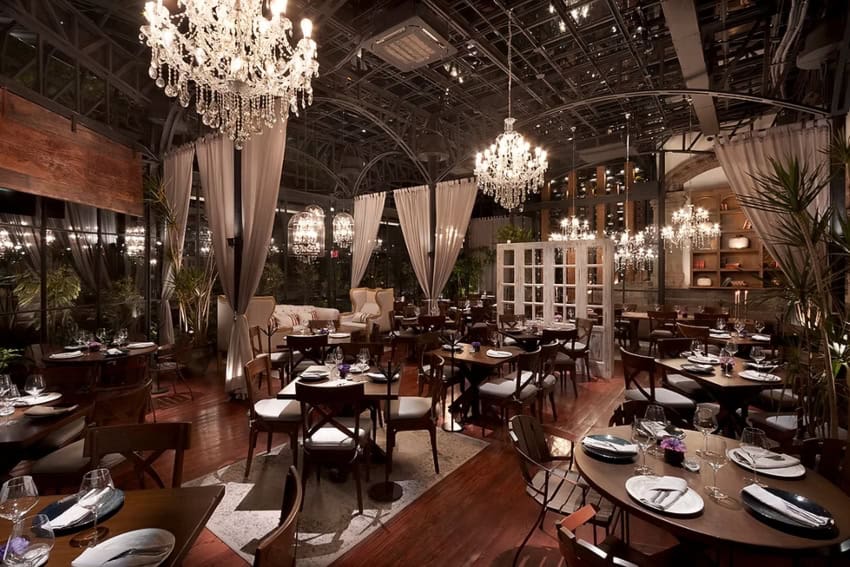
Grupo RosaNegra NYE Celebrations (Multiple Venues)
Perfect for: Groups seeking glamour with live entertainment
Atmosphere: High-energy party dining with shows and performances
What to expect: Collection of upscale Masaryk venues where dinner transforms into entertainment. Taboo offers Mediterranean beach-club vibes with DJs; Parole provides cozy Italian romance with live musicians; RosaNegra delivers Latin glamour with percussion and sparklers; Chambao features steakhouse-supper club atmosphere; Mestiza offers relaxed social dining perfect for cocktail sharing.
NYE celebration: Each restaurant offers a 4-course dinner with a live show, DJ and midnight Moët & Chandon toast. The celebration runs from 8:00 p.m.-2:00 a.m. with emphasis on elegant dress and table-based socializing.
Reservations: Grupo RosaNegra
Traditional & Casual NYE Dining in Mexico City

Gran Cantina Filomeno New Year’s Eve Tradition
Perfect for: Friend groups and families seeking an authentic Mexican atmosphere
Atmosphere: Historic Mexican cantina with Porfirian-era charm
What to expect: This traditional cantina operates from a historic Porfirian mansion, serving classic Mexican cantina cuisine with generous botanas, premium tequila and mezcal selections. The venue features live mariachi music, domino tables and card games in an authentic golden-age Mexican social setting.
NYE celebration: The evening begins at 9:00 p.m. with a dinner-only option (2,200 pesos) or dinner plus open bar (4,000 pesos). Includes live music and a traditional midnight toast.
Reservations: Cantina Filomeno OpenTable
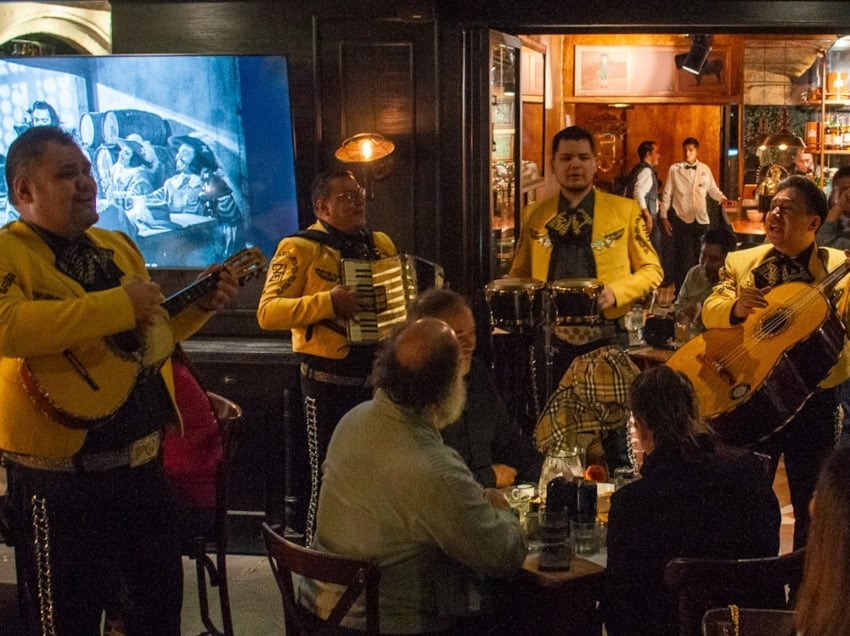
Botanero del Bosque NYE Dinner
Perfect for: Groups, casual celebrations
Atmosphere: Lively cantina-style venue with vintage-modern décor
What to expect: This restored Centro Histórico venue revives traditional Mexican “botanero” culture, where complimentary snacks accompany every drink. The space features vintage-meets-modern design, with live cantina music and communal seating arrangements perfect for group celebrations.
NYE celebration: Starts at 8:00 p.m. with a 4-course dinner, New Year’s toast, live music and traditional 12-grape midnight ritual.
Reservations: Botanero del Bosque
Free Outdoor NYE Events in Mexico City
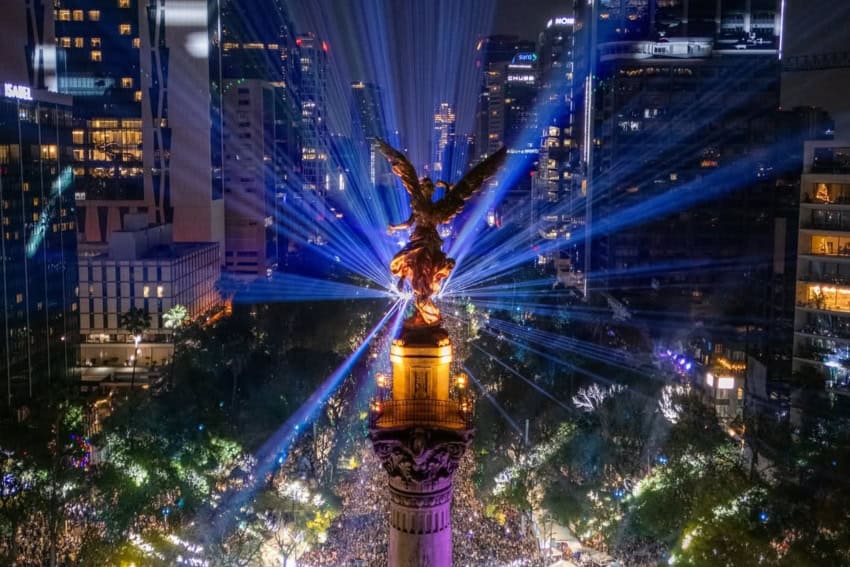
Angel of Independence (El Ángel) NYE Street Party
Perfect for: Large groups, budget-conscious celebrants, cultural experiences
Atmosphere: Massive street party with festive crowds
What to expect: Mexico City’s primary public New Year’s Eve celebration centers around the iconic Ángel de la Independencia on Paseo de la Reforma. This free event features live music or DJ performances, city-organized light shows and fireworks at midnight. Sections of Reforma close to traffic, creating space for dancing and street celebrations.
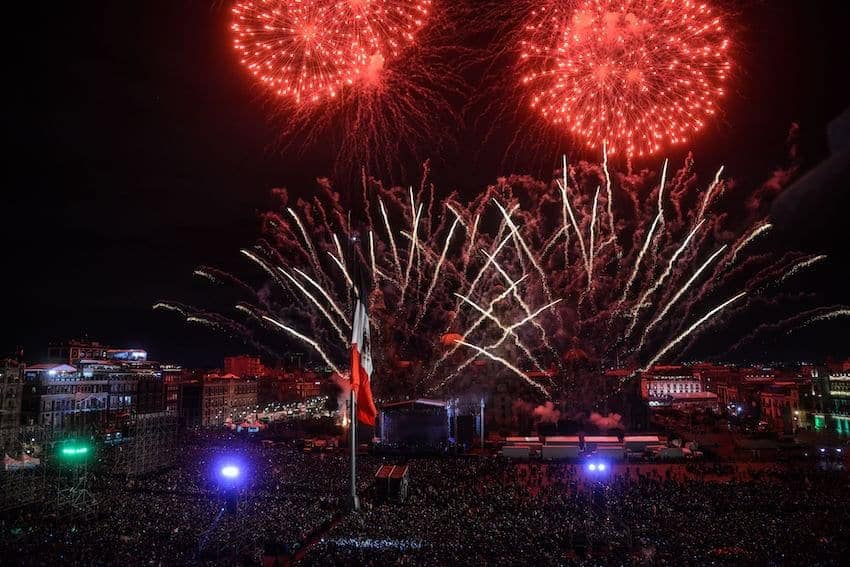
Zócalo Fireworks & Historic Celebration
Perfect for: Families, cultural enthusiasts, budget-friendly options
Atmosphere: Historic communal celebration in the heart of Mexico City
What to expect: The classic countdown takes place in Mexico City’s main plaza, surrounded by the Cathedral and National Palace. This massive public gathering often includes stage programming, concerts, fireworks and building projections at midnight.
Upgrade option: Reserve terrace dining at Balcón del Zócalo or La Terraza del Gran Hotel for elevated views of the square before joining the street celebration.
Unique NYE Experiences in Mexico City
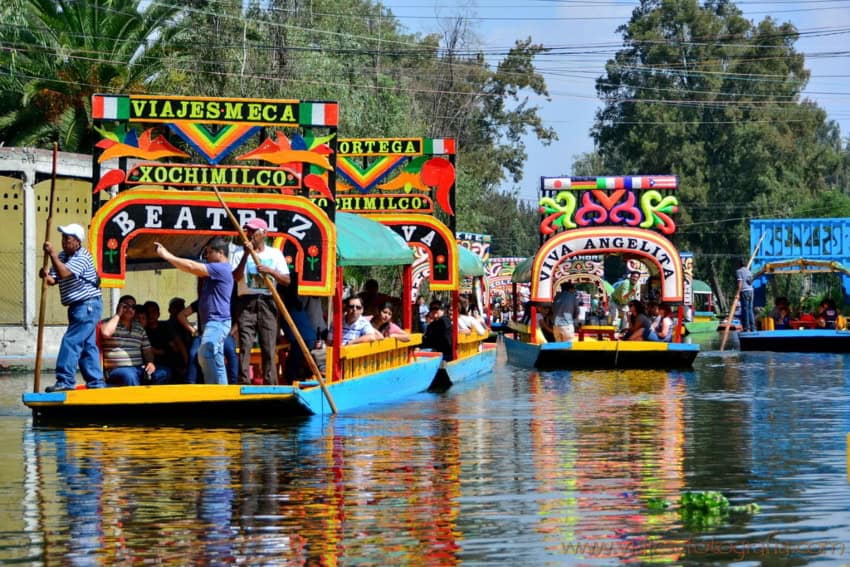
Xochimilco Trajinera NYE Boat Parties
Perfect for: Friend groups, party enthusiasts
Atmosphere: Festive floating celebration on traditional boats
What to expect: Nighttime floating parties on decorated trajineras through Xochimilco’s canals. These unique celebrations include open bar service, live music (DJ, mariachi or banda), tacos and snacks, with boats often connecting to create larger floating dance floors for a distinctly Mexican New Year’s experience.
Booking: Reserve through platforms like Fever or GetYourGuide. Choose between shared or private boat options. Most tours are during the day.
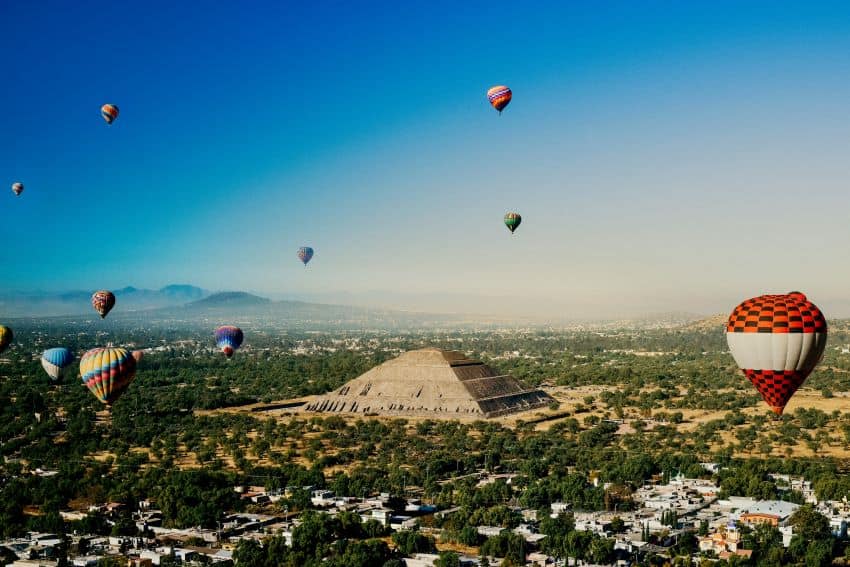
Teotihuacán Sunrise Experience (January 1st)
Perfect for: Couples, cultural enthusiasts, early risers
Atmosphere: Spiritual, scenic new year beginning
What to expect: Start 2026 with sunrise hot-air balloon flights or early morning visits to the ancient Teotihuacán pyramids. Watch the year’s first light illuminate these archaeological wonders, often followed by a celebratory breakfast and optional guided tours.
Booking: Schedule with balloon operators, including Flying Pictures or Globos Aerostáticos for January 1st flights.
NYE Spa & Wellness Experiences in Mexico City
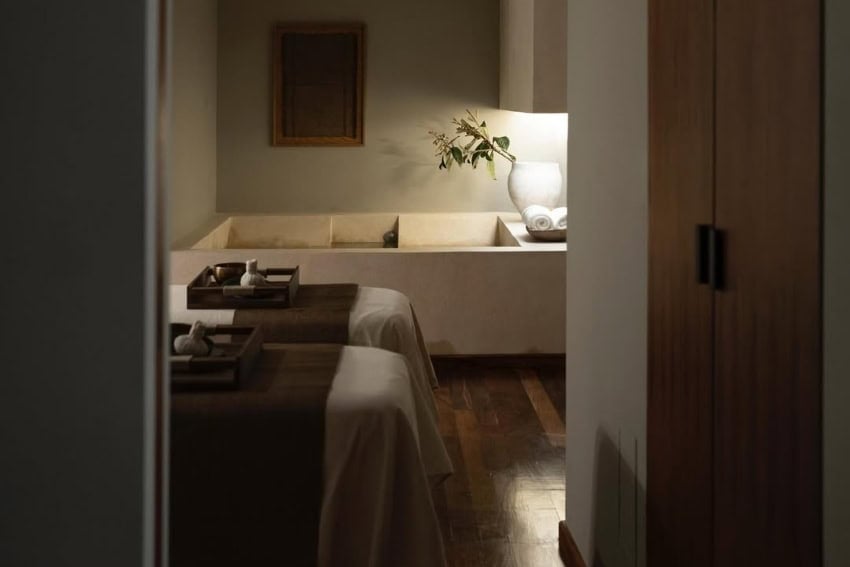
Nima Urban Spa Wellness Retreat
Perfect for: Couples, small friend groups, solo relaxation
Atmosphere: Tranquil urban wellness sanctuary
What to expect: This intimate Roma Norte spa offers curated “Spa Half-Day” packages including hydrotherapy circuits (sauna, steam, contrast showers), 50-minute massages, 45-minute facials and light refreshments. The experience provides a mindful body and mind reset before or after NYE celebrations.
Booking: Nima Urban Spa
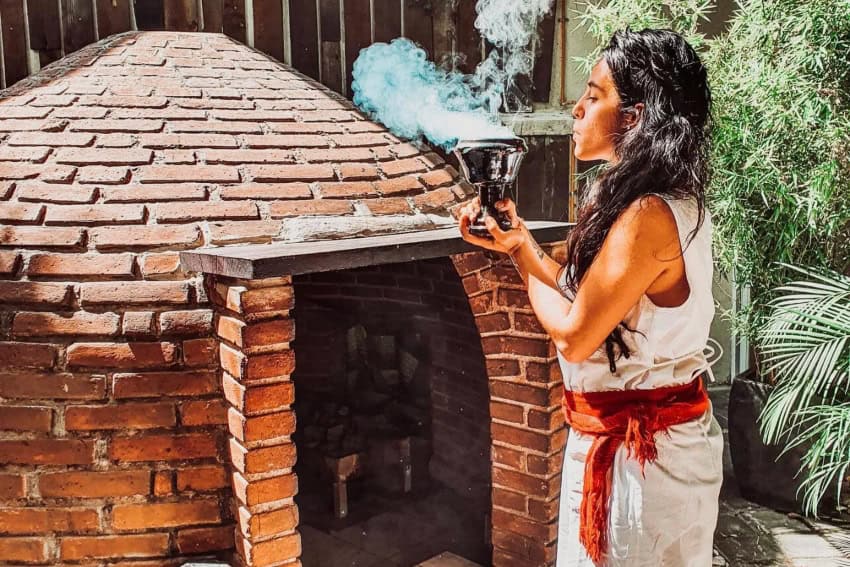
Thai Spa Temazcal Spiritual Cleansing
Perfect for: Couples, wellness seekers, cultural enthusiasts
Atmosphere: Traditional pre-Hispanic spiritual cleansing
What to expect: Authentic temazcal (steam bath) rituals from Mesoamerican traditions, conducted inside stone or brick domes with herbal infusions poured over heated volcanic rocks. Guided sessions include breathing techniques and intention-setting, available at Polanco and Roma Norte locations.
Pricing: Basic 40-minute temazcal sessions start at 499 pesos, with extended rituals combining massage and body treatments available.
Booking: Thai Spa
Tips for last-minute NYE planning in Mexico City
- Book immediately: Popular venues fill up quickly, especially for NYE celebrations.
- Confirm dress codes: Upscale venues typically require elegant attire.
- Plan transportation: Traffic increases significantly on NYE; consider ride-sharing or designated drivers.
- Check the weather: December in Mexico City can be cool; bring layers for outdoor events.
- Currency: Most venues accept credit cards, but carry pesos for street vendors and tips.
Bethany Platanella is a travel planner and lifestyle writer based in Mexico City. She lives for the dopamine hit that comes directly after booking a plane ticket, exploring local markets, practicing yoga and munching on fresh tortillas. Sign up to receive her Sunday Love Letters to your inbox, peruse her blog or follow her on Instagram.
FIFA World Cup draw for 2026 tournament brings challenge for El Tri into focus
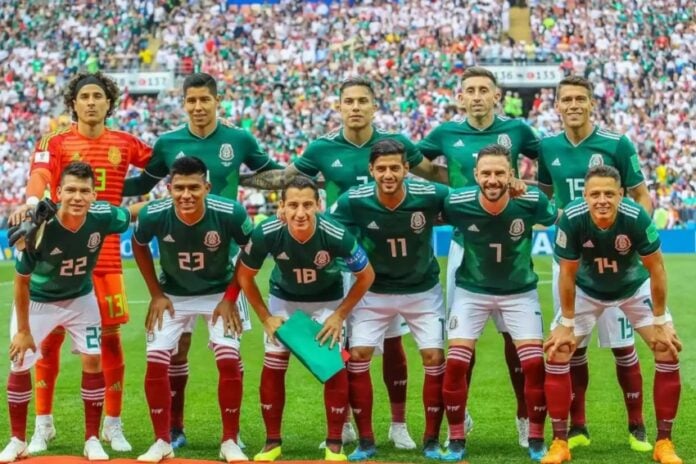
It is hard to believe that the long, pompous, and at times cringeworthy World Cup draw ceremony in Washington has set a promising tone for the 2026 tournament. I hope to be proved wrong, but a tournament with 48 nations already looks bloated, and the addition of a Round of 32 means that the first 16 days will produce 108 hours of football to eliminate just 16 teams. It feels as if the real action will not start until the knockout stages at the end of the month.
At least with the draw completed, we know, more or less, who Mexico will face in the summer. Will they still be involved when the tournament starts to warm up with the knockout stages? Well, Mexico should qualify from Group A, particularly given their home advantage, yet there are reasons for concern. They face South Korea, South Africa and a yet-to-be-determined European nation, which will not be known until the European play-offs at the end of March.

Two rounds of sudden-death games, which could end in penalties, are difficult to predict, but Denmark is the favourite to secure the last place in the group. That should set alarm bells ringing. The Danes were unlucky not to qualify directly for the finals, and were seconds away from doing so when Scotland scored two late goals to snatch the game and take the one automatic place from their European qualifying group. This put the Danes into the play-offs, where they will join North Macedonia, Ireland and the Czech Republic. If it is Denmark that qualifies or, to a lesser extent, the Czech Republic, then World Cup Group A shapes up to be an evenly matched competition with little to choose between the four teams.
Expectations are mixed for Mexico’s national team
It will certainly test a Mexican team that their own fans have concerns about. This year started well enough for El Tri with coach Javier Aguirre guiding them to two regional trophies, the CONCACAF Nations League Finals and the CONCACAF Gold Cup. While neither tournament caused great ripples on the world stage, they did beat their fellow World Cup hosts: Canada in the Nations League, and the U.S. in the Gold Cup.
With countries wanting to familiarize themselves with the World Cup venues, September brought games against South Korea and Japan, both ending in respectable if unspectacular draws. However, the international weekends in October and November saw a series of poor results against South American opponents, the home crowd even booing Mexico off the pitch after a dull 0-0 draw with Uruguay. The feeling is that this is not a particularly strong Mexican team, and this time around lacks the strong European club players that often add a backbone of experience. Raúl Jiménez is still playing at Fulham, but is now thirty-four, and as his team slides down the Premier League table, there have been murmurs from the fans that the veteran can no longer influence a game. Santiago Gimenez plays for AC Milan and is noted for moments of brilliance and periods of inconstancy. At twenty-four, he needs to make the jump from ‘promising star’ to ‘established star’, and a home World Cup is just the arena to do that.
Previewing the South Africa match
It doesn’t help the Mexican cause that they will play South Africa first. This is probably the weakest of the four teams, and a draw would be disappointing for Mexico. A defeat, with harder teams still to come, would be a disaster. These two sides met in the opening game of the 2010 World Cup, a match which ended in a 1-1 draw and is still remembered for a stunning goal from South Africa’s Siphiwe Tshabalala. Next summer, the roles will be reversed, with Mexico the home side. This gives them the considerable advantage of playing at high altitude in front of 87,000 home fans.
The South African side will be largely made up of home-based players, and that might be a problem for them. At the top level, a few teams, including Mamelodi Sundowns, champions for the last eight seasons, are extremely well organized, and their players enjoy world-class facilities, coaching and care. However, down at the bottom half of the table, a trip to play Magesi F.C. or Marumo Gallants can feel like entering a soccer wilderness.
The league is also noted for arguments and disputes, and this touched the national team. Having easily beaten Lesotho, South Africa faced a protest over the inclusion of Tebo Mokoena, who picked up yellow cards against Benin in November 2023 and Zimbabwe in June 2024. He was banned for the next game, something the South African officials overlooked during the long intervening period. As a result, South Africa had three points deducted and went into the final round of games with qualification on a knife-edge. The South Africans won at home, and Benin, ahead of them going into that last day, lost to Nigeria, a combination of results that saved South Africa the embarrassment of elimination.
South Africa’s coach and top players

Unusually for an African team, the South Africans have stayed with one coach. Hugo Broos had a long career as a player in his native Belgium, including playing for his country in the 1986 World Cup in Mexico. By the 1990s, he was the up-and-coming manager in Belgian soccer, having taken Club Brugge to two championships. The national team position at the time was securely in the hands of the legendary Paul van Himst, so Hugo took his trade to Anderlecht and, from 2008, worked overseas. After he led South Africa to a third-place finish at the 2023 Africa Cup of Nations, several sides had their eye on him, but South Africa retained his services to see them through to the 2026 World Cup.
The best-known South African player is captain and goalkeeper Ronwen Hayden Williams. An international since March 2014, he has won numerous African awards. The team will have several young players, and much will depend on whether the likes of Tylon Smith can step up to the occasion. Smith was voted Player of the Tournament at the 2025 Under-20 Africa Cup of Nations and plays for Queens Park Rangers in the second level of English football. South Africa has never lacked talent, but this World Cup might have come a little early for the next generation of stars.
Matching up with South Korea’s talented roster
For their second game, Mexico will relocate to Guadalajara, where they face South Korea. Unlike the South Africans, South Korea will have a core of players who will bring experience from the world’s top leagues. Lee Kang-in, an attacking midfielder or winger, is on the books of Paris Saint-Germain, and Kim Min-jae plays center back for Bayern Munich. The key player is captain Son Heung-min. A Premier League legend after ten seasons and 127 goals with Tottenham, he is now plying his trade in the U.S. with Los Angeles FC. Son is a fit and dedicated young man, but a player who depends so much on speed might struggle at 33. We wait and see. If Son Heung-min still has his magic, he will shine in what must surely be his last major tournament, and that should take Korea through to the final stages.
Denmark shapes up as the toughest test among potential European qualifiers
Mexico’s third game on June 25, 2026, will be against the European qualifiers. If that proves to be Denmark, then that will make a tough finish to the group. The Danes have several players who earn their wages at top European clubs but have yet to make their name there. Center forward Rasmus Højlund is a prime example. He showed so much promise that Manchester United signed him for £64 million. He played well in patches, but a striker has a clear task: he is there to score goals, and Højlund did not find the net with any regularity. As a result, this season has seen him loaned to Naples. Højlund has sometimes found it easier to score for Denmark than for his club, and a chance to play on the world stage might revive his career.
The Czech Republic has a solid team with a core of players from the German league. They finished second in their group, well behind Croatia, and suffered an embarrassing 1-2 defeat to the Faroe Islands. However, once the World Cup starts, teams tend to make their own form, and this would also be a tough game for Mexico. Ireland, with its collection of players mostly involved in the English Championship League, or North Macedonia, would be far easier opponents for Mexico.
So, an even group, with South Korea and Denmark (if they qualify), in the best form as we approach the run-up to the tournament. If Mexico wins the opener against South Africa and gets the fans behind them, they should go through. If they start badly and the fans turn against them, there might be problems.
What if Mexico advances beyond the group stage?

The next stage, like everything else in this competition, seems to have been over-managed, as FIFA tries to set up the big four — Spain, Argentina, France and England — for the semi-final positions. Winning Group A would mean Mexico facing a third-place team in the round of 32. Finishing as runners-up would pair them against the runners-up from Group B. That creates a lot of guesswork, particularly as one of the four sides in Group B is still unknown. However, a likely possibility could be facing Italy or Switzerland, something Mexico would want to avoid at that early stage. A third-place finish would not automatically guarantee a place in the knockout stage, but teams qualifying through a third-place spot would face a group winner. All we can do now is wait for the big kick-off!
Bob Pateman is a Mexico-based historian, librarian and a life-term hasher. He is editor of On On Magazine, the international history magazine of hashing.
Mexico is becoming friendlier to labor, but there’s one big problem: A perspective from our CEO
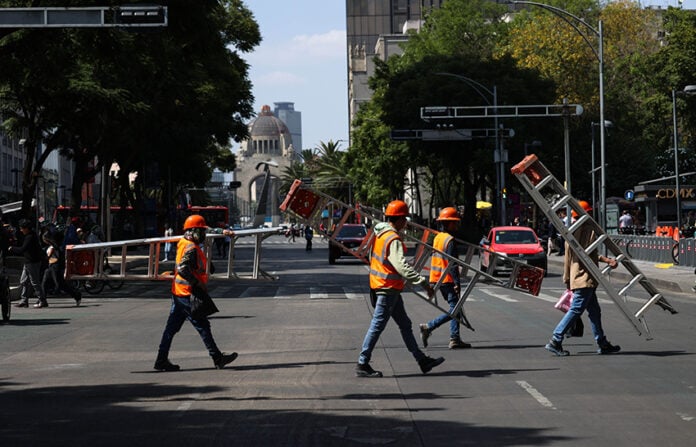
This month President Sheinbaum has announced two separate news items that are both good for Mexican workers and also good from a human perspective. The first was a sharp increase in the minimum wage of 13% in 2026, applicable to most parts of the country. This increase is a continuation of far-above inflation rate increases that first began under the AMLO administration. During AMLO’s six-year term, the minimum wage more than doubled, compared to very modest increases under prior presidents. This most recent increase will bring the minimum wage to 315 pesos (or about US $17.50) per day. I have previously written about Mexico’s minimum wage here.
Many Americans might point to the minimum wage in the United States and say that it really isn’t that relevant. In the U.S. they are right, as only an estimated 1.3% of workers actually make the minimum wage. However, in Mexico, the situation is far different. Recent reports indicate that as many as 40% of Mexican workers actually make the minimum wage. Remember that Mexico still has a very large share of its workforce, over 50%, working informally. In other words, minimum wage changes make a big difference for Mexican workers.
Charted: Hours Worked vs. Salaries in OECD Countries 📊
This graphic by @genuine_impact is part of Visual Capitalist’s Creator Program, featuring work from the world’s top data-driven talent ✅https://t.co/CdT70t5ufi pic.twitter.com/6heJznLPEJ
— Visual Capitalist (@VisualCap) November 26, 2023
The second annoucement from Sheinbaum was regarding the work week. Today, the standard Mexican work week is still a 6 day, 48 hour week. Compared to other OECD countries, Mexicans work more hours per year than any other country! Until recently, Mexican workers also had relatively few holidays and vacation days compared to workers in many other countries. Under AMLO, the country doubled the amount of statuatory minimum paid vacation time for workers with at least one year of service from 6 to 12 days.
All of this is undoubtably good for workers — higher pay and more time to spend with families and friends. However, there is a downside to all of this. If economic policy was as simple as raising wages and reducing hours for workers, every country would be racing to do so. In order for these worker friendly initiatives to ultimately succeed, Mexico must also increase labor force productivity. If that doesn’t happen, the net effect of all of these initiatives will be for Mexican labor to become more expensive to companies while in turn making companies less competitive. Increased labor costs must be accompanied by increased worker productivity in a healthy company and healthy country.
So how has Mexico been doing on this measure? In summary, not well. A recent World Bank productivity study notes that Mexico’s GDP per worker has shown negative or very weak growth over the last decade. Work by OECD economists finds that the average annual labor-productivity growth in Mexico over the past decade has been negative at -0.6%, well below the OECD average. Mexico cannot become a wealthy country by simply increasing wages — to do so, it must find a way to increase both wages and productivity.
There are those who would argue that Mexico’s minimum wage is still so low that it should not make a difference to businesses, but that is just simply not true. If labor costs increase without productivity improvements, local companies will slow down or stop new investments. Multinational companies will consider investing in other countries where the wage-to-productivity relationship is more favorable. As we move to a world of increasing investment in AI and robotics, where will that leave the untrained/unskilled Mexican worker? I have previously written about this in a 3 part series on the need for Mexico to begin pivoting its economy to other areas here.
In many areas, the private sector is doing its part. Companies like Amazon, Microsoft, and Google have announced significant investments to improve cloud computing resources in the country. Just this week Amazon annouced that nearly 40% of Mexican companies are now using AI. That will be essential to help Mexico’s white collar workers stay competitive. Countless other companies are increasing their in-house training capabilities to upskill (and make more productive) their factory workforces as well.
That being said, Mexico’s public educational system continues to not do its part. Mexico ranks near the bottom of the OECD countries on both high school completion and college-level education. Only one-fifth of Mexican adults aged 25-64 have graduated from college, ranking it 43rd out of 47 countries with data. Out of countries where high school is the highest level of education, Mexico is a dismal 43th out of 46 countries for low attainment. In PISA exams, just 34% of 15 year old Mexican students attained at least level 2 proficiency in mathematics (compared with an OECD average of 69%). In reading, just 53% of Mexican students attained at least a level 2 proficiency compared to an OECD average of 74%. This ranks Mexico 34th out of 37 OECD countries in reading (a statistic that is motiving us to get MND Kids in Mexican schools as well!).
I applaud and celebrate the efforts of the private sector to upskill and train the Mexican workforce — in many cases, they are doing their part. I also appreciate the efforts by the federal government to bring better conditions to the workforce; higher minimum wages, better working conditions, shorter work weeks, more holiday and vacation time are all valid and important issues. The new levels being legislated are not unreasonable — this is not a France-type situation. That being said, if the government doesn’t start to make some significant progress on the public education side of the equation, Mexico is at a real and serious risk of continued economic stagnation that will ultimately result in less job creation, more unemployment, and a real missed opportunity. President Sheinbaum and her administration must make this issue a more urgent priority!
Travis Bembenek is the CEO of Mexico News Daily and has been living, working or playing in Mexico for nearly 30 years.
Sheinbaum identifies curbing extortion as a top security challenge for 2026
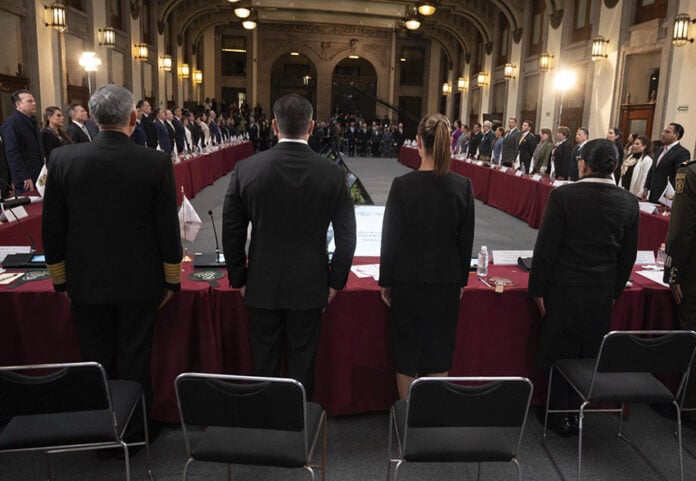
President Claudia Sheinbaum urged Mexico’s governors Thursday to support and help implement the new federal anti-extortion law passed last month but still needing approval by a majority of states.
Speaking to the 31 governors, the Mexico City mayor and her security cabinet during a National Security Council meeting, Sheinbaum pleaded for unity and a concerted effort to combat extortion, the one crime that has not been curtailed since she took office.

“It is a very sensitive crime due to its social impact,” she said, as she also urged state officials to harmonize local laws with the new law.
The Senate approved the Law to Prevent, Investigate and Punish Extortion Offenses on Nov. 19 and the Chamber of Deputies passed it on Nov. 25. As a constitutional amendment, it must be ratified by a majority of state Congresses before it becomes law.
Calling eradication of extortion one of her administration’s biggest challenges and top priorities, Sheinbaum explained the motivation for the constitutional amendment.
“Extortion has been primarily categorized as a state crime and prosecution depended on a citizen’s complaint,” she said. “The reform makes extortion a federal crime, and mandates that it be investigated by the Attorney General’s Office ex officio.”
Sheinbaum emphasized the importance of removing the burden of reporting the crime on the victim.
“The reform transforms the crime into one we must all prosecute and acknowledges that extortion is not something that only affects one person,” she said.
Extortion is the one crime Sheinbaum has acknowledged she has failed to reduce during her first year in office, and the government is struggling to contain it.
Coordination between the federal government and state authorities has led to a 37% reduction in homicide rates and other high-impact crimes, Sheinbaum said, but extortion continues to be a nationwide plague on the public.
According to government data presented earlier this week, kidnappings decreased by 58.4% between 2019 and 2025, while robberies with violence fell by almost 49%. Extortion, however, has increased by 23.1%.
The Sheinbaum administration launched a National Strategy Against Extortion in July. A primary feature of the strategy was the bill that Congress approved last month.
Authorities launch national strategy against extortion to tackle a pernicious and widespread crime
The reform unifies the definition of extortion nationwide while standardizing — and stiffening — penalties, which previously varied by state. The law establishes minimum prison sentences of between 15 and 25 years, which can reach up to 42 years depending on aggravating circumstances.
Officials who are convicted of failing to report known extortion crimes face up to 20 years in prison, and prison authorities or public servants who facilitate extortion could be jailed for up to 25 years.
A cartel-related extortion arrest
The government did announce a major development on Wednesday, arresting Édgar Rodríguez, alias “El Limones,” along with five other people as part of a federal operation against extortion networks linked to the Sinaloa Cartel.
“El Limones” and his organization allegedly targeted ranchers and merchants in the La Laguna area that straddles the states of Coahuila and Durango.
Security Minister Omar García Harfuch called the arrests “a direct blow to extortion networks, in line with the National Strategy against Extortion established by President Sheinbaum.”
With reports from El País, La Jornada, Infobae and N+
Inside the binational effort to clean up the Rio Grande
This article originally appeared on Inside Climate News, a nonprofit, non-partisan news organization that covers climate, energy and the environment. Sign up for their newsletter here.
NUEVO LAREDO, Mexico — Silvia Fernández Gallardo Boone leaned over a stream of water rushing through a concrete chute at the city’s wastewater treatment plant.
“Smell it!” she said, beaming.
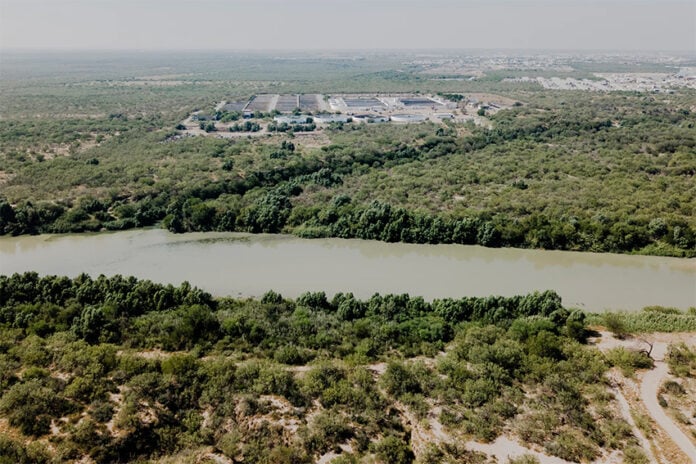
Odorless, treated wastewater flowed into the Coyote Arroyo, or creek, then the Rio Grande. Mere months earlier, more than 12 million gallons of raw sewage were leaking every day into the river and groundwater in Nuevo Laredo. After repairs to the treatment plant, to Fernández Gallardo’s delight, the flow of untreated wastewater has been significantly reduced.
“Being on the border, we really live our lives on both sides of the river,” Fernández Gallardo said, looking out at the treatment plant. “We all have a stake in taking care of the river.”

When Carmen Lilia Canturosas was elected mayor of Nuevo Laredo in 2021, deferred maintenance had debilitated the plant. To make matters worse, broken sewer lines were leaking wastewater onto city streets. Canturosas, re-elected in 2024, threw her support behind overhauling Nuevo Laredo’s wastewater and sewer system.
Fernández Gallardo, an architect by training, was appointed general manager of the Potable Water and Sanitation Commission (Comisión de Agua Potable y Alcantarillado), known by its Spanish acronym COMAPA. In 2023, COMAPA broke ground on an $80 million project, backed by U.S. and Mexican institutions, to repair the failing wastewater treatment plant and damaged sewer lines. The North American Development Bank (NADBank) issued the largest grant for wastewater improvements in its 30-year history.
Shared waterways like the Rio Grande have been sites of cooperation between the two countries, but also points of contention. Nuevo Laredo’s wastewater overhaul is the latest bet that the U.S. and Mexico can work together to improve water quality and the environment.
But the project is reaching fruition as tensions mount between the U.S. and Mexico under the second Trump presidency. Mexico once again has fallen short on its treaty commitment to share Rio Grande water with the United States. Meanwhile, Trump’s tariff demands have cast a shadow over trade hubs like Laredo-Nuevo Laredo.
Far from the policy disputes of Washington, D.C., officials like Fernández Gallardo are still counting on binational collaboration to yield tangible benefits for local residents.
“Rehabilitating the Rio Bravo doesn’t just mean improving local environmental conditions,” she wrote in a statement to Inside Climate News, using the Mexican name for the river. “It also represents an opportunity to move toward shared water security between Mexico and the United States.”
Monitoring water quality
The day before Fernández Gallardo toured the plant, Martin Castro and Tom Vaughan were on the other side of the border, knee deep in the Rio Grande. Four Border Patrol officers peered out from an outcropping above the river and asked what they were doing.
Castro, watershed science director at the Rio Grande International Study Center, and Vaughan, a center co-founder and emeritus biology professor at Texas A&M International University in Laredo, calmly explained that they were taking water quality samples. A few minutes later, the officers left.
The pair were collecting samples to contribute to an extensive database on the river’s water quality, as they do every month.

On that late October day, Border Patrol and National Guard troops far outnumbered fishermen and other recreational visitors to the Rio Grande. It’s not only the law enforcement presence that makes environmental protection on the Rio Grande unique.
As an international river, the Rio Grande was initially excluded from the Texas Clean Rivers Program. The collaborative effort monitors and protects the state’s water resources. Vaughan was among those who advocated in the 1990s for the Rio Grande to be included.
The International Boundary and Water Commission (IBWC), a federal agency that enforces the border and water agreements, eventually took over water quality monitoring on the river. IBWC data from the Rio Grande now feeds into the Texas Commission on Environmental Quality’s Clean Rivers Program.
For more than 1,200 miles, the Rio Grande snakes between Texas and Mexico, crossing remote deserts and urban areas before reaching its delta at the Gulf of Mexico. IBWC partners with organizations like the Rio Grande study center to collect water samples at 119 stations. Monitoring at eight stations in El Paso was suspended in 2023 because of border security installations. IBWC spokesperson Frank Fisher said sampling has been re-established at all but three sites.
Castro and Vaughan collected samples to send to a certified laboratory. They record other measurements themselves, such as turbidity using a Secchi disk.
“Upriver, I would swim in it,” Vaughan said, referring to the Rio Grande upstream of the bend in the river that wraps around Laredo. “If I was really thirsty, I might drink it.”

But he explained that sewage downstream of the city makes the water unsafe for swimming or other contact recreation. This part of the Rio Grande below the Amistad Reservoir, known as segment 2304, exceeds Texas standards for bacteria.
In this stretch of the river, the highest readings for E. coli, the indicator for bacteria, are downstream of Laredo and the wastewater discharges from Nuevo Laredo, according to IBWC’s 2024 Rio Grande summary report. At the Pipeline Crossing and El Cenizo sites, E. coli readings were 240,000 parts per 100 milliliters. That is nearly 2,000 times the state’s water quality standard of 126 parts.
The IBWC report warns of “serious health risks” and that the water is unsuitable for recreational activities or consumption. The report attributes the high bacteria levels to wastewater infrastructure allowing sewage to enter the river.
IBWC’s Fisher said bacteria levels are elevated in other parts of the river including in the urban areas of El Paso/Ciudad Juárez, Del Rio/Ciudad Acuña, Eagle Pass/Piedras Negras, and in Hidalgo County.
“TCEQ is committed to advancing collaboration among federal, state, and binational partners to improve water quality and resilience in the border region,” said Texas Commission on Environmental Quality spokesperson Victoria Cann.
Cann referenced the Lower Rio Grande Water Quality Initiative as one example of the agency’s efforts to improve water management. The initiative aims to “restore, protect and improve” water quality on the Lower Rio Grande downstream of Falcon Reservoir. The group recently completed an 18-month binational salinity study, according to Cann.
Cleaning up the Rio Grande
It’s one thing to collect data on the river’s water quality. It’s another to act on that data. For decades, the U.S. and Mexico have debated how to improve the environment and sanitation along their nearly 2,000-mile border.
The 1944 water treaty between the two countries entrusted border sanitation issues to the IBWC. As new problems cropped up — like sewage flowing downhill from Mexico into the U.S. — new agreements, known as minutes, were added to the treaty. In 1989, the U.S. and Mexico partnered to build a wastewater treatment plant in Nuevo Laredo.
After the North American Free Trade Agreement (NAFTA) was adopted in 1994, Nuevo Laredo and other border cities grew rapidly. Nuevo Laredo’s wastewater treatment plant opened in 1996. Binational wastewater treatment plants were also built in Tijuana, Baja California and Nogales, Arizona.
In a side agreement to NAFTA, the two countries created the NADBank, a binational development bank to fund infrastructure on the border.
Nuevo Laredo’s population has almost doubled since 1994, to nearly half a million people. Laredo, with about 260,000 people, is now the busiest land port for international trade in the United States.

But ongoing maintenance of wastewater infrastructure became a sticking point. By the time NAFTA was renegotiated in 2020 — and renamed the United States-Mexico-Canada Agreement — border wastewater treatment plants were in urgent need of repairs. Sewage flowing from Tijuana into Southern California became an international dispute.
Colorado State University emeritus political scientist Stephen Mumme, an expert on U.S.-Mexico relations, partially attributes maintenance problems to the “constant churn” in Mexican politics, in which local administrations change every three years.
Mexican cities also struggle to finance long-term infrastructure projects and collect monthly bills from ratepayers. Sanitation competes with other urgent public works in border cities buckling under rapid growth.
“The capacity to engage in the type of financing and planning that is often taken for granted in American cities is not yet fully realized in Mexican cities, even in border cities,” Mumme said.
Jesús Frausto Ortega, coordinator of the water management graduate program at Colegio de la Frontera Norte in Monterrey, Mexico, said that previous efforts to stop the flow of sewage in Nuevo Laredo were like paving over a pothole.
“You could fix one part, but there was no holistic solution,” said Frausto Ortega, who previously worked in Nuevo Laredo.
He said Mexican cities often lack political will to invest in sanitation infrastructure.
“Traditionally, officials don’t invest in projects that are underground,” he said. “[That’s because] the public doesn’t see the project and we don’t have reliable accountability mechanisms.”
COMAPA’s Fernández Gallardo said she heard this sentiment from other public officials.
“Why would you want to invest in sewer lines?” she remembers them asking. “That’s like burying money.”
Binational investment
Fernández Gallardo and Canturosas, the mayor, persisted. They found support among U.S. officials, including then U.S. Ambassador Ken Salazar and then IBWC Commissioner Maria-Elena Giner. NADBank provided an initial $650,000 grant to develop plans for the wastewater treatment plant and collapsed sewer lines.
Support started to pour in. NADBank committed $22 million from the Environmental Protection Agency’s Border Environment Infrastructure Fund. Mexican agencies, including COMAPA, committed another $53 million. The IBWC pitched in $2 million, and a commercial loan of $6 million rounded out the budget.
IBWC’s Fisher said the agency’s contribution came “as part of a long-standing practice to share the cost of extraordinary maintenance.” He said the funds were used to purchase six aerators needed for the biological process at the plant.
NADBank Managing Director John Beckham said that the significant commitments from both countries set the effort apart.
“Those are unique features of this project that are replicable,” he said. “We’re proud of it. We think it’s something that can help us in other parts of the river.”

Fernández Gallardo estimated in late October that the wastewater treatment plant’s rehabilitation was 80% complete. She said that sewage was still being discharged at 10 locations in the city, down from 27.
“You’re investing in a public good,” she said. “These are projects that you don’t see, but you feel the difference in the city.”
Fernández Gallardo acknowledged that COMAPA must prevent deferred maintenance from once again hobbling the plant. She said that going forward, 4% of funds from water bills will be designated for maintenance.
Beckham added: “[We have to] ensure that these plants can be maintained over time … To avoid cycles of every 25 years where we have to lay out $80 million.”
Martin Castro of the Rio Grande International Study Center said the upgrades are a “meaningful milestone.”
“They underscore how urgently the river needs sustained infrastructure investment,” he said. “Continued investment and binational cooperation are essential to protect water quality for both communities.”
Changing political, environmental climate
While Nuevo Laredo is making strides, extreme drought and climate change are testing the fragile balance on the binational river. The Rio Grande provides drinking water for over 6 million people in the United States and Mexico. Farmers from Colorado to the Gulf of Mexico rely on it to irrigate their crops.
But experts warn that current water consumption levels cannot be sustained. The Amistad Reservoir, upstream of Laredo, hit historic lows during July 2024. Climate change will further reduce the river’s flow.
A November 2025 study led by the World Wildlife Fund found that 52% of water consumption in the Rio Grande Basin is unsustainable, causing depletion of reservoirs, aquifers and river flows. American Rivers named the Lower Rio Grande the fifth most endangered river in the United States this year.
The Rio Grande is the only source of water for Nuevo Laredo and Laredo. But sometimes the river drops so low that the pumps at the water treatment plant struggle to draw in water, Fernández Gallardo said. She touted COMAPA’s purple pipe program, which diverts treated wastewater for outdoor irrigation and industrial use, but said more must be done to conserve and re-use water.
“Without the river, we don’t have the two Laredos,” she said.
Fernández Gallardo said she would like Nuevo Laredo to directly re-use treated wastewater for domestic supply, known as direct potable reuse.
“Treated wastewater is the only water resource whose supply will always go up as the population increases,” she wrote in a statement. “[Direct reuse] would redefine the future of water on the border.”
Another Rio Grande city, El Paso, is rolling out this technology. But Fernández Gallardo knows the municipal administration’s time to execute projects is running out.
Escalating tensions between the United States and Mexico are felt locally. While Mexico increased Rio Grande water deliveries to the United States in the past year, the Trump administration has threatened Mexico with additional tariffs and even sanctions if the nation does not deliver more to Texas. Meanwhile, Mexican officials have attributed the shortfall to the ongoing drought.

The Trump administration quickly replaced several of the U.S. officials essential to the Nuevo Laredo project, including Salazar, the ambassador, and Giner, the well-liked IBWC commissioner.
The Trump administration is also moving forward with plans for a border wall through Laredo, which local organizations, including the Rio Grande International Study Center, oppose.
Water quality woes on the Rio Grande have attracted little national attention. But EPA administrator Lee Zeldin has pressured Mexico to stop the sewage flows from Tijuana. The EPA has struck agreements with Mexico to accelerate the timeline to repair the Tijuana treatment plant.

A State Department spokesperson said that the U.S. and Mexico have “launched a new era of cooperation characterized by swift and decisive actions.”
“No other bilateral relationship has a greater effect on the daily lives of the American people and President Trump and his cabinet are committed to improving the welfare, health, and prosperity of our border communities,” the spokesperson said.
The EPA also funds NADBank’s grants for wastewater infrastructure on the border. Congress has not passed a full federal budget for 2026. Nonetheless, the spending bills for environment and natural resource agencies that passed through committee maintained support for the EPA’s border wastewater programs. The Senate bill would appropriate $36 million and the House bill $45 million for border wastewater projects, comparable to recent years.
CSU’s Mumme said that the Trump administration’s increasing hostility toward Mexico could backfire.
“Trump is used to bullying his way. But that only goes so far,” he said. “Mexico does have leverage.”
Mumme said the history of cooperation shows that the U.S. and Mexico can achieve common goals, on issues from wastewater to water scarcity.
“There’s no substitute to cooperating and finding mutually beneficial solutions,” he said.
NL West rivals will square off as Major League Baseball returns to Mexico City in April

Major League Baseball will return to Mexico City in 2026 with a two-game series between the Arizona Diamondbacks and San Diego Padres, restoring a key stop on the league’s international slate after a one-year hiatus.
The National League West rivals will meet April 25-26 at Estadio Alfredo Harp Helú, with the Diamondbacks designated as the home team and sacrificing two dates at Chase Field in Phoenix.
See you in April, Mexico City!
We’re taking on the Padres in the Mexico City Series at Estadio Alfredo Harp Helú. pic.twitter.com/h8dn9ckAHB
— Arizona Diamondbacks (@Dbacks) December 10, 2025
Confirmed on Wednesday, the two games are part of MLB’s World Tour and will mark the third regular-season visit to Mexico’s capital, following the San Diego Padres–San Francisco Giants series in 2023 and the Houston Astros–Colorado Rockies series in 2024.
Tickets are scheduled to go on sale to the general public Jan. 19 through Ticketmaster, with more information to be posted at MLB.com/mexico.
There were no regular-season games in Mexico City in 2025 after MLB dropped plans there and in San Juan, Puerto Rico, when arrangements that made financial and logistical sense could not be finalized.
The cancellations followed a broader reassessment of the World Tour calendar, such as discussions about a potential game in Paris.
Instead, MLB leaned on its 2025 regular-season opening series at the Tokyo Dome, between the Los Angeles Dodgers and the Chicago Cubs, before circling back to Mexico City for 2026.
As of now, the new Diamondbacks-Padres matchup is MLB’s only regular-season international series for 2026, and it’s being framed as a restart of the Mexico City Series concept rather than a one-off.
For the Padres, the trip is a return to a city where they helped inaugurate regular-season baseball in 2023 with a high-scoring, home-run-heavy series against the Giants at the Harp Helú stadium, which is 2,239 meters (7,349 feet) above sea level.
In the first of the two games, a wild 16-11 win for the Padres, the teams blasted 11 home runs in a stadium that sits more than 2,100 feet higher than the highest-elevation MLB stadium, Denver’s Coors Field, a reputed “launching pad.”
That weekend also deepened ties with the Padres’ cross-border fan base, with third baseman Manny Machado telling the San Diego Union-Tribune, “I think Mexico has been a big part of our culture, our identity in San Diego. … I wish we had more time [in Mexico City]. It’s special.”
The Diamondbacks and Padres will face off in the Mexico City Series on April 25-26 pic.twitter.com/I2vV7G93Cr
— Talkin’ Baseball (@TalkinBaseball_) December 10, 2025
Before now, Mexico has hosted seven MLB regular season series: five in Monterrey and two in Mexico City.
Earlier this year, MLB staged two spring training games in Mexico, with the Boston Red Sox traveling south to play the Monterrey Sultanes in late March.
A year earlier, the New York Yankees visited Mexico City for the first time since 1968 for a two-game exhibition series against the capital-based Diablos Rojos. The home team won both games before two sellout crowds of over 20,600 — with tickets for both games selling out in less than an hour.
Similarly, there will be another U.S.-Mexico exhibition game coming up in 2026: the San Francisco Giants will host the Sultanes March 23-24 and unveil a new Gigantes uniform during the series.
With reports from MLB.com, Mediotiempo, Infobae and Arizona Republic
Millions flood the capital to honor the Virgin of Guadalupe on her day
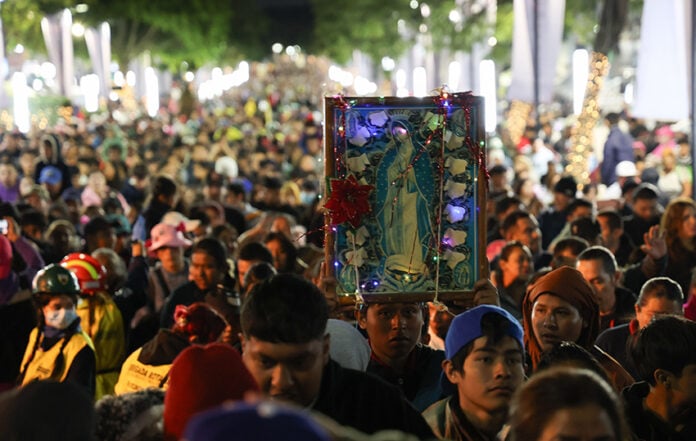
Driven by faith and love for the Virgin of Guadalupe, pilgrims from across Mexico arrived by truck, bicycle and on foot this week, descending on the Basilica of Guadalupe shrine, built on the site where Catholics believe the Virgin Mary appeared nearly 500 years ago.
The Mexico City government estimated that approximately 13 million people had arrived in the vicinity of the Basilica as of 5 a.m. Friday.
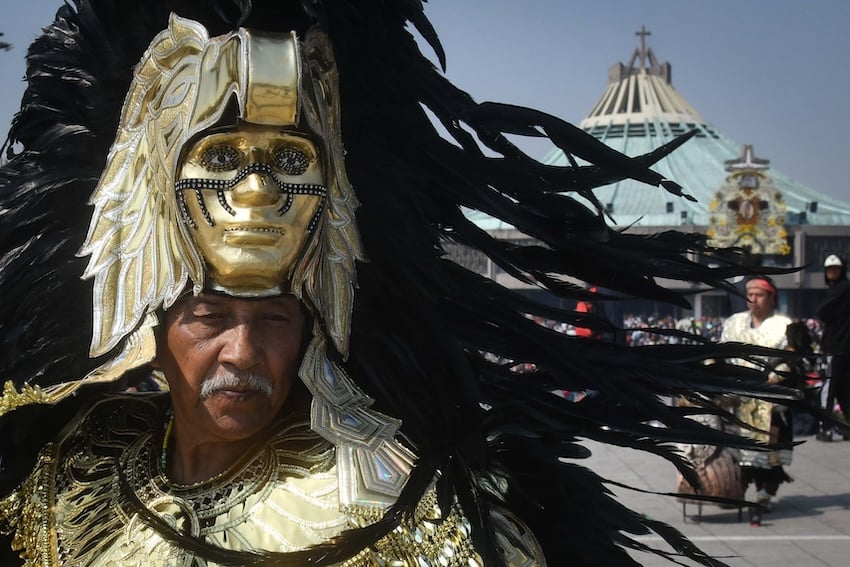
Roads near the Basilica were closed to vehicular traffic, more than 5,000 police and security forces were deployed, and medical facilities were set up inside and outside the Basilica.
Local officials in the northern borough of Gustavo A. Madero expect thousands more to pass through the area through Sunday.
According to church tradition, in December 1531, the Virgin Mary appeared to the Indigenous campesino Juan Diego, a convert, on four occasions. Her image was miraculously imprinted on his cloak, which is on display inside the church.
The Dec. 12 holiday known as the Día de la Virgen de Guadalupe honors the Virgin Mary, the patron saint of Mexico, and has become a vibrant expression of Catholic faith and Mexican identity. Of particular significance, the Virgin of Guadalupe has brown skin, a detail that is said to have helped evangelists convert millions of local Indigenous peoples in the decade after her apparition.
President Claudia Sheinbaum — who canceled her daily morning news conference in honor of the Catholic feast day — said she had spoken with Pope Leo XIV to invite him to visit Mexico.
In a social media message posted on Friday morning, Sheinbaum said that the pope “sends blessings and greetings to all on this Day of the Virgin of Guadalupe.”
Sheinbaum, who describes herself as culturally Jewish, though non-religious, said that she and the pope agreed that “beyond the religion that each person professes and the secularity of the State, the Virgin of Guadalupe is a symbol of identity and peace for Mexican women and men.”
Earlier Friday, Pope Leo celebrated a Mass at St. Peter’s Basilica in the Vatican in honor of the Virgin of Guadalupe, a tradition begun under Pope John Paul II, a famous devotee of “La Morenita.” In 1999, John Paul officially declared Our Lady of Guadalupe as the Patroness of the Americas.
Morenita linda. Gracias por regalarme todas tus bendiciones. Hoy en tu día te canto con todo mi corazón, agradeciéndote que cubres con tu manto mi camino y el de todos los que amo. 🌹💖
Que viva nuestra Virgen de Guadalupe! pic.twitter.com/lDNqabYJPM— Lucero (@LuceroMexico) December 12, 2025
Although pilgrims celebrate the feast day by traveling to the shrine in northern Mexico City throughout December, the celebration begins in earnest on Dec. 11 with an all-night vigil featuring traditional serenades, indigenous dances such as the Santiagueros, mariachi music, processions, prayers, offerings of roses and blessings, culminating at midnight with singing to honor the Virgin Mary.
The list of stars and celebrities who sang to the Virgin this year is lengthy, and includes Lucero, Lila Downs, Carlos Rivera, Guadalupe Pineda and Mariana Gurrola, Tatiana and the mariachi group Fiesta de México.
There is no shortage of stories describing humble pilgrims journeying to Mexico’s most-venerated shrine as devout acts of faith, penitence and thanks. They carry giant images of the Virgin of Guadalupe on their backs, or wear pendants and medals around their necks.
Many travel up to 100 miles and more, sleeping under the stars during their trek, often crawling on their knees as they approach the Basilica.
VATICAN
Thousands of Catholics, mostly Mexican, sing inside Saint Peter’s Basilica as they honour Our Lady of Guadalupe with Pope Leo XIV pic.twitter.com/boQfoiVPnj
— Catholic Arena (@CatholicArena) December 12, 2025
The faithful come bearing roses, asking for help with matters of health and of heart, praying for the souls of deceased relatives and loved ones. Others gratefully express thanks for miracles they attribute to the Virgin.
In Mexico there are more than 10,000 temples, chapels and altars dedicated to the Virgin of Guadalupe and St. Juan Diego, comprising nearly one out of every 10 places of religious worship in the country.
The Guadalupan image is displayed in homes and chapels throughout Latin America. Processions in Guatemala, Ecuador and Colombia mirror the customs practiced in Mexico, while murals and banners frequently invoke her as a protector of migrants and the poor.
With reports from The Associated Press, the Los Angeles Times, N+, Newsday and National Catholic Reporter
Despite court ruling, Puerto Vallarta plans to apply a modified foreign tourist tax
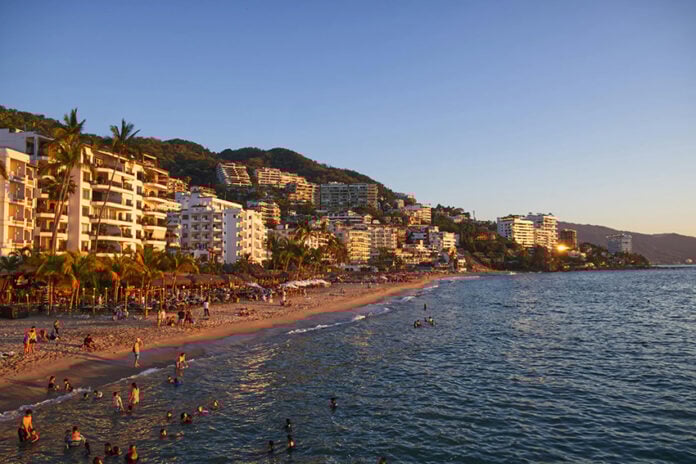
Days after Mexico’s Supreme Court tossed out a tax on foreign tourists, calling it “vague and unconstitutional,” Puerto Vallarta municipal authorities say they have addressed the Court’s concerns and will apply the fee beginning Jan. 1.
Municipal treasurer Raúl Rodrigo Pérez informed a local media outlet that the City Council made the modifications requested by the Supreme Court and expects the new wording to be approved in time to begin collecting the tax next year.
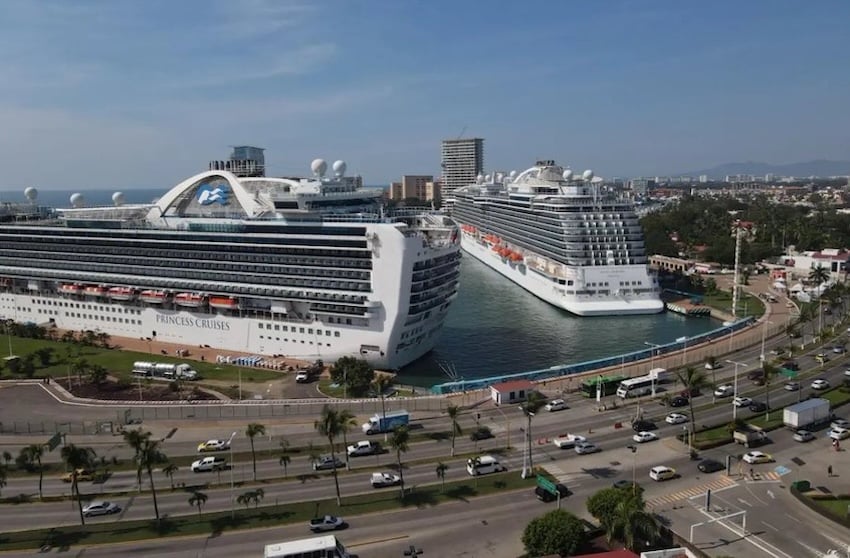
The municipal government had anticipated the Court’s ruling, Pérez said, and had been preparing its response.
“We had expected this scenario,” he said. “We knew it could happen, and we knew how to resolve it since the ruling offered solutions that were implemented.”
On Dec. 1, the Court annulled a tax reform approved in 2024, ruling that the tax — a one-time annual 160 peso fee (US $9) — failed to adhere to two key constitutional principles: tax legality and legal certainty.
The Court determined that the regulation contained ambiguous wording, and did not precisely define the specific services, public goods or spaces for which the payment was being collected.
It further said that the ambiguity of the tax left foreign tourists uncertain about the purpose of the mandatory payment, allowing for the potential arbitrary enforcement by the authorities.
Addressing the consideration that a tax must be clearly and reasonably linked to the cost and provision of a specific public service, the municipal government reworded its revenue bill to clarify that the revenue generated will be used for public works and, in general, tourism infrastructure.
The municipal government sent the corrected regulation to the state Congress last week which quickly approved it.
Pérez is confident that all necessary steps were taken to win approval from the Court.
“I’m sure that starting in January, we will begin collecting the new tax, which will translate into more projects for Puerto Vallarta,” he said.
Pérez defended the tax proposal, saying it is not coercive. “It’s a request for support so that each time [tourists] come to Puerto Vallarta, they find it even more beautiful,” he said.
The collection process is designed to be simple and non-intrusive. The cruise ship terminal, the airport and local hotels will provide information to visitors. Tourists will be able to contribute at hotel lobbies, specialized modules and designated Treasury offices, all staffed by trained personnel, Pérez said.
The tax was proposed by Puerto Vallarta Mayor Luis Ernesto Munguía and approved by the state Congress in November 2024. It was expected that the tax would generate 200 million pesos (US $11 million) annually for the municipality.
The Court took up the case after the National Human Rights Commission filed a constitutional challenge asserting that Article 80 of Puerto Vallarta’s 2025 Revenue Law lacked precision and violated principles of tax certainty.
With reports from Reforma, Milenio, Tribuna de la Bahia and Banderas News