Home Blog Page 99

Julia Ortega: The woman behind Mexico’s first carbon-neutral coffee farm

0
Julia Ortega
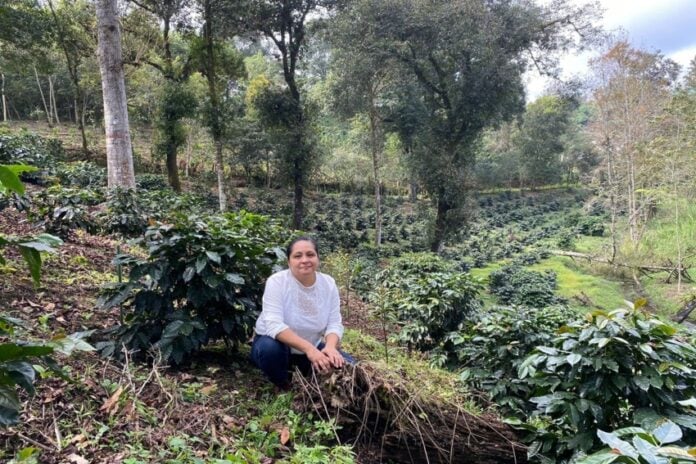
Julia Ortega on her carbon-neutral coffee farm in Puebla, Mexico. (Irena Vélez)

Thirty years ago, Julia Ortega swore she would never work in the family business as a coffee producer. Today, she runs Mexico’s first carbon-neutral coffee farm, Finca Los Pinos, on her 17-acre estate in the Sierra Norte de Puebla. What started as a reluctant inheritance has become a globally exported specialty coffee operation rooted in sustainability.

A hesitant start on the farm

Ortega was born into a coffee-farming family spanning four generations. She watched her parents work tirelessly while volatile commodity prices eroded their income.
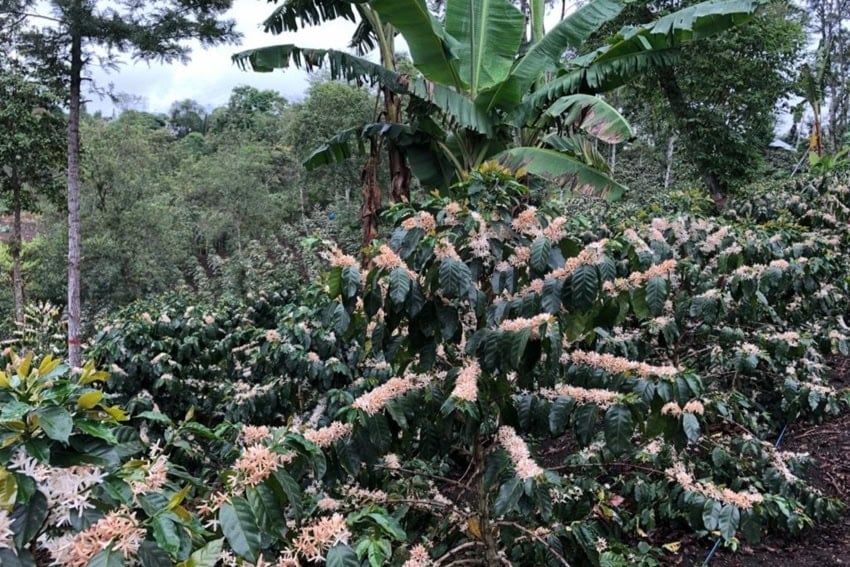
Coffee plants in Puebla
Carbon-neutral farm of coffee plants at Finca Los Pinos in Puebla. (Irena Vélez)

“The producer is always the one most affected by prices,” she says. “I saw my parents work so hard, and it didn’t seem profitable.”

Determined to avoid that path, she pursued business administration and cultural tourism and built her career in an office. “I spent my whole life in an office. I just couldn’t see myself in the countryside,” she recalls.

Her outlook didn’t shift when her parents gifted her a small plot of unused land.
“Instead of feeling excited, it felt like a burden. I thought: What on earth am I going to do with this?”

Discovering her roots

For years, the land sat untouched — until a quiet walk among the trees changed everything.

“Walking in the countryside connects you to something deeper,” she says. “You hear birdsong, rustling leaves. That’s when I realized, this is where I come from.

She decided to grow organic coffee, combining her love of nature with a desire to protect it. At the time, organic coffee was a niche market in Mexico and widely viewed as unprofitable.
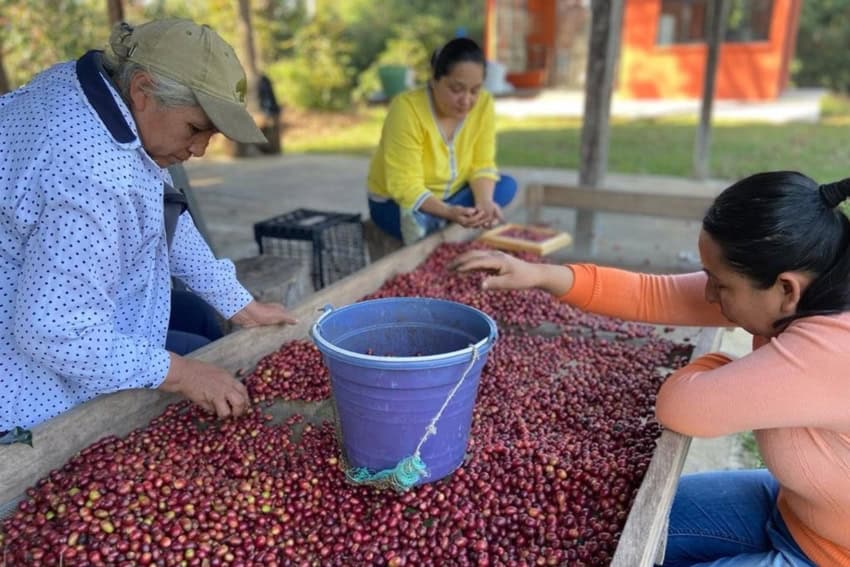
Organic coffee beans Puebla
Specializing in organic coffee beans was a small niche market when Ortega first began growing them. (Irena Vélez)

“Everyone told me it wouldn’t work,” she recalls. “But the truth is, I’m stubborn. I didn’t listen.”

Today, Finca Los Pinos has been carbon-neutral for six yearshaving evolved from a small experiment into a benchmark for sustainable coffee production in Mexico.

Turning setbacks into opportunities

By the mid-2000s, Ortega faced serious obstacles. Running the farm alone had taken a mental toll, and coffee rust, a devastating fungus, was beginning to sweep through her plants.

“I told my husband, ‘I don’t think we can survive,’” she says. The two had deliberately kept their careers separate — until the crisis forced a change.

Her husband, an agronomist, proposed a bold solution: replanting the entire farm with rust-resistant varieties. It required removing healthy trees and making a major financial gamble.

“I thought it would bankrupt us,” Ortega says. “But it was the best decision we could have made.”
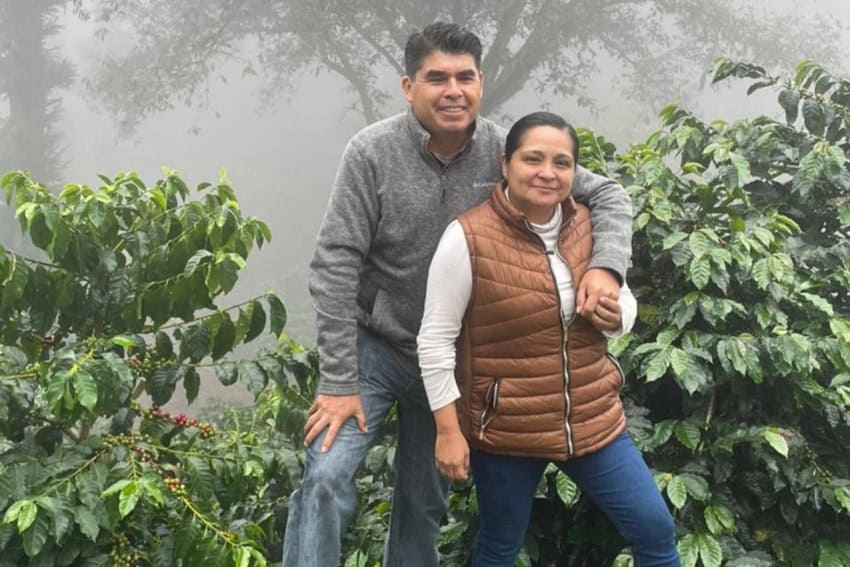
Ortega and her husband
Ortega and her husband, an agronomist, decided to replant the entire farm with rust-resistant varieties. (Irena Vélez)

His agricultural expertise, paired with her business instincts, transformed the farm’s future.

Every bean counts

Today, Finca Los Pinos produces specialty-grade organic coffee, yielding about 50 bags of 70 kilograms each (154 pounds) each harvest. But Ortega doesn’t stop at beans.

“The word ‘waste’ doesn’t exist on this farm.”

Coffee pulp becomes compost or protein-rich flour; spent grounds go into handmade soaps and exfoliants; premium beans are turned into coffee liqueur.

The farm also offers low-impact agro-tourism, developed with the support of Mexico’s National Commission for Biodiversity, giving visitors a close look at sustainable coffee production in a protected region.

Innovation born from experience

For Ortega, coffee farming is both a science and an art. Her hands-on approach includes a method she jokingly calls the “dentometer”—biting a bean lightly to test its readiness.
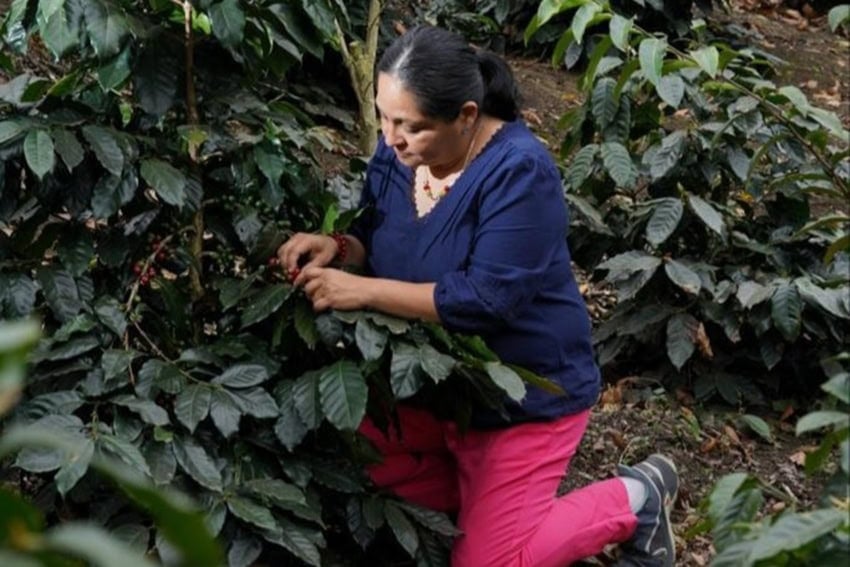
Ortega checks her beans
Ortega checks the readiness of each bean by what she calls the “dentometer.” (Irena Vélez)

“When you touch the coffee, it sounds a certain way and feels a certain way,” she says. “You just know when it’s ready.”

One harvest, a processing machine broke down. Instead of losing the crop, she took a risk and tried drying whole coffee cherries, a method rarely used in Puebla’s humid climate.

The process took 25 days. The result: a high-scoring batch with exceptional flavor.

“People couldn’t believe it,” she laughs. “They told me, ‘We hope your machine breaks more often!’ Sometimes the best innovations come from crisis.”

From Puebla to the world

What began as a family plot now exports 60–70% of its coffee to Denmark, Japan, the United States, Saudi Arabia and the United Kingdom.

In Mexico, Ortega sells to large roasters, Michelin-starred restaurants and small local micro-roasters.
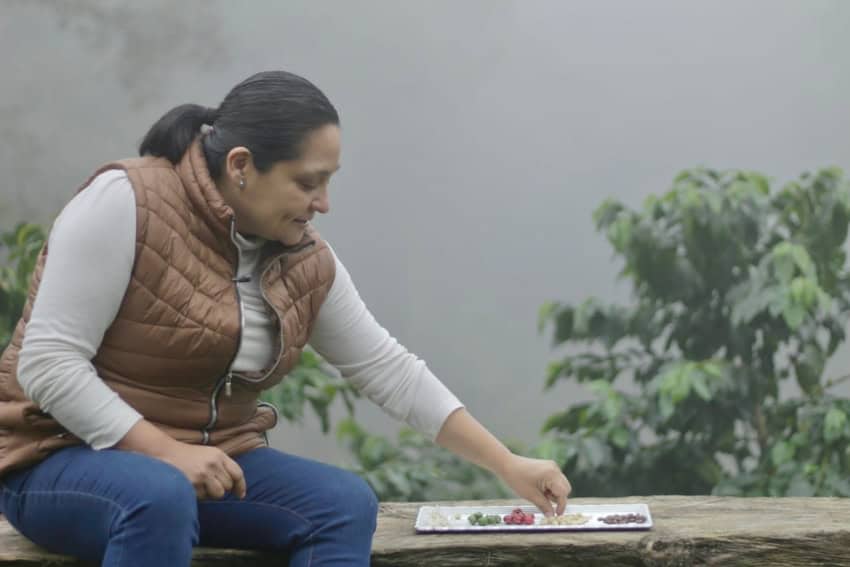
Coffee bean varieties
Ortega now exports her organic coffee bean varieties to countries around the world. (Irena Vélez)

“They put all their passion into it,” she says. “Sometimes they care more about quality than the big companies because they’re face-to-face with their customers.”

The farm is certified organic in Mexico, the U.S. and Canada — a costly but crucial step, Ortega notes, to maintain consumer trust amid widespread food fraud concerns.

Labor shortages in rural Mexico

Finca Los Pinos employs 10 permanent staff, expanding to 15–20 during harvest. But Ortega says finding agricultural workers is increasingly difficult.

“The dream for many day laborers is to work in the United States,” she explains. “They go north to work in vineyards and strawberry fields where foreign companies pay better.”

Her concern extends far beyond her farm: “Without agriculture, we have no food. It’s that simple.”

Life rooted in the countryside

Ortega’s day begins at 5:30 a.m. with a breakfast of café con pan before moving between administrative tasks and long hours in the field. During harvest, she often finishes after sunset.
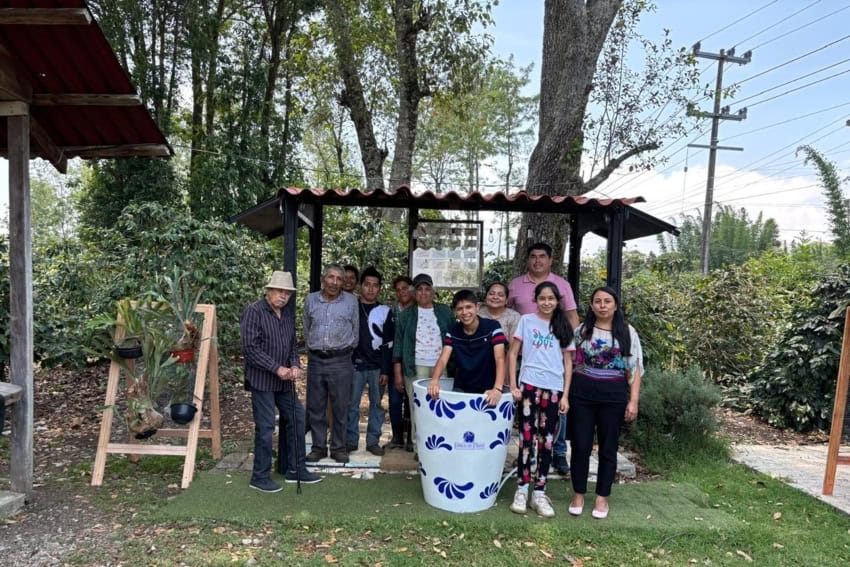
The team at Finca Los Pinos often works long hours to produce their organic coffees. (Irena Vélez)

“When you work on a farm, there are no office hours,” she says. “Nature binds you. It roots you in place.”

When her husband once suggested moving to a larger city, she refused. “Leaving the countryside would be leaving a part of myself.”

A legacy grounded in impact

For Ortega, success is defined not by profit, but by influence and community impact. Neighboring farms have adopted her conservation practices, and visitors often leave inspired.

On one tour, a woman stepped forward and asked, “Do you remember me?” She turned out to be Ortega’s childhood teacher.

“She told me, ‘Julia, you always wanted to be a superhero and help the planet. Maybe you’re not Wonder Woman, but you’re doing exactly what you were meant to do.’”

Moments like that remind Ortega why she does this work: One farm, one community, and one coffee bean at a time.

Irena Vélez is a journalist at Wikifarmer.com, based in Seville, Spain. She holds a Bachelor’s in Journalism Honours from Carleton University in Ottawa, Canada, and has a background in agricultural reporting. She writes research-based articles on sustainable farming, crop management and rural entrepreneurship, helping make agricultural knowledge accessible to farmers worldwide.

For readers looking to dive deeper into the protected agriculture sector, Wikifarmer offers expert insights, market data, and crop trends. Wikifarmer empowers farmers, agribusiness professionals, and industry observers through four key pillars: the Wikifarmer Marketplace, connecting producers with buyers around the world; the Wikifarmer Library, a free knowledge hub with thousands of expert-authored articles on crops, technologies and best practices; the Wikifarmer Academy, offering online courses with certifications to enhance agricultural skills; and Wikifarmer Price Insights, providing real-time market intelligence on key commodities. By combining practical expertise with up-to-date data, Wikifarmer helps stakeholders navigate the complexities of modern agriculture, making it an essential resource for anyone interested in Mexico’s booming greenhouse and horticulture industry.

Like so many things, the traditional Christmas posada costs more this year

2
Ponche de Frutas. Christmas fruit punch is an infusion that is consumed in Mexico, traditionally during posadas and Christmas. Served in a clay cup called cantarito
Ponche de fruta, a Christmastime fruit punch served in cantaritos (clay mugs) is a posada favorite. (Shutterstock)

Mexican posadas — those traditional Christmas parties that bring family, friends and neighbors together for an evening of holiday cheer — are in full swing these December days. But like so many other traditions, the cost of hosting a posada has gone up. Way up.  

While the government is struggling, with some modest success, to keep Mexico’s annual inflation rate between 2% and 4%, a typical posada will be almost 20% more expensive this year than last year, according to a survey conducted by the National Alliance of Small Businesses (ANPEC).

piñata
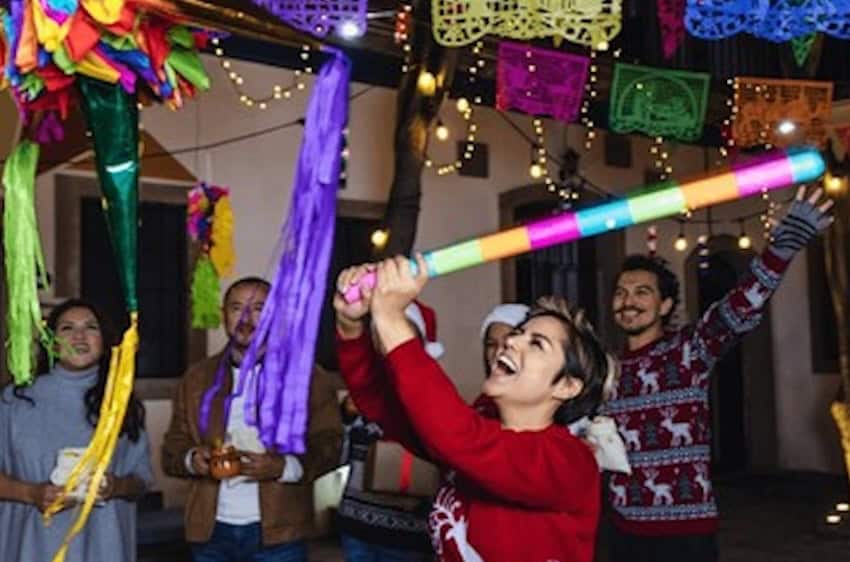
A posada’s not a posada without a piñata for the kids — and the grownups. ANPEC puts the cost of a piñata at 600 pesos. (Shutterstock)

The survey’s data revealed that organizing a posada for 10 people can cost around 10,000 pesos (US $549), compared to the 8,400 pesos (US $461) of 2024.

ANPEC shows that the overall price increase is primarily driven by the rise in food and beverage costs, with food expenses alone amounting to approximately 8,400 pesos – 84% of the total posada budget.

 According to ANPEC, the 10,000 pesos needed for a posada break down as follows:

  • Dinner: 3,500 pesos (US $192)
  • Drinks, including alcohol: 3,000 pesos (US $164)
  • Snacks: 1,300 pesos (US $71)
  • Decorations: 900 pesos (US $50)
  • Candles and sparklers: 700 pesos (US $38)
  • Piñata: 600 pesos (US $32)

Even though inflation has remained relatively controlled, at around 3.5–3.8% annually, it experienced an uptick last month. In November, annual inflation accelerated to 3.80%, up from 3.57% in October, mainly affecting the food and non-alcoholic beverage industries, which saw a 3% increase compared to the 2.64% recorded in 2024. 

According to ANPEC, this rise in prices has prompted friends, family members and even companies to reconsider how they celebrate the holidays. In the past, a government office or company of any size would host a “brindis,” which was usually far more elaborate than its name (meaning a “toast”) would imply, with dinners, music and other entertainment. Today, many have opted for more modest celebrations. 

“The current economic situation has forced many organizations to scale back their celebrations to simpler formats such as breakfasts, in an effort to keep the spirit of gratitude and togetherness without compromising their finances,” ANPEC said. 

But even hosting a Christmas breakfast is more expensive than last year. An average breakfast buffet can cost up to 500 pesos (US $27) per person, also reflecting a 20% increase from the 400 pesos (US $21) it cost last year, according to ANPEC.

Still, families don’t have to forgo their traditional posadas. ANPEC recommends setting a realistic budget, simplifying the menu with economical dishes, balancing alcohol consumption with less expensive options, avoiding impulsive purchases of festive snacks and sweets, and considering a cooperative approach where each attendee chips in.

With reports from El Economista and NMás

Sheinbaum thanks Indigenous artisans for her NYT-celebrated style: Wednesday’s mañanera recapped

1
Sheinbaum mañanera Dec. 10, 2025
At her Wednesday morning press conference, the president also acknowledged a colleague, Thelma, who helps her to choose what to wear. (Hazel Cárdenas/Presidencia)

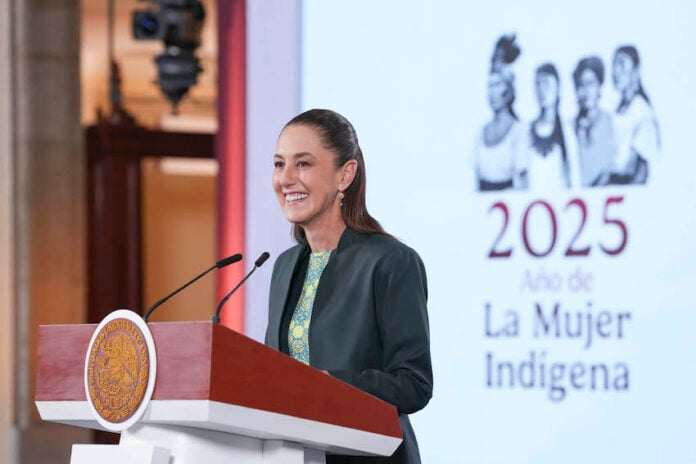
As Mexico’s “Year of the Indigenous Woman” nears its end, President Claudia Sheinbaum took the opportunity at her Wednesday morning press conference to heap praise on the country’s female Indigenous artisans.

She also responded to remarks made by U.S. President Donald Trump in an interview and spoke about Mexico’s state-owned airline, which has now been flying for almost two years.

Sheinbaum responds to Trump’s latest remarks on a possible US military attack in Mexico

A reporter asked Sheinbaum for a response to Trump’s latest remarks about the possible use of U.S. military force in Mexico.

In an interview with Politico, Trump, after declaring that the U.S. is going to hit Venezuelan drug traffickers “on land very soon,” was asked whether he would “consider doing something similar with Mexico and Colombia that are even more responsible for fentanyl trafficking into the U.S.”

“Yeah, I would. Sure. I would,” the U.S. president responded a few weeks after he said he would be willing to launch military strikes against cartel targets in Mexico.

Sheinbaum responded to Trump’s remarks in the same way as she has previously responded, declaring that a U.S. military attack in Mexico “is not going to happen.”

It won’t happen “first of all, because it’s not necessary,” she said.

“Secondly, because we’re a sovereign country and we would never accept a foreign intervention,” Sheinbaum continued.

“Thirdly, because we already have a security understanding with the United States.”

Sheinbaum Dec. 10, 2025
Sheinbaum responded to Trump’s remarks in the same way as she has previously responded, declaring that a U.S. military attack in Mexico “is not going to happen.” (Galo Cañas/Cuartoscuro)

Sheinbaum acknowledged that Trump has his own way of “thinking” on the issue, although his Secretary of State Marco Rubio said last month that the United States wouldn’t take unilateral decisions and … send American forces into Mexico.”

She also said that there are “a lot of things” that Mexico and the U.S. don’t agree on, but her government still seeks the best possible relationship with its U.S. counterpart.

“And until now, it’s been very respectful,” said Sheinbaum, who had her first in-person meeting with Trump at the FIFA World Cup draw in Washington D.C. last Friday.

‘Mexicana is doing very well’

Sheinbaum noted that the state-owned commercial airline Mexicana took possession on Tuesday of an Embraer plane, the fifth of 20 new planes it is set to receive from the Brazilian manufacturer.

“Mexicana is doing very well,” she said.

“It’s not only increasing its flights, but obviously its passengers as well,” Sheinbaum said.

In the first 10 months of 2025, a total of 343,196 passengers flew on regular Mexicana flights, an increase of 48% compared to the same period of last year.

The airline’s hub is the Felipe Ángeles International Airport in México state, from where it flies to various Mexican cities, including Tijuana, Tulum, Mérida and Los Cabos.

Sheinbaum said that plans are in the works for Mexicana to reach new destinations.

Mexicana is “proof that there can be a profitable airline of the Mexican state,” even while offering tickets that are cheaper than those of its competitors, allowing “more people to travel by plane,” she said.

Sheinbaum’s fashion secrets 

Asked about her inclusion on The New York Times’ list of “The 67 most stylish people of 2025,” Sheinbaum said she appreciated the recognition but declared that the credit should, in fact, go to Mexico’s Indigenous artisans.

“Who we have to thank are the Mexican Indigenous artisans, for what they give to Mexico, for their creativity, for the beauty with which they embroider,” said the president, who in her first year in office “has drawn attention to the country’s Indigenous fashion by wearing embroidered clothing,” according to the Times.

NYT names Sheinbaum among the most stylish people of 2025

Sheinbaum said that “in each embroidery” by a Mexican artisan “there is not only a lot of work,” but also “tradition, history [and] legacy.”

“… In addition, each embroidery represents something that a woman, mainly Indigenous, designed and conceived,” she said.

Sheinbaum also told reporters that she is gifted a lot of huipiles and other items of clothing during her weekend tours of Mexico, during which she likes to get up close and personal with supporters.

In addition, she noted that there is a seamstress in San Pedro Mártir, an “original town” in the Mexico City borough of Tlalpan, who has made dresses for her for a long time.

“There is another seamstress from Tlaxcala who helped me make my dress for September 15,” Sheinbaum said, referring to the date on which she delivered the national Cry of Independence from the central balcony of the National Palace.

The president also acknowledged a colleague, Thelma, who helps her to choose what to wear.

Sheinbaum added that she feels “very proud” to wear pieces made by Indigenous artisans “because the weavers, the embroiderers, everyone who has a telar de cintura [backstrap loom] … are the pride of the nation.”

By Mexico News Daily chief staff writer Peter Davies (peter.davies@mexiconewsdaily.com)

Sheinbaum: Trump administration so far deporting fewer people than Biden

7
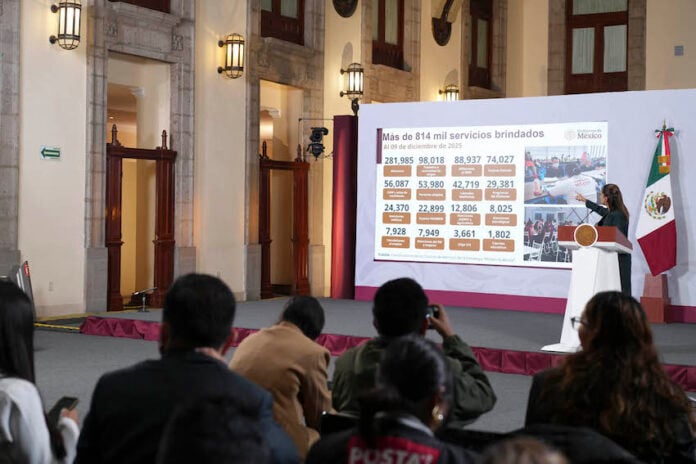
President Sheinbaum displayed an infographic during her Wednesday morning press conference summarizing the more than 800,000 services provided by the Mexican government to deportees since the launch of the "México te abraza" reinsertion program earlier this year.
President Sheinbaum displayed an infographic during her Wednesday morning press conference summarizing the more than 800,000 services provided by the Mexican government to deportees since the launch of the "México te abraza" reinsertion program earlier this year. (Hazel Cárdenas/Presidencia)

President Claudia Sheinbaum acknowledged Wednesday that during her term in office, the administration of former U.S. President Joe Biden deported people to Mexico at a faster pace than the administration of current President Donald Trump.

Speaking at her morning press conference, Sheinbaum said that 152,592 people have been deported to Mexico from the United States since Jan. 20, the day Trump began his second term.

She said that number was made up of 140,706 Mexicans and 11,886 foreigners.

Sheinbaum said that since Oct. 1, 2024, the date she took office, 217,109 people have been deported to Mexico from the United States.

She said that figure was made up of 200,540 Mexicans and 16,569 foreigners.

Sheinbaum said there were “a lot of deportations” during the first months of her term, when Biden was still in office.

“There were even more deportations then than there are now,” she said.

Deportations to Mexico: Biden vs Trump 

According to the data Sheinbaum presented, 64,517 people were deported to Mexico from the U.S. between Oct. 1, 2024 and Jan. 19, Biden’s final day in office.

An average of 581 people were deported to Mexico from the United States per day in the 111-day period.

Since Trump took office on Jan. 20, an average of 472 people per day have been deported to Mexico from the United States.

Thus, the pace of deportations to Mexico from the U.S. during the final 111 days of Biden’s presidency was 23% quicker than it was during the first 323 days of Trump’s second term.

DHS: More than half a million people deported from US this year 

The U.S. Department of Homeland Security (DHS) said on Oct. 27 that “527,000 illegal aliens” had been deported from the U.S. this year “under the leadership of President Donald Trump and Homeland Security Secretary Kristi Noem.”

That figure refers to deportations to all countries around the world.

The number is significantly higher than the 271,000 people who were deported from the U.S. during fiscal year 2024 — Oct. 1, 2023 to Sept. 30, 2024 — which was the highest tally since 2014, surpassing Trump’s peak during his first term.

The accuracy of the Trump administration’s 2025 deportations figure has been questioned, including by Dara Lind of the American Immigration Council and NPR reporter Sergio Martínez-Beltrán.

However, Assistant Homeland Security Secretary Tricia McLaughlin maintained in late October that the Trump administration was “on pace to shatter historic records and deport nearly 600,000 illegal aliens by the end of President Donald Trump’s first year since returning to office.”

“More than 2 million illegal aliens have left the U.S. [in 2025], including 1.6 million who have voluntarily self-deported and over 527,000 deportations,” she said.

The Department of Homeland Security said that “day-in and day-out, DHS law enforcement is removing the worst of the worst criminal illegal aliens from American communities, including murderers, rapists, pedophiles, drug dealers, and more.”

“70% of ICE [Immigration and Customs Enforcement] arrests are of criminal illegal aliens charged with or convicted of a crime in the U.S.,” it added.

That percentage has also been challenged.

The administration of Donald Trump, who, before he began his second term, pledged to carry out “the largest deportation operation in American history,” is said to be targeting 1 million deportations per year.

However, it will fall well short of that goal this year, according to its own numbers.

Mexico News Daily  

Vape sellers could face up to 8 years in prison under new law

6
Kyiv, Ukraine - February 04, 2025: Selection of vaping devices, flavored pods, and accessories on a store counter display
Those who vape will not be punished, but producers of vaping devices will be subject to prison time and heavy fines. (Shutterstock)

Mexico’s lower house of Congress has approved a sweeping ban on the vape trade that targets suppliers with prison time and heavy fines while leaving users free from criminal penalties.

The Chamber of Deputies voted 292-163 on Tuesday to reform the General Health Law and prohibit the commercialization, manufacture, import, export, distribution and sale of electronic cigarettes, vapes and “other analogous systems or devices” across Mexico.

The bill marks a new stage of legislation following significant action taken last December by the Morena deputies, whose alliance with the Green Party (PVEM) and the Labor Party (PT) gives them a more than two-thirds majority in that chamber.

The bill will now head to the Senate, where it is expected to easily pass by simple majority, as the Morena bloc holds more than 80 of 128 seats.

In December 2024, the lower house approved a constitutional reform to ban e‑cigarettes, vapes and some synthetic drugs, including fentanyl, but left enforcement details to follow-up laws.

The newly approved reform — passed largely in the name of public health, and specifically the health of young people, according to legislators — supplies those details.

The changes set prison sentences of one to eight years and fines of up to approximately 226,280 pesos (US $12,429) for those who produce or market the devices. The fine can be up to 2,000 times the daily value of the UMA (Unidad de Medida y Actualización), a legal and economic reference unit for calculating fines and other obligations.

During nearly 10 hours of debate, Morena and its allies pushed through a last-minute change to an article in the General Health Law “to clarify the sanctioning regime and that it is strictly limited to those who participate in the vaping business and not to the users.”

They also added a final paragraph stating that “consumption and possession are excepted,” so a person with one or two electronic cigarettes will not be sanctioned.

Opposition lawmakers said the move will push consumers toward the black market and benefit organized crime.

Citizens’ Movement (MC) party Deputy Iraís Reyes
Citizens’ Movement (MC) party Deputy Iraís Reyes took a break to vape during the contentious session. (Daniel Augusto/Cuartoscuro)

Citizens’ Movement (MC) party Deputy Iraís Reyes was quoted by López-Dóriga Digital as saying, “Not regulating a product that people already consume equals more black market and more money for drug traffickers, who this December, thanks to Morena, will receive their Christmas bonus.”

She also called legislators in favor of the bill “hypocrites” if they are vapers.

“You vape. We’ve seen you,” she was quoted as saying. “I don’t know how you can come here and propose a ban when you’re vaping users yourselves.”

With reports from López-Dóriga Digital and El Financiero

Made in Mexico: Inventing Navidad

5
Christmas celebration in Mexico
Celebrations of Navidad, or Christas, in Mexico have evolved through the centuries. (Visit Mexico)

Growing up as the daughter of an actor, my house shelves overflowed with volumes
explaining how drama evolved across civilizations. Hidden among those heavy tomes
was a small, humble book titled “Teatro Mexicano.” It began with a simple, startling claim:
The earliest form of Mexican theater was the Catholic pastorela, created as a dogmatic
tool.

Years later, while studying the Spanish Conquest in college as a cultural collision, these
same pastorelas — and their sister celebration, the posadas —became my focus, since
they were more than dogmatic tools; they shaped our relationship with Catholic religion.

The friar’s dilemma

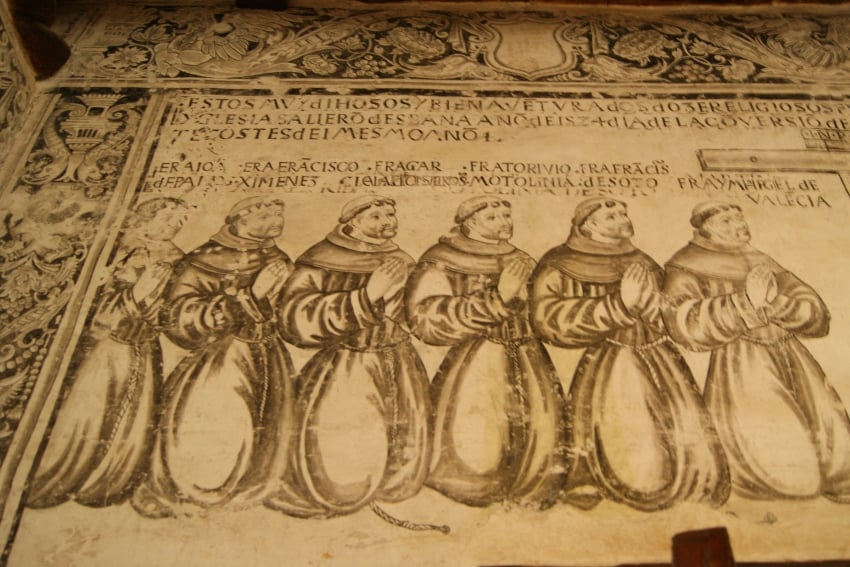
mural of Franciscan friars
Franciscan friars in 16th-century Mexico encountered a worldview that differed profoundly from their own. (PetrohsW/Wikimedia Commons)

To understand the origins of these traditions, one must first inhabit the mind of their
inventors. Imagine you are a Franciscan friar in the 16th century. You have just stepped
off a ship into a world that defies every category of your existence.

You are standing in a land where the Bible has no authority, where the name Dios (God)
evoke no recognition, and where Jesus is a ghost of a foreign land. But the theological
silence is the least of your disorientation.

In the world you left behind, humanity was crafted in the image of God. Here, you find a
civilization convinced of the inverse: humans were not made to reflect the gods but
to sustain them. The relationship is not one of adoration, but of metabolic necessity.
Without human intervention, the cosmos collapses.

Here, nature is not a backdrop for human morality but a deity in itself — the stars do not merely shine; they dictate the rhythm of breath and blood. Even the architecture rejects you: in Castile, the church is a sanctuary for the flock; here, entering the House of any God is an unthinkable transgression, a terrifying privilege reserved only for the tlatoanis and warriors who feed the Gods.

Made in Mexico: Inventing Navidad

The scale of this “New World” is also bewildering — larger than the Kingdom of Castile, a
patchwork of nations with distinct tongues and pantheons. But the deepest chasm is not
linguistic; it is conceptual.

How do you explain the unique and linear path to salvation — final judgment — to a
people who live in a universe of relentless, cyclical duality? Binary tensions structure their reality: life and death, male and female, rain and drought, light and darkness.
They do not seek “goodness” in the Christian sense; they seek balance. To them,
morality is not about avoiding sin; it is about maintaining cosmic equilibrium. Actions
have immediate, tangible consequences in the here and now, not in a distant afterlife.
The collision of these two worldviews must have been absolute. How do you translate
the concept of “sin to a mind that sees only “chaos”? How do you preach “grace” to a
culture obsessed with “order”?

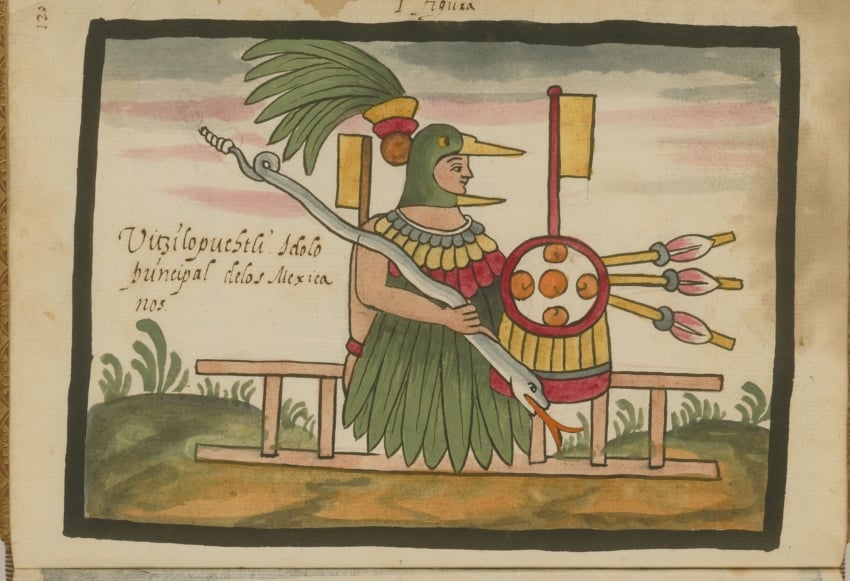
Huitzilopochtli
Huitzilopochtli, the Mexica god of sun and war, as he appeared in a 16th century codex. (Public Domain)

Facing this metaphysical abyss, the friars stopped trying to translate the untranslatable.
Instead, they looked for the one language that transcends doctrine: the seasons.

Where calendars converge

Every religion, at some point in its history, follows the rhythm of the harvest. And so it
was not difficult for the friars to spot the parallels between European and Indigenous
calendars. Across cultures, key festivals clustered at the end of the agricultural year,
celebrating renewal, abundance and hope.

In Central Mexico, one of the most important of these celebrations was Panquetzaliztli,
or the “Raising of the Banners.” Despite what many modern retellings suggest,
Panquetzaliztli was not a single-day festivity, but the name of the 15th twenty-day
month — dense with mythic reenactments, sacrifices and ritual drama.

It commemorated the miraculous birth of Huitzilopochtli, the Sun God, born of the
immaculate conception of the goddess Coatlicue. His 400 siblings, consumed by
suspicion and rage, attempted to kill their mother for what they perceived as infidelity.
But Huitzilopochtli, emerging fully armed from her womb, defeated them all — a cosmic
allegory of light triumphing over darkness.

Panquetzaliztli functioned simultaneously as a method of preserving Mexica cosmic
tradition and as a terrifying reminder to subject nations that the Mexica were the chosen
children of the sun. The month-long observance was a crescendo of ritual acts,
escalating in intensity until the final three days.

The Incarnation (Day 18):

The climax began with an act of sacred sculpting. Priests and devotees fashioned a life-
sized effigy of Huitzilopochtli from a paste of toasted corn, amaranth and agave honey,
to be consumed on the last day.

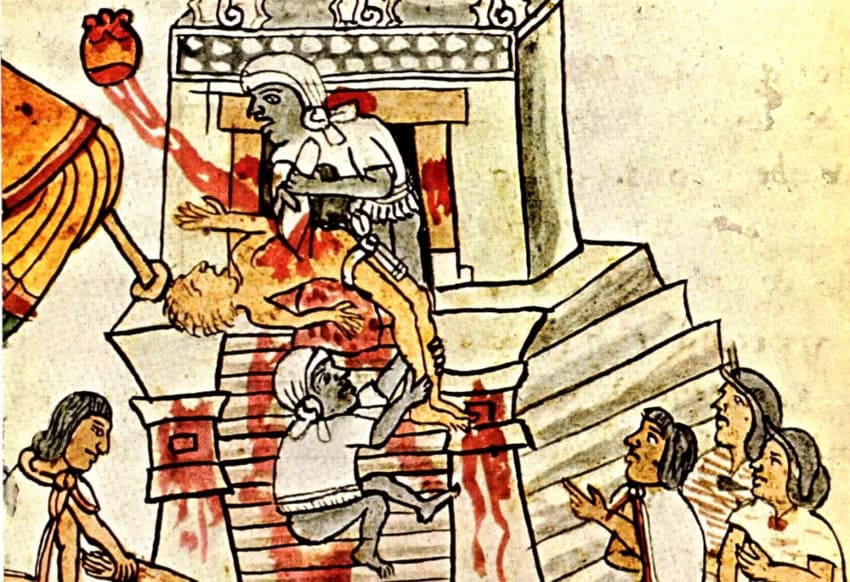
Mexica codex showing human sacrifice
Panquetzaliztli was a rigorous, blood-soaked affirmation of power, complete with sacrifices of war prisoners taken by the Mexica. (Public Domain)

The Enthronement (Day 19):

The figure was carried to the summit of the Templo Mayor. There, overlooking the valley,
it was displayed for public adoration before being processed inside the sanctuary. The
day was filled with incensing, dance and liturgy, marking the god’s presence among his people.

The Sacrifice and Communion (Day 20):

The final day brought a spectacle of movement and blood. A high priest, trailing a
massive banner in the shape of a serpent, led a procession that wound through the city
for nearly four hours. This was a harvest of souls: the procession visited various sites
and temples to collect war prisoners and march them back to the feet of Huitzilopochtli.

Inside the temple precinct, a ritualized skirmish was staged among the prisoners
destined for the stone. But the violence extended to the god itself. In a symbolic slaying, priests hurled darts into the heart of the amaranth Huitzilopochtli. The “dead” god was
then broken into pieces. The heart and limbs were distributed to the nobility, while
smaller bones made of the same seed-paste were given to the commoners.

The day concluded with social renewal marked by the birth of Huitzilopochtli, followed
by a solemn sermon reinforcing the necessity of these rites to maintain the universe.
Panquetzaliztli was a rigorous, blood-soaked affirmation of power.

Creating Navidad

So picture the friars now, standing before a ritual that resembled — uncomfortably
so — the structure of their own faith. Here was a god born of a virgin, and here was
bread made sacred and consumed in his name.

The horror must have been real. In the pageantry of Panquetzaliztli, they saw a
narrative bridge from indigenous faith to Catholic doctrine. Huitzilopochtli’s story could
be reframed through the miracle of another birth: that of the Son of God, who required
not blood, but prayer.

Misas de Aguinaldo
Misas de Aguinaldo, a series of nine votive masses from Dec. 16-24, were one of the ways Navidad was reframed in Mexico. (X, formerly Twitter)

But they had a tonal problem. While the Valley of Mexico pulsated with the martial rhythms of Panquetzaliztli, the Old World was immersed in a deeply different frequency:
Advent.

In the 16th-century Catholic imagination, the weeks leading up to Christmas were a
period of rigorous spiritual hibernation. Beginning on the Sunday closest to November
30 and stretching to Christmas Eve, Advent was a season of “little Lent.” The churches
were draped in purple—the liturgical color of penance. The atmosphere was a complex
emotional alloy of repentance, fear and a desperate hope for redemption. The Advent
wreath, with its four candles nestled in evergreen, marked the slow, deliberate conquest
of light over darkness, week by week.

How could such a somber season compete with the vibrancy of the Indigenous rites?
The friars found their answer in a tradition already popular in Seville: the Misas de
Aguinaldo. They realized that if the Indigenous people were eager to celebrate during
the days of Panquetzaliztli, the Church had to offer them back their own “ritualistic
sacred days,” but repackaged.

And so, nine days before the Nativity, the solemnity was deliberately cracked open. At these special dawn masses, the church offered Eucharist and aguinaldos — gifts of dried
fruit, sweets and food.

The clergy officially maintained that the overflowing pews were a testament to spiritual
fervor. But historical chronicles from the era paint a more human picture: they describe the churches turning into raucous romerías — chaotic festivals where the faithful were
driven less by a hunger for God than by a very literal hunger for the treats.

It was this specific tension—between the solemn requirements of the liturgy and the
irrepressible human desire for celebration—that the friars harnessed. They exploited
this crack in the solemnity to erase the memory of the pre-Hispanic gods, replacing
sacred amaranth with aguinaldo.

The theater of conversion

Pastorelas in Mexico
Pastorelas are traditional plays that represent the journey of shepherds to see the newborn Jesus. (Lessing Hernández/Secretaría de Cultura de la Ciudad de México)

Conversion required more than treats; it required a story. And the friars’ most effective tool
was theater. During the same Advent season, at sunset, they began to stage short plays
designed to educate the populace on the importance of the nativity.

As early as 1539, plays like “The Conquest of Jerusalem” were performed not for
entertainment but for edification. Since the Indigenous people were often terrified to enter the house of God, open chapels were built as hybrid sacred stages. There, beneath the
sky, faith became as much doctrine as it was spectacle.

By the 17th century, the stories evolved. The focus shifted from grand liturgy to human
a drama where the audience could see themselves reflected in the moral journeys of
shepherds, angels and devils. The tone became warmer, more familiar. Thus were born the pastorelas: plays that dramatized the humble pilgrimage of Indigenous shepherds
seeking the newborn Christ, repeatedly tempted by evil with the seven capital sins, but
never defeated.

The audience might not yet grasp the dogma, but they understood ritual repetition,
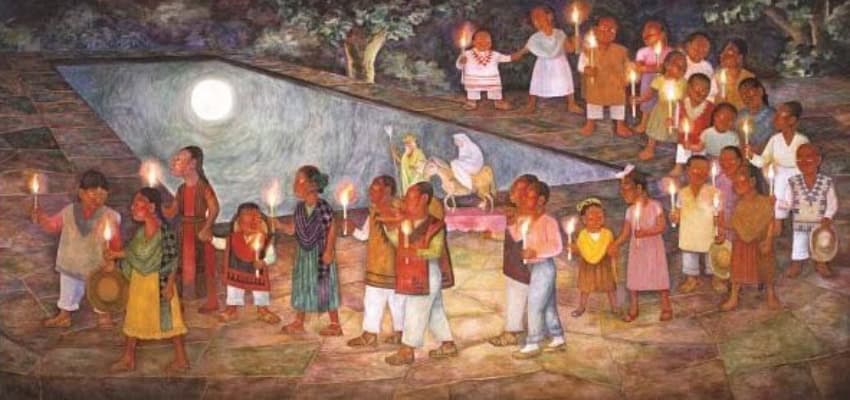
music and dance. So around pastorelas bloomed the posadas — popular processions
where communities reenacted Mary and Joseph’s search for shelter. People carried
candles and sang villancicos, local carols written in the vernacular. Between the verses
and the laughter, Catholic doctrine quietly took root.

It was, in essence, a masterclass in cultural negotiation disguised as a three-part
celebration: the Misas de Aguinaldo, the pastorelas and the posadas.

Secularization and sentiment

By the 19th century, Mexico had legally divorced church and state. Religion retreated
from public life, but its rituals remained, dressed in the garb of community. The posadas
escaped the church walls and spilled into streets and courtyards. What had begun as
catechism became shared festivity.

Holiday season in Mexico City
As Navidad has evolved in Mexico, it has become more secular and globalized. (The Santa Run/McCormick)

Some clergy saw the change as irreverent. But it was a fulfillment of the very
syncretism that had birthed the tradition centuries earlier: a joyful coexistence of the
sacred and the human.

From Navidad to Christmas

In today’s Mexico, the overt religiosity of the season has faded further still. Many attend
mass only out of habit or family duty, if at all. The air is no longer filled with the scent of
copal or the solemnity of Latin but with English-language carols translated into
Spanish — the soundtrack of a globalized December.

As a Catholic, I admit to feeling a pang of melancholy watching the deep theological
weight of Navidad morph into a secular exchange of goods (even as I open my own
gifts with Bing Crosby crooning in the background, of course). Yet, I also recognize the
profound irony of my nostalgia. Five centuries ago, an Indigenous woman must have felt
the same disorientation and loss as she watched the sacred banner of Panquetzaliztli give way to the manger of Christmas.

But perhaps to mourn this shift is to misunderstand the very nature of our culture. The
essence of Mexican identity is not purity, but adaptation. Faith becomes story, story
becomes ritual, and ritual becomes survival.

Whether we offer amaranth to the sun, prayers to the Christ Child, or simply time to our
families, the impulse remains unchanged. We are still doing what the Mexica and the
friars did before us: gathering together to light a fire against the longest, darkest nights
of the year, driven by the stubborn, ancient hope that the light will, inevitably, return.

Maria Meléndez is an influencer with half a degree in journalism

Congress approves new tariffs on goods from China and non-FTA countries

6
A person shopping at a Chinese market
The government is also aiming to reduce reliance on imports from Asian countries, especially China, a country with which Mexico has a significant trade imbalance. (Mario Jasso/Cuartoscuro)

Mexico’s lower house of Congress approved on Wednesday a bill that seeks to impose new or higher tariffs on imports from China and other countries with which Mexico doesn’t have free trade agreements.

Submitted to Congress by President Claudia Sheinbaum in September, the bill was significantly modified — i.e., softened — by a lower house committee before the full Chamber of Deputies voted on the initiative early Wednesday.

A total of 281 deputies from the Morena and Green parties voted in favor of the proposed reform to the Law on General Import and Export Taxes, while 24 Citizens Movement (MC) lawmakers opposed the bill. There were 149 abstentions, with deputies from the National Action Party (PAN), the Institutional Revolutionary Party (PRI) and the Labor Party (PT) declining to support or oppose the bill. The PT, an ally of the ruling Morena party, didn’t back the bill as a show of solidarity with China, of which it is a strong supporter.

The legislation also passed the Chamber of Deputies en lo particular — i.e., after the consideration of individual articles of the bill. It will now be considered by the Senate, which is also dominated by Morena.

The bill proposes modifications to 1,463 tariff categories (or products) covering more than a dozen sectors, including auto parts, light vehicles, plastic, toys, textiles, furniture, footwear, clothing, aluminum and glass. The proposed tariffs range from 5% to 50%. Tariffs will be imposed on more than 300 products for the first time if the Senate approves the bill passed by the lower house.

The Mexican government is seeking to provide greater protection for Mexican industry — which includes sectors that struggle to compete with cheap imports — and increase domestic output.

“We believe that supporting [Mexican] industry is to create jobs,” said Deputy Ricardo Monreal, Morena’s leader in the Chamber of Deputies.

The government is also aiming to reduce reliance on imports from Asian countries, especially China, a country with which Mexico has a significant trade imbalance.

Among the other countries that will be affected by the proposed higher tariffs are India, South Korea, Thailand, Indonesia, Brazil, South Africa and the United Arab Emirates. The government estimated earlier this year that the proposed tariffs would generate additional revenue of 70 billion pesos (US $3.8 billion) per year.

Morena party lawmakers asserted that the higher tariffs won’t cause inflation to increase. Morena Deputy Claudia Selene Ávila said that the proposed tariffs only seek to protect goods that Mexican industry has the capacity to produce. She also said they comply with World Trade Organization rules.

“We’re looking after the internal market. Protectionism is necessary and is a temporary issue, subject to constant revision,” Ávila said.

“Trade is not being closed down, but a level playing field is being created in order to compete under symmetrical conditions,” she said.

Imposing higher tariffs on imports from China will likely go some way to appeasing the governments of the U.S. and Canada ahead of the 2026 review of the USMCA free trade pact. Both countries have critically questioned Mexico’s economic ties with the world’s second-largest economy.

China tariffs could backfire on Mexican industry, chamber warns

United States President Donald Trump has even accused Mexico of being a transshipment hub for Chinese goods — i.e., a tariff-free or low-tariff backdoor to the United States market. The Mexican government denies the allegation and has stressed that its proposed tariffs weren’t designed to specifically target China.

Horacio Saavedra, a Mexican diplomat, told the news outlet La Silla Rota that the proposal to increase tariffs on China and other countries with which Mexico doesn’t have free trade agreements represents “an alignment with U.S. trade policy” and will allow Mexico to be better positioned for next year’s USMCA review.

“China concentrates almost 70% of the trade deficit Mexico has with nations with which it doesn’t have trade agreements,” he said.

“The [tariff] measure responds to the shared concern of Mexico and the United States about practices that have affected national industries, especially textiles, clothing and certain manufacturing sectors,” Saavedra said.

Modifications to the bill 

Sheinbaum’s tariff bill was approved by the Chamber of Deputies’ Economy, Trade and Competitiveness Committee on Monday.

The president of the committee, PAN Deputy Miguel Ángel Salim Alle, said that around 60% of the bill was modified before its approval. Those changes softened the proposal originally put forth by Sheinbaum. However, the maximum tariff on cars imported from China and certain other Asian countries remains at 50%, as originally planned.

Chinese cars, including electric vehicles made by automakers such as BYD, have become very popular in Mexico in recent years. They currently face a 20% tariff when entering the country.

BYD building
Chinese BYD, the world’s largest manufacturer of electric vehicles, had announced in 2023 plans for a major factory in Mexico, but the plan never got off the ground. (Shutterstock)

The Mexican Auto Industry Association (AMIA) expressed support for the plan to increase the tariff on imported cars from China and certain other Asian countries, even though Chinese automakers may have the capacity to absorb and offset the higher duty their vehicles will be subject to.

“We completely agree [with the proposed increase],” said AMIA president Rogelio Garza.

“… For all those who invest in Mexico, produce in Mexico and create jobs in Mexico, this is very good news,” he said.

Some further modifications to the bill were made on the floor of the Chamber of Deputies, including one that would allow the Economy Ministry to intervene and modify the proposed tariffs if necessary in order to “guarantee the supply of inputs in Mexico in competitive conditions.”

Lawmakers said that additional modifications to the Law on General Import and Export Taxes could be made down the track if necessary.

Salim said that the committee he leads took into account feedback on the original bill from business groups and other representatives of strategic sectors. The Chinese government came out strongly against the tariff plan submitted by Sheinbaum and urged Mexico to reconsider it.

Concerns and criticism

Reginaldo Sandoval, the PT’s leader in the lower house, said that the legislation wouldn’t support the diversification of Mexico’s trade relationships — a goal of Sheinbaum — but rather lead to greater dependence on the United States for imported goods.

He also said that the higher tariffs could cause inflationary pressures in the short term and wouldn’t necessarily lead to a resurgence of Mexican industry, as such a development depends on a variety of factors, including investment and the availability of labor.

Adrián González Neveda, another PT deputy, was critical of the trade treatment Mexico has received from the United States, which this year has imposed tariffs on a range of Mexican goods. He said his party supports closer trade ties with the BRICS bloc, which includes Brazil, Russia, India, China and South Africa (as well as six other countries).

“We don’t agree with increasing tariffs on China, Brazil, Taiwan, South Korea. At this time, we don’t think it’s the message we should send to the world and these possible partners,” González said.

PRI Deputy Erubiel Alonso said that higher tariffs will increase costs for everyday goods and hurt small and medium-sized businesses.

“How many producers, teachers, bureaucrats, taxi drivers, Uber and Didi drivers don’t have a light car and are seeking a loan [to get one]? Well, they now have the news that the vehicle will cost 35% more,” he said, referring to the proposed tariff on cars from countries such as China, South Korea and India.

PRI Deputy Erubiel Alonso
PRI Deputy Erubiel Alonso criticized the bill’s passage, saying in session that “Tonight, Morena is hitting Mexican families right in the pocketbook.” (@Erubiel_Alonso_/X)

PAN Deputy Marcelo Torres Cofiño pointed out that Mexico’s export industry — whose revenue exceeded US $600 billion in 2024 — is highly dependent on imported inputs, including from China and other Asian countries.

“Forty per cent of exports depend on imported inputs. With these high tariffs, you’re raising — without serious sectorial analysis — the price of auto parts, machinery, chemicals, textiles, electronics, steel and metal that are essential for the value chains in the north of the country,” he said in remarks directed at Morena lawmakers.

“Where’s your impact analysis for [small and medium businesses]? Where is the breakdown [on the impact] by region, by sector, by the size of the company? It doesn’t exist,” Torres said.

With reports from La Jornada, Reforma, Reuters, El Economista and Expansión

*Editor’s note: A previous version of this story reported that the maximum tariff on cars imported from China and other Asian countries was reduced from the 50% initially proposed to 35%. That is incorrect; the final, approved version of the bill sets auto tariffs at 50%.

Morena senator buys, distributes thousands of copies of AMLO’s book

4
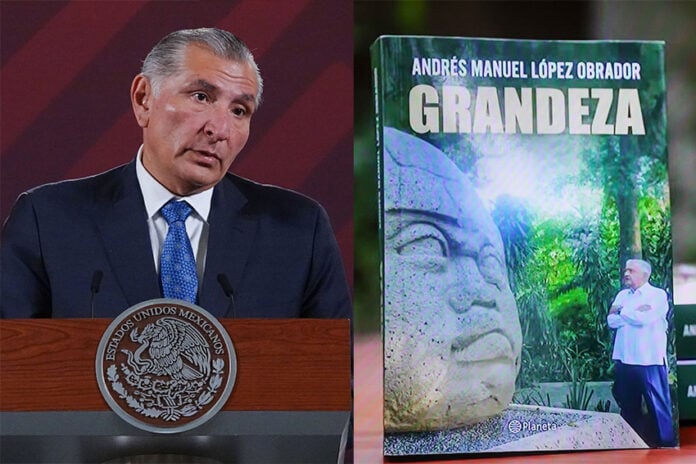
Senator Adán Augusto López, with AMLO's book "Grandeza"
Senator Adán Augusto López Hernández is seen here with former President Andrés Manuel López Obrador's new book, copies of which López Hernández distributed among his fellow Morena senators: “Others usually give turkeys . . . I give them books.” (Cuartoscuro)

Morena Senate coordinator, Adán Augusto López Hernández, came to the Senate bearing gifts this week, in the form of more than 17,000 copies of former President Andrés Manuel López Obrador’s new book. 

Hundreds of white boxes filled with AMLO’s tome, “Grandeza” (“Greatness”), each contained a card with the message “With kind regards from Adán Augusto López Hernández, Senator of the Republic.”

Senator Adán López at 4T celebration.
Senator Adán Augusto López Hernández, recently bearded, attended Morena’s celebration of seven years in power last weekend in Mexico City’s Zócalo. López Hernández served as interior secretary in the López Obrador administration and as governor of AMLO’s home state of Tabasco. (Mario Jasso/Cuartoscuro)

“Others usually give turkeys and things like that; I give them books,” said the senator, who wore a Santa Claus cap for the occasion.

López Hernández only delivered books to senators from his (and AMLO’s) own party, Morena. He said that he had given 100 copies to each of the 69 Morena senators, although if each received 13 boxes of 20 copies, as reported, the figure would presumably be higher. 

The aim, according to López Hernández, is for senators to distribute the books to Morena supporters during their visits to their communities and districts.

The book’s publishing house, Planeta, set the retail price of “Grandeza” at 448 pesos (US $25), meaning that the total spent on the books could be as high as 7.6 million pesos ($417,500). 

Adán said he purchased the books with his own money, although he said in a statement that he didn’t keep track of the total amount he spent on them. One senator, Eugenio Segura, said he paid for the 10 boxes of books he received, which he intends to distribute in his state of Quintana Roo.

The aim of the distribution seems to be at least as much about party promotion as about the edification of constituents. “This is a show of support for President López Obrador, support for our President Claudia Sheinbaum, and support for our movement,” said Segura.

López Obrador introduced “Grandeza” on November 30 by video broadcast from his ranch in Palenque, in Mexico’s southern Chiapas state. The event marked his first significant public appearance since leaving the presidency in October 2024.

López Obrador said that the book aims to vindicate the Indigenous peoples of ancient Mexico, exalt their cultural legacy and challenge the official version of the Conquest.

“This book is the story of our cultures, of our civilizations,” he said. “The goal is to dismantle, to tear down the history created by the invaders and maintained during centuries of elite domination.”

During the presentation, AMLO reiterated his withdrawal from political life, with plans to continue writing. He said he would only return to public life under three conditions: to defend democracy, to support Mayor Claudia Sheinbaum in the event of a coup attempt or to protect national sovereignty.

The book has been in high demand since its release, with copies selling out within the first few days at the Guadalajara International Book Fair. 

 With reports from El Financiero and El Universal

MND Local: Press freedoms, public safety and urban development concerns in Puerto Vallarta

2
"A young boy skimboarding on a wave during a golden sunset, illustrating the active coastal lifestyle featured in Puerto Vallarta community news December 2025."
Some controversies have arisen in the beach paradise city this month. (Agencia Perspectiva/Cuartoscuro)

Puerto Vallarta is experiencing a period of heightened scrutiny as several unfolding events draw attention to the city’s security strategies, treatment of the press and rapid urban development. 

Incidents involving federal authorities, marine safety and controversial construction projects have intensified public debate about how the city is being managed and whether institutions are responding adequately to emerging challenges.

PV residents feel less safe, says federal survey

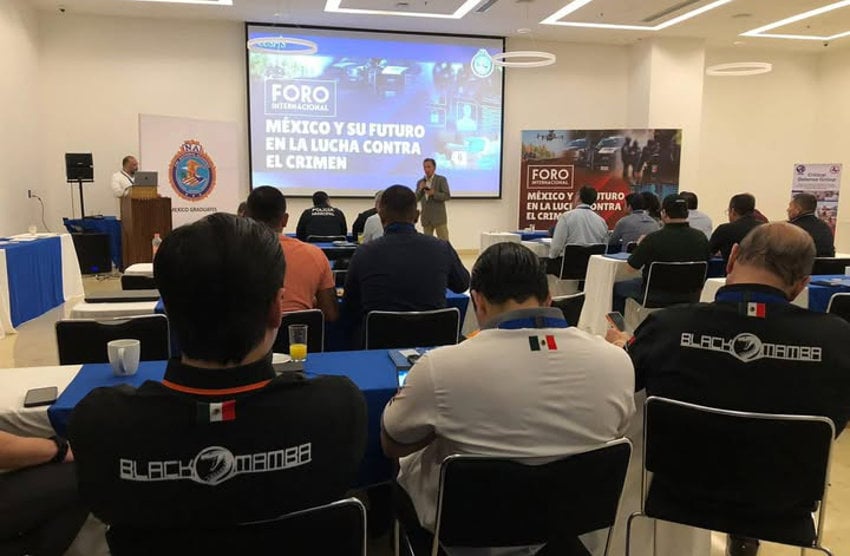
Attendees at the International Forum on Mexico and its Future in the Fight Against Crime, a security event in Puerto Vallarta in 2025, sit at conference tables in rows as a man in a suit speaks into a microphone.
U.S. specialists and federal security officials participated with Mexican authorities in a security forum on November 30 that was meant to exchange intelligence and information between the two countries. (US Embassy/Facebook)

At the November 30 Puerto Vallarta Security Forum, municipal, state and federal authorities convened to discuss the city’s changing security landscape.

Although Puerto Vallarta continues to rank favorably compared to other major tourist cities across the country, officials acknowledged that public confidence has declined. According to the latest National Survey of Urban Public Security (ENSU) conducted by Mexico’s national statistics agency, INEGI, the proportion of residents reporting feeling unsafe in their city has risen, causing Puerto Vallarta’s ranking among the urban areas in Mexico in which residents feel safest to drop from fifth to eighth place nationally.

Discussions at the security forum focused on rising reports of robberies, improved coordination among law enforcement agencies and concerns about criminal activity occurring on the outskirts of the metropolitan area. Tourism authorities urged greater visibility in preventive policing, arguing that even isolated incidents can affect Puerto Vallarta’s international reputation. 

The forum closed with commitments to expand patrols, enhance surveillance coordination and strengthen communication with residents, though many citizens continue to ask for more measurable follow-through.

Local reporters say PV National Guard didn’t respect basic press freedoms 

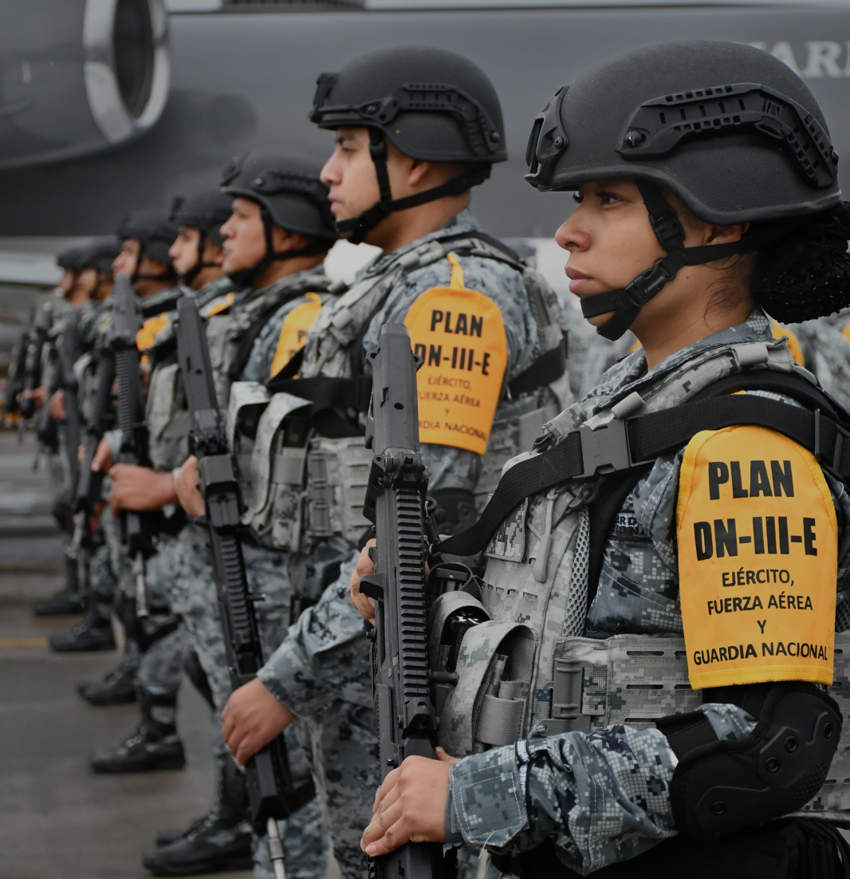
Members of the Mexican National Guard wearing Plan DN-III-E armbands standing in formation by a plane bearing machine guns and helmets on their heads.
Mexico’s National Guard has come under fire locally after members of the federal police force allegedly violated the rights of journalists trying to report on a Guard truck rollover in the Fluvial Vallarta area of the city. (Guardia Nacional/X.com)

Public safety issues have also collided with fears about deteriorating press freedom. A recent confrontation between reporters and National Guard members in the Fluvial Vallarta area has stirred widespread condemnation.

Journalists covering the rollover of a National Guard vehicle on December 2 said they were pushed back, threatened with equipment confiscation and falsely told they needed a federal license to report at the scene.

In response, the area organization GST Medios issued a strong public statement:

“At GST Medios, through our platforms Notiespacio PV and Vallarta Independiente, we strongly condemn the actions carried out this Tuesday by members of the National Guard in the Fluvial Vallarta area, where journalists were intimidated while covering the overturning of an official vehicle.

“We condemn any attempt to intimidate, obstruct, or condition the work of journalists, who have the responsibility and the right to freely inform the public. Attempting to confiscate cell phones, falsely stating that a ‘license’ is required to practice journalism without considering the media outlet’s accreditations, and trying to limit coverage of a public event constitutes a serious violation of journalistic practice and freedom of information.

“At GST Medios, we reaffirm our commitment to defending press freedom and demand that a safe and respectful environment be guaranteed for those who carry out this work daily in Puerto Vallarta. Free journalism is not intimidated and should not be obstructed by any authority.”

The incident has renewed pressure on local, state and federal officials to adopt clearer protocols protecting the rights of journalists during emergencies and public safety events.

Boat collides with whale in the Bay of Banderas

An American woman lost her life due to the crash, which occurred when a whale surfaced unexpectedly. The death occurred just a few days before the beginning of whale-watching season in Puerto Vallarta.

A deadly boating accident occurred late on Friday, December 5. A small vessel known as “Valentina” collided with a whale that surfaced unexpectedly.

The impact fatally injured a 72-year-old female American citizen who was also a Mexican resident. Another woman on board suffered head injuries and was transported to Medasist Hospital for treatment. A third passenger was treated for shock.

Authorities have reminded maritime operators that whales are currently active in the Bay. The official start date for whale-watching tours begins on December 8, and officials are urging all charter crews to reinforce wildlife distance protocols.

SEMARNAT files legal appeal against Harbor 2 project 

Urban growth continues to spark controversy, particularly surrounding the Harbor 2 megaproject, a massive development featuring six towers and nearly 1,000 planned apartments that has hit another legal speedbump.

The project — currently paused pending the appeal’s outcome — has become the center of a legal and environmental dispute after SEMARNAT, Mexico’s federal environmental agency, appealed a court ruling that allowed construction to proceed without a full environmental-impact assessment.

Environmental groups caution that the residential development project risks damaging coastal ecosystems as well as increasing pressure on local infrastructure. Critics also warn that allowing the project to bypass the environmental-impact process sets a dangerous precedent for future projects along the Bay.

Render drawing of proposed residential towers on beachfront property in Puerto Vallarta.
The project will feature six residential towers and 1,000 apartments. (Architectural rendering/Harbor 171.com)

At the same time, Puerto Vallarta recently recorded a historic 5 million visitors so far for 2025, signaling continuing economic growth. Still, local planners now face the challenge of balancing booming tourism with sustainable development, ensuring that roads, water systems, beaches, and natural habitats aren’t overwhelmed by rapid expansion.

From press-freedom disputes and marine-safety concerns to controversial development decisions, Puerto Vallarta is navigating a moment of heightened public attention. Residents, journalists, and community leaders are calling for stronger accountability measures, more transparent governance, and responsible planning that keeps pace with the city’s rapid growth.

How authorities respond in the coming months will help determine whether Puerto Vallarta can maintain a stable balance between vibrant tourism, environmental protection, and civic trust.

Charlotte Smith is a writer and journalist based in Mexico. Her work focuses on travel, politics, and community. You can follow along with her travel stories at www.salsaandserendipity.com.

Iztapalapa’s Passion Play of Christ gains UNESCO heritage status

0
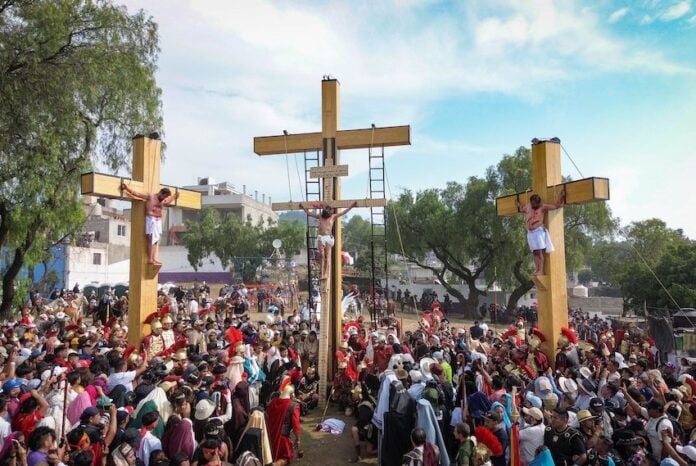
Iztapalapa's annual Passion Play involves over 5,000 people, with some 150 having speaking roles.
Iztapalapa's annual Passion Play involves over 5,000 people, with some 150 having speaking roles. (Rogelio Morales/Cuartoscuro)

The United Nations Educational, Scientific and Cultural Organization (UNESCO) has added the Passion Play of Christ in the Iztapalapa borough of Mexico City to its Representative List of Intangible Cultural Heritage of Humanity. 

The Intergovernmental Committee for the Safeguarding of the Intangible Cultural Heritage selected the tradition from a pool of 788 practices from 150 countries. The Committee announced its decision on Wednesday during its 20th session, held in New Delhi, India. 

The recognition acknowledges the Passion of Christ’s exceptional value as a living, community-based tradition. 

“The reenactment of the Passion, Death and Resurrection of Christ is a community tradition that brings together local residents in an expression of faith, identity and culture,” UNESCO said. “Beyond its religious roots, the [intergenerational exchange] promotes community cohesion, fosters solidarity and preserves cultural heritage thanks to its connection with traditional arts and crafts.”

Culture Minister Claudia Curiel de Icaza said that it is “a historic recognition that honors nearly two centuries of tradition, faith, identity and community organization.” 

Meanwhile, President Claudia Sheinbaum celebrated the announcement and congratulated everyone involved. 

“The practice has been going on for many years and is developed by an organizing committee of Holy Week — a community, social committee,” Sheinbaum said during her Dec. 10 press conference. “We congratulate [the committee] because they put a lot of effort into this celebration.” 

What’s the tradition about?

Iztapalapa’s annual reenactment of the Passion of Christ is one of Mexico’s most significant and sacred rituals during Holy Week. It is also one of the world’s largest representations of the Stations of the Cross.

Iztapalapa’s renowned Passion Play celebrates its 181st year

The practice began when the community vowed to organize a religious procession in gratitude for surviving a cholera epidemic in 1843. Over time, this reenactment has evolved into a major cultural event that attracts millions of visitors each year, making it one of the largest Catholic events of the season.

Although the performance takes place for a week, preparation for the event happens nearly year-round. Casting calls for actors begin in December, followed by the selection process and rehearsals, which start in January. Meanwhile, members of the community make arrangements for the processions, security, transportation, sets and sound systems.

Due to the holy nature of the roles actors play, those chosen to portray Jesus, the Virgin Mary, apostles, Roman soldiers and other relevant roles during the event must adhere to certain community guidelines stipulating conduct and commitment, as well as local residency.

With reports from La Jornada, Sin Embargo and ABC