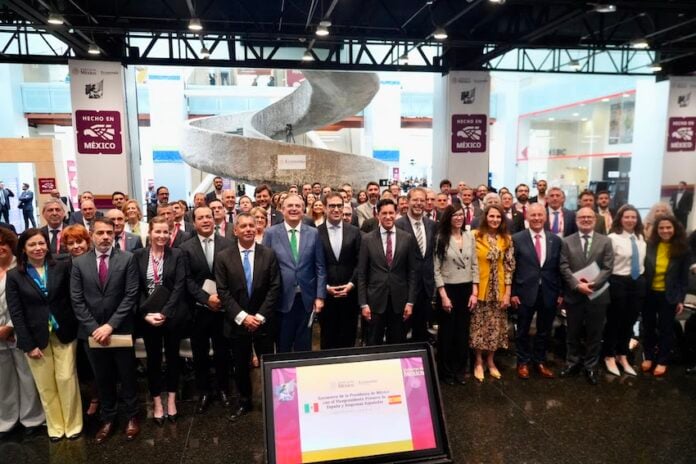
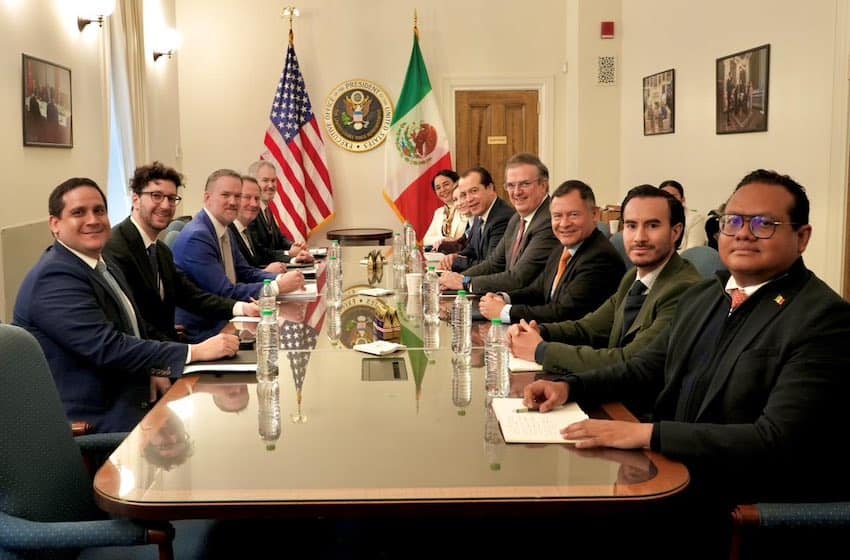
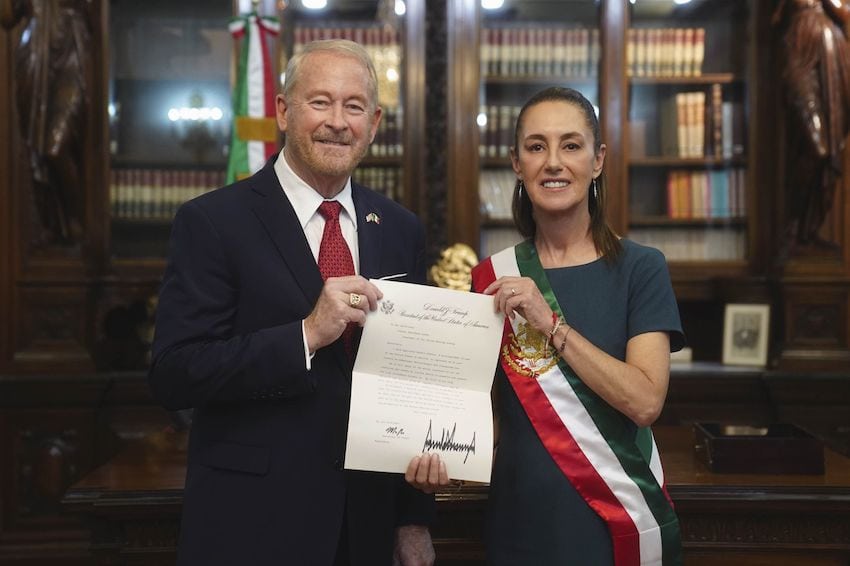
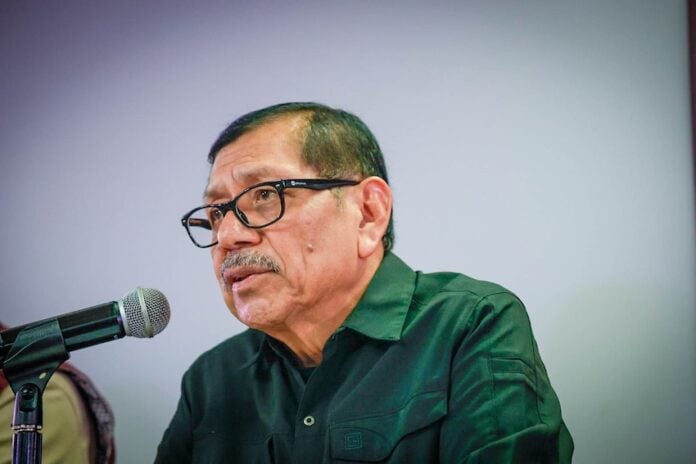
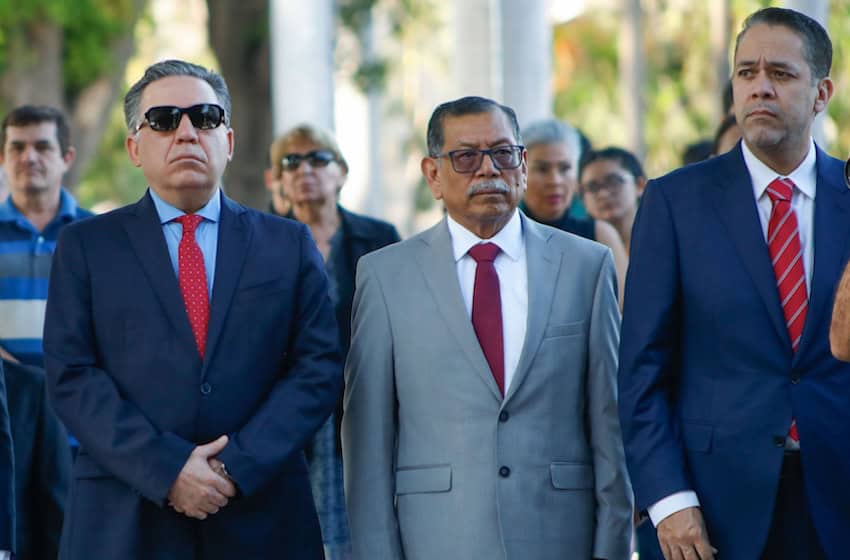
Spanish Vice President Carlos Cuerpo visited Mexico with a contingent of representatives from 66 Spanish companies, all of which are interested in further economic ties with Mexico. (@carlos_cuerpo/X)
Mexico and Spain are aiming to double down in almost a literal sense on their already strong economic relationship, having announced Tuesday plans to double bilateral trade, as well as expand mutual investment by 50%, both by 2030.
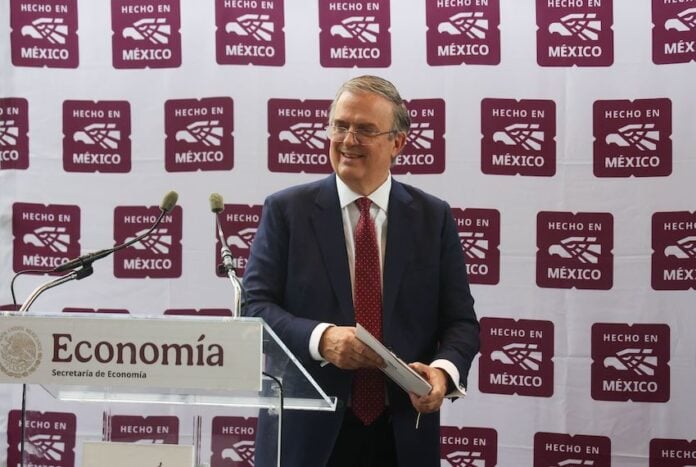
After meeting in Mexico City, Economy Minister Marcelo Ebrard and Spanish Vice President Carlos Cuerpo announced that the two countries are developing a roadmap to attract investment in strategic sectors with the goal of achieving a 200% increase in business growth in both countries over the next four years.
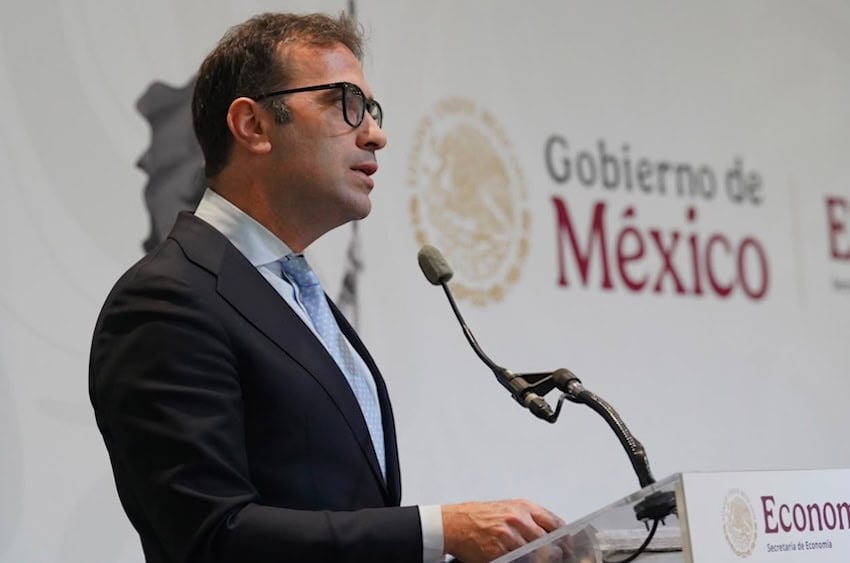
Spanish Vice President Carlos Cuerpo made it clear during his visit that his country plans to take the lead in the aftermath of the MGA agreement between Mexico and the European Union: “Spain wants to be the gateway to the European Union for Latin American economies.” (@carlos_cuerpo / X)
Cuerpo traveled to Mexico with executives from 66 Spanish companies to discuss the Mexican government’s investment program, which aligns with the country’s overarching Plan México investment strategy.
Amid greater global uncertainty stemming from the rise of protectionism, particularly after the United States imposed far-reaching tariffs on several countries, Mexico is suffering from economic stagnation. This has led the Sheinbaum government to seek foreign investment from a broader range of countries.
Mexico signed a bilateral treaty known as the Modernized Global Agreement (MGA) with the European Union on May 22, which seeks to expand trade relations and diversify exports by eliminating tariffs on 99% of products traded between the two signatories.
Spain was the first EU country to approach Mexico to develop a roadmap for trade following the signing of the MGA.
“Spain wants to be the gateway to the European Union for Latin American economies,” Cuerpo said. .
In the first quarter of 2026, Spain was the second-largest source of foreign direct investment in Mexico, at US $3.8 billion. Spanish investments have reached a cumulative total of around $64 billion since 2006, according to data from the Economy Ministry.
“We have bilateral investment of around €100 billion (US $116 billion),” Cuerpo said. “But we are ambitious; we want to strengthen this investment, and we will do so, as the minister (Ebrard) has stated, by implementing the framework, the roadmap we have thanks to the Modernized Global Agreement.”
Around 50% of the 5,400 Spanish companies operating in Mexico plan to increase investments in the economy, according to Cuerpo. The vice president emphasized a focus on strategic sectors, such as energy, finance, infrastructure, water and technology.
In a June 1 letter addressed to U.S. Trade Representative Jamieson Greer and Canadian Trade Minister Dominic LeBlanc, Mexico's Economy Minister Marcelo Ebrard wrote that the Mexican government's public consultations on the USMCA revealed a "positive perception" toward the three-way trade pact "as an instrument that fosters economic stability and provides legal certainty." (Moisés Pablo/Cuartoscuro)
Mexico has formally notified the United States and Canada that it wishes to extend the USMCA free trade pact for an additional 16 years to 2042.
Separately, Canada notified Mexico and the United States on Tuesday that it also wants the trilateral pact to be renewed until 2042.
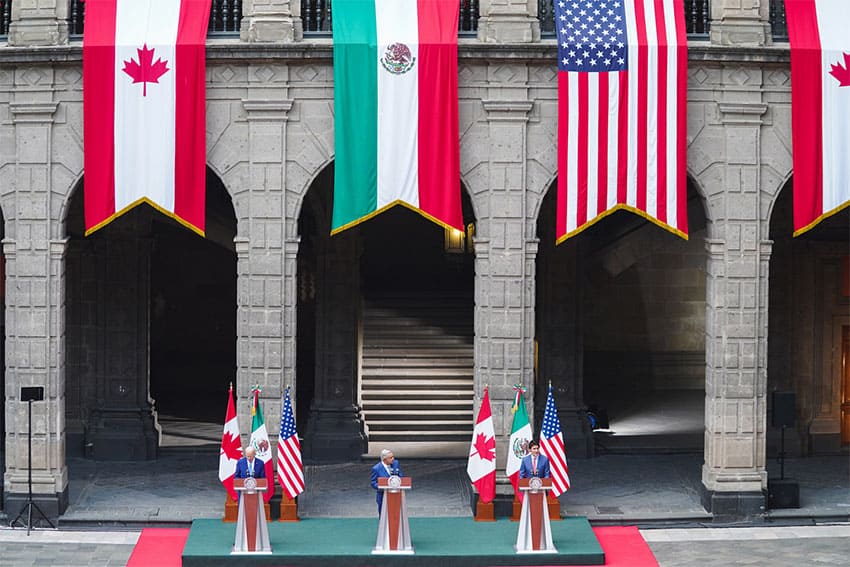
The USMCA free trade agreement has governed trade between Mexico, the United States and Canada since 2020. (lopezobrador.org.mx)
Mexico and Canada’s notifications to their North American trade partners came as USMCA review talks continue. A formal trilateral review process is set to take place later this year.
In a June 1 letter addressed to U.S. Trade Representative Jamieson Greer and Canadian Trade Minister Dominic LeBlanc, Mexico’s Economy Minister Marcelo Ebrard wrote that the Mexican government’s public consultations on the USMCA revealed a “positive perception” toward the three-way trade pact “as an instrument that fosters economic stability and provides legal certainty, and as an engine for the attraction of foreign direct investment.”
Ebrard also wrote that those consulted were in favor of maintaining the USMCA and continuing to strengthen “regional production chains” and “trilateral cooperation in various fields.”
In addition, “sectors consulted” expressed their opposition to the United States’ Section 232 tariffs on steel and aluminum and spoke about “the importance of strengthening the resilience of supply chains in the face of global and trade changes,” the economy minister told Greer and LeBlanc.
Ebrard also wrote that “almost six years after the USMCA took force, Mexico reaffirms its commitment to the shared prosperity of North America.”
“However, continuing this economic growth will only occur by providing economic certainty to investors who seek our market strength. Consequently, Mexico’s position is to extend the agreement for 16 additional years and to seek agreements that benefit … the three nations,” he wrote.
Ebrard confirmed on Tuesday that the letter had been sent to Greer and LeBlanc.
“Mexico’s intention and position is that the treaty should be extended,” he said at an event with Spanish Minister of Economy, Trade and Enterprise Carlos Cuerpo.
“Keep in mind that the treaty will remain in effect for many more years, but we would like it to be extended to 16 years,” Ebrard said.
Meanwhile, LeBlanc said in a letter to Ebrard and Greer that the USMCA is “highly beneficial to each of our countries and to the integrated North American economy.”
U.S. officials have been less enthusiastic than their Mexican and Canadian counterparts when speaking about the trade agreement that superseded NAFTA on July 1, 2020.
Even if Mexico, the United States and Canada don’t reach an agreement to extend the pact during the upcoming review process, the earliest it could be terminated would be 2036.
According to the Associated Press, LeBlanc has said “he believes the U.S. might want to have the trade agreement subject to annual reviews, and that the Trump administration might seek to cause uncertainty about the trade pact’s permanence.”
Mexico-US trade talks
Ebrard sent his letter to Greer and LeBlanc three days after Mexico and the United States concluded their first formal round of USMCA review talks.
“The technical teams from both countries, working in coordination, made steady progress on an agenda aimed at strengthening the region’s competitiveness. During this first round, priority issues for the regional economy were reviewed: rules of origin for the automotive sector, steel and aluminum, and the region’s economic security,” the Economy Ministry said in a statement.
“Mexico reiterated that the … [USMCA’s] strength lies in the integration of its value chains and in the rules that have made North America the world’s most competitive manufacturing platform,” the ministry said.
The Office of the United States Trade Representative (USTR) issued a similar statement at the conclusion of the bilateral talks in Mexico City.
“The United States concluded discussions with the goals of reducing the trade deficit with Mexico and strengthening American supply chains. During this first round, negotiators discussed priority issues related to automotive rules of origin, steel and aluminum, and economic security,” USTR said.
“The United States and Mexico recognize the importance of advancing cooperation to enhance regulatory compatibility to strengthen sectors, including medical devices, pharmaceuticals, cosmetic products, and others,” Greer’s office said.
Representatives of Mexico and the Economy Ministry hold discussions regarding the review of the USMCA with the U.S. Trade Representative and his team in March 2026. (@m_ebrard/X)
A second round of bilateral discussion is scheduled to take place in Washington, D.C., on June 16 and 17.
Among Mexico’s top goals is to win a reprieve from the tariffs that the United States imposed last year on Mexican steel, aluminum and vehicles. Mexico’s exports to the United States have increased despite the United States’ protectionism, but the U.S. tariffs have been an impediment to the Mexican automotive sector’s export growth.
Still, Mexico’s trade with the United States largely remains tariff-free as most exports comply with USMCA trade rules.
Economy Ministry: USMCA-compliant exports won’t be subject to the United States’ proposed ‘forced labor’ tariffs
The USTR announced on Tuesday that Trade Representative Greer was proposing to impose 10% or 12.5% tariffs on products from 60 countries, including Mexico, that were investigated and determined to have failed to “impose and effectively enforce a prohibition on the importation of goods produced with forced labor.”
That failure, the USTR said, “is unreasonable and burdens or restricts U.S. commerce, and are thus actionable under Section 301(b) of the Trade Act.”
Greer said that “the failure of our most important trading partners to address the importation of goods made with forced labor is unacceptable.”
“This creates a dynamic where American workers are forced to compete globally on an un-level playing field. We will no longer tolerate this disparity. Some trading partners have taken initial steps to prevent the importation of forced labor goods, including through USMCA and commitments in Agreements on Reciprocal Trade. However, each of our trading partners must do more to ensure that trade does not perversely encourage and entrench forced labor globally,” he said.
The Mexican Economy Ministry (SE) said in a statement on Tuesday that the USTR was proposing a 10% tariff on imports from Mexico and 13 other economies including the European Union, Canada, the United Kingdom and Argentina.
The SE said that it would present arguments against the proposed 10% tariff on Mexican products, and on Wednesday announced that the proposed duty — if enforced — would not apply to USMCA-compliant goods.
“Following consultations with the USTR today, the Ministry of Economy has confirmed that goods that comply with the rules of the United States-Mexico-Canada Agreement (USMCA) would be exempt from the potential application of the proposed tariff on 60 countries as part of an investigation conducted under Section 301,” the ministry said.
“… The proposal does not provide for immediate implementation, but rather initiates a 45-day consultation period,” the SE said.
“In consultations held today, it was clarified that Mexican trade that complies with USMCA rules of origin — approximately 85% of our export volume — is exempt from the measure. Nor would it affect goods covered by [Section] 232 orders (vehicles, steel, and aluminum),” the SE said.
“Regarding the remaining 15 percent of Mexican exports, the Ministry of Economy will hold formal discussions with the USTR over the next 45 days, including a formal round of talks as part of the [USMCA] review to be led on the Mexican side by Minister Marcelo Ebrard, during which information will be presented on Mexico’s commitment and actions against forced labor,” the ministry said.
Our headline finding for April 2026 suggests that the peso was overvalued by around 4% against the dollar. (Mexico News Daily)
THE MND PESO INDEX™
Tracking the exchange rate people actually experience
MND Intelligence · Second edition
Welcome to the second edition of the MND Peso Index™, part of the MND Intelligence™ suite of data products developed by Mexico News Daily.
The MND Peso Index™ is a monthly purchasing power parity measure that assesses whether the Mexican peso is overvalued or undervalued against the US dollar by comparing the prices of a standardized basket of 20 goods and services in Mexico and Dallas, Texas
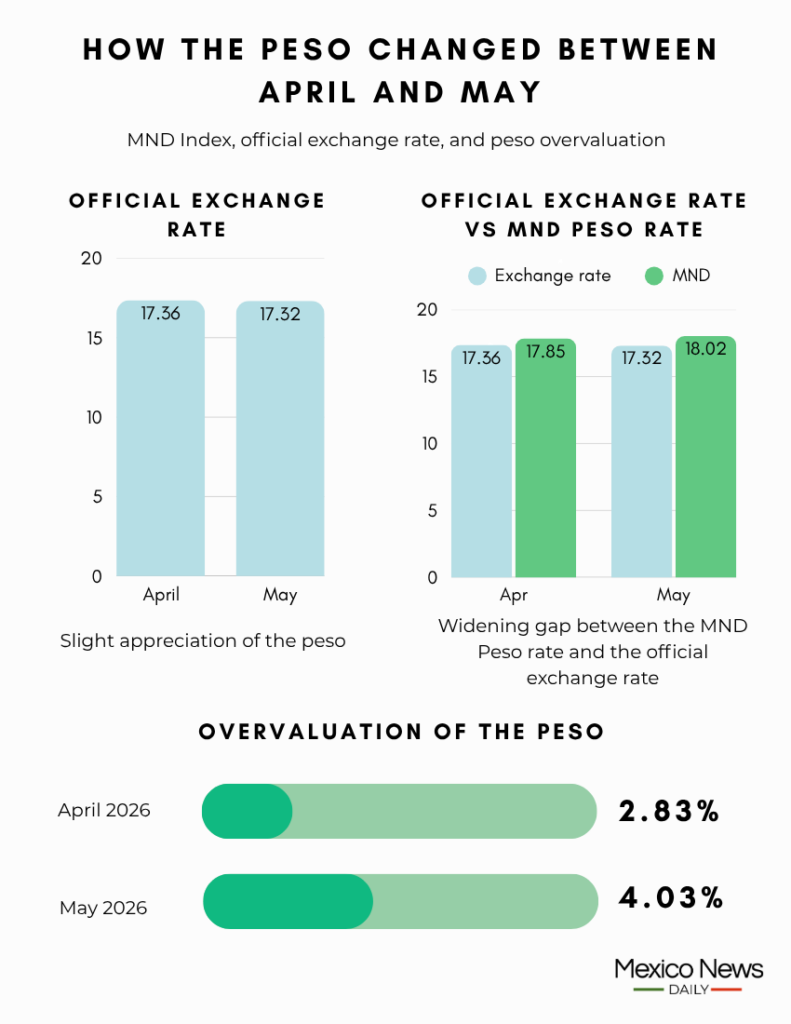
Our headline finding for May 2026 indicates that the peso was overvalued by just over 4%against the dollar, an increase of more than one percentage point from the 2.83% overvaluation we determined in April.
(Mexico News Daily)
Before we delve into the May result, we would like to further explain the MND Peso Index™ to our readers, dozens of whom commented on the inaugural edition.
The purpose of the MND Peso Index™, the makeup of the basket and more
The purpose of the MND Peso Index™ is to make an assessment — based on actual prices rather than financial market signals — on whether the Mexican peso is overvalued or undervalued against the US dollar.
The MND Peso Index™ is not a “Cost of Living” index that looks at price differences between Mexico and the United States. Its purpose is NOT to assess whether Mexico is a cheap or expensive country to live in relative to the U.S.
Assessing and predicting exchange rates is not an exact science. The monthly assessment the MND Peso Index™ makes on whether the Mexican peso is undervalued or overvalued against the US dollar is intended to give you a real-world perspective on what the exchange rate would be if it reflected the rate at which each currency can buy the same goods and services at the same price in its own country. A simpler way of saying that is this: the implied rate derived from the index basket indicates what the real USD:MXN rate “should be.”
As an independent check on our methodology, we consulted John Doyle, CEO of Monex USA, whose team conducted a review of the MND Peso Index™ and validated our approach. Doyle told us that Monex is forecasting an end-of-year USD:MXN exchange rate of 17.90 — a rate that is close to the implied rates our index basket yielded in both April (17.85) and May (18.02).
The basket of 20 products and services was not formulated to represent a typical shopping list. It was specifically designed to include a wide variety of identical or near-identical goods and services that are available in both the United States and Mexico in order to produce a broadly representative implied exchange rate.
The identical or near-identical products and services included in the basket are available on both sides of the border. Exact comparisons were facilitated by the presence of U.S. chains in Mexico, such as Costco, Walmart and Starbucks.
For the latest MND Peso Index™, we removed two digital subscription services that were included in the April basket: Spotify Premium and Microsoft 365 Personal. Those two items were replaced with a food staple — a 12-piece packet of Great Value flour tortillas — and a physical fitness service: a Planet Fitness membership. In making the changes we took into account feedback we received from readers. We also decided to keep the garden hose in the basket. It was selected as a seasonal item in April, but will remain in the basket as a permanent item for the foreseeable future.
(Mexico News Daily)
The Mexico prices used in the index include IVA (Mexico’s value-added tax), while Dallas prices are pre-tax shelf prices. Dallas was chosen as our U.S. benchmark because it offers a more representative snapshot of everyday pricing in the United States than higher-cost coastal cities. Although our U.S. prices were collected in Dallas, the MND Peso Index™ is ultimately assessing the comparative value of a currency used across the United States — not just in Texas. U.S. sales taxes vary widely by state, city and even product category, meaning readers from Texas, California, Florida or Oregon would each face a different effective price for the same item. Including sales taxes for U.S. products would therefore introduce inconsistency and distortion rather than clarity. Since IVA is inseparable from what consumers pay in Mexico, we opted for shelf prices on both sides of the border — a consistent approach that keeps the index clean, comparable and relevant to U.S. readers regardless of where they are from.
The MND Peso Index™ derives an implied exchange rate for each of the 20 basket items by dividing its Mexico price in pesos by its Dallas price in dollars, yielding the rate at which both prices would be equal. The simple average of those 20 implied rates is the MND Peso Rate. Comparing the MND Peso Rate to the Banxico FIX rate on the date the prices were collected reveals the degree of overvaluation or undervaluation of the Mexican peso relative to the US dollar.
We explained our rationale for developing the MND Peso Index™ in our introductory article last month. Click here to read it.
What did the MND Peso Index™ tell us in May 2026?
In May 2026, the MND Peso Index™ suggests that the USD:MXN exchange rate on the date we collected prices in various Mexican cities and in Dallas, Texas, overvalued the Mexican peso by just over 4%.
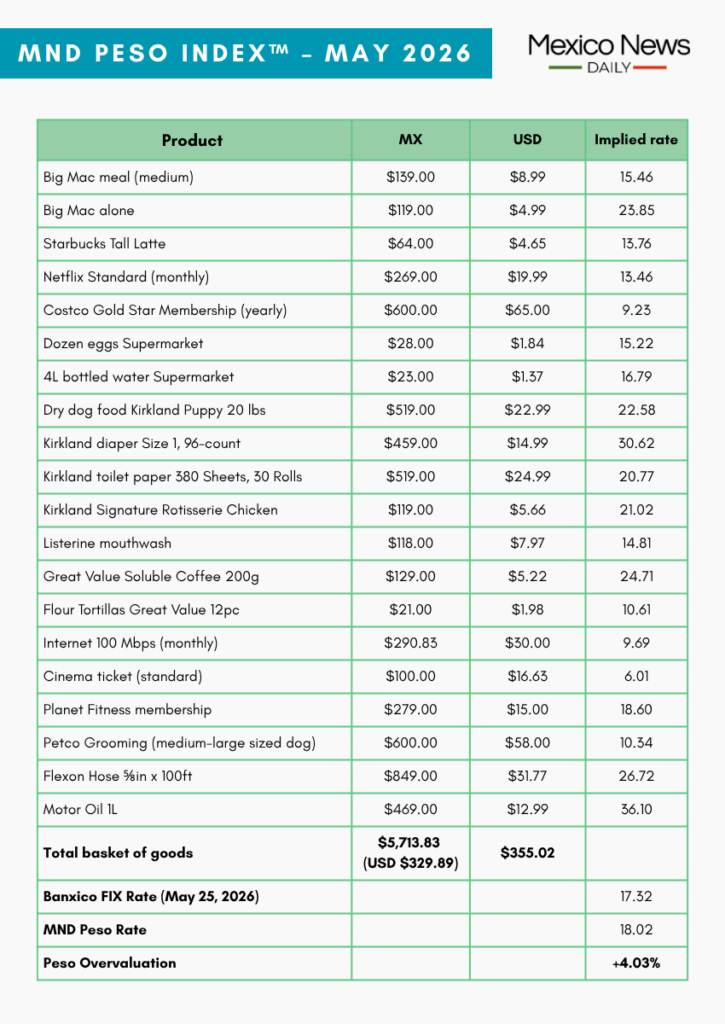
The Mexican and Dallas prices were collected on May 26, 2026. The mean implied exchange rate across all 20 items — the MND Peso Rate — came in at 18.02 pesos per dollar, whereas the Banxico FIX rate on May 26 was 17.32 pesos per dollar.
The gap between those two figures indicates that the peso — at a rate of 17.32 to the US dollar — was overvalued by 4.03% in late May 2026.
In other words, the USD:MXN exchange rate — if it reflected the rate at which the peso could buy the basket’s goods and services in Mexico at the same dollar prices as in the United States — would be 18.02.
In the table above, you can see the Mexico and U.S. prices for all 20 goods and services in the basket, the total costs of the two baskets, the implied exchange rate for each item, the MND Peso Rate (ie. the overall implied rate), the Banxico FIX rate on the date prices were collected and the overvaluation/undervaluation assessment for the peso.
Why did the peso’s ‘overvalued’ assessment increase between April and May?
In simple terms, the MND Peso Index™ overvaluation assessment for the Mexican peso was 1.2 percentage points higher in May (4.03%) than in April (2.83%) because the gap between the MND Peso Rate and the official Banxico rate widened to 70 centavos from 49 centavos a month earlier.
Here is a more detailed explanation of what happened:
The MND Peso Rate edged up from 17.85 in April to 18.02 in May, reflecting a shift in the implied exchange rate across the basket of goods and services. At the same time, the Banxico FIX rate slipped slightly — from 17.36 to 17.32 — as the peso marginally strengthened against the dollar. The combination of a higher MND Peso Rate and a lower Banxico rate widened the gap between the two, pushing the overvaluation reading from 2.83% to 4.03%.
We acknowledge that a direct month-on-month comparison is not possible between April and May, as two items from the April basket — Spotify Premium and Microsoft 365 Personal subscriptions — were replaced with Great Value flour tortillas and a Planet Fitness membership. The removal of two items from the basket and the introduction of two others in their place inevitably had some effect on the MND Peso Rate, as different items yield different implied exchange rates.
We read each and every one of the more than 50 comments we received on our MND Peso Index™ article for April. We once again look forward to your feedback.
The MND Peso Index™ result for June will be published in early July.
* Price sources: Mexico prices were collected from the websites and apps of Walmart México, Costco México, AutoZone México, Telmex, Cinépolis, Petco México, and the Mexican outlets of McDonald’s, Starbucks, Netflix and Planet Fitness. Dallas prices were collected from their U.S. equivalents. The Banxico FIX rate of 17.32 published on May 26, 2026 was used as the official exchange rate reference.
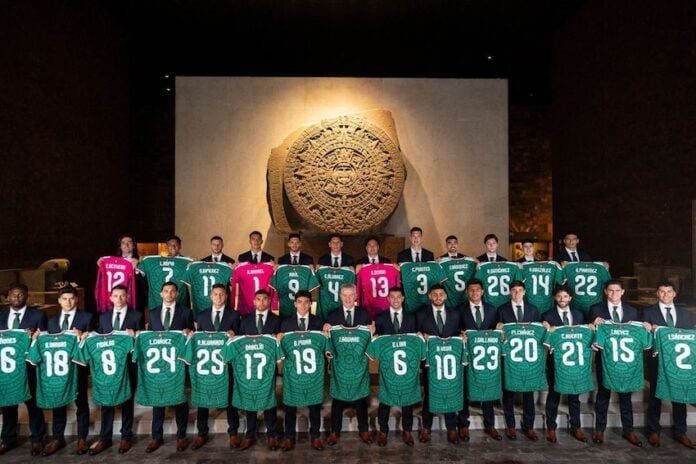
Members of Mexico's national team display their numbered jerseys in front of the Aztec Calendar, perhaps the most enduring icon of the nation they will be representing on the pitch starting next week. (Culture Ministry/ Cuartoscuro)
Though Mexico will kick off the 2026 World Cup on home turf, Goldman Sachs says the odds of a historic title run are slim.
In a new report, “The World Cup and the Economy,” the U.S. financial giant gives Mexico just a 0.8% chance of winning the expanded 48-team tournament being co-hosted by Mexico, the United States and Canada.
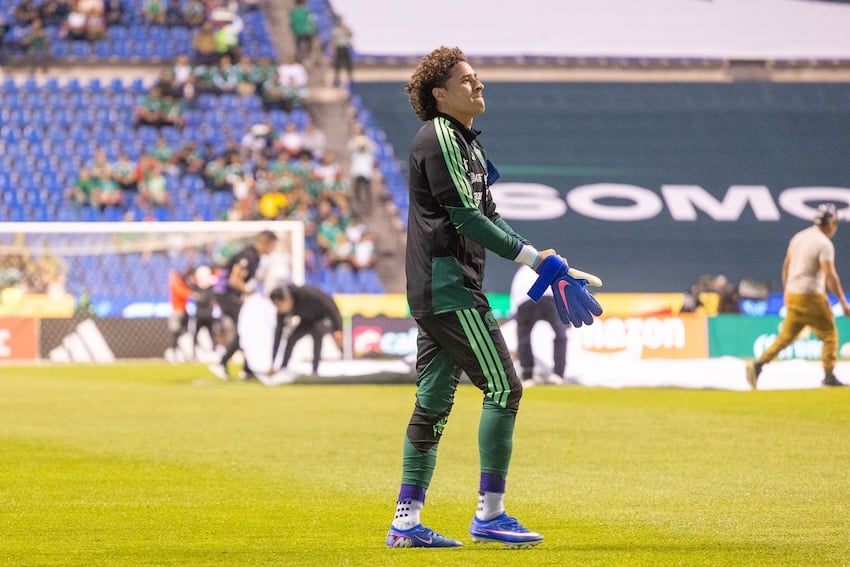
Win or lose, the 2026 tournament will be remembered as the sixth World Cup that legendary goalkeeper Guillermo “Memo” Ochoa will have appeared in for the Mexican National Team, spanning more than two decades. (Moisés Pablo / Cuartoscuro.com)
Goldman’s model — which weighs historical performance, scoring, momentum, geography and other variables — makes Spain the favorite at about 26%, followed by France at 19% and defending World Cup champion Argentina at 14%. Brazil, the Netherlands and England sit in the next tier.
The Wall Street investment bank is more bullish on Mexico’s early path, projecting Mexico to win all three of its Group A games — including a 2-0 victory over South Africa in the June 11 opener at Estadio Azteca. It also gives head coach Javier Aguirre’s team a 95.6% chance of reaching the new, expanded round of 32, with 68% odds of making the round of 16.
Mexico’s chances then drop to 33.3% to reach the quarterfinals, 10.2% to reach the semifinals and 3.4% to reach the July 19 final in New Jersey.
A separate Opta “supercomputer” is slightly kinder, listing Mexico with a 0.9% chance of winning it all. In thousands of simulations, the computer has Mexico advancing from Group A in 87.2% of cases, and reaching the quarterfinals in 23.5%.
Then again, since the Goldman Sachs research model acts on limited information, it is more of a “fun exercise,” said Jacek Dmochowski, an engineering professor at The City College of New York.
“The information that is going into the model is a tiny sliver of all the information that’s in the possession of the millions of people that have bet into [online] prediction markets,” he said.
Goldman’s simulations point to a Spain–Argentina final, with Spain lifting the trophy.
And though Mexico’s odds of hoisting the hardware are much lower, El Tri’s 0.8% chance is at least ahead of its fellow co-hosts, with the United States at 0.5% and Canada at 0.3%.
Sheinbaum avoided further questions about Sonora Governor Alfonso Durazo and Tamaulipas Governor Américo Villarreal by saying that the two governors — both of whom represent Morena — will have to respond to the L.A. Times report themselves. (Saúl López Escorcia/Presidencia)
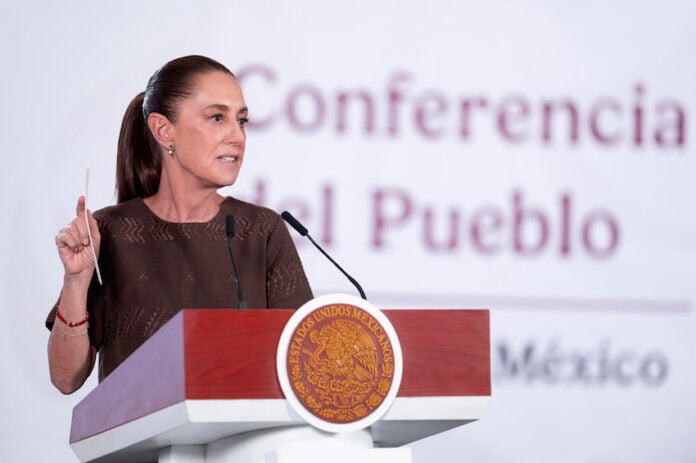
Sheinbaum’s mañanera in 60 seconds
🗞️Sheinbaum acknowledges LA Times report: Sheinbaum acknowledged a Los Angeles Times report alleging that the U.S. is investigating Sonora Governor Alfonso Durazo and Tamaulipas Governor Américo Villarreal Anaya for alleged criminal ties, including organized crime and fuel smuggling. Both men have reportedly had their U.S. visas revoked. Sheinbaum said the governors must answer for themselves, then questioned the motives behind the timing and public disclosure of the alleged visa cancellations.
📚 Government says dialogue is open with CNTE: Asked how the government plans to resolve the standoff with the dissident CNTE union, which has set up a protest camp in Mexico City’s historic center, Sheinbaum said teachers have legitimate demands, but indicated that a 100% pay rise is unaffordable. She said the government remains open to dialogue and is working on pension improvement mechanisms.
☮️ “We’re not Díaz Ordaz”: Sheinbaum rules out force against protesting teachers: Sheinbaum firmly ruled out using state force against the protesting teachers, accusing far-right agitators of trying to bait the government into repression ahead of the World Cup. She invoked Gustavo Díaz Ordaz — the president who ordered the 1968 Tlatelolco Massacre days before the Mexico City Olympics — as a symbol of what her government would not become.
🗳️Sheinbaum pushes back on fears Morena will weaponize new electoral interference law: Five days after the Senate approved a reform allowing elections to be nullified on grounds of foreign interference, Sheinbaum rejected opposition claims that Morena could abuse it. She stressed it would be the Federal Electoral Tribunal — not the government — that makes any determination of foreign interference in elections.
Why today’s mañanera matters
Today’s mañanera was held just hours after The Los Angeles Times published a report under the headline “The U.S. is investigating two more Mexican governors for connections to cartels.”
NEW: The U.S. is investigating two more Mexican governors for alleged ties to cartels.
This puts new pressure on President Sheinbaum, who has slammed U.S. probes into sitting Mexican leaders as electoral interference.
The newspaper used the word “more” as U.S. prosecutors have already investigated Sinaloa Governor Rubén Rocha Moya and formally accused him of drug trafficking in league with the “Chapitos” faction of the Sinaloa Cartel. Rocha has taken leave as governor, but denies any wrongdoing, and has not been arrested for the purpose of extradition, as U.S. authorities have requested.
On Wednesday morning, Sheinbaum offered a brief response to the L.A. Times report, but spent significantly more time speaking about other issues, including the ongoing protests by teachers affiliated with the dissident CNTE teachers’ union.
Eight days before the start of the FIFA men’s World Cup, the president ruled out the possibility of using the force of the Mexican state against protesting teachers. That statement was not surprising given Sheinbaum’s previous comments against the use of force against protestors, but the remarks, and her framing of them, were nevertheless significant.
Also of note at today’s mañanera was Sheinbaum’s rejection of claims that the government could use a new electoral law for the benefit of Morena, Mexico’s ruling party.
Sheinbaum acknowledges report stating that US is investigating 2 Morena governors
Sheinbaum noted that The Los Angeles Times published a report that states that the United States is investigating Sonora Governor Alfonso Durazo and Tamaulipas Governor Américo Villarreal Anaya for alleged criminal offenses.
Both men have “been stripped of their U.S. visas amid criminal probes, according to people familiar with the cases,” the Times reported.
People familiar with Durazo’s case said that his visa “was canceled last year, and the U.S. is investigating him for alleged ties to organized crime,” the Times wrote.
“… The investigation into Villarreal, 68, is connected to the smuggling of pirated fuel, a lucrative illegal trade known in Mexico as huachicol, according to people familiar with the case,” the Times reported.
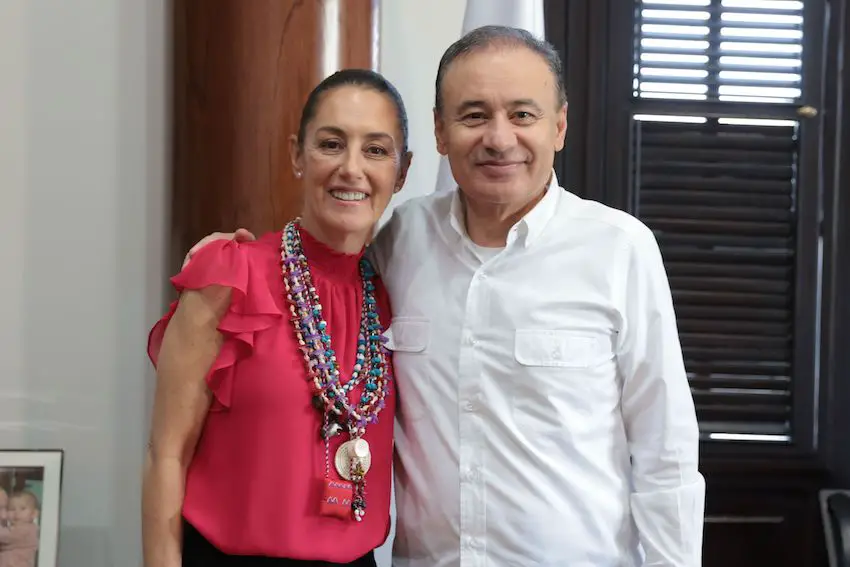
According to the Los Angeles Times, the United States is investigating Sonora Governor Alfonso Durazo, seen here with President Sheinbaum. (Cuartoscuro)
Sheinbaum said that the two governors — both of whom represent Morena — have to respond to the report themselves.
She subsequently questioned the intentions of The Los Angeles Times and its sources.
“What’s the point of stripping the visas and making it public? … To say to Mexicans ‘watch out, watch out, they’re going to take away your visa?'” Sheinbaum asked.
“These things can happen, but what is the interest?” she asked.
The Los Angeles Times said that Villareal “denied any wrongdoing” in a statement, calling the claims against him “false, biased and lacking evidence.” The newspaper said that “Durazo’s office did not respond to a request for comment.”
Paloma Teran, head of the Sonora government’s social communication system, said that the information published by the Times regarding Durazo is “completely false.”
‘We’re not Díaz Ordaz’: Sheinbaum rules out repression against protesting teachers
Sheinbaum said that teachers have “legitimate demands,” but stressed that it is not possible for the government to meet all of them. She has said on repeated occasions that the government can’t meet all of the protesting teachers’ demands — among which is a demand for a 100% pay rise — for budgetary reasons.
On Wednesday, she reiterated that view and highlighted that the government is always “open” to dialogue with teachers.
However, “what a lot of people want is for us to succumb to provocation,” Sheinbaum said, explaining that those people — including individuals she portrayed as “far right” agitators — want the government to use force against protesting teachers, a move that opposition parties, government critics and CNTE-affiliated teachers could use to criticize the president and her administration.
“They want us to resort to repression in the lead-up to the World Cup. We’re not going to succumb to provocation; we’re not Díaz Ordaz,” Sheinbaum said, referring to Gustavo Díaz Ordaz, Mexico’s president when federal forces perpetrated the Tlatelolco Massacre, killing hundreds of students in Mexico City 10 days before the start of the 1968 Mexico City Olympics.
She said that the Interior Ministry and the Education Ministry are working to resolve teachers’ concerns, including by seeking “mechanisms to improve pensions, which is one of the big demands.”
Asked whether she would meet with protesting teachers, many of whom are from the state of Oaxaca, Sheinbaum said she didn’t think it was appropriate to do so. She stressed that Interior Minister Rosa Icela Rodríguez and Education Minister Mario Delgado have all the authority required to reach agreements with teachers.
“Nothing will change if they meet with me. Nothing,” Sheinbaum said.
Sheinbaum rejects claims that government could make improper use of new electoral law
“What our adversaries and critics have been saying is that ‘because we’re authoritarians, we want to use this pretext to annul any election [Morena loses]’. It’s false, completely false,” she said.
“If it is clear that there is interference from abroad, that could be cause for nullification,” Sheinbaum said.
However, she stressed that it will be the Federal Electoral Tribunal — not the government — that determines whether foreign persons, governments or entities have interfered in Mexican elections.
By Mexico News Daily chief staff writer Peter Davies (peter.davies@mexiconewsdaily.com)
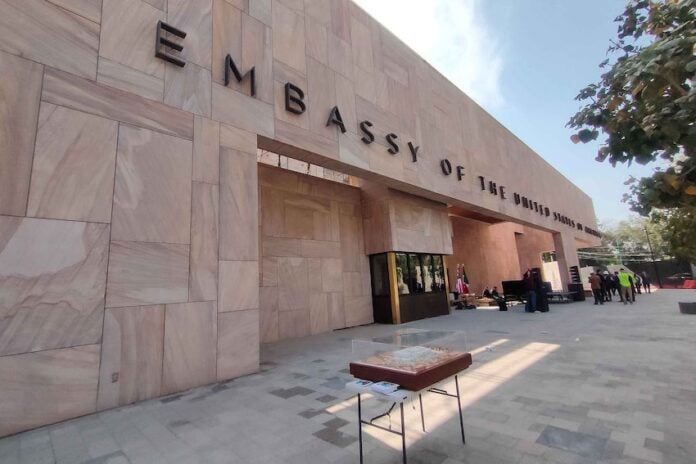
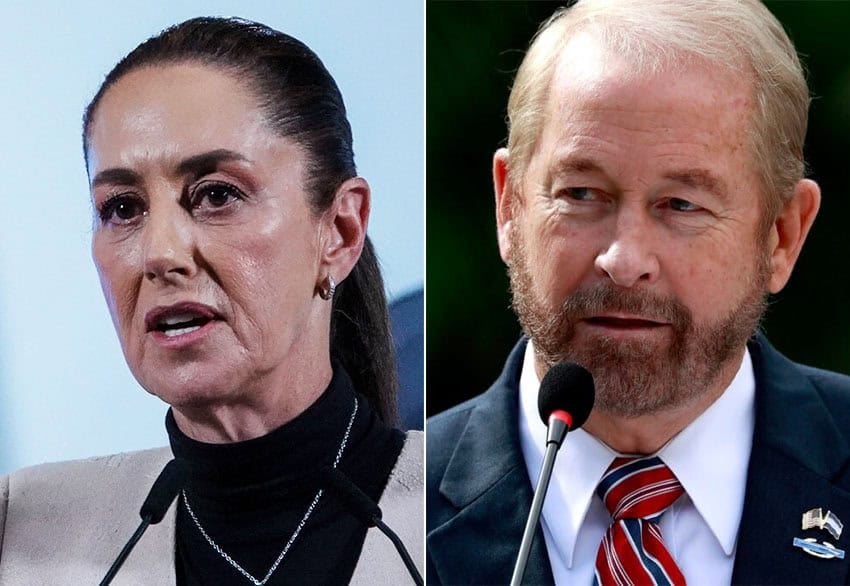
MEXICO CITY — The U.S. Embassy in Mexico said Tuesday it has launched a new initiative to help Americans understand the difference between bilateral cooperation and commenting on Mexico’s internal affairs, after Ambassador Ronald Johnson drew a public rebuke from President Claudia Sheinbaum for weighing in on domestic politics.
The program, informally called “Hands Off, But In Touch,” comes with laminated cue cards, approved talking points and a weekly reminder that Mexican affairs are for Mexicans to handle. Embassy staff said the goal is not silence, but “strategic restraint.”
It’s not yet clear if Ambassador Johnson has got the message.
Inside the embassy, diplomats reportedly underwent a short training session on how to express concern without sounding like they had already written a campaign slogan. One official said the hardest part was learning that “respecting sovereignty” is not the same thing as “vaguely acknowledging another country while sending in the CIA.”
A visitor from Ohio said he had assumed embassies mostly handled visas, passports and the occasional diplomatic lunch, not constitutional interpretations. By evening, staff said the new program had made progress, although Johnson was still reviewing whether “stay in your lane” counted as a bilateral issue.
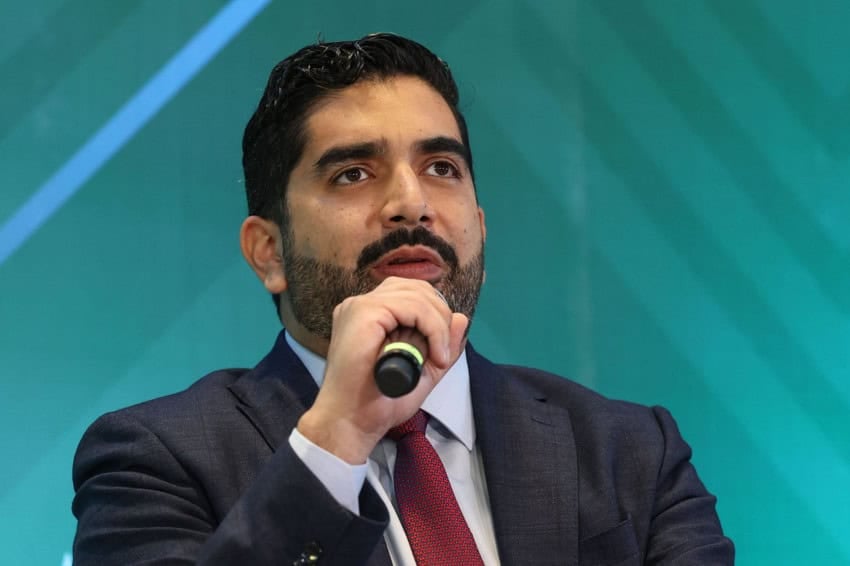
Roberto Lazzeri is Mexico's next ambassador to the U.S., a high stakes posting with the USMCA review looming this summer. (Gobierno de Mexico)
A little over a year ago, we published a profile here at MND of Ambassador Ronald Johnson, and we made the point plainly: that appointment was, without question, a message to the Mexican government. A CIA and special-ops man, a former ambassador to El Salvador with an intense track record on security matters, signaled clearly what Washington’s priority was in its relationship with Mexico.
A few months ago, we reported on President Sheinbaum’s new appointments and what they told us about how she was moving the pieces on the board ahead of the USMCA renegotiation. Among those moves is the designation of Roberto Lazzeri as Mexico’s ambassador to the United States.
Who is Roberto Lazzeri Montaño?
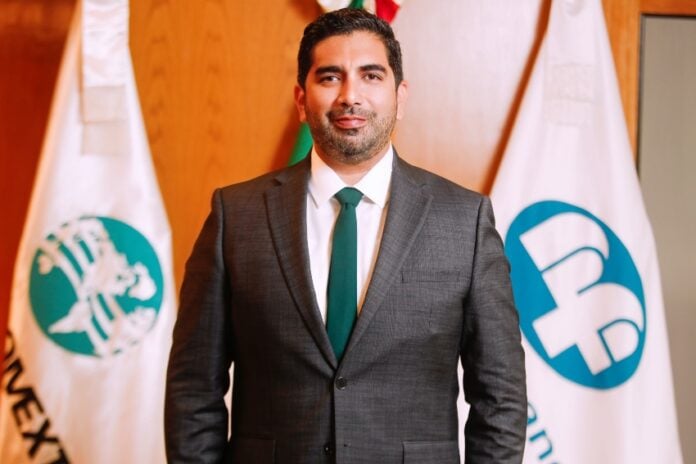
Mexico’s new ambassador to the U.S., Roberto Lazzeri, has a finance rather than a foreign service background. (Galo Cañas/Cuartoscuro)
By training, he is an economist trained at CIDE (Centro de Investigación y DocenciaEconómicas), one of Mexico’s top public institutions for economics. The same year he graduated, in 2005, his career took off, and it has since unfolded almost entirely inside Mexico’s public finance machinery. He began at the Mexico City finance ministry, managing the capital’s local debt portfolio; he moved through the national public-works bank Banobras, structuring subnational debt; he stepped away into the private sector for a while; and then he joined the federal Finance Ministry (Hacienda) in late 2020. There, he ran the directorates of public debt and of fundraising before becoming chief of staff to the finance minister, a post he held from 2022 to 2025 under then-secretary Rogelio Ramírez de la O.
What takes up a single paragraph on paper was, in reality, a complex job. It involved refinancing operations exceeding 300 billion pesos (US $17.3 billion) in the domestic market and US $10 billion abroad, along with his role in the Mexican government’s acquisition of Iberdrola power assets in 2023, a deal valued at roughly US $6 billion. These are high-stakes, deeply complex transactions that require negotiating with international banks, regulators and lawyers all at once. In August 2025, he was named to the directorship of Nacional Financiera (Nafin) and the Banco Nacional de Comercio Exterior (Bancomext), Mexico’s development and foreign-trade banks.
Beyond his appointment to Nafin and Bancomext, he was named vice president of Alide, the Latin American Association of Development Financing Institutions, for the 2025–2027 term.
Why is a banker being named ambassador?
First, we have to answer another question to understand why the president chose an economist as ambassador. The question is: what does the job actually involve?
The ambassador in Washington runs one of Mexico’s most important diplomatic missions, and the portfolio is far broader than trade alone: it covers political relations, the consular network serving millions of Mexicans, migration, security cooperation and bilateral economic policy. Lazzeri would replace Esteban Moctezuma Barragán, who has held the post since February 2021.
But the timing makes one thing unavoidable. The USMCA review begins in July 2026 and while the Economy Ministry is the body that will lead the negotiations, Lazzeri’s job will be to serve as Mexico’s permanent, on-the-ground presence — accompanying and giving support to the trade talks while managing the relationships in the Capitol, the White House, federal agencies and the business community that determine whether a deal can land.
Representatives of Mexico and the Economy Ministry hold discussions regarding the review of the USMCA with the U.S. Trade Representative and his team in March 2026. The review itself will take place in July. (@m_ebrard/X)
The substance ahead is hard. Analysts and officials anticipate friction over rules of origin, the auto industry, energy, steel, aluminum, telecommunications and regional content — many of the same sectors already entangled in tariff disputes.
Why the new ambassador needed a non-foreign service profile
Now that we’ve established the ground Lazzeri is going to be playing on, we can easily explain why, this time, the country needs an economist rather than a career diplomat.
And to grasp the scale of that ground, it helps to look at the numbers. The trade relationship between Mexico and the United States is not just one more item on the bilateral agenda: it is, to a large degree, the backbone of the Mexican economy. In 2025, Mexico remained the United States’ top trading partner, with total goods trade valued at US $872.8 billion, ahead of Canada and China. More telling still is how lopsided that dependence is for each country: Mexico’s exports to the United States amount to nearly 30% of its GDP. Put another way, more than 83% of Mexican exports are destined for the U.S. market. For Mexico, this relationship isn’t an optional one, but something that forms the backbone of the domestic economy.
The economic stakes are high for Mexico and the US
But it would be a mistake to read the treaty as something that matters only south of the Rio Grande. The figures carry weight on the U.S. side too: more than 13 million American jobs depend on trade with Mexico and Canada, and the bloc as a whole is no small thing in global terms. The USMCA represents a market of more than 500 million people and accounts for 30% of global GDP. In terms of combined GDP, it is the second-largest trade agreement on the planet, valued at US $25.8 trillion in 2024, behind only Asia’s RCEP. For millions of workers, companies and consumers on both sides of the border, what gets discussed starting in July is anything but abstract: it shapes supply chains, prices and jobs. That is the weight Lazzeri carries with him as he arrives in Washington.
Sheinbaum’s reasoning, as she has framed it, is that the dominant issues with the Trump administration are commercial, and that the relationship will be driven by tariffs, sanctions and finance — terrain Lazzeri knows intimately. He has dealt directly with U.S. financial counterparts and he has experience in anti-money-laundering matters that have become newly relevant as Washington presses Mexico on security and illicit financial flows.
Where things stand now
The U.S. government granted its beneplácito — the host country’s formal sign-off on an incoming ambassador — on May 20, clearing the most uncertain hurdle in Lazzeri’s path. But the approval does not make him an ambassador just yet. The nomination still must go through Mexico’s Senate: the sending of the appointment, his appearance before senators and the floor ratification. Moctezuma remains in his post until the administrative handover is complete and is expected to take another role in the federal government.
Just as the appointment of Ronald Johnson (left) last year as U.S. ambassador to Mexico signaled the Trump administration’s prioritization of security, President Sheinbaum (right) has signaled her most important priority, trade, by naming Lazzeri. (Presidencia/Cuartoscuro)
And here the circle closes. If the appointment of Ronald Johnson was Washington’s message about what its priority was — security — the designation of Lazzeri is Mexico’s answer about its own: trade. He’ll arrive at the precise moment the trade relationship that underpins North America’s economy goes under review — a banker, not a diplomat, carrying Mexico’s brief into the room.
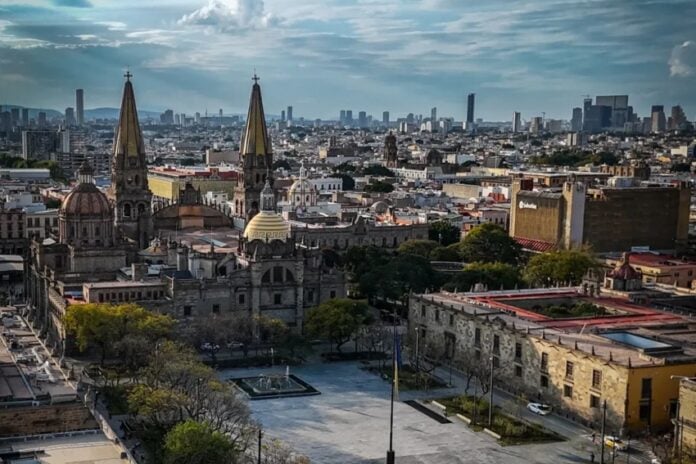
Guadalajara's putting on its prettiest face ahead of World Cup games this month. (Instagram)
World Cup fever is taking hold in “La Perla Tapatía” — as Guadalajara is nicknamed — as infrastructure projects aimed at improving visitor mobility are largely completed, and new cultural programs come to life. In addition, area residents will have a brief opportunity to responsibly recycle their old electronics free of charge courtesy of a University of Guadalajara initiative.
Transportation updates ahead of the World Cup
A topic of continuing fascination for area residents is how the various transportation projects on the Chapala Highway, which connects Guadalajara airport to the city, are progressing. As of press time, it appears that most of the planned enhancements aimed at improving urban mobility and reducing travel times for 2026 FIFA World Cup fans will be completed before the tournament begins.
One notable exception that will not be finished anytime soon is the overpass being built by Grupo Aeroportuario del Pacífico (GAP). Conceived as a dedicated route to separate airport-bound traffic from everyday Chapala highway traffic and reduce congestion for those headed to Terminal 1, the overpass will not be finished in time for the World Cup.
Last week, State Secretary of Public Works David Miguel Zamora ordered GAP to suspend work on the overpass, as it was obstructing portions of the Carretera Chapala. Pausing the project is essential to ensure safe and efficient access to and from the airport over the coming month, when a surge of visitors attending World Cup games will be arriving by air.
Separately, GAP has stated that expansion of the airport’s main access road (still the only entry and exit point) from two lanes to three will be completed by May 31, 2026. Absent the dedicated overpass, this extra lane will be critical to improving airport accessibility in the short term.
The latest on bus stations, the Periférico overpass and highway surveillance cameras
With respect to the new Line 5 (Macro Aeropuerto) bus stations on the Chapala highway, final installation of lighting and electrical wiring is ongoing, although this work has recently suffered setbacks due to the theft of copper wiring, according to local workers who spoke anonymously to El Informador newspaper last week.
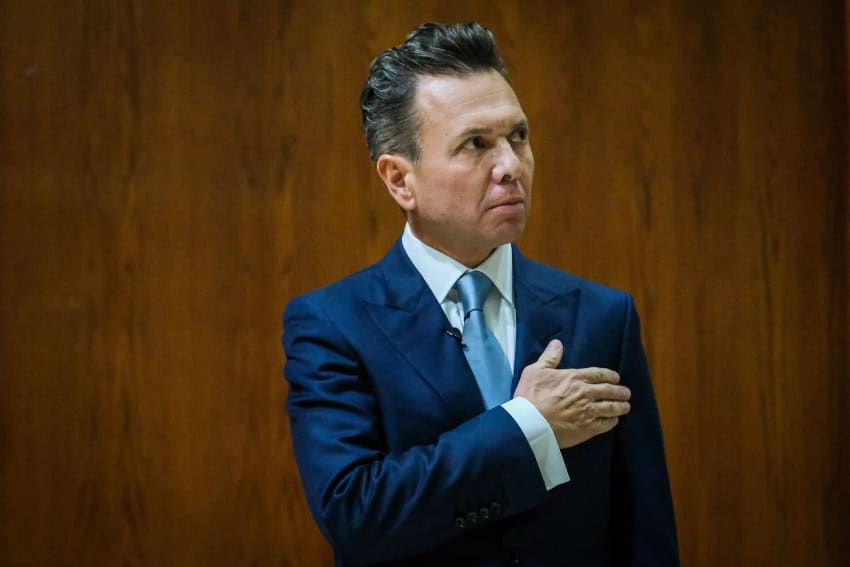
Further north, the Periférico overpass, which connects to the Chapala Highway and allows Line 5 buses to merge onto the ring road, was slated for completion last Friday. According to Governor Pablo Lemus, the new Line 5 will be fully operational as of June 4, following the testing phase that is underway now.
Finally, Governor Lemus confirmed that speed cameras on the Chapala Highway will not be operational until all construction work is finished and proper signage has been installed. Motorists are not likely to be subject to fines from camera surveillance until December 4, 2026, at the earliest.
A mountain of tech waste prompts UDG to launch a free recycling campaign
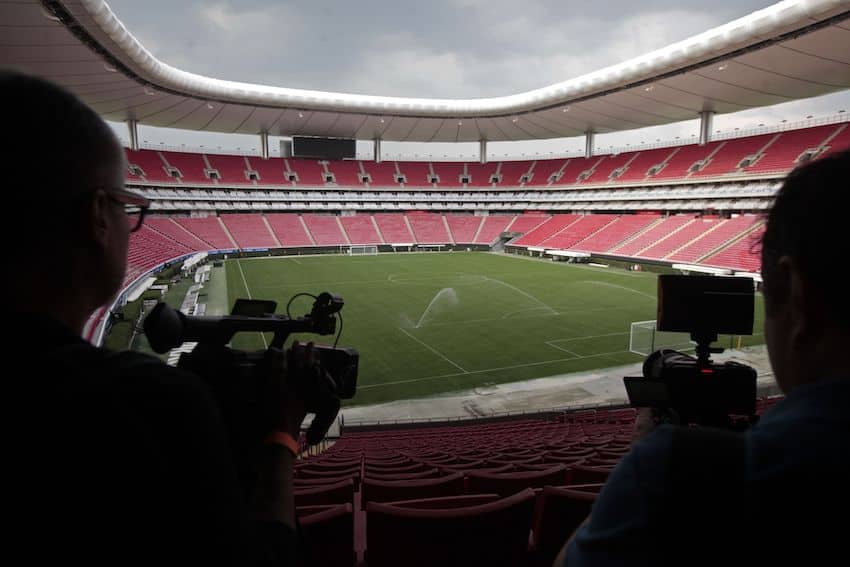
Jalisco produces enough technological waste each year to fill Guadalajara’s Akron Stadium 12 times over. (Fernando Carranza García/Cuartoscuro)
The state of Jalisco ranks third nationally in the generation of technological waste, generating 82,000 tons per year, an alarming tally and a volume equivalent to filling Estadio Akron 12 times over.
To tackle this growing problem, the University of Guadalajara (UDG) is kicking off the fifth edition of its annual Rec-olectrón 2026 campaign. The initiative offers local households a way to dispose of their e-waste responsibly, to keep it from ending up in landfills or local waterways and polluting the environment.
Households can drop items off during the first week of June from 9 a.m. to 5 p.m., free of charge, at the UDG Rectorate Building. Items eligible for disposal through the program include mobile phones, laptops, monitors, LED screens, microwaves and washing machines.
At other collection centers, surrendering electronic waste carries a charge. Due to the high cost of recycling, the program will not accept alkaline batteries or fluorescent lamps.
Besides offering a practical solution to local households with electronic waste, the university’s initiative also aims to raise awareness about the responsible disposal of these products, which contain harmful chemicals such as lead, mercury and cadmium.
Beautification efforts won’t end with the World Cup
It turns out the beautification efforts ongoing throughout the Guadalajara Metro Area weren’t merely to impress soccer fans. Governor Lemus told the media last week that these projects will continue after the tournament ends, in an effort to burnish the city’s image and position it as a world-class cultural destination.
Jalisco Governor Pablo Lemus has pledged that beautification projects will continue even after the World Cup is over. (Comunicación Jalisco)
Tackling what are viewed as tacky commercial elements, screens and billboard advertising will next be curtailed in the vicinity of the Glorieta Minerva, as a detriment to the urban landscape.
Lemus indicated that billboards have already been removed from major throughfares such as Avenida Américas and along Avenida Patria areas near the Los Colomos Forest, as part of a joint effort with the neighboring municipality of Zapopan.
He added that of the 50 billboards removed, 46 had expired permits or administrative irregularities, and therefore maintained that the actions were carried out legally.
With any luck, pothole repairs will be next.
A Korean-themed festival is coming to Guadalajara during the World Cup
Guadalajara is playing host to the Korean national soccer team this month, as the team chose the city for its training camp during the World Cup tournament.To capitalize on the moment, the Embassy of the Republic of Korea is bringing KFEST, a Korea-themed family-friendly event, to Guadalajara on June 6.
From noon to 6 p.m. at the Santander Performing Arts Center, there will be K-pop music, performances by Samulnori (traditional Korean music), the K-Tigers taekwondo group and the Zapopan Youth Symphony Orchestra. There will also be interactive pavilions featuring beauty, food, culture and tours.
Korean culture will be celebrated in the GMA contemporaneous with the country’s national team playing in the 2026 FIFA World Cup in Guadalajara. (Instagram)
From 7:30 p.m. at the Basilica of Zapopan, new media artist Lee Lee Nam will project a video animation that reimagines this culturally rich setting.
The festival also plans to make stops in Monterrey and Mexico City later this month.
Date: June 6, 2026, from noon to 8:30 p.m.
Location: Santander Performing Arts Center and the Basilica of Zapopan.
Cost: The festival is free for all.
MND Writer Dawn Stoner is reporting from Guadalajara.
Not long ago, Gerardo Mérida was in charge of protecting residents of the state of Sinaloa from crime. Now he is facing drugs and weapons charges in the United States. (José Betanzos Zárate/Cuartoscuro)
Facing drug trafficking and weapons charges, former Sinaloa state Security Minister Gerardo Mérida Sánchez on Monday appeared in the Southern District Court of New York for a hearing during which the judge described the evidence against him as “abundant.”
Sen. Enrique Inzunza Cázarez, former Sinaloa Security Minister Gerardo Mérida Sánchez and former Sinaloa Finance Minister Enrique Díaz Vega are three of 10 Mexican officials accused by the U.S. of cartel links. (José Betanzos Zárate/Cuartoscuro)
Former Sinaloa Finance Minister Enrique Alfonso Díaz, who surrendered to U.S. authorities in New York on May 15, is the only other suspect in U.S. custody.
Mérida, shackled hand and foot, was escorted into the Manhattan courtroom by U.S. sheriffs, dressed in a brown prison uniform and a gray T-shirt.
During the 20-minute hearing, U.S. Federal Judge Katherine Polk warned about the complexity of the legal process due to the abundance of evidence against Mérida. Polk granted the lawyers for the U.S. Attorney’s Office two months to process the evidence and advance the case against Mérida Sánchez, setting the next hearing for Aug. 4.
When asked about Monday’s court hearing during her Tuesday morning press conference, President Claudia Sheinbaum — who on Sunday denounced U.S. interference in Mexican affairs — avoided making a direct comment.
“It is up to the Attorney General’s Office to analyze the case in due course,” she said.
During his first court appearance on May 15, Mérida pleaded not guilty to the charges of conspiracy to import narcotics, possession of weapons and conspiracy to possess weapons.
If convicted, Mérida — a retired Army general — could face a minimum 40-year sentence that could reach life imprisonment.
“The general provided initial information so that the U.S. government could integrate him under those conditions within the facilities where he is being held,” El Universal reported.
Mérida is being held in the Metropolitan Detention Center in Brooklyn, a prison where high-profile Mexican cartel figures including Ismael “El Mayo” Zambada (a rival of Los Chapitos) and Rafael Caro Quintero are currently imprisoned.
Other notable officials included in the April 30 subpoena are Sinaloa Governor Rubén Rocha, Senator Enrique Inzunza and Culiacán Mayor Juan de Díos Gámez. All three are members of the ruling Morena party and are currently on leave of absence.
The native habanero has had the Designation of Origin recognition since 2010. (Gobierno de México)
The governments of Mexico’s Yucatán, Campeche and Quintana Roo states have created a Peninsular Council for the Regulation of the Habanero to protect and strengthen the Designation of Origin (DoE) for the region’s famous chili pepper.
The council will be responsible for guaranteeing the traceability, certification and quality of habanero, as well as promoting it in national and international markets. The move is expected to strengthen producers’ competitiveness and generate greater marketing opportunities.
Governor of Yucatán Joaquín Díaz Mena and Governor of Quintana Roo Mara Lezama were joined by the Director General of the Mexican Institute of Industrial Property (IMPI) Santiago Nieto Castillo and other regional officials for the council’s inauguration in Yucatán’s capital of Mérida last week.
While the habanero has had DoE recognition since 2010, the three states did not decide to establish an official joint council until February 2025.
Providing a product with a DoE certification helps combat unfair competition and promotes awareness about its origin. In this case, it is expected to protect the Yucatán Peninsula against imitations and strengthen its commercial value.
“This Regulatory Council was created to protect what is ours, to give more value to the work of the producers and to ensure that future generations find prosperity in their own land,” Díaz Mena said.
“After 16 years, today the producers will have the certainty that the chili pepper’s flavor is what defines it; now there will be rules so that the three states can market this product in Mexico and abroad, but with its Designation of Origin,” said Lezama.
Yucatán produces 5,000 tonnes of the pepper each year, valued at approximately 131 million pesos (US $7.6 million); Campeche produces 3,300 tonnes (90 million pesos/$5.2 million), and Quintana Roo, around 1,000 tonnes (30 million pesos/$1.7 million), according to figures released in an official statement.
Earlier in May, the magazine Wired reported that researchers at the National Autonomous University of Mexico (UNAM) have identified alternative routes to reduce bacterial resistance by developing new antibiotics derived from habanero peppers, highlighting the chili’s promising potential for applications beyond salsa.