The week of April 20 in Mexico was consequential on both the domestic and foreign fronts. A car crash in a Chihuahua ravine turned into a full-blown diplomatic crisis when the victims turned out to be CIA officers operating without federal authorization. Then came a shooting at one of the world’s most visited archaeological sites. Woven in between were major trade talks, investment announcements, a UN visit and a new ambassador nomination — all of it against the backdrop of a government determined to project both sovereignty and stability.
Didn’t have time to catch this week’s top stories? Here’s what you missed.
CIA drama rocks Chihuahua — and Mexico-US relations
The week’s defining story began with tragedy: a vehicle carrying U.S. Embassy staff and two senior Chihuahua officials plunged into a ravine early Sunday, killing all four. It quickly exploded into a diplomatic firestorm when both The Washington Post and The New York Times reported that the two American officials were CIA officers embedded with Chihuahua’s state investigation agency as part of an expanded counter-narcotics mission in the western hemisphere.
At Monday’s mañanera, Sheinbaum said her government had no knowledge of the joint operation and was asking both the Chihuahua government and U.S. authorities for information about their security collaboration. By Tuesday, with the CIA angle confirmed by major U.S. outlets, she ordered federal prosecutors to open a formal investigation. “We’re investigating what these people were doing and what agency they were from,” she said at her press conference. “So far, the information we have is that they were working jointly [with Chihuahua authorities] … So the whole investigation has to be done by the Federal Attorney General’s Office to see if the constitution or the National Security Law was violated.”
Sheinbaum was pointed on the constitutional question. “A Mexican state is not legally permitted to ‘directly’ enter into a security agreement with a U.S. government agency,” she stressed — such arrangements must be authorized at the federal level. She also made clear that joint security operations with the United States are not permitted within Mexican territory, adding that if the investigation confirmed a joint operation had taken place, Mexico would send a formal protest note to Washington and request that such collaboration not be repeated.
By Wednesday, new evidence showed this had not been an isolated incident — CIA officers had reportedly participated in multiple Chihuahua security operations throughout the year, a revelation that shifted the political pressure squarely onto Chihuahua’s state government.
“Of course the government of the United States, the ambassador, should have informed federal authorities,” Sheinbaum said on Thursday. “But the main failure lies with the state government, which requested this collaboration. And that’s against the Constitution and the National Security Law,” the president said.

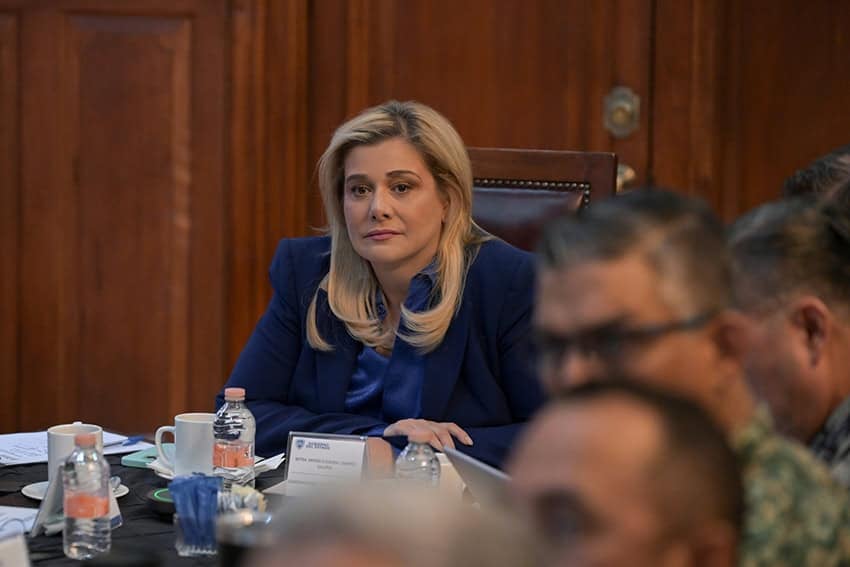
On Thursday, federal Security Minister Omar García Harfuch met with Chihuahua Governor Maru Campos, who agreed to provide information. Campos, along with Chihuahua Attorney General César Jáuregui Moreno, has been summoned by the Mexican Senate to explain under what conditions this collaboration with the CIA occurred.
Shooting at Teotihuacán kills 2, injures 13
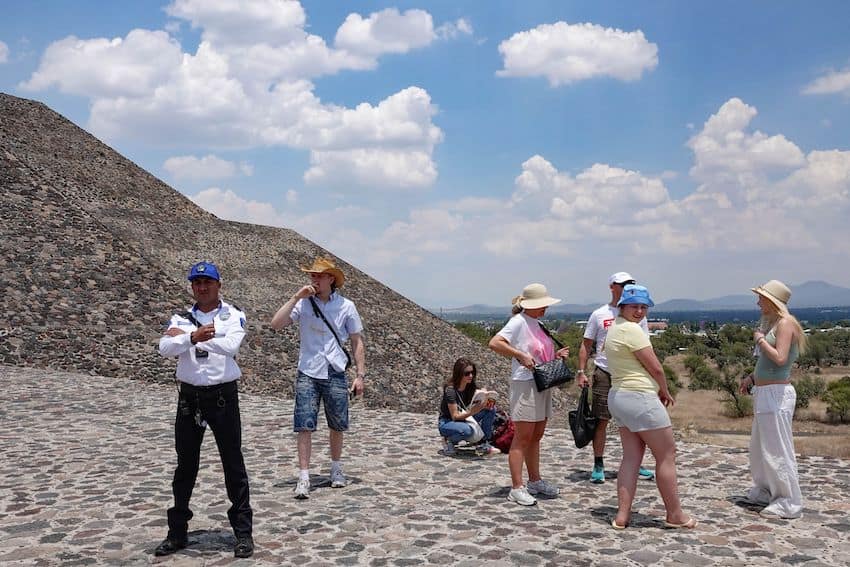
In a rare crime at one of Mexico’s most popular archaeological sites, a gunman opened fire on visitors at the Teotihuacán pyramids on Monday, shooting from a platform partway up the Pyramid of the Moon before turning the gun on himself. A 32-year-old Canadian woman was killed, and at least 13 people were hospitalized — seven from gunshot wounds, others from falls sustained during the panic. Victims included nationals from Colombia, Russia, Brazil, the Netherlands and the United States, as well as a six-year-old Colombian boy.
Teotihuacán shooter inspired by Columbine massacre in US, AG says: Tuesday’s mañanera recapped
The gunman was identified as Julio César Jasso Ramírez, 27, originally from Tlapa, Guerrero, who had arrived at the site by Uber. He was shot in the leg by the National Guard before killing himself, and investigators say the GN’s rapid response likely prevented more deaths. Authorities recovered a pistol, a knife and 52 unused cartridges, along with what they described as literature and manuscripts linked to violent events in the United States in April 1999 — likely in reference to the Columbine High School massacre, which occurred on the same calendar date 27 years earlier. Video from the scene captured Jasso making threatening remarks specifically targeting European tourists.
At Tuesday’s mañanera, México state Attorney General José Luis Cervantes said authorities believe Jasso had visited Teotihuacán multiple times beforehand to plan the attack, pointing to a calculated, copycat profile. He declined to frame a specific motive, instead pointing to what he called a “psychopathic profile” and a documented mental illness. Separately, reports indicated Jasso had Nazi sympathies and that he had chosen the date deliberately. Sheinbaum called the attack unprecedented at an archaeological site in Mexico and stressed that it bore no relationship to organized crime. She also noted, with the FIFA World Cup opening in Mexico City in just over seven weeks, that security for the tournament remains “guaranteed.”
New security rules at archaeological sites
Teotihuacán reopened Wednesday with a reinforced protocol, though the Pyramid of the Moon — where the shooting began — remains closed to the public. Broader changes are being rolled out across Mexico’s archaeological zone network:
- Increased National Guard presence: National Guard personnel have been deployed at Teotihuacán, and at Oaxaca’s main sites — Monte Albán, Mitla, Yagul and Atzompa — where visitors’ bags are now being inspected upon entry. (For now, National Guard officers at those Oaxacan sites are not permitted to carry weapons inside the grounds themselves.)
- Backpack ban at Chichén Itzá: Mexico’s most-visited site has temporarily prohibited visitors from bringing backpacks onto the grounds. The site’s director said the ban would remain in effect for at least the near term.
- Broader nationwide protocol: The government announced it would reinforce its inspection protocol for INAH-managed zones across the country — a significant logistical undertaking given the scale of Mexico’s cultural heritage network, which includes hundreds of sites.
USMCA talks advance, May 25 date set
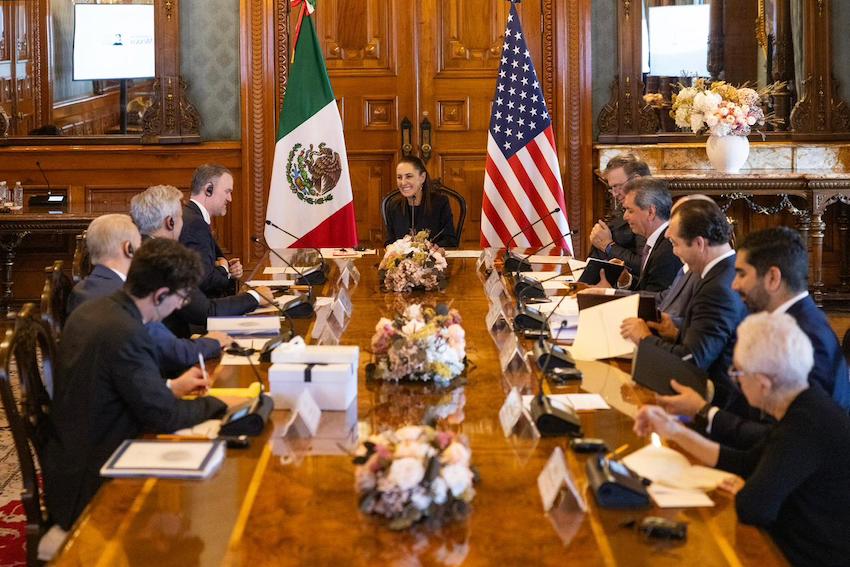
On the trade front, Monday’s visit to Mexico City by U.S. Trade Representative Jamieson Greer — who met with Sheinbaum at the National Palace alongside Economy Minister Marcelo Ebrard and Finance Minister Édgar Amador Zamora — marked a concrete step forward in the USMCA review process.
The two sides set May 25 as the date for the first official round of USMCA renegotiations, with Sheinbaum calling the discussions “positive.” The formal meeting date brings much-needed structure to a process that has been shadowed by U.S. tariff threats and bilateral tensions throughout 2025 and early 2026.
New investment announcements
Logistics company Bulkmatic announced a US $600 million plan to develop multimodal fuel storage terminals across Mexico over the next decade — a notable commitment given that Mexico currently holds barely three days’ worth of fuel reserves, against an international standard of 90 days.
Separately, a delegation from Querétaro attending Germany’s Hannover Messe trade fair secured US $133 million in combined investment pledges from several German companies, led by Siemens AG, which alone committed 1.3 billion pesos to expand its manufacturing footprint in the state, supporting 300 new jobs.
Heineken also made news by launching an initiative to hire and support repatriated Mexicans as deportations from the United States increase job demand at the Mexico-U.S. border.
Lazzeri nominated as new ambassador to US
With Mexico-U.S. relations under strain, Sheinbaum used Thursday’s mañanera to announce she is nominating Roberto Lazzeri, the current director of two Mexican development banks, as the country’s next ambassador to Washington.
The appointment still requires U.S. acceptance and ratification by the Mexican Senate. Lazzeri is considered well-positioned to engage on USMCA trade issues, and the timing of his nomination — amid the Chihuahua CIA crisis — underscores the importance both governments are placing on keeping diplomatic channels functional.
More fuel theft networks dismantled, with arrests reaching Argentina
Mexico’s Security Cabinet announced this week that it had dismantled a criminal network that was smuggling up to 1.5 million liters of fuel per week into Mexico’s supply chain. More than 20 raids across Hidalgo, México state, Chihuahua and Mexico City led to 14 arrests, including alleged ringleader Mauricio Gamboa — known as “El Burras” — who was apprehended with links to the Jalisco New Generation Cartel.
A related international operation netted a key suspect in Argentina. The network, which operated since mid-2023 through a sophisticated scheme combining maritime, rail and land transport, is estimated to have smuggled 564 million liters of fuel worth over 23 billion pesos (about US $1.3 billion). Security Minister Omar García Harfuch said authorities also took down 40 front companies that had been forging petro-invoices to legitimize the operation.
UN human rights chief visits Mexico
UN High Commissioner for Human Rights Volker Türk concluded a four-day visit to Mexico on Wednesday, calling disappearances “one of the most serious and painful human rights challenges” the country faces.
With over 132,000 people currently listed as missing in Mexico, Türk urged the government to strengthen search mechanisms and forensic identification processes, while praising recent institutional efforts. He also addressed impunity, journalist protection, organized crime and pretrial detention. Sheinbaum — who had sharply rejected an earlier UN committee report that characterized enforced disappearances as crimes against humanity — described her own meeting with Türk as productive, though the two were notably careful in how they characterized their areas of agreement.
Sheinbaum’s Barcelona trip delivers austere optics
The week opened with a small, but recurring talking point in Mexico: Sheinbaum had flown economy class to Barcelona, where she attended a leaders’ summit. Back at her Monday mañanera, she was asked about it and leaned in, saying she and her team are “normal people” who don’t claim special privileges.
The two-day trip also had substantive outcomes: Sheinbaum said Foreign Affairs Minister Roberto Velasco is finalizing a May visit by European officials to Mexico City to formally sign the modernized Mexico-EU trade agreement.
MND ESPI: Inaugural expat safety index
Mexico News Daily published the results of its inaugural Expat Safety Perceptions Index (ESPI™) this week: a new quarterly poll measuring how safe foreign residents actually feel in their daily lives in Mexico, distinct from national crime statistics and surveys.
With 773 respondents across 29 of Mexico’s 32 states, the Q1 2026 MND ESPI score came in at 88.97 out of 100.
How safe is Mexico according to its foreign residents? The survey results
Foreign residents also reported, on average, feeling safer in Mexico than in the places they most recently lived in their home countries. The survey is designed to become a benchmark that tracks perceptions over time, offering a data-based counterweight to the gap between media narratives and lived expat experience.
Good news roundup
🚲 Mexico City is getting a new north-south bike route, expanding the capital’s growing cycling infrastructure.
🎨 The world’s largest collection of Frida Kahlo works will reopen to the public in late May, giving art lovers fresh access to an unparalleled trove of the iconic Mexican artist’s output.
📸 Mexican photographer Citlali Fabián has been recognized at the 2026 Sony World Photography Awards — a global platform for one of Mexico’s emerging visual voices.
✈️ Lufthansa has increased its direct flight schedule between Mexico City International and Munich, strengthening European connectivity for Mexican travelers.
Looking ahead
The CIA affair in Chihuahua is far from over. Federal prosecutors are still determining whether Mexico’s constitution or National Security Law was violated, and what consequences — if any — Chihuahua’s state government will face.
The precedent is murky: no Mexican state has previously been sanctioned for entering into an unauthorized security arrangement with a foreign intelligence agency, so whatever path Sheinbaum’s government chooses will itself set new ground. Sheinbaum has long declined U.S. offers — including from President Trump — to send military or intelligence personnel into Mexico. By pointing to state officials rather than the U.S. federal government as the problem, she sought to manage the bilateral relationship while still defending Mexico’s sovereignty — but it will be interesting to see how the president holds that balance as the investigation deepens.
Separately, UN High Commissioner Volker Türk’s visit this week leaves an open question about whether Mexico will formally declare a national emergency over disappearances — something Amnesty International and search groups have been pushing for and that Sheinbaum has so far resisted.
On the security and tourism front, the Teotihuacán shooting has put Mexico’s archaeological sites under a spotlight that will only intensify as the FIFA World Cup approaches. With the tournament’s opening match in Mexico City now less than two months away, the speed and thoroughness of security upgrades at Teotihuacán and other major sites will be scrutinized by international visitors, foreign governments and the global press.
Mexico News Daily
This story contains summaries of original Mexico News Daily articles. The summaries were generated by Claude, then revised and fact-checked by a Mexico News Daily staff editor.