This week in Mexico, bilateral trade talks with the United States continued to ramp up ahead of the formal review of the USMCA free trade pact. Mexico’s newly appointed Foreign Minister Juan Ramón de la Fuente sat down with U.S. Ambassador Ronald Johnson early in the week for their first formal meeting, signaling a reset in the bilateral relationship. De la Fuente and Johnson discussed migration, security cooperation, and trade, with the foreign minister making clear that Mexico would engage the United States as an equal partner on all fronts. That framing was quickly tested by developments on the border and in U.S. detention facilities.
On Tuesday, President Claudia Sheinbaum used her daily press conference to demand consular access to ICE detention centers after the 15th Mexican national died in U.S. immigration custody. Sheinbaum said Mexico has the right — and the obligation — to monitor the conditions in which its citizens are held, and that her government would pursue the matter through diplomatic channels. The same week, U.S. Customs and Border Protection construction on a border wall segment damaged Cuchumá Hill near Tecate, Baja California — a site considered sacred by the Kumeyaay people on both sides of the border. Indigenous leaders and Mexican officials protested the work, calling it a violation of Indigenous rights and binational cultural heritage.
Indigenous people in Mexico protest the U.S. blasting a sacred ceremonial site with dynamite to build the U.S.-Mexico border wall.
The Kumeyaay people consider Cerro Cuchumá a sacred site where they hold rituals and shamans hold initiations. It also functions as a cemetery. pic.twitter.com/Y2rIAixRsO
— AJ+ (@ajplus) April 16, 2026
Also on Tuesday, Mexico and the United States moved closer to a critical minerals agreement that both governments want folded into the USMCA framework, covering lithium, copper, and other resources central to the clean-energy supply chain. Shortly after, officials announced that U.S. Trade Representative would visit Mexico City early next week for a second round of talks ahead of the USMCA’s mandatory joint review, which officially launches July 1. Not all the trade news was forward-looking: A Canadian court reopened a US $270 million NAFTA-era arbitration case against Pemex, a legacy dispute that had appeared settled. Late in the week, more troubling news emerged for Pemex: A panel of government experts determined that the state-owned oil company was responsible for a February oil spill that affected 700 kilometers of Mexico’s Gulf Coast — and that groups within the company had deliberately covered it up.

Didn’t have time to catch this week’s top stories? Here’s what you missed.
Sheinbaum on the world stage
Time magazine named President Sheinbaum to its list of the 100 most influential people in the world for the second consecutive year, placing her alongside a small group of sitting heads of state. The recognition came as Sheinbaum was fielding a broad range of international topics at her daily press conferences — from Donald Trump’s remarks about Pope Francis to the future of energy policy and the bilateral trade agenda. On Monday, she defended the late pope’s legacy and Christianity after Trump suggested the pontiff had been a communist, calling the characterization unfounded. She also addressed questions about the World Cup, which Mexico is co-hosting with the U.S. and Canada this year.
Taxco mayor, father freed in mass security operation
In one of the week’s most dramatic domestic stories, Guerrero state security forces and federal agents rescued the mayor of Taxco and his father from kidnappers in an operation involving more than 500 personnel. Mayor Eduardo Lino Carmona and his father had been abducted days earlier. Officials confirmed both were unharmed. The operation involved coordination between state police, the National Guard and federal prosecutors — a level of response that reflected both the profile of the victims and ongoing pressure on the government to demonstrate control in Guerrero, a state with persistent security challenges.
Taxco mayor and father rescued from kidnappers in 500-agent security operation
IMF raises Mexico’s growth forecast, but modestly
The International Monetary Fund revised Mexico’s 2026 GDP growth forecast upward to 1.6%, a slight improvement from its previous estimate, even as the IMF reduced its global outlook due to trade uncertainty. The adjustment reflects cautious optimism about nearshoring investment and domestic demand, though the IMF flagged U.S. tariff policy as the primary external risk to Mexican growth. The forecast puts Mexico below the Latin American regional average but ahead of several major economies facing steeper headwinds.
Pemex admits cover-up as two separate incidents draw scrutiny
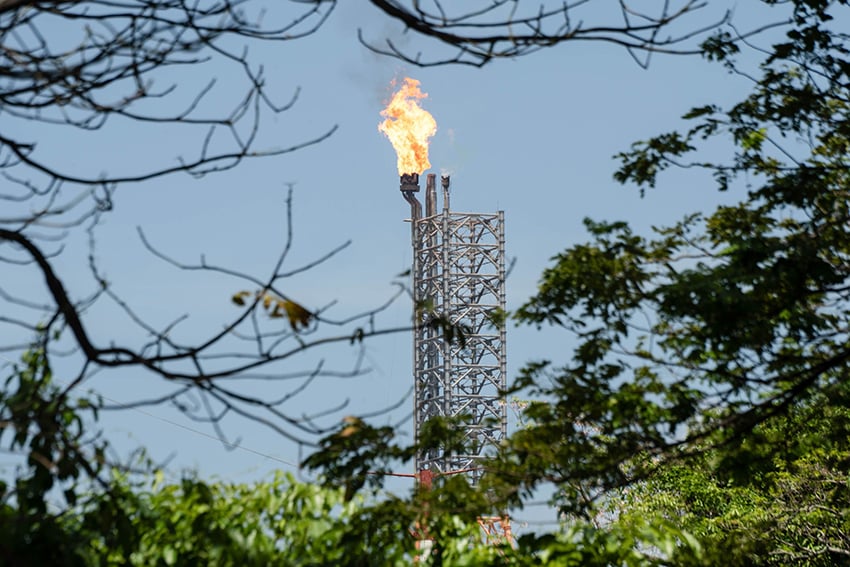
Pemex this week admitted what environmental groups had been saying for months: that a leak in a pipeline near the Abkatún-Cantarell complex in Campeche Bay, first detected on February 6, was responsible for an oil spill that spread across 700 kilometers of Gulf coastline across Veracruz and Tabasco, affecting seven protected natural reserves. CEO Víctor Rodríguez said an internal review found the leak had gone unreported within the company; three high-ranking officials were fired and a criminal complaint was filed with the Attorney General’s Office. For weeks, senior officials — including Sheinbaum and Veracruz Governor Rocío Nahle — had publicly attributed the spill to passing tankers and dismissed NGO evidence of Pemex involvement; the admission reverses that position entirely.
In a separate incident, Pemex’s jointly operated Deer Park refinery in Texas activated emergency protocols after a diesel spill at the facility, with cleanup operations underway on the U.S. side of the border.
Fracking debate reaches the mañanera
Sheinbaum addressed questions Wednesday about whether the government is moving toward allowing hydraulic fracturing — fracking — in the Gulf of Mexico. She did not rule it out, saying studies are underway and that any decision would be based on technical and environmental assessments. The comments generated pushback from environmental groups, who noted that fracking was effectively prohibited under the previous administration. The issue is unresolved, and Sheinbaum did not provide a timeline for a final determination.
Mexico and Brazil build health partnership
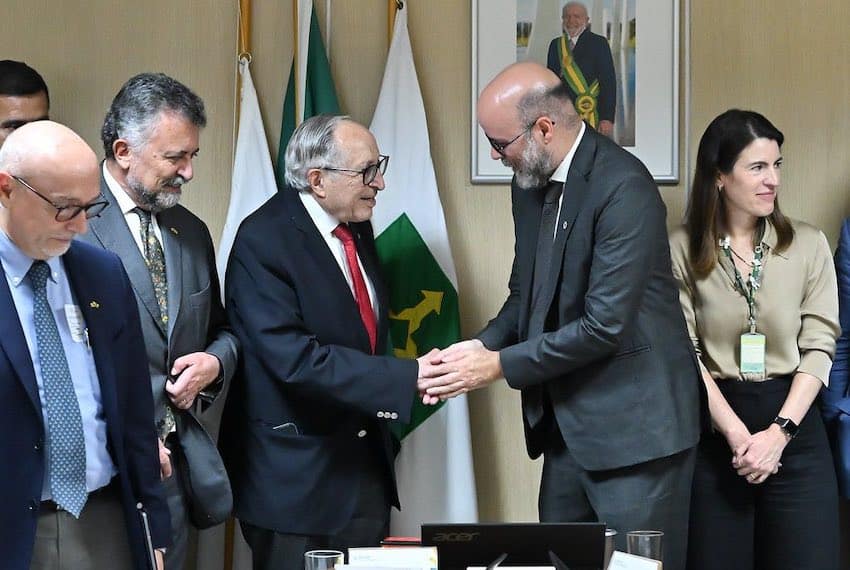
Health ministers from Mexico and Brazil signed a bilateral cooperation agreement this week aimed at sharing expertise and resources as both countries advance toward universal healthcare systems. Mexico’s IMSS-Bienestar program, which is expanding access to public health services in underserved communities, will be one focus of the exchange. The alliance is framed as a model for South-South cooperation ahead of Mexico’s planned 2027 launch of a universal health service.
Looking ahead
The week’s final mañanera press conference on Friday carried two significant forward-looking signals. Interior Minister Rosa Icela Rodríguez announced the inauguration of a passenger train service connecting Mexico City’s AIFA airport with the capital’s urban rail network, a project that aims to address one of the airport’s persistent weaknesses since its 2022 opening. She also confirmed that Mexico is in conversations about a possible visit by Pope Leo — suggesting the government is laying diplomatic groundwork for a pastoral visit should one be announced. On trade, the USMCA talks will continue in the coming weeks with critical minerals and rules of origin among the thorniest unresolved issues.
Also in the news this week
-
Michoacán town makes Guinness World Record-breaking guacamole — A town in Michoacán set a new world record with a massive communal guacamole, drawing international attention to the avocado-producing region.
-
Authorities find narco-tunnel leading to the U.S. in Sonora — Security forces discovered a drug-smuggling tunnel in Nogales running beneath the border into Arizona.
-
Mexico sweeps PanAm Artistic Swimming Championships with 13 golds — The national team dominated the Pan-American championships in Santiago, Chile.
- Abandoned baby monkey Yuji steals hearts at the Guadalajara Zoo — A six-week-old patas monkey rejected by his mother and cared for by zoo staff has gone viral, clinging to a stuffed dog for comfort.
- Pre-Columbian rock art found along Mexico City–Querétaro train line — INAH recorded 16 petroglyphs and cave paintings, some more than 4,000 years old, during construction work in Hidalgo state.
-
Mexican-American Gabriela Jáquez makes history in the WNBA draft — Jáquez was selected fifth overall by the Chicago Sky, the highest WNBA draft pick of Mexican heritage.
-
Michoacán releases 1,000 achoque salamanders into Lake Pátzcuaro — Conservation authorities returned a thousand of the critically endangered endemic species to their native lake habitat.
Mexico News Daily
This story contains summaries of original Mexico News Daily articles. The summaries were generated by Claude, then revised and fact-checked by a Mexico News Daily staff editor.