Mexico and the United States were “very close” to a trade deal, both presidents said this week — but lower tariffs were still a negotiating goal, not an agreement. Meanwhile, the arrest of Chihuahua’s former attorney general over alleged unauthorized CIA involvement in a drug raid sharpened the dispute over foreign agents operating in Mexico.
At home, Sheinbaum acknowledged that fuel seized in a much-publicized bust was not stolen, while Guadalajara residents continued to march for clean water. Water is on the mind of many outside Jalisco as well, as recent rains have proven insufficient to ease drought across areas of the country. Didn’t have time to catch this week’s top stories? Here’s what you missed.
Tariff talks and sovereignty
Economy Minister Marcelo Ebrard said Monday that Mexico hoped for U.S. tariff reductions before year-end. Steel and aluminum face 50% duties, while vehicle tariffs include exemptions for U.S. content. USMCA remains in effect despite Washington’s July decision not to extend it another 16 years.
On Tuesday, Sheinbaum outlined the remaining obstacles to a trade agreement: Washington was offering tariff reductions in exchange for concessions Mexico had not fully accepted. She said Mexico would not accept terms that run contrary to its laws or that damage the economy or jobs.
Meanwhile, former Chihuahua Attorney General César Jáuregui was arrested for treason over allegations he authorized CIA participation in an April drug-lab raid without federal approval. On Friday, Sheinbaum recounted how Chihuahua Gov. Maru Campos denied authorizing foreign agents, accusing Jáuregui during a tense private meeting in September.
Mexico also announced plans to file a complaint over Emiliano Andrade Covarrubias’ death in ICE custody. The Foreign Ministry counted 18 Mexican deaths in custody or during immigration operations since Trump’s second term began. At the same time, U.S. authorization to test a heat ray along the Mexico-U.S. border raised concerns about possible burn injuries to targets on both sides of the border.
US Homeland Security gets go-ahead to test a heat ray for possible border use

Security claims under scrutiny
On Tuesday, the U.N. Committee on Enforced Disappearances’ chairman urged General Assembly consideration of Mexico’s disappearances crisis. Mexico rejects the committee’s crimes-against-humanity characterization.
Wednesday brought official figures of 2,539 fuel-related arrests since October 2024, but also a qualification: Sheinbaum said 59 million liters confiscated in Guanajuato were not stolen or illegally imported. The company from which the fuel was confiscated had produced documentation establishing the facility’s legal operation, while the federal prosecutor in Guanajuato was fired and placed under investigation over irregularities in the bust.
Friday’s urban security survey found 58.1% of adults in surveyed cities felt unsafe, the lowest proportion in the series begun in 2013.
Water protests and persistent drought
Guadalajara’s contaminated-water crisis drew another mass protest a week after a similar protest ended with arrests and accusations of police brutality. This past Sunday, some 10,000 people marched. Participants blamed masked infiltrators for violence along the route, but their affiliations remained unestablished. Residents’ demands for clean tap water remained unresolved.
Nationally, rainfall had not erased accumulated drought deficits. Moderate-to-severe drought covered 12.7% of Mexico on Oct. 15, compared with 7.5% a year earlier. Rain helped some northern areas but failed to reverse earlier shortfalls in the south and southeast.
Economy and labor
The peso closed Thursday at 18.71 per dollar, depreciating 9.7% since Sept. 4. A narrower Mexico-U.S. interest-rate gap and trade uncertainty contributed to the slide.
Also on Thursday, the government announced 20 additional industrial parks, bringing Plan México’s operating total to 40.
In labor news, healthcare workers’ protests appear to be winding down after the union representing IMSS workers negotiated a new pay agreement. The package combines 4% more base pay with 4% in housing assistance, below the requested 10% base-pay increase; demonstrators also demanded medicines and better conditions. While protesters have promised to keep pressing for a better deal, attendance at the most recent marches dwindled following the improved pay offer.
Healthcare was not the only public service under examination: MND’s education deep dive found that more young adults are completing upper secondary education, even as education spending as a share of GDP and student test scores declined over the periods reviewed.
The Morena party’s dominance in Mexican politics appears to be holding strong, with early polling showing Morena as the overwhelming favorite in next year’s 2027 midterm elections. The party is preferred by 46% of Mexicans, although 31% expressed no preference and party preferences for gubernatorial contests were more varied.
Senators approved legislation that would allow the Finance Ministry to require digital payments in designated sectors, with gas stations and highway tollbooths expected to be among the first affected. Supporters say the measure would combat tax evasion; opponents warn it could exclude people who rely on cash
Congress also approved the so-called “anti-meme law,” penalizing misuse of official government logos. Supporters say it targets fraud; opponents warn ambiguous wording could threaten satire and political criticism.
Culture

In San Cristóbal de las Casas, a new textile conservation laboratory will repair damaged garments and protect the Maya World Textile Center’s 3,400-piece collection from insects and fungi. Other traditions found an audience onstage: 12 delegations brought music and masked dances to Oaxaca’s first Afro Guelaguetza, a dedicated celebration of Afro-Mexican heritage in Chacahua Isla. Further afield, Ballet Folklórico will celebrate its 75th anniversary with a 24-city U.S. tour, featuring regional dances and live music.
Other news from across Mexico
- Mexico City cosmetics brand AORA earned a place on TIME’s Best Inventions of 2026 list for its plastic-free makeup packaging.
- Guadalajara welcomed four white rhinos from European zoos in an effort to preserve genetic diversity.
- NBA Commissioner Adam Silver named Mexico City as a possible long-term expansion location.
- In Chihuahua, Mexican ufologist Jaime Maussan claimed a camera-trap video shows a mysterious humanoid creature in the Juárez Valley.
- Runners will cross from San Diego into Tijuana in Sunday’s Binational Race.
- Quintana Roo’s inland region of Maya Ka’an made National Geographic’s 25-destination “Best of the World 2027” selection.
Looking ahead
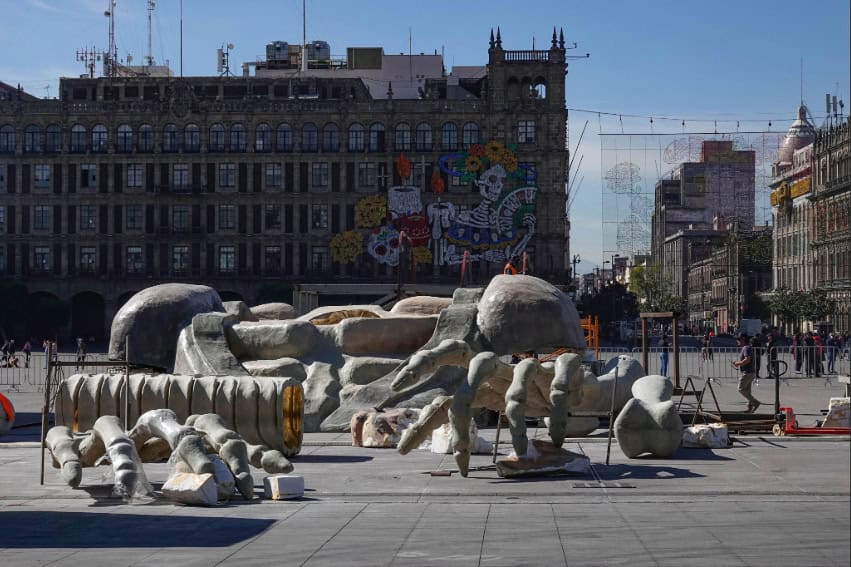
The week ends with tariff relief still unresolved and new payments legislation awaiting promulgation. The Federal Reserve’s Oct. 27–28 meeting, followed by Banxico’s Nov. 5 decision, will put interest rates back in focus after the peso’s recent slide. Businesses and consumers will also be watching for Hacienda’s designation of sectors facing cash-payment restrictions once the legislation takes effect. Meanwhile, across Mexico, families and communities are preparing to remember their dead on Nov. 1–2.
Mexico News Daily
This story contains summaries of original Mexico News Daily articles. The summaries were generated by Claude, then revised and fact-checked by a Mexico News Daily staff editor.