
As we close out an eventful 2025, we’re looking back at the stories that resonated most with our readers throughout the year. From groundbreaking conservation wins to cultural controversies and exciting innovations, these articles captured the diverse tapestry of life in Mexico.
Here are Mexico News Daily’s most-read stories of the year.
1. Mexico’s electric vehicle ‘Olinia’ set to debut at 2026 FIFA World Cup
To kick off the year, President Claudia Sheinbaum’s administration unveiled ambitious plans for Mexico’s first domestically produced electric vehicle in January.
Named “Olinia” — meaning “moving” in Náhuatl — the project aims to create affordable, compact EVs priced between $4,400 and $7,400. With production planned for Sonora state and three models in development, including a delivery vehicle, the initiative represents Mexico’s push toward sustainable transportation and technological independence. The vehicles are designed for urban families and younger drivers, offering a safer alternative to motorcycles while supporting the country’s energy transition goals.

Keep your eyes peeled for more news about Mexico’s home-grown electric car as the World Cup approaches: The tournament will start on June 11 in Mexico City.
2. Puerto Vallarta implements new tourist fee for foreign visitors
Jalisco’s Congress in February approved a controversial fee targeting foreign tourists visiting Puerto Vallarta, sparking debate about its legality and impact. The fee, designed to fund infrastructure improvements including street repairs and public space rehabilitation, could generate between $14-24 million annually. Critics questioned its constitutionality, with some arguing it violates federal restrictions on transit taxes. The measure exempted residents, children under 14, people with disabilities, and tourism workers, but its implementation raised questions about enforcement and potential effects on the region’s vital tourism industry.

The fee was eventually declared unconstitutional by Mexico’s new Supreme Court. The city plans to roll out a modified version of the fee in 2026 that it says complies with court guidance.
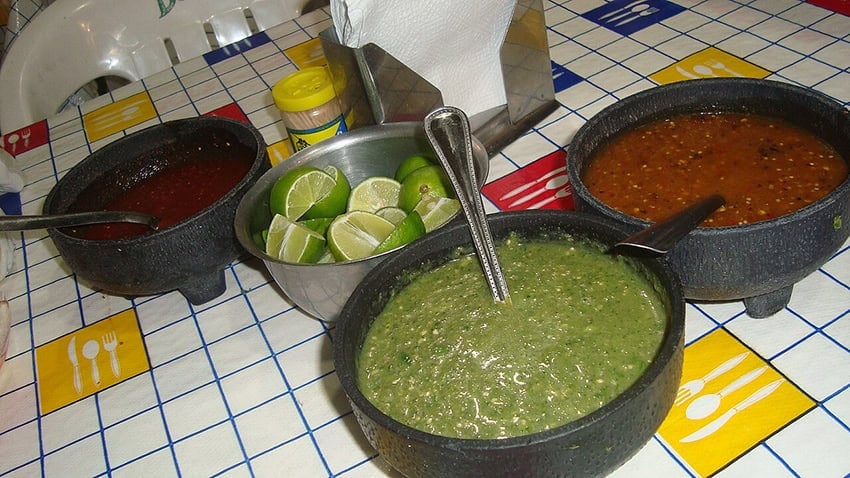
3. Why you should try spicy salsa: A cultural deep dive
This feature explored the cultural and historical significance of Mexico’s beloved chile peppers and spicy salsas. From the ancient Mexica goddess of chile, Tlatlauhqui Cihuatl Ichilzintli, to modern-day taquería etiquette, the article examined why “enchilarse” is a quintessentially Mexican experience. The story dives into the science of spicy and the history of chile in Mexico, with a few recommendations thrown in for authentic spots to try hot salsas in Mexico City and Coyoacán.
4. Why you can’t climb Teotihuacán’s pyramids anymore
The 2020 decision by Mexico’s National Institute of Anthropology and History (INAH) to prohibit climbing the ancient pyramids at Teotihuacán sparked nostalgia and debate. The article traced the site’s rich history — from its mysterious construction around 200 BCE to its designation as a UNESCO World Heritage Site — while explaining the preservation and visitor safety concerns that prompted the restriction.
With daily visitor numbers once reaching 15,000, the wear on these reconstructed structures became unsustainable. Violators now face fines ranging from $25 to $4,900, with jail time possible for irreparable damage.
There are only a few exceptions to the rule. One, the Nohoch Mul pyramid, reopened to the public in early December.
5. Eastern monarch butterfly population nearly doubles in Mexico

Conservation efforts showed promising results in March as the area occupied by eastern monarch butterfly colonies in Mexican forests increased from 0.90 to 1.79 hectares during the 2024-2025 winter season.
The World Wildlife Fund and Mexico’s Natural Protected Areas Commission conducted the survey, identifying eight colonies across Michoacán and México state. While the doubling represents significant progress, scientists emphasized that populations remain far below long-term averages, and continued conservation work — including addressing climate change impacts on forest ecosystems — remains critical for the species’ survival.
6. San Miguel de Allende named ‘Best City in the World’ again
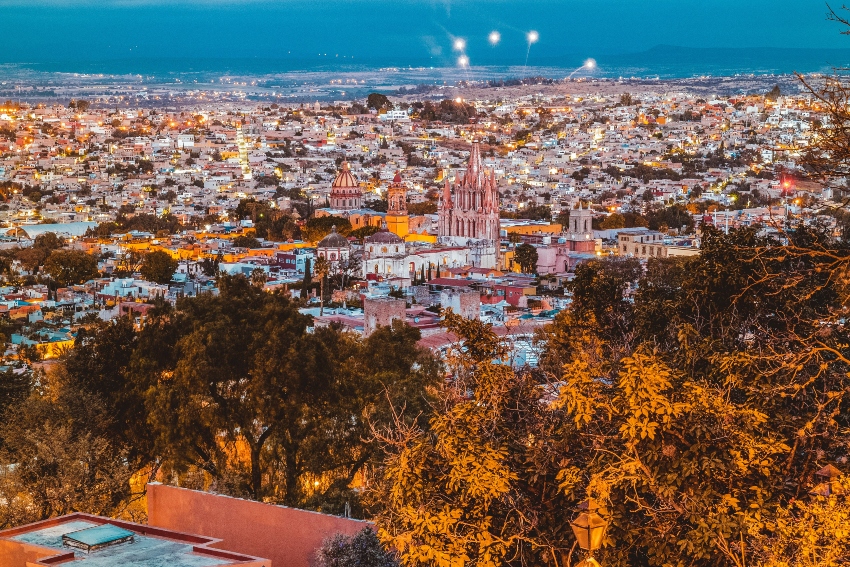
For the second consecutive year, Travel + Leisure magazine’s readers voted San Miguel de Allende as the Best City in the World. The Guanajuato destination earned praise for its colonial architecture, cultural richness, walkability, gastronomy and the warmth of its residents. The honor adds to an impressive collection of accolades, including previous recognition from Condé Nast Traveler. Mexico City ranked seventh in the same survey, while Mérida, Yucatán, secured the 25th spot, highlighting Mexico’s strong showing in global travel rankings.
7. Scientists heard more vaquita porpoise calls this year — a sign of hope for the world’s most endangered marine mammal
Acoustic monitoring in the Gulf of California detected 41 encounters with the critically endangered vaquita porpoise, offering hope that conservation efforts may be working. While these acoustic “pings” don’t confirm 41 individual animals — the same porpoise may trigger multiple encounters — the high number suggests the population may be larger than the six to eight specimens recorded in the 2024 census.
The best part of the story? One of the calls was from a baby, meaning the porpoises are still breeding despite their tiny population size.
The monitoring program helps scientists identify natural refuge areas and prepare for future observation missions, though experts emphasize the need for continued vigilance against illegal fishing.
Vaquita in the Gulf of California sent 41 location signals to scientists, ‘a sign of hope’
8. Baja California Sur becomes first state to legalize swimming with orcas
Baja California Sur pioneered new regulations for the increasingly popular activity of swimming with orcas, specifically targeting the community of La Ventana, where most tour operators work. The groundbreaking decree establishes permit requirements, limits the number of boats that can approach orcas, and mandates that captains respect the animals’ behavior and retreat if they show distress. Permit revenues will fund training programs and enforcement patrols.
While some local operators expressed concerns about implementation, scientists involved in developing the regulations called it an important step toward sustainable wildlife tourism.
9. Mexico’s first domestically-made airplane in 70 years takes flight
The Halcón 2.1 received federal certification, marking the first aircraft 100% designed and manufactured in Mexico under international standards since 1957. Developed over 11 years by Celaya-based Horizontec, the two-seater light-sport aircraft celebrated its certification with Economy Minister Marcelo Ebrard aboard for an exhibition flight in September.
Built from carbon fiber with a 141-horsepower engine, the plane can reach 18,000 feet and has a range of 1,100 kilometers. Priced at around $200,000 with significantly lower operating costs than comparable models, Horizontec already has 18 orders and eyes export opportunities.

10. Sargassum galore: Mexico declares the seaweed a national resource
In a bold move to address the persistent seaweed problem plaguing Mexican Caribbean beaches, Mexico’s Agriculture Ministry officially declared sargassum a national fishing resource. The designation allows equipped vessels to harvest up to 945,000 tonnes of the invasive seaweed annually before it reaches shore and decomposes. What was once merely a tourism nuisance is now being transformed into an economic opportunity, with sargassum showing potential for use in animal feed supplements, fertilizers, biofuels, bioplastics, textiles, and even construction materials.
The change comes as tourism in places like Tulum has dropped steeply, in part due to sargassum accumulation. To address the problem, the Navy collected over 266,000 tonnes between 2019 and 2025, and the state of Quintana Roo is pioneering efforts to convert the seaweed into clean energy.
Thank you for being part of the Mexico News Daily community throughout 2025. Here’s to another year of compelling stories from across Mexico in 2026!