Home Blog Page 108

Attorney General’s Office must transform ‘for the good of Mexico,’ Sheinbaum says: Friday’s mañanera recapped

2
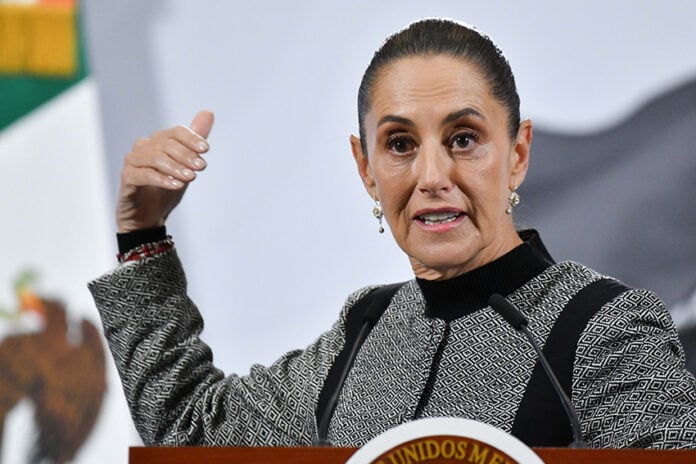
President Sheinbaum gestures as she speaks from behind her press conference podium
The president expressed her opinion that the Attorney General's Office needs to be more transparent moving forward, though she recognized the office's autonomy from the executive branch. (Mario Jasso / Cuartoscuro.com)

The resignation of Alejandro Gertz Manero as Mexico’s attorney general was a central focus of President Claudia Sheinbaum’s Friday morning press conference.

Sheinbaum also spoke about the woman who appears most likely to become the next federal attorney general.

In addition, she advocated for a more collaborative and transparent Federal Attorney General’s Office.

Sheinbaum offered attorney general an ambassadorship 

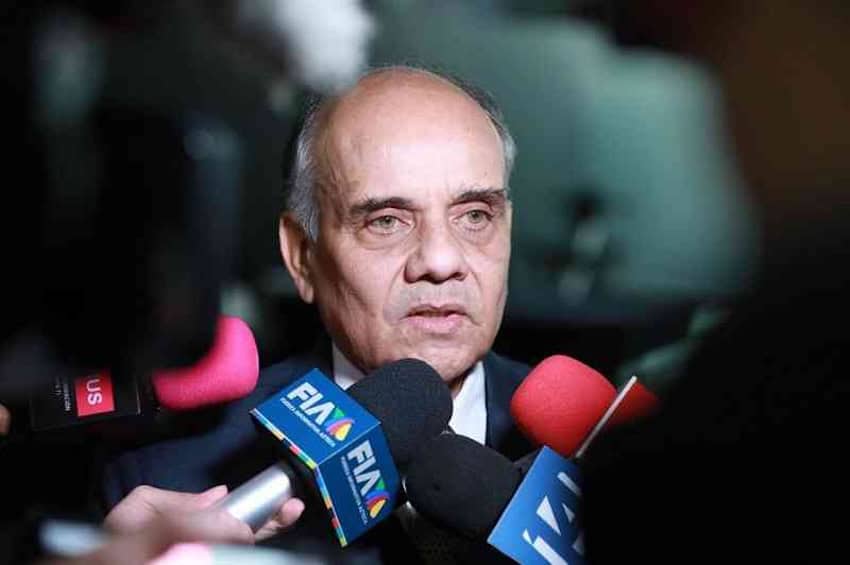
Asked about the resignation of Gertz Manero, Sheinbaum told reporters that she had offered an ambassadorship to the 86-year-old and he accepted.

“Soon we’re going to say where he’s going because there has to be a process between the Ministry of Foreign Affairs and the [host] country,” she said.

“Until the credentials are accepted, [the host country] can’t be announced, that’s a rule,” Sheinbaum said.

Attorney General Gertz resigns after nearly 7 scandal-filled years on the job

According to media reports, Gertz — attorney general since January 2019 — will become Mexico’s ambassador to Germany.

Opposition politicians and media commentators have claimed that Gertz was pushed out of the attorney general’s role in a power grab by the Sheinbaum administration.

Among them was Senator Alejandro Moreno, national president of the Institutional Revolutionary Party.

“I deeply regret the coup movement that the narco-politicians of [the] Morena [party] launched against [Gertz]. It is yet another sign of the authoritarian face of this regime, which seeks to impose a terrorist and communist narco-dictatorship in Mexico,” he wrote on X.

Sheinbaum wants more coordination between her administration and the ‘autonomous’ FGR

Sheinbaum said she hopes there will be “even more coordination” between the different departments of her government and the Federal Attorney General’s Office (FGR) once a new attorney general has been appointed on a permanent basis.

Ernestina Godoy, a former Mexico City attorney general who served as Sheinbaum’s top legal adviser during the past year, has replaced Gertz on an interim basis. She is considered the favorite to become Mexico’s next chief law enforcement official. If appointed to the role on a permanent rather than interim basis, Godoy will become the country’s second female attorney general after Marisela Morales.
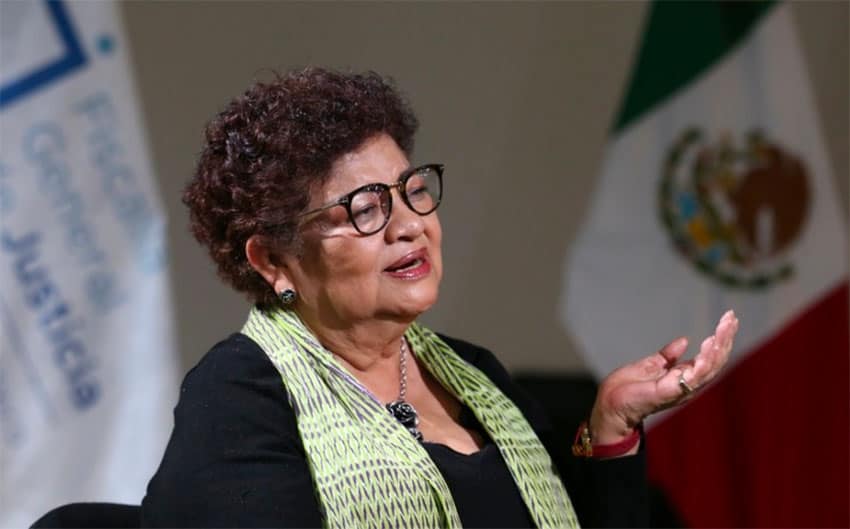
ernestina godoy
Ernestina Godoy served as the Mexico City attorney general prior to becoming President Sheinbaum’s chief legal advisor. (File photo)

Sheinbaum said that the FGR and the Attorney General’s Offices in Mexico’s 32 federal entities are “fundamental” to the success of the federal government’s security strategy because it is “ultimately” up to them to initiate and carry out criminal investigations, and to request search and arrest warrants from judges.

“Even though the Attorney General’s Office is autonomous — I’ve always thought that — coordination between the Ministry of Public Security, the National Guard and the Attorney General’s Office is fundamental in order to continue making progress toward a safe country with justice,” she said.

“This coordination is very important for us. … It was already happening, but I hope that now, once the new attorney general is appointed, that there will be even more coordination, because it is the responsibility of the Mexican government, the [federal and state] Attorney General’s Offices, and the judiciary to advance security and peace in our country,” Sheinbaum said.

The judiciary now includes the judges, magistrates and Supreme Court justices who were elected in Mexico’s first ever judicial elections on June 1.

Godoy is ‘an extraordinary woman,’ says Sheinbaum

Asked whether she would like to see Godoy as Mexico’s next attorney general, Sheinbaum noted that it will be up to the Senate to decide.

The president, however, will submit a list of three candidates to the upper house of Congress, which will select a successor for Gertz via a two-thirds majority vote.

Sheinbaum indicated that she would very much like to see her erstwhile legal advisor as federal attorney general.
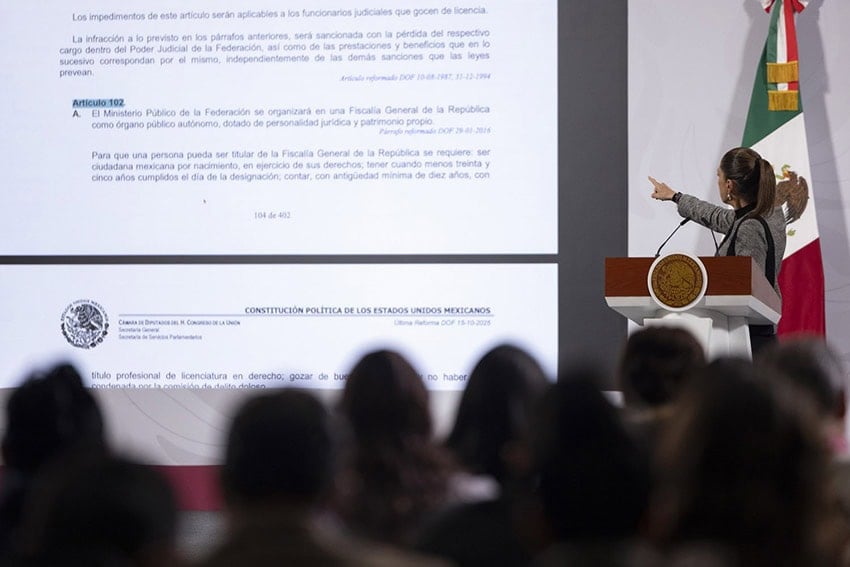
The president took time at her Friday morning conference to share a section of the Mexican Constitution guaranteeing the independent status of the federal Attorney General’s Office and the requirements to hold the position of attorney general. (Gabriel Monroy / Presidencia)

“Ernestina is an extraordinary woman,” she said of Godoy, who served as Mexico City attorney general during Sheinbaum’s 2018-23 mayorship in the capital.

The president also said that Godoy is an “honest” woman “of principles” and “many convictions.”

“She demonstrated her [ability to get] results when she was attorney general of Mexico City,” Sheinbaum said.

Among the high-profile unresolved cases Godoy inherits as acting attorney general — and which she will be tasked with advancing if she is appointed to the role on a more permanent basis — are those involving the disappearance of 43 teacher’s college students in Guerrero in 2014 and corruption allegations against former Pemex CEO Emilio Lozoya, who has been awaiting trial for years.

Sheinbaum: The FGR needs ‘a transformation for the good of Mexico’

Sheinbaum told reporters that her “personal opinion” is that the Federal Attorney General’s Office needs a “transformation for the good of Mexico.”

Such a transformation, she added, would entail the FGR becoming “more transparent.”

“I believe that will be up to the attorney general who … is appointed by the Senate,” Sheinbaum said.

She also said that it will be up to the next attorney general to decide what the FGR’s priorities will be.

Sheinbaum herself identified fuel smuggling as a crime she believes the FGR should focus on.

“It’s very important for all the investigations to continue and that those named in the investigation files be brought to justice,” she said.

Sheinbaum also indicated that the prosecution of “high-impact crimes” such as murder and kidnapping, as well as “white-collar crime,” should be a priority for the FGR.

By Mexico News Daily chief staff writer Peter Davies (peter.davies@mexiconewsdaily.com)
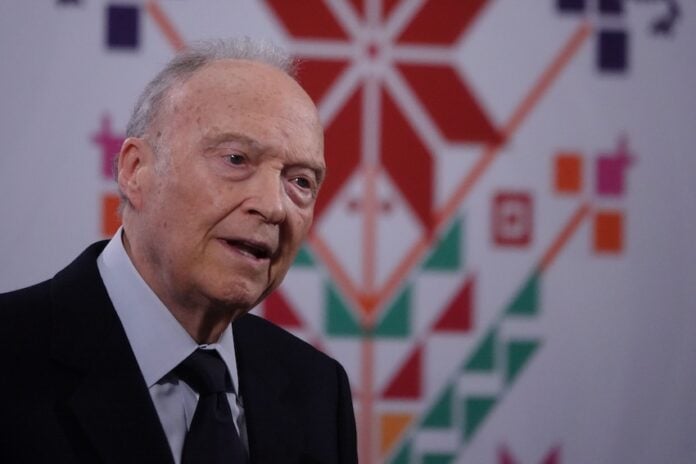
Attorney General Gertz resigns after nearly 7 scandal-filled years on the job

6
Gertz 2025
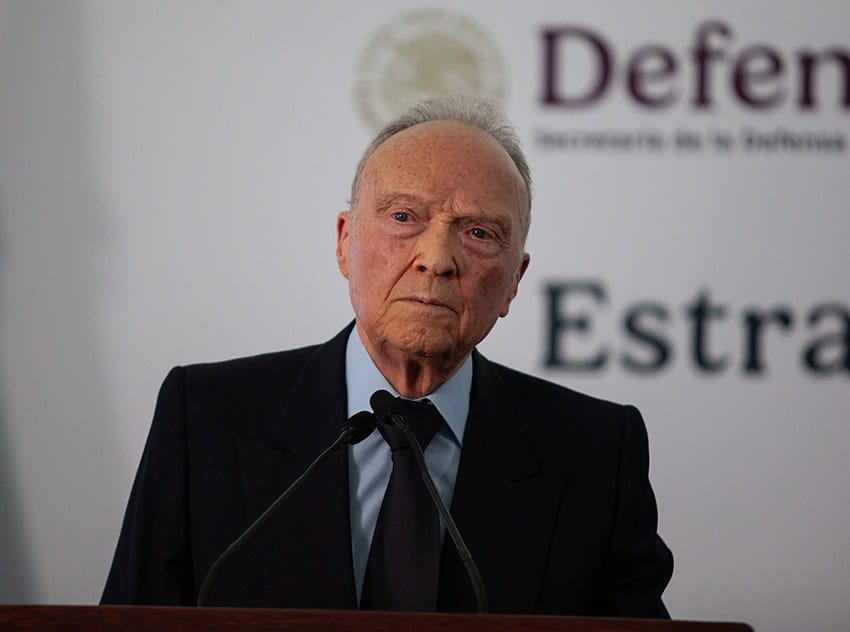
After a controversial retirement following a controversial tenure as Mexico's top prosecutor, Alejandro Gertz Manero, shown here in October delivering his department's Annual Report, will serve as Mexico's ambassador to Germany. (Galo Cañas/Cuartoscuro.com)

Mexico’s controversial attorney general, Alejandro Gertz Manero, resigned on Thursday and has been replaced on an interim basis by President Claudia Sheinbaum’s legal adviser,  Ernestina Godoy.

In a Senate session, presiding officers read a letter by Gertz requesting that his resignation be accepted after Sheinbaum nominated him as “Mexico’s ambassador to a friendly country,” which was later revealed to be Germany.

Ernestina Godoy 2025
Ernestina Godoy Ramos, President Sheinbaum’s legal counsel who served as her attorney general when she was mayor of Mexico City, will serve as the nation’s top prosecutor until the Senate chooses a replacement to fill out the term of retired AG Alejandro Gertz. (Andrea Murcia/Cuartoscuro.com)

Gertz, who had served as attorney general since January 2019, was appointed for a nine-year term, but his office has increasingly come under scrutiny for leaks involving sensitive case files and other missteps. He has also faced accusations that he used his position for personal and political gain.

The Senate approved his resignation 74 to 22, with no abstentions. 

Immediately after the vote to accept the resignation, the Senate established procedures to appoint Mexico’s new top prosecutor and sent out a call for applications.

Sheinbaum will submit three candidates to the Senate, which will select a successor via a two-thirds majority vote.

Añorve
Institutional Revolutionary Party Senator Manuel Añorve charged Sheinbaum and the ruling Morena party with poitical manipulation in its handling of the Gertz situation: “This isn’t a resignation, it’s a power grab.” (@manuelanorve)

Godoy, who served as Mexico City Attorney General when Sheinbaum was the mayor of the capital, is considered the favorite to serve out the remainder of Gertz’s term.

Controversy in the Senate

Opposition senators objected to Gertz’s removal, arguing that his resignation did not meet the terms established in Article 24 of the Law of the Federal Attorney General’s Office, which stipulates that the attorney general is only permitted to resign for “serious cause.”

Movimiento Ciudadano party Senator Clemente Castañeda, among others, argued that accepting an ambassadorial nomination is not “a serious cause,” insisting that physical and mental incapacity to continue serving as a prosecutor, having committed an administrative offense or a crime, or violating the Constitution were acceptable reasons to abdicate the office.

Institutional Revolutionary Party Senator Manuel Añorve charged Sheinbaum and the ruling Morena party with nefarious politics. 

“This isn’t a resignation, it’s a power grab,” he said. “What we’re seeing is a prosecutor resigning to make way for a puppet prosecutor.”

Morena senators insisted that the resignation did comply with Article 24, and claimed that Gertz had violated the Constitution by failing to submit reports he is obligated to provide to Congress.

adán
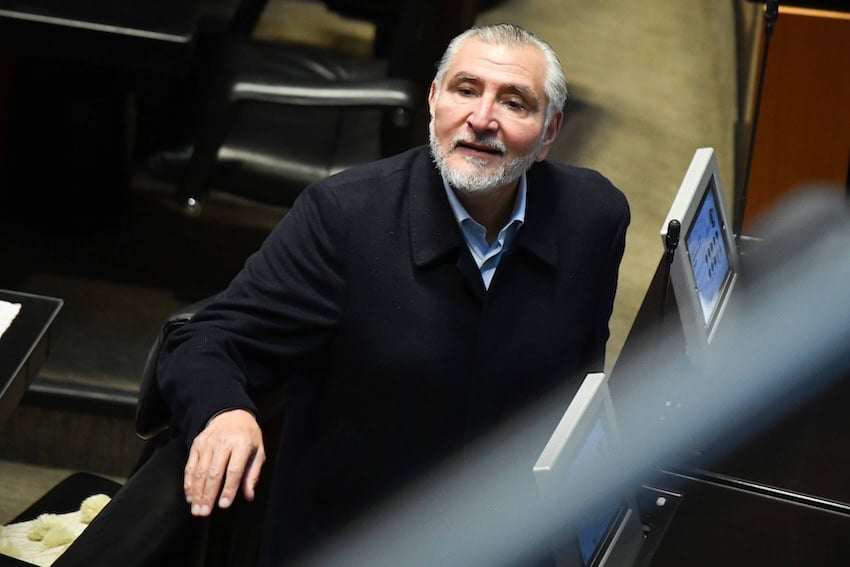
Morena Senator Adán Augusto López came up with the interesting observation that Gertz’s resdignation itself constituted the required “serious cause” to justify a resignation: “If someone holds a position of responsibility and says ‘I am retiring,’ that rises to the level of ‘a serious cause,’ because he is essentially abandoning his post.” (Mario Jasso/Cuartoscuro.com)

However, opposition senators said they were not privy to the resignation letter nor were they permitted to review the document sent to President Sheinbaum by Senate leadership on Wednesday advising her of the upcoming vote.

Afterward, Morena’s caucus leader in the Senate, Adán Augusto López, dismissed the accusations that he had orchestrated Gertz’s ouster, saying “media outlets were letting their imaginations run wild.”  

López did not address the claims that Gertz had violated the Constitution, instead saying the resignation letter itself was reason enough to accept his departure.

“If someone holds a position of responsibility and says ‘I am retiring,’ that rises to the level of ‘a serious cause,’ because he is essentially abandoning his post,” López said.

Gertz’s past controversies

The resignation of the 86-year-old Gertz had been the subject of speculation amid what the news agency Reuters called, “scrutiny of Sheinbaum’s government over security issues,” especially as rumors about Mexico’s World Cup hosting duties made headlines.

Critics also argued that Gertz used his enormous influence to settle personal vendettas and protect alleged business interests.

Earlier this week, El Universal columnist Mario Maldonado attributed the effort to oust Gertz to repeated leaks of sensitive files that implicated former high-ranking government officials and members of the Navy as well as members of former President Andrés Manuel López Obrador’s inner circle.

In 2022, Gertz was heavily criticized for trumping up charges against his in-laws who languished in prison for nearly 22 months. The Supreme Court bluntly rebuked the attorney general while ruling his efforts unconstitutional.

He also tried to lock up 31 academics on charges they improperly received about US $2.5 million in government science funding. The laws at the time allowed such funding, and the money was determined to have been spent properly. Gertz allegedly sought to jail the academics because they had declined to approve his request for formal recognition as a leading academic.

Gertz also came under heavy fire for summarily clearing former Defense Minister Salvador Cienfuegos of drug charges after he had been arrested in Los Angeles in 2020, claiming U.S. authorities had no evidence. Mexico then drew the ire of the U.S. government by releasing the entire case file in violation of a bilateral treaty.

With reports from Reforma, La Jornada, El Universal, Reuters, The Associated Press, El País and Infobae

Editor’s note: An earlier version of this story said that the acceptable causes for an attorney general to resign were established in Article 24 of the Mexican Constitution. They are actually defined in Article 24 of the Law of the Federal Attorney General’s Office. Other conditions related to the attorney general’s responsibilities and terms of resignation are defined in Article 102 of the Constitution. The story has been corrected.

Truckers end blockades after marathon negotiation results in an accord

2
ANTAC AND FNRCM
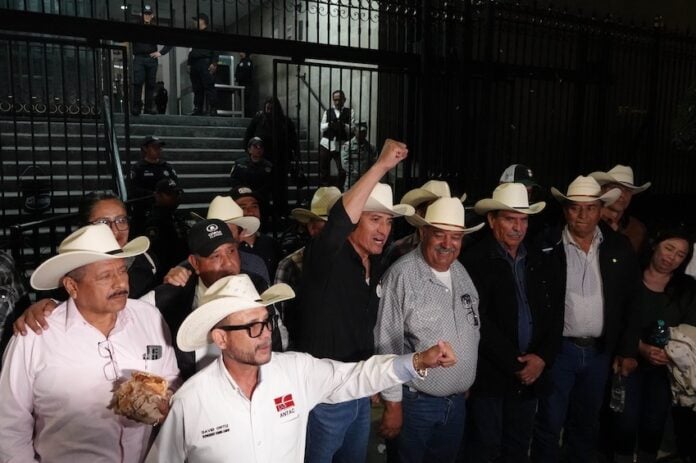
Representatives from ANTAC and FNRCM, the two organizations behind the four days of highway blockages, reached a settlement with the Interior Ministry Thursday evening after an all-day negotiating session. (Galo Cañas/Cuartoscuro.com)

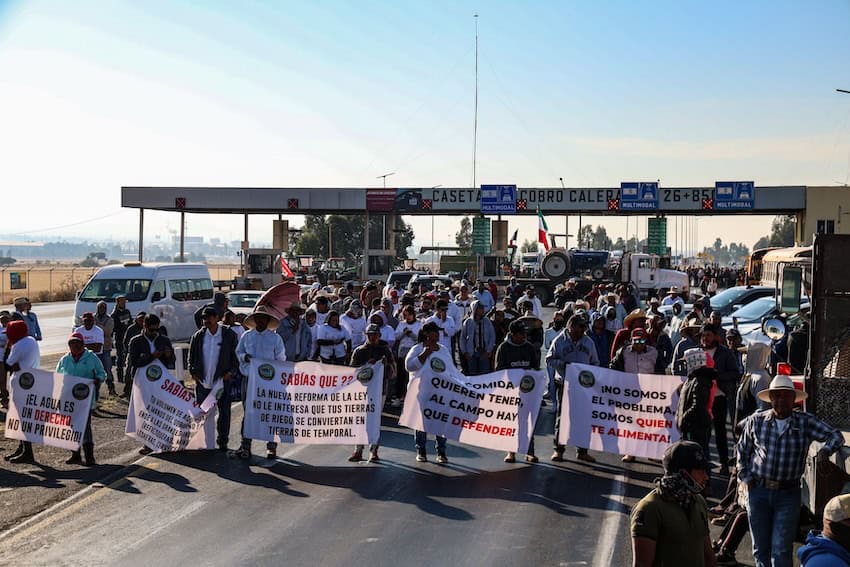
Truckers have agreed to end highway blockades after a marathon negotiating session on Thursday produced preliminary agreement on the security, water and agricultural issues that had led to the protest.

The National Front for the Rescue of Mexican Farmland (FNRCM) and the National Association of Transporters (ANTAC) have begun to lift the blockades that snarled traffic on highways, obstructed access to toll booths and U.S. ports of entry, and brought customs offices to a standstill.

Interior Minister
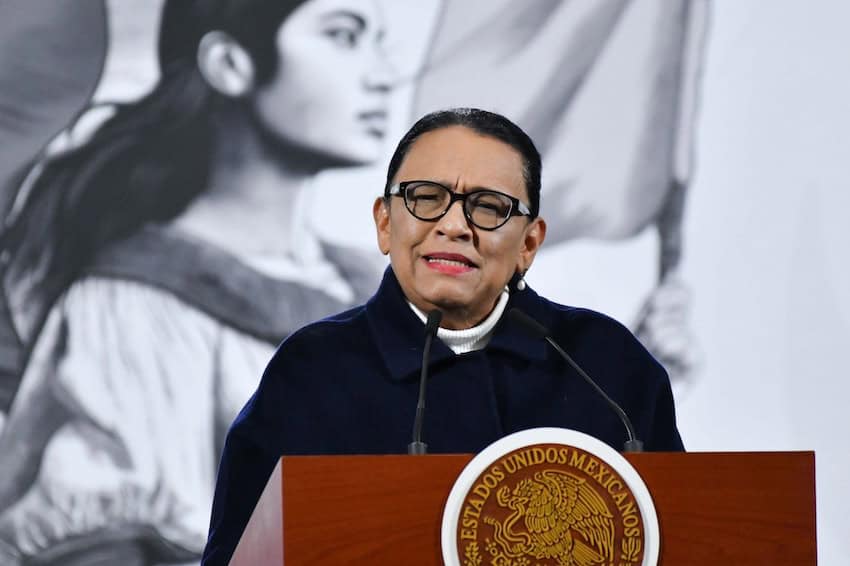
Interior Minister Rosa Icela Rodríguez announced that the government had agreed to address the demands of the producers and transporters by establishing several permanent working groups. (Mario Jasso/Cuartoscuro.com)

After 13 hours of talks, Interior Minister Rosa Icela Rodríguez announced that the government had agreed to address the demands of the producers and transporters by establishing several permanent working groups and to modify proposed reforms to the National Water Law.

Issues to be further resolved in the working groups, in addition to legal restrictions regarding water use, are guaranteed prices and loans for the agricultural sector and security on the nation’s highways.

“We will be following up on addressing the problems outlined by [producers] and transporters, while also delivering the corresponding support directly to each farmer,” Rodríguez said.

ANTAC leader David Estévez celebrated the “positive agreements” and thanked those who participated in the “struggle” while also expressing gratitude toward those who were impacted by the blockades.

Estevez said his group was pleased that the government will set up specialized prosecutors’ offices for highway crimes, saying that previous dependence on state security officials often included harassment and extortion of truckers on remote highways. He said state troopers will no longer deal with highway crime unless they in turn are overseen by the National Guard.

He also praised the government’s agreement to install security cameras on highways and ensure safe rest stops, though he did caution that his organization was willing to block highways again if the working groups don’t function adequately.

FNRCM spokesman Baltazar Valdés highlighted the government’s commitment to releasing outstanding payments for wheat and corn. He also emphasized the importance of reviewing farm loans and establishing guaranteed prices for agricultural products.

Eraclio Rodríguez, the leader of an association of farmers from the state of Sinaloa, said the National Water Commission (Conagua) had consented to amend the water bill, providing for the differentiated treatment for water used for agriculture purposes versus water used for industrial or other purposes. This modification is intended to maintain the principle of prioritizing domestic use of water extracted from wells.

Farmers also insisted that the government ensure that basic grains and oilseeds are excluded from any future review of the USMCA free trade pact.

With reports from La Jornada, El Universal, Milenio and Excelsior

Meet Mexico City’s newest taquera: Dua Lipa

3
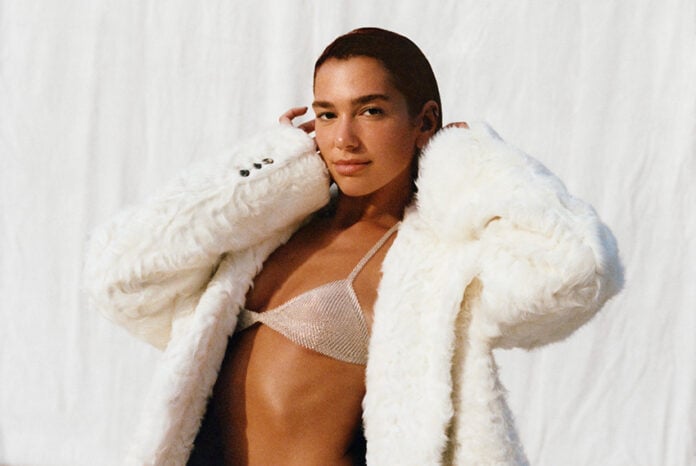
Dua lipa in a white fuzzy coat and shiny bikini top
The British pop star will be in Mexico City starting Dec. 1 to wrap up her Radical Optimism world tour. (Warner Records Press)

Mexico-based fans of British singer Dua Lipa won’t want to miss her taquería in Mexico City, opening for a limited time Dec. 1 to 5.

Warner Music Mexico announced the opening of the British singer’s temporary taco shop, Tacos La Dua, on Wednesday. The pop-up celebrates Dua Lipa’s arrival in Mexico, the last stop on her international Radical Optimism Tour. La Dua, a collaboration with Los Caramelos taquería, will be located at Avenida Michoacán 93 in the trendy neighborhood of La Condesa. The pop-up will feature a special menu in honor of the singer, as well as souvenirs, artist merch and “photo ops,” all accompanied by the singer’s greatest hits.

The menu, dubbed the La Dua special package, costs 249 pesos (US $13) and includes the Radical Optimism Taco (a northern-style caramelo with beef barbacoa, cheese and beans), the Houdini (a crispy pork rind taco) and the María Taco (arranchera steak) along with themed drinks and soup.

Taquería La Dua will be open from noon to midnight, complementing the concert experience, as diners can enjoy tacos before or after the show while still immersed in the Dua Lipa world.

The singer’s other official CDMX pop-up will be a “Book Tasting” featuring cocktails and book discussions at La Americana book store, also in the Condesa neighborhood.

Mexican fans feel a special connection with Dua Lipa as she has publicly expressed her love for Mexico City, a place she has frequently visited. In her newsletter Service 95, the singer has said Mexico City is one of her “favorite places in the world,” while recommending her readers places to see in the capital. 

This will not be Dua Lipa’s first tour in Mexico. In 2022, she performed before 65,000 fans in Mexico City’s Foro Sol, now called Estadio GNP Seguros. This time around, she’ll perform three nights on Dec. 1, 2 and 5 at the same venue, with ticket prices ranging from 829 to 3,880 pesos (US $45 to $211).

With reports from CDMX Secreta

Did a human paint the venerated image of the Virgin of Guadalupe?

18
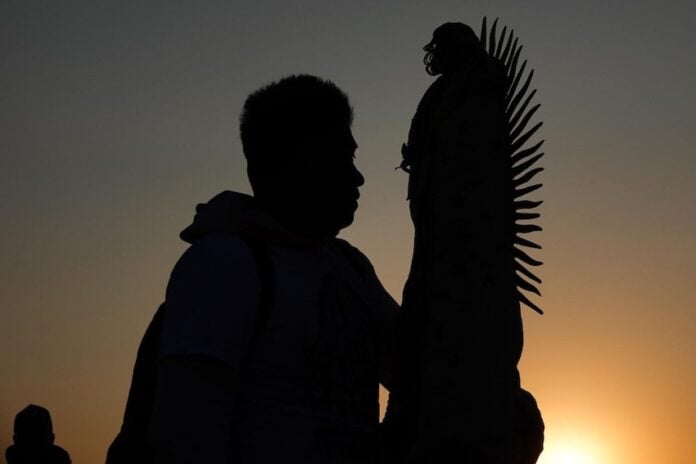
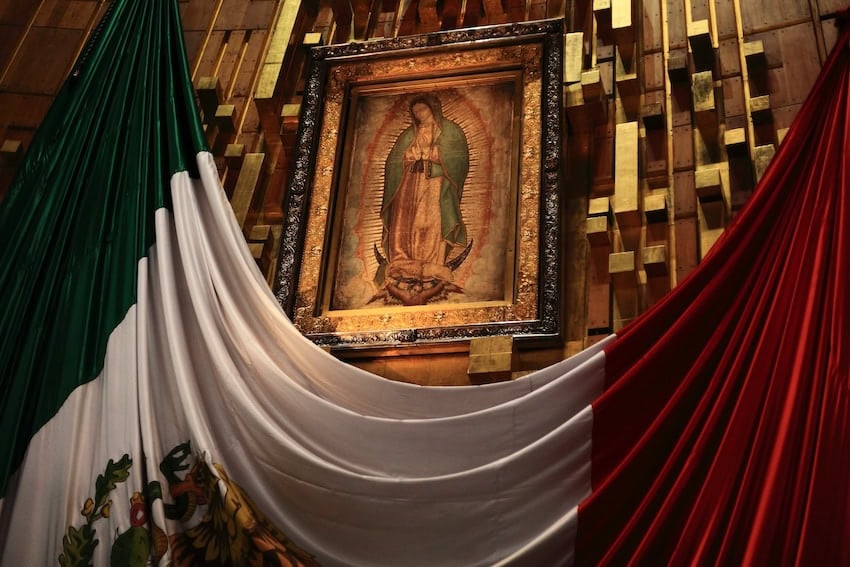
Our Lady of Guadalupe
Evidence suggests that Marco Cipac de Aquino, an indigenous Mexican painter, was the artist behind the image of Our Lady of Guadalupe. (Graciela López/Cuartoscuro)

Every Mexican child raised in a Catholic home knows the story. Early in Mexico’s colonial period, in 1531, Juan Diego, a recently Christianized Indigenous Chichimec man working near Mexico City, had a revelation: The Virgin Mary appeared to him one day while on his way to work. 

Startled by the radiant light before him, he fell on his back and looked up. A voice said to him: “Listen and understand, my youngest son, that nothing should frighten or distress you,” the Virgin Mary told him. “Am I not here, I who am your mother?”

St. Juan Diego’s revelation

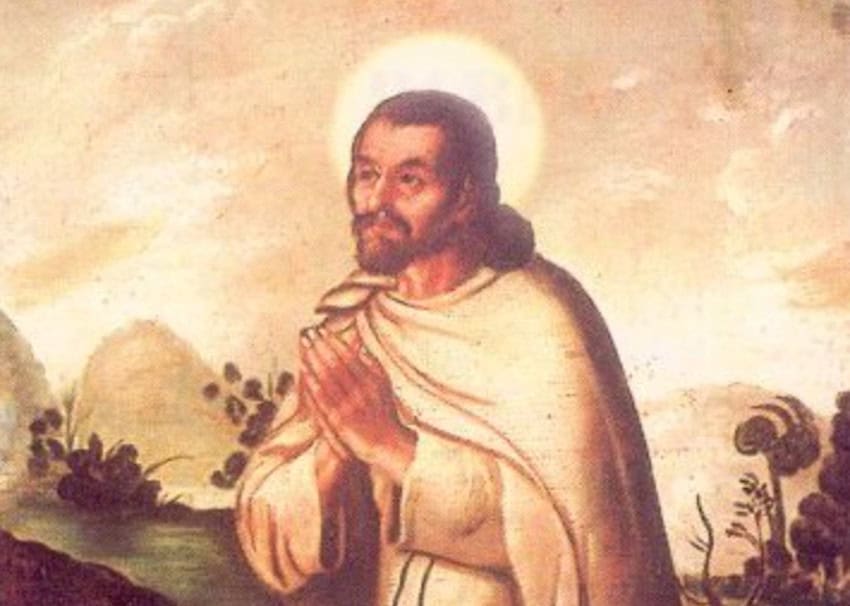
Juan Diego
Juan Diego is said not to be solely a legendary figure. Born with the name Cuauhtlatoatzin, which in Nahuatl means “he who speaks like an eagle,” he was born in Cuautitlán, present-day Cuautitlán Izcalli, on the northwestern border of Mexico City. (Miguel Cabrera, circa 18th Century/Wikimedia Commons)

Distressed by the illness of a beloved uncle, Juan Diego desperately needed to work and couldn’t afford to be late. And so he ran and said nothing about it to anyone. However, Catholic legend has it, the Virgin appeared to him two more times and insisted that he testify about her appearance before the Mexico City diocese and that she wanted the Church to build her a shrine. 

Faced with the disbelief of the Church’s high command in New Spain, around 1531, the bishops there demanded proof of this apparition. Why would the Mother of God appear before a poor Indigenous man, they scoffed?

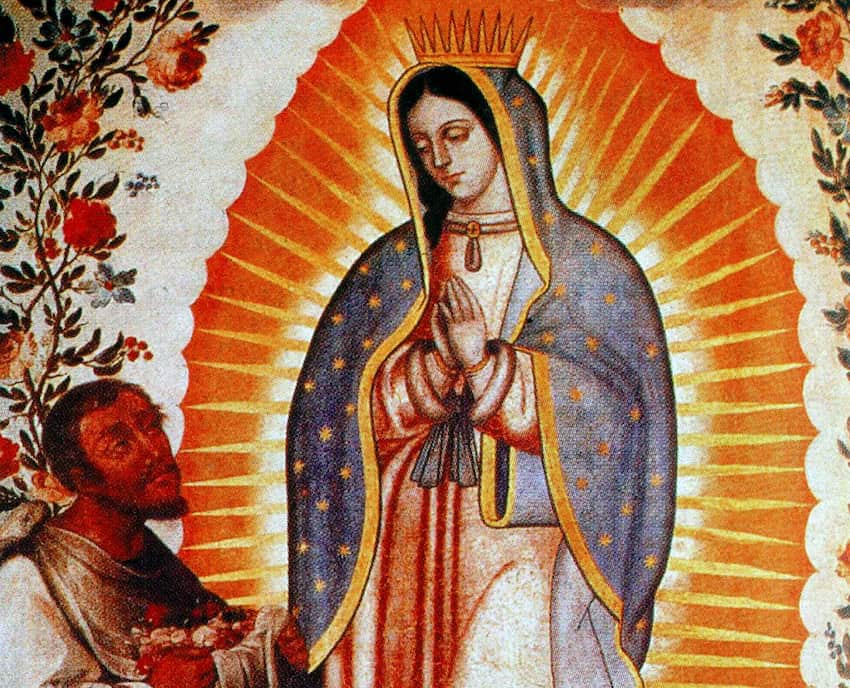
As supposed irrefutable proof, the Virgin Mary then imprinted herself on Juan Diego’s cloak. In the image, she bore Juan Diego’s darker skin tone and wore a black Mexica sash that symbolized pregnancy.

Was this an image of divine creation — as millions of Catholics worldwide believe? And why did some contemporaries of the image’s appearance claim that it was a fake, created by an Indigenous artist? 

Who is the Virgin of Guadalupe, and why is she important in Mexico?

Widely seen as a symbolic heiress to the Indigenous veneration of Tonantzin, the Mexica mother goddess, the Virgin of Guadalupe is one of Catholic Mexico’s most beloved religious figures. She gets four days of celebration each year by the most devout, marking the days on which she supposedly appeared to Juan Diego, who was only made a Catholic saint in 1990. 

What is clear is that this darker-skinned image of the Virgin Mary was an effective colonizing tool during the spiritual conquest of Mexico and Latin America in the 1500s. It is certainly logical that the Catholic friars of New Spain would seek out icons to resonate with the conquered Indigenous population and encourage them to convert, so today, it’s widely accepted that they took the Mexica mother goddess Tonantzin and gave her a Christian makeover as María de Guadalupe.

Tonantzin
Tonantzin is translated from Náhuatl as ‘our Mother,’ expressed in a highly reverential manner. (Wikimedia Commons)

This version of the Virgin Mary had already long existed as a dark-skinned Madonna in many iterations throughout Spain, including in the Spanish town of Guadalupe, where the Monastery of Santa María de Guadalupe was located. Her Catholic feast days also coincided with those of Tonantzin, so the cult easily could remain virtually intact, with only Tonantzin’s name changed to a European one.

The impact of this decision by the 16th-century friars in Mexico was so great that, even 500 years later, some Mexicans think of themselves not as Catholics but as guadalupanos.  After Mecca in Saudi Arabia, the Guadalupe basilica in Mexico City, which contains a shrine dedicated to María de Guadalupe, is one of the world’s most visited, receiving over 12 million visitors annually.

Divine blessing or the work of a human artist? 

As early as 1556, the Franciscan friar Francisco de Bustamante was quoted in Church records as saying that the supposedly miraculous image of the Virgin on Juan Diego’s cloak was a fake wrought by human hands.

According to contemporary historical research, Bustamante criticized the Catholic Church in Mexico for encouraging belief in the Juan Diego story, saying it was encouraging superstitious beliefs among Indigenous Catholics and that the image had been painted by a human. The criticism prompted Mexico City’s Archbishop, Alonzo de Montúfar, to open an inquiry into the matter, at which Bustamante and four witnesses testified that the cloak’s image was painted by human hands, with one witness identifying the artist as “the Indian, Marcos.”

Some researchers believe that this artist may have been a man named Marcos Cipac de Aquino, an Indigenous painter contemporary to the period of the Guadalupe miracle. De Aquino is referred to by the conquistador and chronicler Bernal Díaz de Castillo, who famously wrote “The True History of the Conquest of New Spain.”

The Michelangelo of Mexico

Díaz doesn’t say anywhere that de Aquino painted the Guadalupe image, but if the image on Juan Diego’s cloak was a human creation, de Aquino could be a compelling candidate for its authorship: Díaz referred to him in his writings as “one of three excellent native painters” in the Americas and compared him to the Italian artist Michelangelo.

Virgin of Guadalupe
Every December, millions of pilgrims across Mexico arrive in the capital with offerings, music and folk dance, as a sign of love to the Virgin of Guadalupe. (Esparta Palma/Wikimedia Commons)

In 1981, however, researchers Philip Serna Callahan and Jody Brant Smith examined the Guadalupe image under infrared light and were unable to find any trace of sizing or sketching of the original image underneath the paint, which would have been common if it had been painted by an artist.

The researchers concluded that there was no scientific explanation for how the oldest, original parts of the image got there, or for its long-lasting preservation — one factor that is often cited by contemporary believers as proof of its divine creation. 

Regardless of where the painting comes from, the debate over the cloak remains a lively topic of conversation in Mexico today.

Andrea Fischer contributes to the features desk at Mexico News Daily. She has edited and written for National Geographic en Español and Muy Interesante México, and continues to be an advocate for anything that screams science. Or yoga. Or both.

Why Surrealist refugees fled Europe for Mexico City

27
Leonora Carrington painting
When Nazis labeled Surrealsim "degenerate" before the Second World War, Surrealist artists like Leonora Carrington fled to Mexico. She was one of many artists who made Mexico their home in the mid 20th century. (MoMA)

It’s the early 1940s, and the art world is in trouble: The Nazi regime has officially classified Surrealism — an artistic movement born in 1920s Paris — as “Degenerate Art” and has marked it for destruction. Galleries are closing by the dozen, pieces are being seized from state-owned museums and artists themselves face arrest or worse. Leading figures in the movement, like Max Ernst, are repeatedly harassed by the fascist governments sweeping across Europe.

Those who can, leave — but to where? Circumstances during the war didn’t leave much room for preference. The United States maintained strict immigration quotas — created under the National Origins Act of 1924 — with no special provisions for political refugees. Britain was under siege. 

President Lázaro Cárdenas
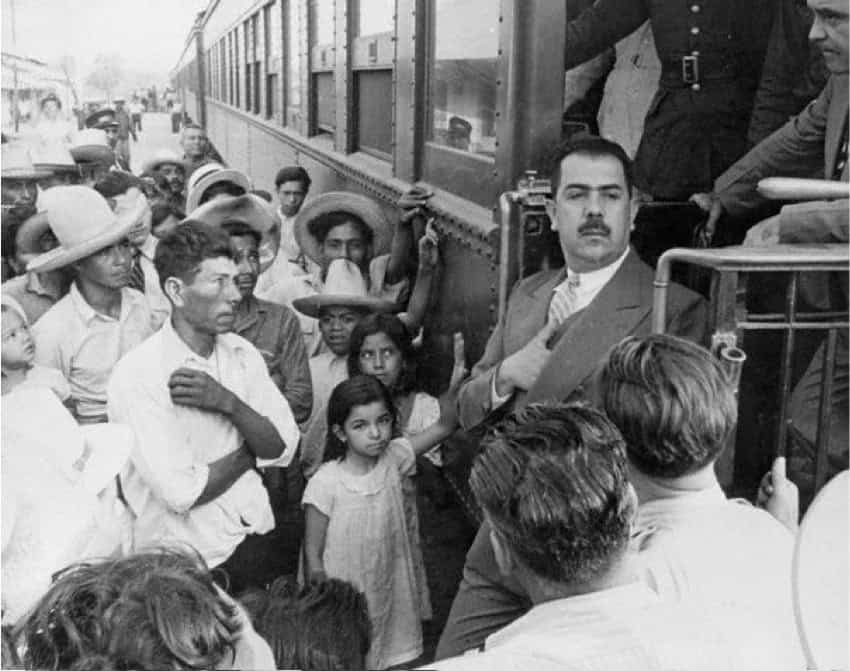
President Lázaro Cárdenas established Mexico as an asylum for artists and those fleeing the Spanish Civil War. (Doralicia Carmona Dávila/Wikimedia Commons)

But one country offered something different: Mexico.

Why Mexico became a refuge for Surrealists

Mexico offered an appealing refuge in three ways. For one, President Lázaro Cárdenas had established an asylum policy during the Spanish Civil War — anyone who could escape Franco’s Spain would be granted entry to Mexico. Also, Mexico’s wartime economic boom had created opportunities for artists to find patronage and exhibition spaces. Finally, Mexico City had established cultural infrastructure that included galleries like Galería de Arte Mexicano, workshops like the Taller de Gráfica Popular and a vibrant artistic community.

Over 20,000 Spanish Republicans arrived by 1940.

When French poet and writer André Breton, a cofounder of the Surrealist movement, visited in 1938, he declared Mexico “the most Surrealist country in the world.” But getting to this promised land would require harrowing journeys that would change both the artists and Mexico City’s artistic landscape forever.

Three dramatic escapes across the Atlantic

Leonora Carrington’s escape reads like a psychological thriller: The young British artist had been living with Max Ernst in southern France when fascist police arrested him. Alone and terrified, Carrington fled to Madrid, triggering a complete mental breakdown. She was committed to a psychiatric hospital, where she endured horrifying treatments that would later influence her surrealist paintings.

Upon her release, Carrington went to Lisbon and connected with Renato Leduc, a Mexican poet and diplomat who offered her a marriage of convenience to escape. Mexican consulate to France Gilberto Bosques — often hailed as “Mexico’s Oskar Schindler” for issuing at least 1,500 life-saving visas to Europeans escaping fascism — granted her entry. Carrington sailed to New York, then finally to Mexico, to start over.

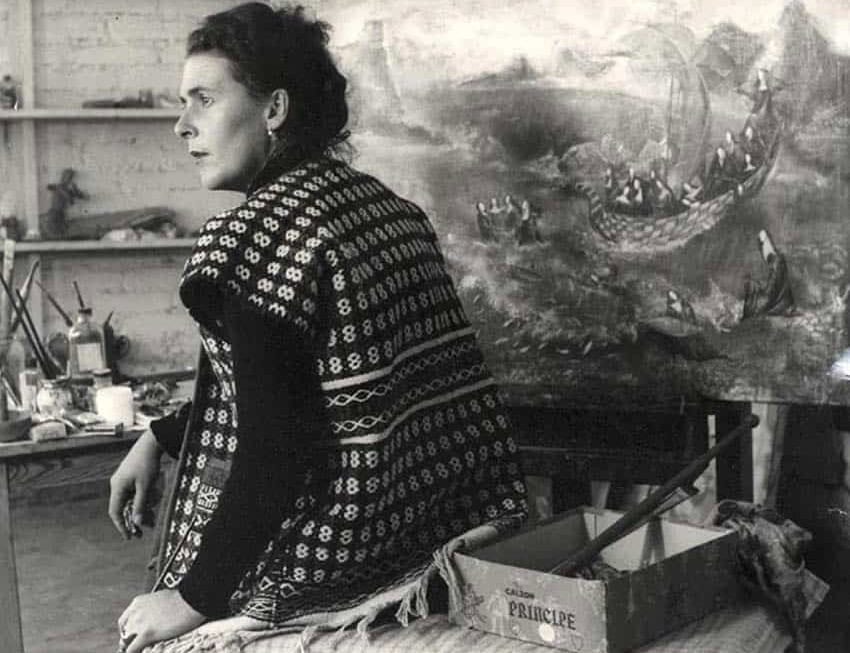
Leonora Carrington
Leonora Carrington, shown here working in 1963, left a lasting influence on art in Mexico. (Cultura UAM)

Spanish artist Remedios Varo’s journey began earlier. After fleeing Franco’s regime in 1936, she and her activist boyfriend, poet Benjamin Péret, found themselves starving in Nazi-threatened Paris, living under constant threat of arrest. 

When France fell, they managed a harrowing escape to Mexico through Marseille, the last open port before Europe’s complete closure.

Austrian painter Wolfgang Paalen and French poet Alice Rahon took a circuitous route through the Pacific Northwest, where Paalen collected Native American artifacts even as they ran for their lives. They arrived in Mexico City together in September 1939, personally invited by Frida Kahlo and Diego Rivera. 

The reception: Mexican artists’ mixed reactions to European refugees

These European creatives arriving in Mexico City entered a complex artistic battlefield. Some welcomed them with open arms; others gazed upon these foreign intellectuals with deep suspicion.

Inés Amor, director of the Galería de Arte Mexicano, became the refugees’ most powerful ally. Her gallery had been founded in 1935 as Mexico City’s first contemporary art space and was renowned as the country’s most influential venue. Amor understood that these refugees brought international connections and artistic innovations that could elevate Mexican art on a global scale, and provided exhibition opportunities – she became Leonora Carrington’s primary dealer in 1956. 

On the opposite side of the spectrum was Frida Kahlo, who famously and fiercely resented the influx of fresh artistic talent. Despite hosting André Breton and other Surrealists in her famous Casa Azul, she had much to say when they weren’t listening. 

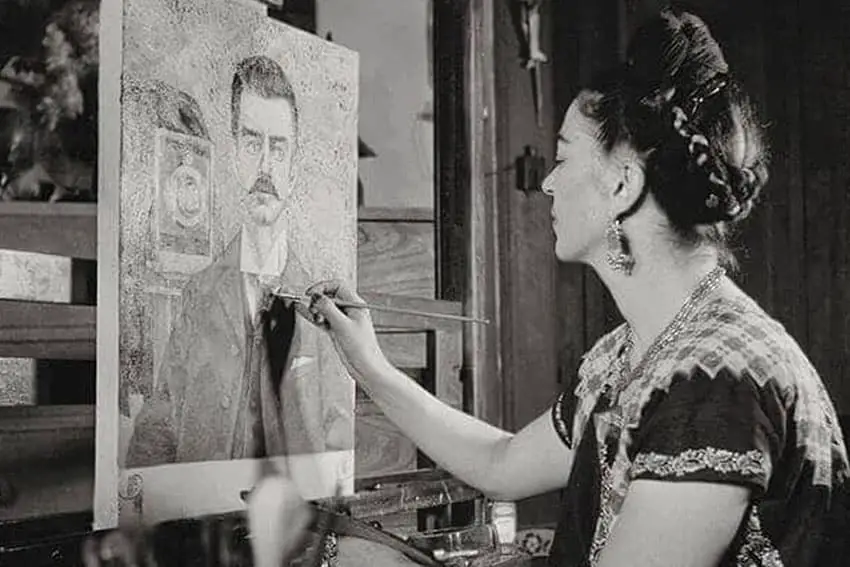
Black and white photo of Frida Kahlo looking at a painting she's working on of a portrait of her father, Guillermo Kahlo.
Mexican artist Frida Kahlo resented the influx of Surrealists into Mexico, even though her work was undoubtedly part of the same movement (fridakahlo.org)

Letters to photographer Nickolas Muray are fueled with anger, including statements like “They are so damn ‘intellectual’ and rotten that I can’t stand them anymore.” She called Breton “an old cockroach” and declared she’d rather “sit on the floor in the market of Toluca and sell tortillas than have anything to do with those ‘artistic’ [expletives] of Paris.”

Kahlo’s resistance wasn’t just personal. She also had strong feelings about being categorized within the confines of a European movement.“’I never knew I was a Surrealist until André Breton came to Mexico and told me I was one,” she reportedly told her dealer in 1938.

A creative explosion: Surrealism meets Mexican culture

The deeper conflict lay between Mexico’s nationalist Muralists and the international Surrealists. The Muralists were creating a new Mexican identity for a post-Revolution Mexico, exactly at a time when nationalist themes were downright traumatic for the Surrealists. Mexican muralists focused deeply on portraying the realities of Mexico’s pre- and post-colonial history and elevating its Indigenous heritage. 

Surrealists, by contrast, wanted to face anything but reality – after all, they had just fled a real-life nightmare and used dream interpretation and mental imagery to escape those horrors. Meanwhile, as Marxism split into factions, the groups supported different sides and the Surrealist community faced marginalization.

Despite the tensions, something extraordinary happened when European Surrealism collided with Mexican culture — the art world transformed. 

Exposición Internacional del surrealismo

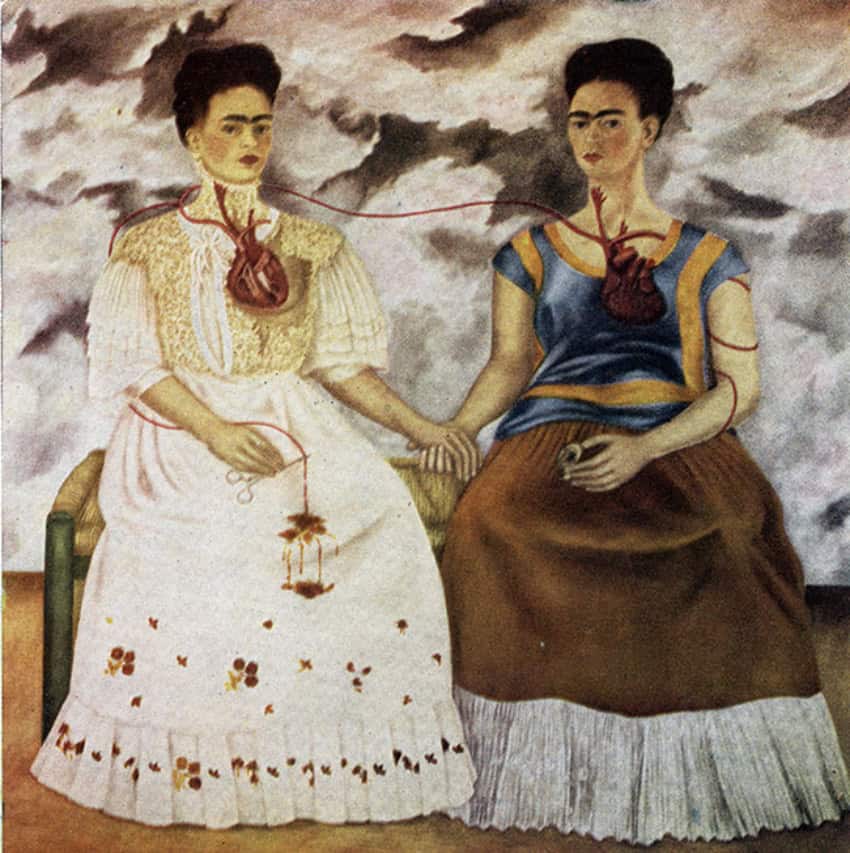
Wolfgang Paalen organized the “Exposición Internacional del surrealismo” at Galería de Arte Mexicano in January 1940. All the greats of the time were on the walls: Dalí, Ernst, Rivera, Varo, Manuel Álvarez Bravo, Jean Arp, René Magritte and Meret Oppenheim. The show unveiled Frida Kahlo’s monumental “Las dos Fridas,” a quintessentially Surrealist painting (despite her resistance to the label).  

"Las Dos Fridas"
“Las Dos Fridas,” or “The Two Fridas,” was a landmark work of Mexican Surrealism. (Public Domain)

What made this show stand out was Paalen’s decision to display the contemporary works alongside pre-Columbian artifacts from Rivera’s extensive collection. This bold act bridged the gap—metaphorically and conversationally—between Mexican and European artists.

Women also faced a whole new world of artistic freedom. In Europe, female Surrealists had been largely confined to supporting roles. Mexico offered them the creative independence they’d never before experienced. Varo, Carrington, and Hungarian-born photographer Kati Horna formed an intense friendship based on shared fascination with Indigenous cosmologies, alchemy, metaphysics and the tarot. Artist Alice Rahon created ethereal paintings inspired by ancient Mexican codices. Varo developed her signature style that blended science and mysticism. Carrington began incorporating Mexican spiritual traditions and Celtic mythology into her fantastical paintings.

The legacy: how Surrealist refugees transformed Mexico City’s art scene

The arrival in Mexico of Surrealist refugees helped turn the nation’s capital into one of the most dynamic and cosmopolitan cultural centers in the Americas during the 1940s.

The transformation began in the neighborhoods where they settled: Roma became the epicenter of international artistic life, flourishing with salons, galleries and the bohemian culture that defines the Mexico City neighborhood to this day. Remedios Varo, her husband and Horna lived and frequented cafes near Orizaba. Carrington lived on Calle Chihuahua 194 for 60 years; her former home is now a research center housing her own personal archive. 

Today, Roma is home to dozens of cutting-edge galleries like the Olivia Foundation; the bordering Condesa neighborhood hosts international spaces like Mexico City’s outpost of the König Galerie. According to Mexican artist and Casa Wabi founder Bosco Sodi, the capital’s gallery scene is “buzzing with energy reminiscent of Berlin two decades ago.”

Nearly eight decades later, Mexico City stays true to its roots as an artistic haven for refugees. Since 2007, the capital has been an active member of the International Cities of Refuge Network (ICORN) through Casa Refugio Citlaltépetl, where endangered creatives find the same outlet that those wartime refugees once received. And so Mexico City continues a tradition established in the 1940s, proving that some cities are destined to be refuges where art and safety intersect.

Bethany Platanella is a travel planner and lifestyle writer based in Mexico City. She lives for the dopamine hit that comes directly after booking a plane ticket, exploring local markets, practicing yoga and munching on fresh tortillas. Sign up to receive her Sunday Love Letters to your inbox, peruse her blog or follow her on Instagram.

Mega-blockades continue into their fourth day as their effects start to hurt

5
trucks blocking highway
Farmers protesting a proposed water law and truckers demanding better highway security have joined forces to disrupt highway traffic across the country. (José Betanzos Zarate / Cuartoscuro.com)

The mega-blockades shutting down highways and hindering truck access to U.S. ports of entry extended into a fourth day on Thursday, triggering significant delays in the transportation of goods, generating ripple effects throughout the supply chain and hampering freight deliveries, food distribution and cross-border trade.

At the same time, a crack of light came through the darkness as negotiations with the Mexican government were showing early signs of bearing fruit. The Interior Ministry was hosting talks with farmers Thursday, a day after meetings between protesters and lawmakers on Wednesday showed promise. 

toll booth blockers
Agricultural workers on foot have helped their more mobile trucker brethren in their efforts to shut down transportation in Mexico by occupying toll booths. (Adolfo Vladimir / Cuartoscuro.com)

The blockades were initiated by the ANTAC truckers association and the FNRCM farmers association (the National Front for the Rescue of Mexican Farmland). ANTAC is demanding better security on Mexico’s roads while the FNRCM is seeking fairer conditions for the agricultural sector and voicing opposition to a proposed water law.

Baltazar Valdez, a delegate of a farmers association in the state of Sinaloa, told the newspaper Reforma he saw determination among lawmakers to address farmers’ demands regarding water. 

Deputy Ricardo Monreal, the leader of the ruling Morena party’s caucus in the Chamber of Deputies, agreed to establish a permanent working group to address farmers’ concerns, while Valdez said a draft proposal is already in the works.

“We have a proposal that includes provisions for protecting the rights of agricultural producers,” Valdez said before he and others resumed talks with Interior Ministry Undersecretary César Yáñez and Agriculture Minister Julio Berdegué on Thursday.

The alliance between farmers and transporters took shape earlier this month, with both sectors arguing that they face similar structural problems, including a lack of security, pressures from monopolies and criminal groups and unsustainable operating costs.

Organizers defend the need for the blockages that affect not only the nation’s economy but also the daily life of Mexican residents by accusing the government of having ignored the demands of farmers and truckers 

President Claudia Sheinbaum has dismissed that rationale. ​​“There is no reason for these protests because there is a permanent working group in place,” Sheinbaum said on Tuesday. “Dialogue has been ongoing.”

The toll of the blockages

Full and partial road closures were reported in at least 22 states on Wednesday, with more than 50 locations affected, according to the newspaper Reforma.

Although the roadblocks focused on commercial traffic, blockades extended to highway toll plazas and federal roads in the western state of Michoacán and elsewhere on Thursday.

‘One water, one law’: Citizen movement challenges Mexico’s new water bill

The Mexico-Guadalajara highway was shut down near four toll booths in Michoacán and there were intermittent closures reported by federal operators on the Cuernavaca–Acapulco highway, as well as the Mexico–Querétaro highway.

The roadblocks have triggered significant delays in the transportation of goods, generating ripple effects throughout the supply chain. Freight deliveries, food distribution and cross-border trade have suffered as a result.

The protest has caused accumulated losses of between 3 billion and 6 billion pesos (US $163 million to $327 million), according to the Confederation of National Chambers of Commerce, Services and Tourism (Concanaco-Servytur).

“This is a prudent estimate that seeks to quantify the economic damage while a negotiated solution is being developed,” the Confederation stated, citing public reports from authorities and business organizations in 17 states.

The National Confederation of Mexican Transporters (Conatram) estimates daily losses in excess of 100 million pesos (US $5.5 million), including fuel waste and contractual penalties for missed delivery deadlines.

Companies have begun to reroute shipments, postpone travel and assess operational risks, while logistics providers have been forced to produce contingency plans to minimize the impact.

With reports from Reforma, El Universal, La Jornada, El Economista and KTSM News

Will Sheinbaum meet Trump at next week’s World Cup draw? Thursday’s mañanera recapped

1
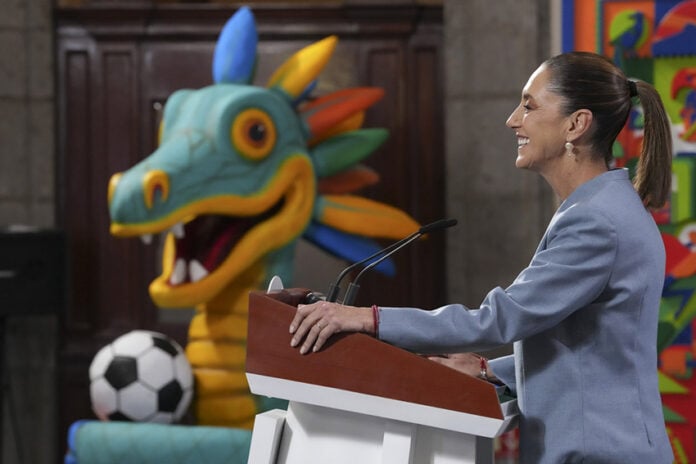
Sheinbaum at a press conference podium in front of a cartoon dragon or maybe quetzalcoatl with a soccer ball
Sheinbaum touched on a rumor about the attorney general's resignation and a possible trip to Washington for the World Cup draw at her Thursday morning press conference. (Presidencia)

At her Thursday morning press conference, President Claudia Sheinbaum fielded questions about the future of the federal attorney general and a possible meeting next week with U.S. President Donald Trump.

Among other remarks, she acknowledged that two federal agents had disappeared in the state of Jalisco.

Is Mexico’s attorney general about to resign?

Amid speculation that the resignation of Alejandro Gertz Manero as federal attorney general is imminent, a reporter asked Sheinbaum whether Gertz had notified her of his intention to leave the position.

“Up until now, he hasn’t said that to me,” the president responded.

Sheinbaum acknowledged that she had received “a document from the Senate,” which is apparently related to the tenure of Gertz, an 86-year-old former lawmaker and federal security minister who became attorney general at the start of Andrés Manuel López Obrador’s presidency in 2018.

The president said she is “analyzing” the document and will disclose it in due course.

Mexico Attorney General Alejandro Gertz
The president promised Thursday that she would soon share more information on Attorney General Alejandro Gertz’s rumored resignation. (Andrea Murcia/Cuartoscuro)

“Tomorrow I’ll be able to inform you,” she said.

Asked whether the document was a resignation letter, Sheinbaum responded:

“I prefer to analyze it. What I’m reporting is that I received a letter from the Senate of the Republic. I am analyzing it with the [government] lawyers … and we’ll inform you tomorrow.”

Joaquín López-Dóriga, a prominent journalist in Mexico, wrote on X on Thursday that it is yet to be decided whether Gertz will resign or request leave. For years there has been speculation about the octogenarian’s health, but Interior Minister Rosa Icela Rodríguez said in June that the attorney general is in “perfect condition.”

In a column published in the El Universal newspaper on Wednesday, journalist Carlos Loret de Mola wrote that just over a month ago there was “an attempt” by the National Palace — the seat of executive power and Sheinbaum’s residence — to replace Gertz.

“The intention was to place someone from President Sheinbaum’s inner circle at the head of the Attorney General’s Office [FGR], with the aim of completely subjugating the operation of the FGR to … the current government,” he wrote.

There appears to be two main candidates to replace Gertz at the helm of the (ostensibly autonomous) FGR: former Supreme Court chief justice Arturo Zaldívar, general coordinator of policy and government in the Sheinbaum administration, and Ernestina Godoy, the president’s top legal adviser.

On Thursday morning, Sheinbaum said that Gertz has done “good work” as attorney general, and noted that “we’ve coordinated on many issues.”

Sheinbaum appears likely to join Trump, Carney at World Cup draw 

During a World Cup-focused mañanera, Sheinbaum told reporters that she is considering traveling to the United States next week for the 2026 FIFA World Cup final draw, which will take place in Washington D.C. on Friday Dec. 5.

“We’re looking at whether it’s confirmed that President Trump is going, that the prime minister of Canada is going, and depending on that, I would attend the draw,” she said.

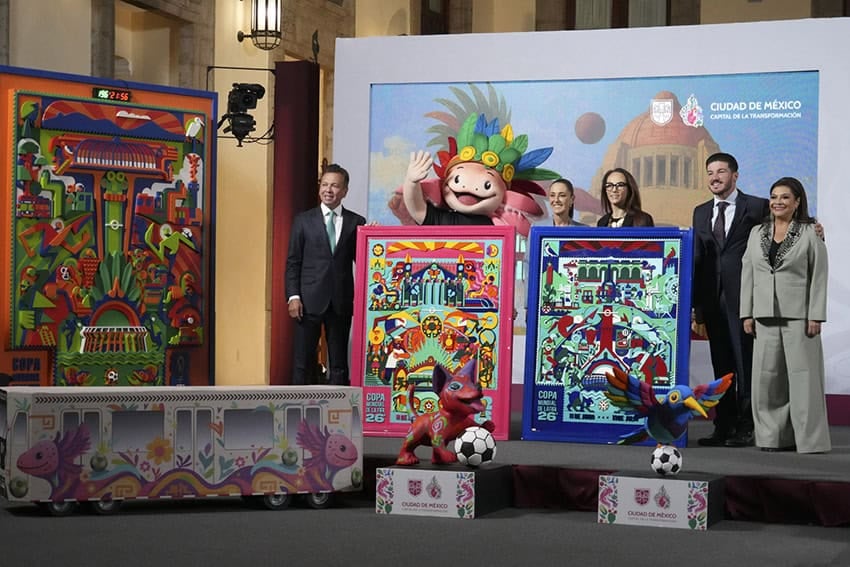
Government officials stand on a stage next to colorful World Cup posters
Jalisco Governor Pablo Lemus, Nuevo León Governor Samuel García and Mexico City Mayor Clara Brugada presented the official posters of Mexico’s three World Cup host cities — Guadalajara, Monterrey and Mexico City — as part of Thursday’s presidential presser. (Presidencia)

It appears certain that Trump and Canadian Prime Minister Mark Carney will be at the draw, which will decide which countries will play each other in the group stage of the 48-team tournament that will be co-hosted by the United States, Mexico and Canada.

“I’ll be participating alongside President Trump … and the FIFA president,” Carney said on Wednesday.

Asked whether she would seek a meeting with Trump if she travels to the U.S. next week, Sheinbaum first stressed that she has not yet decided whether she will make the trip.

She said that if she does decide to go, she and her government colleagues would look at the “possibility of a meeting” with the U.S. president.

Sheinbaum has not yet met face to face with Trump, although the two leaders have spoken on the telephone on numerous occasions.

Trade and security would likely be the main focuses of a bilateral meeting between the two presidents. The Trump administration has imposed tariffs on a range of imports from Mexico this year, and the Mexican government has been lobbying U.S. officials for months as it seeks to achieve better trading conditions with its largest trade partner.

Sheinbaum declines to comment on the disappearance of federal agents in Jalisco

Asked about the disappearance of two federal Security Ministry agents in Jalisco, Sheinbaum said that Security Minister Omar García Harfuch would report on the matter.

“It’s a delicate issue and I asked him to report,” she said.

Asked what the missing agents were investigating in Jalisco, Sheinbaum responded:

“It’s important for the minister himself to say. They are officers of the Ministry of Security and Citizen Protection [SSPC] who were doing their jobs. The Security Cabinet can provide the details.”

In a statement issued on Wednesday, the SSPC announced the disappearance of two agents who were “carrying out intelligence and field investigation work for the prevention of crime and the dismantling of criminal cells in the state of Jalisco,” home to the powerful Jalisco New Generation Cartel.

The ministry said that communication with the agents was lost on Tuesday while they were traveling to Guadalajara in an “official vehicle.”

It said that the vehicle was later found abandoned in the municipality of Zapopan, located in the metropolitan area of Guadalajara, the capital of Jalisco.

The SSPC said that it was in “permanent contact” with authorities in Jalisco and that it was working with the Mexican Army, Navy and National Guard in order to take “all necessary actions to locate our colleagues.”

By Mexico News Daily chief staff writer Peter Davies (peter.davies@mexiconewsdaily.com)
As Mexico’s construction sector declines, these states are bucking the trend with positive results

0
Calzada Flotante
Public works projects such as the Calzada Flotante (Floating Causeway) have kept Mexico City ahead of the curve as most of the country is suffering through a down period in the construction sector. (Rogelio Morales/Cuartoscuro.com)

While Mexico’s construction sector has seen better days, with 22 of the country’s 31 states seeing annualized declines in the value of construction output, a handful of states have managed to buck the trend, with Baja California Sur, Sonora and Guanajuato leading the way.

México state, Nuevo León, Jalisco, Guerrero, Tamaulipas and Tlaxcala have also exhibited growth in the construction sector, as has Mexico City, according to the latest data released by the government.

Work on Mexico-Pachuca train line.
A new train line is under construction connecting Mexico City with Pachuca in Hidalgo, and later with Querétaro and San Luis Potosí. (Presidencia/via Cuartoscuro.com)

Driven by tourism and the real estate sector, Baja California Sur posted 26.9% growth through the first nine months. The newspaper El Economista reported that hotels, vacation homes and services in the resort cities of Los Cabos and La Paz are driving urban and service construction.

Thanks to a combination of energy and industry, Sonora experienced a 19.7% increase in the value of production through September, while Guanajuato benefited from the dynamism of its automotive and auto parts industries, as well as construction of warehouses, industrial parks and associated road works to post 17% annualized growth in September.

Citing Héctor Magaña, an economist with experience in Mexico’s Finance Ministry, El Economista attributed the success of these three states to a similar bottom line: “private investment anchored in activities that currently have clear demand.”

Three of the other entities demonstrating positive results — Nuevo León, Jalisco and Mexico City — are getting a boost from ongoing preparations for the 2026 World Cup tournament. As co-host of the global soccer tournament, Mexico will stage 13 games in three cities — Monterrey (the Nuevo León state capital), Guadalajara (the Jalisco state capital) and Mexico City.

“These international commitments have helped to maintain the dynamism in construction,” Kristobal Meléndez, a financial analyst with the Center for Economic and Budgetary Research, told El Economista. “Though it is hardly a boom, it is a favorable trend compared to the rest of the country.”

Stadium renovations and upgrades to surrounding areas, remodeling of hotels and businesses, as well as road improvements helped output grow by 7.9% in Mexico City, 5.5% in Nuevo León and 3.7% in Jalisco.

As for the 22 states that were in the red, Magaña cited a slow start to bidding processes and investment schedules for public works projects, leading to fewer construction projects in the first part of the year.

At the same time, the conclusion of the government’s mega-projects in southeastern Mexico last year contributed to the downturn in several states, including Quintana Roo (–65.8%), Campeche (–62.7%), Tabasco (–61.1%) and Oaxaca (–53.1%)

Stagnation in the industry is a concern, Magaña said, “because construction is a fast engine of employment and local spending. When construction slows down, bricklayers and related trades suffer, but so do the transport of materials, hardware stores and services around each project.”

With reports from El Economista and Tribuna de México

Arrest warrant issued for Raúl Rocha, Miss Universe co-owner and president

4
Raúl Rocha
Raúl Rocha's criminal organization is alleged to be responsible for supplying weapons to the Gulf Cartel and the Veracruz Shadow Group. (Edgar Negrete Lira/Cuartoscuro.com)

The troubled 2026 edition of the Miss Universe beauty pageant has descended further into scandal with the announcement that Mexican businessman Raúl Rocha Cantú, co-owner and president of the Miss Universe organization, is under investigation for alleged organized crime offenses related to drug trafficking, arms trafficking and fuel theft.

The Attorney General’s Office (FGR) said on Wednesday that a federal judge had issued an arrest warrant against Rocha and 12 other unidentified people as part of the probe. The FGR has charged Rocha as part of an alleged network operating between Guatemala and Mexico.

Rocha contends that the arrest warrant doesn’t exist. “It is completely false that I have an arrest warrant,” he told the newspaper El País.

But according to local media, the arrest warrant was issued on Sept. 15 in the state of Querétaro. The investigation began on Nov. 29, 2024, following an anonymous tip that accused Rocha and a network of connections of trafficking weapons and drugs from  Mexico’s southern border. 

The network, allegedly run and financed by Rocha, is also involved in fuel smuggling (known in Mexico as huachicoleo), supplying several gas stations with clandestine hydrocarbons in Mexico. The FGR has said his criminal organization smuggled illegal fuel in boats along the Usumacinta River, and then transported it in tanker trucks from Chiapas and Tabasco to Querétaro.

Rocha’s criminal organization is also alleged to be responsible for supplying weapons to the Gulf Cartel and the Veracruz Shadow Group.

Tabasqueña Fátima Bosch wins Miss Universe after pageant bullying episode

Though Rocha says there is no arrest warrant, prominent television journalist Carlos Loret de Mola reported that Rocha requested and received permission to be a protected witness in the investigation of the trafficking network. 

As co-owner of the Miss Universe Organization (once the property of Donald Trump), Rocha’s legal woes add fuel to the growing suspicion that the crowning of Fátima Bosch, from the Mexican state of Tabasco, as Miss Universe 2025 was not entirely on the up and up. Though her victory, coming days after she was verbally abused by a high-ranking pageant official, was at first seen as a fairy-tail ending, her father’s relationship with Rocha has cast a cloud over her triumph. 

Bosch is the daughter of Bernardo Bosch, a high-ranking official at state-owned Pemex, which has confirmed that it holds two multi-million-dollar contracts with Rocha. While Rocha, who also serves as Mexico’s Honorary Consul in Guatemala, has denied any collusion to rig the Miss Universe victory, he has acknowledged a multi-million dollar business relationship with Pemex.

Originally from the northern city of Monterrey, Nuevo León, Rocha purchased 50% of the Miss Universe Organization in October 2023, in a transaction valued at US $16 million. With the purchase, he became co-owner and president of the Miss Universe Organization internationally.

 With reports from El Universal, Latinus, El País and El Imparcial