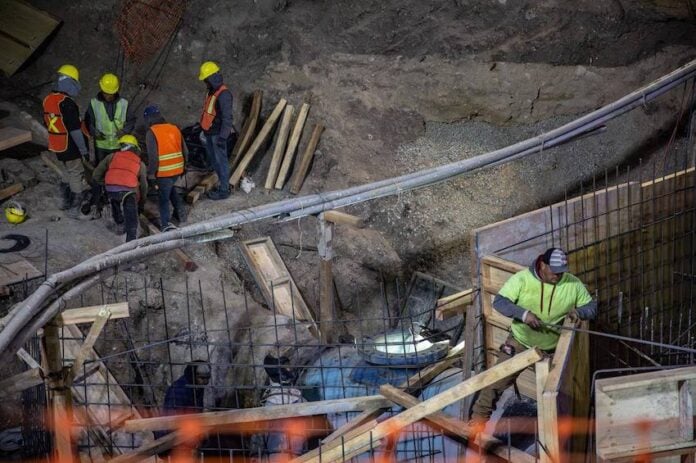
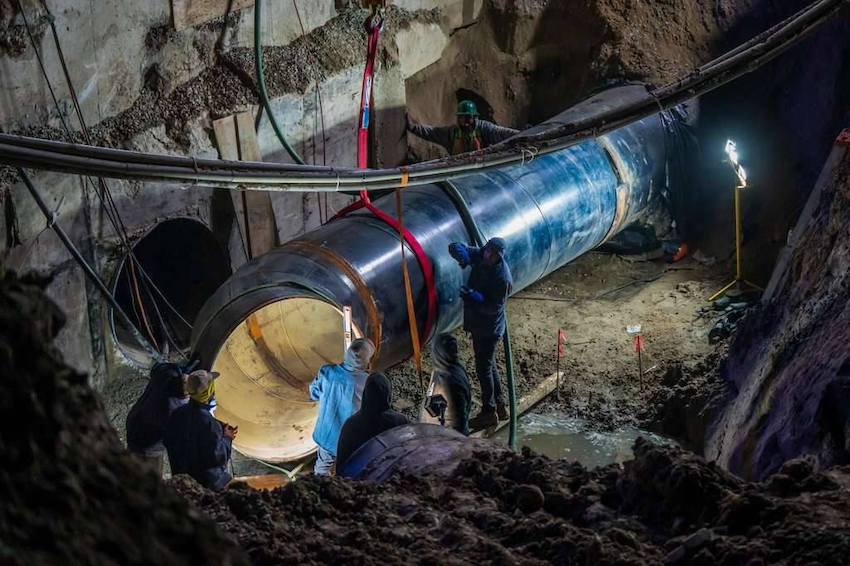
Obsolete and poorly placed pipelines presented challenges for the repair work to the water system serving Tijuana and Rosarito Beach. (Comisión Estatal de Servicios Públicos de Tijuana/Facebook)
Drinking water has been steadily returning to Tijuana and Playas de Rosarito, Baja California, as of last Sunday, after several days of a major outage.
The shortage affected approximately 691 neighborhoods in Tijuana and Playas de Rosarito due to interconnection and rehabilitation work on the Florido-Aguaje Aqueduct, a key infrastructure component that supplies water to more than 1.3 million residents in the region.
The work that cut off water in 691 neighborhoods was for interconnection and rehabilitation of the Florido-Aguaje Aqueduct, a key infrastructure component that supplies water to more than 1.3 million residents in the Tijuana-Rosarito region of Baja California. (Comisión Estatal de Servicios Públicos de Tijuana/Facebook)
“Since Sunday, we’ve been re-establishing service to all the neighborhoods affected,” said Jesús García Castro, head of the Tijuana State Public Services Commission (Cespt). “Everyone should be back online by early this week.”
Water supply was gradually restored starting at 6 p.m. on Sunday, with authorities warning that it would take up to 36 hours for full restoration. That same day, Cespt reported that water service had been restored to over 300 neighborhoods in Tijuana.
On Tuesday, Cespt reported that 5% of the affected areas were still limited to intermittent water flow, marking a week since the outage.
The president of the Downtown Merchants Association, Guillermo Díaz Orozco, told the newspaper El Sol de Tijuana that hotels and restaurants without storage tanks have been the most affected, with estimated economic losses of up to 15%.
Households have also been affected, as money that was destined for food and other goods had to be diverted to buying water.
“Our routine is disrupted,” Ana García, a resident in one of the affected neighborhoods, told El Sol de Tijuana. “We avoid cooking to prevent creating a mess, and this also impacts our finances, since we have to eat out. We can’t maintain proper hygiene.”
According to authorities, work on the Florido-Aguaje Aqueduct took some 86 hours. The tasks included replacing pipe sections, repairing leaks and upgrading infrastructure to improve system efficiency and reduce future failures.
García said that the renovation work was unexpectedly delayed by the need to unearth an old storm drain used more than 70 years ago as irrigation for former agricultural areas. Another reason was that houses in the area are located almost on top of the aqueduct.
That renovation work was scheduled to be completed on Saturday morning, but was extended until Sunday evening.
Authorities have asked affected residents to continue reporting water shortages. “We want to thank everyone for their patience and we want to apologize for the delays,” García said.
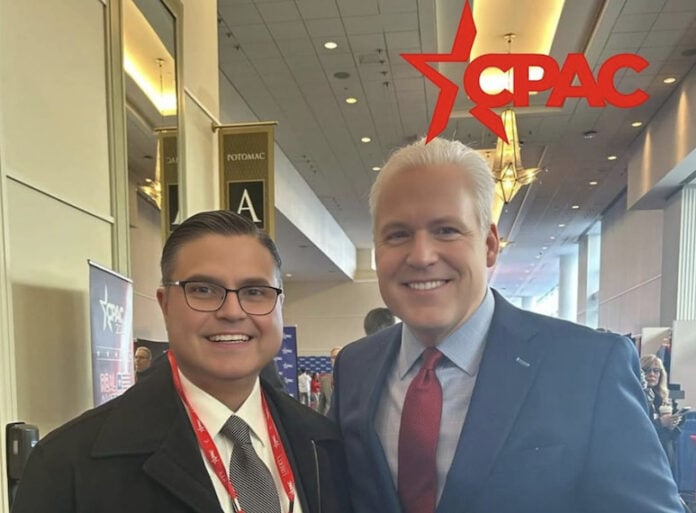
Leader of México Republicano Juan Iván Peña Nader poses for a photo with Matt Schlapp at last year's CPAC. (Instagram)
Mexico’s political right is gearing up for the Conservative Political Action Conference (CPAC) in February, where fledgling parties hope to garner more support from the United States.
This year, CPAC and the organization México Republicano (Republican Mexico) are holding a summit entitled “Mexico Facing the Fentanyl Crisis and Narcoterrorism” on Feb. 5 and 6,with the hopes of attracting a large audience of Mexican and U.S. politicians.
The group has sent invitations to U.S. government officials, including Secretary of Homeland Security Kristi Noem, Attorney General Pam Bondi and Secretary of State Marco Rubio, among others.
CPAC was founded in the United States five decades ago and rose to greater prominence in the 2010s when Donald Trump gave a speech that helped launch his political career.
The conference brings together right-wing ideologues and has attracted several Latin American and European far-right political attendees in the past, such as Argentine President Javier Milei and Italian Prime Minister Giorgia Meloni. Its influence in Mexico, while growing, remains confined to a small circle of right-wing voices rather than a broader movement.
CPAC is held annually in February in the United States, in addition to traveling conferences hosted in countries such as Japan, Australia, Argentina, Mexico and this year, Colombia. (CPAC)
Representatives from Mexico’s PRI and PAN parties have confirmed their attendance, alongside former governors from northern Mexico, federal and state legislators and leaders of conservative political parties and civil society organizations.
The conference is taking place at a defining moment for the U.S.-Mexico relationship, given the United States’ recent intervention in Venezuela and the upcoming renegotiation of the USMCA free trade agreement.
Is México Republicano an official party in Mexico?
México Republicano, a far-right organization that openly promotes Trumpist ideology, has been working to become a formally recognized political party since 2023.
Its membership has long been a close supporter of CPAC, and, in November, the group received CPAC’s endorsement during the Circle Retreat and Gala CPAC 2025 at Donald Trump’s Mar-a-Lago mansion in Florida.
In November, México Republicano’s president, Juan Iván Peña Nader — a former functionary during the government of Felipe Calderón — said the organization was working against the clock to hold the required assemblies to move forward with its party registration.
“They require 20 assemblies: we’re going to do 25… We have until the last day of February,” Peña Nader told the newspaper Milenio.
The move follows the resignation of former governor Juan Manuel Oliva Ramírez as the organization’s secretary.
Upon Oliva’s departure, he reportedly told newspapers that the organization lacked the financial resources required to advance its political ambitions.
Peña Naderresponded to his claims by saying México Republicano “has sufficient funds to organize what it needs to organize.”
“The issue is how much and how to spend it. It’s very expensive and very complicated; we have to make specific, effective moves,” he added.
Another ultraconservative organization in northern Mexico, “México Tiene Vida” (“Mexico Has Life”) — commonly referred to as Vida — recently reported it was close to achieving the thresholds required to earn formal recognition as a national political party, with a reported 220,000 people registered with the organization.
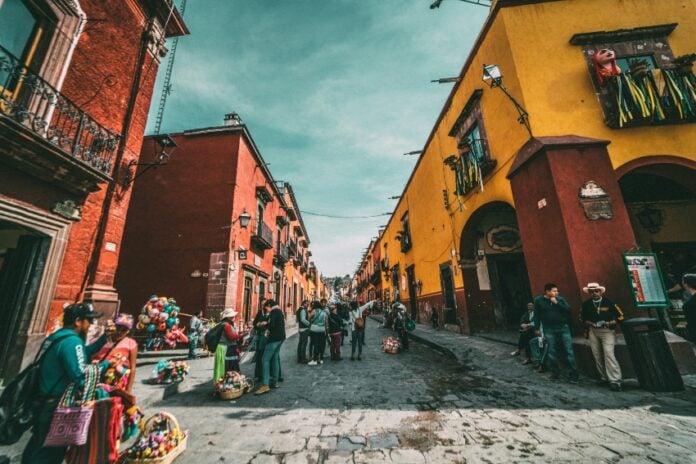
There's always something happening in San Miguel de Allende. (Jezael Melgoza)
Special events happen every month in San Miguel de Allende, and January and February are no exception. Between the end-of-year holidays and before Semana Santa (Holy Week, from March 29 to April 5), San Miguel will host an impressive lineup of concerts, exhibits, plays, neighborhood art walks and public presentations, from the humorous to the serious.
A sampling of these events is detailed below, but first, take a look at some unique artwork gracing the city at two related venues through the end of the month.
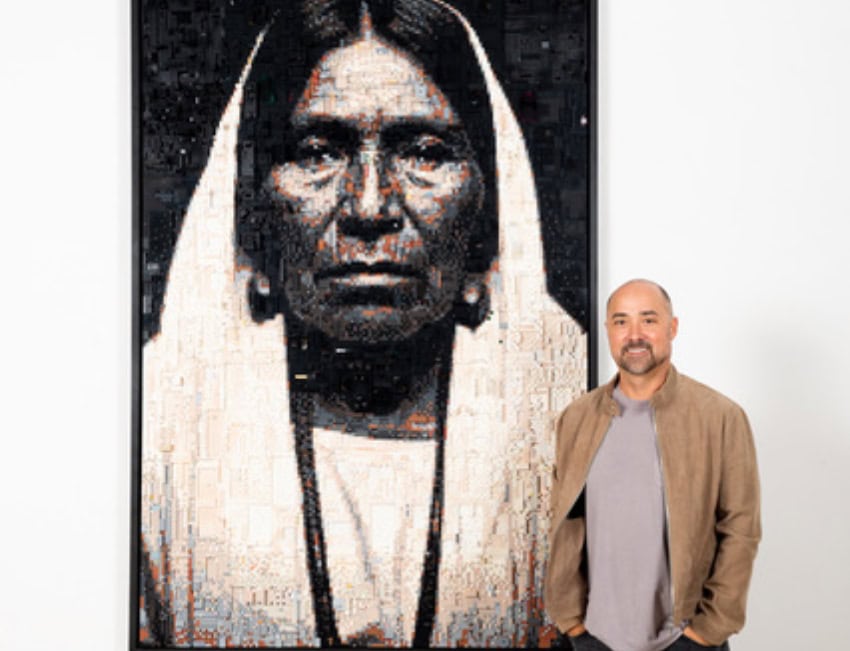
Artist Greg Mayer with one of the portraits that has made him a popular figure in San Miguel de Allende. (Emmanuel Ceballos)
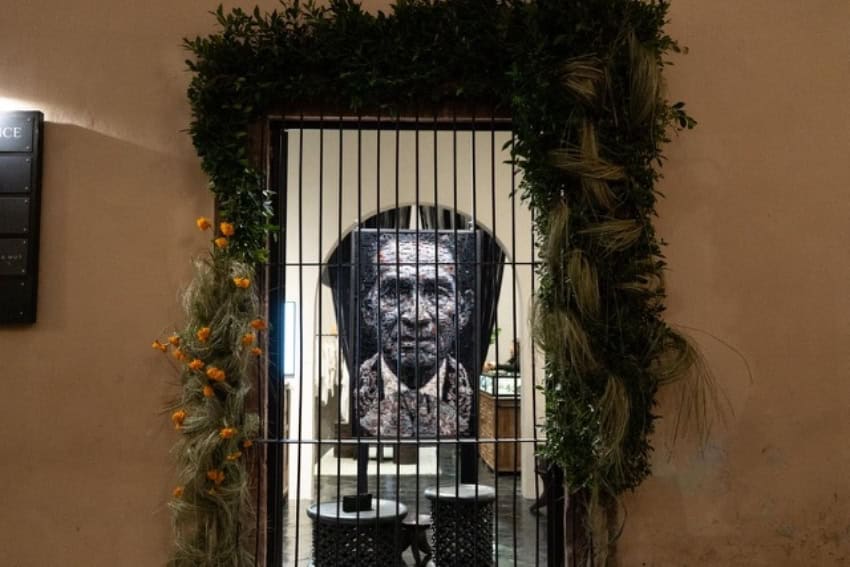
The Namuh furniture galleries in Centro and on Camino a Alcocer past the Liverpool department store are featuring, through the end of this month, portraits by Greg Mayer built with painted LEGO and other plastic bricks.
Portraits by Greg Mayer
Mayer buys these plastic pieces by the kilo and paints them in shades of grey and a few other colors to create portraits that resemble optical illusions that are clear from a distance but pixelated up close.
Mayer, who lives in San Miguel and Arizona, said he chose to show his work here to honor “the beauty and dignity of the Mexican people” he observes in his daily life.
“The people at the bus stop, in the mercado and throughout the countryside,” he explained. “I have a deep respect for the quiet strength and grace present in everyday moments, and the work began as a way to honor that in my own home.”
Mayer said he’s drawn to faces that tell a story, and that his favorite is the one he’s currently working on.
“Some of the larger works take months to create, so by the time I’m finished, that piece had better be my favorite,” he said.
Another of Greg Mayer’s distinctive portraits. (Emmanuel Ceballos)
One of his favorite portraits, “La Sanadora” (“The Healer”), was prominently featured and quickly sold at the exhibit, which opened Oct. 31, 2025. Namuh owner Cecilio Garza described a “huge turnout” that evening, which he called “very unusual for an unknown artist in San Miguel.”
Mayer, humbled by the enthusiastic response to his work, hopes to have another exhibit here after he returns this spring. For now, you can see his work until the end of January at Namuh’s two locations: at Cuna de Allende 15 and at Camino a Alcocer, Km. 2.2.
Water-related murals unveiled
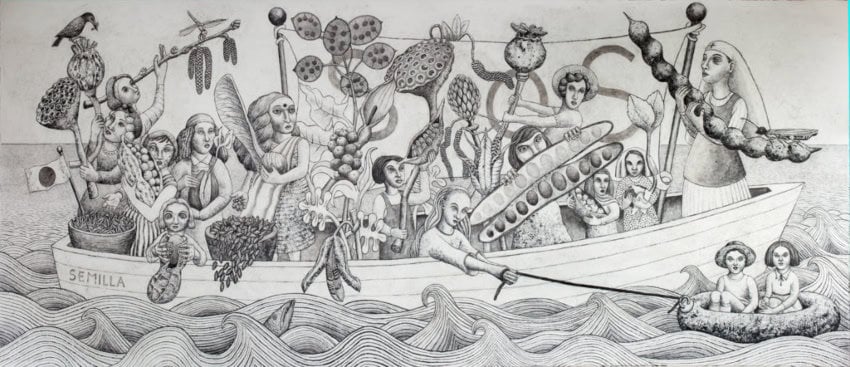
One of artist Erica Daborn’s “Dialogues with Mother Earth.” (Daum Museum of Contemporary Art)
“Dialogues with Mother Earth,” an environmental art collaboration between San Miguel artist Erica Daborn and the nonprofit clean-drinking-water organization Caminos de Agua, is coming to the Camino al Arte artists’ colony outside San Miguel in the town of Atotonilco on Jan. 15 and 16.
On Jan. 15 from 5–7 p.m., Camino al Arte will host an opening presentation, an artist talk and an exhibition of two of Daborn’s large-scale charcoal murals inspired by prehistoric cave drawings and socially engaged art. The murals will also be on display there on Jan. 16 from 10 a.m. to 1 p.m.
The two events are free and open to the public. Daborn’s new book, “Dialogues with Mother Earth,” will be available to purchase and can be signed by the artist. All proceeds go to support Caminos de Agua’s mission to provide access to safe water in Central Mexico.
Camino al Arte is located at Antigua Via S/N in Atontonilco, Guanajuato.
Winter orchid workshop
A Cymbidium hybrid orchid. (Marie-Lan Nguyen / Wikimedia Commons)
A winter orchid workshop will be held Jan. 16 and 17 at the Casamada Hotel Boutique. Information on the care and uses of the Cymbidium orchid in landscaping and gardens will be presented. Each workshop costs 1,750 pesos and includes a brunch, study materials and a Cymbidium orchid to take home. Reservations are required.
The Jan. 16 workshop takes place from 11 a.m. to 1 p.m., and the Jan. 17 workshop takes place from 10 a.m. to noon. Space is limited. Reserve your spot by calling +52 (415) 125-4050.
Casamada Hotel Boutique is located at Potranca 16 in the Guadiana neighborhood.
Plays and staged readings this month
A new one-act work from playwright Roger M. Williams, “Me? A Traitor?! Iconic Gen. Robert E. Lee Confronts His Life and Deeds,” will be staged this month. (San Miguel Live!)
Two one-act plays by local playwright Roger M. Williams are coming to the Teatro Santa Ana theatre in San Miguel’s La Biblioteca in Centro on Jan. 16 and 17.
“Gone!” is a humorous look at a U.S. tourist who gets lost in a Spanish city, and the other is entitled, “Me? A Traitor?! Iconic Gen. Robert E. Lee Confronts His Life and Deeds.” Marjorie Burren directs both and the local cast includes Burren, Frank Simons, Rick Franz and Josefina Valentini.
Admission is a 275-peso donation. Tickets are available at the theater box office. The Santa Ana Theater and its box office are located inside La Biblioteca at Insurgentes 25 in Centro.
At the Jewish Cultural & Community Center, veteran actors Fil Formicola and Alan Jacobson will be featured in a staged reading of Harold Pinter’s one-act play, “The Dumb Waiter,” on Jan. 18 at 7 p.m. The community center is located at Calle de Las Moras 47 in the Allende neighborhood.
Doors open at 7 p.m. Donation information is available here.
Andrew Paxman at PEN
British author Andrew Paxman will discuss the murder of Mexican journalists in San Miguel de Allende. (X, formerly Twitter)
British biographer and historian Andrew Paxman, author of the recently published “Mexican Watchdogs: The Rise of a Critical Press Since the 1980s,” will discuss “Who’s Really Murdering Mexican Journalists?” on Jan. 20, at the Jewish Cultural & Community Center, Calle de Las Moras 47 in the Allende neighborhood.
Tickets for the event, taking place at 6 p.m., are 350 pesos. It is part of San Miguel PEN’s winter lecture series, which supports threatened journalists and local literary projects.
Robert Burns Supper
Annual suppers celebrating the Scottish poet Robert Burns are popular worldwide, including in San Miguel de Allende. (Connor Beaton/Wikimedia Commons)
The fifth annual Robert Burns Supper, held to honor Scotland’s most famous poet, returns to The Restaurant in Centro at 6 p.m. on Jan. 21. In keeping with Burns’ heritage, the meal will include haggis, roast beef with all the trimmings (vegetarian and gluten-free options upon request), wine and whisky. Entertainment will include bagpipes and a Scottish sing-along.
Tickets are US $125 and benefit the EEESMA School for the Deaf in San Miguel. More information is available via email here.
Two art walks
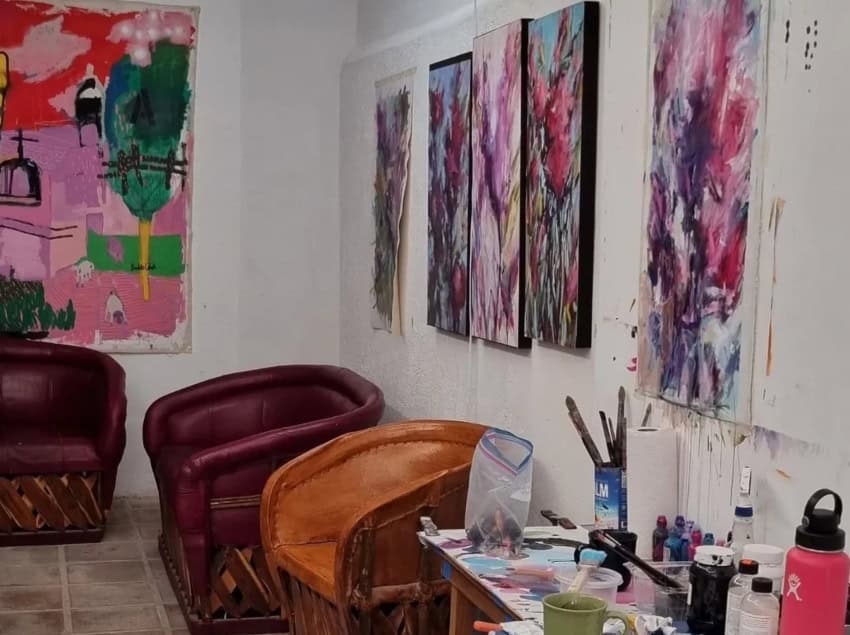
Want to see an artist’s studio in San Miguel de Allende? There are two art walks coming up. (Instagram)
Visit local artists’ home studios during the free Guadalupe Art Walk on Jan. 24 and 25 in the neighborhood, which is home to galleries and San Miguel’s mural art district. Paintings, printmaking, sculpture and mixed media will be on hand for browsing and purchase.
The art walk takes place on both days from 11 a.m. to 4 p.m. Email here for more information.
Meanwhile, dates for the annual San Antonio Art Walk have been announced. It will be happening this year on Feb. 21 and 22 from 11 a.m. to 5 p.m. Admission to the San Antonio Art Walk is free.
More information will be available in the February community roundup.
Candelaria Horticultural Fair
Flowers for this year’s Feria de la Candelaria. (Cathy Siegner)
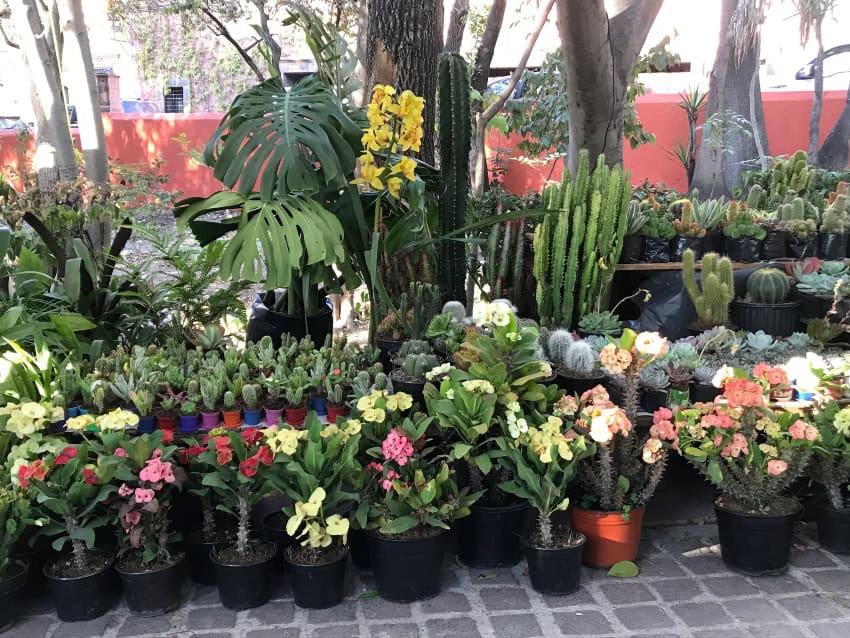
Parque Zeferino, on the northern edge of the city, will be packed with regional growers and vendors selling flowers and plants during this year’s annual Feria de la Candelaria, which opens Jan. 30.
As always, the fair will feature a huge variety of trees, plants and cacti for sale, as well as pots and gardening tools. There will also be free music, dancing and other performances going on each day.
The Feria de la Candelaria runs through Feb. 13. Admission is free.
Live blues at Cent’anni
The Craig Caffall Blues Band will be performing in San Miguel later this month. (San Miguel Jazz)
Local favorites the Craig Caffall Blues Band is playing at Cent’anni Restaurant in Centro on Jan. 31 at 6 p.m. The show is part of the year-long series of performances associated with the San Miguel International Jazz and Blues Festival.
Tickets for the Cent’anni show are 600 pesos in advance at the restaurant or 660 pesos online here. Cent’anni is located at Canal 23.
Tickets going fast for the Writers’ Conference
Don’t wait much longer. Tickets to the San Miguel Writers’ Conference are almost sold out. (San Miguel Writers’ Conference)
Premium all-events passes to the internationally known San Miguel Writers’ Conference in February are nearly sold out. So don’t wait if you have plans to attend this week-long conference for writers, aspiring writers and book lovers alike.
The 21st annual conference kicks off Feb. 11 and runs through Feb. 15 at the Hotel Real de Minas. This year’s conference features keynote addresses from authors Abraham Verghese, Maira Kalman, Rebecca Kuang, Yásnaya Elena Aguilar Gil and Emily St. John Mandel and poet Andrés Neuman.
Panel discussions, workshops, readings and receptions play a major role in the conference, which expects thousands of attendees, including writers, editors, agents and, of course, readers.
Cathy Siegner is an independent journalist based in San Miguel and Montana. She has journalism degrees from the University of Oregon and Northwestern University.
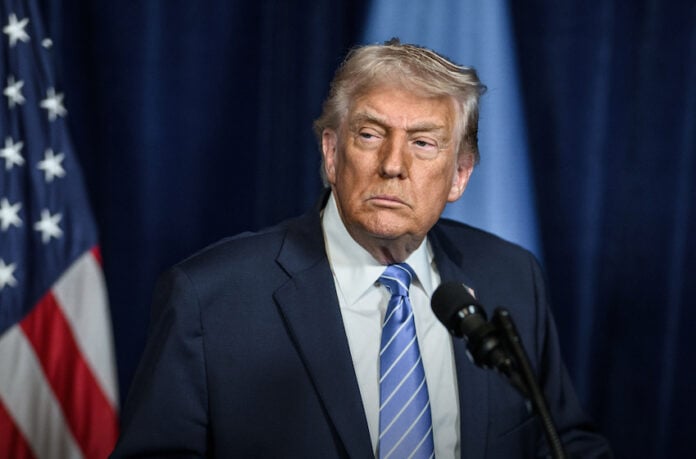
"I don't even think about USMCA," Trump told reporters during a tour of a Ford plant in Dearborn, Michigan, on Tuesday. (@WhiteHouse/X)
Ahead of the review of the United States-Mexico-Canada Agreement (USMCA), U.S. President Donald Trump asserted on Tuesday that the trilateral free trade pact provides “no real advantage” to the United States and is “irrelevant” to him.
“I don’t even think about USMCA,” Trump told reporters during a tour of a Ford plant in Dearborn, Michigan.
“I want to see Mexico and Canada do well, but the problem is we don’t need their product,” he said.
“You don’t think you’re going to renegotiate USMCA?” probed a reporter.
“I think they want it, I don’t really care about it,” he continued.
.@POTUS at @Ford‘s Dearborn Truck Plant: “I want to see Canada and Mexico do well, but the problem is, we don’t need their product. We don’t need cars made in Canada, we don’t need cars made in Mexico — we want to make them HERE.” pic.twitter.com/yNrKWGi4Vi
“No real advantage to us. It’s irrelevant to me. Canada would love it. Canada wants it. They need it,” said Trump, who negotiated the USMCA during his first term as president and in 2019 asserted that it would be “the best and most important trade deal ever made by the USA.”
On Tuesday, the U.S. president also said: “We don’t need cars made in Canada, we don’t need cars made in Mexico, we want to make them here. And that’s what’s happening.”
The U.S. president’s claim that the USMCA “expires very shortly” is not true, as even if Mexico, the United States and Canada don’t agree to extend the pact during the upcoming review process, it would not be terminated until 2036.
His assertion that the U.S. doesn’t need Mexican and Canadian products is highly questionable.
Reuters reported on Tuesday that “the Detroit Three” — General Motors, Ford and Stellantis — “are heavily reliant on supply chains that include significant parts production in Mexico and Canada.”
General Motors president Mark Reuss said Thursday that the company’s “supply chains go all the way through all three countries” and described the integration as a “big strength.”
Beyond the auto industry, various other manufacturing sectors are highly integrated across the United States, Mexico and Canada.
The USMCA governs trade worth around US $2 trillion per year. The pact was significantly undermined by Trump in 2025, as he imposed tariffs on a range of goods from Mexico and Canada, including steel, aluminum and vehicles.
Sheinbaum: ‘I’m convinced that Mexico’s trade relationship with the United States will continue’
Sheinbaum again declared on Wednesday that she is “convinced” that Mexico’s trade relationship with the United States will continue. (Graciela López/Cuartoscuro)
She went on to say that “those who most defend” the USMCA are businesspeople in the United States.
“Of course, Mexico as well,” Sheinbaum added.
Indeed, as Reuters reported on Tuesday, “major automakers including Tesla, Toyota and Ford in November urged the Trump administration to extend USMCA, saying it is crucial to American auto production.”
Reuters also reported that “the American Automotive Policy Council, representing the Detroit Three automakers, said USMCA ‘enables automakers operating in the U.S. to compete globally through regional integration, which delivers efficiency gains’ and accounts ‘for tens of billions of dollars in annual savings.'”
In light of the integration across various sectors in North America, Sheinbaum declared that she is “convinced” that Mexico’s trade relationship with the United States will continue despite Trump’s most recent remarks. She has previously said that she is “very positive” and “very optimistic” about the USMCA review.
On Wednesday, Sheinbaum said she wasn’t going to enter into a debate about trade with Trump, but stressed the “importance” of maintaining the Mexico-U.S. trade relationship “for both countries.”
The Mexican and U.S. presidents spoke by telephone on Monday, but their conversation focused on security issues. Sheinbaum subsequently said that she and Trump had agreed to another call soon in order to discuss “other issues,” including trade.
Bolero music has been declared an Intangible Cultural Heritage of Humanity by UNESCO. (Gobierno de Mexico)
Amigos, music is far more than a matter of taste or aesthetic pleasure. Science reminds us that it shapes our mood, sharpens our memory and even strengthens our immune system. Yet for many of us, its influence lives in realms beyond scientific description — in the way a familiar melody can open a door to the past and flood us with emotion.
For Mexicans, few genres hold that power like the bolero. Its chords are interlaced with memory itself, woven through family stories, love and loss.
The power of bolero
Made in Mexico: Boleros
After losing both my maternal grandparents in the same year, I began to hear boleros differently. They became more than love songs; they were vessels of remembrance. I think often of their home, filled with the aroma of morning coffee and my grandmother’s voice humming as she pretended to ready me for kindergarten — the school she never quite took me to. Now, the sound of boleros revives the ache of knowing that their house sits quiet, the old vinyls of Guty Cárdenas long stilled, their duets consigned to memory.
As the years have passed, those lyrics — once little more than background melodies — have transformed. The love songs our parents and grandparents sang now read as rich social documents, refracting shifting ideas of passion, duty and gender. Bolero’s old-world notions of romance collide with today’s evolving understandings of equality and affection. Yet for new generations, those same lyrics remain intoxicating reminders of love’s first sting.
Cuban bolero
Born in Cuba in the late nineteenth century, the bolero soon anchored itself deep in Mexican culture. It grew out of a marriage between danzón and son rhythms; its earliest recognized composition, “Tristezas,” came from the guitar of Pepe Sánchez in 1883. From the start, the bolero invited intimacy — its rhythm slow and swaying, perfect for dancing cheek to cheek, de cachetito pegado.
Its spread followed the sea routes of the Ward Line shipping company, linking Havana with New Orleans, Veracruz and Yucatán. These maritime arteries carried not only goods but ideas and melodies. Through Yucatán — long steeped in Cuban cultural exchange — the bolero crossed into Mexico’s heart. Legend holds that the singer and actor Arquímides Pous introduced it to Yucatecan audiences around 1918, where it mingled with son yucateco traditions and quickly became a local obsession.
The Mexican transformation
From Yucatán, the bolero journeyed north to Mexico City during a time when corridos — epic ballads of revolution and rural struggle — dominated popular song. Amid those tales of rifles and rebellion, bolero offered something more intimate: not war, but longing; not countryside ballads, but urban sighs.
The first Mexican bolero, “Madrigal,” appeared in 1918. What followed was a renaissance of romantic composition, with gatherings where sones and boleros conversed across guitars and voices. Mexico’s interpretation infused the genre with a distinct cosmopolitan charm: a hint of jazz, a whisper of contradanza, the emotive storytelling of local tradition.
Recognizing bolero
Recognizing a bolero is easy once you feel its pulse: a slow 4/4 rhythm tracing the fine line between yearning and heartbreak. It is the song of the yo cantante — the self who sings — to a distant or lost tú.
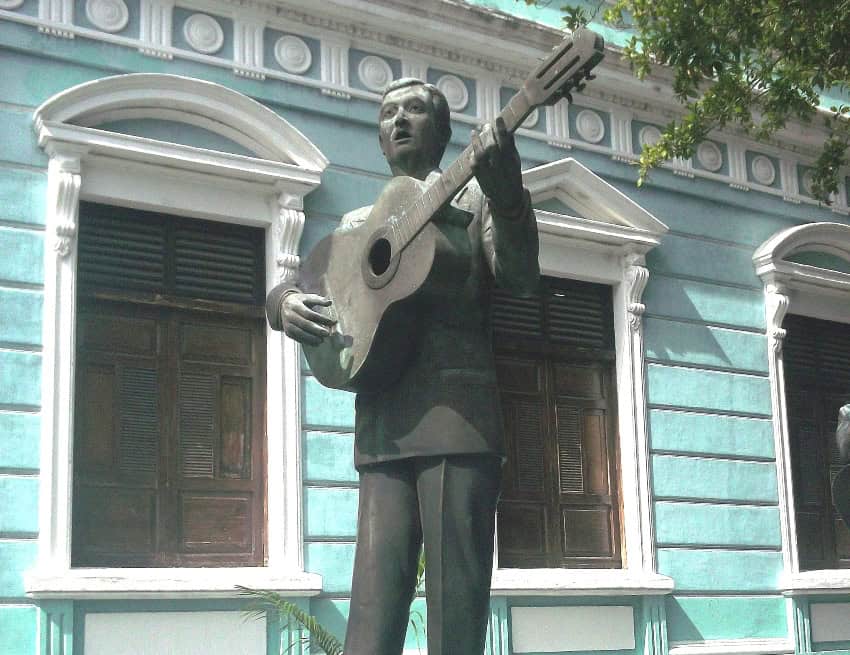
Guty Cárdenas was Mexico’s first master of the bolero, as this statue in Mérida attests. (Inri/Wikimedia Commons)
At its core lies the guitar, elevated into the requinto, a smaller, sharper-voiced cousin that answers the singer’s lament with delicate flurries of melody.
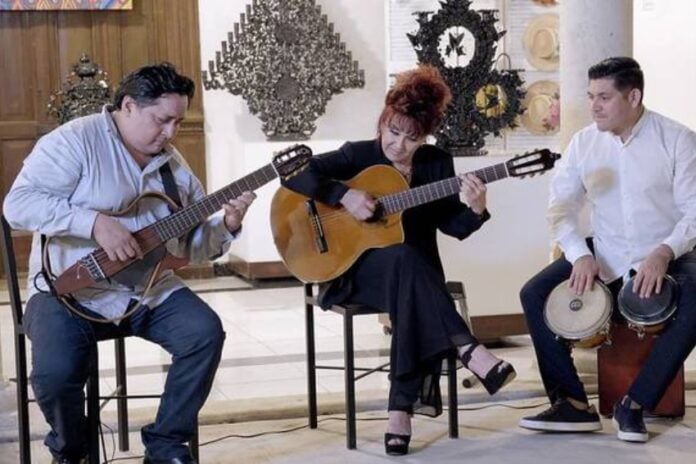
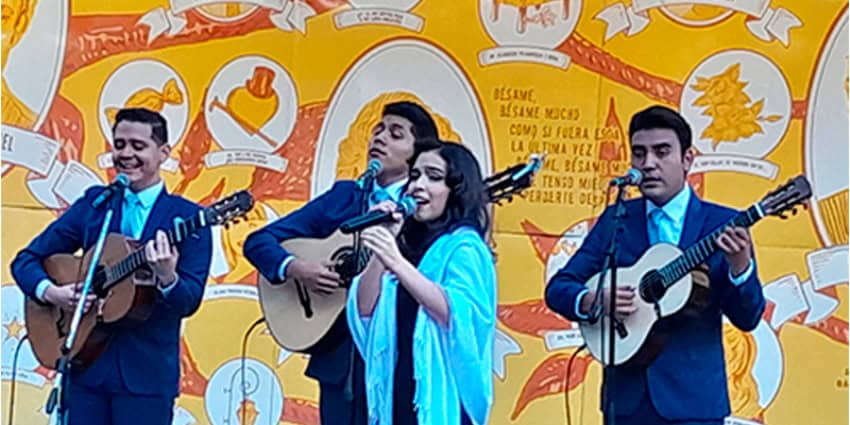
In Mexico, boleros typically found their voice in guitar trios or, occasionally, lush tropical big bands with bongos and congas. The genre splintered into variations: the elegant bolero de cabaret, with its big-band sophistication; the bolero ranchero, reimagined through the mariachi’s brass and strings; and the bolero yucateco, truest to its Cuban lineage — simple, tender and unabashedly romantic.
The greatest boleristas
It’s impossible to appreciate the Mexican bolero without knowing the composers who defined it. This is just a mini guide to get you started.
Guty Cárdenas: Regarded as Mexico’s first great bolerista, his songs are anthems among us. One of my favorites, though now less known, is “Nunca,” because it captures the beautiful futility of love unreturned: “I know that I love you in vain, that my heart uselessly calls you, but despite everything, I love you.” Can heartache sound more romantic?
Agustín Lara: The “Flaco de Oro” is our Mexican Cole Porter. His timeless compositions, such as “Piensa en mí,” “Solamente una vez,” and “María Bonita,” continue to resonate at gatherings.
Consuelo Velázquez: At just 16, she penned what is arguably the most famous Mexican bolero worldwide, “Bésame mucho.” This beautiful melody has been covered by artists from Frank Sinatra to Dua Lipa.
CONSUELO VELÁZQUEZ - BÉSAME MUCHO
Álvaro Carrillo: Hailing from Oaxaca, he composed around 300 songs that continue to resonate and are frequently covered, including the beloved “Sabor a mí.”
María Grever: A truly remarkable composer deserving of a “Made in Mexico” article. She crafted around 800 songs, including “What a Difference a Day Makes?” originally titled “Cuando vuelva a tu lado.” Hired by Paramount and 20th Century Fox to create music for films and documentaries, her work has been performed by legends like Dean Martin, Bobby Darin, Sarah Vaughn and Tony Bennett, among many others.
Each of them caught something enduring about love’s grammar — the unspoken pauses between devotion and despair.
Keeping the spirit alive
On Dec. 4, 2023, UNESCO declared the bolero part of the Intangible Cultural Heritage of Humanity. For those of us raised with its melodies, the recognition felt inevitable: Bolero has always been more than music; it is memory’s soundtrack.
When I hear those familiar chords, I see my grandparents again — my itos — their distant gazes softening as a record played. I wonder who they imagined as they sang along, whose absence made their voices tremble. I see my father, half-mocking the genre’s sentimentality, yet still knowing every lyric. I hear my mother moving through the house, her voice wrapping itself around melodies she’s known since girlhood.
During the isolation of the pandemic, bolero became my family’s lifeline. On Friday nights, my sister and I would pour tequila and sing those old songs, laughing and crying in equal measure, reaching for warmth across the void of distance. Even now, it fills quiet afternoons at home — my boyfriend, my dog, the soft crackle of an old speaker. In those moments, bolero collapses time.
Mexico’s boleros have the power to bring people together. (Boleromx.org)
Listening to it is like stepping into memory’s photograph full of life.
The songs that hold us together
In a world that fragments daily — our attention splintered by screens and algorithms — bolero reminds us of our elemental need for connection. Its melodies invite us to sit still, to listen, to remember that even heartache has its beauty. Through its tender excess, it teaches emotional courage: to love deeply, to grieve openly and to keep singing anyway.
For me, returning to bolero is an act of revival — a way to bring back my itos for a few stolen minutes, to hear their laughter between verses.
Turn up the volume. Let the guitars and velvet voices fill your home. Whether you dance alone in the kitchen or croon off-key with your siblings, you join a tradition that stretches across oceans and generations. Each note carries the pulse of a shared past, each lyric a whisper of belonging.
In the end, bolero doesn’t just tell love stories — it keeps them alive.
Maria Meléndez writes for Mexico News Daily in Mexico City.
"When we've asked for support from the ambassador for dealings with the U.S. government, he has always helped us," Sheinbaum said on Tuesday. (Juan Carlos Buenrostro/Presidencia)
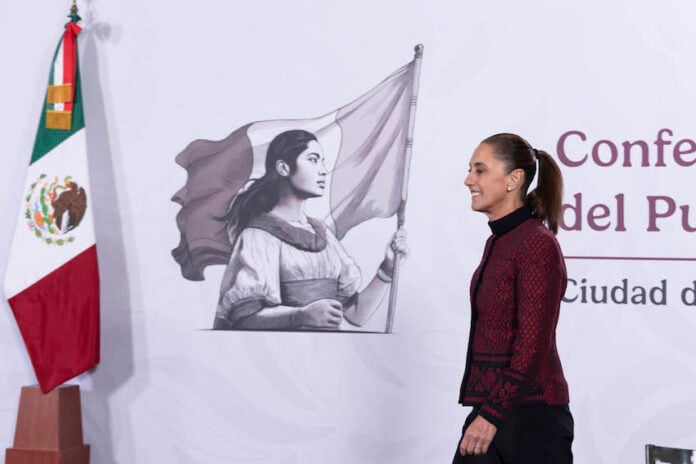
President Claudia Sheinbaum smiled broadly as she entered the Treasury Hall of the National Palace on Tuesday morning, seemingly still on a high from her successful call with U.S. President Donald Trump.
At her morning press conference on Tuesday, she acknowledged the role the United States’ ambassador to Mexico played in ensuring the call was a success.
Among other issues, Sheinbaum spoke about the media’s reaction to her conversation with Trump, the latest of numerous telephone discussions she has had with her U.S. counterpart.
Sheinbaum expresses appreciation for US ambassador
A reporter asked the president her opinion about the message U.S. Ambassador to Mexico Ron Johnson posted to social media after Monday’s call between Sheinbaum and Trump.
On X, Johnson wrote: “Glad to have helped facilitate today’s productive call between @POTUS @realDonaldTrump and President @ClaudiaShein. After a year of the most cooperative and mutually beneficial U.S.-Mexico relationship in decades, there’s still much to be done but together we can build a brighter future for our citizens.”
Glad to have helped facilitate today’s productive call between @POTUS@realDonaldTrump and President @ClaudiaShein. After a year of the most cooperative and mutually beneficial 🇺🇸🇲🇽 relationship in decades, there’s still much to be done but together we can build a brighter…
Although her government has various differences with the Trump administration, Sheinbaum spoke in glowing terms about the U.S. ambassador, who began his tenure last May.
“When we’ve asked for support from the ambassador for dealings with the U.S. government, he has always helped us,” she said.
“… Obviously, he represents the government of the United States here, and we have a close relationship with them,” Sheinbaum said.
She subsequently thanked Johnson for the support he has provided to her government.
Sheinbaum said that Mexican officials spoke to the ambassador prior to Monday’s call with Trump “to explain what we intended to discuss” with the U.S. president.
“He was a facilitator to make sure the call went well,” she said.
Sheinbaum said on Monday that she and other officials also spoke to Johnson after the call with Trump.
Sheinbaum discusses media coverage of her call with Trump
A reporter asked the president about government opponents and critics who she said “use almost any pretext to promote [foreign] interference and interventionism in our country.”
Sheinbaum’s immediate response was to say that it was worth taking a look at today’s newspapers. She asserted that “those that disagree with us” — i.e., the government — “didn’t know what to say” about her call, given its success.
“They hoped there would be a problem in order to say, ‘Look, the president doesn’t have the capacity. The United States has to intervene.”
While many Mexican newspapers ran stories about Sheinbaum’s call with Trump on the front page of their Tuesday print editions, the paper most frequently criticized by the federal government, Reforma, did not.
On Monday, Sheinbaum said that “the opposition in Mexico” — of which she considers Reforma and some other newspapers to be a part — “has been seeking” to cultivate “a bad image of the Mexican government in the United States.”
She said that “this whole idea” that the Mexican government “protects organized crime” and is led by a “narco-president” comes from a “campaign” created by opponents of her administration.
“What are they seeking? What would they like? The intervention of the United States in Mexico, that’s the truth,” Sheinbaum said.
By Mexico News Daily chief staff writer Peter Davies (peter.davies@mexiconewsdaily.com)
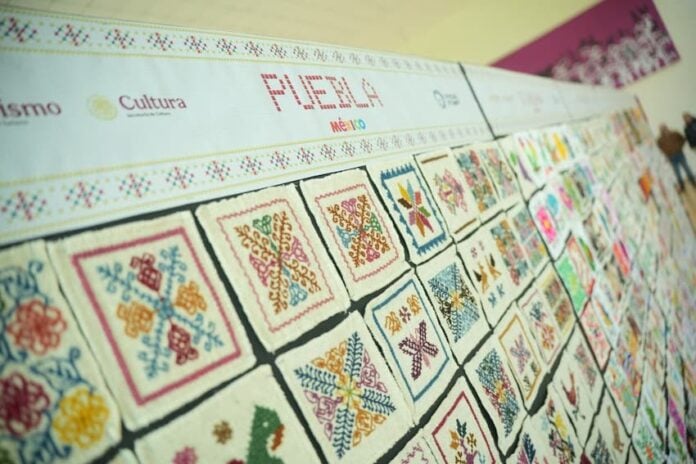
The official count for the world's largest embroidery exhibition is 3,106 pieces each made on 15cm X 15cm canvases. (@TuristicoGobPue/X)
Mexico has won a Guinness World Record for hosting the world’s largest exhibition of embroidery and textiles, with artisans from across the nation working to make it happen.
The project brought together embroiderers, artisans and cultural groups from all 31 Mexican states plus Mexico City to promote regional identity and preserve techniques and traditions passed down from generation to generation.
Esta mañana, desde el magnífico escenario del Complejo Cultural Los Pinos, nos reunimos para celebrar un momento histórico: ¡México ha hecho historia! ✨
Con gran orgullo, logramos establecer un nuevo Récord Guinness por la “Exposición de bordados y tejidos más grande del… pic.twitter.com/gGYrWIRHEZ
“This exhibition of the world’s largest embroidery and textiles is not just a recognition on paper; it is recognition of an entire country . . . sharing a tapestry — the mosaic of Mexico,” Minister of Tourism Josefina Rodríguez Zamora said at a Mexico City ceremony.
Guinness World Records adjudicator Alfredo Arista explained that validating this official attempt required meeting specific requirements, including a minimum of 2,000 pieces and verification that each one was a legitimate work of textile art. He added that experts reviewed each piece individually to ensure full compliance with the established criteria.
“After this process, I can give the official figure: 3,106 pieces exhibited in the world’s largest embroidery exhibition,” Arista announced.
All the pieces were made on 15-centimeter-by-15-centimeter canvases, using threads of more than four colors and ancestral techniques such aspepenado(an Otomí technique from Ixtenco in Tlaxcala state), pedal loom, backstitch, cross stitch with petatillo, chain stitch and cross stitch, among many others.
The Guinness World Records representative in Latin America, Ingrid Paola Rodríguez, noted that this distinction will turn this exhibition into a “high-impact tourist attraction, capable of generating global media coverage, organic content on social networks and a clear reason to travel.”
The event was attended by artisans who handcrafted the award-winning embroideries. The exhibition is part of a national strategy leading up to the International Tourism Fair (FITUR) 2026, held annually in Madrid, Spain. With it, Mexico aims to showcase its cultural, creative and tourist potential to a global audience.
Meanwhile, the piece will be exhibited in Mexico City until Feb. 1 on the ground floor of the Casa Miguel Alemán at the Los Pinos Cultural Complex, the facility that served as the presidential residence until 2018.
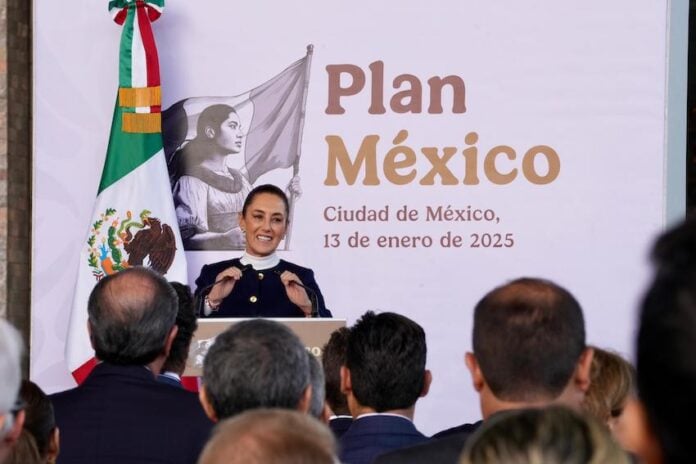
Twelve months on from that presentation, what progress has been made toward achieving the goals by 2030, the final year of Sheinbaum’s six-year presidency?
In presenting Plan México, Sheinbaum described the plan as promoting economic growth in Mexico while prioritizing “wellbeing for our people.” (Presidencia)
MCV looks at six of the 13 Plan México goals, delivering a report card that is far from flattering
A future Mexico News Daily article will evaluate the progress that has been made toward the attainment of the other seven goals.
While the federal government has set 13 Plan México goals, it is important to note that the plan itself is not set in stone. Instead, it will be modified to adapt to the prevailing economic and geopolitical conditions, and the government will also seek to enhance it with complementary initiatives.
Indeed, the plan was strengthened last April with the announcement of 18 related “programs and actions,” including commitments to accelerate the construction of public infrastructure projects and homes, and to increase domestic production of a range of goods, including vehicles, pharmaceuticals, medical devices and petrochemicals.
Goal 1: To make Mexico the world’s 10th-largest economy by 2030
According to data from the World Bank, Mexico is the world’s 13th-largest economy.
Its goal of becoming the 10th-largest economy didn’t get off to a great start in 2025 as economic growth significantly slowed.
Final data for 2025 has not yet been released, but the International Monetary Fund forecast last October that Mexico would record a GDP growth rate of just 1%.
“Due to the [0.2%] contraction recorded in the third quarter, even 1% appears optimistic,” MCV wrote.
MCV highlighted that the economy of Brazil — currently the world’s 10th largest economy — was projected to grow at 2.4% in 2025, easily outpacing the rate of growth in Mexico.
According to MCV’s traffic light system — based on the most recent official data — the “economic growth light” is currently red, the worst of three possible ratings.
Goal 2: To keep investment levels above 25% of GDP from 2026
Given that 2026 just started, the attainment (or otherwise) of this goal cannot yet be measured.
To achieve the goal this year, the level of investment as a percentage of GDP — including public investment, domestic private investment and foreign direct investment — will have to increase from the percentage recorded in late 2025.
MCV wrote that investment levels declined from 24.8% of GDP in the third quarter of 2024 to 22% of GDP in the third quarter of last year.
The think tank added that its “investment traffic light” changed from green to yellow in the period.
MCV also wrote that the fulfillment of Goal 2 is “fundamental to position Mexico among the world’s 10 largest economies (Goal 1), create 1.5 million additional jobs in advanced manufacturing and strategic sectors (Goal 3) and increase by 15% the national [Mexican] added value in global value chains [used by manufacturers in Mexico] (Goal 5).”
Goal 3: To create 1.5 million additional jobs in manufacturing and other strategic sectors
Citing “transformation industry” data from the Mexican Social Security Institute (IMSS), MCV noted that 127,200 jobs in that sector (which includes manufacturing) were lost in 2025, the worst result since 2008 amid the global financial crisis.
Based on that data, the goal of adding 1.5 million additional jobs in manufacturing and other strategic sectors appears even more distant now than it did a year ago.
The loss of jobs occurred even as the value of Mexico’s exports — which is mainly derived from the shipment abroad of manufactured goods — continued to grow.
The figure, the think tank highlighted, is “far from the national goal of creating 1.2 million jobs per year.”
Consequently, MCV’s “job creation traffic light” is currently red.
Goal 5: To increase by 15% the use of national content in products made in various sectors
In January 2025, Sheinbaum said that the goal was to increase by 15% the use of domestically made content in products made by the following sectors: automotive, aerospace, electronics, semiconductors, pharmaceuticals and chemicals.
According to data from INEGI, the percentage of domestic content in products made in Mexico by export-oriented companies increased to 44.2% in 2024 from 42.6% in 2023.
Data for 2025 has not yet been released, and therefore, progress on this goal within the context of Plan México can not yet be assessed.
To achieve a 15-point increase in national content in manufactured goods in the six years from 2025 to 2030, an average annual increase of 2.5 percentage points is required, significantly higher than the 1.6-point increase recorded in 2024.
MCV wrote that “achieving Goal 5 requires accelerating investment, ensuring
sufficient energy at competitive prices, integrating small and medium-sized companies [into the production chain] and consolidating an industrial policy that transforms Mexican companies into key players in the North American co-production model.”
The think tank said that its “export value added traffic light” remains at yellow, as its view is that “at least 50%” of content in products made in Mexico should be sourced within the country.
Goal 8: To reduce the average time between an investment announcement and the execution of a project from 2.6 years to 1 year
According to the federal government, the achievement of this goal will be supported by a 50% reduction in the bureaucratic procedures investors have to complete in order to commence a project.
MCV wrote that achieving the goal remains a “challenge” in Mexico, but did not say whether any progress had been made in 2025.
On a positive note, the Sheinbaum administration has set up a “National Digital Window for Investments” (Ventanilla Digital Nacional de Inversiones), a website touted as a “one-stop shop” for investing in Mexico. Its aim is to simplify the bureaucratic procedures investors have to complete and consequently reduce the time between the lodging of an application for the approval of a project and the granting of the relevant permits.
In its report, MCV wrote that the competitiveness of Mexico depends on a variety of other factors beyond expediting the approval of investment projects.
“To be among the most competitive countries in the world, a solid rule of law, legal certainty, respect for human rights, human capital, and preservation of natural resources, among other things, are required,” the think tank said.
In 2025, MCV added, Mexico ranked 55th out of 69 countries in IMD Business School’s 2025 World Competitiveness Rankings. Mexico fared particularly poorly in the “government efficiency” category, ranking 62nd out of the 69 countries.
Due to Mexico’s position on the rankings, MCV’s “competitiveness traffic light” is currently red.
Goal 13: To reduce poverty and inequality
When she presented Plan México a year ago, Sheinbaum said that this goal was a “substantive,” or overarching, one.
In its report, MCV noted that the percentage of the Mexican population in a situation of pobreza laboral — i.e., they have jobs but still live in poverty — declined to 34.3% in the third quarter of 2025 from 35.1% a year earlier.
However, “an estimated 44.9 million Mexicans [still] live in a situation where their household income is insufficient to purchase the basic food basket for all … [household] members,” the think tank wrote.
While modest progress was made in reducing pobreza laboral in the 12 months to the end of September 2025, the government — a self-styled champion of Mexico’s poor — still has a lot of work to do.
MCV noted that its “pobreza laboral traffic light” is yellow, adding that the goal is for “less than 20.5% of the population” to be in a situation in which their income is “insufficient to purchase the basic food basket for all members of the home.”
Of course, having no one living in a situation of pobreza laboral would be a more desirable situation.
Among the ways in which the federal government is aiming to reduce poverty in Mexico is by significantly increasing the minimum wage on an annual basis (13% in 2026) and providing an array of social and welfare programs to citizens.
She will be hoping that her government — through Plan México and other initiatives — can achieve similar success.
MCV’s recipe for Plan México success
MCV’s assessment of the progress toward the attainment of the six above-mentioned goals underscores the ambitiousness of Plan México. Indeed, achieving some of the goals appears more difficult now than it did when Sheinbaum announced the plan on Jan. 13, 2025.
At the very end of its 14-page report, MCV wrote that it has established a “clear diagnosis” of the situation in Mexico a year after the announcement of Plan México, and set out a course of action to improve it.
“Mexico needs more investment to grow [economically] and to create quality jobs that will enable us to be more competitive in high value-added industries and to offer higher wages in order to reduce poverty and inequality,” the think tank said.
“Mexico can advance … [toward the achievement of] these goals if we provide greater legal certainty, openness to investment in the energy sector, and a more robust rule of law,” MCV wrote.
Achieving those goals will create the “essential conditions to trigger a virtuous circle of investment, economic growth, quality employment and social progress,” the think tank said.
By Mexico News Daily chief staff writer Peter Davies (peter.davies@mexiconewsdaily.com)
The Mexican government is on track to present Olinia prototypes at the 2026 FIFA World Cup.
The government’s pursuit of an affordable, Mexican-made electric vehicle (EV) proceeds apace, with hopes to display prototypes at the 2026 FIFA World Cup.
The Olinia project aims not only to offer an alternative mode of transportation but also to position the country as a leader in developing its own technology.
“We are going to arrive in one or more Olinia vehicles so we can show them to the world,” she said last month while visiting the Tech Center in Puebla where they are being designed.
The Olinia — scheduled to hit showrooms in early 2027 — is described as a “mini-vehicle,” small and agile, with a focus on urban functionality and neighborhood mobility. It will feature enough power to climb hills, reach speeds of 50 kilometers an hour and possess the versatility to be recharged at any standard outlet.
The new Mexican EV comprises two primary designs: one for passengers (a personal mobility model and a neighborhood mobility model) and another for last-mile deliveries.
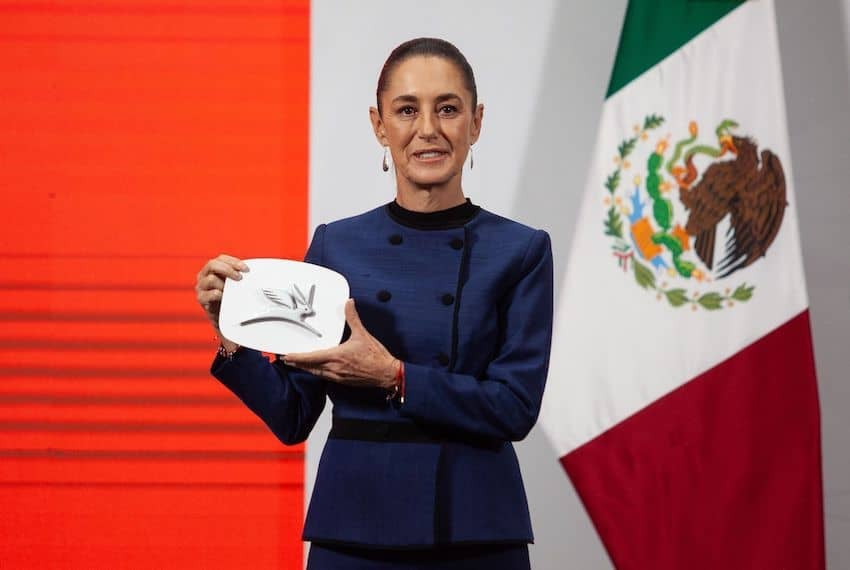
President Sheinbaum, shown here with Olinia’s logo, has been an avid promoter of the project since first taking office in 2024. If all goes well, Mexicans will be able to purchase the mini-EVs in 2027. (Andrea Murcia/Cuartoscuro)
Expansión magazine reported that industry specialists see an opportunity for Olinia to meet a mobility need different from that currently focused on by Mexico’s traditional automotive industry.
Eric Ramírez, a Latin America regional director at Urban Science Applications (an automotive consultancy and technology firm headquartered in Detroit), believes the Olinia has a future in neighborhood-based mobility, replacing motorcycle taxis and the like.
“I think the niche where it will participate is a good idea,” he told Expansión. “It is ideal for short distances with very small capacities.”
Olinia’s main competition would seem to be low-cost Asian motorcycles and scooters, whose sales have surged in the past year. These vehicles are now ubiquitous in crowded commercial areas such as the Mexico City Historic Center.
As of Jan. 1, these types of vehicles must pay a 35% tariff, but the resulting markup will still make for stiff competition.
The price range for Olinia models has been announced as between 90,000 and 150,000 pesos (US $5,040 and US $8,400), which is more than triple what the Made in China vehicles cost (25,000 to 30,000 pesos).
Mexico’s President Claudia Sheinbaum led the flag-bearing ceremony for the Mexican delegation following her daily press conference on Monday. (Saúl López/Presidencia)
Four Mexican athletes have been confirmed for the Milan-Cortina 2026 Winter Olympics, to be held from Feb. 6 to 22.
Though few in number, the group is a strong demonstration considering Mexico’s geographical and infrastructural limitations for winter sports training.
This year’s winter Olympics will include a wide variety of events, including various skiing competitions, snowboarding, figure and speed skating, ice hockey, curling and bobsleighing.
Mexican figure skater Donovan Carrillo, 26, qualified for the games because of his strong international ranking — 46thin the world — and by meeting the minimum technical scores required by the International Skating Union (ISU) in championship competitions.
Carrillo previously participated in Beijing 2022 as the first Mexican male figure skater in 30 years to compete at the Olympic Winter Games and the first ever to qualify for the free skate.
Both Allan Corona, 35, and Regina Martínez, 32, will participate in the cross-country skiing competition, having accumulated sufficient International Ski Federation (FIS) competition points.
For Martínez, an emergency room doctor working in Miami, Florida, competing in Milan-Cortina marks a major milestone as she only just began her professional skiing career four years ago. She will soon make history as the first woman to represent Mexico in the cross-country skiing competition.
Meanwhile, Sarah Schleper, who started her Olympic career skiing for the United States in 1998, will make her seventh Olympic appearance in the alpine ski competition.
Schleper initially retired in December 2011 but came back to the sport in June 2014 to represent Mexico after her marriage to a Mexican citizen. She has been representing Mexico in the Olympics since 2018.
Mexico’s President Claudia Sheinbaum led the flag-bearing ceremony for the Mexican delegation following her daily press conference on Monday, which the National Commission for Physical Culture and Sport’s head, Rommel Pacheco, the Public Education Minister, Mario Delgado, and the president of the Mexican Olympic Committee, Mary José Alcalá, all attended.
“I entrust this flag to your patriotism, a flag that symbolizes our independence, sovereignty, honor, and institutions. It represents our people and the integrity of our territory. Do you pledge to honor and defend it with loyalty and justice?”Sheinbaum asked the four athletes upon presenting the Mexican flag to the delegation.
“May your example inspire millions of Mexicans to believe in the power of sport and the power of our dreams,” continued Sheinbaum. “Congratulations, and we wish you continued success.”
The athletes were also presented with the official team jacket for the Milan Games.
How to watch the games
The Milan Winter Olympics will be broadcast on Claro Sports in Mexico, following an agreement between the International Olympic Committee, América Móvil and Televisa Univision.