Home Blog Page 148

La Señora: Who is she?

10
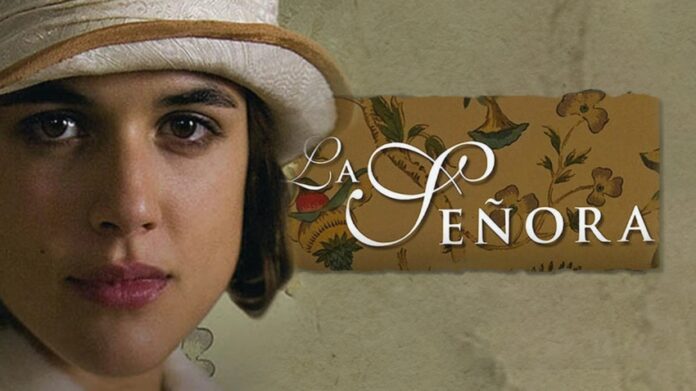
La Señora television promotion in Spain
The figure of the Señora is an archetype in film, television and popular culture. (Prime Video)

No longer just an indicator of whether a woman is married or not, the concept of a “Señora” has taken on a life (and character) of its own in recent years. Driven by pop culture, social media, television and perhaps a series of strong personalities in daily life, the “Señora” has become a fascinating representation of a certain type of woman in Mexican culture — one that embodies an attitude of both elegance and authority … with a touch of drama. 

The modern-day concept of a Señora has implications that touch upon age, female roles, family, tradition and class. 

So who is this (sometimes infamous) character? What do Mexicans mean when they talk about una Señora? What does it mean to be a Señora today? 

The Señora, traditionally

Cuando te dicen "señora"

In Mexican society, being called “Señora” touches on three interconnected aspects: sexuality, civil status and age. According to research by Hortensia Moreno, an academic at UNAM’s Center for Gender Research and Studies, these connotations reflect gender stereotypes active in Mexican society, despite belonging to an older symbolic framework.

In a Spanish cultural context, a Señora refers to a respectable, mature, traditionally feminine woman. 

My neighbor, Rosario, explains: A Señora is usually a married woman, she says, often someone who has kids. You wouldn’t really call a woman in her early 30s a Señora; it more refers to someone mature, who acts like it. 

The transition from “Señorita” to “Señora” represents a critical moment in Mexican women’s lives, often occurring around age 40, regardless of marital status. This shift carries emotional weight because it’s perceived as indicating a loss of youth. Many Mexican women resist being called “Señora” because it implies they’ve crossed into a demographic associated with diminished social value. 

Despite traditional associations with the term, the definition of a Señora has expanded into a stereotype that is both celebrated and satirized; memes and comedic sketches often feature the “Señora de la colonia” (neighborhood Señora), a woman who gossips, maintains order at social events and upholds traditional values but secretly enjoys luxury and intrigue.

The Señora in pop culture and telenovelas

Maria Rubio
Maria Rubio as Catalina Creel in Cuna de Lobos was the classic Señora figure in telenovelas. (Telemundo)

In Mexican pop culture and telenovelas, this figure is brought to life as a woman of elegance and authority, often wrapped in privilege and dramatized with a flair that makes her unforgettable. She is the matriarch who commands a room with her impeccable fashion, the high-society hostess who enforces etiquette with precision, and the sharp-tongued presence whose wit and sarcasm can both entertain and intimidate. Always poised, always stylish, the Señora moves through stories as both a pillar of tradition and, at times, a villainous force.

No actress captured this archetype more vividly than Mexican actress María Rubio in her role as Catalina Creel in Cuna de Lobos. Catalina is the sophisticated and ruthless matriarch of the Larios-Creel family, known for her trademark eye patch. A refined, commanding and impeccably poised character, her ambition revolves around ensuring her son Alejandro becomes the sole heir to the family’s pharmaceutical empire, eliminating anyone — through lies, manipulation and even murder — who threatens her goals. 

The character’s exaggerated elegance, authoritative nature and high-society demeanor turned her into the definitive telenovela Señora, a figure so iconic that she continues to define the archetype in Mexico’s cultural imagination.

‘Yo no soy una señora’ 

María José - No Soy una Señora

In 2009, Mexican pop star María José reignited the cultural conversation around what it means to be a Señora with her explosive cover of Yo No Soy Una Señora.” Catchy and defiant, the track quickly became a national anthem of female empowerment — pushing back against the very stereotypes that telenovelas and everyday culture have long dramatized. 

While the traditional Señora is imagined as elegant, mature and bound by decorum, José’s lyrics gave life to a woman who refuses that role altogether. When she sings, “Yo no soy una señora, una de esas que tiembla con apenas dos palabras,” José rejects the image of a submissive woman who trembles at a man’s words. Instead, she claims strength and independence, defining herself on her own terms. 

Later, in “Yo no soy una señora, soy de aquellas que pueden darte el alma,” the emphasis shifts to passion and authenticity: She is not bound by respectability or appearances but by her ability to love, give and live fully.

The chorus’ refrain, “Yo no soy una señora” becomes a refusal to be boxed into stereotypes of maturity, propriety or aging. The song turns the archetype of the Señora on its head, offering a counterimage to figures like Catalina Creel. Whereas the telenovela Señora rules with elegance and ruthless authority, José’s protagonist insists on freedom, individuality and the right to live unapologetically. 

In doing so, the song not only became a pop hit but also a cultural touchstone — an anthem for women who refuse to be defined by society’s expectations.

‘In my Señora Era’: A lifestyle movement

@jerlynntorres Tap into your #senora era and let your intention guide you ✨👩🏽‍🍳🇲🇽 . #micasa #rinconcitoenelcielo #mexicana #senoralife #latinachef ♬ Perfume de Gardenias – La Sonora Santanera

If the telenovela Señora once ruled households with elegant menace, and María José’s pop anthem rejected the label altogether, social media has brought us the newest twist: a generation that is embracing the phrase “in my Señora Era.” 

What started as a lighthearted hashtag has become a lifestyle movement that reframes the Señora not as a marker of age or decline but as a symbol of wisdom, comfort and intentional living. 

On TikTok and Instagram, millions of young Latinas have leaned into the archetype of their mothers, tías, and abuelas — showing off slow mornings with cafecito, airing out bedding in the sun or sweeping to old bolero songs — as a way of celebrating traditions once dismissed as ordinary. 

In this reclamation, the Señora is no longer a cliché but an aspirational figure who has traded hustle culture for peace, presence and a joy in everyday rituals.

Hashtags like #SeñoraEra and #SeñoraTok have amassed millions of views while, offline, the movement has inspired groups like City Señoras in New York, where cafecito walks and games of lotería have grown into lively community gatherings. 

Younger Latinas are choosing to launch their Señora Era “early,” transforming domestic rituals into acts of self-care, healing and connection to family traditions termed as “ancestral slow living.”

In the “Señora Era” movement, calling yourself a Señora is no longer to accept a label imposed from the outside. It chooses a way of life that honors tradition while carving out space for balance and joy. 

The evolving Señora

Whether rejected, dramatized or reclaimed, the figure of the Señora continues to evolve, embodying the tensions between tradition and change. In the end, to speak of la Señora today is to recognize a cultural force that reflects how Mexican — and, more broadly, Latino — societies imagine femininity, authority, age and tradition itself. 

Do you have a Señora in your life, or are you channeling your inner Señora? Let us know more in the comments below! 

Monica Belot is a writer, researcher, strategist and adjunct professor at Parsons School of Design in New York City, where she teaches in the Strategic Design & Management Program. Splitting her time between NYC and Mexico City, where she resides with her naughty silver labrador puppy Atlas, Monica writes about topics spanning everything from the human experience to travel and design research. Follow her varied scribbles on Medium at medium.com/@monicabelot.
Islas Marías adds sustainable agriculture and park ranger training to its eco-education initiatives

1
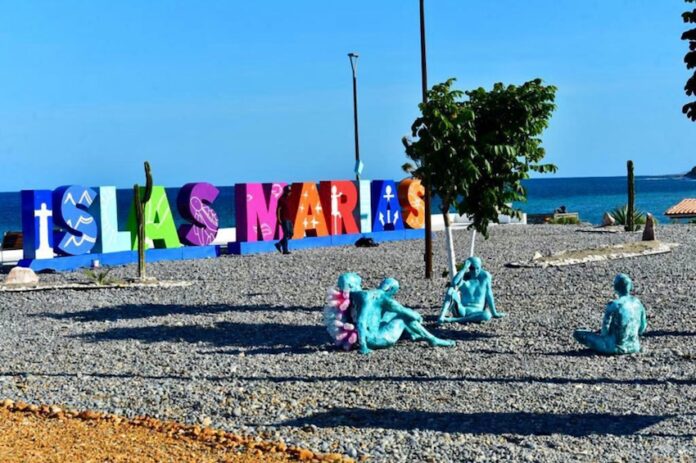
islas marías entrance
The prison that occupied one of the islands until 2019 has given way to a tourist facility, which is soon to be joined by educational projects in park management and sustainable farming. (Gobierno de México)

The tourist center on the UNESCO-designated Biosphere Reserve of Islas Marías will soon be sharing space with an agroecological farm and a park ranger training center.

The federal government has authorized the National Commission of Protected Natural Areas (Conanp) to use an area of ​​more than 70,000 square meters located on Isla María Madre, according to the Official Gazette of the Federation (DOF) published on Oct. 8.

Islas Marias
The grasslands and scrublands of the Islas Marías Biosphere Reserve are home to endemic species of raccoon and rabbit, and the surrounding waters teem with 21 species of sharks and 10 different ray species. (@jenarovillamil/X)

The Conanp project is part of the government’s National Environmental Restoration Program, whose goal for this year is to restore 5% of the total degraded surface area of ​​coastal and marine ecosystems, 800 hectares of urban parks and forests, and 26,000 hectares of forest ecosystems.

Approximately 26,000 square meters of the Islas Marías project will be designated for “El Rehilete” (The Retreat), a self-sufficient and sustainable food production system. 

The stated aim of El Rehilete is to support the local economy and promote the conservation of natural resources, while teaching a new generation of young people about food sovereignty. 

The remaining 44,000 square meters will be dedicated to the construction of a training center to teach volunteer park rangers about conservation, preservation and management methods for Protected Natural Areas (ANPs).

Islas Marías is a Pacific Ocean archipelago comprising four main islets — María Madre, María Magdalena, María Cleofas and San Juanito — about 94 kilometers (58 miles) off the coast of the state of Nayarit. 

Visitors can tour Islas Marías by purchasing government-regulated tourism packages with departures from Mazatlán, Sinaloa, or San Blas, Nayarit. 

Originally named the Magdalenas Islands after they were discovered by Spanish explorers in the 1520s, the islands were used as a Mexican penal colony from 1905 until 2019. 

Islas Marías earned its Biosphere Reserve status in 2010. Nine years later, President Andrés Manuel López Obrador closed the prison and announced it would be converted into an environmental education center named after the prison’s most famous inmate, José Revueltas, the Durango-born 20th-century author and dissident.

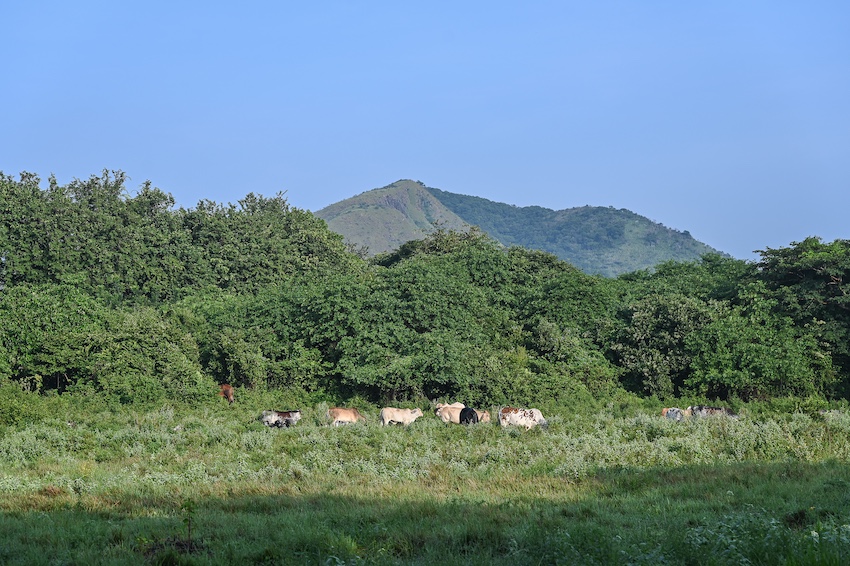
The islands are home to the Tres Marías raccoon (Procyon insularis), the endemic Tres Marías cottontail rabbit (Sylvilagus graysoni), 21 species of sharks, 10 different rays, three species of sea turtles and healthy coral reefs.

The landscape consists of grasslands, shrublands and tropical deciduous and subdeciduous forest.

With reports from Milenio, Reforma and Vallarta Adventures

More than 20 fatalities reported from this week’s rain: Friday’s mañanera recapped

0
Sheinbaum mañanera Oct. 10, 2025
On Friday, Sheinbaum gave a thorough update on the simultaneous storm systems drenching Mexico. (Juan Carlos Buenrostro/Presidencia)

The heavy rain that fell in various parts of Mexico on Thursday and consequent flooding were a central focus of President Claudia Sheinbaum’s Friday morning press conference.

Later on Friday, authorities in four states reported fatalities linked to the rain.

Among the cities and towns affected by flooding are Poza Rica, Veracruz; Álamo, Veracruz; Huauchinango, Puebla; Huehuetla, Hidalgo; and Zihuatanejo, Guerrero.

More than 20 rain-related fatalities  

At the start of the mañanera, Sheinbaum said that national Civil Protection chief Laura Velázquez would join the press conference via video link to speak about “the situation with the rain in different parts of the republic.”

More than 20 people lost their lives in incidents related to heavy rain on Thursday and Friday, according to media reports published on Friday afternoon. At least 16 deaths occurred in Hidalgo, where rain associated with Hurricane Priscilla caused flooding and landslides. There were additional fatalities in Puebla, Veracruz and Querétaro, while a number of other people have been reported as missing.

Sheinbaum noted that it rained on Thursday in 31 of Mexico’s 32 federal entities.

“Only in Baja California Sur did it not rain,” she said.

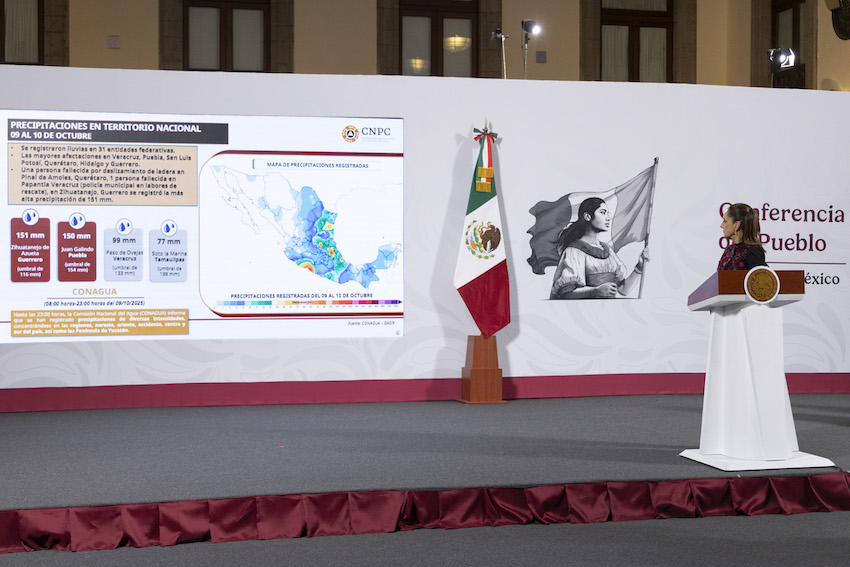
Sheinbaum at mañanera Oct. 10, 2025
On Thursday, it rained in 31 of Mexico’s 32 federal entities. (Juan Carlos Buenrostro/Presidencia)

Sheinbaum said that particularly heavy rain had fallen in the Huasteca region.

“[In] Veracruz mainly, but Querétaro, Hidalgo and San Luis Potosí were also affected,” she said.

In addition to those states, Puebla and Guerrero received heavy rain on Thursday, Velázquez said.

“In Guerrero, in Zihuatanejo, is where the highest rainfall was recorded, which was 151 millimeters,” the Civil Protection chief said.

Tropical Storm Raymond dumped two months’ worth of rain on the Pacific coast city in one day, according to Zihuatanejo Mayor Lizette Tapia Castro.

Velázquez also reported that:

  • Rain damaged 5,000 homes in the municipality of Álamo, Veracruz.
  • The Jalpan River in Querétaro had burst its banks.
  • Landslides had occurred in Veracruz, Querétaro and Puebla.
  • The Axtla River and the Moctezuma River in San Luis Potosí burst their banks.
  • A school and a hospital were flooded in Puebla.

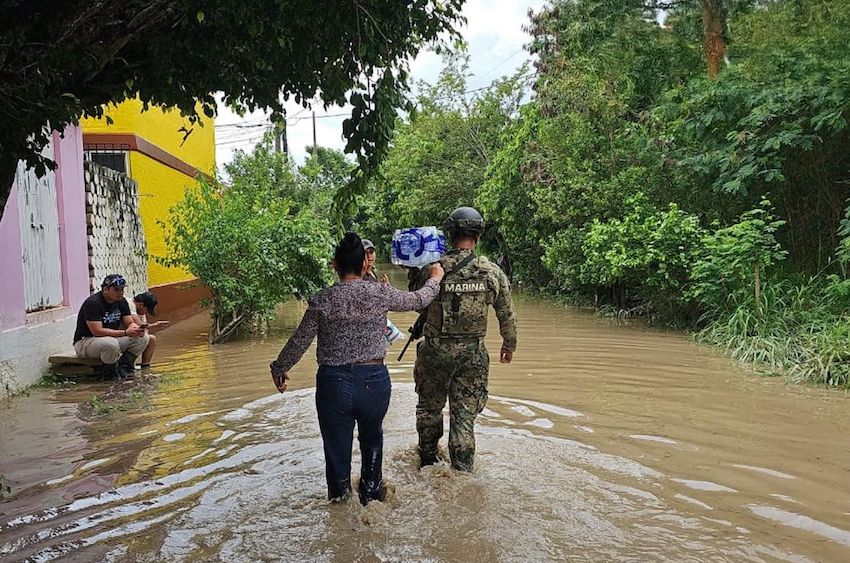
Velázquez said that shelters had been set up in Álamo, and noted that the army and the navy, along with other authorities, were responding to flooding in different parts of the country.

A woman walks with a member of the Navy through knee-high water after major rainfall in central Mexico
Veracruz, Querétaro, Hidalgo, San Luis Potosí, Puebla and Guerrero were the states most affected by rain this week. (@Claudiashein/X)

She said that the Federal Electricity Commission was working to reestablish power in areas where service had been cut, including in parts of Veracruz, San Luis Potosí and Puebla.

Velázquez said that rain would continue to fall in different parts of Mexico on Friday and advised citizens to be alert to official communication channels and to follow “all the recommendations” issued by Civil Protection authorities.

On Friday afternoon, the newspaper La Jornada reported that 24 people had died in rain-related incidents, while other media outlets reported slightly lower death tolls. With at least eight people reported as missing, it appears likely that the rain-related death toll will rise over the weekend.

Adidas to compensate Oaxaca community whose huarache design inspired its Oaxaca Slip-On sandal 

Also at Sheinbaum’s Friday mañanera, Deputy Culture Minister Marina Núñez Bespalova told reporters that Adidas has committed to compensating the community of Villa Hidalgo Yalalág, Oaxaca, whose signature huarache sandal craftsmanship inspired the German athletic apparel and footwear company’s Oaxaca Slip-On sandals.

Oaxaca threatens legal action against Adidas for its ‘Oaxaca Slip-On’ sandal

After accusations of cultural appropriation, Adidas and the designer of the Oaxaca Slip-On sandals issued apologies in August.

Núñez said that meetings between Adidas and “the affected community” had been held.

Representatives from the Mexican Institute of Industrial Property and Mexico’s copyright office Indautor also attended the meetings, she said.

“Several agreements were reached with the brand,” Núñez said, adding that while “the compensation agreement” cannot yet be announced publicly, it involves Adidas funding “some” infrastructure projects that the community of Villa Hidalgo Yalalág had requested.

She said that there could be “some kind of collaboration” between Villa Hidalgo Yalalág artisans and Adidas at some point in the future.

“But there is already a compensation contract for the community,” Núñez stressed.

Asked whether Adidas would be allowed to sell its Oaxaca Slip-On sandals in Mexico, the deputy culture minister responded:

“No, no. They pulled those shoes off the market immediately; within a week, they were gone.”

By Mexico News Daily chief staff writer Peter Davies (peter.davies@mexiconewsdaily.com)

Mexico City’s new waste management strategy will require trash separation starting Jan. 1

2
trash
Mexico City generates 6,400 tonnes of trash per day and the city is hoping that at least half of that amount will be recycled or reused by 2030. (Damián Sánchez/Cuartoscuro)

Mexico City’s latest attempt to improve waste management in the capital is an ambitious trash separation strategy that aims to ensure that by 2030, 50% of the estimated 8,600 tons of waste generated daily in the city is recycled or reused instead of being sent to landfills or tossed in streets and empty lots.

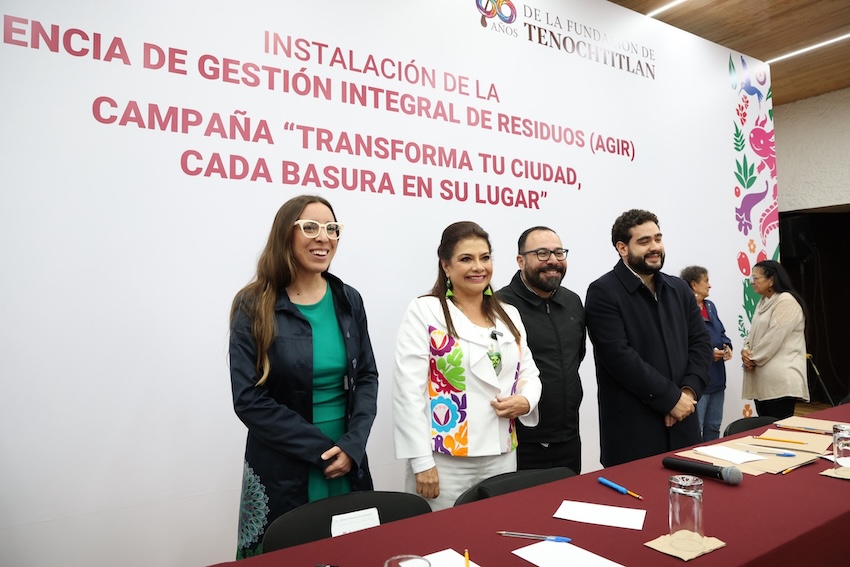
To achieve that goal, Mexico City Mayor Clara Brugada has presented the campaign: “Transform your city, each piece of trash in its place.” Beginning January 1, 2026, homes, schools, offices and businesses will be required to separate their trash into three categories: organic waste, recyclable inorganic waste and non-recyclable inorganic waste.

Mexico City Mayor Clara Brugada, shown here with some members of the recently created Integrated Waste Management Agency (AGIR) on the day of their swearing in, understands that the success of the plan depends on the good faith participation of the populace. (Clara Brugada/Facebook)

In a ceremony that installed the governing body of the new Integrated Waste Management Agency (AGIR) — officially created in November 2024 — Brugada noted that only 15% of the city’s garbage is properly separated today. 

“Every piece of waste we throw away has a direct impact on the air, water and land,” she said. “Therefore, we believe that with good organization, awareness and determination, we can transform this challenge into a great opportunity to build a cleaner, more equitable and sustainable city.” 

The program’s initial investment will be 400 million pesos (US $21.5 million)  250 million of which will go to the purchase of new waste collection trucks, and the rest to improve the Bordo Poniente recycling plant and to build new plants throughout the city.

For the remainder of the year, Brugada’s government will coordinate an educational campaign to teach residents how to separate their waste.

Brugada said that once this program kicks in, garbage collection will be carried out on a daily basis, as follows:

  • Tuesday, Thursday and Saturday: organic waste (food scraps, garden scraps, etc.)
  • Monday and Wednesday: recyclable inorganic waste (paper, cardboard, glass, PET, aluminum, metals, etc.)
  • Friday and Sunday: non-recyclable inorganic waste, such as sanitary waste, diapers and cigarette butts.

This isn’t the first time the capital has sought to organize its waste management, as garbage separation is a long-standing environmental goal.

In 2003, the local government approved the Solid Waste Law of the Federal District, which established the obligation to separate waste into two basic categories: organic and inorganic. However, the lack of collection infrastructure and weak educational campaigns prevented effective implementation of the law.

With reports from El Universal, Lopez Dóriga, Chilango and TV Azteca

Job creation was up 28% in September, but still down 27% for the year

1
albañil
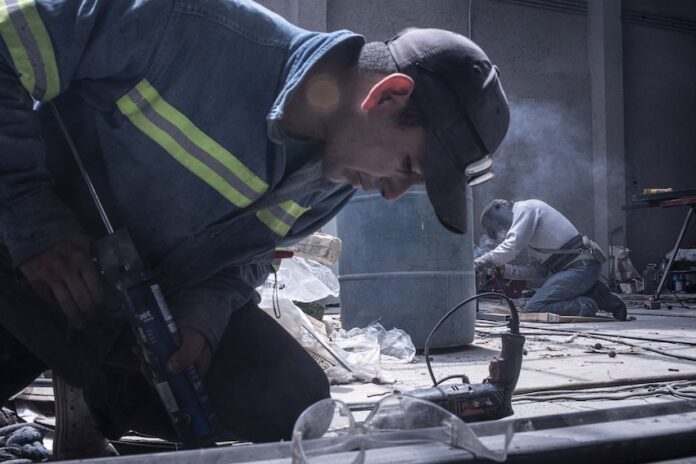
Job creation in September by employers registered with IMSS increased by 28% over September 2024, helping to offset a disappointing year for new employment. (Pedro Anza/Cuartoscuro)

Mexico added nearly 117,000 new formal sector jobs last month, but job creation on the year is still down 27%.

The Mexican Social Security Institute (IMSS) reported that the number of people employed in new formal sector positions increased by 116,765 in September, a 28% increase over the same month a year ago. However, of the new jobs added last month, 50,412 — or 15% — were identified as temporary hires.

Steet vendor
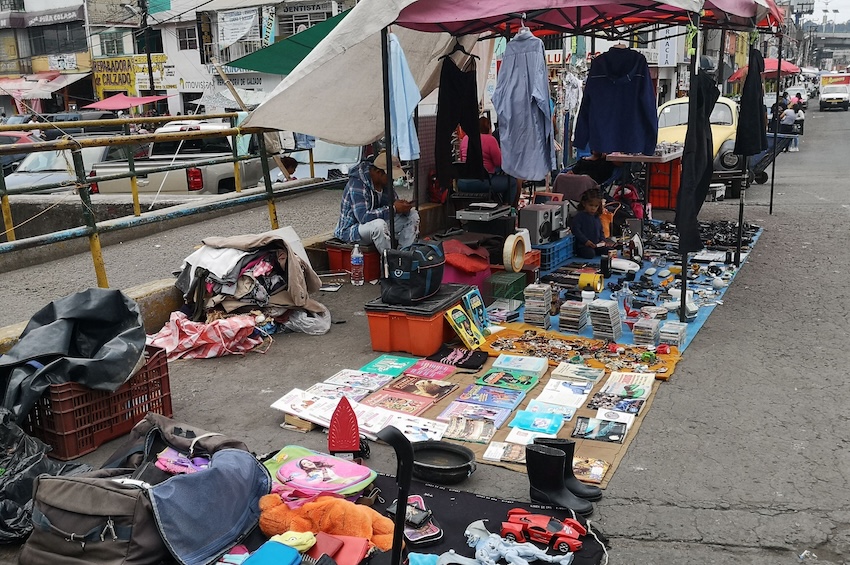
If the informal sector, which more than half of all Mexican workers are part of, is included in the job statistics, Mexico’s current unemployment rate plummets to a near-record low of 2.7%. (Cuartoscuro)

The total of new jobs created through the first nine months of 2025 has reached 333,303, well behind the 456,427 formal jobs created from January to September 2024. The newspaper El Economista reported that 16 states had negative figures for formal job creation last month. 

“The new jobs data through September reflects the second-lowest figure for job creation since 2008, not counting the health emergencies of 2009 and 2020,” Fernando Bermúdez, director of Institutional Relations at the staffing firm ManpowerGroup, told El Economista. 

The IMSS report indicated that overall formal employment is now just over 23.76 million, but that figure drops to 22,571,682 when people working in the digital economy are subtracted. And of this latter figure, 13% of the jobs are temporary positions.

Rodolfo Ostolaza, deputy director of Economic Studies at Banamex, told El Economista that subtracting the number of digital platform workers reveals that “employment has stagnated since mid-2024 … and [reflects] three consecutive months of annual declines.”

An additional concern is that the number of employers registered with IMSS has declined for 17 consecutive months. According to El Economista, IMSS reported 1,039,227 employer registrations with the Institute, a negative annual growth rate of 2.4%. 

The loss of formal employers further strengthens the informal economy, which employs nearly 55% of the country’s workforce, according to the national statistics agency INEGI. 

IMSS only records “formal”  jobs, i.e., jobs registered with the Institute itself.

“Being formal is very expensive in this country,” Ostolaza said.

Still, because it includes both formal and informal jobs, INEGI’s most recent report shows a national unemployment rate of 2.7%, which is close to the historic low of 2.3% recorded in March 2024.

With reports from El Economista, Animal Político and El Financiero

Oaxaca’s ‘most vibrant festival’ returns with over 140 Day of the Dead events

1
Participants of Oaxaca's Day of the Dead parade with fireworks in the background
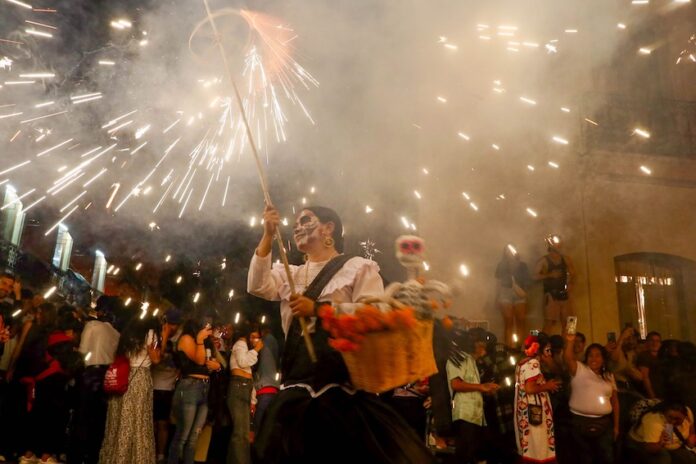
Day of the Dead festivities in Oaxaca take place from Oct. 26 to Nov. 4. (Carolina Jiménez/Cuartoscuro)

Oaxaca expects to welcome upwards of 89,000 visitors for its 2025 Day of the Dead celebration, according to officials who unveiled a packed cultural agenda this week.

Running from Oct. 26 to Nov. 4, the festivities will feature over 140 cultural and gastronomic events statewide.

Some events require registration and fill up fast, so visitors are urged to “book before they sell out,” especially for these five experiences.

Authorities with the Oaxaca Tourism Ministry said the anticipated uptick in visitors marks a nearly 6% jump over 2024, and they are projecting revenues of more than 381 million pesos (US $20.6 million).

Touted in a press release as “the most vibrant festival of all,” Oaxaca’s lineup of Day of the Dead activities is “one of the greatest symbols of Mexican identity, a celebration that transforms the vision of death into a celebration full of color, joy, flavor and tradition,” said Josefina Rodríguez Zamora, Mexico’s tourism minister.

Highlights include a monumental 250-square-meter sand carpet in the Jalatlaco neighborhood; the Historic Center Facade Competition on Oct. 27; Diverti Muertos festivities; concerts in neighborhoods such as Xochimilco and San Pablo Villa de Mitla; and marigold field tours in Santa Cruz Xoxocotlán and San Antonino Castillo Velasco, where the illuminated fields open at night Oct. 25.

Sporting events such as a state surfing tournament in Puerto Escondido and the Recorrido al Mictlán race on Nov. 2 round out the schedule.

Providing a window into local heritage will be the “Casa Hecho en Oaxaca” exhibition, market fairs at the Oaxaca Gastronomic Center, and displays of 35 altars representing the 16 Indigenous and Afro-Mexican cultures of Oaxaca (in the capital’s main square).

What’s on in Oaxaca in October?

First-time events include electronic music festivals in Mitla, mezcal tastings in Tlacolula and wellness ceremonies.

There will also be old-time favorites such as family altar competitions, the Great Parade on Oct. 31 and a catrina competition.

Ninety-five percent of activities are free and open to all.

As the finalized schedule falls fully into place, officials urge travelers to check for updates: This link includes a lineup of top events and links to official websites.

With reports from El Economista, Estado Actual and Monte Albán Heritage Center

How to get your money out of CIBanco

7
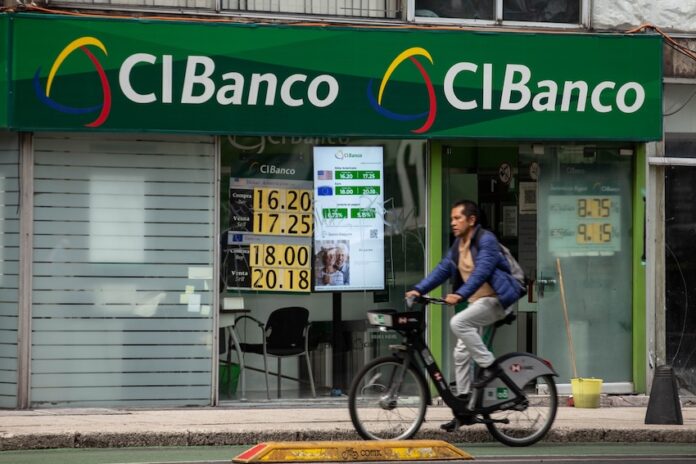
CIBanco branch
Don't panic! You have a year to retrieve your money, that is, until Oct. 13, 2026. (Shutterstock)

Mexico’s Institute for the Protection of Bank Savings (IPAB) has revoked CIBanco’s license and has begun to liquidate the embattled financial services provider.

IPAB announced Friday that it will begin paying out insured deposits beginning on Monday, Oct. 13, and advised account holders to visit its official website for information: www.gob.mx/ipab

CIBanco clients with loans or credits can register to receive their funds at the government-managed payment portal beginning Oct. 13. The instructions are as follows:

  1. Visit the IPAB payment portal at www.gob.mx/ipab.
  2. Complete the form with the required information, as shown on your latest CIBanco account statement.
  3. Provide a CLABE account number from a Mexican commercial bank to receive your guaranteed deposits by transfer.
  4. You will receive a confirmation email on the same day that the account holder’s details are correctly registered.

The estimated processing time is 48 to 72 business hours, depending on the bank you have registered to receive the transfer. If you do not have another bank account in Mexico, you must go to a CIBanco branch or an IPAB office to file a physical Payment Request; bank accounts corresponding to a third party will not be accepted. 

The government has also created a website to explain the legal framework for the actions being taken and issued an alert warning about fraudsters.

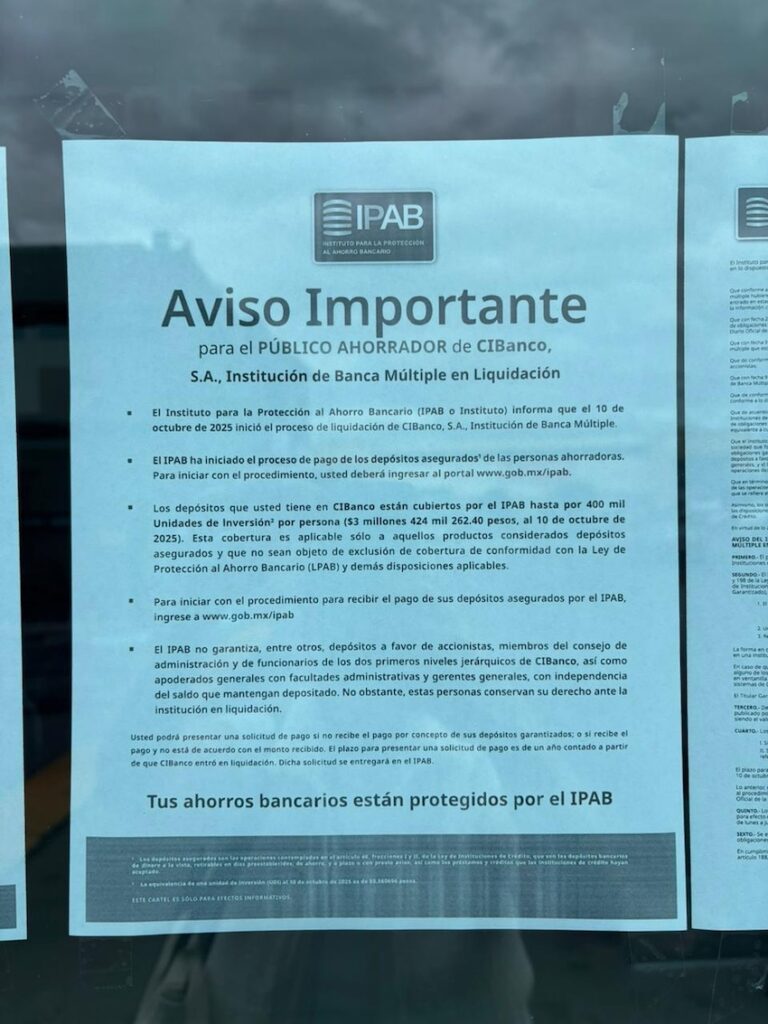
Notices like this were posted at CIBanco branches on Friday.

Deposits at CIBanco are protected by the IPAB for up to 400,000 Investment Units (UDIs) per person, equivalent to $3,424,262.40 pesos as of Friday.

IPAB cautioned that this coverage only applies to products considered insured deposits, provided they do not fall under the exclusion criteria established in the Bank Savings Protection Act (LPAB). The deadline to complete the liquidation procedure is one year, that is, by Oct. 13, 2026.

Those who do not receive their payment or believe the amount refunded is incorrect may submit a request or claim directly to IPAB offices. 

However, people holding loans with CIBanco must continue making payments, even though the bank is in liquidation.

Click here for a list of the CIBanco branches that will remain open for inquiries, clarifications and requests for payment of secured obligations. They will not be providing financial transactions or services.

IPAB also announced that it does not cover deposits belonging to CIBanco Shareholders, members of the board of directors, representatives with administrative powers and general managers, although they still retain their right to file claims directly.

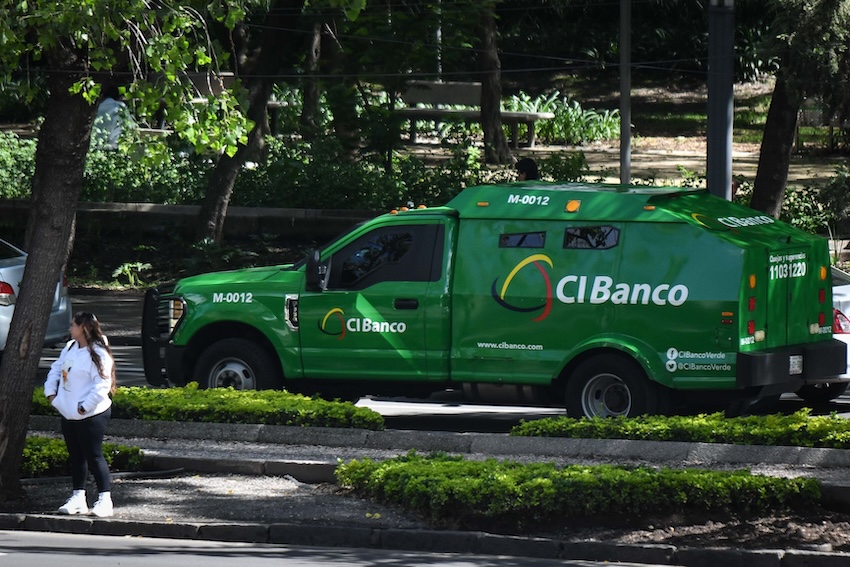
CIBanco truck
CIBanco will begin paying out insured deposits beginning on Monday, Oct. 13. (Mario Jasso/Cuartoscuro)

The U.S. Department of the Treasury’s Financial Crimes Enforcement Network (FinCEN) sanctioned CIBanco and two other financial institutions in June, accusing them of laundering millions of dollars for drug cartels

The Governing Board of the National Banking and Securities Commission (CNBV) soon thereafter ordered the temporary management intervention of CIBanco, Vector and Intercam.

After initially staving off sanctions in July, regulators imposed restrictions on the three companies’ international transfers, depositor withdrawals, and banking operations, prompting them to sell off assets in August.

With reports from El Financiero, Animal Político, La Jornada and Infobae

Posada del Sol: Mexico City’s most extravagant hotel that never was

5
Hotel Posada del Sol
Intended to be the crown jewel of Mexican hospitality, the Posada del Sol hotel fell into ruin — and eternal damnation. (Facebook)

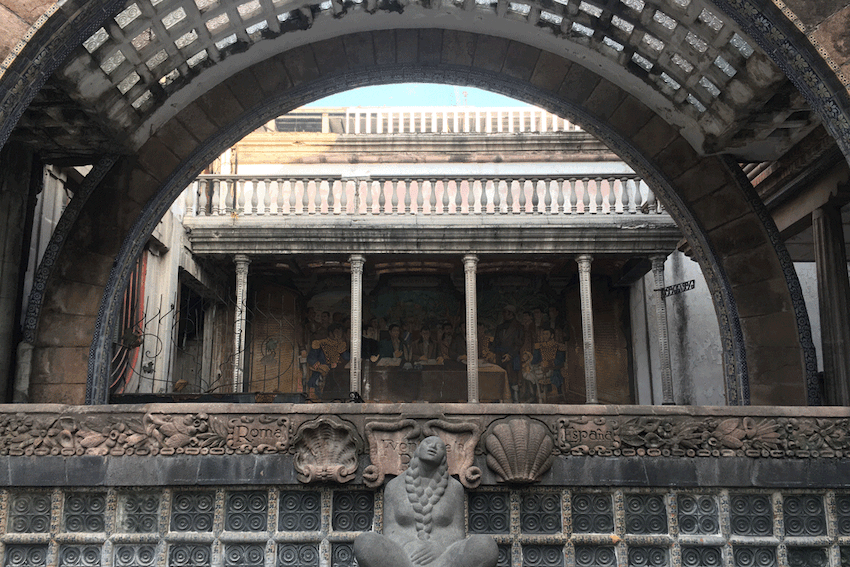
On the corner of Avenida Niños Héroes and Calle Dr. J. Navarro looms a towering, derelict structure with a facade resembling a collage different patterns of brick and tile punctuated by arched windows and iron-wrought balconies. As is the unfortunate fate of many abandoned buildings, it’s swarming in graffiti and shards of broken glass. It’s hard to imagine that 80 years ago, this crumbling edifice was set to be the world’s most extravagant hotel only, it never was.

What’s the history behind (and beneath!) Posada del Sol, the architectural gem situated in the center of the Doctores neighborhood? More importantly, what’s its future?

A Spanish visionary’s idea for a Mexican marvel

Once a grandiose dream, today, the Posada del Sol lies abandoned. (Mas por Mas)

The year was 1945, and the Doctores neighborhood was growing, attracting working-class families and small business owners thanks to a central location and affordable housing. Originally called “Hidalgo,” the area became known as Doctores because almost all of its streets were named after famous physicians. It seemed to Spanish-born engineer Fernando Saldaña Galván the ideal place to unleash his vision: a luxurious complex intended as a meeting place for artists and intellectuals, featuring more than 600 rooms, an auditorium, a chapel, theater, library, and swimming pool.

The building showcased a fusion of architectural styles — art deco, baroque, and neo-colonial design. The complex overtook more than half a block; fifteen buildings behind giant green gates housed gardens, patios, fountains, terraces, and brightly painted murals, not to mention Turkish baths and tea rooms. Local lore speaks of winding secret passages beneath the structure, perhaps serving as staff transport or,more enticingly, occult rituals. Like so much about Posada del Sol, their existence remains unverified. What is verified is a spectacular fountain created by Colombian artist Rómulo Rozo, which depicts a woman gazing at the universe. Roberto Cueva del Río, a Puebla artist commissioned by President Lázaro Cárdenas on several occasions, painted a scene from the constitutional signing of Apatzingán in 1814. Inside the garden is a stone plaque signed by Saldaña Galván himself, which reads “Considering the adverse circumstances during the execution of La Posada del Sol that there will be few men capable of projecting, building, and finishing it.” These words would seal the hotel’s fate — the Posada remained open to the public for just a few months.

From dream to nightmare

The hotel opened while construction was still being completed, though work would be totally suspended the same year of its inauguration. Saldaña Galván’s financial burden was overwhelming some publications, like El Financiero, suggest that he once held a position in public office, which allowed him to obtain resources necessary to build it. This strategy ultimately proved insufficient in completing his ambitious vision.

The building was quickly expropriated by the government and, according to family relatives, Saldaña Galván fell into a deep depression. Details about his death in 1952 remain murky: some say his body was found hanging from a bell in the courtyard, directly in front of a San Francisco de Asís statue. Other legends take it a step further, claiming he murdered his wife and children before taking his own life. A factual explanation has yet to be released, though most agree that he committed suicide due to economic pressures. Interestingly enough, there are no published photos of Saldaña Galván to be found.

For about two decades, Posada del Sol would serve as various administrative headquarters before finally falling into neglect under the care of federal authorities in the late 1970s. Since then, the hotel has remained abandoned, possibly due to high restoration costs, structural concerns, and overall bureaucratic issues. 

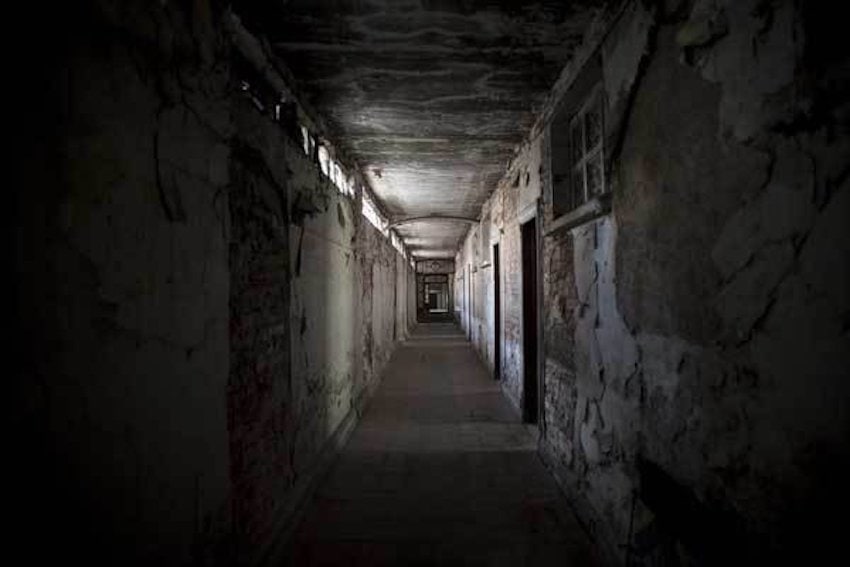
The corridors of the Posada del Sol don’t just hide the ruins of a failed dream… (Rolloid.net)

The ghost stories that define Posada del Sol 

The abandoned halls of Posada del Sol have become a magnet for the macabre. Neighbors have claimed to hear screams at night, documentary filmmakers have reported unexplained shadows and feelings of being watched.

Among these tales, the little girl of room 103 has proven remarkably persistent.

During the 1960s, the Hotel Posada del Sol became the headquarters of IDECO, a community development and rural housing institution. Employees had access to a daycare center within the old hotel’s walls. Legend has it that one little girl went missing, and after several hours of investigation, her lifeless body was found in room 103. Another version of the same legend claims that the girl’s ghost is actually that of Fernando Saldaña’s daughter.

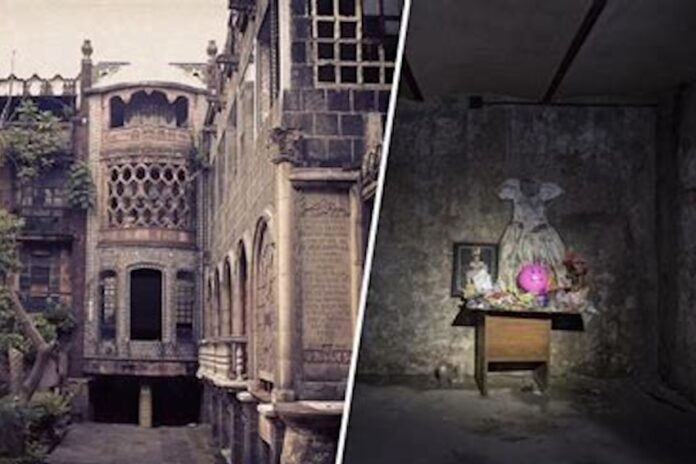
Whoever the unfortunate child might be, her spirit remains trapped in that room and anyone who dares to enter might encounter her ghost. The walls are adorned with cartoon drawings and cryptic messages, and in the back corner is an altar holding an antique girl’s dress and candies, toys, faded photographs, flowers, and candles. Visitors leave such offerings not out of the goodness of their hearts but rather out of fear: it’s believed that the girl curses those who explore the hotel ruins without leaving her a gift.

Further supporting the legend are the actors and production teams of “Yago”, a Mexican telanovela, and the sequel to “Km 31”, a Mexican horror flick. Some report having seen the girl appear in room 103, and others admitted fear kept them from going to the bathroom alone. Rumors swirl that in an attempt to keep the child “calm”, the production team created the aforementioned altar and continues its upkeep to this day.

KM31_2 - Tráiler Oficial

Modern attempts and the fate of the hotel

The history of Posada del Sol’s abandonment has been punctuated by repeated attempts at revival, each ending in failure. In 1998, local politicians tried to convert the premises into the Office of the Attorney General of Justice of the Federal District. Unfortunately, that plan never materialized.

It was subsequently contemplated that it would make a great headquarters for a Faro de Artes y Oficios (Arts and Crafts Workshop). But that idea never came to fruition, either. In January 2021, the Real Estate Heritage Committee of the Government of Mexico City donated the property in the Doctores neighborhood to the Universidad del Bienestar Benito Juárez to create the law school. The donation was announced by Claudia Sheinbaum, then the head of government of CDMX. Sheinbaum explained that the Building Safety Institute had to conduct a very thorough study to determine which parts could be demolished and which parts could be reconstructed. 

Yet even this latest initiative appears stalled. Sheinbaum estimated that the new Law School would operate that same year. However, the Universidad del Bienestar portal indicates that renovation work has not yet been carried out at Posada del Sol. Until now, no definitive plans have been realized. 

The building currently belongs to the Government of the capital and is used occasionally as a location for film productions, as well as a warehouse for confiscated furniture. Some believe it was the architect himself who sealed the building’s fate by placing a curse on the premises before his death, he ensured his beloved posada would never be anything else. Today, the structure remains in oblivion, its future as uncertain as the legends that haunt its corridors.

Bethany Platanella is a travel planner and lifestyle writer based in Mexico City. She lives for the dopamine hit that comes directly after booking a plane ticket, exploring local markets, practicing yoga and munching on fresh tortillas. Sign up to receive her Sunday Love Letters to your inbox, peruse her blog or follow her on Instagram.

Harvesting Oaxaca’s ‘blue gold’

3
Oaxaca Indigo
The deep hues of Oaxaca's precious indigo are on full display as Anna Bruce explores a rural festival celebrating the dye. (Anna Bruce)

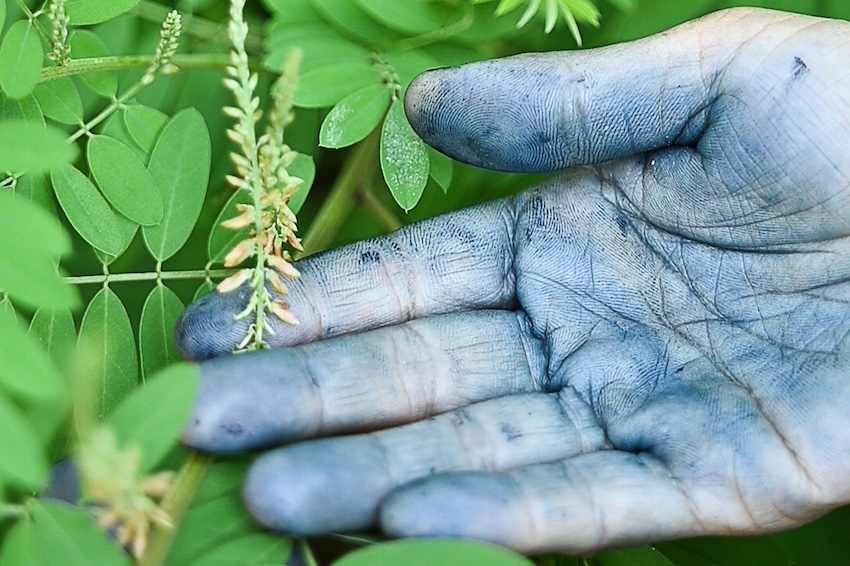
Indigo is a rich blue color. We are all familiar with it, as the blue of our denim jeans. The dye that creates this iconic color is derived from a tall leafy bush called jicalete, which grows on the coast of Oaxaca in the small village of Santiago Niltepec (meaning “Hill of Indigo”). The Spanish word for indigo is anil, which is likely the origin of the community’s name.

(Anna Bruce)

Indigo has been produced in Oaxaca since pre-Columbian times and has global historical significance, having been used in Africa, Egypt, India and Japan. It was typically used for ritual dress or royalty, as the color symbolizes wisdom, with a connection to a higher consciousness. As a pigment, it has been ascribed protective properties and even healing powers.

(Anna Bruce)

Commercial production in Niltepec began in the 18th century. With a growing interest in natural and sustainable dying practices over the past decade, production has seen a revival. This has been supported by local intervention (such as the Textile Museum of Oaxaca) and increasing demand for artisanal textiles worldwide.

(Anna Bruce)

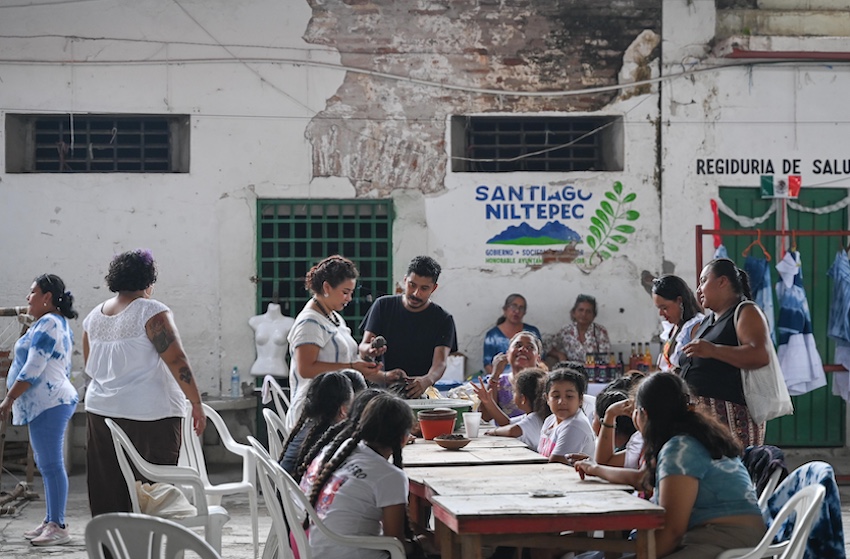
The revival of production is officially celebrated during the annual Feria de Anil. This year the festival took place on Sep. 27th and 28th, with tour of production facilties, presentations about the history and significance of indigo and workshops hosted by local and visiting artists. The festival fosters a renewed sense of pride and opens up opportunities for knowledge exchange within the community. This year, I was lucky enough to attend.

(Anna Bruce)

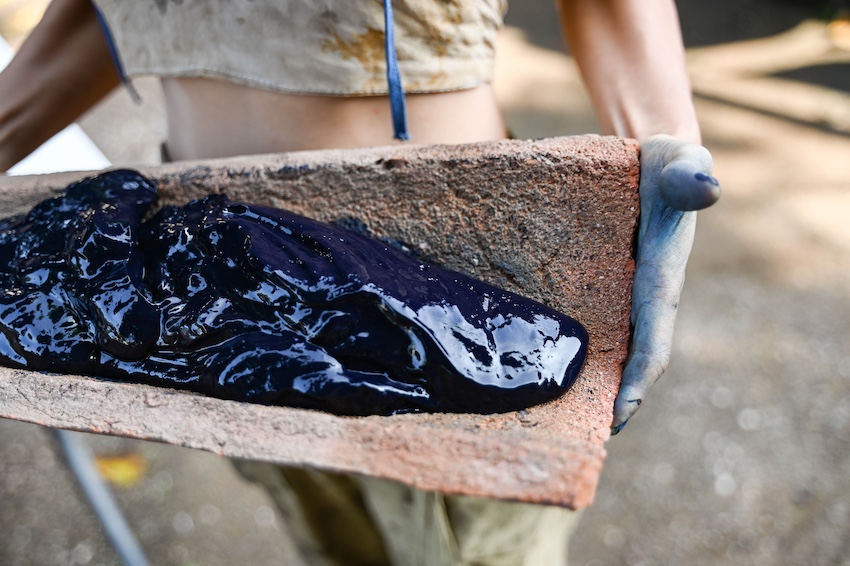
Arriving in Niltepec, after a 7-hour bus ride from Oaxaca City, you are immediately hit with a wave of heat thick with stifling humidity, perfect conditions for the growing of this valuable crop. It takes approximately 200 kilograms of raw plant material to end up with one kilogram of the dye, a dried fermented paste made from the leaves, with a charcoal-like consistency.  Due to the intensive process and low yield, the dried indigo is often referred to as ‘blue gold’. Currently, the value is around 3,500 pesos (US $190) per kilo.

The indigo grown in Oaxaca is a strain called Indigofera suffruticosa, native to the Americas. The plant grows in the rainy season, typically between May and September, and must be harvested before it flowers. 

(Anna Bruce)

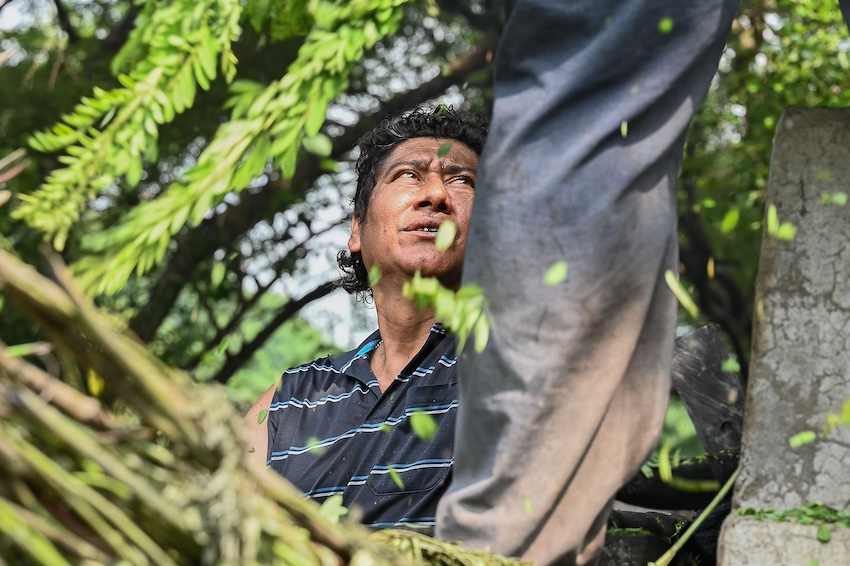
The harvesting of jicalite is done in the cooler hours before dawn. They are bound, cut with a scythe and loaded into ox-drawn carts. These carts can pass through the mud, unpassable by car following the intense rains in the region. 

The plants must be processed before they dry out. If they dry out they lose their dying potency, which comes from the fresh indican in the leaves, which is the chemical precursor to the indigo dye.

(Anna Bruce)

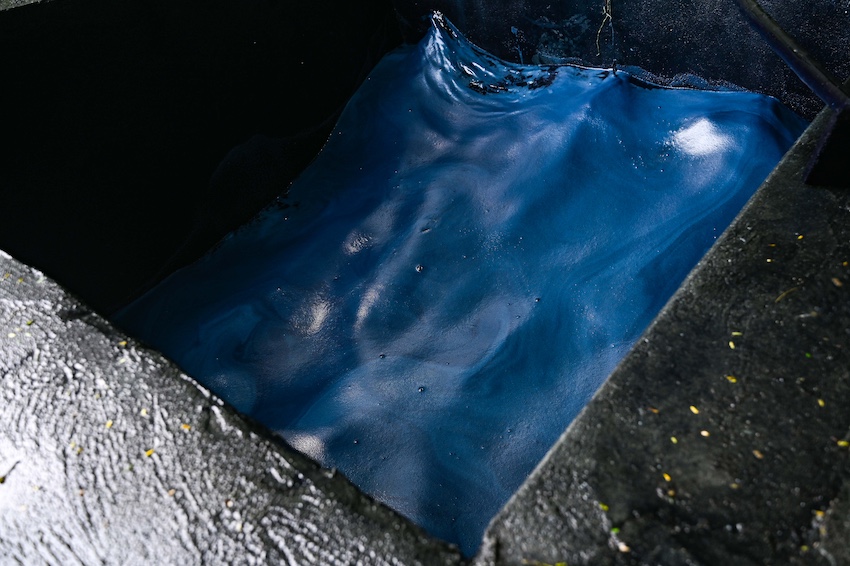
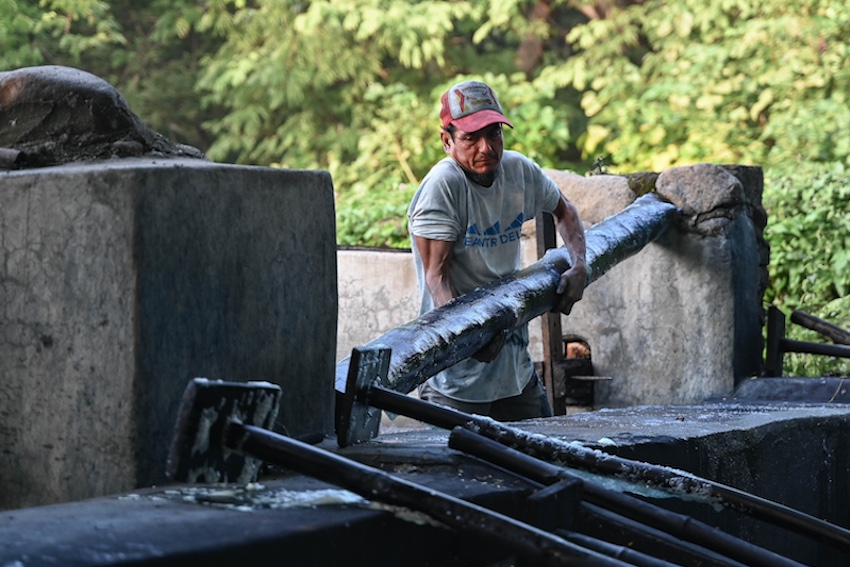
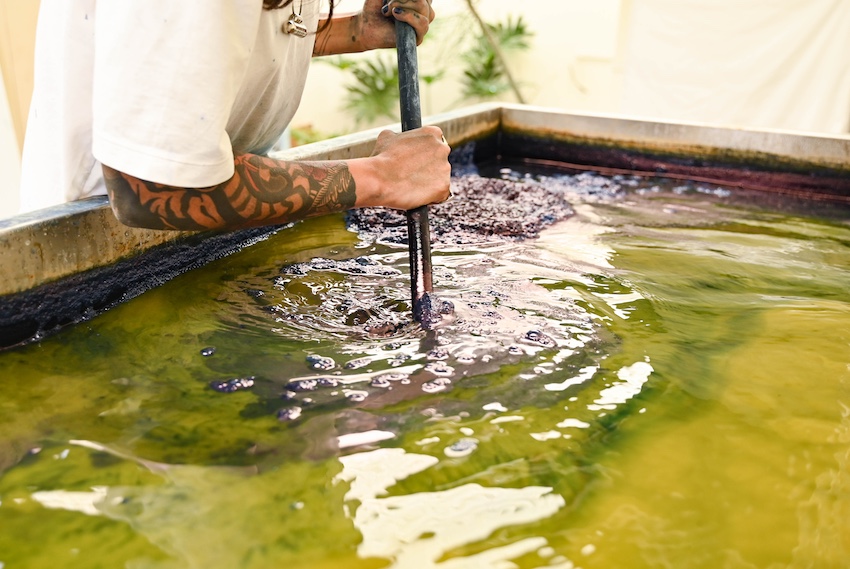
Processing takes place in large man-made pools called ‘pilas’, which are often hundreds of years old. The ‘añileros’ load up the pilas with the fresh cut plants, pressing them into water and held down with a heavy wooden lattice. Over several hours the plant ferments, turning the liquid an acid yellow/green color. 

(Anna Bruce)

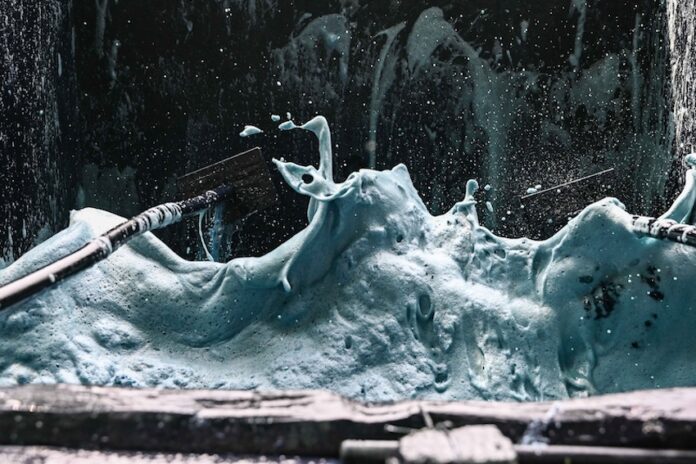
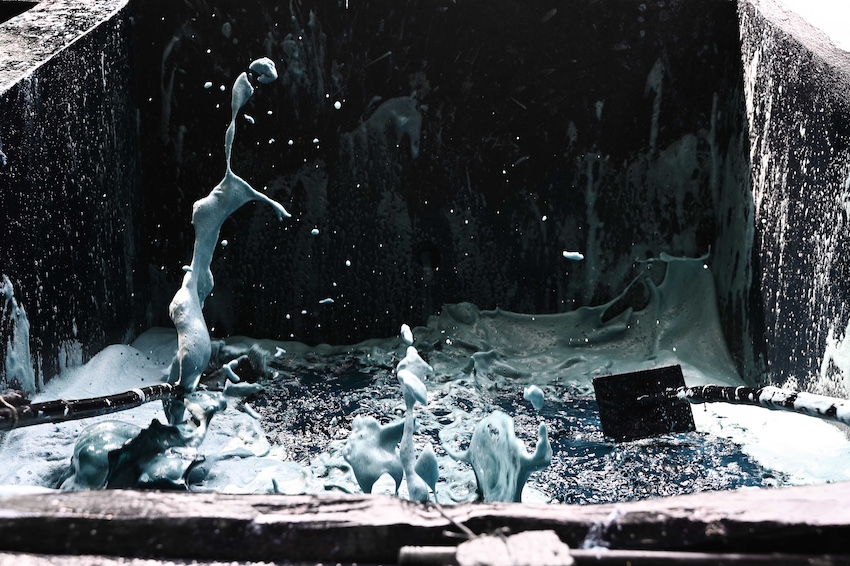
Eventually, they open a valve to release the liquid into a secondary lower pool, which they agitate and aerate with paddles for several hours. After the fermentation they add the berry of the Gulaver plant to thicken the liquid into a mud-like substance. Often the ancient pilas are built along the river, under Gulaver trees.  

(Anna Bruce)

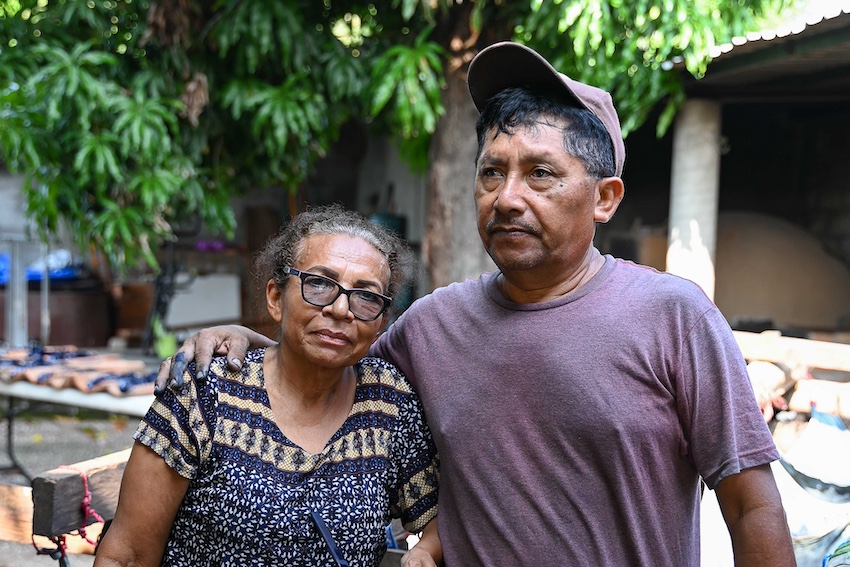
In the afternoon, the indigo water is taken from the pila’s back to the añileros home. There it is strained through cheese cloth to remove the excess liquid, before the remaining paste is dried in the sun, often using old roof tiles. 

We visited the home of añilero Manuel Valencia and his wife Lulu. While Manuel managed the harvest and work at the pila, Maestra Lula managed the drying stage of the indigo process. 

(Anna Bruce)

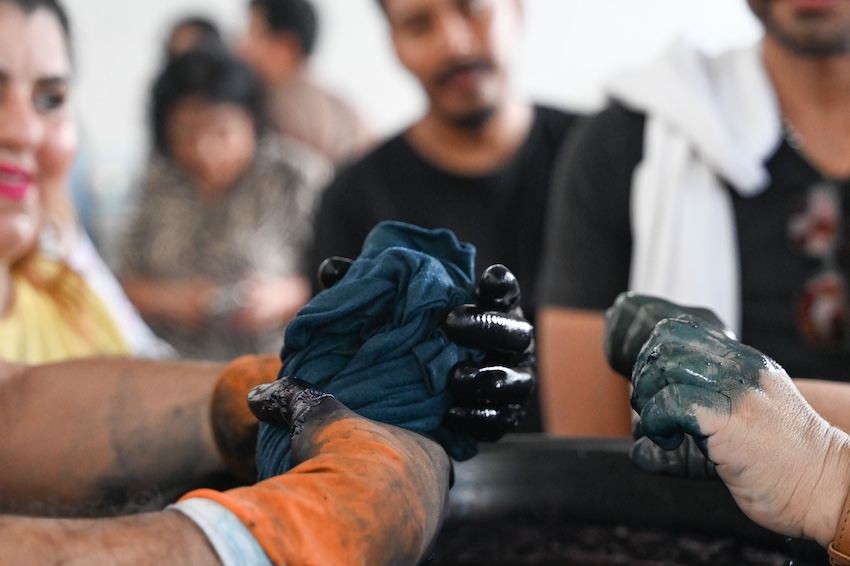
After learning about the process of making the indigo dye, we walked to the town center, which was decorated for the annual fair. There we got to dye some of our own clothes, using a japanese inspired technique called ‘shibori’ to create a tye-dye effect. 

a woman stirring a vat of indigo dye
(Anna Bruce)

To begin with, the dyeing liquid is still yellow-green. It is warm, but not boiling. The material must be carefully submerged to not agitate the water too much. The fabric only turns blue as it meets the air and the dye oxidises. 

(Anna Bruce)

Walking though the center of Santiago Niltepec, you see women dressed in traditional clothing, a huipil and falda (skirt and blouse). But unlike the typical embroidered textiles from neighboring towns, the fabric of these huipils and faldas have been dyed a beautiful blue patterned with the shibori method, illustrating a fusion of historical practices with new traditions.

During the feria we met with Oaxacan artist Carolina Garza, founder of Hilos Flojos (loose threads). She was running a workshop during the festival in Niltepec. Back in Oaxaca City she also manages workshops, teaching the method of dying with indigo. If you are visiting Oaxaca and are interested in taking an Indigo workshop, contact Hilos Flojos.

Anna Bruce is an award-winning British photojournalist based in Oaxaca, Mexico. Just some of the media outlets she has worked with include Vice, The Financial Times, Time Out, Huffington Post, The Times of London, the BBC and Sony TV. Find out more about her work at her website or visit her on social media on Instagram or on Facebook.

Cuernavaca will host 10th annual World Forum of Mexican Gastronomy

0
making Mexican food
It was 15 years ago in 2010 when Mexico joined France as the first two nations whose cuisine was honored by UNESCO. (Dassaev Téllez Adame/Cuartoscuro)

More than 100 chefs from around the world will converge in Cuernavaca, Morelos, next month for the 10th World Forum of Mexican Gastronomy, a milestone event celebrating the 15th anniversary of UNESCO having designated traditional Mexican cuisine as part of the Intangible Cultural Heritage of Humanity.

The three-day event will include food sampling, exhibitions and other activities open to the public. It will begin Nov. 7 in the “City of Eternal Spring” — a popular getaway destination for residents of Mexico City.

plate of Mexican food
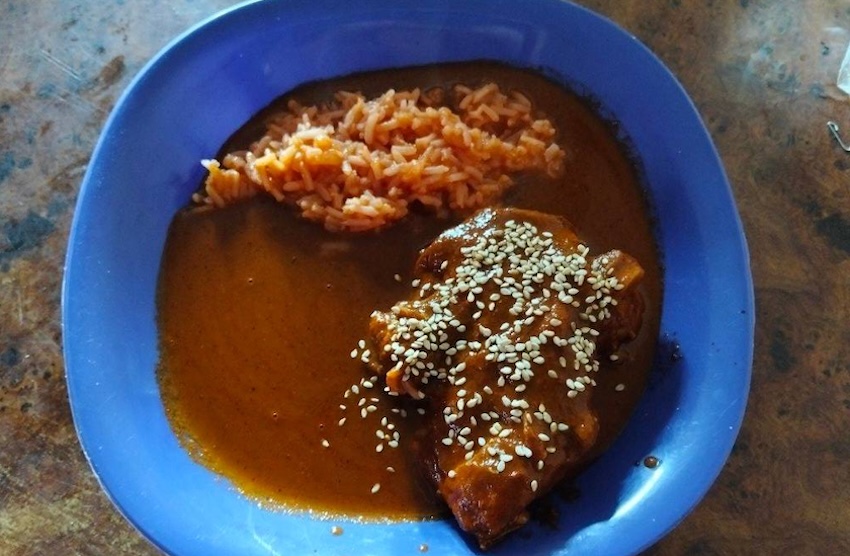
Mole is one of those only-in-Mexico works of gastronomic art that’s bringing hundreds of chefs from around the world to Cuernavaca next month to indulge themselves in Mexican cuisine. (Facebook)

The lineup of roundtable discussions, lectures, intercultural workshops and culinary showcases will spotlight Michoacán as the guest of honor.

The central Mexican state’s gastronomy — based heavily on the main staples of the Mesoamerican diet: corn, beans and chiles — was instrumental in helping Mexico achieve UNESCO recognition 15 years ago and continues to play a leading role in safeguarding traditional culinary practices.

In 2010, Mexico and France were the first two nations whose cuisine was honored by UNESCO.

The upcoming extravaganza was announced this week in Mexico City by Morelos Governor Margarita González Saravia and national Tourism Minister Josefina Rodríguez Zamora.

Organized by the Tourism Ministry in collaboration with the Conservatory of Mexican Gastronomic Culture, the event is expected to draw 30,000 visitors, officials said.

Participants will include traditional cooks, specialists and producers from Mexico, the United States, France, Italy, Spain and several regions in Asia. One of the main goals, organizers stated, is to have a dialogue between the ancestral and the contemporary aspects of Mexican gastronomy.

​The forum will also seek to promote the international reach of Mexican cuisine and recognize its role as a driver of social cohesion, community development and tourism.

This is the first time Cuernavaca will host the event, which is usually held in Mexico, but has also been staged in Milan, Italy last year and in Long Beach, California in 2018. Downtown venues will include the Palace of Cortés, Borba Garden and Emiliano Zapata Square.

The event falls within Morelos’ broader “Xochicalco, Land of Encounters” program of eight festivals from October through December. Those events are expected to receive over 60,000 visitors and generate an estimated 100 million pesos (US $5.4 million) during the final quarter of 2025, said Morelos Tourism Minister Daniel Altafi Valladades.

Cuernavaca already achieved a measure of gastronomic fame earlier this year for constructing the world’s longest taco acorazado. The regional specialty, which translates to “armored taco,” was 80 meters long — equivalent to 88 yards on a U.S. football field or six standard school buses placed end to end.

Specifics of the full program will be announced soon. For details, visit the World Forum of Mexican Gastronomy website.

With reports from El Sol de Cuernavaca