Home Blog Page 147

One doctor’s mission to provide affordable care in Zihuatanejo

2
Dr. Molina
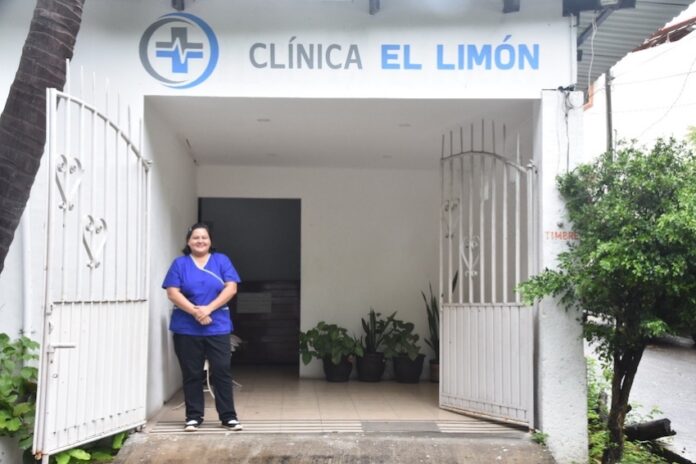
Dr. Molina in front of the clinic she coordinates in Zihuatanejo. (Clinica El Limón)

Imagine coming to work one day to find your workplace, a medical clinic, empty and completely cleaned out of everything: surgical supplies, hospital beds and medicine. Everything, right down to the toilet paper. This was the sight that greeted Doctor Arena Antonia González Molina one morning at the Clinica El Limón in Colonial El Limón, a poor neighbourhood in Zihuatanejo. 

But first, let’s backtrack.

Zihuatanejo beach
Clinica El Limón is located in the colonia of the same name in the popular resort destination of Zihuatanejo. (Unsplash/Maximilian Csali)

Dr. Molina’s story

Dr. Molina studied medicine at the well-respected Universidad Michoacana de Nicolás, Facultad de Medicina, and graduated in 2015. She did her internship at General Hospital in Zihuatanejo. Eventually, Molina landed a job with the government, which not only paid her bills but also gave her some financial freedom. It was during this time that she met Dr. Roderick Hernandez, who had opened Clinica El Limón along with several others. Molina decided to donate some of her time and expertise to helping those in need, while also using the clinic to treat her own patients. Dr. Serralde, with whom Molina had previously worked, had come to Zihuatanejo as a tourist years ago and fallen in love with the area. Serralde now practises at the clinic once a month and is a world-renowned phlebologist, lymphologist, venous ultrasonographer and podiatric surgeon.   

At first, Molina worked at Clinica El Limón on a part-time basis, but it soon became apparent that the clinic was struggling financially, seeing only about 20 clients a month. Still, the sight that greeted Molina that fateful morning, less than a year later, shocked her to the core. 

Some staff members fled, while others resigned to pursue more lucrative employment opportunities. Yet, the community’s resilience shone through as they rallied around the clinic, determined to keep it afloat. 

A commitment to care

Unwilling to “pack it in,” Molina, with the blessing of founder Dr. Roderick Hernandez and Dr. Serralde, decided to quit her government job and devote her full attention to keeping the clinic operating as the clinic coordinator. Luckily, Dr. Serralde, upon learning of what might have been a robbery, came to the rescue, bringing, among other things, monitors, beds, medicine and other essential supplies. He paid the nurses and cleaning staff, but Molina herself does not take a salary.

With limited experience running a business, Molina reached out to a couple of Canadian friends: Larry Wright, a philanthropist in the area, well known for his work raising funds and awareness for a school located at the garbage dump, and Ray Lenovitch, for advice. The pair suggested a GoFundMe page, and they raised 150,000 pesos, while Lenovitch held a private fundraiser in his home. It was enough to pay off most of the bills and debts and keep the lights on, but barely.

Surmounting challenges big and small

However, money wasn’t the only problem the fledgling organization faced. Many years of neglect and mismanagement had resulted in a major strike against them with the Federal Commission for Protection Against Sanitary Risk (Cofepris). This organization governs all the hospitals and clinics in Mexico. Threatened with closure, Molina and Semalde faced the task of making the necessary changes to bring the clinic up to code. Among the grievances was the clinic’s lack of an agreement with a biological waste collector. There were also many maintenance issues, including cleanliness problems, such as mould on the floors of the surgical floor, and numerous other problems crucial to their future.  
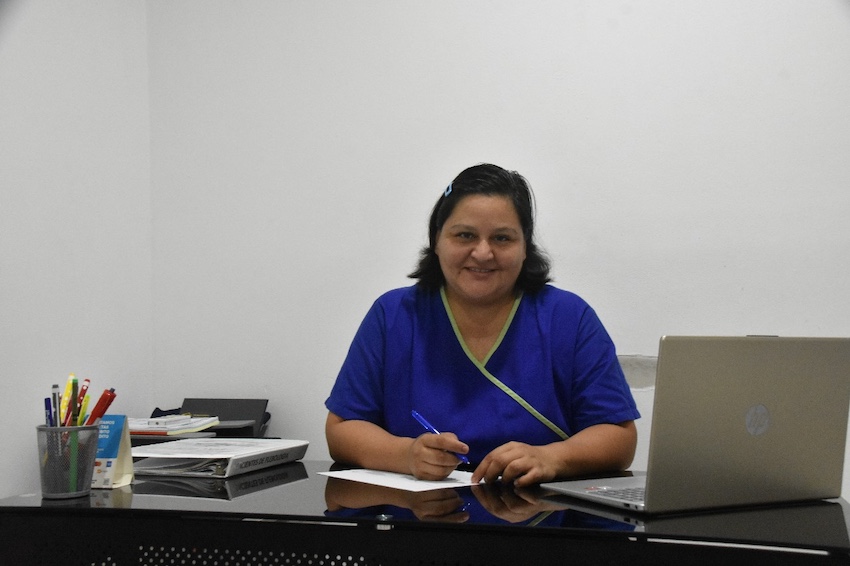
Dr. Molina
No matter the challenges, Dr. Molina is always eager to find solutions. (Clinica El Limón)

Dr. Molina rolled up her sleeves and got to work, along with five nurses, a cleaning lady and a kind neighbour. They scrubbed the clinic from top to bottom, eliminating mold in the surgical department by removing the tiles. Then the team painted and repaired until everything was spotless and functional once more, essentially restructuring the entire clinic from top to bottom. 

How the clinic survives

The result was that, except for a couple of minor issues still to be addressed, the clinic is legally up to code and in accordance with medical standards. They ran the clinic for another month, but as patient numbers dwindled, Molina faced the difficult decision to reduce the staff to just herself and one student nurse. Despite the financial restraints, Molina is determined to keep the clinic open to help those in need.

“We have many locals who can’t afford medical care. Even though our fee is on par with everyone else at 500 pesos, some can’t even pay that.  Some clients have zero money and could only pay with produce, or a few coins —whatever they could afford. We had one client pay with candy. We will treat them anyway.”

However, Molina now has hope for the future, as the “high season” is soon upon them, and people will be returning to Mexico to escape the cold winters. This influx of patients brings a renewed sense of hope and purpose to the clinic.

 “We have many English-speaking clients, mostly expats who appreciate that I speak English,” she said. “And lots of word-of-mouth.” 

Patients are impressed 

Indeed, patients are effusive in their praise. Richard Black, for example, an expatriate from the United States, had this to say of his experience with Dr. Molina. “Dr Molina is the best! She is very professional, knowledgeable, courteous, efficient, friendly, and her bilingual language skills are much appreciated,” said Black. “Always taking time to explain things about my health issues in a way that I can comprehend! She is helpful far beyond my previous experience with doctors! She is wise beyond her years, and I am lucky and happy to know her.”

Clinica El Limón
Clinica El Limón has built a reputation for quality care amongst both expats and zihuatanejenses alike. (Clinica El Limón)

Dolores Crowton from Detroit, Michigan, was also laudatory. “Yes, she (Molina) is so wonderful. Being alone in Mexico and elderly … She was like a beacon of light! Never had a doctor so caring.”

Sylvia Otero from Zihuatanejo added, “Dr. Molina has given us excellent medical care. My mother has suffered for many years with varicose ulcers, but Dr. Molina was able to heal her in a very short time. In my case, Dr Molina detected a brain tumor, and thanks to her, I was operated on and now I am completely well. Dr. Molina is a human being who is always willing to help her patients. We are older people, so when necessary, she comes to our home.”

A plan for the future

Dr. Molina told me her commitment to quality care is unwavering. “I assure patients that the clinic’s focus is on providing accurate diagnoses, avoiding unnecessary consultations and prescribing effective medications. The clinic’s independence from any specific pharmacy ensures that its recommended health plans can be trusted.” She added,  “We prioritize solving the root of the problem, not just prescribing medication, and we bring in specialists as needed, ensuring comprehensive and effective care.”

As to what the future holds, Molina said, “To become self-sufficient as we treat the people of Ixtapa-Zihuatanejo. For me, the clinic is a labour of love. We are gaining an excellent reputation for quality care and want to continue doing that.” 

“I can get a job anywhere,” she says. “I have bills to pay, too and right now I could make more money selling tacos on the street. And there is equipment we still need. But I am committed to this clinic.” 

When asked how she plans on ensuring the financial sustainability of the clinic in the long term, she said, “We are making some agreements with insurance companies so that they send us more patients to the clinic. And we plan to do more publicity to get the word out that we are open for business.”

Want to support quality healthcare in Zihuatanejo? Clinica Limón’s GoFundMe campaign remains open for those who’d like to contribute.

The writer divides her time between Canada and Zihuatanejo.
The Flying Mexican: Mexico’s first-ever NBA draftee

4
Manuel Raga Navarro
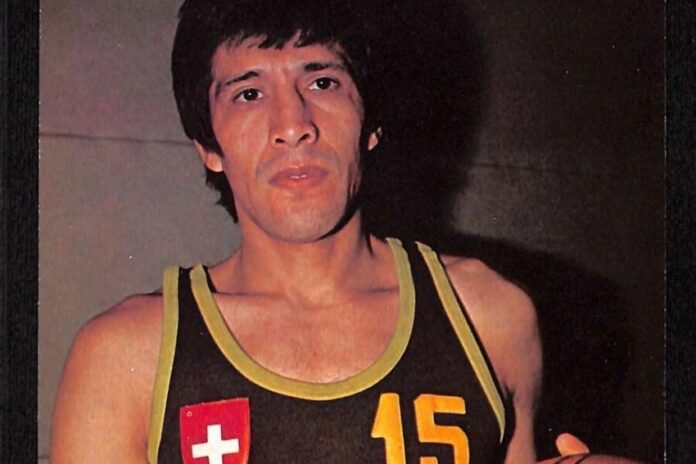
The name Manuel Raga Navarro is legendary in two countries: Mexico and Italy. Who was the first non-U.S. player to be drafted by the NBA? (eBay)

Few people, unless they are serious basketball fans, will remember Manuel “Manolo” Raga Navarro. However, he is still considered the most successful Mexican basketball player of all time and is noted as being the first Mexican to be drafted for the NBA. This part of the story, if not a myth, is often misunderstood, but we will address that later.

Born in Villa Aldama, Tamaulipas, in 1944, Manolo started playing in local basketball leagues. Although basketball in Mexico has never acquired the popularity of soccer, it has always had a cult following of players and local fans. Its roots often lie in the poorer regions of the county, in part because the enthusiasm for the sport has been driven by migrant workers returning from the United States with a passion for basketball. Basketball had several advantages over soccer. In mountainous or heavily farmed regions, or in crowded working areas of a city, it required far less space than a football pitch. And, thanks to Mexico’s climate, any small outdoor court that can be constructed is generally usable throughout the year.

How Raga rose to fame

Manuel Raga
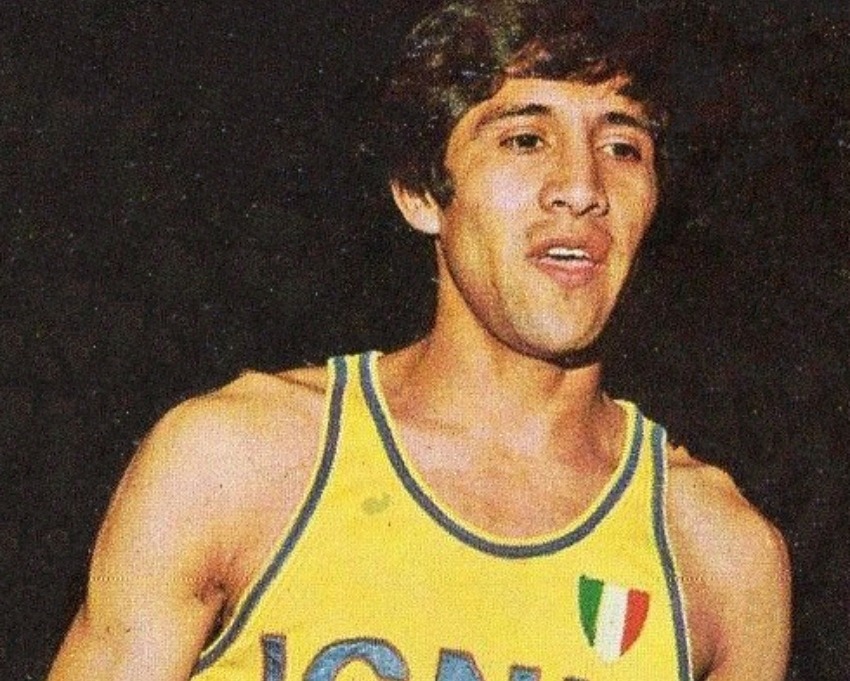
Manuel Raga wears his signature uniform number, 15, while playing for the Italian basketball team Ignis Varese. (Facebook)

Back in the 1960s, most teams were linked to military, government or educational establishments, and Raga played for the Instituto Tecnológico of Ciudad Madero. Although he was “only” 1.88 meters tall (about 6’2”), that was above average height for a Mexican boy of this generation, and he also had an incredible ability to jump. The recognized measurement of this is the Sargent Jump, leaping upwards from a standing position to see how far you can reach up with your hand. A vertical jump of 70 centimeters (27 inches) is considered above average. Modern basketball players sometimes score over 89 centimeters (35 inches). Manolo is said to have been able to leap an impressive 109 centimeters (42 inches).

Even with this natural ability, Manolo would never have attracted much attention playing in the amateur and regional leagues of the time. What brought him into a brighter spotlight was that the Mexican team was the strongest in the Central American region, regularly qualifying for international events. He was 19 when he made his debut at the 1963 World Championships in Brazil, where he scored 24 points against Canada and 20 against Uruguay. The following year, he made the first of three Olympic appearances. International exposure helped improve his game, and by the time the Olympics came to Mexico in 1968, he was, along with Arturo Guerrero, the star of the Mexican team. His play was noted for covering the whole court, leaping to take rebounds, and having an excellent jump shot.

The Flying Mexican in Italy

Raga needed a challenge beyond Mexico and it was an Italian club that gave him the opportunity. Basketball, at the time, was not widely popular in Europe, but had a reasonable following in Spain and Italy. While not approaching the popularity of soccer, basketball in these countries received a fair amount of news coverage, and with that came sponsorship. The biggest clubs used this money to supplement their squads by signing good American players. Another advantage was that many of the big basketball teams were associated with a major sports club, and these often had world-class facilities.

Varese, where Raga came to play, was different. It was a small town of some 70,000 people in the lakes and foothills of Northern Italy. The community was enthusiastic sports fans, being close to the ski slopes and a center of Italian cycling. The community was too small to support a first-rate soccer team, but building a world-class basketball team seemed an attainable goal. The great Italian team at the time was Simmental Milano, and Varese were already their closest rivals. However, this was a one-sided rivalry; between 1957 and 1967, Milano won 9 titles, Varese 2. 

Changing the fortunes of Ignis Varese

Several events in the late 1960s would change this balance. Ignis, a local firm that made kitchen equipment, provided sponsorship. Former player Giancarlo Gualco became the sporting director, bringing a love for the club and a dream of greater success. Dino Meneghin, a two-meter giant, was emerging as the most promising Italian player of his generation. Money was made available to attract foreign stars, and rather than pick some young American just out of college, Gualco took a gamble. He brought in the unknown Manuel Raga Navarro. Italian sports fans in the 1960s were not noted for their cultural sensitivity, and Raga was given the nickname “Indian.” His likeable personality and exciting style of play quickly won the support of the fans, and he became known as “The Flying Mexican” or “The Phenomenon.” 

Driven by the Meneghin partnership, Ignis Varese won the Italian League in 1969. “The Flying Mexican” scored 418 points and, more remarkably for a relatively short player, grabbed 98 rebounds. The league title gave Ignis entry to the European Cup. This was the height of the Cold War, and there was a strong East versus West rivalry in the competition. Eastern European teams had the advantage of a system where players had token jobs and could train full-time.

Contesting the European Cup

Manuel Raga Navarro
Raga was an athletic specimen, known for his impressive 42-inch vertical leap. (Public Domain)

This coincided with a generation of particularly talented Russian players, men who would controversially take the Olympic title from the USA in 1972. Many of these players wore the colours of CSKA Moscow, the team Varese met in the 1970 final. Staged in a brand new stadium in Sarajevo, Ignis won 79-74 with Raga contributing 19 points. It was here that he met Esma Smais, a player at the local Zeljeznicar club, and a rapid romance and marriage followed. 

It was European basketball that brought attention from the NBA team Atlanta, who expressed an interest in signing both Meneghin and Raga. The Italian team wouldn’t consider letting Meneghin go, and Atlanta was not willing to pay the US $35,000 fee that Varese was asking for Raga. However, Meneghin and Raga went into the record books as the first foreign players to be included in an NBA draft.

League titles and international play

The following year, Varese retained their Italian title but lost to CSKA in the European final. 1971-1972, Raga’s third season in Italy, saw Milano win the league, but he notched 20 points as Varese beat Jugoplastika Split for their second European title. There was the feeling that Varese was one player short of a team that could dominate both Italian and European basketball, so they brought in Bob Morse.

Morse was a big man, two meters (6’6”) tall, and he had been a prolific scorer during his college career. He was good enough to play in the NBA, but felt he would always be the sixth man, coming off the bench for a few minutes each game and probably being blamed whenever things went wrong. He was an intelligent and cultured man who saw the possibility of a better life in Italy. A place where the family could sit down and have dinner together without the television playing. He would stay in Varese for nearly a decade, and when he returned to the States, he taught Italian in a local College.

An interlude in Switzerland

The Italian League only allowed one foreign player, and Raga had to be sacrificed. He stayed with the club and played alongside Morse in Europe, where the rules were more relaxed. The 1973 final saw them face CSKA for the third time, and with Morse and Raga combining for 45 points, Varese won 71-66. In 1973-74, they returned to the final for a classic game, which they narrowly lost to Real Madrid. That summer, Raga played for Mexico in the World Championships in Puerto Rico. Helped by the fact that Mexico played in the lower classification section during the second half of the competition, he and teammate Arturo Guerrero were the tournament’s two highest scorers. With Morse established as Varese’s top foreign player, Raga moved on to Switzerland, where he won three championships with Federale Lugano. His international career ended with a third Olympic Games in Montreal in 1976.

A legacy in basketball

In 1991, Raga was an assistant coach on the Mexico national team that won the silver medal at the Pan-American Games in Havana, but he never took to coaching. He now lives quietly in Tamaulipas with his second wife,  former Cuban volleyball player Lucia Urgelles. His career is better appreciated in Europe than it is in Mexico. In 2010, he was made an Honorary Citizen of Varese, while FIBA nominated him as one of the “50 Greatest EuroLeague Contributors.” And yes, he is still in the record books as the first foreigner to be included in an NBA draft.

Manuel Raga - FIBA Hall of Famer 2016 Class

Bob Pateman is a Mexico-based historian, librarian and a life-term hasher. He is editor of On On Magazine, the international history magazine of hashing.

If you love Florida’s natural springs, you’ll love the Yucatán’s untamed Sian Ka’an

7
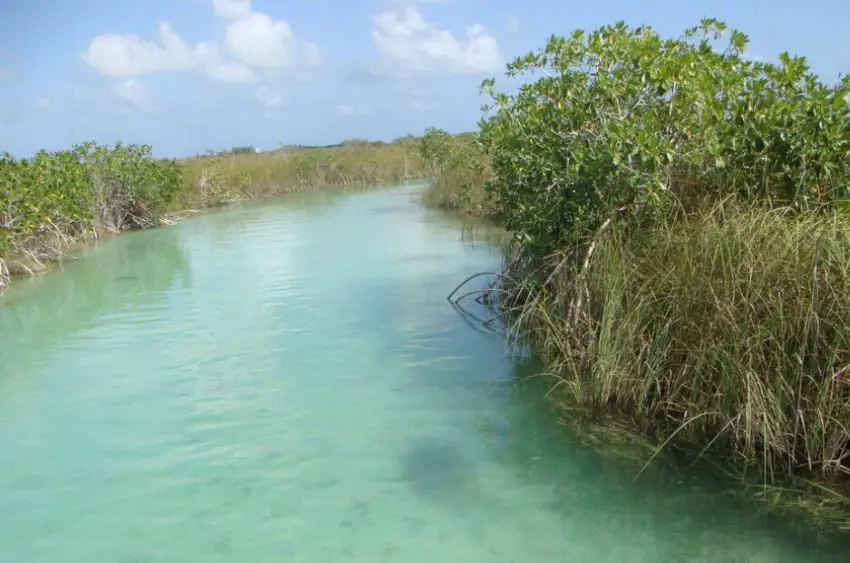
A narrow, clear, turquoise-green waterway winding through a dense mangrove forest, with the distinctive aerial roots of the mangrove trees visible along the banks.
The Sian Ka’an Biosphere Reserve is a UNESCO site and one of Mexico's best preserved natural wonders. It's also really easy to get to. (Explore Le Monde)

Welcome back to the series where we unravel the world-class secrets hidden within Mexico. Each article is our challenge to ourselves to find the wilder and lesser-known experiences here in this global icon, our adopted home of Mexico.

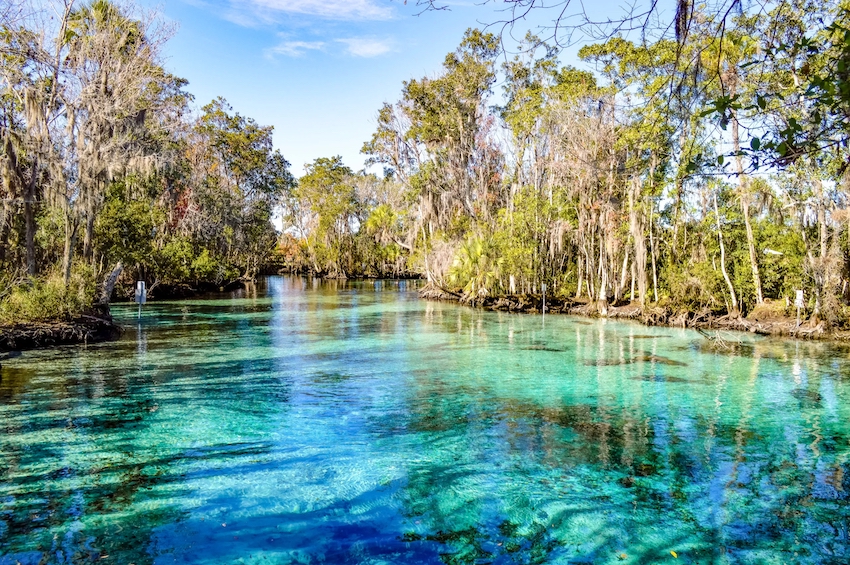
If you’ve ever been drawn to the crystal-clear, turquoise waters of Florida’s natural springs, then get ready to be captivated by Sian Ka’an.

A narrow, clear, turquoise-green waterway winding through a dense mangrove forest, with the distinctive aerial roots of the mangrove trees visible along the banks.
At Sian Ka’an, you’ll find glassy spearmint freshwater at a refreshing temperature in a natural, lush green setting. (Outdoorsy Diva)

Just a short drive from the hedonistic beaches of Tulum lies a secret world that feels a million miles away. Sian Ka’an, a massive and highly protected nature reserve, is where the jungle meets pristine wetlands and the Caribbean Sea. It’s a place still ruled by nature, where the water is impossibly clear and the silence is only broken by the call of exotic birds.

Few visitors venture beyond Tulum’s beach road to find it, and that’s precisely why I love it. It’s a powerful reminder of the raw, untouched beauty that still exists in Mexico if you just know where to look.

Florida springs vs. Sian Ka’an

Florida’s 700 natural fountains rank among the world’s greatest wonders. To snorkel in Florida’s springs is like taking a weightless flight through an underwater garden shaped by water clear as glass, gnome-like rock formations and aquatic plants. If you’re lucky, you can even spot manatees, otters, loggerhead musk turtles and even alligators that call these springs home.

On land, Florida and Tulum couldn’t seem more different. But dive under the water surface, and you’ll find that Sian Ka’an and Florida’s springs are almost identical, thanks to a remarkable connection hidden deep underground. Both get their stunningly clear, fresh water from massive underground aquifer systems flowing through limestone. 

This geological connection is why the Yucatán Peninsula is famous for its cenotes — natural sinkholes that are essentially tunnels into the same kind of subterranean rivers that feed Florida’s springs. The result is the same kind of magic: glassy spearmint freshwater at a refreshing temperature in a natural, lush green setting.

Where the sky is born

Visits to Si’an Ka’an, which has an incredible array of wildlife, are only possible on guided tours. (Manuel Quesada/Unesco)

Now, let me introduce you properly to Sian Ka’an. In the Mayan language, its name means “origin of the sky” or “where the sky is born.” The moment you see the vast, open wetlands reflecting the clouds, you’ll understand why. 

Established as a protected biosphere reserve in 1986 and named a UNESCO World Heritage Site in 1987, it covers a staggering 1.3 million acres of tropical forests, mangroves, marshes and a section of the Mesoamerican Barrier Reef.

This place is a biodiversity hotspot, providing a sanctuary for an incredible array of wildlife. We’re talking jaguars, pumas, tapirs and hundreds of bird species. In the water, you can find manatees, crocodiles, four species of sea turtles and countless fish. It’s a complex, thriving ecosystem where everything is interconnected, from the freshwater channels to the saltwater bays.

The biggest difference between Sian Ka’an and Florida’s springs? Scale and wildness. While Florida’s springs are often beautifully maintained state parks, Sian Ka’an is sprawling and untamed, giving you that same freshwater thrill with an added dose of raw adventure.

Highlights of Sian Ka’an

Because Sian Ka’an is so strictly protected, it’s one of the best-preserved patches of wilderness in Mexico. Visits are only possible on guided tours, which helps to limit the environmental impact we have. There are two main entry points, one through the lagoon side and the other from the ocean, each offering completely different experiences.

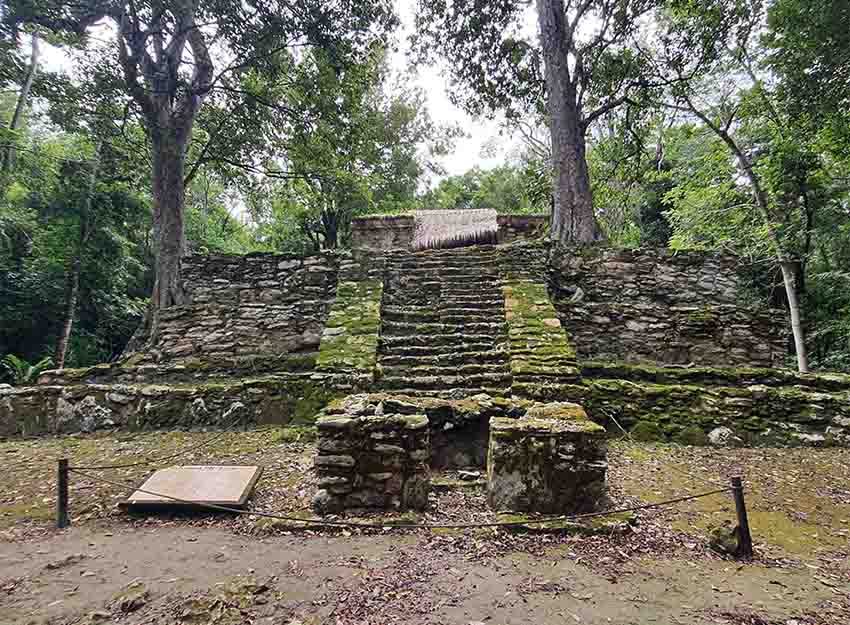
For anyone who loves the Florida springs experience, the Muyil entrance to the lagoons of Sian Ka’an is your golden ticket. Located just a 20-minute drive from Tulum, this is the freshwater part of the reserve. Your adventure starts with a walk through the jungle to Muyil ruins, a small, undervisited Mayan archaeological site. 

Temple 8 structure at the Maya ruins of Muyil
Muyil’s Temple 8, known as the Pink Palace, is considered to have been the city’s center of civic and religious life. (File Photo)

From there, take the boardwalk to get to the lagoons, where local Mayan guides will be ready for you — a boat trip costs around US $50 per person, and all of the fee goes to the Mayan community of Sian Ka’an. You’ll weave through a series of ancient canals hand-dug by the Mayans over a thousand years ago for trade. 

And here comes the best part: floating through the ancient Mayan channels. The gentle current will carry you effortlessly through the mangroves for about half an hour. It is pure bliss — peaceful, otherworldly and the closest you’ll get to the lazy river floats of Florida, but with a history behind it.

Flanked by tall reeds and ancient Mayan ruins, these canals feature clear-as-glass water with a perfect sandy floor and tiny fish scuttering about. 

Choose your adventure

If your heart is set on experiencing the wild, oceanic side of Sian Ka’an, getting to the remote village of Punta Allen is an adventure in itself. Be warned: the journey is the main obstacle. The 56-kilometer (35-mile) stretch of unpaved road from Tulum is notoriously rough; it requires a grueling, four-hour crawl over countless potholes that can become a muddy mess after the rain. 

Trust me when I say a 4×4 vehicle is essential: We drove our Volkswagen Beetle and wrecked the suspension — but we survived!

This challenging journey is your ticket to a truly castaway paradise, where you can spend a few days spotting wild dolphins and manatees, snorkeling on the Mesoamerican reef, experiencing rustic village life and leaving Wi-Fi and phone signals behind.

Thankfully, there are easier options for getting there: Book a guided day tour that includes transfers from your hotel in Tulum and a boat trip from the Sian Ka’an Visitor Center for a full day of adventure; you’ll skip the treacherous drive and have a marine safari with a knowledgeable guide. These all-inclusive trips, typically costing around US $200, handle all the logistics. 

A wild heart awaits

Ultimately, the magic of Sian Ka’an lies in its raw, untamed spirit. It offers the same soul-soothing experience that makes Florida’s springs so beloved, but in a wilder, natural setting. 

If you’re looking for a place where the water is pure, the history is palpable, and the adventure feels boundless, it’s time for an adventure in Sian Ka’an.

Nellie Huang is a self-proclaimed Mexico-holic obsessed who lived in the Riviera Maya for a few years. She’s the author of Lonely Planet’s Mexico guidebook and has written hundreds of articles on Mexico for various publications. Read about her adventures worldwide on wildjunket.com and follow her updates on Instagram @wildjunket.

How to renew your Mexican temporary residency card yourself — without losing your mind

12
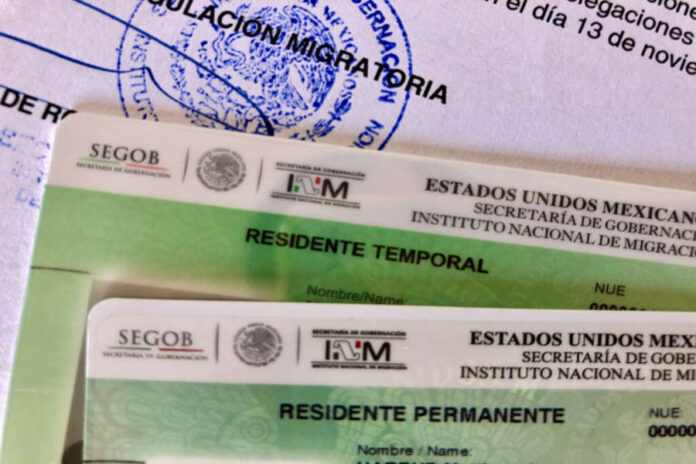
A close-up of two Mexican residency cards: a 'Residente Temporal' (Temporary Resident) card and a 'Residente Permanente' (Permanent Resident) card, on top of official INM immigration paperwork.
A residency card is worth getting if you want to stay in Mexico long-term. Don't overstay a tourist visa; it's worth the sense of security you'll have to do things correctly. (Matthew Harrup)

I’m writing this flying high — literally — on a plane out of Puerto Vallarta, feeling a wave of relief wash over me. My three-year Mexican residency card has just been approved, which means I won’t have to wrestle with immigration red tape again until 2028. Anyone who has gone through Mexico’s residency process knows how much of a victory this is.

Renewing from a one-year temporary residency to a three-year card is the next natural step for anyone on an immigration journey. Compared to getting your original residency card approved, the process this time around is blissfully straightforward. While many people choose to hire a fixer to handle everything, and understandably so, it’s also absolutely possible to do it yourself. I did it solo in Puerto Vallarta, and it was smooth sailing from start to finish. Here’s how it works.

A man wearing glasses and a light blue blazer holds a black clipboard while speaking to a woman with short blonde hair, whose back is partially to the camera. They appear to be in a professional setting, possibly an interview or meeting.
A “fixer” in Mexico is someone, usually Mexican, who runs a business helping foreigners navigate the Mexican governmental bureaucracy. But many expats do manage to get their resident visa without one. (Vitaly Gariev/Unsplash)

Why a fixer might be worth it (and why I didn’t use one)

Many immigrants in Mexico swear by their fixers — local professionals who specialize in navigating Mexico’s famously variable bureaucracy. It’s a common joke that each INM (Instituto Nacional de Migración) office has its own “interpretation” of the official rules. Some offices might require extra documents that others don’t.

A good fixer can anticipate those quirks, saving you time, frustration and possibly a few gray hairs.

That said, fixers can be pricey, often charging several thousand pesos for something you can do yourself with a printer, a bit of Spanish and a dose of patience. If you’re organized and don’t mind handling paperwork, doing it on your own is totally manageable. The process is clearly outlined online, and, in my experience, the immigration officers in Puerto Vallarta were professional, kind and even encouraging.

Step 1: Go to the official INM website

Start your journey at www.inm.gob.mx/mpublic/publico/inm-tramites.html. Click Trámites Migratorios and select Expedición de documento migratorio por renovación. This section is specifically for renewing your existing residency, not applying for a new one.

A person's hands are visible on a laptop keyboard, showing an online appointment scheduling system for "Registro de Citas" (Appointment Registration) on the screen, which includes a calendar displaying available (green), partially available (yellow), and unavailable (red) dates.
You’ll need to make your appointment to do your visa renewal “tramite” online at the INM website. (Original photo INM – Photo edited slightly with AI)

Here, you’ll find a detailed list of requirements and links to all the forms you need. Begin with the solicitud, which is the main application to extend your stay. Under Motivo de solicitud, choose Extender la estancia, and specify Expedición de Tarjeta de Residente por Renovación.

You’ll be asked to fill in details from your current residency card and passport. Once completed, the system will generate a número de pieza — a unique tracking number. Print or save this page; you’ll need it later to schedule your appointment. You’ll also need to bring this tracking number with you to your appointment.

Step 2: Schedule your appointment

With your número de pieza in hand, return to the Trámites page and click through to the Requirements section to schedule your appointment (cita) at your local INM office. If you’re renewing in a busy area like Puerto Vallarta, book early; slots fill up quickly.

Once your appointment is confirmed, it’s time to gather your documents.

Step 3. Gather your paperwork

A view of a a woman's hands signing paperwork that's laid out on a wooden conference table. One paper has what looks like a governmental shield of an indeterminate country.
Immigration offices in different locations in Mexico will have different levels of tolerance for gringo errors, so do your best to ensure your required paperwork is in order before you go. (Romain Dancre/Unsplash)

Here’s what you’ll need to bring to your appointment:

  • Your old resident card, plus a copy of the front and back of the card, copied onto the same page.
  • Passport, with a copy of the data page.
  • Printout of your número de pieza.
  • Formato básico, a simple information form. Most INM offices provide this in person, but some require it in advance. To be safe, you can download it here: https://www.gob.mx/inm/documentos/informacion-formato-basico.
  • Proof of payment. The fee for a three-year renewal (as of 2025) is 10,570 pesos. It’s easiest to pay by credit card at your appointment, although you can also pay in advance via bank transfer.

Don’t worry about bringing photographs in advance — you’ll take them during your appointment.

The last piece depends on your type of residency. If you have residency through a job, you’ll need a letter from your employer. If you’re a student, you’ll need to provide proof of enrollment.

For those of us living in Mexico under the general “living here” category, you’ll click the option for “Written renewal accrediting the circumstances subsist” — essentially a letter confirming that your situation hasn’t changed. The system will generate this document for you to print and sign.

Here’s where I hit a small snag: I forgot to bring this letter with me. Luckily, the immigration officer who helped me was an angel of empathy, who was clearly used to gringo errors. She showed me exactly where to find it online, told me where I could print it nearby, and even held my spot while I dashed out to get it. This kind of patience is not guaranteed, so learn from my mistake and have all your documents ready to go.

Step 4: Attend your appointment

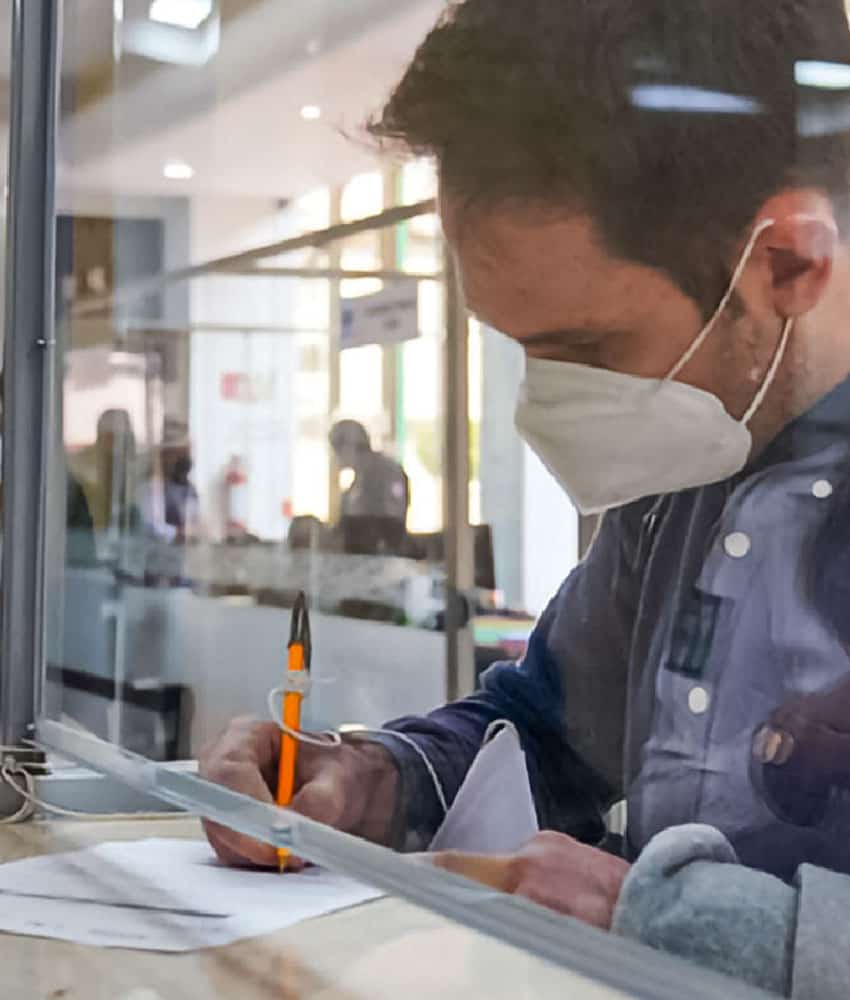
Man filling out paperwork at Mexican National Migration Institute office
Renewing your visa is one of the rites of passage for expats seeking to put down roots in Mexico. (INM)

On the day of your appointment, arrive early, dressed neatly and with your documents in order. Depending on the office, you might need to wait a bit, but once called, the process moves quickly. You’ll review your information, make your payment, take your photo and fingerprints and confirm your details. If all goes well, you’ll leave that same day with your brand-new three-year residency card — valid, sturdy and beautifully laminated.

The difference between a one-year card and a three-year card might seem small, but it’s a game-changer in practice. Not only do you save yourself two years’ worth of renewal appointments, but you also gain a sense of long-term stability. You can travel in and out of Mexico freely, rent apartments more easily, open bank accounts and build a life here without the yearly stress of expiring paperwork.

Plus, once your three years are up, you’re eligible to apply for permanent residency, which is the ultimate goal for many people who plan to stay indefinitely. Permanent residency means no more renewals, ever.

Renewing your temporary residency might not sound glamorous, but it’s one of those necessary rites of passage for anyone putting down roots in Mexico. And if you handle it yourself, it’s surprisingly empowering.

Walking out of the INM office with that new card in hand felt like a tangible reminder that Mexico is home, at least for the foreseeable future. And as my plane lifts off the runway, I can’t help but smile at the thought that, for the next three years, my only paperwork will be postcards.

Meagan Drillinger is a New York native who has spent the past 15 years traveling around and writing about Mexico. While she’s on the road for assignments most of the time, Puerto Vallarta is her home base. Follow her travels on Instagram at @drillinjourneys or through her blog at drillinjourneys.com.

Taste of Mexico: Salsa

5
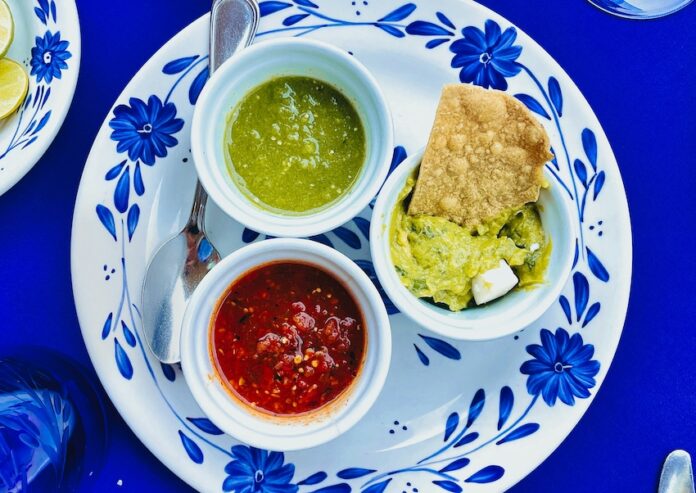
A plate with three different types of Mexican salsa
From red, to green and everything in between, María Meléndez has a beginners guide to Mexican salsa. (Alyona Yankovska/Unsplash)

In Mexico, salsa is more than a condiment. It’s a cultural emblem that is present at every restaurant, street stall, family table, and even in fast-food chains. Wherever there’s a Mexican enjoying a meal, there’s likely a salsa nearby. Historically, grandmothers crafted their perfect blends using molcajetes; today, the frantic pace of life often pushes us to whip up versions in blenders. Every family guards their own secret recipes, and each person has a personal favorite. What’s astonishing, though, is how rarely we see a straightforward guide to the variety of Mexican salsas.

It’s no poetic exaggeration to say that salsas reflect a fundamental part of our identity — a mosaic of tomatoes, herbs, and chiles. We amplify these basic ingredients with garlic, onion, salt, pepper, oil, lime, and a host of other spices. Sometimes, exotic elements like ants, crickets, walnuts, peanuts or pumpkin seeds are added. The possibilities are virtually endless. With around 250 species of chile in Mexico, it’s safe to say there are at least that many types of salsa.

Ground, chopped, blended, spicy, mild or fruity, the world of Mexican salsa is a vast one. (Unsplash)

However, trying to encompass all regional varieties of salsa can feel overwhelming. The truth is, the landscape of Mexican salsa is deeply intertwined with its geography, history, and culture. Salsas from Oaxaca or Yucatán taste different from those in Chihuahua or Mexico City; coastal varieties have a different character than mountain versions. Each salsa tells its own story, a world unto itself. For our purpose, we’ll focus on those that are accessible across the country and have even found commercial success.

Chilmolli and the roots of salsa

Chile has been woven into Mexican cuisine for over 6,000 years. Although we suspect that salsa drinking was widespread among ancient Mesoamerican cultures, archaeological evidence is scarce. We do know, with certainty, that the Aztecs regularly consumed chilmolli — a chile-based salsa — as part of their daily diet.

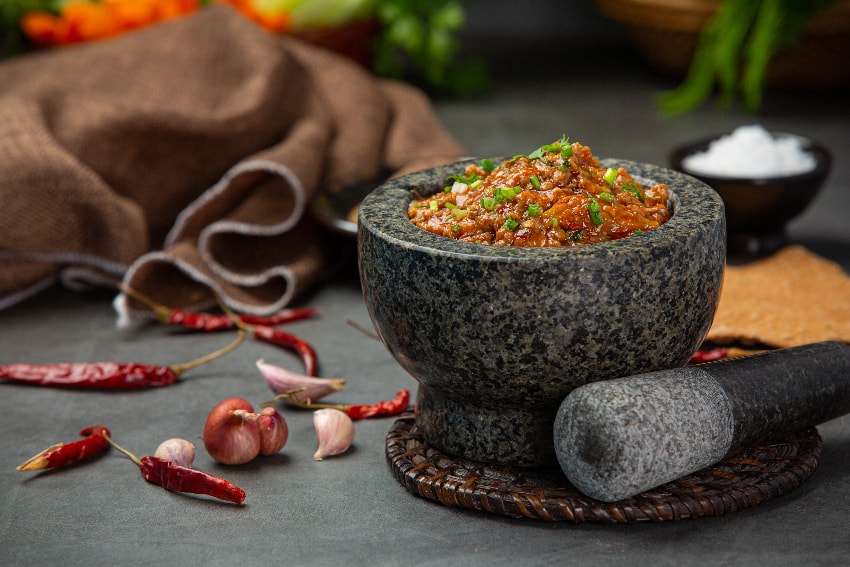
This ancient practice is demonstrated through the tools they used, particularly the molcajete (a stone mortar) and the comal (a griddle). The molcajete, invented 8,000 years ago, allows the essential oils of ingredients to be released, giving salsas a depth of flavor that modern appliances just can’t match.

The comal, meanwhile, provided a sturdy surface to roast ingredients, giving particular salsas their smoky character. Since those early times, salsas have become woven into the very fabric of Mexican cuisine.

The Salsa Spectrum

Taste of Mexico: Salsa

To simplify this rich universe, we can categorize the most common types of salsa:

Red Salsa: Made from tomatoes and chiles, it’s often less acidic than other varieties but bursting with flavor.
Green Salsa: Based on tomatillo and chiles, it’s one of the oldest documented salsas and tends to be more tart, often used in seafood preparations.
Tatemadas: These are salsas whose ingredients have been roasted on a comal — whether red or green. My personal favorite is salsa verde tatemada, which brings a smoky richness that is ideal for grilled meats.
Molcajete Salsa: As previously noted, this salsa’s rustic, less refined texture is a testament to traditional preparation.
Mezcla or Macha: A favorite of mine, this salsa combines seeds like peanuts, sesame, or pumpkin, along with dried chiles, garlic, vinegar, and premium oil. It’s a powerhouse of health benefits, perfect for salads or flavoring any dish.
Pico de gallo: This one always makes me laugh. I had a couple of friends, one argued that pico de gallo is a salad and one who claimed that pico de gallo “is salsa roja but deconstructed.” When the fresh, chopped mixture of tomatoes, onion, chile, and cilantro are prepared with love, it’s nothing short of spectacular.
Depending on the chiles used, the heat level can vary dramatically — from the fiery habanero and chiltepín to the milder jalapeño or serrano.

More than just flavor

And yes, friends — enjoying salsa is not just a pleasure, but also an act deeply rooted in health. These vibrant condiments play a significant role in our well-being. If you want to maintain a healthy weight, salsas can improve glucose tolerance, increase insulin sensitivity, reverse fatty liver, and reduce pancreatic damage. They’re also allies in allergy therapies, possess antimicrobial properties — meaning street tacos soaked in salsa are not only delicious but safer (maybe) — and they improve blood circulation.

Perhaps most surprisingly, chili peppers trigger the release of endorphins — the body’s natural happiness hormones. It’s no exaggeration to say that drenching your food in salsa can boost your mood. And if you’re dealing with pain, salsa can serve as a natural analgesic — plus it’s an excellent distraction. These fiery condiments help balance your “good” and “bad” cholesterol levels, and they are anti-inflammatory and antioxidant powerhouses.

If salsa irritates your stomach, start incorporating it in microdoses and build up gradually. As my grandparents used to say, “Well-made salsas make you strong, not weak.

Amigos, for health, patriotism, and happiness — eat salsa! 😊

María Meléndez is a Mexico City food blogger and influencer.

Mexico’s week in review: CIBanco collapse and Banamex bid shake financial sector

0
A giant 2026 World Cup ball was installed at the Terminal 2 entrance of the Mexico City International Airport (AICM) this week.
A giant 2026 World Cup ball welcomes travelers arriving at the Terminal 2 entrance of the Mexico City International Airport (AICM). (Andrea Murcia/Cuartoscuro)

This week, the Sheinbaum administration celebrated several positive developments: daily homicides dropped to their lowest level in nine years, high-impact crime arrests neared 35,000 and government revenue continued its upswing, providing a crucial financial buffer for a year of tepid economic growth.

Despite falling national crime rates, five popular tourism destinations — including San Miguel de Allende — ranked among Mexico’s 50 most violent municipalities. A Mexico News Daily reader survey revealed that foreigners living in or visiting these cities maintain high perceptions of safety, confirming that the impact of violent crime is limited to certain groups.

Mexico’s financial sector, meanwhile, faced unprecedented turbulence as regulators shuttered CIBanco following U.S. money laundering accusations, leaving thousands of customers scrambling to recover their funds.

We also covered legislative developments on animal welfare and Sheinbaum’s proposed reform to Mexico’s amparo law.

Didn’t have time to read every story this week? Here’s what you missed.

CIBanco liquidated following money laundering accusations

Mexico’s banking sector faced its most dramatic development in years as IPAB revoked CIBanco’s license and began liquidating the institution on Friday, following U.S. Treasury Department sanctions in June that accused the bank of laundering millions for drug cartels.

The closure of CIBanco, alongside restrictions on Vector and Intercam, marked an unprecedented regulatory crackdown on financial institutions allegedly facilitating cartel operations.

IPAB announced it would begin paying insured deposits starting Monday. To access funds, CIBanco account holders can register a receiving account starting Oct. 13. Those without other Mexican bank accounts must visit CIBanco branches or IPAB offices in person to submit a Payment Request. Read more here.

The impact on the bank’s customers has been severe. A Mexico News Daily survey of over 200 readers in July found that 62% of CIBanco clients were considering closing their accounts, with many reporting frozen transfers and restricted withdrawals. One Mexican student abroad reported being unable to access funds after Visa suspended international transactions. The crisis particularly affected foreigners relying on U.S. check deposits and international transfers to pay contractors, employees and living expenses.

Grupo México’s Banamex bid rejected

Mining magnate Germán Larrea’s US $9.3-billion attempt to acquire Banamex caused a small earthquake in Mexico’s financial sector.

Grupo México’s binding offer on Sept. 8 sent the conglomerate’s stock plummeting 18.8% on the Mexican Stock Exchange (BMV). On Thursday, Citi rejected the proposal, reaffirming its prior commitment to selling 25% to Fernando Chico Pardo.

Mexican business magnate buys 25% stake in Banamex ahead of planned IPO

Grupo México shares shot up 4.5% after Citi’s rejection.

Government revenue hits record highs

The Sheinbaum administration reported that government revenue increased 9.1% annually in the first nine months of 2025, reaching 4.63 trillion pesos ($251.7 billion).

Finance Minister Édgar Amador Zamora attributed approximately 200 billion pesos of the increase to improved foreign trade tax collection and anti-corruption efforts at border crossings.

“Thanks to that … it has been possible to have very, very solid growth of public income, amid an economic context in which [GDP] growth has been a little more moderate,” Amador said.

Tech and transport sectors signal confidence

  • Salesforce’s $1 billion AI push: The cloud-based software giant announced a five-year, US $1-billion investment to expand operations, open a new five-story Mexico City headquarters and establish a Global Delivery Center providing AI consulting services across Latin America. Salesforce’s CEO also committed to training 100,000 Mexican students in artificial intelligence.
  • Electric freight innovation: Nuevo León announced that an electric cargo transport service using Windrose electric tractor-trailers will carry freight from Monterrey to Laredo, Texas, starting in November, with eventual extension to Dallas. The private sector initiative aligns with global decarbonization trends while capitalizing on nearshoring opportunities.

Pemex moves toward stability

This week, the state oil company notched several positive developments signaling progress toward financial solvency:

  • Major private investment secured: Carlos Slim’s Grupo Carso signed a $1.991 billion contract to drill up to 32 wells in the Ixachi field in Veracruz over three years, with payment contingent on well production. The agreement exemplifies President Sheinbaum’s strategy of leveraging private partnerships to boost production while managing Pemex’s $98 billion debt burden.
  • Credit rating upgraded: Fitch Ratings bumped Pemex’s rating to BB+, placing the company just one notch below investment grade. The upgrade followed government capital injections exceeding $16 billion and came remarkably just one month after Fitch had raised Pemex to BB with a positive outlook.

Tourism destinations among Mexico’s most violent municipalities

Security data revealed a sobering reality for several popular tourist destinations. Five tourism hotspots ranked among Mexico’s 50 most violent municipalities based on per capita homicide rates between September 2024 and August 2025, according to crime data compiled by elcri.men.

Tulum ranked 20th most violent with 83.9 homicides per 100,000 residents, recording 46 murders during the period. Acapulco, once a glamorous Hollywood destination, ranked 34th with 71 homicides per 100,000 people. Zihuatanejo ranked 41st with 61.3 per 100,000, while San Miguel de Allende, home to a sizable expat community, came in 50th with 49.3 per 100,000. Manzanillo topped the list at third place overall with 143.4 homicides per 100,000 people.

We asked readers to rate their perception of safety in the above cities, and most expressed continued confidence despite the statistics.


Tourists and foreign residents are rarely affected by violence in these destinations, as most incidents are related to organized crime.

Mexicans detained in Israel return home safely

Early in the week, Mexico announced that six Mexican activists detained by Israeli forces on Oct. 1 would be repatriated. The individuals had been part of the Global Sumud Flotilla attempting to deliver humanitarian aid to Gaza when Israeli naval forces intercepted the vessels.

They were held at Ketziot, a maximum security prison in the Negev desert, before being transferred to Amman, Jordan, and then home.

President Sheinbaum condemned the interception and reinforced Mexico’s support for Palestine, noting that Mexico joined other countries in filing a complaint with the International Court of Justice in The Hague.

The group of six Mexicans, which included the journalist Ernesto Ledesma, was part of a flotilla of volunteers whose boats were boarded by Israeli soldiers after they entered restricted waters off the coast of Palestine.
The group of six Mexicans, which included the journalist Ernesto Ledesma, was part of a flotilla of volunteers whose boats were boarded by Israeli soldiers after they entered restricted waters off the coast of Palestine. (Mario Jasso/Cuartoscuro)

Looking ahead

The week underscored how Mexico’s strengths and vulnerabilities will collide during next year’s pivotal USMCA review.

U.S. Trade Representative Jamieson Greer’s recent accusation that Mexico fails to honor USMCA commitments in energy, telecommunications and agriculture signals difficult negotiations ahead. President Sheinbaum responded that Washington raised “about 50 points” largely stemming from misunderstandings — citing labor court funding calculations that overlooked state contributions — and expressed confidence that most issues are resolved. Yet Greer’s blunt assertion that “it doesn’t make a lot of sense to talk about extending” the pact suggests that challenging bilateral talks are ahead.

Security presents another mixed picture. Homicides are down, but public fear is at a three-year high — 63.2% of Mexicans feel unsafe, up from 58.6% a year earlier.

At the border, apprehensions plummeted to a 55-year low — just 237,565 in FY2025, down 87% from recent averages. And the World Bank’s upgraded forecast of 0.5% growth, though modest, joins similar OECD and IMF revisions suggesting economic stabilization. Record government revenue offers fiscal breathing room.

But the CIBanco liquidation exposed financial sector fragilities precisely when Mexico needs to project institutional soundness. Whether Mexico can resolve these contradictions — compliance versus sovereignty, falling crime versus rising fear — will determine its position when formal USMCA negotiations begin.

Mexico News Daily


This story contains summaries of original Mexico News Daily articles. The summaries were generated by Claude, then revised and fact-checked by a Mexico News Daily staff editor.

Looking for previous weeks in review?

The MND News Quiz of the Week: October 11th

1
News quiz
(Mexico News Daily)

What's been going on in the news this week? Our weekly quiz is here to keep you on top of what’s happening in Mexico.

Get informed, stay smart.

Are you ready?  Let’s see where you rank vs. our expert community!

Mexico's new "Pay de Limón" bill will bring harsher penalties for people guilty of what crime?

Mexico's Caribbean coast is shrinking every year. How much beach is it losing on average?

Citigroup is selling its stake in Banamex. Who's buying?

Which Colombian singer has just launched their own tequila brand?

...keeping with our musical theme: Jalisco rocker Fher Olvera has been presented with a custom guitar by which legendary luthier?

Mexico are through to the quarter finals of the U20 FIFA World Cup. Who will they face for a spot in the semi final?

Which Mexican bank has been liquidated by regulators, after accusations of money laundering?

Which city is set to host the 10th World Forum of Mexican Gastronomy?

New recycling rules are coming to Mexico City in 2026. What are they?

Thursday saw rain in 31 of Mexico's 32 states. In which state did it not rain?

Do you have friends who are ‘Confidently Wrong’ about driving in Mexico? A perspective from our CEO

6
MND CEO Travis Bembenek and George Reavis, a longtime resident of Mexico and founder of MexEdge, break down what's legitimate versus misled in this week's podcast episode.

One of the most common questions I hear from people about Mexico is, “Is it safe to drive there?”

People always want to know how we get around locally, and if we drive the three hours from SMA to Mexico City when we go there. Another popular question is if I have ever been stopped by the federales?…and if so, if I had to bribe them to continue on my journey?

Driving in Mexico is a complicated topic, and of course, everyone has different experiences doing so.

The constant? It is nothing like driving in the U.S. or Canada. It is not always easy and requires advanced planning and patience, but it can be extremely rewarding and beautiful. Renting a car is often stressful and frustrating. And when you learn that, up until 2018, Mexico City only required a written test and a fee before granting 16-year-olds a license, you might hesitate before merging into the chaos.

I have often been given, and even more often heard, advice for driving in Mexico that was confidently wrong.

I have shared my driving experiences in previous articles:

But given the consistently wrong comments we hear on this topic, we decided to make this week’s episode of Mexico News Daily’s Podcast on “Confidently Wrong about driving in Mexico.”

Check it out and let me know what you think! Do you agree with our thoughts and recommendations? Please share!

You can listen on our YouTube channel, Mexico News Daily TV, below or here on Spotify.

Confidently wrong about driving in Mexico - Episode 6

Travis Bembenek is the CEO of Mexico News Daily and has been living, working or playing in Mexico for nearly 30 years.

What will Los Cabos look like in 10 years?

4
Land's End in Cabo San Lucas
Some things, like Land's End, never seem to change. Others, like Los Cabos' explosive population growth, have created a constant state of flux. (Unsplash/Tatiana Bernardi)

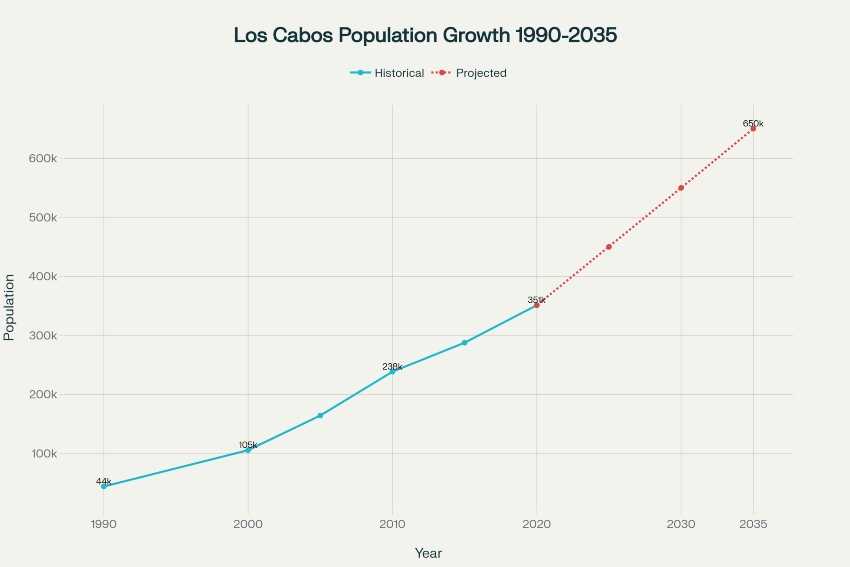
There is no end in sight for the explosive population growth that has taken Los Cabos from 44,000 residents as recently as 1990 to over 350,000 by 2020. In fact, according to estimated growth models, the population is projected to nearly double again by 2035. 

That means in 2035, only a decade from now, Los Cabos is poised to be home to between 600,000 and 650,000 residents. Obviously, this kind of sustained growth at such a high rate comes with serious infrastructure challenges, some of which — like traffic and housing and water supply shortages — are already obvious to residents. 

Population growth in Los Cabos
The population arrow for Los Cabos is still shooting nearly straight up, with the population expected to hit 650,000 by 2035.

But assuming population trends continue, and there’s no reason to think they won’t — Los Cabos, for example, continues to maintain an annual 14-16% growth rate well above the national average — I thought it would be interesting to take a peek into the future and see what will be different about Los Cabos a decade from now, and what may still be the same.

What is the plan for Los Cabos?

The first thing to note is that a governmental plan is in place to manage this significant growth. The first iteration of this appeared in 1999 under the title “Plan Director de Desarrollo Urbano de San José del Cabo y Cabo San Lucas, B.C.S.” It aimed at a responsible development of tourism infrastructure for the destination. However, by the time the second edition appeared in 2013 as “Plan Director de Desarrollo Urbano (PDU 2040),” the focus had shifted to responsible and sustainable residential growth by the year 2040 (hence, the title), with emphasis on such topics as expansion vision, designated growth areas, managing housing and water crises and infrastructure upgrades.

A third edition of this plan is expected to be completed soon, and yes, there is a participatory public element involved. For instance, over 40 workshops were held, involving over 700 participants, to garner input on the future direction of the Los Cabos municipality for the second update in 2013. Public input has also been sought for the third edition, although exactly how much remains uncertain.

If those seem like very small numbers relative to the population and its needs, they are. But decisions on the future of the destination have been made. That they’re already moving forward is evident in several of the upgrades that will be discussed shortly.

Demographics

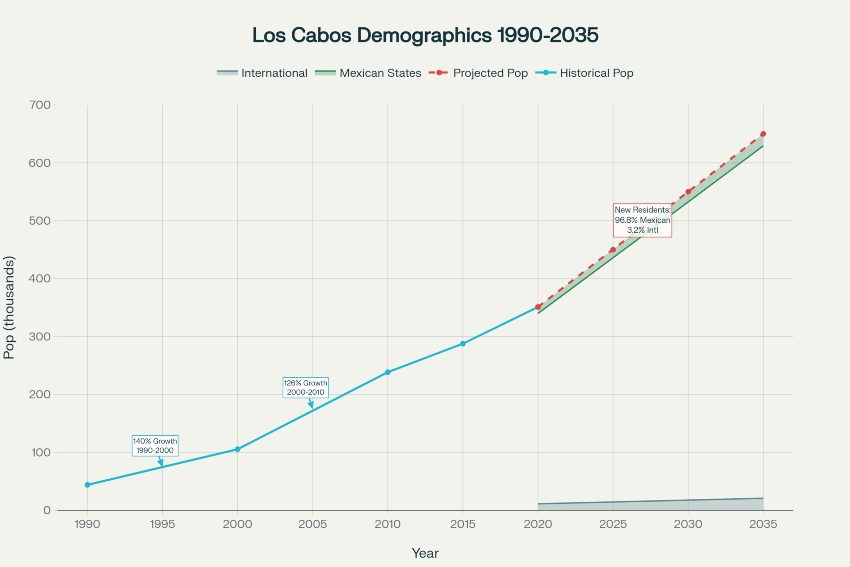
So, where are the nearly 300,000 or so new residents moving to Los Cabos over the next decade coming from? Contrary to concerns about gentrification, a hot-button topic in Mexico at the moment, there won’t be any mass influx of foreigners, either from the U.S. or elsewhere. Currently, there are just over 17,400 foreign residents in the municipality, representing less than 5% of the total population. About 10,000 more are expected in the next decade, which sounds like a lot. However, due to the overall immigration pattern, this will have no meaningful effect on the percentage of foreign nationals. Rather, the mass of newcomers will be overwhelmingly Mexican, no doubt seeking new jobs and opportunities in a high-growth region. 

Currently, more than half the population of Baja California Sur was born in another state in Mexico, and that trend should continue with new arrivals mainly coming from Guerrero, Sinaloa, Mexico City and Estado de Mexico. Los Cabos, one of only five municipalities in the state, already accounts for a whopping 44% of its total population, and that number should hit 50% by 2035.

Los Cabos demographics chart
Where are all the new Los Cabos residents coming from? Overwhelmingly, from within Mexico.

Tourism Infrastructure

Tourism in Los Cabos is being carefully and expertly managed, with Rodrigo Esponda, managing director of the Los Cabos Tourism Board, noting that the emphasis remains on sustainable growth that maintains the destination’s relatively newly acquired patina as a luxury getaway. 

Still, both the number of hotel rooms and the tourists occupying them could increase significantly over the next 10 years due to increased connectivity and infrastructure upgrades. Currently, there are about 20,0000 available rooms for the four million tourists who visit annually. By 2035, the former figure will certainly pace upwards based on announcements for new resorts, although it’s hard to forecast how much. 

What’s undeniable is that future growth is being facilitated by upgrades underway at the Los Cabos International Airport, to enable it to handle up to 40% more volume, including passengers from the new routes coming from North America, Europe, Central and South America. So, Los Cabos is well-placed to continue its steady tourism growth, while maintaining higher-than-average spending rates.

Traffic and water challenges

Traffic, although certainly a concern at present due to the lengthy but much-needed infrastructure upgrade to the Fonatur roundabout in San José del Cabo, which an estimated 60,000-plus vehicles use daily, is expected to accommodate the expected growth. Not only will a third artery be built between Cabo San Lucas and San José del Cabo, called the Eje Interurbano (Interurban Axis), to help divert overflow from Federal Highway 1 and the toll road, but mass transit improvements are also in the works, including the possibility of electric bus service

These improvements should make traffic between the cape cities flow much smoother, although the residential sprawl of overtaxed surface streets is likely to remain a persistent irritant to anyone who wants to go somewhere in a hurry.

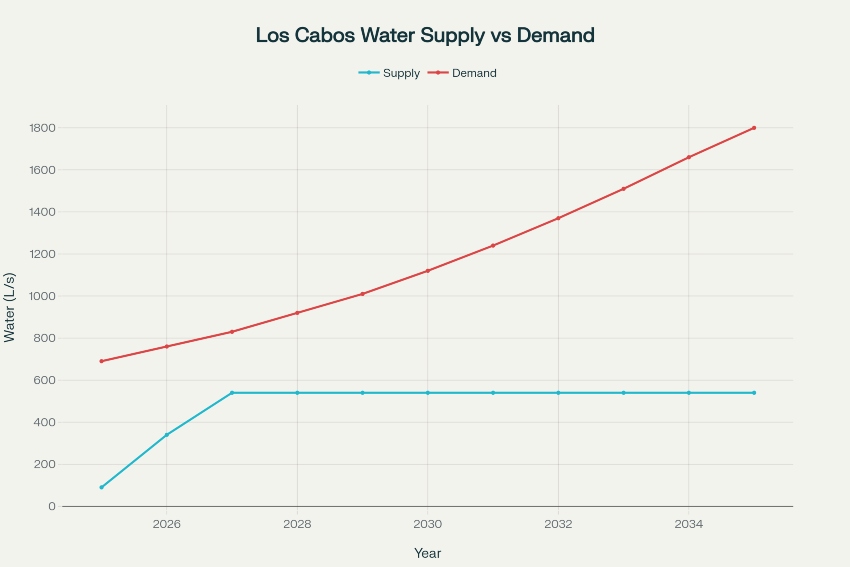
The most concerning issue, meanwhile, is likely to be water management. Currently, for example, Los Cabos is running at a deficit of 600 liters per second

Los Cabos water supply and demand chart
Los Cabos is in the midst of a water crisis, one that only looks to be getting worse in the coming decade.

Yes, reinforcements are on the way, including the opening of a second desalination plant in Cabo San Lucas by 2026, plus a few privately owned resort and residential desalination projects by 2027. But demand (see the graph above, which is based on conservative estimates relative to rising population figures and traditional usage) is expected to increase significantly in the coming decade.

Housing concerns

Another area of concern over the next decade will be housing. As I referenced in my recent article on wealth disparity in Los Cabos, there is a dearth of affordable housing in Los Cabos, either homes or rental units. So if it’s bad now, what’s going to happen with up to 300,000 more residents moving in by 2035?

The premier coastal tracts will continue to be reserved for high-end real estate development, with the East Cape of Los Cabos a likely contested patch between long-time residents trying to fight off exploitative growth and environmental degradation, and resort and residential speculators licking their chops over how much pristine land remains. Four Seasons kick-started the luxury rush of the East Cape in 2019 with its impressive Costa Palmas resort and residences. Aman’s Amanvari is coming soon, and high-end hospitality brands Delano and Raffles have announced the opening of East Cape resorts and residences by 2029.

Those residences, however, are for the privileged few. For the many, Cabo San Lucas and San José del Cabo can expect more sprawl into outlying areas, like the former’s Leonardo Gastelum colonia or El Tezal. Housing initiatives, including those locally endorsed by President Sheinbaum, have largely been stymied due to the difficulty of acquiring tracts of land at affordable prices. More initiatives will certainly be introduced, but the underlying issue remains.

What else could change?

These, of course, are only some of the more immediate concerns. There are others, too. What will a rapidly increasing population mean for farm-to-table food supply, or for the environment, including the spectacular natural beauty and amazing flora and fauna that have made Los Cabos such an attractive destination in the first place? The answers to these questions remain to be seen. Only one thing can be said with certainty: the next 10 years in Los Cabos will be interesting, to say the least. 

Chris Sands is the former Cabo San Lucas local expert for the USA Today travel website 10 Best and writer of Fodor’s Los Cabos travel guidebook. He’s also a contributor to numerous websites and publications, including Tasting Table, Marriott Bonvoy Traveler, Forbes Travel Guide, Porthole Cruise, Cabo Living and Mexico News Daily.

La Señora: Who is she?

10
La Señora television promotion in Spain
The figure of the Señora is an archetype in film, television and popular culture. (Prime Video)

No longer just an indicator of whether a woman is married or not, the concept of a “Señora” has taken on a life (and character) of its own in recent years. Driven by pop culture, social media, television and perhaps a series of strong personalities in daily life, the “Señora” has become a fascinating representation of a certain type of woman in Mexican culture — one that embodies an attitude of both elegance and authority … with a touch of drama. 

The modern-day concept of a Señora has implications that touch upon age, female roles, family, tradition and class. 

So who is this (sometimes infamous) character? What do Mexicans mean when they talk about una Señora? What does it mean to be a Señora today? 

The Señora, traditionally

Cuando te dicen "señora"

In Mexican society, being called “Señora” touches on three interconnected aspects: sexuality, civil status and age. According to research by Hortensia Moreno, an academic at UNAM’s Center for Gender Research and Studies, these connotations reflect gender stereotypes active in Mexican society, despite belonging to an older symbolic framework.

In a Spanish cultural context, a Señora refers to a respectable, mature, traditionally feminine woman. 

My neighbor, Rosario, explains: A Señora is usually a married woman, she says, often someone who has kids. You wouldn’t really call a woman in her early 30s a Señora; it more refers to someone mature, who acts like it. 

The transition from “Señorita” to “Señora” represents a critical moment in Mexican women’s lives, often occurring around age 40, regardless of marital status. This shift carries emotional weight because it’s perceived as indicating a loss of youth. Many Mexican women resist being called “Señora” because it implies they’ve crossed into a demographic associated with diminished social value. 

Despite traditional associations with the term, the definition of a Señora has expanded into a stereotype that is both celebrated and satirized; memes and comedic sketches often feature the “Señora de la colonia” (neighborhood Señora), a woman who gossips, maintains order at social events and upholds traditional values but secretly enjoys luxury and intrigue.

The Señora in pop culture and telenovelas

Maria Rubio
Maria Rubio as Catalina Creel in Cuna de Lobos was the classic Señora figure in telenovelas. (Telemundo)

In Mexican pop culture and telenovelas, this figure is brought to life as a woman of elegance and authority, often wrapped in privilege and dramatized with a flair that makes her unforgettable. She is the matriarch who commands a room with her impeccable fashion, the high-society hostess who enforces etiquette with precision, and the sharp-tongued presence whose wit and sarcasm can both entertain and intimidate. Always poised, always stylish, the Señora moves through stories as both a pillar of tradition and, at times, a villainous force.

No actress captured this archetype more vividly than Mexican actress María Rubio in her role as Catalina Creel in Cuna de Lobos. Catalina is the sophisticated and ruthless matriarch of the Larios-Creel family, known for her trademark eye patch. A refined, commanding and impeccably poised character, her ambition revolves around ensuring her son Alejandro becomes the sole heir to the family’s pharmaceutical empire, eliminating anyone — through lies, manipulation and even murder — who threatens her goals. 

The character’s exaggerated elegance, authoritative nature and high-society demeanor turned her into the definitive telenovela Señora, a figure so iconic that she continues to define the archetype in Mexico’s cultural imagination.

‘Yo no soy una señora’ 

María José - No Soy una Señora

In 2009, Mexican pop star María José reignited the cultural conversation around what it means to be a Señora with her explosive cover of Yo No Soy Una Señora.” Catchy and defiant, the track quickly became a national anthem of female empowerment — pushing back against the very stereotypes that telenovelas and everyday culture have long dramatized. 

While the traditional Señora is imagined as elegant, mature and bound by decorum, José’s lyrics gave life to a woman who refuses that role altogether. When she sings, “Yo no soy una señora, una de esas que tiembla con apenas dos palabras,” José rejects the image of a submissive woman who trembles at a man’s words. Instead, she claims strength and independence, defining herself on her own terms. 

Later, in “Yo no soy una señora, soy de aquellas que pueden darte el alma,” the emphasis shifts to passion and authenticity: She is not bound by respectability or appearances but by her ability to love, give and live fully.

The chorus’ refrain, “Yo no soy una señora” becomes a refusal to be boxed into stereotypes of maturity, propriety or aging. The song turns the archetype of the Señora on its head, offering a counterimage to figures like Catalina Creel. Whereas the telenovela Señora rules with elegance and ruthless authority, José’s protagonist insists on freedom, individuality and the right to live unapologetically. 

In doing so, the song not only became a pop hit but also a cultural touchstone — an anthem for women who refuse to be defined by society’s expectations.

‘In my Señora Era’: A lifestyle movement

@jerlynntorres Tap into your #senora era and let your intention guide you ✨👩🏽‍🍳🇲🇽 . #micasa #rinconcitoenelcielo #mexicana #senoralife #latinachef ♬ Perfume de Gardenias – La Sonora Santanera

If the telenovela Señora once ruled households with elegant menace, and María José’s pop anthem rejected the label altogether, social media has brought us the newest twist: a generation that is embracing the phrase “in my Señora Era.” 

What started as a lighthearted hashtag has become a lifestyle movement that reframes the Señora not as a marker of age or decline but as a symbol of wisdom, comfort and intentional living. 

On TikTok and Instagram, millions of young Latinas have leaned into the archetype of their mothers, tías, and abuelas — showing off slow mornings with cafecito, airing out bedding in the sun or sweeping to old bolero songs — as a way of celebrating traditions once dismissed as ordinary. 

In this reclamation, the Señora is no longer a cliché but an aspirational figure who has traded hustle culture for peace, presence and a joy in everyday rituals.

Hashtags like #SeñoraEra and #SeñoraTok have amassed millions of views while, offline, the movement has inspired groups like City Señoras in New York, where cafecito walks and games of lotería have grown into lively community gatherings. 

Younger Latinas are choosing to launch their Señora Era “early,” transforming domestic rituals into acts of self-care, healing and connection to family traditions termed as “ancestral slow living.”

In the “Señora Era” movement, calling yourself a Señora is no longer to accept a label imposed from the outside. It chooses a way of life that honors tradition while carving out space for balance and joy. 

The evolving Señora

Whether rejected, dramatized or reclaimed, the figure of the Señora continues to evolve, embodying the tensions between tradition and change. In the end, to speak of la Señora today is to recognize a cultural force that reflects how Mexican — and, more broadly, Latino — societies imagine femininity, authority, age and tradition itself. 

Do you have a Señora in your life, or are you channeling your inner Señora? Let us know more in the comments below! 

Monica Belot is a writer, researcher, strategist and adjunct professor at Parsons School of Design in New York City, where she teaches in the Strategic Design & Management Program. Splitting her time between NYC and Mexico City, where she resides with her naughty silver labrador puppy Atlas, Monica writes about topics spanning everything from the human experience to travel and design research. Follow her varied scribbles on Medium at medium.com/@monicabelot.