Paul DesLauriers plays at Blues on the Beach next month.
Award-winning Canadian blues guitarist Paul DesLauriers is set to headline the Blues on the Beach music festival in Huatulco, Oaxaca, on January 18.
DesLauriers will be joined by American blues and soul singer Annika Chambers and Canadian blues harmonica player Guy Bélanger.
The festival has attracted visitors and locals alike since 2012, supporting a local nonprofit organization with the proceeds.
The Paul DesLauriers Band is known as one of Canada’s most renowned blues groups, according to information provided by the festival. It took home the entertainer of the year and electric act of the year awards at the Maple Blues Awards in both 2016 and 2017. DesLauriers and his fellow musicians have also won various individual Maple Blues Awards.
The band also took second place at the 32nd International Blues Challenge in Memphis, Tennessee, in 2016. The band’s most recent album, Bounce, was released in June 2019.
From Houston, Texas, Annika Chambers honed her vocal cords singing gospel music in church, but her talent brought her notice during her military service. After a performance singing the national anthem, she went on tour in Kosovo and Iraq to boost morale among her fellow soldiers.
Chambers returned to Houston after two tours of duty and formed her own band, the Houston All-Stars. They were nominated for best new artist album at the Blues Music Awards (BMA) in 2015, and in 2019 she was awarded the BMA for soul blues female artist.
Guy Bélanger’s touring career spans over four decades. Inspired by blues harmonica greats such as Muddy Waters, Koko Taylor, James Cotton and Big Mama Thornton, he toured Europe and North America extensively before releasing his first studio album in 2008.
His latest, Eldorado, was released in October 2019. Bélanger’s awards include two Maple Blues Awards and 14 Lys Blues Awards.
The entertainers are the only people involved in the festival who receive payment. The rest of the proceeds will go to Un Nuevo Amanecer (A New Dawn), which works with local children who suffer from various disabilities, helping them to live as independently as possible.
The festival will be held at the Sea Soul Huatulco Beach Club on Huatulco’s Chahue Bay. Tickets cost 400 pesos (US $21) and are for sale at Resort Real Estate Services, Giordana’s Trattoria, Café Juanita, Restaurante Viena and Aventura Mundo.
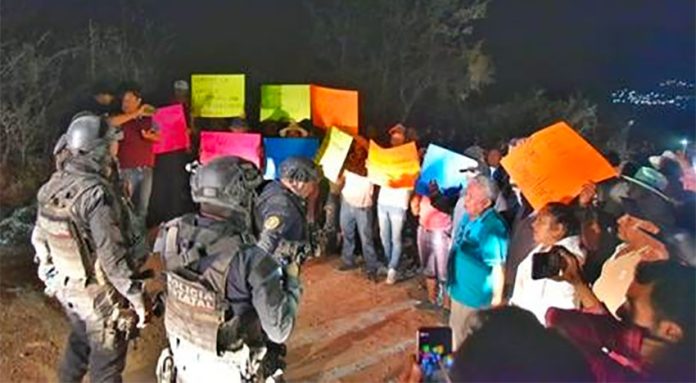
'Please don't leave:' residents attempt to prevent security forces from leaving danger area.
More than a year after they were forced to abandon their communities due to cartel violence, displaced residents of the Guerrero municipality of Leonardo Bravo sought assistance from federal and state security forces on Sunday so that they could return home.
After becoming aware that the National Guard, the army and state police had launched an operation in response to violent incursions into El Carrizal and El Naranjo over the weekend, residents traveled to the latter community to ask personally that security forces remain in Leonardo Bravo to protect citizens and repel armed groups that operate in and around Filo de Caballos, a town notorious for violence and the cultivation of opium poppies.
Accompanied by representatives of the Morelos y Pavón Human Rights Center, the residents set up a blockade to try to prevent the security forces’ departure.
According to a report by the newspaper Milenio, the federal and state security personnel argued that they couldn’t stay because they didn’t have orders to do so from their superiors.
After several minutes of heated discussion, the security forces persuaded the residents to lift their blockade so that they could leave.
Human rights center director Manuel Olivares Hernández said human rights representatives and residents followed the security forces “because we also had to leave the area for security reasons.”
The residents issued a plea to the federal government for the National Guard to return to their towns and take over security duties from community police.
They described their situation as desperate, explaining that they fear further attacks on their towns by criminal groups. Residents said that the body of an unidentified male youth was found in El Naranjo after an attack on the town Saturday morning.
Several criminal groups operate in Leonardo Bravo and the surrounding region including Los Rojos and Los Ardillos, which have engaged in a bloody turf war in recent years.
On the cusp of New Year’s Eve, this column had to be about mezcal.
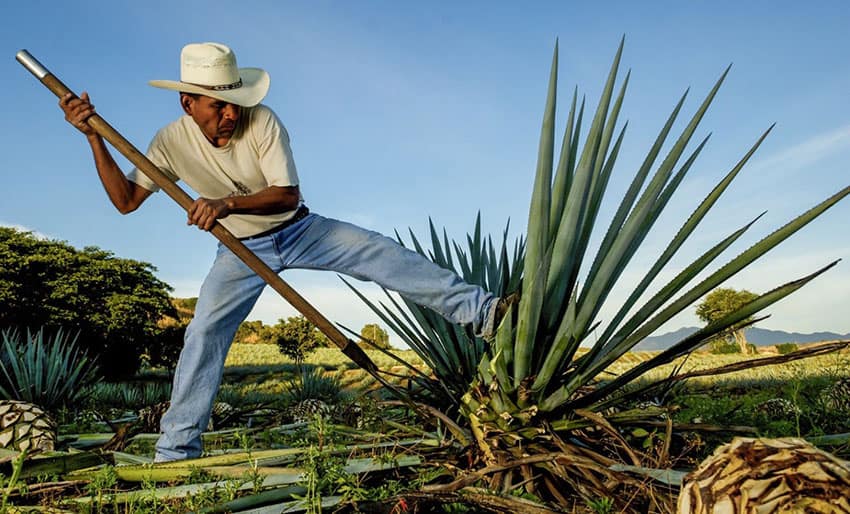
Often described as tequila’s smoky-tasting cousin, mezcal’s flavor is actually much more complex and often surprising. Like wine, the specific type of agave, where the plants are grown, how they’re harvested, fermented and processed, all these factors result in completely different flavor components.
Mezcal labels are detailed, and at the very least should carry the variety or varieties of agave used, the state or region where it was grown and the name of the mezcalero who made it. The best will come from Oaxaca, known as the home of mezcal.
While mezcal can be made from over 30 different types of agave, the Mexican government has decreed it must originate in the states of Durango, Guerrero, Guanajuato, Michoacán, Oaxaca, Puebla, San Luis Potosí, Tamaulipas or Zacatecas. Much like champagne, pizza and Parmigiano-Reggiano, these government-regulated denomination of origin ensures the integrity of the product.
What’s unfortunate, though, is that smaller mezcaleros, especially in Oaxaca, find themselves in a situation like small growers everywhere: they can’t afford the 40,000-50,000-peso cost for certification, registration, inspections and taxes necessary for licensing, and end up struggling to make a living by selling the artisanal mezcal that may have been made in their family or village for generations.
Harvesting agave for mezcal production.
“It’s hard to find beautifully handmade spirits,” says Lou Bank, co-founder of SACRED, a not-for-profit organization that uses education, advocacy and fundraising to increase awareness about mezcal and those who make it. “There’s care and intention to them. There’s a heartbeat to it that isn’t in spirits that are industrially made.”
There are an increasing number of grassroots groups and cooperatives dedicated to marketing real mezcal. Before you buy, do your homework!
So how is mezcal different from tequila? Tequila is a type of mezcal, but mezcal is not usually tequila. Both are made from the cooked, fermented piñas, or hearts, of the agave plant, but that’s where the similarity ends.
For mezcal, the piñas are smoked and baked in large underground pits lined with brick or rock, turning the starch into sugar, and then fermented with wild yeast; tequila is made from one specific type of agave, steamed in ovens and processed differently.
Another thing people wonder is why mezcal (and better tequilas) are so expensive. Some small growers produce only a limited number of liters per year, like certain wines. And the plant itself takes a minimum of four years to mature (most take a decade) and be ready to be made into mezcal. The older the plant, the more complex the flavors and aromas will be; distillers like to say that “mezcal tastes like time.”
While mezcal aficionados advise sipping slowly to fully enjoy the natural complexities of the beverage, it’s also a versatile base for a multitude of cocktails. The easiest is to mix just about any mezcal with grapefruit soda orplain seltzer, preferably one with a high mineral and/or salt content, like Topo Chico.
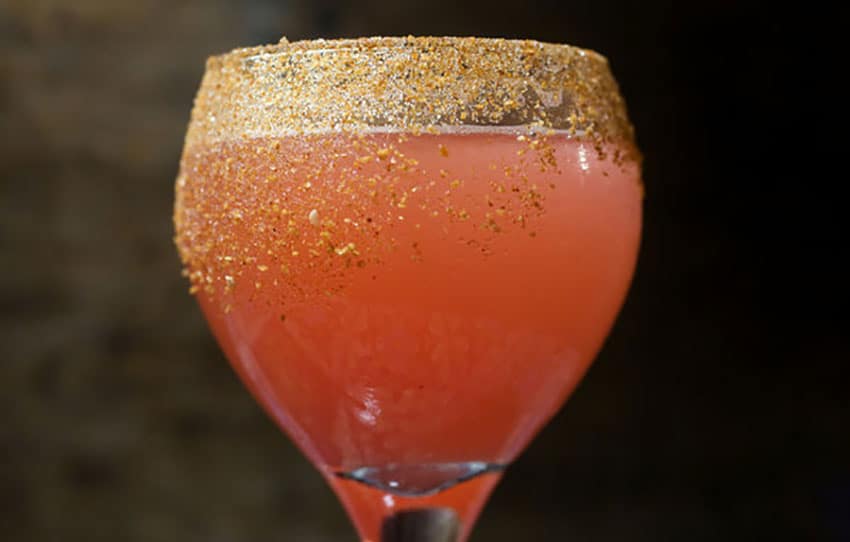
Watermelon Sugar, made with an un-aged mezcal.
Watermelon Sugar
Joven mezcals are young mezcals – clear or very lightly colored – that haven’t been aged.
1 tsp. kosher salt
1 tsp. superfine sugar
¼ tsp. cayenne
Two 1-inch cubes watermelon
¾ oz. simple syrup
¾ oz. fresh lime juice
½ oz. joven mezcal
1½ oz. blanco tequila
On a small plate, mix salt, sugar and cayenne and use to rim a medium cocktail glass. In a cocktail shaker, crush watermelon with a muddler or long-handled spoon. Half fill the shaker with ice and vigorously shake the watermelon, syrup, lime juice, mezcal and tequila. Strain into glass and serve. –The New York Times
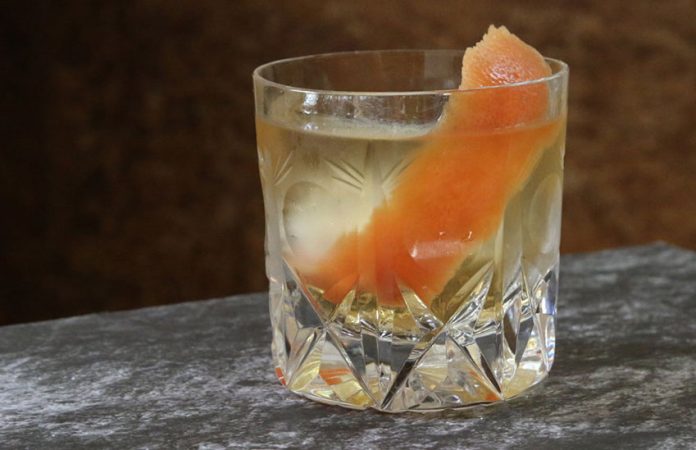
La Canadiense
The rich smoky flavors of the whisky and mezcal pack a double delicious whammy that’s complemented perfectly by the maple syrup.
2 oz.Canadian whiskey
1 oz. joven mezcal
½ oz. maple syrup
Dash apple bitters
Dash old-fashioned bitters
Orange peel from 1/2 orange
In a small pitcher, stir together whiskey, mezcal, maple syrup and bitters. Add peel and muddle. Pour over rocks in a double old-fashioned glass. –The New York Times
Orange Maria
Look for an espadin mezcal with honeyed, smoky flavors to make this fresh take on a hangover cure.
2 oz. mezcal
Fresh carrot juice
Ginger beer
Fresh orange juice
Fill a Collins glass with ice and add the mezcal. Fill the glass about 3/4 of the way with carrot juice. Top with ginger beer, a splash of orange juice and stir to combine. Garnish with a crispy pork rind, lime peel or ginger twist. –Imbibe Magazine
Spicy Paloma
Exactly what it says it is, with a yummy mix of hot and sweet flavors.
1-3 thin slices jalapeño pepper
1½ ounces of mezcal
2 ounces of fresh grapefruit juice
½ ounce of agave or simple syrup
Dash of Angostura bitters, if available
Club soda
In the bottom of a cocktail shaker, muddle jalapeño. Add mezcal, grapefruit juice, and agave or simple syrup. Add bitters if desired and lots of ice. Shake together and double-strain into a tall glass over fresh ice. Add 2 oz. of club soda. Garnish with a jalapeño ring. –Food & Wine magazine
They Didn’t Burn Rome in a Day
A little more complicated to make but well worth the effort. If you must substitute canned pineapple, be sure it’s unsweetened.
Purée pineapple in a food processor or blender. Force purée through a fine strainer. You should have a half-cup of juice. Place in a large cocktail shaker with honey and all but a couple of pinches of the peppercorns. Add mezcal, bitters and lime juice. Add ice, shake and strain over ice into double rocks glasses. Dust with reserved pink peppercorns. Makes 2 cocktails. –The New York Times
Janet Blaser of Mazatlán, Sinaloa, has been a writer, editor and storyteller her entire life, and feels fortunate to write about great food, amazing places, fascinating people and unique events. Her work has appeared in numerous travel and expat publications as well as newspapers and magazines. Her first book, Why We Left: An Anthology of American Women Expats, is available on Amazon. Contact Janet or read her blog at whyweleftamerica.com.
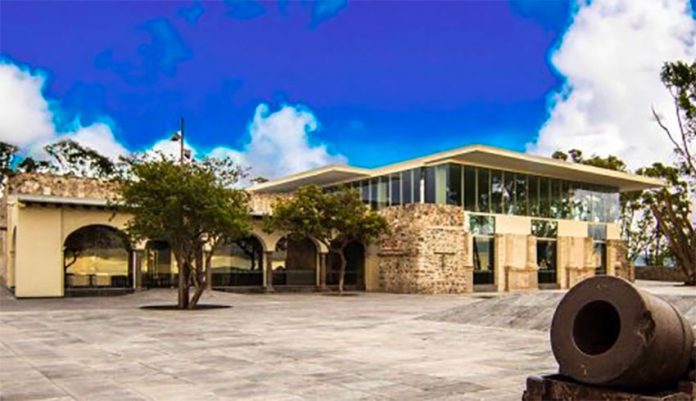
Two armed and masked thieves stole historical objects from the Fort of Guadalupe Museum in Puebla city on Friday night after tying up a security guard.
The National Institute of Anthropology and History (INAH) said in a statement that the thieves got away with 36 historic coins and medals, three sabers, a digital video recorder and the monitor of the museum’s video surveillance system.
INAH personnel were informed of the theft by the security guard who managed to free himself after the thieves had fled.
Accompanied by state and municipal police, they carried out an inspection of the museum in the early hours of Saturday morning to determine the extent of the theft. A criminal complaint was subsequently filed with the federal Attorney General’s Office, INAH said.
The institute said it would seek greater support from municipal and state authorities in order to bolster security at all museums and cultural precincts in Puebla.
The Fort of Guadalupe Museum houses items of historical importance from the Battle of Puebla, a clash between the Mexican army and invading French forces on May 5, 1862. The fort itself was successfully defended by the Mexican soldiers who, led by General Ignacio Zaragoza, won a famous victory over the better-equipped French army.
The fort museum, located in a cultural precinct five kilometers northeast of downtown Puebla, will remain closed until further notice, INAH said.
Former Sinaloa Cartel leader Joaquín “El Chapo” Guzmán may be out of the picture but his tunnel-building legacy lives on.
The U.S. Drug Enforcement Administration (DEA) reports that tunnels are still commonly used for drug smuggling in the primary border towns in which the cartel operates, such as Tijuana, Mexicali and Nogales.
The most recent tunnel discovery was made by the U.S. Customs and Border Patrol (CBP) on December 19. It crossed the border from Nogales, Sonora, into Río Rico, Arizona.
The U.S. government named it Tunnel 125, the number being the running count of functioning tunnels discovered since 1990. Another 119 unfinished tunnels have also been discovered since then.
In the three years since El Chapo’s arrest, U.S. border forces have found 35 passageways, primarily in Baja California and Sonora, the route the Sinaloa Cartel has used since the 1990s.
All the tunnels discovered in Mexicali, Tijuana and Tecate had lighting, ventilation, electric elevators and steel rails for the carts used to move drugs.
Discovered in April 2016, the longest tunnel seized so far ran 800 meters from Tijuana to San Diego, according to California officials.
Nogales is considered the cradle of drug tunnels, as U.S. border forces discover an average of one per month there, either in use or under construction.
On August 23, 2018, a tunnel task force operated by U.S. Immigration and Customs Enforcement (ICE) discovered a tunnel running from a fast food restaurant in Arizona to a house in San Luis Río Colorado, Sonora. The owner of the property was arrested for possession of US $1 million worth of methamphetamines, cocaine, heroin and fentanyl.
U.S. Army engineers will design technology to detect tunnels this coming year and the U.S. Congress has approved the $2 million the Department of Homeland Security (DHS) requested for the project.
In a speech to the U.S. Senate in April, Homeland Security Investigations (HSI) special agent Timothy J. Tubbs said the corrupting ability of the cartels is extensive and has its tentacles in both countries.
He said the primary drug-running organizations are the of Sinaloa, Jalisco New Generation and Zetas cartels, whose sourcing operations extend as far as Asia.
Tubbs said that DHS deployed 1,700 special agents and 180 intelligence research specialists on the U.S.-Mexico border in response to the smuggling.
In 2018 HSI investigations led to 4,562 criminal arrests, 3,523 indictments, 3,173 convictions and 153 administrative immigration arrests.
Tubbs praised the collaborative relationship between the two countries in its ability to take down targets such as “El Chapo” Guzmán.
“Mexico has proven to be an outstanding partner in the fight against [transnational criminal organizations], taking down the cartels’ top leadership and helping in efforts to dismantle these organizations,” he said.
Tunnel master Guzmán, whose most famous project was the 1.5-kilometer tunnel that led him to freedom from the Altiplano penitentiary in México state in 2015, is serving a life sentence after being convicted in July on drug, murder and money laundering charges.
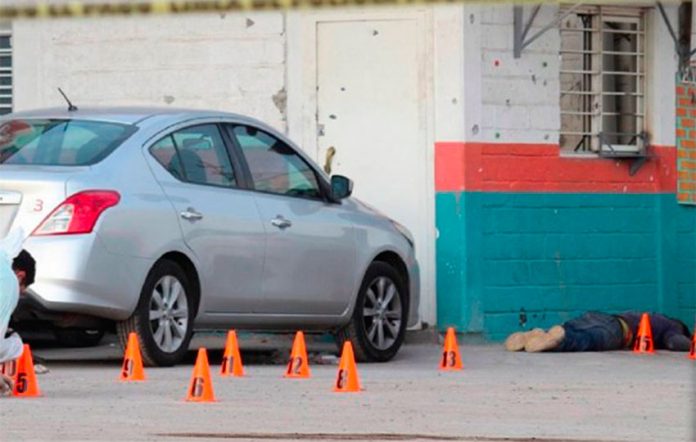
Six people were killed and five were wounded in an attack at a gas station in Uriangato, Guanajuato, early Saturday morning.
The attack was carried out by gunmen in several vehicles around 3:00am near the municipal fairgrounds.
Emergency personnel arrived on the scene soon after the attack to find five dead and three wounded.
But soon after it was reported that three other men who had been hurt in the attack had arrived at a local hospital on their own. One of them died while receiving medical attention.
Municipal police had received a report of shots being fired near the Burladero Bar, local authorities said. Upon arriving, officers found five people dead.
They said the state sent 60 police officers to the area to reinforce local security forces.
“After the terrible events in Uriangato, at the instructions of Governor [Sinhue] we have sent 60 officers and we are in close coordination with the [Attorney General’s Office] to shine a light on the events,” a state official said.
The attack occurred just hours after the local fair ended with a concert by the musical duo Río Roma, which had had its musical equipment stolen at gunpoint the night before. The equipment was found in Salamanca just hours after being stolen.
An accident on a Chiapas highway left 11 people dead and seven injured on Sunday morning.
The crash occurred around 9:00am on the Ocozocoautla-Arraiga highway when a Volkswagen Jetta ran head-on into a van carrying passengers from Tapachula on their way to celebrate the New Year’s holiday in San Cristóbal de las Casas.
The Chiapas Attorney General’s Office had identified nine of the 11 people who died as of Sunday afternoon.
On Sunday night, an eight-year-old passenger suffering from a severe head injury was fighting for her life in a Tuxtla Gutiérrez hospital. She and another passenger who was also in serious condition were transferred to the capital city by helicopter.
State authorities warned drivers to proceed with caution during the holiday period due to the large volume of traffic on the highways.
Tony the Tiger, or Tigre Toño as he is known in Mexico, may soon disappear.
Tony the Tiger and other mascots used to market high-sugar food to children may soon be banned from breakfast cereal boxes and other packaging of food products bearing a warning label.
Congress passed a law in October that requires foods high in sugar, salt, saturated fats and other ingredients to be labeled as such.
Currently up for debate is another initiative that would ban the use of characters, drawings, celebrities, gifts, sales, games, toys and other marketing schemes directed at children on the packaging of products containing the warning labels.
“This is based on the Pan American Health Organization’s statement that this type of publicity takes advantage of the credulity and inexperience of girls and boys,” said Katia Yetzani García, food health coordinator for the nonprofit El Poder del Consumidor (The Power of the Consumer).
“But it’s important to make clear that this will only occur on packaging that has at least one warning seal, so yes, the [Frosted Flakes] cereal box will not have the tiger,” she said.
Debate over the modification to the General Health Law is expected to conclude in January and, barring unforeseen delays, the law will take effect in February.
García explained that the objective of modifying junk food packaging imagery is to promote the rights of children and deter minors from seeking out these types of products because of their attractive elements.
She said that packaging will bear the health warnings if the levels of added sugar, salt or saturated fats in a product surpass 10% of the recommended daily intake.
“Following the recommendations of the World Health Organization, for an adult the maximum tolerable limit of consumption of added sugar is 10% of the total energy. In a 2,000-calorie diet, the limit would be 10 coffee spoons of sugar,” she said.
Beatriz Bautista of SGS México, a consultancy, said that although warning labels will influence people’s buying decisions, they could end up being insufficient as there is still a need to educate children and the general public on healthy nutrition.
“We lack a lot of information in order to be able to decide which are the best foods for consumption,” she said.
Tony the Tiger has been the cartoon mascot for Kellogg’s Frosted Flakes since 1952.
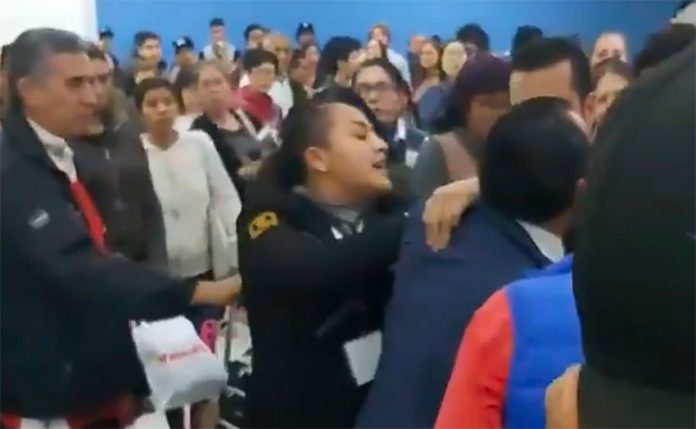
A security guard, center, breaks up a fight in Mexico City airport.
An airline employee is the latest target of social media shaming using the #Lord hashtag after a clash with a passenger at the Mexico City airport on Christmas Day.
In a video that went viral on Twitter, the employee is seen dealing with a crowd of angry passengers demanding food and hotel vouchers after their travel plans were disrupted when Interjet cancelled their flight. But the employee left his post behind the counter when he saw that he was being filmed by one of the passengers.
He approached the man and told him not to film him. But when the passenger refused, the employee grabbed for the man’s cellphone and a physical confrontation ensued.
A video shot by another person in the terminal shows a security guard breaking up the fight.
The video went viral on Twitter, where users dubbed the man #LordInterjet.
Interjet released a statement announcing that it would carry out an investigation.
“In relation to a video circulating on social media about a discussion between an employee of the company and a passenger, Interjet regrets the actions that triggered this incident,” the company said.
Opinions among Twitter users were divided, with some supporting the passenger and others taking pity on Interjet employees.
“It’s dramatic what is happening with @Interjet. What a disaster of administration, one that has permeated the whole organization. The clearest example of the disaster of a company is #LordInterjet,” said one Twitter user.
“They had been flying for hours, worn out covering for flights without crews. They did their jobs perfectly and smiling . . . I’m not justifying #LordInterjet but truthfully I realized yesterday that Interjet employees are under [a lot of] stress,” tweeted one sympathetic user.
Instead of taking sides, others simply took advantage of the situation to make memes.
“New waiting rooms in the airports thanks to #LordInterjet,” said one tweet with a picture of a wrestling ring “photoshopped” into an airport terminal.
The Federal Consumer Protection Agency reported that over 4,000 passengers were affected by Interjet’s seven cancelled flights and 25 delays during the Christmas holiday season.
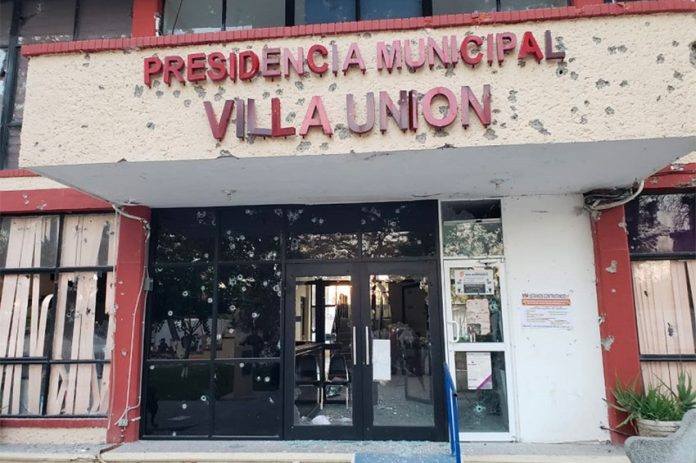
Coahuila Governor Miguel Ángel Riquelme Solís went to Villa Unión to hand over the houses already finished to their owners.
“Little by little we’re carrying out this reconstruction,” he said. “It’s not about declaring victory because in the end it was a terrible act, but we’re not going to allow crime to come back.”
Reconstruction of the homes is about 50% complete. The municipal offices and two churches were also badly damaged in the gunfight.
At least 10 million pesos (US $531,000) of state funds have been allocated to the reconstruction effort.
Riquelme said the state will coordinate with the federal government to maintain security in order to defend against any future attacks.
The visit was the governor’s sixth since the November 30 attack, by which he hoped to show residents that the state will continue its security strategy to combat organized crime.