Wednesday, March 4, 2026
Home Blog Page 1966

Police chief of Acatzingo, Puebla, abducted; mayor flees town

0
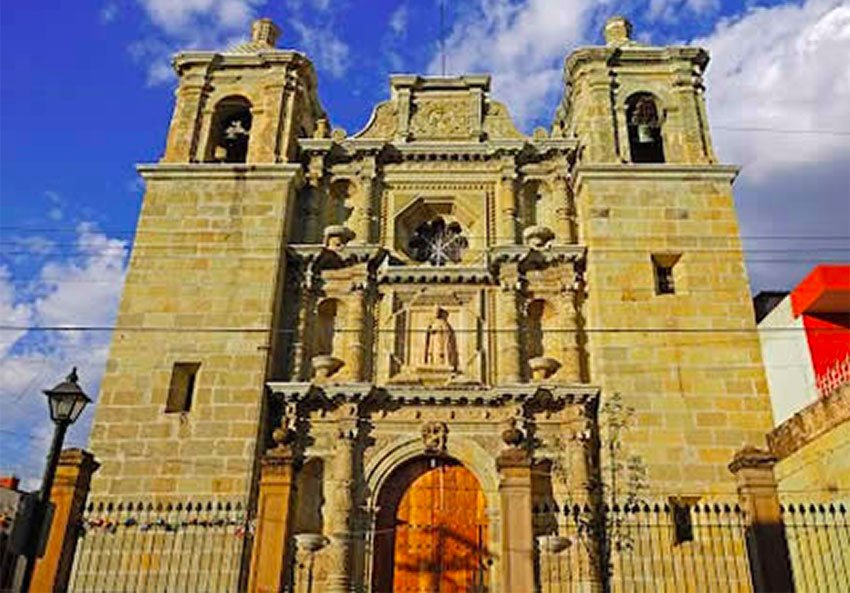
Municipal offices in Acatzingo: the mayor is not in the building.

The mayor of Acatzingo, Puebla, fled the municipality with his family after being threatened by a suspected gang boss who is also believed to have kidnapped the police chief and two of his officers yesterday.

Police chief Christian Parada Rodelas and two officers had gone to check into a report that armed civilians had been seen traveling aboard a truck on the streets of Acatzingo. The three have not been seen since.

When they failed to respond to radio calls, a second patrol was sent out. It found Parada’s patrol car but no sign of the three men.

Later yesterday, Parada’s family reported that he had called to say he was fine and that he had been released. But the police chief’s whereabouts are still unknown.

The state Public Security Secretariat said Mayor Jesús Rosales García had received threats soon after Parada disappeared, triggering his departure.

[wpgmza id=”114″]

It was Parada’s second kidnapping this week. He was abducted on Sunday but released hours later. He did not file a formal complaint about the incident.

Sources in the state’s Security Secretariat believe that a local gang boss known as “El Mamer” was behind the threats against the mayor, presumably because the latter had failed to keep an agreement with him.

The gang leader, who is believed to control petroleum theft in the area, wants to continue to control the local government, the sources said, who spoke on condition of anonymity.

Source: e-consulta (sp)

Migrants to be relocated from overcrowded sports complex in Tijuana

0
A widely shared photo of a Honduran family fleeing the tear gas at the US border on Sunday
A widely shared photo of a Honduran family fleeing the tear gas at the US border on Sunday. reuters

The thousands of Central American migrants in Tijuana are to be relocated from the sports facility that is no longer big enough to accommodate them all.

Government authorities said the more than 6,000 people at the Benito Juárez sports complex will move to a 9,000-square-meter piece of land known as El Barretal that is often used to hold concerts and other public events.

It is located about 18 kilometers from the city of Tijuana in the Mariano Matamoros neighborhood.

Mario Osuna Jiménez, Tijuana’s social development secretary, explained that the location has five large covered areas that will provide better protection from the elements than the sports complex.

Baja California Interior Secretary Leopoldo Guerrero said the covered areas will be for women, children and people with health issues.

There is an open space where awnings will be set up for most of the men, he said.

The latter will be kept apart from women and children, Guerrero said, due to problems with drug use that have occurred in the current shelter, where there has also been a severe lice infestation and shortages of food and water.

One migrant said yesterday he ate his last meal two days before after waiting in line for several hours, and had been surviving since by begging snacks from convenience stores.

Alberto Muñoz said he and his brother plan to remain in Tijuana and work. “We’re not going to try to go again to the line,” he told The San Diego Union-Tribune. “They are not going to grant us asylum.”

The Tijuana government said the 6,151 people staying at the sports complex include 3,936 men, 1,147 women and 1,068 children.

The National Immigration Institute (INM) will be in charge of operating the new migrant camp. The federal government will rent the property for 100,000 pesos (US $4,900) a month.

Meanwhile, representatives of the migrants said this afternoon that several would stage a hunger strike outside the offices of the INM at the Chaparral border crossing. Their intention is to pressure the United States government into increasing the number of petitions for asylum that it will accept each day from 40 to 50.

Source: Milenio (sp), La Jornada (sp), San Diego Union Tribune (en)

Tests give students failing grades in arithmetic, Spanish

0
Students leaving primary school are deficient in arithmetic and Spanish, tests show.

Six of every 10 Mexican children can’t do basic arithmetic with decimal numbers and half can’t understand more than the most basic and explicit elements of a short story by the time they complete primary school.

The findings are based on a sample of the results of the most recent standardized PLANEA tests, which more than 1.6 million sixth-grade students took at almost 77,000 primary schools across most of the country in June.

Jorge Hernández, head of the evaluation unit of the National Education System, explained that the 59% of sixth-grade students who were found to have insufficient knowledge in mathematics are able to complete basic additions, subtractions, multiplications and divisions but only with whole numbers.

“If decimals or fractions are introduced, they can’t do the operations . . . They can calculate perimeters and areas of regular shapes but not irregular shapes . . .” he said.

“They can interpret bar graphs but they have difficulties calculating percentages and identifying a mode, they’re even less capable of calculating a mean or median.”

For the 49% of students found wanting in Spanish language skills, comprehension of a short text beyond the most literal level posed challenges, Hernández said.

“[Identifying] the date or the name of a participant in a narrative is all that they can do. They don’t demonstrate understanding that involves connecting related events . . . nor [can they identify] the purpose and meaning of a text or [complete] a comparative assessment of each of the elements [in a story] and the role they play,” he explained.

Since 2015, when the PLANEA tests were first applied, students in Jalisco, Sonora and Yucatán have improved the most in language and communication while those in the first two states have also made the most noteworthy progress in mathematics.

In contrast, the Spanish results of students in Tamaulipas and Veracruz have deteriorated as have the math results in Veracruz, Guerrero and Zacatecas.

For three states there are no tests results. The dissident CNTE teachers’ union, which has engaged in many violent protests in opposition to education reforms and evaluations, prevented the tests from being conducted in Oaxaca, Chiapas and Michoacán.

PLANEA tests were introduced as part of those reforms, which also initiated the evaluation of teachers as well as students. But the new government has vowed to abolish them.

President-elect López Obrador repeated his promise to kill the reform package and teacher evaluations during a meeting this week with the national teachers’ union, the SNTE. He said there would be teacher training rather than evaluation, calling the reforms offensive and humiliating to teachers, who were blamed for problems in the education sector.

The SNTE had previously supported the reforms and as of August had been paid as much as 3 billion pesos (US $148 million) to promote them.

But the union has changed its position since López Obrador was elected president on July 1.

Source: El Universal (sp) 

Extortion reported at six Guerrero schools, Ayotzinapa teacher college

0
A police officer and a soldier stand guard at a Guerrero school.

Six schools in Guerrero have closed for the past two days due to extortion attempts against teachers.

The two preschools, two primary schools and two middle schools are located in Chilapa, a municipality 60 kilometers east of the state capital Chilpancingo that is notorious for crime.

Teachers say they have received phone calls from presumed members of criminal gangs who demand that they hand over their aguinaldo, or end-of-year bonus, in order to avoid harm.

In response, Guerrero Governor Héctor Astudillo urged teachers “to not succumb to hysteria” and said that state authorities would collaborate with the Secretariat of National Defense (Sedena) to conduct an investigation.

“In no way do I dismiss that threats may be occurring under the influence of crime but I think we [still] have to determine the real extent of the problem. We must review [the situation] and act with great responsibility,” he said.

The Ayotzinapa Rural Teachers’ College, the educational institute attended by the 43 students who disappeared in 2014, also suspended classes this week after armed civilians showed up at the school and demanded a payment from the staff.

According to one teacher, the armed group burst into the school, located in the Guerrero municipality of Tixtla, after arriving in a vehicle on Tuesday afternoon.

They demanded a list of all the staff members that work at the Ayotzinapa college, including their home addresses.

Later, the teacher said, staff members received an e-mail demanding that they too leave the school and pay a cuota, or fee, once they have received their aguinaldo.

Teachers subsequently held a meeting at which they agreed to suspend classes and to request safety guarantees from the state government before returning to work.

Faced with the possibility of being extorted, they are also demanding that security measures be put in place before they receive their end-of-year benefits.

Some Ayotzinapa students, however, denied that armed men had entered the college, telling the newspaper Milenio that the school’s closure was a safety precaution following the abduction and murder of a former state police coordinator whose remains were found in Chilpancingo Tuesday night.

Source: Milenio (sp) 

Mexico women’s team makes history advancing to world cup final

0
Mexico's captain takes a penalty kick that scored the game's only goal.

Mexico’s national U17 women’s soccer team made history today, becoming the first Mexican team at any age level to get to the final of a women’s world cup.

The team beat Canada 1-0 in the semi-final match of the FIFA U17 world cup championship in Montevideo, Uruguay.

Team captain Nicole Pérez scored the lone goal in a penalty kick in the first half.

The team plays for the championship on Saturday against Spain, which beat New Zealand in the other semi-final game.

Mexico, Canada and New Zealand all made history in Uruguay by advancing to the last four for the first time in a U17 women’s world cup.

It was also the first time that an Asian team has not participated in a semi-final at the tournament.

Mexico News Daily

Banxico cuts growth forecast over uncertainty about government’s policies

0
bank of mexico
Lower growth forecast.

The Bank of México (Banxico) has cut its growth forecast for next year, citing uncertainty over the economic policies the new government will pursue.

In its third-quarter report, Banxico predicts growth of 1.7% to 2.7% in 2019, a 0.1% reduction at both ends of the scale compared to its second-quarter outlook.

It also said it was lowering growth expectations for this year to between 2% and 2.4%, down from a 2% to 2.6% range in its last report.

The forecast for 2020 is slightly better, with economic growth of between 2% and 3% expected.

Banxico cited concerns about “economic activity and the country’s capacity to generate an environment of confidence and certainty that will promote investment.”

A delay in the ratification and implementation of the new North America trade agreement, now known as USMCA, and increasing protectionism at a global level could also pose risks to Mexico’s growth, the bank said.

In addition, volatility in international financial markets, a slowdown in public spending at the start of the new administration due to challenges associated with implementing its policy agenda, insecurity, corruption, impunity and an absence of the rule of law could also affect Mexico’s economy, it added.

Potential for growth in the long term could suffer if “monetary policy decisions generate increased concern in markets and a sustained loss of confidence in Mexico as an investment decision,” Banxico said.

The central bank also raised its inflation outlook for 2019 to 4.7% from 4.2%. Possible policy changes also pose a risk to inflation, Banxico said, explaining that it was necessary to protect economic fundamentals.

Exchange rate pressure and high energy prices could also lead to higher across-the-board prices.

President-elect López Obrador and has transition team have tried to calm markets by promising economic prudence, respect for the central bank and business-friendly policies.

“We’re going to make investors trust us. Those who invest in companies, in stocks, in the financial market, will have their investments assured and obtain good returns,” López Obrador said yesterday.

The veteran leftist’s actions rather than his words, however, have generated concern in markets and the private sector.

López Obrador’s decision last month to cancel the new Mexico City Airport and a predilection for delegating key decisions to the people through public consultations have been cited by financial analysts as factors that have contributed to a loss of investor confidence.

Legislative proposal’s related to the banking and mining sectors presented by lawmakers from the president-elect’s Morena party relating have also led to significant losses on Mexico’s stock exchange.

Last week, private sector forecasts showed that the outlook for the Mexican economy in 2019 in terms of the value of the peso, growth, inflation and interest rates had deteriorated significantly in the space of a single month.

López Obrador, some economists said, is at least partially to blame.

Source: Milenio (sp), El Economista (sp) 

Some migrants heading home: ‘They tricked us; our dreams have gone to hell’

0
Migrants en route to Tijuana from Mexicali yesterday.

For some Central American migrants in Tijuana, the American Dream is over before it even began.

Around 350 members of the first migrant caravan who recently reached the northern border city have decided to voluntarily return to their home countries – Honduras, in most cases – in the face of having to wait for months for the opportunity to file a request for asylum in the United States.

Some migrants who spoke to the newspaper Milenio claim they were misled about their chances of gaining entry to the U.S.

“[Migrant advocacy group] Pueblos Sin Fronteras told us not to worry, that there was going to be transportation, that Mexico was going to open the gates so that we didn’t have to enter [the U.S.] illegally, via the river . . .” Honduran migrant Ulises López said, referring to the attempted border breach Sunday.

“What was offered to the caravan of Honduran migrants was a trap . . . The people that brought us to this place, supposedly [caravan] leaders, took advantage of us, they used us in a horrific way, what they did to us has no name,” he added.

“We came with enthusiasm . . . encouraging those who didn’t want to keep going . . . but when we got here our dreams went to hell.”

Pueblos Sin Fronteras responded to the claims against it in an online statement.

“For the past few days, Pueblo Sin Fronteras has been the object of multiple critiques and declarations that discredit the work we have done for years, and especially our accompaniment of this exodus,” it said.

“These declarations are irresponsible and by criminalizing and defaming us they increase the risks faced by all human rights defenders – both those who speak out and declare their solidarity from within their own contexts, as well as those who put their bodies on the line. These declarations also put members of the Central American exodus in grave danger.”

The group also rejected any suggestion that it had encouraged or participated in the rush on the border, to which United States border agents responded with the use of tear gas.

“. . . Let it be clear that we didn’t organize or encourage [the migrants] to carry out the march [to the border] . . .” Pueblos Sin Fronteras representative David Abud said.

The Federal Police, who set up a blockade at the El Chapparal border crossing bridge that was ultimately bypassed by the migrants, warned against any repeated attempt to cross into the United States illegally.

“Those who break the peace will be processed under Mexican law . . .” Federal Police commissioner Manelich Castilla said.

The National Immigration Institute (INM) said Monday that 98 people who participated in the border protest had been arrested and would be deported.

As many as 9,000 mainly Honduran migrants fleeing violence and poverty are currently in Tijuana or other parts of Baja California, according to Mexican authorities, and 2,000 more are on their way.

The Benito Juárez sports complex, where most of the migrants are staying, is becoming increasingly overcrowded and conditions are squalid.

City officials told the news agency Reuters that there have been multiple cases of respiratory illnesses, lice and chicken pox at the makeshift shelter, where migrants are sleeping in tents or rudimentary enclosures fashioned out of whatever is at hand.

Mayor Juan Manuel Gastélum said today the municipality hasn’t enough food, medications or space to attend to their needs, and repeated a call to the federal government for help. But up to now, neither the current administration nor the new one, which takes office on Saturday, have done anything to relieve the pressure on Tijuana, he said.

Source: Milenio (sp) 

6-hour border closure cost over US $5 million: business group

0
Migrants' camp in Tijuana.

The closure of the border between Tijuana and San Diego for almost six hours Sunday cost businesses in San Ysidro, California, an estimated US $5.3 million, according to a local business group.

Jason Wells, executive director of the San Ysidro Chamber of Commerce, said that more than 700 businesses located in the area immediately north of the port of entry suffered financial losses and that 75% of them closed for the entire day.

“The situation facing our border – mass migration of Central Americans from failed states – is complex and is felt nowhere as strongly as in San Ysidro,” Wells said, explaining that 93% of local businesses’ customers are from Mexico.

“Obviously businesses in Chula Vista, San Diego and further away were also affected,” he added.

The closure of the San Ysidro port of entry, the busiest binational crossing point in the world, followed a rush at the border by around 500 Central American migrants Sunday morning to which United States border agents responded with the use of tear gas.

Rahil Iqbal, who owns three discount clothing stores on San Ysidro Boulevard just north of the border, described the decision to shut the port of entry as a “disaster” for business and estimated his losses at between US $20,000 and $25,000.

“It was a very important day [of trading] lost,” he told NBC San Diego.

The migrant situation is also having an impact on the other side of the border.

Antonio Rico, president of the Tijuana Hotel Association, said the presence of thousands of Central American migrants in the border city and associated difficulties with crossing the border were also impacting negatively on the local tourism economy.

“We’ve had cancellations of more than 8,000 rooms. I’d say that there are about 80% fewer bookings from Mexicans and 20% fewer from international tourists who wanted to come here for the weekend. This all started with the arrival of the migrant caravan,” he said.

The day after the chaos at the border, United States President Trump warned that the border could be closed permanently “if need be.”

That threat, the president of the Los Angeles Customs Brokers and Freight Forwarders Association said, “must be taken seriously.”

Karen Quintana added that any future closure to the border between California and Mexico, especially one in the lead-up to Christmas, would cause complete chaos.

Mexico is California’s largest export market and millions of dollars’ worth of goods and produce cross the border in both directions every day.

Last year, Mexico spent at least US $26.7 billion on Californian exports, statistics show, and 12.1% of all Mexican exports to the United States cross the border in the San Diego area.

“Mexico is our biggest trade partner,” said Jock O’Connell, an analyst at Beacon Economics and one of California’s foremost authorities on world trade.

Closing the border, he added, would be akin to “cutting off your nose to spite your face.”

Source: Notimex (sp), NBC San Diego (en) 

Volaris announces new domestic airline routes for 2019

0
Airlines will open new domestic routes next year.
Two airlines have announced new domestic routes.

Low-cost carrier Volaris has announced it will open several new domestic routes in March next year.

New routes will connect Hermosillo, Sonora, with Mérida, Yucatán, and Ciudad Juárez, Chihuahua, three times a week, and with Chihuahua, Chihuahua, twice a week.

Two new flights will connect the Chihuahua city with Mérida and Mexicali, with twice-a-week frequency.

New routes will also connect Mérida to Oaxaca, Oaxaca, with flights running three times a week and to Tijuana, Baja California, with twice-weekly flights.

The carrier will also reinforce its Tijuana-Guanajuato route by adding two new weekly flights.

Meanwhile, rival VivaAerobus has announced one new route between Monterrey, Nuevo León, and Los Mochis, Sinaloa, operating twice a week.

Source: El Financiero (sp)

No more plastic in Corona’s six-pack rings

0
Beach-friendly Corona coming soon to Tulum.

Plastic six-pack rings in which Corona beer is sold will be replaced with a biodegradable product in a pilot program in Tulum, Quintana Roo.

In collaboration with the environmental organization Parley for the Oceans, Corona brewer Grupo Modelo will replace the plastic rings with a product made from vegetable waste left by food and beverage processing.

The pilot program is aimed at “addressing the necessity to reduce the environmental impact of plastic on the beaches . . . This project shows [Grupo Modelo’s] commitment with the environment, with sustainability and with responsible consumption,” said the company in a statement.

“Our oceans are at risk . . . We share the goal of eliminating plastic forever, because we cannot allow the toxic impact it is causing,” said Parley founder and CEO Cyrill Gutsch.

The brewer intends to eliminate the use of plastic in seven years.

Environmental concerns were first raised about the six-pack rings in the 1970s but since 1989 all have been manufactured to be 100% photo-degradable, meaning the plastic begins to disintegrate within a few weeks. They are now a relatively minor contributor to marine litter and wildlife fatalities, according to information on Wikipedia.

Source: Milenio (sp)