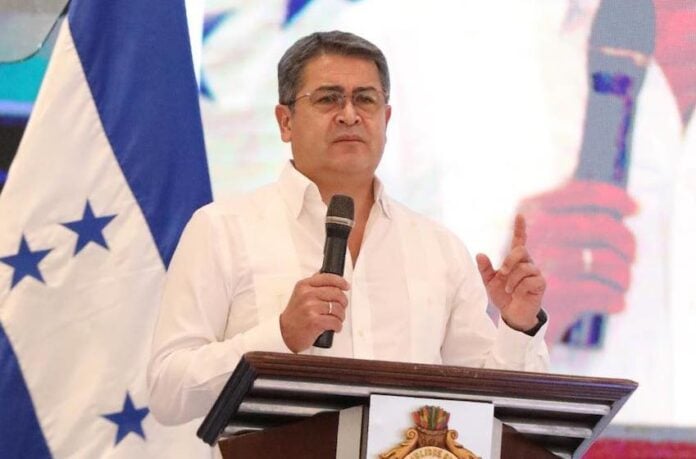
Juan Orlando Hernández, the former president of Honduras who was pardoned by U.S. President Donald Trump after being sentenced to 45 years in prison for drug trafficking, is accused by the media outlet Diario Red of being the prime mover in a right-wing plan to destabilize the government of Mexico and other Latin American nations through disinformation. (Juan Orlando Hernández/Facebook)
Leaked audio recordings suggest U.S. President Donald Trump, the Israeli government and Argentine President Javier Milei have teamed up to spread fake news in an effort to destabilize Mexico and other progressive left-leaning Latin American governments.
The allegations — first published by the Spanish digital newspaper Diario Red in late April — also point to former Honduran president Juan Orlando Hernández, current Honduran President Nasry Asfura and his vice president, María Antonieta Mejía, as well as the president of the Honduran Parliament, Tomás Zambrano.
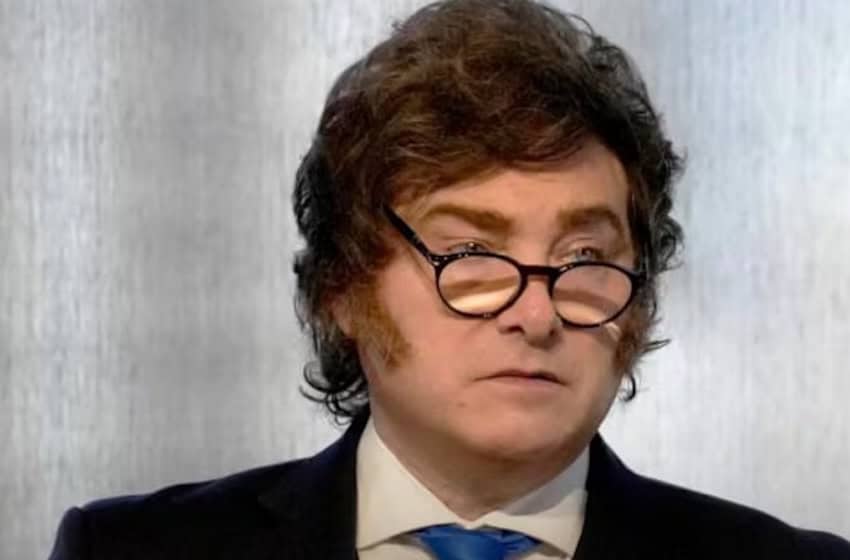
The Spanish digital newspaper Diario Red included Argentine President Javier Milei among the current and former heads of state participating in the alleged disinformation scheme. (Facebook)
Hernández is considered the key cog in the alleged disinformation plot, described as a network of opaque financing and psychological warfare operations whose aim is to undermine the administrations of Claudia Sheinbaum in Mexico, Lula da Silva in Brazil and Gustavo Petro in Colombia.
So far, the accusations have swirled mainly around the internet, with little attention given to them by mainstream media and no notable official investigation. President Sheinbaum herself seemed unmoved by the possibility of a multinational smear campaign aimed directly at her, declaring, according to El País, “It won’t affect us, not at all.”
According to the investigation conducted by Diario Red, audio recordings from Jan. 30, 2026, reveal that Hernández requested US $150,000 of Honduran public funds to establish a digital journalism unit in the United States with the intention of spreading misinformation about Sheinbaum and other heads of state he considered leftist.
Diario Red says the office aims to mass-produce fake news and fear narratives that could pave the way for political and military interventions, which would complement Trump’s threats of ground interventions in Mexico.
The plot purportedly has the support of Israeli Prime Minister Benjamin Netanyahu, who lobbied Trump to grant Hernández a pardon, and sectors of the global far right.
Trump pardoned Hernández on Dec. 1, 2025, eight months after the latter had been sentenced to a 45-year prison term in New York for drug trafficking.
The price of this pardon, according to Diario Red, is turning Honduras into the base of operations for the MAGA-Milei-Netanyahu axis in the region.
Pie de Página, an independent Mexican media outlet, earlier this month described Hernández’s pardon as “the purchase of a regional henchman to finance attacks against Mexico and Colombia without sovereign restrictions.”
In the leaked recordings revealed by Diario Red, Asfura — who was endorsed by Trump ahead of the Nov. 30, 2025, elections in Honduras — agreed to transfer funds to Hernández “from a friend’s account,” before asking what the money was for.
Hernández allegedly replied: “We’re going to set up an intelligence cell … in the United States, so they can’t track us in Honduras.”
The revelations indicate direct contact with former U.S. intelligence officials to carry out a purge within Honduran institutions.
The underlying reason for this conspiracy is material, according to Pie de Página, reporting that Mexico is being targeted because of its strategic resources, such as lithium.
Asfura, who was in the U.S. last week, has not commented on the scandal, while Zambrano — the leader of the Honduran Parliament — insists the audios are fake.
On Friday, Diario Red reported that its website, which was given the scandal-implying name of Hondurasgate, suffered nearly 40,000 attempted cyberattacks on May 7, “with a concentration of vectors originating primarily from the United States and Israel.”
Mexico's 16.3% share of total U.S. trade is a record first-quarter high for Latin America's No. 2 economy. (Unsplash)
Trade between Mexico and the United States accounted for 16.3% of the United States’ total trade in the first quarter of 2026, according to U.S. data, confirming that the two countries remain each other’s largest commercial partner.
Trade between Mexico and the U.S. totaled US $231.3 billion between January and March, according to data published last week by the U.S. Census Bureau and the U.S. Bureau of Economic Analysis. The figure represents an increase of 7.4% compared to the first quarter of 2025.
Mexico’s 16.3% share of total U.S. trade with all countries around the world ($1.42 trillion) is a record first-quarter high for Latin America’s No. 2 economy.
Canada ranked as the United States’ second-largest commercial partner in the first quarter of the year, with trade between those two countries accounting for 12.4% of total U.S. trade.
China ranked third, with China-U.S. trade accounting for 6.2% of the United States’ total trade between January and March.
While trade between Mexico and the United States increased 7.4% in the first quarter, trade between the U.S. and Canada fell 10.6% and trade between the U.S. and China decreased 34.4%.
Trade between the U.S. and Taiwan increased 79.1% annually in the first quarter, but their total trade is only around one-third of that between the U.S. and Mexico.
The U.S. Census Bureau data shows that Mexico’s exports to the United States were worth a record-high $138.03 billion in the first quarter of 2026, a 5.1% increase compared to the same period of 2025. While a strong result, the year-over-year increase was well short of the 17.9% annual rise in Mexico’s total export revenue between January and March.
Mexico’s exports to the U.S. in March were worth a record high $51.2 billion, a 6.7% year-over-year increase.
One export category in which Mexico recorded very strong growth in the first quarter of the year was advanced technology products, including computers. Mexico’s export of such products to the U.S. between January and March generated revenue of $42.82 billion, a 35.2% increase compared to a year earlier.
By contrast, revenue from Mexico’s export of motor vehicles and parts to the U.S. declined 11.3% annually in the first quarter to $38.05 billion. The decline was largely due to the United States’ imposition of tariffs on light, medium and heavy vehicles made in Mexico.
The vast majority of Mexican-made tech products enter the United States tariff-free under the terms of the USMCA, even though a significant proportion of their inputs are imported by Mexico, especially from Asian countries. Mexico’s export of advanced technology products to the U.S. in the first quarter of 2026 was 12.5% more lucrative than the export of motor vehicles and parts to the same market.
Mexico had 16.9% share of US market for imports in Q1
Mexico’s exports to the U.S. between January and March accounted for 16.9% of the United States’ total outlay of $816.49 billion on imports.
Canada’s share of the U.S. market for imports was more than five points lower at 11.2%. China’s share was 7.4%.
Mexico’s imports from the US increased 11% in Q1
Mexico’s imports from the United States were worth $93.26 billion between January and March, an increase of 11% compared to the first quarter of 2025.
Thus, U.S. exports to Mexico grew at more than double the pace of Mexican exports to the U.S.
Mexico was the largest importer of U.S. goods in the first quarter of the year. Its expenditure on U.S. imports accounted for 15.5% of the United States’ total export revenue in the period.
Mexico’s trade surplus with the United States in the first quarter of 2026 was $44.76 billion, a 5.3% decrease compared to its surplus with the U.S. in the same period of last year.
Just over a year ago, President Claudia Sheinbaum and U.S. President Donald Trump agreed to work to narrow the trade imbalance between Mexico and the United States. Trump has cited the United States’ trade deficit with Mexico as one reason for his decision to impose tariffs on Mexican goods. The month before he commenced his second term, he suggested that Mexico should become a U.S. state due to its trade surplus with the United States.
However, last month, U.S. Trade Representative Jamieson Greer said that the U.S. is more concerned about its trade deficit with China than its trade deficit with Mexico. The United States’ outlay on imports from China declined more than 40% annually in the first quarter, while its deficit with the East Asian economic powerhouse fell 52.7% to $33.49 billion.
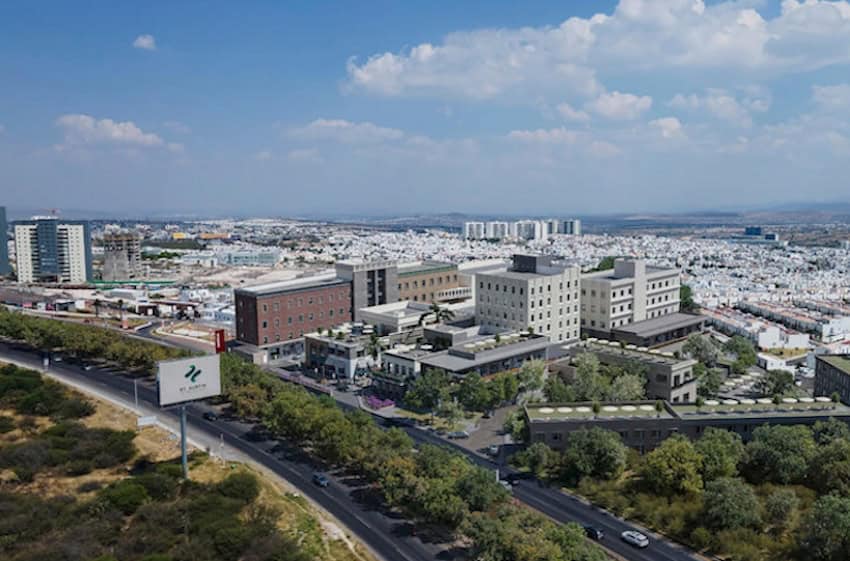
In addition to its two-story hospital, the completed St. Austin Medical District will offer a 2,000 square-meter medical specialty center, 180 consulting rooms, dental, metabolic and physical rehabilitation clinics, and a research center focused on regenerative medicine.
(Solidity Group)
Querétaro is poised to become a new hub for medical tourism and highly specialized hospital services once the 2.5 billion-peso (US $145 million) St. Austin Medical District opens for business in September 2027.
Said to be 35% completed, the new healthcare infrastructure project will compete with leading hospital and medical tourism destinations in the North American private health market, such as Houston, Rochester (home of the Mayo Clinic), Tijuana and Mexico City.
Once integrated into the city, the St. Austin project is expected to lift Querétaro to the same level of medical tourism destination as Tijuana and Mexico City. (Solidity Group)
The complex is being built along the Fray Junípero Serra corridor in Querétaro city, one of the fastest-growing urban and financial areas in the state, and is being developed by Solidity Group Investments and Pómpano Desarrollos.
On its website, the St. Austin project is described as “a medical ecosystem created to support professional growth,” adding that “[o]ur purpose is to integrate two developments with medical spaces, specialty areas and strategic commercial premises that strengthen the healthcare ecosystem in Querétaro.”
The project includes a two-story hospital of more than 4,500 square meters, six operating rooms, an imaging area, clinical laboratories and more than 50 rooms for medical care.
The complex will also include a 2,000 square-meter medical specialty center, 180 consulting rooms, dental, metabolic and physical rehabilitation clinics, as well as a research center focused on regenerative medicine.
Additionally, the development will include 54 commercial premises, a hotel and more than 600 underground parking spaces.
“Each component — offices, medical areas, complementary services and commercial spaces — has been designed to offer functionality, accessibility, and an environment that fosters professional performance,” the St. Austin website says.
The center will be internationalized with the help of an alliance with the Global Care system, along with medical networks and hospital agreements in the United States and Latin America. This will open channels of collaboration in specialties, patient referral and clinical training.
“The project will integrate Querétaro into a health ecosystem with international connectivity, in a context where medical tourism and the mobility of high-profile patients grow year after year,” Daniel Rifel, CEO of Solidity Group Investments, told Forbes México.
Rifel said Querétaro was selected because of the city’s economic growth driven by nearshoring, industrial stability generated by the aerospace and automotive sectors in the state, and the security conditions and tourist appeal for Mexican nationals and American and Canadian visitors.
“The [economic] stability … demonstrates that there is legal certainty and favorable conditions for investment across multiple administrations,” Rifel said.
Home to some of the Earth’s most ancient life forms, the Bacalar lagoon is one of the Yucatán Peninsula’s hidden jewels. Here’s how to visit in an eco-conscious way. (Andrea Fischer)
When we first arrived in Bacalar, the idyllic lagoon deep in the heart of Quintana Roo, I had mixed feelings.
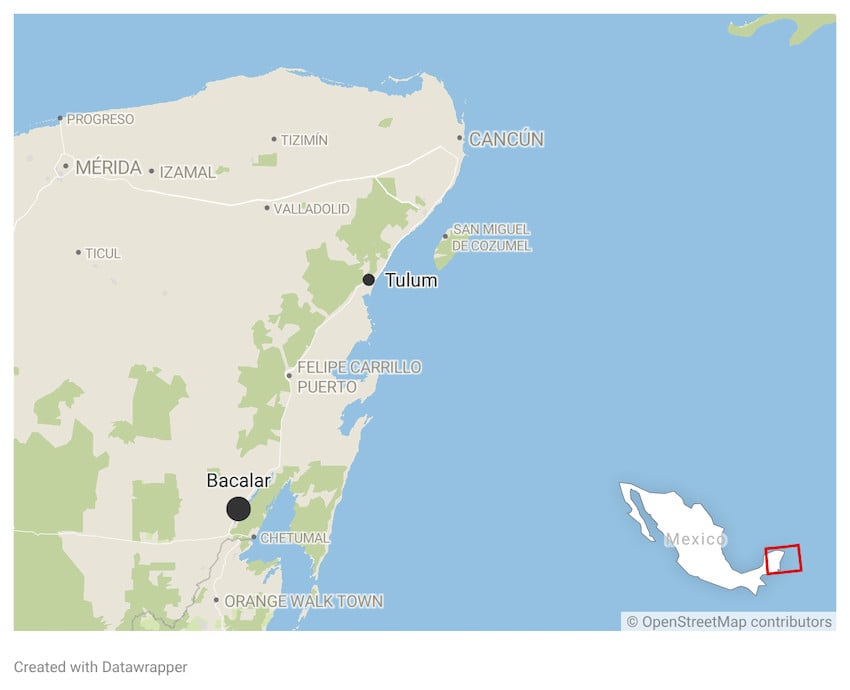
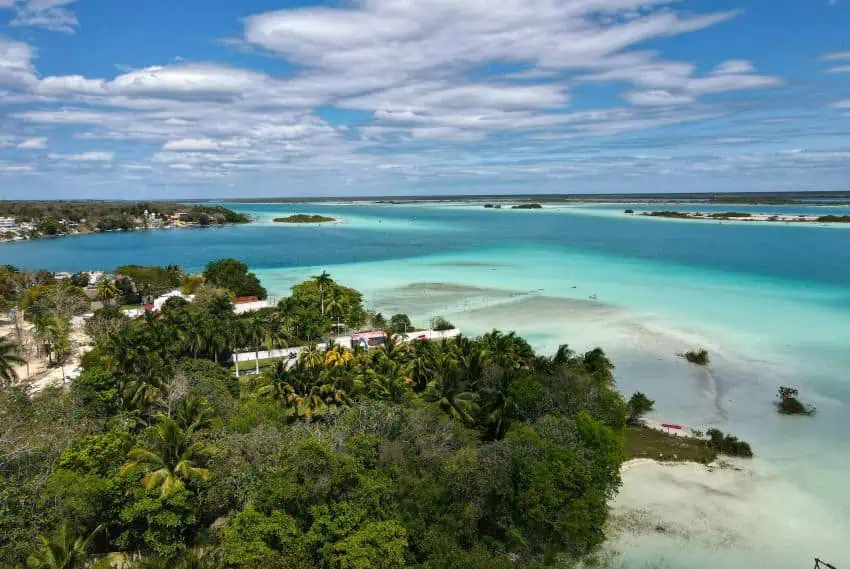
My partner remembered Bacalar for its paradisiacal lagoon, nestled in the southeastern state of Quintana Roo, with calm waters in deep shades of sky blue. I had never been. The lagoon is home to stromatolites, a very ancient form of life that thrives only in the remotest places on Earth. Now, that precious environment is increasingly endangered due to irresponsible tourism. I wanted to find out how damaged the ecological panorama was — and dive deep into the heart of the Maya jungle.
A breath of Huay Pix
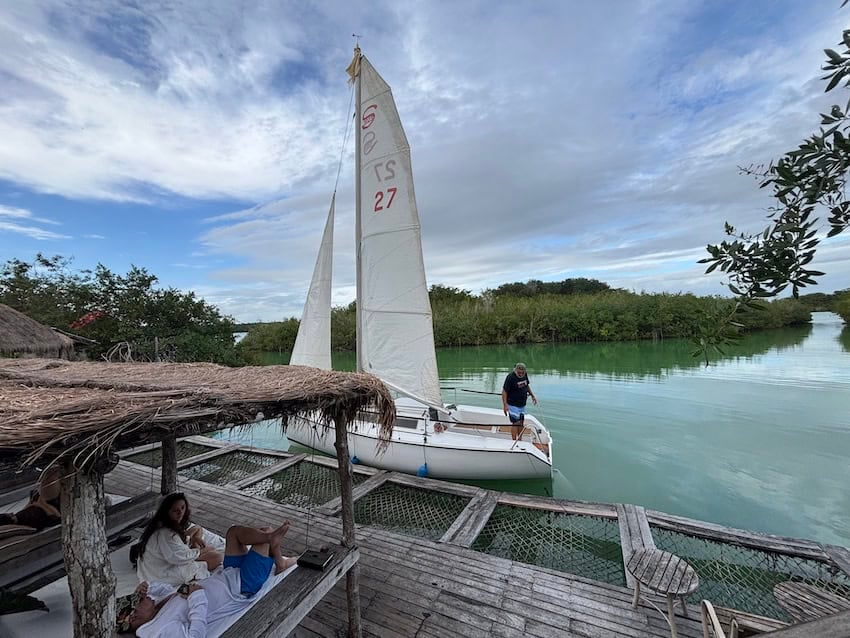
Bacalar seemed like a wonderful destination to do exactly nothing. As one of Mexico’s wellness hotspots, we were looking for a place to take a morning yoga class, possibly do some kayaking and eat local seafood. That’s when we came acrossLa Embajada Universal, an eco-friendly hostel in the Milagros Lagoon in Huay Pix, a small Maya town minutes away from Bacalar.
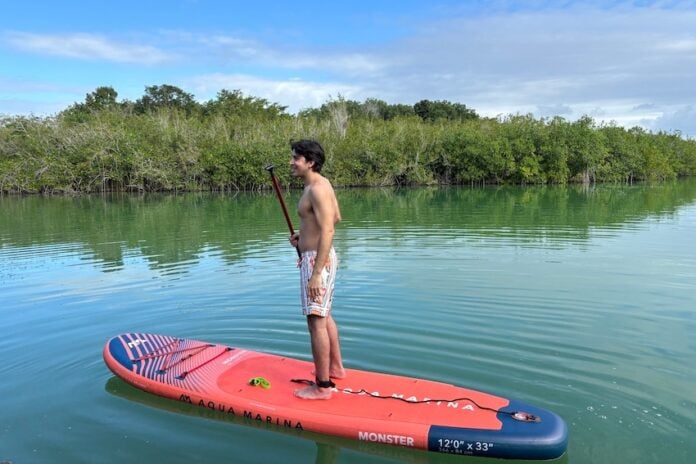
We booked a four-night stay on Airbnb, just between Christmas Day and New Year’s. As we arrived in Chetumal, we headed for Huay Pix, where the hostel’s private pier is located. Once we arrived, Gustavo, a dark-haired man in his thirties, picked us up in an impressively large paddleboard. We hopped on board and he rowed softly for about half an hour, as if he were caressing the surface of the lagoon. Everything was silent. The iguanas watched us, perched on the roots of centuries-old mangroves.
This was exactly what we were looking for.
Fading splendor in Bacalar
However impressive Bacalar still is, tourism, real estate and agricultural waste have caused its splendor to fade. “Because this body of water is part of the hydrological basin,” explains UNAM ecologist Dr. Luisa Falcón, “large quantities of nitrogen and phosphorus are now being discharged from intensive agriculture and lack of wastewater treatment, which favors the growth of plankton.” These microorganisms have caused Bacalar to lose its multiple shades of blue rapidly.
Laguna Milagros is connected to Bacalar through an ancient aquifer system, protected by the mangroves that line the coast. (Andrea Fischer)
Falcón cites the “Bacalar Report Card” which reports an 800% increase in tourists to the area between 2008 and 2019. This influx has altered approximately 35% of the lagoon’s shoreline due to the loss of riparian vegetation. Furthermore, the report indicates that recreational and nautical activities have further damaged the area’s native mangroves.
Garbage, deforestation and agricultural activities have altered “the biogeochemical conditions of the lagoon,” the biologist says, “promoting the growth of primary producers in the water column, which changes its color.”
Although Bacalar is currentlydescribed as a new global wellness capital by both international and local real estate companies, Dr. Falcón says the growing demand for real estate and tourism is taking a heavy toll on the local fauna and flora. Both UNAM researchers and global organizations, such asGreenpeace, agree: they have incessantly denounced the devastating ecological impact that human activity has had on the lagoon.
So, how does one visit Bacalar in a sustainable way?
Visiting Bacalar sustainably
“Mexico is home to a great diversity of modern microbialites,” notes Dr. Falcón, which have lived here for less than 10,000 years. Currently, they are found in “communities of living microorganisms, both in desert pools, lagoons, rivers and cenotes.”
These microscopic communities “are sensitive to water quality,” she said. Therefore, to prevent their disappearance, “we must not disturb them.” Furthermore, the ecologist points out, “the tourism industry must respect the guidelines for proper wastewater treatment.”
Bacalar Lagoon is precious, but we need to take steps to conserve it. (Dimitris Kiriakakis/Unsplash)
Instead of adapting the ecosystem to tourism, tourism should adapt “to the karst nature of the Yucatán Peninsula,” to ensure that this and other native ecosystems survive. To guarantee the ecosystem’s survival, Dr. Falcón suggests these simple steps:
Choose only organic products.
Choose accommodations that have wastewater treatment systems.
Avoid using loudspeakers that could disturb the wildlife.
Use the restroom before entering the lagoon.
Wear sun protection to avoid using sunscreens and products that take a long time to decompose.
“Bacalar Lagoon is a unique and irreplaceable ecosystem that reflects the beauty of the Maya aquifer,” Falcón concludes. “It is our responsibility to protect it.”
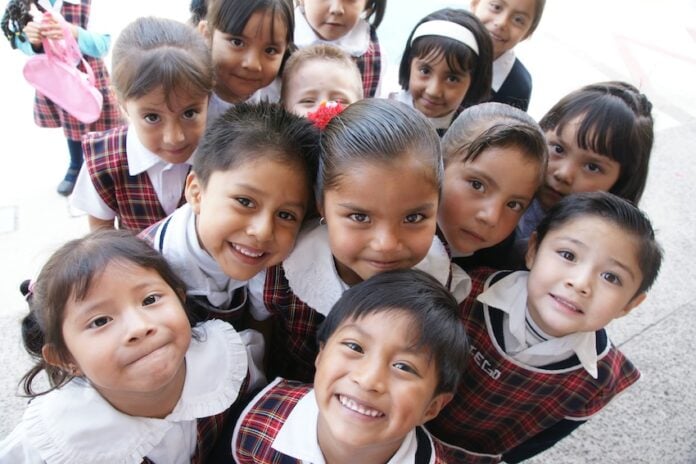
Mexican schoolchildren are already behind in the major subjects, and some 29 million of them would be affected by Education Minister Mario Delgado's plan to cut short the current school year. (Unsplash)
The reasons given: “the World Cup and an unprecedented heat wave.” Neither reason makes any logical sense, and parents, teachers and just about everyone (except the kids, perhaps) were left angry, confused and stressed out.
On Friday, President Sheinbaum announced that the decision was under further review, additional discussions would take place over the weekend and a final decision would be presented on Monday.
So what’s really going on here? What could be the real reason behind this announcement?
Travis and George take it on in the latest episode of Confidently Wrong.
Confidently Wrong about Mexico's announcement to end the school year early
Travis Bembenek is the CEO ofMexico News Daily and has been living, working or playing in Mexico for nearly 30 years.
President Sheinbaum also announced on Monday that Mexico had sent another ship-load of humanitarian aid to Cuba. (Gabriel Monroy/Presidencia)
Sheinbaum’s mañanera in 60 seconds
🏫 Sheinbaum defended Education Minister Mario Delgado over his controversial announcement that the school year would end on June 5, saying the decision was unanimous among all state education ministers — not Delgado’s idea. Education ministers were meeting on Monday to reconsider the plan.
🇺🇸 The president effectively ruled out a U.S. military operation to extract Sinaloa Governor Rubén Rocha Moya, who U.S. prosecutors accuse of drug trafficking. Sheinbaum said such an action “mustn’t happen” and “we don’t believe it will happen,” while confirming Rocha remains in Sinaloa.
🚢 Mexico dispatched a new humanitarian aid shipment to Cuba, with Sheinbaum reaffirming solidarity with the island and opposition to the longstanding U.S. embargo.
Why today’s mañanera matters
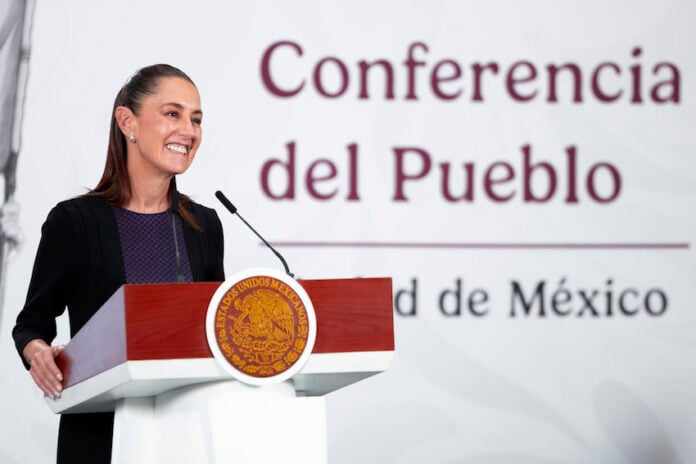
At her Monday morning press conference, President Claudia Sheinbaum commented on the highly controversial announcement last week that the 2025-26 school year would end almost six weeks early on June 5. She defended her education minister, Mario Delgado, saying that the plan to end the school year early — a plan that could be revised later on Monday — was not his idea. Her defense of the minister was notable as Delgado stood firmly behind the shortened school schedule, even after Sheinbaum had expressed her dissatisfaction with the plan on Friday.
Also of note at today’s mañanera was the president’s remarks effectively ruling out the possibility that U.S. forces could come to Mexico to try to arrest Sinaloa Governor Rubén Rocha Moya and take him to the United States to face drug trafficking charges.
Sheinbaum has said on numerous occasions that U.S. authorities have provided insufficient proof to warrant the arrest of Rocha and nine other Sinaloa-based current and former officials, including a Morena party senator and the mayor of Culiacán.
Rocha, who is currently on leave, denies the accusations against him, including allegations that he colluded with the “Los Chapitos” faction of the Sinaloa Cartel.
Sheinbaum: Decision to end school year early was ‘unanimous’
Sheinbaum highlighted that education ministers from all 31 states and Mexico City approved the modified school calendar announced by federal Education Minister Mario Delgado last Thursday.
Delgado announced that the school year would end on June 5 rather than July 15 due to the staging of the FIFA men’s World Cup in Mexico and hot weather. Sheinbaum subsequently called the decision a “proposal” amid widespread criticism of the plan, and Delgado announced that another review of the school calendar would take place Monday — i.e., today.
On Monday morning, Sheinbaum noted that some governors expressed their opposition to the plan to end the school year on June 5.
“They have the right to say they don’t agree, but their education ministers approved it,” she said.
“… It wasn’t Mario’s idea, but a request of many teachers and parents. … There was a campaign against Mario, but the truth is it was a unanimous decision of all of the country’s education ministers,” Sheinbaum said.
She noted that education ministers would meet again on Monday morning to reconsider the decision announced last week.
“They proposed very long vacations. The proposal now is to keep six weeks of vacations [as originally scheduled]. … We’re going to wait for the decision,” Sheinbaum said.
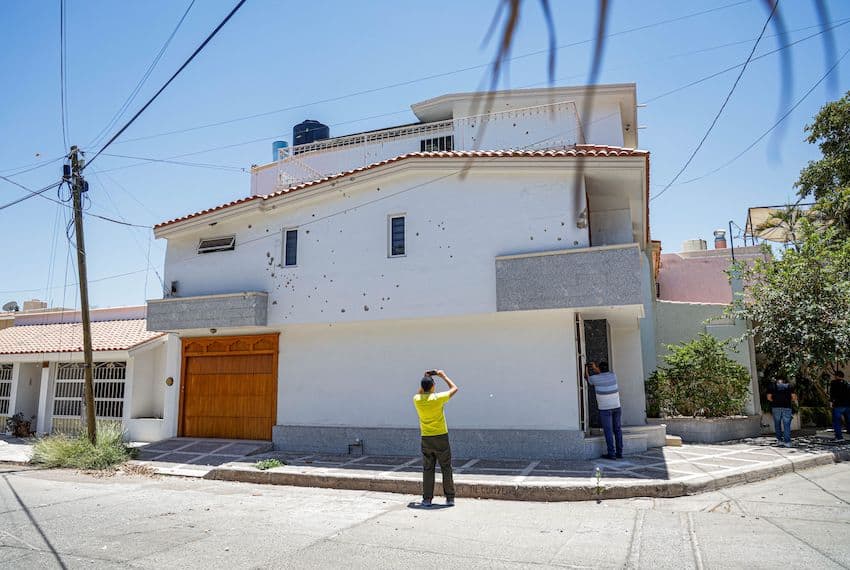
Sheinbaum acknowledges Rocha’s former house was shot up
“[He lived there] 10 years ago. … It was abandoned,” she said of the house in Culiacán, the capital of Sinaloa.
Asked whether the government was aware of Rocha’s whereabouts, Sheinbaum said he is in Sinaloa.
“There is a lot of propaganda. … It is propaganda, not information,” she said, referring to speculation that the governor has left the state.
“We have to differentiate between information and propaganda. There are newspapers in Mexico that dedicate themselves to political propaganda,” Sheinbaum said.
On social media, “there is a lot of propaganda and a lot of lies,” she added.
Gunmen attacked former Governor of Sinaloa Rubén Rocha Moya’s home on Lago de Cuitzeo street in Culiacán over the weekend. (José Betanzos Zárate/Cuartoscuro)
Later in the press conference, Sheinbaum was asked whether her government sees a “risk” that U.S. forces could come to Mexico and “extract” Rocha, given Mexican authorities’ apparent reluctance to extradite the governor.
“We don’t believe this will happen. It mustn’t happen, but we don’t believe it will happen,” the president said.
Mexico sends new shipment of aid to Cuba
Asked what else Mexico can do to reduce the suffering of the Cuban people, Sheinbaum responded that her government is “going to continue sending humanitarian aid” to the Caribbean island nation.
“In fact, a ship is leaving today,” she said.
“Mexico will always be fraternal and show solidarity with all the nations of the world, and particularly with Cuba,” Sheinbaum said.
“We believe in people’s right to self-determination … and we’ve never agreed with … the [U.S.] embargo against Cuba,” she said.
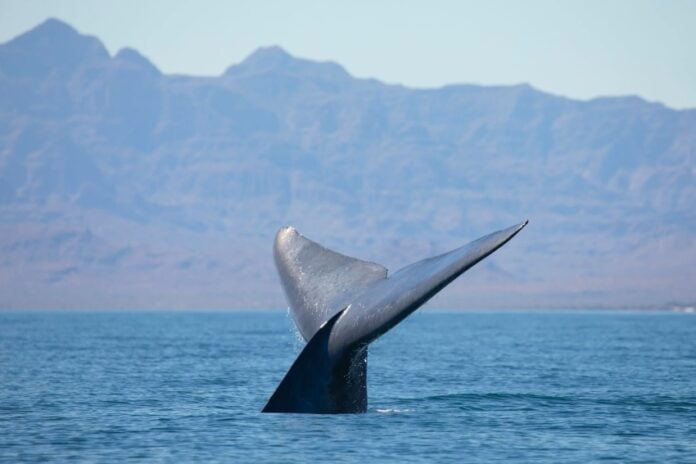
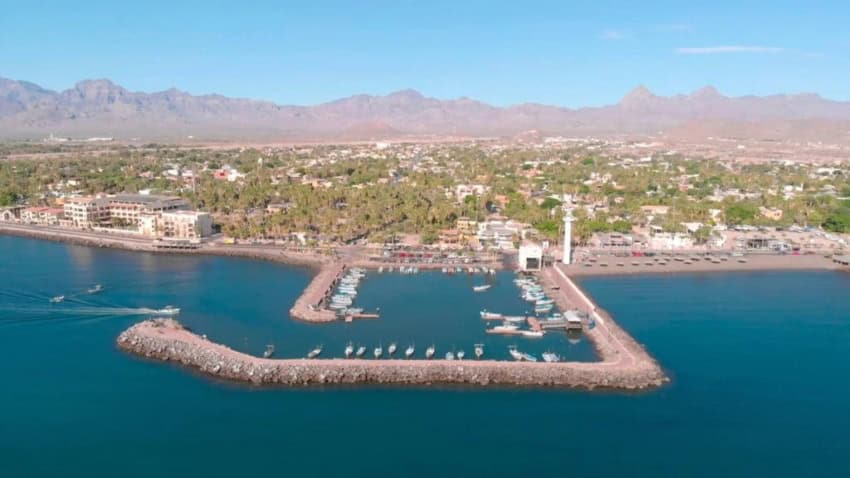
The offshore waters in Loreto Bay National Park are home to an astonishing diversity of marine mammals, including as a seasonal habitat for endangered blue whales. (Baja Adventures)
On April 10, a federal decree was issued, officially reclassifying Loreto in Baja California Sur as a deep-sea cabotage port, thereby opening it to large-scale maritime traffic, including more and larger cruise ships. This decree, however, was not well-received. In fact, not only have residents and activists called for President Claudia Sheinbaum to revoke the decree, but a petition on Change.org seeking the same outcome already has over 47,000 signatures.
Why the decree is so unpopular
It’s not difficult to understand the pushback. Loreto and its offshore islands are a National Park and have been designated an Important Marina Mammal Area — the area is a prime seasonal habitat for endangered blue whales, the largest creature ever to have lived, and a sanctuary for many other creatures — as well as a UNESCO World Heritage Site, a Ramsar Wetland of International Importantce and a PACE Priority Site, under the Mexican government’s official framework for endangered species protection. Loreto itself, settled since 1697 and the capital of Baja California until 1829, is also a Pueblo Mágico.
In other words, this is one of the most beautiful and ecologically diverse places on the planet.
“We are not opposing development,” notes a recent release from the Nakawe Project, which works to conserve the Baja California peninsula’s environment and species. “We are demanding legality, science-based decision-making and responsibility toward our environment and our people. Loreto is not a deep-sea industrial port. It is a living ecosystem, a globally significant sanctuary, and a critical habitat within a transboundary ocean system. Protecting it is not optional — it is a legal, ecological and moral obligation.”
Potential recourses
The community of Loreto has until May 8 to file an amparo challenging the decree on constitutional grounds, with a ruling to follow in the coming months.
It’s a sure bet the filers mention legal precedent, since when the 206,580-hectare national park — much of it marine-based — was created in 1996, its goal was to preserve “ecological equilibrium,” a mandate since formalized through zoning by the National Commission of Protected Natural Areas (CONANP) and the Ministry of Environment and Natural Resources (SEMARNAT).
Who actually pushed for the decree to happen?
The key promoter appears to have been the Administración Portuaria Integral de Baja California Sur (API-BCS), whose director general, Narciso Agúndez Gómez, has stated that the decree is a “strategic step to strengthen the maritime and tourism development of Baja California Sur.”
Does Loreto, a town of just over 16,000 people, look like it’s primed for deepwater maritime traffic and enormous cruise ships? Its residents don’t seem to think so, despite a decree from President Claudia Sheinbaum. (API-BCS)
Agúndez knows the state’s tourism well. His father, Narciso Agúndez Montaño, was the state’s former governor, and his uncle and brother — José Antonio Agúndez Montaño and Christian Agúndez Gómez, respectively — have both served as president of the municipality of Los Cabos.
However, there was no broad consensus for the decree to occur, as evidenced by the fact that the state’s current governor, Víctor Castro Cosío, has already had at least three meetings with upset residents in Loreto, and more are scheduled.
“Although the decree reclassifying the port of Loreto as a deep-sea and coastal port has already been published,” added Loreto Mayor Paz del Alma Ochoa Amador, “it could be repealed if the community does not agree.”
It certainly appears as if they don’t.
How to bid on a luxurious Cabo villa
Have you ever dreamed of owning a villa in Los Cabos? Now’s your chance, although you’ll need to have some pretty deep pockets.
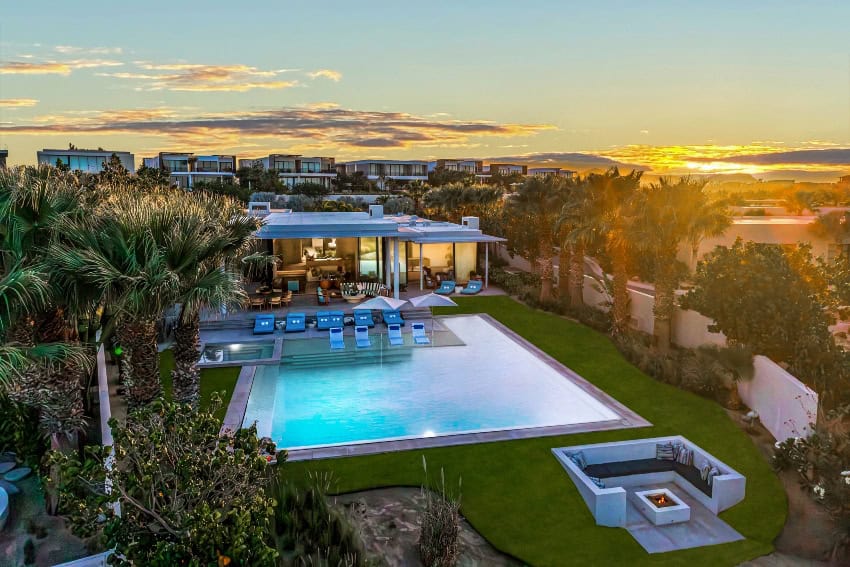
Between May 19-27, Concierge Auctions will be accepting bids on the 6,247-square-foot Villa 7 at the Four Seasons Resort and Residences at Costa Palmas in La Ribera, on the East Cape of Los Cabos, with live bidding taking place on May 27 at The Connaught in London’s upscale Mayfair district. The villa is listed at US $19.95 million and opening bids are expected to be in the range of US $7 to $12 million.
This villa at the Four Seasons Resort and Residences at Costa Palmas in Los Cabos is listed for over US $19 million, but could be a bargain at auction. (Concierge Auctions)
If that seems a little steep, it bears noting that ownership also includes membership in the Costa Palmas Beach and Yacht Club, as well as access to the Robert Trent Jones-designed Costa Palmas Golf Club.
“Our London Global Sale has become both a consistent and powerful platform for connecting engaged buyers with premier properties like this stunning Four Seasons residence within desirable Costas Palmas,” said Chad Roffers, CEO and co-founder of Concierge Auctions. “After selling branded residences for well over a decade, we know that the international appeal of these luxury properties isn’t just about location, but the promise of a world-class lifestyle, which we make possible in a matter of weeks.”
A Los Cabos golf course update
As Querencia’s Campo Alto moves closer to its opening date later this year, another Los Cabos golf course development is also inching towards completion. That would be Oleada Golf Links, the Ernie Els-designed course that will serve as a centerpiece of the 860-acre resort and residential community (also called Oleada) on the Pacific Coast north of Cabo San Lucas.
The course, Els’ first in Mexico, will have its grand opening in November, it was recently announced, with preview play starting in July. The early access allows for feedback and final adjustments ahead of the formal opening.
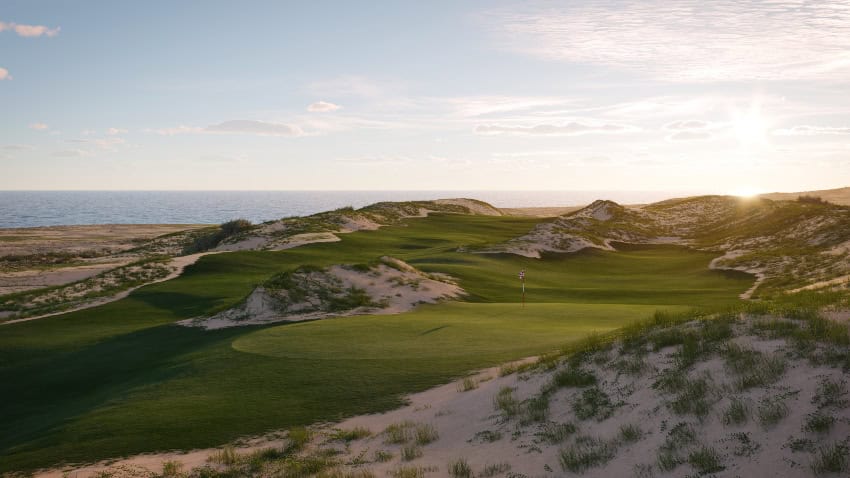
Fifteen of 18 holes at the 7,336-yard Oleada Golf Links are built around beachfront dunes and all the holes will feature Pacific Ocean views.
Oleada Golf Links
“Because the native contours and dune formations are so good, very little earthmoving was required to build the course,” Els told Sports Illustrated. “Shaping was minimalistic. Man cannot improve on what Mother Nature has created over the eons. The golf course that we’ve created at Oleada will be here long after I’m gone. That means something and it makes me feel very proud.”
Rendering of the dune-framed 6th hole at Ernie Els’ Oleada Golf Links in Los Cabos. (Oleada)
As for the rest of Oleada, it’s coming along, too. The 300-room Grand Hyatt Los Cabos at Oleada is also scheduled to open by the end of 2026, with the 175-key Conrad Los Cabos at Oleada to follow in 2027.
Chris Sands is a writer and editor for Mexico News Daily, and the former Cabo San Lucas local expert for the USA Today travel website 10 Best and writer of Fodor’s Los Cabos travel guidebook. He has also contributed to numerous other websites and publications, including The San Diego Union-Tribune, Marriott Bonvoy Traveler, Forbes Travel Guide, Porthole Cruise and Travel, and Cabo Living.
With the superpeso rumbling ever onwards, American expats from Ajijic to Zacatecas have been forced to significantly downgrade their lifestyles in a collective belt-tightening exercise that one gringo described as “no bueno” and that the Mexican economy has not acknowledged as a crisis, because it isn’t one, for Mexico.
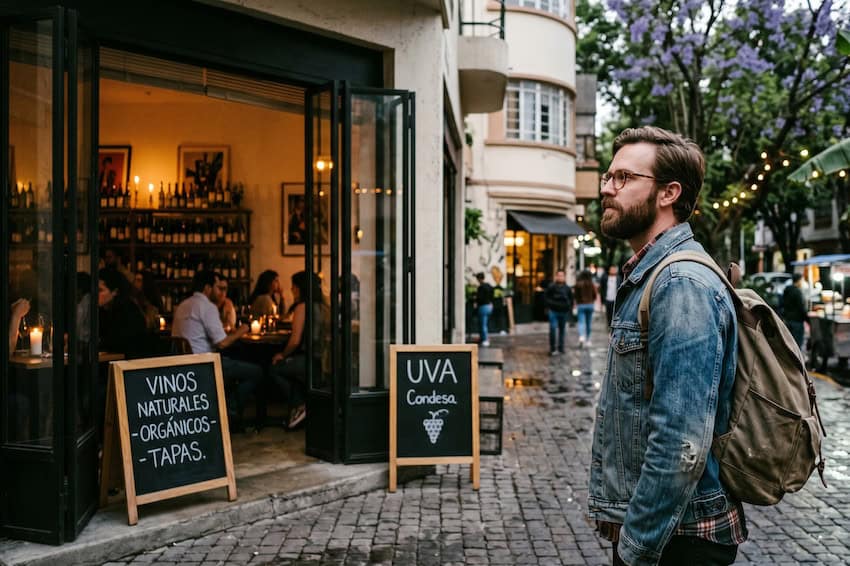
Digital nomad Chase Remote is gallantly refusing to move and gentrify other neighborhoods, instead sacrificing his Friday organic wine nights. (Image generated by AI)
“My wife and I used to buy rib eyes at City Market for lunch every Thursday; este jueves we’re having tacos de tripa,” New York transplant Don Manhattan told El Jalapeño in the meat section of a no-frills Bodega Aurrera in San Miguel de Allende, moments after bumbling his way through his weekly Spanish class, which has not yet covered the phrase “purchasing power parity” but has, apparently, covered “pinche,” a word his teacher told him to avoid using at all costs and which he deployed immediately upon being asked about the exchange rate.
For his part, Condesa-based digital nomad Chase Remote confirmed he was no longer frequenting natural wine bars, high-end contemporary Mexican restaurants with English menus, and the capital’s too-cool-for-school craft beer dens — establishments that, it should be noted, exist in Mexico City specifically because people like Chase Remote arrived and created demand for them.
He now drowns his dollar-denominated sorrows with bottles of Barrilito, one of Mexico’s lowest-cost mass-produced brews, while subsisting on a diet sourced primarily from his local OXXO, which has been feeding Mexicans through worse than this for considerably longer and without a lifestyle column about it.
One thing, however, remains non-negotiable: Remote will not be leaving the Condesa-Roma bubble in search of cheaper rent, no matter how many increasingly plump fistfuls of pesos his Airbnb requires.
“The thought of sparking a wave of gentrification in another neighbourhood instead of simply contributing to the one here is just too triggering,” he said, downing the dregs of his third Barrilito and gazing longingly across Parque México toward La Uva Orgánica, one of his erstwhile haunts, which is still there, still serving natural wine, still accepting pesos, and has not reduced its prices in response to his situation.
“Besides,” he added, “this is the only part of town where I don’t need to learn Spanish, and I feel like I’m in a hipster neighbourhood of Portland, even if I can no longer afford the single-origin coffee.”
Americans across Mexico reported similar stories to El Jalapeño, which is, it should be confirmed, also suffering from the exchange rate and is not pleased about it and who will be travelling on mechanically questionable third-class buses until such time as El Jalapeño either turns a profit or the peso rises above 20 to what is currently a feeble, embarrassed, and entirely inadequate greenback.
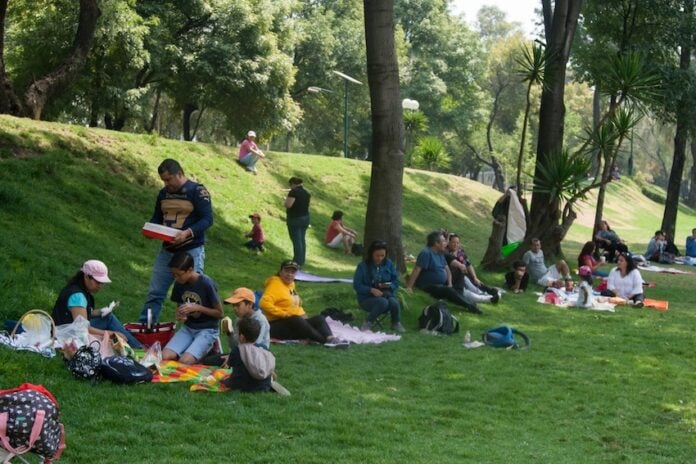
The sun is up, the sky is blue and Mexico City is beautiful! Do not miss these perfect picnic spots throughout the city. (Galo Cañas Rodríguez/Cuartoscuro)
Summers are confusing in Mexico City — although we get thedriest season of the year from April to July, in recent years we’ve also hadheavy rain and sudden winds out of the blue. However, this does not stop us capitalinos from enjoying ourlush green areas, which come alive in the capital’s summer warmth.
While Chapultepec Park is a jewel of the city, it is also very busy almost every day of the year — especially when the weather is great. So where do locals go to beat the heat and unwind in a green space? Here’s Mexico News Daily’s list of the best picnic spots to enjoy this summer season for a well-deserved shot of vitamin D and hours of chatting with friends outdoors.
Jardín Botánico at UNAM
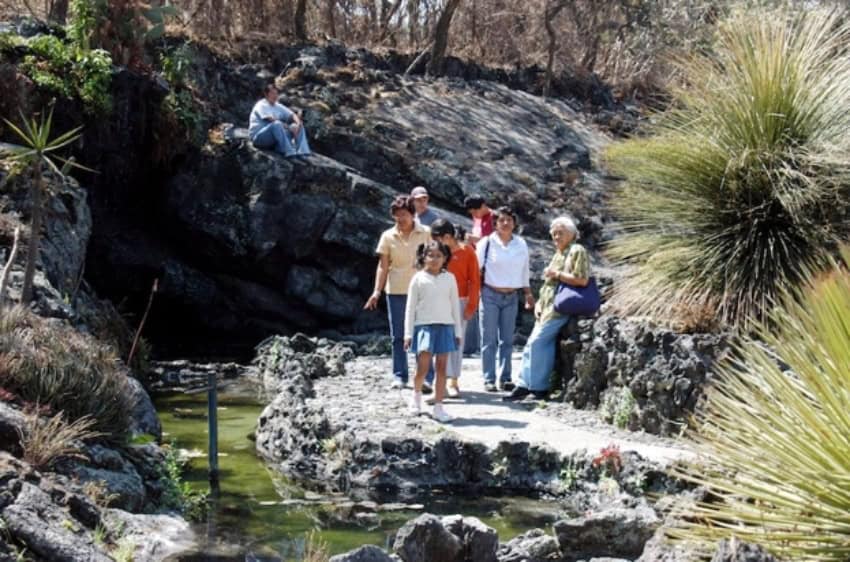
If you were curious to know what the capital was like in pre-Hispanic times, the UNAM Botanical Garden offers a fairly accurate glimpse. (Renato Dávalos/Cuartoscuro)
Operated by UNAM’sBiology Institute (IBUNAM), this protected natural area is home to more than 1,600 plant species native to Mexico City. Jardín Botánico holds a special place in my heart because it was one of the first places my partner took me on a date. So, from experience, I know it’s a beautiful place to enjoy a sunny picnic brunch.
If you’re coming with young children, they’ll love running among the volcanic rock formations and encountering native lizards and various birds. If they’re lucky, they might even spot an osprey (Pandion haliaetus) — and yes, that’s actually pretty exciting. In addition to guided tours with specialists and biologists, you can use the common areas outside the protected zone for an outdoor feast. Watch out, though! An iguana might steal your sandwich.
Where? Tercer Circuito exterior S/N, Ciudad Universitaria (C.U.), Coyoacán.
Cineteca Nacional
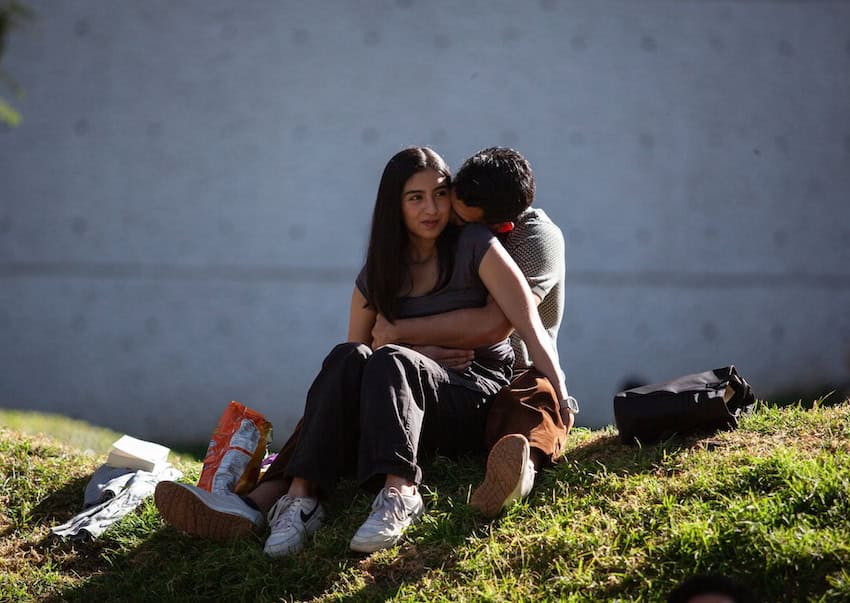
If you’re planning a picnic date with your significant other, you might as well do it the old-fashioned way and head to the Cineteca Nacional’s gardens. (Andrea Murcia/Cuartoscuro)
Cineteca’sOpen Air Forum is the perfect spot for a romantic summer date. While taking advantage of the warm weather, grab some chips from a street vendor in the Historic Center of Coyoacán, add some Valentina hot sauce, and bring your special someone to see a movie. Which one? Anything! They’re sure to be showing something really unusual, like Scandinavian or Kenyan cinema and anything in between.
Besides being free, the Open Air Forum has spacious gardens, with areas adapted for relaxing on the grass. Trust us: no one from Coyoacán’s “alternative scene” could imagine a better spot for a summer picnic in Mexico City.
Where? Av. México-Coyoacán 389, Xoco, Benito Juárez.
La Marquesa
Whether in cabins or in open-air spaces, barbecues in La Marquesa are a summer must every year. (Eneas De Troya/Wikimedia Commons)
If you’re looking for a place to have an outdoor barbecue, La Marquesa is the obvious choice. Located on the border between Mexico City and the State of Mexico, past Santa Fe, this area has benefited from the use of designated forest areas for horseback riding, picnics and even fishing. It’s also famous for its paintball spots.
This national park is so large,notes the Mexico City government, that “it covers most of the territory that divides the valleys of Mexico and Toluca.” In this area, there are cabins where you can spend the night andstargaze. However, if your plan is simply to have a barbecue and return before sunset, this is perhaps one of the most beautiful national parks to visit for a weekend getaway. Watch out for rain, though!
La Marquesa National Park, Toluca de Lerdo, Edomex.
Centro Nacional de las Artes (CENART)
Under the shade of the trees and in the summer warmth, it’s easy to fall asleep in the green areas of CENART. (Public Domain)
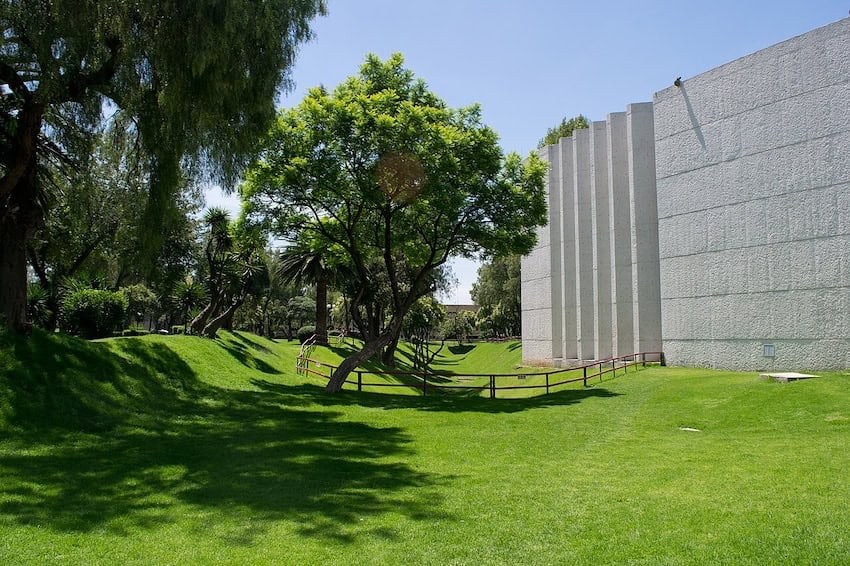
Just imagine it: art students leaving class, couples visiting contemporary art exhibitions in free galleries and expansive green spaces filled with grass and leafy trees. Sounds like the perfect spot for a picnic, right? That’s exactly what the gardens of the National Center for the Arts (CENART), south of the city, look like.
Designed by the great Mexican architect Ricardo Legorreta, this labyrinthine space is intended to create a play of light between the geometric shapes of the walls and their vibrant colors. The property spans12 hectares, at least half of which are dedicated to public parks that visitors use to lie on the grass, walk among the trees or leisurely listen to jazz.
Where? CENART. Av. Río Churubusco 79, Country Club Churubusco, Coyoacán.
It wouldn't be a World Cup without Panini cards and sticker albums. (Cardz Review)
Modena is a small Italian city of 184,739 inhabitants. It is known for its car industry with Ferrari, Lamborghini and Maserati all having connections to the city, for a university dating to 1175 and for its excellent balsamic vinegar. It is also home to Panini, the makers of the World Cup stickers and trading cards that millions of football fans will be collecting when the tournament kicks off in North America in a few weeks.
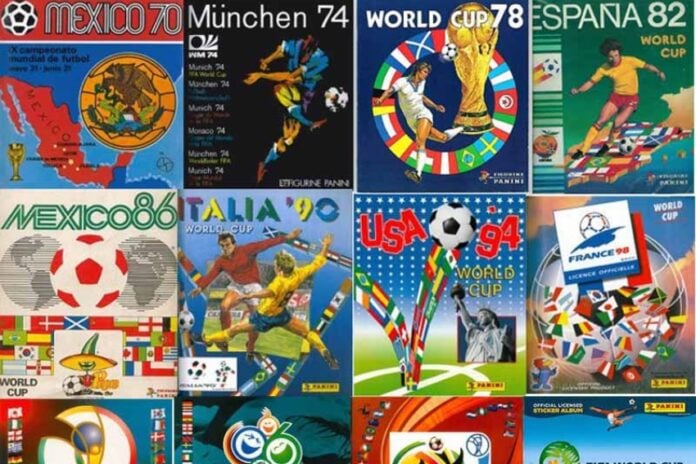
These items have a very special link to Mexico, for it was in the 1970 tournament — hosted by Mexico — that they went “international” for the first time.
A future in cards
Panini has been putting out official trading card sets for the World Cup since 1970. (Panini)
The story starts 60 years ago, when the Panini family operated one of the small kiosks that once thrived in Italy, a place to buy newspapers, magazines, postcards and cigarettes. Olga Panini managed the kiosk with help from two of her sons, Benito and Giuseppe.
The boys were entrepreneurs, and they formed a small business of their own that distributed newspapers around the town. The man who took them into cards was Giuseppe. He had the idea of selling pictures of local flowers and plants. There wasn’t much interest, but he sensed that the idea was good; it was only the subject matter that had let him down.
When offered a large number of leftover cards showing Italian soccer players, he bought them all. Poorly printed with faded colors on cheap cards, Giuseppe bundled them up into packets and sold them locally.
This was the early 1960s. The Northern Italian economy was slowly improving, but few people could afford the luxuries we enjoy today. Children longed for toys, and the cards (called figurines in Italy) were cheap enough to build up a large collection. It was not just a case of collecting the stickers; there was the excitement of swapping, completing a team from one club, and showing cards of your favorite player to envious schoolmates.
The cards sold well, and Giuseppe and Benito founded a company to expand the idea. The new firm was called Panini, and the brothers struck a deal with the Italian Football Association and went nationwide with their football cards.
The technology for producing the cards was still primitive. For example, it was vital to mix up the cards so that the young buyers didn’t feel cheated by getting two identical cards in the same pack, and the first way of doing this was to throw thousands of cards into a butter churn and whirl them around. That 1961–1962 collection, with its own special album, sold millions of packets, and the family has never looked back.
The 1970 World Cup in Mexico
By 1970, Panini was ready to move into the global market. Forming a partnership with FIFA, they published their first World Cup sticker album for the 1970 World Cup here in Mexico. It was a gamble. The 1966 tournament had been a dull and often bad-tempered event, saved in part by a dramatic final. There was no reason to presume Mexico would be any better.
Going international also brought considerable new challenges, from multilingual captions to world distribution. Marketing in 1970 was not international in today’s sense, and sales were limited to a few big European countries — West Germany, France, Spain and the U.K. Indeed, the stickers were not even on sale in Mexico!
The designs were of a reasonable quality, and a few of the special cards, such as those showing the national flags, introduced a new idea, a back that peeled away to reveal a sticky surface. There was a 48-page album consisting of 270 players, which meant only 11-14 players were featured per team. Mexico, as the host nation, was given three pages, while the “lesser teams,” such as El Salvador, were squeezed onto just two pages.
Panini leaps onto the world stage
Fourteen Mexican players, plus coach Raúl Cárdenas, appeared in the set, but of these, only seven were included in the World Cup squad when it was named. All the photos appear to have been taken at a training ground, and it seems likely that many players were absent when the photoshoot took place. Of the Mexican players featured in that collection, Ignacio Calderón, Gustavo Peña and Enrique Borja would rank amongst the nation’s all-time greats.
The 1970 World Cup in Mexico City proved the perfect occasion for Panini’s leap onto the world stage. Improved technology allowed the games to be beamed around the world, and more fans than ever watched the action on color television sets. The players joined in the excitement, with Peru and Brazil putting on a great show from the beginning. By the end, even the dull Italians were hitting four goals past Germany. The event captured the world’s imagination, and Panini rode the wave to become a billion-dollar business.
‘A network of soccer spies’
Since then, collecting and trading cards has become part of the World Cup experience. Noted collectors include Italy’s veteran goalkeeper Buffon and musician Ed Sheeran. The players themselves take it very seriously. Several have complained about unflattering pictures, and one team wrote to the designers informing them that the one of their squad was notably ugly, and could they do something about this on his card?
Collectors can put together sets for everything from the FIFA Club World Cup (pictured here) to the 2026 FIFA World Cup. (Panini)
Work starts on the next World Cup the day after the previous final, and Panini has to start printing their millions of cards a few months before the squads are officially announced. This means surprise call-ups might not find a place in the album. However, Panini have been remarkably accurate in their selections. Most famously, they left German striker Mario Gómez out of the 2014 collection, which was considered a mistake until the squad was named without him. This led to a conspiracy theory that Panini had a secret network of soccer spies.
When this year’s album came out in April, it sparked considerable debate in Mexico by including several players who were unlikely to be in the squad either through injury or falling out of favor with coach Javier Aguirre. Most notable was the inclusion of injured goalkeeper, Luis Ángel Malagón.
An expensive hobby
The cards are fun, but are they a good investment? In 2017, a 1970 World Cup Panini sticker album signed by Pelé sold for a record 240,000 pesos. The value of individual cards depends on a combination of condition, rarity and fame. For example, cards from the 1970 collection featuring Alan Ball and Geoff Hurst — men with a World Cup medal from the previous tournament — fetch about 1,500 pesos per card.
Collecting has become more expensive. In 1970, you completed your collection by a combination of buying packets in the shop and swapping doubles on the school playground. Depending on how lucky you were, you could complete the album for around 180 pesos. (About 1,400 pesos today) This year, with 48 teams, the album stretches to 112 pages, and a conservative estimate is that it will cost around 7,600 pesos to complete a collection.
Price is unlikely to put people off, because, as we have said, collecting Panini cards is part of the World Cup experience!
Bob Patemanlived in Mexico for six years. He is a librarian and teacher with a Master’s Degree in History.