The accord will smooth Mexico's trade with the European Union, its third most important trade partner, and also give it more leverage in dealing with U.S. President Donald Trump's aggressive trade moves. (Unsplash)
The European Union gave the green light on Monday to a new trade pact with Mexico, just one week before their first bilateral summit in 11 years.
The European Council (EC), representing 27 member states, adopted two decisions authorizing the signing of the Modernized Global Agreement and the Interim Trade Agreement between the two parties. The Mexico-EU agreement negotiations began back in 2016.
The formal signing of the accord is scheduled for May 22 during the EU-Mexico summit in Mexico City, to be attended by President Claudia Sheinbaum. (@claudiashein/X)
The agreement is expected to be signed during a summit in Mexico on May 22, to be attended by President Claudia Sheinbaum, European Council President António Costa and European Commission President Ursula von der Leyen.
Following the signing, all EU member states and Mexican states must ratify the agreement for it to enter into force.
“These agreements represent a fundamental step in modernizing the EU-Mexico partnership, replacing the existing framework established in 2000 and reflecting the evolution of bilateral relations towards a comprehensive strategic partnership,” the Council of the European Union stated in a press release.
Currently, Mexico is the EU’s second-largest trade partner in Latin America, while the EU is Mexico’s third-largest trade partner. Bilateral trade surpassed US $96 billion in goods in 2024 and nearly $31 billion in services in 2023.
The agreement is expected to benefit Mexican businesses by boosting market access by eliminating most remaining customs tariffs, improving access to public procurement markets and establishing investment and services opportunities.
The agri-food, machinery, pharmaceuticals and transport equipment sectors are expected to benefit significantly from the new rules.
According to the executive president of the Mexican Association of Automotive Distributors, Guillermo Rosales, the accord will open new doors for Mexico’s automotive industry.
“The agreement will allow both parties to be in a better position to confront the undeniable trend currently in place in the United States regarding restrictions on free trade, the imposition of tariffs, and, in general, obstacles to free trade as we knew it.”
It will also strengthen cooperation on critical raw materials and includes advanced rules on customs and trade facilitation, intellectual property protection, public procurement, digital trade and competition.
The agreement also addresses areas such as digital transformation, security and justice. It includes a comprehensive chapter on trade and sustainable development, with binding commitments on labor rights, environmental protection and climate action.
The new trade agreement is expected to benefit more than 45,000 EU companies that export to Mexico, most of which are small and medium enterprises (SMEs).
The EU and Mexico plan to maintain regular high-level dialogue on human rights, security and justice, as well as how to address, prevent and combat corruption.
The first quarter of 2026 registered a 14.9% year-over-year increase in cruise ship tourists to Mexico. (Unsplash)
Mexico welcomed more international tourists in March this year compared to the same month of 2025, according to the latest data by the National Institute of Statistics and Geography (INEGI).
In its report, INEGI said that Mexico received 9.3 million international visitors in March, representing an increase of 11.9% compared to March last year, when the country welcomed 8.3 million travelers.
Out of the total number of international visitors, 4.4 million entered as international tourists, meaning they stayed at least one night in Mexico. This figure also increased by 7.1% compared to last year’s numbers.
INEGI also revealed that the main exporters of international tourists to Mexico continue to be the United States, followed by Canada and various countries of South America.
This rise in international arrivals during March is noteworthy considering the violent events that followed the killing of Nemesio “El Mencho” Oseguera Cervantes on Feb. 22 in Jalisco. The security operation and its fallout prompted widespread travel cancellations, a decrease in hotel occupancy and estimated losses amounting to millions of dollars, particularly in area tourism destinations like Guadalajara and Puerto Vallarta.
However, the INEGI data reveals that the tourism industry as a whole has remained strong, with other parts of the country not only compensating for the drop but also pulling the figure upwards, thanks to an international demand that has been growing strongly since 2022.
One of the fastest-growing segments that contributed to the upward trend was border tourism, which increased by 33.9% annually, rising from 1.4 million to 1.9 million visitors. The cruise ship industry also contributed, with a 14.9% year-over-year increase in cruise ship passengers.
Rodríguez also added that the number of cruise ship arrivals grew during the first quarter, with Mexico recording 1,080 cruise ship arrivals, representing a 4.8% increase compared to the previous year.
The destinations that saw the largest growth include Huatulco, Oaxaca, which doubled the number of arrivals by registering 12 cruise ships and 20,045 passengers during the first three months of the year, followed by Cabo San Lucas, Baja California Sur, with 117 cruise ship arrivals and 428,799 passengers, and Puerto Chiapas, Chiapas, with seven arrivals and 12,663 passengers.
Despite the increase in international arrivals, total tourist spending in March was down 3.4%, declining from US $3.6 billion to $3.5 billion. Average spending per visitor also fell 13.7% year-on-year to $378.1.
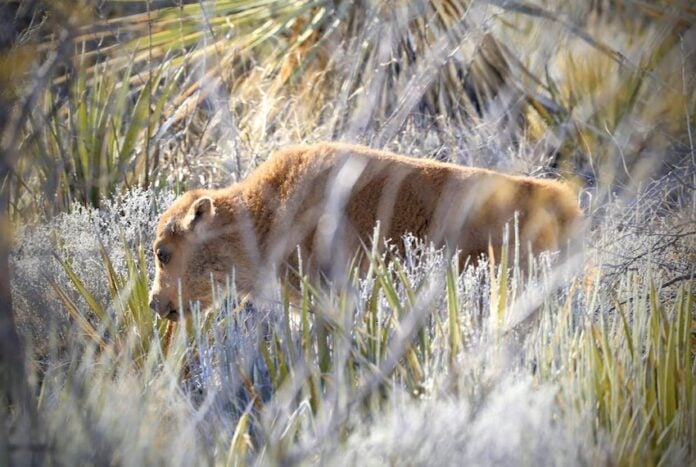
The births occurred within the Cuatro Ciénegas herd of American bison that were introduced to the area in late 2025. The group is expected to reach 55 bison by the end of this year. (Fundación Pro Cuatrocienegas)
Three American bison calves have been born in recent weeks at the El Santuario Ecological Reserve in the state of Coahuila, marking a milestone in the species’ return to northern Mexico.
As one conservationist commented on the reintroduction of bison to northern Mexico: “It’s not just about bringing in a charismatic animal. It’s about restoring critical ecosystem functions that no other species can perform.” (Comisión Nacional de Áreas Naturales Protegidas)
The calves, born in late April and early May, weighed between 15 and 20 kilograms (33 to 44 pounds) and are in good health, according to the foundation officials. They expect the herd to grow to at least 55 animals this year.
“Each bison that is born reinforces the return of this species to the country,” said regenerative agricultural specialist Gerardo Ruiz Smith, director of the Pro Cuatrociénegas Foundation.
He also referenced a recent birth at a ranch within the Cuenca Los Ojos protected area in Sonora. It occurred in late April just weeks after a herd of 29 American bison were moved there from Chihuahua as part of a binational effort to restore the species to its historic range after roughly 160 years of absence.
Once widespread across northern Mexico, American bison disappeared from the region due to overhunting, agricultural expansion and livestock grazing in the late 19th and early 20th centuries. The species is now considered endangered in Mexico.
The Cuatro Ciénegas herd of American bison is the country’s third, following earlier reintroductions at the Janos Biosphere Reserve in Chihuahua (since moved to Sonora) and the El Carmen nature reserve in Coahuila.
Conservationists describe bison as “ecosystem engineers,” essential to grassland health. Their grazing promotes plant diversity, reduces fire risk by consuming dry matter and helps disperse seeds and retain soil moisture.
“It’s not just about bringing in a charismatic animal,” Ruiz Smith said. “It’s about restoring critical ecosystem functions that no other species can perform.”
Ruiz Smith is the founder of Agroasis, an agriculture business focused on restoring arid landscapes through holistic land planning, grazing, Keyline Design and agroforestry systems. He also teaches at Mexican universities.
The bison’s return “is not only an ecological achievement,” said Juan Luis Longoria, director of culture for Pro Cuatrociénegas. “It reconnects the Ndé Nation (commonly known by the imposed term ‘Apache,’ which comes from a Zuni word meaning ‘enemy’) with a brother that is part of our identity, our spirituality and our collective memory.”
El Santuario is a previously overgrazed reserve in Coahuila’s central desert about 10 kilometers from the Pueblo Mágico of Cuatro Ciénegas. It’s roughly 3,700-4,000 hectares.
Because the project — which also aims to support wildlife such as pumas, black bears and prairie dogs — is focused squarely on ecology right now, public tourism is being tightly controlled.
Deputy governor Gabriel Cuadra's prediction is below the Bank of Mexico's (Banxico) own forecast. (senado.gob.mx)
A Bank of Mexico deputy governor anticipates that the Mexican economy will grow by less than 1% this year, a prediction that is below the central bank’s own forecast.
“Personally, I believe it is very likely that economic growth this year will fall even below the lower end of the range we are considering —in other words, [I think] we’ll have economic growth below 1%,” Cuadra said.
Banxico is currently forecasting that the Mexican economy will grow in the range of 1% to 2.2% in 2026.
In making his forecast, Cuadra took the quarter-over-quarter contraction of 0.8% in the first three months of the year into account. Annual growth in the first quarter was just 0.2%.
Cuadra described the first-quarter contraction as significant, and noted that it was larger than expected. Indeed, the quarter-over-quarter contraction was the worst result for the Mexican economy in any first quarter since 2020. It came after annual growth of just 0.8% in 2025.
In light of the first quarter result, Cuadra anticipated that the Bank of Mexico would review its current 2026 growth forecast, which was included in its most recent quarterly report, published in late February.
The federal Finance Ministry (SHCP) forecasts that the Mexican economy will grow in the range of 1.8%-2.8% this year. That forecast was included in the ministry’s “General Economic Policy Preliminary Guidelines for 2027” document, which was submitted to both houses of Congress last month and which will inform the 2027 budget.
On Monday, Finance Minister Édgar Amador Zamora said that he and his government colleagues were “convinced” that the Mexican economy will recover strongly from the first-quarter contraction.
Finance Minister Edgar Amador Zamora, on the other hand, is convinced that Plan México will begin to pay dividends as companies take advantage of the recent reductions in red tape. (Mario Jasso/Cuartoscuro)
“There will be a very significant revitalization of the country’s economy,” he said, adding that public sector, private sector and “mixed” (public-private) investment will drive the recovery.
“There is a very ambitious effort, vision and strategy to catalyze public and mixed investment as drivers of economic development,” Amador said at a conference organized by the Economics Faculty at the National Autonomous University (UNAM).
He also said that Plan México — the government’s ambitious economic initiative — includes a range of projects that will help Mexico to achieve sustained growth of 3% per year in the near future.
“Mexico is ready to grow, to grow in a sustained way,” Amador said.
Among the other growth forecasts for the Mexican economy in 2026 are the following:
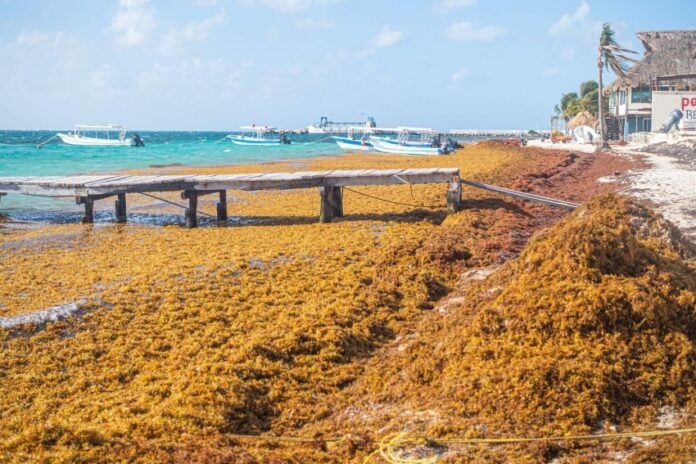
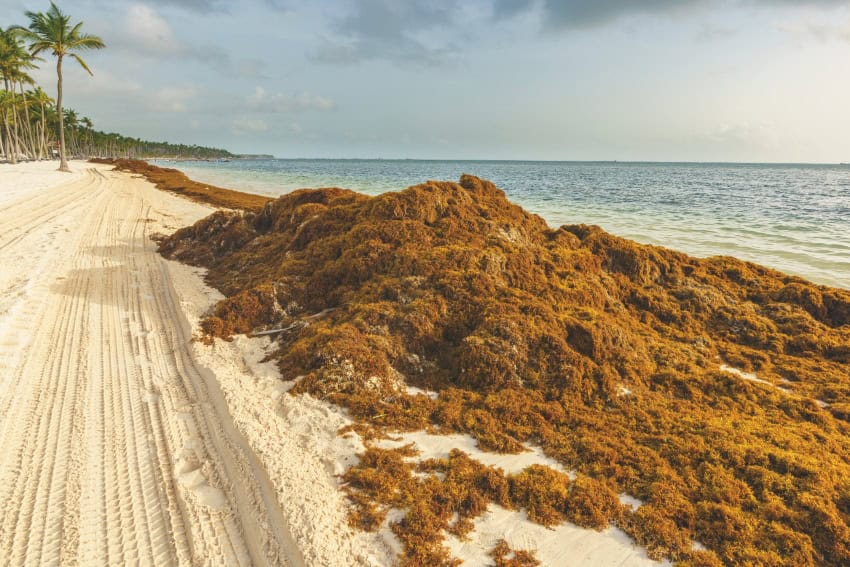
Sargassum has been washing up on the beaches of Quintana Roo in ever-increasing frequencies. Some companies are now trying to find a use for the invasive weed. (Carbonwave)
By early morning in Puerto Morelos, the beach is already buried — thick mats of sargassum stretch to the waterline, the air tinged with the smell of sulfur as the seaweed begins to decay. By breakfast time, crews are hauling it away by the truckload. But for every ton removed, many more remain.
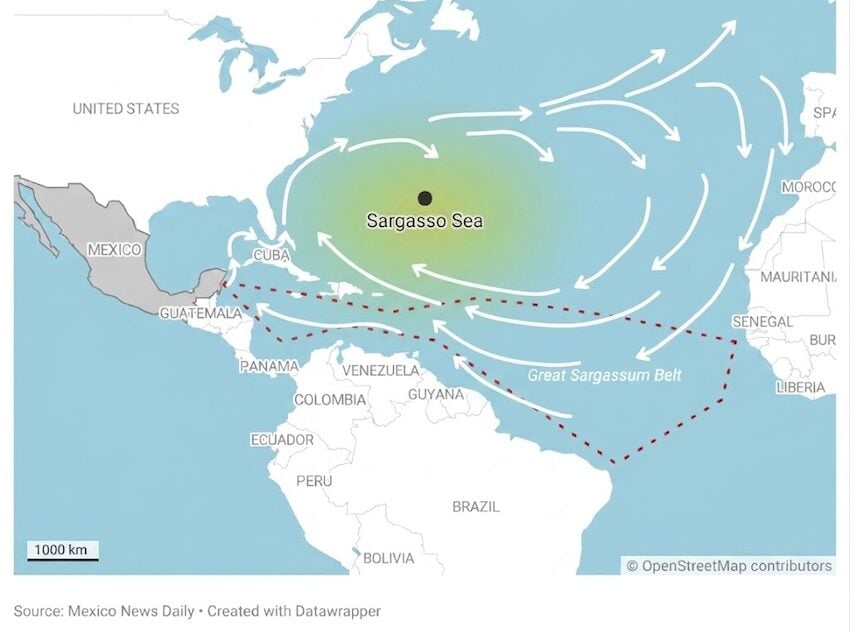
Another record-breaking year is unfolding for the smelly brown algae. The Great Atlantic Sargassum Belt surpassed 38 million tons in July 2025, a 40% increase over the previous record set just two years earlier. The seaweed washes ashore across Mexico, Puerto Rico, the Virgin Islands and beyond, blanketing beaches in mats that can reach several feet deep overnight.
The sargassum crisis
The economic stakes are enormous. Hotels in Quintana Roo alone spent an estimated US $150 million last year clearing sargassum from their beaches, while broader government estimates put total damages from a major bloom at more than US $275 million. Even modest declines in visitor numbers can ripple through a tourism economy that generates more than $16 billion annually in the region; one analysis showed that tourism locations experiencing sargassum blooms see a 10% drop in total GDP during the blooms.
Most of the sargassum collected from popular tourist areas still ends up in landfills — but that is beginning to change. As sargassum piles up in ever-increasing volumes, a growing number of companies are racing to turn the invasive seaweed into something useful. The harder question is whether any of them can scale fast enough to match the crisis.
Longer seasons, uncertain science
For years, the leading explanation for the sargassum explosion was agricultural runoff — nutrients pouring off Brazilian farmland into the Amazon River and feeding the algae. That theory has since been complicated by newer research.
A 2025 study published in Nature Geosciencepointed instead to equatorial upwelling of phosphorus from deeper ocean layers as the primary driver, with cyanobacteria living on the sargassum, then fixing nitrogen and accelerating its growth. Separately, recent climate modeling suggests that shifts in the Atlantic ocean currents – including the slowing of the Atlantic Meridional Overturning Circulation, the vast conveyor belt of ocean currents — may be allowing more surface nutrients to accumulate rather than being pulled into the deep, potentially supercharging future blooms through mid-century.
What is becoming increasingly clear is that the season itself is expanding. Sargassum traditionally peaks between May and August in the Caribbean. Now it is arriving in January. “We are seeing major shifts in sargassum arrivals,” said Sara Santiago, Marketing Manager at Carbonwave, speaking from Puerto Morelos. “Our season used to start in April and end in August, but this year we started collecting sargassum in January. As sargassum arrivals start to expand into tourist season, we expect the local impacts to be even more significant.”
Allen McGonagill, Carbonwave’s chief strategy officer, put it in starker terms: “Sargassum is one of the biggest visual indicators of climate change in the region. When it’s sargassum season, it is everywhere. It’s an every-year reminder of how rapidly our planet is changing.”
A startup takes on the tide
U.S. startup Carbonwave is among the companies attempting to attack the sargassum crisis by turning the brown algae into other products. (Carbonwave)
Among the companies trying to turn the problem into a product, Carbonwave stands out for its size. The U.S.-based startup, operating primarily along the Riviera Maya and in Puerto Rico, employs about 75 full-time workers and collected roughly 20,000 metric tons of sargassum last year — by McGonagill’s estimate, the largest operation of its kind in the world.
Carbonwave was founded in 2020 to build sustainable industries around seaweed. As the founders evaluated different feedstocks, the sargassum crisis kept asserting itself as too big to ignore.
“If we’re going to create sustainable long-term industries around seaweed that can scale and really have impact,” McGonagill said, “we have to be solving the most tangible problem of seaweed — which, by 2020, was unmistakably the sargassum inundation.”
Collecting sargassum
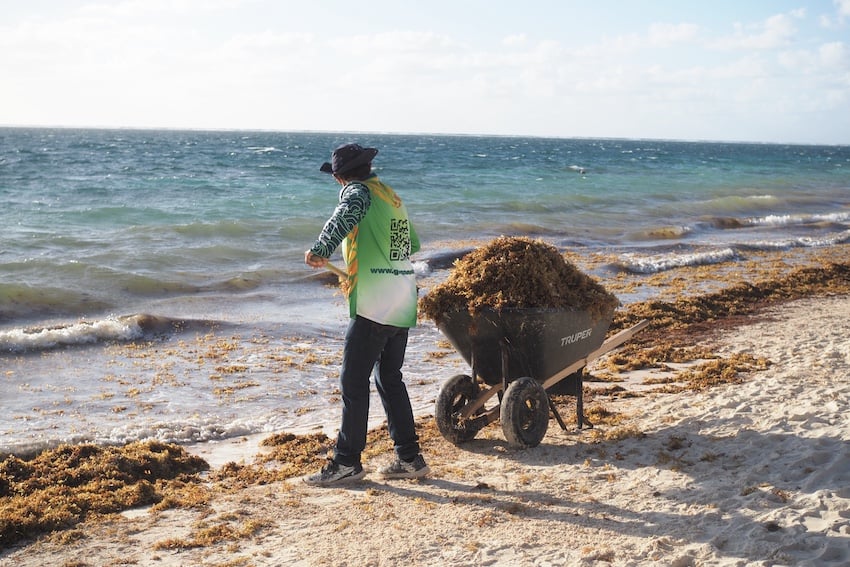
The company’s collections operations run through a subsidiary called Grupo Ensol. Collection crews work the beaches from Playa del Carmen in the north down to Akumal and the edges of Tulum, using a combination of mechanical equipment, manual labor and floating boom barriers that corral sargassum into collection containers. On an average processing day, the facility handles around 20 tons; a recent record hit 27.
On big delivery days, the company is pulling in 60 tons or more just from its collection zones. In high summer, that can reach hundreds. All of this has to be weighed in context, however. Across the broader Quintana Roo coast, estimates of what actually hits the beaches each year range from 50,000 to 200,000 tons — meaning Carbonwave may be capturing somewhere between an eighth and a half of the regional total, depending on the year.
On most days, McGonagill said, virtually all of what they collect gets processed and sold. But on the days when sargassum arrives overnight in quantities that swamp collection capacity, some still ends up in landfill — “the default for what happens with sargassum across the region,” he said.
Turning seaweed into a product
Sargassum-derived products are helping to reuse the collected algae in a sustainable fashion. (Carbon Credits)
Processing sargassum is not as simple as scooping it off the beach and sending it to a factory. The raw material arrives full of sand, plastic debris and naturally occurring arsenic and heavy metals that make it unsuitable for most uses without significant treatment.
At Carbonwave’s Puerto Morelos facility, freshly collected sargassum goes through multiple rinse cycles and a conveyor-belt quality check before reaching a screw press — a large automated device that separates the seaweed’s liquid and solid components. The liquid is then concentrated through an ultrafiltration system that removes salts and arsenic while concentrating compounds that are valuable for agriculture. The solid pulp feeds a separate product stream. “You have to make use of everything,” McGonagill said.
The liquid fraction becomes the foundation for what Carbonwave sells as an agricultural extract under the brand Sarga Agriscience. Seaweed-based biostimulants are not new, but McGonagill argues that Carbonwave’s concentration process gives it an edge. Most commercially available seaweed extracts sell the cellulose-heavy outer material. Carbonwave’s process concentrates what it says are more bioactive compounds — particularly mannitol, an alcohol sugar, along with amino acids — to levels that exceed many competing products.
In field trials conducted over the past four years, the company says the product has increased crop yields by up to 18% when used as an additive alongside conventional fertilizer. That translates to an additional 15% return on investment for the farmer. It can also, in some formulations, reduce fertilizer use by around 10%, though McGonagill notes that yield gains have proven to be the more compelling sales pitch for farmers.
A turning point in interest
The product has been certified for sale in Mexico, where uptake has been relatively fast. But this year marks a turning point: major corporate agricultural buyers in the United States and Europe, after years of their own internal testing, are beginning to sign distribution contracts. “This is probably our first year where the United States will be bigger than Mexico,” McGonagill said.
From the solid fraction, Carbonwave produces a cosmetic emulsifier called SeaBalance, which it describes as the first seaweed-derived emulsifier strong enough to stand alone in cosmetic formulations without synthetic additives. The company says it is now present in 60 commercial products, with stronger market traction in Europe, South Korea and India than in Mexico.
At Carbonwave’s facility in Puerto Morelos, Quintana Roo, sargassum goes through several rinsing and filtration processes before it can be repurposed in other products. (Carbonwave)
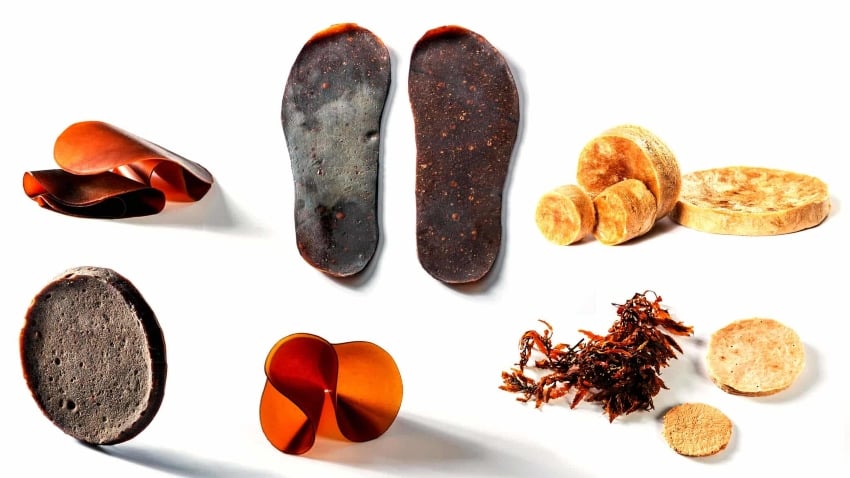
The third product line is the most speculative but potentially the most striking: Obalt, a leather-like textile made from polymers extracted from the solid sargassum pulp. Seaweed-based leather is an emerging field — companies including North Carolina-based Keel Labs and Namibia’s Kelp Blue are developing their own seaweed-derived textiles — but most are working with farmed seaweed.
Carbonwave’s pitch is that it can do the same thing with a waste stream that is already overwhelming Caribbean beaches. The company says it has engineered Obalt to form films stronger than the raw sargassum it comes from, to compete with other vegan leather alternatives. For now, it remains what the agricultural extract once was: a prototype looking for a market.
Scaling it up
A dozen or more organizations are working on ways to turn sargassum into useful materials, ranging from university spin-offs to small startups compressing the seaweed into building materials or extracting alginate for industrial uses. The field is lively, but McGonagill is candid about its limitations.
“The challenge is that sargassum doesn’t specialize,” he said. Most commercial seaweed industries are built around specific chemical properties — high alginate content, for instance, or suitability as a food crop. Sargassum does neither particularly well. Finding applications that are genuinely cost-competitive with conventional materials has been a years-long slog.
“Early things that we never really advertised — we created a rubber foam, we created foam packaging. These are things that are possible to make out of seaweed, but they’re very expensive compared to conventional materials.”
An interconnected business model
What sets Carbonwave’s model apart is how the two sides of the business reinforce each other. Through its local collection subsidiary, Grupo Ensol, the company charges hotels to remove sargassum — functioning, in effect, as a waste hauler. But because that same sargassum becomes the raw material for its agricultural and cosmetic products, it can charge more competitive rates for collection than a conventional waste disposal company.
Hotels contract companies like Carbonwave to clear the sargassum from the beaches. (Carbonwave)
“A hotel usually chooses between a waste disposal company and Carbonwave,” McGonagill said. That dual structure, he argues, is what makes the model replicable without depending on grants or municipal contracts to stay afloat.
The more pressing bottleneck, he says, is not collection capacity or product development but something more logistical: what to do with sargassum on the days when it arrives in overwhelming quantities that cannot be processed immediately. Bioactive compounds in fresh sargassum degrade quickly, and cold storage at scale would be prohibitively expensive.
This year, for the first time, Carbonwave is also looking to expand geographically. The company plans to open one or two new facilities beyond Quintana Roo within the next year. Whether that expansion will keep pace with a bloom that scientists say could continue accelerating through 2050 — as Atlantic currents reorganize under climate change — is a question the company, and the wider industry, is racing to answer.
“In accessible beaches that are having the problem today, we believe that we can address a lot of that,” McGonagill said. But he was also clear-eyed about the scope: the bloom does not wait, and the infrastructure to meet it does not yet exist.
Tracy L. Barnett is a Guadalajara-based freelance writer and the founder of The Esperanza Project.
Now known as El Ajolote, Mexico City's light rail to Xochimilco featues 17 new trains, reduced wait time, enhanced car capacity and remodeled stations. (Clara Brugada/X)
Mayor Clara Brugada on Monday inaugurated the “El Ajolote” light train connecting the Taxqueña transportation hub with Xochimilco in southern Mexico City.
The new service maintains the original route of the Mexico City Tren Ligera (Light Rail, opened originally in August 1986), but will now operate with 17 new electric trains, boosting the total number to 35, and a modernized system that will reduce wait times and increase passenger capacity.
Presentamos la modernización integral del Tren Ligero “El Ajolote”, una línea de 18 estaciones que dará servicio a 250 mil personas cada día.
Con 17 nuevos trenes eléctricos y estaciones renovadas, fortalecemos una movilidad más rápida, segura y sustentable para el sur de la… pic.twitter.com/9at5AOhuRD
— Clara Brugada Molina (@ClaraBrugadaM) May 12, 2026
All 18 stations along the 13-kilometer track received a facelift as part of the 2.4 billion-peso (US $139 million) project.
The train also features a new image — the now ubiquitous ajolote, an amphibian endemic to the Valley of Mexico — which Brugada described as “a living metaphor for a city that is being transformed.”
The El Ajolote light rail system is expected to be a key transportation system for the upcoming World Cup, as its service extends from the Taxqueña Metro station to Estadio Banorte (Azteca), the site of five games.
Brugada said that while the light rail will serve to enhance the World Cup experience for visitors, “the infrastructure will remain as a long-lasting benefit to residents.”
The new service has the capacity to transport 250,000 people daily and travel time from end-to-end will be reduced from 40 minutes to 30 with four-minute intervals between trains, each of which has the capacity for 750 commuters.
The renovations include a new video surveillance system, enhanced security alerts and station announcements, regenerative braking, as well as a new traffic light system along the route.
Is Brugada just ajolote-washing the city?
Few government projects escape intense internet criticism, and the light rail modernization is no exception. In this case, however, the attacks have been aimed more at Brugada’s extensive use of the ajolote image than the project itself. What is being called the “ajolotl-ification” of Mexico City (a coinage based on an alternative spelling of the species closer to the original Nahuatl name) has prompted mockery and a flood of memes on social media.
Critics have complained that despite pot-holes, a lack of street signs and other transportation infrastructure shortcomings (highlighted by the flooding in the Azcapotzalco borough on Monday night), the city has found the time and resources to paint murals and adorn public spaces with ajolote-themed art all over the capital.
Mayor Brugada took on the mockery directly.
“Some have said, out of prejudice or classism, that we are ‘ajolotling’ the city,” she said Monday. “If ‘ajolotling’ means filling what was once gray with color, transforming public spaces and guaranteeing access to services for the benefit of thousands of people, then yes, we are ‘ajolotling’ the city.”
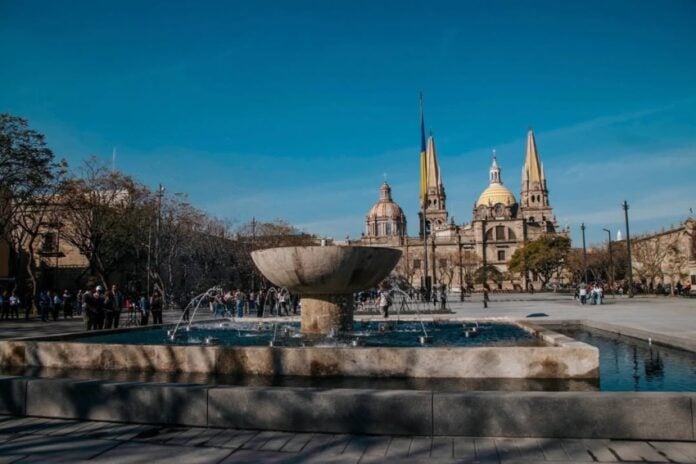
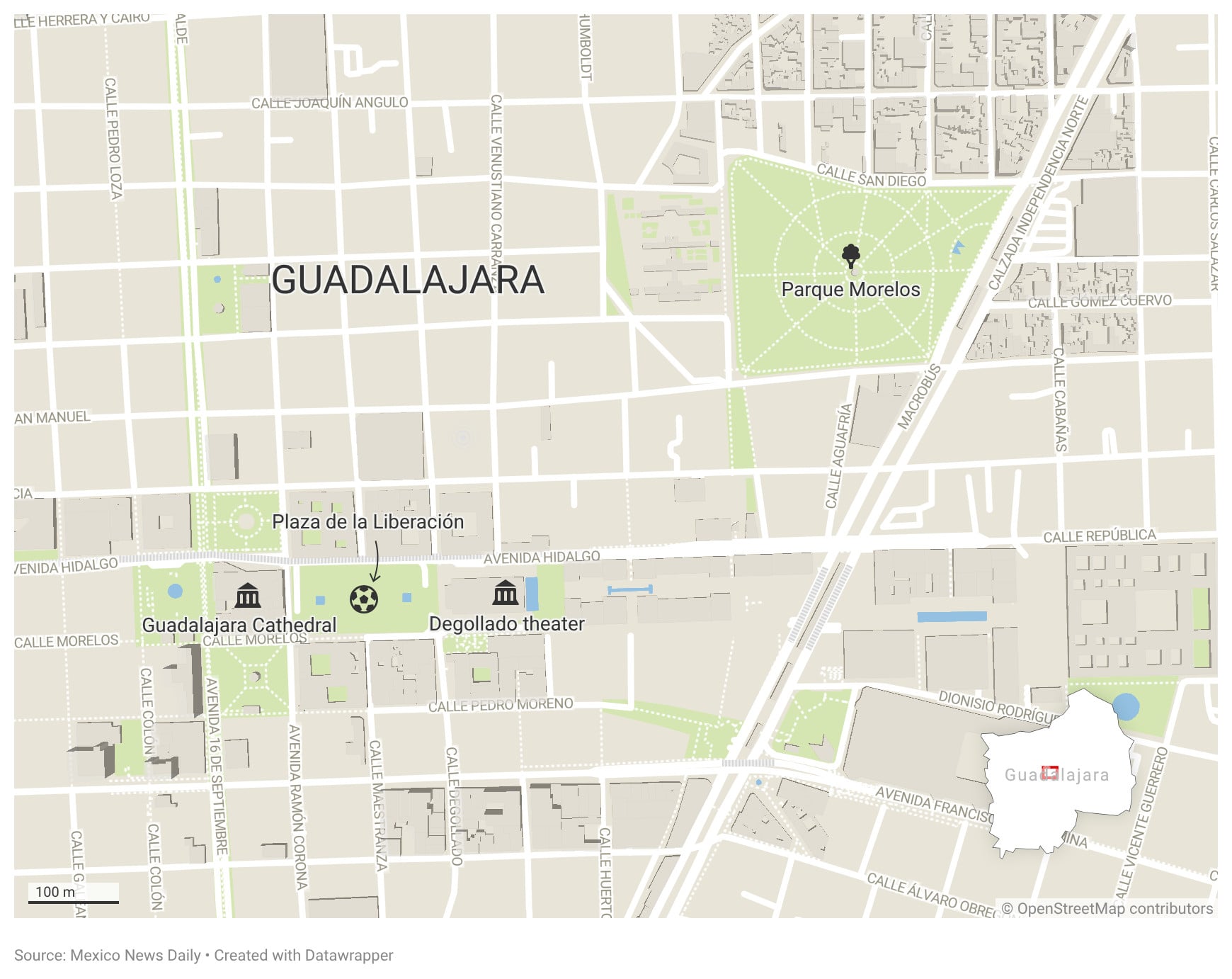
Plaza de la Liberación will be the center of the fan experience in Guadalajara for this year's World Cup. (Instagram)
There’s major news this week in Guadalajara, as the new director of SIAPA, the public water agency, has unveiled an emergency 3-month water plan. Good news has also been announced regarding the 2026 fire season, and new details have emerged for Guadalajara’s World Cup fan festival.
New details emerge on Guadalajara’s World Cup fan experience
If you failed to snag a ticket to the upcoming World Cup games in Mexico, you are in good company. Fortunately, there are still numerous (more affordable) ways to enjoy the action with your family, friends and neighbors.
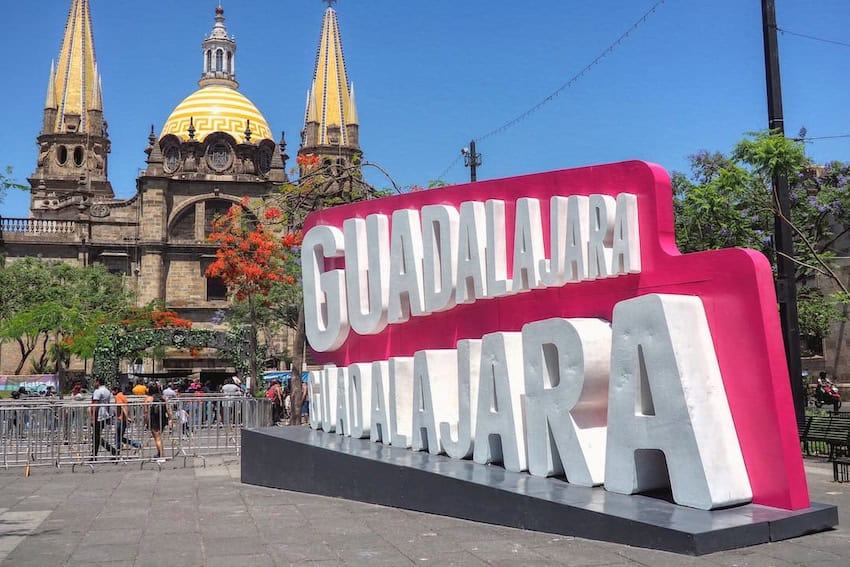
The FIFA Fan Festival at Plaza de la Liberación will be the epicenter of Guadalajara’s World Cup celebration. Located between the Cathedral and Teatro Degollado, it is one of Jalisco’s most iconic public spaces, surrounded by history on all sides, with the Government Palace and Regional Museum as its backdrop.
Plaza de la Liberación has a capacity of 40,000 people. Admission to the Fan Festival will be free, but advance registration will be required on FIFA’s digital platform. As of press time, this feature had not yet been added to the website.
Guadalajara’s Fan Festival will run daily, Monday through Sunday, from June 11 to July 19, 2026. Operating hours have yet to be confirmed.
While host cities such as Monterrey, San Francisco, Miami, and Vancouver have scaled back their fan festivals due to escalating costs, Guadalajara and Mexico City will publicly broadcast all 104 matches from start to finish.
Unlike Mexico City’s Zócalo, alcohol sales will be permitted at Guadalajara’s Fan Festival, according to Juan José Frangie, coordinator of the Guadalajara 2026 World Cup Organizing Committee.
Where to watch the World Cup in Guadalajara
First and foremost, there will be giant screens for viewing the game. But much more is planned to keep fans busy in between live play. Plaza de Armas will transform into a showcase for Guadalajara’s cuisine. Expect to find birria, tortas ahogadas, red pozole and jericallas, alongside dishes from other corners of Jalisco.
The Plaza de Armas will host food, music and cultural events to celebrate Mexico’s tenure as World Cup hosts. (Above Us Only Sky)
Teatro Degollado will host several live music performances on World Cup game nights by top-tier artists. These include local favorites Maná, returning to Guadalajara from their recently concluded world tour, rock legend Carlos Santana (who was born in Autlán de Navarro) and Mariachi Vargas de Tecalitlán, the renowned mariachi group from southern Jalisco.
There will also be hospitality spaces for sponsors, official tournament merchandise for sale and an interactive game zone. To show support for Mexico’s national team, the surrounding streets will be painted in green, white and red.
Alongside the FIFA Fan Festival at Plaza de la Liberación, additional fan zones will operate in Parque Rojo, Parque La Mujer, Parque de Las Niñas y Los Niños and Plaza Las Américas. Each will reportedly feature large-screen match broadcasts, family activities, and cultural programming. These gathering spots are also expected to offer free admission.
Jalisco has seen a significant reduction in drought and forest fires in 2026
Through late April, a total of 393 fires have been reported across the state of Jalisco, impacting roughly 18,400 hectares of forest, according to numbers provided by the National Forestry Commission (Conafor). This is a significant reduction from the same period in 2025, when 925 fires occurred.
This positive trend exists throughout the country, with forest fires down 26% compared to 2025 in all 32 states. In addition, 95% of fires in the year to date have been classified as low severity.
The intense rainy season that hit the state last year continues to provide benefits, resulting in fewer fires and reduced severity when fires do occur. According to the National Water Commission, 96%of the state of Jalisco remains drought-free, with sufficient moisture in local forests.
The number of fires across the state of Jalisco has declined significantly in 2026. (Gobierno de Jalisco)
Fewer fires have also meant better air quality in the Guadalajara Metropolitan Area. So far this year, only eight air quality alerts have been issued in Jalisco, with those affecting the municipalities of Zapopan, Tlajomulco, Puerto Vallarta, Mascota and others.
The fires that have occurred
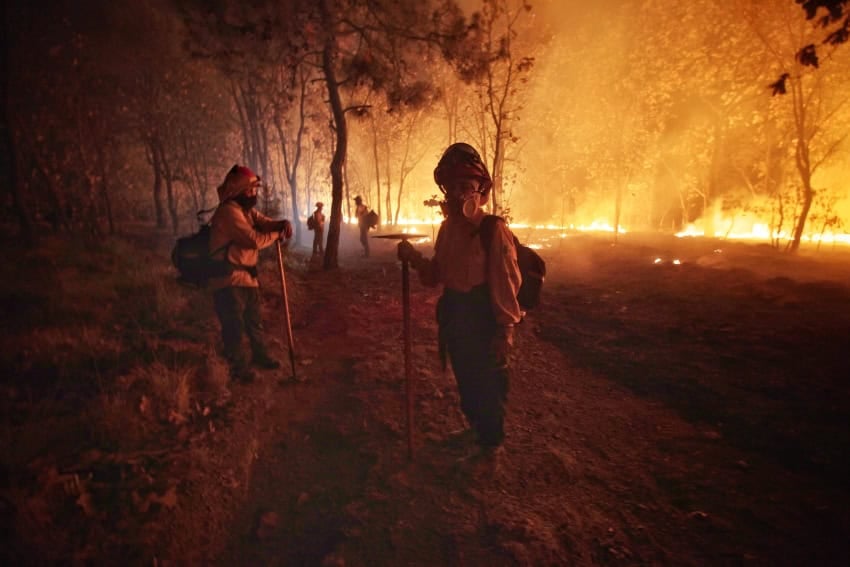
Despite the positive trend, the GMA has suffered several serious fires in the past two weeks. On April 28, a severe fire broke out at La Venta del Astillero immediately west of the Technology Park of Guadalajara, prompting the Ministry of Environment and Territorial Development (Semadet) to issue an atmospheric emergency for several neighborhoods in Zapopan and central and western Guadalajara. It also prompted the suspension of in-person classes on Wednesday, April 29, in parts of Zapopan.
On May 5, another fire broke out in Bosque Los Colomos in Guadalajara’s Providencia neighborhood, burning more than five hectares of the park before it was brought under control. The causes of both fires are still under investigation, but arson is suspected in the Colomos incident, which was sparked by burning trash on an adjacent property.
While water service failures persist, Siapa promises a fix within 90 days
Siapa recently announced a 3-month emergency plan to wash and sterilize water treatment tanks around metro Guadalajara to improve the cleanliness of water being delivered to area homes and businesses. This initiative aims to make up for long-neglected maintenance under prior agency leadership.
According to Siapa’s new director, Ismael Jáuregui Castañeda, work on this project began on April 1 and should be finished by the end of June. While work is ongoing, there is likely to be reduced water pressure and cuts to service in some neighborhoods, since each tank must be emptied, repaired and put back online.
During a visit to the College of Civil Engineers of the State of Jalisco (Cicej) in April, Jáuregui acknowledged the magnitude of the task he faces attempting to provide clean and reliable water service to the GMA. “Many say (that I won) ‘the tiger raffle’ … but it’s an old tiger, toothless, clawless, flea-ridden and however you want to put it,” he joked.
Clean tap water, or the lack thereof, has been a major issue in Guadalajara of late. (Tracy L. Barnett)
In Mexico, “a tiger raffle” refers to a high-stakes role, often in public service, that is difficult, risky or contains the strong possibility of failure.
Meanwhile, Cicej president Mirna Avilés Mis stressed the importance of Siapa taking a more proactive, strategic approach to solving the metropolitan water system’s needs. “We cannot continue with a reactive approach. We cannot continue to address the urgent needs of each day without tackling the underlying problem.”
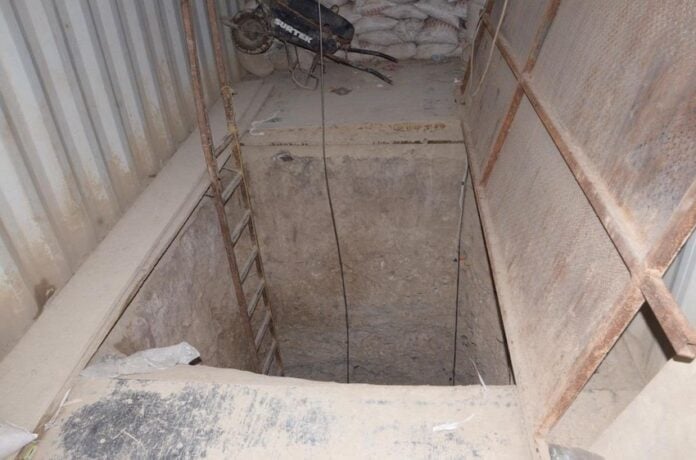
Given that the tunnel linked a pipeline in a Pemex facility to an adjacent property, it appears probable that state oil company workers were involved in the fuel theft scheme. (FGR)
The Federal Attorney General’s Office (FGR) announced on Monday that it had detected and secured a tunnel in Nuevo León that was used to steal fuel from a Pemex pipeline. Federal agents also seized more than 200,000 liters of fuel from a nearby property.
Ulises Lara, an FGR special prosecutor and spokesman, said that the tunnel connected an 18-inch pipeline within a Pemex facility in Santa Catarina — a municipality in the Monterrey metropolitan area — with an adjacent property.
La #FGR, en coordinación con @Pemex, @SSPCMexico, @Defensamx1, @GN_MEXICO_ y Policía de Nuevo León, desarticuló un sistema de robo de hidrocarburo.
Se aseguró un túnel conectado a poliducto, más de 205 mil litros de combustible, 23 tractocamiones y 10 autotanques, entre otros.… pic.twitter.com/fJQ9ozDO8V
“Agents of the Criminal Investigation Agency located the tunnel-like excavation in the facilities of the Pemex Storage and Distribution Terminal, located in Santa Catarina, Nuevo León,” Lara said in a video message.
“Upon carrying out on-site inspections, federal agents discovered that the tunnel connected with an adjacent property located on the old road to Villas de García,” he said.
Lara said that personnel with Pemex, the federal Security Ministry, the Defense Ministry, the National Guard and the Nuevo León state police collaborated with the FGR on the operation to secure the tunnel. He said that intelligence work and field work led to the discovery of the tunnel.
The newspaper El Financiero described the passageway connecting the Pemex facility to the nearby property as a “Chapo-style” tunnel “with sophisticated engineering.” In 2015, notorious drug lord Joaquín “El Chapo” Guzmán escaped from the Altiplano federal prison in México state via a tunnel.
Lara said that authorities found “equipment used for the illicit extraction of fuel” in the tunnel, including a “quick-closing valve” and a high-pressure hose.
He said that authorities found that the adjacent property — on which there is a large arch-like structure — was used to store fuel. Lara said that a “hidden” access to the tunnel was found within a “metallic maritime container” on the property.
He said that federal agents seized “approximately” 205,418 liters of fuel from the property as well as 23 tractor-trailers, 10 tanker trucks, a tow truck, three other vehicles, seven dry vans (box trailers) and various containers including a tank, a barrel and two drums. Lara also said that a range of “documentation” and a cell phone were seized, but no arrests were reported. Given that the tunnel linked a pipeline in a Pemex facility to an adjacent property, it appears probable that state oil company workers were involved in the fuel theft scheme.
Fuel theft has long been a problem in Mexico, and tunnels to facilitate the crime have been discovered previously, including in México state in 2024. Thieves commonly perforate, or “tap,” Pemex pipelines to steal fuel such as gasoline and diesel, a practice that can be extremely dangerous. Numerous perforated pipelines have exploded in Mexico. A pipeline explosion in Hidalgo in 2019 claimed more than 130 lives.
In 2025, Pemex recorded losses of almost 23.5 billion pesos (US $1.36 billion) due to fuel theft, a 14.4% increase compared to the previous year.
The cocaine packets were stowed within the car's interior. (@FSPE_Gto/X)
Guanajuato state highway police on Monday arrested an American woman found transporting dozens of packages of cocaine in a vehicle with Texas license plates.
The 33-year-old woman identified as Mariela “N” was stopped near the Valtierrilla tollbooth just east of Salamanca on the Morelia-Salamanca highway after police noticed she was not wearing a seatbelt.
The suspect handed over her documentation while a visual inspection was carried out, followed by a preventive inspection. In the process, an officer discovered a packet of what appeared to be cocaine in the glove compartment.
The police immediately informed the woman of her rights and seized the vehicle — a 2018 Chrysler station wagon — before summoning the Army and the National Guard. The two minors traveling with the woman were removed from the vehicle and placed in protective custody.
Authorities continued to conduct a more thorough inspection of the vehicle, from which they removed and secured dozens of packets of suspected cocaine, later estimating that the seized quantity amounted to 59,550 doses.
The drugs and the woman were turned over to the Federal Attorney General’s Office for processing. Consular notifications were also carried out in accordance with regulations.
Guanajuato Security Minister Juan Mauro González said the authorities will attempt to identify the final destination, as well as the weight and value of the drugs as part of the investigation now underway.
González explained in a social media post that the drug bust occurred as part of Operation Shield Guanajuato, a permanent surveillance and prevention strategy on state highways carried out in coordination with the Defense Ministry.
“From Sept. 26, 2024, to April 30, 2026, more than 2.3 million doses of drugs have been seized in our state, resulting in an estimated loss of more than 712 million pesos (US $41.3 million) to criminal economies,” González told reporters.
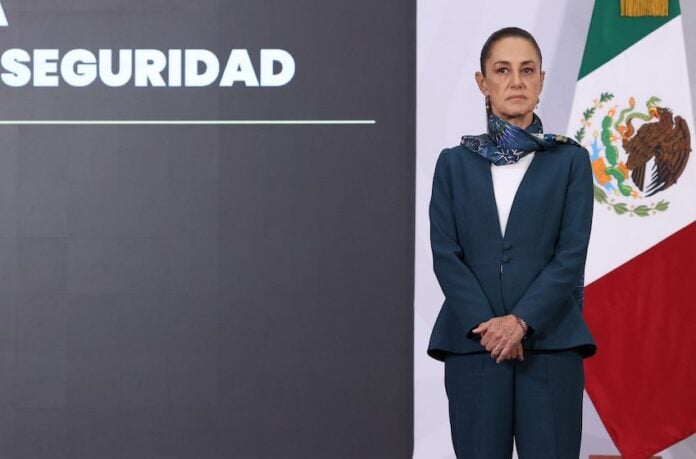
At President Sheinbaum's Tuesday mañanera, security officials presented the latest data on homicides, arrests and drug seizures. (Galo Cañas/Cuartoscuro)
Sheinbaum’s mañanera in 60 seconds
🩸 Homicides down 20% in April: Mexico recorded an average of 52.5 homicides per day last month, a 20.3% drop year-on-year and the lowest April figure since 2016.
🗺️ Most violent states in April: Chihuahua and Guanajuato led with 129 homicides each, followed by Morelos (112), Baja California and Sinaloa (101 each), and México state (90). Together, eight states accounted for 53% of all homicides nationwide.
📉 Year-on-year reductions in homicides (Jan–Apr): San Luis Potosí recorded the steepest drop at -80.8%, followed by Zacatecas (-61.8%), Quintana Roo (-60.3%), Guanajuato (-57%), and Nuevo León (-50.8%).
⚖️ Security results since Oct. 2024: Authorities have made more than 50,000 arrests for high-impact crimes, seized 391.7 tonnes of illicit drugs, confiscated over 28,000 firearms and dismantled 2,337 clandestine meth labs across 22 states.
🇺🇸 Mexico awaits U.S. proof on Sinaloa governor: Foreign Affairs Minister Velasco said Mexico has sent a diplomatic note requesting evidence against Governor Rubén Rocha Moya and nine other officials accused by U.S. prosecutors of drug trafficking, and is still waiting for a response from the State Department.
Why today’s mañanera matters
At President Sheinbaum’s Tuesday mañanera, security officials presented the latest data on homicides, arrests and drug seizures.
Reducing organized crime and homicides is one of the central challenges of the federal government.
The monthly security update provides the government with the opportunity to demonstrate the progress it has made in that respect — and on Tuesday, the security results presented were indeed impressive.
However, it should be noted that violence remains a major problem in various parts of Mexico, and that the accuracy of the federal government’s homicide numbers — provided by the country’s 32 Attorney General’s offices — has been questioned by experts.
Homicides down 20% in April
National Public Security System chief Marcela Figueroa presented preliminary data that showed there was an average of 52.5 homicides per day in Mexico in April, a reduction of 20.3% compared to the same month of 2025.
Figueroa focused on the larger reduction in homicides — 39.6% — between September 2024, the final month of Andrés Manuel López Obrador’s presidency, and April.
Durante la Conferencia del Pueblo, @Maffiguer, titular del @SESNSP, presentó el reporte nacional de incidencia delictiva con cifras consolidadas al 30 de abril de 2026, con información de las 32 fiscalías estatales. A 19 meses del inicio de la administración de la Presidenta… pic.twitter.com/bjJ7O8qmfH
— Gabinete de Seguridad de México (@GabSeguridadMX) May 12, 2026
“The 40% decline in the daily average of homicides since the beginning of the administration of President Dr. Claudia Sheinbaum Pardo stands out,” she said.
Figueroa also highlighted that there 34 fewer homicides per day on average in April than in September 2024. She said that last month had the lowest number of homicides of any April since 2016.
Figueroa also presented data that showed that there was an average of 51.2 homicides per day in the first four months of 2026, an annual reduction of 30%.
Chihuahua and Guanajuato were the most violent states in April
Figueroa reported that 53% of the 1,575 homicides recorded in Mexico last month occurred in eight states.
Chihuahua and Guanajuato recorded the equal highest number of homicides last month, with 129 murders in each state.
Ranked third to eighth for total homicides in April were:
Morelos: 112
Baja California: 101
Sinaloa: 101
México state: 90
Veracruz: 88
Guerrero: 84
There were 75 homicides in Mexico City last month, the 11th highest total among the 32 federal entities.
Yucatán and Baja California Sur recorded the fewest homicides, with just two murders in each state in April.
Homicides declined more than 80% in SLP in first 4 months of 2026
Figueroa also reported that homicides declined in 26 entities in the first four months of 2026 compared to the same period of last year.
The five states with the largest decreases in homicides were:
San Luis Potosí: -80.8%
Zacatecas: -61.8%
Quintana Roo: -60.3%
Guanajuato: -57%
Nuevo León: -50.8%
Figuero didn’t report the total number of homicides in those states between January and April.
More than 50,000 arrests since Sheinbaum took office
Security Minister Omar García Harfuch presented data that showed that 52,628 people were arrested for allegedly committing high-impact crimes such as murder, extortion and kidnapping between Oct. 1, 2024 — the date Sheinbaum was sworn in as president — and April 30.
The data he presented also showed that authorities seized 391.7 tonnes of illicit drugs and 28,031 firearms in the same period.
En la Conferencia del Pueblo se presentaron avances en materia de seguridad, resultado de la coordinación permanente entre las instituciones que integran el Gabinete de Seguridad, bajo el liderazgo de la Presidenta @ClaudiaShein. Estos resultados reflejan el fortalecimiento de… pic.twitter.com/WbO5ru2Ya5
— Gabinete de Seguridad de México (@GabSeguridadMX) May 12, 2026
In addition, the army and navy dismantled 2,337 clandestine methamphetamine laboratories in 22 states, García Harfuch said. The dismantlements prevented the sale and use of “millions of doses” of meth, he said.
“We’re waiting for a response from the State Department,” he said.
Sheinbaum has endorsed the view of the Federal Attorney General’s Office and the Ministry of Foreign Affairs that there is currently insufficient proof to detain Rocha and the other suspects.
Rocha, who has taken leave as governor, and the other defendants deny the accusations leveled against them, including that they colluded with the Sinaloa Cartel.
García Harfuch said Tuesday that the government hadn’t “detected” any illicit conduct by Rocha, and asserted that there had never been any “impediment” to the carrying out of federal security operations in Sinaloa.
By Mexico News Daily chief staff writer Peter Davies (peter.davies@mexiconewsdaily.com)