Home Blog Page 419

After another constitutional reform, what’s next for Mexico’s judicial system?

5
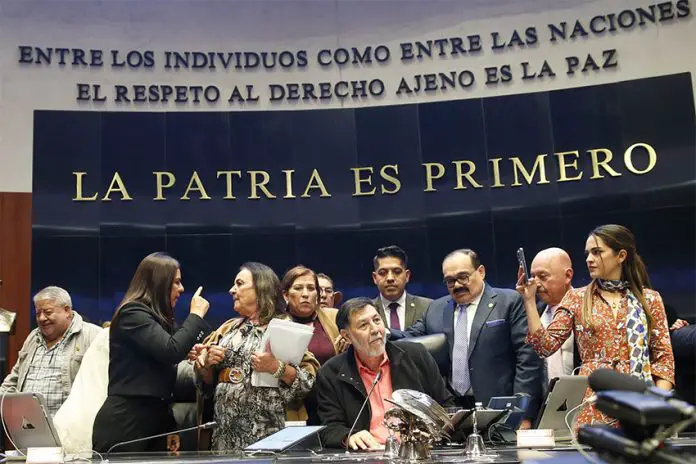
Senate President Gerardo Fernández Noroña, of the Morena party, sits on a legislative dias in front of the words "La Patria Es Primera" as lawmakers argue behind him.
Senate President Gerardo Fernández Noroña, of the Morena party, presides over the ratification of the controversial "constitutional supremacy" amendment in late October. (Cuartoscuro)

President Claudia Sheinbaum on Thursday promulgated a constitutional reform that prevents legal challenges against constitutional amendments, such as Mexico’s recently enacted judicial reform.

The reform was promulgated via a decree published in the Official Gazette of the Federation (DOF) a day after the lower house of Congress approved the so-called “constitutional supremacy” bill.

A majority of Mexico’s 32 state legislatures promptly ratified the reform, allowing Sheinbaum to sign it into law in quick time.

The reform makes modifications to two articles of the Mexican Constitution.

Article 105 now states that constitutional challenges or “actions of unconstitutionality” that seek to dispute “additions or reforms to this Constitution” are “inadmissible.”

Article 107 now states that lawsuits “against additions or reforms” to the Constitution “will not proceed.”
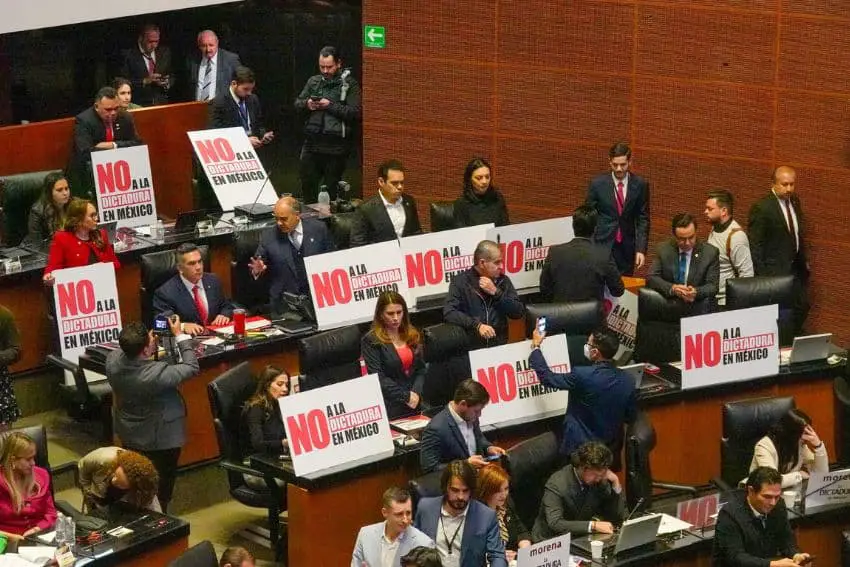
Mexican senators in session all holding signs at their desks that says in Spanish "No to dictatorship in Mexico."
The current reform is a continuation of a political fight over the Morena party’s overhaul of the judiciary. (Cuartoscuro)

The decree published in the DOF also states that “matters that are in process must be resolved in accordance with the provisions contained in the present decree.”

The reform would appear to prevent Mexico’s Supreme Court (SCJN) from making a binding ruling on a proposal to strike down part of the judicial reform that was approved by Congress in September and signed into law by former president Andrés Manuel López Obrador two weeks before he left office.

Indeed, Morena took the reform proposal to Congress precisely to prevent the Supreme Court and other courts from handing down rulings against constitutional reforms.

Even though the reform has been approved and promulgated, heated debate over whether the SCJN has the right to hand down a binding ruling on the judicial reform and other constitutional reforms continues.

Under the proposal of Justice Juan Luis González Alcántara Carrancá — one of eight SCJN justices who submitted resignation letters to the Senate this week — only Supreme Court justices would be elected and all other judges would continue to be appointed.

The government is planning to hold elections in 2025 and 2027 at which Mexican citizens would directly elected thousands of local, state and federal judges. The National Action Party filed a lawsuit with the Supreme Court against the judicial reform that allows those elections to occur.

Despite the DOF decree stating that the “constitutional supremacy” reform applies to “matters that are in process,” Justice González asserted that justices can vote on his proposal next Tuesday as scheduled.

A portrait of Mexican Supreme Court Justice Juan Luis González Alcántara Carrancá with white beard and glasses
Justice Juan Luis González has proposed a compromise of sorts on the judicial reform, which the Supreme Court remains schedule to vote on this Tuesday. (SJCN/Cuartoscuro)

For her part, President Claudia Sheinbaum asserted this week that the Supreme Court doesn’t have the authority to legislate or to strike down a constitutional reform that “followed all the [legislative] processes that the constitution establishes.”

No judge can repeal a constitutional reform, says Morena leader  

Speaking on Thursday afternoon, Morena’s leader in the lower house of Congress, Deputy Ricardo Monreal, asserted that no judge, magistrate or Supreme Court Justice can hand down a ruling against a reform that has been approved by the Congress and subsequently ratified by state legislatures and promulgated by the president.

“It’s not valid. They don’t have jurisdiction, they don’t have authority … to do that. … What we did [with the ‘constitutional supremacy’ reform] is reaffirm what the Constitution already says [regarding] the unchallengeable nature, the inadmissibility of recourses and actions against reforms and additions to the Constitution,” said Monreal, who has a doctorate in constitutional law.

The Morena party leader claimed that the “constitutional supremacy” reform is the “most profound” reform “in the 200 years of the life of the country.”

He also said that the legal principle of non-retroactivity “is not observable in the case of constitutional reforms.

Monreal’s view is that as the “constitutional supremacy” reform applies retroactively, the Supreme Court is prevented from handing down a binding ruling on the judicial reform given that that the matter is already “in process.”
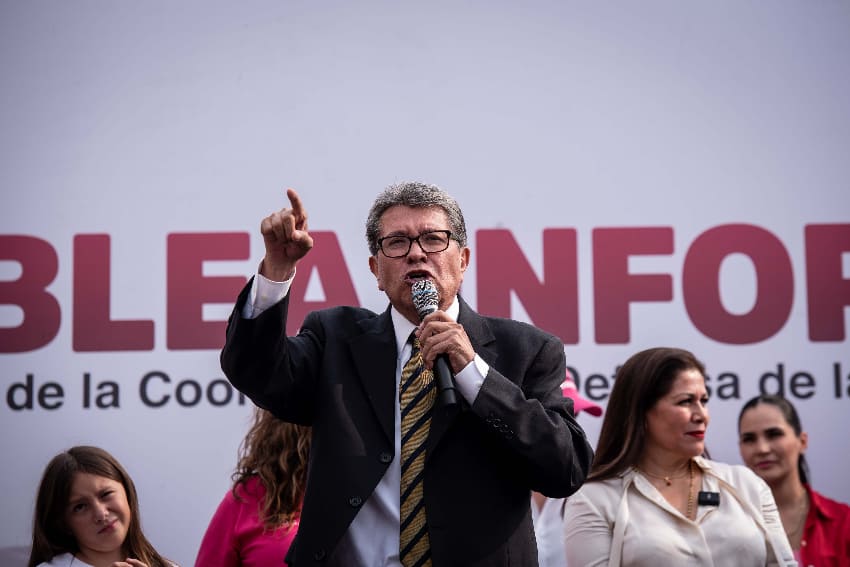
Ricardo Monreal at rally
Morena’s leader in the lower house of Congress, Ricardo Monreal, said Thursday that the judicial branch cannot rule against a constitutional reform that has already been approved, ratified and signed into law. (Pedro Anza/Cuartoscuro)

The Animal Político news website reported that in accordance with the “constitutional supremacy” reform, previous rulings against the judicial reform and “the project that Justice Juan Luis González Alcántara is proposing to declare unconstitutional the election by popular vote of judges and magistrates would have to be dismissed — that is to say suspended.”

On that point, González, and others, disagree.

González: ‘We will have a constitutional crisis’ if the government doesn’t comply with the SCJN’s ruling

During an interview with Grupo Fórmula on Friday, González was asked what would happen if the Supreme Court hands down a ruling against part of the judicial reform and the government refuses to comply with it.

“We will have a constitutional crisis and all Mexicans will have to absorb and suffer the consequences,” the justice said.

Eight of 11 justices would have to vote in favor of González’s proposal in order for the SCJN to hand down a ruling against the judicial reform provision allowing the direct election of virtually all Mexican judges. The eight justices who tendered their resignations this week to protest the government’s judicial overhaul remain on the court for now and appear likely to vote in favor of the proposal.

González said that non-compliance with a Supreme Court ruling against the judicial reform would relegate the rule of law in Mexico to “history books.”
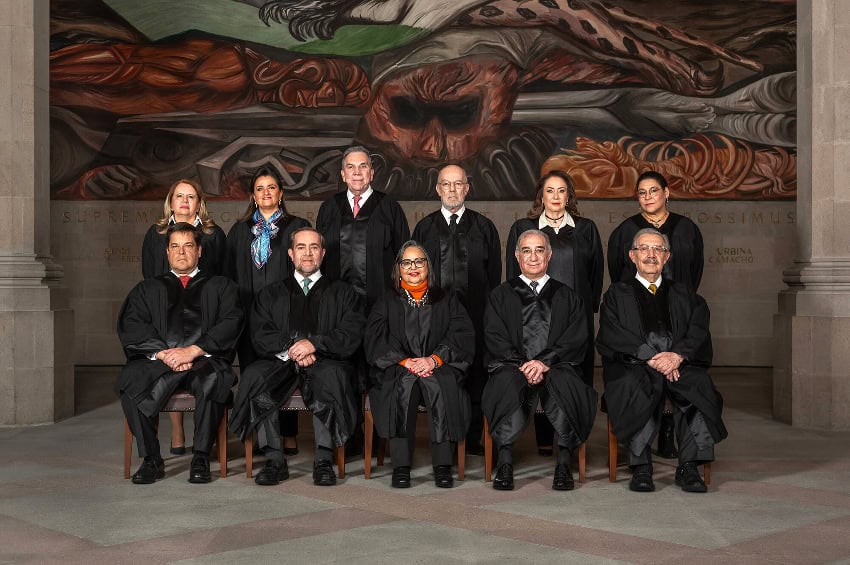
Mexico Supreme Court justices
Eight of the country’s 11 Supreme Court justices tendered letters of resignation, effective next year. (SCJN)

He characterized his proposal to only allow the election of Supreme Court justices as a political-legal solution to the uncertainty and division created by the judicial reform.

“I believe that the president will have to reflect [on what to do], she has these days to do that, these days that are so important for the people of Mexico,” González said, referring to the period before the 11 justices will consider and make a ruling on his proposal on Tuesday.

The justice said that Sheinbaum “will have to reflect on the damage” not complying with a SCJN ruling “would cause to the institutions” and “the credibility” of Mexico as a country that respects the rule of law.

In a separate interview on Thursday, González said that non-compliance by the government with an SCJN ruling would have an impact on foreign investment in Mexico and “our relations with trade partners with whom we’ve established a series of international treaties and bilateral agreements.”

“The lives of all people would be affected,” he added.

González is not alone in saying that Mexico could be headed for a constitutional crisis.

Among others who have made the same or similar remarks is former Mexican president Ernesto Zedillo. In an opinion article published in The Washington Post on Friday, he wrote that Sheinbaum is “advocating that the government ignore court rulings” and “fueling” a constitutional crisis.

Analyst: González is trying to throw a ‘lifeline’ to the government  

During a panel discussion on a Mexican television program, analyst and writer Viri Ríos said that González is “trying to throw a lifeline to the governing coalition,” which includes Morena, the Labor Party and the Green Party.

“He’s proposing that the most difficult part [of the judicial reform] to implement, which would be the mass election of judges,  … not be implemented,” she said.

Ríos said that there is an argument in favor of the government taking that “lifeline” because it would remove the problems of “instability in the markets” and the “constant fight” with Mexico’s judiciary.

However, she argued that the government shouldn’t take the lifeline González is attempting to offer because it is a “poisoned lifeline.”

To accept the lifeline, Ríos said, the government would have to accept that it is allowing the Supreme Court to “strike down constitutional reforms” — which various officials, including Sheinbaum, argue it doesn’t have the power to do.

“That’s what it’s about. I think that is very dangerous because this is basically putting democracy in the hands of 11 people and going from being a democratic electoral system to being a system that appears much more like a judicial aristocracy,” she said.

With reports from Reforma, Radio Fórmula, La Jornada, Milenio, El Financiero and Animal Político 
Miami’s ‘Condo King’ is the force behind Mexico City’s next skyscraper
0
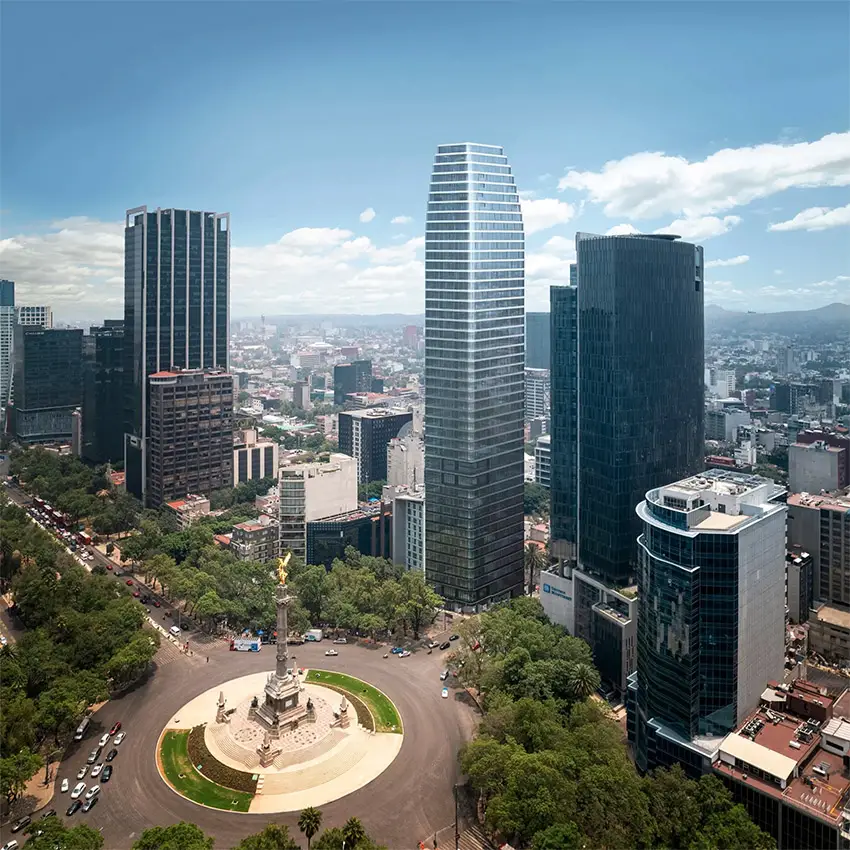
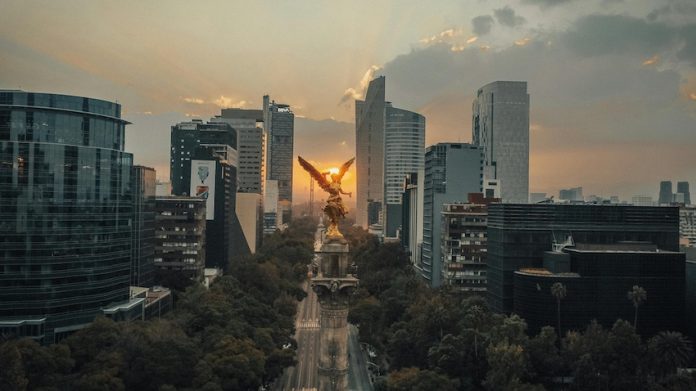
Panoramic view of one of Mexico City's major landmark: Ángel de la Independencia and surrounding skyscrapers
Paseo de la Reforma is Mexico's most famous street, with a history to match. Here are 10 facts you didn't know about this grand promenade. (Fernando Paleta/Unsplash)
Related Group, one of Florida’s largest real estate developers, is backing a 43-story skyscraper in Mexico City that will include luxurious condominiums and a Hyatt Hotels Corp Thompson-branded hotel. 

Designed by Miami-based Arquitectonica, in collaboration with Related Group and three Mexican partners — Pulso Inmobiliario, Grupo MRP y Moises Farca — the skyscraper will have 104 luxury condominiums and 115 furnished hotel suites, Related Group President Jon Paul Pérez told Bloomberg in an interview. 

A rendering of Related Group's new skyscraper in Mexico City, just behind the Angel of Independence statue
A rendering shows the finished tower, center, which looks down over Angel of Independence. (Related Group)

The developers began working on the project last year and are now commencing sales. Total sellout is expected to be roughly US $190 million, the company said.  

With interiors from the New York branch of Italian designer Piero Lissoni’s firm, the Thompson Mexico City Reforma Hotel & Residences will overlook Reforma, the capital’s main avenue and the Angel of Independence monument, one of the city’s most recognizable landmarks. 

“We’re known for creating world-class buildings in world-class cities,” Pérez said. “So this project was an exciting opportunity to do that in the most important city in Mexico and the most important location in Mexico City.” The project will bring the “sexiness of Miami” to the heart of the capital, he highlighted.

Over the past two decades, Mexico’s Reforma Avenue has seen a boom of development, with more than a dozen new skyscrapers built along the stretch where Related is building its new tower. 

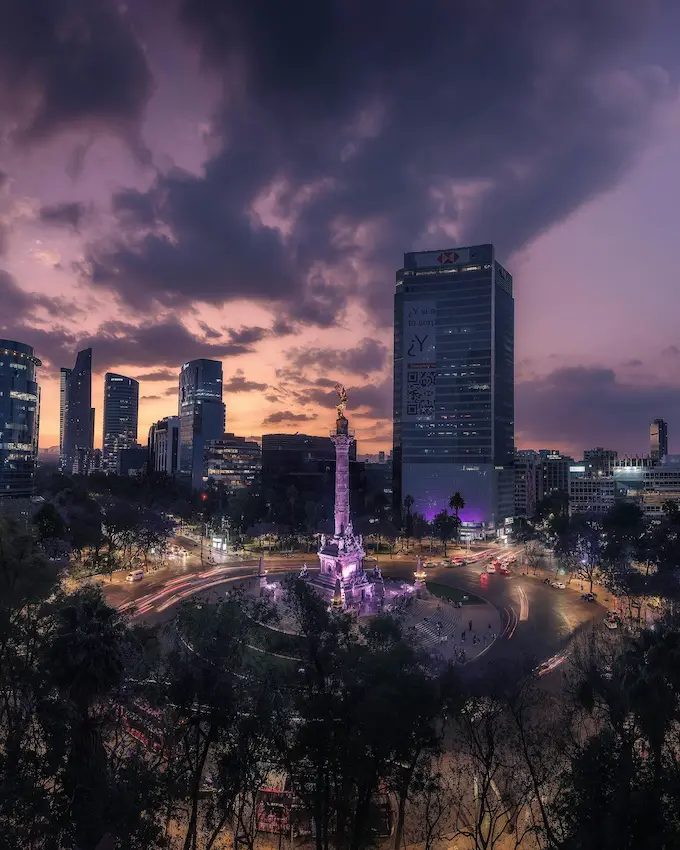
Panoramic view of Paso de la Reforma at dusk.
Related’s portfolio in Mexico, including future works, totals around US $1.3 billion, the company said, with another project in Mexico City in the pipeline. (Roberto Lozano/Pexels)

Related already has 60 reservations, Pérez said. Prices for units start at US $8,000 per square meter, with the exception of the penthouse, which is expected to sell for over US $6 million. The tower is scheduled to be completed in 2027.

Pérez told Bloomberg he would be opening the tower’s sales center during a trip to Mexico on Nov.  6, where he would encourage wealthy Mexicans to buy property in Miami. “There’s always a demand from Mexicans coming to Miami,” he said.

The election of left-leaning former President Andres Manuel Lopez Obrador in 2018 triggered a significant outflow of capital from Mexico, particularly to southern Florida. Pérez explained that the landslide congressional victory by the ruling party coalition in June increased interest among wealthy Mexicans in buying property in Miami.

However, no matter the country’s politics, “Mexicans still invest in Mexico. Even during these times, they don’t completely divest,” Pérez said.

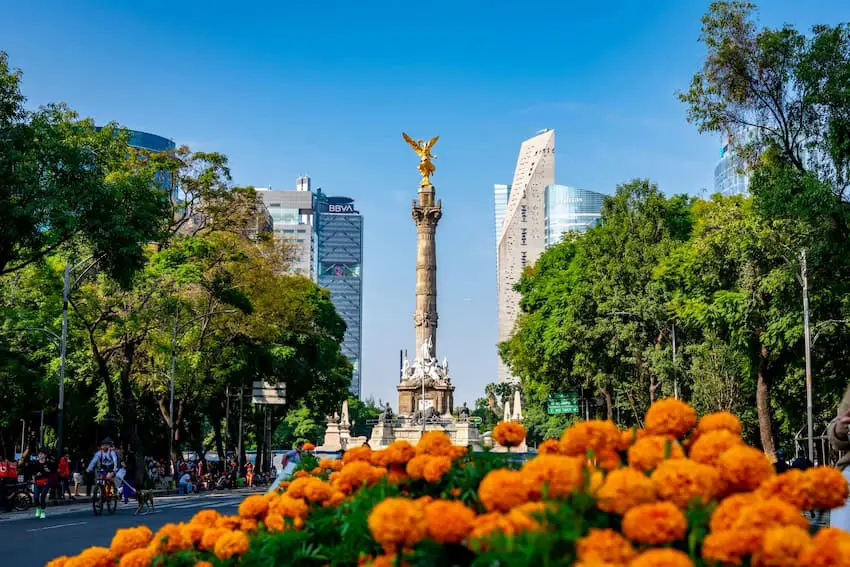
Paseo de la Reforma traditionally adorned with flor de cempasúchil for Día de Muertos.
However, no matter the country’s politics, “Mexicans still invest in Mexico. Even during these times, they don’t completely divest,” Pérez said. (Óscar Domínguez/Pexels)

Related Group’s founder and CEO is Pérez’s father, Cuban-Argentinian billionaire Jorge Pérez, who has been dubbed Miami’s “Condo King” due to his influence in the real estate market. In Mexico, the company began operations two decades ago.

In 2017, Related started a round of projects in Riviera Maya. According to Jon Paul Pérez, Mexicans bought around 95% of the company’s developments in Cancún, and he expects to see a similar proportion in the Reforma Avenue tower.

Related’s portfolio in Mexico, including future works, totals around US $1.3 billion, the company said, with another project in Mexico City in the pipeline. 

With reports from Bloomberg

Mexican band Los Tigres del Norte rally for Harris in Arizona

1
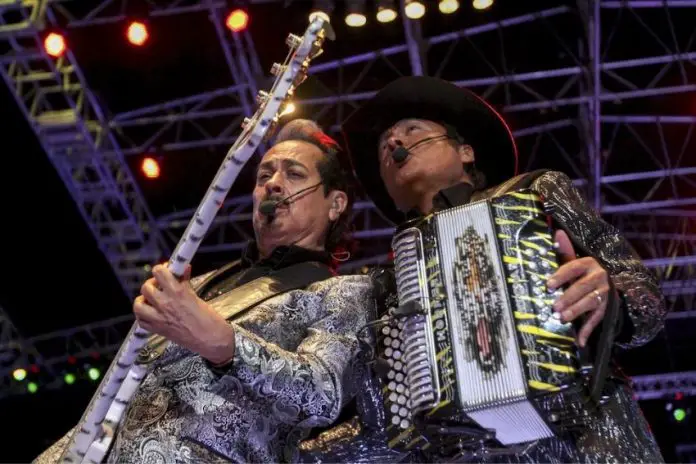
Two members of Los Tigres del Norte play guitar and accordion
Los Tigres del Norte are part of a Kamala Harris campaign effort to get out the Latino Vote in the U.S. (Gabriela Pérez Montiel/Cuartoscuro)

With the U.S. presidential election less than a week away, the iconic Mexican band Los Tigres del Norte joined Democratic candidate Kamala Harris for a concert and rally in Phoenix, Arizona, on Thursday afternoon.

Los Tigres del Norte, one of the most recognized acts in regional Mexican music, has previously voiced its support for the U.S. vice president, according to the newspaper Infobae.

Kamala Harris standing on a stage with crowds of supporters behind and below her holding signs saying VOTE, with a yellow banner in the background with a US flag and the slogan When We Vote We Win.
Democratic candidate for president Kamala Harris at a recent rally in Michigan. (Kamala Harris/X)

As part of its effort to motivate the Latino community to participate in the U.S. election process, Los Tigres del Norte issued a statement on social media:

“The United States is our second home. Today more than ever, we invite you to defend the rights of all our immigrants. Join us on Oct. 31 in Phoenix, where we will share great music and a clear message to Latino voters so they can express themselves at the polls.”

The norteño band was originally founded in 1965 in the small town of Rosa Morada in the northwestern state of Sinaloa. When all the members were still in their teens, Los Tigres del Norte moved to San Jose, California, where the band began its recording career in the late 1960s.

With sales of approximately 32 million albums, seven Grammy awards and 12 Latin Grammys, the band is one of the most recognized acts in regional Mexican music.

The rally in Arizona is part of a series of campaign events in which Latino artists are demonstrating their support for Harris with her campaign slogan, “Cuando votamos, ganamos” (“When we vote, we win”).

The Arizona Republic newspaper reported Thursday that Harris and former U.S. President Donald Trump are in a “contentious battle” for Arizona’s 11 electoral votes. 

Kamala Harris supporters at a rally in the U.S. A older Latina woman and a young Latina girl are featured in this picture of a crowd behind a red, white and blue barrier. They are cheering and taking photos with their cell phones
For her path to victory, Harris needs Latino voters to back her in swing states like Arizona and Nevada. (Kamala Harris/X)

The Harris campaign is attempting to engage and mobilize Latino voters in swing states, including Arizona and Nevada, with a 30-second radio ad in Spanish that features music with a cumbia beat, according to the Spanish-language media giant Univision.

The ad will air on Spanish-language radio stations through Election Day, asking listeners in Spanish to vote for Harris.

After the Phoenix stop, Harris was also in Las Vegas Thursday, where the Mexican pop-rock band Maná performed at another rally, where actress Jennifer Lopez, who has Puerto Rican heritage, was featured.

With reports from Infobae, Univision and The Arizona Republic

What’s on in Guadalajara and Lake Chapala in November?

1
Calaverandia
From Day of the Dead themed celebrations to superstar DJs, here's what's on in the Guadalajara and Lake Chapala area this month. (Calaverandia/Facebook)

November is not all about the Day of the Dead. The event calendar in Guadalajara and Lake Chapala Ribera for November is wide and varied to satisfy every craving — from wine festivals to book fairs, world-class concerts (and of course, some Day of the Dead events, we are in Mexico after all).

To help you stay entertained in the run up to the holiday season, we’ve selected the most exciting events in Guadalaja and Ajijic (and Tequila) to keep everyone in the family entertained.  

Miktlán, México Sensacional

Miktlán, México Sensacional
Spend a night in the underworld at Miktlán. (UAG)

The Autonomous University of Guadalajara (UAG) will celebrate Mexico’s Day of the Dead with a festival featuring music, dance, and sensory activities inspired by Mictlán, the pre-Hispanic underworld. 

According to Mexica legend, the souls of the dead had to travel four years and overcome a series of obstacles before entering Mictlán, where they were welcomed to the afterlife by the god and goddess of death. 

When? Nov. 1

Where? The UAG Campus

Tickets? Free of charge.

Recorrido Día de Muertos Bosque Los Colomos – November 1-2

Recorrido Día de Muertos Bosque Los Colomos
A Day of the Dead stroll through a spooky park? Sounds fantastic. (Revista Central)

Bosque Los Colomos, Guadalajara’s largest urban park, will host four whimsical night tours for the whole family in celebration of the Day of the Dead. Picture the wood’s pathways aglow with flickering candles, the aromatic smell of copal incense and glowing cempasúchil flowers all around. At the end of the tour, a surprise await the attendees. 

When? Nov. 1 and 2, from 7:00 to 9:30 p.m. and from 10:00 p.m. to 12:30 a.m.

Where? Bosque Los Colomos.  

Tickets: 150 pesos.

Cardboard and Toy Fair – November 1-7

Cardboard and Toy Fair
Nothing says “holidays in Mexico” like papel picado, so get down to the craft fair and get decorating! (Bullfrag)

Marking its 70th anniversary, the Cardboard and Toy Fair brings together some 300 small businesses and artisans in a traditional tianguis (open-air market) setting. Here, you’ll find everything from cardboard figures to sugar skulls, papel picado (engraved paper) clay figures, and a wide variety of decorative items related to the Day of the Dead. Food stalls will also be available.

When? Every day until Nov. 7, from 10:00 a.m. to 10:00 p.m.

Where? Calzada Independencia.

Grupo Frontera concert – November 2

Grupo Frontera
If you’re going to see one Mexican group this year, make it Grupo Frontera. (Viagogo)

Grupo Frontera, Mexico’s musical group ensemble of the moment, will offer a concert in Guadalajara as part of its Jugando a Que No Pasa Nada (Let’s Pretend Nothing Is Happening) international tour. The band grew in popularity thanks to its cumbias norteñas, a subgenre of norteño music within the broader category of Mexican regional music genre.

When? Nov. 2

Where? Arena VFG, Guadalajara. 

Tickets? Here.  

Day of the Dead Festival in Tequila – November 2

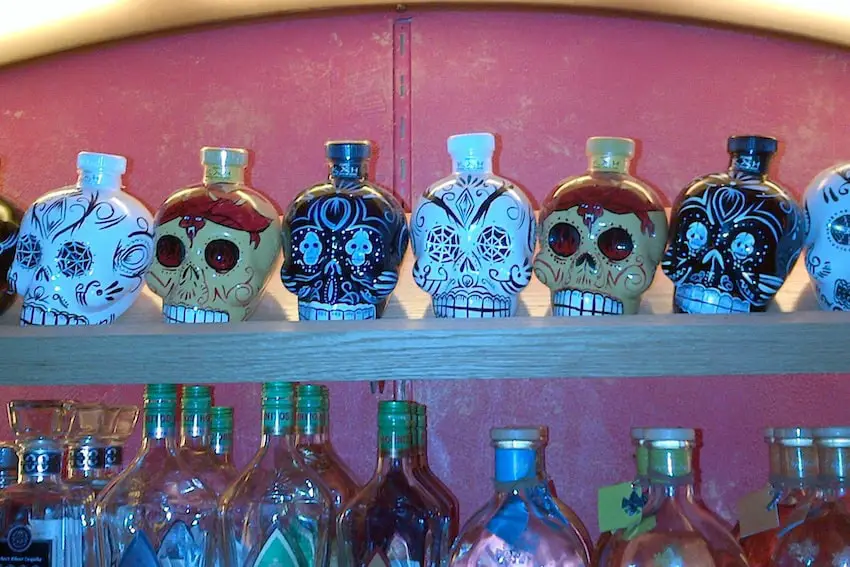
Day of the Dead tequila bottles
The alcohol capital of the world is celebrating its first-ever Day of the Dead event. (Pinterest)

For the first time ever, the town of Tequila (58 km west of Guadalajara) will host a Day of the Dead festival. Dubbed Tequilero Hasta Los Huesos (Tequila Lover to the Bones), the free festival will feature a parade, a performance by the Papantla flyers, a catrina contest, a folkloric dance show, video mapping, a mariachi performance, and more. The event will also exhibit tequila brands that offer Day of the Dead editions. 

When? Nov. 2, from noon.

Where? Main Plaza of Tequila. 

More information: Here.

Steve Aoki at Fiestas de Octubre – Nov 4

Steve Aoki
Guadalajara’s epic October party will be soundtracked by DJ Steve Aoki. (Steve Aoki/Instagram)

As October comes to an end, so does Guadalajara’s traditional Fiestas de Octubre. To wrap up the month-long festival, U.S. DJ Steve Aoki is set to perform at the Auditorio Benito Juárez, also known as the palenque. The palenque is an intimate arena known for its lively concert ambiance. It’s a staple of the festival and a must-visit attraction for anyone looking for an authentic concert experience in Mexico. 

General admission to the Fiestas de Octubre includes free entry to the show from the stands. Access may be limited if the auditorium reaches full capacity. 

When? Nov. 4. 

Where? Auditorio Benito Juárez, Zapopan.

Tickets? Here. 

Feria Maestros del Arte – November 8-10

Feria Maestros del Arte
Admire artists of every medium at the Art Masters Fair. (Feria Maestros del Arte)

Back for its 17th edition, the Art Masters Fair brings together artisans from across the country to exhibit and promote their work. The fair, one of Mexico’s largest of its kind, features classic to contemporary pieces that range from fine jewelry to wood, pottery, ceramics and all types of textiles. Besides shopping, visitors can also attend one of the many artists’ presentations. 

When? Nov. 8 and 10.

Where? Hotel Real de Chapala, Ajijic.

More information: Here.

Vinart Ajijic – November 16-17


View this post on Instagram


A post shared by VinArt Ajijic (@vinartajijic)

Picture yourself surrounded by lush greenery, sipping wine and savoring gourmet food as you gaze out over Lake Chapala. That’s the setting at the Vinart Ajijic wine festival, an event that features workshops, tastings, pairings, and an impressive array of wines from 40 prestigious wineries. Tickets include access to the festival, a complimentary drink and a ticket to the after party. 

When? Nov. 16 and 17.

Where? Nimue Marina Residence & Hotel Boutique, Ajijic.

Tickets? Here.

Calaverandia – October 25-November 24

Rides? Check. Art? Check. The spirits of departed loved one? Uh, also check. (Calaverandia/Facebook)

Calaverandia, the world’s first theme park inspired by Day of the Dead, is back once again. With colorful and immersive attractions that mesmerize kids and adults alike, visitors will find exciting rides, multimedia shows, art installations, video mapping, live music and a wide variety of food stalls. As well as buckets of fun, the park aims to educate visitors about the importance of the celebration. 

When? Oct. 25 to Nov. 18

Where? Parque Ávila Camacho, Guadalajara.  

Tickets? Here 

Fiesta de San Andrés – November 21-30

Fiestas de San Andres Ajijíc
There’s no party like a patron saint party. Ajijic is no different. (Lakeside Guide)

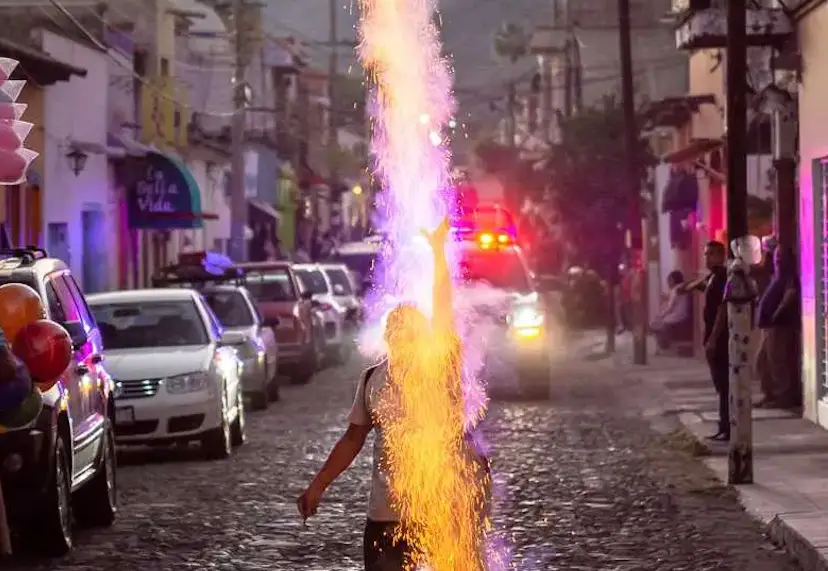
Most towns in Mexico have a patron saint or a virgin who is celebrated every year with an elaborate multi-day festival. To celebrate Saint Andrew, the town’s patron, Ajijic hosts a nine-day-long festival filled with music and shows. The fiesta patronal (patron’s party) features daily processions through Ajijic’s colorful streets, ending in the main plaza with rides, food stalls and fireworks. 

When? Nov. 21 to 30.

Where? Ajijic, Chapala. 

Tickets: Free entrance. 

Gabriela Solis is a Mexican lawyer turned full-time writer. She was born and raised in Guadalajara and covers business, culture, lifestyle and travel for Mexico News Daily. You can follow her lifestyle blog Dunas y Palmeras.


What’s on in San Miguel de Allende in November?

2
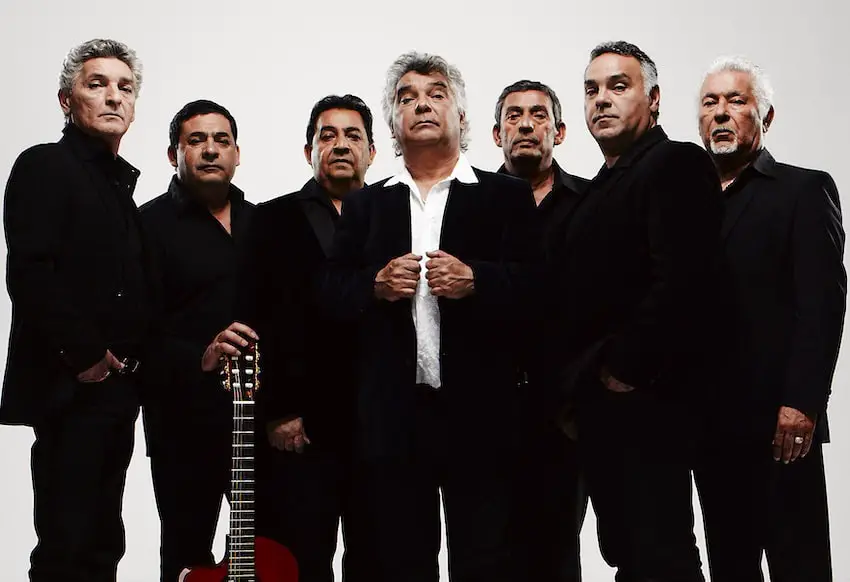
Gipsy Kings
November in San Miguel de Allende is about so much more than just Day of the Dead. It's art, culture and international music tours - and everything else besides. (Visit Bahrain)

San Miguel de Allende is one of the most exciting cities in the world — what can visitors and residents look forward to in the coming month? MND Local has collected the very best of the best city in the world, so you never need to miss a minute.

Without further ado, here’s what’s on in San Miguel de Allende this November:

Day of the Dead Program in San Miguel de Allende – November 1-2 

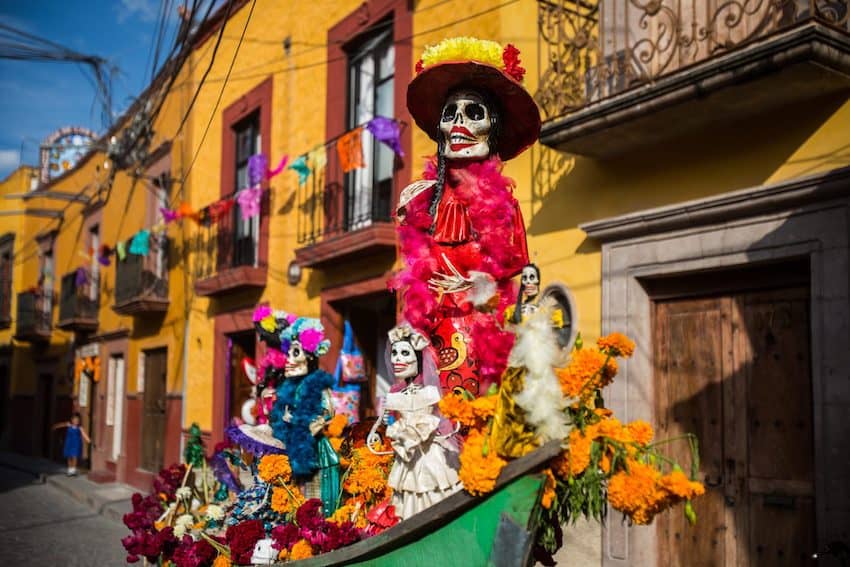
SMA Day of the Dead
(Traveler Broads)

There’s nothing anywhere in the world like Day of the Dead, but what’s San Miguel de Allende doing to mark the occasion?

Here’s a sneak peek at what’s planned for Friday: At 8:00 a.m., schools, NGOs, and other associations will set up their ofrendas in the Jardin Principal. Expect a crowd of eager kids, proud teachers, and creative displays. At 9:00 a.m. there’s a massive ofrenda exhibition in Colonia San Rafael.

Take a nap and return to the Jardin Principal at 6:00 p.m. for the blessing of the ofrendas, then stay to watch the Indigenous dance group “Tlaloc” bring crowds to the square. At 8:00 p.m., enjoy a performance by the Ballet of San Miguel de Allende. At 9:00 p.m., “Rondalla del Amor” brings romance to the celebration, followed by a “Concheros” vigil at 11:00 p.m., filling the night with ancient rhythms and reverence.

On Saturday at 10:00 a.m., the Patitas de Humanidad ofrenda takes over the fountain at Teatro Angela Peralta. At 6:00 p.m., the Catrinas parade kicks off from Cardo, filling the streets with towering skeletons, elaborate face paint, and costumes that will make you question your own Halloween efforts. The parade ends at the corner of Correo and Corregidora, just in time for Tlaloc’s return with another electrifying Indigenous dance performance in Jardin Principal, closing with the Ballet Folklórico Juvenil Mazatl.

Requiem en do menor by Luigi Cherubini – November 2

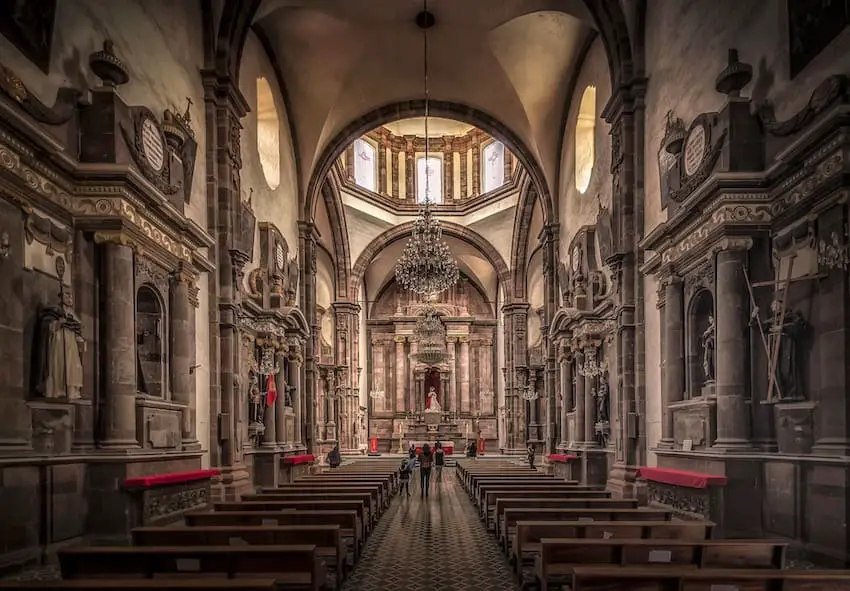
Parroquia de San Francisco SMA
(Pinterest)

As they do every year, the Coro de la Ópera de San Miguel de Allende, under the direction of maestro pianist Mauro Ledesma, continues the tradition of presenting a Requiem in honor of Day of the Dead. The Church of San Francisco, one of the most treasured gems of the city’s colonial architecture, will host the concert at 6 p.m. 

Requiem in C minor was composed by Luigi Cherubini in 1816 and premiered at a commemoration service for Louis XVI of France on the twenty-fourth anniversary of his beheading. The piece was greatly admired by Beethoven, and even performed at his funeral in 1827. This concert will feature a full orchestra and choir, offering a reflective and moving musical experience.

Mexican Art and Design Festival – November 2-3

Don’t miss this festival at Foro del Obraje, on Calzada de la Presa, near the Live Aqua Hotel, which offers a feast for the senses. Over 40 designers, gourmet food stalls, a beer & wine garden, live music, and kids activities to the live tunes of flamenco, electronic cello, rock covers, and a bit of country to keep you grooving. Try your hand at any of the many workshops! Painting, macramé, orchid care, and even some sound healing. There’s a picnic zone, Day of the Dead activities — including Catrina makeup — and fun for the whole family. It’s the perfect way to support artists, enjoy amazing food, and soak in the spirit of San Miguel. Free entry and pet-friendly!

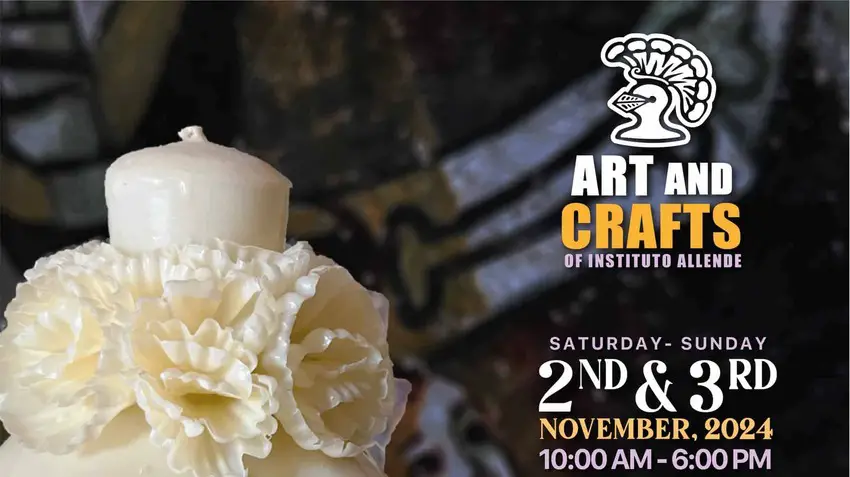
Art and Crafts Fair – November 2-3

(San Miguel Live)

On a similar note, the Instituto Allende is hosting its annual arts and crafts fair to celebrate life, art and tradition for Day of the Dead! From 10 a.m. to 6 p.m., enjoy stunning art pieces with live music and a variety of stalls offering tasty treats. This is an event for the whole family to enjoy local creativity while honoring the spirit of the season. Come for the art, stay for the fun and leave with something special!

Royale Gala 2024 – November 7

(San Miguel Live)

Prepare for an evening of glitz, glam and giving back at the Royale Gala in support of the charity “Patronato Pro Niños”! From 6:30 to 10:30 p.m. at Club de Golf Malanquin, kick off the night with cocktails, hors d’oeuvres and the smooth saxophone of Bruno Galicia. Savor fine wines from Dos Buhos and Cuna de Tierra and mezcal by Mata de Monte. The night kicks off with a special number by Arthur Murray. 

Bid in the online auction to score trips, artwork, jewelry, dinners, excursions and more, or feel the adrenaline rush of the exciting paddle raise auction led by auctioneers Eli and Joseph. Explore gourmet food stations curated by Parvada and dance to the music of Patrick Herlin. Proceeds help provide essential care to children in need. Don’t miss this night of fun and meaningful giving!

Tickets are US $150 and available at Club Malanquin or online at www.patronatoproninos.org.

Noche de Zarzuela – November 8-9

(Operísima Mexico)

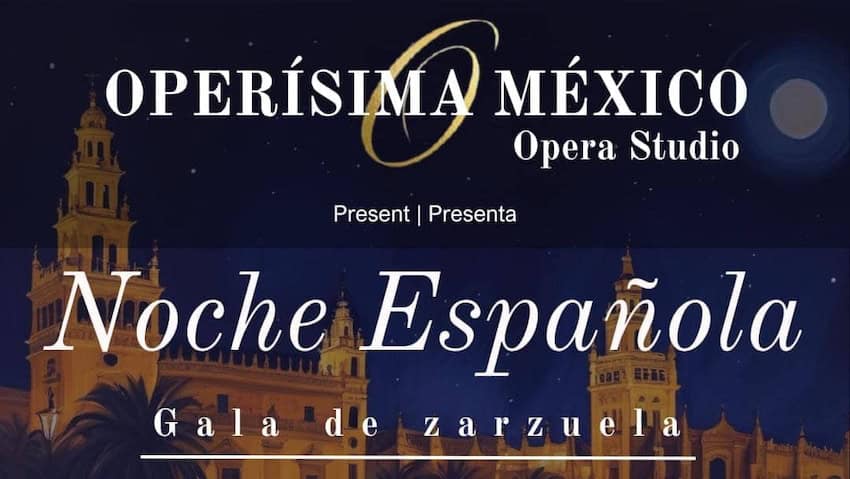
At 6:30 PM on both nights, Casa Europa is hosting Operísima México for a vibrant Spanish Night of Zarzuela! Imagine if opera and a musical had a lively Spanish lovechild! This unique genre blends opera, spoken dialogue, popular songs, and dance, making for an experience that is as accessible as it is thrilling. Known for its lively, often humorous plots and passionate music, zarzuela dives headfirst into the themes of Spanish life, love, and folklore. Think of it as the original telenovela, but with more singing, costumes, and a whole lot of drama! Get ready for a rollercoaster of drama, humor and plenty of Spanish flair!

Tickets are available at www.casaeuropamexico.com or via WhatsApp +52 415 181 2464.

Inna Falik Piano Concert – November 10

Sundays Live—Inna Faliks, piano

Pianist extraordinaire Inna Falik is bringing her virtuosity to San Miguel de Allende! Prepare for an unforgettable evening as this acclaimed musician, celebrated for her brilliant and emotionally charged performances, takes the stage with a captivating repertoire featuring works by Chopin, Beethoven, Corigliano, and Brahms. The concert will be held in the magnificent ambiance of St. Paul’s Church, where the historic architecture and rich acoustics will elevate every note. Whether you’re a classical music lover or simply ready to be swept away by the magic of her piano, mark your calendar for November 10th, 5:00 p.m. at St. Paul’s Church, Cardo #6, Centro.

Tickets are available online.

The City of Jazz – November 14-17

Gipsy Kings
(Zorro)

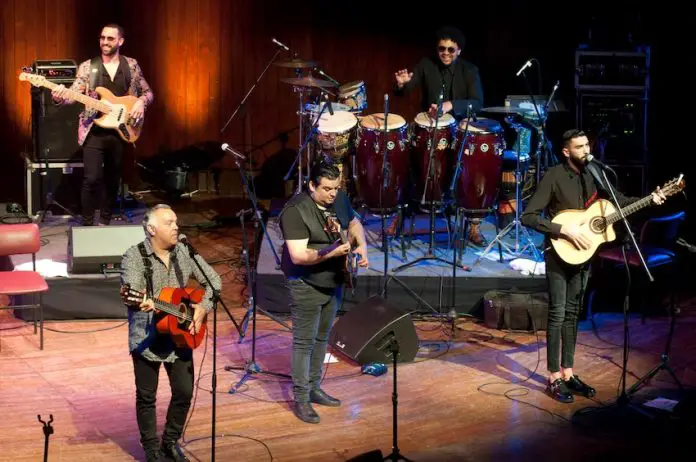
San Miguel de Allende weclomes The City of Jazz, bringing four unforgettable nights of live music to the Jardín Principal. The festival kicks off with the San Miguel Jazz Alliance on Nov. 14, followed by the soulful voice of Lucía Gutiérrez on Nov. 15. The excitement peaks on Saturday, Nov. 16, with none other than the legendary Gipsy Kings filling the air with their iconic rhythms. The festival wraps up on Nov. 17 with Big Band Jazz and the powerful Concha Buika. Best of all? It’s completely free, with concerts starting at 8 p.m. each night. Don’t miss this incredible opportunity to experience world-class jazz in the heart of San Miguel!

Sandra Gancz Kahan is a Mexican writer and translator based in San Miguel de Allende who specializes in mental health and humanitarian aid. She believes in the power of language to foster compassion and understanding across cultures. She can be reached at: sandragancz@gmail.com


Know your Mexico City neighborhood: Escandón

6
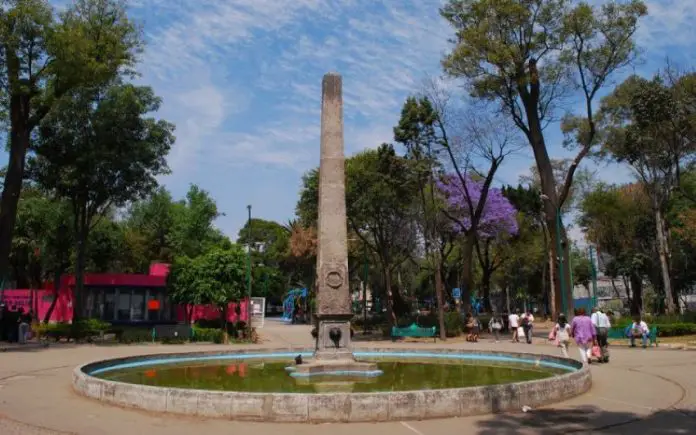
Escandón Alameda de Tacubaya
As the Condesa/Roma set are quickly discovering, life in Escandón offers all the fun of the center without the same hefty price tags (or hipsters). (FP/Wikicity)

Borough: Miguel Hidalgo
Established: 1869
Location: 5 km southwest of the Angel de la Independencia 

Who lives here

Of the 26,600 residents that live in this lively neighborhood south of Condesa, the majority are long-time residents, as well as middle-class families and young professionals looking for an affordable alternative to Condesa and Roma. Escandón’s location and agreeable cost of living attracts real estate investors with an eye for up-and-coming neighborhoods.

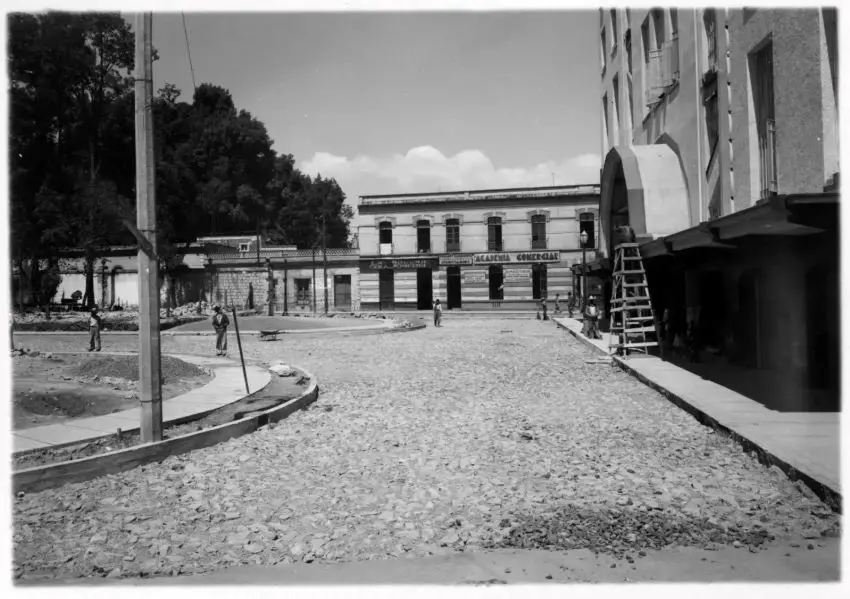
Cine Hipódromo as it appeared in the mid 20th Century. (Colonia Escandón/Facebook)

Escandón has a very local feel, with residential buildings interspersed among small businesses and traditional markets. Still relatively undiscovered by the expat crowd, visitors might notice a stronger sense of community here than in the neighboring colonias.

A brief history of Escandón

The neighborhood is named after the Escandón family.  The aristocratic Escandóns acquired wealth through business ventures in transportation, mining and real estate, becoming one of Mexico’s richest and most powerful families in the 19th century. In 1869, a family patriarch purchased part of the former Hacienda de la Condesa, which was broken up into what would eventually become neighborhoods including the present-day Condesa and Escandón. In the late 1800s, it remained part of the town of Tacubaya, on the outskirts of Mexico City, and the family’s personal estate.  

Escandón became part of the Federal District (what is now Mexico City) in 1929. With the culmination of the Mexican Revolution, Escandón transitioned into a residential neighborhood, largely occupied by military officers and their families. The construction and expansion of major thoroughfares like Eje 4 Sur and Viaducto in the mid-20th century gave the neighborhood the shape we know today.

A guide to Escandón today

Quiet and full of families, Escandón’s strategic location provides easy access to other popular areas like Condesa and Roma while maintaining its own sense of self. It’s known for its affordability, cultural richness and local charm.

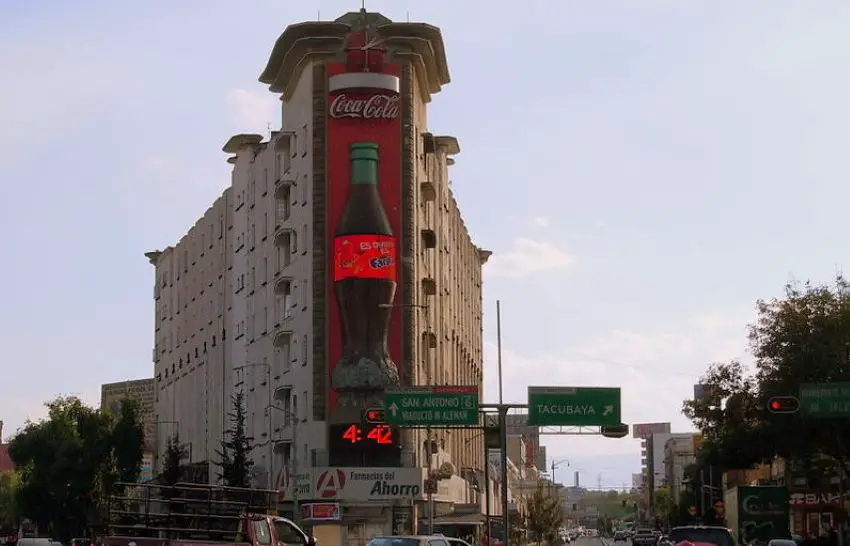
Edificio Ermita. (Matthew Rutledge/Wikimedia Commons)

Escandón is bordered by Eje 4 Sur Benjamín Franklin and Avenida Baja California to the north, Viaducto Río Becerra to the south, Avenida Nuevo León to the east and Avenida Revolución to the west.

The neighborhood is divided into two sections on either side of Avenida Patriotismo. Section I is the western half of the colonia, bordering Tacubaya along Avenida Revolución. It’s a slightly more residential mix of historic buildings with modern developments. The population is noticeably older and quieter when compared to its eastern counterpart, which has more mom-and-pop shops and family parks and borders Roma Sur along Avenida Nuevo León. The crowd is a bit younger and diverse, likely attracted to the denser concentration of cafes, restaurants, and boutique shops. Both sections share a northern border with Condesa in the form of Eje 4 Sur.

Escandón is great if you love: Exploring sides of CDMX that are less commercial than Roma and Condesa but equally brimming with history, tradition, and life. It’s a safe pocket showcasing a genuine slice of local life, with small shops, markets and eateries that reflect the everyday culture of Mexico City.

What to do in Escandón

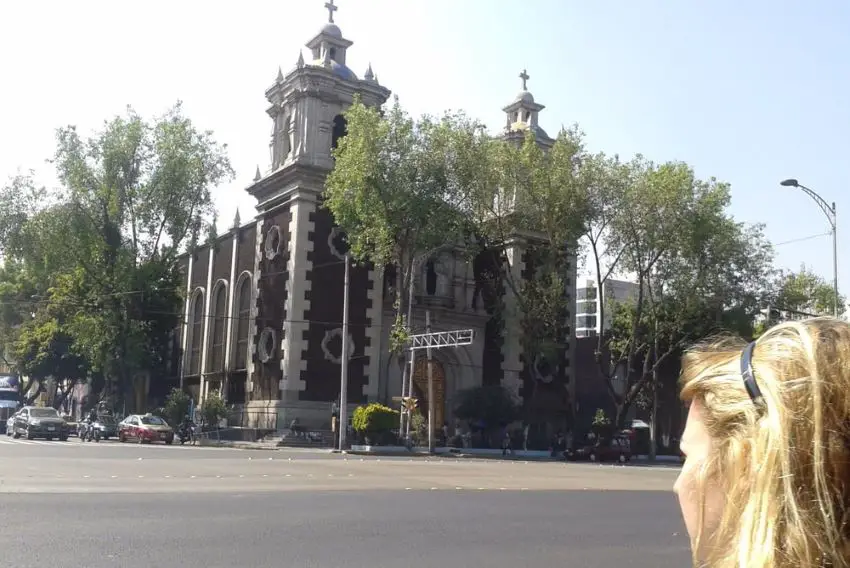
Parroquia de San José de la Montaña: The small church on Eje 4 Sur seems unassuming from the street, but a pop inside reveals a gorgeous display of stained glass windows.

San José de la Montaña has an interior definitely work checking out. (Yelp)

Centro Cultural Roldán Sandoval: With a full lineup of unique shows and artsy events, the quirky 1970s theater is considered one of the neighborhood’s most important cultural spaces.

Edificio Martí: The iconic Art Deco building designed in 1931 by architect Francisco J. Serrano is one of Escandón’s most beautiful. It can be found on Calle Sindicalismo, close to the corner with Calle José Martí.

Mercado Escandón: For over 30 years this center has played a role much larger than a community market. It’s a gathering place for locals, making a stop here more of a Mexico City immersion than a shopping experience. Have a bite at Playa Escondida Market.

Guadalajara90210: Jalisco’s unique nomadic art gallery has a permanent space, but not a permanent collection, in Escandón. 

Pulquería la Pirata: Channel your inner bohemian when you step through the saloon-style swinging door of this no-frills pulque bar, a neighborhood staple for 80 years.

Tuesday tianguis: From 7:30 a.m. until 5:30 p.m. the charming Calle José María Vigil plays host to an open-air market selling everything from embroidered baby clothes to fresh spinach.

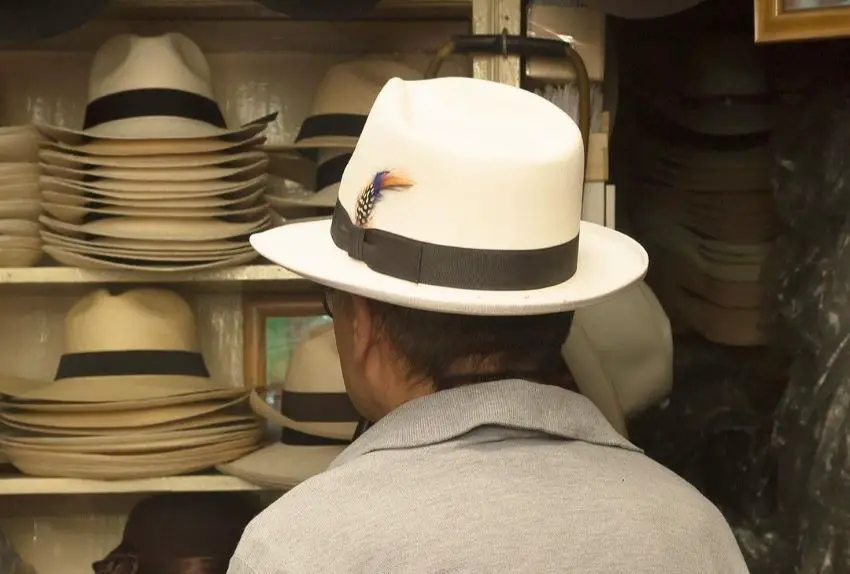
Sombrerería Escandón, a traditional hatmaker that is still doing business.  (Melbarellano/Instagram)

Sombrerería Escandón: Need a hat? Step inside Escandón’s premier hat shop, where Don Ignacio will find for you the perfect style and fit.

What to eat in Escandón

Terraza Micheviche: The beer, seafood, and large, lively terrace at this casual dining spot is the perfect way to end a day of wandering.

OPPA: This highly-rated, Korean-owned restaurant is cool, casual, and known for its authentic home-cooked meals and charming atmosphere. Fill up on a steaming bowl of flavorful ramen on the cozy outdoor patio.

(Via Sol/Instagram)

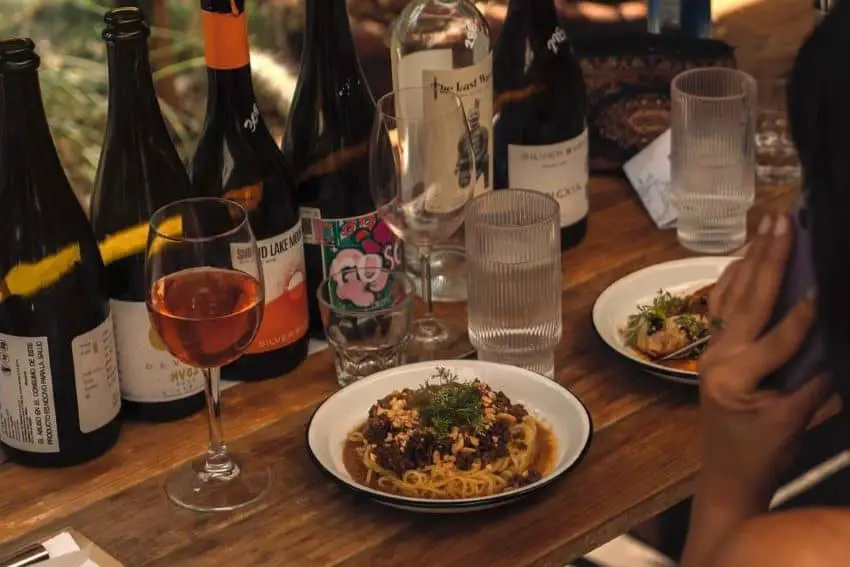
Via Sol: Who knew delicate and juicy dumplings could pair so well with wine? Be sure to check the events calendar, as the little restaurant has a lot going on.

Cantina El León de Oro: It has all you could possibly want in a classic cantina: formica tables, bright lighting, flatscreen TVs and the occasional mariachi appearance. However, it’s the hearty menu and lively ambiance that keep the locals coming back again and again.

Conejo Rojo Coffee: When it’s time for a pick-me-up, why not stop for an organic coffee in the Red Rabbit? Admire the alternative art on the walls while the barista whips up a French press brew. 

Café Escandón: Overflowing with trinkets and snacks, you simply cannot come to this side of town without peeking in. While perusing Mexican handicrafts, sip on a hot chocolate bubbled over with marshmallows. 

One hidden gem in Escandón 

There is something about the quiet energy of Calle José María Vigil that will sweep you away to a Mexico City of the past. Tiny and leafy, stroll past pops of street art, dangling hummingbird feeders, multicolored facades, a lone bakery and the occasional friendly neighbor on the way home from the market. 

Bethany Platanella is a travel planner and lifestyle writer based in Mexico City. She lives for the dopamine hit that comes directly after booking a plane ticket, exploring local markets, practicing yoga and munching on fresh tortillas. Sign up to receive her Sunday Love Letters to your inbox, peruse her blog, or follow her on Instagram.

Why Guadalajara’s parks are an urban oasis

2
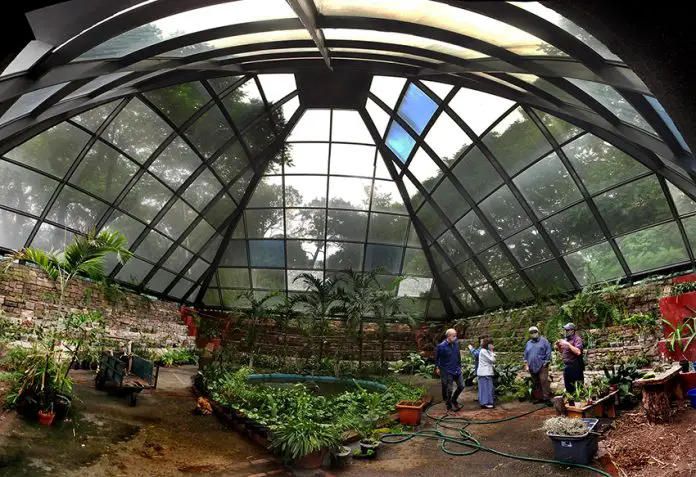
Orchidarium at Parque Agua Azul
Guadalajara has worked hard to turn it's parks into a national treasure. It has succeeded beyond measure. (John Pint)

You don’t have to look far to find the locations of Guadalajara’s thirteen urban parks plus info on what they offer. Just check their website and you’re on your way! But if you’d like to know why these city parks keep winning awards — like the green flags fluttering over some of them — you will have to dig a little deeper.

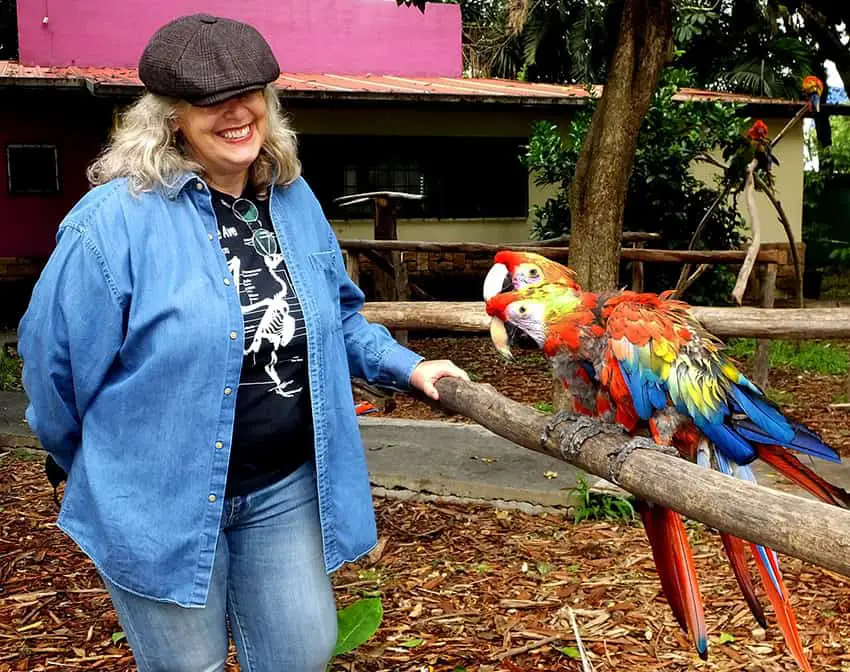
To get the story, I visited biologist Karina Aguilar, award-winning Conservation Manager of Guadalajara’s Metropolitan Urban Park Agency (AMBU), at her headquarters tucked away inside the city’s Parque Agua Azul.

Karina Aguilar stands nexts to two macaws perched on a branch
Karina Aguilar and denizens of Parque Agua Azul. (John Pint)

“This city park system didn’t exist a few years ago,” Aguilar told me. “Parks were operated independently, which meant that those located in affluent neighborhoods were clean and well run, while those in poorer neighborhoods were often in bad shape.”

“However, in 2018, a project to upgrade one park was so successful, it sparked a kind of revolution,” Aguilar says. “The renovation of the beautiful Parque Colomos, located in the northwest corner of the city, turned out so attractive and popular that it was decided to create an umbrella organization for all the parks in all the municipalities making up Greater Guadalajara. So now, every one of our parks has the same standards of cleanliness and services: not only services for people who visit the parks but also services for the wide variety of animals who live in them. On top of that, today, admission to all city parks is free.”

Pollinator gardens attract bees and bats

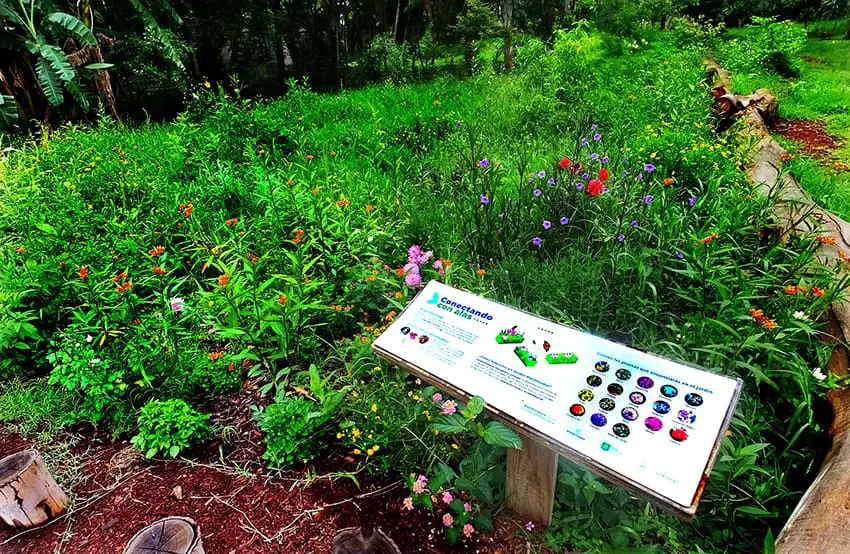
Parque Agua Azul is well known for its orchidarium, aviary and butterfly house, but upon arriving at the park, Aguilar’s first project was to dig up a seldom used parking lot and transform it into a pollinator garden.

This garden is filled with flowering plants and trees, all of them hardy species that can survive without a lot of care. These include lavender, rosemary, milkweed, sage, plumbago, petunias, azaleas and dahlias.

Pollinator garden with explanatory sign
The pollinator garden at Parque Agua Azul, part of the Conectando Con Alas program. (John Pint)

At the moment, the Guadalajara metro area has 23 pollinator gardens. Their plants attract bees, wasps, butterflies, moths and ants, as well as larger animals like hummingbirds and bats.

“It would be wonderful if the animals in our city parks could get from one park to another via green corridors,” Aguilar told me.” but that’s not the case. However, flying creatures don’t need corridors. All we have to do is fill the city with pollinator gardens and they will go from one to another… and that’s just what we are doing. We call our project Conectando con Alas; Connecting with Wings.”

From disaster site to urban forest

Another concept Karina Aguilar is experimenting with is rewilding: returning a piece of land to its natural, uncultivated state.

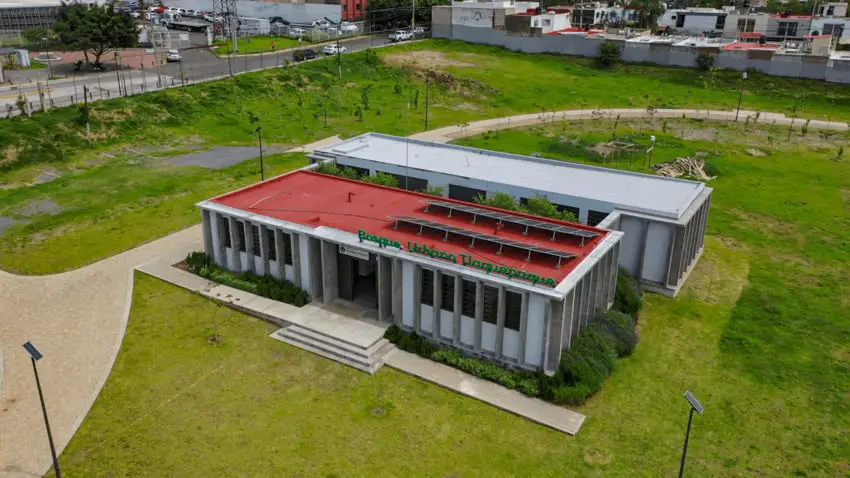
Rewilding is happening right now in what could be called Guadalajara’s most unlikely park. This is Bosque Urbano Tlaquepaque, which started as a huge gully filled with the debris left over from the horrendous 1992 gasoline explosions in the city’s sewers, a disaster which killed and injured hundreds.

Main building at Parque Tlaquepaque
The main building at the Bosque Urbano Tlaquepaque, which is in the very first stages of rewilding. (Agencia de Bosques Urbanos)

The site, which covers ten hectares, lay abandoned for years. “Then,” Aguilar told me, “the city decided to turn the place into an impounded vehicle yard. When the people of Tlaquepaque found out about that, they weren’t happy. We don’t want an impound yard here, we want a park, they said.”

The result was a rewilding project in which 4,000 trees, all native species, have been planted.

“It’s a long-term project,” Aguilar told me. “It will take 20 years. But people living all around the park bring water to those trees from their homes. In their minds, they can already see that bosque they’re dreaming about.”

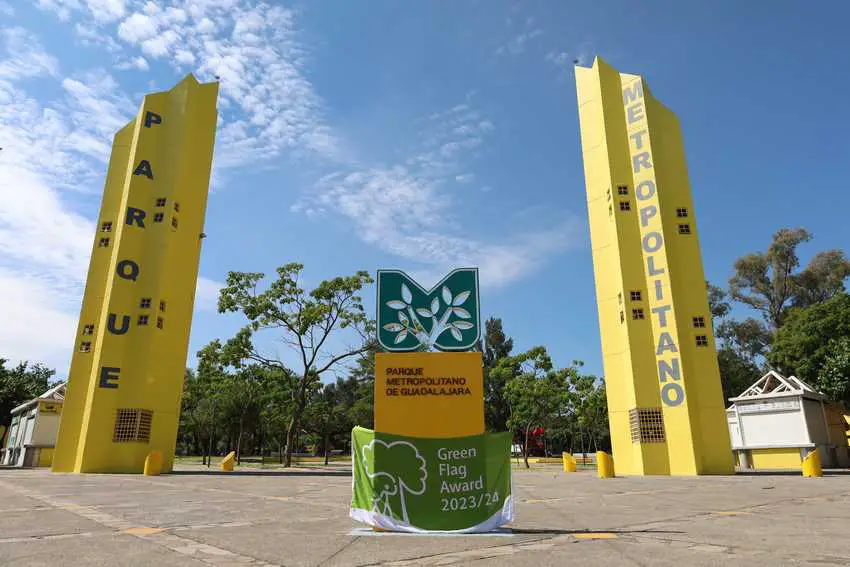
Five Guadalajara parks won Green Flag awards this month. (John Pint)

Green flags over Guadalajara

In recent years both the park system and Karina Aguilar have gained numerous awards and. Then, Aguilar proudly told me, “We finally decided to try for international recognition. We heard about the Green Flag Awards which began in the UK and are now recognized both in Europe and the U.S., and we said, ‘Let’s go find out how it works.’

“We discovered that they have a standard of eight principles and 27 criteria,” she says. “If you can prove that you live up to all these standards, you are allowed to fly the green flag in your park. To see if you qualify, a group of judges — they could be national or international — come to you and verify that your park follows all the rules. If so, they give you a green flag which you are allowed to display for one year. The next year, of course, you have to prove you are still following all those norms!”

Last year two of Guadalajara’s parks — Colomos, famed for its genuine Japanese garden and the Metropolitano, a favorite for jogging and cycling — were entered in the competition. Both were accepted.

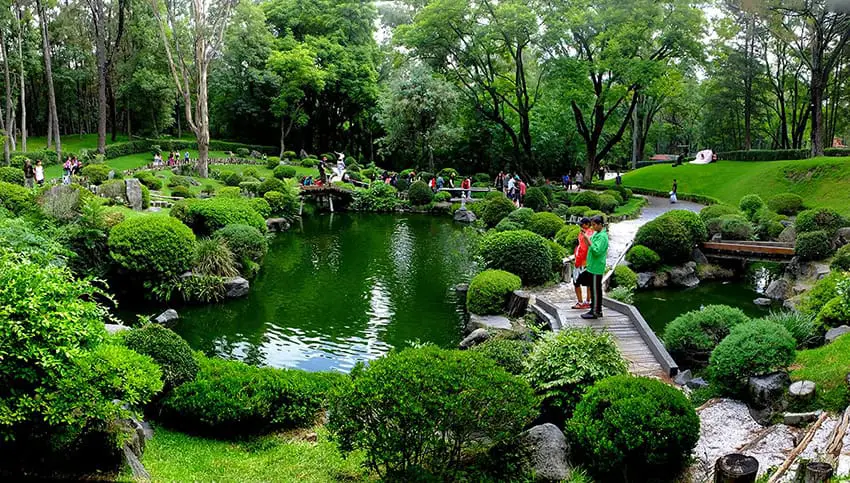
The Japanese garden at Bosque Los Colomos celebrates the sister city relationship between Guadalajara and Kyoto, Japan. (John Pint)

“This year, Aguilar continued with a broad smile, “we again requested green flags for those first two parks, plus three new ones… and I just got word that, yes, we succeeded! Five of Guadalajara’s parks will now fly the coveted green flag.”

Canyon views and steam trains

Want to know which are the three new winners? Maybe one of them is Parque Puerto de la Barranca, the city’s tiniest park, but the one with the best view, looking out over the 500-meter-deep Huentitán Canyon. Or perhaps one of those flags is flying over

Parque del Deán, which features a real steam locomotive you can climb around on. Better yet: how about checking out all 13 parks while you’re at it? You can’t go wrong!

John Pint has lived near Guadalajara, Jalisco, for more than 30 years and is the author of “A Guide to West Mexico’s Guachimontones and Surrounding Area” and co-author of “Outdoors in Western Mexico.” More of his writing can be found on his website.

Meds and ‘the maximum law’: President Sheinbaum’s mañanera recapped

3
Claudia Sheinbaum at her press conference podium with her hands up and palms facing the floor in a gesture telling people to calm down.
President Sheinbaum asks reporters on Thursday for calm after expressing her opinion on a controversial reform that passed Congress the day before. (Daniel Augusto/Cuartoscuro)

Thursday Oct. 31 is the 31st day of Claudia Sheinbaum Pardo’s presidency and the final day of her first month as Mexico’s first female president.

Like her predecessor and political mentor Andrés Manuel López Obrador did throughout his six-year term, the 62-year-old former Mexico City mayor is fronting up to the media every weekday morning at the National Palace in the historic center of Mexico City.

President-elect Claudia Sheinbaum
Claudia Sheinbaum made history on Oct. 1 when she took office as Mexico’s first female president. A protege of former president Andrés Manuel López Obrador, Sheinbaum has kept his tradition of daily press conferences. (Cuartoscuro)

Sheinbaum’s morning press conference, or mañanera, on Thursday was her 22nd as president. Here is a brief summary of some key parts of this morning’s presser, a return of sorts to a previous Mexico News Daily series where we documented the former president’s press conferences.

A new medication procurement model 

Deputy Health Minister Eduardo Clark García outlined the government’s new model for purchasing medications for Mexico’s public health system (read MND’s report here).

Sheinbaum said that the government will spend some 130 billion pesos (US $6.5 billion) annually on medications and medical supplies.

There will be “transparency” and “zero corruption” in the medication procurement process, Sheinbaum pledged.

Sheinbaum defends ‘constitutional supremacy’ reform 

Mexican senators in session all holding signs at their desks that says in Spanish "No to dictatorship in Mexico."
López Obrador’s legacy is several constitutional amendments he pushed through Congress and a few he left for Sheinbaum to shepherd through. They have sparked fierce opposition, with critics saying López Obrador and Sheinbaum are eroding Mexico’s democracy. (Cuartoscuro)

The president expressed her support for the “constitutional supremacy” reform that was approved by the Senate last week and the Chamber of Deputies on Wednesday (read MND’s report here) and has already been ratified by enough states to become law.

The constitutional reform will prevent legal challenges against constitutional amendments that have been approved by Congress and ratified by a majority of state legislatures.

“The opposition has been talking about this constitutional supremacy issue as if it were something new or something bad,” Sheinbaum said at her press conference Thursday.

“All of us who study, even if we haven’t studied law, know that the constitution is the maximum law,” she said.

The “constitutional supremacy” reform, Sheinbaum argued, is simply reinforcing the fact that the constitution is the supreme law of the land.

‘We’re going to support Cuba for humanitarian reasons’

Sheinbaum was asked about Mexico’s decision to send 400,000 barrels of oil to Cuba, which recently experienced a nationwide blackout.

“We’re going to support Cuba for humanitarian reasons. And, in addition, Mexico has never been in favor of the blockade,” she said, referring to the United States embargo against the Caribbean island nation that has been ruled by the Communist Party of Cuba for around six decades.

“Just to provide perspective,” Sheinbaum said, 400,000 barrels of oil “is not even the production of one day,” given that “Mexico produces 1.6 to 1.8 million barrels per day.”

“… Even though there is criticism, we’re going to be supportive [of Cuba] and for humanitarian reasons,” she said.

A construction site
Sheinbaum proudly announced Thursday that Mexico’s third-quarter growth, at 1.5% on an annual basis, had surpassed all expectations. (Elizabeth Ruiz/Cuartoscuro)

Third-quarter economic growth 

“It beat all expectations,” Sheinbaum said of the Mexican economy’s 1.5% annual growth rate in the third quarter of 2024 (read MND’s report here).

“… They said GDP wasn’t going to grow in that quarter. Well, it did grow, 1.5%,” she said.

Sheinbaum to attend G20 Summit in Brazil 

The president told reporters Thursday morning that she will attend the G20 Summit in Rio de Janeiro, which takes place Nov. 18–19.

It will be Sheinbaum’s first overseas trip as president.

López Obrador didn’t attend any G20 meetings during his presidency and was largely absent on the world stage during his six-year term, although he did go to the Asia-Pacific Economic Cooperation (APEC) Leaders’ Summit in San Francisco last year.

By Mexico News Daily chief staff writer Peter Davies (peter.davies@mexiconewsdaily.com)

* This is MND’s first “Sheinbaum mañanera brief,” but look out for more in this series soon. (The president won’t hold a morning press conference on Friday due to the annual Day of the Dead holiday.)

Remembering man’s best friend: Mortuary services for pets on the rise in Mexico

1
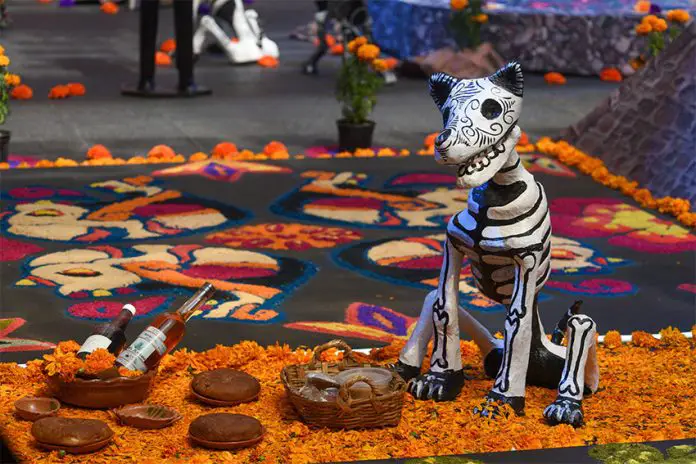
A paper mache dog skeleton sits on a bed of marigolds at a Day of the Dead altar in Mexico City.
Dedicated altars and cremations for pets are becoming more popular. (Crisanta Espinosa Aguilar/Cuartoscuro)

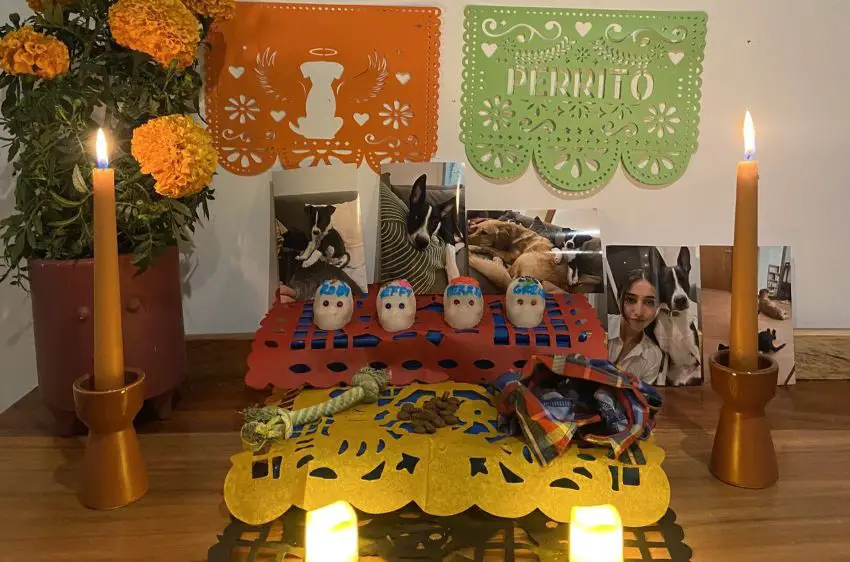
As Day of the Dead nears, altars around the country bear photos of beloved former pets next to mementos of dearly departed family members. And while including animals in Día de Muertos celebrations is not new, more and more people in Mexico now also appear to be using mortuary services like cremation for dead pets.

Manuel Ramírez, head of the J. García López funeral group and its pet division Bye Bye Friends, told newspaper El Financiero that sales of prepaid mortuary plans for pets increased by 48% compared to 2023.

For his part, Juan Rodríguez, CEO of funeral group Gayosso, and vice president of the Confederation of Chambers of Commerce, Services and Tourism of Mexico (Concanaco), predicted that the pet funeral sector will grow by double digits in the next 15 years, driven by greater awareness of the role of pets in Mexican families.

According to a study by the University of the Valley of Mexico, around 43% of Mexicans have a positive view on the idea of treating pets like  children. Furthermore, roughly 70% of Mexican homes have at least one pet, the National Institute of Statistics and Geography (INEGI) found in its latest survey. INEGI estimates there are around 80 million pets in Mexico, including 43.8 million dogs, 16.2 million cats and 20 million other animals.

“We firmly believe that this sector will have a very positive evolution,” Rodríguez emphasized.

There are not enough funeral centers to meet the expected demand according to Rodríguez, and many of the existing ones operate in the informal market. At least in Mexico City, 85% operate informally, Ivan Pérez, operations manager of Funeral Pet, told El Universal.

A white fluffy dog runs across a green lawn
Juan Rodríguez, CEO of funeral group Gayosso and Concanaco vice president expects demand for pet mortuary services to boom in coming years. (Joe Caione/Unsplash)

According to Pérez, these companies offer affordable prices ranging between 400 (US $20) and 450 pesos (US $22) — a figure that Pérez deems suspicious.

“At Funeral Pet, we use between 30 and 60 liters of LP gas per cremation procedure. Adding up all the supplies and salaries, it’s impossible to carry out a cremation process at such prices.”

Pérez said Funeral Pet charges between 3,500 pesos (US $175) and 4,000 pesos (US $200) depending on the size of the animal.

Using a mortuary service like cremation can also help prevent health risks. In the past, pet remains were often discarded in the trash or buried in family gardens. However, this may lead to bad smells and health risks for animals and humans.

If an animal dies from a disease like parvovirus, toxoplasmosis or salmonellosis, it could spread to other animals and even humans. Furthermore, pentobarbital, a drug used in euthanasia, can remain in the body of the deceased pet for up to a year. This poses a danger to other animals that might dig in the burial site, as they could be poisoned.

Commemorating deceased pets

Just as pet mortuary services are increasing in popularity, so are special Day of the Dead altars dedicated to pets.

These altars are not part of Mexico’s original tradition around Day of the Dead. However, they became popular in 2019 after Funeral Pet proposed commemorating Mexico’s deceased pets on Oct. 27, according to El Universal.

A Day of the Dead altar for a pet
Though pets have often had a place on home Day of the Dead altars, some families are beginning to celebrate deceased pets their own altars on Oct. 27. (X)

The altar for a deceased pet includes the same elements of a traditional altar, including a picture of the pet and its favorite treats and foods.

With reports from El Sol de Orizaba, Publimetro, El Financiero and El Universal

Sheinbaum rolls out new medications purchasing plan to end shortages

1
A translucent blue pill bottle with red and white capsules inside spilling out onto an abstract white surface.
Mexico's new government says it's betting on more consolidated, transparent purchasing practices to end the nation's continual issue with medication shortages in government-run facilities. (Nalidsa/Shutterstock)

Mexico’s federal government on Thursday presented a new medication purchasing model aimed at ensuring the availability of medications in the nation’s public health system.

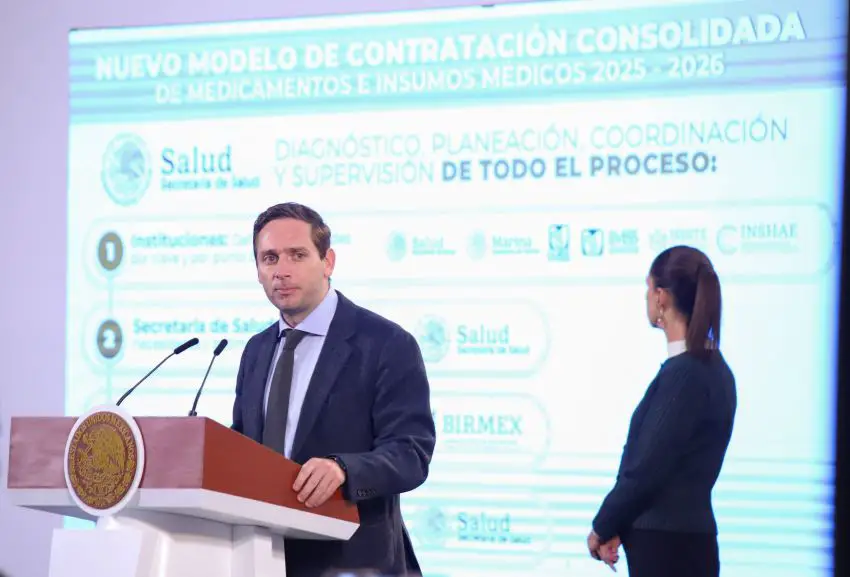
Deputy Health Minister Eduardo Clark García outlined the new model at President Claudia Sheinbaum’s morning press conference, saying that the new system would manage the acquisition of pharmaceuticals in an efficient and cost-effective way.

Mexico's Deputy Health Minister Eduardo Clark Garcia at a podium at a press conference, talking to reporters as President Claudia Sheinbaum, behind him, examines a projection screen with his presentation on medications purchasing
Mexico’s Deputy Health Minister Eduardo Clark García outlines a new medications purchasing system for the nation’s government-run medical facilities. (Daniel Augusto/Cuartoscuro)

He explained that:

  • The Health Ministry will be in charge of the entire process.
  • Public health care providers, including IMSS and ISSSTE, will submit their medication and medical supplies requirements to the Health Ministry.
  • The Health Ministry will review and “validate” their requests.
  • State-owned medical company Birmex will make a “consolidated purchase” of required medications and medical supplies after asking suppliers to submit bids.
  • Birmex will seek the “best conditions” for its purchases in terms of “quality, efficiency and price.”
  • The medications and supplies will be delivered to public hospitals and other healthcare facilities.
  • “Digital systems” will be used in all stages of the medication procurement process.

“We’re seeking to guarantee maximum transparency and maximum participation [of pharmaceutical companies], both national and international, in order to promote competition and guarantee …[medication] quality … [at a good] price,” Clark said.

Medication shortages plagued the public health system during the government of former president Andrés Manuel López Obrador, triggering numerous protests, including by parents of children with cancer.

The López Obrador administration signed an agreement in 2020 with the United Nations Office for Project Services to collaborate on the international purchase of medicines, medical supplies and vaccines, but the shortages persisted.

In late 2023, the ex-president inaugurated a state-owned “Well-Being Megapharmacy,” which he said would provide a “definitive way out” of medication shortages. But it has faced its own problems in sourcing medications, according to an El Universal newspaper report published earlier this year.

former Mexican president Andres Manuel Lopez Obrador at a podium in front of a giant wall sign saying "Megafarmacia del Bienestar Inauguracion"
Former president Andrés Manuel López Obrador tried to solve Mexico’s recurring problem with medication shortages by introducing “megapharmacies,” like this one he inaugurated in 2023 in México state. (Presidencia)

On Thursday, Clark said the government was “evaluating different ways” to distribute medications “more efficiently.”

“… We’re also optimizing and digitalizing the delivery and reception processes at each delivery point, ensuring that there is not excessive bureaucracy or abundant paperwork,” he said.

Sheinbaum told reporters that the “so-called mega pharmacy” — located in México state, about 70 kilometers north of central Mexico City — will continue to be used. She noted that its processes will also be fully digitalized.

The president said that the government will spend some 130 billion pesos (US $6.5 billion) annually on medications and medical supplies and expressed confidence that her administration “will get even better prices” than those obtained by its predecessor.

There will be “transparency” and “zero corruption” in the medication procurement process, Sheinbaum pledged.

Health Minister David Kershenobich Stalnikowitz noted that the acquisition of medications and medical supplies is a “fundamental aspect in the realm of public health and that a reliable supply of medications “guarantees access to preventative treatments, primary care and treatment of illnesses.”

“We shouldn’t just think about curing illnesses, but also about prevention and primary care,” Kershenobich said.

Mexico News Daily