Home Blog Page 492

Taste of Mexico: Candies of Puebla

1
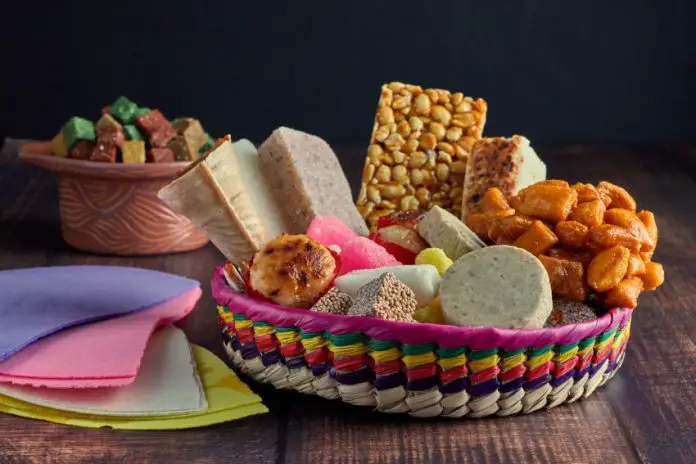
Mexican candies
(Shutterstock)

Since humans first discovered fire — or maybe even before that — we’ve been on a quest to make food taste better. We have evidence that for at least around 8,000 years, people have had a sweet tooth. Fast forward 3,000 years, and we find the Egyptians, Greeks, Chinese and Middle Eastern cultures enjoying seeds, fruits and flowers coated in honey. Whether it was to make them last longer or simply because everything tastes better with a bit of sweetness, our love affair with sugar has deep roots. Mexican candy is almost as historied.

In today’s modern age of kale smoothies and CrossFit, where everyone is focused on longevity and treating their body with utmost care, sugar has become the ultimate villain. However, perhaps it’s important to remember that sweets are more than just causes of sugar crashes and guilty pleasures, especially in Mexico. Particularly in the state of Puebla, they’re an essential part of our culture, our history and our identity.
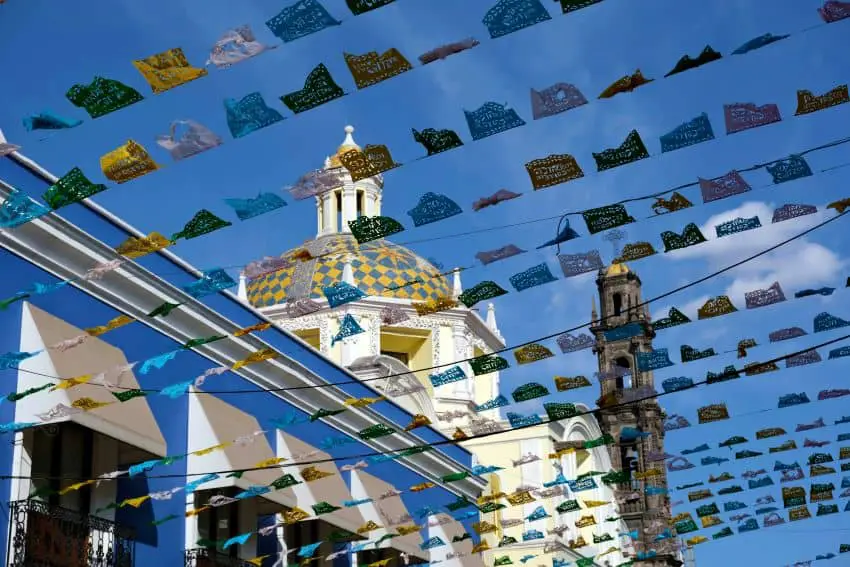
Puebla City
The state of Puebla is a crossroads between Mexico’s Indigenous roots and modern Spanish heritage. (Ina Cristina/Unsplash)

In Puebla, a state filled with churches and religious buildings, convents served as the original foodie laboratories during colonial times. The nuns they housed were like original master chefs of Mexico, creating some of the most emblematic traditional dishes that we still enjoy today. Many of these recipes have remained virtually unchanged for 200 and even 300 years. 

In this article, I will mention a few of these treats, but make sure you watch the accompanying video to fully understand how they look and taste. Even better, consider booking a trip to Puebla as soon as possible— trust me, these desserts will take you on a near-spiritual journey.

Fruta cristalizada

One of the things I love about these candied fruits is how they blend pre-Columbian culinary tradition with European technique. Before the Spanish conquest, Indigenous cultures preserved fruits in a candying process that used quicklime. 

When the Spanish arrived, they kept the method but added a sweet twist: boiling the crystallized fruit twice in syrup and twice in water. The result? Fruit that could last for months without spoiling. Common fruits for this treatment include prickly pears, papayas, pineapples, figs, pears, oranges… basically, any fruit can be crystallized!

Camotes de Santa Clara
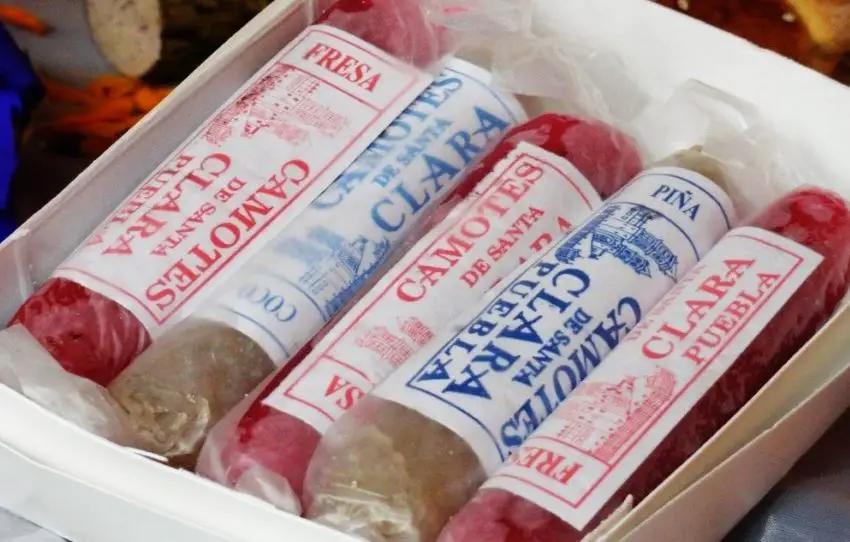
Potato pulp! It’s more delicious than it sounds, we promise. (México Secreto Guiado/Facebook)

Sweet potatoes, you ask? Yes, indeed! The sweet potato pulp is cooked in syrup until it thickens and forms a dough that could make even the most health-conscious person swoon. After a day of sunbathing, it’s coated with more syrup to create that signature white layer. These candies have a humble origin story: in Puebla’s Convent of Santa Clara, the nuns, who relied on donations, had an abundance of sweet potatoes. And thus, these sweet, glorious treats were born.

Tortitas de Santa Clara

Speaking of the Convent of Santa Clara — seriously, those nuns were dessert geniuses — let’s talk about the famous cookies. These cookies are made from wheat flour and coated with a magical glaze of egg yolks and pumpkin seeds. It’s uncertain when or how they were invented, but one thing’s for sure: they’re evidence that divine inspiration can come in the form of a cookie.

Macarrones de leche

Macarrones de leche, Mexican candy
This is also a macaron, but not like the other macaron – get it? (Correosclic)

If you’re thinking of the typical French Ladurée macarons, let me stop you right there. This is another treasure from colonial convent kitchens. These little treats only require milk, sugar, almonds and egg whites. Simply cook the milk and sugar until you get a thick, heavenly mixture, add ground almonds and whipped egg whites, shape the mixture and bake it briefly. The result? A taste of heaven on earth.

Muégano de Tehuacán

This treat is a newcomer on the scene, relatively speaking. It’s a cookie covered in piloncillo (raw sugar) sandwiched between two wafers. Created in 1905 by Flora Álvarez in Tehuacán, Puebla, this delightful treat combines the best of sugar and carbs — it’s like a perfect, sugary hug.


View this post on Instagram


A post shared by Mexico News Daily (@mexiconewsdaily)

Polvorón sevillano

The crumbly delight originates from Spain, hence the name. This recipe, brought over during the colonial period, has remained largely unchanged for centuries. These crumbly shortbread cookies are made with flour, sugar and lard. The most popular versions include almond, sesame, walnut or cinnamon. They melt in your mouth and evoke thoughts of Spain. Olé!

Cocada

Coconut was essentially the superstar of colonial desserts. Grated coconut, milk and sugar were all it took to create this iconic treat. Over the years, cocada has evolved into many variations, but the base remains the same. Whichever version you try, you’ll be asking for seconds. And thirds… no judgment here. A fun fact is that without the commercial exchange between Mexico, Spain and Asia during the 1600s in what was known as the Nao de China or Manila galleon, cocada would be unthinkable.

Obleas

And finally, we arrive at the wafer, one of the most interesting sweets in Mexican tradition. Obleas are derived from the host used in Catholic mass — yes, the one that’s called the body of Christ. Its origins lie in matzah, the flat, unleavened bread used in Jewish Passover celebrations. When this treat made its way to Mexico, of course, we had to add our special touch. We gave it color, filled it with more sweet things and sometimes even sprinkled it with seeds. Basically, if there’s a way to make it more fun, we’ve done it.

There are so many more candies that I want to mention, but I don’t want to give you a sugar rush. We’ll discuss them eventually. For now, visit the traditional candy shops that have over a hundred years of history in downtown Puebla. Which one is your favorite? Tell us in the comments.

María Meléndez is a Mexico City food blogger and influencer.

The digital nomad blues and a tale of remote work caution

11
Digital nomad problems
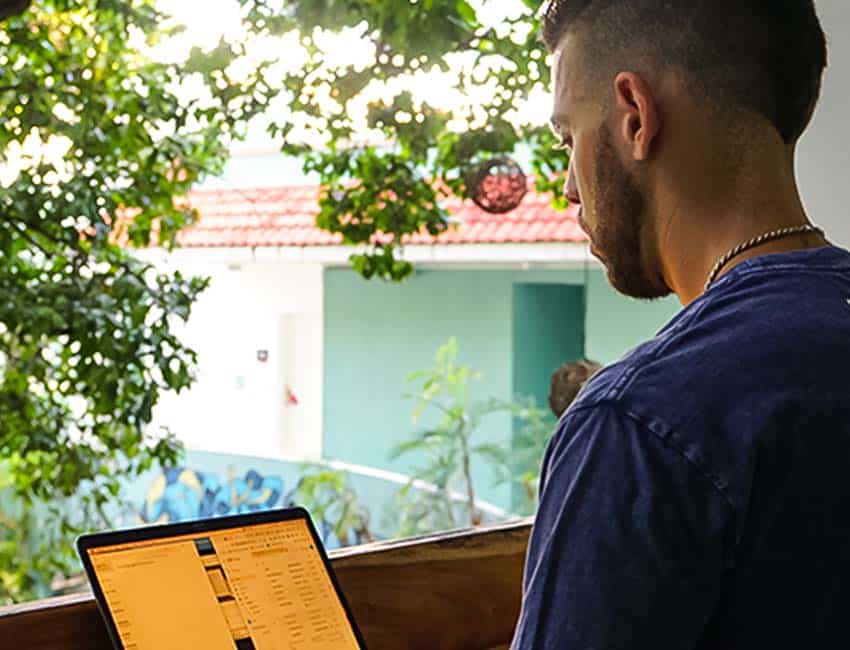
Working remotely from paradise isn't all it's cracked up to be. Well, sometimes. (Canva)

I’m typing this in Heroica, a taproom in downtown Veracruz, a beer by my side. To any observer, I look like a digital nomad living her best life. You can almost smell the  housing prices rising unsustainably around me.

Alas, it’s just a facade only. Am I really a nomad if I’ve been living in the same place for decades, since before online work was a thing? Online work became a thing once I’d been here for 10 years already. In any case, the technicalities don’t really matter.

young woman in Mexico
Sarah DeVries back when she first came to Mexico, long before her days as a digital freelancer. (Sarah DeVries)

My first jobs in Mexico were in the fields of education. For an English-speaking foreigner, that was pretty much the job you could get, after all. The first was quite exploitative. I was paid in cash, worked an awful split shift and the promised help with getting my work visa never arrived. 

Young and in love, I hardly noticed that my boyfriend and I had no furniture save a bed, a fridge and a plug-in stovetop in our tiny fifth-floor apartment. A computer we eventually bought sat on a metal chair that had been left behind by a previous tenant. We’d sit on the floor to use it, and dream of one day owning a microwave and a sofa.

The online revolution

Things have changed since then. In 2011, I got my first online job at Open English, an English-teaching platform for live classes. I was good, made good money for Mexico and moved up the contractor ladder as time went on.

digital nomad in Playa del Carmen
Remote work can often feel like a great first option for those working in Mexico – but it comes with pitfalls. (Jordan Carroll/Unsplash)

Soon, though, the company was spooked by a worker who sued for misclassification as an independent contractor when we all clearly did the work of employees, and everything good about working there disappeared. I don’t blame the person who sued, mind you; it was bound to happen sometime. 

Soon after, I got a job at an online Chinese company. We gave individual classes to Chinese children at what for them was afterschool time but for me were ungodly hours of the morning. The pay was good and the students were nice. Even without benefits, as we were also contractors, especially those of us living outside of the U.S. lived well. Eventually, things started slowing down, and I decided to jump ship before it sank. 

Like a rolling stone

No matter! I was tired of teaching anyway. Now, I would make my fortunes as a writer and translator. It was during that time I pitched to Mexico News Daily’s then-owner and began to write. This was also the period that I honed my skills as a subtitler, and for several years I made fairly good money — again, “for Mexico” and without benefits. 

Then, last year, I was elated to finally be hired as a full-time remote employee at a U.S. company where I’d worked as a freelance editor. That kind of job had long been a dream! Alas, it was not meant to last; I was let go after about nine months. By then, of course, I’d told most of my freelance clients, except for this paper, that I’d be less available. I wish I hadn’t, because by the time I contacted them again, they’d moved on. 

When the job goes away

Like any job out there, there’s no guarantee that an online job you secure will be there as long as you want it. Surprisingly, my own experience was that freelancing turned out to be more stable than my full-time W-2 job.

Since then, the landscape has been rough. Suddenly, many U.S. employers are insisting that you do the work — even if it’s online contract work — within the U.S. Why?

The main reason that companies give is that they don’t want to get sucked into messing with the tax obligations of other countries. Working virtually in one country and being subject to the tax system of another is, of course, complicated.

If you throw all the tequila into Veracruz harbor, will that get your out of taxes? Something similar worked in the 1770s, right? (Kelly Sikkema/Unsplash)

I also suspect, though, that for U.S. companies, workers in Mexico are supposed to mean reduced labor costs. If an employer has to pay someone in Mexico just as much as someone in the U.S., what’s even the point for them? 

As I wrote last week, companies are expected and encouraged to cross borders when it’s in the owners’ and shareholders’ best interests to do so. But let workers do the same, and suddenly your labor savings go out the window! Who will work as engineers for US $1000 a month if those workers can just move, virtually or physically, and get five times that? “How are we supposed to game the system if you’re gaming the system?” 

When it comes to capitalism, it’s the capitalists that benefit, after all. The tide has been turning against worker stability for quite a while now, but my perception is that it’s reaching a breaking point. The lack of stability and benefits, for everyone, is unsustainable.

Sticky ethics

Sarah DeVries recently, long after becoming a digital freelancer. (Netflix)

I struggle with admitting that I need beyond a Mexican salary to live. But I do; most  Mexicans do too, which explains many immigration patterns over the past century. We all want to live well, and we all want to provide for our families.

As I’ve discussed before, when you live in a country without the support of your birth family, money is what compensates for that lack of support. Basically, it’s “support for purchase” in the form of things like insurance.

Also, your budget adapts to what you are used to spending. Pair this with the eye-watering rise in prices all over the world, and it’s easy to see why so many people are in a tight spot.

So what’s my point in writing all of this?

It’s a cautionary tale, my friends. Save a lot, if you’re able, and have a Plan B. Having an online job does not mean you’ll get to keep an online job. Between AI, U.S. companies cracking down on the residency question and a tricky job market with lots of fake job postings, the job-searching landscape is sure rough out there. Give your own business a try, perhaps: then at least it depends on you, and not a company whose goal is to enrich and provide stability for someone else.

The bright side is that here, unlike many places in my home country, the bare minimum costs less. You won’t go hungry, and you’ll have a roof, even if it’s not the roof you want. Another silver lining? Mexicans have less of a tendency to blame a lack of individual financial achievement on your lack of gumption and go-getism. 

Sarah DeVries Sarah DeVries is a writer and translator based in Xalapa, Veracruz. She can be reached through her website, sarahedevries.substack.com.

The art of the comfort station: How Los Cabos’ courses took it up a notch

0
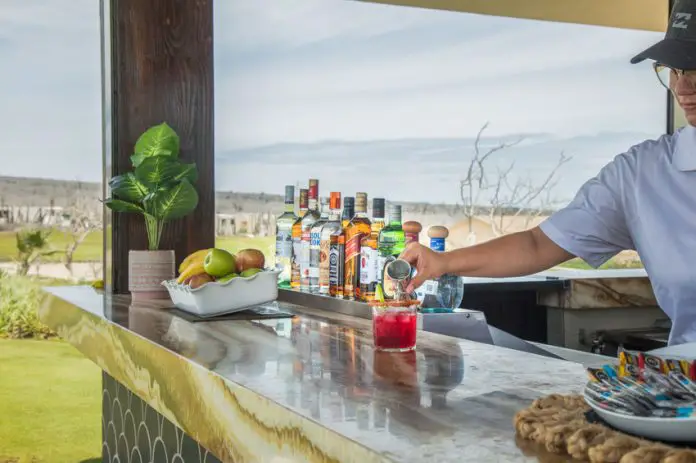
Comfort station bar at Solmar Golf Links
Comfort stations are taking golf to a new level in Los Cabos, blending architecutre, hospitality and convenience. (Solmar Golf Links)

Los Cabos’ reputation as a world-class golf destination originated with its incredible collection of courses. Since the late 1980s, Los Cabos has welcomed 18 new courses, with layouts crafted by a who’s who of legendary players and designers, from Jack Nicklaus and Tiger Woods — who together have accounted for eight, with two more in development — to Tom Fazio and Robert Trent Jones Jr.

The quality of these courses alone would place Los Cabos in the top tier of golf destinations worldwide. However, as anyone who has visited the southernmost rim of the Baja California peninsula in recent years can attest, it’s not just the golf itself that’s spectacular: it’s the entire golfing experience. Los Cabos, as Golf Pass points out, “is the only golf destination that’s gone all-in on the comfort station. Almost every course worth playing, resort or private, offers the experience.”

A comfort station at Querencia
A comfort station at Querencia. (Querencia Golf Club)

Comfort stations, of course, are an extension of the old halfway house concept, meaning a place where players can grab a quick drink and a bite after finishing the front nine and preparing to tee off on the back. However, in Los Cabos, comfort stations — plural — are likely strategically placed throughout the course, and instead of a mediocre hot dog on a wilted bun, players are more likely to find a chef cooking up freshly caught fish for tacos, or a mixologist offering the best margarita you’ve ever had. Properly designed, comfort stations aren’t meant to distract from the course but rather to elevate the entire experience to another level — to turn the memorable into the unforgettable.

Comfort stations par excellence at Querencia Golf Club

Querencia Golf Club is an excellent example of this idea. Tom Fazio’s superb 7,284-yard, par-72 layout is the unquestioned star, as it should be given that Golf Digest has declared it one of the “World’s 100 Greatest Golf Courses.” But its comfort food stations stand out in cameo roles. Originally, it had only one, Comfort Uno, accessible from the 6th and 13th holes. But as the comfort station “arms race” heated up in Los Cabos, Querencia moved Comfort Uno to make way for expanded offerings that include Comfort Dos, available from the 13th and 15th greens, and The Oasis, a comfort station-slash-restaurant at the turn.

Each is meant to provide refreshment and respite, a place to cool off after a great par — or a missed putt. The comfort stations are unstaffed and akin to a kid’s idea of a candy store, with a mix of treats and beverages golfers can enjoy in the moment or take with them for later.  The Oasis, meanwhile, is staffed and offers everything from soups and sandwiches to Mexican specialties and desserts. To avoid slowing the pace of play, taco orders can be placed while players are still on the ninth hole. These waystations inject added and often unexpected pleasures into the golfing experience. Make those shared pleasures, reflecting Querencia’s status as a private, family-friendly community.

“Querencia has always been a golf-first property and our recent enhancements and additions to our stations and offerings have boosted our members’ enjoyment of the social and family aspects of the game,” notes Seth Westfall, PGA Director of Golf at Querencia. “Family, friends, great golf and the right snack or frozen margarita make a good day great!”

Four golfers stand in front of a comfort station at Quivira
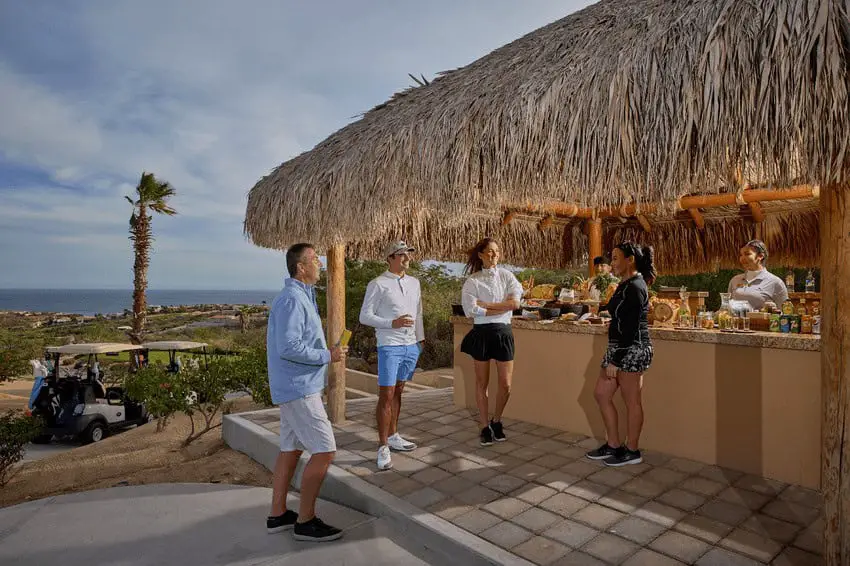
Foursome enjoys a relaxing mid-round food and drink break at Puerto Los Cabos. (Questro Golf)

Mexican dishes are menu favorites at Los Cabos’ golf comfort stations

Perhaps unsurprisingly, given Los Cabos’ location, Mexican specialties are a signature offering at many comfort stations. At Querencia, it’s tacos and burritos. At Solmar Golf Links, no less than three taco styles are offered — arrachera, Baja style fish and chicken pastor — on the Greg Norman-designed Pacific Coast layout, with samplers featuring all three as an option, plus cocktail pairings that include the mezcalita and the Cadillac margarita. 

Meanwhile, at Puerto Los Cabos (PLC) — the unique 27-hole Jack Nicklaus course encompassing three separate 9-hole layouts — an even larger selection of Mexican specialties is available. For those who tee off early, breakfast bites may include tacos with egg and a choice of chorizo or machaca, and at subsequent stops, the menu may boast burritos, empanadas, quesadillas and tacos of the chicken, cochinita pibil, pastor, shrimp and steak varieties. Yes, there will be subsequent stops. PLC has a comfort station for all three Mission, Ocean and Vista course routings, ensuring visiting golfers never have to play more than three or four holes without a bartender to make rounds of icy cocktails and a chef to cook up delicious, freshly-made comfort food fare. 

What sets Los Cabos’ comfort stations apart

All comfort station menus come with asterisks, it should be noted, as they’re frequently rotated at virtually all Los Cabos courses. For example, PLC — the only one of the three public golf courses managed by Questro Golf — rotates its menus every two weeks. If players know what to expect, the thinking goes, then the comfort stations lose one of their greatest assets: the power to surprise and delight. 

PLC’s exceptional comfort stations are something of an outlier, as most of the best examples of these amenities, generally speaking, are provided not by public courses but by private ones like El Dorado, Cove Club and Querencia, or by courses that are ostensibly private but open to guests at select resorts. The latter type of course includes Cabo del Sol, Chileno Bay, Costa Palmas, Diamante’s trio of courses, Quivira, Solmar Golf Links and Twin Dolphin. 

Los Cabos has elevated the art of the comfort station, and courses across the peninsula offer unrivalled luxury. (Querencia)

These private and “private except” courses generally have larger budgets for their comfort stations — Querencia’s is in the six figures annually — and more impressive real estate. One of the wonders of Quivira, for example, is an elevated comfort station near its sixth hole that features magnificent unobstructed views of the Pacific coastline of Cabo San Lucas all the way to Land’s End. 

The ongoing evolution of the golf comfort station

Comfort stations at Los Cabos golf courses mostly feature comfort food, along with a curated selection of brand-label liquors and accompanying cocktails, The service is outstanding and the fare filling, but, generally speaking, not particularly luxurious. Still, some believe Los Cabos might have taken the concept too far. This number includes Mike Abbott, the man Golfweek calls “the godfather of the comfort station.” Abbott has helped to develop the signature amenity at golf courses at Diamante – where he’s currently overseeing the PGA World Wide Technology Championship and comfort stations at the in-development Legacy Club – and at El Dorado and Chileno Bay.

Following El Cardonal and the 12-hole Oasis Short Course, the Legacy Club will be the third Tiger Woods-designed course at Diamante, with an exclusive membership capped at 250.  But that doesn’t mean its comfort stations will be particularly posh. Instead, Abbott wants to evoke the nostalgia of the old halfway house. “We’re going to change the profile again,” Abbott told Golfweek. “It’s going to have a creaky screen door and a greasy burger and all the great smells you associate with it.”

Chris Sands is the Cabo San Lucas local expert for the USA Today travel website 10 Best, writer of Fodor’s Los Cabos travel guidebook, and a contributor to numerous websites and publications, including Tasting Table, Marriott Bonvoy Traveler, Forbes Travel Guide, Porthole Cruise, Cabo Living and Mexico News Daily. His specialty is travel-related content and lifestyle features focused on food, wine and golf.

Finance minister meets with JPMorgan and BlackRock CEOs in New York

0
Portraits of JPMorgan CEO Jamie Dimon, Mexican Finance Minister Rogelio Ramirez and BlackRock CEO Larry Fink
The Mexican finance minister met separately with JPMorgan CEO Jamie Dimon and BlackRock executive Larry Fink this week in New York. (WEC/Cuartoscuro/Fortune Global Forum)

Finance Minister Rogelio Ramírez de la O met with two prominent American CEOs in New York on Thursday, seemingly signaling that the new federal government intends to be very proactive in seeking new investment in Mexico.

Ramírez met separately with JPMorgan CEO Jamie Dimon and BlackRock CEO Larry Fink, according to Bloomberg News, which cited unnamed people with knowledge of the meetings.

Bloomberg reported that the meetings occurred at a time when the government of new President Claudia Sheinbaum “is eyeing the change in administration as an opportunity to jumpstart investment.”

Mexico is seeking to benefit from what has been described as a “once-in-a-generation” opportunity to attract foreign investment as many companies seek to relocate from Asian countries, particularly China, for a variety of reasons including a desire to be closer to the lucrative United States market.

Despite the nearshoring trend, the level of new investment in Mexico’s foreign direct investment data is currently low. The federal government hopes that will change as the many foreign companies that have recently made investment announcements for Mexico act on their plans.

Dimon said last November that he believed that Mexico was “one of the great opportunities” for investment, and even remarked that “if you had to pick a country this might be the number one opportunity.”

JPMorgan CEO Jamie Dimon
JPMorgan CEO Jamie Dimon has expressed enthusiasmo about Mexico as an investment destination in past years. (World Economic Forum)

However, investor confidence has declined since Sheinbaum and the ruling Morena party won landslide victories in the June 2 elections, putting them in an extremely strong position to pass constitutional reforms, several of which have been approved since the new Congress commenced on Sept. 1.

Investors, the U.S. government, Mexican opposition parties and others have expressed particular concern about the government’s judicial reform, which was signed into law by former President Andrés Manuel López Obrador just before he left office last week.

The most controversial aspect of the reform is the provision allowing citizens to directly elect judges, including Supreme Court justices. Critics of the reform argue that judges sympathetic to Morena’s agenda could come to dominate the nation’s courts, effectively eliminating a vital check on government power.

For her part, Sheinbaum has asserted that investors have nothing to worry about, and will meet with representatives of 45 large companies at the U.S.-Mexico CEO Dialogue this coming Tuesday to convey that message in person.

The president will also explain to them “how the judicial reform will work,” according to Economy Minister Marcelo Ebrard, who, along with Foreign Affairs Minister Juan Ramón de la Fuente, defended the reform in an op-ed recently published in the Washington Post.

While the nature of the talks Ramírez held with Dimon and Fink is not public, it would appear likely that he sought to reassure them that Mexico remains a good place to invest.

The JPMorgan CEO said late last year that the bank he leads has “doubled or tripled” its investments in Mexico “in the last six years.”

Judicial reform protesters in Mexico City
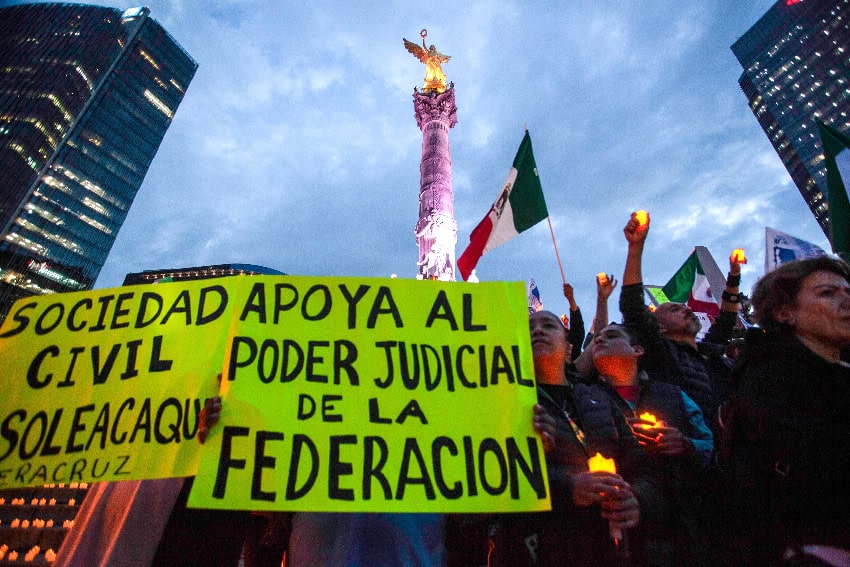
In the aftermath of recent, controversial constitutional reforms — including sweeping changes to the judicial branch — the Mexican government has sought to reassure foreign companies that Mexico is a safe investment. (Cuartoscuro)

BlackRock, a New York-based investment company, also has interests in Mexico, “where it sells products to the country’s pension funds and acquired the asset management business of Citigroup’s Citibanamex unit in 2018,” according to Bloomberg.

During the previous term of government, Fink met on several occasions with López Obrador, the main architect of the judicial reform and other constitutional bills that are causing concern for investors and potential investors.

Among those proposals is an energy reform that would ensure that the state-owned Federal Electricity Commission has majority participation (54%) in national electricity generation, and a reform that would disband a number of autonomous government agencies, giving their responsibilities to ministries or other departments that are ultimately under the control of the president.

Beyond current and proposed laws, insecurity, insufficient infrastructure and a lack of water and electricity are seen as barriers to greater foreign investment in Mexico.

On the other hand, there are various factors that make Mexico a very attractive place to invest, including its proximity to the United States, its free trade agreement with the United States and Canada, affordable labor and the presence of a young, educated workforce.

Ebrard recently said that “what Mexicans have to do is speak well of our country” in order to attract investment, while Sheinbaum, in her first speech as president, pledged to “take advantage of the trade agreement with the United States and Canada to continue promoting the relocation of companies.”

Shortly before the new government took office, Vidal Llerenas, now a deputy economy minister, said that foreign direct investment in Mexico could increase by US $3 billion to $4 billion each year during Sheinbaum’s six year term.

If that is to become a reality, confidence in Mexico from CEOs such as Dimon, Fink, Elon Musk and many others will be essential.

With reports from Bloomberg

The Ritz-Carlton brand returns to Cancún with a US $400M project

0
Governor Mara Lezama with developers at press conference
Quintana Roo Governor Mara Lezama (third from right) at a press conference on Thursday with the developers announcing the new Ritz-Carlton property in Cancún. (Mara Lezama/X)

The Ritz-Carlton Hotel Company has formalized a US $400 million investment that will see the luxury hotel chain return to Cancún after a two-year absence.

The multinational hotel company, a subsidiary of Marriott International, announced on Thursday that it has signed an agreement with investors FibraHotel and Fibra Danhos as well as venture capital fund Beyond Ventures to create a new property in the popular Caribbean beach resort.

Punta Nizuc, Cancún
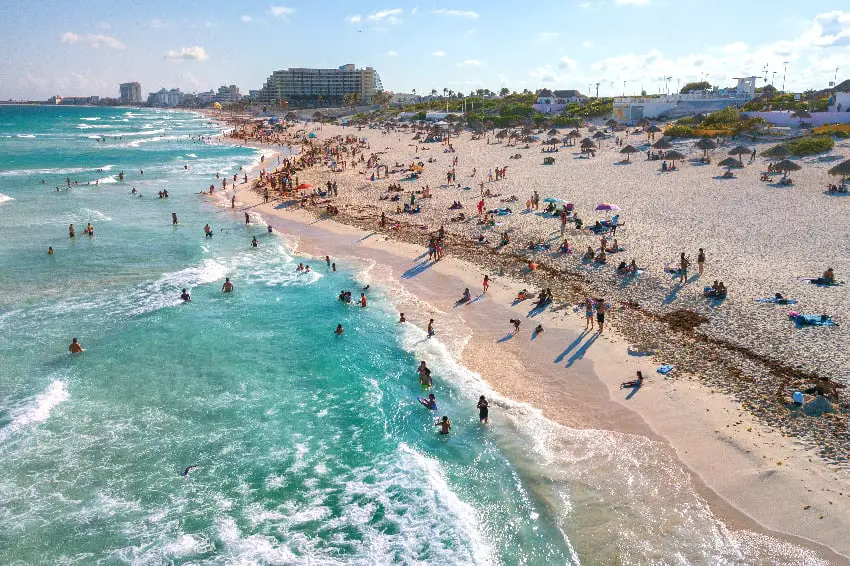
The hotel will be located in the Punta Nizuc area of Cancún. (Andrés Medina/Unsplash)

The project will include both hotel and residential suites in Punta Nizuc, an exclusive area in southern Cancún, located on the Nichupté Lagoon. According to news outlet Riviera Maya News, construction on the project is already well underway.

Quintana Roo Governor Mara Lezama lauded the good news at the press conference announcing the investment, alongside executives from the development companies and Bryan King, the president of Marriott International Latin America.

In a post to her X account, Lezama said the investment reaffirms Cancún’s leadership in attracting investors and reflects investor confidence in Quintana Roo as a tourist destination. The governor also announced the project will generate more than 2,000 direct jobs, with 700 of them permanent, “improving the well-being of thousands of families in the region.”

In a joint press statement, the development partners said that “whether for a vacation or as a second home, The Ritz-Carlton, Cancún, Punta Nizuc will redefine luxury living and hospitality in the region.”

Aiming to “shape the future of luxury hospitality and residential experiences in Cancún,” the developers said the project will feature a 131-room luxury hotel as well as 126 branded residences to be located in a LEED-certified building.

The developers told reporters they are targeting a 2027 inauguration, adding that the project will include an ocean-front pool complex, a spa, six gourmet restaurants and residential amenities, all serviced by The Ritz-Carlton.

“As one of the most important tourist destinations in Mexico and Latin America, Cancún and the Riviera Maya attract nearly 30 million visitors each year, drawn by stunning beaches, vibrant nightlife, and rich cultural experiences,” said Bryan King in the press release.

“While this property is conveniently located 10 minutes from the airport, it feels a world away.”

With reports from El Economista and Riviera Maya News

Trump promises to ‘renegotiate’ USMCA treaty if elected

16
Donald Trump stands at a microphone
How will Sheinbaum deal with Trump-style machismo? "Stand by for fireworks," writes the Financial Times. (Gage Skidmore/CC BY-SA 2.0)

Donald Trump appears determined to not just review but also renegotiate the United States-Mexico-Canada Agreement (USMCA) in 2026 if he returns to the White House next year.

In an address at the Detroit Economic Club on Thursday, the former U.S. president and Republican Party presidential candidate said that “upon taking office,” he will “formally notify Mexico and Canada of my intention to invoke the six-year renegotiation provisions of the USMCA that I put in.”

Cranes load containers off cargo ships in the Baltimore shipyard
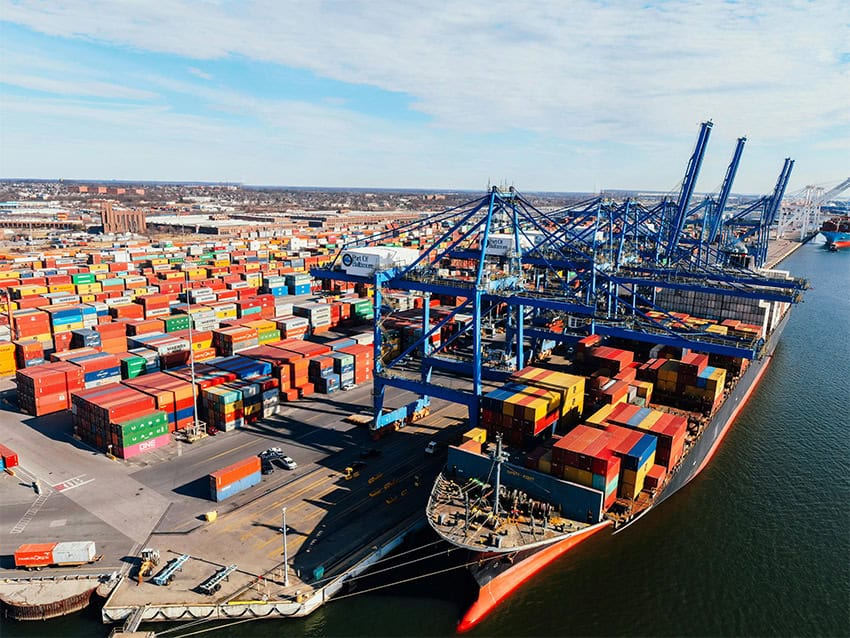
The USMCA trade pact has governed trade between Mexico, the U.S. and Canada since it replaced NAFTA in 2020. (Pexels)

The USMCA, which replaced the North American Free Trade Agreement (NAFTA) in 2020, has a clause that stipulates that a joint review of the free trade pact will take place on the sixth anniversary of its entry into force. Thus the review will commence on July 1, 2026.

According to an article published earlier this year by Rice University’s Baker Institute for Public Policy, “the conversations” between Mexican, U.S. and Canadian officials “could involve anything from minor tweaks to threats of withdrawal unless major changes are made” to the USMCA.

“… If all three parties do not confirm their desire to extend the agreement as part of the six-​year review,” Baker Institute nonresident fellow Simon Lester wrote, “they will meet again in the seventh year, and each year thereafter until the 16th year.”

“If they cannot agree by the 16th year, the agreement terminates,” Lester said.

Trump: ‘I’m going to have a lot of fun’ with the USMCA renegotiation  

In the largest city of the swing state of Michigan, Trump looked back to his 2017-21 presidency — during which the USMCA was negotiated and took effect — as well as forward to what he hopes will be a second term in the White House starting next January.

The 78-year-old former president said that the review clause in the three-way trade pact “was the hardest thing I had to get” because Mexico and Canada “didn’t want that.”

“I said, ‘Nope, I want to be able to renegotiate in six years, otherwise we’re not making the deal.’ And I got it, and it’s coming due very soon. Oh, I’m going to have a lot of fun,” he said.

Trump said he wanted to protect and grow the automotive industry in the United States, which is particularly important to the economy of Detroit.

BYD showroom with cars on display and people shopping
Trump threatened tariffs against Chinese auto companies like BYD, which plans to build a vehicle manufacturing plant in Mexico. The Chinese automaker has put those plans on hold until after the U.S. election, according to reporting by Bloomberg. (EEYAUT Waihung/Wikimedia Commons)

“I’ll also seek strong new protections against transshipment, so that China and other countries cannot smuggle their products and auto parts into the United States tax free through Mexico to the detriment of our workers and our supply chains,” he said.

“They smuggle this stuff in. They don’t pay anything. We’re going to have very strong language on that,” Trump said.

Less than four weeks before the U.S. presidential election, the ex-president also repeated his threat to impose tariffs on vehicles made by Chinese automakers in Mexico, a move that would require major changes to the USMCA.

“I will impose whatever tariffs are required — 100%, 200%, 1,000% — they’re not going to sell any cars into the United States with those plants,” Trump said.

The Republican Party nominee has previously expressed particular concern about Chinese automakers’ plans to open plants in Mexico, but he has also said that he will “put a 100% tariff on every single car coming across the Mexican border.”

Such a tariff would hit vehicles made in Mexico by U.S. automakers such as General Motors and Ford.

A red Chevy Silverado pickup truck in a productin line inside a factory
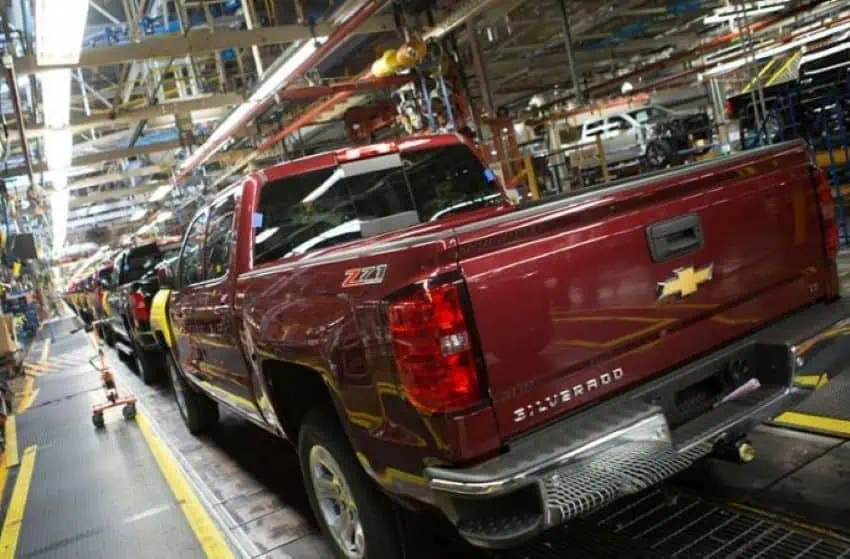
American auto manufacturers General Motors and Ford both have production plants in Mexico.(Guanajuato Puerto Interior)

Despite his stated intention to renegotiate the USMCA, Trump said that the agreement was a “great deal” already.

“I terminated NAFTA. That’s a pretty big thing. A lot of people said it would be impossible to do. I got it done, and we have a great deal now,” he said.

“What we have to do is make it much better even, and we’ll be able to do that very shortly,” Trump said.

Harris would also like to make changes to the USMCA 

The Democratic Party’s presidential candidate, Vice President Kamala Harris, pointed out on social media last month that she was “one of only 10 senators to vote against USMCA.”

“I knew it was not sufficient to protect our country and its workers. Many who voted for this deal conditioned their support on a review process, which, as president, I will use,” she wrote in a post to X on Sept. 26.

Harris, who as a senator contended that the USMCA’s environmental provisions were “insufficient,” also said on X on Sept. 26 that “American workers deserve a leader who keeps their promises and stands with workers when it matters.”

“I will bring autoworker jobs back to this country, and create an opportunity economy that strengthens manufacturing, unions, and builds prosperity and security for America’s future,” she wrote.

“… Trusting Donald Trump again is a risk America’s autoworkers cannot afford.”

Sheinbaum: The USMCA is ‘indispensable’ 

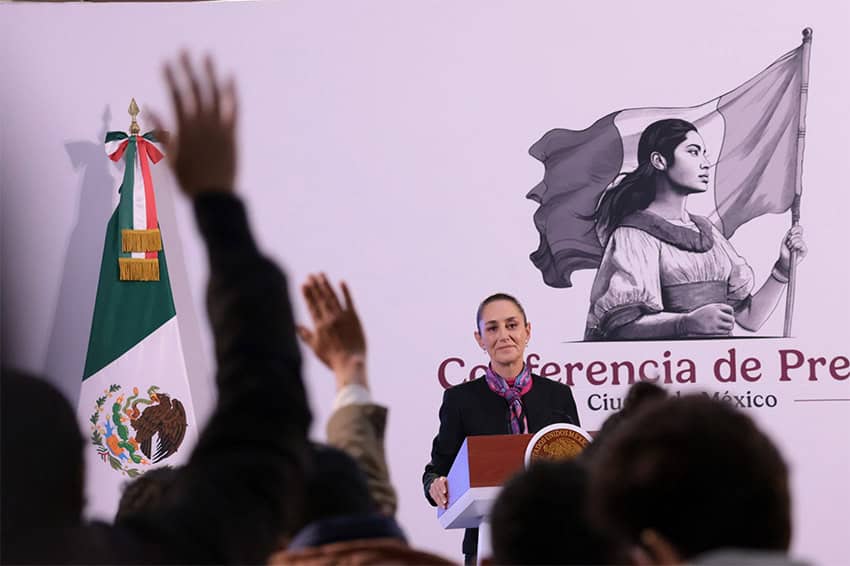
President Claudia Sheinbaum was asked at her Friday morning press conference about the impact a renegotiation of the USMCA with Trump as U.S. president will have on Mexico.

Without directly responding to that question, Sheinbaum noted that Trump referred “in particular” to products from China “that aren’t reported,” and agreed with the former U.S. president that “there are limitations in the current USMCA.”

The new president appeared to indicate that her government is prepared to review and renegotiate the trade pact with the U.S. government no matter who wins the Nov. 5 election.

“Whoever wins, whether it’s President Trump or Vice President Kamala, we’re going to come to an agreement,” Sheinbaum said.

Reporters raise their hands to ask President Sheinbaum questions at her morning press conference
President Sheinbaum acknowledged “limitations” in the current USMCA agreement and said Mexico would work with the U.S. and Canada to find an agreement when the review period opens. (Presidencia)

“… They’re campaigning now obviously so there is greater stridency in one sense or another, but they know and we know that the agreement is indispensable,” she said.

Kimberly Clausing, an economist and senior fellow at the Peterson Institute for International Economics, told Canadian media outlet Global News that while Trump and Harris are talking tough about the USMCA during the campaign period, they might think twice about their proposals if they actually become the next U.S. president.

She questioned why they would want to make changes to “an agreement that’s basically working.”

Sheinbaum noted that the economies of Mexico, the United States and Canada are highly integrated, and asserted that the three countries don’t compete with each other but rather complement each other.

She pointed out that data recently showed that the value of Mexico’s exports to the United States reached a record high in the first eight months of 2024.

“So the United States depends a lot on Mexico, we’re the main exporter [to the U.S.],” Sheinbaum said.

Earlier this week, the head of the president’s business advisory council, Altagracia Gómez Sierra, said that Mexico is “prepared” for the 2026 USMCA review.

Trudeau: ‘We’ve been here before’

At a press conference in Laos, where he attended the ASEAN Summit, Canadian Prime Minister Justin Trudeau was asked about Trump’s USMCA remarks in Detroit as well as Harris’s plan to “renegotiate the agreement.”

“We’ve been here before. We know that there is a certain amount of protectionist sentiment in the United States right now and indeed in the world,” Trudeau said.

He said that in previous trade negotiations his government had stood up for Canadian jobs and demonstrated “how integrated” the Canadian and U.S. economies are.

“And we are ready to do it again if necessary,” Trudeau said.

With reports from CTV News, Washington Examiner, Global News, El Financiero and Milenio

Avery Dennison opens US $181M plant in Querétaro

0
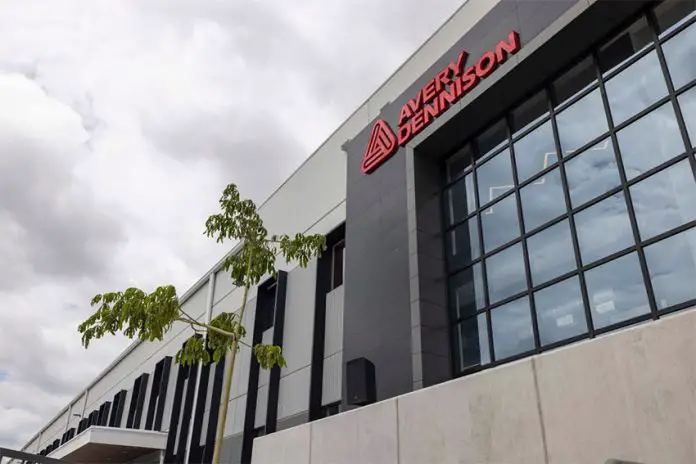
The entrance to Avery Dennison's new plant in Querétaro, showing the company name in red letters
The company inaugurated its new plant in Querétaro city this week. (Mauricio Kuri/X)

Avery Dennison Corporation, a global leader in label and tag technology, on Tuesday formally inaugurated its new US $181 million plant in Querétaro city, the largest in the Fortune 500 company’s global network.

The plant — described as “a crucial milestone by company president Francisco Melo — occupies 25,000 square meters of construction in the Finsa III industrial park in the state capital.

Production at the new plant — which will generate 938 new jobs — will not only supply Mexico, but will also be exported to North American, Central American and South American clients.

During the inauguration ceremony, Querétaro Governor Mauricio Kuri praised Avery Dennison for its confidence in the state’s infrastructure and security, and its reliance on Querétaro’s skilled labor force.

According to the newspaper Diario de Querétaro, Kuri referred to the project as a key step in Querétaro’s economic and sustainable development.

Kuri further described Avery Dennison as the type of company his state prefers to attract due to its focus on sustainability and social responsibility as outlined in its 2030 Sustainability Goals and Metrics program.

RFID tags made by Avery Dennison
One of Avery Dennison’s main products are digital RFID tags, which many companies use to track their commodities as they move through the supply chain. (Avery Dennison)

These goals include delivering innovations that advance the circular economy, reduce the environmental impact of the company’s operations and supply chain, and make a positive social impact. In addition, Avery Dennison officials say its sustainability goals will contribute to the state’s decarbonization efforts, and align with the circular economy policies promoted by Kuri’s administration.

The Ohio-based multinational describes itself as a global company focused on materials science and digital identification solutions. Avery Dennison manufactures pressure-sensitive adhesive materials, as well as apparel branding labels and tags using RFID (Radio Frequency Identification) technology.

Considered a pioneer in the development of RFID technology, with more than 1,500 patents, their smart labels allow products to be identified throughout the supply chain, reducing resource waste.

According to the company’s vice president of operations, Roger Machado, the new facility integrates automatization and artificial intelligence to make the production process smoother and more efficient. The new facility is a win for proponents of nearshoring in Querétaro, as the state seeks to become a hub of innovation and technological development.

With reports from El Economista, Cluster Industrial, Diario de Querétaro and Mexico Now

World Central Kitchen returns to Guerrero, delivering 35,000 meals a day

0
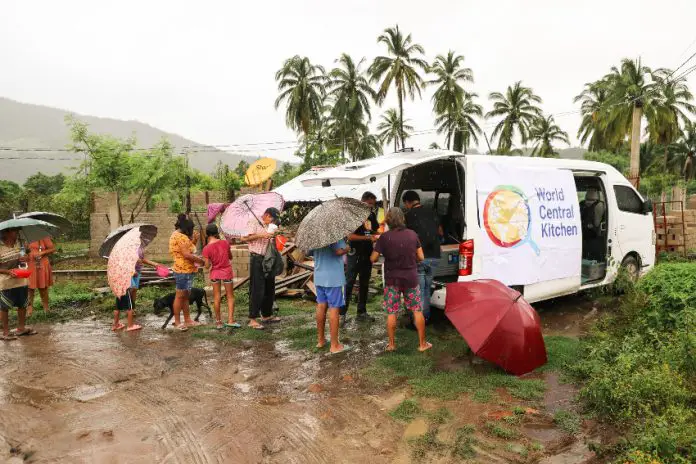
World Central Kitchen delivery van in Guerrero
Over 236,000 people have been affected by the aftermath of Hurricane John in Guerrero, and World Central Kitchen is again providing food to residents after spending two months in the area last year following Hurricane Otis. (World Central Kitchen/X)

The World Central Kitchen (WCK) global food relief organization has stepped up again to provide food for communities in the state of Guerrero, this time for those devastated by the impact of Hurricane John, nearly a year after Hurricane Otis wreaked havoc in the region.

For the past two weeks, the non-governmental organization founded by Spanish-American chef and restaurateur José Andrés has been distributing 35,000 meals per day to beleaguered Guerrero residents.

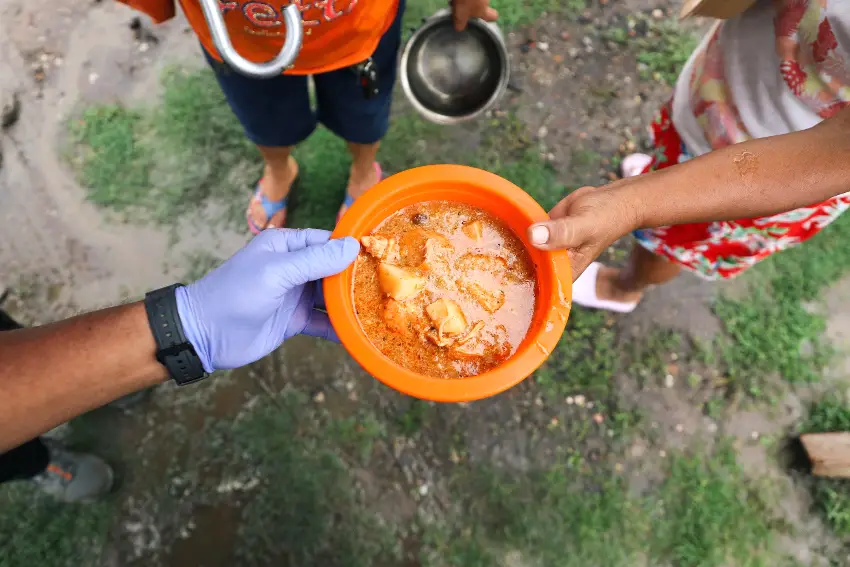
A volunteer hands a plate of food to someone
World Central Kitchen volunteers in Guerrero are almost all local, most coming from Acapulco. (World Central Kitchen/X)

The NGO has enlisted more than 24 restaurants in Acapulco, the state capital of Chilpancingo and Ometepec in the eastern area of the state to help prepare food for the impacted communities.

Juan Camilo Jiménez — WCK’s outreach manager in Mexico — told the news agency EFE that the operation is entirely local, with 98% of the volunteers hailing from Acapulco. 

“The most important thing for us is to contribute to a quick recovery,” Jiménez said. 

WCK provided similar assistance last year after Hurricane Otis, which made landfall as a Category 5 storm near Acapulco on Oct. 25, 2023. For nearly two months, the NGO supplied over 300,000 gallons of water, delivered roughly 5.3 million meals and distributed 750 tonnes of dry goods to families in the region.

A flooded street in Acapulco
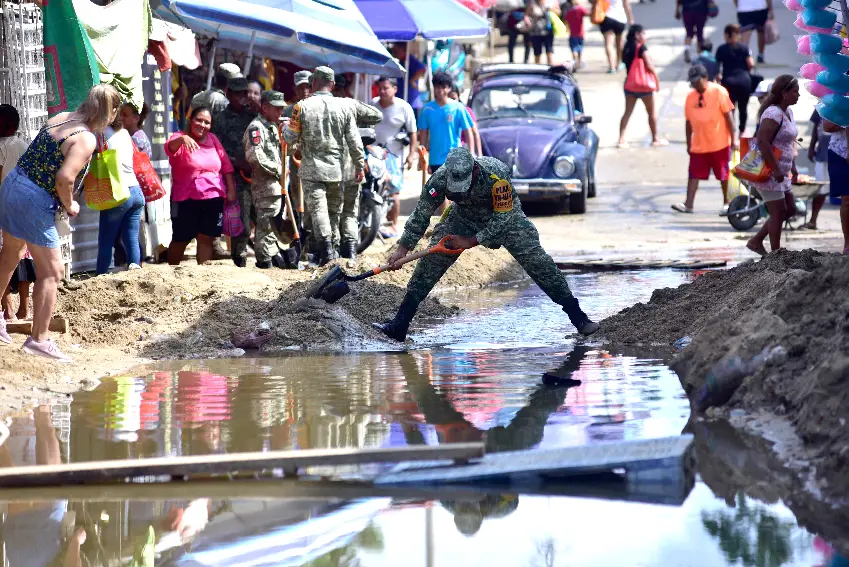
Efforts to repair the damage in Acapulco caused by Hurricane John are ongoing. (Cuartoscuro)

Otis caused at least 52 deaths and total damage was estimated to be between US $12 billion and $16 billion.

John came ashore in eastern Guerrero on Sept. 24 and lingered over the region’s coastal mountains for several days, causing deadly flooding across Guerrero and the adjacent states of Oaxaca and Michoacán.

John caused at least 29 deaths and damage assessment is ongoing — on Friday, the government reported that 236,636 people in Guerrero alone have been affected. President Claudia Sheinbaum visited Acapulco on Oct. 2, the day after her inauguration, and was besieged by local demands for aid.

WCK today has more than 200 people working in kitchens to prepare food and has 80 trucks delivering the meals across the state.

The meals — consisting of 150 grams of carbs, 150 grams of protein and 125 grams of vegetables, according to chef Diego Cruz — are being prepared at a university in Acapulco and delivered to five distribution sites in the city.

The WKC is not just concentrating its efforts in the resort town, but trying to reach more remote communities as well, such as El Embarcadero, a lakeside community northwest of Acapulco that escaped major damage from Otis last year but this year was hit hard by John.

Young volunteers in Barrio Nuevo La Laja in the mountains north of Acapulco are lending a hand, too — despite the fact that John destroyed the only bridge allowing access to the town, they are delivering meals to seniors in their community.

Pico del Monte, 70 miles southeast of Acapulco, is receiving meals from WCK by boat, since road access to the town is still difficult due to damage from the storm.

With reports from Quadratín Guerrero and EFE

Know your Mexico City neighborhood: San Miguel Chapultepec

1
Church of La Sabatina in San Miguel Chapultepec
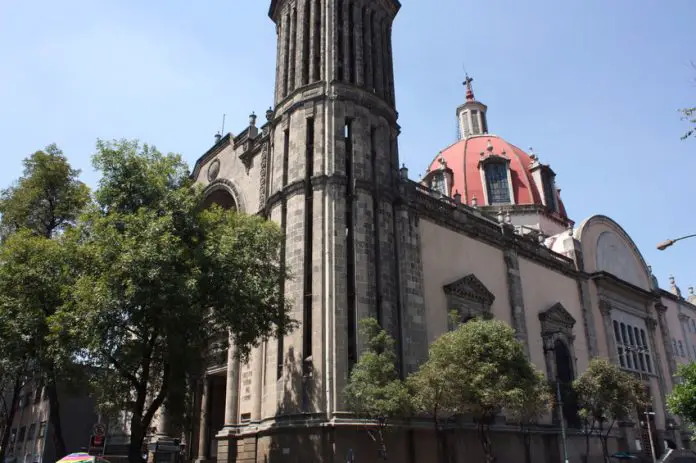
San Miguel Chapultepec is an island of green and quiet streets in the city. (eltb/CC BY-SA 2.0)

Borough: Miguel Hidalgo
Established: 1913
Location: 3.5 km southwest of the Angel de la Independencia 

Who lives here

The Greenwich Village of Mexico City, San Miguel Chapultepec is equal parts urban artsy and quiet residential. Residents are a truly eclectic mix of middle-class singles and families, with a healthy dose of international expats.

UAM Casa del Tiempo in San Miguel Chapultepec
UAM’s Casa del Tiempo stands at a main entrance to San Miguel Chapultepec and hosts frequent cultural events. (Casa del Tiempo)

Inhabitants, many in their thirties and forties, push baby carriages past neighbors as they walk their trendy dogs, en route to the organic market or the latest art gallery opening. The famous artist Rufino Tamayo once lived in San Miguel, contributing to the area’s rich cultural heritage.

A brief history of San Miguel Chapultepec

San Miguel Chapultepec has a storied history that dates back to the Mexica, who used the area as a water source for Tenochtitlan. After the Spanish conquest of central Mexico, it was established as a settlement and a chapel dedicated to St. Michael the Archangel was built. The area at this time was part of the village of Tacubaya and characterized by its fertile land and humble living. 

As Mexico City expanded through the early 20th century, San Miguel Chapultepec began to urbanize. In 1913, in response to changing social dynamics of the Mexican Revolution, San Miguel Chapultepec became an official neighborhood. As a result, its large estates could be divided and new homes constructed. The zone developed rapidly through modern times, yet a sizable chunk of its original layout still remains intact and acts are in place to protect it.

A guide to San Miguel Chapultepec today

Shady and lovely San Miguel Chapultepec is divided into Sections I and II, together forming the shape of a triangle. It’s hugged by Avenida Constituyentes to the north, Avenida Parque Lira to the west and Circuito Bicentenario and Avenida Jalisco to the east. The zone is known for a blend of historic architecture and creative culture, with galleries and museums in droves. Casa Gilardi and Kurimanzutto have put San Miguel Chapultepec on the map for art lovers, while its relatively sheltered location and community vibe make it attractive to families with young children. Not to mention, the neighborhood brushes up against Mexico City’s largest park, which is conveniently situated just across Avenida Constituyentes.

Gilardi House in Mexico City designed by Luis Barrigan
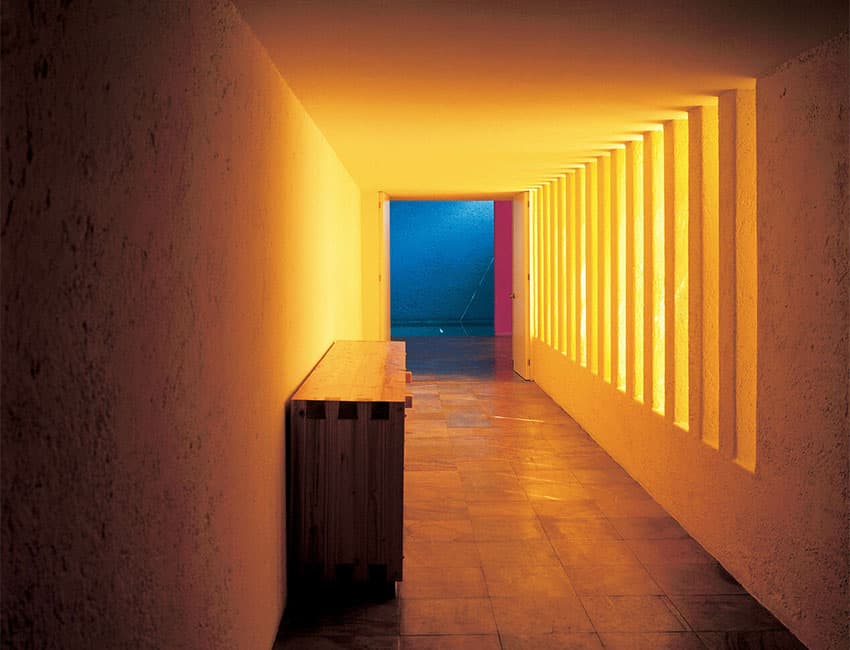
The neighborhood is home to some of the city’s most impressive architecture. (Luis Barragan Foundation)

San Miguel Chapultepec is great if you love: Sundays, because that’s what this neighborhood reminds me of. It’s lazy strolls under leafy streets, unplanned pops into art galleries, brunches with friends and friendly, blue-eyed Australian shepherds. Top it off by purchasing a new kitchen item before a late afternoon glass of wine and bed at 9 p.m. 

What to do in San Miguel Chapultepec

Galería de Arte Mexicano (GAM): Founded in 1940, the Galería de Arte Mexicano (GAM) was the first gallery in Mexico dedicated exclusively to Mexican art, showcasing works from renowned artists like Rufino Tamayo and Frida Kahlo. Today, it’s an important promoter of emerging talent.

Kurimanzutto: A contemporary art gallery known for innovative exhibitions featuring both national and international artists, as well as its fashionable crowd of onlookers. Explore its ever-changing collection of modern art showcased through diverse mediums like painting, sculpture, and large-scale installations.

Galería RGR: There’s always something catchy going on inside the whitewashed, laidback art space. Like its neighbors, RGR is focused exclusively on contemporary art. Expect to see work from an eclectic range of artists, both established and emerging, local and international.

Centro Cultural Casa Del Tiempo: Some say the Autonomous Metropolitan University’s cultural center is the most beautiful house on the block. The mansion, which was once home to the widow of Miguel Miramón — the general who rebelled against Benito Juárez and was court-martialed alongside Maximilian I — regularly hosts free events promoting humanities and the arts. Check out a film screening or creative exhibition, making sure to pop into the charming bookshop on the ground floor before you go.

Church of Nuestra Señora del Carmen: Perhaps the defining monument of San Miguel Chapultepec’s skyline, the massive-domed church locals affectionately call La Sabatina is relatively new to the scene. It was originally meant for the private garden chapel in a 19th-century home. When that home was later destroyed, the little chapel was converted to a medical dispensary, which it remains to this day. A newer, flashier La Sabatina was built in 1941 and is known for a slightly modern interior dripping in stained glass.

Parroquia de San Miguel Arcangel in San Miguel Chapultepec
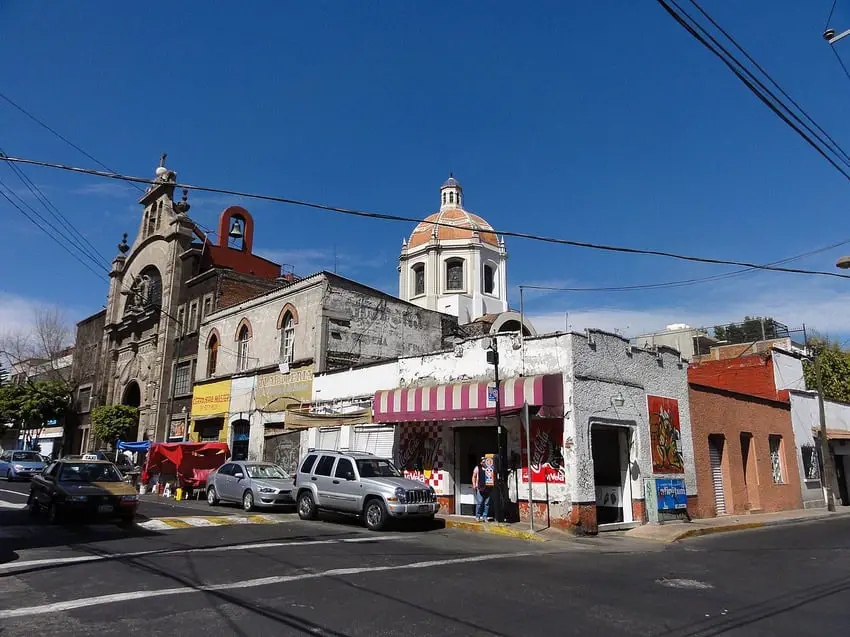
The Parroquía de San Miguel Arcangel is a centerpoint of the neighborhood. (vladimix/CC BY-SA 2.0)

Parroquia San Miguel Arcángel: Even though planning for San Miguel Chapultepec’s most important parish church started in 1891, it took decades to build, largely due to interruptions related to the Mexican Revolution. In 1948 it took the form we see today and while it’s often overlooked in favor of La Sabatina, it remains the religious core of not just the neighborhood, but also 99 churches spread throughout Miguel Hidalgo, Cuajimalpa and Cuauhtémoc.

Casa Gilardi: If a swimming pool in your living room is next on your list of home improvements, don’t break ground until you check out Luis Barragán’s design masterpiece. As expected, his flirtations with light and texture make for an inspiring house tour full of color and expertly-measured lines. Reservations are required and must be made well in advance.

Patricia Conde Galería: Photography nuts are sure to enjoy a spin through Patricia Conde’s minimalist gallery.  At present, it is the “only Mexican gallery currently promoting photographic practices” and showcases stunning photo exhibits from both international and Mexican creatives.

Pisotres: The lively shop that sits atop Le Laboratoire art gallery houses a curated selection of artisanal products and contemporary design items. Emphasis is on local craftsmanship, and its range of products reflect the neighborhood’s artistic personality. 

Las Canastas: A neighborhood like San Miguel Chapultepec wouldn’t be complete without a cozy little organic supermarket for the health-conscious. In here you can find a variety of items, from candles to soaps to pesticide-free peppers and grass-fed beef. It’s also a nice place to pick up small, but thoughtful, gifts en route to your next dinner party.

Where to eat in San Miguel Chapultepec

Marne Panadería: Does the aroma of freshly baked artisanal breads and pastries captivate you as much as me? If so, this local gem is a place to park, boasting the added benefit of dog watching while sipping on a freshly filtered Oaxacan coffee.

RGR Gallery in San Miguel Chapultepec
Galería RGR opened its doors in 2018. (Galería RGR)

Mari Gold: Mexican-Indian fusion? Yes, please. Chefs Norma Listman and Saqib Keval crafted a unique menu of seasonal scones, seekh kebabs, and pancakes with passion fruit butter that brunch enthusiasts gobble up with fervor. The space itself is small but bright, inviting both locals from around the corner and visitors from international destinations.  

Barrón: This daytime establishment is stylish and vibrant, serving up a mouthwatering fusion of regional flavors in plates that are as tasty as they are pretty. An energetic atmosphere attracts an upbeat, local crowd in search of the neighborhood’s best breakfast.

Casa Rebollar: Casa Rebollar’s colorful dishes are touted as healthy, though with pizza on the menu, I’m not so sure. Regardless, the restaurant is cute and the outdoor dining is charming, as are its Instagram-worthy culinary designs that look almost too delicate to eat.

Madereros: Both an art gallery and culinary adventure, Madereros is the place to go when only steak will do. Enjoy the creative-yet-hearty dishes that chef Mario Espinosa injects with a Mexican flair. The interior alone is worth a visit, its red walls adorned with snappy artwork combine nicely with dark wooden floors and arched brick ceilings. 

Brutal Vinata de Barrio: This just might be the perfect wine bar. The crowd is fashionable but chill, the food is creative but recognizable, and the wine list is beyond extensive. From the music to the design, everything about this place is seductive and ideal for a date or some drinks with friends.

One hidden gem

The dreamy garden patio and very Mexican decor inside The Green Park boutique hotel is a perfect floral oasis. Relax over a fresh orange juice in the morning sun after a Sunday bike ride on Paseo de la Reforma.

Bethany Platanella is a travel planner and lifestyle writer based in Mexico City. She lives for the dopamine hit that comes directly after booking a plane ticket, exploring local markets, practicing yoga and munching on fresh tortillas. Sign up to receive her Sunday Love Letters to your inbox, peruse her blog, or follow her on Instagram.

Gas leak at Pemex refinery in Deer Park, Texas kills 2, injures 13

1
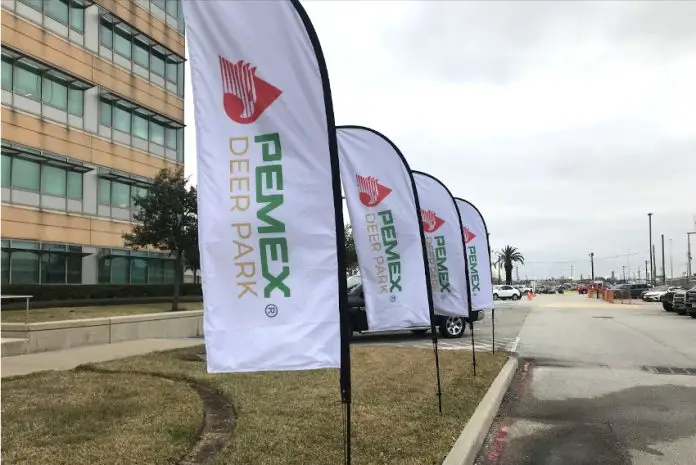
Pemex signage at Deer Park refinery
The refinery in Deer Park, Texas was acquired by Pemex in 2021. (Cuartoscuro)

A gas leak at Pemex’s refinery in Texas claimed the lives of two workers and hospitalized 13 more, the state oil company’s CEO said Friday.

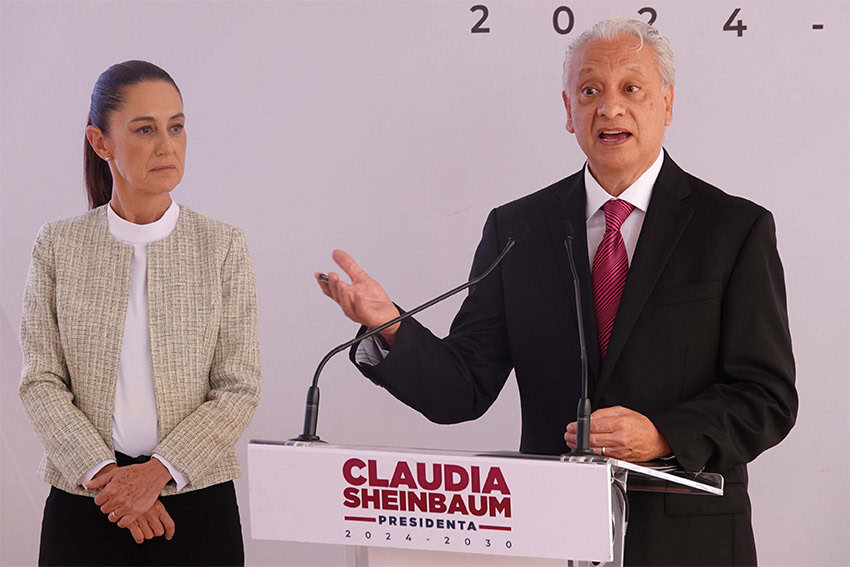
Víctor Rodríguez Padilla, the newly appointed Pemex boss, told President Claudia Sheinbaum’s press conference that a hydrogen sulfide leak occurred Thursday at the Deer Park refinery near Houston.

Future Pemex CEO Víctor Rodríguez Padilla with President-elect Claudia Sheinbaum.
Víctor Rodríguez Padilla is the newly appointed CEO of Pemex.  (Graciela López Herrera/Cuartoscuro)

“It’s completely harmful to [human] health,” he said, noting that a total of 35 people — excluding the deceased — were affected.

According to the U.S. Occupational Safety and Health Administration, hydrogen sulfide “is a colorless gas known for its pungent ‘rotten egg’ odor at low concentrations.”

“It is extremely flammable and highly toxic,” the agency says on its website, noting that the gas is used in a number of industries including oil refining and mining.

Rodríguez told reporters that the hospitalized refinery workers are in “good health,” but will remain under medical care for 24 hours as a precaution.

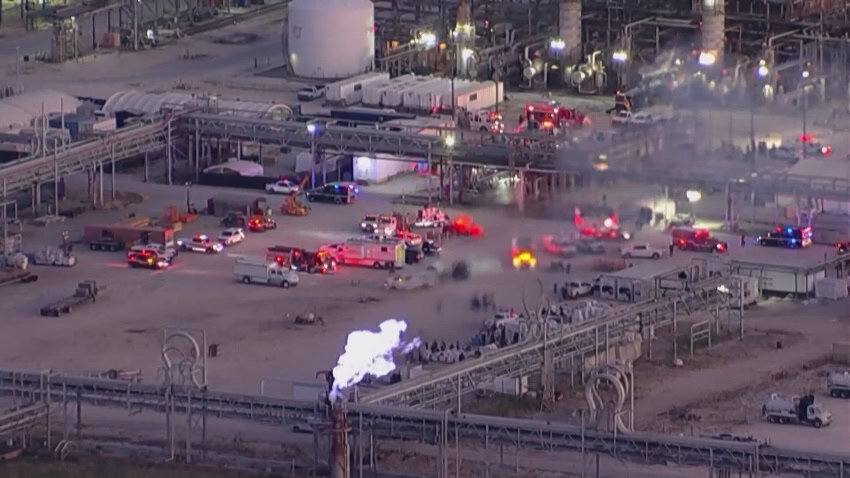
Screen capture of video footage at Deer Park refinery
Emergency services on the scene after the leak was reported at the Deer Park refinery. (Screen capture/KHOU News)

The Pemex CEO said that the bodies of the two deceased workers couldn’t be recovered until Friday morning because the part of the refinery where they died remained contaminated “for some hours.”

“After the gas dissipated we were able to go into the area. … Those who died aren’t Pemex workers,” he said, explaining that they worked for a maintenance company that provides an “external service” to the refinery.

Pemex said in a statement on Thursday that the gas leak occurred at 4:40 p.m. on Thursday in one of the refinery’s processing units.

“Emergency protocols were immediately activated,” the state company said, adding that local authorities were notified of the leak.

The City of Deer Park issued a shelter in place order to residents at 7 p.m. Thursday that was lifted at 9:30 p.m.

“The lift was issued due to air monitoring reports from Harris County Pollution Control … that have revealed no hazardous pollutants within the community,” the City of Deer Park said in a press release.

Rodríguez said that investigations are being carried out to determine the cause of the hydrogen sulfide leak.

Deer Park Refinery owned by Pemex in Texas
The refinery was acquired by Pemex in 2021 and is the company’s only refinery located outside of Mexico. (Pemex Deer Park/Facebook)

“We can’t speculate about the reasons for what happened,” he said.

Pemex acquired full control of the Deer Park refinery in 2021 after buying Shell’s 50% share in the facility for US $600 million.

Rodríguez said that the refinery was only operating at a minimal capacity after Thursday’s accident, but indicated that it was expected to ramp up production soon.

Accidents at Pemex’s refineries in Mexico are fairly common. Just last month, two workers died and another suffered burns in an explosion and fire at the company’s refinery in Salina Cruz, Oaxaca.

In February, four Pemex workers were hospitalized after sustaining injuries in an incident at the company’s refinery near Tula, Hidalgo.

With reports from López-Doriga Digital