Home Blog Page 52

Meet Yuji, the abandoned baby monkey stealing hearts at the Guadalajara Zoo

1
baby monkey at Guadalajara Zoo
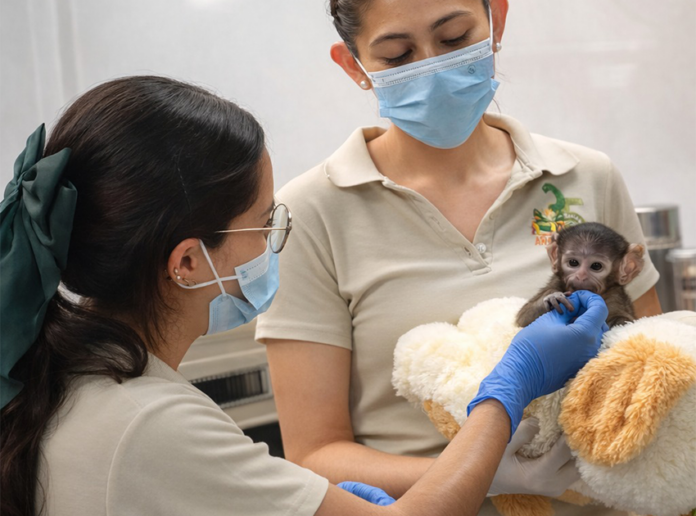
Zoo personnel saved the abandoned infant monkey's life by providing it with a controlled temperature, liquid nutrients and a substitute mother in the form of a stuffed animal toy. (Guadalajara Zoo)

Rejected by his mother and now clinging to a stuffed dog for comfort, a tiny Mexican monkey at the Guadalajara Zoo has become Mexico’s latest internet star.

The story of frail, lovable Yuji — who weighed just 443 grams, slightly less than a pound, at birth on March 3 — lands in the middle of a global wave of sympathy for rejected zoo babies.

In Japan, Punch, a baby macaque whose mother rejected him shortly after birth, went viral this year after he was photographed clinging to a stuffed orangutan — an image recreated by a Mexico City baker in the form of a concha.

Now in Washington, D.C., there is a frenzy over Linh Mai, a 10-week-old bottle-fed Asian elephant calf at the National Zoo whose own mother refused to care for her.

Meanwhile, Yuji, a six weeks old patas monkey (Erythrocebus patas), is being hand-raised at the Guadalajara Zoo’s Integral Center of Animal Medicine and Wellbeing (CIMBA) after his mother, Kamaria, a first-time parent, failed to hold or nurse him properly in the hours after birth.

Weighing just 15.6 ounces at delivery, he was moved almost immediately into an incubator kept near 35 degrees Celsius to stabilize his temperature. A team of more than a dozen veterinarians and biologists are giving him 24/7 care, including four bottles a day of fortified formula. Yuju now weighs about 673 grams (23.7 ounces).

“His mother was a first-time mother and did not have the experience needed to care for him,” said Iván Reynoso, veterinarian and manager of the zoo’s primates department. “Therefore, we decided to provide assisted rearing by doctors, veterinarians and caretakers from the primates area here at CIMBA.”

Like Punch, Yuji now rarely lets go of his plush toy, a stuffed dog that functions as a surrogate mom.

“They cling, and at that age, all the security they have comes from their mother,” Reynoso said. “So, in the absence of his mother, what we do is substitute her with a stuffed toy … This is completely natural behavior for him.”

Staff rotate the stuffed dog with a bear and a monkey to keep the toys clean, but Yuji’s routine is the same: he naps and drinks from a bottle while clinging to the plush toy inside a crate with a small hammock and ropes to encourage climbing.

He has not yet had physical contact with other patas monkeys and no date has been set for his move into the exhibit with 12 adults and three other infants. The transition will depend on weaning him off milk and getting him onto fruits and vegetables.
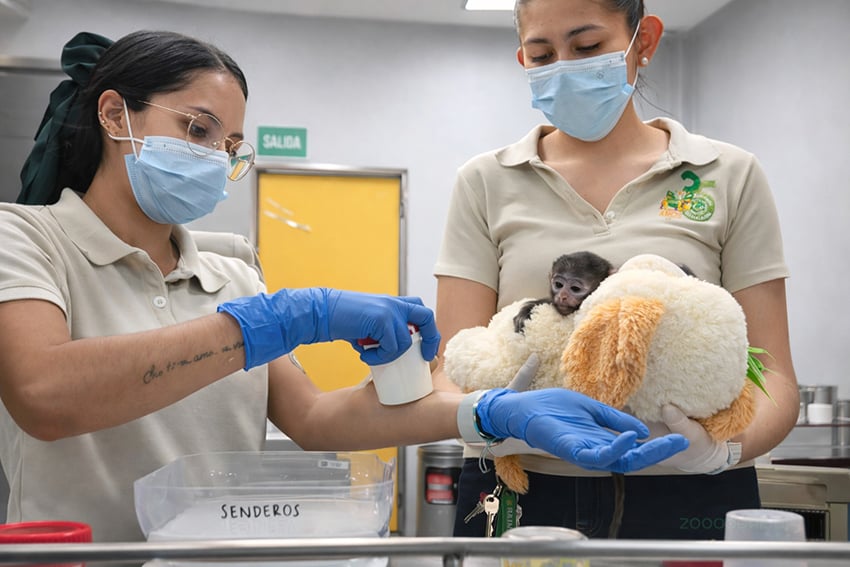
A zookeeper prepares formula as Yuji looks on from the comfort of a stuffed dog plushie. (Guadalajara Zoo)

As he approaches six months, officials will slowly take away the plush toys in preparation for his move into the main habitat.

Social media users have dubbed him “Mexican Punch” and “Punch tapatío.”

As for his given name, veterinarian Sandra Arely Franco said she chose “Yuji” because it’s a character from the Japanese manga-anime series “Jujutsu Kaisen” known for having “unbreakable strength.”

As with Punch and the baby elephant in Washington, Yuji’s story has stirred debate.

Some animal-rights advocates argue that no incubator or plush toy can replace a natural habitat and social group, and that animals have the right to live and die where they belong.

Guadalajara Zoo officials counter that intervention was a matter of survival. They even tried to get other patas mothers to “adopt” him.

“If he was not fed and comforted, it could have had negative consequences for his life,” Reynoso said.

With reports from Associated Press, TV Azteca Laguna, Dexerto and Reuters
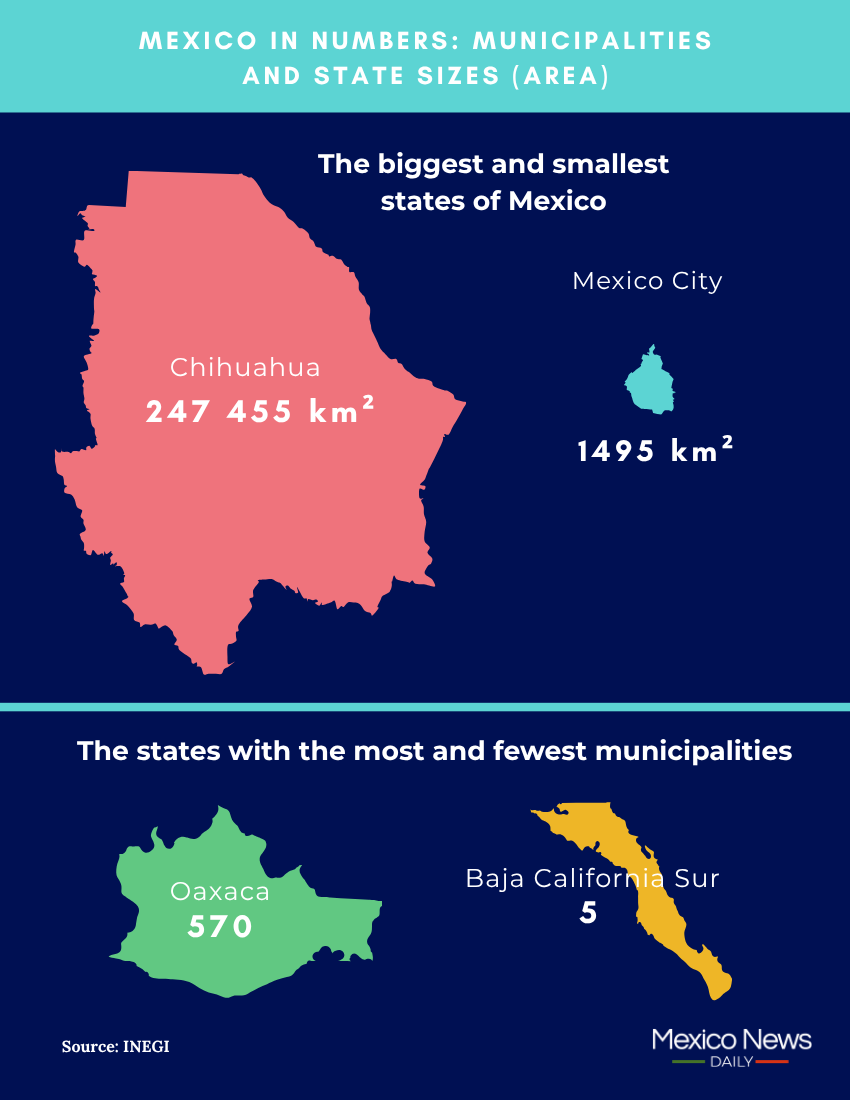
Mexico in Numbers: Mexico’s biggest and smallest states

0
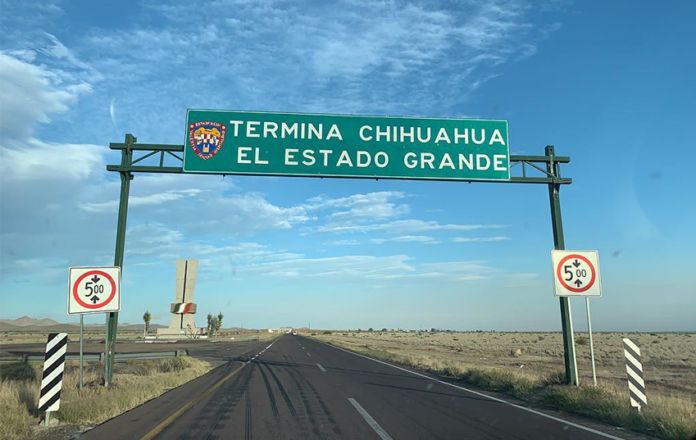
A highway sign says "Termina Chihuahua, El estado grande"
At 247,455 square kilometers, Chihuahua — Mexico's largest state by area — is bigger than the entire United Kingdom. (Asociación de Estudiantes de Chihuahua)

You likely know that Mexico has 32 federal entities — 31 states and the national capital, Mexico City, which has state-like status.

But do you know how many municipalities Mexico has?

At the end of 2024, the number was 2,478, including Mexico City’s 16 alcaldías (mayoral districts or boroughs), according to national statistics agency INEGI.

So which state has the most municipalities and which has the least? Read on to become a Mexico municipality master!

In this “Mexico in Numbers” article we also take a look at the size of Mexico’s states by area and compare some of them to different countries around the world. Did you know that Chihuahua is slightly bigger than the entire United Kingdom?

Oaxaca has 570 municipalities, Baja Sur has just 5 

As you can see in the map below, the southern state of Oaxaca easily has the most municipalities among Mexico’s 32 federal entities. Why so many? In a nutshell, the provision of Indigenous autonomy at a hyper-local level — more than 400 of the 570 municipalities are self-governing Indigenous communities where leaders govern in accordance with a traditional system known as usos y costumbres.

Among the other quirks of the distribution of municipalities in Mexico is that the country’s largest state by area, Chihuahua, only has seven more municipalities than the nation’s smallest state, Tlaxcala. Needless to say, municipalities in Chihuahua are generally much larger than those in Tlaxcala. In fact, Chihuahua’s largest municipality, Ahumada, is more than four times larger than the entire state of Tlaxcala.

The number of municipalities in Mexico is subject to change. Among those that have been created this century are San Quintín in Baja California and Puerto Morelos in Quintana Roo. México state is currently analyzing a proposal to create four additional municipalities.

Chihuahua is more than 60 times larger than Tlaxcala 

As you can see in the graphic below, Chihuahua is Mexico’s largest state by area, covering 247,455 square kilometers. Chihuahua is thus slightly bigger than the West African nation of Guinea (245,857 km²). The state’s area also exceeds the combined area of the four countries that make up the United Kingdom (244,376 km²).

Chihuahua is around 61 times larger than Tlaxcala — Mexico’s smallest state — and some 165 times bigger than Mexico City. The northern state covers around 12.5% of Mexico’s total territory of around 1.97 million square kilometers.

A graphic shows the outlines Mexico's largest and smallest states and municipalities

Here is a list of five other Mexican states and the countries that most closely match them in size.

  • Sonora, Mexico’s second largest state, is slightly smaller than Cambodia (181,035 km²) and slightly bigger than Uruguay (176,215 km²).
  • Oaxaca, Mexico’s fifth largest state, is slightly bigger than Hungary (93,025 km²).
  • Nuevo León, Mexico’s 15th largest state, is slightly smaller than Latvia (64,594 km²).
  • Hidalgo, Mexico’s 26th largest state, is slightly larger than Slovenia (20,273 km²) and slightly smaller than El Salvador (21,041 km²).
  • Mexico City, Mexico’s smallest federal entity, is almost three-quarters the size of the Indian Ocean island nation of Mauritius (2,096 km²).

Click here to see a social media post with more comparisons between Mexican states and countries that closely match them in size.

Mexico News Daily 

US trade chief to visit Mexico City for second round of USMCA talks: Thursday’s mañanera recapped

0
President Sheinbaum at her April 16 morning press conference
USMCA trade talks on Monday, Sheinbaum's attendance at a progressive meeting deemed "anti-Trump" and the resignation of a cabinet minister were topics of note at Thursday's presidential presser.(Gabriel Monroy / Presidencia)
  • 🇲🇽🇺🇸 USMCA round two incoming: U.S. Trade Representative Jamieson Greer arrives in Mexico this Sunday for a full day of bilateral trade talks on Monday, April 20. Economy Minister Marcelo Ebrard said discussions will cover tariffed goods — including aluminum, steel and vehicles — as well as rules of origin, coordinated trade policy, and import substitution to reduce North America’s dependence on non-regional goods.

  • 👩🏽 Women’s minister resigns: Citlalli Hernández stepped down as minister for women to return to Morena, the ruling party, where party president Luisa María Alcalde has asked her to help manage the ruling coalition’s increasingly strained alliance with the Labor Party and Green Party. Sheinbaum praised her effusively — “a brilliant, hardworking young woman” — and said a female replacement will be named soon.

  • 🕊️ Barcelona trip is “a meeting for peace,” not anti-Trump: Sheinbaum pushed back on characterizations of her upcoming Barcelona summit as an anti-Trump gathering. She clarified she will only attend a heads-of-state meeting with the presidents of Brazil, Colombia, and Uruguay, Spain’s prime minister, and the EU president — not a separate progressive movements forum. She acknowledged disagreements with Trump while stressing her administration’s respect for and coordination with Washington.


Why today’s mañanera matters

President Sheinbaum revealed at her Thursday morning press conference that she is losing another cabinet minister, the second this month.

Juan Ramón de la Fuente resigned as foreign affairs minister in early April, and now Citlalli Hernández is leaving her role as minister for women.

While some cabinet-level attrition is natural for an 18-month-old government, it’s a blow for Sheinbaum to lose two ministers in quick succession. Given her steadfast commitment to improving the lives of Mexican women, the president will want to appoint a successor to Hernández as soon as possible.

Also of note at today’s mañanera was the announcement that the United States’ top trade official will visit Mexico next week, and Sheinbaum’s rejection of an “anti-Trump” characterization of a meeting she will attend in Barcelona this Saturday.

US trade representative to visit Mexico 

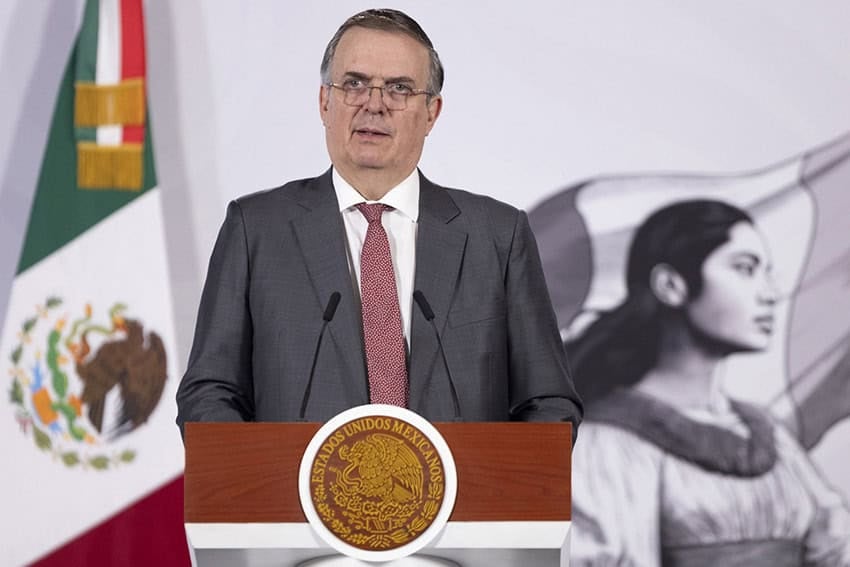
Economy Minister Marcelo Ebrard told reporters that U.S. Trade Representative Jamieson Greer will arrive in Mexico on Sunday for trade talks on Monday, April 20.

Ebrard said that the second round of USMCA review talks between Mexico and the U.S. will take place during Greer’s visit. He noted that the first round of talks took place in Washington, D.C., last month.

“We’ll be working the whole day on Monday,” Ebrard said.

He said that Mexican and U.S. officials will review the USMCA “sector by sector” across various work sessions.

Economy Minister Marcelo Ebrard
Topics on the agenda for Monday’s bilateral USMCA talks include the auto and agricultural trade, as well as rules of origin, Economy Minister Marcelo Ebrard said. (Gabriel Monroy / Presidencia)

Ebrard highlighted that the trade of aluminum, steel, vehicles and agricultural goods will be discussed. Mexican aluminum, steel and vehicles are currently subject to tariffs that were imposed by U.S. President Donald Trump last year.

Ebrard said that officials will also discuss USMCA rules of origin, “coordination of trade policies,” and import substitution strategies aimed at making North America less dependent on goods from outside the region.

Minister for women resigns 

Sheinbaum told reporters that Citlalli Hernández tendered her resignation as minister for women on Wednesday.

She said that Hernández advised her that she wanted to “help Morena,” the ruling party founded by former President Andrés Manuel López Obrador. The 35-year-old previously served as the party’s general secretary.

Sheinbaum said that she understood that Morena party President Luisa María Alcalde asked Hernández to return to the party to assist its executive committee in the management of Morena’s alliance with the Labor Party (PT) and the Green Party (PVEM).

The alliance between the three parties has been somewhat strained in recent times after the PT and PVEM declined to support Sheinbaum’s original electoral reform proposal.

Women's Minister Citlalli Hernandez speaks into a microphone
Citlalli Hernández resigned her post as Women’s Minister this week to return to work for the Morena party. (Andrea Murcia/Cuartoscuro)

Sheinbaum appeared disappointed that Hernández decided to leave the Women’s Ministry, which came into being when the president took office in October 2024.

She described the outgoing minister as “exceptional,” and said she has a very high opinion of her.

“She’s a brilliant, hardworking young woman,” Sheinbaum said, adding that as minister for women she oversaw the distribution of 25 million women’s rights pamphlets as well as constitutional changes for the benefit of women.

The president said that she will soon announce a replacement for Hernández as minister for women.

“It has to be a woman because it’s the Women’s Ministry,” Sheinbaum said.

Sheinbaum: Gathering of progressive leaders in Spain is not an ‘anti-Trump’ meeting

A reporter told Sheinbaum that the meeting she will attend in Barcelona this Saturday has been described as an “anti-Trump meeting” and asked the president her opinion on the matter.

“There are two meetings in Barcelona,” Sheinbaum responded.

“One is a meeting of progressive movements, to which representatives of different countries around the world will go. And some heads of state are going as well [but] I’m not going to participate in that meeting. [Environment Minister] Alicia Bárcena will participate,” she said.

Sheinbaum said that she will only attend a meeting with other heads of state, including the presidents of Brazil, Colombia and Uruguay and the prime minister of Spain.

“The president of the European Union will be there,” she added.

Sheinbaum went on to highlight “the respect and coordination” between her administration and the U.S. government.

“We respect President Trump as the president of the United States,” she said.

“There are decisions he takes that we consider incorrect, but that’s another thing,” Sheinbaum added.

“So it’s not an anti-Trump meeting at all,” she said. “I consider it a meeting for peace, a meeting for peace in the world, which is different.”

By Mexico News Daily chief staff writer Peter Davies (peter.davies@mexiconewsdaily.com)

Viva to connect Mexico City and Monterrey with JFK’s New Terminal One

0
A rendering shows the planned New Terminal One at New York's John F. Kennedy International Airport.
A rendering shows the planned New Terminal One at New York's John F. Kennedy International Airport. (PANYNJ)

Mexican low-cost airline Viva (formerly Viva Aerobús) will be the first Latin American airline to operate from the massive New Terminal One (NTO) at New York’s Kennedy International Airport (JFK), consolidating its strategic role in the connectivity between the two countries.

The Mexican airline has confirmed it will offer non-stop flights between JFK’s new terminal and two of Mexico’s largest metropolitan areas: Mexico City and Monterrey, Nuevo León.

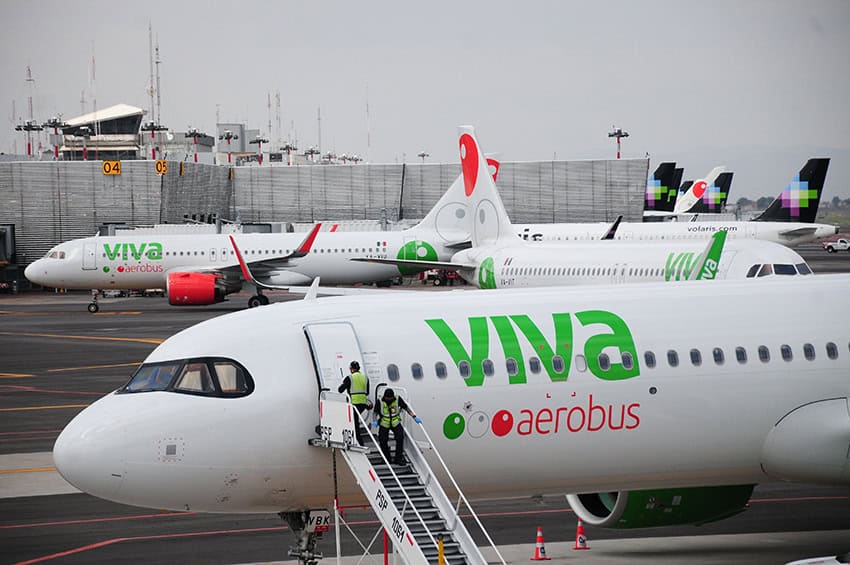
Viva Aerobus planes at the Mexico City airport with Volaris planes visible in the background
Viva is the first Latin American airline to snag a slot at JFK’s new terminal. (Daniel Augusto / Cuartoscuro.com)

In Mexico City, the route will operate from the Felipe Ángeles International Airport (AIFA), located some 35 kilometers north of the capital. In the northern city of Monterrey, it will operate from Monterrey International Airport.

With this move, Viva joins other international airlines with confirmed operations from the brand-new terminal, including Air France, KLM, Korean Air, Turkish Airlines, Qatar Airways, Air China and Ethiopian Airlines, among others.

Currently, Viva operates non-stop flights between JFK’s current Terminal 1 and Mexico City  International Airport, Monterrey, Guadalajara and AIFA. So far, the flights planned for the NTO only include AIFA and Monterrey.

CEO of Viva Juan Carlos Zuazua celebrated the new partnership, as it will offer Viva’s low fares and passenger-centric service to more travelers.

“Our alliance reflects a shared commitment to customer service and efficiency,” Zauzua said.

Operating from NTO gives Viva access to a terminal with better infrastructure and operational reliability, which can translate into fewer delays and a better passenger experience. Furthermore, it positions the Mexican carrier as a gateway to Latin America from JFK.

Encompassing 2.6 million square feet of passenger check-in zones, security checkpoints, baggage-claim areas, restaurants, duty-free shops, and boarding gates, NTO will sit at the existing site of JFK’s current Terminal 1 and the demolished Terminals 2 and 3. The project will be inaugurated in phases starting this year and will be the largest terminal at JFK once completed in 2030.

With reports from Recommend and A21

MND Local: A new pier, flood preparations and worrying tourism data from Puerto Vallarta

1
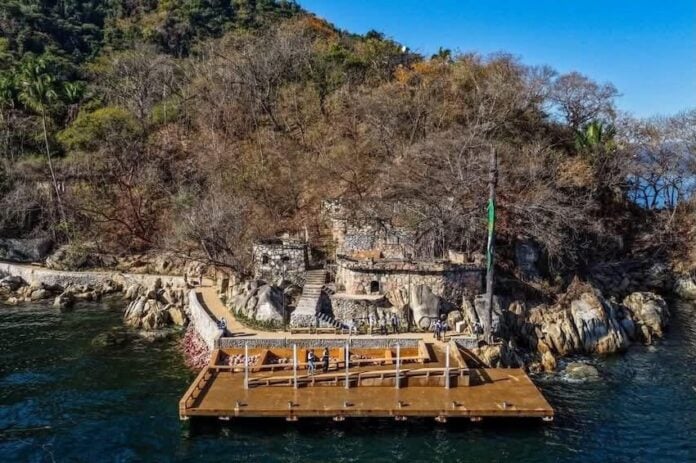
The new Mismaloya pier and boardwalk (Government of Puerto Vallarta

There are some exciting new attractions in Puerto Vallarta this week, but that doesn’t mean that there isn’t also some concerning news for the tourist industry.

Mismaloya pier opens to the public

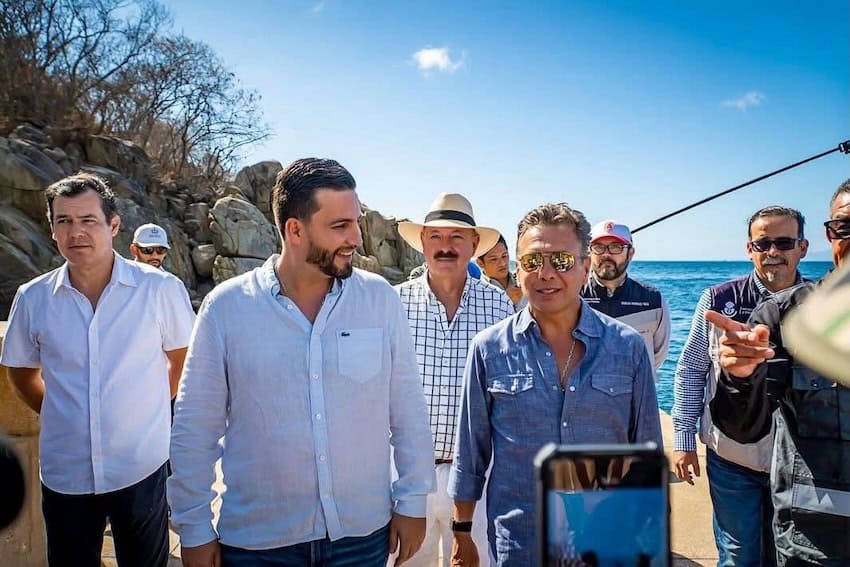
A major infrastructure project has been completed in southern Puerto Vallarta with the opening of the Mismaloya Pier. The inauguration was led by Jalisco Governor Pablo Lemus Navarro and Puerto Vallarta Mayor Luis Ernesto Munguía González, marking an important step forward for regional tourism and transportation.

The new pier forms part of the broader Bay of Banderas “nautical ladder,” an initiative designed to improve sea-based connections between the area’s southern beaches. By enhancing accessibility, the project is expected to create fresh opportunities for local businesses, including tour operators, boat services and hospitality providers that depend on visitor flow.

Puerto Vallarta mayor Luis Ernesto Munguía González (front left) and Jalisco Governor Pablo Lemus Navarro (front right) inspector the site of the new pier. (Government of Puerto Vallarta)

In addition to its transportation function, the development includes a scenic linear park along the waterfront. This public space offers both residents and visitors a place to walk, relax, and enjoy the coastal setting. The combination of improved infrastructure and recreational space reflects a broader effort to balance tourism growth with community well-being.

ACTIVALL 2026 to promote healthy living

Puerto Vallarta is once again hosting ACTIVALL 2026, a citywide initiative encouraging people to embrace a more active lifestyle. Running through April 18, the program offers a variety of free physical activities designed to get participants moving and engaged.

Events are being held across multiple locations, including schools, government buildings and open public spaces, making it easy for people of all ages to join in.

The initiative focuses on promoting health and wellness through accessible exercise options like group workouts, guided routines, or recreational activities. ACTIVALL provides opportunities for individuals and families to incorporate movement into their daily lives. By bringing these activities directly into the community, organizers hope to remove common barriers to exercise, such as cost or limited access to facilities.

Puerto Vallarta prepares for rainy season

Puerto Vallarta is preparing for the upcoming rainy season by cleaning and improving its drainage systems across the city. Under the direction of Mayor Munguía, crews are working to clear storm drains, canals, and waterways so rainwater can move freely and reduce the risk of flooding in streets and neighborhoods when heavy rains arrive.

Led by the Public Works and Infrastructure office, with support from SEAPAL Vallarta, work is focused on areas that often have drainage problems, including Ixtapa, Las Juntas, and Portales. Crews are also improving key canals and routes like the Luis Donaldo Colosio bypass and parts of the Calvario district, where large amounts of water pass during storms.

The city is also taking steps to keep transportation running smoothly during the rainy season. Crews are maintaining and leveling secondary roads which are often used when main routes are affected by weather. Officials are meeting with residents across the city to identify problem areas.

Sharp drop in air travel raises concerns

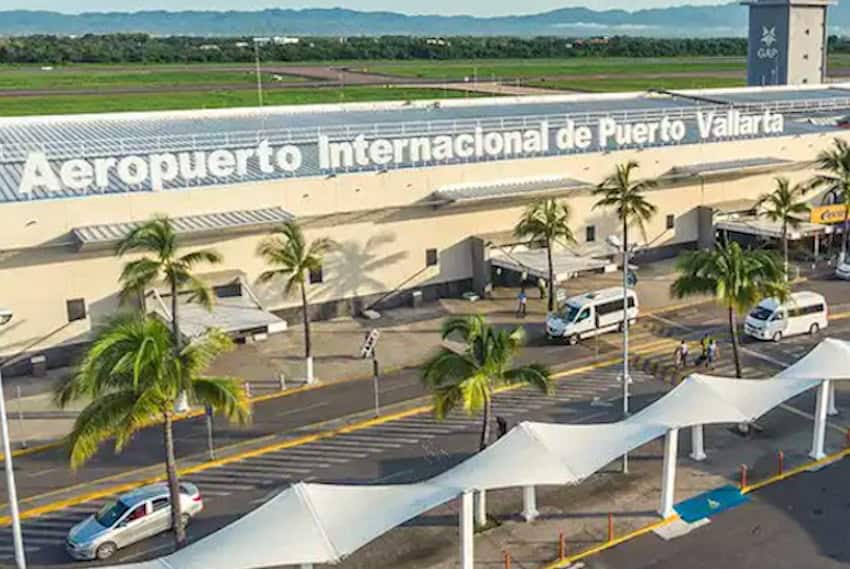
PV airport
Puerto Vallarta’s usually busy airport saw an almost 25% drop in passengers in March. (@diariovallarta/on X)

Recent figures from Puerto Vallarta airport operators Grupo Aeroportuario del Pacífico reveal a significant downturn in air travel to Puerto Vallarta in March, highlighting a challenging period for the destination’s tourism sector. Across the company’s network, passenger traffic decreased by 8.9%, but Puerto Vallarta saw a much larger drop of 24.4%.

The most notable factor behind this decline was a substantial reduction in international arrivals, which are crucial to the area’s tourism-driven economy. International passenger numbers fell by over 30%, representing a major loss in visitor volume. Domestic travel also dipped, though at a more moderate rate.

In total, the airport handled roughly 576,600 tourists March, a significant decrease from the previous year’s figures. This represents a loss of more than 186,000 tourists in just one month. The sharp decline raises concerns about shifting travel patterns and potential economic impacts, as Puerto Vallarta relies heavily on consistent visitor inflows to support local businesses and employment.

Charlotte Smith is a writer and journalist based in Mexico. Her work focuses on travel, politics, and community. You can follow along with her travel stories at www.salsaandserendipity.com.

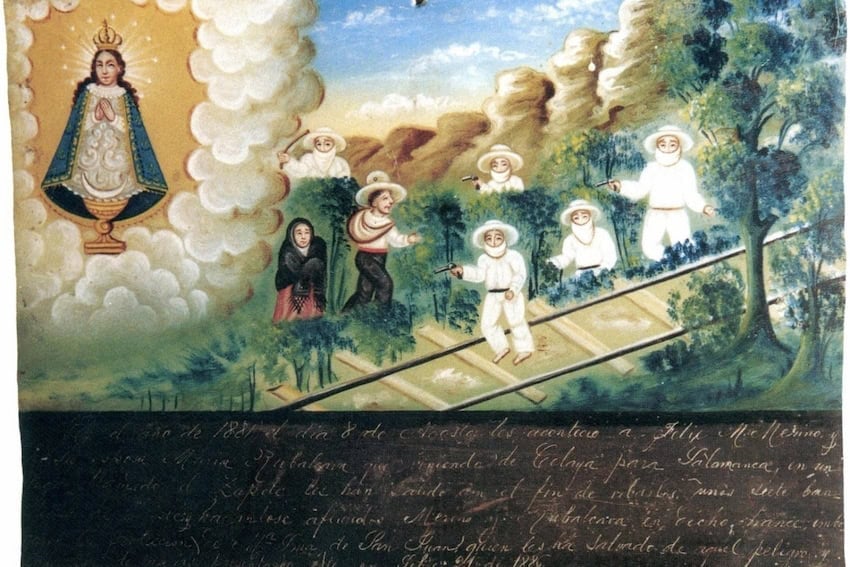
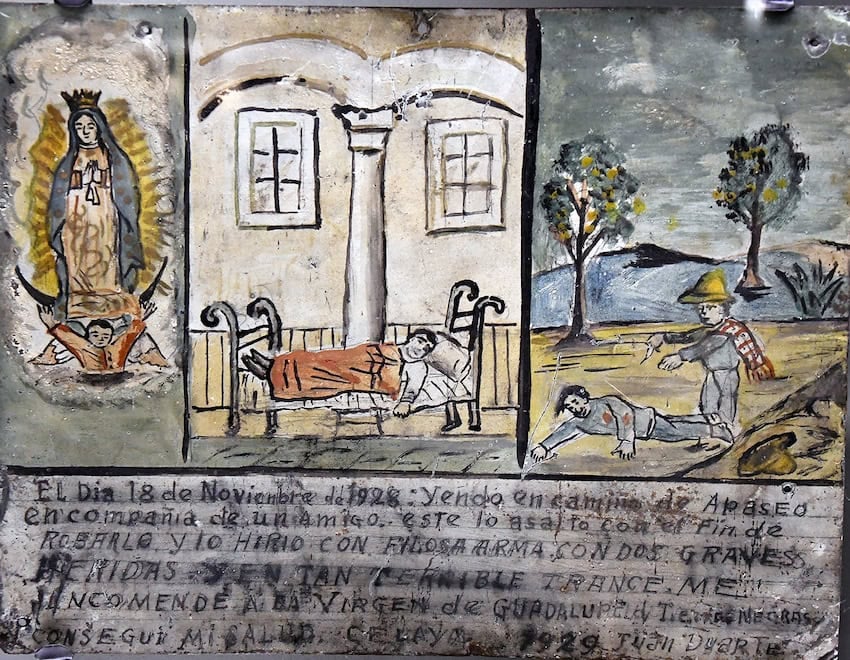
Exvotos, the quirky Mexican way to obtain miracles

6
exvotos in Mexico
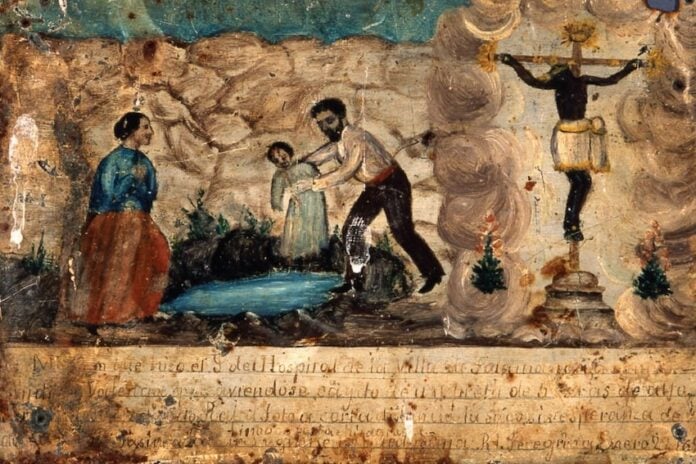
The deity to whom the exvoto offering is dedicated is usually depicted above, enveloped in light, clouds or cherubim. (Secretaría de Cultura/Museo Nacional de las Culturas del Mundo)

It is not an understatement that Mexicans like to party — and we’ve loved to make our saints and holidays the perfect excuse to let loose completely. The aftermath is what we’re not so happy about, naturally.

However, throughout centuries of intense Catholic holidays (and extensive hangovers), we have learned to establish almost transactional relationships with our deities — whether we are practicing Catholics or not. Enter Mexican exvotos, the quirky way to thank all the saints and God for fixing our greatest sorrows.

What exactly are exvotos?

exvotos in Mexico
In the form of tiny folk paintings, Mexican exvotos are a way of thanking our saints and deities for cutting us some slack. (OpenEdition Books)

As we’ve stated before, Mexicans fear God. It’s not as if we’re afraid of an almighty entity. On the contrary, as Bethlehem College and Seminary scholar John Piper explained, this implies “a sense of awe and respect for the Christian God”, their saints and the Virgin. What does this have to do with exvotos, exactly?

To understand this practice better, Mexican colonial art specialist Maria Montenegro spoke with MND. “Exvotos in Mexico are offerings given to a deity.” In the form of “small oil paintings,” explains the specialist, the practice can be traced to 16th-century Italy. However, it arrived in present-day Mexico with the Spanish invasion of the Americas.

Translated from Latin as ex votos, after a vow, per the Ministry of Culture, they were intended to thank a greater Catholic entity for its grace or a miracle. In the form of little paintings, Mexican exvotos are meant to tell the story of a miracle. It served wonders to the colonial friars, who were entrusted with the spiritual conquest of the native inhabitants. Unlike other artistic expressions in Mexico, this one is eminently Christian: a testament to the relationship of the Catholic faithful with God, Mary or a saint.

At that time, says Maira, “it was a very expensive practice, which only very wealthy families or churches could afford.” You can still find exvotos exhibited in their original prayer spaces in some churches in Mexico City’s Centro Histórico, and some wonderful examples at MUNAL’s historical collection.

Exvotos, the sacred bond between the people and their deities

Unlike the typical Baroque altarpieces of the Bajío region, which depict biblical passages with gold-plated statues, Mexican exvotos are intended to narrate passages from everyday life. Much of this practice, Montenegro explains, “arose from everyday life: from people going through difficult situations, illnesses and accidents, and in some way thanking God for having survived.”

Now, what distinguishes a Mexican exvoto? “If we are talking about the pictorial phenomenon of the 19th century,” says the specialist, the classic image is represented in “a small painting format, which has a graphic part and a textual part.”

Exvotos Mexican paintings
Mexican exvotos are intended to depict our relationship with our deities in everyday life. (Secretaría de Cultura/Museo Nacional de las Culturas del Mundo)

In the image part, Montenegro explains, “what happened is usually depicted.” For example, if there was a car accident, the scene is depicted on the street; if someone was ill, they are shown in bed, and so on. “In the corner, the sacred figure being thanked is painted, which could be God or the Virgin of Guadalupe.” Finally, at the bottom, there is a panel where “the miracle is narrated in text.”

Faith in popular culture

“It wasn’t until the Independence movement in the 19th century,” says the art historian, “that making these small paintings that narrated miracles or situations for which people thanked God became popular.” For this reason, the Ministry of Culture describes this artistic expression as “the materialization of faith in popular culture.”

Although the practice is at least 200 years old, ex voto production in Mexico has not stopped. Montenegro refers to the Museum of the Basilica of Guadalupe, where a vast collection of centuries-old pieces is preserved, created with the intention of making this type of offering to deities, Catholic or otherwise. “There are contemporary figurines of Peter Pan and Pikachu,” explains the art historian, “which were surely left by children: it doesn’t necessarily have to be the painting format that narrates a miracle.”

Are exvotos painted nowadays in Mexico?

And as is often the case in Mexico, the exvotos are imbued with a playful and celebratory spirit. They often carry a mocking and ironic undertone. And yes, exvotos are still crafted today in Mexico — the format has changed, though.

Montenegro points out that an exvoto can be any object. Strictly speaking, it is any offering made to a religious figure. “What really matters,” the specialist notes, “is the intention with which the person leaves the object in the church.” It is common to leave toys for the Niñopa, a sacred baby Jesus in Xochimilco, for example. Following Montenegro’s definition, those could very well be exvotos, as well.

Today, the specialist acknowledges, the original little-painting format is no longer as popular as it was in 19th-century Mexico. “Probably,” says Montenegro, “because the relationship with spirituality and Christianity is different.” However, “It is very human to seek a connection with the divine and to give thanks for what it gives us,” she concludes.

Andrea Fischer contributes to the features desk at Mexico News Daily. She has edited and written for National Geographic en Español and Muy Interesante México, and continues to be an advocate for anything that screams science. Or yoga. Or both.

Time magazine names President Sheinbaum to its ‘most influential’ list for the second straight year

2
Sheinbaum
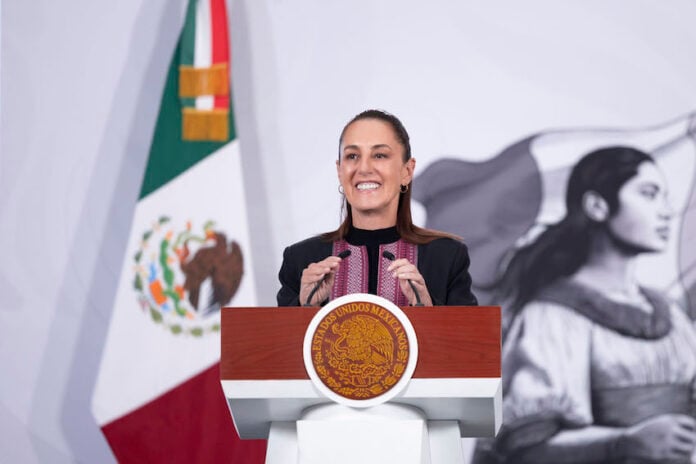
The text accompanying President Sheinbaum's "most influential" deisignation, written by Mexico-based British journalist Ioan Grillo, praised her non-confrontational style as a "lesson in diplomacy" and "a success story for mixing populism with pragmatism." (Juan Carlos Buenrostro/Presidencia)

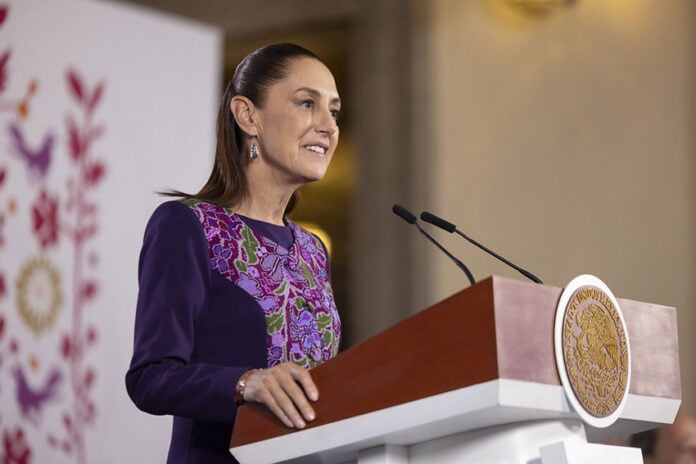
President Claudia Sheinbaum is among “the 100 most influential people of 2026,” according to Time magazine.

It is the second consecutive year that Mexico’s first female president appears on Time’s annual list of the year’s “most influential people.”

Sheinbaum
Mexican Senator Imelda Castro assembled this Facebook post to recognize President Sheinbaum’s repeat inclusion on Time magazine’s “100 Most Influential” list. (Facebook)

In 2026, Sheinbaum joins leaders such as U.S. President Donald Trump and Japanese Prime Minister Sanae Takaichi, as well as various artists, pioneers, titans, icons and innovators, on the Time list, which was published on Wednesday.

Mexico-based journalist Ioan Grillo penned the profile of the 63-year-old leader for Time’s annual list.

“Mexican President Claudia Sheinbaum began her first full year in office with pressure from all sides,” he wrote.

“Donald Trump, then the U.S. President-elect, had threatened to slap tariffs on Mexico and launch American military strikes into its territory. Violent gangsters ran fentanyl and human smuggling over the Rio Grande. And her domestic critics claimed she would be overshadowed by her crusading predecessor, Andrés Manuel López Obrador.”

Grillo wrote that Sheinbaum’s “response to the onslaught was a lesson in diplomacy.”

“She hit cartels hard, raiding labs, transferring bosses into U.S. custody, and taking down the kingpin ‘El Mencho,’ helping to stave off more aggressive American intervention,” he wrote.

“She spoke coolly in defense of Mexican sovereignty while avoiding confrontation,” Grillo added.

He wrote that Sheinbaum’s “wins made her one of the most popular leaders in the region and a success story for mixing populism with pragmatism.”

“Yet with Mexico’s economy sluggish, crime still critical, and tens of thousands of disappeared still missing, it may be an uphill battle to turn her strong start into a lasting legacy,” Grillo opined.

Sheinbaum is the only Mexican on Time’s list of “the 100 most influential people of 2026,” whereas in 2025 she was joined by the Toluca-born actor Diego Luna.

Among the president’s companions on this year’s list are the singers Luke Combs and Jennnie, the actors Claire Danes and Benicio del Toro, labor leader and activist Dolores Huerta, YouTuber MrBeast, fashion designer Ralph Lauren, pop star and fashion designer Victoria Beckham, Pope Leo XIV, Canadian Prime Minister Mark Carney, Chinese President Xi Jinping and Peruvian activist Mari Luz Canaquiri Murayari.

AMLO and Salma Hayek among Time’s ‘100 most influential people’ in previous years

A number of Mexicans have been included on Time’s “100 most influential people” lists in previous years.

They include former president López Obrador (AMLO), who appeared on the list in 2019, and Salma Hayek, a telenovela star turned Hollywood actress and producer, who was one of Time’s “100 most influential people” in 2023.

Among the other Mexicans who have made Time’s annual “100 most influential people” list are:

Mexico News Daily 

All of Latin America has fallen far behind on its 2030 Sustainable Development Goals

0
Santiago meeting
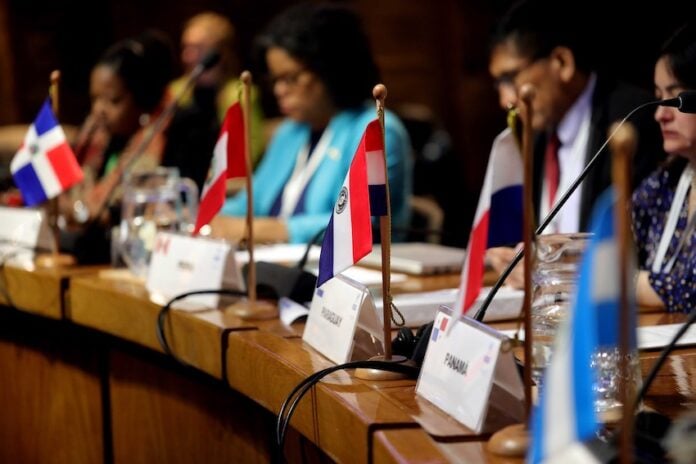
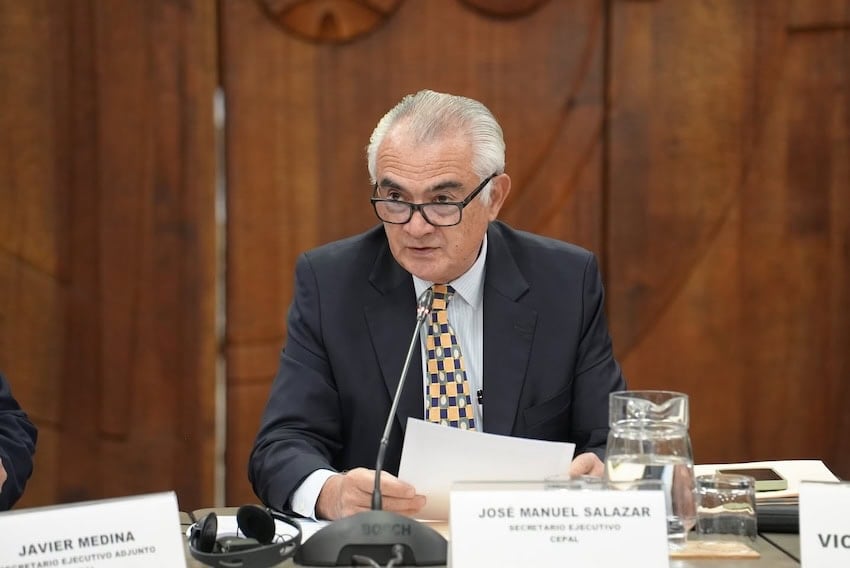
An ECLAC report released at a forum in Santiago, Chile, attended by Latin American and Caribbean nations revealed that the region is falling far short of meeting its Sustainable Development Goals. (ECLAC)

Delegates from all Latin American nations got some sobering news as they gathered in Santiago, Chile, this week to assess the region’s progress toward achieving sustainable development. 

According to the most recent report from the Economic Commission for Latin America and the Caribbean (ECLAC), no part of the region is remotely close to being on pace to achieve sustainable development goals set for 2030, and many are actually losing ground.

Salazar of ECLAC
ECLAC Executive Secretary José Manuel Salazar-Xirinachs urged nations attending the Forum of the Countries of Latin America and the Caribbean on Sustainable Development to renew their efforts to achieve sustainability standards despite falling short of the 2030 goals. (José Manuel Salazar-Xirinachs/Facebook)

More than a decade ago, United Nations-generated goals were adopted, setting precise targets in such areas as clean water, sanitation, affordable clean energy and industry infrastructure, among many others. With four years to go, the sub-region of South America is on pace to meet only 19% of its goals, which is a percentage point higher than the 18% of the sub-region Mexico shares with Central America. Lagging behind is the Caribbean at 13%.

More disturbingly, the report found that the region as a whole is making negative progress on 39% of the targets — that is, it is further away from meeting them than it was a year ago.

ECLAC cited the new era of geopolitical uncertainty and fragmentation as a major challenge to achieving the targets. 

Its executive secretary, José Manuel Salazar-Xirinachs, blamed both external and domestic factors, citing specifically the deterioration of institutional capacities, low priority given to some of the goals, inadequate financing, limited fiscal space, ongoing debt burdens and,  especially, low economic growth in various countries of the region. 

Forum leaders tried to prevent pessimism from derailing their campaign, essentially adopting the approach that nobody said this would be easy. The ultimate objective, Salazar-Xirinachs emphasized, is worth extra effort.

“The 2030 Agenda is, in the end, an agenda for transforming societies in order to achieve shared human aspirations: to live better, live in peace, live in a healthy environment, live free of injustice and excessive inequalities,” he told the gathering. “This is not the time to throw in the towel, but rather to roll up our sleeves and keep working.”

With reports from La Jornada and Mexico Business News

A golden eagle nest, with a breeding pair of Mexico’s national bird, is discovered in Coahuila

1
golden eagle
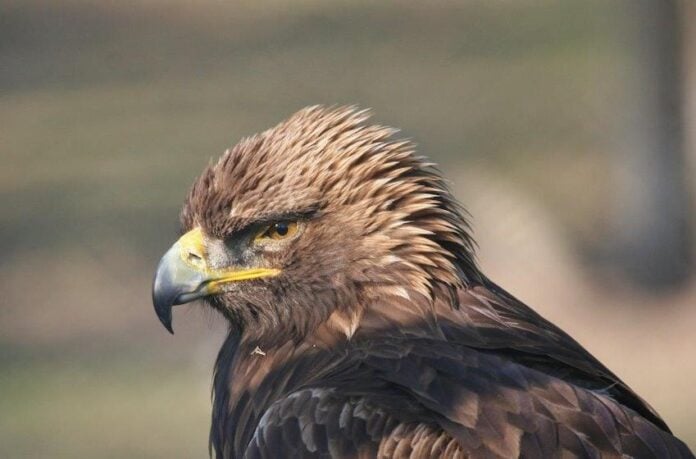
The golden eagle is emblematic of the Mexican nation. (Gob MX)

Mexico’s National Commission of Natural Protected Areas (Conanp) has confirmed the discovery of a golden eagle nest in the northern state of Coahuila, marking what officials called a major advance for the conservation of the country’s national symbol.

The nest was located in the northern part of the state following reports from local monitor Juan Carrasco Reyna, a member of the community group Alas del Desierto (Wings of the Desert).

Last year, a similar community monitoring group in the southern state of Chiapas helped discover the elusive harpy eagle — a striking, almost mythical-looking species thought to perhaps be extinct in Mexico.

Carrasco originally spotted signs of golden eagle activity in the Ocampo Flora and Fauna Protection Area near the Piedritas ejido, land collectively owned and worked by a rural community.

After a fruitless first visit, Conanp technicians returned April 4 and documented a female perched on a nest, soon joined by the male — confirming an established breeding pair.

“The establishment of this new territory is a positive indicator of the health of the ecosystem and a fundamental step forward in the protection of this emblematic species,” Conanp said in a press release last week.

The Ocampo protected area serves as a critical conservation zone and wildlife corridor for animals such as black bears and mountain lions. It anchors a larger Chihuahuan Desert region that connects with Big Bend National Park across the Rio Grande in Texas.

While the area has been recognized as a golden eagle habitat, Conanp didn’t mention any previously documented nests — let alone an active nest with a confirmed breeding pair — inside Ocampo.

In Mexico, each confirmed nest is a big deal because the golden eagle (Aquila chrysaetos) is listed as threatened under Mexico’s NOM-059 environmental regulation.

Habitat loss, illegal trafficking, hunting and electrocution are among the main dangers to the raptor, which is also considered a bioindicator of ecosystem health, according to UNAM Global.

The birds are monogamous and require vast territories to hunt, making the appearance of the Coahuila breeding pair a sign of improving conditions for the species.

Mexico’s golden eagle population is both small and thinly spread. A recent summary drawing on government and academic data estimated “fewer than 150 active breeding pairs across the country.”

The golden eagle is formally recognized as Mexico’s national bird. The emblem on the flag shows a golden eagle perched on a prickly pear cactus devouring a snake, an image rooted in an Aztec legend that said the gods would reveal the site of their capital when they saw such a bird on an island in Lake Texcoco.

Today the eagle is widely described by Mexican institutions as a symbol of strength, courage and resilience, much as the bald eagle functions in the United States.

With reports from La Jornada, El Siglo de Torreón and UNAM Global

Punto Put: The concrete monolith that could redraw the map of the Yucatán Peninsula

0
people standing around map of yucatán peninsula
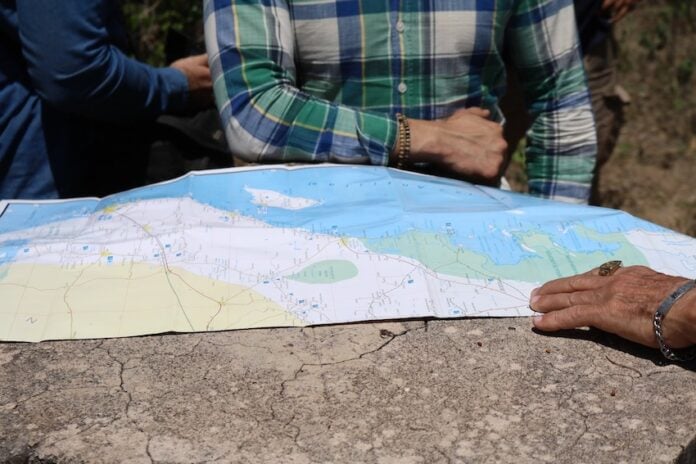
Punto Put — which is an acronym in Spanish for "point of territorial union" — was erected in 1922 over the ruins of an old hacienda called Rancho Put in Campeche. More than 100 years later, Quintana Roo considers it the state's rightful territory. (Consejería Jurídica del Poder Ejecutivo del Estado de Quintana Roo)

“It is the most significant court case in the entire history of the state.”

Those are the words of Arturo Coral, a lawyer representing Quintana Roo in a territorial dispute with the Caribbean coast state’s two neighbors — Campeche and Yucatán.

“There isn’t, there hasn’t been and there won’t be another case like this,” Coral told the newspaper El País.

He was speaking about a legal case related to a long-running dispute over close to 10,000 square kilometers of land on the Yucatán Peninsula.

One 5,000 square kilometer parcel of land that is in dispute is located in a kind of no man’s land between Quintana Roo and Campeche. Which state does it belong to?

Another parcel of land with an area of some 4,800 square kilometers and which is located on the border between Quintana Roo and Yucatán is also disputed. Which state does that belong to?

The answer to those two identical questions will come from Mexico’s Supreme Court, which has been tasked with settling the dispute over land extending from Punto Put, a point that is supposed to delineate the borders between Quintana Roo, Campeche and Yucatán.

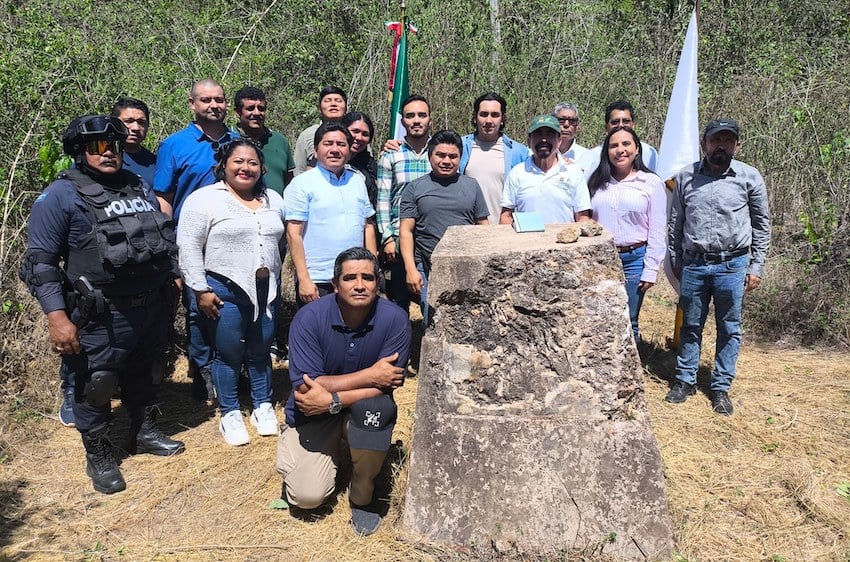
The news outlet Posta reported that “physically,” Punto Put “is a concrete monolith with a pyramidal form” that was “erected in 1922 over the ruins of an old hacienda called Rancho Put.”

A territorial dispute is born

“In the heart of the jungle of the Mexican southeast there is a point that divides more than unites: Punto Put, an area where the borders of Campeche, Yucatán and Quintana Roo are found, and which for more than 100 years has been the cause of a dispute between the three states. It all began in the 19th century, when the old Province of Yucatán fragmented: Campeche became a state in 1863 and Quintana Roo was born as a federal territory in 1902. In that process, the border lines between the three were never well defined, since the peninsula lacks natural features — such as rivers or mountains — that could have served as reference points. That is how the confusion arose over exactly where the three territories meet.”

The passage above comes from a report published by the news outlet Quadratín last October.

The creation of the municipality of Calakmul in Campeche in 1996 intensified the dispute, according to media reports. El País reported that “the dispute reappeared in 2019” when Quintana Roo — which became a state in 1974 — “ratified its territorial coordinates in a constitutional reform.”

Attempts by the federal Senate and courts to resolve the dispute have been to no avail.

The land in dispute is not inconsequential — it represents around 20% of Quintana Roo’s entire territory and is home to around 23,000 people living in more than 300 communities, according to El País. The land disputed by Quintana Roo and Campeche runs southward to Mexico’s border with Belize and Guatemala.

Water supplied by one state, education by another 

In an article published this week under the headline “Put, the coordinate in the middle of the jungle that will decide the map of the Yucatán Peninsula,” El País reported that the Punto Put land disputed by Quintana Roo and Campeche is “rich in precious wood but poor in public services.”

“Both [states] claim it as their own, though neither takes full responsibility for those who live there,” the newspaper reported. “Water from here, school from there.”

El País reported that Quintana Roo authorities drilled a well that supplies water to the community of San Antonio Soda, but the Campeche government provides residents with “everything else” — a health center “without a doctor,” schools, paved roads and streetlights.

The newspaper also reported that most of the people who live in the disputed area between Quintana Roo and Campeche are from other states of Mexico who were lured to the region by the availability of farming land.

In the land disputed by Quintana Roo and Yucatán, “each state has informally divided up each community,” wrote an El País journalist who recently reported from the area. Still, arguments over who is responsible for things such as water supply, health care and road maintenance persist.

A recently elected Supreme Court justice is responsible for the Punto Put case 

The Supreme Court justice with the chief responsibility for resolving the Punto Put case is María Estela Ríos González, who was elected to Mexico’s highest court at judicial elections held last June. It was unclear when the court might hand down a decision.

The Supreme Court previously considered the dispute in 2013, but didn’t hand down a ruling to resolve it, in large part because the Senate failed to submit a file containing expert reports and evidence, El País reported.

Punto Put
Punto Put. (Consejería Jurídica del Poder Ejecutivo del Estado de Quintana Roo)

El País spoke to residents of communities within the disputed land that had differing opinions about which state their community should belong to. They will no doubt be waiting with bated breath for the Supreme Court’s decision.

However, El País indicated that other residents are unconcerned about the state in which their community will end up.

“The government is like our husband,” Ana, a 54-year-old San Antonio Soda resident, told El País. “Wherever it takes you, that’s where you’ll stay.”

In Cerro de las Flores, a community near the border with Belize and Campeche, Alejandro Álvarez told El País that political candidates from both Campeche and Quintana Roo visit during election campaigns to try and win votes. He said they pledge to do different things for the community, but don’t deliver after they are elected.

“Neither of the two [states] makes an effort here,” said Álvarez, who was reportedly fed up with the intermittent failures of services such as electricity, internet and public transport.

With reports from El País, Diario de Yucatán and Quadratín