Home Blog Page 662

What is the true meaning of Christmas for Mexicans?

10
While today it is mostly celebrated as a potluck/house party, a posada is traditionally a religious festivity. (Freepik)

Christmas celebrations in many regions of Mexico are still primarily associated with Catholicism. While foreign traditions like Santa Claus or the trending “Elf on the Shelf” have found a place in the heart of many Mexican families, most people in the country still recognize Christmas as a celebration of the birth of Jesus Christ rather than just a time to exchange gifts. 

For many Mexicans, then, the true meaning of Christmas lies in the meaning behind Jesus’ birth and what it meant to the world. This meaning is reflected in many Mexican Christmas traditions such as posadas, the nativity scene, pastorelas, and the Reyes Magos (Wise Men), which we will explore below. 

Posadas

To kick off the Christmas season in Mexico, Dec. 16 sees the first of the posadas (a word which literally means “inn” or “lodging”). While today it is mostly celebrated as a potluck/house party, a posada is traditionally a religious festivity commemorating the journey of Mary and Joseph from Nazareth to Bethlehem and the birth of Jesus.

During posadas, families and friends sing the song of the posada, known as la letanía. This song tells the story of Mary and Joseph’s search for shelter before the birth of baby Jesus. To sing the carol, the group divides into two in a call-and-response fashion, with one half standing outside with candles, singing a plea for shelter (representing Mary and Joseph). The other half stands inside the house, representing those who gave shelter to the couple.

Although the practice of this tradition has decreased, many families with young children and Catholic schools still host posadas in this way. 

The more popular posada, however, is that which serves as an opportunity to meet with friends and enjoy nice food, drinks, music and sweets. 

During this season, it is common for adults to attend several posadas. These may include “the office posada,” “the posada with the in-laws,” “the posada with college friends,” “the girls’ posada with BFFs,” or even “your partner’s posada” with your SO’s group of friends. The list goes on and on and can be quite extensive. 

Piñatas

The tradition of hanging piñatas is one of the most representative and joyful traditions in Mexico.
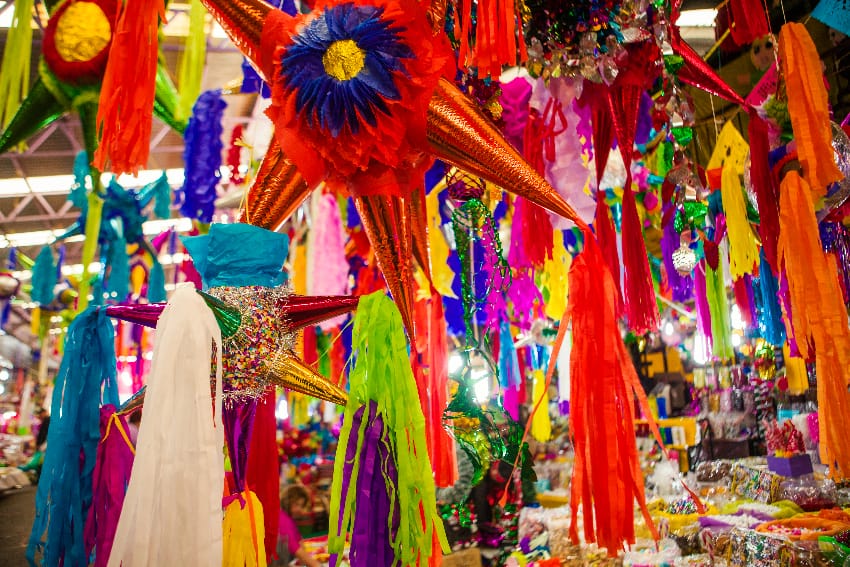
Vendors of traditional piñatas. (Depositphotos)

Used at every Mexican kid’s birthday party, you might not know that piñatas were first used for posadas, bearing a religious meaning: the traditional piñata’s seven points represent Catholicism’s seven deadly sins.

While modern piñatas featuring popular cartoon characters are most commonly purchased for birthday parties, the traditional seven-point piñatas are still widely used during the posada season – both at parties for kids and for adults. So don’t be surprised if you’re invited to an adult posada and you find yourself swinging at a piñata.

Pastorelas

Another tradition linked to religion is the pastorela, a theatrical performance starring characters such as Jesus, Mary, Joseph, the devil, angels and shepherds.

The story is always the same: a group of shepherds travel to Bethlehem to worship baby Jesus, who is about to be born. On the way, they cross paths with the devil who tries to stop them by tempting them with one of the seven deadly sins. Finally, evil is defeated with the help of an angel.

These plays are mostly performed at school Christmas events and amongst families with young children. Pastorelas were used during the colonization as a way to explain the origin of Christmas to natives. 

The nativity scene

The nativity scene is one of Mexico’s most iconic representations of Christmas. Many Mexicans value displaying a nativity scene at home more than a Christmas tree. However, the nativity does not include the baby Jesus until nochebuena, or Christmas Eve, as per Catholic tradition, which marks the birth of Jesus on that night.

Nochebuena is actually more important than Christmas Day in Mexico – on Christmas Eve, families gather around a large meal that includes traditional dishes like bacalao (cod), turkey or romeritos (seepweed), and do a little ceremony before placing the baby Jesus in the manger. This task is usually performed by the children of the family.  

In some affluent neighborhoods, you will see magnificent displays of life-size – or larger – nativity scenes on rooftops. Huge nativity scenes funded by the government are also erected in public spaces and buildings. 

Christmas, or Dec. 25, is typically a less festive day and is reserved for recalentado, or leftovers.

Who brings the gifts? Santa Claus, the baby Jesus, or the Three Wise Men? 

In the past, the Three Wise Men, known as Los Reyes Magos, were responsible for gifting presents to children on Jan. 6, the Day of the Three Wise Men. 

This custom was introduced in Latin America by the Spaniards and has continued to be observed in many households across Mexico City and several southern states.

However, the rest of the country has adopted a modern Western approach, and now, Santa Claus is the one who brings the gifts on Dec. 25. In an effort to keep local traditions and the Catholic faith alive, many families say that Santa Claus brings gifts with the help of baby Jesus.

In Mexico, the traditions of Santa Claus and the Three Wise Men are celebrated, meaning that some children receive gifts on December 25 and January 6. For many families, January 6 is seen as an opportunity for parents to purchase items that their children need and disguise them as presents, such as pajamas, socks, books and clothes.

To wrap up, the Reyes Magos 

Jan. 6 (almost) marks the end of the holiday season in Mexico, as in the rest of Latin America and Spain. 

Rosca de Reyes. (Freepik)

On this day, Mexican families and friends hold gatherings and enjoy eating the traditional sweet bread named Rosca de Reyes, known in English as Three Kings’ Cake. Placed inside the bread is a baby Jesus figurine – referencing the Biblical passage describing how Mary and Joseph had to hide baby Jesus from King Herod. Whoever finds the figurine is responsible for treating guests to tamales on Feb. 2, Día de la Candelaria – the last of the Winter events and gatherings in Mexico.

Although the tradition is deeply rooted in Mexican culture and strongly associated with Catholicism, the Spaniards only adopted it after the conquest, who inherited the tradition from the Romans. However, it didn’t have a religious meaning for them. In Spain, people do not hide a baby Jesus figurine inside the bread, nor is the tradition connected to the above Nativity passage. Instead, the Spanish hides a dried bean in the bread representing bad luck, and whoever finds it must pay for the rosca

That the Rosca de Reyes took on a religious meaning in Mexico is a testament to the influence of Catholicism in Mexico’s Christmas traditions, many of which are still alive across the country. 

¡Feliz Navidad!

By MND writer Gaby Solís
Got 1 min? Taxis can now be ordered via Uber app in Cancún

5
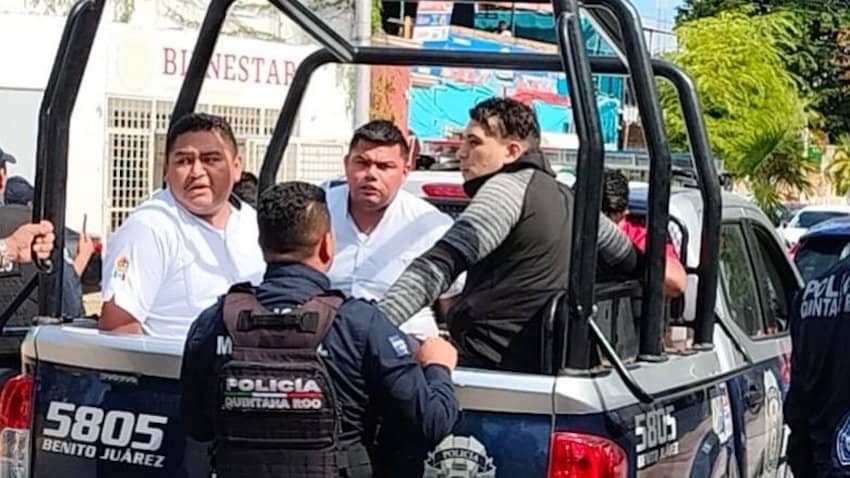
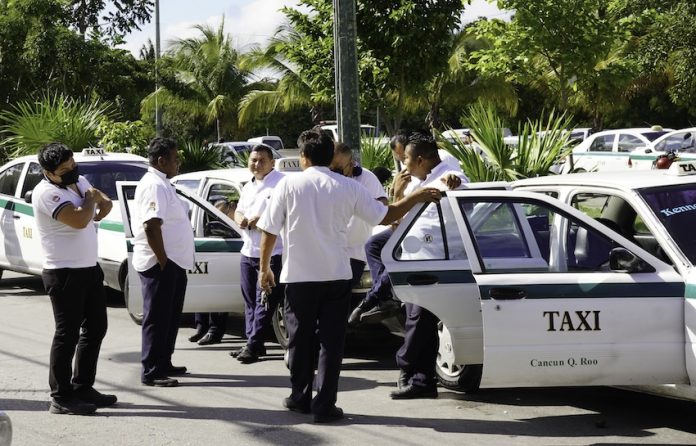
A deal has finally been reached in the long-running Uber v Cancún taxi union dispute, which will allow local taxi drivers to register on the Uber app. (Elizabeth Ruiz/Cuartoscuro)

Cancún is now offering taxi transportation via Uber, thanks to a long-awaited agreement between the Andrés Quintana Roo taxi union and the popular ride-share digital app.

In a statement, Uber said the agreement “will enhance mobility within the most important tourist destination in the country, which today reaffirms its position as a global city at the level of London, New York, and Rome.”

When a user opens the Uber app, they will now be given the choice of traveling in a taxi or an Uber. The app says that adding taxi-type vehicles will improve waiting times and the city transportation experience.

Taxi drivers can register on the Uber Driver app if they meet the platform’s requirements. Once registered, they can start accepting trip requests from users through the app.

“Technology will allow taxi drivers to become competitive once again and serve as a benchmark for the good service we provide to citizens,” the union General Secretary Rubén Carrillo said.

Uber was granted permission to operate in Quintana Roo earlier this year, but strong opposition from local taxi groups has led to conflict, sometimes putting tourists in the middle.

Taxi drivers and Uber drivers have been involved in violence in recent years, as the taxi union fought to keep its lucrative position within Cancún’s tourist market. (Reporte Maya/X)

Uber added that the app’s safety features will also be accessible for taxi services. This includes the Ride Check technology, which identifies any unusual activity, such as route changes or unexpected stops. The app will also offer a PIN code feature to ensure users get into the correct vehicle.

The new ride features came into effect Dec. 15 and are available for all Uber users in Cancun.

With reports from La Jornada Maya

Xinquan Automotive to invest another US $100M in Aguascalientes

2
Xinquan
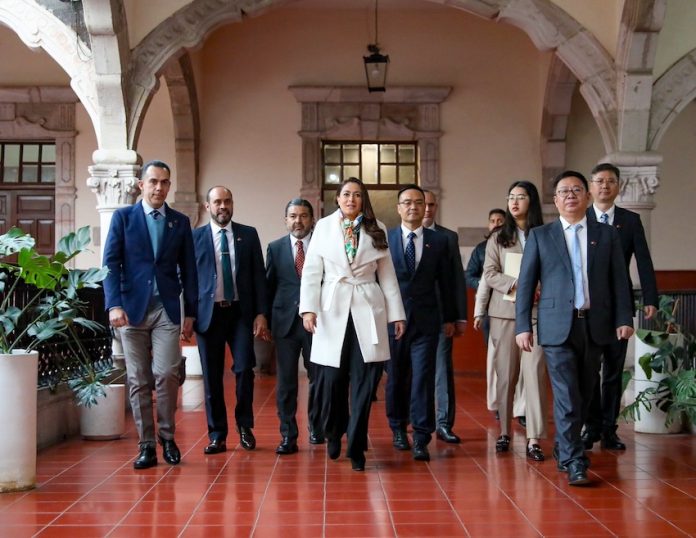
Xinquan Automotive manufacture interiors for global luxury brands. Their Aguascalientes facility has proved a runaway success since it first opened in 2021. (Tere Jiménez/X)

Chinese Tier 1 supplier Xinquan Automotive has announced a US $100 million investment in its Aguascalientes plant, which is expected to generate 700 new jobs in the state – their second expansion announced this year

Xinquan, which manufactures car interiors for luxury brands, opened its facility in Aguascalientes in 2021 with an initial investment of US $40 million and capacity to produce 600,000 luxury car parts annually. The site has been so successful that this is the second time the company has decided to increase investment, after a previous $30 million expansion in March. 

The latest investment will be used to build a second production plant and an additional 10,750-square-meter warehouse in the San Francisco IV Industrial Park .

“Investing here was the best decision, and we want to put down roots in this land, where we hope to make positive contributions to the local economy, social development and job creation,” said Tang Zhihua, Xinquan’s global director at an investment announcement attended by several company executives and politicians.

The company’s original factory employed 400 people, rising to 1,000 after the first expansion. The new investment will bring this number up to 1,700.

“Xinquan will continue to grow under the clear sky of Aguascalientes; Mexico’s red dragon is the guarantee of success and good luck for Xinquan and Chinese investments,” said Aguascalientes governor Tere Jiménez.

The investment was announced by Mexican and Chinese grandees.
Xinquan upgraded their plant earlier this year after production exceeded expectations. (Tere Jiménez/X)

She highlighted that 12 Chinese-owned companies currently operate in Aguascalientes, providing more than 4,000 jobs in the auto, textile, service and clean energy sectors. China is also Aguascalientes’ third-largest export destination.

Manuel Alejandro González Martínez, Minister for Economic Development, Science and Technology, added that Aguascalientes ranks fifth in the country for exports and seventh for foreign direct investment. Thanks to its skilled labor force and other competitive advantages, the state will close the year with growth of more than 4% and 20,000 new jobs. 

With reports from Mexico Industry and Mexico Now

Pfizer COVID-19 vaccines now available in Mexican pharmacies

8
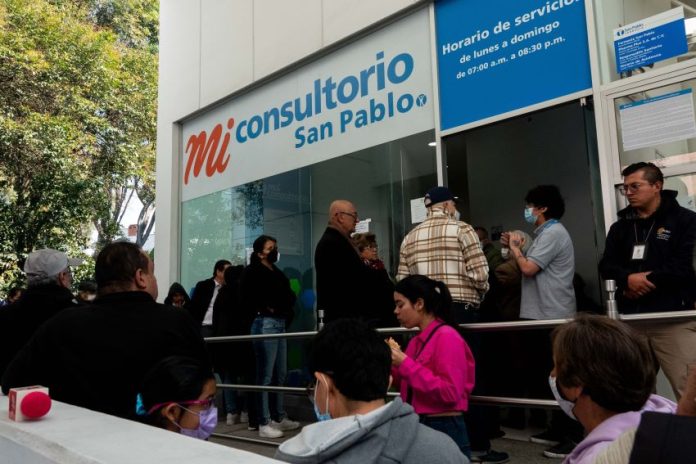
The vaccines are currently available at Farmacias del Ahorro, Farmacias Benavides, Farmacias San Pablo and Farmacias Guadalajara. (Galo Cañas/Cuartoscuro)

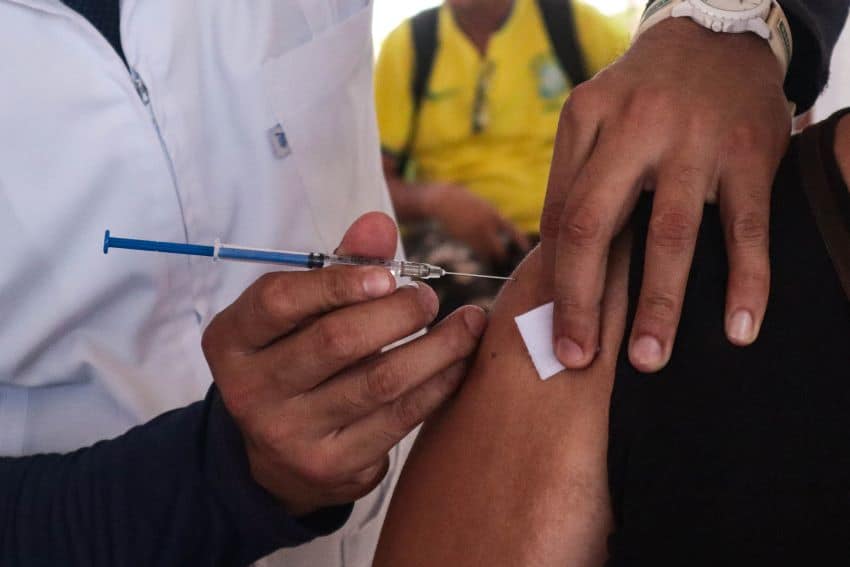
As of Wednesday, doses of the new Pfizer vaccine against COVID-19 are available at some of Mexico’s biggest pharmacy chains.

The new immunizations are available at some branches of Farmacias del Ahorro, Farmacias Benavides, Farmacias San Pablo and Farmacias Guadalajara, among others, with costs ranging from 848 pesos (US $49.78) to 999 pesos (US $58.65), which is less than some recent estimates made by officials.

Currently, Pfizer, Abdala and Sputnik are the only Covid-19 vaccines available in Mexico. Moderna’s Spikevax vaccine has been authorized by Cofepris but has not yet been distributed to pharmacies. (Demián Sánchez/Cuartoscuro)

The shots will be administered by on-site registered nurses in the consultorios (consulting rooms) adjacent to the pharmacies.

Suggested for those 5 and over, COVID-19 vaccines are also available for free at public health centers throughout Mexico, President López Obrador assured in his Wednesday presser. 

The president said he got vaccinated “about a month ago” and received “both: the COVID one and the flu one. And it was all good. I didn’t even have a reaction.”

The Mexican health regulatory agency (Cofepris) announced Dec. 8 that it had authorized the sale of the Pfizer (Comirnaty Omicron XBB 1.5) and Moderna (Spikevax monovalent XBB 1.5) vaccines.

The vaccines both have an updated formula that works against the Omicron variant XBB.1.5 of Sars-COV2.

The plan is to distribute them through vaccination centers, private medical practices, hospitals and authorized pharmacies. Consumers are urged to check the brand of vaccine available and the cost, if any.

Farmacias San Pablo said it will have the Pfizer vaccine at 77 branches in the Valley of Mexico and the states of Morelos, Querétaro and Puebla for 848 pesos (US $49.78). Farmacias Benavides is selling it at 999 pesos (US $58.65), with discounts on any subsequent shots scheduled for family members.

López Obrador said he is against regulating prices because medicines that “save lives should not be limited or controlled.” The most important thing is getting the drug widely distributed “for the people — for everyone, for rich and poor.”

Epidemiologist Ruy López Ridaura, who has replaced Hugo López-Gatell as Mexico’s deputy health minister, said that roughly 19 million flu vaccines have been administered this flu season, approximately 53% of the goal of 35 million. However, only 3.8 million anti-COVID-19 doses have been given, approximately 18% of the goal.

“We have vaccines available in almost all health centers, in all entities,” he said by way of a reminder. He also noted that while COVID-19 positivity has been “decreasing continuously,” influenza has been on the rise since early November, with positivity right now “close to 20%.” Mexico launched its national COVID-19 and influenza vaccination campaign in mid-October.

Regarding the Pirola variant of COVID-19, which is a subvariant of Omicron, López Ridaura said that there has been only one confirmed case in all of Mexico since August (in Mexico City).

Regarding the production of a COVID-19 vaccination in Mexico called Patria, the new deputy health minister said he is hopeful it will be available soon.

“They have calculated the capacity to produce up to 4 million doses in the first quarter [of 2024],” he said. “We will see how necessary that will be for the country, but we are also focusing on our commitment of [having the vaccine] for the next [2024-25] winter season.”

With reports from Milenio and Sin Embargo

Expat guide to living in Puerto Vallarta

10
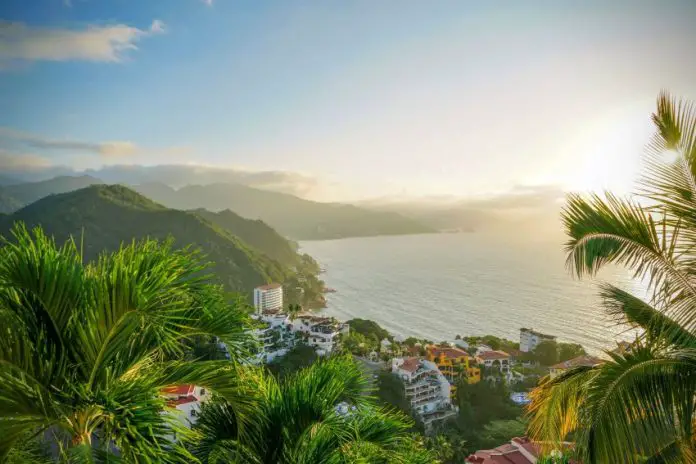
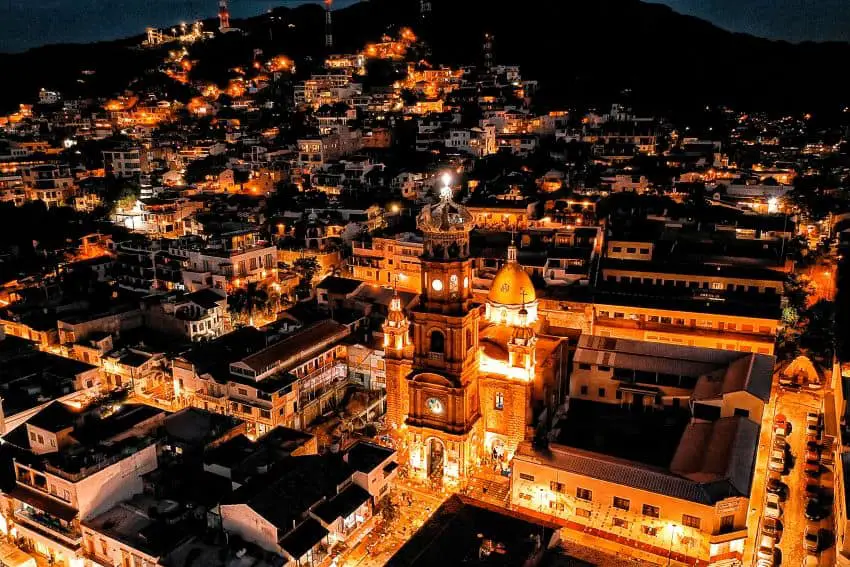
Puerto Vallarta, Jalisco
As a multicultural community, Puerto Vallarta is a great option to call home. (Chris McQueen/Unsplash)

I can tell you the minute I knew I wanted to live in Puerto Vallarta. It was Dec. 17, 2013. It was my first time visiting and I had spent a whirlwind four days in town. On my final morning, I took a swim in the Bay of Banderas. It was 7 a.m. — the city was still sleeping. It was just me, the cool sunlight reflecting off the bay, and mist rising over the lush jungle peaks. I said to myself, “I will live here one day.” Five years later, that dream came true and I have never looked back.

So now that you’ve decided to relocate to Mexico, and chosen Puerto Vallarta as your next home base, let me offer a heartfelt congratulations! Trust me, I get it. The decision to go expat is a big one. But rest assured, this charming Pacific coastal city is one of the most convenient places and enjoyable places in Mexico for expat life.

Puerto Vallarta has become an extremely easy and convenient place for expats to settle down. (Doug Golden/Unsplash)

Not only is Puerto Vallarta safe for expats, it’s one of the most vibrant and culturally diverse cities in Mexico. Overlooking the Bay of Banderas, Puerto Vallarta is a buzzing resort town that combines a massive international presence with centuries of traditional roots. Expats here will find their neighbors are a wonderful mix of locals, tourists, and other expats who all mingle together in a cohesive, multicultural community. In fact, that’s my favorite thing about Puerto Vallarta. Our friends are not only from the U.S. and Canada, but all over Mexico and other parts of the world, as well.

As the city has grown and expanded over the years, it has become an extremely easy and convenient place for ex-pats to settle down, packed with essentials like grocery stores, hospitals, public transportation, and banks, and amenities like Uber, bars, restaurants, beautiful beaches, and mountains. 

Cost of living in Puerto Vallarta

The cost of living for expats in Puerto Vallarta greatly depends on what kind of lifestyle you want to have. You can find an affordable year-long rental for less than 17,000 pesos per month (US $990) or splurge on luxury condos that can cost upwards of 60,000 pesos (US $3,500) per month. For ex-pats who want to purchase property, condos start at around US $100,000 but can go as high as US $1 million and beyond. It all depends on what creature comforts you want or need to live happily in paradise. Do you want a clifftop infinity plunge pool overlooking the bay? Or maybe all you need is a strong A/C, Wi-Fi, and a short walk to the beach. The good news for expats in Puerto Vallarta is that you have options.

Where do most expats live in Puerto Vallarta?

This is a city of neighborhoods, each with its own distinct vibe.

Marina Vallarta is one of the most expensive neighborhoods to live in, with beautiful bay views and access to upscale facilities like gourmet supermarkets, restaurants, and luxury shopping. This is also where the cruise ships dock so it can be very busy here during the season.

Versalles has been a rising star recently as more and more condos spring up along its cobblestone streets. The quiet, residential neighborhood has seen an infusion of fantastic restaurants and bars lately, as well as a growing community of expats and young locals. It’s also close to big supermarkets like Costco and La Comer. While my husband and I were renovating our condo in the Santa Maria neighborhood, we always chose to rent in Versalles and if we were to move, this would be the neighborhood we would choose.

5 de Diciembre is the beginning of downtown Puerto Vallarta. This beachfront neighborhood is quieter than the neighborhoods downtown, yet is still within walking distance of all the action of Zona Romántica. The perks of 5 de Diciembre include plenty of apartment options, restaurants, coffee shops, one of the best beaches in Puerto Vallarta, and a grocery store.

Puerto Vallarta Centro is the best option to live in. You can find restaurants, bars, beach parties, and nightlife. (Alonso Reyes/Unsplash)

The next neighborhood down is Centro, where the world-famous Malecón begins. Centro is a busy neighborhood with lots of tourist-heavy restaurants and bars. It can get loud here at night, but it’s one of the best neighborhoods in Puerto Vallarta if you want to be close to everything.

Crossing the small bridge over the Rio Cuale from Centro will put you in the Zona Romántica, the historic heart of Puerto Vallarta. The oldest and most beautiful part of the city, Zona Romántica is also the most active when it comes to restaurants, bars, beach parties, and nightlife. 

How to find an apartment in Puerto Vallarta

If you already know where you want to live in Puerto Vallarta, finding an apartment is the next step. Facebook can be one of the biggest resources when it comes to finding an apartment in Puerto Vallarta. Puerto Vallarta also has a wide variety of living setups, from studios to one-bedroom condos, to full homes with gardens and pools. 

You can also use a traditional realtor in Puerto Vallarta, many of which speak English like Vistalegre, Vallarta Paradise or Golden Rentals

Ex-pats can also find long-term rentals on Airbnb. These apartments or homes are fully furnished and often heavy on luxury amenities. You will pay more of a premium for these rentals, especially taking into consideration the Airbnb fees and cleaning fees. However, Airbnb rentals tend to be contentious in many destinations in Mexico because of the effect it has on the local housing market. It is one of the least socially responsible ways to find a rental, but it is an option.

Getting around Puerto Vallarta

Most neighborhoods are walkable, but Puerto Vallarta is a big city, and getting around requires some form of transportation. The public bus system is efficient and cheap costing only 10 pesos for local travel. Buses operate from 5 a.m. to 11 p.m. on most routes. 

Taxis and Ubers are also abundant in Puerto Vallarta, as well. Taxis operate on a price-per-zone rate, while Ubers are priced by distance. As in many places, Uber is typically much cheaper. I don’t have a car in Puerto Vallarta and get by just fine on foot or with Uber.

You do not need a car in Puerto Vallarta, but should you want to buy a car, there are plenty of dealerships. The caveat is that to legally purchase a car you need to be a legal resident of Mexico with a CURP number (similar to a social security number) and an RFC number (tax identification number).

Buying groceries in Puerto Vallarta

As a major destination, Puerto Vallarta has a Costco, Walmart, and Sam’s Club, as well as major Mexican grocery store chains like La Comer, Mega, and Chedraui. For those wanting a more local angle to their purchases, the Olas Altas Farmers Market runs every Saturday at Lazaro Cardenas Park in the Zona Romantica.

Living in Puerto Vallarta essentials

Electricity: Power in Mexico is provided by the state-run firm CFE. The most popular way to pay your CFE bill is at a CFE branch. There are three in Puerto Vallarta. You can also pay through a Mexican bank or at a partner establishment, like Oxxo, Walmart, Chedraui, Ley, or the Xoom app. CFE also has a mobile app and an online payment portal, but these tend to be the most stress-inducing ways to pay because they often don’t work. 

Internet: Wi-Fi is fast and consistent in Puerto Vallarta. Most people get their internet through Izzi, which can be easily paid for via the Izzi app, through partner establishments, or Xoom.

Language: These days it’s more common than ever to hear English in Puerto Vallarta. That certainly helps makes things easier as you’re relocating down here, but it might be a good idea to try to learn some Spanish either before you get down here or while you’re living here. Being able to communicate in a country’s native language adds so much depth to any expat experience. Speaking Spanish in Mexico will open so many doors when it comes to building friendships with neighbors, conducting business, running errands, and so much more. Part of the reason you wanted to live in Mexico was to be immersed in its culture, right? Language is one of the best ways to do that.

Food delivery: Uber Eats and Rappi are the two main delivery app services used in Puerto Vallarta.

Enjoy living as an expat in Puerto Vallarta

I’ve seen Puerto Vallarta change and reinvent itself so much over the past decade. No longer the sleepy beach town it once was, it has evolved and transformed into a thriving, 24/7 multicultural community. And yet, it still clings to its traditional Mexican roots, with local markets, traditional celebrations, and plenty of off-the-tourist-trail beaches, communities, and villages to explore. I can’t imagine living anywhere else in Mexico and I hope you love living here, too. See you at the beach. 

Meagan Drillinger is a New York native who has spent the past 15 years traveling around and writing about Mexico. While she’s on the road for assignments most of the time, Puerto Vallarta is her home base. Follow her travels on Instagram at @drillinjourneys or through her blog at drillinjourneys.com

Officials update Hurricane Otis death toll to 52, with 32 people missing

1
In Acapulco, at least 31 sailors are still missing at sea. (Carlos Carbajal/Cuartoscuro)

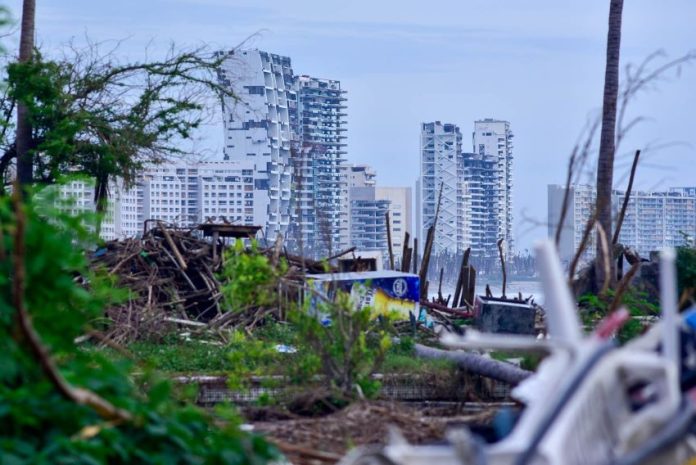
The official death toll from Hurricane Otis has risen to 52, while authorities assure that the search continues for 32 people still missing, two months after the devastating Category 5 hurricane hit Acapulco on Oct. 25.

The governor of Guerrero, Evelyn Salgado, gave the update during President López Obrador’s Wednesday morning press conference, citing figures from the state Attorney General’s Office. She said that the remains of 46 of the dead have been given to their families, while six more bodies have yet to be recovered.

Two months after Hurricane Otis hit Acapulco, the families of missing sailors are desperate to recover the bodies of their loved ones. (Carlos Alberto Carbajal/Cuartoscuro)

“Search actions on land continue, together with the main effort [at sea] by the Navy, but the national and state search commissions are also participating,” Salgado said. “The government’s principal and most sensitive task is to attend to the victims’ families.”

Salgado added that 31 people were missing at sea, and one person on land. Navy Minister Admiral Rafael Ojeda Durán said that the Navy has already carried out 100 searches at sea, 30 on land and 7 by air, to locate sunken boats and the bodies of missing sailors. So far, these searches have recovered 87 vessels and 17 bodies.

The update comes a month after families of missing sailors protested outside Acapulco’s Icacos Naval Base, alleging that authorities appeared to have stopped looking for their loved ones – many of whom were crew members on luxury yachts moored in Acapulco Bay. The group of protesters demanded that Governor Salgado and President López Obrador give more support to the Navy to continue and extend the search.

Nevertheless, the official count of the dead and missing from Hurricane Otis remains well below unofficial local estimates. The latest figure added only two dead and two missing to the last count given in November, while some local media have asserted that the true death toll could be up to seven times higher.

Meanwhile, efforts continue to reconstruct Acapulco’s devastated economy. The Fitch credit rating agency has estimated the losses from Hurricane Otis at US $16 billion. Although there is still extensive reconstruction to be done, there are also signs that the Pacific resort town is starting to get back on its feet, with 127 hotels partially reopening for the holiday season.

“We are going to be reporting periodically so that soon, very soon, the recovery, the rebirth of Acapulco is achieved,” the president said.

With reports from Milenio and Excelsior

Arrest made in murder case of Hipólito Mora, self-defense leader

3
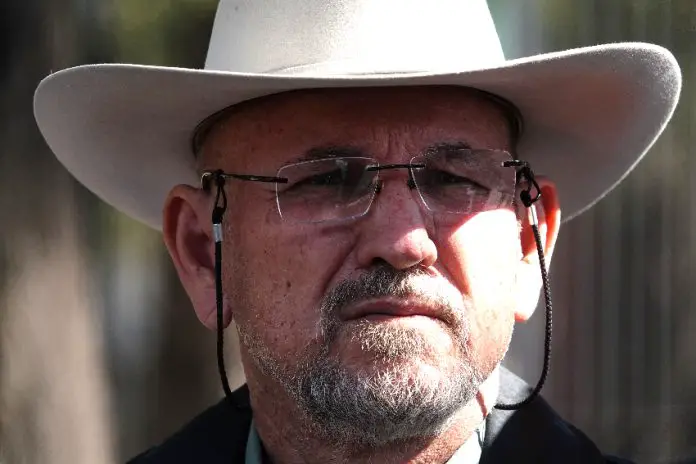
Hipólito Mora
Michoacán self-defense leader Hipólito Mora had been active since 2013, and was killed in June in La Ruana, Michoacán along with three bodyguards. (Cuartoscuro)

Authorities in Michoacán have arrested a presumed member of the Viagras crime group in connection with the murder in June of former self-defense force leader Hipólito Mora, according to the victim’s brother.

Mora, the co-founder of a citizens’ self-defense force movement that took up arms in 2013 and succeeded in driving the Knights Templar cartel out of Michoacán, was killed June 29 in Buenavista, a municipality in the notoriously violent Tierra Caliente region of Michoacán.

Brayan Quintero
Brayan Quintero was arrested by Michoacán authorities. (FGE Michoacán)

Gunmen also killed three bodyguards who were with Mora when he came under fire in the small town of La Ruana.

Guadalupe Mora told the Quadratín news agency and the Milenio newspaper that Brayan Quintero Equihua was arrested early Tuesday in connection with the murder of his brother.

He said that police, acting on a warrant issued for the arrest of Quintero, detained the suspect at the home of his mother-in-law in La Ruana. As of Wednesday morning, authorities hadn’t confirmed the arrest.

The Michoacán Attorney General’s Office had offered a reward of 100,000 pesos (US $5,850) for information leading to the arrest of Quintana, who is aged in his early 20s.

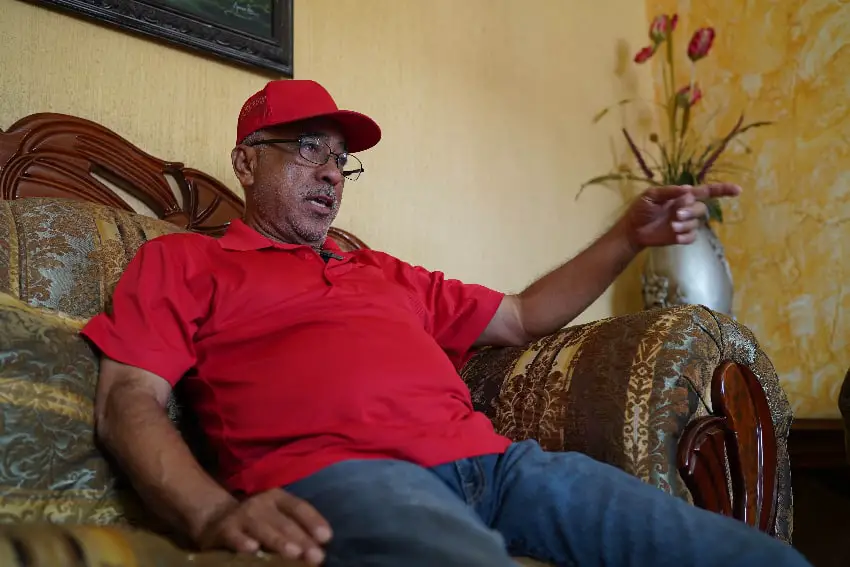
Guadalupe Mora
Guadalupe Mora, Hipólito Mora’s brother, has accused the military of colluding with criminal groups in Michoacán. (JUAN JOSÉ ESTRADA SERAFÍN /CUARTOSCURO.COM)

Shortly after his brother’s death, Guadalupe Mora accused the military of collusion with the Viagras, head of a larger criminal group known as the Cárteles Unidos.

“All of La Ruana knows that the soldiers, those who are here, are very involved with them, with those who killed my brother, with the Viagras. That’s why they left, they gave [the Viagras] a chance to kill him,” he said.

On Tuesday, Guadalupe Mora thanked the Michoacán Attorney General’s Office for taking Quintana into custody “because we want justice.”

All those involved in the murder are “identified,” he added.

Authorities are seeking to arrest four other suspects in connection with the murder of Hipólito Mora, a lime farmer turned vigilante who spent periods of his life in jail both in Mexico and the United States for crimes including kidnapping and drug possession, and ran unsuccessfully as a candidate for federal Congress in 2015 and governor of Michoacán in 2021.

One of the suspects is Heladio Cisnero Flores, who is allegedly plaza chief of the Viagras in La Ruana.

Cisnero, known as La Sirena, “coordinated the operation to kill my brother,” Guadalupe Mora said.

With reports from Milenio, Infobae and Quadratín

Mexico to challenge ‘inhumane’ Texas immigration law

9
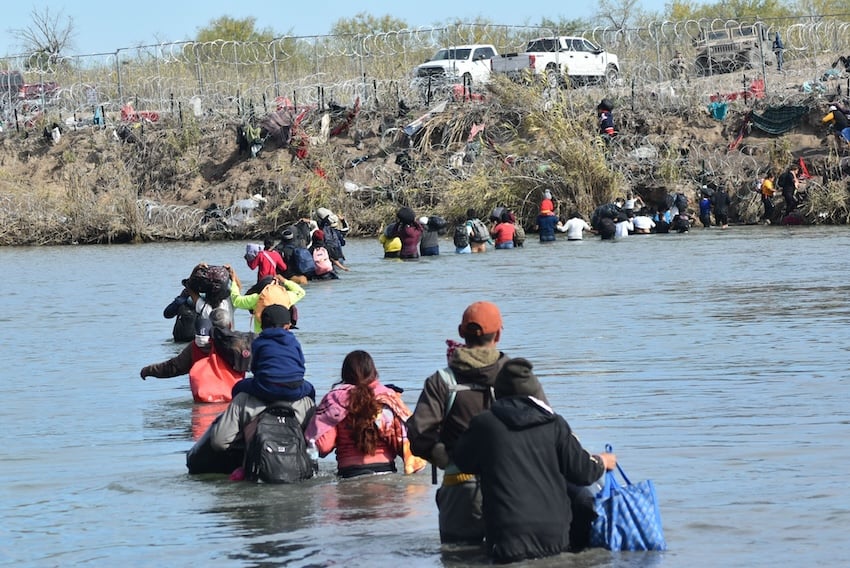
New legislation in the state of Texas will make repeated attempts to illegally enter the country a crime, punishable by up to 20 years in prison. (U.S. CBP)

Mexico will challenge a new law in Texas that allows police to arrest migrants who have entered the Lone Star state between official ports of entry, President López Obrador said Tuesday.

Texas Governor Greg Abbott on Monday signed into law what his government called “a transformative package of border security legislation.”

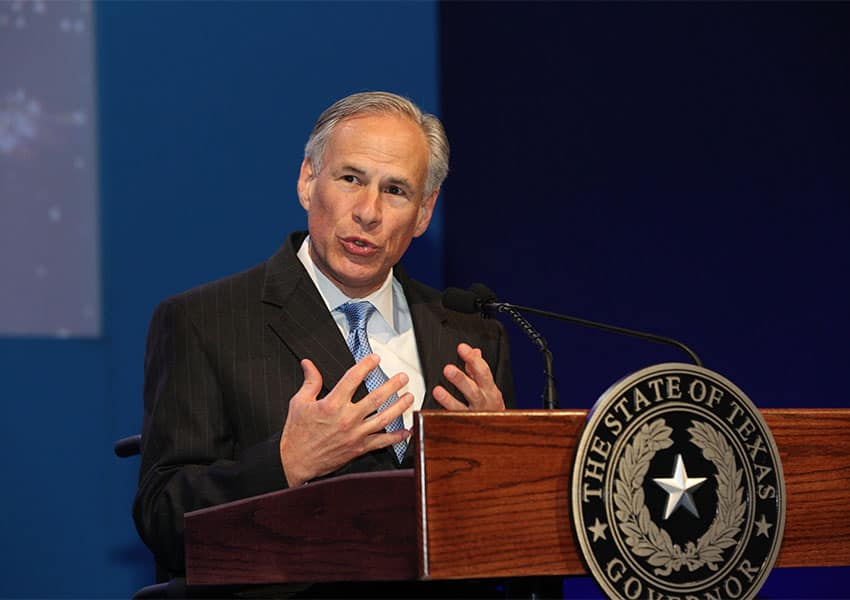
Texas Governor Greg Abbott
Texas Governor Greg Abbott has introduced a number of strict border measures during his administration, many of which have severely disrupted transport links between Mexico and the United States. (Wikimedia Commons)

One law, known as Senate Bill 4 (SB 4) “creates a criminal offense for illegal entry into this state from a foreign nation,” according to a Texas government statement.

The law, which is scheduled to take effect in March, gives police the power to arrest people who have entered Texas illegally from Mexico, or those suspected of doing so, and grants local judges the authority to order undocumented migrants to leave the United States.

“The law cracks down on repeated attempts to enter Texas by creating the offense of illegal reentry and penalizes offenders with up to 20 years in prison,” the Texas government said.

“It also provides the mechanism to order an offender to return to the foreign nation from which the person entered or attempted to enter this state.”

The Associated Press reported that opponents of the Texas government “have called the measure the most dramatic attempt by a state to police immigration since a 2010 Arizona law — denounced by critics as the “Show Me Your Papers” bill — that was largely struck down by the U.S. Supreme Court.”

Migrants who enter the United States illegally can already be charged with illegal entry or re-entry under federal laws, Reuters reported, but Abbott “has criticized what he calls U.S. President Joe Biden’s failure to enforce them.”

López Obrador told reporters at his morning news conference that the Ministry of Foreign Affairs is “already working on the process” to challenge SB 4.

“I would like to say to our compatriots [in Texas] and to [other] migrants that we’ll be defending you,” he said before asserting that Abbott’s actions are motivated by a desire to be on the U.S. Republican Party’s 2024 presidential ticket as a candidate for vice president.

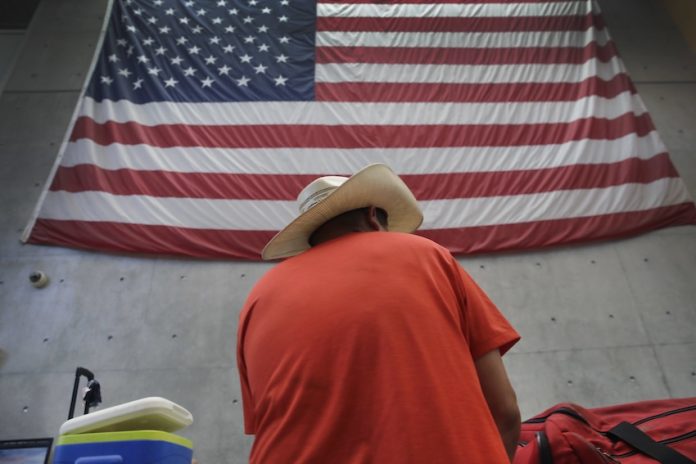
Migrants attempt to cross the Rio Bravo between Coahuila and Texas. Mexican president López Obrador has already condemned the new measures. (Cuartoscuro)

“With these measures, he wants to gain popularity [but] he’s not going to gain anything. On the contrary, he’s going to lose support because there are a lot of Mexicans in Texas, a lot of migrants,” López Obrador said.

Abbott has “forgotten” that Texas used to be part of Mexico, “that there are 40 million Mexicans in the United States” and that “that great nation was strengthened thanks to the migrants of the world,” he added.

“And he forgets that it says in the Bible that we mustn’t mistreat strangers … and a lot of these leaders [including the Texas governor] are religious and probably go to church,” López Obrador said.

The new law is “inhumane” and “politically motivated,” he said, adding that Abbott is a “man with a malicious nature” or, in simpler terms, a “malo de Malolandia,” or a “baddie from Badland.”

“… We’re going to intervene because … [detaining and deporting migrants] are United States federal government powers, not powers of states,” López Obrador said.

“[Abbott] is usurping powers … that correspond to the [U.S.] Congress and the United States president,” he said.

López Obrador has previously accused the Texas governor of “not acting responsibly” and “trying to get a political advantage” by carrying out strict inspections of trucks entering the Lone Star state and installing anti-migrant floating barriers in the Rio Grande.

He has urged Mexican-Americans to not vote for Abbott or Florida Governor and presidential hopeful Ron DeSantis, who has pledged to make immediate use of the United States military to combat Mexican cartels in Mexico if he becomes U.S. president.

The Mexican government expressed its opposition to a new immigration law in Florida in July.

With reports from Reforma, CNN, AP and Reuters 

8 ancient human burials found inside Tulum cave

1
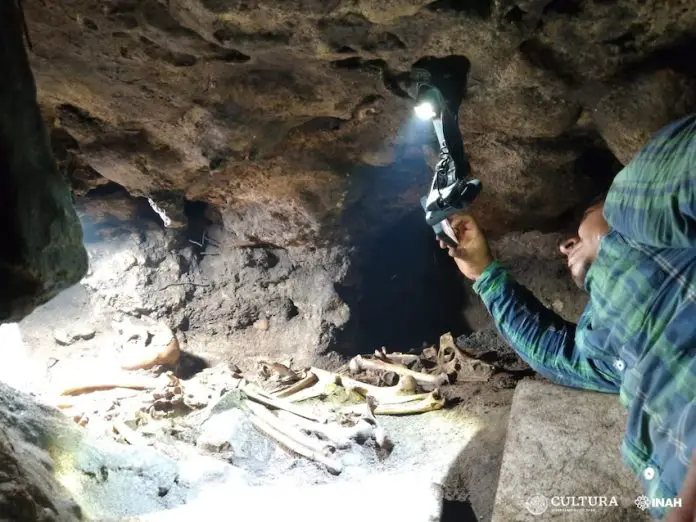
The cave contained the remains of 8 people and several animal skeletons. (INAH)

Researchers from the National Institute of Anthropology and History (INAH) have announced the discovery of ancient human remains inside a cave inside the ancient Maya city of Tulum, Quintana Roo.

The findings a the world-famous archaeological site were made while clearing the area to create a new path between buildings 21 (Temple of the Columns) and 25 (Temple of Halach Uinic).

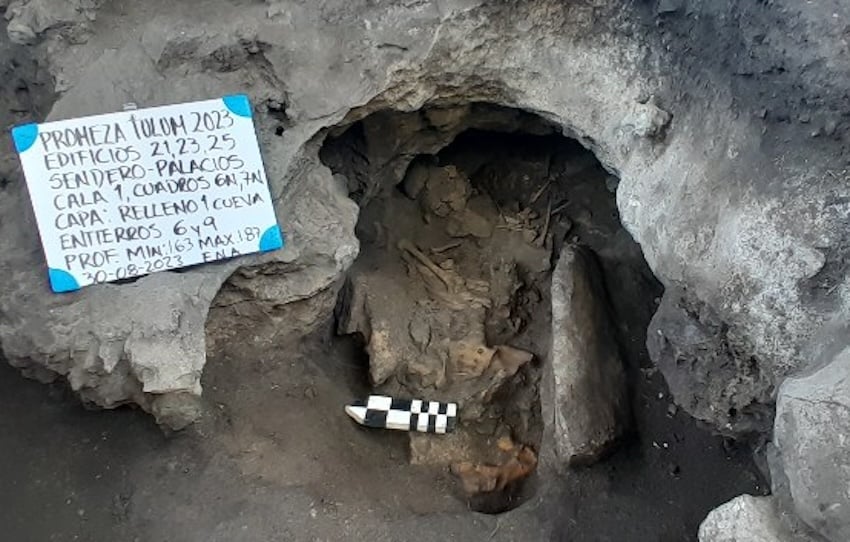
The small cave entrance, unearthed during renovation work, was covered by a boulder. (INAH)

According to the archaeologists, the cave entrance was blocked by a large rock placed on top of human bones.

“Upon removing the rock that blocked the entrance to the cave, we saw that it was splitting the ossified remains of an individual, leaving the lower part of his body on the outside and the upper part inside [the cave],” said the coordinator of the archaeological research project, José Antonio Reyes Solís.

According to Reyes, the cave has at least two small chambers to the north and south. Each chamber is approximately 3 meters long, 2 meters wide, and 50 centimeters high. He added that the front of the cave is also decorated by a sea snail, covered in stucco, likely left by the ancient Maya people who inhabited the area.

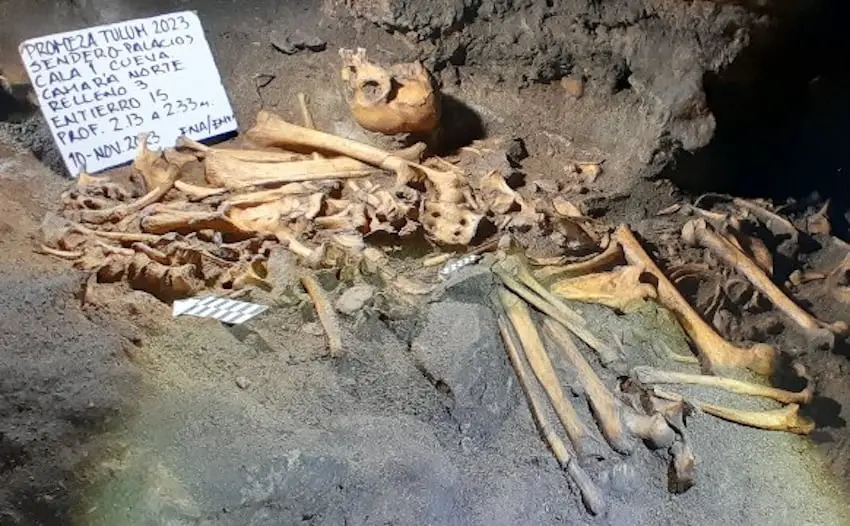
Researchers have discovered eight adult burials inside the cave’s chambers, all in good condition thanks to the favorable cave environment. These remains are currently being studied at INAH’s Quintana Roo lab.

Excavation and documentation work has been hampered by the restrictive conditions inside the caves, but archeologists are using cutting edge technology to map their findings. (INAH)

Animal remains were also found in the cave, including the bones of domestic dogs, rodents, opossums, turtles, iguanas, tiger sharks, eagle rays, crabs, snails among others.

Pottery fragments, dating from the Maya Post-classical period (between 1220 and 1550 A.D.) have also been found inside.   

Reyes has said that excavation work undertaken in the cave has posed significant challenges for the team. The confined space, lack of lighting, high temperature and humidity, and presence of insects have complicated documenting the archaeological elements and their surroundings.

However, he said that new technologies, such as laser scanners and high-resolution photography, have facilitated the exploration of the cave and the artifacts within it.

With the help of these technologies, researchers generate 3D models with detail and precision, allowing them to continue the analysis and processing of field data from a computer and give the public a virtual tour of the cave’s interior. 

Field work will continue at the site for the remainder of the year.

Mexico News Daily

Opinion: How will Mexico face the radical uncertainty of 2024?

5
Former ambassador Tony Garza
The former U.S. Ambassador to Mexico, Tony Garza, shares his perspective on the year ahead. (George W. Bush Presidential Center)

As we close out 2023, I have looked back at my previous end-of-year writings. It’s clear that words like uncertainty, complexity, and polycrisis dominate. But this year, to quote Ian Bremmer, “the wheels are coming off,” and radical geopolitical uncertainty is the norm, and likely here to stay for the foreseeable future.

The Ukraine-Russia conflict continues to grind on, while war in the Middle East threatens to involve others in the region. Against that backdrop, tensions oscillate between the U.S. and China, with Beijing’s ambitions in the Pacific and Taiwan never too far from the surface. The combination of these events has exacted a very real human toll, compounded economic uncertainty and brought into sharp focus US political polarization. The sum of which raise questions about the U.S.’s role in the world, especially with Washington currently gripped by negotiations on immigration reform in exchange for funding for our allies. Though, the House did manage to push through the defense bill with bipartisan support yesterday.

On Dec. 13, the US Federal Reserve announced that it would leave interest rates as is for remainder of the year, with economic growth expected to close at 2.1% for 2023. Overall, in 2024 the global economy risks slowing momentum, impacted not only by multiple wars, but also by lingering pandemic stressors. Inflation stubbornly hangs on, though in the United States it has seemingly stabilizedChina’s economic outlook for 2024 has improved slightly, though is expected to slow in the coming year. From a European perspective, RBC expects growth to stall at 0.7% in 2024, up only slightly from 0.5% in 2023. And real concerns center around the debt crisis with dozens of the poorest nations already in default or likely to soon miss payments on the trillions they owe.

To add to the overall sense of foreboding, forty countries will also hold national elections next year, including both the United States and Mexico. While we can’t anticipate the outcomes of all of these elections, we can be certain of additional political transition in the largest election year to date. With the sum of these unknowns, I can’t help but echo academics, investors, and officials alike: the world is facing perhaps its most tumultuous year in a generation.

In June 2024, Mexicans will head to the polls casting their own ballots for more than 20,000 posts, including Mexico’s next president. In the race for president, most third-party candidates have now dropped out with former Foreign Minister Marcelo Ebrard also vowing not to run. Polls continue to show front-runner Claudia Sheinbaum holding a consistent two-digit lead over Xóchitl Gálvez.

Despite the uncertainty associated with the upcoming elections, Mexico’s economic outlook for 2024 looks relatively stable, given a combination of US demand, government spending, and remittances. BBVA estimates a growth of 2.6% for 2024 with inflation expected to stay under 4%. While Banxico has not yet announced interest rate cuts, analysts are anticipating one early in the new year. On the USMCA front, the US lost its claim on auto parts rules of origin while the panel on GMO corn is set to be decided by March 2024.

U.S. and Mexican officials spent the last months of 2023 tackling a host of bilateral issues. In November, Presidents Biden and López Obrador held a bilateral meeting at the APEC conference expressing a shared desire to tackle irregular migration and drug trafficking. The United States and Mexico also put in a bid to host the 2027 Women’s World Cup. Finally, on Dec. 5, U.S. Treasury Secretary Yellen visited Mexico, making a push for nearshoring to keep China from investing in North American companies.

During her visit, Yellen also announced new sanctions against 15 individuals and 2 Mexican companies linked to fentanyl trafficking. Overall, fentanyl continues to be a priority, and as such, parallel to Secretary Yellen’s visit to Mexico, the Biden administration announced the establishment of a “counter-fentanyl strike force”.  This comes after the U.S. announced sanctions against 13 Sinaloa Cartel members for fentanyl trafficking, and two Mexican men were indicted in Kansas for fentanyl distribution last month.

In early December, Mexican migration director Francisco Garduño announced the suspension of deportations in Mexico, citing a lack of funds. Along similar lines, in December, CBP announced the closure of the Lukeville, Arizona port of entry with CBP officers redeployed to assist Border Patrol agents to process the increasing number of migrants crossing irregularly in Arizona. While announcements from both countries this month show signs of insufficient funding or personnel to manage migration, immigration itself shows no sign of easing in the coming year, and indeed that seems to be the case globally.

Antonio Garza acts as Counsel to White & Case in Mexico City, and served as U.S. Ambassador to Mexico from 2002 through 2009. Mr. Garza has been recognized as a ‘Directors to Watch’ by Directors and Boards Magazine, cited amongst the National Association of Corporate Directors ‘100’ for leadership in the boardroom and has been named by Hispanic Executive Magazine as one of 2019’s Best of the Boardroom.