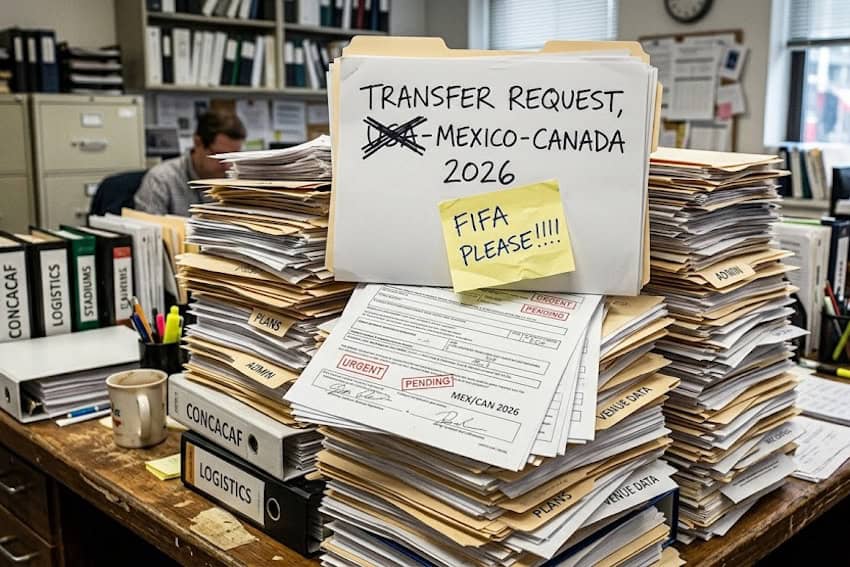
ZURICH — In what sports officials are calling “a completely unprecedented logistical nightmare that is also somehow entirely predictable,” FIFA confirmed Monday that 44 of the 46 nations competing in the 2026 World Cup have formally submitted requests to relocate their group-stage matches from the United States to Mexico, citing a broad range of concerns including active conflicts, diplomatic tensions, trade wars, “general vibes,” and one submission from Uruguay that simply read “you know why.”
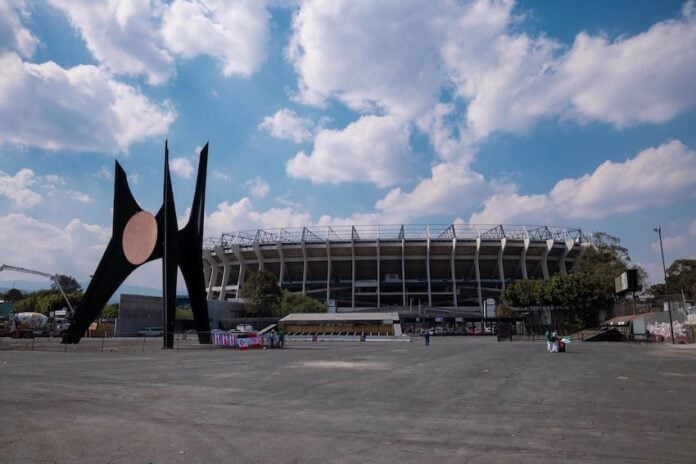
The flood of petitions began after Iran’s national soccer federation asked FIFA to move its matches from Los Angeles and Seattle to Mexican venues following statements from U.S. President Donald Trump suggesting the Iranian team should skip the tournament “for their own life and safety.” Mexican President Claudia Sheinbaum immediately offered to host Iran, opening what FIFA sources described as “a Pandora’s box the size of Estadio Azteca.”
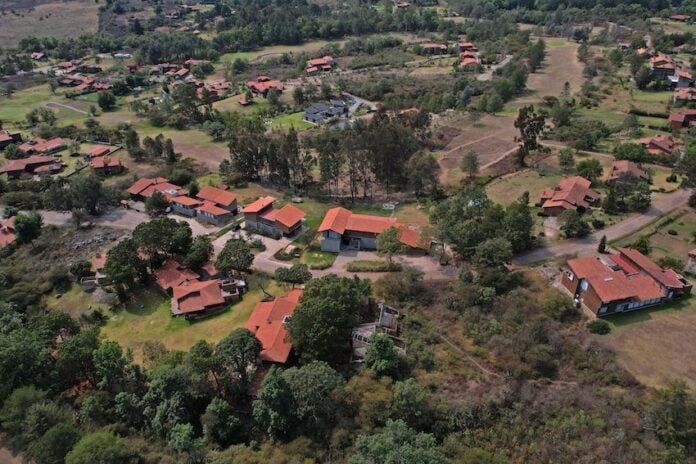
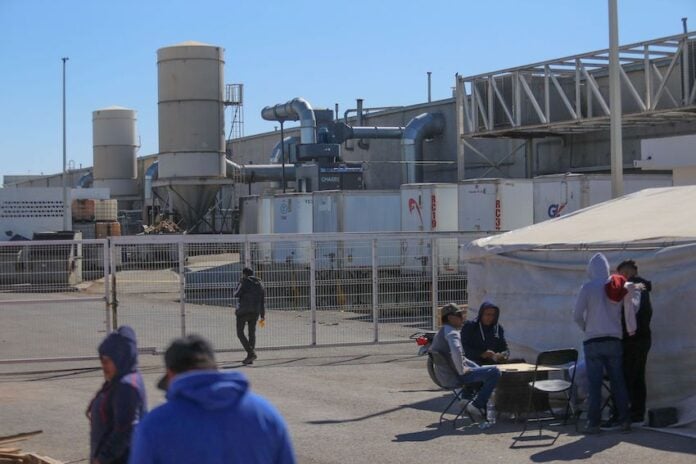
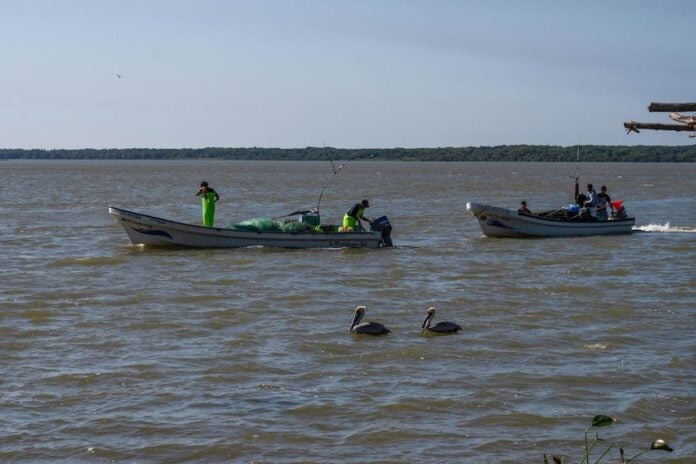
Brave covert reporters from El Jalapeño went undercover to bring you these exclusive images.
Within 72 hours, requests poured in from across the globe. Colombia cited “the general atmosphere.” South Africa submitted a 47-page legal brief rejecting Elon Musk’s citizenship. Bolivia’s request contained only a weather map of Dallas in June. The French federation’s petition was written entirely in French but, per a FIFA spokesperson, “made several compelling points we are not legally permitted to discuss.”
Algeria, Ivory Coast and Senegal submitted a joint application citing historical grievances too numerous to list, while Haiti’s federation asked to play all three of its matches on the same day in Guadalajara “to minimize exposure.” Australia’s request was reportedly filed just because everyone else was doing it.
FIFA rejected all relocation requests, releasing a statement emphasizing that the United States remains “fully capable of hosting a secure international tournament,” before quietly adding a second page assuring teams that local law enforcement had been “briefed extensively” on the concept of diplomatic immunity.
The only two nations not requesting relocation were the United States and Canada. Canada’s federation declined to comment.
According to the Federal Attorney General's Office (FGR), the scene of the operation to kill cartel boss El Mencho in Tapalpa de Allende, Jalisco, has been altered and contaminated. (Fernando Carranza Garcia/Cuartoscuro)
Why were journalists and other people able to gain access to cabins in Jalisco where Nemesio Rubén “El Mencho” Oseguera and members of his security detail were staying before the Jalisco New Generation Cartel (CJNG) leader was fatally wounded in a Feb. 22 military operation?
Because it was too dangerous to secure the properties immediately after the operation targeting “El Mencho” took place, according to the Federal Attorney General’s Office (FGR), which acknowledged that the “scene” of the operation was altered and contaminated.
Consequently, it appears, journalists — for a certain period at least — were able to enter unimpeded to accommodation used by one of the world’s most wanted drug lords and his CJNG henchmen.
The FGR issued a statement on Monday in which it said it was aware that “several people entered various cabins” in “a club” in Tapalpa, Jalisco, where it is believed Oseguera was hiding prior to the Feb. 22 military operation.
Among the people who entered a house that is said to have been the CJNG leader’s final hideout were journalists from the newspapers Milenio and El Universal. They entered the Tapalpa Country Club home on Feb. 23, the day after the operation against “El Mencho.”
A New York Times journalist reported on Feb. 25 that she and a photographer “stumbled across Cabañas La Loma, a residential compound and cabin rental business on the outskirts of Tapalpa that was sanctioned by the U.S. Treasury Department as far back as 2015 for its Jalisco cartel ties.”
“From a distance, the development looks like a perfect picture mountain sanctuary. … But up close, it was a crime scene frozen in time,” wrote Paulina Villegas.
“The streets, driveways and doorsteps were littered with dozens of spent shell casings, including jackets of .50-caliber rounds used for military weapons. Fires burned just beyond the homes. We didn’t know if they were set by the cartel or someone else,” the report stated.
“The neighborhood bore signs of a panicked exodus: Front doors left open and windows shattered. … The walls of several homes were pocked with the jagged craters of bullet impacts. Yet, despite the markings of extreme violence, the scene was stunningly unsecured. No law enforcement guarded the compound or the roads to it,” Villegas wrote.
The FGR said that the “place” where the operation against “El Mencho” took place — an operation that included “armed clashes” between military personnel and CJNG operatives — “did not offer [the] minimum security conditions [required] for the protection of ministerial and expert personnel.”
Consequently, an “immediate securing of the properties” — i.e., the cabins where Oseguera and other CJNG members were staying — didn’t occur after the operation against “El Mencho” took place, the FGR said.
The securing of the properties only occurred when the situation was “contained” and “minimum security conditions in the area” were reestablished, the FGR said.
The Federal Attorney General’s Office said it requested a search warrant from “a judicial authority” in order to “legally enter six properties” of interest.
“Prior to that, it came to light that, without any authorization from those legally empowered to grant it, various individuals entered said properties, thereby altering and contaminating the scene,” the FGR said.
“Consequently, this office cannot determine whether the objects or pieces of evidence that have been publicly reported as having been found in those properties were in fact found there,” the FGR said.
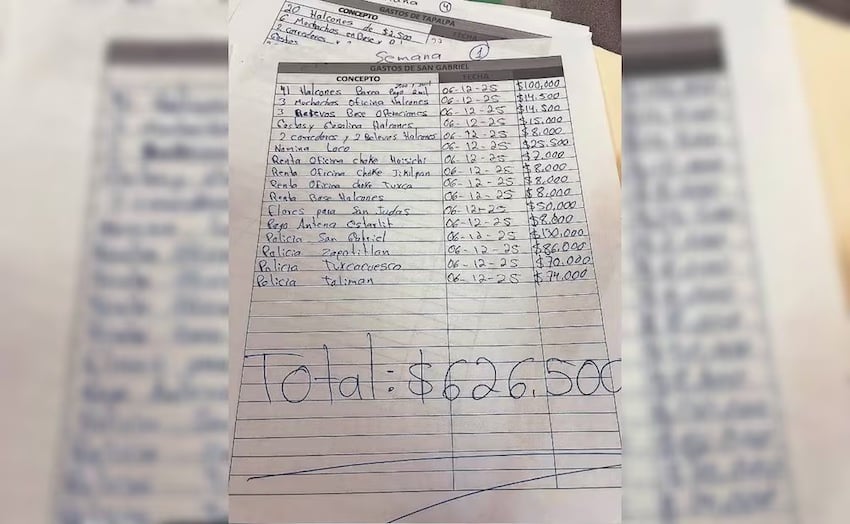
Among the evidence allegedly found in a cabin where “El Mencho” had stayed were documents detailing Oseguera’s so-called “narconómina“ (narco payroll) — i.e., the wages of the various people in the employ of the CJNG.
In its statement, the FGR also said it had launched an investigation “to determine whether any public servant committed an irregularity by failing to preserve” the scene where the operation against “El Mencho” took place just over three weeks ago.
On Feb. 23, Defense Minister Ricardo Trevilla Trejo said that Oseguera was fatally wounded by special forces soldiers after the CJNG leader and his “close circle” escaped into a “wooded area” in Tapalpa.
He said that “El Mencho” and two of his bodyguards died while being airlifted by military helicopter to a hospital in Jalisco.
El Universal reveals the CJNG’s operating expenses
On Feb. 26, the newspaper El Universal reported that it had obtained an “improvised” CJNG “narconómina” that detailed the cartel’s multi-million-peso and multi-million-dollar monthly expenses in various municipalities in Jalisco.
“The narco-payroll found in one of the cabins where ‘El Mencho’ was hiding lists accounting records … [detailing] contributions from plaza bosses [and] salaries for halcones (lookouts) and sicarios (hitmen) of the criminal organization,” El Universal wrote.
The newspaper also said the narconómina detailed “bribe payments” to the Attorney General’s Office (FGR), military personnel and municipal police, and payments made to “hackers.”
In addition, it detailed food and fuel expenses, spending on community aid, records of crystal meth, marijuana, and fentanyl sales and revenues from drug distribution inside prisons, according to El Universal.
Citing CJNG narconómina documents, the newspaper reported on Monday that the cartel spent 2.6 million pesos (about US $147,000) in Jalisco in December on Christmas lunches for children, posadas (Christmas parties), candy, piñatas, community assistance, parades, musical groups, masses and flowers. The cartel is known for handing out gifts on occasions such as Mother’s Day and Children’s Day.
Several line items on this list include payouts for municipal police. (Valente Rosas/El Universal)
Among the other expenses listed in the narconómina for December were amounts of 100,000 pesos ($5,660) to support a woman who had suffered a stroke and 8,800 pesos (US $500) to pay for dialysis for an unidentified person. Oseguera himself suffered from kidney disease.
El Universal wrote that “the criminal organization founded by ‘El Mencho’ has the deficiencies and needs of the people in the municipalities it controls in the state of Jalisco well-identified.”
The CJNG narconómina serves to show just how integrated the cartel is in the social fabric of certain municipalities in Jalisco. It also demonstrates how the CJNG contributes to the local economy and supports local citizens, while simultaneously committing serious crimes, sowing terror among the population — including with its violent response to the death of “El Mencho” — and deterring would-be tourists from visiting Jalisco and many other parts of Mexico.
By Mexico News Daily chief staff writer Peter Davies (peter.davies@mexiconewsdaily.com)
Mexican embassies across the Middle East have been helping Mexican tourists and residents of the war zones escape by land or air, or both. (Shutterstock)
The Foreign Relations Ministry (SRE) reported that as of Tuesday, March 17, it has facilitated the evacuation of 1,337 Mexican citizens from several countries in the war-ravaged Middle East.
The SRE also reported that no Mexicans have been killed injured due to the conflict that began on Feb. 28.
— Embamex Emiratos Árabes Unidos (@EmbaMexEAU) March 12, 2026
In addition to the U.S. and Israel strikes against Iran and Iran’s counterstrikes against Israel, Iran has launched continuous missiles and drones against Gulf countries hosting U.S. military bases, including the United Arab Emirates, Qatar, Bahrain, Kuwait and Saudi Arabia.
The ongoing hostilities have led Mexican tourists and residents to seek support from the embassies to evacuate.
“Regarding the situation in the Middle East, the Mexican Ministry of Foreign Relations reports that consular actions by our embassies in the Middle East have facilitated the evacuation of 1,337 Mexican residents and tourists from the United Arab Emirates, Israel, Lebanon, Jordan, Qatar, Iran, and Bahrain,” the SRE statement said.
The SRE explained that airspace is open intermittently across the region, and the Mexicans who have been evacuated have done so through “safe routes.”
It has also indicated that Mexican embassies in the Middle East have arranged commercial flights, coordinating staggered departures as permitted by security conditions and the state of the airspace.
The embassies in the region are also supporting Mexicans with the logistics required to travel by land to neighboring countries, such as Oman from the U.A.E or Saudi Arabia from Qatar.
Due to air disruptions, the Mexican Embassy in the U.A.E. issued a statement saying that it is “focused on supporting Mexican citizens whose flights have been canceled or rescheduled.” The embassy is assisting travelers in identifying alternative departure routes with airlines and in obtaining the necessary paperwork for visas.
Meanwhile, the Mexican Embassy in Qatar publishes daily updates on its official X account regarding available routes with Qatar Airways between Doha and various international destinations.
The SRE stressed that all Mexican embassies in Middle Eastern countries will address requests for protection or assistance submitted by Mexican nationals in the region. It also called on Mexicans to avoid all travel to the region.
In a joint statement with Colombia and Brazil, Mexico has called for “an immediate ceasefire in the Middle East” and urged “the need for differences between states to be resolved through international diplomacy.”
Mexico News Daily’s Gaby Solís reporting from the U.A.E.
Employment in the manufacturing sector is also down 2.5% compared to January 2025. (Manuel Sánchez/Cuartoscuro)
Mexico’s monthly manufacturing production volumes fell by 1.8% in January 2026, marking the second consecutive monthly decrease and the most pronounced since July 2015, the National Institute of Statistics and Geography (INEGI) reported on Tuesday.
The decrease was coupled with weak employment and fewer hours worked in the manufacturing industry, INEGI reported in its Monthly Survey of the Manufacturing Industry (EMIM). The industrial sector on the whole (which spans mining, construction and manufacturing) was also down 1.1% month on month.
By segment, the sharpest annual decline was in the manufacture of textile inputs and finishings (-10.4%), with contractions observed across the apparel and leather goods industries, followed by transportation equipment, which fell by 9.5% and basic metal industries (-8.3%).
However, other segments reported increases, with oil and gas production increasing by 4% and the manufacture of related coal and petroleum products jumping 18.4% over January 2025.
Mexico’s manufacturing sector has shown signs of struggle, compounded by U.S. sectoral tariffs targeting key industries such as automotive and steel, which have cooled investor appetite and weighed on output.
Some stagnation has also been seen in employment in the sector. Though employment grew 0.2% month over month in January, employment in the manufacturing sector is down 2.5% compared to January 2025. The number of hours worked in January decreased by 0.4%, compared to the previous month, and fell by 2.6% year over year.
Meanwhile, the average real wages paid — adjusted for inflation using the National Consumer Price Index — in the manufacturing sector in January fell by 0.3% month on month but increased by 3.3% compared to January 2025.
Carín León has quickly become one of the biggest musical stars in Mexico and a key face of regional Mexican music’s global boom. Now he's the voice of the official song of the FIFA World Cup 2026. (Carín León/Facebook)
Mexican regional star Carín León and American singer-songwriter Jelly Roll have united on the first official song for the 2026 World Cup, from an album that Billboard is calling one of the tournament’s “biggest collaborations yet.”
The song “brings together three host countries through one collaborative sound, bridging borders and genres while reflecting the shared cultural energy of North America and the global passion of the game,” FIFA said in a statement.
The song includes vocals by León (who hails from Hermosillo, Sonora) and Jelly Roll (born in Nashville) and was produced by Cirkut (born as Henry Walter in Ottawa, Canada).
The album “will create magic as football and music are coming together to unite the world,” Infantino wrote in the caption.
The album’s first single, “Lighter,” is “groundbreaking and sets the tone for everything to come,” he said of the forthcoming album, which FIFA is simply calling the “Official FIFA World Cup 2026 Album.”
Though no other songs or artists have been revealed, the album will include “established stars and new voices representing different styles and different cultures from around the world,” FIFA noted.
The 2026 World Cup will kick off June 11 in Mexico City with a Mexico–South Africa match and conclude July 19 in New Jersey. Matches will span 11 U.S. cities, three in Mexico and two in Canada.
Officials are expecting more than 80,000 fans at the event, which is part of Circuito Nacional de Festivales (National Circuit of Festivals for Peace) — a series of more than 200 free concerts and festivals around Mexico, with Tijuana as the kickoff.
León, 36, has quickly become one of the biggest musical stars in Mexico and a key face of regional Mexican music’s global boom. In 2024, he won a Latin Grammy for best contemporary Mexican music album with “Boca Chueca, Vol. 1,” and in 2026, took home a second Grammy for “Palabra De To’s (Seca).” He racks up tens of millions of streams and regularly sells out arenas on both sides of the border.
Jelly Roll, 41, meanwhile, has parlayed his past as an underground Southern rapper and a convict into one of country music’s most unlikely mainstream ascents, scoring a top three Billboard album with “Whitsitt Chapel.”
After spilled oil was first detected along the Gulf of Mexico shore on March 1, local and federal authorities put clean-up efforts into high gear, aware that a major tourism influx is expected later this month. (Isabel Mateos Hinojosa/Cuartoscuro)
Federal authorities say efforts to clean up an oil slick in the Gulf of Mexico are approximately 85% complete, though officials are still trying to determine the origin of the spill.
Containment actions in the Gulf where the hydrocarbon plume was initially detected have concluded and no residue remains, officials say.
More than 90 tonnes of waste impregnated with oil have been collected from beaches in the municipality of Coatzacoalcos, Veracruz: 40 tonnes from Playa Barrillas, 20 tonnes from Playa Linda and 30 tonnes from Playa Jicacal.
At the same time, roughly 1 tonne of contaminated materials has been cleared from the Laguna del Ostión in the municipality of Pajapan to the northwest.
The collected waste was transferred to temporary storage cells set up for handling and final disposal, while cleanup efforts continue apace.
Simultaneously, land tours were conducted in the Tabasco municipalities of Paraíso and Cárdenas. The collection of contaminated waste was continuing in Barra de Tupilco and Arroyo Verde, as well as along the coastline of Ejido Sinaloa, Ejido El Alacrán and Manatinero.
Beginning on March 2, residents of Veracruz and Tabasco reported seeing oil in the Gulf and tar on the beaches. State and federal authorities frantically began clean-up operations, hoping to restore the affected beaches ahead of the upcoming Easter Week holiday.
As federal authorities still do not know the source of the contamination, the Environment Ministry (Semarnat) is conducting verification tours, using satellite monitoring and analyzing ocean currents. It is also carrying out field investigations in an effort to determine the origin of the fuel and those responsible.
On Monday, Navy Minister Admiral Raymundo Pedro Morales told Nahle that findings from the investigation were inconclusive. Once the source is detected, Semarnat and federal prosecutors will determine responsibilities and apply sanctions as indicated by environmental law. The law also requires full restoration of the environmental damage that has affected at least 39 localities and 230 kilometers of coastline.
Rocío Nahle said state authorities remain on alert and are ready to quickly address any new contamination threatening the Veracruz coastline.
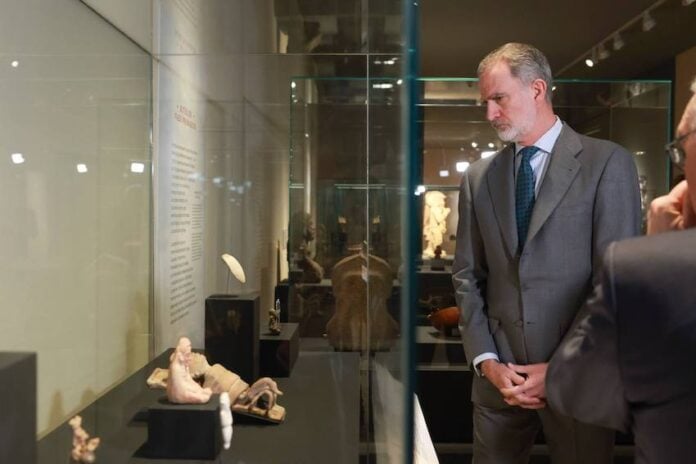
The statement came during the king’s visit to the exposition “Half the world. The women of Indigenous Mexico” at the National Archaeological Museum (MAN) in Madrid, Spain. (S.M. El Rey Felipe VI/Facebook)
King Felipe VI of Spain acknowledged on Monday that during the Spanish conquest and colonization of America, “there were significant abuses” and “moral and ethical controversies,” marking an unprecedented statement on the matter for a king of Spain.
The statement came during the king’s visit to the exposition “Half the world. The women of Indigenous Mexico” at the National Archaeological Museum (MAN) in Madrid, Spain.
Recorrido del Rey por la exposición “La mitad del mundo. La mujer en el México indígena” en el Museo Arqueológico Nacional (MAN).
La exposición, centrada en el ámbito humano, permite indagar en el conocimiento del México indígena a través de la figura de la mujer. pic.twitter.com/BDwH8KIijl
In a video posted by the Royal House on social media, the monarch can be heard saying that “there are things that, when we study them, in our judgment, with our current values, obviously cannot make us proud. But we must understand them, in their proper context, not with excessive moral presentism, but with an objective and rigorous analysis.”
He added that since the time of the Catholic Monarchs and the Laws of the Indies – the legislation issued by the kings of Spain to regulate life in the overseas territories, including the Americas and the Philippines – there had been a “desire to protect” the Indigenous people, but that in reality, “this protection is not fulfilled as intended, and there is much abuse.”
King Felipe VI also spoke of “many moral and ethical controversies regarding how power has been exercised from the very beginning” of Spanish royalty.
This is the first time Felipe VI has directly addressed the context of the Spanish conquest and colonization after years of diplomatic tension between Mexico and Spain. The tension started in 2019, when President Andrés Manuel López Obrador — of the current ruling party Morena — sent a letter to Spain requesting an apology by the Crown and the Catholic Church for the wrongs committed against Indigenous peoples.
The letter went unanswered, leading to increased friction between Spain and Mexico. As a result, the current president, Claudia Sheinbaum, did not extend an invitation to King Felipe VI to her presidential inauguration ceremony in 2024.
Yet, diplomatic relations between the two countries have remained active and there are signs of increased bilateral cooperation. In fact, earlier this year, the International Tourism Fair (FITUR), which is held every year in Madrid and is regarded as one of the largest fairs of its kind, featured Mexico as its partner country.
What did President Claudia Sheinbaum say?
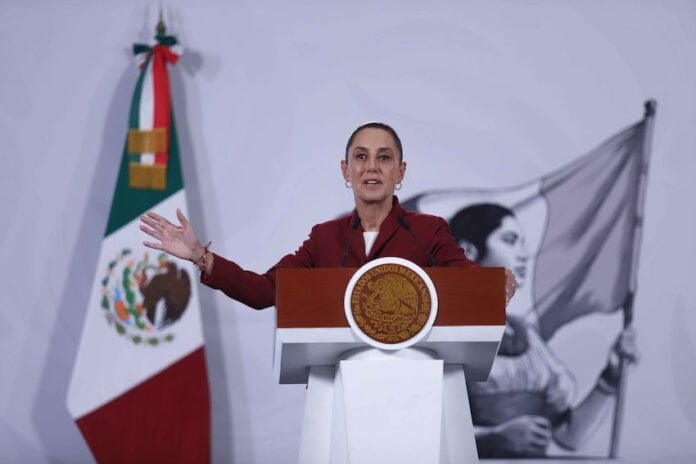
This morning, President Clauida Sheinbaum addressed the king’s statement, describing it as “a gesture; an approach that we acknowledge.”
“This might not be everything we were hoping for,” she said, while also recognizing the monarch’s “gesture” of visiting the exposition. “But this is undoubtedly a gesture of rapprochement by the king.”
At the time, Sheinbaum welcomed these words, stating they were the “first step” by the Spanish government toward recognizing the abuses committed. And although the recent words by the king of Spain are not a formal apology, Sheinbaum insisted that “we must recognize [the king’s statement] and continue to move forward with the dialogue.”
“We must keep working on the process of recognizing the great civilizations that existed in Mesoamerica and in other parts of Latin America — what we now call Latin America,” she said.
Given the choice, Mexicans would likely vote to keep Claudia Sheinbaum in office based on recent polling. (Graciela López/Cuartoscuro)
Sheinbaum’s mañanera in 60 seconds
🗳️ Sheinbaum could face a recall election in 2027 or 2028: Interior Minister Rodríguez noted that under the “plan B” electoral reform proposal, citizens can request a presidential recall vote in either the third or fourth year of Sheinbaum’s term. Sheinbaum pledged on inauguration day to subject her leadership to a vote, but given her consistently sky-high approval ratings, she’d almost certainly be confirmed to continue in office.
🚆 AIFA train slightly delayed: The new Buenavista–AIFA line is now expected to open April 6, slipping from Sheinbaum’s previous March 29 target due to ongoing testing. The trip will take around 40 minutes.
🇨🇺 Sheinbaum calls Cuba’s economic opening “historic”: She praised Cuba’s decision to allow its diaspora to invest and own businesses on the island — banned for decades — while carefully framing it as a sovereign Cuban choice.
One detail that came to light on Tuesday is that a presidential recall election could be held in 2028, even though Sheinbaum committed to putting her leadership to a vote in 2027.
Sheinbaum’s Tuesday mañanera was also consequential as a new timeline for the opening of the long-awaited railroad to the Felipe Ángeles International Airport was revealed and the president commented on the Cuban government’s decision to allow investment in Cuba by Cuban nationals who live abroad.
A presidential recall election could be held in 2027 or 2028
Presenting the details of Sheinbaum’s “plan B” proposal, Interior Minister Rosa Icela Rodríguez said that a presidential recall election could be held in either 2027 or 2028, if citizens request one.
“With regard to the revocation of mandate, I remind you that the people of Mexico have the right to decide if the president should continue in the position or not,” Rodríguez said.
She noted that Sheinbaum’s “plan B” bill — which will be submitted to the Senate on Tuesday — proposes that a revocation of mandate, or recall, election be held on the first Sunday in June during the third or fourth year of a president’s six-year term.
Thus, Sheinbaum could face a recall election in 2027 or 2028, “depending on the year citizens request” a vote, Rodríguez said.
Former president Andrés Manuel López Obrador faced a recall referendum in 2022, the fourth full year of his presidency. Among Mexicans who participated in the election, the vast majority voted in favor of AMLO completing his six-year term. However, fewer than 20% of Mexico’s eligible voters cast a ballot in the referendum.
“In 2027, I will subject myself to a revocation of mandate [recall election], as the constitution establishes,” she said during an address in Mexico City’s central square on Oct. 1, 2024, the day she was sworn in.
Poll results consistently show that Sheinbaum is a highly popular president, suggesting that Mexicans would overwhelmingly vote in favor of her continuing her term until its scheduled conclusion in 2030.
Opening of train line to AIFA will be delayed
Sheinbaum told reporters that the train line between Mexico City and the Felipe Ángeles International Airport (AIFA) in México state looks set to open on April 6, over a week later than the date she gave last month.
“I asked for it to be ready on March 29, but they tell me it will probably be April 6,” she said.
Sheinbaum said that the slight delay is related to the testing of the railroad to AIFA, an extension of the existing Suburban Train line that runs between Buenavista in central Mexico City and Cuautitlán, México state.
“They’re finishing the tests and at the time … [the railroad] is ready, it will open,” she said.
The federal government hopes that the opening of the train line will lead to an increase in passenger numbers at AIFA, which is a one to two-hour car ride from downtown Mexico City. (Presidencia/Cuartoscuro)
The airport is located about 50 kilometers north of central Mexico City in the México state municipality of Zumpango. The federal government hopes that the opening of the train line will lead to an increase in passenger numbers at AIFA. The trip from Buenavista to the airport will take around 40 minutes.
Sheinbaum: Cuba’s decision to allow Cubans abroad to invest in their homeland is ‘historic’
A reporter asked the president her opinion about the Cuban government’s decision to allow Cuban nationals who live abroad to make investments in their homeland.
“It’s a sovereign decision of the government of Cuba,” Sheinbaum said.
“… We have to acknowledge that they’re seeking different options for the people of Cuba. And it’s historic because for many years this wasn’t allowed,” she said.
“It’s their decision to open up investments,” Sheinbaum said, noting that Cubans who live abroad will be able to own businesses “on the island.”
“It’s their sovereign decision and it represents a change,” she said.
NBC News reported Cuba’s decision after an exclusive interview with the country’s Deputy Prime Minister and economic czar Oscar Pérez-Oliva Fraga.
“Cuban nationals living abroad in places such as Miami will be allowed to invest in the private sector and own businesses in their homeland, the country’s economic czar has told NBC News in an exclusive interview,” the report stated.
The Cuban government’s decision came as the Cuban people face extreme hardship due to food shortages and a U.S. blockade on oil shipments to the island.
Cuban President Miguel Díaz-Canel said late last week that his government had held talks with the Trump administration in order to seek a “possible solution to bilateral differences.”
By Mexico News Daily chief staff writer Peter Davies (peter.davies@mexiconewsdaily.com)
There are legitimate concerns about the Iranian national soccer team's safety in the United States, as the war led by the U.S. and Israel in the Middle East intensifies. (Gobierno de la Ciudad de México/Cuartoscuro)
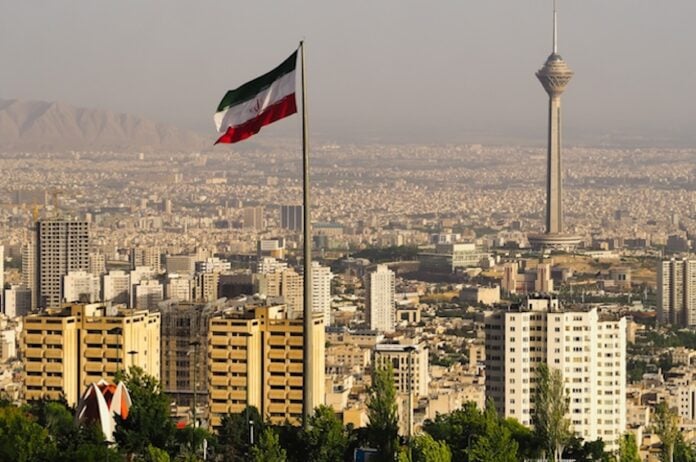
Geopolitics is threatening the structure of the 2026 World Cup as Iran’s national soccer federation has reportedly asked FIFA to relocate the team’s group-stage games from the United States to Mexico as the U.S. and Israel escalate their attacks on the country.
Iran’s Embassy in Mexico told reporters it is in negotiations with FIFA, although soccer’s world governing body has indicated it is unwilling to move the matches just three months before the tournament begins.
During her Tuesday morning press briefing, President Claudia Sheinbaum said Mexico is willing to host Iran’s matches against New Zealand, Belgium and Egypt.
“Of course it is feasible,” Sheinbaum said. “We have diplomatic relations with every country in the world, but we will await word from FIFA before commenting further.”
Media reports indicate FIFA has rejected Iran’s request, declining Mexico’s offer to play host to the Iranian national team.
Iran’s matches are scheduled to be held in Los Angeles (June 16 and June 21) and in Seattle (June 26), but recent comments by U.S. President Donald Trump prompted the Iranians to voice concern about the security of their official entourage.
“The Iran National Soccer Team is welcome to The World Cup, but I really don’t believe it is appropriate that they be there, for their own life and safety,” Trump wrote in a March 12 social media post.
In its initial response, the Iranian soccer federation said no individual could exclude a country from the World Cup, while questioning if the U.S. would be able to provide the necessary security for teams participating in the tournament this summer.
Iran Foreign Ministry spokesman Esmail Baghaei also criticized Trump’s comments. “When warnings are issued at the highest level about the environment being unsafe for Iranian football players, this indicates that the host country apparently lacks the capacity and ability to provide security for such an important sporting event,” he said.
Before Trump’s comments, Iranian officials had suggested that its team might back out of the World Cup entirely after the U.S. and Israel launched attacks that killed the Islamic Republic’s Supreme Leader and dozens of top officials.
Sports Minister Ahmad Donyamali told state TV that it was not possible to play “due to the wicked acts they have done against Iran.”
Trump’s warning appears to have hardened Iran’s position, however.
Ambassador of Iran in Mexico Abolfazl Pasandideh, who last week said, “We love Mexico very much … and had prayed that our games would be played here,” has made several pleas for FIFA to relocate Iran’s matches. “We ask the Mexican people — who are such wonderful hosts and have always been so kind to us — to follow up on this matter and ensure that our national team is based in Mexico,” he said in an interview for the political news show “Los Periodistas.”
🇮🇷🇲🇽 | Irán agradece a México llamado a la paz; abre puerta a jugar Mundial en territorio mexicano.
El embajador iraní en México manifestó el deseo de su selección de fútbol por disputar sus partidos de la Copa Mundial 2026 en territorio mexicano.
Shifting Iran’s fixtures to Mexico would pose a significant logistical switch for FIFA, but the Reuters news agency pointed out that relocating matches for security or geopolitical reasons is not unprecedented.
In September 2025, Scotland earned a 2-0 World Cup qualifying victory over Belarus at Zalaegerszeg near the Austrian and Slovenian borders. The game was moved over concerns about the role Belarus played as a staging ground for Russia’s invasion of Ukraine.
In a statement shared by the embassy, Iranian soccer federation president Mehdi Taj made the organization’s position clear: “When Trump has explicitly stated that he cannot ensure the security of the Iranian national team, we will certainly not travel to America.”
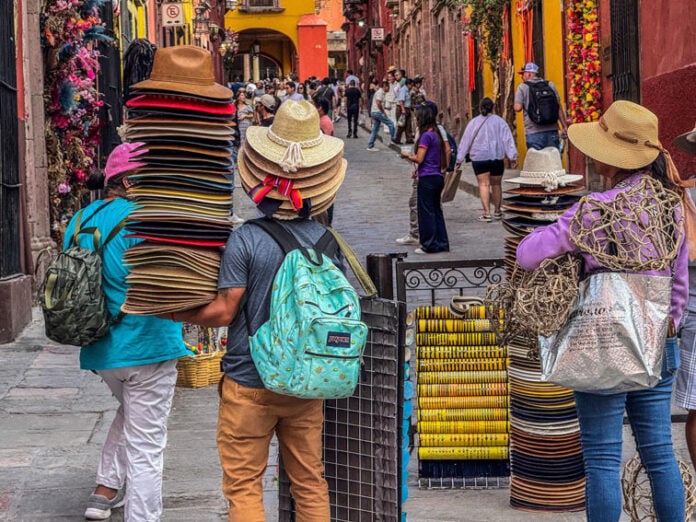
Hat vendors plying their trade in downtown San Miguel de Allende. (Ria Talken)
Spring in San Miguel de Allende is a time of warmer weather, purple jacaranda blossoms, preparations for Semana Santa (Holy Week) and, later, school graduations.
Art displays, live music concerts and literary activities continue this month in San Miguel, along with special benefit events and performances, including one event celebrating the spring equinox. More on those below after a look at a couple of local NGOs focused on education and networking.
Jóvenes Adelante reviewing 314 local applicants
(Eduardo Mota)
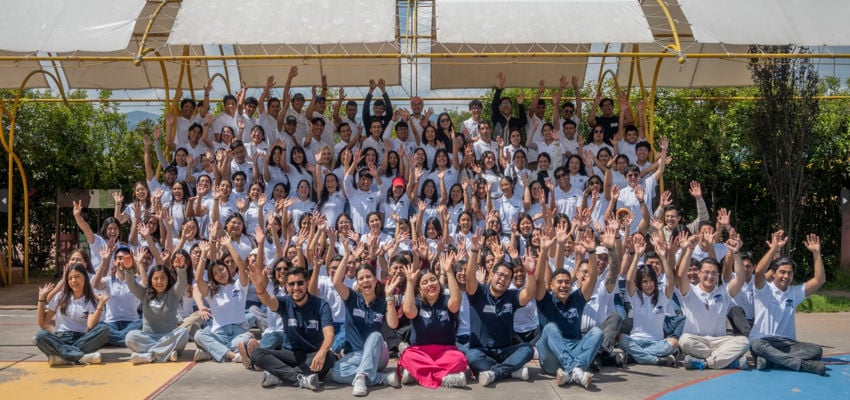
Jóvenes Adelante’s (JA) student applicant pool for university enrollment this fall totals 314, according to Don Krim, the nonprofit’s president. JA is reviewing and evaluating applicants now and should have selection decisions by July, he said.
“Our internal goal would be to support between 45 and 50 new undergraduate students and eight master’s students,” Krim said.
Students in the JA program from San Miguel, Dolores Hidalgo and Comonfort receive funding from donations to cover housing and food, along with a laptop computer, mentoring and English-language tutoring.
JA began in 2001 in San Miguel as a community-based organization to help high school students with potential continue on to university. The organization became a Mexican nonprofit in 2007 and a U.S. nonprofit in 2009. Fast-forward to 2026, and JA has graduated 338 total students, helping them finish university degrees and, for some, continue to master’s programs.
JA’s graduation rate is 83%, but Mexico’s is only 26% nationwide, Krim said.
“Only 45% of kids graduate from high school in Mexico, and only 22% of those who graduate go on to apply to university,” he said.
Currently, 138 university students are enrolled through JA, plus 10 master’s students who have graduated from the program and moved on to the next level, Krim said. JA-supported students can choose from a range of Mexican universities, and their choice of majors is also broad, he said.
“A lot of them are studying medicine, nursing, physical therapy, dentistry and engineering,” Krim said. “Those are the largest categories.”
Others are studying law or are focused on agribusiness, tourism or architecture, he said.
JA has U.S. donors but could use more, Krim said. The organization is also funded by a grant from JA U.S. and partners with Amistad Canada. A large grant from the state of Guanajuato for two consecutive years has helped pay for staffing and space, he said.
Krim called educating young Mexicans who otherwise wouldn’t be able to attend university essential for the country’s future.
“We are impacting the course of the future of students and potentially the whole country,” he said. “You have to have an educated population.”
Ladies of San Miguel formed through group chat
(Kim Lee)
A group of mainly African American women that gets together for monthly luncheons in San Miguel started as an online community looking for information and connection, said Kim Lee, who helps coordinate their activities.
“I just wanted to create a group to communicate on WhatsApp,” she said. “I think we’re up to 82 ladies. The group chat has been really good at communicating certain events.”
Besides the monthly luncheon events, members of the group gather each month at Don Lupe’s Grill for dinner and dance to rhythm and blues music. Some live in San Miguel, and others travel back and forth to their home countries, Lee said. Some are retired, and some aren’t, she added.
Anyone wanting to get involved in the group can contact her through Facebook Messenger, and she’ll do the rest, she said.
“All I need is a phone number and a name, and we’ll add them to our chat group,” Lee said.
Cruz Roja benefit on tap March 19
(Cruz Roja Mexicana San Miguel de Allende)
A benefit event for Cruz Roja Mexicana (the Mexican Red Cross in San Miguel) will be held March 19 at 5 p.m. at the Cleviá hotel at Josefina Orozco 6, next to the Luna de Queso restaurant.
The theme is Mardi Gras, and participants are encouraged to bring a mask since a prize will be awarded for the best one.
Admission is a 1,200-peso donation, which can be made here. Music, cocktails and canapés will be served. More information is available at 415 122 0944.
World Music Festival runs March 19–22
(San Miguel de Allende World Music Festival)
Live concerts, art exhibitions and workshops will be part of this year’s World Music Festival in San Miguel de Allende.
The Samadhi Ensemble on March 19, 6:30 p.m., at the Teatro Ángela Peralta, Mesones 82
A musical tribute to Santana on March 20, 6:30 p.m., at the Peralta
A jazz trio performance with Claude Bolling at 6:30 p.m. on March 21 at the Peralta
A closing party at Cent’Anni Restaurant, Canal 34, at 6 p.m. on March 22.
Tickets are available at the Peralta theater box office or by calling 415 161 9551.
Benefit golf tournament tees up March 20
(SOME)
The local nonprofit organization So Others May Eat (SOME) is having a benefit at 9 a.m. on March 20 at Zirándaro Golf, with all proceeds assisting the group’s dining program for hundreds of elders with limited means.
The entrance fee, which includes full-day participation, is a 2,500-peso donation per player. Registration and other tournament details can be found here.
El Charco spring equinox concert on March 21
(El Charco del Ingenio)
El Charco del Ingenio Botanical Garden will be holding its 25th annual spring equinox concert at 5:30 p.m. on March 21 in the canyon, which was not affected by the recent fire.
Performing will be Mujeres del Viento Florido (Women of the Flowering Wind), an all-female band from Indigenous communities in Oaxaca.
Tickets are 500 pesos for general admission and 100 pesos for children. Tickets must be bought in advance. Purchase them either at El Charco, or arrange them via email.
Feed the Hungry SMA benefit gala on March 24
(Feed the Hungry SMA)
A Murals of Dreams gala event to benefit Feed the Hungry SMA will be held March 24, 6–11 p.m., at the Institute Allende, Ancha de San Antonio 22. Feed the Hungry SMA is a nonprofit organization providing 5,000 nutritious meals every school day in 39 educational institutions across San Miguel.
The gala event will feature cocktails, dinner, live music and dancing.
Registration ends March 19. More information is available here.
Cuba and danzón on stage at the Peralta on March 28
(Alma Events)
The musical tradition of danzón, considered Cuba’s national dance, will be presented at the Teatro Ángela Peralta, Mesones 82, at 7 p.m. on March 28.
Featured musicians include Ricardo Benítez, flute; Pedro Cartas, violin; Alfred Thompson, piano; David Barrera, double bass; Victor Miranda, percussion; and Dairon Vazquez, percussion and vocals. More information and tickets are available here.
Cathy Siegner is an independent journalist based in San Miguel and Montana. She has journalism degrees from the University of Oregon and Northwestern University.