Legal exportation of reptiles from the United States into Mexico by land requires expressed approval from several U.S. agencies, of which the tractor driver apparently had none. (CBP)
U.S. Customs and Border Protection (CBP) officers intercepted a tractor with 39 live pythons hiding inside on March 5 while conducting outbound operations. The driver was starting to cross the World Trade Bridge from Laredo in Texas to Nuevo Laredo in Tamaulipas.
CBP officers flagged for inspection a 2021 Peterbilt tractor traveling to Mexico and then found the snakes after the driver had provided a declaration that no prohibited goods were being transported.
Animal smugglers know there’s a market for pythons in Mexico, either live as pets or dead as snakeskin boots. (Facebook)
Officials contacted U.S. Fish and Wildlife Service agents who took custody of the animals. The pythons were transported to a controlled environment where their condition could be monitored, according to CBP reports.
The driver was given penalties of $34,824 for export violations, while CBP seized the tractor and trailer.
Exporting live reptiles across the U.S.-Mexico border requires compliance with several U.S. and international regulations, and approval must be given from agencies such as the U.S. Fish and Wildlife Service, the U.S. Department of Agriculture and the U.S. Census Bureau.
This is not the first time this year that someone has been caught trying to smuggle wildlife across the border. In February, a U.S. citizen allegedly attempted to transport 11 parrots in a private vehicle from Mexico into the U.S., via the Córdova–Las Américas International Bridge near Ciudad Juárez, Chihuahua.
This followed an incident in November when a man was caught attempting to smuggle two Mexican orange-fronted parakeets in his pants across the border between Tijuana and San Diego.
“The interception of live pythons at the World Trade Bridge highlights the vigilance and dedication of our CBP officers in enforcing laws that protect both our borders and our environment,” said Port Director Alberto Flores, Laredo Port of Entry. “CBP remains committed to preventing the illegal importation and exportation of wildlife and ensuring compliance with all federal regulations.”
Carín León, the Sonora-born singer who recorded the official 2026 World Cup song, has soared in international popularity along with the musical genre with which he is identified. (Facebook)
When FIFA announced recently that Carín León has recorded the lead vocal on the soon-to-be-released recording of the official World Cup 2026 song “Lighter,” the tens of millions of Mexican regional music fans needed no introduction.
But they’re far from the only ones. Ever since León switched to a solo career in 2018, his popularity has soared internationally along with the musical genre he is most identified with.
That’s no coincidence. Carín León has become the rising star of regional Mexican music by injecting new life into it. What was a blend of such regional sounds as norteño, banda and sierreño, now includes touches of blues, rock and country.
“We want to come and change the game in a certain way,” León told the newspaper El País. “We come with a very different proposal and I think it’s a great opportunity to show what we are capable of and where we want to take our music.”
In a sense, León conquered Mexican regional music by adapting it to his own style. And thanks to the innovation he is largely responsible for, León, 36, has achieved several breakthroughs in his career.
Most prominent these days is his shared lead (with the American Jelly Roll) on FIFA’s World Cup song, which Billboard calls one of the tournament’s “biggest collaborations yet.”
This year, he will also become the first Latino artist to perform at the Sphere in Las Vegas, with three shows scheduled for the city’s Sept. 11-13 run-up to Mexican Independence Day.
He was born Óscar Armando Díaz de León in Hermosillo, Sonora, a city traditionally linked to banda, one of the staple sounds of Mexican regional music. He gained success as the lead vocalist of Grupo Arranke before kicking off his solo career in 2018.
The artist’s big break, however, came thanks to “Primera cita” (First Date), a song that blends norteño, blues, rock and pop. The song’s video generated millions of views on YouTube and became a trend on TikTok.
“I wasn’t happy with the music I was making, I was a little frustrated,” León told El País. “I decided to abandon the dream of wanting to be a star in the market and started making the music I wanted, regardless of the fact that all the statistics told me this wasn’t going to work […] Thank God, things worked out for us.”
It worked not only in Mexico, but abroad as well. León has become a recognized Mexican artist within the U.S. music market. He has forged innovative collaborations with country stars like Kacey Musgraves, Leon Bridges and Kane Brown.
He recently announced a collaboration with rock legend Bon Jovi on the album Forever Legendary Edition.
In addition to his successful collaborations, he has won two Grammy Awards in the Best Mexican Music Album category for “Boca chueca, Vol. 1” and “Palabra de To’s (Seca),” in addition to several Latin Grammys.
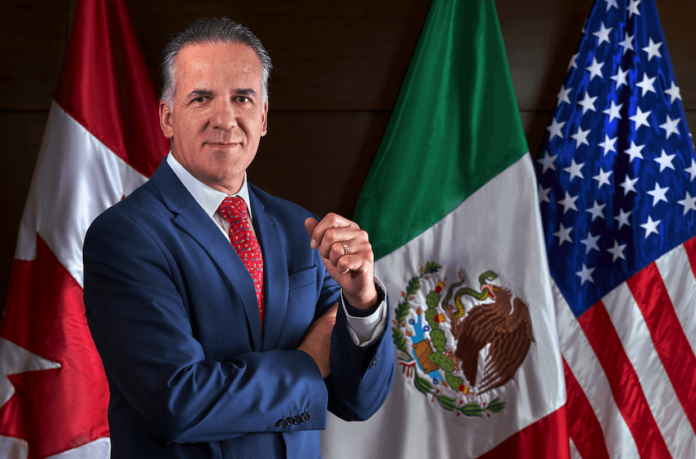
Oscar Del Cueto is president of Canadian Pacific Kansas City, which has been a member of AmCham for over a decade. (CPKC)
Oscar Del Cueto, president of Canadian Pacific Kansas City (CPKC) Mexico, was named the new president of the American Chamber of Commerce of Mexico (AmCham) for the 2026-2027 period, the business organization announced Wednesday.
The appointment was formalized during AmCham’s 109th General Assembly of Partners in Mexico City.
In his first address as president, Del Cueto stressed the importance of strengthening North American economic integration and consolidating coordinated efforts across the region. He highlighted AmCham’s role as a technical and constructive voice on strategic issues, including the United States-Mexico-Canada Agreement (USMCA), competitiveness and foreign investment attraction.
“We have the opportunity to strengthen our leadership, to influence the major debates and to ensure that the voice of our business community is heard, respected and considered at the highest levels of decision-making,” he said.
Del Cueto’s appointment came as Mexican and U.S. officials commenced preliminary talks on the formal USMCA review.
The incoming president recognized the outgoing AmCham board, which was led by Carlos García, general director of energy company Valero México, and Fernanda Guarro, managing director of 3M México. He thanked the outgoing AmCham president and vice president for their commitment and results.
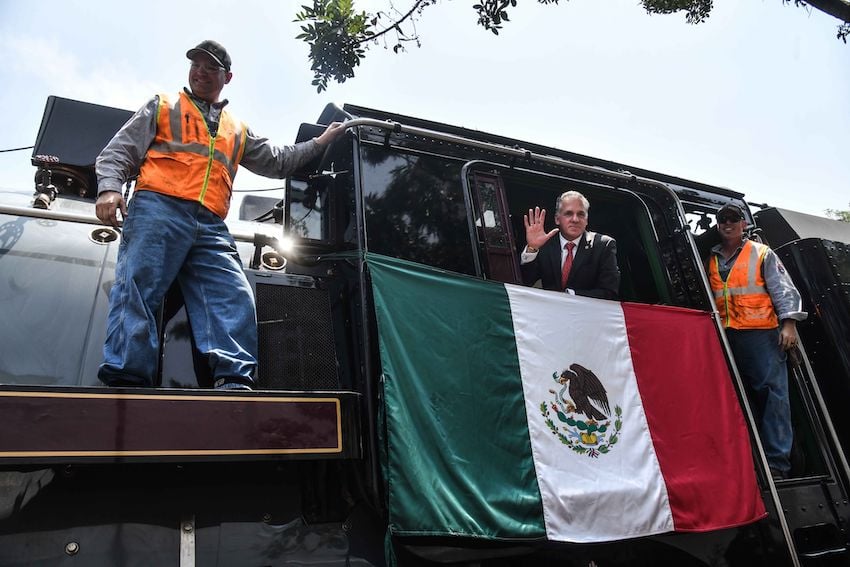
Del Cueto has been with CPKC since 2006. (Mario Jasso/Cuartoscuro)
In his address, Del Cueto also called on the chamber’s membership to anticipate challenges, forge agreements and advance toward a modern, long-term-oriented organization aimed at driving sustainable and shared economic growth.
AmCham México groups Mexican and U.S. companies with the aim of promoting bilateral trade and strengthening the economic relationship between both countries. The chamber currently has more than 1,450 affiliated companies. CPKC, one of North America’s major transnational freight rail operators, has been an AmCham member for over a decade.
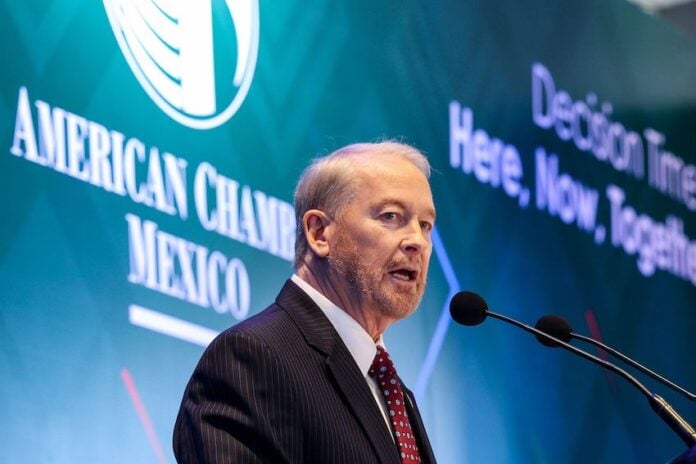
According to Ambassador Johnson, "the true strength" of the U.S.-Mexico relationship "doesn't lie just in economic figures, but in the depth of our human connections." (Galo Cañas/Cuartoscuro)
U.S. Ambassador to Mexico Ronald Johnson asserted Wednesday that the upcoming review of the USMCA doesn’t represent a “risk” to the trilateral North American free trade pact, but rather an “opportunity to deepen integration” in the region.
His remarks came during an address in Mexico City at the 109th General Assembly of Partners meeting of the American Chamber of Commerce of Mexico (AmCham). Johnson is the honorary president of AmCham.
Here is an overview of the ambassador’s remarks, as reported by major Mexican newspapers.
USMCA can be ‘the envy’ of the world
Johnson said that “we” — i.e., the U.S. government — “don’t see the 2026” review of the United States-Mexico-Canada Agreement (USMCA) “as a risk, but rather as an opportunity to deepen integration and strengthen [North American] supply chains in an increasingly complex world.”
The ambassador also said that the United States, Mexico and Canada have an opportunity to establish North America as the world’s most competitive economic region and a bloc that is the “envy” of the world.
His comments came as Mexican and U.S. officials commenced formal trade talks ahead of the review of the USMCA, which replaced NAFTA in 2020.
Mexican Economy Minister Marcelo Ebrard wrote on social media on Wednesday that he and other Mexican officials held talks with U.S. Trade Representative Jamieson Greer “and his team to commence discussions with respect to the review of the USMCA.”
“The [Mexican and U.S.] technical teams will be working throughout the day today and tomorrow,” he added.
The talks are taking place in Washington, D.C. The formal trilateral USMCA review will take place later this year.
During his address, Johnson also said that the United States and Mexico will continue building a stronger, more dynamic and more competitive partnership.”
He noted that the U.S. and Mexico are each other’s largest trade partners, with two-way trade totaling close to US $1 trillion annually.
Despite that, U.S. President Donald Trump said in January that he doesn’t “care” about the USMCA, and claimed that the pact offers “no real advantage” to the United States.
“We could have [the agreement] or not, it wouldn’t matter to me,” he said.
Mexico-US relationship is like ‘a marriage’
Speaking to Mexican and U.S. businesspeople at the AmCham event at the Papalote Children’s Museum, Johnson described the U.S.-Mexico relationship as “a marriage.”
“You can love each other a lot, be partners, raise children and grow businesses [even] when you don’t agree on everything,” he said.
Johnson said that he had used the marriage analogy in a conversation with President Claudia Sheinbaum, and asserted that there is no possibility of a divorce between the two countries.
As he has asserted on social media, the ambassador said there is “historic cooperation” between the United States and Mexico under the leadership of Trump and Sheinbaum.
He also said that “when the United States and Mexico work together, we’re stronger.”
“We’re stronger economically, we’re stronger strategically and we’re stronger in the face of unfair competition from other parts of the world,” Johnson said.
He also said that “the true strength” of the U.S.-Mexico relationship “doesn’t lie just in economic figures, but in the depth of our human connections.”
‘North America, united, could be independent’
The ambassador claimed that North America could become self-sufficient at some point in the future, eliminating the need to import goods from other regions of the world.
“North America, united, could be independent,” Johnson said.
“Think about it. Mexico and the United States together could feed each other. We can provide each other the water we need. We could be independent and have everything we need for our people,” he said.
‘We have the most secure border in history’
Johnson highlighted that the U.S. and Mexican governments are “working together to stop fentanyl trafficking, seize illicit firearms, combat human trafficking and tackle illegal migration.”
“And that cooperation is delivering real results for our people and our communities,” the ambassador said.
Johnson asserted that the U.S. and Mexico currently have “the most secure border in history.”
“Illegal immigration is at record lows and there are zero releases of migrants [detained] at the border. This is important for President Trump and therefore it’s important for me,” he said.
Johnson said that fentanyl — which is made in Mexico with Chinese precursor chemicals before being smuggled into the U.S. — is still killing “too many” people in the United States, but noted that deaths related to the synthetic opioid are declining.
“We still have a lot of work to do, but [deaths] are declining and that’s very special,” he said.
‘A strong private sector needs certainty’
Johnson asserted that “a strong private sector needs certainty, fair conditions and a level playing field.”
“Guaranteeing those conditions both at home and in all of North America is a key priority for the United States,” he said.
Johnson’s predecessor as ambassador to Mexico, Ken Salazar, criticized Mexico’s judicial reform, saying in 2024 that the “direct election of judges is a major risk to the functioning of Mexico’s democracy” and that judicial elections — which were held last year — would “threaten the historic trade relationship we have built, which relies on investors’ confidence in Mexico’s legal framework.”
World Cup ‘will demonstrate the strength of our cooperation’
Johnson said that the FIFA men’s World Cup — which will be co-hosted by the United States, Mexico and Canada in June and July — “will not only show the passion of our people for the game … but also demonstrate the strength of our cooperation.”
He also said that the five-week tournament will demonstrate “our capacity to coordinate with each other across borders in order to guarantee security and offer to the world an event that is successful, memorable and safe.”
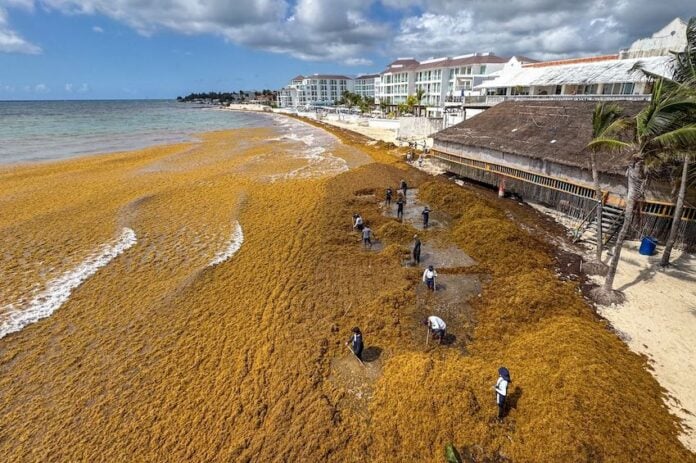
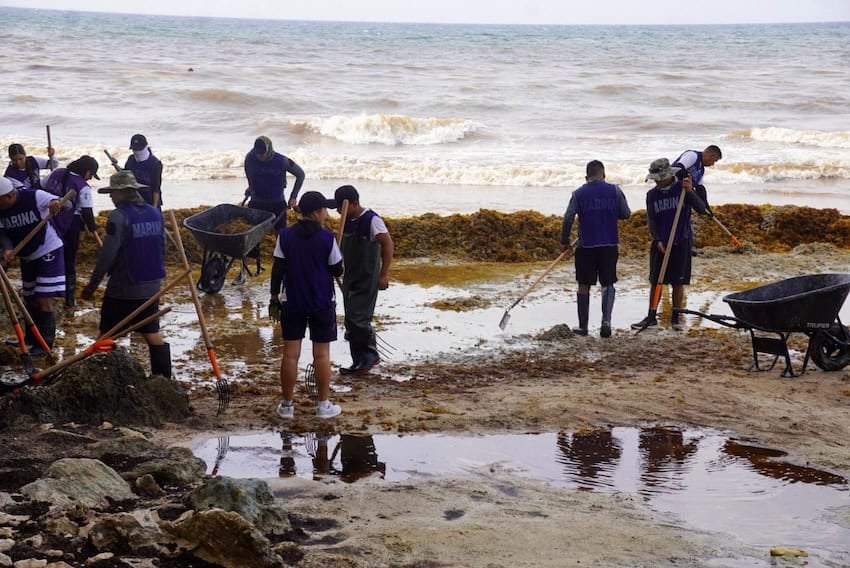
With millions of tonnes of sargassum lurking out in the Atlantic, barriers are being constructed, ships deployed and clean-up crews put to work in order to keep the seaweed off Quintana Roo's beaches during the upcoming Semana Santa. (@JuanM.Valdivia/Facebook)
March is here, and with it the typical start to sargassum season, when the noxious seaweed begins washing up on Mexico’s Caribbean coastline, darkening the sea, fouling the sand and chasing away the tourists.
This year could be worse than ever.
Local authorities are hoping to avoid the kind of sargassum invasions that turned Playa del Carmen into a slippery field of seaweed in previous years. (Elizabeth Ruiz/Cuartoscuro)
For one thing, the season started earlier than usual, with the slimy invader first washing up on Isla Mujeres in the second week of January. According to industry publication Reportur, 244 tonnes of sargassum were collected from Tulum in February, up from 59 in 2025. It has since accumulated in many other beaches along the Quintana Roo coastline, particularly near Playa del Carmen.
“This year is going to be terrible,” said Rosa Rodríguez, a researcher at the National Autonomous University of Mexico’s Institute of Limnology and Marine Sciences in Puerto Morelos.
According to Rodríguez, a record 9.5 million tonnes of sargassum was spotted out in the Atlantic Ocean during January and another 13.6 million tonnes in February, far exceeding the previous records of 7.8 and 4.3 million tonnes in 2025. Because sargassum is a floating seaweed carried by ocean currents and winds, experts expect about 10% of that accumulation to reach Mexican shores, which is more than enough to surpass last year’s quantities.
While it does not pose any direct health risk to humans, its decomposition can generate unpleasant odors and affect water quality.
Initial forecasts suggest that the most affected beaches along Mexico’s Caribbean coast will be Cancún, Playa del Carmen, Tulum, Cozumel and Mahahual. A large patch of sargassum appeared along the coast of Akumal, in the municipality of Tulum, last Thursday.
The overall increase in the volume of sargassum is attributed to climate change, the warming of the seas and ocean acidification.
Authorities activate preventive protocols
Ahead of the official start of sargassum season, officials have been making moves to prevent the seaweed from reaching the shore. In Isla Mujeres and Puerto Morelos, barriers have been placed in the sea to trap the sargassum.
Meanwhile, Playa del Carmen has launched its Sargassum Challenge 2026, which includes the use of a 5-km double barrier to contain the seaweed, as well as the deployment of cleanup personnel at 15 locations.
The Mexican Navy will use ships and an amphibious vehicle to capture and transport the seaweed.
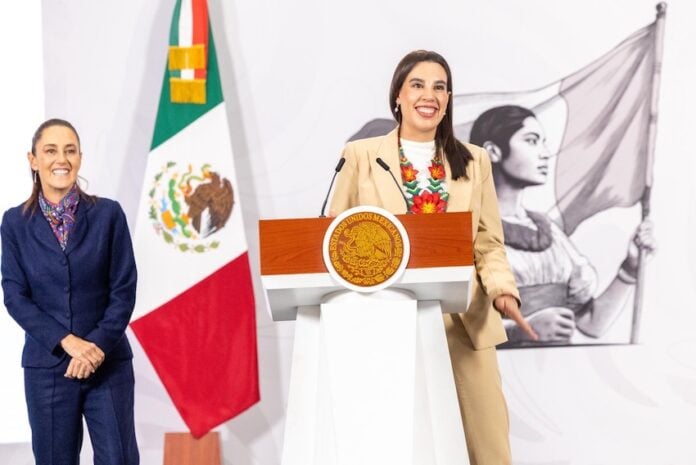
Tourism Minister Josefina Rodríguez assured visitors that measures will be taken to contain any sargassum that washes up ahead of the busy Easter season, from March 29 to April 5.
Meanwhile, tourists can track the conditions of the beaches through the sargazo.info website. A blue or green indicator signifies that there is little to no sargassum on the beach, while a yellow, orange or red indicator suggests the presence of seaweed.
Tourism Minister Josefina Rodríguez credited the uptick to tourists using the train to explore pueblos mágicos along the route, boosting local economies. (Josefina Rodríguez Zamora/Facebook)
Sheinbaum’s mañanera in 60 seconds
🚉 Maya Train ridership up Foreign travelers on the Maya Train jumped 47% in January year-over-year — 13,166 passengers versus 8,980 in January 2025. Tourism Minister Josefina Rodríguez credited the uptick to tourists using the train to explore pueblos mágicos along the route, boosting local economies. The $28.27 billion railroad, built under AMLO and fully operational since December 2024, still runs at a net operating loss.
📱 “Discover Mexico” app for World Cup tourists The government is developing Conoce México, an app in English and Spanish to help FIFA World Cup visitors plan their trip. It’s already available for download, covers all 32 Mexican states, and allows certified tourism agencies to sell experiences directly through it. Mexico co-hosts the tournament with the U.S. and Canada; 13 matches will be played in Mexico City, Guadalajara and Monterrey, with the opener — Mexico vs. South Africa — at Estadio Azteca on June 11.
🚑 Dos Bocas refinery fire The FGR (Federal Attorney General’s Office) will investigate Tuesday’s fatal fire at the Olmeca (Dos Bocas) Refinery in Tabasco, which killed five people. Pemex blamed heavy rain for an overflow of oily water outside the perimeter fence that then ignited near a fuel storage area — though the ignition cause remains undetermined. Sheinbaum stressed the refinery itself sustained no damage and is operating at 100% capacity.
Why today’s mañanera matters
Tourism was a key focus of President Claudia Sheinbaum’s Wednesday morning press conference.
Federal Tourism Minister Josefina Rodríguez presented at the mañanera, reporting that international tourist numbers increased almost 9% annually in January to 4.29 million.
Mexico’s tourism sector is set to get a major boost this year as 13 FIFA men’s World Cup matches will be played here in June and July.
Mexican authorities hope that the influx of foreign tourists will benefit not just the three Mexican host cities, but also other parts of the country.
To that end, the government is developing a tourism-focused mobile app for World Cup tourists, which Rodríguez spoke briefly about on Wednesday morning.
Sheinbaum’s mañanera was also significant as the tourism minister presented the latest data on foreign ridership for the Maya Train and the president herself spoke about Tuesday’s fatal fire near the Olmeca Refinery in Tabasco.
More than 13,000 foreigners traveled on the Maya Train in January
During a tourism update, Rodríguez noted that the number of foreigners who traveled on the Maya Train in January increased 47% compared to the same month of last year.
The data she presented showed that 13,166 foreigners traveled on the Yucatán Peninsula railroad in January, up from 8,980 in the same month of 2025.
According to Mexico’s Tourism Ministry, tourism to pueblos mágicos connected by the Maya Train has more than doubled since the railroad’s opening. (@TrenMayaMX/X)
Rodríguez said that foreign passengers are using the train to visit pueblos mágicos (magical towns) along the route and are thus helping to stimulate local economies.
Government developing ‘Discover Mexico’ app for World Cup tourists
Rodríguez told reporters that the Tourism Ministry and the federal government’s Digital Transformation and Telecommunications Agency is developing an app called “Conoce México” (Discover Mexico) to help FIFA World Cup tourists plan their stay in the country.
Rodríguez noted that certified tourism agencies can sell trips and experiences to tourists via the app. She said that the trips promoted on the app cover all 32 federal entities of Mexico.
Mexico is co-hosting this year’s FIFA men’s World Cup with the United States and Canada. Millions of tourists are expected to visit Mexico during the five-week tournament.
In Mexico, a total of 13 matches will be played in Mexico City, Guadalajara and Monterrey. The tournament’s opening match between Mexico and South Africa will be played at the Estadio Azteca in Mexico City on June 11.
FGR to investigate refinery fire
Sheinbaum told reporters that the Federal Attorney General’s Office (FGR) will investigate the fire that occurred just outside the Olmeca (Dos Bocas) Refinery in Tabasco on Tuesday.
“[The fire] was on the outside of the Dos Bocas refinery toward the port. … As there was a loss of human lives, the Federal Attorney General’s Office comes in to do the investigation,” she said.
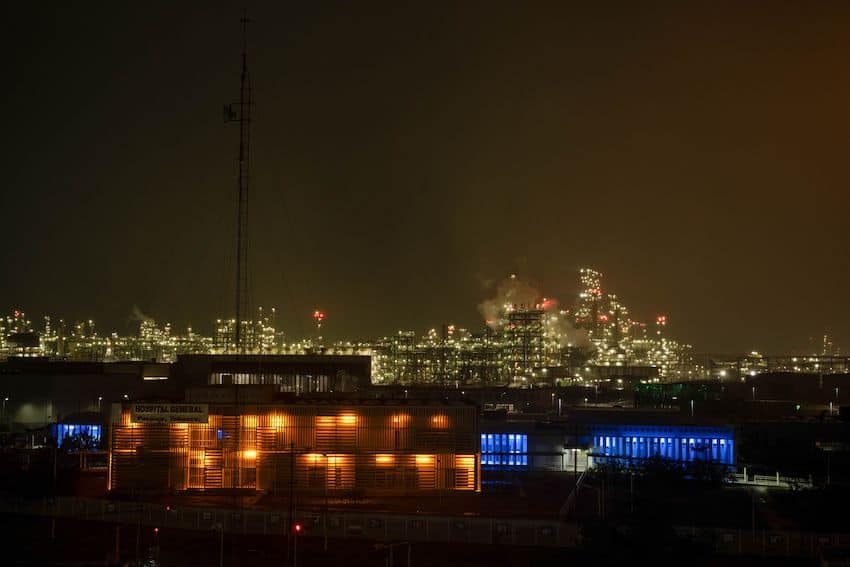
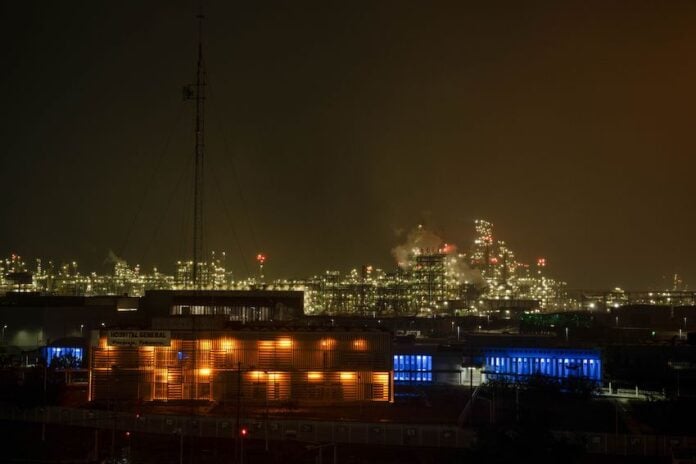
Pemex said that heavy rain caused an “overflow of oily water,” which accumulated outside the perimeter fence of the refinery and subsequently ignited, killing five workers, one of whom was a direct employee of the state oil company. (Isabel Mateos Hinojosa/Cuartoscuro)
The blaze — which spread to the perimeter fence of the refinery, according to state oil company Pemex — claimed five lives.
Sheinbaum said that the FGR “has to do the expert’s report” and determine what caused the fire.
Pemex, which operates the Olmeca Refinery, said on Tuesday that heavy rain caused an “overflow of oily water,” which accumulated outside the perimeter fence of the refinery and subsequently ignited. The state oil company didn’t say what caused the oily water to ignite, but noted that it was collaborating with authorities to determine the cause. The oil spill occurred near a fuel storage facility.
Sheinbaum said that the refinery is operating at 100% capacity, noting that it didn’t sustain any damage from the fire.
By Mexico News Daily chief staff writer Peter Davies (peter.davies@mexiconewsdaily.com)
The victims were in a vehicle on a federal road adjacent to the refinery when the disaster occurred on Tuesday morning. (Isabel Mateos Hinojosa/Cuartoscuro)
Five people were killed after an oil leak sparked a large fire just outside the Olmeca Refinery in the Gulf Coast state of Tabasco on Tuesday, state oil company Pemex reported.
Four of the deceased were workers for a services company not affiliated with Pemex, while the fifth victim was a woman who worked for the state oil company. The refinery is located in the municipality of Paraíso.
Pemex said in a statement that the four service company workers were in a vehicle on a federal road adjacent to the refinery when “the disaster occurred” on Tuesday morning.
According to the newspaper El Universal, the workers abandoned the vehicle and attempted to reach safety, but were unable to outrun the flames.
In addition to the five fatalities, Pemex said that people were injured in the blaze but didn’t specify how many.
Pemex: Fire started outside the refinery limits
Pemex said that heavy rain caused an “overflow of oily water,” which accumulated outside the perimeter fence of the refinery and subsequently ignited. The state oil company didn’t say what caused the oily water to ignite, but noted that it is collaborating with authorities to determine the cause. The oil spill occurred near a fuel storage facility.
Pemex said that the fire reached the perimeter fence of the refinery but didn’t damage the actual infrastructure of the facilty, which was built during the 2018-24 government led by former president Andrés Manuel López Obrador.
The blaze was extinguished, and Pemex said on Tuesday night that the refinery was operating normally.
The company expressed its “deepest condolences” to the families and friends of the five people killed in the fire. It also said it was providing “comprehensive care” to those injured.
The Olmeca Refinery, also known as the Dos Bocas refinery, is one of eight refineries operated by Pemex. Seven are in Mexico and one is in Texas.
Often referred to as Las Bocas for its location on the Gulf Coast, the Olmeca Refinery was inaugurated in 2022 and began production in 2024. (Presidencia/Cuartoscuro)
The fire outside the facility occurred one day before the 88th anniversary of the nationalization of oil reserves in Mexico. President Lázaro Cárdenas nationalized the Mexican oil industry on March 18, 1938.
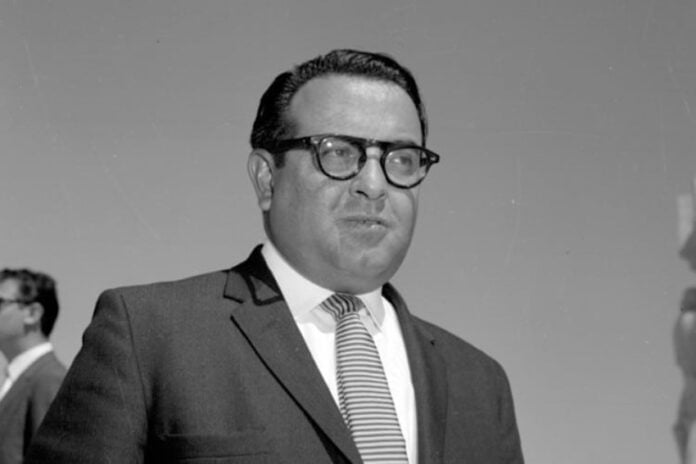
Pedro Ramírez Vasquéz, the architect of Estadio Azteca and many other iconic projects in Mexico. (INAH)
We are just days away from the 2026 FIFA World Cup Play-Off Tournament. In Mexico, football is a powerful social engine: kids play it during recess, club loyalties are passed down across generations and stadiums — the “homes” of those teams — take on a life beyond sport. They are not just venues for games, but historic sites where family memories and national stories overlap.
The most important of these in Mexico City is Estadio Azteca. Built in the 1960s, it was
conceived to project, to a global audience, the image of a modern and prosperous
country that still took its history seriously. The man responsible for creating a stadium so
loaded with meaning was Pedro Ramírez Vázquez, a quintessential midcentury
polymath: erudite, socially minded and determined to use architecture not just to
produce buildings, but to strengthen a shared culture.
A boy of books and streets
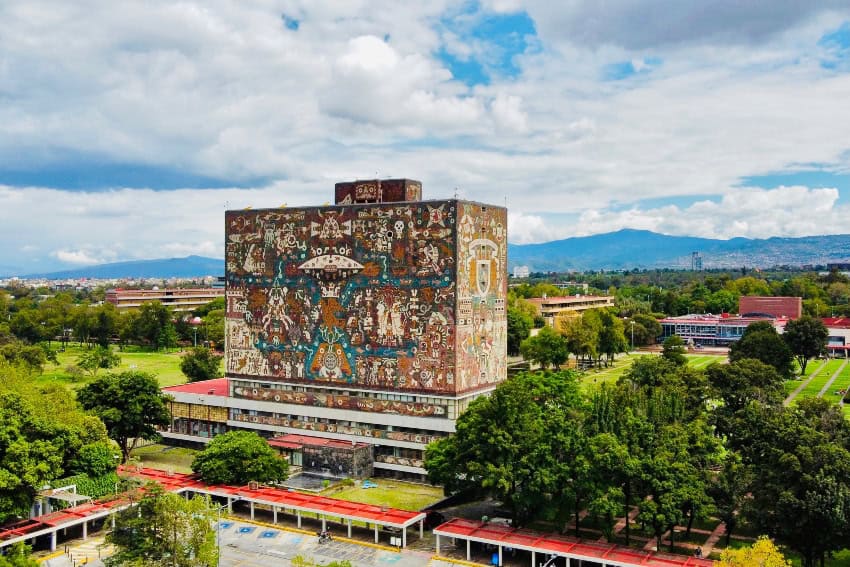
UNAM in Mexico City, where Pedro Ramírez Vázquez studied architecture. (Gomnrz/Wikimedia Commons)
Pedro Ramírez Vázquez was born in Mexico City in 1919, one year before the Mexican
Revolution was officially declared over. He grew up in the historic center, where his
father ran a bookshop, watching the capital change around him as new neighborhoods
appeared and the urban landscape shifted. At the same time, he was surrounded by
books, which sharpened his sense that ideas and culture could be engines of social
change.
As a teenager, he travelled to Europe, encountering the continent’s architecture firsthand.
But it was the Acropolis in Athens that truly captivated him and nudged him towards
architecture studies at UNAM. From his thesis onward, Ramírez Vázquez leaned
towards social architecture. He was less interested in single-family homes than in public
buildings and, above all, in urbanism – how to organize collective space so that cities
are habitable and inclusive rather than mechanisms of segregation.
From public works to citymaking
That vocation soon translated into public service. Early on, Ramírez Vázquez joined the
federal schoolbuilding program and helped design a system of rural
“houseclassrooms” that allowed thousands of municipalities to have a school at the
center of town — spaces that functioned both as classrooms and community meeting
points.
In Mexico City in the 1950s, he coordinated the Urbanism Commission of the National
Economic and Social Planning Council, tasked with diagnosing living conditions and
proposing planning measures to improve life in the capital. Markets, clinics,
social security medical units and public offices were redesigned under the notion of
“service architecture”, a practical, robust language that many residents still recognize in
their neighbourhoods today.
During the 1970s, he helped found and briefly served as the first rector of the
Metropolitan Autonomous University (UAM), envisioned as a multicampus public
university with trimester calendars and interdisciplinary programs embedded in
different areas of the city. By the early 1980s, he became Secretary of Human
Settlements and Public Works, where he helped push through the National Urban
Development Plan and coordinated state and municipal plans across the country —
putting into policy the idea that every city should have a framework for land use, growth
and infrastructure.
Three Ramírez Vázquez masterpieces
Estadio Azteca
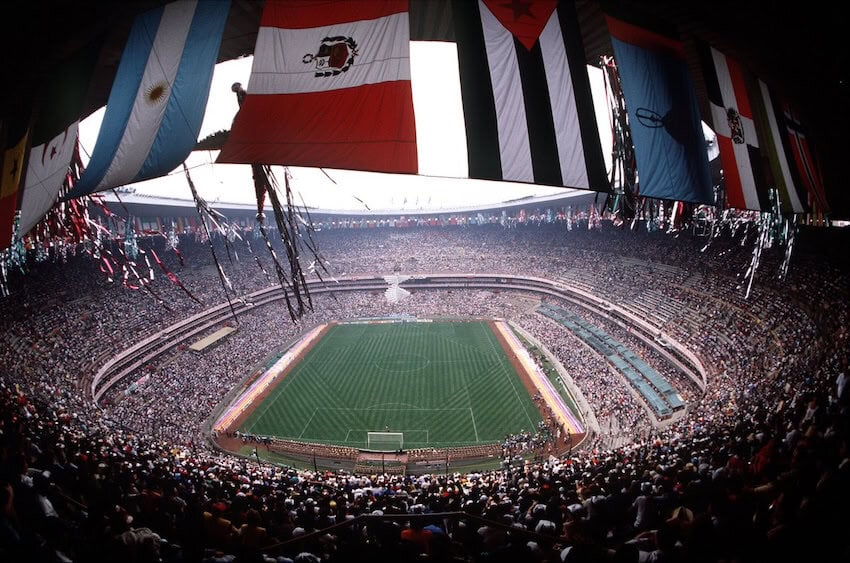
Estadio Azteca will become the only stadium in the world to host three World Cups, but
its architectural story is just as remarkable. Built between 1962 and 1966 on volcanic
ground in the south of the city, it replaced the conventional rectangular stadium with a
continuous elliptical bowl, eliminating blind corners and improving sightlines.
The Ramírez Vázquez-designed Estadio Azteca in Mexico City will become the first stadium to host games in three World Cups. (@MXEstadios/X)
The design used unusually advanced isoptic studies for its time — horizontal, vertical
and diagonal visibility — so that the view of the pitch would be clear from almost any
seat, an effort recognized by FIFA with a medal. Seating distances were calibrated so
that even the furthest fan stayed within a controlled range from the center spot, while a
dense network of ramps and concourses allowed more than 100,000 people to enter
and leave with fewer bottlenecks. The result is a concrete giant that feels surprisingly
“democratic”: from the cheap seats to the corporate box, everyone sees the same
game.
Structurally, the Azteca rose on volcanic ground that required massive earthworks: more
than 63,000 square meters were blasted and some 180 million kilograms of rock
excavated, consuming much of the original budget and forcing a redesign to build
higher above ground. Around 42,000 cubic meters of concrete (close to 100,000 tons)
and 8,000 tons of reinforcing steel were used to create a continuous ring of cantilevered
stands with no interior columns blocking the view. Its brutalist language — exposed
concrete, massive columns, clear geometric forms and a projecting metal roof — placed
it at the forefront of modern movement sports infrastructure in Latin America.
National Museum of Anthropology
Made in Mexico: The man who built Mexico City
A short ride away in Chapultepec Park, the National Museum of Anthropology shows a
different side of his work. Conceived in the early 1960s under President Adolfo López
Mateos, the museum was meant to leave visitors “proud to be Mexican” by presenting
pre-Hispanic cultures and Indigenous diversity in a modern setting.
Designed by Ramírez Vázquez with Jorge Campuzano and Rafael Mijares, it opened in
1964, after just 19 months of construction. Galleries ring a vast central courtyard
covered by the famous “umbrella,” a dramatic concrete and steel canopy resting on a
single column that gives shade and shelter from rain without enclosing the space. The
building avoids copying archaeological styles, instead reusing elements like plazas,
patios and platforms to evoke pre-Hispanic spatial ideas in a modern vocabulary.
Circulation between galleries pushes visitors back into the courtyard again and again,
turning it into a “break” in the route and a constant reminder of the connection between
the collections and the surrounding Chapultepec park.
Basilica of Guadalupe
In the north of the city, the new Basilica of Guadalupe completes the trilogy. By the
1960s, the old baroque basilica at Tepeyac was structurally damaged and clearly
inadequate for the millions of pilgrims arriving each Dec. 12, making a new
sanctuary urgent. The commission required a solution that combined large capacity,
structural safety on unstable ground, and symbolic continuity with the historic ensemble
at the Villa.
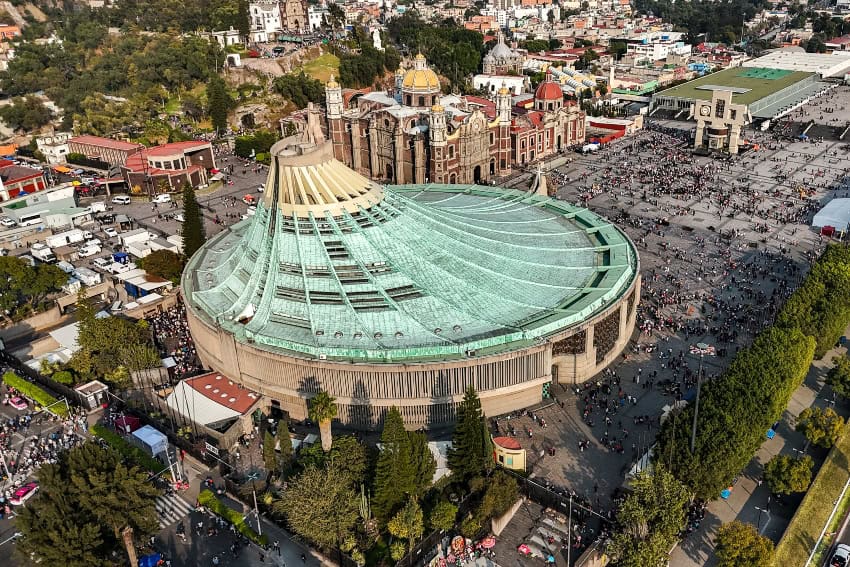
The new Basilica of Our Lady of Guadalupe in Tepeyac, Mexico City, for which Ramírez Vázquez was one of the designers. (ProtoplasmaKid/Wikimeda Commons)
The circular basilica, inaugurated in 1976, was designed by a team led by Ramírez
Vázquez and José Luis Benlliure, together with Alejandro Schoenhofer, Friar Gabriel
Chávez de la Mora and Javier García Lascuráin. Its sweeping concrete and copper roof
is supported by a hanging structure system that allows long spans without interior
columns, so that most worshippers have a clear view of the image of the Virgin. Inside,
around 10,000 people can be seated, and with upper chapels and the open atrium, the
complex can host up to 50,000 on peak days. As in the stadium and the museum,
Ramírez Vázquez works here with flows, vistas and big crowds — only this time, the
ritual is religious rather than civic or sporting.
The Olympic design that became an identity
One last piece completes the picture. In 1966, Ramírez Vázquez was appointed
president of the Organizing Committee for the 1968 Olympic Games, with just 27
months to prepare. Beyond stadiums and venues, he pushed for an integrated design
program that would cover logo, typography, signage, posters and even a Cultural
Olympiad, bringing together architecture, urban design and graphic communication.
Working with designers such as Eduardo Terrazas, Lance Wyman and Beatrice
Trueblood, he helped shape the now iconic “México 68” identity, with its concentric line
wordmark, sport pictograms and color-coded signage system. Scholars read that
program as a form of cultural diplomacy: a way to present Mexico as modern and
technologically sophisticated while still rooted in Indigenous and popular visual
traditions.
Closing
As the world tunes in to watch the 2026 FIFA World Cup from Mexico City, Estadio Azteca will appear on millions of screens as a familiar icon: the place where Pelé and Maradona
were crowned, a concrete bowl still roaring after six decades. Behind that image stands
Pedro Ramírez Vázquez, an architect who helped design not only a stadium, but also
the museum where Mexico narrates its past, the basilica where it gathers around the
Virgin, the schools and markets that anchor everyday neighborhoods, and even the
visual language of one of the twentieth century’s most influential Olympic Games.
For World Cup visitors, following his trail — from the Azteca to the Museum of
Anthropology, from the Basilica to the ghosts of México 68 — is a way of seeing how one
architect’s ideas about crowds, space and collective ritual still shape how Mexico
moves, believes and celebrates today.
Maria Meléndez writes for Mexico News Daily in Mexico City.
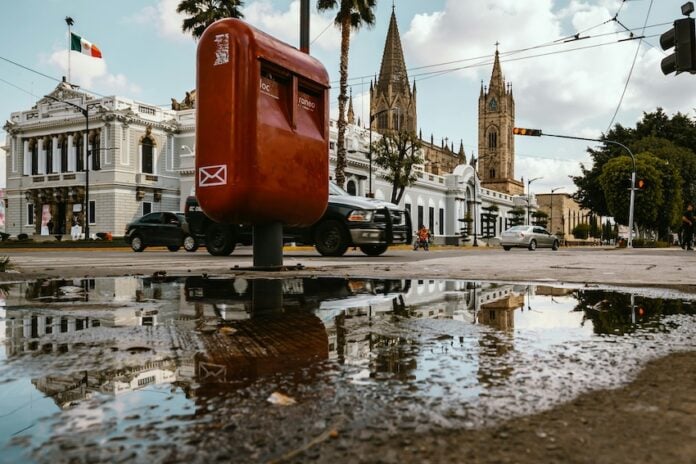
Guadalajara's water system has been under pressure for decades. Are cracks finally beginning to show? (Kenneth Lopez/Unsplash)
With all the attention a few years back to the prospect of ‘Day Zero’ in CDMX, when the water taps run dry due to drought, decaying infrastructure, and overconsumption, little scrutiny has been paid to a similar crisis brewing in Guadalajara.
In 2026, the Guadalajara Metropolitan Area (GMA) is facing serious water problems stemming from its own aging infrastructure, population growth, chronic underinvestment in new capacity, and poor decision-making. And now, these issues are impacting both the supply and quality of water reaching the city’s residents and businesses.
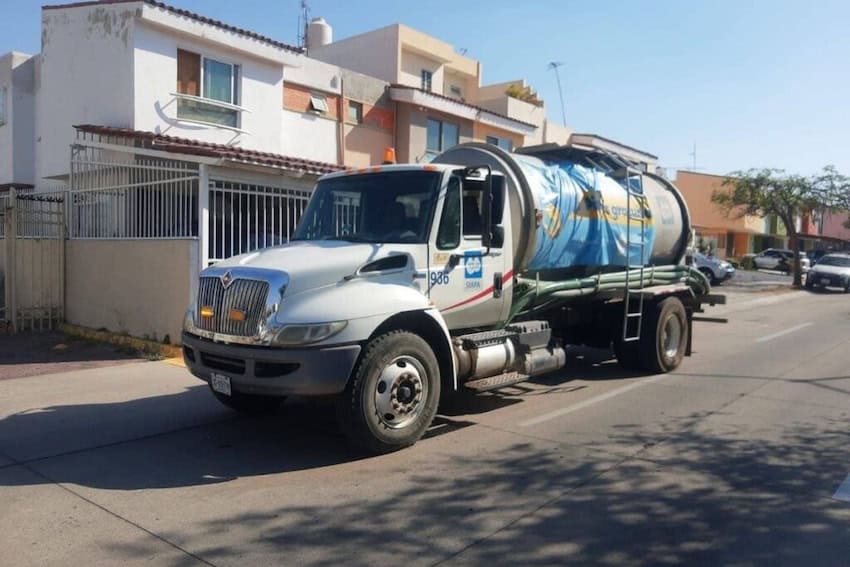
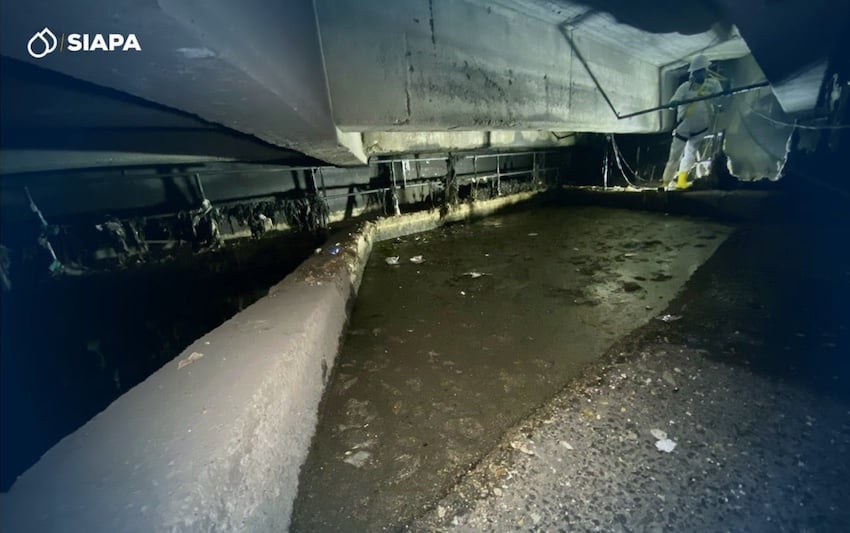
SIAPA, Guadalajara’s municipal water authority, is struggling with several challenges that are affecting residents water supplies. (gob.mx)
Aging infrastructure
According to Josué Daniel Sánchez Tapetillo, a consultant and specialist in hydrology and hydraulics, Guadalajara faces a “vicious spiral” in which long-term neglect of its water infrastructure, limited financial capacity, and corruption conspire to worsen the city’s water services year after year.
The water system in the Guadalajara Metropolitan Area (AMG) is at a critical point. According to recent private audits, Guadalajara is losing an estimated 50% of its total water supply each year due to leaks, theft, or metering errors.
How leaky are the city’s pipes? Very.
The reason is that many sections of the hydraulic network are far beyond their estimated lifespan of 20-35 years, especially in the city’s downtown area. Data from the Metropolitan Territorial Planning Plan revealed that one in four meters of pipe the city relies on to deliver water is over half a century old, and some sections are a hundred years old.
And since these issues are underground and out of sight, they are typically ignored until they become visible in the form of deep pavement cracks, sinkholes, or surface water leaks.
Jalisco’s aging infrastructure is leading to statewide shortages. (Presidencia/Cuartoscuro)
SIAPA, the public agency responsible for water supply, sanitation, sewage, and wastewater treatment in the Guadalajara Metro Area (GMA), is estimated to receive an average of 75,000 service reports annually, including complaints about a lack of water from taps, dirty water, pipe leaks, sewage leaks, and missing manhole covers.
But due to staffing and budget shortfalls, SIAPA lacks the capacity to address many of these issues. In 2025, according to its own records, the agency responded to just 6 out of every 10 requests. Moreover, when problems are addressed, city residents often note that repairs are temporary or incomplete, leading to recurrences.
On top of these structural issues, drought due to climate change, alongside increasing demand due to population growth across the GMA, are compounding the city’s water challenges.
Deteriorating quality
Although Mexican regulations stipulate that water from household taps must be potable, in practice, this is rarely the case. SIAPA acknowledges that the water it dispenses falls short of this goal, citing its aging infrastructure.
But there is more to it than that.
While tap water in Mexico is required to be potable, it often falls short in practice. (Cuartoscuro)
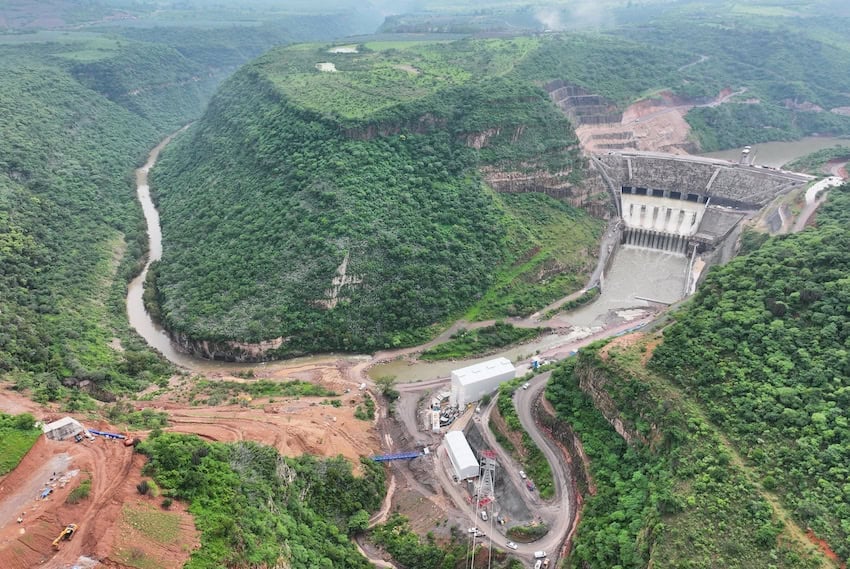
Guadalajara’s water quality issues can also be tied back to shortcomings in SIAPA’s water treatment processes. With roughly three-quarters of the water coming from surface-level sources such as Lake Chapala, experts say more rigorous treatment is needed to ensure the water is safe to drink, but it isn’t being done.
How dirty is the city’s water?
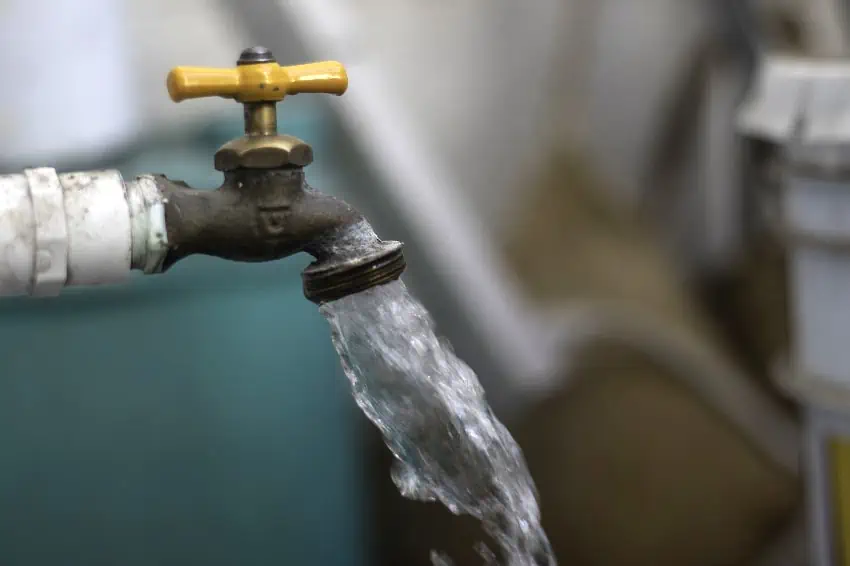
Water quality testing in the Guadalajara metropolitan area (GMA) has detected the presence of human and/or animal waste, some metals, andchlorine exceeding safety thresholds. Moreover, this past week, local media have run stories documenting dirty and smelly water coming from taps in at least 19 different Guadalajara neighborhoods, including the Centro, Americana, Moderna, and Chapalita.
According to the Guadalajara Neighborhood Association (COCO), water quality has been a problem for nearly two months, with no remedy from SIAPA. Residents have expressed concerns about the health impacts.
“When you bathe, the water stings your skin… It has caused us many skin problems, but also, strangely, many people are suffering from sore throats,” said Preciado Pérez, president of the residents’ association in downtown Guadalajara.
SIAPA is limited in what it can do
SIAPA’s current debt level is nearly 17 billion pesos (USD $982 million), hampering its ability to address critical infrastructure improvements.
How did the agency’s debt get so massive? Lots of unpaid consumption.
It’s sort of an open secret among Guadalajara locals that there are no consequences for not paying your water bill. The reason is that SIAPA has no means to stop the flow of water to individual addresses, the way CFE does with electricity.
Unsurprisingly, many customers (residential and business customers alike) don’t make payments or even have an account with SIAPA. In a pilot program conducted last year in the northern part of Zapopan, the agency reviewed 560 residential properties and found that one-third were unregistered, but were still consuming water.
SIAPA has also been beset by mismanagement, that has affected the quality of services. (SIAPA)
Mismanagement at SIAPA
SIAPA’s budget woes aren’t solely a function of its revenue collection difficulties. Multiple experts note that mismanagement by SIAPA’s leadership over the years has also contributed to the agency’s weak financial position.
Water expert Sánchez Tapetillo noted that past multimillion-dollar investments to upgrade SIAPA’s infrastructure have suffered from secrecy, uncompetitive bidding, and favoritism. There have also been cases of egregious corruption and theft, including payments to contractors for system maintenance that was never done.
More recently, an audit performed by Vázquez Nava Consultores found that SIAPA’s flawed procurement practices have led to significant waste of public funds. Their investigators uncovered 47 SIAPA contracts awarded with no bidding at all, including projects valued at more than $112 million in 2024 alone.
Solving these operational issues will require both transparency and citizen oversight, noted Sánchez Tapetillo.
Upcoming SIAPA projects
To address the huge gap between what’s being dispensed and what’s being billed, SIAPA must find new ways to improve its revenue collection capabilities.
One action the agency is committed to making near-term is an overhaul to its user registry so that it more accurately reflects who’s consuming water. The registry currently has 1.25 million accounts but hasn’t been updated in the past decade, so it’s rife with errors, as the pilot study illustrated.
Even when residents do try to update their SIAPA accounts, many fail to do so when confronted with the agency’s myriad bureaucratic obstacles to completing even basic tasks.
SIAPA estimates that its upcoming user registry overhaul could net an additional $800 million pesos (USD $46.2 million) in revenue annually, by uncovering businesses and residences that currently aren’t paying for the water they consume. The project, which the agency plans to award via competitive bidding, is expected to take four months to finish.
In response to broader criticisms leveled by water experts, SIAPA states it is continually doing maintenance and repairs on the system, including major work in early January. That said, the agency’s extensive backlog of work highlights the urgent need for a comprehensivenewstrategy for the city’s water system, before it becomes a full-blown crisis.
Without sustained investment and better oversight, local experts believe Guadalajara’s water infrastructure and service levels will continue to deteriorate. Meanwhile, thousands of residents of the Guadalajara Metropolitan Area continue to report wateroutages, leaks, and dirty water coming from their taps — all of which impact the health, economy, and quality of life in the city.
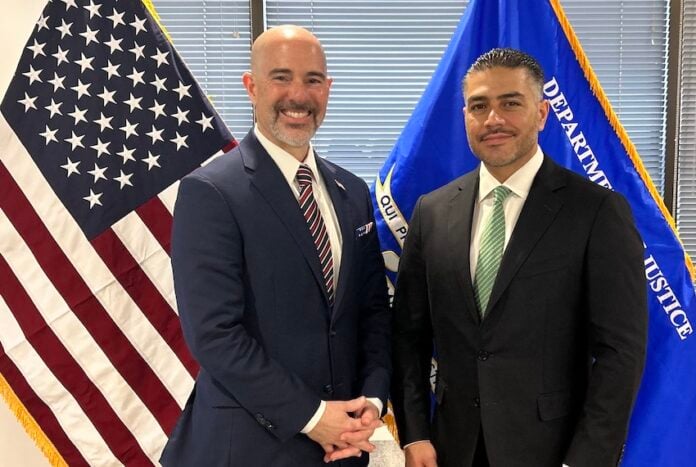
Mexican Security Minister Omar García Harfuch met on Monday with the administrator of the U.S. Drug Enforcement Administration (DEA) in Washington, D.C. (@DEAHQ/X)
U.S. Ambassador to Mexico Ronald Johnson has once again taken to social media to extol the security relationship between the United States and Mexico.
“Historic cooperation between our two countries, driven by @POTUS @realDonaldTrump and President @Claudiashein [Claudia Sheinbaum], continues to deliver real results,” he wrote on X on Monday.
Historic cooperation between our two countries 🇺🇸🇲🇽, driven by @POTUS@realDonaldTrump and President @Claudiashein, continues to deliver real results. As our coordination and collaboration grow stronger, we will keep dismantling networks that traffic drugs and weapons,… https://t.co/1aInDK2l8K
“As our coordination and collaboration grow stronger, we will keep dismantling networks that traffic drugs and weapons, strengthening the security of our nations and saving lives,” Johnson added.
In his post, the ambassador included a message from Mexican Security Minister Omar García Harfuch, who on Monday met with the administrator of the U.S. Drug Enforcement Administration (DEA) in Washington, D.C.
In his X post, García Harfuch wrote that he spoke with DEA chief Terrance Cole “about the importance of strengthening bilateral cooperation in order to combat drug trafficking, curb the trafficking of weapons to our country and reduce the violence in our country with important arrests.”
“Following the instructions of President @Claudiashein, we will continue strengthening international cooperation,” he added.
The DEA also commented on the meeting between García Harfuch and Cole via its official X account.
“#DEA Administrator Cole, during a visit with Omar García Harfuch, Secretary of Security and Citizen Protection of #Mexico, discusses cross-border collaboration in the fight against drug trafficking and safer communities on both sides of the border,” the agency wrote above a photo of the two officials.
Johnson, a former Green Beret, CIA officer and ambassador to El Salvador, has used his X account on several occasions to tout the security cooperation between the United States and Mexico.
Last Friday, he wrote that “our two countries are working 24/7 against organized crime through the historic cooperation advanced by @POTUS @realDonaldTrump and President @ClaudiaShein.”
“This cooperation is delivering real results: safer communities on both sides of the border. When our countries collaborate and coordinate, criminals have nowhere to hide,” Johnson added.
The current Mexican government has taken a more proactive and aggressive approach to combating organized crime, and has transferred dozens of cartel figures to the United States to face justice. Sheinbaum frequently speaks about the high levels of security cooperation between her government and the Trump administration, but she is vehemently opposed to the use of the U.S. military in Mexico to combat cartels.
After the death of Jalisco New Generation Cartel leader Nemesio Rubén “El Mencho” Oseguera Cervantes in a Mexican military operation on Feb. 22 in Tapalpa, Jalisco, Johnson published a statement to his X account in which he wrote that “bilateral cooperation has reached unprecedented levels” under the leadership of Trump and Sheinbuam.
U.S. intelligence helped Mexican authorities locate Oseguera, according to the Mexican and U.S. governments.
In another X post last Friday, Johnson wrote that “under the shared commitment of @POTUS @realDonaldTrump and President @ClaudiaShein, our countries are taking decisive bilateral action to disarm the transnational cartels threatening communities on both sides of the border.”
The ambassador also wrote that during the second Trump administration, “U.S. agents have intercepted 4,500 Mexico-bound guns and 650,000 rounds of ammunition.”
In addition, the newspaper quoted a 17-year-old Phoenix-based arms trafficker as saying that moving weapons into Mexico is easy, despite increased surveillance and enforcement on both sides of the border.
“No one stops you unless you run a red light,” the young trafficker told the Times.
Late last month, García Harfuch told reporters that approximately 80% of the guns seized in Mexico during the current term of government came from the United States.