Home Blog Page 842

Video shows alleged Sinaloa Cartel members attack US drone at border

0
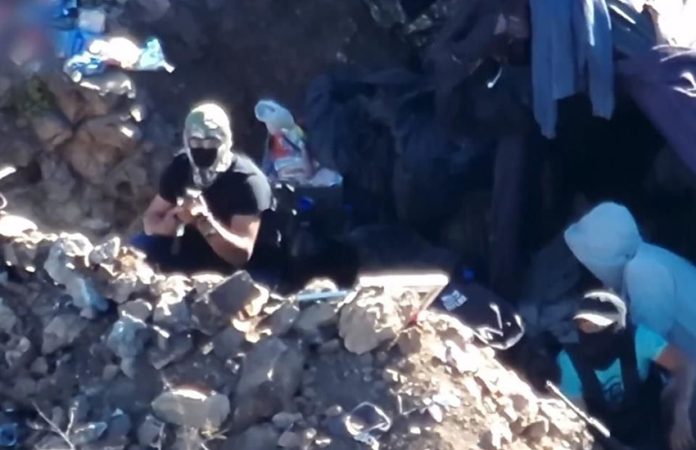
Alleged Sinaloa Cartel members on the Mexico-U.S. border as shown in a video recently broadcast on the Newsmax channel.
Alleged Sinaloa Cartel members on the Mexico-U.S. border as shown in footage recently broadcast on the Newsmax channel. (Screen capture)

Alleged members of the Sinaloa Cartel shot at a drone operated by a private United States security firm at the Mexico-U.S. border, video footage appears to indicate.

Jaeson Jones, a border correspondent with right-wing cable news channel Newsmax, presented what he described as exclusive footage of the incident.

The Newsmax broadcast earlier this week introduced the footage with a graphic entitled “War At Our Doorstep,” with anchor Jenn Pellegrino beginning by saying, “Mexican cartels are at war with the U.S. government and the Biden Administration refuses to do anything about it.”

Newsmax anchor Jenn Pellegrino interviews reporter Jaeson Jones. (Screen capture)

“What you are seeing is a Sinaloa Cartel base 300 meters inside Mexico from the U.S. border,” Jones told Pellegrino in an interview after the footage aired. “… These cartel members were literally shooting into the U.S. at this drone.”

The video shows what Jones called “Chapitos’ people” on the top of a “flat mountain,” as confirmed to him by one of the drone’s operators. Jones identified the drone operators as employees of an unnamed private security firm.

“Los Chapitos” is a nickname for the sons of imprisoned drug lord and former Sinaloa Cartel leader Joaquín “El Chapo” Guzmán who are themselves alleged active cell leaders in the Sinaloa Cartel. One of these sons, Ovidio Guzmán, was arrested on January 5 by federal authorities, and has been charged with cartel-related illegal activities.

The footage shows men shooting in the direction of the drone. The drone had apparently crossed into Mexico from the United States.

“He’s going to shoot at me right now,” one of the drone operators says in the video. “Shots fired,” another person says.

There was no indication that the drone was actually hit by a bullet fired by the gunmen.

Jones, a former captain with the Texas Department of Public Safety who is described on his personal website as “a nationally recognized authority on the Mexican cartels,” told Pellegrino that the video “was shot by a private security firm trying to illuminate the crimes at the southwest border to the American people.”

“… Why are these [cartel] bases here?” he told Pellegrino. “Let me explain this a little bit. It’s very important because when you think of deadly fentanyl and methamphetamine pouring into this country, the Sinaloans want control of certain parts just on the Mexico side so that that way they can freely move deadly fentanyl into the country,” Jones said.

“That right there is ground zero for fentanyl into the Arizona area. Phoenix DEA in 2022 seized 25 million pills of the over 55 million pills seized nationwide,” Jones said.

“… We talk about immigration all the time, but when you see this video, you can see just how out of control our border has become,” he concluded.

According to his website, Jones is “the director/CEO of Omni Intelligence, a private company that strives to make the public and government agencies aware of the threats posed by unsecured borders and best practices to combat transnational crime.”

Jones didn’t say how he obtained the footage.

With reports from Reforma and Infobae 

En Breve: ancient Maya ‘superhighway’, theater event in CDMX, Indigenous women exhibit

0
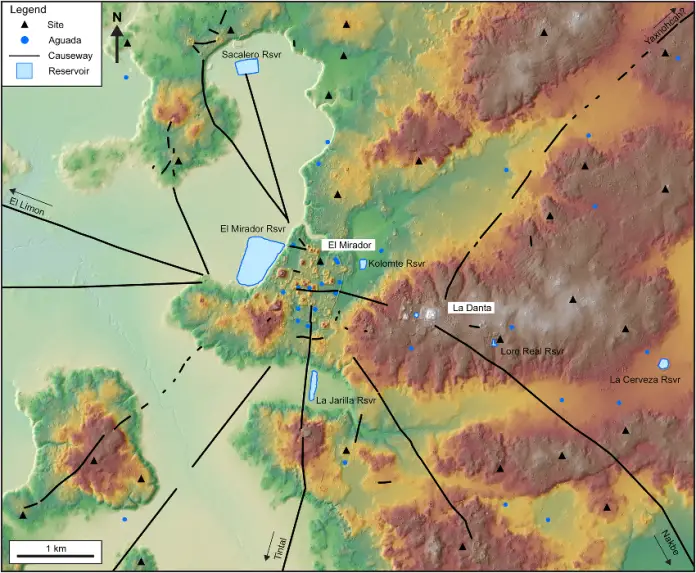
Digital elevation map showing "the extent and nature of the vast intrasite and intersite networks." (Photo: Cambridge.org)

Katya Echazarreta spearheads effort to expand the Mexican aerospace industry

Guadalajara native Katya Echazarreta, the first Mexican woman to go to space, seeks to strengthen the aerospace industry in Mexico as part of a project supported by the Mexican Space Agency (AEM).

Through the development of talent and skills, Katya aspires to form national space missions using Mexican technology and with Mexican astronauts trained in the country.

She told El Financiero newspaper that she has visited Congress to promote a constitutional reform that includes “the necessary legislative basis for space missions from this country.”

Astronaut Katya Echazarreta was the first Mexican-born woman to go to space (@KatVoltage Twitter)

She also hopes to launch a foundation that supports young Mexican talent “who want to study science, engineering and even art and photography but with application in the space industry,” she said.

Echazarreta added that they’re also working on the development of a technological center that will do research work to create and develop space technology in Mexico that will allow for specialized careers in the aerospace industry.

All these actions have the goal of training the first Mexican group who will live and work in space.

Hypothesis about ancient residents of Teotihuacán confirmed by recent excavations

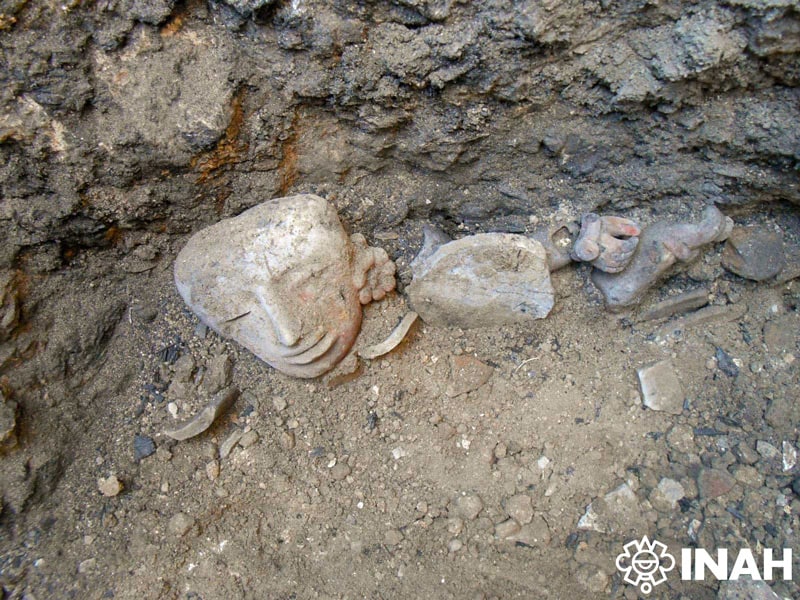
An excavation carried out as part of the “First occupations in Teotihuacan” project, confirmed archaeologist Sergio Gómez’s hypothesis (first proposed 20 years ago) that the ancient La Ventilla district was occupied 1,600 years ago by a group of high-status residents who worked in lapidary (stone) production.

Head of the project Julie Gazzola shared the findings at the Symposium Teotihuacan Project, 60 years (1962-2022), recently organized by the National Institute of Anthropology and History (INAH). The 30-year-old project is the largest one in the history of excavations in Teotihuacán. 

Artifacts unearthed at La Ventilla district in Teotihuacán. (INAH)

According to INAH, excavations in one section of La Ventilla explored three architectural units with temples, covered spaces with “excellent finishing” and mural paintings arranged around a plaza with an altar.

Gazzola said that “it is possible to assume” that at least one of the units of three temples, “would have been occupied by the individuals with the highest social status within the complex.”

The finding of burials of people covered in cinnabar (a mineral used to denote high status), and big containers used for storage, also confirmed that elite families lived there. Archaeologists reported in 2019 that evidence indicated less inequality among residents of the ancient city than in other contemporary urban areas.

“First highway system in the world” found in Maya region

In the Maya region of Mexico and Guatemala, a new high-tech study has revealed 1,000 ancient Maya settlements linked by what researchers have called “the world’s first highway or superhighway network.”

The roadways, hidden for millennia under the dense jungle, were discovered using lidar laser scanning technology with two overflights carried out in 2015 and 2018. So far, around 177 kilometers of spacious roadways have been revealed, with some parts measuring around 40 meters wide and others elevated off the ground by as much as 5 meters.

According to a statement from the Guatemalan team overseeing the studies, the inspected area “indicates a high level of organization and a sophisticated socio-political and economic structure.”

The research team said this is just the latest of recent discoveries of roughly 3,000-year-old Maya population centers and related infrastructure. Other findings include pyramids, ball game courts and significant water engineering like reservoirs, dams and irrigation canals.

Mexico and Canada co-host “Miradas Originarias” exhibit

“Miradas Originarias” (Original Views) at the National Museum of World Cultures in Mexico City brings together the Indigenous cultures of Canada and Mexico to show how the colonial legacy has contributed to the marginalization of women and girls from communities of Indigenous and African descent.

The exhibit is made up of 12 illustrated portraits of Indigenous women from both countries who have fought for Indigenous peoples’ rights and gender equality. It was curated by the cultural promoter Nadia Islas and presents the work of the Mexican visual artist Citlali Haro, who seeks to make visible the fight of these women against marginalization.

“The exhibition arises as part of Canada’s commitment to promote inclusion and human rights inside and outside its territory,” the museum said in a statement.

The joint Mexico-Canada exhibit includes 12 portraits (INAH)

During the tenth North American Leaders’ Summit — which took place Jan. 9-10 — Mexico’s first lady Beatriz Gutiérrez Müller and Canada’s first lady Sophie Grégoire toured the exhibition with Minister of Culture Alejandra Frausto Guerrero.

The exhibit is open to visitors Tuesday through Sunday from 11 a.m. to 5 p.m., until April 23. 

National event for theater-lovers in Mexico City

The 35th edition of the “Encuentro Nacional de los Amantes del Teatro” or National Conference of Theater Lovers will take place at the Teatro Orientación in Mexico City’s Centro Cultural del Bosque every Friday, Saturday and Sunday from Jan. 7 to Feb. 5.

The event, which has been running since 1986, seeks to expand the country’s knowledge of theatrical works while allowing theater companies to showcase their projects and potentially grow their audiences.  

Attendees will witness everything from independent theater to comedies and even Greek tragedies free of charge. All audiences are welcomed as there will be special productions for kids, adolescents, adults and elderly people.

To see the event’s full program, check out the Theater National Coordination social media channels.

With reports from El Financiero, INAH, Forbes, Mxcity and Time Out Mexico

In 3 years, Pemex illegally burned off US $342mn of hydrocarbon resources

0
A Pemex refinery in Hidalgo flares excess gas.

Mexican state oil company Pemex illegally burnt off hydrocarbon resources at two of its most important new fields in the three years up to August 2022, Reuters reported. 

Three internal documents from the National Hydrocarbons Commission (CNH) dating from August, revealed how Pemex destroyed gas and condensate resources worth US $275 million from the Ixachi field in Veracruz and $67 million from the Quesqui field in Tabasco. Combined, the amount of destroyed resources from both fields adds up to $342 million.

The National Hydrocarbons Commission is the country’s oil and gas regulator.

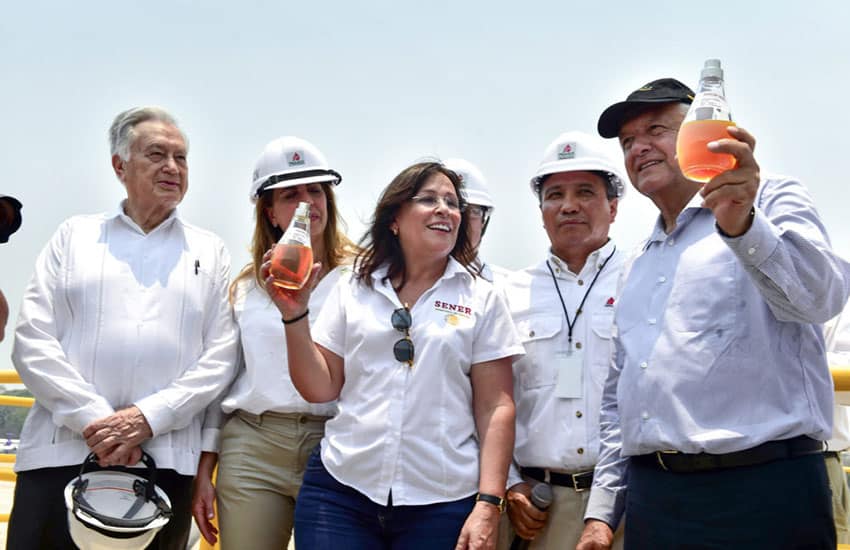
President Lopez Obrador at Ixachi oil field in Veracruz, Mexico.
In May 2021, President López Obrador touted the Ixachi field in Tierra Blanca, Veracruz, as one of 17 “priority fields” for oil production in Mexico. Although Ixachi has the potential to be one of the top gas reserves in the country, some Pemex insiders told Reuters that oil company officials felt pressured to focus on crude production.

The resources come as a natural byproduct of oil production. The report said Pemex has been burning off (flaring) much of the gas and condensate produced rather than capture it and make use of it. 

Back in February 2022, Reuters exposed Pemex’s practice of gas flaring, a common industry method. However, it was not until Reuters obtained a copy of the CNH report that the precise amount and value of the destroyed hydrocarbons was known

According to Reuters, Mexico is the world’s eight-biggest gas flarer.

The practice is cheaper than the investment in equipment to capture the gas and process it and the cost of transporting it, the report says. However, flaring is not only a waste of monetizable resources, it’s also widely regarded as detrimental to the environment

According to a Reuters-organized study, Pemex’s flaring practice has dramatically increased under Mexican President Andrés Manuel López Obrador. It has led to the company facing repeated CNH fines for violating its own promises regarding the development of infrastructure and equipment at the Ixachi and Quesqui fields. In August, Pemex was fined over US $2 million for violations of its development plan for Ixachi, Reuters reported.

According to the newspaper Expansión, Ixachi — a gas-producing field that opened a year ago and that is one of Pemex’s flagship projects — has prioritized the production of crude oil rather than using its natural gas deposits, apparently in part to satisfy the López Obrador administration’s desire to boost oil production and make Mexico oil self-sufficient.

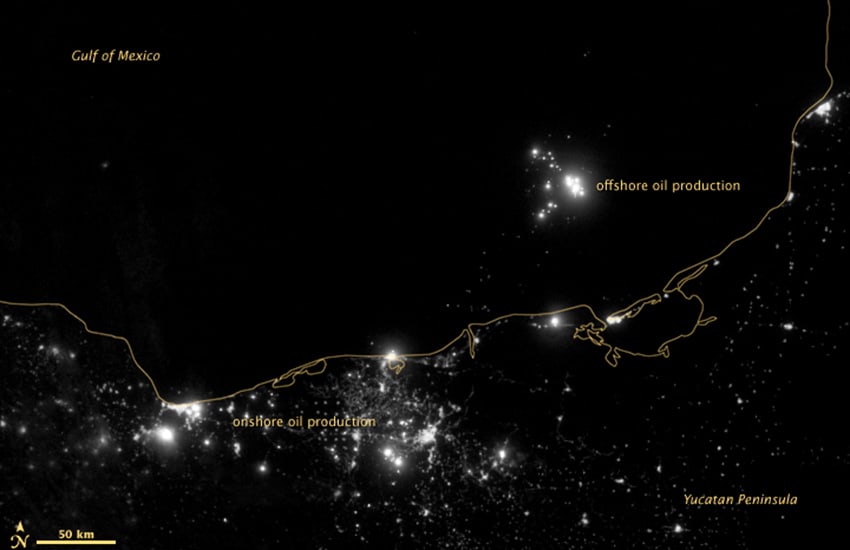
NASA satellite image of gas flaring in the Gulf of Mexico
NASA satellite imagery like this one of the Gulf of Mexico can detect flaring. (File photo/NASA)

However, a contract with the Malaysian company Coastal Contracts Bhd, which provides gas conditioning services, has allowed Ixachi to increase its output from 150 million standard cubic feet per day (mmscfd) to 180 mmscfd since November 2021 according to industry publication The Edge Markets. In January, Pemex increased its payment rate to Coastal Contracts as an incentive reward for expanding Ixachi’s capacities. 

But natural gas production at Ixachi also presents technical challenges, industry expert Pablo Medina of Welligence Energy Analytics told the online industry publication Natural Gas Intelligence, including its “extreme” depths (3.7 to 4.3 miles) and high pressure.

One senior Pemex official told Reuters that the fines for not living up to its development plans for Ixachi were worth it to the company because they were “small” and the company needed to speed up crude oil output to meet López Obrador’s ambitious production goals.

Early after taking office, López Obrador said that Ixachi and Quesqui formed part of 17 new priority fields expected to dramatically boost national production as part of a plan to make the country energy independent. Moreover, during a visit to Ixachi in 2019, López Obrador expressed the urgency of boosting oil production.

“If we hadn’t intervened in time, falling oil production would have put us in a situation of a lot of risk: it would lead — possibly — to a severe economic and financial crisis,” he said at the time.

Both fields were supposed to receive more financial resources to speed-up exploration and production, but Pemex failed to complete the pipelines, wells and other infrastructure needed to produce gas and condensate without high levels of waste. And so it is burning what it does not have the equipment to deal with, the report says.

Mexico Energy Minister Rocio Nahle
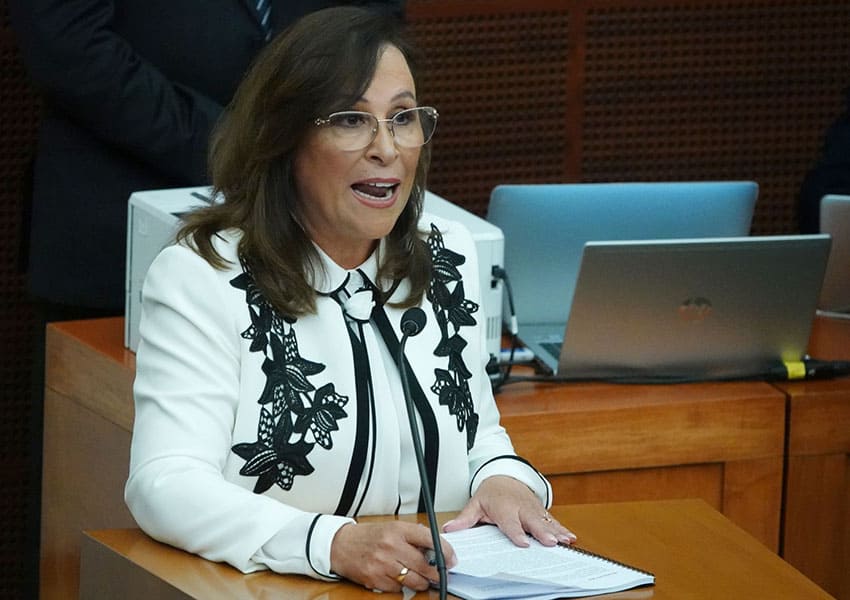
The report by the National Hydrocarbons Commission was sent in August to Energy Minister Rocio Nahle, seen here in December reporting to the federal Senate’s energy commission. (Galo Cañas Rodríguez/Cuartoscuro)

The information, which was sent to Energy Minister Rocio Nahle, show that in Quesqui, the value of burned-off condensate was almost US $8 million in two years, while in Ixachi, it was more than US $21 million in three years. In Ixachi, 62.9 billion cubic feet of gas was destroyed, or nearly one-third of the amount of gas produced in the field, Reuters said.   

“The objective should be to maximize making use of all hydrocarbon products in the field,” the CNH report said, adding that Pemex “does not meet production it committed to because wells and infrastructure are not in place.”

For years, Pemex – the world’s most indebted oil company —has refused to invest in infrastructure for gas exploration and production, arguing it is too expensive. Instead, the country imports high volumes from the United States. However, rather than delaying extraction work in order to fix underlying problems, Pemex has risked fines and caused environmental damage, two company sources told Reuters.

One of the sources also said they had witnessed senior Pemex executives in four meetings early in 2023, agreeing that the company would prefer to pay the fines than make changes. In 2022 alone, Pemex faced four fines by the CNH, which it is currently appealing. The two most recent fines could each reach $6.2 million, a third source at the CNH told Reuters.

While relatively small for a company that had revenues of more than US $87 billion between January and September 2022, both would be the highest individual fines ever imposed by the CNH. 

Lately, Pemex has come under pressure due to the environmental damage associated with burning off gas. Officials have acknowledged that Pemex’s environmental, social and governance record threaten its financing. 

In its updated business plan for 2023–2027, the state-owned company acknowledged that it has been falling behind in a global race to transition to renewable energy sources.

Pemex did not respond to repeated requests for comment and both the CNH and López Obrador’s office declined to comment on this matter, Reuters said. 

With reports from Reuters

Water pressure reduced in Monterrey metro area to avoid cuts

0
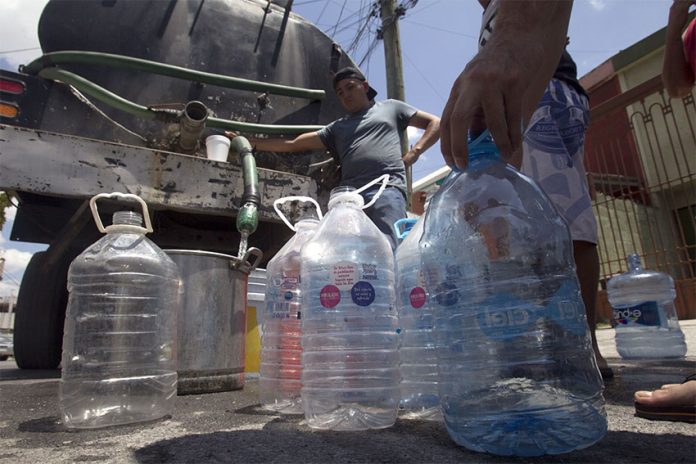
In the background, a man in a baseball cap fills a large pot from a tube coming out of a water truck. In the foreground, dozens of empty 5 or 10-liter plastic bottles wait to be filled.
Monterrey residents lined up last August to fill bottles at one of the water trucks sent to neighborhoods experiencing prolonged water cuts. (Gabriel Pérez Montiel / Cuartoscuro.com)

The Monterrey Water and Drainage Service (SADM) has reduced water pressure in some parts of the metropolitan area of the Nuevo León capital as it seeks to avoid having to cut supply, as it was forced to do last year.

SADM director Juan Ignacio Barragán said that water pressure has been reduced — mainly at night — in 25-30% of the Monterrey metropolitan area. Parts of the municipalities of Apodaca, Guadalupe, Escobedo, Juárez, García, Pesquería and El Carmen are affected.

Barragán said that water pressure is generally reduced from about 6 p.m., but the change is not noticeable in homes until around 8 p.m. Water pressure returns to normal from about 4:30 a.m. so as not to affect people who need to shower in the morning, he said.

Barragán said that water pressure may also be reduced at certain times during the day.

The measure will apply across the metropolitan area of Monterrey by May, the water utility chief said, explaining that it helps reduce water consumption.

“We know there are people who get annoyed by this situation, and we ask them for understanding, because we don’t want to face a situation like that we faced last year,” Barragán said.

The introduction of the measure — which could be modified later in the year depending on the amount of rainfall received in the coming months — comes after SADM was last year forced to cut water supply for all but six hours per day in the metropolitan area of Monterrey due to severe water shortages precipitated by drought.

Some Monterrey residents even undertook “pilgrimages” in search of water in 2022 due to the harsh restrictions implemented in the metropolitan area of Monterrey.

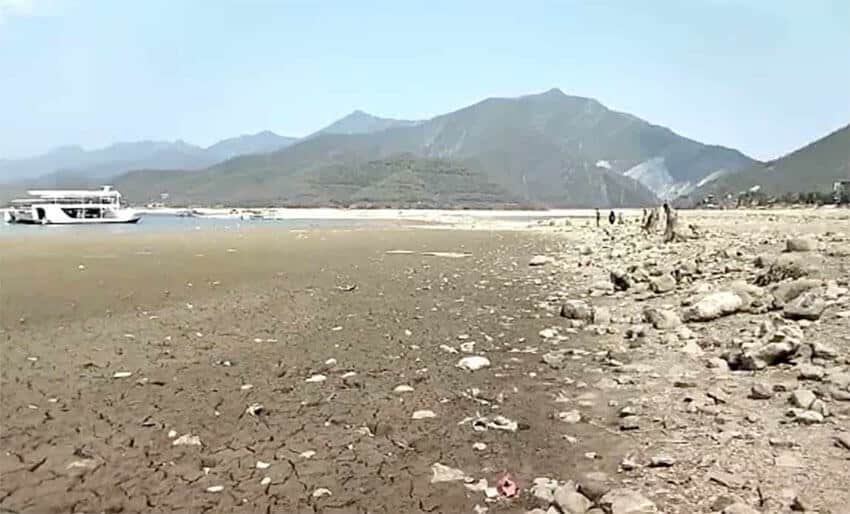
The dust and mud of a dry resevoir with a small amount of water visible in the distance. Even farther away in the background dry, rocky mountains are visible.
La Boca dam, one of Monterrey’s water sources, seen here in March 2022. So far this year, dam water levels are lower than they were at the same time last year. File photo

Barragán said that other steps are being taken to avoid having to resort to water supply cuts this year. They include repairing leaks and incorporating new wells into the city’s water system.

In addition, a new aqueduct to convey water to Monterrey from the El Cuchillo dam in eastern Nuevo León will begin operating in the middle of the year.

“We don’t want to cut [water supply], cuts are very damaging, even for the [water] network,” Barragán said. “Cuts will always be our last alternative.”

Citing dam levels, the SADM director said that the water supply situation remains difficult. He also noted that below-average rain is forecast in the first quarter of 2023.

However, Barragán expressed confidence that rainfall will increase in April, and that the water situation won’t become as dire as it did last year.

With reports from El Norte and La Jornada 

Homicides declined 7% in 2022, but still exceeded 30,000

0
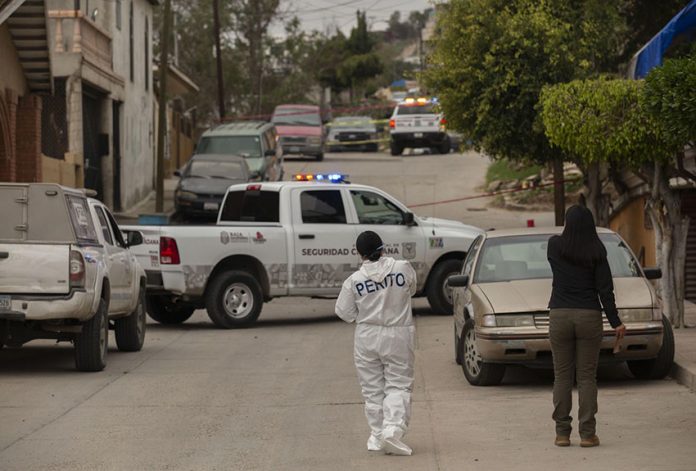
crime scene in Tijuana
Forensic experts process a crime scene in Tijuana on Dec. 30. Tijuana was the city with the most homicides in 2022, new government data shows. (Omar Martínez Noyola/Cuartoscuro)

Last year was the least violent year since President López Obrador took office in 2018, official homicide data shows, but the number of murder victims nevertheless exceeded 30,000.

There were 30,968 homicides in 2022, according to data presented by Security Minister Rosa Icela Rodríguez at the president’s regular press conference on Tuesday.

The figure is 7.1% lower than the 33,350 homicides in 2021 and 10.8% lower than the record high of 34,718 in 2019. However, homicides remain at historically high levels, with a steady level of over 30,000 each year since 2018.

Last year’s homicide count equates to just under 85 homicides per day.

Still, Rodríguez chose to highlight that homicide numbers have trended downwards since López Obrador took office, whereas they increased significantly during the six-year periods that former presidents Felipe Calderón and Enrique Peña Nieto were in power.

She also noted that last month was the least violent December in six years, with 2,530 homicides.

The last 12 months of data show that Guanajuato retained the unenviable title of Mexico’s most violent state in 2022 with 3,260 homicides. The state is home to popular tourist destinations such as San Miguel de Allende and Guanajuato city, but most violence in the state is concentrated outside those municipalities.

Rodríguez noted that homicides in the Bajío region state declined 7.3% compared to 2021, when 3,516 murders were recorded.

Just under half of all homicides last year – 48.6% – occurred in Guanajuato and five other states: Baja California, México state, Michoacán, Jalisco and Chihuahua. The good news for those states was that they all had fewer homicides in 2022 than in 2021, with Chihuahua seeing the largest decline: an 18.7% drop to 1,974 murders.

Rodríguez said that homicides across 50 highly violent “priority” municipalities fell 11.7% last year compared to 2021, although murders increased in Tijuana, which was Mexico’s most violent city in 2022.

Yucatán was the least violent state last year, with just 39 homicides. Three other states — Baja California Sur, Aguascalientes and Campeche — recorded fewer than 100 homicides.

The security minister also presented 2022 data for a range of other crimes. Among the crimes whose incidence declined last year compared to 2021 were:

  • financial crimes
  • drug trafficking
  • cattle theft
  • business robberies
  • burglaries.

Among those whose incidence increased were firearms offenses and highway robbery of transport trucks.

With reports from El Financiero 

Learning Spanish wasn’t easy for me, but it’s been worth it

0
Art by Miguel Angel Gomez Cabrera
That embarrassing moment in a conversation with locals when you realize you've overreached beyond your Spanish abilities. (Artist: Miguel Ángel Gómez Cabrera)

If you’re living in Mexico, or if you visit often, learning the language clearly makes your time here a lot easier and way more interesting. When your Mexican friends are laughing at something, for example, you’ll be able to join in the fun.

I don’t have a facility for foreign languages. I’ve struggled to learn Spanish. But it’s been worth the effort. 

I first came to Mexico in 1997 to photograph Day of the Dead events. Other than hola and adiós, I remembered nothing from my high school Spanish almost 25 years earlier. But somehow, I figured I’d be OK.

But after a few days of wandering around Mexico City, often getting lost because I couldn’t ask for directions, I decided I needed to learn the language. 

I wanted to start with something simple but important. So I asked Fernanda, one of my bilingual friends here, to teach me how to say “I’d like a coffee to go” in Spanish. 

She said, “Just say, ‘Quiero un café para llevar.’” We practiced it a few times and then I headed out.

I hit every coffee shop I came across. I got my coffee. No problem. My confidence grew. After the third or fourth stop, I added a little wave of my hand, something casual but that clearly showed I knew my way around the language. 

After a couple of days, I decided to expand my vocabulary. I asked Fernanda how to say “I’d like a coffee and doughnut to go,” doughnuts being, in my opinion, one of the world’s most important foods. 

“Just say, ‘Quiero un café y un postre para llevar’ and point to what you want,” she told me. 

I headed out and stopped in every coffee shop I saw, happily walking out with my coffee and doughnut. The caffeine and sugar kept sleep at bay for several nights, but since I was awake, I kept practicing the new phrase, adding inflections to different words.

At this rate, I figured it would only take me a couple of months to truly master the language. 

Then I hit a bump in the road. Or, more correctly, a tope.

I had confidently entered a coffee shop, asked for a coffee and un postre and pointed to what I wanted. The young woman behind the counter said something incomprehensible, so I repeated what I’d said. 

She repeated what she’d said. 

Why couldn’t she understand me? I was pretty sure she understood Spanish. 

I raised my voice slightly and talked more slowly — because that always works, right? But no, we got nowhere. 

Mystified, I kept pointing to the doughnut I wanted. She let out a long sigh, handed me the coffee and doughnut and turned away. 

As I was walking out, I noticed a sign that, even with my limited Spanish, I was able to interpret — the day’s special: a coffee and two doughnuts for the price of one.

So, during that first trip, I bought a Spanish-English dictionary and memorized a few more words. By my second trip, I had somehow convinced myself that I had advanced to the conversational level. 

In other words, I got cocky. I would pay the price.

I was again in Mexico City with Fernanda when we met some of her Mexican friends. With a handful of Spanish words now under my belt, I believed I had a command of the language. 

OK, maybe ‘command’ is a little misleading: I understood more of what was being said. When I said something, I did OK as long as I kept words and phrases simple and in the present tense. 

So there we were, having a conversation. Well, they were having a conversation, and I was doing a lot of smiling and nodding at what I hoped were appropriate moments. (I’ve learned since back then that you become very good at reading body language when you don’t fully understand what’s being said.) 

Then, someone asked me something. I didn’t understand, so Fernanda said he was asking what kind of work I did. 

I froze for a moment as they waited for my reply, which I decided would be in Spanish — my (nearly) second language. 

I couldn’t think of the word for “writer.” But then some words popped up in my memory: I knew that pan meant “bread” and that panadero meant “a baker.” Similarly, I remembered that zapato meant “shoe” and zapatero meant “shoemaker.” And I’d learned the word escribir (to write). 

Perhaps you see where this is going.

So, confident in my choice of words, I actually paused for a moment and gave a modest flourish of my hand as I replied, “Soy escritorio.” 

Now, if you’re a Spanish speaker, you already know why they all looked at me like, “What the…?” But I was puzzled. 

Fernanda leaned in and whispered, “Do you want to tell them you’re a writer?”

“Of course,” I replied. 

“Well, you just told them you’re a desk.” 

She quickly explained that escritor, not escritorio, was the word for “writer.”

Back at her apartment, I told her how embarrassed I was. 

“That’s nothing,” she told me and then related a story about another American friend who’d been riding Mexico City’s Metro and wanted to know how to say, “Excuse me” when he got off the subway car. 

She taught him to say, “Disculpame (pardon me).”  So, whenever he exited the Metro, that’s what he said. 

Or thought he did. 

The next time he saw her, he told her that people were looking at him strangely whenever he exited the train and uttered the phrase she’d taught him. 

“What did you say?” she asked. 

“What you taught me: escúpeme.” 

Again, some of you are ahead of me.

He was saying “spit on me.” I don’t think anyone actually did, but I’m sure they all got quickly out of his way. 

After living in Mexico for almost four years, I’m now able to conduct interviews and have conversations completely in Spanish. I don’t claim to be fluent, but I believe I’m proficient; I can almost always choose correctly between ser and estar. I freely admit that I’ll probably never get a handle on the difference between para and por or fully understand the subjunctive, but I manage. 

Heck, sometimes I’m even able to understand what people are laughing about and can join in.

Joseph Sorrentino, a writer, photographer and author of the book San Gregorio Atlapulco: Cosmvisiones and of Stinky Island Tales: Some Stories from an Italian-American Childhood, is a regular contributor to Mexico News Daily. More examples of his photographs and links to other articles may be found at www.sorrentinophotography.com He currently lives in Chipilo, Puebla. 

Guadalupe Rivera Marín, daughter of Diego Rivera, dies at 98

0
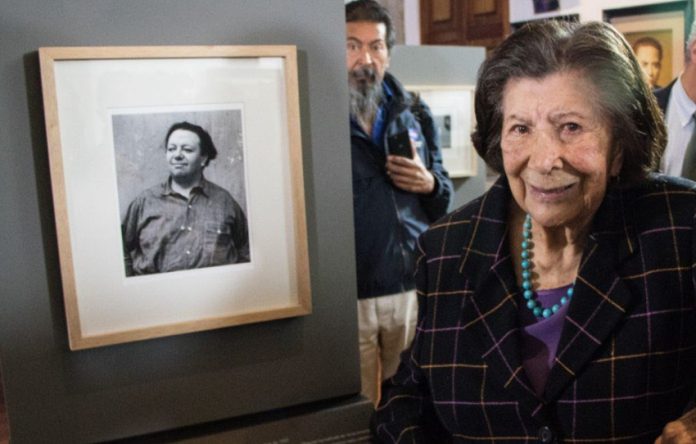
Guadalupe Rivera Marín was a lawyer, author and advocate for culture and social justice. (INBAL Twitter)

Guadalupe Rivera Marín, the daughter of renowned artist Diego Rivera and Mexican writer Guadalupe “Lupe” Marín, died on Sunday. She was 98 years old. 

Lucina Jiménez, director of the National Institute of Fine Arts (INBAL) described Rivera as a woman “ahead of her time.” Morena senator Ifigenia Martínez called her a “tireless cultural promoter,” and former governor of Morelos, Graco Ramírez, lamented the death of a “creative and talented” woman who, according to diplomat Luz Elena Baños, was a “defender of women’s rights and a social fighter committed to a better country.”

Although Rivera Marín was the daughter of iconic parents, she carved her own path, and became known in her own right as a successful lawyer, politician, and cultural patron. She practiced law for decades and was also a law professor at the National Autonomous University of Mexico (UNAM).

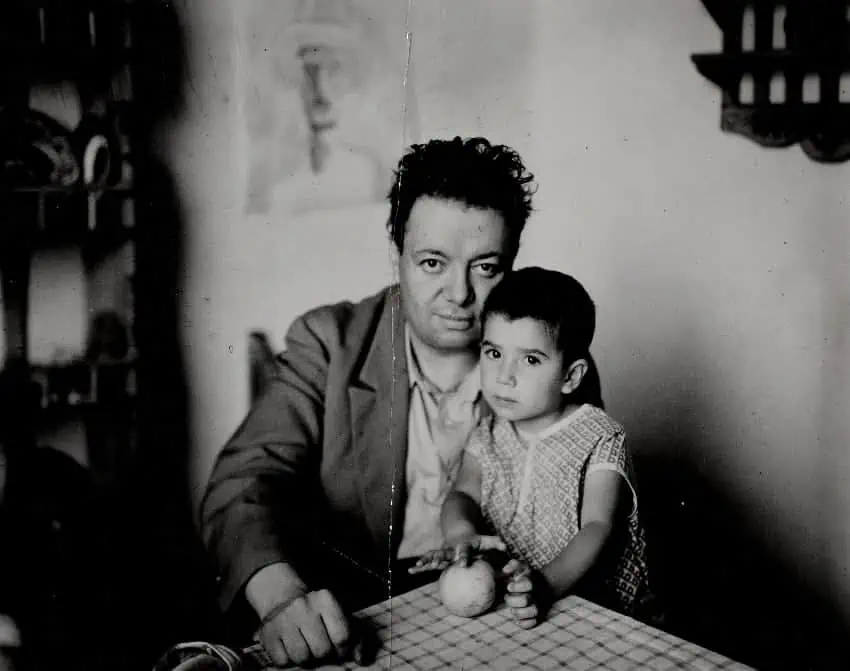
Diego Rivera and his daughter Guadalupe in 1927 (Wikimedia Commons)

“Lupe could have lived on her parents’ legacy, especially her father’s fame, but she made her own life,” writer and journalist Elena Poniatowska told El País newspaper. 

Born in Mexico City in 1924, Rivera Marín studied public administration at the UNAM, and later earned a doctorate in law. Her sister Ruth also made some remarkable achievements as the first woman to enter the architecture and engineering school in the National Polytechnic Institute. She passed away in 1969.

Rivera Marín was also involved in politics. She was a deputy senator and delegate in Mexico City as a member of the Institutional Revolutionary Party (PRI). Between 1989 and 1998, she worked as head of the National Institute for Historical Studies of the Revolutions of Mexico, and in 2000 she created the Diego Rivera Foundation to preserve her father’s work 

She was also the author of several fiction and non-fiction books including her memoir, “Un río, dos Riveras” published in 1989.

In the memoir she explores her relationship with her father and her family life, recalling memories from her childhood, such as her father’s meriendas (afternoon snacks) at El Oriental café in downtown Mexico City. She also reminisces about communist meetings where she learned to say that when she grew up, she would “kill the bourgeoisie,” and was taught the Italian socialist hymn “bandiera rossa.”

From her mother, she inherited a taste for cooking. Rivera authored three cookbooks and founded a gastronomic festival in honor of her mother’s recipes.

Although she shared many fond memories of her parents, she also wrote about the “abandonment” she felt after their separation when she was five years old. It was after this separation that Diego married Frida Kahlo.

“…Ours were, from then on, two parallel lives. Each one on the opposite bank of the same river; each one on his own shore,” she wrote in her memoir. 

Leticia Vallín, Rivera Marín’s colleague for more than 20 years at the Diego Rivera Foundation said in an interview that “I don’t suppose being the daughter of Diego Rivera […] was easy at all. He has a place in history.. and she had to authentically create her own story in her time.”

Vallín hopes that after her death, Rivera Marín can be recognized as an “important part” of the country’s culture, as a woman who worked in the fields of education, culture, and art.

In a statement, the National Ministry of Culture said it will soon hold a ceremony in her honor, in collaboration with Guadalupe’s son, Diego López. 

With reports from El País and Milenio

‘El Chapo’ denounces ‘cruel and unfair’ treatment in message to AMLO

0
El Chapo Guzman
Joaquín "El Chapo" Guzmán in U.S. custody in 2017 after he was extradited to the United States to face trial there. (U.S. Department of Homeland Security)

Notorious Sinaloa Cartel capo Joaquín “El Chapo” Guzmán is attempting to speak to President López Obrador through his lawyers, claiming he receives unfair treatment in prison in the United States and requesting to be returned to Mexico.

Guzmán sent the message from his cell in the ADX maximum security prison in Florence, Colorado. It was relayed through a member of his U.S. legal team before being made public in a radio interview by his legal representative in Mexico, José Refugio Rodríguez.

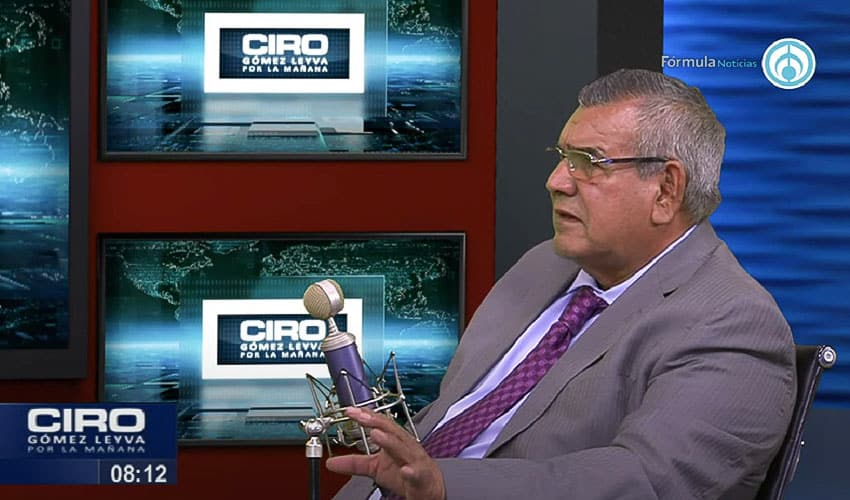
“He doesn’t see the sun, the food is of very bad quality, there is no healthcare; he had a problem with his molars and instead of treating them, they took them out so he wouldn’t fuss,” Refugio said on Radio Fórmula in an interview with journalist Ciro Gómez Leyva, who himself made headlines in December as the target of an assassination attempt.

Joaquin Guzman Loera's lawyer, Jose Refugio Rodriguez
Joaquín Guzmán’s lawyer in Mexico, José Refugio Rodríguez, pleading Guzman’s case to be returned to Mexico on journalist Ciro Gómez Leyva’s radio show on Tuesday. (Screen capture)

A week ago, Mexico City authorities announced that they had arrested 11 people allegedly involved with the attack on Gómez Leyva. Authorities said that nine of the suspects were associated with a criminal gang involved in murder, extortion and drug dealing in Mexico City and México state. 

Guzmán’s lawyer claimed that the convicted cartel leader is kept in isolation, prohibited from speaking Spanish, and has only been allowed to make six or seven calls since March 2022 — a situation he describes as “psychological torture.”

Refugio explained that he was giving the radio interview to make the Mexican government aware of Guzmán’s request, as he was unable to meet with AMLO directly. He also claimed that he had sent a letter to Esteban Moctezuma, the Mexican ambassador to the U.S., but had not yet received a response.

“Joaquín [Guzmán] asked me through verbal messages to fight for his return to Mexico,” Refugio said. “I see it as an SOS… he is hurting from a trial that was not in accordance with due process.”

Guzmán was extradited to the United States in January 2017, having already escaped from prison twice in Mexico. He was given a life sentence in July 2019, after being found guilty on numerous charges relating to his leadership of the Sinaloa Cartel, including drug trafficking, organized crime, money laundering and homicide.

Refugio explained that Guzmán believes his human rights were violated during the extradition process, as he was denied the chance to defend himself in Mexico. In addition, he claimed that Mexican authorities had failed to honor a legal obligation to review Guzmán’s situation in Colorado every six months.

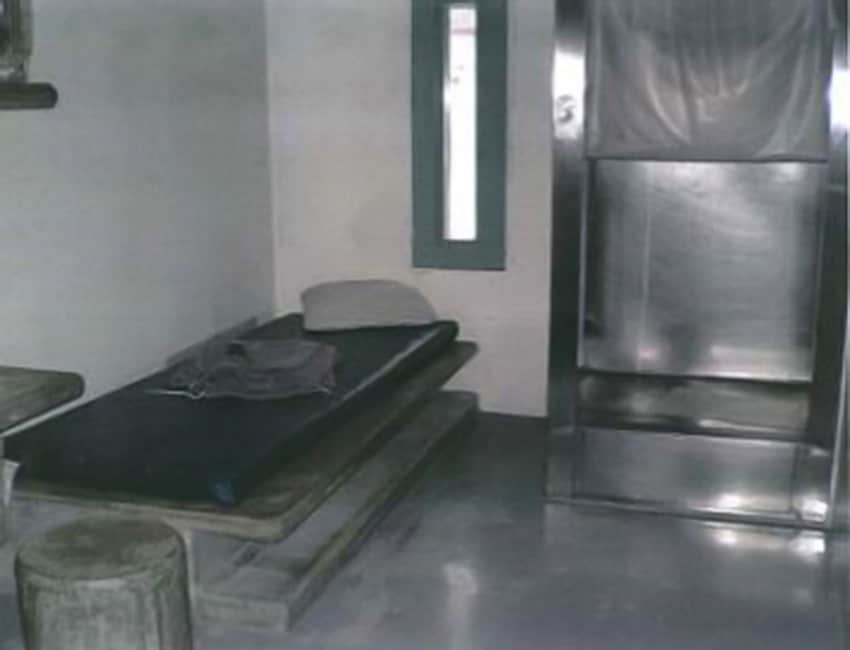
Cell inside Florence ADX supermax prison in Colorado
A typical cell at the highest level of restriction inside the Florence ADX supermax prison in Florence, Colorado, where Guzmán is serving out his sentence. (Photo: U.S. Federal Bureau of Prisons)

On this basis, Refugio indicated that he is approaching Mexico’s foreign ministry to seek legal channels for Guzmán to return to his home country.

In his Tuesday morning press conference, AMLO denied knowledge of Guzmán’s request.

“I haven’t seen it, but let’s see,” he said.

With reports from Infobae and El Financiero

46.2 million passengers used the Mexico City International Airport in 2022

0
Aeromexico's Boeing 737s lined up at the gates of the international terminal of the Mexico City International Airport (AICM).
Among Mexican airlines, Aeroméxico and Volaris carried the most passengers. (Shutterstock)

Mexico City International Airport (AICM) had a busy year in 2022, but passenger numbers were still below the record set in 2019.

Just over 46.25 million passengers used AICM’s two terminals in 2022, an 8% decline compared to 2019, when 50.3 million people passed through the airport.

AICM data shows that almost 70% of the passengers were domestic travelers, with the remainder using the airport before or after taking international flights.

Carlos Torres, an aviation sector analyst, told the newspaper Reforma that the establishment in October of a lower cap on the number of flights allowed per hour at AICM ensured that passenger numbers remained below pre-pandemic levels in 2022.

“The decision to temporarily reduce the operations per hour from 61 to 52 put the brakes on the activity that the airport had had since the beginning of the year. That’s why the 2019 [passenger] numbers weren’t reached,” he said.

The total number of flights that took off from and landed at AICM was 18% below the 2019 figure.

Torres noted that the percentage of domestic passengers as a portion of the total number of passengers was higher in 2022 than in previous years.

“Before the pandemic the proportion was 50-50 between … domestic and international passengers. The difference [in 2022] may be due to the slow recovery of the United States and Canadian [outbound tourism] markets last year,” he said.

Another factor, Torres added, is that many inbound international travelers fly directly to other Mexican airports.

“For example, the Cancún airport … received a higher number of international passengers [in 2022],” he said, adding that arrivals from abroad were also up at airports in Puerto Vallarta, Los Cabos, Monterrey and Guadalajara.

With reports from Reforma 

Mexico places temporary 50% tariff on white corn exports

0
Several stacks of golden tortillas on a white-and-green checkered cloth.
The rising cost of white corn is one factor pushing up the price of tortillas, a key source of calories for many Mexicans. (Crisanta Espinosa Aguilar / Cuartoscuro.com)

The Mexican government has announced a temporary 50% levy on exports of white corn, in an attempt to control rising prices of the staple commodity.

The decree, published in Mexico’s official federal gazette on Monday, will remain in effect until June 30, 2023.

“The supply and production of white corn in our country are important factors in determining its price and, therefore, also of the various consumer products made from it,” the decree states.

“In order to guarantee a sufficient supply, it is necessary to maintain national production in our country and ensure market conditions that allow stabilization of its price.”

The decree notes that white corn makes up 89% of Mexico’s grain production, with 332 kilograms per capita consumed annually in the country. Much of this is in the form of tortillas, which are a key source of calories in the Mexican diet.

According to data from Mexico’s national statistical institute (INEGI), the average price of tortillas in Mexico showed a 19% annual increase at the close of 2022, with some cities experiencing much larger price hikes.

This is part of an overall pattern of high inflation in the country, particularly in basic consumer goods, which the government has attempted to control by temporarily eliminating tariffs on imports of staple foodstuffs.

“One of the central tasks of the current administration is to establish a wage recovery policy, which cannot be disconnected from purchasing power, because in a scenario of high inflation, wage recovery is limited by price increases,” the decree on corn exports argues.

However, the tariff’s impact is likely to be minimal, given that the vast majority of Mexico’s white corn production is already consumed locally. Mexico produced almost 23 million tons of the grain in 2022, of which only 238,000 tons were exported between January and October, while 614,000 tons were imported.

Mexico is currently in trade tensions with the United States over President López Obrador’s move to ban imports of genetically modified (GM) corn for human consumption by 2024. While Mexico is self-sufficient in white corn, it imports large quantities of yellow GM corn from the U.S., mostly for use in livestock feed.

With reports from Reuters and El Financiero