Home Blog Page 846

AMLO urges Biden to lead further regional integration at bilateral talks

0
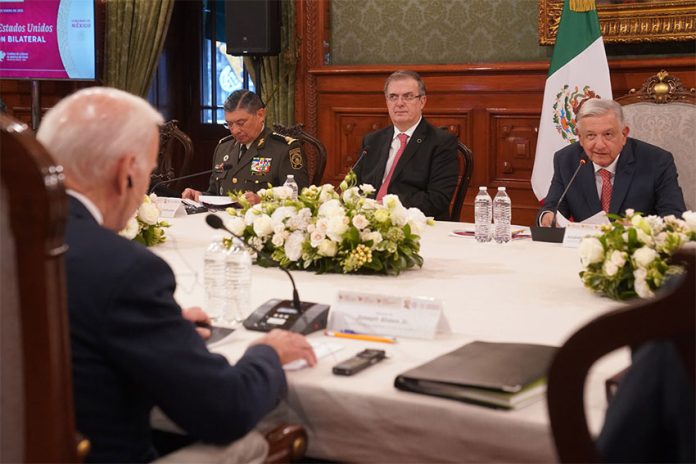
López Obrador speaks into a microphone while seated at a table with officials seated at his side and flowers in the center.
López Obrador called for an end to what he described as the neglect of the region by the U.S., and referenced a 20th century aid program by way of comparison.

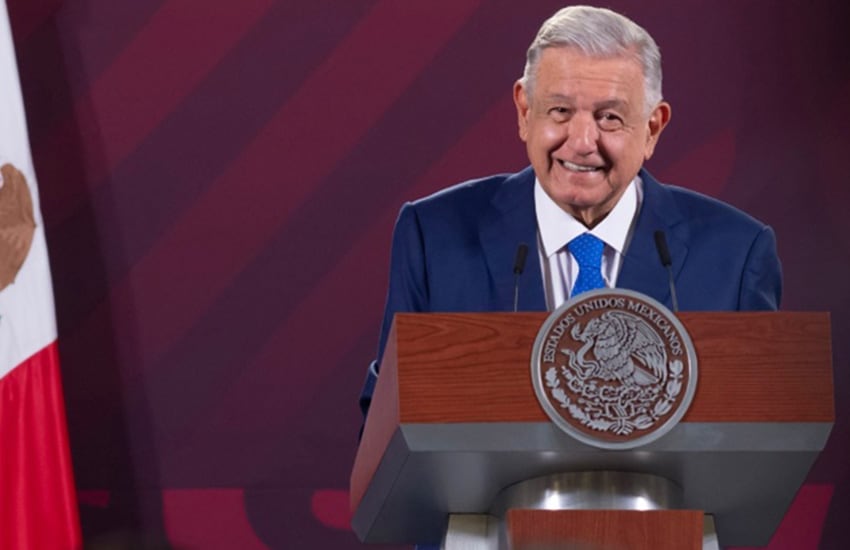
President López Obrador called on United States President Joe Biden to end U.S. “abandonment” and “disdain” toward other countries in the region during frank opening remarks at bilateral talks in Mexico City on Monday.

Speaking after a welcome ceremony for Biden at the National Palace, López Obrador asserted that the United States has done little to aid development in the Americas since the end of the Alliance for Progress, an aid program initiated by former U.S. president John F. Kennedy in 1961.

“I consequently maintain that it’s time to end this neglect, this abandonment, this disdain toward Latin America and the Caribbean, [which is] in contrast to the Good Neighbor policy of that titan of freedom who was president Franklin Delano Roosevelt,” he said.

Earlier in his remarks, López Obrador called Biden a “humanistic and visionary leader” and urged him to lead a “new policy of economic and social integration on our continent.”

He said that the North American free trade agreement, the USMCA, has been a “valuable instrument to strengthen our productive processes” and take advantage of the “great potential” of the region, but expressed misgivings about the level of imports from Asia.

“The arrival of ships full of merchandise from Asia continues growing at our Pacific ports. And the question we’re asking is the following: Couldn’t we produce what we consume in America? Of course we could. It’s a matter of … planning our future development together,” AMLO said.

“… The productive integration we’re proposing must have the support of public and private investment, for the well-being of all the peoples of America without excluding anyone,” he said.

Flanked by high-ranking officials including Foreign Affairs Minister Marcelo Ebrard and Interior Minister Adán Augusto López, the president — who has advocated the economic integration of Western Hemisphere nations on several previous occasions — told Biden he has “the key to open and substantially improve the relations between all the countries of the American continent.”

“I know that it’s a complex and controversial initiative and I’m aware that putting it into practice involves numerous difficulties, but in my judgement there isn’t a better way to guarantee the prosperous, peaceful and fair future that our people … as well as all the people of the continent, and future generations, deserve,” he said.
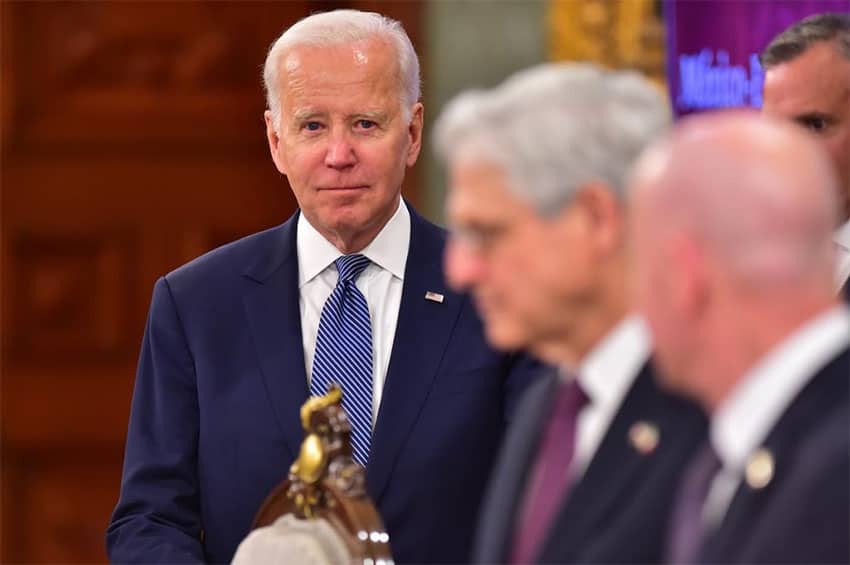
Biden in a wood paneled room, with two out-of-focus officials in the foreground
Biden’s response to President López Obrador’s comments highlighted the funds the U.S. has spent on development projects in the hemisphere in recent decades. (Presidencia de la República)

“The proposal, President Biden, is comprehensive. It involves consolidating ourselves as an [important] economic region in the world, strengthening fraternity in the American continent, respecting our differences and sovereignty and ensuring that no one is left behind,” López Obrador added.

“…There are a lot of us who haven’t stopped dreaming of a fair and fraternal integration of all the people and countries of our continent.”

Making his opening remarks after his Mexican counterpart, Biden retorted that “just in the last 15 years,” the U.S. has “spent billions of dollars in the hemisphere — tens of billions of dollars.”

“And what we have to do, and what we’ve done, is continue to support and build democratic institutions in the hemisphere. One of the things that I was able to do at the G7 was get the G7 to agree that we would have a multi, multi-billion dollar project for infrastructure for the Western Hemisphere, for Latin America, and for Africa,” said the U.S. president, who was also accompanied by a delegation of senior officials.

In a readout published by the White House, the U.S. government said that Monday’s meeting between Biden and López Obrador “builds upon 200 years of bilateral relations between the United States and Mexico, an enduring partnership that reflects our shared values and the cultural and familial bonds between our two countries.”

The statement said that the two leaders discussed the violent protests in Brazil on Sunday — along with Canadian Prime Minister Justin Trudeau they issued a joint statement condemning the violence — and reviewed security cooperation under the Bicentennial Framework for Security, Public Health, and Safe Communities.

On social media, President López Obrador shared a video montage of some of the moments he spent with his U.S. counterpart over the first days of the official visit.

They also “discussed increased cooperation to prosecute drug traffickers and dismantle criminal networks, disrupt the supply of illicit precursor chemicals used to make fentanyl, shut down drug laboratories, and prevent trafficking of drugs, arms, and people across our shared border.”

The meeting came just four days after Ovidio Guzmán, son of convicted drug lord Joaquín “El Chapo” Guzmán, was arrested in Culiacán, Sinaloa.

In addition, Biden and López Obrador “reaffirmed their commitment” to the USMCA, “discussed their shared vision for greater economic integration to increase productive capacity and promote inclusive growth” and “reaffirmed their commitment to implement innovative approaches to address irregular migration.”

Ahead of trilateral talks at the North American Leaders Summit on Tuesday, the two presidents were joined by Trudeau for an official dinner at the National Palace on Monday night. Later in the evening, López Obrador shared a slickly-produced video of his meeting with Biden to his social media accounts.

“Welcome to your home, President Biden,” he wrote above the footage.

“You are our friend and the United States people are as well. Together we can drive a new era for the nations of the continent based on mutual respect and assistance. There are unbeatable conditions to strengthen the economic and social integration of America.”

Mexico News Daily 
En Breve Business: Mexican digital startups, work-life balance and GM’s move to electric

0
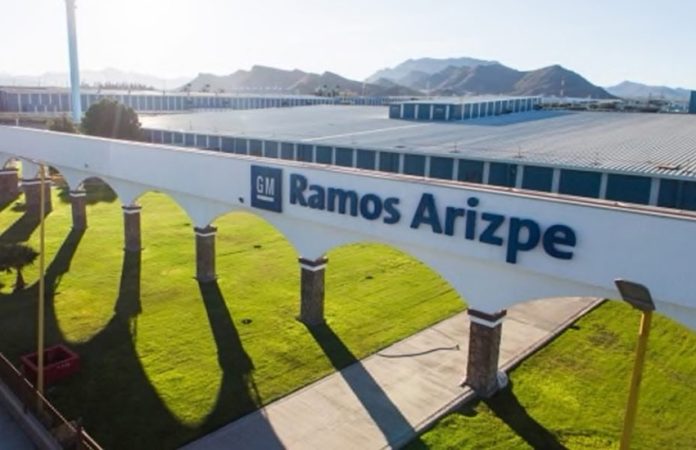
GM's plant in Ramos Arizpe.
General Motors will only manufacture electric vehicles at Ramos Arizpe plant by 2024. (GM)

Mexican digital startups receive seed funding

Three Mexico-based companies – Welbe, Hero Guest and Kuona – have secured seed funding despite venture capital registering an overall decline in Latin America during 2022.

Founded in 2021 by Brazilians Eduardo Medeiros and Marcus Paiva, Mexico-based Welbe secured a U.S. $4.1 million seed-round led by Volpe Capital and Nazca, with the participation of SVLC, Kortex and GreenRock.

Welbe is a health-tech company that offers a comprehensive occupational medicine and health platform for companies, their employees, and their families. The platform provides complete employee health records and gives access to in-person or virtual medical consultations, as well as laboratory tests.

Hero Guest, a digital academy that trains front-line workers in the restaurant and hospitality industries, also secured funding by closing a U.S. $2.3M pre-Series A round with participating companies Grupo MVS, Variv Capital fund, and Grupo Anderson. After the financial round, the company’s valuation went to U.S. $8.8 million.  

“By being trained, the staff has a better performance in their work, more tips are generated, they have a lower turnover and thus have a positive impact on the business, which generates a virtuous circle,” CEO of Hero Guest, Gabriel García, said on Latam List.

Finally, SaaS (software as a service) startup Kuona, which uses machine learning to optimize product prices for retailers, closed a U.S. $6 million seed round led by COMET with the participation of Seaya Cathay, Latam and FEMSA Ventures.

The funds will be used to expand the company into strategic areas in Latin America, Europe and the United States. 

GM plant in Mexico will only produce electric vehicles starting in 2024 

The General Motors (GM) plant in the northern city of Ramos Arizpe, Coahuila, will only produce electric vehicles (EV) starting in 2024, Economy Secretary Raquel Buenrostro announced. 

The company also shared that by the year 2035, they will convert their other two Mexican plants to EV manufacturing.

In April 2021, General Motors announced a one-billion-dollar investment to expand the Ramos Arizpe plant and have it ready to produce EV. The company seeks to make this plant the fifth larger manufacturer of EV within General Motors North America. 

The Economy Ministry announced that General Motors has created 4,500 new jobs since President López Obrador took office, at their plants in Ramos Arizpe and San Luis Potosí.

Mexico ranks low in work-life balance according to UN report

“Innovative working time arrangements such as those introduced during the COVID-19 crisis, can bring benefits to economies, companies and workers, including higher productivity and a better work-life balance,” the International Labor Organization (ILO) said. However, Mexico doesn’t seem to be part of the trend. 

According to the ILO’s Working Time and Work-Life Balance report, Mexico is part of the group of nations that have a greater labor imbalance including the Philippines, Chile and Venezuela. 

Either because there are those who work fewer hours than they need, or because there are people who have longer working hours than those legally mandated, 41.7% of Mexico’s workforce suffers from work-life imbalance, only surpassed by the Philippines (43.2%) and slightly above Chile (40.9%).  

The nations with the lowest levels of imbalance among their labor force are Croatia (11.0%), Austria (14.2%) and Hungary (14.2%).

Streaming services closed 2022 with boost in subscribers in Mexico

Disney Plus, HBO Max, Netflix, Vix and other streaming platforms went from 12.8 million users in the third quarter of 2022 to 13.1 million by the end of the year, a jump of 300,000 new subscribers in Mexico, reported consulting firm The Ciu.

According to The Ciu analyst Radamés Camargo, consumption tends to increase in December because a subscription to a streaming platform is a “classic gift”. Moreover, people usually have more time in December to consume content, Ramadés said, which gives “an additional boost to the platforms.” The challenge then, is to retain those users. 

With a possible recession ahead and continued inflation, companies like HBO have issued promotions to retain consumers. Advertisement is another strategy for customer retention  because the monthly fee is less expensive.

Camargo said that the streaming services must find new options to keep them ahead of their competition, not only in terms of pricing, but in terms of new products.

With reports from Expansión, Latam List, Latam List, Bloomberg, El Economista and Forbes

Justin Trudeau arrives for trilateral North American Leaders’ Summit

0

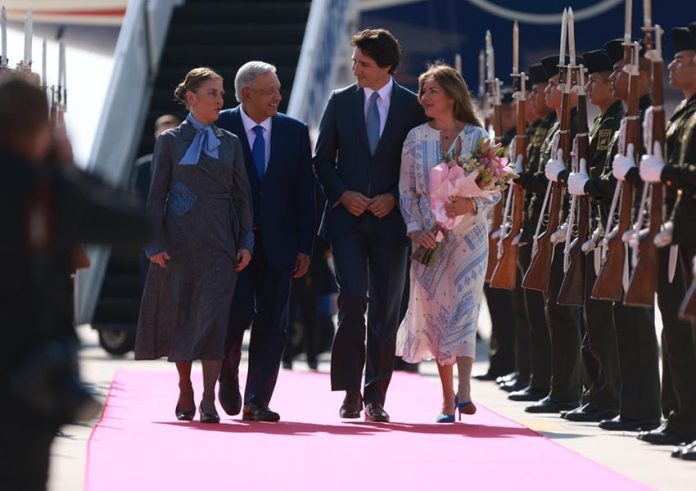
Canadian Prime Minister Justin Trudeau has arrived in Mexico City for talks with President López Obrador and United States President Joe Biden at the 10th North American Leaders’ Summit (NALS).

Accompanied by his wife, Sophie Grégoire, Trudeau flew into the Felipe Ángeles International Airport (AIFA), where he was met by López Obrador and his wife, Beatriz Gutiérrez Müller.

“Over the next few days, I’ll be meeting with @POTUS Biden, President @LopezObrador_, and business leaders to strengthen our economies, create good jobs, and build a better future for people across North America. More to come — stay tuned,” the Canadian PM wrote on Twitter.


President Lopez Obrador tweeted optimistically about Trudeau’s visit to Mexico as part of the North American Leaders’ Summit.


López Obrador posted a photo to social media that showed the two leaders walking down a red carpet at AIFA accompanied by their wives.

“Our relations are more than good,” AMLO wrote on Facebook and Twitter.

“Canadian companies invest in Mexico without obstacles, and the government of that country has been generous in granting temporary work visas to our compatriots.”

Trudeau’s arrival at AIFA came a day after Biden flew into the same airport, located just north of Mexico City.

The Mexican, Canadian and U.S. leaders will participate in trilateral talks on Tuesday at the National Palace. It will be the second NALS attended by López Obrador, Trudeau and Biden, coming 14 months after they met at the 2021 edition in Washington D.C.

Immigration, energy, trade and transnational crime will be among the issues up for discussion.

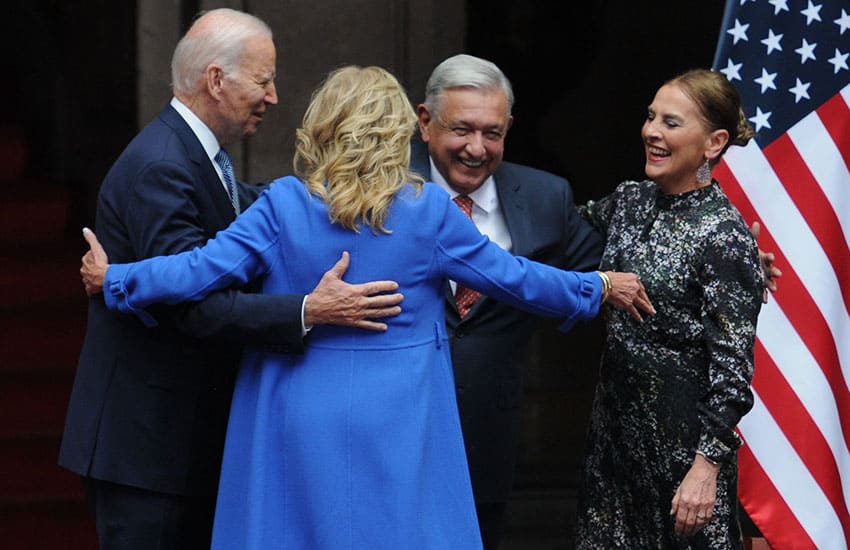
US President Joe Biden and First Lady Jill Biden at 10th North American Leaders' Summit in Mexico
US President Joe Biden, who arrived a day before, shares a hug at the National Palace with, going counter clockwise, First Lady Jill Biden, Mexico’s First Lady Beatriz Gutiérrez Müller and President López Obrador. (Photo: Daniel Augusto/Cuartoscuro)

López Obrador and Biden met late Monday afternoon at the National Palace for bilateral talks. U.S. National Security Advisor Jake Sullivan said earlier Monday that the two presidents would discuss ways in which the two countries can “enhance and elevate” cooperation to combat the fentanyl trade.

“President López Obrador and President Biden will [also] have the opportunity to discuss questions related to supply chains, to clean energy cooperation, and to a larger economic vision of North America,” Sullivan said.

A day before their formal trilateral talks, the three North American leaders issued a statement condemning the events on Sunday in Brazil, where supporters of former president Jair Bolsonaro stormed the Congress, presidential palace and Supreme Court.

“Canada, Mexico, and the United States condemn the January 8 attacks on Brazil’s democracy and on the peaceful transfer of power,” they said.

“We stand with Brazil as it safeguards its democratic institutions. Our governments support the free will of the people of Brazil. We look forward to working with President Lula on delivering for our countries, the Western Hemisphere, and beyond.”

With reports from Reforma 

Federal government buys defunct Mexicana airline brand for over 800 million pesos

0
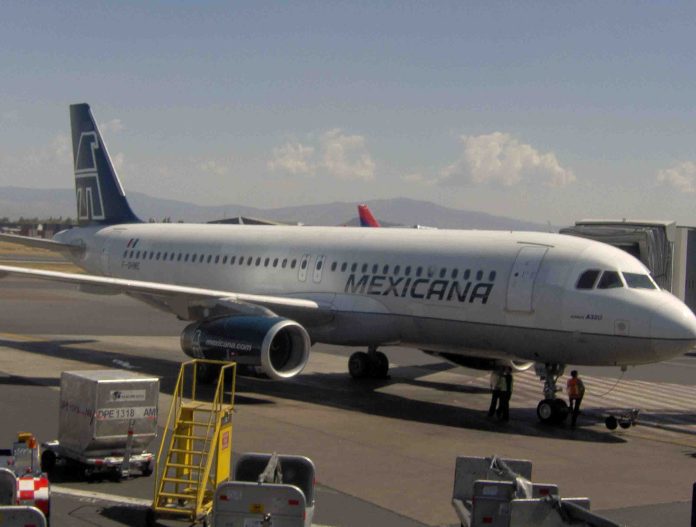
Old Mexicana plane at Mexico City International Airport
A Mexicana plane parked at Benito Juárez International Airport in Mexico City over a decade ago. (Archival photo/Creative Commons)

The federal government has reached an agreement to buy the brand and some assets of defunct airline Mexicana de Aviación (better known as simply Mexicana) for more than 800 million pesos.

Government officials signed a deal last Friday – worth 815 million pesos (US $42.6 million), according to an El Universal newspaper report – with several unions that represent former Mexicana workers.

The agreement comes after President López Obrador said late last year that an army-run commercial airline would begin operations in late 2023. The state-owned carrier is slated to be called Mexicana, which was the name of Mexico’s flagship airline until it ceased operations in 2010.

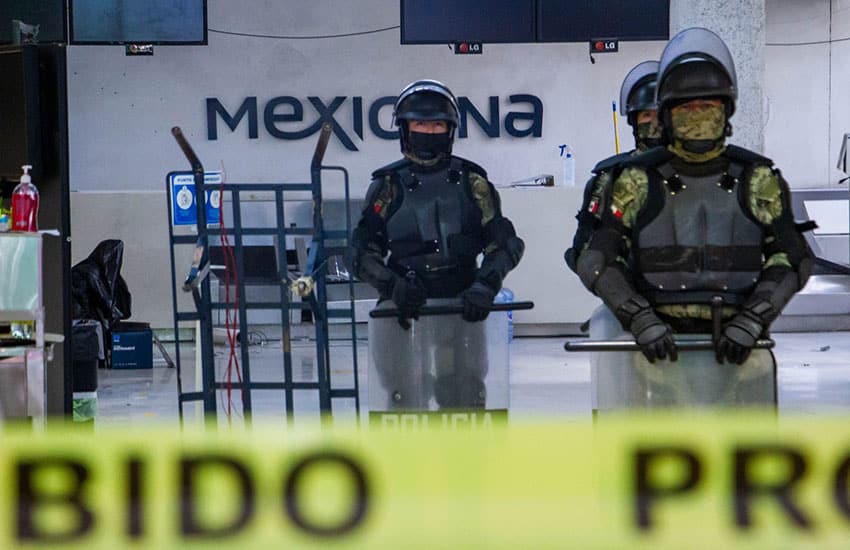
Mexican military guarding Mexicana airline ticket booth in Mexico City International Airport from former employees of airline.
As recently as in September, the military was guarding Mexicana’s old ticket desk in the Mexico City International Airport from former Mexicana employees’ protests. Now it’ll be running the airline. (Photo: Tomás Acosta Ordaz/Cuartoscuro)

El Universal reported that the government, via the Ministry of Infrastructure, Communications and Transport, agreed to purchase the Mexicana de Aviación brand and associated sub-brands as well as a building in Guadalajara, a section of a building in downtown Mexico City, a training center near the capital’s airport and a flight simulator.

José Alonso, a spokesman for the pilots’ union, ASPA, told Reuters that a time frame for the payment has not yet been agreed. The news agency reported a slightly lower purchase figure of 811.1 million pesos.

Alonso said that the government will lift existing legal actions against Mexicana on Monday.

The airline’s downfall was marked by corruption and mismanagement, and it left over 8,000 employees without jobs. López Obrador has said that the new airline, consisting of a fleet of 10 leased planes, will be staffed by the former workers.

Alonso told Reuters that the government’s payment will be divided between ASPA, the flight attendants’ union ASSA, the former aviation workers’ union AJTEAM and the transportation workers’ union SNTTTASS. The amount each will get will depend on what members were owed when Mexicana ceased operations, he said.

Alonso said that the government payment is only a small fraction of what was owed to Mexicana workers, but that “it’s a little bit of justice after 12 years.”

Mexico's president Andres Manuel Lopez Obrador
President Lopez Obrador has said that the new airline should be in operation sometime this year. (Photo: Presidencia)

López Obrador has said that the Defense Ministry’s airline and tourism firm, Olmeca-Maya-Mexica, will run the new state-owned airline.

The airline will lower the cost of airfares while serving cities that current routes do not frequently reach, according to the president, who has also proposed allowing foreign airlines to fly domestic routes to cut costs for passengers.

With reports from El Universal and Reuters 

Biden visits U.S.-Mexico border before Mexico City summit

0
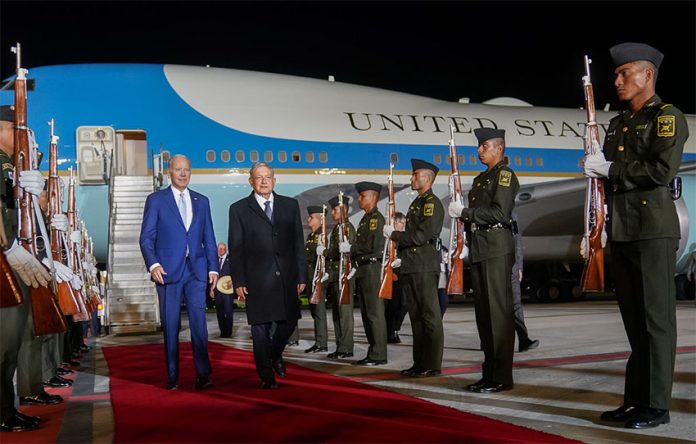
López Obrador and Biden walk away from the Air Force 1 down a red carpet with military cadets standing at attention with rifles on both sides of the walkway.
President López Obrador greets U.S. President Joe Biden at Felipe Ángeles International Airport outside Mexico City, after Biden's surprise pit stop at the border. (LopezObrador.org.mx)

Amid ongoing calls for the United States government to do more to stop illegal immigration via Mexico, U.S. President Joe Biden on Sunday visited the Mexico-U.S. border for the first time since he took office in January 2021.

Biden visited El Paso, Texas, where alongside Border Patrol agents he toured a section of the wall that divides the United States and Mexico.

According to a Reuters news agency report, the president’s visit to the wall was an effort to show he was taking the illegal immigration issue seriously.

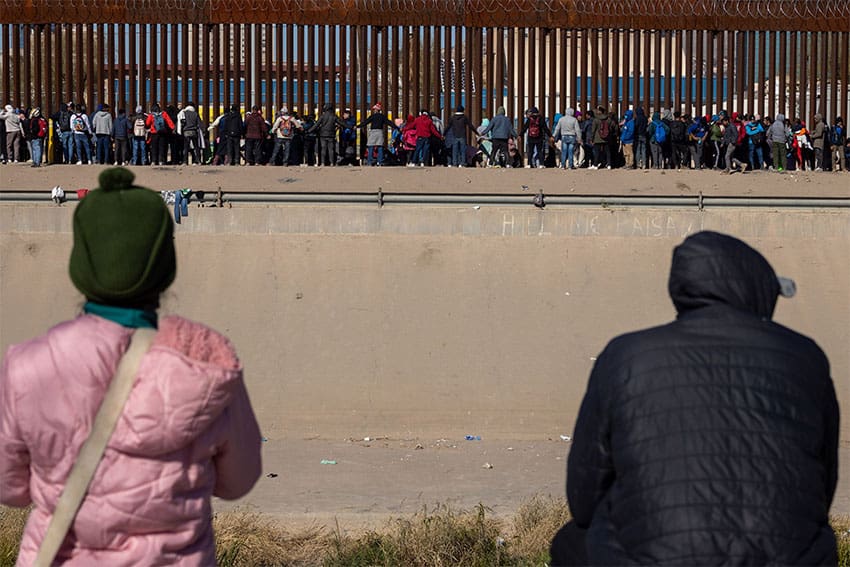
Bundled-up migrants in Ciudad Juárez, Chihuahua, wait to cross into the U.S.
Migrants in Ciudad Juárez, Chihuahua, wait to cross into the U.S. via El Paso in December. (David Peinado / Cuartoscuro.com)

His trip to El Paso came after U.S. border officials apprehended a record 2.2 million migrants at the border in U.S. fiscal year 2022, which ended in September. That figure includes individuals who attempted to enter the U.S. between official ports of entry on multiple occasions.

El Paso Mayor Oscar Leeser, a Democrat, declared a state of emergency last month due to the high number of migrants sleeping on the street in the border city, and the thousands of border-crossers being detained on a daily basis.

The Biden administration last Thursday announced a set of measures to enhance security and reduce unauthorized migration at the United States’ southern border.

The new plan, detailed in a White House fact sheet, includes increased border and immigration personnel, media campaigns to counter smuggler misinformation and increased support to Mexico and Central American countries to address the humanitarian needs of refugees. It also includes a commitment by Mexico to accept as many as 30,000 Venezuelan, Nicaraguan, Haitian and Cuban expelled asylum seekers per month.

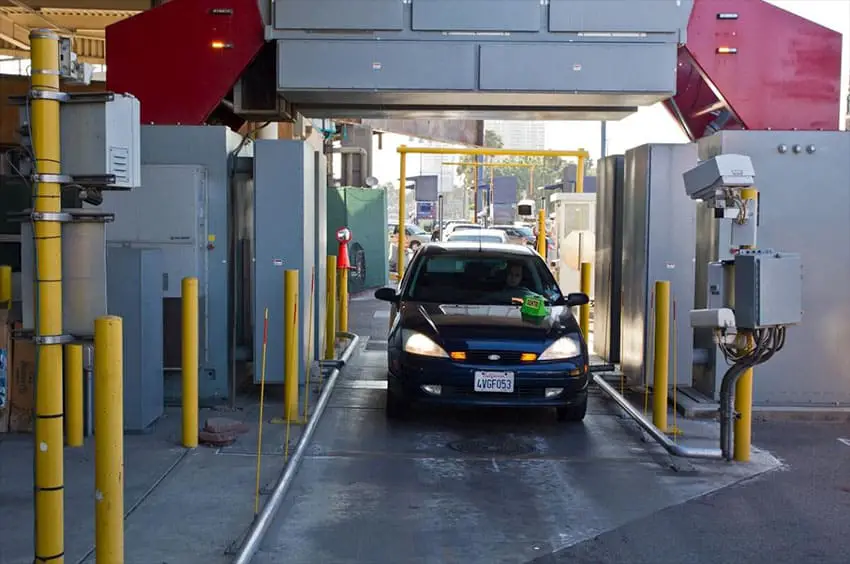
In addition to touring a section of the border wall, Biden on Sunday visited the Bridge of the Americas, which links El Paso to Ciudad Juárez, Chihuahua. Accompanied by Homeland Security Secretary Alejandro Mayorkas, the president inspected equipment used by border officials to detect illegal drugs.

His visit to the Texan city came occurred a prolonged clash with Republicans over border policy and alleged failure to enforce existing laws. Texas Governor Greg Abbott is one of the president’s fiercest and most outspoken critics on immigration, and presented a strongly-worded letter to Biden upon his arrival in the Lone Star State.

A car passes through a scanner at the San Ysidro border port between the U.S. and Mexico.
A car passes through a scanner at the San Ysidro border port between the U.S. and Mexico, part of U.S. measures to prevent contraband from entering that country. U.S. Customs and Border Protection

“You have violated your constitutional obligation to defend the States against invasion through faithful execution of federal laws,” wrote Abbott, who has bused migrants out of Texas, and said last November that he had “invoked the invasion clauses of the U.S. and Texas constitutions to fully authorize Texas to take unprecedented measures to defend our state against an invasion” of migrants.

Biden told reporters on Sunday that he hadn’t yet read the governor’s letter. He said on Twitter Sunday night that “our problems at the border didn’t arise overnight” and “won’t be solved overnight.”

“But, we can come together to fix this broken system. We can secure the border and fix the immigration process to be orderly, fair, safe, and humane,” Biden added.

In a blow to his administration and a victory for the Republicans, the U.S. Supreme Court last month blocked the discontinuation of Title 42, pandemic-era legislation that allows asylum seekers at the U.S. border to be immediately expelled to Mexico, without recourse to legal hearings.

Following his visit to El Paso, the U.S. president flew to the Felipe Ángeles International Airport (AIFA) north of Mexico City, where he was greeted by President López Obrador.

“I welcomed President Joe Biden at AIFA and accompanied him in his vehicle to his hotel. He will be with us at the National Palace tomorrow. We will continue talking about matters of interest for our people and nations,” López Obrador wrote on social media.

The two presidents will be joined in the capital by Canadian Prime Minister Justin Trudeau for a three-day North American Leaders Summit, at which immigration as well as energy and trade will be among the issues up for discussion. López Obrador and Biden will also hold bilateral talks.

First Lady Jill Biden, U.S. Secretary of State Antony Blinken and presidential climate envoy John Kerry arrived at the Mexico City International Airport earlier on Sunday.

With reports from Reuters, NPR, Reforma and El Universal 

INAH to inspect Maya Train route’s final sections as scientists voice concerns

0
INAH has completed excavation and restoration work on sections 1-4 of the Maya Train (Foto: Martín Zetina / Cuartoscuro.com)

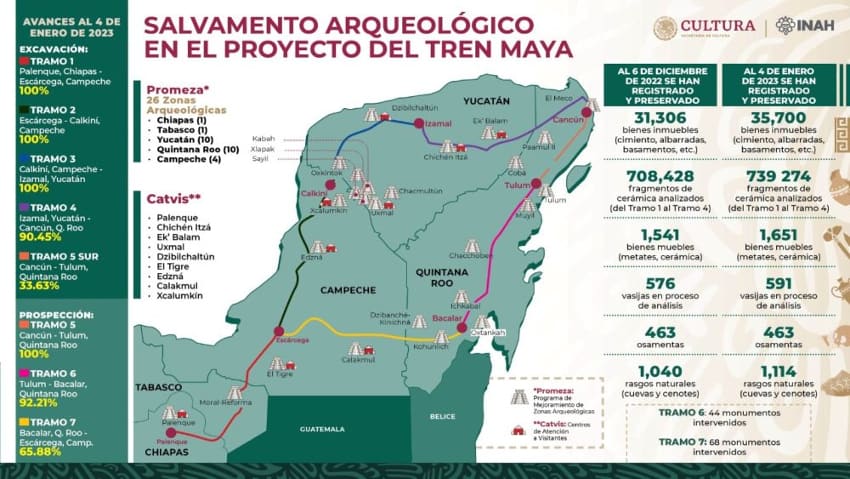
The National Institute of Anthropology and History (INAH) reported last week on the excavation and preservation work being done in conjunction with the construction of the Maya Train.

Diego Prieto Hernández, the INAH’s general director, explained that sections 1 through 4 of the train’s planned route have been thoroughly examined, and that artifacts in those zones have been salvaged and that further excavation work has been identified.

Thus, the INAH team, working under the auspices of the Ministry of Culture, will now concentrate its efforts on sections 5, 6 and 7.

A map demonstrating progress on archaeological excavation along Maya Train route (INAH)

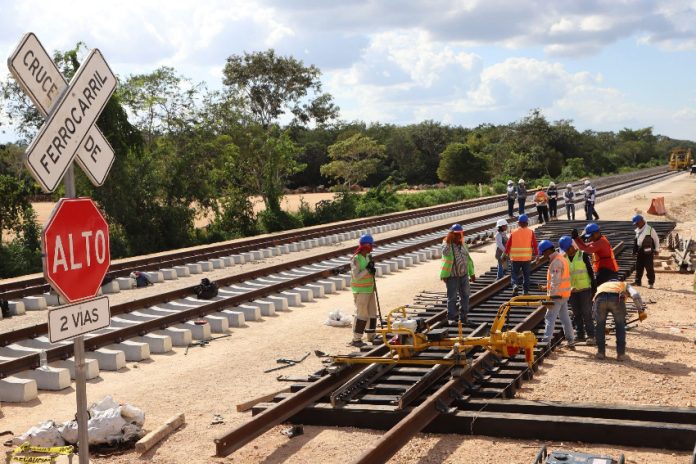
During President López Obrador’s morning news conference on Thursday, Prieto Hernández said the aim is to investigate, protect and conserve the area’s archaeological heritage — while also building train tracks that will cut a swath up to 14 meters (46 feet) wide through some of the world’s most unique ecosystems.

In noting that the investigative work has progressed satisfactorily, and that basic prospecting has been completed in six of the seven sections, the anthropologist gave a breakdown on what had been salvaged as of Jan. 4.

He said the team had found and preserved 35,700 stationary structures, 1,651 movable elements, 463 human bones, 1,114 natural features, 739,274 ceramic fragments and 591 vessels.

Prieto Hernández further explained that “within Section 7 — which goes from Bacalar, Quintana Roo, to Escárcega, Campeche — we have defined a line [for future train tracks] that will protect 26 monuments classified as Category 4, that is, those that have a particular relevance and must be preserved in their entirety.”

Prieto Hernández’s address to the media came a day after Reuters published an article headlined “Collapse, contamination: Mexican scientists sound alarm at Mayan Train.” 

The article contended that “droves of scientists and environmental activists” are saying that the “railway and its hasty construction critically endanger pristine wilderness and ancient cave systems beneath the jungle floor.”

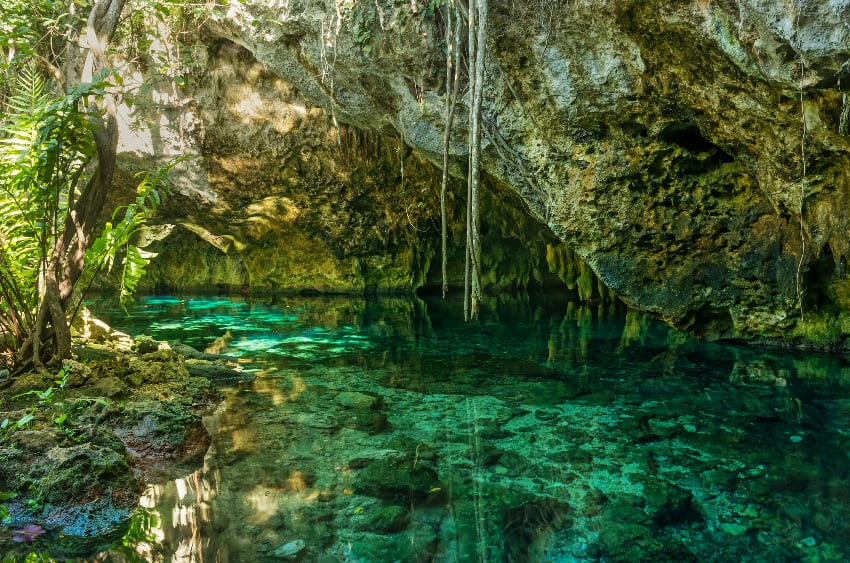
Gran Cenote
The Yucatán peninsula is known for its karst limestone topography and vast subterranean network of caves and sinkholes (Photo: Depositphotos)

The 1,470-kilometer (910-mile) railway “is splitting the jungle in half,” Ismael Lara was quoted as saying. A guide who leads tours to a cave near the Calakmul Biosphere Reserve that contains “millions of bats,” Lara fears the train will disrupt wildlife and attract too much development to fragile ecosystems. (The plan is to construct nine visitor centers, so that people can visit the archaeological zones near the railway route.)

Set to be powered by diesel and electricity, the Maya Train will connect Cancún (Mexico’s top tourist destination) to the ancient Mayan temples of Chichén Itzá in Yucatán and Palenque in Chiapas.

Fonatur, Mexico’s tourism agency charged with the project, has said the railway will lift more than a million people out of poverty and could create up to 715,000 new jobs by 2030. Construction costs are seen at up to US $20 billion, López Obrador said in July.

With the project billions of dollars over budget and behind schedule, scientists and activists say the government cut corners in its environmental risk assessments in a bid to complete the project by López Obrador’s deadline of December 2023.

“Years are not required. Expertise, knowledge and integration capacity are required,” Fonatur said in response to questions from Reuters.

The agency declined to comment on a United Nations statement last month in which experts warned that the railway’s status as a national security project allowed the government to side-step usual environmental safeguards. The statement called on the Mexican government to protect the environment in line with global standards.

Maya Train rendering
Scientists and environmental activists have sounded alarms about the massive train project since work began in 2020 (Photo: Fonatur rendering)

If built badly, the railway risks breaking through the fragile ground that sits atop a system of thousands of subterranean caves, said Emiliano Monroy-Rios, a Mexican geochemist with Northwestern University who has extensively studied the area’s caves and cenotes, which have been carved out off soft limestone bedrock by water over millions of years.

Diesel fuel, he added, could leak into pools and rivers, the main source of freshwater on the peninsula.

Several scientists interviewed by Reuters said such damage could limit important geological discoveries, as less than 20% of the subterranean system is believed to have been mapped.

“They don’t want to recognize the fragility of the land,” said Fernanda Lases, a scientist with the National Autonomous University of Mexico (UNAM) who is based in Mérida, Yucatán. He called the situation “highly worrisome.”

“They want to do it fast and that’s part of the problem,” Monroy-Rios added. “There’s no time for the proper exploration.”

Countered Fonatur: “The Maya Train project is, of course, safe, monitored and regulated by the environmental authorities.”

With reports from Infobae, INAH and Reuters

Government extends anti-inflation measures through 2023

0
A shopping cart in the foreground with a colorful, out-of-focus grocery isle in the background.
The new products added to the anti-inflation program include turkey, lentils, lettuce, deodorant, animal feed and more. (Depositphotos)

The Mexican government will extend anti-inflation measures for another year, adding new products to the list of items temporarily exempt from tariffs in an attempt to control rising prices.

In a statement, the Economy Ministry explained that the Package Against Inflation and Shortages (PACIC) and the Opening Agreement Against Inflation and Shortages (Apecic) would be combined into one instrument and extended until Dec. 31, 2023. The measures, which were introduced in May and October, respectively, aim to achieve an 8% reduction in the price of key products by temporarily exempting them from import tariffs.

The Ministry announced a list of 33 further products that would be added to the program, including foodstuffs such as turkey, lentils and lettuce; personal hygiene products such as deodorant and toothbrushes; animal feed; and agricultural products.

The Economy Ministry said that while prices remain high, the PACIC and Apecic economic plans were successful in keeping the cost of everyday items below target levels.

The package also grants businesses that hold a Unique Universal License (LUU) greater flexibility to review non-tariff regulations that increase import and distribution costs, such as motorway tolls. In addition, it restricts exports of some essential foodstuffs.

On Thursday, the Ministry defended the PACIC’s record, while acknowledging that prices of essential products remain high.

“Despite the implementation of the Pacic in May 2022, prices maintained a growth trend,” they said in a statement on Twitter. “On the implementation of Apecic in October 2022, in agreement with the 15 companies involved in the pact, prices began to show a slight decrease. The commitment to keep the prices of the basic basket below 1,039 pesos [US $55] has been fulfilled.”

Mexico’s headline inflation fell to 7.77% during the first half of December, the lowest rate since May, but ended the year at 7.82% annual rate, according to data published today by INEGI. Core inflation over the whole year was around 8.35%, its highest rate for two decades. Sharper increases were seen in the prices of basic foodstuffs, which are excluded from the core measure because of their volatility. These peaked in September and have since dropped slightly.

For his part, President López Obrador has defended his administration’s record on inflation, while acknowledging in his end-of-year address that the issue “is something that we have to take care of in 2023.”

With reports from El Economista, El Financiero and La Jornada

22 still in hospital after fatal metro accident in CDMX

0
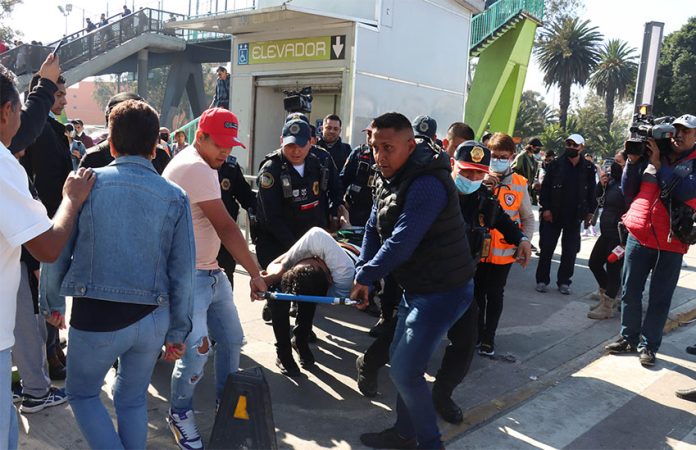
Emergency services push through a crowd to extract injured passengers from the crash on gurneys.
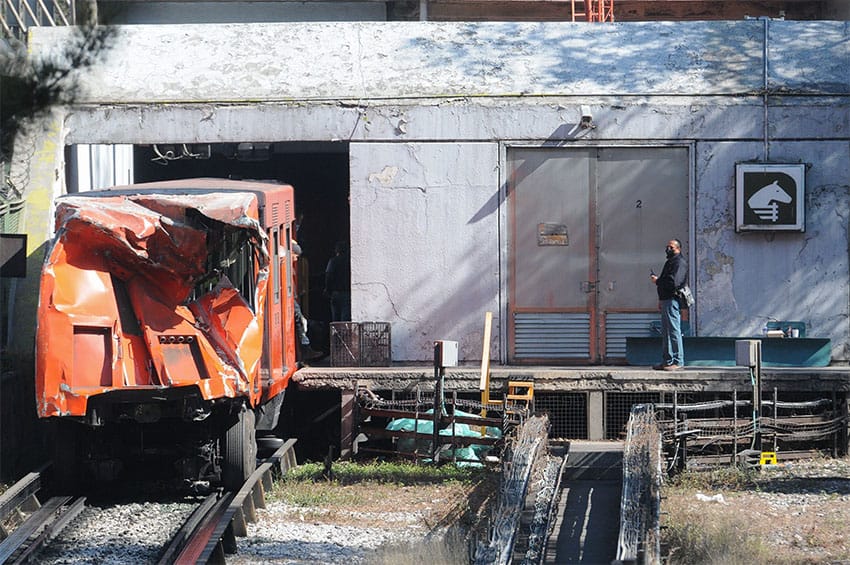
The crash on Metro Line 3 earlier this month injured dozens and killed one young woman. (Rogelio Morales Ponce / Cuartoscuro.com)

Twenty-two people remain hospitalized after sustaining injuries in a Mexico City metro accident that claimed the life of one woman on Saturday, authorities said Sunday.

Two trains traveling in the same direction on Line 3 of the subway system collided Saturday morning between the Potrero and La Raza stations north of the historic center.

Mayor Claudia Sheinbaum said Saturday that one woman was killed and 57 people with injuries were taken to seven different hospitals. A National Autonomous University (UNAM) press release identified the deceased woman as Yaretzi Adriana Hernández Fragoso, 25. She studied visual arts at the university’s School of Arts and Design.

Technical crews pulled the damage train cars from the Metro tunnels on Sunday.
Technical crews pulled the damage train cars from the Metro tunnels on Sunday. (Daniel Augusto / Cuartoscuro.com)

Ernesto Alvarado, the Mexico City government’s commissioner for assistance for victims, told a press conference Sunday that a total of 106 people were hospitalized for injuries sustained in the crash.

“From the information collected yesterday [Saturday] and this morning I can report that 57 people were transported to hospitals by ambulance and 49 arrived by their own means. … Until now, 84 people have been discharged and 22 remain hospitalized, all of them in stable condition,” Alvarado said.

Among the injured is the driver of a train that collided with the rear of another train traveling on Line 3, which runs between the Universidad station at the UNAM in the capital’s south and the Indios Verdes station in the northern borough of Gustavo A. Madero.

The driver, who was initially reported in serious condition, was one of four people trapped in wreckage for some time after the accident occurred just after 9 a.m. Saturday. Emergency services, police, the army and the National Guard responded to the accident.

“There was a terrible collision and everyone went flying,” Mariela Casasola, a train passenger, told the Reforma newspaper.

“The lights went out and a lot of smoke started coming out, people started shouting.”

Some residents and politicans have blamed Mexico City Mayor Claudia Sheinbaum and her administration for the accident, saying that funding for the Metro system is insufficient.
Some residents and politicans have blamed Mexico City Mayor Claudia Sheinbaum and her administration for the accident, saying that funding for the Metro system is insufficient. (Twitter @Claudiashein)

The Mexico City Attorney General’s Office is conducting an investigation to establish the cause of the accident between the Potrero and La Raza stations, where, according to metro chief Guillermo Calderón, signaling problems were detected Friday and a low-speed protocol was consequently implemented.

Calderón said Sunday that the subway system’s deputy director of operations had been dismissed in light of the accident. Sheinbaum said her government’s priority is attending to the victims, and pledged that justice will be served.

The fatal crash came 20 months after an accident on Line 12 — the metro system’s newest — claimed the lives of 26 people. Normal service on Line 3 was scheduled to resume Monday morning.

Some citizens, including opposition politicians, blame Sheinbaum — a presidential aspirant — for the accident, and the mayor was dubbed a murderer by attendees of a protest Saturday night. Sheinbaum rejected claims that the metro system doesn’t have sufficient funding.

Denise Dresser, a political analyst and columnist, said on Twitter that the mayor, the ruling Morena party and the federal government can’t blame “inherited deficiencies” for the latest metro tragedy.

“The left has governed Mexico City since 1997. [There have been] years of disinvestment, deficient maintenance [and] priorities elsewhere. Take responsibility,” she wrote.

With reports from El Economista, El Financiero, BBC, Milenio and El Universal 

As expats, we straddle 2 economies, but our hosts don’t

0
Foreigner in Mexico City
Foreigners on the streets of Mexico City.

There’s been a lot of talk lately about the significant increase in both visitors and immigrants, mostly from north-er North America to Mexico, and it’s got me thinking about what it means to be a gracious newcomer.

I don’t really count as a newcomer myself. I came to live in Mexico back when nobody thought it was a good or safe idea, and when the perception was that most of the gringos in the country were rough-looking men with questionable criminal histories.

If you wanted to work, a job at an in-person school was your best bet, and you received pay that reflected the local economy. (I made a monthly salary of 7,000 pesos a month at my first full-time teaching job in Mexico — worth about US $700 today — with no benefits.) Getting official permission to work was difficult, and you were mostly paid in cash under the table. It wasn’t a great plan for wealth-building in one’s prime working years, and most people my age stayed away from Mexico, save for a vacation or two.

Since then, Mexico has caught on in a major way, in part because people, especially from the U.S. seem to have become particularly disillusioned with their own country: at this point, gangs of narcotraffickers with specific targets don’t seem like such a big deal compared to the prospect of young men walking into schools, grocery stores and movie theaters to mow the places down with easily-accessible combat weapons they acquired under the guise of “self-defense.” Add in our looney tunes politics of late, and it’s no wonder people are looking for something different.

After the experience of the pandemic paired with rising prices and an ever-shrinking financial safety net, many have found a solution: be a rich, relaxed person in Mexico rather than an economically struggling, stressed person in their own country.

Like most other migrants around the world, many of us here are economic immigrants. Unlike most, however, we’re not moving here for the chance to “make it” but for the advantage of being able to buy the things we need and live the life we want at a much lower price with our foreign money from remote jobs.

It’s like a permanent working vacation, and is often promoted as such: Our hosts are friendly, and for the most part, welcome us. Aside from a fairly awful tax situation, if you’re still working and are being honest about where you reside, there’s very little to complain about.

So the reasons for making the move are understandable. Why not try to live as well as possible?

The optics, however, are something I worry about.

After all, there are some major gaps between the way poor immigrants to the U.S. are treated and expect to live and how we immigrants from rich countries are treated and how we expect to live here.

There are also major differences in how much remote-working foreigners can earn in Mexico compared to native Mexicans with similar education, skills and experience. This difference seems to have the most potential to cause major resentment: foreign migrants are essentially working with two different economies — getting paid in an expensive one and spending in a cheap one.

If you’re Mexican, it must hurt to watch people game a system that you yourself cannot. And now that there are so many of us doing it, it’s not all that easy to ignore… especially when their presence affects what you yourself can afford and enjoy in your own community.

Even if the numbers and the articles about this great migration south weren’t around, I’d still be able to say with some degree of certainty that a lot of people not from here are showing up in Mexico. As the only person whose articles popped up for a while under an “expats Xalapa” search, I receive lots of messages from people interested in exploring my city as a potential place to live.

I’ll admit, I’m wary. Don’t get me wrong, I like people; my default setting is “I like you” even before I’ve met you. But I fear my city becoming, like other places in Mexico, a place that people actually from here will be able to enjoy less and less if they’re priced out by rich(er) foreigners arriving with dollars in hand, ready to pay well above market price for the choicest areas of the city. Limits on AirBnB and the like may help, but, let’s face it: being willing to pay large amounts of money for what you want simply has no competition in this world.

Honest question, non-rhetorical: Is there enough room for all of us to enjoy the good life here? Does our presence in such great numbers make life worse for others? I fear that we’ve seen this movie before, in suddenly popular states and cities north of the border. Perhaps some of us are even running from its effects. Is there a way to avoid or counteract such effects down here?

Because if it’s five or 10 families doing this, like it was for quite a while, okay; not the hugest deal. If it’s hundreds or thousands of families, that can have a real impact. How do we balance our individual needs and wants with what’s best for our new communities? How do we reconcile being both a single drop in the ocean but also part of a wave whose impact will definitely be felt?

Our individual intentions are good, but our collective effect is… mixed.

Most of us are immigrants for the same reason that others are immigrants: we want a better life for ourselves and our children. Sometimes, it’s just because we want adventure and because we can.

But, for goodness sake, please stop crowing so loudly about how “cheap” Mexico is… it’s only cheap to those earning out-of-Mexico wages, which is not the majority of people here. Learn about the local economy where you land, and don’t vastly overpay for goods and services. You may think you’re being extra generous, but the effect of too many people doing that is to price out everyone else, unwittingly turning many goods and services that most locals could access before into hard-to-have luxuries.

So let’s remember our position of privilege and do our best to speak and walk humbly: we’re the ones coming here to live our best lives, not the ones suffering at Mexico’s southern border while waiting to be processed by immigration, or the ones doing the same jobs at Mexican companies for a fraction of the cost.

Sarah DeVries is a writer and translator based in Xalapa, Veracruz. She can be reached through her website, sdevrieswritingandtranslating.com

In Oaxaca city’s restaurant scene, look for substance over style

0
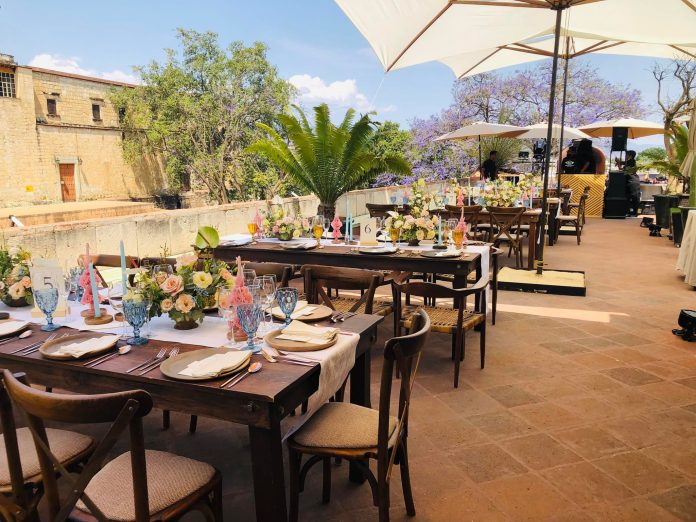
Catedral de Oaxaca restaurant in Oaxaca city
Outdoor dining area at the Catedral de Oaxaca restaurant in Oaxaca city. Many of the city’s noted restaurants are located in old historic buildings to give an authentic atmosphere. (Photo: Catedral de Oaxaca/Facebook)

Twenty years have passed since I first visited the city of Oaxaca, and I’m struck by how much has and has not changed. Perhaps nothing indicates this more than the food scene.

Although it has been a major tourist attraction for over a half a century, Oaxaca city is often promoted as a quaint place, somewhat stuck in time. Colonial buildings serve as a backdrop for women in indigenous dress. A history of resistance to both colonial and modern authority has made it a magnet for foreigners looking for something missing in the “modern” world.

Oaxaca’s food reflects much of the state’s distinct regional identity. Although you can find the obligatory corn tortillas and beans along with cheese and other European contributions, its one-of-a-kind preparations and seasonings have made the state a destination for serious food lovers.

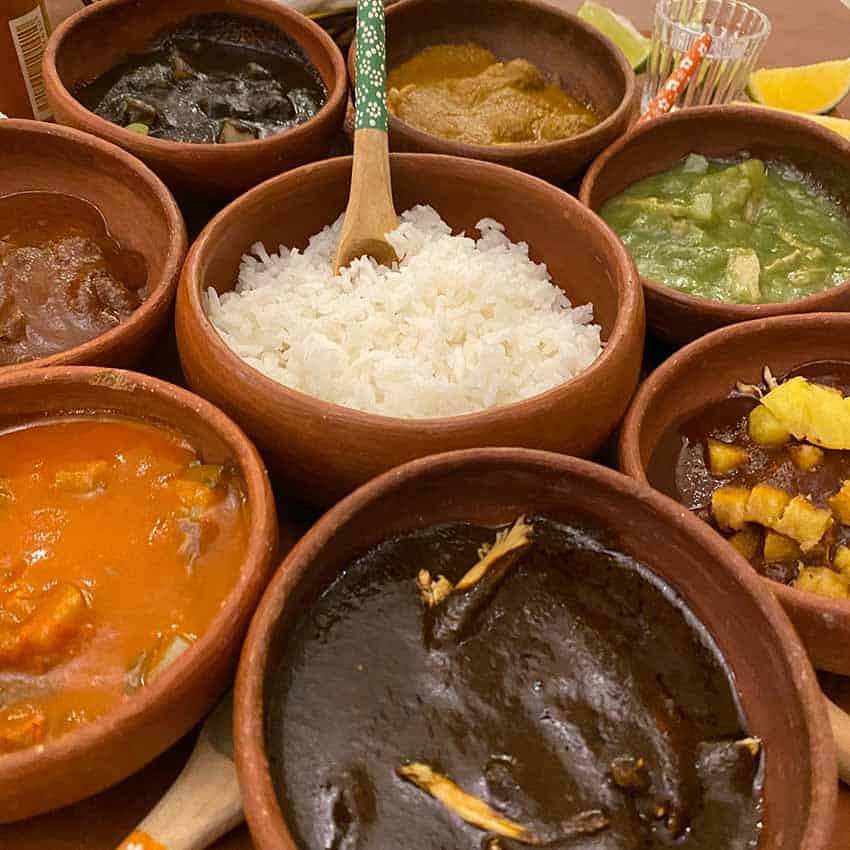
Mole sampler at La Coronita restaurant in Oaxaca city
The mole sampler at La Coronita. (Photo: La Coronita/Facebook)

Today, there are a large number of articles in English listing recommended places to eat when in the city, and to some extent, in the Central Valleys region around it. The recommendations are usually driven by the desire to experience “authentic” Oaxaca food, but in an environment that is comfortable for many tourists.

By “authentic,” the idea is to eat what Oaxacans have eaten for centuries, often meaning any of the state’s famous mole sauces, tlayudas, hot chocolate and mezcal, for starters.

But those classic and fantastic dishes were developed, and, until recently, almost exclusively prepared, in home kitchens and fondas (small family restaurants) that won’t have the visual touchstones that many foreigners look for in a “clean” or “safe” place to eat, never mind in an upscale dining experience.

Oaxaca has been a significant tourist destination for decades, so there have been hotel restaurants catering to them for some time, like La Coronita, which has been serving up very good moles since 1948.

But with Oaxaca now a foodie destination, the restaurant scene has expanded beyond this. They seem to be of two types: those run by traditional cooks who have learned to create a fine(r) dining experience and formally-trained chefs with a familial link to Oaxaca home cooking.

Two good examples of “non-chef” restaurants are Celia Florian’s Las Quince Letras and Jorge León’s Alfonsina. Both are run by people who learned to cook in their homes but went beyond that, learning either through experience or through work in high-end restaurants in Mexico and abroad. Las Quince Letras’ signature dish is the mole negro Florian grew up with.

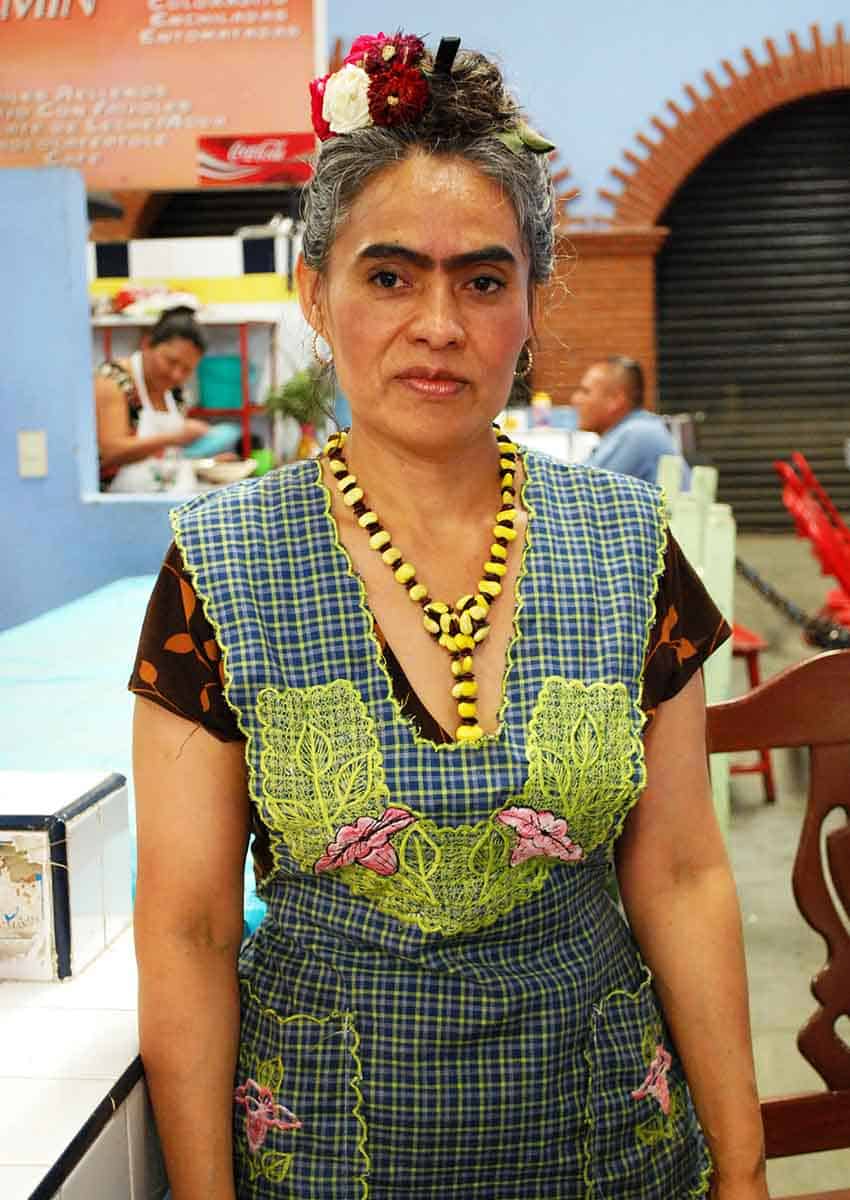
Beatriz Vásquez Gómez who runs a food stand at the Ocotlan market in Oaxaca City
I normally shun restaurants with a “kitsch” aspect, expecting the food to be bad, but the Ocotlán market stand of Beatriz Vásquez Gómez is a worthwhile exception. She works her similarity to the artist Frida Kahlo for the tourists, but her food might be the best the market has to offer. (Photo: Alejandro Linares García)

But the connection to Oaxaca’s history and culture seems to be an absolute must for either type of establishment. For example, chef Rodolfo Castellanos is classically-trained and won the “Top Chef México” competition, but he still stresses his humble roots, even having his mother work in the kitchen of his restaurant Origen from time to time. Formal gastronomic training, when employed, is done so subtly, such as using techniques such as deglazing to optimize flavor rather than to change it.

Major innovations such as Tierra del Sol’s braised octopus in chicatana (flying ant) sauce is the exception not the rule, as fusion or innovation is still controversial in Oaxaca. Most of the “innovation” is in the dining room, related to surroundings and service.

Oaxaca city (and Mexican) traditional family restaurants do not stress either, but most catering to tourists look to create those visual touchstones that not only indicate “cleanliness” and “healthy” to foreigners, but also “authentic” in the sense that you are in Oaxaca and not some generic international restaurant.

On one end of this spectrum are Criollo and Casa Oaxaca, both high-end restaurants based in old colonial homes in the historic center, with highly-trained staff catering to every whim.

I asked some foreigners living in Oaxaca for advice on where they recommend, and many suggest El Tejadón, La Biznaga and Tr3s Bistro, as they have service and surroundings acceptable to most foreigners and have menu items that cater to vegetarians and others with special dietary needs.

The quest for authenticity also includes specialty restaurants: Flor de Maíz focuses on menu items featuring corn such as tetelas, tamales and pan de elote. La Atolería Masea specializes in atole, a hot corn beverage generally mixed with a wide variety of flavors. Ancestral Cocina focuses entirely on foods eaten before the arrival of the Spanish with no adaptations to modern palates. Criollito in the municipality of Tlacolula, about 30 km outside Oaxaca city, specializes in tortillas made with various heritage corns that come in a rainbow of colors.

Tacos Dorados from Criollito restaurant near Oaxaca City
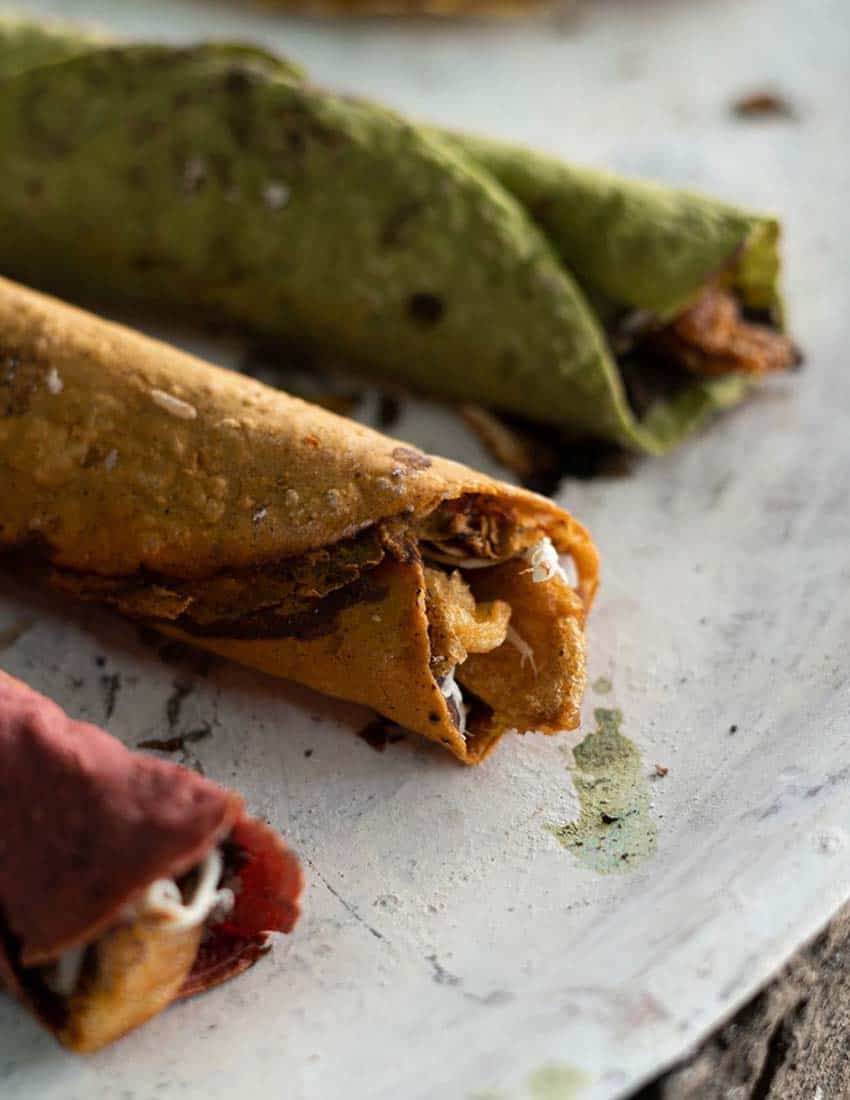
Tacos dorados at Criollito in Tlacolula (near Oaxaca city). This restaurant specializes in using corn varieties of an array of colors (Photo: Criollito/Facebook)

Not all foreigners are attracted to such places. Resident David Cruz, for example, recommends avoiding “…anything seen on Netflix, … YouTube, and name-brand blogs,” and instead going to any humble market. I tend to agree, especially if your goal is to experience the pasillos de humo, the aisles in Oaxaca city’s mercados, where meats like tasajo are grilled to order.

But if that feels too informal, there are places that look to recreate very humble eating experiences in a more comfortable environment. One of these is La Cocina de Humo, a city recreation of the “smoke kitchens” found in rural towns, where the cooking is done over wood fires.

Other casual places that were recommended to me by various foreign residents include Almú in the municipality of Ocotlan, in the Central Valleys; La Popular in Oaxaca city’s historic center; El Típico in the municipality of Jalatlaco; and Santa Marta buffet in the municipality of Etla.

Some foods, like tlayudas (Oaxaca’s “pizza”) is best had on the street and markets, but if that is not an option, Oaxaca city resident Alosja van Leeuwen recommends Tlayudas El Negro in the city’s Obrera neighborhood.

Leigh Thelmadatter arrived in Mexico 18 years ago and fell in love with the land and the culture in particular its handcrafts and art. She is the author of Mexican Cartonería: Paper, Paste and Fiesta (Schiffer 2019). Her culture column appears regularly on Mexico News Daily.