Home Blog Page 847

Sinaloa airports, buses and roads mostly open after day of violence

0
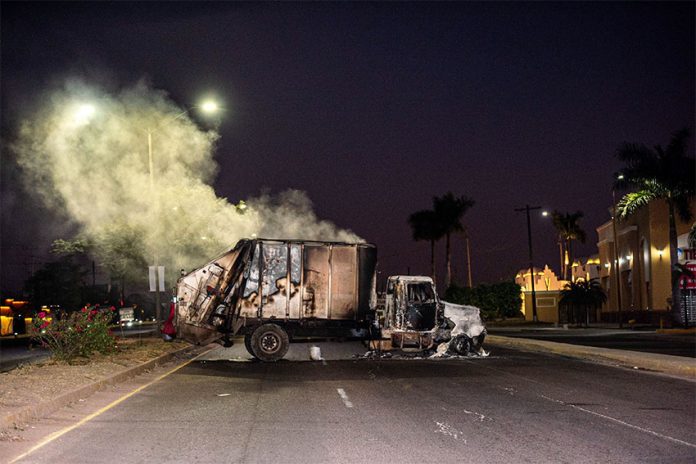
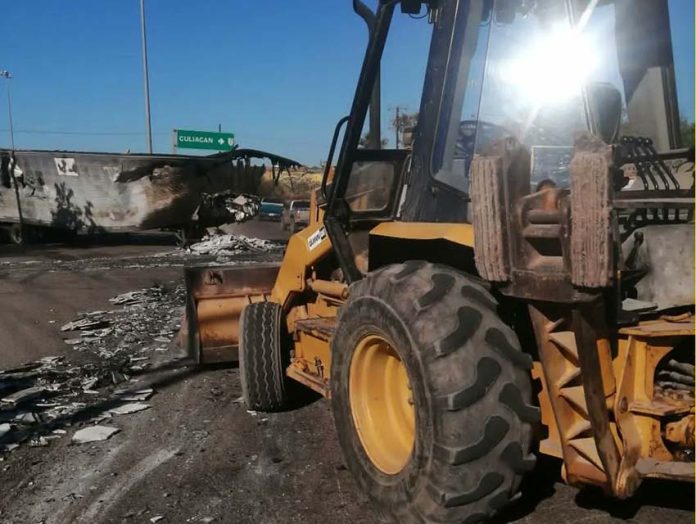
Roadways in Culiacan were left with so much debris from the violence that law enforcement called upon public works departments to help clear roads. (Photo: Secretaría de Seguridad Pública y Tránsito Municipal de Culiacán, Sinaloa)

The Culiacán International Airport in Sinaloa had reopened as of 10 a.m. on Friday, according to media reports, a day after an outbreak of widespread violence was sparked by the arrest of Ovidio “El Ratón” Guzmán.

Two other sizable airports in Sinaloa — in Mazatlán and Los Mochis — also reopened on Friday, as did the airport in Ciudad Obregón, Sonora, which is 150 kilometers (93 miles) north of the Sinaloa-Sonora state line.

“We suggest you contact your airline for any questions regarding your flight,” Grupo Aeroportuario Centro Norte, which operates the airports in Culiacán and Mazatlán.
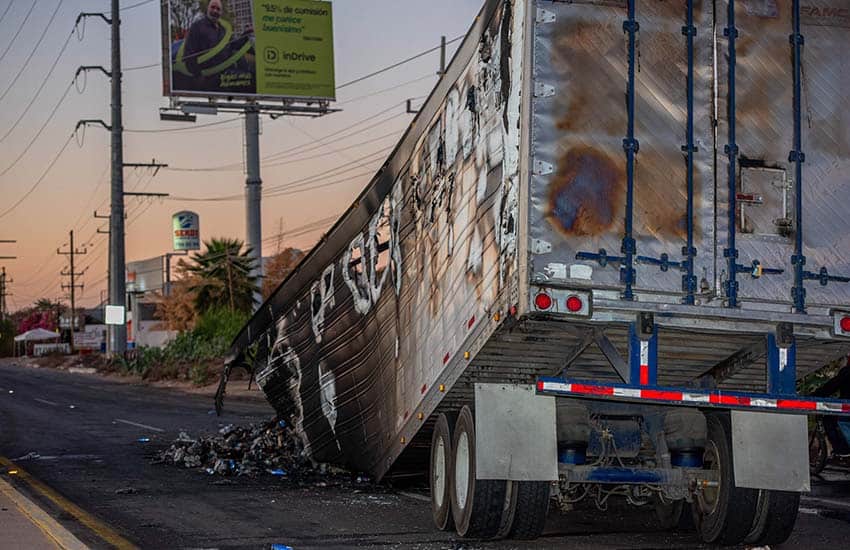
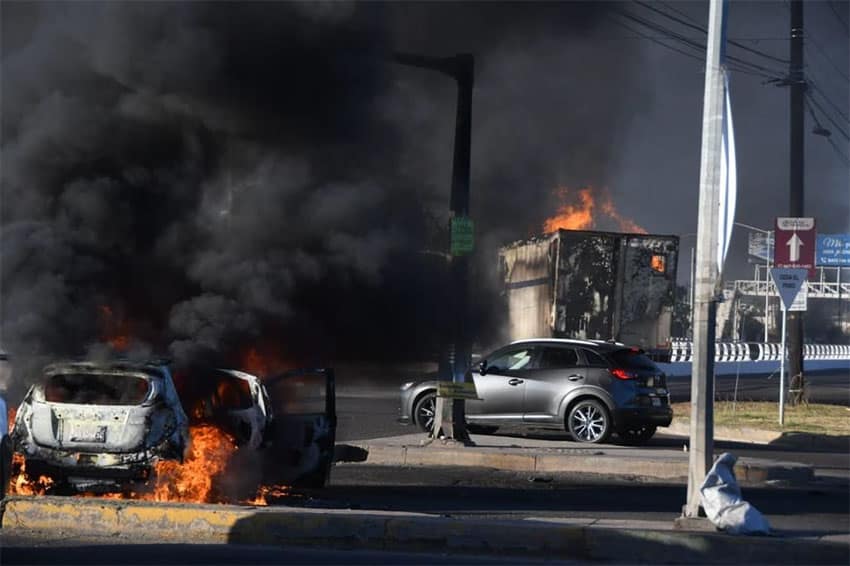
After a day of violence, Culiacán was left with burned-out vehicles throughout key roadways thanks to fiery criminal blockades. (Cuartoscuro)

The Mazatlán and Los Mochis airports reported early Friday afternoon that they were fully operating, one day after thousands of passengers were stranded because of the closures.

Aeroméxico, meanwhile, announced on Twitter early Friday afternoon that “as of Jan. 7 [Saturday] all our flights to/from Cd. Obregón, Culiacán, Los Mochis and Mazatlán will operate as normal. You can check the status of your flight at viaja.am/3DXy22A.” 

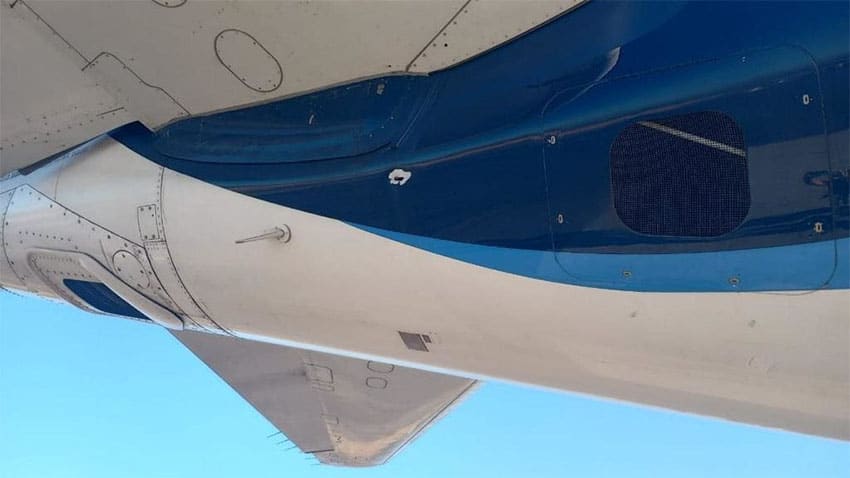
Mexico’s Federal Civil Aviation Agency (AFAC) reported on Thursday that the aforementioned airports had been temporarily closed to the general public for security reasons. At the Culiacán airport, for example, the fuselage of a plane bound for Mexico City was hit by gunfire on the runway before taking off (no passengers or employees were injured).

Meanwhile, on a portion of Federal Highway 15 not far from the airport in Ciudad Obregón, two semi-trailers on Thursday were set on fire, which reportedly not only prevented travelers from reaching the airport but also caused the evacuation of passengers already there.

In its coverage early Thursday afternoon, the newspaper Milenio noted that “all the burned vehicles (a total of 250, according to authorities) have already been removed from the roads in the north of the state.”

It also reported that the northern zone of Sinaloa was free of blockades, according to authorities, and that the checkpoints set up by the National Guard and local authorities in that region along Federal Highway 15 had been removed.

On the highway between Culiacán and Mazatlán, blockades kept trucks and buses stranded for hours. Citizens brought food and hot drinks to the highway to stuck drivers. 


Federal Highway 15 runs from Guadalajara to the U.S. border and passes, south to north, through Tepic, Nayarit; Mazatlán, Culiacán and Los Mochis, Sinaloa; and Ciudad Obregón, Sonora.

The portion of Highway 15 that runs from Culiacán south to Mazatlán and beyond, however, was still “closed due to security issues,” according to the Twitter account of Autopista  Mazatlán-Culiacán

“We await further information from the National Guard,” the account said early this afternoon. As of 8:00 p.m. Central Time, there had been no updates.

Bus service from Autotransportes Unidos de Sinaloa, one of the main bus companies in that region, more commonly known as AUS, returned Friday morning with runs to Culiacán and Escuinapa. The latter city is south of Mazatlán and just north of the Sinaloa-Nayarit border.

Jesús Martínez López, head of operations and services for AUS Central in Mazatlán, said the route to Escuinapa was being run “with great difficulty” because of some lingering roadblocks in the southern part of Sinaloa. He said buses “are getting off the highway” and taking a detour.


The situation earlier today on the federal highway in Escuinapa. It is now open, according to media reports.


However, El Rosario is a bit north of Escuinapa, and reaching that municipality from Mazatlán “was no problem,” Martínez López added.

He said a bad stretch of highway was the portion of Highway 15 that goes north from Culiacán to Guasave, then to Los Mochis, then to Ahome.

He said he was waiting for the authorities to tell him when bus service could be resumed between those areas, and he urged people to be patient when it comes to traveling to and from Culiacán; the top concern, he said, must be the safety of passengers, employees and buses.

A traveler named Cris stranded at a Mazatlán bus station took to Twitter on Friday afternoon to complain that “the drivers do not tell us anything, we have been standing here since yesterday, other [bus] lines are already moving to Culiacán and we have nothing, not even the ticket office is open, terrible service.”

The newspaper Noroeste reported Friday afternoon that there were around 500 passengers stranded in the facilities of the Culiacán bus station due to the blockade of booths and roads causing transport lines to suspend operations. One local news outlet said there was bus service from Culiacán to at least a half dozen destinations, “but there is no estimated time to open service in its entirety.”

Meanwhile, the newspaper Debate wrote on Friday afternoon, “More than 30 hours after the ‘Culiacanazo 2.0’ began … with the arrest of Ovidio ‘El Ratón’ Guzmán, the population of Sinaloa is still afraid of taking to the streets.”


With reports from Milenio, Debate, Noroeste and Reforma

Boat tour offers whale watching with true experts: marine biologists

0
Up close and personal with a humpback whale in the Bay of Banderas, Nayarit. (Photo: Explora Vallarta)

Where is the best place to watch whales raising their babies? For years, I had heard it was Cabo San Lucas in Baja California, but when I put my question to friends in Guadalajara, they were unanimous:

“Puerto Vallarta is the place to go!” they replied, “and right now (January and February) is just the right time to see whales.”

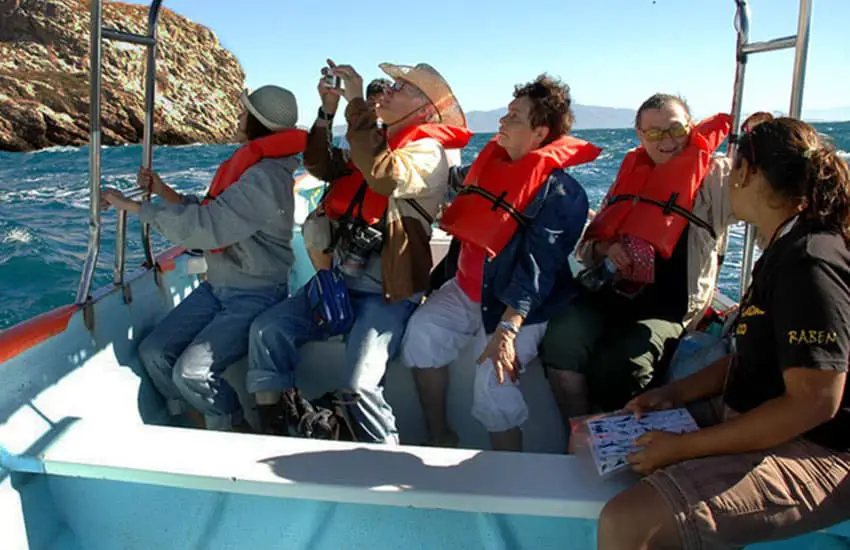
So it was that I discovered Explora Vallarta, a touring company run by marine biologists. They transported my friends and me from Puerto Vallarta to the port at Punta Mita in the Bay of Banderas, where we ended up having a medium-sized boat just for ourselves, plus the pleasant company of three enthusiastic young biologists whose very lives revolve around whales. 

Every winter, humpback whales come from the California coast to Mexico’s Bay of Banderas to raise their young in a safe environment. (Photo: Explora Vallarta)

We left the dock surrounded by brown pelicans…

“How’s the sea today?” I asked.

“Smooth,” they answered.

Well, we were soon being thrown starboard, windward, leeward and every-other-ward known to navigators of the deep as our little boat flew through the air, smacking the brine over and over. Lucky us that it was a smooth sea that day!

After half an hour, we spotted another boat, this one full of 20 lifejacket-clad tourists like us. We turned to our guide, marine biologist Jorge Morales. 

“Jorge, that boat doesn’t seem to be jumping up and down like ours.”

“No,” he replied, “but that boat has almost no maneuverability. You’ll see who gets closest to the most whales.”

And so it was. Every time a head, tail or waterspout appeared, there we were, with Jorge and his wife Fabiola, explaining everything both in Spanish and English:

“Look — there’s a female humpback with her week-old baby! That baby drinks 250 liters of milk every day, and its mother eats nothing the entire time she’s in this bay because the krill she feeds on aren’t found here. She completely subsists on the energy stored in her blubber.”

“So why do they come to Banderas Bay if there’s no food here?” we asked.

“The water here is warm and calm, and there are almost no predators. You see, the baby has to come up for air every five minutes, and during this time, the mother has to teach it everything it needs to know.”

Occasionally we’d see a huge shape rise into the air and plunge straight down, slapping the water with its powerful tail. 

Fabiola Flores, right, of Explora Vallarta, guides visitors on a tour of whales and seabirds. (Photo: Explora Vallarta)

“That’s the male,” they told us. “He accompanies the mother and helps raise the baby, even though it’s not his. He also does his best to mate with the mother.”

Our guides were a nonstop source of fascinating information, and the time seemed to fly. Suddenly our biologists told us, “That’s it for today.” 

“We don’t allow boats to hang around the same whales for more than half an hour,” we were told.

Jorge had taken photos of every whale tail we’d seen and immediately filled out a register. Each tail is unique, they told us, and a computer will analyze the pictures, identify the individual whale and add this information to a large database kept in common by all the biologists in the Puerto Vallarta area. 

After our excursion, I asked Jorge to tell me a little about his whale watching service.

“Fabiola and I founded Explora Vallarta in 2009,” he told me. “Both of us are biologists, and thanks to this career choice, we are forever exploring unique natural environments.”

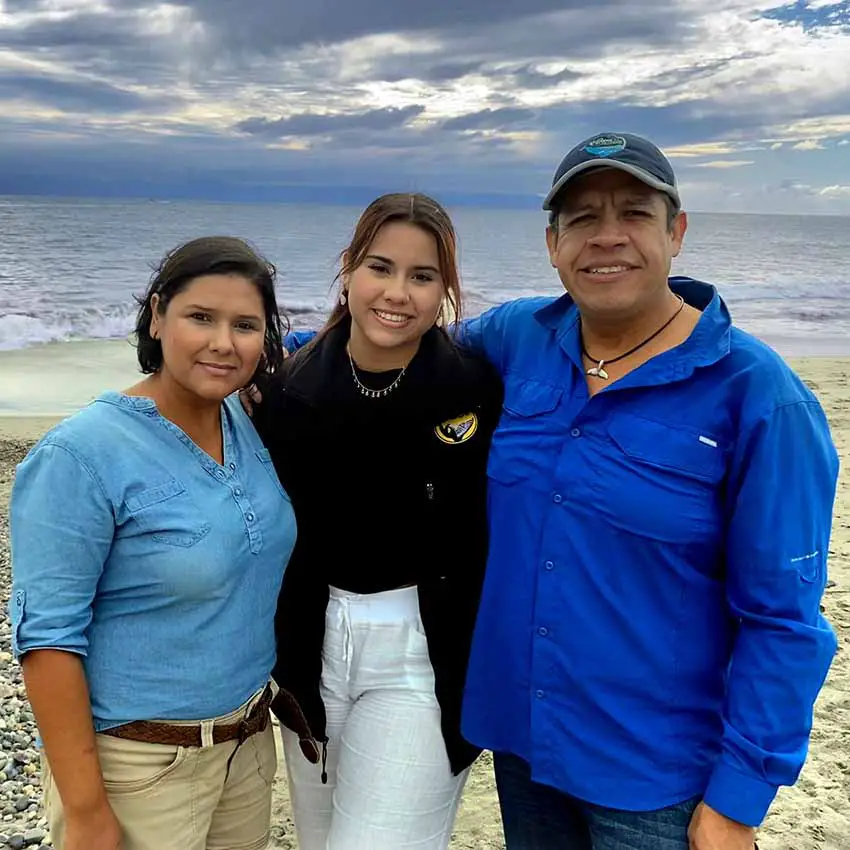
Explora Vallarta is run by the Morales family: Fabiola, Regina and Jorge. Their motto is “Passion and Respect for Nature.”

“So, when we were students, we said, ‘Why don’t we help tourists learn about all this natural beauty, but in a responsible way?'” 

The result was Explora Vallarta, a family business that benefits tourists while supporting marine biology.

“During our excursions,” said Jorge, “we collect data and take photos for identifying the whales, so we carry out very useful research while our guests are having fun.”

I learned that this family of biologists also has a very successful dolphin-watching tour, for which people come back year after year.

“We take them to visit a pod of dolphins that lives here in this bay all year round,” Jorge said. “We know where they live, but it has happened that we didn’t find them — only twice, actually, in 13 years. When we locate them, we don’t go close to them, but on most occasions, the dolphins decide to come close to us.”

They’re used to keeping quiet, he said, and to running their boat very slowly. 

A pod of dolphins located near Punta de Mita in Nayarit. (Photo: Explora Vallarta)

“Typically, it’s the dolphins that notice we are in the area and who come over to us,” Jorge said. “Sometimes they come really close, and on two occasions I have been able to reach out and touch them. In fact, sometimes they start playing in the wake our boat leaves behind, going in and out of the waves.”

Because the family has had years of experience with these particular dolphins, they can tell visitors whether they are hunting or playing or competing with one another, or perhaps teaching a youngster how to swim faster.

“We’ve identified many members of this pod,” Jorge said, “and we’ve even given them names.”

With the funds they receive from visitors, Explora Vallarta holds environmental education workshops in local schools, especially public schools, where they feel they can really impact the local communities. 

“We work with kids from kindergarten to prep school, and we also hold sessions at ferias (fairs). We organize games for both adults and children, games that teach them something new,” he said.

The whale and dolphin tours also help support an organization called RABEN, the Mexican Whale Disentanglement Network, of which Jorge is a member.

A whale rescue in the Bay of Banderas by members of RABEN, the Mexican Whale Disentanglement Network. (Photo: RABEN)

“All too often,” he told me, “whales from the California coast arrive here in Mexico tangled in fishing nets. We’ve learned how to free them without danger either to them or to us.”

“RABEN started right here in the Bay of Banderas,” he added proudly, “and now we have 180 members all over Mexico.”

Want to see whales and dolphins and at the same time help marine biologists? See Explora Vallarta’s webpage. It’s in Spanish and English.

The writer has lived near Guadalajara, Jalisco, since 1985. His most recent book is Outdoors in Western Mexico, Volume Three. More of his writing can be found on his blog

Judge halts extradition to US as the legal fight over Guzmán’s fate begins

0
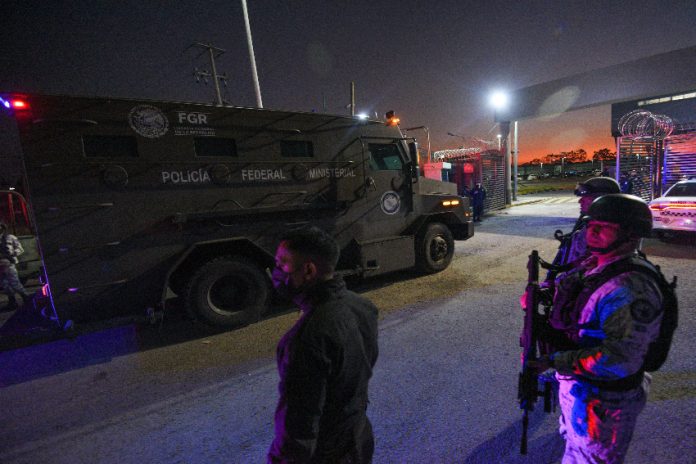
Law enforcement transferred the arrested cartel leader to Altiplano maximum security prison on Thursday (Cuartoscuro)

On Friday morning, a federal judge in Mexico City granted a stay halting any extradition proceedings against Ovidio Guzmán, the son of U.S. prisoner Joaquín “El Chapo” Guzmán, who was arrested Thursday in the municipality of Culiacán, Sinaloa. Guzmán is accused of being a main producer and distributor of the deadly synthetic opioid fentanyl, and the leader of Los Chapitos, a splinter group of the Sinaloa Cartel. 

At a hearing held in Altiplano prison in México state on Friday afternoon, Guzmán was officially remanded to pretrial detention and the judge granted the U.S. 60 days to file documentation on charges he will face if extradited. 

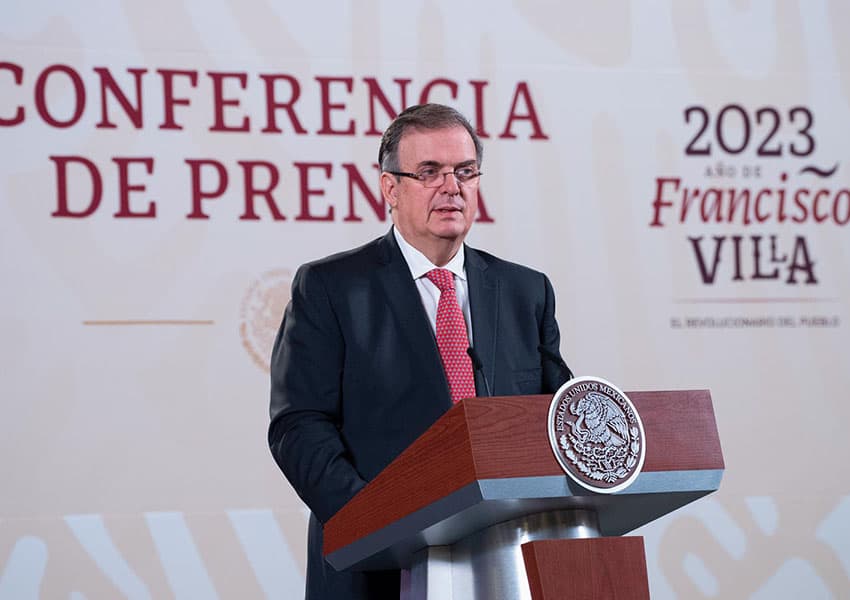
In a press conference on Thursday, Mexico’s Foreign Affairs Minister Marcelo Ebrard said that U.S. authorities had not communicated with the Mexican government in the hours after the arrest, but he noted that “we have to comply with the formalities that the law imposes on us. In addition, [the detainee] has a process here in Mexico.”

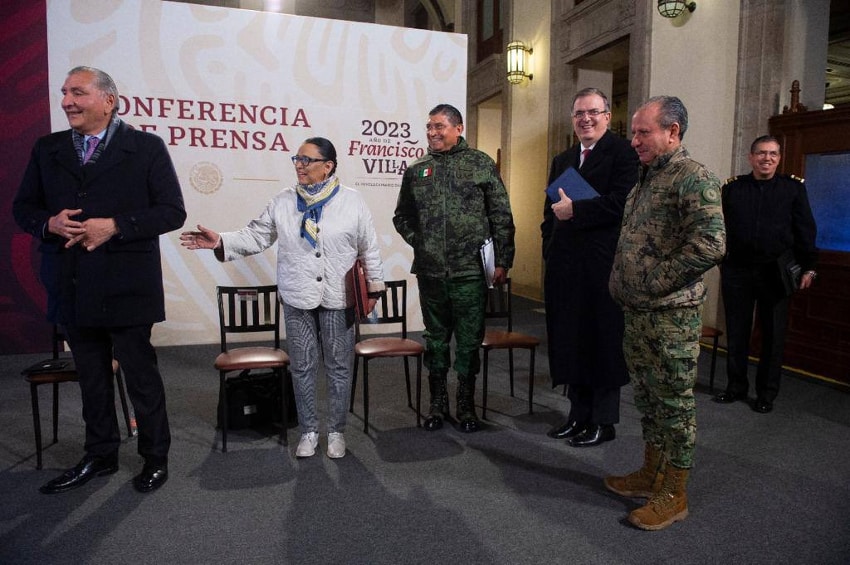
Members of the Mexican cabinet at a Jan.6 press conference, from left to right: Adan Augusto López (Interior Minister), Rosa Icela Rodríguez (Security Minister), Luis Crescencio Sandoval (Defense Minister), Marcelo Ebrard (Foreign Minister) and José Rafael Ojeda Durán (Navy Minister). (Photo: Marcelo Ebrard Twitter)

Ebrard also denied speculation that the arrest was related to the impending visit of President Joe Biden to Mexico.

The U.S. chief executive is due to arrive in Mexico City on Sunday afternoon — a day earlier than originally scheduled — in advance of a Monday meeting with Mexican President López Obrador and Tuesday’s North American Leaders’ Summit that will involve Biden, AMLO and Canadian Prime Minister Justin Trudeau.

“It has nothing to do with it,” Ebrard replied when asked whether the arrest of Guzmán (aka “El Ratón”) was a “gift” for the White House in advance of the first visit by a U.S. president to Mexico in nearly 10 years. “There is no relationship between the police operation and the summit.”

“The truth is,” he continued, “this operation was kept extremely confidential by the authorities in charge of doing it, and there was no intermediation or political consultation in the [Mexican] Cabinet.”

Ebrard confirmed that since September 2019 there has been a U.S. extradition request for Ovidio Guzmán, but he insisted the order for this week’s arrest came from Mexico City and not from Washington, D.C.

“There is no participation, to my knowledge, of any foreign agent in our territory,” Ebrard said when queried by reporters at the Ministry of Foreign Affairs (SRE) headquarters.

Ovidio Guzmán being transferred following his capture on Jan. 5 (Cuartoscuro)

The maximum-security Altiplano, where Ovidio Guzman remains in custody, is the same institution from which “El Chapo” escaped in 2015 by means of a 1.5-km tunnel, equipped with lighting, ventilation, rails and a motorcycle. 

According to the newspaper El País, “The only known case against [Ovidio Guzmán] is in a court in Washington, D.C. and focuses on charges of drug trafficking, although the authorities affirm that Ovidio Guzmán is also behind several murders.”

The four-page U.S. arrest warrant includes charges that Ovidio Guzmán, 32, trafficked “a ton of marijuana,” “at least five kilograms of cocaine” and “at least 500 grams of methamphetamine,” El País reported, citing the district attorney for the District of Columbia.

The paper said his criminal history dates back to 2008, when he was barely 18 years old, and that “U.S. authorities have revealed that they have more information about [Ovidio] Guzmán’s power than has been made public in court.”

El País wrote that after the 2008 death of Édgar Guzmán López, the brother of “El Chapo,” Ovidio Guzmán and his brother, Joaquín, “inherited a large part of the profits from drug trafficking and began to invest large amounts of cash to buy marijuana in Mexico and cocaine in Colombia,” citing a U.S. government profile.

“They also began buying large quantities of ephedrine from Argentina and managed to smuggle the product into Mexico to dabble in methamphetamine production,” the profile adds, according to El País.

“The State Department claims that the Guzmán brothers supervised 11 clandestine laboratories in Sinaloa, with a production capacity of up to almost 2,500 kilos per month,” El País wrote, again citing the report. “Other sources indicate that Ovidio Guzmán has ordered the murder of informants, a drug trafficker and a famous [but unnamed] Mexican singer who refused to sing at his wedding.”

Ovidio Guzmán was arrested in Culiacán in October 2019, but the blockades, shootings and riots that followed (known as the  “Culiacanazo”) led López Obrador to give the order to release him, a controversial move that has shadowed his presidency. Citing the “massive leak” in September of  confidential documents from the Mexican army by the hacker collective Guacamaya (a scandal known as the “Sedena Leaks”), El País reported that the United States had asked Mexico to increase the number of annual extraditions to 60 as part of bilateral security agreements.

Ovidio Guzmán joins a list of alleged, high-profile, Mexican drug traffickers that the U.S. is pursuing, a list that includes Rafael Caro Quintero, who was arrested in July in the Sinaloa mountains.

However, Caro Quintero, the founder of the now-defunct Guadalajara Cartel, still hasn’t been extradited to the U.S. because his lawyers have managed to delay the process. Caro Quintero was convicted in Mexico of murdering U.S. DEA agent Enrique “Kiki” Camarena in 1985 but was released on a technicality after serving 28 years of his 40-year sentence.

Though the Mexican Foreign Minister is assuring that the timing of Ovidio Guzmán’s arrest on the eve of Biden’s visit was a coincidence, there have been other similar situations that might raise eyebrows.

In 2020, former PRI governor César Duarte was arrested for corruption in Miami on the day López Obrador met with Donald Trump in Washington. In 2017, “El Chapo” was extradited to the United States about a month after Trump’s inauguration, “in what was read in Mexico as an attempt to appease the Republican politician’s anti-Mexican discourse,” El País wrote.

With reports from El País, La Jornada and Milenio

Peso starts the year with continued appreciation against the dollar

0
Pesos and dollar bills mixed together.
The peso was considered one of the best-performing global currencies in 2022 and has also strengthened rapidly so far this year against the US dollar. Depositphotos

The peso will close the week with gains against the dollar in a setting of “general optimism among investors”, as reported by Reuters. The spot rate on Friday morning was 19.20 and closed at 19.15 pesos to the dollar. The bank exchange rate stands at 19.73 per dollar, according to Citibanamex.

Based on reports published by Banco Base, the peso began Friday’s session with an appreciation of 0.28% (5.5 cents) compared to close of trading on Thursday.

This marks five consecutive days of appreciation, accumulating 1.8% gain in that period.

The gain of the peso occurs even as the dollar strengthens. The dollar index, which measures the greenback’s performance against six currencies (including the Euro, Pound, Yen, Canadian Dollar, Swedish Korner, and Swiss Franc), rose 0.3% to 105.45, after briefly hitting a four-week high at 105.52. 

The index is on track to post a weekly gain of almost 1.9%, the biggest since September.

The U.S. government reported on Friday that there was strong job growth in December and unemployment fell to 3.5%. 

“The solid job creation in the United States is good news for the consumption and demand of Mexican exports,” Banco Base said in a note sent to clients.

The Bank of México (Banxico) indicated that interest rates will likely be raised again in February, but at a slower pace, following a governors’ meeting on Thursday. In December, the central bank hiked interest rates to a record 10.5%.

The peso was considered one of the best-performing global currencies of 2022.

“The factors that have driven the appreciation of the peso against the dollar in 2022 have not deteriorated,” said Janneth Quiroz, an analyst at Monex, as quoted in El Economista newspaper. The peso closed 2022 at 19.50 to the dollar with an annual appreciation of 4.87%.

With reports from El Financiero, Milenio, Forbes and El Economista

Housing sale prices in Mexico City spike up to 10% in 2022

0
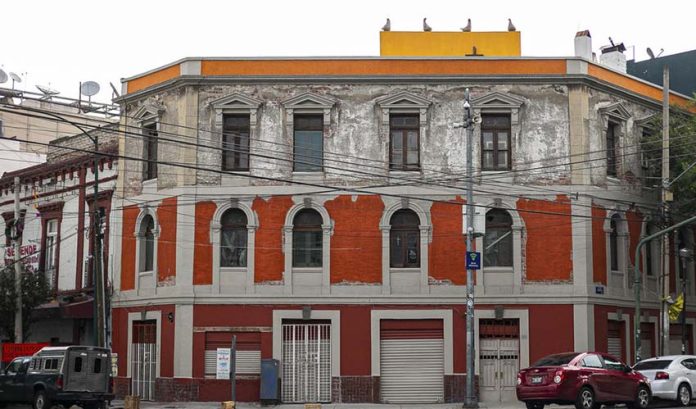
Mexico City's Doctores neighborhood
Rising home sale prices appear to be promoting increased buyer interest, especially in the public housing sector, in the centrally located Doctores neighborhood, which is slowly undergoing gentrification but still has a questionable reputation for safety. (Photo: Vivanuncios)

During 2022, housing sales prices in Mexico City surged between 9% and 10% compared to the previous year, the real estate online site Propiedades.com reported. 

The firm’s real estate analyst Leonardo González said that 2022 was marked by uncertainty due to the high interest rates that in turn led to high mortgage costs. 

The average price per square meter in the capital for buyers was 31,914 pesos for a house (US $1,652) and 46,033 pesos (US $2,383) for apartments — a jump in prices that was expected by Propiedades.com but nevertheless slowed down property purchases by Mexico City’s residents. 

The neighborhoods with the greater demand during 2022 were Roma Norte and Roma Sur, both of which have gained notoriety in Mexico and in the world media as a place where older properties are being bought up by developers with deep pockets to convert into rental property for digital nomads and other foreign temporary renters. 

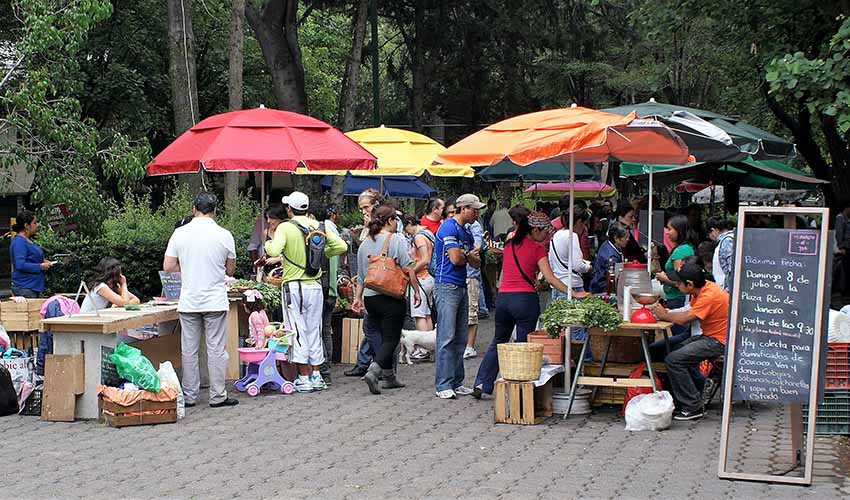
Roma Norte neighborhood of Mexico City
Residential touches like this farmers’ market in the Plaza Río de Janeiro make the Roma Norte neighborhood popular with home buyers who can still afford it. Others, however, are looking further to the city’s outskirts. (Photo: Carl Campbell/Unsplash)

The factors that drove regular homebuyers’ interest in the neighborhoods included their quality of life and the offered services, González said. 

In the public housing sector, the Doctores neighborhood is showing a high performance, along with the neighborhoods of Del Valle, Nápoles, Extremadura and the residential Insurgentes corridor.

Heading south of Mexico City, the neighborhoods of San Jerónimo, Pedregal, Ajusco and Tlalpan show relevant growth and a consolidation process. González explained that this is part of a real estate cycle driven by new projects and increased demand.

Location was not as much a factor in 2022 as in previous years: although Mexico City is an attractive place to live, González said, it faces a continual challenge: to meet the needs of its population who are looking for housing options in other cities near the capital, like Querétaro, Puebla, and Toluca. 

“This is not a new phenomenon. For the past four decades, we’ve observed that houses outside the metropolitan area of the Valley of Mexico have ceased to be exclusively destined for holiday purposes…” González said. 

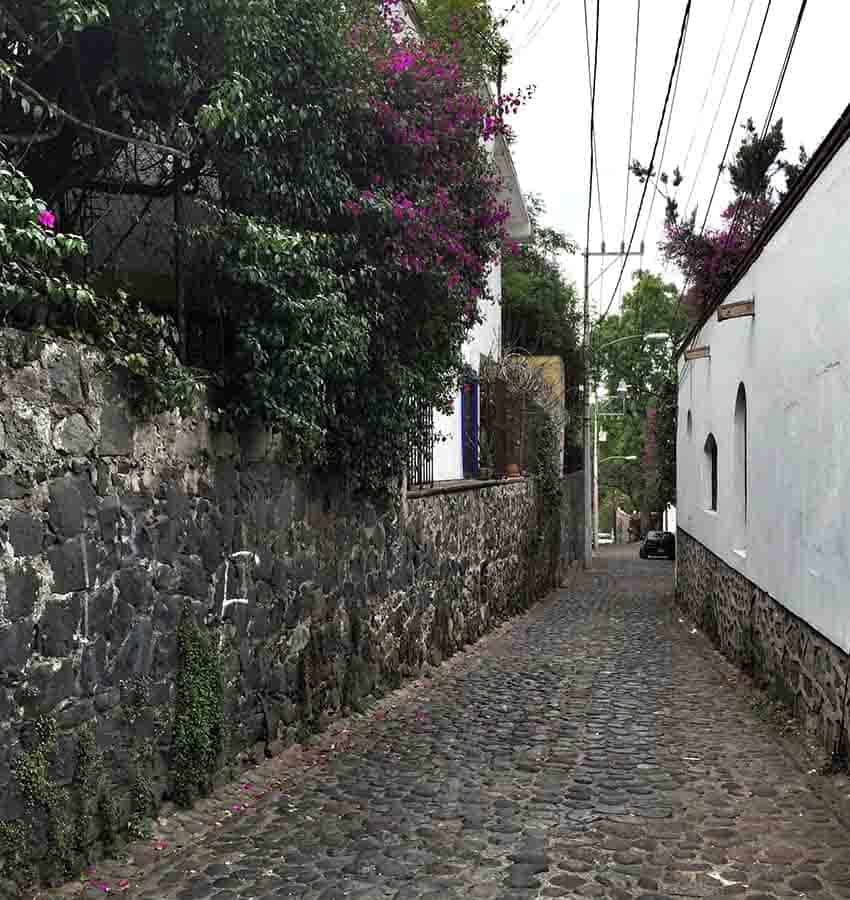
San Jeronimo neighborhood of Mexico City
Picturesque San Jerónimo, a historic village that was absorbed into the Magdalena Contreras borough, is far from the capital center but is showing growth.

More than 1 million properties located in the center of the country and close to Mexico City are currently listed on Propiedades.com, showing a continuous trend of people looking to move out of the city. 

The home office trend that arose in response to the pandemic also caused contraction in corporate corridors like Polanco, a historically sought-after neighborhood. Without the need to live close to their workplaces, the number of people looking for residential spaces in the neighborhood has dropped.  

In October 2022, Propiedades.com reported that the price for a apartment in Polanco contracted 12.4% in the first months of 2022.

In the middle-range housing sector, 2022 recorded a boom in new mortgages. However, the low-income segment contracted, creating a shortage of housing units that mainly affected the population with the highest housing backlog.

With reports from Forbes México and Propiedades.com 

Fallout from Ovidio Guzmán’s arrest in Sinaloa leaves 29 dead

0
Immediately after the arrest, presumed cartel members launched a series of armed attacks around Culiacán, and major travel routes around the state were blocked with burning vehicles.
Immediately after the arrest, presumed cartel members launched a series of armed attacks around Culiacán, and major travel routes around the state were blocked with burning vehicles. (Alma Fonseca / Cuartoscuro.com)

A day of violent chaos following the arrest of cartel leader Ovidio “El Ratón” Guzmán in Culiacán, Sinaloa, left 29 people dead: 10 soldiers and 19 alleged criminals, according to the Defense Ministry.

The violence broke out after Mexican security forces captured Guzmán — son of jailed capo Joaquín “El Chapo” Guzmán, and leader of the “Los Chapitos” faction of the Sinaloa Cartel — in a town in the municipality of Culiacán, in the early hours of Thursday morning.

“[The criminals] managed to regroup with the intention of rescuing Ovidio ‘N,’” Defense Minister Luis Cresencio Sandoval explained at a press conference on Friday morning. “The aggressors used 50-caliber machine guns, so it was necessary to give fire-cover from airplanes.”

Military aircraft fire from above early Thursday morning in Jesús María, the town in the municipality of Culiacán where Guzmán was captured.

Immediately after the arrest, Guzmán’s followers launched a series of armed attacks and 19 blockades around Culiacán, terrorizing the city for around 12 hours.

Gunmen fired at one military and one commercial airplane at Culiacán International Airport, causing air traffic to the city to be suspended and the airports of Culiacán, Mazatlán and Los Mochis to be closed. Several bus lines also suspended transport through the region. Authorities ordered schools and businesses to close and local people to take shelter as the battle raged through the city.

“The authorities counted 19 dead among the lawbreakers and detained 21 people, seizing Barrett rifles, machine guns, 26 handguns, magazines, cartridges and 13 vehicles,” Cresencio said. “Ten soldiers, emphasizing their values, lost their lives in the line of duty.”

Despite the anarchy, authorities insisted that no civilians were killed, presenting this as a vindication of AMLO’s approach to the struggle against drug cartels.

“Action was taken to take care of the civilian population so that there were no innocent victims,” President López Obrador emphasized.

One of at least 19 "narco-blockades" that blocked Culiacán's roads on Thursday.
One of at least 19 “narco-blockades” that blocked Culiacán’s roads on Thursday. (Cuartoscuro.com)

“We didn’t come to win a war; we came to build peace,” added Rosa Icela Rodrígez, minister of security and citizen protection. “This operation demonstrated the new behavior of the government of Mexico; Human rights and well-being are prioritized.”

In October 2019, Ovidio Guzmán was captured but then swiftly released, after a similar wave of violent retribution by Sinaloa Cartel members — known as the “Culiacanazo” — sparked fears of mass civilian casualties. AMLO insisted at the time that he supported the controversial decision.

All the same, Thursday’s successful operation is a welcome boon for his government, particularly coming just days before the presidents of the United States and Canada are due to visit Mexico for the North American Leaders Summit.

By Friday morning, local authorities reported a return to relative calm in Culiacán.

“There has been no incident during the course of the night; we consider that the conditions exist to return to normal activities,” Sinaloa security secretary Cristóbal Castañeda said on Twitter. “Shops and businesses can be reopened. The authorities of the three levels of government continue in coordination and we will maintain operations and patrols in the city.”

With reports from Milenio, Animal Político and Forbes

En Breve Travel: Prefab hotels, Islas Marías discounts and new sea turtle sanctuaries

0
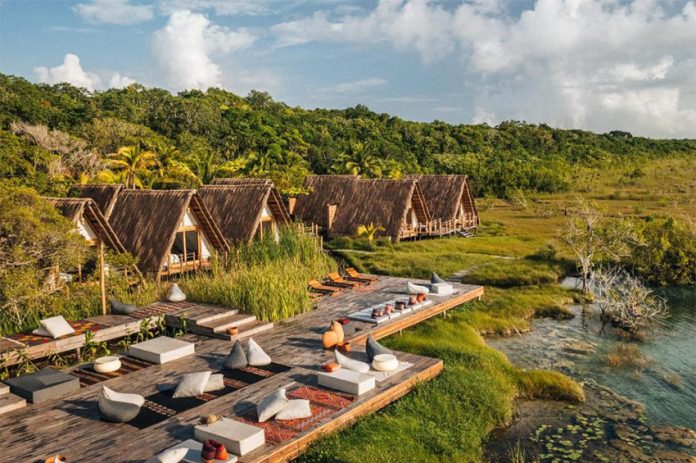
The modular rooms of Habitas Bacalar, made of what appears to be palm thatch, look out over a river or estuary with forest in the background.
Prefab hotels, like these at Habitas Bacalar, will be a major travel trend in 2023 according to Condé Nast. (Habitas Bacalar)

Guadalajara will open 15 hotels in the next two years

Guadalajara expects to expand capacity to 30,000 hotel rooms in the next two years with the opening of 15 hotels across the city. This would turn Guadalajara into the city with the largest number of hotel rooms after Mexico City.

According to Francisco Martínez Hermosillo, vice president of tourism promotion for the  Guadalajara Chamber of Commerce, the tourism industry in Guadalajara recovered faster post-pandemic than that of Monterrey or Mexico City.

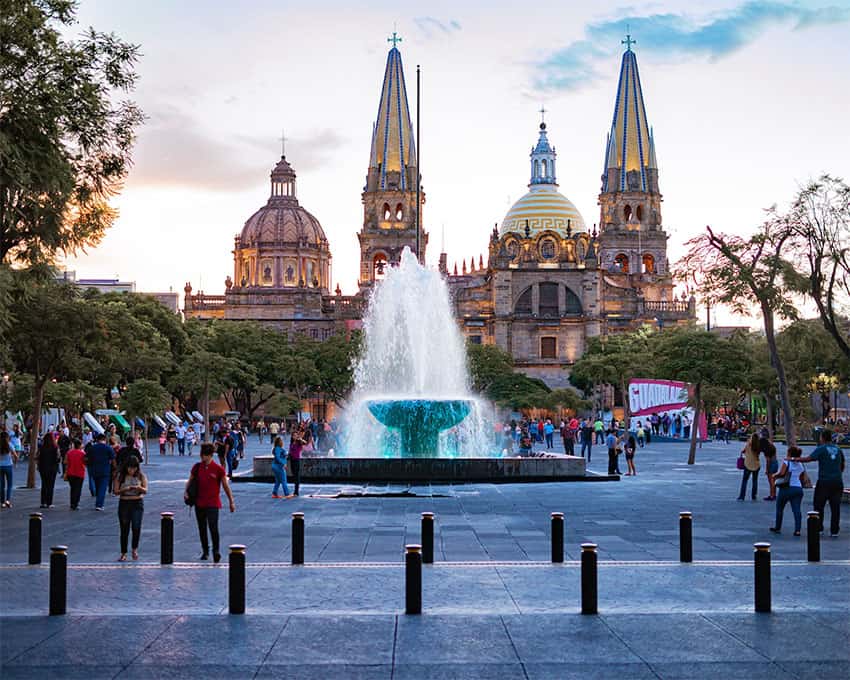
Plaza de la Liberación in Guadalajara.
Plaza de la Liberación in Guadalajara. (Roman Lopez / Unsplash)

In 2020, the tourism industry reported hotel occupancy ranging between 18% and 20%, while in 2021, it reached a hotel occupancy rate of 46%. By late December 2022, the industry estimated that the city would close the year with a hotel occupancy rate of 59%. Data on the actual number hadn’t been reported at the time of publishing this story.

Martínez Hermosillo also reported that Guadalajara has developed many tourist attractions to entice visitors from all over the country. He said that the city’s geographical location — just a five-hour drive away from 13 cities — makes it an ideal destination for both business and pleasure.

Official map of Tulum’s tourist attractions is launched

Tulum’s tourist attractions are now included on an official map, announced local tourism chief Jorge Mario Molina.

The map, written both in English and Spanish, shows 30 landmarks across downtown Tulum starting with the Archaeological Zone. It shows main roads, names of streets and the way to get to the most representative places of Tulum so that visitors can get to know the “cultural, artisanal and commercial attractions” of the city, Molina said.

Tourists can request the map at the Municipal Tourist Information and Business Assistance Center (Citaem), scan the QR code and carry it in their phones.

Tulum’s new map of tourist attractions.

Molina added that this map marks a “before and after” for Tulum, since for the first time ever, the city will have a tool to optimize tourists’ experiences in one of the most visited cities in the world.

Low prices to travel to Islas Marías 

Islas Marías, the former penitentiary island in the Pacific Ocean near the coast of Nayarit, opened its doors to tourism on Dec. 21. Only 13 days  days after  opening, discounts of up to 50% are already being offered by travel agencies and the official webpage of the islands.

When the tourist destination first opened, transfer and lodging prices were criticized for their high price tag: they range from 5,500 pesos (US $287) to just over 8,000 pesos (US $417) and include a two night lodging, buffet in the only restaurant in town and the boat transfer.

The attractions include an agroecological farm, an artisan’s shop and a church dedicated to our Lady of Guadalupe. But  the main attraction is the notorious maximum-security prison, Laguna del Toro.

The whole complex is managed by the Islas Marías Integral Tourism Company under the direction of the Mexican Navy. The archipelago is not the only tourist infrastructure under the administration of the Armed Forces. The Ministry of Defense is responsible for the development of the Mayan Train in the Yucatán peninsula and the army oversees the Holiday Inn hotel at Mexico City’s Felipe Ángeles airport.

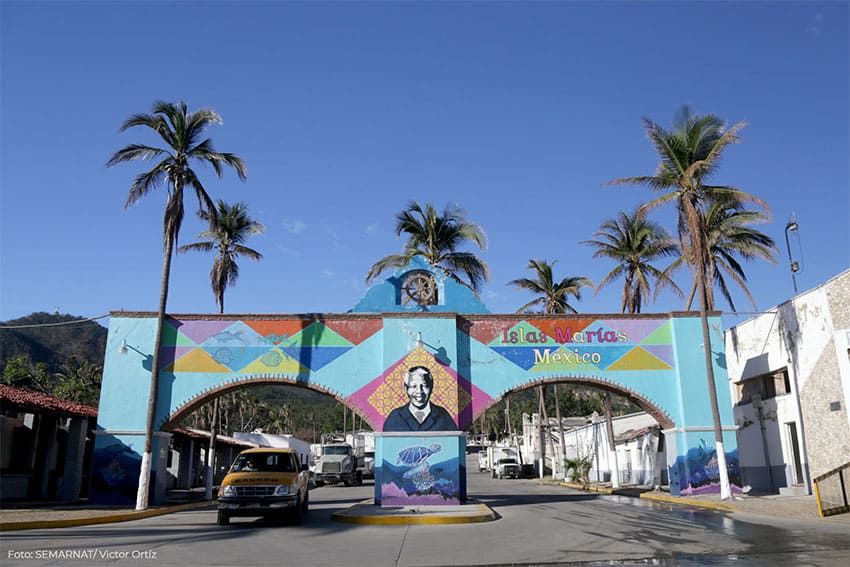
The entrance to Puerto Balleto, one of the main settlements in the archipelago.
The entrance to Puerto Balleto, one of the main settlements in the archipelago. (Víctor Ortíz / Semarnat)

Tulum prefab hotels make Condé Nast’s 2023 list of travel trends

Prefabricated hotels are predicted to become a travel trend during 2023, according to Condé Nast magazine. These hotels are based on modular design and prefabricated architecture. Parts of the buildings are created in a factory, packed with a minimum amount of space, and shipped to the destination where they are assembled directly on the ground — and a hotel in Tulum by Habitas revolutionized the concept, according to Condé Nast.

The firm’s first prefabricated hotel opened in Tulum in 2017. The Habitas hotel is described by Condé Nast as a “conscious and sustainable refuge” that, with minimalist simplicity, managed a “perfect balance between low-impact vacations and style.”

In addition to Tulum, the firm has hotels in Bacalar, Quintana Roo; San Miguel de Allende, Guanajuato and various international destinations including Saudi Arabia, Namibia and Morocco.

Habitas has also built their own factory in Mexico to accelerate the construction of more hotels in Mexico, planned for Los Cabos and Todos Santos. Hotels in Costa Rica and Bhutan are coming soon, according to the Habitas website.

Mexican beaches are recognized as sea ​​turtle nesting sanctuaries

The Ministry of Environment and Natural Resources (Semarnat) announced late in December  that several beaches in the states of Chiapas, Guerrero, Jalisco, Michoacán, Oaxaca, Quintana Roo, Sinaloa, Tamaulipas and Yucatán, are now recognized as Protected Natural Areas (ANP) under the category of “sanctuaries”.

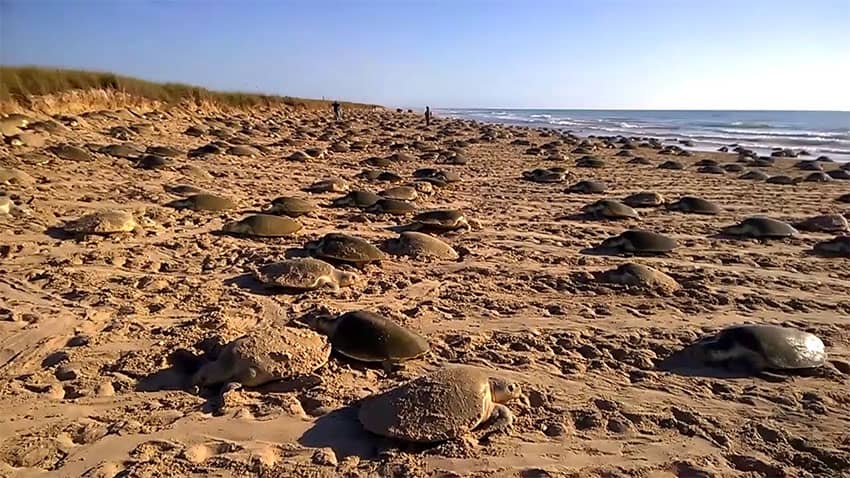
Dozens of turtles crawl up a beach to lay their eggs, with several people walking between them in the distance.
Thousands of Atlantic ridley sea turtles lay their eggs at Playa Rancho Nuevo in Tamaulipas every year, one of the highest-density sea turtle nesting events in the world according to the government. (Conamp)

According to the Semarnat, the original environments in these sanctuaries have not been significantly altered by human activity. Thus, the recognition of the 17 ANPs, which cover an area of ​​more than 6,600 hectares, allow for those ecosystems to be preserved and restored.

Mexico’s role in sea turtle breeding  is relevant since six of the world’s seven identified species spawn on Mexico’s Pacific and Caribbean beaches. All those species are in danger of extinction, with two species considered critically endangered — the leatherback turtle and hawksbill turtle.

The new sanctuaries will only allow for research, recreation and environmental education activities that are compatible with the nature and characteristics of the area.

With reports from Players of Life, La Jornada Maya, Aristegui Noticias, El País and Condé Nast Traveler

Acancéh’s ancient Maya treasures are hiding in plain sight

0
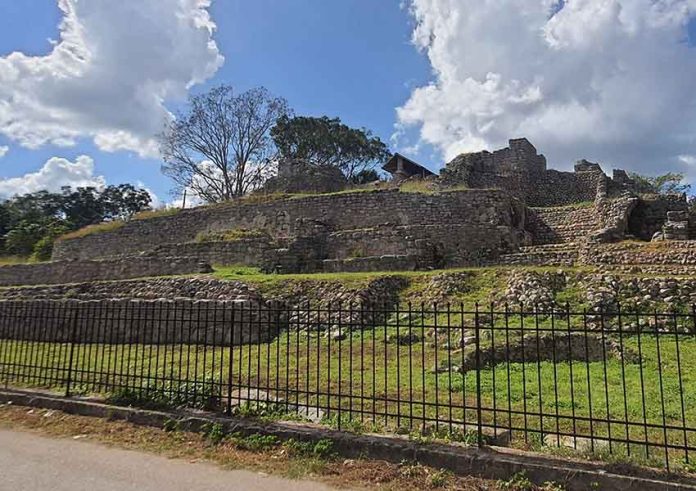
This archaeological site, located inside the modern town by the same name, is less well-known but has a rich history. The settlement had relationships with other ancient sites as far away as Guatemala.

Many people who head to Yucatán make time to visit some archaeological sites and get a glimpse into ancient Maya life. But while tourists flock to the state’s famous sites like Chichén Itzá and Uxmal, there are several lesser-known (read: less crowded) but interesting pre-Hispanic settlements to see as well.  

Acancéh, a town just 25 kilometers from Mérida, is one such location. The ancient structures there are within the modern town. You can combine a visit to Acancéh with a trip to the archaeological site of Mayapán

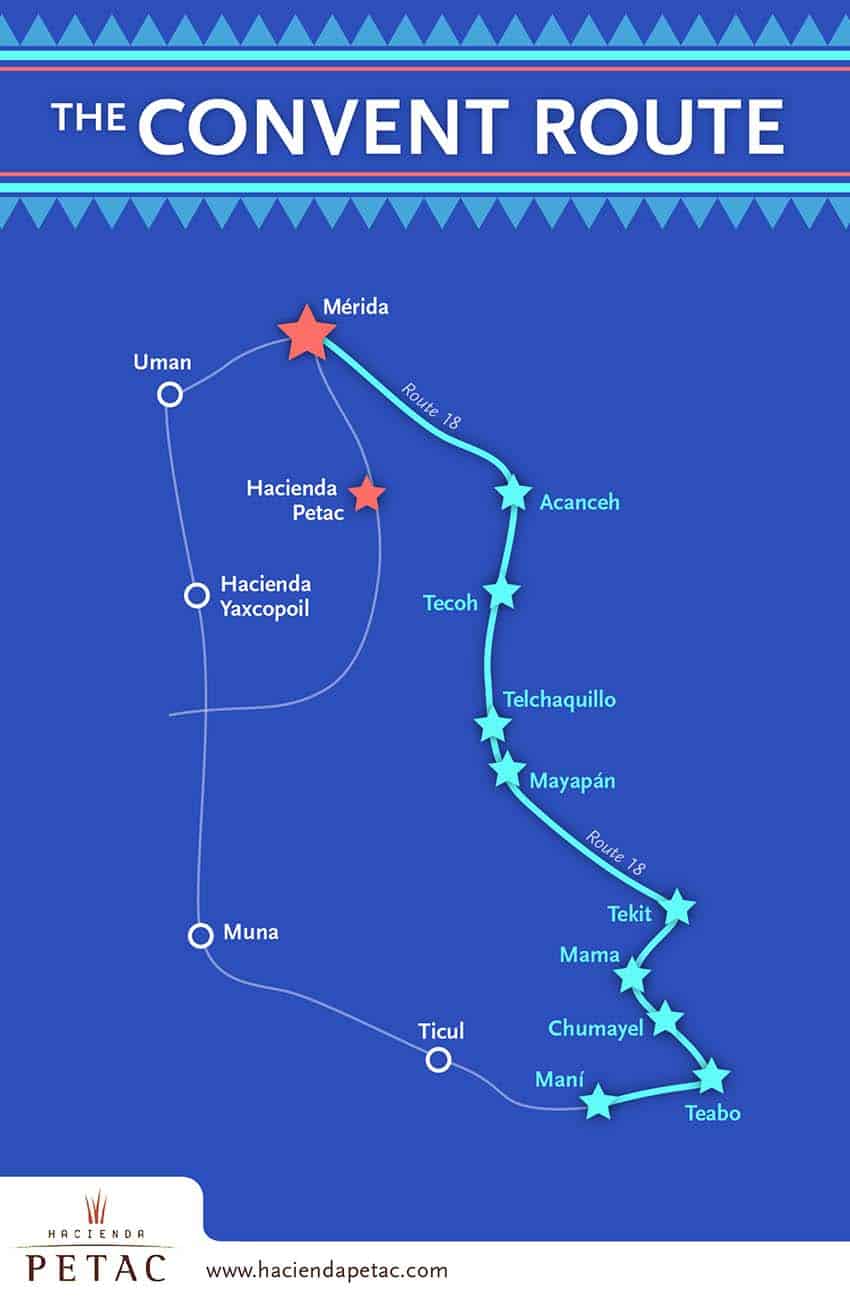
Both these sites are on the Convent Route — a popular travel route through old churches, archaeological sites and other attractions that’ll give you insights into Yucatán’s long history before and after the conquest. 

Acancéh is on the Convent Route, where you can see archaeological sites, historic churches and more. (Photo: Hacienda Petac)

Although the site once had a large number of pre-Hispanic structures, only three buildings are currently accessible, but it’s still worth the trip. You can see them in a couple of hours. 

The entrances to the buildings are closed off, so ask the INAH (National Institute of Anthropology and History) official by the main pyramid to let you in. Since these buildings get few visitors, you may even have them to yourself. 

Acancéh, pronounced “Akankej,” is Mayan for “moan of deer” — acan, meaning “moan,” and céh, meaning “deer.” 

Acancéh had a long occupation, starting from around 700 B.C.–300 B.C. until the Spanish arrived in the 16th century. Since the town of Acancéh is occupied today, some of it has visible signs of the pre-Hispanic and colonial eras. 

According to INAH, Acancéh was an important center in the northern Yucatán Peninsula. 

The settlement had relationships with different regions and sites, including Guatemala’s Petén region and Mexico’s Dzibilchaltún, Mayapán, Oxkintok and Komchen sites. It may also have had ties with other places, as far as central Mexico and Belize.

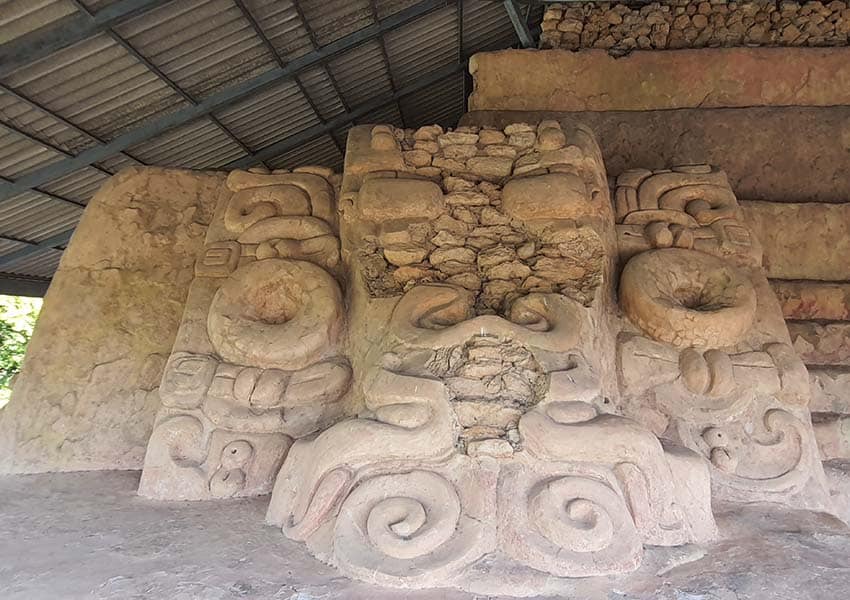
The masks here are massive, and, overall, in pretty good shape.

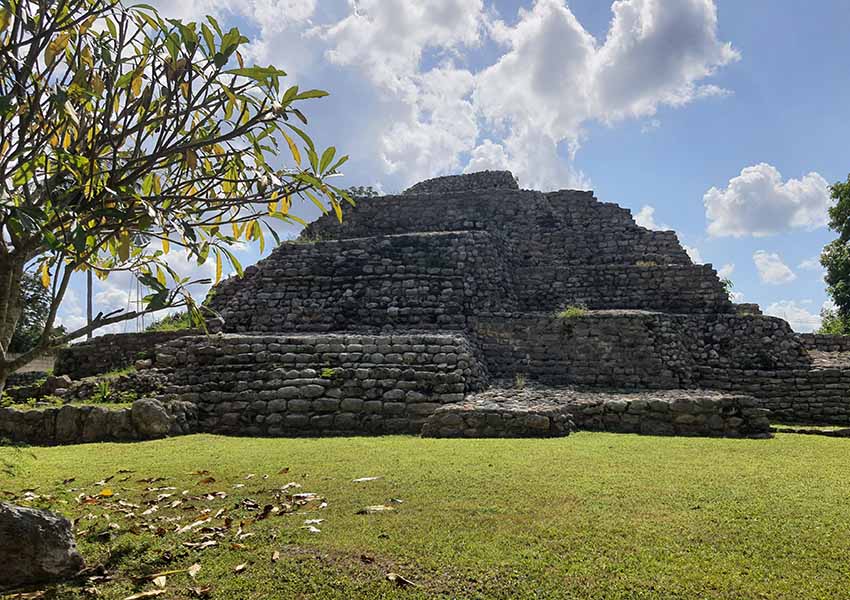
Once you arrive at the town’s center, you will see “The Pyramid,” a large pyramidal structure with four stairways once adorned with stucco masks. Five of these masks remain to date. Some are in better condition than the others, although the nose area of each mask is destroyed.  

You can climb this pyramid to get a closer look at the masks. Look out for the modern roof covering the masks so you won’t miss them. 

These masks are massive — they’re 2.25–3.50 meters tall and 3.05–3.72 meters wide, according to INAH. They are thought to have features of the Maya sun god Kinich Ahau. Make time to spot their details like ears, eyes, eyebrows and tongues. You can also see hints of original red paint. If you’ve been there, they will remind you of the masks in Quintana Roo’s Kohunlich.

A burial site for two persons with offerings was discovered on this pyramid. You can also get great views of the town and the surrounding areas from the top.   

Next to the main pyramid, check out the smaller pyramidal structure as well. In this section, you can see a ziricote tree. The ancient Maya are thought to have used their rough-textured leaves for cleaning. 

The Palace of the Stuccos, a few blocks away from the main pyramid, is a must-visit. It has a beautiful stucco frieze with anthropomorphic characters — animals and other non-human forms with human features — on the north facade. 

This smaller pyramid structure has a ziricote tree nearby. The ancient Maya are believed to have used the rough-textured leaves of this tree for cleaning.

The frieze was once painted in bright colors, and the scenes are speculated to represent important events. According to INAH, the figures reflect the style in México state’s Teotihuacán and could suggest possible ties with them. 

The Palace of the Stuccos has other room-like structures that are also interesting. You can visualize how glamorous this building was in its heyday.

The Acancéh town and the cathedral are also worth seeing. Some of the modern buildings are built with materials from the ancient structures.

If you have extra time afterward and feel like swimming in a cenote, the cenotes of Cuzamá or Homún are both around 30 minutes away.  

Thilini Wijesinhe, a financial professional turned writer and entrepreneur, moved to Mexico in 2019 from Australia. She writes from Mérida, Yucatán. Her website can be found at https://momentsing.com/

Mexico to accept 30,000 expelled migrants per month in Biden plan

0
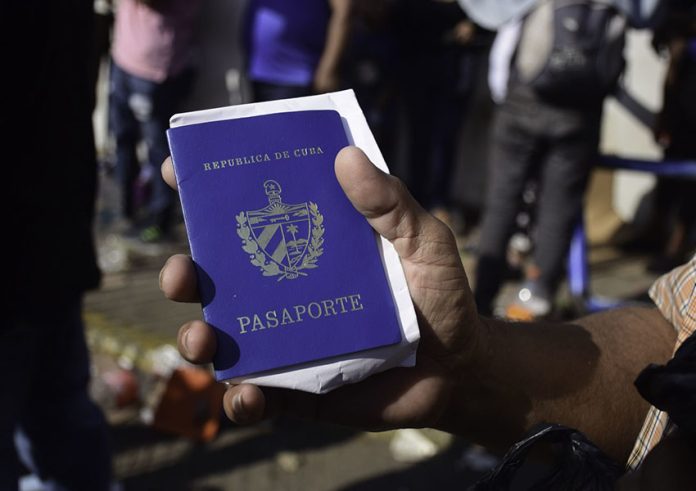
Man with Cuban passport in Tapachula, CHiapas.
A Cuban asylum seeker shows his passport to a photographer in Tapachula, Chiapas this week. (Cuartoscuro)

The Biden administration has announced a set of measures to enhance security and reduce unauthorized migration at the Mexico-US border, ahead of a planned visit by President Biden to the border next week.

The comprehensive new plan includes increased border and immigration personnel, media campaigns to counter smuggler misinformation and increased support to Mexico and Central American countries to address the humanitarian needs of refugees. 

It also includes a commitment by Mexico to accept as many as 30,000 expelled asylum seekers per month.

Foreign Minister Marcelo Ebrard’s office confirmed Thursday that Mexico will be accepting 30,000 migrants from Nicaragua, Haiti and Cuba expelled by the U.S. for not meeting requirements under a new humanitarian program that will allow as many as 30,000 migrants from these countries to work in the U.S. for two years. (Presidencia)

A new program announced today will as many as 30,000 Venezuelans, Nicaraguans, Cubans and Haitians per month to enter the U.S. and work for two years, providing they pass all relevant checks.

However, those ineligible for the scheme — including those who attempt to cross the Panama, Mexico or U.S. borders illegally after the date of the announcement — will be immediately expelled to Mexico. These migrants will be banned from reentry into the U.S. for five years.

“My message is this,” Biden said in remarks at the White House. “If you’re trying to leave Cuba, Nicaragua or Haiti, or have agreed to begin a journey to America, do not, do not just show up at the border.”

The new policy would appear to make migrants from these nations who cross illegally into Mexico via its southern border automatically ineligible to enter the United States. It was not clear if migrants given regularized migration status in Mexico after having illegally crossed into the country would be included in the ban.  

Mexico’s Foreign Affairs Ministry confirmed Thursday that it had agreed to accept the 30,000 expelled migrants per month as a partner in the new U.S. policy.

“Mexico receives with gratitude the announcement of these new actions by the U.S. to achieve orderly, safe, regularized and humane migration,” it said in a statement. “The process put in place by the U.S. to issue humanitarian permits to Venezuelans has opened the door to a new method of orderly, safe and regular entry into the U.S., while significantly reducing irregular migration in the region by up to 94%.”

Migrants making the treacherous crossing through the Darien Gap. The route, taken mainly by Venezuelan and Haitian migrants, crosses the Panama border, which would automatically disqualify them from taking advantage of a new U.S. program granting legal work status to Venezuelans, Nicaraguans, Cubans and Haitians for two years.


Other measures in Biden’s border plan include:

  • tripling the quotas for resettlement of refugees from Latin American and Caribbean countries, to a total of 20,000 per year in 2023–2024
  • allocating nearly $23 million to support Mexico and Central America in responding to the humanitarian needs of refugees.
  • launching an online appointment portal to reduce overcrowding at U.S. ports of entry

President Biden told reporters that he intends to visit the border region in connection with next week’s North American Leaders Summit, at which the leaders of Mexico, Canada and the U.S. will meet in Mexico to discuss shared priorities such as trade and migration. It will be his first visit of his presidency to the border.

“I’m pleased President Biden will finally visit our southern border – which has been completely surrendered to the cartels, smugglers and human traffickers,” tweeted Republican Senator Lindsey Graham, who has long been a critic of Biden’s border policies.

The White House’s statement takes aim at Republican lawmakers, accusing them of exacerbating the border crisis by blocking President Biden’s immigration reforms and associated funding.

“Until and unless Congress delivers the funding as well as comprehensive immigration reform measures President Biden requested, the United States’ broken immigration system will indeed remain broken,” the statement concludes.

Over the last year, Venezuelans, Nicaraguans, Haitians, and Cubans came to make up a growing proportion of U.S. asylum claims due to the fact that – unlike Central Americans – they could not be expelled to Mexico under immigration restrictions installed during the COVID-19 pandemic, known as Title 42 restrictions. 

So far, Title 42 remains in place, after a legal challenge was blocked by the Supreme Court last month. There has been growing concern about how U.S. border states will cope with the eventual lifting of the restrictions – which allow unauthorized asylum-seekers to be immediately expelled to Mexico – due to the huge backlog of refugees that has built up on the border. 

In 2022, the U.S. detained a record 2.1 million persons for illegally crossing into the U.S. from Mexico, a fact that U.S. Customs and Border Protection (CBP) blamed on Title 42 regulations allowing the U.S. to dump some Central America and Caribbean migrants over the border in Mexican border cities rather than returning them to their home countries, which CBP officials said encourages multiple reentry attempts.

With reports from Reuters

Domestic airlines cancel flights to Sinaloa after cartel arrest

0
An Aeroméxico plane takes off.
An Aeroméxico plane set to take off from Culiacán was hit by a bullet before the airport closed. (Daniel Augusto / Cuartoscuro.com)

Aeroméxico announced Thursday morning that the day’s flights to the municipalities of Culiacán, Los Mochis and Mazatlán in the northern state of Sinaloa were canceled after the arrest of a cartel leader, while the Culiacán and Mazatlán International Airports both announced closures for part of the day.

The decision came after shootings, car fires and blockades were reported across the state due to the arrest of Ovidio Guzmán, son of drug trafficker Joaquín “El Chapo” Guzmán. The airline said that it will apply its protection policy to travelers.

Volaris and VivaAerobus also announced the cancellation of Thursday’s flights to Culiacán and Mazatlán owing to violence reported in the state. Volaris canceled the flight bound to Los Mochis.

The flight was canceled after the bullet pierced the fuselage of the airplane.
The flight was canceled after the bullet pierced the fuselage of the airplane. (Courtesy)

The acts of violence were reported before dawn on Thursday, leading local authorities to ask all residents to stay home and avoid being out on the street. The local educational authority also ordered schools at all levels to close for the day.

At Culiacán International Airport, Reuters reported Thursday morning that the fuselage of a plane bound from Culiacán, Sinaloa to Mexico City was hit by gunfire. A video that went viral on social media showed images from inside the plane while the shooting was happening outside. No passengers or employees were injured.

Following the violent events, the Culiacán International Airport announced that for security reasons it would be closed from 8:30 a.m. to 10 p.m. The Mazatlán International Airport also announced that it would be closed from 9:20 a.m. until 8 p.m.

In October 2019, Ovidio Guzmán was captured and later released causing a violent upheaval in Culiacán. At the time, President López Obrador said he supported the cabinet’s security decision to release Ovidio.

With reports from Reuters, Milenio and Noroeste