Home Blog Page 93

Opinion: Isn’t this what we asked for?

33
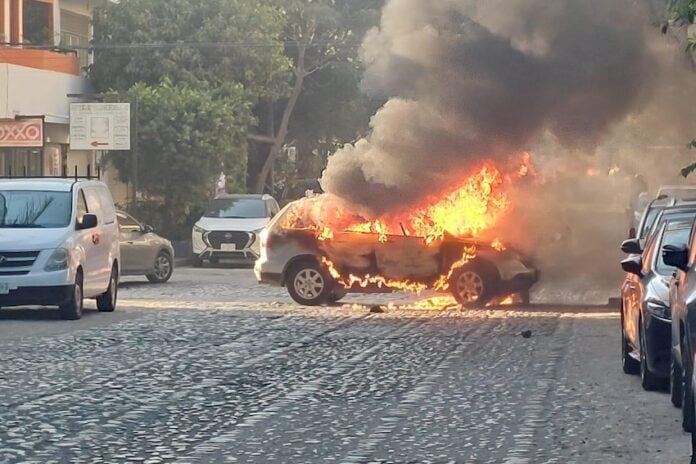
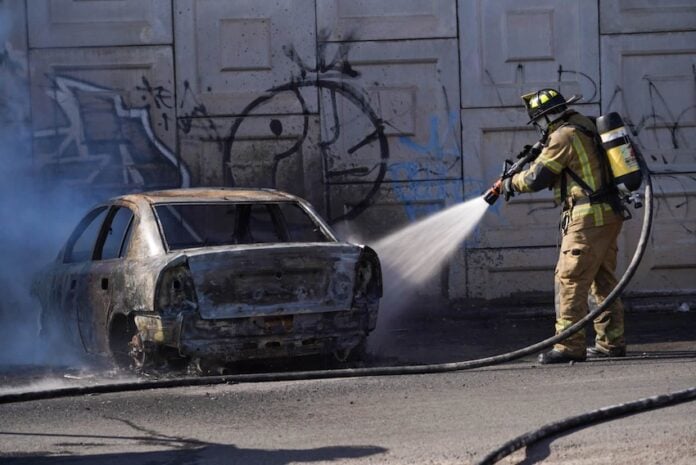
A firefighter extinguishes a burning car after violence following the death of El Mencho
Yesterday's violence as been roundly condemned, but isn't it the obvious outcome of something the country has been begging for? María Meléndez asks whether we are really prepared to deal with the cartel crackdown. (Juan José Serafín Estrada/Cuartoscuro)
The most honest question right now — and the one I want to begin this editorial with — is: how are you?

As a Mexican, I am ashamed that this is the state of things. I am ashamed that images circulating on social media look like scenes from an act of terrorism. They are painful.
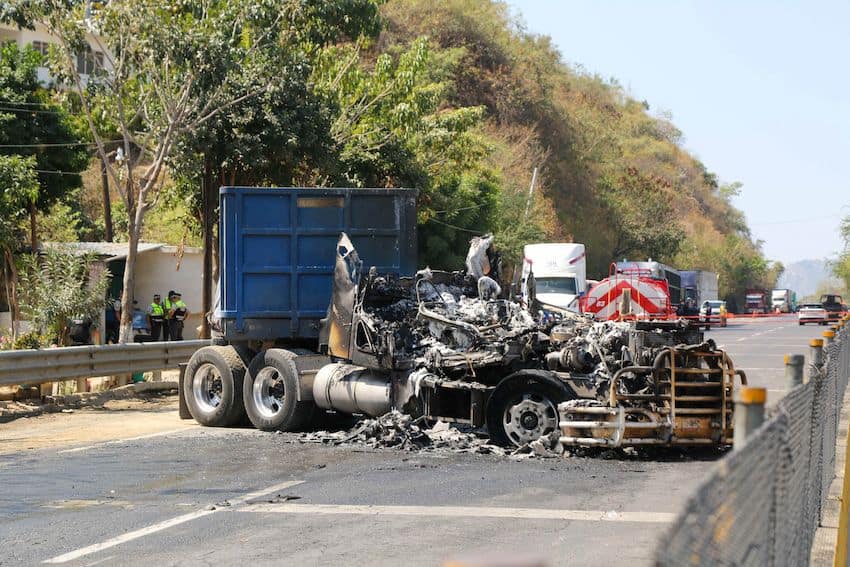
a narco-blockade in Acapulco
Violence across Mexico exploded in the wake of the killing of Nemesio “El Mencho” Rubén Oseguera Cervantes. (Carlos Alberto Carbajal/Cuartoscuro)

Yesterday, in an MND staff group chat, I told my colleagues that my view of what’s happening is a fundamentally positive one. Many see the events of this weekend as evidence of the government’s lack of preparedness to fight the cartels, but today I want to explain why my view is different. If you — like me — feel pain, helplessness, insecurity or hopelessness about what you saw yesterday, I hope this can bring a little comfort.

CJNG and El Mencho: Some facts 

Back in 2022, we reported that the Jalisco New Generation Cartel (CJNG) had a presence in 28 of Mexico’s 32 states. In six states, they are the dominant force: Jalisco, Nayarit, Colima, Guerrero, México state and Veracruz. These were the states where most of yesterday’s blockades were concentrated.

Beyond drug trafficking — production and distribution of synthetic drugs to the United States, Europe and other markets — the CJNG’s revenues come from extorting farmers, shaking down businesses, fuel theft and trafficking, control of ports such as Lázaro Cárdenas and kidnapping.

Operating in 28 states, in addition to an extensive international network, demands manpower. According to DEA estimates, the Sinaloa Cartel and CJNG together total more than 45,000 members and collaborators, spread across more than 100 countries. More precisely, the Complexity Science Hub estimates the CJNG employs between 28,000 and 33,000 members — roughly 30,000 people deeply integrated into their local communities. Have you seen the holiday toy drives, where the CJNG gives gifts to the children of entire communities? That integration is part of their power.

Their weaponry
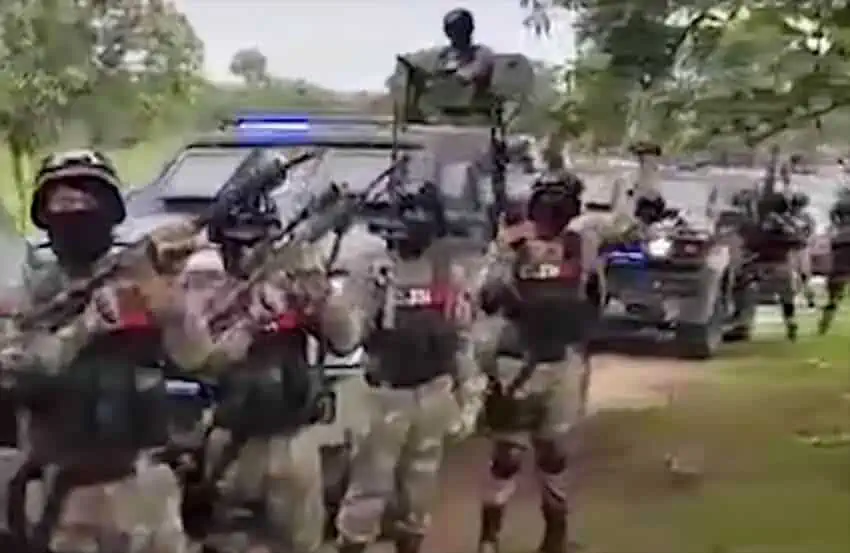
Purported Jalisco New Generation Cartel (CJNG) members show off gear in a video from 2020.
Purported Jalisco New Generation Cartel (CJNG) members show off gear in a video from 2020. (Screenshot)

A couple of weeks ago, I discussed Carlos Pérez Ricart’s book “The Violence Came from the North”, which explains how the weapons used by Mexican criminal organizations are mostly legally purchased in the United States and illegally smuggled across the border.

How the CJNG is armed also speaks to their economic heft. The ability to finance heavy weaponry, armored vehicles, networks and sustained campaigns of violence is an indirect indicator of their economic muscle, even if there are no reliable public financial figures on their total income.

Why capturing El Mencho mattered

El Mencho, the founder and leader of the CJNG, matters in the fight against organized crime because he changed the way cartels operate in Mexico. He changed the scale of violence, ruthlessly and horrifically expanding his power across swathes of the country for almost 16 years. If he controlled six states and had a presence in 22 others through terror, it is clear that capturing him became a priority for Mexican authorities.

Was the Mexican state prepared for this capture?

In short: no. At the same time, though, when could it ever be fully ready for an event of this magnitude?

Never. Precisely because after the “Culiacanazo,” we know the cartels will take the streets as their battlefield and cause civilian casualties if necessary.

But if you want to confront the cartels, you have to take action. And the Mexican government has.

What am I talking about?

The events of this weekend go beyond the death of El Mencho.

  • On Friday, Feb. 20, operations took place in Veracruz, resulting in 14 arrests, including the local Veracruz leader.
  • Yesterday, on Feb. 22, in Acapulco, Guerrero, authorities arrested a local cartel boss.
  • In Jalisco, in addition to Mencho, they captured “La Leona,” an alleged CJNG recruiter also wanted in connection with a mass grave and “death camp” discovered in Jalisco last year.
  • In Quintana Roo, on Monday, Feb. 23, authorities reported that 248 CJNG members have been arrested over the past year.

The killing of El Mencho is the most important blow in a much larger operation that can be read as an attempt to dismantle the strongest and most violent criminal organization in Mexico. It is not the only part of that operation.

What happens next?

Once the head of a criminal group is captured, internal struggles for power typically lead — at least initially — to an escalation in violence. What we saw yesterday, I think, was a clear example of this phenomenon.
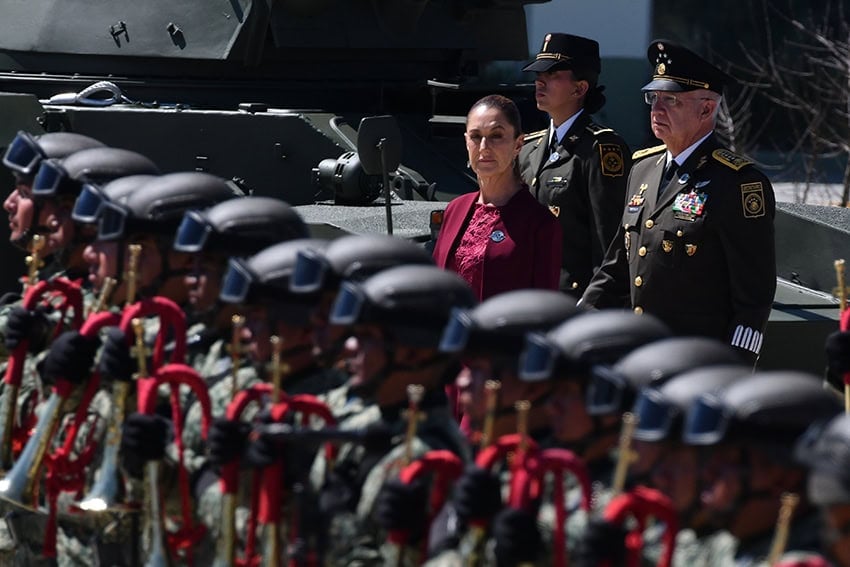
Sheinbaum and two Mexican generals observe a military band on Army Day in Puebla
Mexican authorities have moved quickly to quell the unrest. (Mario Jasso/Cuartoscuro)

In the coming days, I believe we will continue to hear about violent acts in Jalisco and other areas controlled by the CJNG.

I believe the capture of their leaders indicates the Mexican state understands the potential for this balkanization and has moved preemptively. Still, it bears remembering that the CJNG has roughly 30,000 members. Pacifying the country will never be easy. The Mexican State will never be fully prepared to confront all cartels.

But hasn’t much of the time been spent complaining about government collusion with the narco?

Bilateral cooperation

I have seen criticism and conspiracy theories that American forces actually made the capture, and I have seen praise for that cooperation. I have also seen denigrating comments toward President Sheinbaum, claiming her actions are solely because President Trump has been conditioning incentives, taxes and even the deployment of American troops to the country.

Be that as it may, isn’t this the outcome we’ve all been waiting for? For the leaders of these organizations be captured and for the impunity with which they operate to come to an end?

Closing thoughts

Taking down these criminal organizations is truly a tightrope act. Any blow will carry deadly consequences. The timing will never be perfect and there will always be critics.

Not acting is effectively letting them continue with impunity. The images we saw yesterday are hard to digest and yes, there may have been better ways to capture Mencho without disrupting security in Jalisco to such an extent, but I cannot think of an easy, clean way to carry out an operation of this magnitude against the most violent cartel in Mexico’s history.

What do you think?

Maria Meléndez writes for Mexico News Daily in Mexico City.
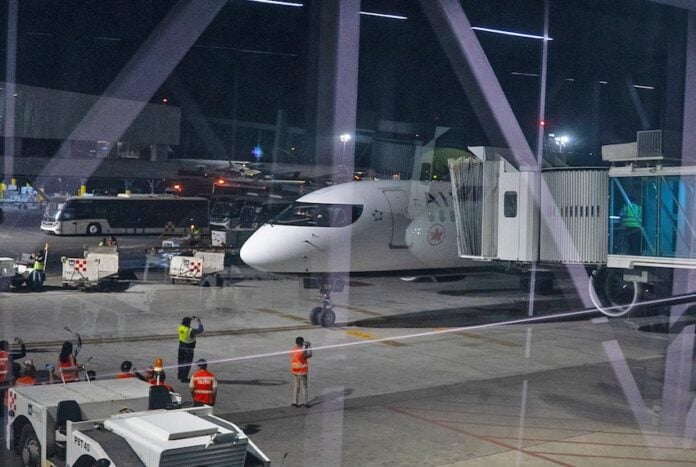
Hundreds of flights to and from Mexico canceled following death of cartel leader ‘El Mencho’

0
flight status on 23FEB26
Many individual airlines have diverted or canceled flights to and from the troubled areas in Jalisco, Colima and Nayarit during and following Sunday's violence. (@Aeropuerto_GDL/X)

Many airlines halted operations and issued travel waivers after Sunday’s violent events following a military operation that led to the death of Nemesio “El Mencho” Oseguera Cervantes, Mexico’s most wanted cartel leader. 

At least 237 flights have reportedly been canceled to and from the airports of Guadalajara and Puerto Vallarta, Jalisco; Manzanillo, Colima; and Tepic, Nayarit. These cities saw security operations, road blockades and violent clashes following the death of El Mencho, leading airlines to prioritize the safety of passengers and crew.

Although the Federal Civil Aviation Agency (AFAC) stated that “airports continue to operate normally,” several airlines have chosen to cancel flights.

With a heavy military presence at the terminal, the Puerto Vallarta airport has suspended all international operations and most domestic ones at the airlines’ discretion. 

Aeroméxico announced the suspension of scheduled flights to Guadalajara, Puerto Vallarta, Manzanillo and Tepic, and the activation of its protection policy for affected passengers. 

Meanwhile, Viva offered its passengers the option to change their travel dates free of charge or request a full refund.

Air Canada and United Airlines had previously announced the temporary suspension of their flights to and from Puerto Vallarta.

Southwest and Alaska Airlines canceled flights to and from Puerto Vallarta, while Delta Air Lines offered waivers for passengers traveling to Guadalajara and Puerto Vallarta. 

Several U.S. and Canadian carriers later confirmed broader cancellations affecting routes to Puerto Vallarta, Guadalajara and Manzanillo, with some aircraft forced to turn back mid-flight due to safety concerns.

WestJet stated that it diverted seven flights that were initially scheduled to go to Puerto Vallarta and that it canceled an additional 37 flights to and from Puerto Vallarta, Guadalajara and Manzanillo.

Airlines have implemented flight cancellation and modification policies for passengers with scheduled departures and for travelers currently stranded. Southwest also plans to send more aircraft to Mexico to repatriate its passengers and crews once the situation returns to normal.

On Sunday night, real-time flight tracking platforms such as Flightradar and FlightAware showed empty or sparsely populated skies over the Mexican Pacific coast.

By 9 p.m., 90 flights had been canceled to Guadalajara in the last 24 hours; four to Tepic; 137 to Puerto Vallarta; and six to Manzanillo, according to FlightAware.

If you have a scheduled flight for today, Monday, check the status on your airline’s website or app before heading to the airport. 

If your flight has a layover in Guadalajara, Puerto Vallarta, Manzanillo, Tepic or Mazatlán, keep in mind that this is a developing story and changes can happen on short notice.  

With reports from Excelsior, La Jornada and CR Hoy

An unprecedented 24-hour period for MND: A perspective from our CEO

38
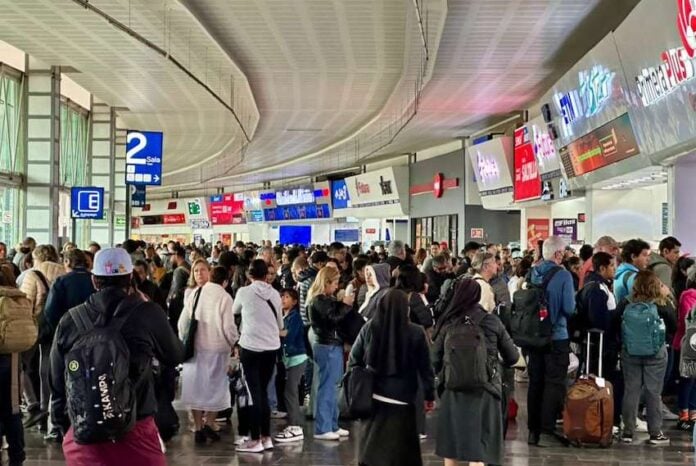
Mexico City's Northern Bus Terminal at midday yesterday, shortly after passengers were told that no buses would be leaving the station on Sunday.
Mexico City's Northern Bus Terminal at midday yesterday, shortly after passengers were told that no buses would be leaving the station on Sunday. (Travis Bembenek)

The team at MND has been working extremely hard — from around Mexico — to keep you updated and informed on what has been happening nationwide since the killing of cartel leader “El Mencho” yesterday morning.

We will continue to do so today and going forward, and as always, we will do so in a fact-based, fact-checked and bias-free manner.

Given that it was a truly unprecedented day for MND, I wanted to share some insight into how the day unfolded in our newsroom with those interested.

Just a few days ago, I was celebrating with our team our first-ever back-to-back “100k days.”

For two days in a row, we had over 100,000 people visiting our website and YouTube channel. As we celebrated the milestone and reflected on our momentum, I wondered out loud, could we break 2 million viewers this month? Then yesterday happened.

The day began in a normal way, with my wife and me going for a walk on Reforma Avenue in Mexico City (if you have never done that on a Sunday morning, when it is closed for traffic, I highly recommend it). We were in the city for business meetings and for the wedding of a friend the night before. As we strolled under the blooming jacarandas, we both agreed that it was one of the best weddings we had ever been to, and in fact, a truly epic day all around.

Returning to our hotel, we ordered an Uber to take us to the Northern Bus Terminal so we could catch our bus back to San Miguel de Allende. While en route to the station, we heard that the authorities had just shut down all bus services to Guerrero, Michoacán and Jalisco.  “Hmmm,” we thought. As we pulled up to the station a few minutes later, there were stranded people standing around everywhere. We got out of the Uber and ran inside, only for the station’s employees to tell us that bus services to Guanajuato — and actually, everywhere — had been canceled a moment earlier. A certain sense of panic and fear filled the room.

We quickly jumped into another Uber and headed back to our hotel, hoping they would let us have our room back and stay another night or two. By now, our MND team chat was blowing up. Our Jalisco-based and Jalisco-born team members were passing on constant information and insight and began writing summaries of what was going on.

We then pulled together a group of 17 team members to get to work on a Sunday morning when none of them are normally working. Writers, editors, fact checkers, social media, marketing, technical and back office team members all dove into the details and the opportunity for MND to bring clear news and information about what was really going on.

In an effort to get the word out, we agreed to make all of our news stories related to the emergency free for all readers. Providing safety and reliable information during this time was, and continues to be, of utmost importance. We pulled the El Jalapeño article published earlier that day — it was not a day for satire or humor — and we all worked like never before.

Very quickly, we published our first article of the day and it became extremely popular — so much so that it completely crashed our site.

To give you some perspective, at one point, we had a surge of over 6,000 people trying to access our site IN ONE SECOND and had sustained bursts of traffic of over 100 site visits per second. We were able to very quickly get the site back up and running by shutting off some of the regular guardrails of our paywall service and our traffic was off the charts. We were getting over 150,000 people per hour reading our homepage.

We also quickly published our first YouTube video on the day’s events, which too went viral. Our most popular day ever on our YouTube channel was, until yesterday, around 20,000 video views in one day. Our first video published yesterday alone had over 500,000 views!

It’s a new day for Mexico. (Travis Bembenek)

I am extremely proud of the 17 team members who made it all happen yesterday: on a Sunday, working from home, on a moment’s notice.

You can never really plan for something like what happened, and the MND team delivered. The traffic numbers are still coming in, but we reached our 2M visitors in one month goal, in just one day!

Today is a new day. It will most certainly be our second-highest traffic day ever. Our team is tired, but inspired. We have a new sense of energy and purpose. We were tested and we delivered. Yesterday made us all better.

You can count on us more than ever to bring you the news and information that you need to know about Mexico. Fact-based, fact-checked and apolitical.

Thank you for supporting our work. Onward.

Travis Bembenek is the CEO of Mexico News Daily and has been living, working or playing in Mexico for nearly 30 years.

8 Mexicans killed in US attacks on 2 ‘drug boats’ off Pacific coast

3
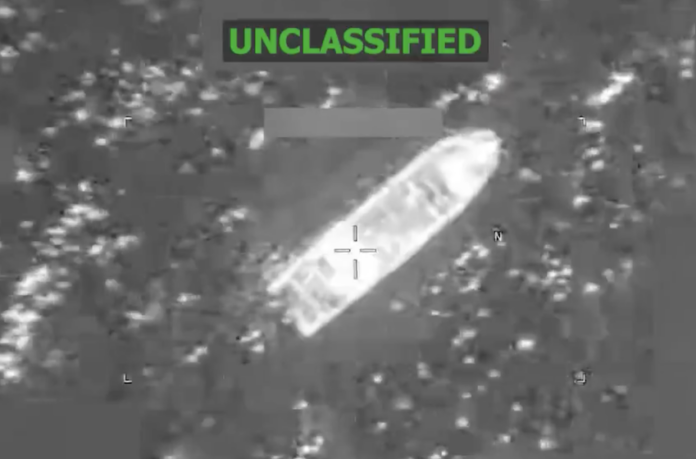
an aerial shot of a U.S. military attack on a boat in the Eastern Pacific
The victims were said to be from Bahía de Banderas, Nayarit. (@southcom/X)

Eight Mexicans were reportedly among those killed in three separate strikes on boats in international waters by the U.S. military last week.

Seven of the victims were said to be from a fishing village in the western state of Nayarit, killed in two separate strikes in the Pacific Ocean.

Family members of the victims said they were notified of the deaths by personnel from the Foreign Affairs Ministry, but federal authorities had not confirmed the information publicly as of Sunday.

In a brief statement issued on Feb. 17, the U.S. Southern Command said a joint task force had conducted “three lethal kinetic strikes” on three vessels operated by Designated Terrorist Organizations.

“Intelligence confirmed the vessels were transiting along known narco-trafficking routes and were engaged in narco-trafficking operations,” it said, adding that 11 “terrorists” were killed by the action, “four on the first vessel in the Eastern Pacific, four on the second vessel in the Eastern Pacific and three on the third vessel in the Caribbean.”

Local media in Nayarit reported that eight of the victims were from the municipality of Bahía de Banderas, seven of them from the village of Cruz de Huanacaxtle. A large number of U.S. citizens reside in Cruz de Huanacaxtle. 

Although some publications called out the U.S. military for killing “innocent fishermen” and slammed the Mexican government for not publicly criticizing the attacks, other media implied that the victims were indeed involved with drug trafficking.

The newspaper La Jornada reported that “locals said the young boatmen were carrying gasoline ‘and supplying you-know-who,’ while the newspaper Reforma cited local sources claiming that the vessels in which the victims were traveling “are linked to alleged criminal operators in Nayarit.”

A family member of one of the victims lamented that his relative had “promised this was his last trip, and it really was going to be.”

Reforma reported that the two boats belonged to Roberto Castellanos Meza, alias “Beto Bonques,” and Audias Flores Silva, “El Jardinero,” along with an alleged associate identified as Raúl Morín, “La Fresa.”

The U.S. Treasury’s Office of Foreign Assets Control identified the “Bonques Brothers” as members of the Jalisco New Generation Cartel (CJNG) in a November 2024 press release.

“El Jardinero” is seen as a potential successor to CJNG boss Nemesio Oseguera Cervantes, killed by the Mexican Army on Sunday.

Mexican authorities partially dismantled a CJNG cell operating in Bahía de Banderas last year, while on Feb. 19, the U.S. Treasury announced it had sanctioned a timeshare fraud ring led by the CJNG in the same area. 

Cruz de Huanacaxtle is located about 27 kilometers (17 miles) northwest of Puerto Vallarta, scene of some of Sunday’s worst violence.

With reports from La Jornada, Infobae, Sin Embargo, Reforma and The Guardian

MND Local: What’s the current situation in Guadalajara?

1
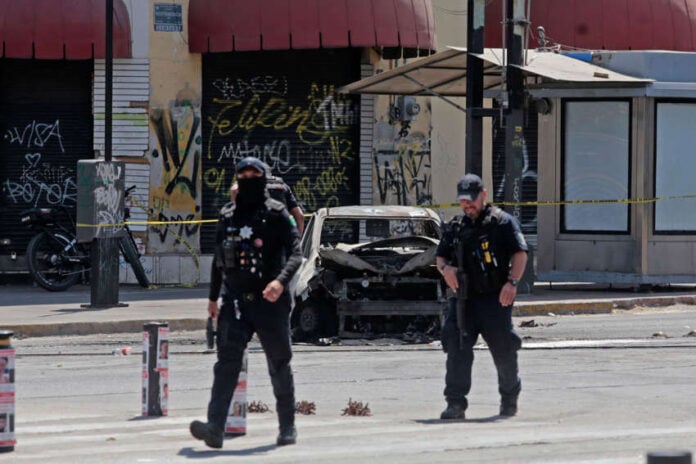
Police patrolling on a Guadalajara street with a burned-out sedan in the background.
Authorities patrol the streets amidst a burnt-out vehicle in Guadalajara on Sunday. (Fernando Carranza/Cuartoscuro)

The Guadalajara metropolitan area is inching back toward normal daily life Monday morning, with the violence diminished, the government promising public transportation will be restored throughout the day at a gradual rate and more flights heading out of Guadalajara International Airport than on Sunday, which saw dozens of cancelled flights.

However, the state remains on code red security status, schools are closed until further notice, many businesses are closed and the flow of people throughout the ZMG is still greatly diminished as many people are staying home from work and continuing to shelter in place.

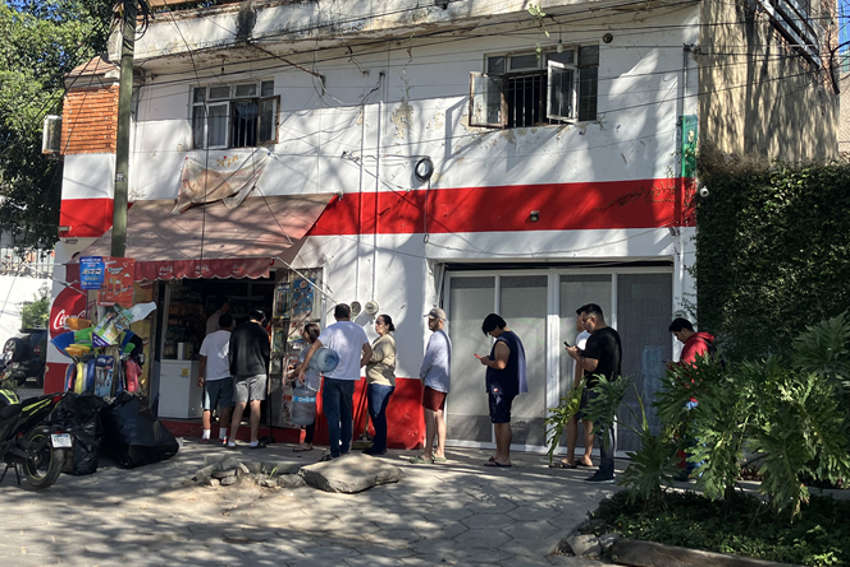
People standing in line out the door at a small corner store in Guadalajara, Mexico
With many major grocery chains and the central Mercado de Abastos remaining closed Monday morning, residents of the Seattle neighborhood wait inline to enter a small “tiendita,” or neighborhood corner store, one of the few places open. (Dawn Stoner)

Sunday: Chaos and stranded residents

Following the capture of Jalisco New Generation Cartel boss Nemesio “El Mencho” Osguera Cervantes on early Sunday morning by federal forces — which resulted in Osguera’s death in police custody — his cartel’s response in Guadalajara on Sunday was immediate and violent, including gun battles in the streets and numerous fiery blockades of major roads.

On Sunday, Tapatios I know told me they had found themselves stranded at their sports clubs following morning workouts, at schools attending events with their children, stuck in the Guadalajara airport or outside the city with no clarity on when or how they could safely reach home. Dozens of flights were cancelled and multiple international airlines cancelled or diverted incoming flights to the airport.

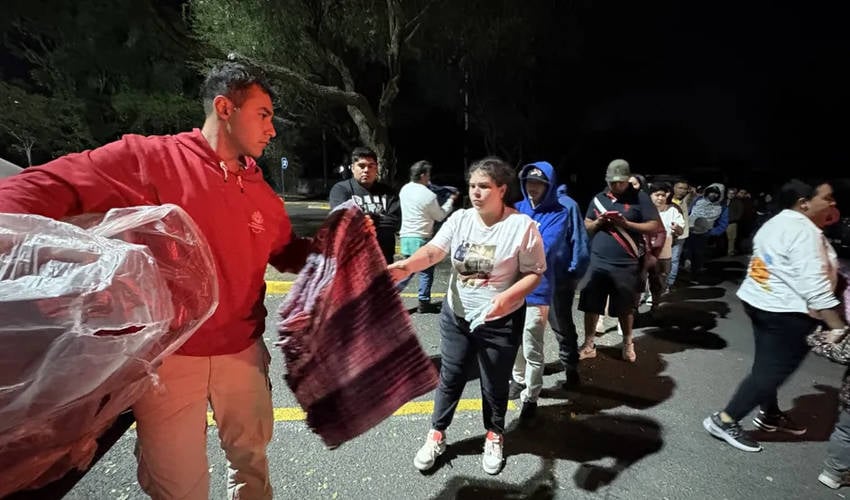
According to local media outlets, just over 1,000 Mexican tourists visiting the Guadalajara Zoo Sunday morning were forced to sleep in the long-distance buses in which they arrived in, within the zoo’s premises, which were locked once the city went into code red.

Mexican tourists stranded at the Guadalajara Zoo on Sunday receiving blankets from Zoo personnel so they could sleep in their tour buses after the city went on lockdown. (Internet)

Around midday Sunday, from the rooftop terrace of my house Zapopan’s Seattle neighborhood, I could hear sporadic gunfire and small explosions. A friend who lives north of us, and adjacent to a National Guard outpost in Las Cañadas, shared that she and her husband heard sustained automatic weapons fire and explosions for around 20 minutes as government forces battled cartel members.

According to Mexican newspaper La Jornada, the shootout resulted in the deaths of six National Guard servicemen.

My friend shared a video she had received from a friend of hers who lives near the German school (Colegio Alemán de Guadalajara). This woman’s family had taken refuge in a closet as gunfire raged outside. Her home took three stray bullets.

When I reviewed the video, the most striking thing was the audio; it sounded like a war zone.

By late afternoon, there was an eerie calm across the city on Sunday. No one ventured out of the house, and with no traffic or public buses, the streets were deserted. Only chirping birds and the occasional helicopter overhead punctured the silence. It carried through the night.

The situation on Monday

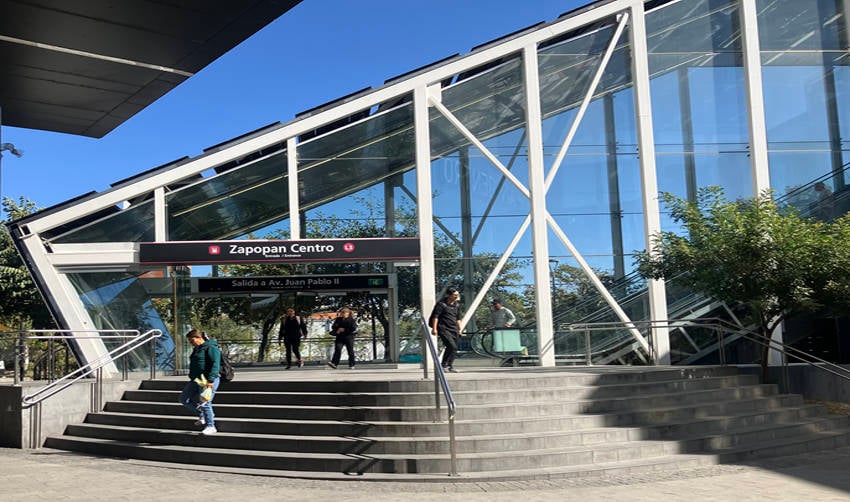
Five riders at the glass-walled exit to a light rail station in Zapopan in the Guadalajara metropolitan area.
A handful of passengers leave a light rail station in Zapopan Center. At least four lines of the system are running, and all buses are running, says the Jalisco State Transportation Ministry, but some commenters on social media reported their buses not showing at stops on Monday morning. (Dawn Stoner)

On Monday morning, I got up to walk the dog around 7:30 a.m. as I always do. Strolling my block, there were a few signs of life percolating. A handful of neighbors were out walking their dogs as well, a lone jogger passed me by and little old ladies were on their way into church.

But with schools closed and mass transit still unavailable, the neighborhood remains abnormally quiet. Though the city has issued a press release saying public transit around the metro area is resuming service, I have not seen any buses passing through Zapopan Center, normally a buzzing hive of traffic on Monday mornings. Shops and cafes in my section of Zapopan are still closed, and trash collection hasn’t happened. Although the atmosphere remains calm, the city is far from resuming its normal patterns of life.

By mid-morning, however, I saw more pedestrians and bikers active along Av. Aurelio Ortega, the main artery through my neighborhood. A police cruiser and several bike cops are on patrol. They wave to each other and exchange smiles.

Virtually all of the businesses in this area east of Zapopan’s historic center remain shuttered, save a single mom-and-pop grocer, which has a line of about a dozen people waiting to get inside. I see my neighbors departing the store with household staples such as eggs, bread and jugs of water. Normally ubiquitous sidewalk vendors, however, are absent.

Two nearby pharmacy chains — Farmacia Guadalajara and Farmacia Similares — are open, with customers buying necessities.

Further up the street in Zapopan Centro, all the normally busy sidewalk cafes are closed, with patio chairs still stacked up. The newly opened Starbucks posts a sign indicating that it will remain closed on Monday due to the “adverse situation,” noting that it regrets the inconvenience.

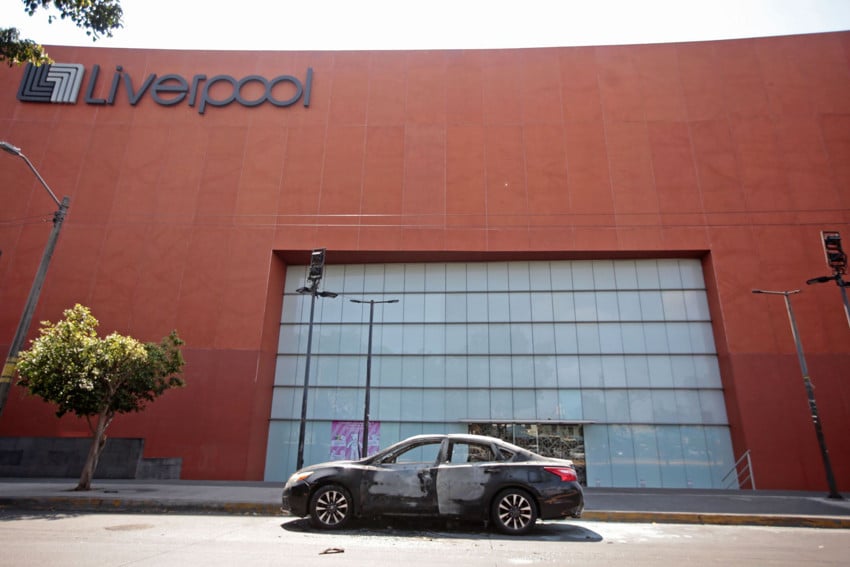
A burned-out black car with white scoring in various parts of it from being set on fire. It sits in front of the glass doors of a massive facade of a Liverpool department store entrance in Guadalajara, Mexico
A burned-out car sits in front of a closed Liverpool department store in Guadalajara on Sunday. (Fernando Carranza/Cuartoscuro)

Nonetheless, a handful of people are gathered at bus stops, hoping for a lift. A cluster of cops gathers outside of a bus shelter, alert to anything unusual.

Things seem more normal on the light rail network, as multiple trains passed through the Zapopan Center station during my tour, with a handful of passengers disembarking.

The level of activity in Zapopan today resembles a major holiday, minus the festive celebrations and brunchgoers.

Here’s what we know:

Public Transport

While as of this morning, the Jalisco Public Transportation Ministry was promising to have public transportation back to regular service, it acknowledged that the process will be gradual throughout the day.

Authorities confirmed four lines of the city’s light rail system are back in operation this morning, and all stations of the Macro Calzada public bus system are operating normally, however, some users online reported buses not arriving at stops.

The Guadalajara metro system has reportedly reopened partially.

Guadalalara International Airport

According to reporting from local media, the flow of people and traffic at Guadalajara International Airport and the surrounding area is operating within normal parameters, without any reported incidents on Monday morning.

However, the Pacific Airport Group (GAP), which runs the Guadalajara airport, reported that on Sunday, 56 flights were cancelled and 35 were delayed due to security concerns, and that those cancelled flights appear to be having a ripple effect on Monday’s travel, with the Mexican news outlet TV Azteca reporting on a long list of scheduled flights from the airport on Monday morning that were either delayed or cancelled.

Roadways

As of 11 a.m. Jalisco time, the Jalisco state government’s account on Twitter reported that authorities were working on removing more blockades still in place on the highways around Guadalajara. Details of the locations were not given.

Gas stations throughout the region will remain closed today.

According to the Jalisco Transportation Ministry, taxi service throughout the city has resumed throughout the metro zone as of Monday morning. Taxi service is running again at Guadalajara International Airport, although passengers have reported long waits.

Shopping

While big U.S. chains like Costco, Walmart, and Sams are closed, several Mexican-owned grocers like Soriana and Fresko were operating on Monday, in addition to some mom-and- pop stores throughout the city.

The giant Mercado de Abastos is closed, and Amazon has reportedly put deliveries on hold to the metro area.

MND Writer Dawn Stoner is reporting from Guadalajara.
MND Writer Charlotte Smith also contributed to this article.

Did the Puerto Vallarta Costco burn down?

4
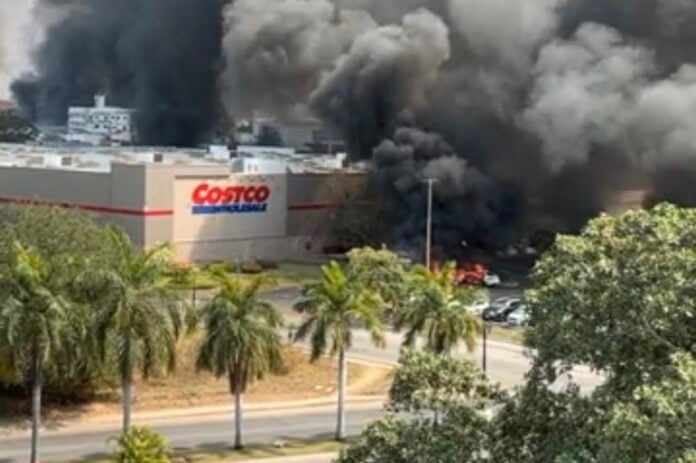
Image of a burning Costco in Puerto Vallarta
Images of a burning Costco in Puerto Vallarta went viral across the globe. What's the truth behind the image?

After images on social media showed the Puerto Vallarta branch of Costco in flames, Mexico News Daily takes a look at what really happened during the outburst of unrest following the death of Nemesio “El Mencho” Oseguera Cervantes in the early hours of Sunday, Feb. 22.

What happened to the Costco in Puerto Vallarta?

Early on Sunday morning, X user “Mr ashen” posted a video of the Costco parking lot on fire, showing thick black smoke as several parked vehicles outside the store were set ablaze.

This video was later shared by Elon Musk, propelling it to tens of millions of viewers across the world. The video became one of the defining images of Sunday’s violence, drawing comment and ire from social media users across the world.

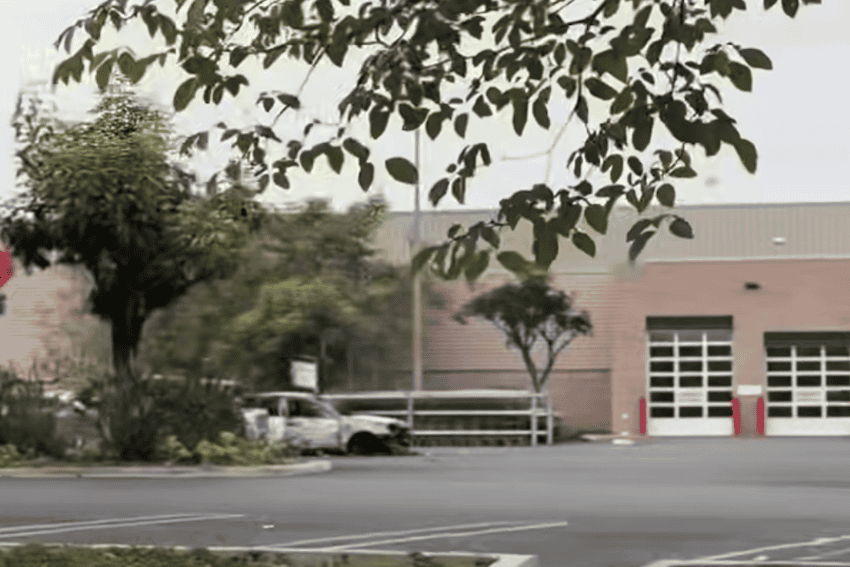
However, beyond the headlines, video from later in the day appears to show the store itself completely unharmed by fire.

Footage from Sunday afternoon shows the Costco unharmed, despite being surrounded by burnt-out cars. (Gianni Marzolla/Facebook)

Neither Costco México nor the Puerto Vallarta authorities have released a statement on the condition of the store.

Where were Oxxo stores set on fire?

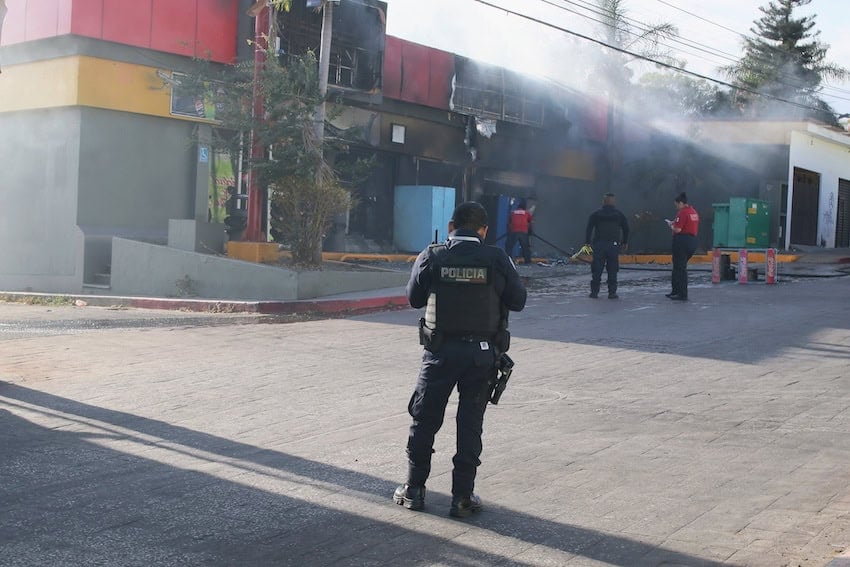
While the full extent of the arson attacks carried out on Sunday is yet to be known, dozens of Oxxo stores were burned down in the following states:

  • Tulum, Quintana Roo: Two Oxxo stores set on fire (one fully burned, one attempted arson).
  • Tijuana, Baja California: Two Oxxo stores burned (Altamira and Colonia Oaxaca/Rampa Degollado). Local authorities ordered the temporary closure of all Oxxos in the city after these attacks.
  • Los Reyes La Paz, Estado de México: One Oxxo branch burned and a second suffered attempted arson after attackers threw Molotov cocktails at two stores on Avenida Texcoco in colonia Magdalena de los Reyes.
A burnt Oxxo in Temixco, Morelos
Police at a burnt-out Oxxo in Temixtco, Morelos. Dozens of branches of the ever-present convenience store were torched on Sunday. (Margarito Pérez Retano/Cuartoscuro)

Mexico News Daily

Security Minister: 25 National Guardsmen dead in ‘El Mencho’ operation

5
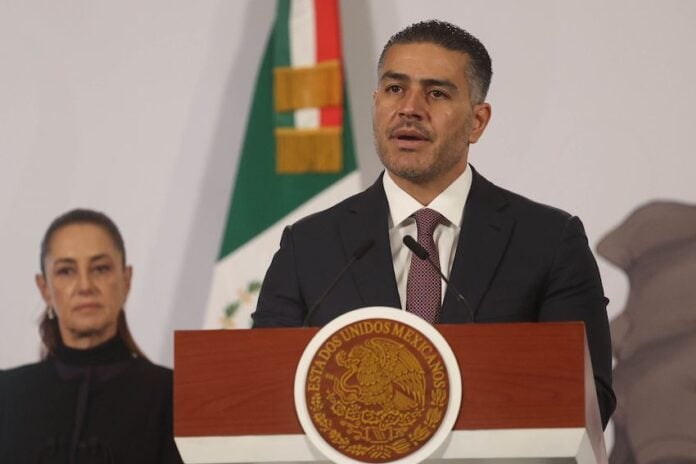
Speaking at President Claudia Sheinbaum's morning press conference, Security Minister Omar García Harfuch said that federal authorities were targeted in 27 separate attacks on Sunday, of which six led to deaths.
Speaking at President Claudia Sheinbaum's morning press conference, Security Minister Omar García Harfuch said that federal authorities were targeted in 27 separate attacks on Sunday, of which six led to deaths. (Moisés Pablo/Cuartoscuro)

Federal Security Minister Omar García Harfuch reported Monday that 25 National Guard officers, a state police officer, a security guard and a woman — reportedly pregnant — were killed in attacks in Jalisco following a federal operation in which Jalisco New Generation Cartel (CJNG) leader Nemesio “El Mencho” Oseguera Cervantes was shot, detained and later died.

He also said that 34 criminals were killed in incidents following the Sunday morning military operation targeting Oseguera in Tapalpa, a municipality in Jalisco located around 130 kilometers southwest of the state capital of Guadalajara.

The operation triggered a violent response from CJNG members, who set up more than 250 narco-blockades across 20 Mexican states and carried out arson attacks on a large number of businesses.

Speaking at President Claudia Sheinbaum’s morning press conference, García Harfuch said that 27 “cowardly attacks against authorities” were carried out after the operation to detain “El Mencho.”

In six of those attacks in Jalisco, 25 National Guard personnel, a guard and a state police officer “unfortunately” lost their lives, he said.

“… At the hands of these cowardly criminals, a woman [also] lost her life,” García Harfuch said.

That woman was reportedly three months pregnant. She was killed in the crossfire of a clash between the National Guard and CJNG members in Zapopan, located in the Guadalajara metropolitan area.

García Harfuch said that 30 “organized crime people” were killed in clashes with authorities in Jalisco. He also said that four criminals were killed in confrontations with authorities in Michoacán, which borders Jalisco to the south. The security minister said that 15 security force members were wounded in those clashes.

“We make a respectful call to the population to remain calm, to trust your institutions and to rest assured that the government of Mexico is working to its full capacity to restore peace and protect people,” García Harfuch said.

“We recognize the bravery of the personnel of the Mexican Army, the National Guard and the Air Force, and of course we recognize the general and Minister Ricardo Trevilla for his leadership at the Ministry of National Defense,” he said.

García Harfuch: No narco-blockades as of Monday morning 

García Harfuch acknowledged that the CJNG reacted violently to the arrest and subsequent death of Oseguera, who was Mexico’s most wanted drug lord.

a narco-blockade in Acapulco
A burned truck blocked a highway in Acapulco, Guerrero, on Sunday. (Carlos Alberto Carbajal/Cuartoscuro)

He noted that in states across the country, highways were blocked, vehicles were set on fire and gas stations, banks and other businesses were targeted in arson attacks.

The federal government’s security cabinet reported on Sunday that around 20 branches of the state-owned Banco del Bienestar (Bank of Well-Being) in Jalisco were damaged.

García Harfuch said that “the majority” of the blockades set up by the CJNG were removed on Sunday, while the remainder were cleared early Monday.

Mexico is currently “without blockades,” the security minister said.

He said that a total of 85 narco-blockades were set up on federal highways in 11 states: Baja California, México state, Michoacán, Guanajuato, Guerrero, Jalisco, Oaxaca, Sinaloa, Tamaulipas, Veracruz and Zacatecas.

He said that Jalisco saw the highest number of federal highway blockades with 18.

“In other entities, isolated events [of violence] and blockades occurred,” García Harfuch said, adding that authorities responded “immediately.”

There were major disruptions to bus travel in Mexico on Sunday, while a significant number of flights to and from the airports in Guadalajara, Puerto Vallarta and Tepic were canceled.

70 arrests across 7 states 

García Harfuch said that authorities arrested 70 people across seven states for allegedly committing crimes motivated by the operation against Oseguera.

The news outlet Infobae reported that more than 50 people were arrested in Jalisco, Baja California and Guanajuato.

During the operation in Tapalpa, military personnel came under attack, the Defense Ministry said Sunday.

It said that the military personnel returned fire and four CJNG members were killed at the scene and three others, including Oseguera, were seriously wounded and died while being transferred by air to Mexico City. Defense Minister Trevilla said Monday that the number of “criminals” killed at the scene was in fact eight.

The Defense Ministry said that three military personnel were wounded, all of whom were transferred to Mexico City for medical treatment.

It also said that United States authorities contributed information used to carry out the operation in Jalisco.

CJNG weakened by operation against ‘El Mencho,’ says García Harfuch 

García Harfuch said that the operation in Tapalpa on Sunday “made it possible to weaken a criminal organization of international reach.”

He described the CJNG as the “main” generator of violence in Mexico, noting that its members commit crimes such as homicide, people trafficking, extortion, kidnapping and “armed attacks against authorities.”

In a social media post on Monday morning, the federal security cabinet wrote that “the strength of a criminal group will never be above the strength of the Mexican state.”

“We make a respectful call to remain calm and trust your institutions,” it added.

Mexico News Daily 

‘El Mencho’ killed in Mexico: What we know so far

20
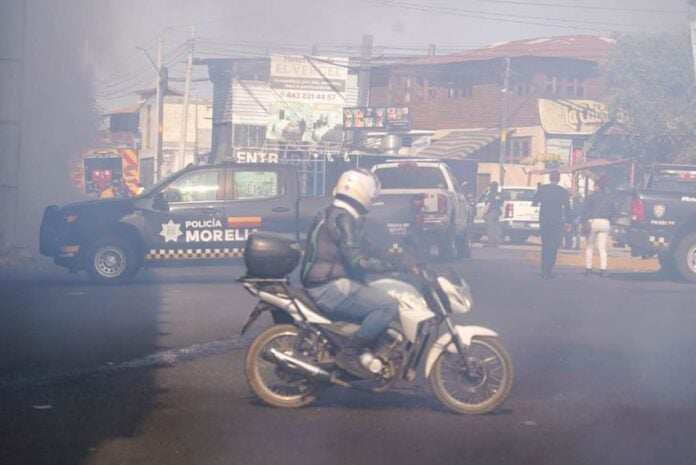
Within hours of the operation, CJNG members erected narco-blockades and set vehicles, buses and businesses ablaze across at least seven states
Within hours of the operation, CJNG members erected narco-blockades and set vehicles, buses and businesses ablaze across many states. (Juan José Estrada Serafín/Cuartoscuro)

The Mexican Army killed Nemesio “El Mencho” Rubén Oseguera Cervantes — the founder and top leader of the Jalisco New Generation Cartel (CJNG) — on Sunday morning in the municipality of Tapalpa, Jalisco, roughly 90 kilometers south of Guadalajara.

His death triggered a wave of cartel reprisals across at least half of Mexico’s 32 states, raising urgent security questions just weeks before the 2026 FIFA World Cup playoffs are set to begin in Guadalajara.

Here is what we know so far.

The operation

— The Ministry of Defense confirmed that federal forces attempted to arrest Oseguera Cervantes in Tapalpa during a Sunday morning operation. Residents in the area reported overflights and military convoys prior to the raid.

— During the operation, Mexican military forces came under fire and were forced to defend themselves, the Defense Ministry said. Four CJNG operatives were killed at the scene. Three others, including El Mencho, were critically wounded and airlifted to Mexico City, where all three died en route.

— Twenty-five National Guard officers, a state police officer, a security guard and a woman were killed in attacks in Jalisco. According to the security ministry, 34 criminals were killed in incidents following the operation.

— Three Mexican soldiers were also wounded in the firefight and transferred to Mexico City for medical treatment.

— U.S. authorities contributed intelligence used to carry out the operation, the Defense Ministry said.

Read more about the operation here:

How Mexico found ‘El Mencho,’ according to the Army

Who was ‘El Mencho’?

— Oseguera Cervantes led the CJNG, widely considered one of the most powerful and violent criminal organizations in Mexico, with a strong presence in Jalisco, Colima, Guanajuato, Michoacán and other states.

— He played a central role in the trafficking of cocaine, methamphetamine, and, more recently, fentanyl into the United States. The U.S. Department of Justice had issued federal charges against him and offered a multimillion-dollar reward for information leading to his capture.

— Security analysts warn that his death could trigger internal reshuffling and succession disputes within the CJNG, likely leading to increased violence across territories the cartel controls.

The cartel’s response

— Within hours of the operation, CJNG members erected between 80 and 250 narco-blockades and set vehicles, buses and businesses ablaze in 20 states.

— In Puerto Vallarta, residents reported the city under siege — the sound of gunshots and thick columns of black smoke rising over the city as more than 10 vehicles and several businesses were set on fire in various points. Prison breaks were also reported in the city.

— In Guadalajara, roadblocks were reported across the metropolitan area. Vehicles and public buses were burned. Pharmacies and convenience stores were set on fire across Mexico.

— In Michoacán, Governor Alfredo Bedolla reported that 13 municipalities were experiencing unrest. Further disturbances were reported in Veracruz, Colima, Aguascalientes and Guerrero.

— Guanajuato later reported that blockades in that state had been contained and no longer posed a risk to residents.

Government response

— Jalisco Governor Pablo Lemus declared a statewide “Code Red,” suspending public transportation, in-person classes and mass events for the remainder of Sunday and through Monday.

— The governor of neighboring Nayarit, Miguel Ángel Navarro, issued a similar warning, calling on residents to shelter in their homes.

— President Claudia Sheinbaum urged Mexicans to remain calm in a Sunday afternoon post on social media, saying there was “complete coordination” with all state governments and that activities were proceeding normally in most of the country.

— Mexico’s security minister said “the majority” of the blockades set up by the CJNG were removed on Sunday and that there were zero blockades as of Monday.

— Authorities arrested 70 people across seven states for allegedly committing crimes motivated by the operation against Oseguera.

Travel alerts and transport disruptions

— The U.S. Embassy issued a shelter-in-place order for American citizens in Jalisco — including Guadalajara, Puerto Vallarta and Chapala — as well as in parts of Tamaulipas, Michoacán, Guerrero and Nuevo León, citing “ongoing security operations and related road blockages and criminal activity.”

State, foreign governments issue shelter-in-place warnings as narco-blockades spread after cartel leader’s death

— Canada issued a shelter-in-place order specifically for Puerto Vallarta and advised all citizens in Jalisco to keep a low profile and follow local authorities.

— The United Kingdom updated its travel advice to warn against all but essential travel to parts of southern and northern Jalisco. Australia and India also issued security alerts to their nationals in Mexico.

— The Pacific Airport Group (GAP) said Guadalajara International Airport was operating normally under the protection of the National Guard and the Army. The airport attributed videos of panicked passengers circulating on social media to “hysteria among passengers” rather than an actual security incident.

— Air Canada temporarily suspended operations at Puerto Vallarta’s airport. Some flights from Manzanillo, in the neighboring Colima state, were also canceled.

— Bus services were suspended across multiple areas of the country, including routes between Mexico City and San Miguel de Allende. Hotels in Puerto Vallarta advised guests to remain indoors.

Will FIFA cancel the 2026 World Cup in Mexico?

— Guadalajara is a host city for the 2026 FIFA World Cup. The Estadio Akron is scheduled to host four group stage matches, including Mexico vs. South Korea on June 18 and Uruguay vs. Spain on June 26.

— More immediately, the Estadio Akron is set to host a World Cup playoff tournament on March 26-28 — just over a month away — featuring New Caledonia, Jamaica and DR Congo competing for a spot at the finals. Monterrey will host the other side of the bracket, with Iraq, Bolivia and Suriname also vying for a place.

— The violence in Guadalajara raises serious security concerns about Mexico’s readiness to host tens of thousands of international visitors, fans and officials.

— Lemus told The New York Times’ The Athletic on Sunday that his office had not received any communications from FIFA that should cause concern. “We are focused on controlling the situation,” a spokesman said.

— Lemus had previously outlined plans for the World Cup that include a state-of-the-art video surveillance system throughout Guadalajara, along with active patrols by the National Guard and Mexican Army across the metropolitan area during the tournament.

— The inaugural match of the 2026 World Cup is scheduled for Estadio Azteca in Mexico City, between hosts Mexico and South Africa.

— FIFA had not publicly commented on the unrest or its potential impact on World Cup preparations as of publication.

Mexico News Daily

Live: Latest updates from Guadalajara and Puerto Vallarta

34
After an unprecedented day of unrest following the death of cartel boss El Mencho, the security situation in Jalisco and Puerto Vallarta has stabilized. (Héctor Colin/Cuartoscuro)

These updates have now ended. Please see our ongoing coverage across Mexico News Daily, social media and MND TV

The state of Jalisco remains under “Code Red” this morning, with residents being told to stay at home unless absolutely necessary.

Official updates

Some gas stations in Jalisco remain open, but closures are widespread after yesterday’s arson attacks.

The Guadalajara metro system has now mostly reopened. Roadblocks in the state are limited, although authorities report continued unrest in the neighboring state of Michoacán.

The Secretary of Transport for Jalisco has announced that public transport service will resume and will be offered as normal throughout the state from Monday, Feb. 23. The Municipal Government of Puerto Vallarta has begun the removal of vehicles from various roadways across the municipality to assist in the normal operation of transport.

Schools in Jalisco and Nayarit will also be closed on Monday as a temporary precaution.

AI images

State authorities have stressed that a number of viral images, including gunfire at Guadalajara airport, passengers on the tarmac at Puerto Vallarta airport and images of downtown Puerto Vallarta in flames, are all AI-generated images.

Both airports are open as normal, although airlines may have diversions in place.

What happened in Jalisco?

Authorities in the state of Jalisco have declared a statewide “Code Red” after a high-profile law enforcement operation in the town of Tapalpa during the early hours of Sunday, in which Nemesio “El Mencho” Oseguera Cervantes was reported killed.

El Mencho was the head of the powerful Jalisco New Generation Cartel (CJNG), one of Mexico’s most formidable drug cartels.

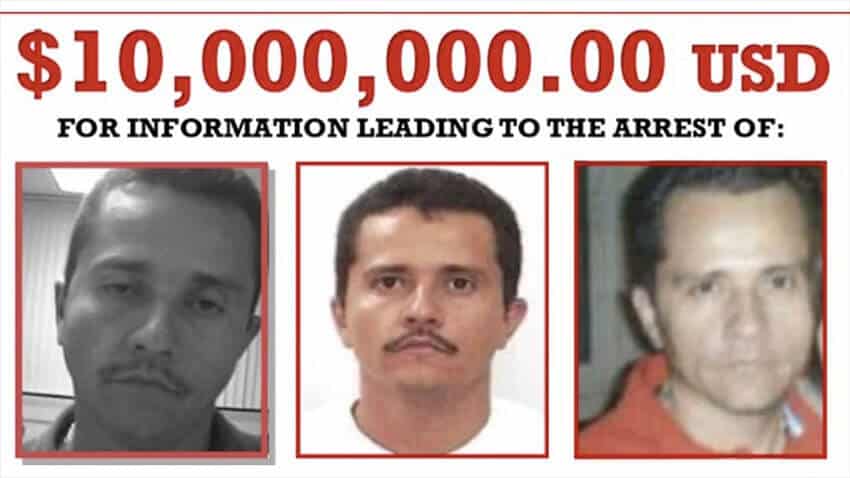
A DEA reward flyer for CJNG drug lord El Mencho
CJNG chief Nemesio Rubén Oseguera Cervantes, commonly known as El Mencho, was one of the most wanted fugitives in both the U.S. and Mexico. (U.S. DEA)

In a post to social media site X, Jalisco Governor Pablo Lemus Navarro announced: “Federal forces carried out an operation in Tapalpa a few hours ago, which has led to confrontations in the area. Also as a result of this operation, in various points of that region and in other parts of Jalisco, individuals have burned and blocked vehicles to hinder the action of the authorities.”

“I have given the instruction to immediately set up the security committee with authorities from all three levels of government and to activate the red code in order to prevent acts against the population.”

Roadblocks have been reported across the state capital, Guadalajara. All flights are being diverted from Puerto Vallarta (PVR) and Guadalajara (GDL) until further notice. Buses across the country have been cancelled.

The U.S. Embassy in Mexico City has instructed citizens in Jalisco State (including Puerto Vallarta, Chapala, and Guadalajara), Tamaulipas, Michoacán, Guerrero and Nuevo León to shelter in place until further notice.

In Puerto Vallarta, thick columns of black smoke are rising from the city, where more than 10 vehicles have reportedly been set on fire at various points throughout the area.

Public transportation services in the Pacific resort city have ceased operations as a precaution. Hotels across Puerto Vallarta are reportedly advising guests to remain indoors, while some businesses are temporarily closing.

Residents throughout Jalisco are receiving informal warnings through neighborhood chat groups urging them to stay inside and avoid non-essential travel. Security forces are maintaining a visible presence across the state, although detailed operational information remains limited.

Governor of neighboring state Michoacán, Alfredo Bedolla, also reported that 13 municipalities were experiencing similar unrest throughout the state. The newspaper Milenio reported further unrest in the states of Veracruz, Guanajuato, Colima, Tamaulipas, Aguascalientes and Guerrero.

Mexico’s federal Security Ministry has announced measures to quell the unrest and said its priority is to “ensure the security and protection of citizens.”

The U.S. Embassy has also published the following advice for citizens who find themselves in affected areas:

Actions to take:

  • Be aware of your surroundings. Avoid areas around law enforcement activity 
  • Seek shelter and minimize unnecessary movements.
  • Monitor local media for updates. Follow the directions of local authorities and in case of emergency, call 911. 
  • Avoid crowds. Keep family and friends advised of your location and well-being via phone, text and social media.

With reporting from Milenio

This article also includes reporting by Chris Havler-Barrett

Reader: Have you or your travel plans been affected by the unrest in Mexico today? We are monitoring our inbox for on-the-ground updates. Please email us and include any first-hand footage with location information at editorial@mexiconewsdaily.com.

MND Local: Business mostly as usual in San Miguel despite curfew

10
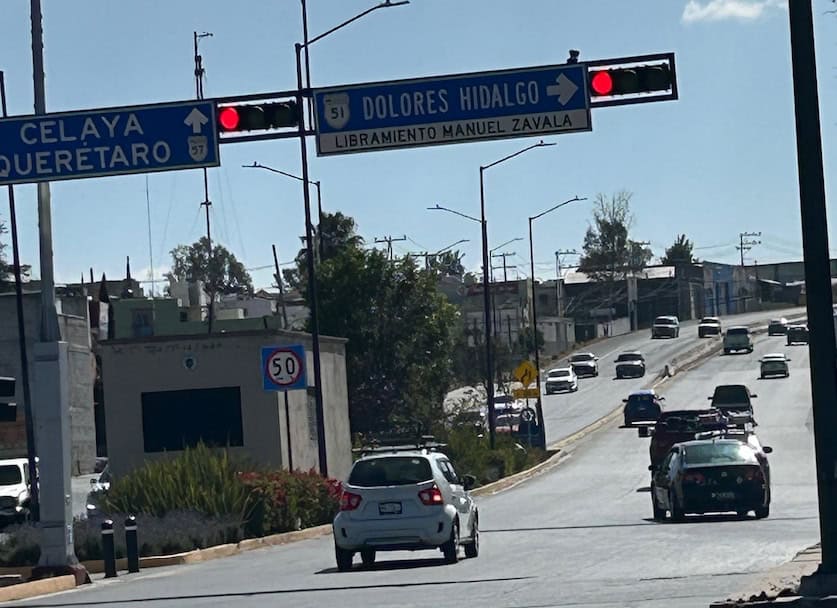
Despite swirling rumors and nearby unrest, San Miguel de Allende remained calm and quiet during Sunday's fallout over the death of El Mencho. (Cathy Siegner)

Some San Miguel businesses closed and traffic was noticeably thinner Sunday afternoon, but otherwise, it was hard to tell that Mayor Mauricio Trejo had ordered residents to shelter in place and observe a curfew beginning at 3 p.m in the wake of nationwide unrest following the death of Nemesio Oseguera Cervantes (“El Mencho”), leader of Mexico’s feared Jalisco New Generation Cartel (CJNG).

Plenty of people were driving and walking around the southern edge of town, although there were somewhat fewer than normal for a sunny and breezy weekend day.

The Salida a Celaya was noticeably quieter than a normal Sunday. (Cathy Siegner)

Larger venues closing their doors on Sunday were the Plaza La Lucerniaga mall and the Bodega Aurrera shopping center, plus the Guadalajara pharmacy, the Hotel Real de Minas, the Mercado Sano and the nearby Oxxo store on the Ancha de San Antonio.

However, the City Market and La Comer grocery stores were open during the afternoon, and cars were coming and going from their respective parking lots.

Traffic was observed on the highway exit to Celaya, but much more was coming into town than going out. No police cars or roadblocks were visible. A busy attendant at a nearby gas station confirmed the highway to Celaya was closed.

Eateries on the Ancha’s restaurant row appeared to be open and doing business as usual, although patrons may have been checking their phones or with friends more often for the latest developments in Jalisco, Guadalajara, Puerto Vallarta or other areas of Mexico.

An elementary school teacher waiting at a bus stop on the Ancha (and who chose not to give her name) said the Extension UNAM San Miguel de Allende was not holding classes on Monday. She added that the principal of her school was deciding whether it would also be closed that day.

Two officials at the closed Hotel Real de Minas didn’t want to comment on what they were telling their guests. However, a long-time San Miguel resident who had stopped in the hotel earlier to use the ATM remarked on the spreading violence following the death of El Mencho.

“When the big dog dies, everyone vies for his place,” Kat Sparks said.

Cathy Siegner is an independent journalist based in San Miguel and Montana. She has journalism degrees from the University of Oregon and Northwestern University.