Home Blog Page 151

Daily homicides at lowest in 9 years: Tuesday’s mañanera recapped

2
Sheinbaum Oct. 7, 2025
Sheinbaum has said on numerous occasions, including on Tuesday, that the decline in homicides is proof that her government's security strategy is working. (Galo Cañas/Cuartoscuro)

Security was a central focus of President Claudia Sheinbaum’s Tuesday morning press conference.

Security officials presented the latest data on homicides, arrests, firearm seizures and drug confiscations across Mexico.

Homicides declined almost 25% in first 9 months of 2025

Marcela Figueroa Franco, head of the National Public Security System, presented preliminary data that showed there was an average of 67.4 homicides per day in Mexico during the first nine months of the year.

The figure represents a decline of 24.9% compared to the daily average in the first nine months of 2024.

Figueroa said that the daily homicide average between January and September was the lowest since 2016.

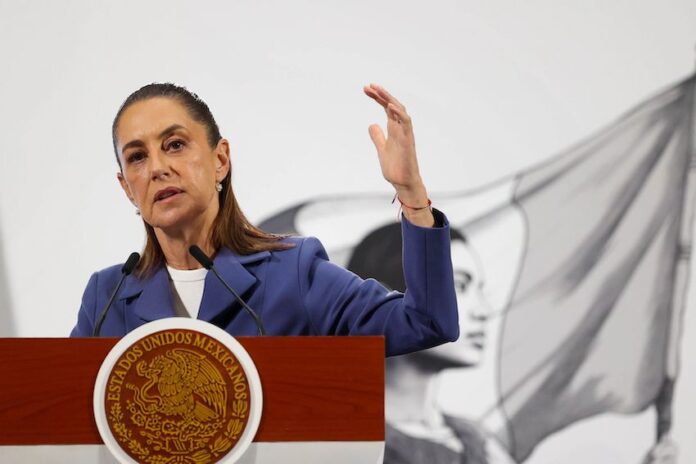
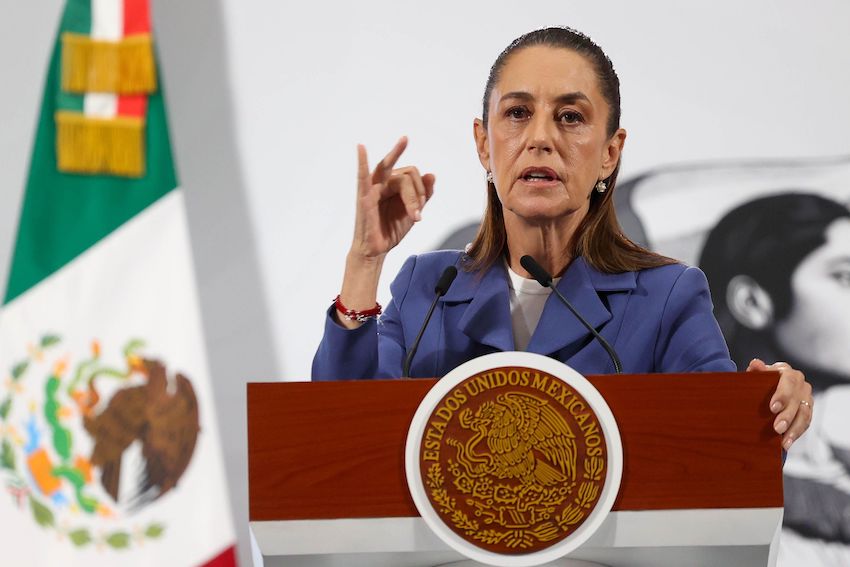
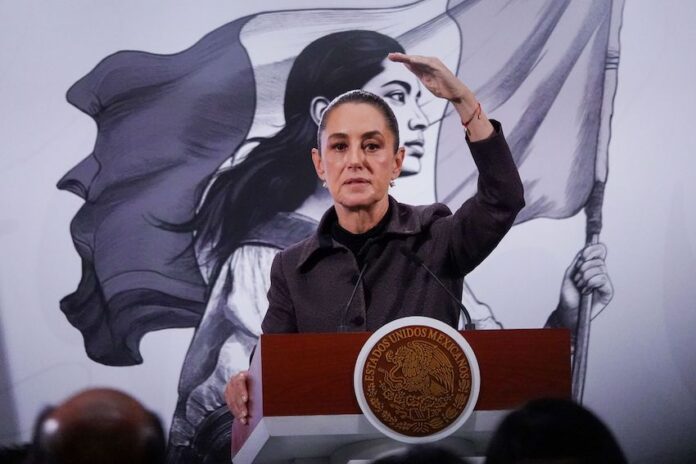
Sheinbaum has said on numerous occasions, including on Tuesday, that the decline in homicides is proof that her government’s security strategy is working. The strategy has four core tenets, including the strengthening of intelligence and investigation practices and attention to the root causes of crime.

Guanajuato leads Mexico in homicides in 2025

Figueroa presented data that showed that there were 18,407 homicides in Mexico in the first nine months of 2025.

Around one in nine of the murders was perpetrated in the state of Guanajuato, which has led Mexico in homicides for several years.

The Bajío region state recorded 2,084 homicides between January and September, accounting for 11.3% of the national total.

Several Guanajuato municipalities, including Tarimoro, Salvatierra, Salamanca, Celaya and San Miguel de Allende, are among the 50 “most dangerous municipalities” in Mexico based on their per-capita homicide rates between September 2024 and August 2025, according to the crime data website El Cri.men.

 

San Miguel de Allende ranked as the 50th most dangerous municipality in the period.

Among the crime groups that operate in Guanajuato are the Santa Rosa de Lima Cartel and the Jalisco New Generation Cartel, which are engaged in a long-running turf war.

More than half of murders this year occurred in just 7 states 

Figueroa noted that 51% of homicides between January and September were committed in just seven states. In addition to Guanajuato, those states are:

  • Chihuahua: 1,371 homicides, representing 7.4% of the national total.
  • Baja California: 1,344 homicides (7.3% of the national total).
  • Sinaloa: 1,302 homicides (7.1%).
  • México state: 1,208 homicides (6.6%).
  • Guerrero: 1,069 homicides (5.8%).
  • Michoacán: 1,024 homicides (5.6%).

Mexico City recorded the 13th highest number of homicides among Mexico’s 32 federal entities between January and September. The capital recorded 644 murders, accounting for 3.5% of the national total.

Yucatán recorded the lowest number of homicides in the first nine months of the year, with 23.

Homicides in September were lower than a year earlier in 23 states

Figueroa reported that Zacatecas recorded 88% fewer homicides in September than in the same month a year earlier. The state recorded just four homicides last month, the lowest of any state in the country.

Zacatecas is one of 23 entities that recorded fewer homicides in September than in the same month of last year.

Five other states recorded annual declines in murders of above 50% in September.

  • Chiapas: 73% decline.
  • Quintana Roo: 68% decline.
  • Jalisco: 62% decline.
  • Nuevo León: 61% decline.
  • San Luis Potosí: 53% decline.

The nine states that recorded a higher number of homicides in September than a year earlier were Aguascalientes, Baja California Sur, Campeche, Durango, Michoacán, Nayarit, Tamaulipas, Veracruz and Yucatán.

Over 34,000 arrests for high-impact crimes during Sheinbaum’s first year as president

Security Minister Omar García Harfuch reported that 34,690 people were arrested for allegedly committing “high-impact” crimes such as murder, kidnapping and extortion in the 12 months to Sept. 30, a period that coincides with the first year of Sheinbaum’s presidency.
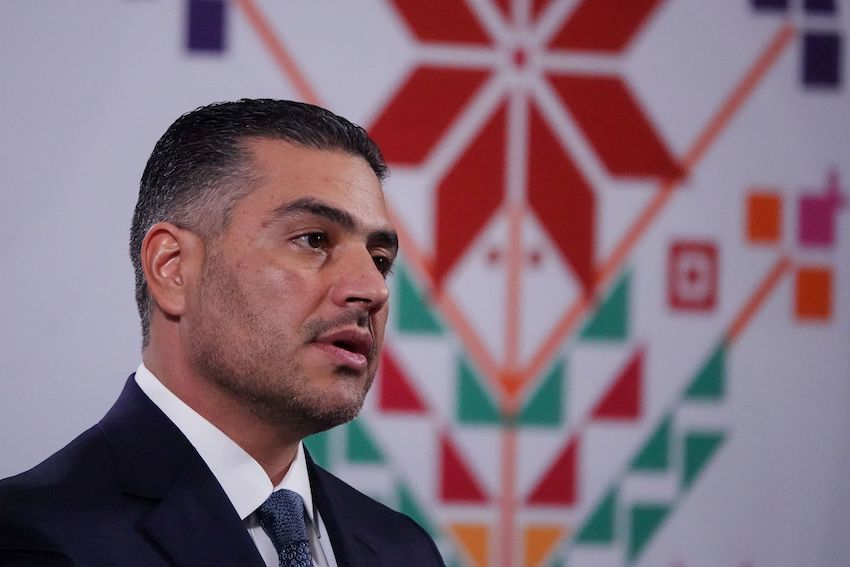
Omar García Harfuch
Security Minister Omar García Harfuch reported on Tuesday that nearly 35,000 people have been arrested for committing “high-impact” crimes since he took charge of the ministry. (Galo Cañas/Cuartoscuro)

He said that “important operators of criminal organizations and priority targets who generated high levels of violence in different entities of the country” were among those arrested in the past year.

Those detained are linked to crimes including extortion, homicide, kidnapping, drug trafficking and weapons offenses, García Harfuch said.

Firearm and drug seizures 

García Harfuch said that authorities seized 17,200 firearms in the year to Sept. 30.

He said that the seizure of weapons reduces the firepower of criminal organizations and results in “less violence on the streets.”

García Harfuch reported that 283 tonnes of drugs, including more than 3 million fentanyl pills, were confiscated during Sheinbaum’s first year in office.

He also said that the army and navy destroyed 1,564 drug laboratories across 22 states in the same period.

“In these actions, more than 2 million liters and over 400 tons of chemical substances have been seized. This is an unprecedented figure that represents an economic impact to criminal organizations of hundreds of millions of pesos. Furthermore, it prevents the production of these harmful substances,” García Harfuch said.

By Mexico News Daily chief staff writer Peter Davies (peter.davies@mexiconewsdaily.com)

World Bank ups growth forecast for Mexico and Latin America

1
workers on scaffolding in front of a Mexican flag
The slightly improved economic outlook followed an upward revision of Mexico’s projected GDP growth this year by the Organization for Economic Cooperation and Development (OECD) and by the International Monetary Fund (IMF). (Graciela López/Cuartoscuro)

The World Bank raised Mexico’s economic growth forecast from 0.2% in June to 0.5%, but the figure still lags behind the 2.5% GDP the bank predicts for Latin America as a whole.

In its report released Tuesday on the economies of Latin America and the Caribbean (LAC), the World Bank’s forecast of 2.5% growth for the region in 2025 is up from the 2.4% forecast in June, marking an improvement from last year’s 2.2% economic growth. 

The World Bank HQ in DC
From its headquarters in Washington, D.C., the World Bank has released its latest report on Latin American and Caribbean economic growth, forecasting a slight regional improvement from 2.4% in June to 2.5%. (World Bank)

On the other hand, Mexico’s predicted 2025 growth of 0.5%, though up from June, is far below the 1.5% growth estimated at the beginning of the year. As for 2026, the World Bank anticipates Mexico’s economy to grow by 1.4%.

As reasons for the overall slow growth in LAC, the agency cited a decline in public investment, alongside new tariffs introduced by the United States, as having “a significant drag on the external sector.”

“The upcoming revision of the United States-Mexico-Canada Agreement (USMCA) in 2026 comes at a crucial moment for North American trade relations, with the first signs suggesting both strategic opportunities and negotiation challenges that could shape investor confidence and the dynamics of regional integration,” the World Bank stated. 

The slightly improved economic outlook followed an upward revision of Mexico’s projected GDP growth this year by the Organization for Economic Cooperation and Development (OECD) in September, from 0.4% to 0.8%; and by the International Monetary Fund (IMF), from -0.3% to 1.0%. The OECD projected 1.3% growth for Mexico’s economy in 2026.

Elsewhere in the region, the World Bank maintained Brazil’s 2025 forecast of 2.4%, while it significantly decreased Argentina’s growth outlook from 5.5% to 4.6%. 

Latin America and the Caribbean will remain the world’s slowest-growing regional economy due to ongoing inflation, high debt and rising uncertainties stemming from U.S. tariff policies, according to the World Bank. 

But the region was praised for maintaining a certain amount of stability.

“Governments in the region have steered their economies through repeated shocks while preserving stability,” said the World Bank’s regional vice president, Susana Cordeiro Guerra. “Now is the time to continue building on that foundation — accelerating reforms to improve the business climate, invest in enabling infrastructure and mobilize private capital.”

Still, while stable prices are likely, inflation targets have become harder to meet, and interest rates are falling at a slower rate, according to the World Bank. In addition, uncertainty over global trade policies has hampered investment. 

The new LAC outlook mentioned that familiar barriers, such as weak infrastructure, a bias in favor of established companies and poor education at all levels, were hindering entrepreneurship and the growth of big companies. 

“Firms want to hire more people, but they cannot get the workers,” said the World Bank’s chief economist for Latin America and the Caribbean, William Maloney.

With reports from Expansión, El Economista and Reuters

Mexicans detained since Oct. 1 by Israel while taking humanitarian aid to Gaza, are coming home

1
Six repatriated Mexicans
The six Mexican volunteers were detained for nearly a week in Israel before gaining passage to Jordan, from where they started their journey home. (SRE/X)

The Foreign Affairs Ministry (SRE) reported that the six Mexicans who were detained by Israel while carrying humanitarian aid to Gaza have already left that country to be repatriated to Mexico.

The detention of peaceful aid providers had alarmed President Claudia Sheinbaum and prompted Mexico to join other countries in filing a complaint with the International Court of Justice in The Hague. 

The SRE statement said that the activists were transferred to Amman, Jordan, where they were received by the Mexican ambassador to Jordan, along with the Mexican ambassador to Israel, who will accompany them back to Mexico. 

“The Ministry of Foreign Affairs appreciates the support of the Jordanian government, with whom diplomatic efforts were made to allow our nationals to enter the country,” the statement said. 

The repatriation coincides with the two-year anniversary of the start of the war in the Gaza Strip, which began on Oct. 7. 

The six repatriated Mexicans are Sol González Eguía, Ernesto Ledesma Arronte, Arlín Medrano Guzmán, Carlos Pérez Osorio, Diego Vázquez Galindo, and Laura Alejandra Vélez Ruiz Gaitán. The Global Movement to Gaza Mexico, the Mexican arm of the international pro-Palestinian NGO that supported the flotilla and demonstrated for the release of the Mexicans, celebrated their return.

The activists were intercepted by the Israeli Navy on Oct. 1, along with hundreds of others who were on vessels that were part of the Global Sumud Flotilla. The flotilla had set out to deliver humanitarian aid to Gaza amid the blockade and conflict in the region, but was detained by Israeli forces on the grounds that its entry into restricted waters was unauthorized.  

Once intercepted, they were transferred to Ashdod, Israel’s main port, and then taken to the maximum security prison of Ketziot. Located in the Negev desert in the south of the country, near the border with Egypt, Ketziot is considered the largest prison in Israel. 

On Monday, Mexican President Claudia Sheinbaum condemned the manner in which the flotilla was intercepted and reinforced her government’s support for Palestine.

“We didn’t approve from the very beginning of the way this group of people carrying humanitarian aid was intercepted,” she said. “Together with other countries we have filed a complaint with The Hague.”

With reports from El Universal and El País

Maya Train caused damage to 8 cenotes, environment minister tells Congress

1
Maya Train sitting on the tracks
The Maya Train, completed in December 2024, cost roughly 500 billion pesos (US $27 billion) and faced constant criticism from environmentalists who decried the massive deforestation and the damage caused to the fragile ecosystem of the Yucatán Peninsula. (Elizabeth Ruiz/Cuartoscuro)

Mexico’s Environment and Natural Resources Ministry (Semarnat) formally acknowledged to Congress that the construction of the Maya Train caused environmental damage.

Speaking at a congressional hearing on Monday, Environment Minister Alicia Bárcena told members of the Committee on Environment, Climate Change and Sustainability that the current administration is taking steps to “regularize” the Maya Train. Bárcena also admitted that her ministry is “very aware” that eight caverns and cenotes — natural sinkholes that are the primary source of water in the region — located along Section 5 of the railroad track have been impacted.

Alicia Bárcena speaking before Congress
Before members of Congress on Monday, Environment Minister Alicia Bárcena admitted that her ministry is “very aware” that eight caverns and cenotes in Quintana Roo were negatively impacted by the train’s construction. (SEMARNAT/Facebook)

The 1,554-kilometer-long Maya Train was one of the flagship projects of the previous administration. Built at a cost of roughly 500 billion pesos (US $27 billion), the project faced constant criticism from environmentalists who decried the massive deforestation and the damage caused to the fragile ecosystem of the Yucatán Peninsula. 

Section 5 was the subject of a number of lawsuits during the construction phase, but work often continued apace since President Andrés Manuel López Obrador issued a decree granting provisional authorization despite the absence of environmental impact studies.

Semarnat has made redress of Section 5 a priority, “working to ensure that the cleanup and concrete removal … is completed,” Bárcena said. 

“When we took office on Oct. 1, 2024, the Maya Train was already there, so we can’t say we don’t want the train,” she said. “Instead, we are auditing every permit: those in hand and those applied for, so that the project can be regularized.”

Bárcena said Semarnat has established an inter-institutional working group in conjunction with the Federal Attorney’s Office for Environmental Protection (Profepa) and Maya Train administrators that meets weekly to monitor and evaluate the situation within each of the train’s seven sections.

The group is tasked with determining what permits are missing, what conditions have not been met and what actions should be taken, Bárcena explained. It is also examining the government’s reforestation and environmental restoration plan to determine how best to compensate for the damage caused by the project.

Alicia Bárcena speaking before Congress
Bárcena stated the goal of bringing existing Maya Train permits to 95% compliance with environmental law. (SEMARNAT/Facebook)

“We are working to standardize the project, especially in terms of environmental impact,” she said. “The group is working to propose, achieve and pressure for compliance with at least 95% of environmental impact regulations.”

During the hearing, Deputy Samuel Palma stated that of the nearly 11,000 hectares occupied for facilities, roads and auxiliary works, 61% lack the proper permit for change of forest land use. 

In other testimony, Bárcena expressed concern about the water crises Mexico faces, particularly contamination. Among the seven goals of her ministry by 2030, Bárcena named purifying the Lerma, Santiago, Atoyac and Tula rivers, modernizing irrigation and reviewing the validity of the country’s private water concessions, eliminating 100% of plastics on beaches, reforesting 200,000 hectares and protecting 153 million additional hectares (30% of the territory).

With reports from La Jornada, Fortuna and El Economista

Karol G launches her own Cristalino tequila with SMA-based Casa Dragones

4
Singer Karol G poses for a photo with Casa Dragones' Bertha González Nieves
The singer said her experiences in Mexico and admiration for its traditions shaped the direction of the 200 Copas project, which she worked on with Casa Dragones' Bertha González Nieves for three years. (Facebook)

San Miguel de Allende–based distillery Casa Dragones has unveiled its latest release: 200 Copas, a Cristalino tequila crafted with Colombian pop star Karol G.

Announced on Sept. 25, the launch marks Casa Dragones’ first foray into Cristalino tequila, a style that has become popular over the past decade.

Capítulo 1 - Presentando 200 Copas por Casa Dragones — Creado Especialmente para Karol G

Cristalino is tequila that has been aged — typically añejo or extra añejo — and has undergone an extra filtration process, often using activated charcoal, to remove the color gained during barrel aging.

The crystal-clear tequila is produced exclusively in Mexico, joining a Casa Dragones lineup that has been celebrated for innovation under the leadership of the world’s first female master tequila maker, Bertha González Nieves.

Based on Karol G’s hit song “200 Copas,” the new tequila is crafted from 100% Blue Weber agave and aged for over 12 months in custom American oak barrels. It’s a small-batch tequila, with just 500 cases produced at a time.

González Nieves said the focus is on “authenticity” and “artisanal mastery.” The tequila has been described as having citrus and floral notes, with a palate of almond, roasted agave and plum.

Beyond being the brand’s ambassador, Karol G reportedly contributed to recipe development and design, tying the project to her Grammy-winning career and her 2021 song, “200 Copas.” 

The song, which blends regional Mexican influences, reached No. 28 on Billboard’s Hot Latin Songs chart.

Karol G, who was born Carolina Giraldo Navarro, said the inspiration for the tequila was twofold: a special night with friends over tequila, and the recording of the song’s video, which included many of her closest friends.

Karol G received a Grammy Award last year for best música urbana album for “Mañana Será Bonito,” and has also won six Latin Grammy Awards. She will be headlining the Coachella Valley Music and Arts Festival in 2026, making her the first Latin woman to headline the massive, six-day concert in the California desert.

She said her experiences in Mexico and admiration for its traditions shaped the direction of the 200 Copas project, which she worked on with González Nieves for three years.

The tequila went on sale in Mexico last week and will be available in the United States and Colombia in 2026.

More information is available on the Casa Dragones website.

With reports from Infobae, Remezcla, PR Newswire and Rolling Stone

Trump expands 25% truck tariff to include medium-duty vehicles, moves date to Nov. 1

2
a heavy-duty truck going down the highway
Mexico is the largest exporter of medium and heavy-duty trucks to the United States. (Rhys Moult/Unsplash)

United States President Donald Trump said Monday that all medium and heavy-duty trucks entering the U.S. from other countries will face a 25% tariff starting Nov. 1.

The duty will have a significant impact on Mexico as the country is the largest exporter of medium and heavy-duty trucks to the United States.

Trump announced that the 25% tariff will take effect next month on his Truth Social account. He didn’t give any indication that trucks made in Mexico, or at least their U.S. content, will be exempt from the duty.

The U.S. content in cars made in Mexico is exempt from the 25% tariff the United States imposed in April, lowering the effective tariff on those vehicles to 15% on average. Under the USMCA free trade pact, medium and heavy-duty trucks are currently not subject to tariffs if at least 64% of their value originates in North America, Reuters reported.

President Claudia Sheinbaum said Tuesday that her government will aim to win an exemption from the United States’ planned tariff on medium and heavy-duty trucks. She said she would call Trump to discuss an agreement to stave off the duty “if it’s necessary.”

Trump initially said that a 25% tariff on heavy-duty trucks — but not medium-duty trucks — would take effect on Oct. 1.

New US tariff threatens Mexico’s automotive industry starting Oct. 1

“In order to protect our Great Heavy Truck Manufacturers from unfair outside competition, I will be imposing, as of October 1st, 2025, a 25% Tariff on all ‘Heavy (Big!) Trucks’ made in other parts of the World,” he wrote on Truth Social on Sept. 25.

“Therefore, our Great Large Truck Company Manufacturers, such as Peterbilt, Kenworth, Freightliner, Mack Trucks, and others, will be protected from the onslaught of outside interruptions. We need our Truckers to be financially healthy and strong, for many reasons, but above all else, for National Security purposes!” Trump wrote.

Mexico’s truck exports to the US

According to the U.S. International Trade Administration (ITA), 62.7% of the medium and heavy-duty trucks the United States imported in 2024 came from Mexico.

Reuters reported that a study released in January said imports of those vehicles from Mexico “have tripled since 2019 to around 340,000 [annually] today, according to government statistics.”

Fourteen manufacturers and assemblers of buses, trucks and tractor trucks, and two manufacturers of engines have plants in Mexico, according to the ITA.

In the first seven months of this year, Mexico’s exports of trucks, buses and special purpose vehicles to the United States were worth US $25.86 billion, accounting for 80% of U.S. expenditure on imports of those vehicles, according to U.S. government data. The vast majority of Mexico’s truck exports go to the United States.

The U.S. Chamber of Commerce has urged the U.S. Commerce Department to not impose tariffs on trucks. It noted that Mexico, Canada, Japan, Germany, and Finland are the top source countries for truck imports and highlighted that all of those countries are “allies or close partners of the United States posing no threat to U.S. national security.”

With reports from La Jornada, Reuters, ReformaEFE and N+

Move over Valle de Guadalupe, there’s a new wine region in town

0
Who needs Querétaro, these central states are creating their own wine culture — and you're invited. (Tierras y Almas)

While it might seem unlikely, the central states of Puebla and Hidalgo have been on the map of Mexican wine-producing states for several years. Puebla began producing wine around 17 years ago and though this may seem relatively recent, records from New Spain indicate that this area once produced high-quality grapes and wheat during the Colonial period, eventually suffering from the royal edicts that prohibited wine in the 17th and 18th centuries.

Today, the state has three wineries that stand out, with a future outlook predicting many more in the coming years, as the once notable area looks to reestablish its one great vineyards.

Bodega Entreerres

VINOS POBLANOS entre campos y volcanes / Viñedos Entreerres

Bodega Entreerres is located in Calpa, Puebla, a town famous for its part in the creation of chile en nogada, a dish prepared for General Agustin Iturbide during Mexican Independence and now one of the country’s most famous recipes.

It is surrounded by beautiful landscapes, with the Popocatépetl and Iztaccíhuatl volcanoes in the distance. Getting to the winery takes about 30 minutes from the city of Puebla. There is an on site restaurant and eight different wine varietals that you can taste after a walk through the vineyards.

Their white wine production stands out, particularly the Sauvignon Blanc. Interestingly, however, Entreerres offers a red wine made with Pinot Noir. While Pinot Noir is famously difficult to cultivate, it has taken very well to the soils of Puebla, producing a delicious blend that is well worth trying. The must-try bottle is NTC 2021, which has won national awards. Another, S1, is an equally well-made Syrah wine that expresses the character of this powerful grape variety grown in volcanic soil.

Visits are available on weekends by reservation only.

Santo Domingo

A patio at the Santo Domingo wine vineyard in Atlixco, Puebla
(Santo Domingo)

Atlixco is one of the best-known towns in Puebla, located at the foot of the region’s volcanoes. It is a magical town famous for its flower production, as well as its high-quality mezcal.

A few years ago, the Santo Domingo Vineyard in Atlixco opened its doors to the wine tourism scene. The project began in 2008, with vines imported from France and across the Americas. The plants here are nourished by the uniquely rich volcanic soil at the base of Popocatépetl and Iztaccíhuatl volcanoes, considered to have special properties.

Here, the rosé wines made from Malbec grapes stand out. There is a sparkling and a still wine, both called “Ceniza” (Ash), bin tribute to Santo Domingo’s proximity to the volcanoes and the characteristics that this type of soil provides.

The vineyard’s rosé wines are ideal for Puebla’s most famous dishes, its moles and chiles en nogada and cemitas.

Visits are by reservation only and require a minimum of ten people.

Casa Miguel Henández

Viñedo Casa Miguel Hernández - Puebla, Pue.

Miguel Hernandez is a Mexican oenologist who studied in France and Chile and is an expert in vineyard development. He has had a distinguished career, studying in Europe and South America and working with major wineries and projects in those regions. He has even been a jury member at the Chasselas World Competition in Switzerland. In 2011, he decided to return to his roots, launching his own project in Cholula, Puebla, hoping to promote wine culture in his home state.

Today, his vineyards can be found in 14 locations throughout the state, providing employment to more than 32 families dedicated to growing grapes and producing wine. Make sure to try his Pinot Noir if you stop by.

Tierra y Almas

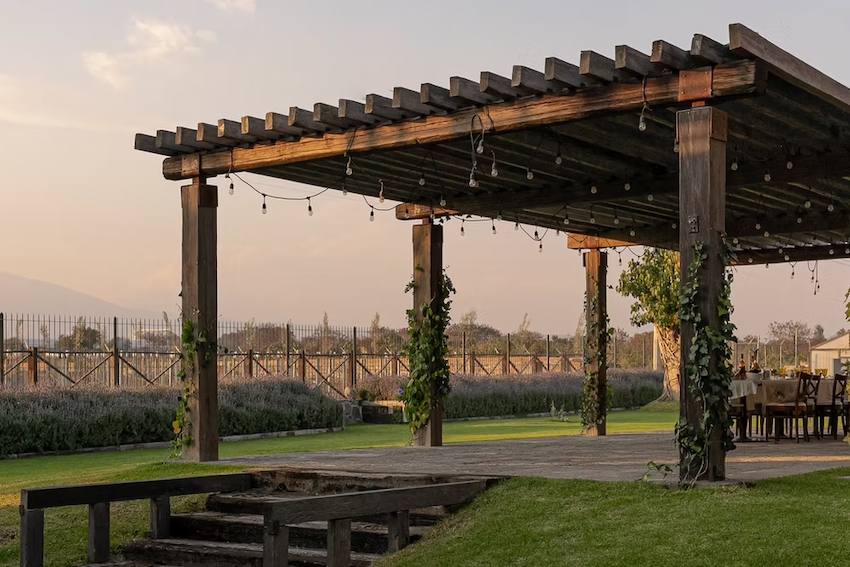
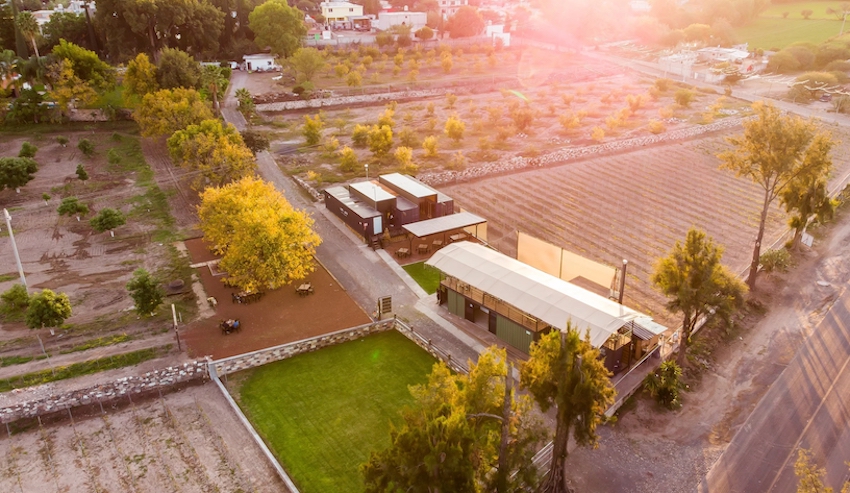
Tierra y Almas vineyard drone shot in Hidalgo
(Tierra y Almas)

In the neighbouring state of Hidalgo, specifically, the town of Tecozautla, lies the Tierra y Almas vineyard. Nestled in a magic town of its own, the wine and nature together hand in hand.

Here, you can enjoy a grand reserve made with Cabernet Sauvignon, a powerful Malbec, and a well-balanced rosé blend of Syrah and Malbec, which is fresh but powerful enough to accompany mature cheeses.

Tierra y Alma also produces sparkling wine made from the Xarel-lo and Macabeo grape varieties, in the style of Cava. There is an on site museum which provides additional information to enhance the overall experience. It has rooms for rent, a thermal pool, gardens, and green spaces with views from the terraces of the rooms.

As one of the closest wineries to Mexico City, it makes for a perfect weekend getaway when you’re tired of the big city bustle.

Mexican Wine Day

October 7 is Mexican Wine Day, a date that has been celebrated since 2023 and has served to promote production, consumption, and awareness of the national wine industry. In recent years, the importance of domestic production has grown, more producers have joined the industry, quality has improved, and the variety of labels has increased each year.

Diana Serratos studied at Universidad Nacional Autónoma de México (UNAM) and UNCUYO in Mendoza, Argentina, where she lived for over 15 years. She specializes in wines and beverages, teaching aspiring sommeliers at several universities. She conducts courses, tastings and specialized training.

Celebrate Hispanic Heritage Month 2025 with these Mexican Netflix series

0
Announcement for National Hispanic Heritage Month.
There are plenty of biographical series to binge during National Hispanic Heritage Month this year. (National Education Association)

Hispanic Heritage Month returns from Sept. 15 to Oct. 15, as it does every fall, and as always, it’s a great opportunity to commemorate and delve deeper into Hispanic and Latin cultures. 

During this month of celebration, it’s impossible not to pause and reflect on the significant contributions of these communities. If you don’t have plans yet, one of the best options may be to binge-watch biographical series and learn about the stories of exceptional Mexican artists who, over time, have become symbols of the nation’s cultural identity. From singers to painters, comedians and many others, salute Hispanic Heritage Month with the following titles.

Luis Miguel: La Serie (2018)

Luis Miguel La Serie | Trailer Oficial | Netflix

We begin our Hispanic Heritage Month selection with a biographical series about Luis Miguel, one of the most successful and renowned singers in Latin American history. For those unfamiliar with him, Luis Miguel has vocal abilities comparable to Freddie Mercury, won his first Grammy at the age of 14 and has never left the stage or been out of the spotlight since.

Based largely on the singer’s authorized biography “Luis Mi Rey” (1997) by journalist Javier León Herrera, “Luis Miguel: La Serie” is directed by Humberto Hinojosa and Natalia Beristá and traces the life of the “Sun of Mexico” from his adolescence – marked by the figure of his father, Spanish singer Luisito Rey – to his rise to international fame, without neglecting the inevitable ups and downs of the music industry.

With thirteen episodes in its first season, eight in the second, and six in the third and final season, the Netflix series shows the artist’s more human side and is an extremely revealing portrayal of him.

Chespirito: Sin Querer Queriendo (2025)

Chespirito: Sin Querer Queriendo | Tráiler Oficial | Max

The master of family comedy and white humor, Roberto Gómez Bolaños (1929-2014), widely known as “Chespirito” (Little Shakespeare), wrote his autobiography, entitled “Sin Querer, Queriendo: Memorias,” in 2006. Almost two decades later, his children, Paulina and Roberto Gómez Fernández, adapted it for television with extraordinary attention to detail. 

Over eight episodes and in a dramatic yet comedic tone, “Chespirito: Sin Querer Queriendo” strives to unravel the creative, personal and professional universe of one of the most beloved and versatile Latin American television stars. One of the most successful aspects of Max’s biography is that it delves into the life experiences, actions, decisions and misadventures that shaped Chespirito’s creative vision and, in the process, reveals the essence of the human being behind the iconic yellow heart and checkered cap.

With inspired photography by Marc Bellver and Diana Garay, and a script that lifts the spirits of even the most cynical viewer, you’ll have a great time watching the story of the Mexican who forever transformed Spanish-language comedy and television.

Hasta que te conocí (2016)

"Hasta Que Te Conocí" (2016) TV Serie | Official Final Trailer HD (Sub Eng)

In life, there are figures whose legacy becomes legend, and this is the case of Alberto Aguilera Valadez, known artistically as Juan Gabriel (1950-2016). Unique in his style and overflowing with passion for music, the Michoacán singer-songwriter left a deep cultural mark around the world, with a prolific career that spanned more than 1,750 compositions and 150 million records sold. 

Nominated for International Emmy Awards and starring Julián Román, the series “Hasta Que Te Conocí” recounts more than 60 years of history and carefully highlights the crucial moments and relationships that shaped Juanga’s life and stardom. Through a profound and honest narrative, the 13-episode biographical series covers everything from his modest origins in a peasant family to his years of artistic and commercial glory and his consecration as “El Divo de Juárez.” 

As an indispensable part of Mexican music history, the life of Juan Gabriel is undoubtedly an ideal choice to watch during Hispanic Heritage Month. 

Becoming Frida Kahlo (2023) 

Becoming Frida Kahlo | BBC Select

More than 70 years after her death, the greatness of painter Frida Kahlo (1907-1954) remains intact. Recognized as one of Latin America’s most important visual artists, her brutally personal work continues to transcend borders and remains a cultural reference point for millions of people. Fortunately, the biography “Becoming Frida Kahlo” respects this legacy and strives to remain faithful to her groundbreaking and rebellious profile.

This three-part docuseries, produced for BBC Two, offers a compelling portrait of Frida Kahlo as a woman, intellectual, artist and symbol of her homeland. Carefully constructed and thoroughly researched, the series explores the numerous traumas Kahlo overcame, the origins of her pictorial identity and her complex relationship with muralist Diego Rivera, whom she married not once, but twice. Through home movies, intimate photographs and entries from Kahlo’s diary, the project allows us to experience firsthand the life of the artist and her close circle.

María Félix: La Doña (2022)

Trailer | MARIA FÉLIX, LA DOÑA | 21 de Julio por ViX+

No list of Mexican artists would be complete without María de los Ángeles Félix Güereña (1914-2002), known in the world of performing arts as “La Doña.” Félix was not only one of the most legendary stars of Mexican cinema, but also a cultural phenomenon who challenged social conventions and helped redefine femininity in the “seventh art.”

Over eight episodes, the Televisa Univision series for ViX+, “María Félix: La Doña,” explores the life and work of the iconic actress, covering her family dramas, her rise in cinema, her controversial love affairs and the countless sacrifices she made to fulfill her dreams. Sandra Echeverría, Ximena Romo, and Abril Vergara take turns playing the “woman who stole the 20th century” from her childhood in Los Álamos, Sonora, to her final years in Mexico City.

Whether you are a fan of the famous and empowered María Félix or are unfamiliar with her world, this is an inspiring story worth knowing, especially in the context of Hispanic Heritage Month. 

Carolina Alvarado is a Venezuelan journalist and has devoted much of her career to creative writing, university teaching and social work. She has been published in Lady Science, Latina Media, Global Comment, Psiquide, Cinetopic, Get me Giddy and Reader’s Digest, among others.

Grupo México seeks to acquire up to 100% of Banamex from Citigroup

0
Banamex building
Grupo México says that its offer will ensure the bank’s majority Mexican ownership and strengthen its competitiveness. (Shutterstock)

Mexican conglomerate Grupo México has submitted a binding offer to acquire up to 100% of Banamex from Citigroup, reviving negotiations that had been scrapped in 2023 and proposing alternatives that include partnering with the recent buyer of 25% of the bank.

Owned by magnate Germán Larrea, Grupo México is a multinational conglomerate in the mining, transportation and infrastructure industries. It owns Mexico’s largest mining company and is the country’s leading copper producer. The group also operates the largest national railway network and major infrastructure projects.

German Larrea 2025
Germán Larrea (left), shown here attending President Sheinbaum’s first government report on Sept. 1, is the president of Grupo México. (Moisés Pablo/Cuartoscuro)

The company notified the Mexican Stock Exchange (BMV) of its proposal to purchase 100% of Grupo Financiero Banamex, saying that it will maintain the bank’s majority Mexican ownership and strengthen its competitiveness in the country.

“Once Banamex is regulated solely by Mexican financial authorities, it will be able to regain its competitive potential in our financial system,” Grupo México said in the letter addressing the BMV. 

Grupo México’s offer comes just a week after businessman Fernando Chico Pardo, president of Grupo Aeroportuario del Sureste (Asur), announced the purchase of 25% of the bank’s shares. Grupo México left open the possibility of acquiring only 75% of the bank, in order to respect Chico Pardo’s offered investment. 

Meanwhile, Citi noted that it has not yet received an offer by Grupo México, and its only current deal is with Chico. However, it said that if Grupo México submits an offer, Citi will consider it.

“The agreement we announced last week with Fernando Chico Pardo and our proposed IPO remain our preferred path,” Citi said. “If Grupo México makes an offer, we will, of course, review it responsibly and consider, among other risk factors, the ability to obtain the required regulatory approvals and the certainty of closing a proposed transaction.”

This is the second time Grupo México has raised the issue of acquiring Banamex. It first expressed interest in 2023 but the deal fell through. The news of a potential 75-100% stake in Banamex caused Grupo México’s stock price to sink 18.8% on Monday morning. 

Germán Larrea is the second-richest man in Mexico with an estimated fortune of US $46.3 billion, according to Forbes magazine. Carlos Slim is first.

With reports from El País and Milenio

Mexicans detained by Israeli forces to return this week: Monday’s mañanera recapped

0
Sheinbaum Oct. 6, 2025
Sheinbaum told reporters that her government, via its ambassador to Israel, is in "permanent contact" with the six Mexicans who were taken to an Israeli prison last week. (Moisés Pablo/Cuartoscuro)

Violence during a march in Mexico City and the upcoming repatriation of six Mexicans who were detained by Israeli forces were among the issues President Claudia Sheinbaum spoke about at her Monday morning press conference.

Here is a recap of the president’s Oct. 6 mañanera.

Sheinbaum questions purpose of violence during Oct. 2 march 

A reporter asked the president whether her government had identified the perpetrators of the acts of violence that were committed in Mexico City last Thursday during the annual march to commemorate the 1968 Tlatelolco massacre.

“Firstly, [there was] a lot of provocation,” Sheinbaum said.

“What is the point of this violence? … There were even Molotov cocktails. What’s the point? Who benefits from it? That is what we need to ask ourselves,” she said without answering the reporter’s question.

“What was this group with covered faces looking for? What do they want? Why do they do these … [acts of violence] in a city of freedoms, of full freedom, absolute and complete freedom? What do they want? What were they seeking? A confrontation — from my point of view — with the police,” Sheinbaum said, asserting that the troublemakers wanted another “October 2,” the date on which the Mexican military perpetrated the 1968 massacre.

“… We don’t agree, we’re never going to agree with violent demonstrations,” she said.

“… You can disagree with the government, but this aggression toward people, toward journalists has to be reviewed,” Sheinbaum said, adding that the Mexico City Attorney General’s Office has to open an investigation and identify those responsible for the violence.

Sheinbaum calls out ‘very offensive’ social media post by prominent businessman

Sheinbaum noted that on the same day as the Mexico City march, Claudio X. González, a prominent businessman and government critic, made a “very offensive” post on social media.

Sheinbaum Oct. 6, 2025
On Monday, the president spoke out against violent protests and distanced herself from authoritarianism. (Moisés Pablo/Cuartoscuro)

Last Thursday night, González posted a computer-generated image to X that showed former president Gustavo Díaz Ordaz sporting Sheinbaum’s trademark ponytail.

Díaz Ordaz was the president of Mexico when the Tlatelolco massacre occurred.

Above the doctored image, González wrote: “Authoritarianism in 1968, Authoritarianism in 2025.”

Sheinbaum said that it was “very important” that Mexico City police didn’t succumb to the violence “provocations” during last Thursday’s march because if they had done so, “they would have fueled” the “narrative” that her government is authoritarian and represses dissent with force.

Sheinbaum: Mexicans detained by Israel will return to Mexico this week 

Sheinbaum told reporters that her government, via its ambassador to Israel, is in “permanent contact” with six Mexicans who were taken to Israel last week after Israeli forces intercepted the boats on which they were traveling as part of a flotilla that was carrying aid bound for the war-torn Gaza Strip.

Sheinbaum calls for immediate return of Mexicans detained by Israel

She said that Mexico is seeking their prompt repatriation before asserting that the six Mexicans — who were placed in detention in Israel — would in fact return to Mexico this week.

She said that her government would disclose the details of their return to Mexico at a later date.

Later on Monday, the Ministry of Foreign Affairs (SRE) said that Mexico’s ambassador to Israel, Mauricio Escanero, had once again carried out a consular visit to the Mexicans held at the Ktzi’ot Prison.

“They were given information about their upcoming repatriation to Mexico, for which authorization has already been obtained from the Israeli government and which will be carried out in coordination with our embassies in the region,” the SRE said.

By Mexico News Daily chief staff writer Peter Davies (peter.davies@mexiconewsdaily.com)