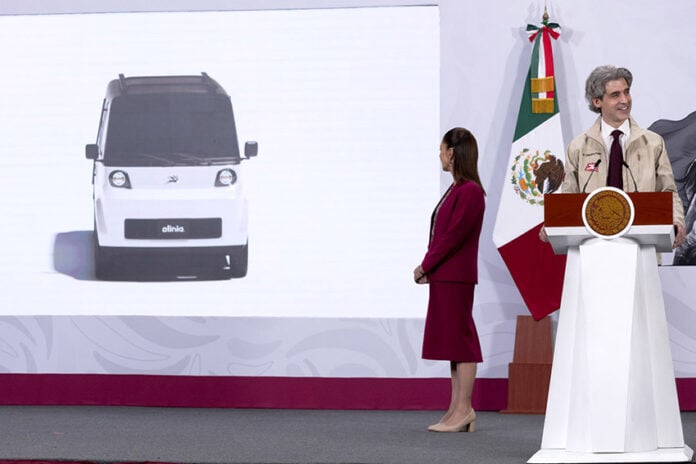
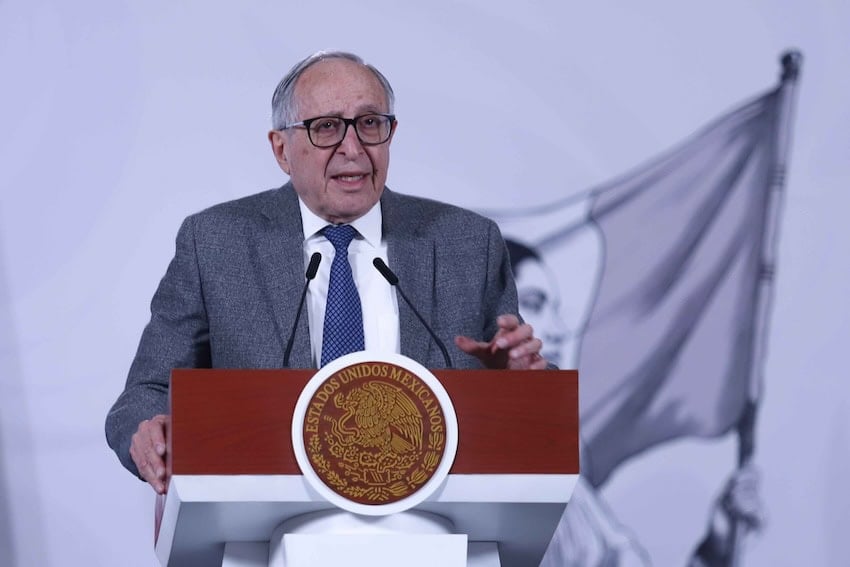
Olinia Project Coordinator Roberto Capuano Tripp shared news of the advances at Wednesday's presidential press conference. (Juan Carlos Buenrostro /Presidencia)
A prototype of Olinia, the low-cost Mexican electric mini-car project promoted by the Mexican government, is now complete and will debut June 7 ahead of the 2026 FIFA World Cup.
Roberto Capuano Tripp, the director of the Olinia project, shared a first glimpse of the electric car prototype at President Claudia Sheinbaum’s Wednesday morning press conference. The Mexican government plans to begin producing the car in 2027.
Resultados que transforman. Les presento el prototipo del minivehículo mexicano, Olinia. pic.twitter.com/xmuL6skRhj
— Claudia Sheinbaum Pardo (@Claudiashein) May 13, 2026
“Olinia is a technological project, an industrial project, and above all, a project for the people,” Capuano said. “A project from Mexico for the world.”
About Olinia
Reminiscent of a small European electric vehicle, Olinia features compact proportions and a tall, boxy body to maximize interior space. It is designed for ease of maneuverability on narrow streets and short trips.
“The goal is to have our own brand, an accessible vehicle for the Mexican population that is cheaper, electric, does not pollute, and allows us to travel through any town on the narrow streets of our country,” President Claudia Sheinbaum said, adding that another prototype designed for cargo transport will be revealed in July.
Operating at a maximum speed of 50 kilometers per hour, Olinia will be suitable for driving in residential areas and city centers, adapting to the various streets of Mexico. Capuano said that even though the car is compact, it is comfortable and spacious.
Capuano said it will cost less to operate than a motorcycle. The car’s motor will have an estimated lifespan of eight years and it will be charged using a standard household outlet.
“We wanted to find a solution that works for the people,” Capuano said.
Where is Olinia being built?
Olinia prototypes are being manufactured in Puebla at a facility provided by the Instituto Tecnológico Nacional de México (TecNM). However, the site for its industrial manufacturing has not yet been determined.
Mexico aims to produce 20,000 units per year in the first phase, starting in 2027, before increasing production to 50,000 vehicles per year over the following four years.
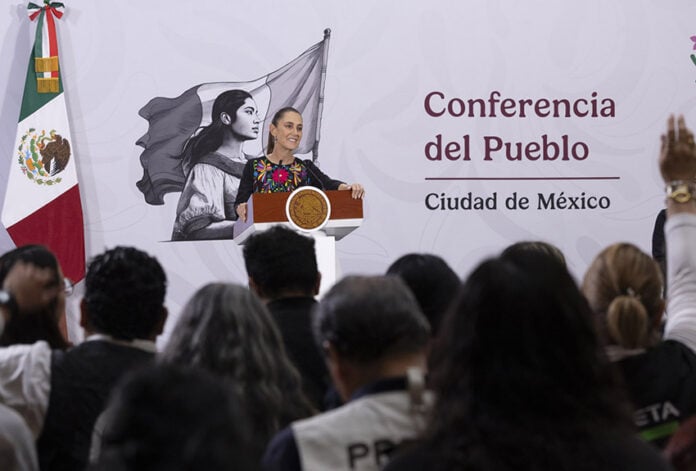
There's 'no rush' as the July 1 USMCA renewal deadline approaches, President Sheinbaum said Thursday. Analysts suggest the free trade deal is unlikely to be renewed by that date. (Juan Carlos Buenrostro / Presidencia)
Sheinbaum’s mañanera in 60 seconds
🇲🇽🇺🇸🇨🇦 USMCA talks: “no rush”: Sheinbaum said Mexico is making progress ahead of a bilateral negotiating round starting in 11 days and sees no urgency around the July 1 target date for a renewal decision. Mexico will push to reduce or eliminate U.S. tariffs on products such as steel, aluminum and vehicles.
✒️Signing of Mexico-EU trade deal set for May 22: EU representatives will travel to Mexico City next week to sign a new trade agreement. Sheinbaum said it poses no risk to the USMCA and will open new export opportunities for Mexican producers.
📉 Sheinbaum pushes back on S&P: Two days after Standard & Poor’s revised Mexico’s long-term outlook to negative, the president vowed to prove the agency wrong, arguing that public and private investment will drive a stronger second half of 2026 after an economic contraction in Q1.
Why today’s mañanera matters
At her Thursday morning press conference, President Sheinbaum spoke about two important trade agreements: the USMCA and the new Mexico-European Union pact that is expected to be signed in Mexico City on Friday, May 22.
While Sheinbaum said that the new deal with the EU will benefit Mexican exporters, she made it clear — without explicitly spelling it out — that the USMCA is the predominant pact for Mexico.
In that context, Sheinbaum’s remark at today’s mañanera that there is “no rush” to conclude the USMCA review process was significant. The president is apparently unconcerned that July 1 — the date by which Mexico, the U.S. and Canada are “supposed” to reach an agreement on whether to renew the USMCA for an additional 16 years or not — is less than seven weeks away. She is confident that the pact will be renewed, whenever that might be, and Mexican negotiators — headed up by Economy Minister Marcelo Ebrard — will be seeking the best possible deal for Mexico.
The Center for Strategic and International Studies said in a March 27 article that a “clean, early extension by July 1 now appears unlikely.”
Last week, Washington and Mexico City formally launched the United States-Mexico-Canada Agreement (USMCA) review process. With the deadline to extend the agreement coming in July, @CSISAmericas outlined six economic scenarios for the future.
As part of the review process, Mexico and the United States will be seeking various concessions from each other. Sheinbaum said this morning that Mexico will be pushing for a reduction — or ideally the elimination — of U.S. tariffs on a range of Mexican goods.
‘No rush’ in USMCA negotiations, says Sheinbaum
Sheinbaum told reporters that Mexico is “making progress” in negotiations ahead of the formal review of the USMCA free trade pact.
“There is no rush,” she said 11 days before the commencement of a USMCA negotiating round between Mexico and the United States.
Sheinbaum reiterated that Mexico wants current U.S. tariffs on Mexican products, including steel, aluminum and vehicles, to be reduced.
She also said there is already “a lot of communication” between Mexico, the United States and Canada on trade issues.
As part of the USMCA review, the three North American countries have to decide whether to extend the USMCA for an additional 16 years — i.e. until 2042. Even if they don’t reach an agreement to do so, the three-way trade pact cannot expire before 2036.
The new pact, she said, “doesn’t place the trade agreement with the United States at risk in any of its facets.”
Sheinbaum also said that the new agreement with the EU will create “a lot of possibilities” for the export of Mexican products.
Sheinbaum vows to prove S&P wrong
Two days after Standard & Poor’s revised its outlook on the long-term ratings on Mexico from stable to negative, Sheinbaum pledged to prove the rating agency wrong.
“[Regarding] this rating agency that put out a negative outlook, we’re going to turn things around so that it realizes it made a mistake,” she said.
Her remark appeared to be mainly a rejection of S&P’s forecast that the Mexican economy will grow just 1% this year. Sheinbaum said that Mexico is “developing a strong economy” and asserted that public and private investment will have a significant impact on economic activity in the second half of 2026.
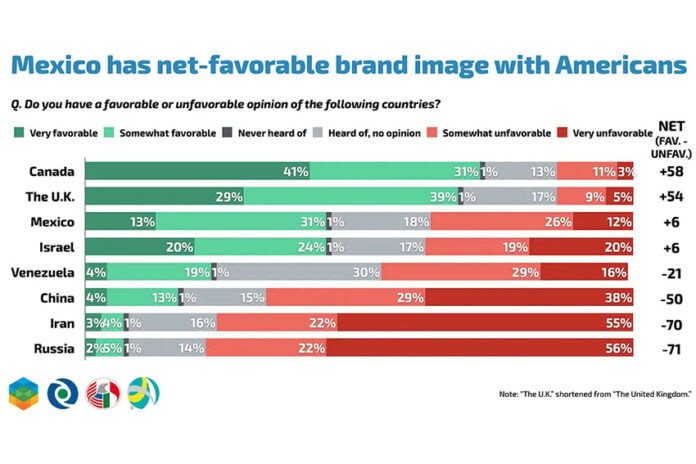
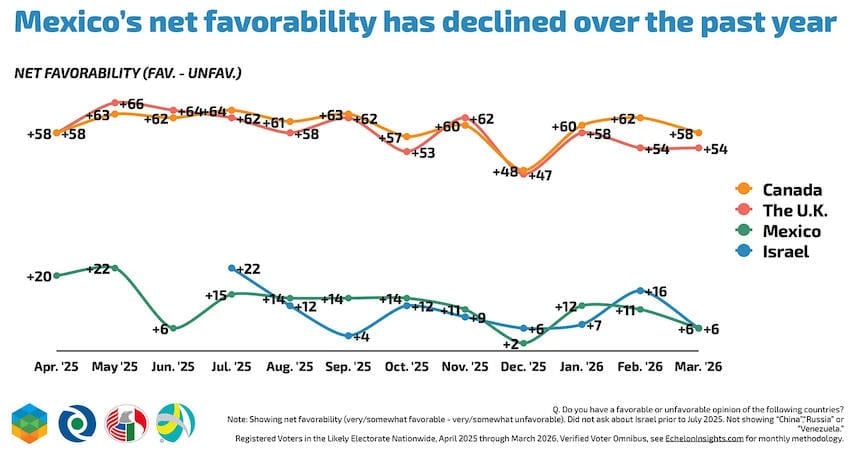
U.S. voters give Mexico a net favorability score of just +6. Yet the real story is more hopeful: tourism, trade, and cultural exchange are quietly gaining ground while the sharpest fears are softening. (Graphs courtesy of the author)
Perceptions are very important. Imagine you have a very good and nice neighbor. Nonetheless, for whatever reason, you believe he is bad and ill-intentioned. I’m sure you wouldn’t be so keen to engage proactively with him. If we were to go outside and ask Americans what they think of their neighboring Mexico, the net answer would be something like a polite but lukewarm “eh, good.” I say this because we actually went out and asked.
AmCham, the U.S.-Mexico Foundation and AMPIP, led by Echelon Insights, have been polling US voters’ attitudes towards Mexico for more than a year. Results are significantly important. Let’s go over some key figures.
U.S voters give Mexico a net favorability of just +6 — better than China or Russia, miles behind Canada’s +58, same score as Israel and down from +20 just a year ago. The partisan gap is stark: Democrats see Mexico as a solid +47 “good neighbor,” independents +17, but Republicans sit at -23.
Overall, 40% call Mexico a good neighbor, while 28% say it’s a bad neighbor. That modest, slightly slipping score is the quiet battleground for everything this Regional Utopia series is about, particularly on the undecided bunch. As my friend and mastermind behind this polling, Enrique Perret, said: “The 18% of people without an opinion are the ones to convince that Mexico is a good neighbor.” We all need to work on that!
Thirteen percent of voters have a “very favorable” opinion of Mexico, 31% somewhat favorable, 1% have never heard of it (really?), 18% have heard of it but have no opinion. Then, 26% have a “somewhat unfavorable” opinion and last, a 12% have very unfavorable views on Mexico.
Positive notes going up, negatives going down
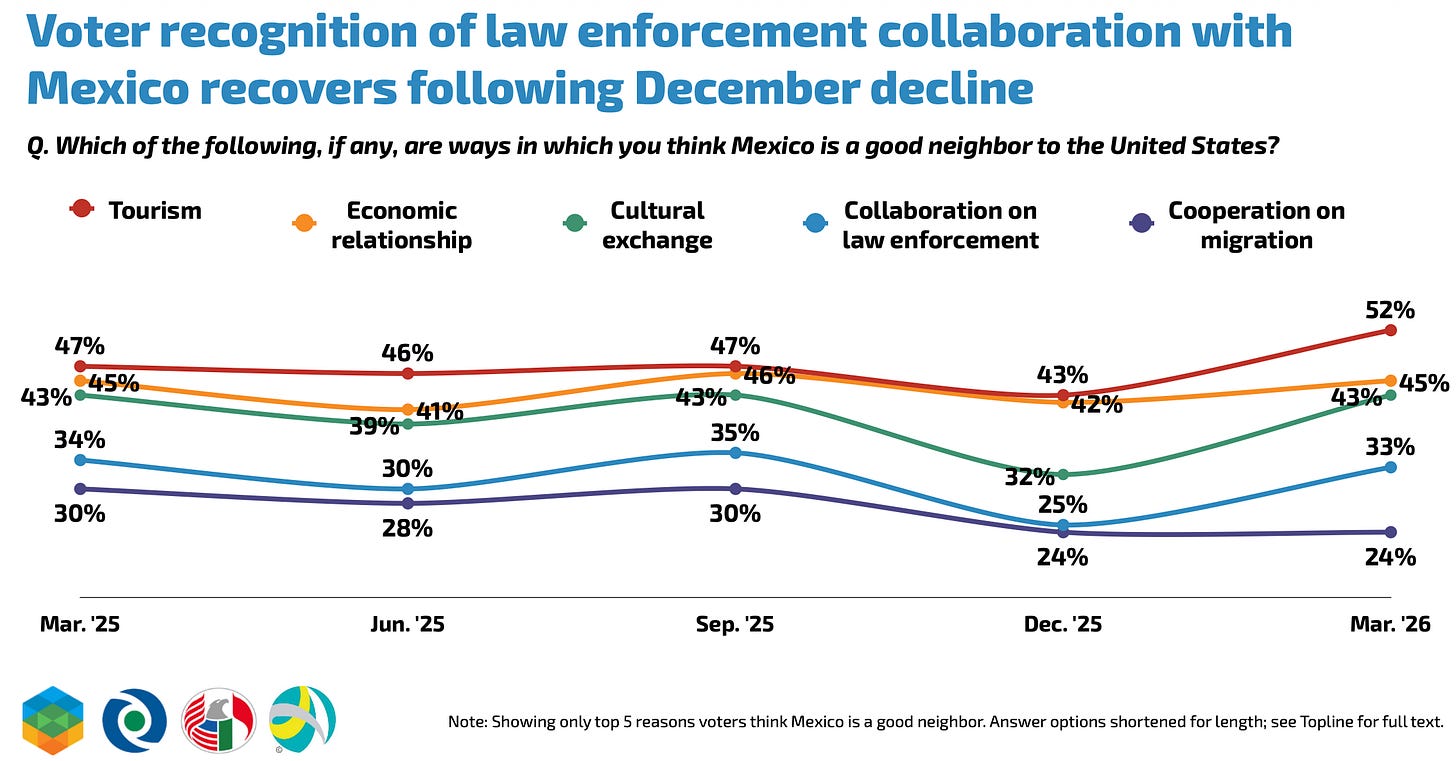
Even though the overall score has gone down, the bright spots are quietly getting stronger. When people view Mexico positively, they credit the things that hit closest to home: tourism between the two countries (now at 52%, up from 47% a year ago), the economic relationship that benefits the U.S. (holding steady at 45%) and cultural exchange (back to 43% after a December dip). Among those who already see Mexico as a good neighbor, those three factors land at a rock-solid 69-70%. In other words, the feel-good reasons for liking Mexico aren’t just holding — they’re gaining ground.
It is interesting to note the sharp comeback of “collaboration on law enforcement” after a 25% by the end of last year, gaining 8 pps to reach 33% favorability.
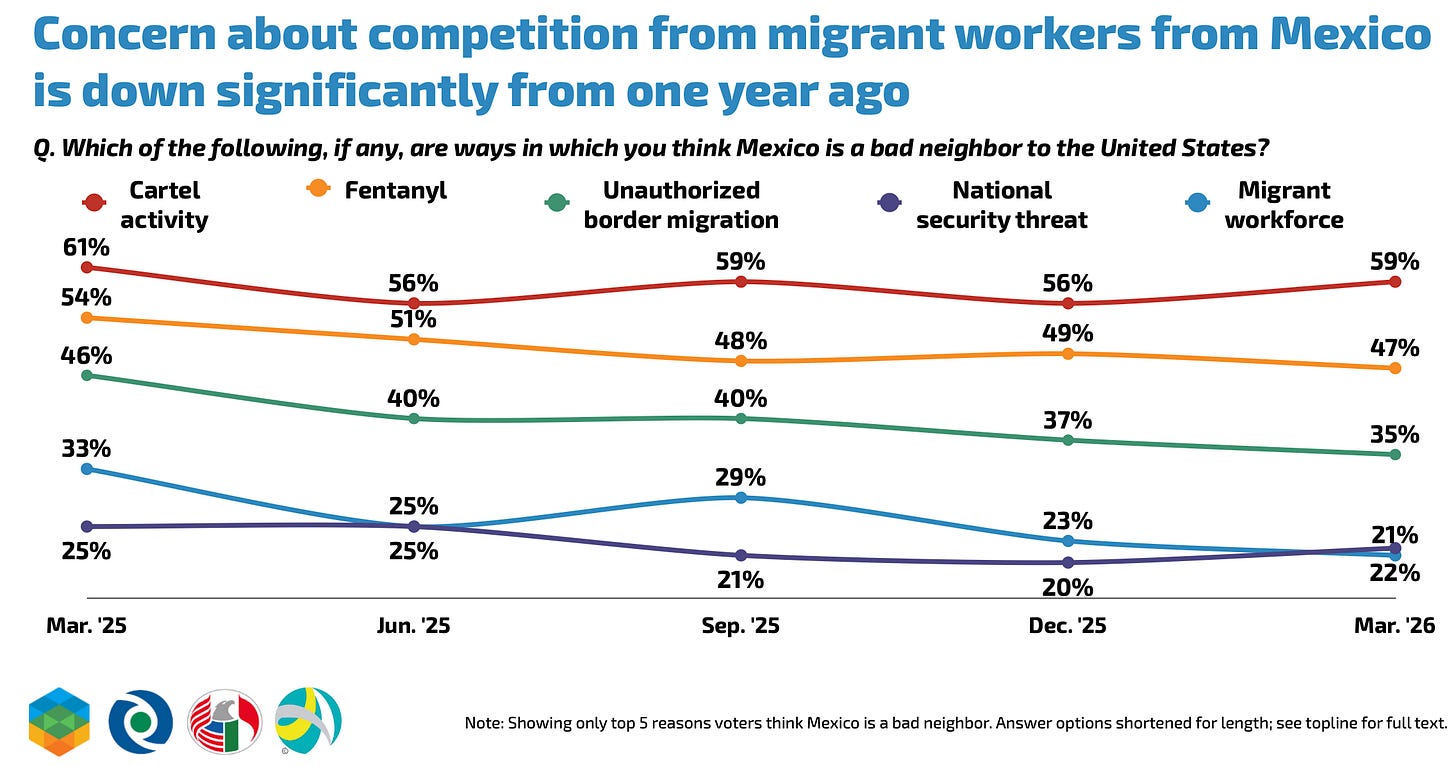
Even better still, the concerns are still real, but the sharpest edges are softening. Cartel activity remains the top “bad neighbor” complaint at 59% (stable over the past year), with fentanyl at 47% (down from 54%). Unauthorized migration is also trending down, from 46% to 35% and the worry about Mexican migrant workers “competing unfairly” has dropped sharply from 33% last year to just 21% now. Voters are increasingly separating the real, persistent problems from blanket narratives. This is truly remarkable: results matter!
There’s an interesting contradiction happening: while the overall favorability score has slipped a bit, the day-to-day trends that matter most to people — both the positives they credit and the specific negatives they fear — are moving in the right direction.
Migration is an interesting case. The border is apparently under control. Therefore, negative perceptions of it went down from 46% to 35%. Results matter, and they are noticed!
Trade, tariffs and USMCA
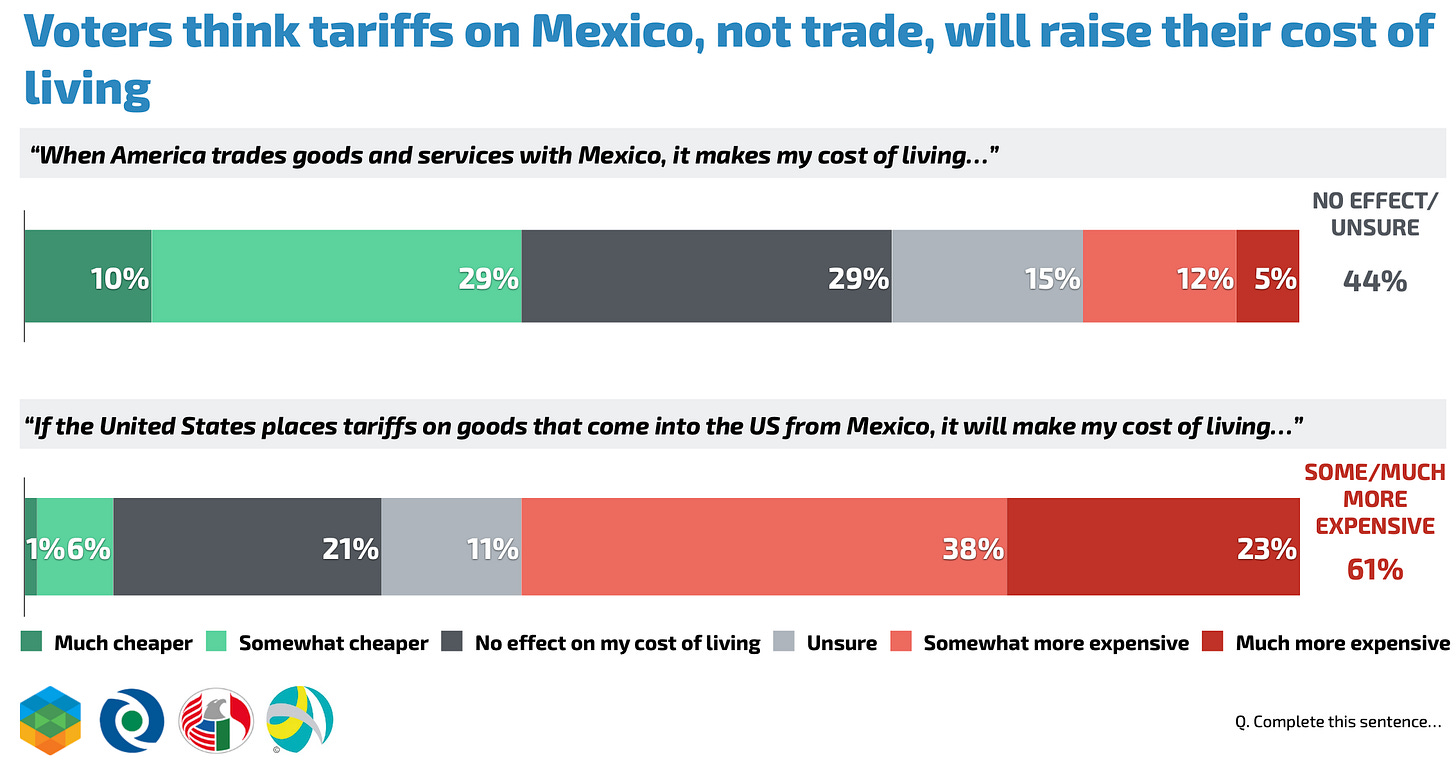
When asked whether trade with Mexico affects their cost of living, 39% say it makes things cheaper and only 17% say it makes things more expensive. Flip to tariffs on Mexican goods, however, and 61% expect higher grocery and electronics bills. Even Republicans have softened: the share worrying about cost-of-living pain from tariffs fell from 56% to 41% in the past year. People instinctively get that integration lowers prices and tariffs raise them. The economic argument is quite clear for most!
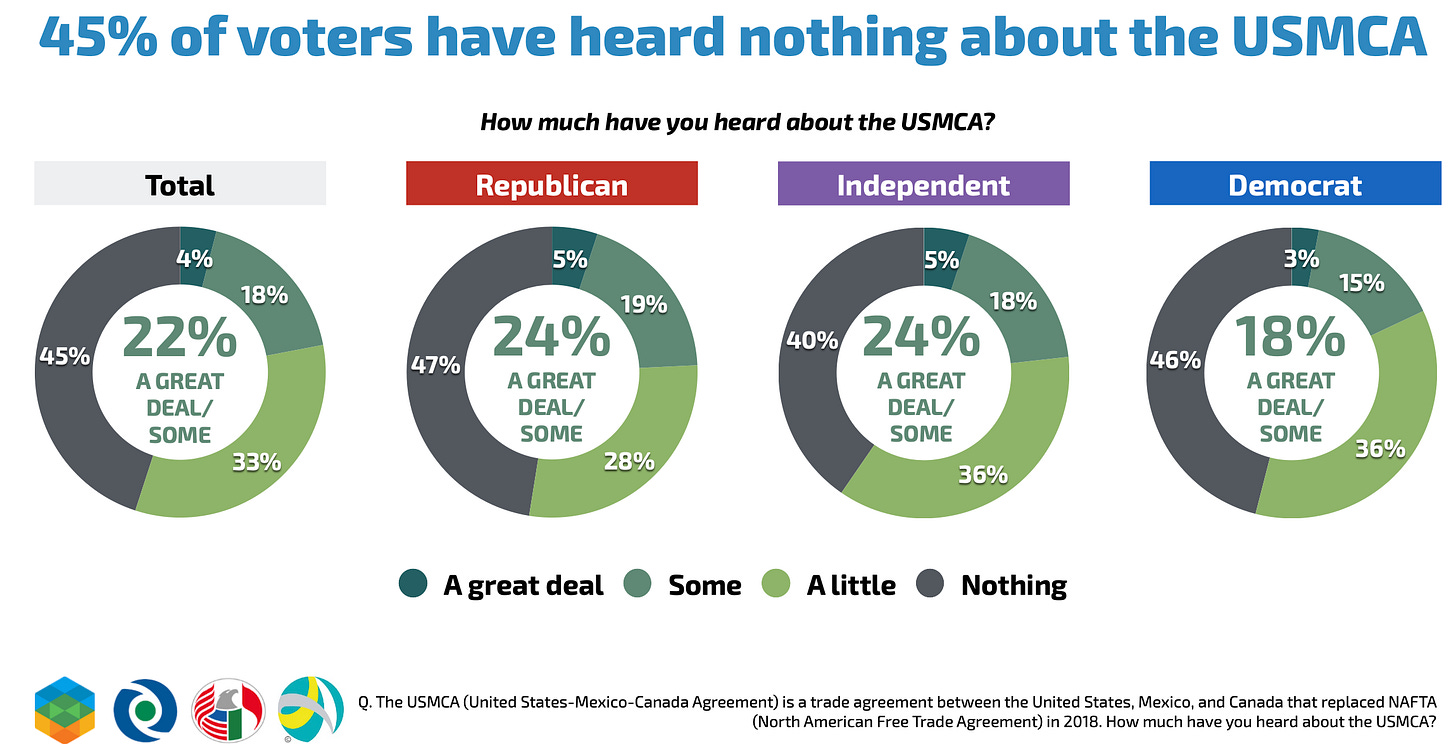
Yet, when it comes to the USMCA, awareness remains the weak link. This is the result that blows my mind the most: 8 out of 10 voters have heard nothing or just a little about the USMCA. Nearly half are unsure whether it should be extended this year. Yet when you ask what would make a “fair deal,” the answers cross party lines: lower prices on everyday goods (49-53%), American farmers selling more into Mexico and Canada (48-51%) and keeping supply chains in North America. Voters aren’t anti-trade; they’re pro-results that they can feel at the checkout line.
Final thoughts
These perceptions aren’t fluffy PR — they’re policy oxygen.
A negative brand score makes it easier for bad-neighbor rhetoric to stick during the 2026 USMCA review. It fuels tariff talk even when voters know, in their gut, that tariffs hit their own wallets.
Remember that policy does not always follow logical or economic rationality; it also follows politics. Politics is led by voters, voter sentiment and preferences. Going back to my initial example, you most likely prefer to work with the neighbor you like, rather than the one you think is not a good one.
The good news? We don’t need to invent affection — we need to amplify what’s already working and knock down the security fears that dominate the negative column. Independents are already moving in the right direction on the “good neighbor” question. Tourism, economic ties and cultural exchange are the three things voters already credit Mexico for when they like us. The World Cup is about to hand us the biggest shared ritual in a generation.
So we work on it on several fronts at once:
First, keep doubling down on the feel-good stuff: tourism flows, cultural exchange and turning every World Cup goal into a North American story.
Second, make the economic case relentless — lower grocery bills, American farmers selling more south of the border, supply chains that keep jobs and prices stable on both sides.
Third, deliver and visibly communicate concrete results on the security front (which, by the way, is yielding better results than ever in our history): joint cartel takedowns, fentanyl interdictions and migration management that voters can see.
Fourth, use the USMCA review itself as the communications moment: frame extension not as technocratic maintenance but as the practical enabler for reindustrialization, a mechanism to bring jobs back, making our neighborhood safer and also, as a way to keep prices down.
Mexico’s brand isn’t broken; it’s just under-marketed.
The data, the events and the mutual self-interest are all there. We must work on perceptions and PR as hard as we work on making USMCA work or any other policy initiative.
Thanks for reading!
Pedro Casas Alatriste is the Executive Vice President and CEO of the American Chamber of Commerce of Mexico (AmCham). Previously, he has been the Director of Research and Public Policy at the US-Mexico Foundation in Washington, D.C. and the Coordinator of International Affairs at the Business Coordinating Council (CCE). He has also served as a consultant to the Inter-American Development Bank. Follow his Substack here.
In her message, Governor Maru Campus declared she did not "arrange, authorize or have knowledge of the presence of foreign people" in an April operation to dismantle a clandestine drug laboratory after which four people, including two CIA agents, were killed in a car accident. (Maru Campos/Facebook)
Chihuahua Governor Maru Campos asserted on Tuesday that she didn’t authorize or have knowledge of the presence of “foreign people” — i.e., U.S. Central Intelligence Agency (CIA) personnel — in a drug lab raid in the northern border state in April.
Her declaration in a video message came as the Federal Attorney General’s Office (FGR) conducts an investigation into the alleged participation of CIA officers in the dismantlement of a drug lab in the municipality of Morelos on April 18.
Ante la desinformación y ataques políticos a propósito del exitoso operativo en la Sierra Tarahumara, donde se aseguraron toneladas de precursores químicos y miles de litros de metanfetamina, quiero compartir con ustedes información importante sobre los avances de la… pic.twitter.com/9iXDiinfvH
President Claudia Sheinbaum has said that her government didn’t authorize or have any knowledge of the alleged CIA participation in the operation, which was first reported by U.S. media. She has accused Chihuahua authorities of allowing the CIA to participate in the operation in violation of Mexico’s Constitution and National Security Law. Two of four CIA officers who allegedly participated in the drug lab raid — reportedly while wearing Chihuahua State Investigation Agency (AEI) Uniforms — were killed in a car accident on April 19, along with the director of the AEI and a police officer.
Campos — a representative of the National Action Party, Mexico’s main federal-level opposition party — began her video message by saying that she wanted to speak with the “frankness that characterizes us as chihuahuenses” (Chihuahua natives or residents).
“In recent days there has been a lot of noise, misinformation and political attacks regarding the operation in the Sierra Tarahumara, in which a drug laboratory was dismantled,” she said.
“… Unfortunately, there has also been a lot of misinformation regarding the accident that occurred on April 19, as well as the investigations currently underway. I want to say something very clearly: in Chihuahua we are acting with legality, responsibility, full transparency and absolute resolve,” Campos continued.
The governor went on to say that she has always respected the Mexican Constitution and the laws that emanate from it. She also said that the drug lab operation was “designed and carried out” by people with experience and training in policing and criminal investigation — i.e., Chihuahua police.
“At no point did I arrange, authorize or have knowledge of the presence of foreign people in that action,” Campus said.
Her assertion came the same day that Wendy Chávez Villanueva, a special prosecutor in Chihuahua, said that the four CIA agents who allegedly participated in the drug lab raid twice went to a Chihuahua Attorney General’s Office building before the operation took place. Chávez is heading up a state investigation into the CIA officers’ alleged participation in the raid.
Sheinbaum asserted on April 23 that either the Chihuahua government or the Chihuahua Attorney General’s Office requested security collaboration with U.S. authorities before the drug lab raid took place.
Campos takes aim at Morena for alleged criminal links
Campos — who has been accused by Morena party senators of treason and violating Mexican sovereignty — highlighted the results of the drug lab raid in the municipality of Morelos. She said that some 2,000 liters of methamphetamine were seized along with large quantities of precursor chemicals that are used to make narcotics.
“With this [drug lab] dismantling, we prevented millions of doses of drugs from poisoning young people and Mexican families, and we continued our fight against crime and drugs,” Campos said in her video message.
The governor also said: “In response to the attacks I have received from Morena, I want to say that dismantling a drug laboratory and confronting crime head-on as my government has done is not the same as being a government like theirs, one with serious accusations of having ties to drug trafficking.”
The remark was an apparent reference to U.S. prosecutors’ drug trafficking accusations against Sinaloa Governor Rubén Rocha Moya — a Morena representative and ally of Sheinbaum — and other former and current officials affiliated with Mexico’s ruling party, including a federal senator.
“While Morena attacks, makes excuses and looks for scapegoats to cover up the [security] crisis and lack of results, we will continue doing our job — fighting crime, protecting families, boosting employment and defending peace,” Campos said.
She also said she has instructed the Chihuahua Attorney General’s Office to proceed with an investigation into the drug lab operation in accordance with the law, no matter who “falls.”
The governor, who has been in office since 2021, appears confident — in public, at least — that investigations will conclude that she did not act illegally in connection with the alleged CIA involvement in the security operation in Chihuahua, one of various issues that have recently strained the Mexico-U.S. relationship.
Standard & Poor's cited low economic growth and public debt for its downgrading of Mexico's rating. (Shutterstock)
Standard & Poor’s (S&P) has downgraded Mexico’s rating from stable to negative, citing the risk of slow fiscal consolidation due to low economic growth and rising public debt.
The move, published in a report issued Tuesday, put the long-term foreign currency rating at ‘BBB’ and the local currency rating at ‘BBB+’.
S&P warned that the drain on the public treasury from the support of the Federal Electricity Commission (CFE) and Petróleos Mexicanos (Pemex) could negatively affect future ratings. (Presidencia/Cuartoscuro)
The financial rating agency acknowledged that Mexico’s institutional framework has fostered political stability for more than two decades, and enacted prudent fiscal policies, which together with a floating exchange rate have strengthened the country’s monetary flexibility.
However, “uncertainty” surrounding the renegotiation of the United States-Mexico-Canada free-trade agreement (USMCA) “weakens investor confidence,” which could lead to another downgrade due to unexpected setbacks in international trade, according to S&P.
The Finance Ministry (SHCP) said that the new rating keeps Mexico within investment grade.
S&P forecasts just 1% economic growth for Mexico in 2026, due to uncertainty surrounding the USMCA review, low private investment and rising energy prices. The SHCP also lowered its growth forecast on Monday from 3% to 2.3%.
S&P stated that financial support for state-owned companies Petróleos Mexicanos (Pemex) and the Federal Electricity Commission (CFE) could exacerbate Mexico’s fiscal rigidity and put pressure on its public finances.
“Pemex’s poor operating results could lead the government to provide more funds to cover future financial losses, which would worsen the fiscal deficit,” the report said. “We will continue to monitor the potential impact of the government’s ambitious infrastructure plans on Mexico’s deficits and debt trajectory.”
The ratings agency said it may be forced to lower the rating in the next 24 months if Mexico does not reduce its fiscal deficit or if its trade relationship with the United States deteriorates.
Mexico’s ratings by other ratings agencies currently stand at BBB (Fitch), Baa2 (Moody’s) and BBB (DBRS).
The band was in Mexico CIty to shoot a video for “Street of Dreams,” a track from their forthcoming studio album. (U2)
Mexico City’s historic center briefly turned into a live set Tuesday as Irish rock band U2 drew crowds of fans while shooting a surprise music video near Plaza de Santo Domingo.
The band — fronted by 66-year-old lead singer and lyricist Bono — performed atop a graffiti-painted school bus that was moving through colonial streets while onlookers followed and filmed with their phones.
Hopped a bus in Mexico City, destination: Street of Dreams.
‘Justice an obsession, love is a procession down the street of dreams’ pic.twitter.com/HZYXw0rDXk
The shoot was for “Street of Dreams,” a new track from U2’s forthcoming studio album expected near the end of 2026, the band said on its official site.
The bus displayed a route sign reading “La Calle de los Sueños” (Street of Dreams), with that line in Spanish also part of the song’s mostly English-language lyrics, alongside themes of justice and hope.
Fans shared videos on social media as the performance unfolded, showing the group playing live while riding through the city’s core near Plaza de Santo Domingo, a short walk from the Zócalo.
The visit coincided with the 2026 Street Child World Cup in Mexico City, a nine-day youth soccer competition with 30 teams from around the globe, ending Thursday.
“It’s a little NGO with a big kick for kids with all of the talent and none of the access,” said U2’s founding drummer, Larry Mullen Jr., 64. “Our band are proud supporters.”
Their last big hit was “Discotheque,” which peaked at No. 10 in the U.S. and hit No. 1 on the U.K. singles chart in 1997. Inducted into the Rock and Roll Hall of Fame in 2005, the band has also scored multiple No. 1 albums.
President Sheinbaum's rejection of two media reports — one by CNN, the other by The New York Times — about the CIA's work within Mexican territory was the most significant development at today's mañanera. (Juan Carlos Buenrostro/Presidencia)
Sheinbaum’s mañanera in 60 seconds
🚫 Sheinbaum rejects CNN and NYT reporting: CNN reported on Tuesday that CIA officers “facilitated” a targeted killing of two alleged Sinaloa Cartel members in México state in late March, while the NYT reported that Mexican authorities carried out the attack with CIA involvement. Sheinbaum denied both accounts, calling the reports false.
⚖️ Sovereignty goes both ways on extraditions: Pushing back on U.S. pressure over the indictment against Sinaloa Gov. Rubén Rocha Moya, Sheinbaum said Washington routinely demands proof before acting on arrest requests from Mexico. She cited her own petition to the State Department for the arrest of two suspects in the 2014 Ayotzinapa case, and highlighted that Mexico has requested the extradition from the U.S. of two dual citizens allegedly linked to a fuel smuggling network. She said that no response to the latter request has been received.
🌐 Coordinated international campaign? Asked whether the simultaneous CNN/NYT reports and Senate testimony by DEA chief Terrance Cole — who called an indictment against Rocha “just the start” of U.S. action against Mexican officials — amounted to a synchronized media offensive, Sheinbaum answered, “Yes.” The president also railed against an “international right-wing movement” that she claimed is agitating for the “defeat” and “failure” of her government.
Why today’s mañanera matters
President Sheinbaum’s rejection of two media reports — one by CNN, the other by The New York Times — was the most significant development at today’s mañanera. She claimed that reporting by the two U.S. media outlets was false. CNN reported on Tuesday that CIA operations officers “facilitated” a “targeted assassination” in late March — an attack in which two alleged Sinaloa Cartel members were killed when the car in which they were traveling in México state blew up. The New York Times reported that Mexican authorities were responsible for the explosion, and that the CIA was “involved in the planning of the assassination.”
Click here to read MND’s story on the reporting by CNN and The New York Times, and Sheinbaum’s rejection of it:
Also of note at today’s mañanera were Sheinbaum’s remarks regarding U.S. authorities’ apparent demand for proof against criminal suspects that Mexican authorities want arrested and extradited.
The point the president was making is that the U.S. authorities have acted in the same way that Mexican authorities have acted after the unsealing of a U.S. indictment accusing Sinaloa Governor Rubén Rocha Moya — who is currently on leave — and nine other current and former Sinaloa-based officials of drug trafficking in league with the Sinaloa Cartel.
Sheinbaum has endorsed the view of the Ministry of Foreign Affairs and the Federal Attorney General’s Office that there is currently insufficient proof to arrest the 10 suspects for the purpose of extradition to the United States.
Sheinbaum: US has asked for proof when Mexican authorities requested arrests of people wanted in Mexico
Sheinbaum told reporters that she was informed by Foreign Affairs Minister Roberto Velasco that there are “many cases” in which Mexican authorities have requested the arrest of people in the United States who are under investigation in Mexico.
“And the United States has told us: ‘Within the framework of our laws we need proof,” she said.
“I’m going to give you a case,” Sheinbaum said before telling reporters that she had personally submitted a request to the U.S. State Department for the arrest of two people wanted in connection with the 2014 Ayotzinapa case in which 43 students were abducted and presumably killed in Guerrero.
“And there are other cases,” she said.
“So they know and we know that everything has to be within the framework of respect [for sovereignty] and their laws and our laws,” Sheinbaum said.
The president subsequently said that Mexican authorities are requesting the extradition from the United States of two dual citizens allegedly linked to a “huachicol fiscal” fuel smuggling scheme.
“They are very important in the investigation — businessmen who, among others, put together the network to be able to bring fuel into the country illegally,” she said.
“We don’t yet have a response [to the extradition request],” Sheinbaum said.
An international campaign targeting Mexico?
A reporter noted that in addition to the publication of the CNN and New York Times reports, various U.S. officials, including DEA Administrator Terrance Cole, spoke about Mexico during appearances in the U.S. Senate on Tuesday.
Cole said that “there is no doubt that the narco-traffickers and high-ranking government officials in Mexico have been in bed for years.”
“But all of a sudden, we’re paying attention to it,” said Cole, who asserted that the U.S. accusations against Rocha and other Mexican officials are “just the start about what’s to come in Mexico.”
DEA ADVIERTE: ACUSACIÓN CONTRA ROCHA MOYA “ES SOLO EL COMIENZO”
La DEA aseguró ante el Congreso de EU que la investigación contra Rubén Rocha Moya marca el inicio de acciones contra políticos ligados al narco.
— Cesar Gutiérrez Priego M.R. (@cesargutipri) May 12, 2026
In light of the publication of the CNN and New York Times reports, and the remarks made by Cole and other U.S. officials on Tuesday, the aforementioned reporter asked Sheinbaum whether she believed “synchronized swimming” was taking place — i.e., an “international media” campaign designed to “impose narratives in Mexico.”
“Yes,” the president responded.
“That’s what we’re saying. There are a lot of people who have come to an agreement. This international right-wing movement we talk about moves in many places in the world and there are a lot of people who are betting on the defeat and failure of the Mexican government for ideological reasons and for political reasons,” she said.
Sheinbaum’s remarks came around two weeks after the publication of leaked audio recordings that suggest that U.S. President Donald Trump, the Israeli government and Argentine President Javier Milei have teamed up to spread fake news in an effort to destabilize Mexico and other progressive left-leaning Latin American governments.
Viruses in the hantavirus family of pathogens are generally transmitted by rodents. The Andes hantavirus, however, can be transmitted from human to human, making it the focus of preventive measures. (Unsplash)
Mexico has issued a preventive hantavirus alert, although no cases of the emerging deadly virus have been recorded in Mexican territory.
The alert was issued by the National Committee for Epidemiological Surveillance (Conave) to all medical units in the country, following the confirmation of a hantavirus outbreak on May 2 onboard an international cruise ship sailing the South Atlantic Ocean.
After the preventive hantavirus alert was issued, Health Minister David Kershenobich stressed that no cases have been documented in Mexico and that the probability of a human-to-human-transmitted breakout is very low. (Graciela López/Cuartoscuro)
The purpose of the warning is to help hospitals, laboratories and epidemiological surveillance units to quickly detect any possible imported cases.
“Although the risk to the country is low, timely detection remains crucial due to the high lethality of the disease, its rapid clinical progression, the diagnostic difficulty in early stages, and the need to implement strict isolation measures in suspected cases,” Conave said in its warning.
Preventive measures such as reinforced surveillance in hospitals and laboratories are vital, Conave said, given how easily a virus can spread from “international mobility, global air traffic, exposure to international travelers and the documented capacity for person-to-person transmission.”
Following the report, Health Minister David Kershenobich confirmed on his X account on Tuesday that Mexico had no registered cases of the Andes hantavirus to date, and that the country maintains ongoing epidemiological surveillance in accordance with international health protocols.
What is the Andes hantavirus?
The hantavirus is a zoonotic pathogen primarily transmitted through contact with the urine, feces or saliva of infected rodents. The Andes hantavirus (ANDV) is the only hantavirus with documented evidence of human-to-human transmission.
Although infrequent, human-to-human transmission is associated with close physical contact, exposure to respiratory secretions or saliva and prolonged stays in enclosed or confined spaces.
Hantavirus infection can trigger hantavirus pulmonary syndrome (HPS), a disease characterized by rapidly progressing acute respiratory failure and a high mortality rate. The incubation period can be long, ranging from four to 42 days after exposure.
In its initial phase, patients may experience fever, fatigue, headache, muscle aches and gastrointestinal discomfort, such as nausea and vomiting. Subsequently, between four and 10 days after onset, the condition usually worsens with respiratory distress, cough and chest tightness, and can progress to acute respiratory distress syndrome, multiple organ failure or death.
Health authorities warn that no specific approved antiviral treatment exists, so the medical approach is limited to critical life support measures and oxygen therapy.
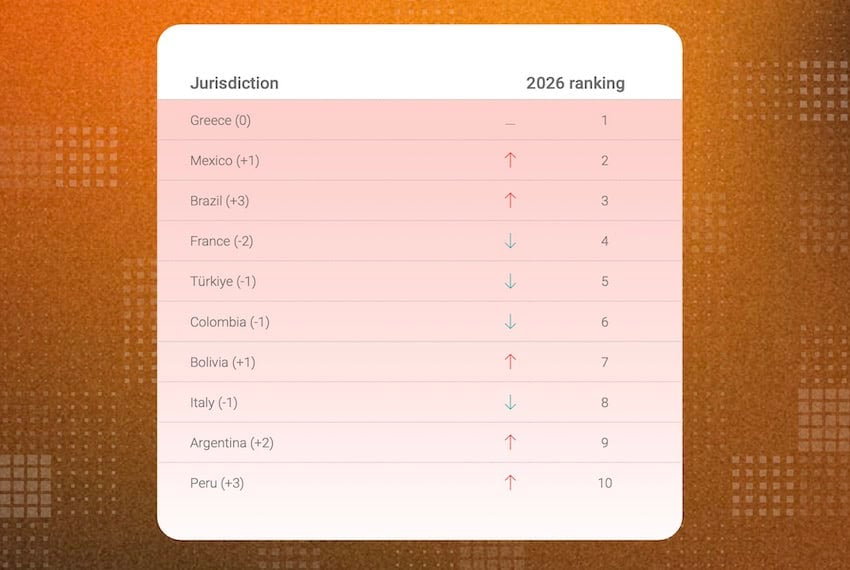
Mexico rose from the fourth-most complex jurisdiction for businesses in 2022 to third in 2025 and second in 2026. (Unsplash)
TMF Group, an administrative services provider, launched the 13th edition of the Global Business Complexity Index (GBCI) on Tuesday, ranking Mexico as the second-most complex country for doing business.
The GBCI analyses 81 jurisdictions representing over 90% of the world’s economy, ranking them from most (1) to least complex (81) for doing business. Based on 292 indicators per jurisdiction, the index assesses challenges businesses face across accounting and tax, entity management and human resources requirements.
The Global Business Complexity Index (GBCI) assesses challenges businesses face across accounting and tax, entity management and human resources requirements. (TMF Group)
“World political fragmentation and economic spread mean that businesses are adding jurisdictions to their supply chains, increasing the complexity of their governance,” wrote TMF Group’s CEO, Mark Weil, in the report. “It also means that they have to deal with more uncertainty in those regulations.”
“Investors seek simplicity, but above all, certainty in the rules they operate under. We encourage governments to improve their ranking by acting on both,” Weil added.
Top and bottom 5 jurisdictions in 2026 (1 = most complex, 81 = least complex)
Denmark, Hong Kong and the Netherlands have historically ranked as low-complex jurisdictions and remain in the bottom five this year, thanks to their stable, simple regulatory environments and robust digital infrastructure.
Several Latin American countries ranked among the most complex jurisdictions this year, with Mexico in second position, Brazil in third and Colombia in sixth.
Skill shortages are reshaping talent strategies globally, with around 80% of jurisdictions reporting difficulty in attracting and retaining talent, mainly in Europe and the Asia Pacific (APAC), according to the report. While current pressures are not as severe in North America as in other regions, it is the region with the highest increase in the perceived level of challenge.
Technology, on the other hand, is making doing business easier in APAC (86% said it was having a positive impact on administrative processes and compliance) and EMEA (81%), while South America (60%) and North America (71%) show lower rates of agreement.
What makes Mexico’s business environment highly complex?
TMF Groupcited frequent regulatory changes, unpredictable administrative requirements, evolving digital requirements and unclear expectations by the tax authorities as the main reasons for Mexico’s high ranking.
While Mexican authorities are embracing digitalization, many procedures still require physical presence or wet-ink signatures. Nevertheless, the Sheinbaum administration has made strides toward simplification, such as the recent creation of a one-stop shop for foreign trade, which will soon integrate 132 administrative procedures into one.
Moving forward, TMF Group expects Mexico’s accounting and tax to undergo the most change, with an increased government focus on tax collection. The adoption of electronic accounting systems could also improve processes.
On March 28, a targeted explosion killed two passengers of a vehicle traveling on the Mexico City-Pachuca highway, one of whom was identified as Francisco Beltrán, an alleged mid-level member of the Sinaloa Cartel who was known as "El Payín." (Shutterstock/social media)
The Mexican government and the U.S. Central Intelligence Agency (CIA) have rejected a CNN report that claimed that the CIA “facilitated” a “targeted assassination” of an alleged Sinaloa Cartel member in México state in March.
CNN’s report — published on Tuesday under the headline “Exclusive: CIA escalates secret war on cartels with deadly operations inside Mexico” — claims that the CIA “facilitated” an explosion that blew up a car traveling on a México state highway on March 28, killing the vehicle’s two occupants, one of whom was identified as Francisco Beltrán, an alleged mid-level member of the Sinaloa Cartel who was known as “El Payín.”
“Mexican authorities have maintained extreme secrecy around the explosion, but multiple sources tell CNN that the attack was a targeted assassination, facilitated by CIA operations officers,” CNN reported.
“An explosive device had been hidden inside the vehicle, the State of Mexico’s Attorney General told CNN,” the report said.
CNN also reported that the “Beltran operation was part of an expanded, and previously unreported, CIA campaign inside Mexico — spearheaded by the agency’s elite and secretive Ground Branch — to dismantle the entrenched cartel networks.”
The news outlet said that information came from the aforesaid sources as well as “two additional people familiar with the campaign.”
Again citing its sources, CNN wrote that “since last year, CIA operatives inside Mexico have directly participated in deadly attacks on several, mostly mid-level cartel members.”
In a little noticed comment last week, Trump said that a “land force” was already in place in Mexico to eliminate traffickers but didn’t elaborate on the nature of the force.
“Drugs coming in [to the US] by sea are down 97%,” he said. “And now we’ve started the land force, which…
— Natasha Bertrand (@NatashaBertrand) May 13, 2026
“… The level of CIA involvement with operations has varied, according to the sources, from more passive intelligence sharing and providing general support to direct participation in assassination operations,” CNN said, making another explosive claim.
The news outlet didn’t specify what it meant by saying that the car explosion in México state was “facilitated by CIA operations officers.” While it (allegedly falsely) quoted México state Attorney General José Luis Cervantes Martínez as saying that an explosive device had been hidden inside the vehicle, CNN didn’t say who planted the bomb. Nor did it say whether the CIA had collaborated with Mexican authorities on the execution of the explosion that claimed the lives of Beltrán and another alleged Sinaloa Cartel member identified as Humberto Rangel Muñoz.
However, CNN suggested in one part of its report that it hadn’t.
“The operations may also be illegal under Mexican law — without the express permission of the federal government, foreign agents are barred from participating in law enforcement operations under the Mexican Constitution,” the media outlet wrote.
However, the CNN also wrote: “While multiple sources acknowledged that not everyone in the Mexican government is briefed on every operation — sometimes by design to maintain deniability — they also stressed that the CIA tends not to conduct operations unilaterally.”
After CNN published its report on Tuesday, The New York Times reported that Mexican authorities killed Beltrán.
“The C.I.A. provided intelligence and planning support for a recent operation against a cartel operative inside Mexico, but was not on the ground when Mexican authorities killed the man, according to a former official and others briefed on the operation,” the Times reported.
Citing the unnamed former official — presumably an ex-U.S. official — and “others briefed on the operation,” the Times wrote that “the C.I.A. provided intelligence on the cartel operative’s location and was involved in the planning of the assassination.”
“It is not clear to what extent the C.I.A. participated in the planning,” the Times reported.
“But C.I.A. officers were not present on the site of the attack and were not advising the Mexicans in person when the operation was carried out, the former official and those briefed said. They spoke under the condition of anonymity to discuss a sensitive operation and intelligence collection.”
The New York Times’ report suggests that Mexican authorities carried out an extrajudicial killing. CNN’s report indicates that U.S. President Donald Trump’s assertion in January that U.S. forces would begin hitting cartels on land was not an empty threat but rather something that has indeed happened — perhaps even before Trump made the aforesaid declaration. However, Trump said last week that the United States would take action against cartels in Mexico if the Mexican government doesn’t do so itself. That remark appeared to indicate that U.S. forces have not been taking their own direct action against Mexican Cartels, six of which the U.S. government designated as foreign terrorist organizations last year. President Claudia Sheinbaum has repeatedly ruled out the possibility of the U.S. taking unilateral action against cartels, and has rejected offers from Trump to send the U.S. military to Mexico.
Security Minister Omar García Harfuch says his ministry has used U.S. “intelligence” for security operations against Mexico’s cartels, but that the involvement of foreign agents is prohibited. (Mexican Security Cabinet)
Sheinbaum, García Harfuch and CIA reject CNN report
In a social media post on Tuesday, Security Minister Omar García Harfuch rejected CNN’s report.
“Regarding the version [of events] disseminated by CNN about an explosion that occurred in Tecámac, México state, in which the alleged involvement of the CIA in operations against cartels is claimed, the Government of Mexico categorically rejects any version [of events] that seeks to normalize, justify, or suggest the existence of lethal, covert, or unilateral operations by foreign agencies in national territory,” he wrote on X.
García Harfuch also wrote that “operational actions” in Mexico “correspond exclusively” to Mexican authorities.
“Any international cooperation is limited to the exchange of information, institutional coordination and formal mechanisms established by the government of Mexico, particularly through the Ministry of Foreign Affairs and the institutions of the Security Cabinet,” he wrote.
CIA spokesperson Liz Lyons also rejected CNN’s report.
“This is false and salacious reporting that serves as nothing more than a PR campaign for the cartels and puts American lives at risk,” she wrote on her official X account.
The denials by García Harfuch and Lyons that the CIA was involved in a lethal operation in Mexico may well be true. But if the CIA was indeed involved in facilitating or planning the explosion in México state in late March, the Mexican government and the CIA itself could have their own reasons to deny that it was the case.
On Wednesday morning, Sheinbaum also responded to CNN’s report.
She first noted that the México state Attorney General’s Office rejected that the state attorney general provided information to CNN.
Sheinbaum subsequently described CNN’s report as “really sensationalist” and false.
“Imagine the size of the fabrication,” she said before accusing CNN of lying.
Sheinbaum aclara que son falsas las afirmaciones de CNN sobre la CIA… “imagínense el tamaño de la mentira que hasta la CIA salió a desmentirlo”
La presidenta @Claudiashein salió a aclarar que no es verdad que la CIA esté interviniendo en la lucha contra el crimen dentro de… pic.twitter.com/hlgf1EFZEO
Sheinbaum said it’s “false that CIA agents operate in [Mexican] territory,” although she acknowledged that there are “permits” that allow U.S. agencies to work in Mexico as long as they comply with Mexican laws.
She suggested that CNN’s report was motivated by a desire to cause problems in the relationship between Mexico and the United States. A CNN spokesperson contacted Mexico News Daily on Thursday afternoon, saying in an e-mail: “We stand by our reporting.”
Sheinbaum also rejected The New York Times’ report claiming that Mexican authorities carried out the operation that killed Beltrán and Rangel in México state.
The claim in the report is “absurd,” she said.
Sheinbaum said that the suggestion that the Mexican government has “a special area dedicated to planting bombs to eliminate criminal groups is a fabrication the size of the universe.”
She asserted that The New York Times has a habit of fabricating stories, and “now” CNN is “as well.”
“… We’re always going to tell the truth,” Sheinbaum added.
“… This is our responsibility to the people of Mexico and we always act within the framework of the law, always,” she said.