Home Blog Page 260

Mexico sees record-breaking US $21.4B in first quarter FDI

6
Ebrard FDI
The economy minister said the first quarter increase in FDI was "very good news," especially because it was a complicated quarter for Mexico on the international stage. (Daniel Augusto/Cuartoscuro)

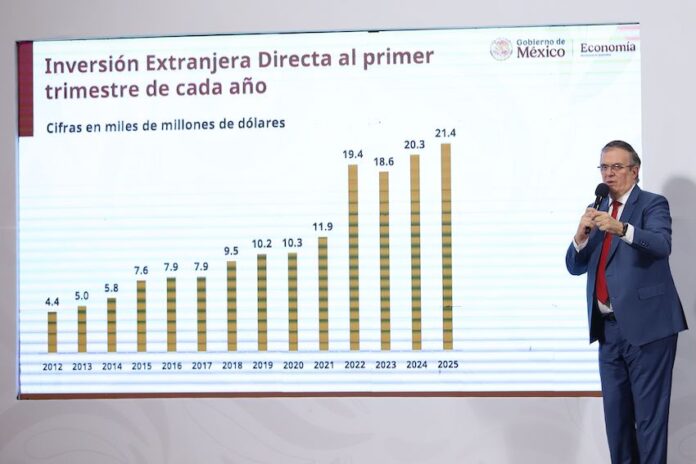
Foreign direct investment (FDI) in Mexico hit a new record high of US $21.4 billion in the first quarter of 2025, Economy Minister Marcelo Ebrard reported Thursday.

“It’s the highest [first quarter total] we’ve ever had,” Ebrard said at President Claudia Sheinbaum’s morning press conference.

“…It’s very good news because it was a complicated quarter on the international stage” he said, referring primarily to the protectionist policies implemented by United States President Donald Trump since he began his second term on Jan. 20.

The $21.4 billion first quarter FDI total represents an increase of 5.4% compared to the $20.3 billion Mexico received in foreign investment in the first three months of 2024. Last year’s first quarter figure was a record high at the time.

A graph presented by Ebrard on Thursday showed that FDI in Mexico increased in the first quarter of every year since 2012, with the exception of 2017, when the Q1 total was equal to that of the previous year.

Compared to the first quarter of 2012, when FDI totaled $4.4 billion, foreign investment in Mexico was 386% higher in the first three months of 2025.

Ebrard highlighted that the highest first quarter FDI total during the “neoliberal stage in Mexico” — a term used by ruling party politicians to describe the period between 1982 and 2018 — was in 2018, when $9.5 billion flowed into the country.

Unilever announces US $1.5B investment to complete Nuevo León factory and expand Mexico operations

“In the fourth transformation we reach this year the all-time high of $21.4 billion in foreign direct investment,” he said, using the self-anointed nickname of the political movement founded by former president Andrés Manuel López Obrador and now led by Sheinbaum.

“I think that it’s very good news,” Ebrard said.

The economy minister didn’t provide a breakdown of the FDI Mexico received in the first quarter of 2025.

In 2024, almost 80% of the US $36.87 billion FDI total came from reinvestment of profits by companies with an existing presence in Mexico. New investment accounted for just 8.6% of the 2024 total, with the remainder of the money — 13.5% of the total — being loans and payments between companies of the same corporate group. Almost half of all FDI in Mexico last year came from the United States.

On Thursday, Ebrard only said that the increase in FDI in the first quarter of the year meant that Mexico received “more reinvestment and more capital arriving to our country through all avenues.”

The low level of new FDI last year — whose $3.17 billion total represented a decline of more than 30% compared to 2023 — raised additional concerns that Mexico was not capitalizing on what has been described as a “once-in-a-lifetime” opportunity to attract foreign investment amid the nearshoring trend.

The Sheinbaum administration, which took office last October, launched an ambitious economic initiative called Plan México in January, which, among other objectives, aims to spur foreign investment in Mexico and reduce reliance on imports, especially from Asia.

Government’s plan to build ‘well-being hubs’ moves ahead 

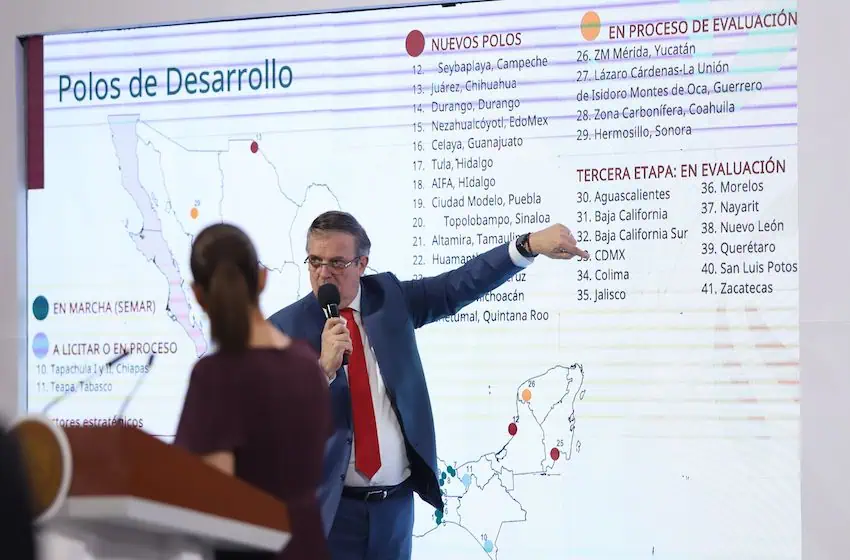
In April, Sheinbaum announced 18 “programs and actions” related to Plan México. One of the supplementary actions she outlined was to begin by the middle of May the tendering processes for the construction of 15 new “well-being hubs” (polos de bienestar): industrial zones or corridors across the country, each of which will specialize in different economic sectors.
Ebrard FDI
Ebrard emphasized that a big piece of Mexico’s plan to attract foreign investment throughout the country is to offer tax incentives to companies that contribute to the development of specified “well-being” hubs. (Daniel Augusto/Cuartoscuro)

On Thursday, Ebrard said that 14 of those “well-being” and “development” hubs, to be located across northern, central and southeastern Mexico, have been approved by state governments. He also said that tendering processes to find companies to build them have begun.

The planned industrial corridors cover “many states,” the economy minister said.

“Quintana Roo, Michoacán, Veracruz, Tlaxcala, Tamaulipas, Sinaloa, Puebla, Hidalgo. You will say, does Hidalgo have two? Yes it does,” Ebrard said before noting that the new industrial corridors will also run through the states of Guanajuato, México state, Durango, Chihuahua and Campeche.

He presented a map that showed that the government is evaluating, or will evaluate, the establishment of an additional 16 industrial corridors. Already partially operating is the Isthmus of Tehuantepec development hub, where cargo trains are now transporting goods across the narrow strip of land between Salina Cruz, Oaxaca, on the Pacific coast and Coatzacoalcos, Veracruz, on the Gulf coast.

Ebrard noted that the government will offer tax incentives to companies that invest in the new development hubs. He said the government expects that Mexican and foreign companies that operate in a wide variety of sectors will invest in the industrial zones.

Those sectors, he said, include aerospace, automotive, agro-industry, pharmaceuticals, medical devices, electronics, semiconductors, chemicals, textiles, clean energy, plastic, metal and logistics.

Ebrard stressed that the construction of the industrial zones “has to do with the development of strategic economic sectors for our country” and will ensure that there is “development in all of Mexico and not … just some regions.”

“…. It has to do with the increase in national content that has been proposed in Plan México,” he added.

“And above all, the most important thing is that there is shared prosperity, that if we have [economic] growth and investment it is translated into well-being. That’s why the [development] hubs are linked to the concept of well-being,” Ebrard said.

By Mexico News Daily chief staff writer Peter Davies (peter.davies@mexiconewsdaily.com)
700 exotic animals evacuated from Sinaloa sanctuary due to cartel violence

0
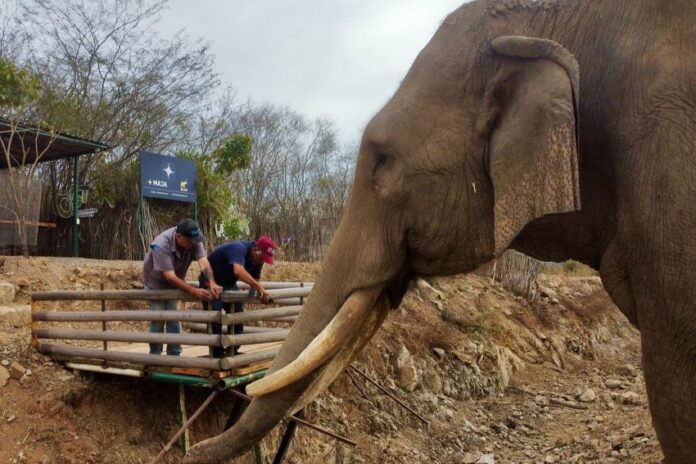
An elephant at the Ostok sanctuary.
Elephants, lions, and tigers await relocation from Ostok Sanctuary amid cartel violence near Culiacán. (Ostok Sanctuary/Facebook)

A Mexican wildlife sanctuary has evacuated hundreds of exotic animals to escape cartel violence near Culiacán, Sinaloa, marking one of the largest animal relocations in the country’s history.

Ostok Sanctuary, home to about 700 animals including elephants, tigers and lions, transported its inhabitants 140 miles to a new refuge in Mazatlán after months of armed attacks, threats and supply shortages.

The transfer began Tuesday with a 15-truck convoy, escorted by National Guard personnel and accompanied by zoo veterinary technicians and wildlife management specialists.

Ostok Sanctuary is located 25 kilometers north of the capital of Culiacán — a city that rival factions of the Sinaloa Cartel have turned into a battlefield for territorial control, following last summer’s arrest and extradition to the United States of cartel leader Ismael “El Mayo” Zambada.

Ostok’s founder and president, Ernesto Zazueta, described the decision to shut down his 4-year-old sanctuary and move the animals as desperate but necessary.

“We’ve never seen violence this extreme,” he said, citing frequent gun battles near the refuge and roadblocks that left animals without food for days.

Staff faced direct threats, including a February incident in which armed men stole a rescue truck and supplies at gunpoint. 

“There’s no safe place left in this city these days,” said Diego García, a sanctuary worker.

Veterinarians struggled to treat injured animals, such as Bireki, an elephant whose foot infection went untreated for weeks due to specialists refusing to enter the conflict zone.

Culiacán’s one million residents endure daily terror, as cartel checkpoints, armed clashes and public executions proliferate, along with kidnappings, vehicle thefts and business vandalism.

A state police pickup truck from Culiacan, Mexico, with a crushed grill and destroyed headlights. The truck is parked half on the sidewalk and half on the street.
Cartel violence in Culiacán has forced both residents and wildlife sanctuaries to seek safety, prompting the mass relocation of hundreds of exotic animals. (Jose Betanzos Zárate/Cuartoscuro)

According to the newspaper Expansión, 800 businesses in Culiacán have closed since September, and there have been temporary closures of 97 schools.

Statistics in the newspaper Noroeste, cited by the Latin Times, noted there were 956 killings in Sinaloa from early September 2024 through early March 2025. The bloodiest month reported was October 2024, with 187 homicides, an average of more than 6 per day.

“Why do the police do nothing?” cried a mother mourning her son’s bullet-riddled body on a roadside this week.

The first animals arriving in Mazatlán were welcomed into Bioparc El Encanto — a new 50-hectare sanctuary slated to open to the public in August.

Zazueta called the move “an act of resistance, love and dignity,” though staff remain wary, as Mazatlan has faced violence, too, although certainly not as much as Culiacán.

Zazueta’s reserve was in the hills north of Culiacán, where violence has increased this month.

According to the newspaper El País, clashes between the two Sinaloa Cartel factions — “Los Chapitos” and “Los Mayitos” — had been occurring mainly in Culiacán and the southern municipalities, but this month have spread to the mountainous area north of the capital.

“Trucks with armed men have circulated in broad daylight” through some municipalities, “and gunmen have exchanged fire,” the paper wrote. “Shots have reached the once peaceful municipality of Mocorito, known for its mining activity.”

David Saucedo, a well-known Mexican security analyst who frequently comments on issues of organized crime, cartel violence and public security in Mexico, warned that crackdowns on either faction risk further cartel retaliation, perpetuating a cycle of bloodshed.

With reports from Expansión, Associated Press, Quadratin Sinaloa and Sin Embargo

Sony’s series ‘Carlota’ to tell story of Mexico’s ill-fated empress

8
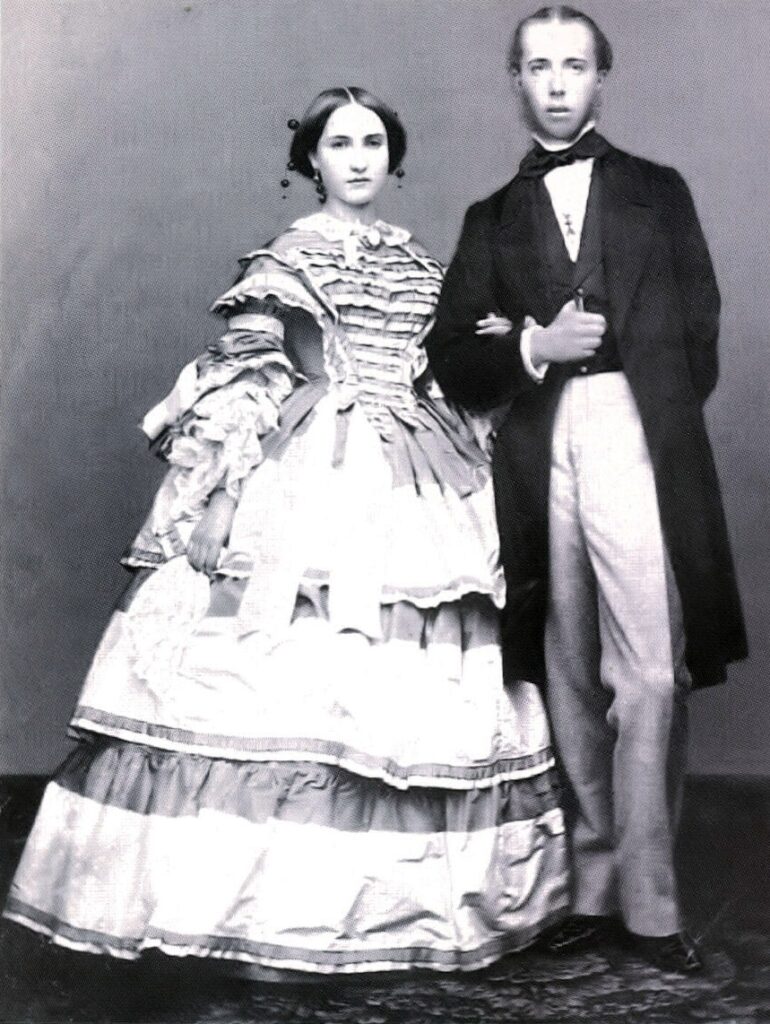
Mexican actress Belinda and the princess Carlota.
Carlota’s story of love, power and betrayal will soon come to life with Belinda in the lead role.(Belinda/Facebook. Wikipedia)

Mexican singer and actress Belinda Peregrín Schüll (known professionally as Belinda) will portray the ill-fated 19th-century empress Carlota in a new Sony Pictures Television series about the Second Mexican Empire.

The Spanish-born Mexican pop star headlines the cast for the series, which will start filming on location in Mexico, Colombia and Spain later this year. Sony has commissioned 10 episodes, each 45 minutes long, for season one.

“Carlota” will trace the arc of the Belgian princess’s experiences in Mexico, from early optimism and the royal couple’s sincere desire to transform the strife-ridden country into a glittering empire, only to face rising political and cultural tensions. 

In a spoiler alert, the film industry trade magazine Variety writes that Carlota eventually “finds herself entangled in a far more complex reality, including a love story that defies fairy-tale expectations. As Carlota and her husband Maximilian attempt to build a new empire, they are drawn into a dangerous web of ambition, loyalty and betrayal.”

Billed as Sony’s most ambitious Latin American series to date, producers are confident the titular character will attract viewers, pointing out that Carlota was the first woman to exercise political power in Mexico. She often acted as head of government during Maximilian’s many sojourns outside the capital. 

The series will be directed by Alejandro Bazzano (“Money Heist,” a popular Spanish television series) and Ana Lorena Pérez Ríos (“Como agua para chocolate,” the HBO Max series).

Belinda (Aug. 15, 1989) debuted at age 10 in a children’s telenovela and has appeared in films (including Disney’s “The Cheetah Girls 2,” TV series and Mexican telenovelas. In 2003, she launched a successful singing career; her four studio albums, singles and soundtracks have sold over 3 million copies.

Among Belinda’s co-stars are Jaime Lorente as Maximilian, Miguel Ángel Silvestre as Belgian Gen. Alfred Van Der Smissen, and Mabel Cadena as Josefa, a fictionalized court lady. 

Lorente is best known for playing Denver in “Money Heist.”.. Silvestre rose to prominence with his performance as El Duque in the Spanish TV drama “Sin tetas no hay paraiso.” The Mexican-born Cadena made her film debut in “Black Panther: Wakanda Forever.”

“I’ve been dreaming about this project for two years and, at times, it seemed as though it would not come about,” Belinda wrote in a post on Facebook. “Now it is a reality and … I don’t have the words to describe how much this means to me.”

John Rossiter, executive vice president for Sony Pictures Television’s Latin America division, praised the cast and promised high production values, saying the project underscores Sony’s dedication “to crafting top tier stories that connect with audiences not only in Latin America but across the globe.”

“‘Carlota’ is a powerful milestone in our journey to establish Sony Pictures Television as a leading entertainment producer in Latin America,” he said.

Empress Carlota and Emperor Maximillian.
Empress Carlota and Emperor Maximilian pictured together in 1857 before their fateful reign in Mexico. (Louis-Joseph Ghémar/ Royal Collection of Belgium)

Who were Carlota and Maximilian?

Archduke Maximilian of Austria and his Belgian wife, Princess Carlota, arrived in Mexico in 1864 on the heels of a French invasion that drove President Benito Juárez out of the capital. 

Maximilian’s reign would last just over three years. He was executed in Querétaro on June 19, 1867.

At the time, Carlota was in Europe pleading with France’s Napoleon II and other European leaders to come to the rescue of her husband. The empress would survive Maximilian by 60 years, descending from mourning and melancholy into madness.  

With reports from Variety, El País and El Universal

As peso strengthens, new firm offers shield against currency volatility for property buyers

7
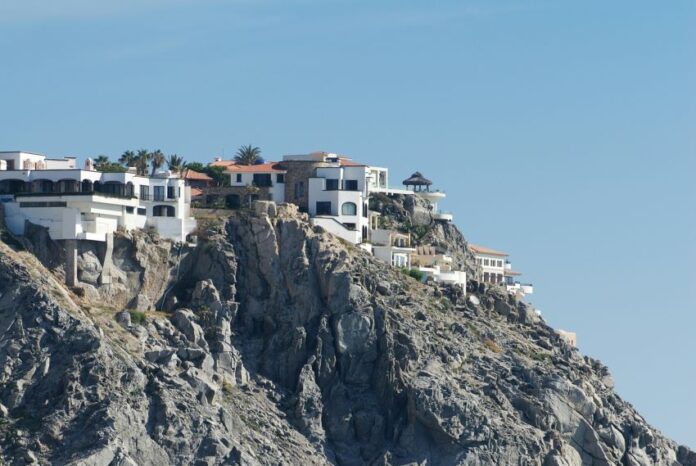
A luxury house on a cliff overlooks the Pacific ocean.
“Buying property in Mexico should feel exciting, not stressful,” says MexEdge founder George Reavis. (Stephan Hinni/Unsplash)

Financial services firm MexEdge is set to become the first company in Mexico to offer currency risk solutions specifically tailored for individuals buying or building property in Mexico. 

“Our mission is to empower people with peace of mind,” MexEdge founder George Reavis said in a press release. “Buying property in Mexico should feel exciting, not stressful.”

View of a luxury home with a pool.
Luxury homes in Mexico could be more accessible for international buyers thanks to new currency risk solutions from MexEdge. (Berkshire Hathaway HomeServices Colonial Homes San Miguel)

MexEdge was created “to remove the financial guesswork and give our clients clarity, control and confidence in their investment.”

On its website, MexEdge says it provides “tailored solutions to fit the needs” of expats purchasing real estate or making other significant transfers.

“Through exclusive partnerships with leading [foreign exchange] banks, we offer corporate-level exchange rates, forward contracts to lock in your rate and personalized support every step of the way,” it says. 

With two years of experience in Mexico, MexEdge aims to help expats and international buyers save money and eliminate risks when exchanging US dollars, Canadian dollars or other currencies to Mexican pesos.

MexEdge says it can help clients make sense of “a global environment shaped by shifting trade policies, tariff talks and increasing market uncertainty.” 

The company has also published a handbook entitled: “The Ultimate Guide to Saving Money on Currency Exchange for Expats in Mexico.” The guide is available for free on its website.

MexEdge says “currency volatility has become a serious concern for foreign buyers,” driving demand for its brokerage services.

With the peso reaching new highs and the dollar losing strength, U.S. and Canadian buyers face greater exposure to unpredictable currency swings, which can add thousands of dollars to the final purchase price.

Interior patio of colonial home.
A tranquil interior patio in a colonial Mexican home, one of many dream properties made easier to purchase with expert currency planning. (casitamx)

On his LinkedIn page, Reavis says his company works “alongside real estate professionals to simplify currency planning, reduce financial surprises and deliver smoother closings for international clients.”

Among his more than 25 years in real estate development, construction and finance, Reavis has spent seven years working in Mexico. 

He says he created MexEdge “as a direct response to challenges I faced in my own projects,” including the experience of watching promising deals nearly fall apart, or being undercut by sudden shifts in the dollar/peso exchange rate that added thousands more to the bottom line.

With reports from EIN Presswire

Why did a Mexican Navy ship hit the Brooklyn Bridge?

10
The ARM Cuauhtémoc, a two masted sailing ship
The ARM Cuauhtémoc at port in Dublin. The ship was seen hitting the Brooklyn Bridge in New York City earlier this week. (Miguel Mendez/Wikimedia)

After a Mexican Navy tall ship hit the Brooklyn Bridge this weekend, killing two cadets, global attention has been on the magnificent boat, despite the tragedy surrounding it. The ARM Cuauhtémoc, which was filmed crashing into the bridge, has a long and proud history of service with the Mexican Navy.

What does the ARM Cuauhtémoc do?


View this post on Instagram


A post shared by Mexico News Daily (@mexiconewsdaily)

The Cuauhtémoc functions as a floating cultural embassy, spreading Mexican spirit at all the ports it visits. For more than four decades, it has served as a way for the government to inspire youth, promote Mexico and turn heads at every port it has visited.

But what happened in Brooklyn? Mexico News Daily’s María Meléndez explains what we know so far.

Mexico News Daily

Inflation tests Mexico’s monetary easing strategy as prices spike in May

1
Inflation impacting canned goods
Prices for processed food, beverages and tobacco rose 4.47% annually in the first 15 days of May, while non-food goods were 2.64% more expensive. (Rogelio Morales/Cuartoscuro)

Mexico’s annual inflation rate rose above 4% in the first half of May, reaching its highest level since December.

The national statistics agency INEGI reported Thursday that the annual headline rate was 4.22% in the first 15 days of May, up from 3.93% across April.

Inflation is now outside the Bank of Mexico’s target range of 3% plus or minus one percentage point.

The annual headline rate in the first half of this month — above the 4.01% consensus forecast of analysts polled by Reuters — is the highest since the first 15 days of December.

INEGI said that consumer prices increased 0.09% compared to the second half of last month, while the annual core inflation rate, which excludes volatile food and energy prices, was 3.97% in the first 15 days of May, up from 3.93% across April.

Mexico’s headline inflation rate has risen every month since February, after cooling to 3.59% in January.

Despite the upward trend in inflation in recent months, the Bank of Mexico (Banxico) cut its benchmark interest rate by 50 basis points last week and by the same margin in March.

The central bank also reduced its key rate by 50 basis points in early February. With last week’s cut, the rate currently stands at 8.50%, the lowest level since August 2022.

People shopping at a Mexican shopping mall
The Mexican financial group Banco Base said in an analysis note that it would be “prudent” for Banxico to pause its monetary easing cycle following this morning’s inflation figures. (Rogelio Morales/Cuartoscuro)

Bloomberg reported that the uptick in inflation in the first half of May “likely won’t deter central bankers from cutting the interest rate again in June given the economy also posted weak growth.”

INEGI reported on Thursday that the Mexican economy contracted 0.4% in March compared to February and 0.1% on an annual basis.

GDP increased 0.2% in the first quarter of 2025 compared to the final three months of last year and 0.6% compared to Q1 of 2024. Those final data figures match the Q1 preliminary growth numbers INEGI published in April.

Despite the weak growth, Banco Base said in an analysis note that it would be “prudent” for Banxico to pause its monetary easing cycle. The Mexican bank highlighted that core inflation rose to its highest level since last August in the first half of this month.

“This is a cause for concern, as the core component determines the trajectory of headline inflation over the medium and long term, and its recent upward trend suggests that the Bank of Mexico has not yet achieved sustained inflation convergence to the 3% target,” Banco Base said.

Banxico said last week that its governing board could “consider adjusting” its benchmark interest rate “in similar magnitudes” — i.e., by 50 basis points — at future monetary policy meetings.

Economists at Brazilian brokerage and financial services group XP predicted another 50 basis point reduction to Banxico’s key rate in June, but said that additional upticks in inflation “could motivate” the central bank to slow the pace of its monetary policy easing to 25 basis points in August.

Inflation data in detail 

INEGI’s latest data shows that agricultural products (fruit, vegetables and meat) were 5.79% more expensive in the first half of May than in the same period last year. Annual inflation for meat alone was 10.25%, while fruit and vegetable prices decreased 1.22%.

Prices for processed food, beverages and tobacco rose 4.47% annually in the first 15 days of May, while non-food goods were 2.64% more expensive.

The cost of services increased 4.49%, while energy prices, including those for gasoline and electricity, rose 3.71%.

With reports from El EconomistaBloomberg and Reuters 

These Mexican states don’t exist anymore. Where did they go?

6
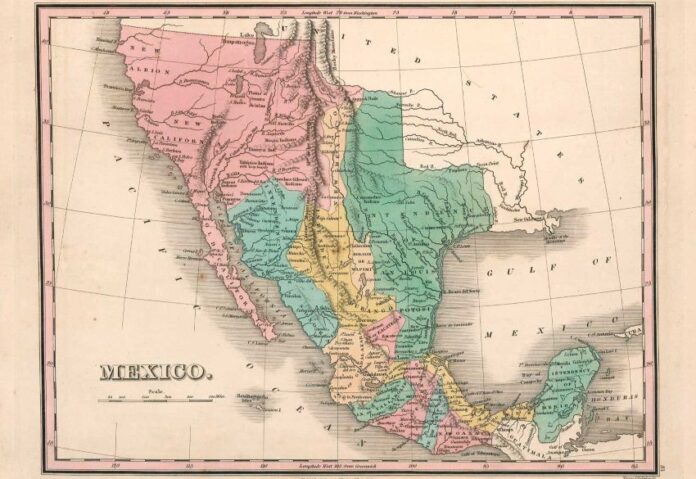
The Mexico we know and love once looked very different. Where did some of it go? (Todo Mapas México)

Indigenous rebellions, foreign invasion and secessionist movements have meant that Mexico’s map has changed dramatically since independence in 1821. Most people are familiar with the territory taken by the United States in the Mexican-American War, but there are several other former Mexican states that no longer exist. 

Here are six of them — depending on how you count:

Nuevo León y Coahuila

(Wikimedia Commons)

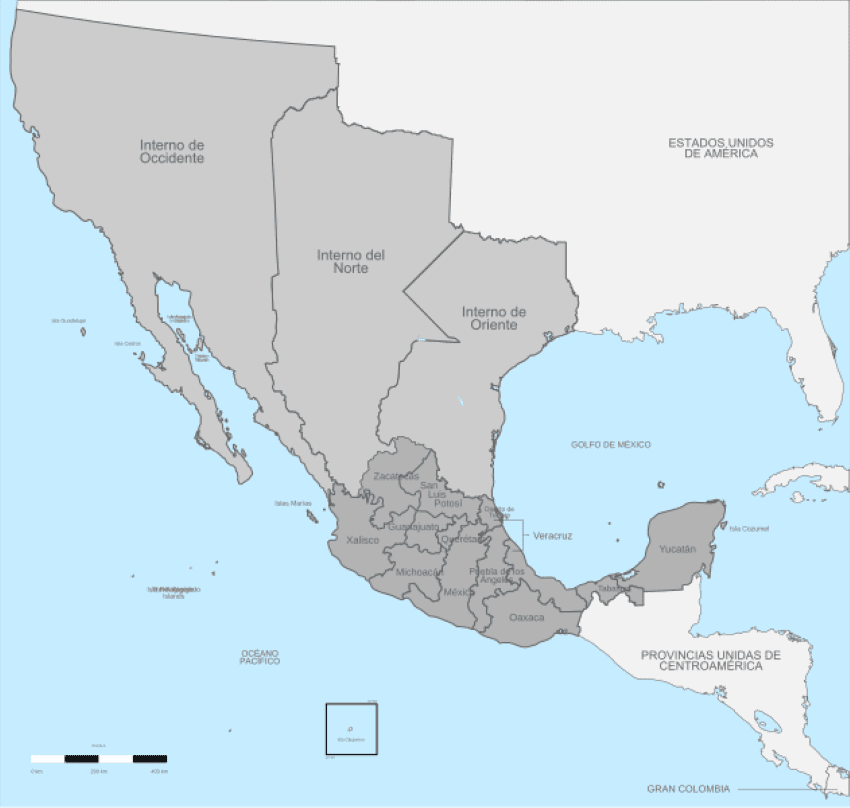
The map of Coahuila has changed many times. While republican Mexico’s first constitution was being drafted, the home of wine in the Americas had been part of the gigantic Internal State of the East. As Coahuila y Tejas, it became the sixteenth Mexican state. In 1840, in the context of a wave of secessionist movements sparked by President Antonio López de Santa Anna’s adoption of a centralist constitution, Coahuila joined Nuevo León and Tamaulipas in forming the short-lived separatist Republic of the Rio Grande.

Arguably, the strangest moment in Coahuila’s territorial history came in the 1850s. When federalists revolted against Santa Anna in the 1854 Ayutla Revolution, the call to rebellion was answered in the northeast by a Nuevo León-born military leader named Santiago Vidaurri, who defeated centralist troops in Monterrey and then marched into Coahuila. Through shrewd politicking and military power, Vidaurri unilaterally annexed Coahuila in 1856, fusing his home state and its neighbor into the state of Nuevo León y Coahuila, which he essentially ruled as his personal domain. 

Vidaurri’s move was, of course, completely illegal, but the new Liberal government of the country needed him on their side, and the Constitution of 1857 officially ratified Nuevo León y Coahuila as a state. It stayed that way until 1864, when Vidaurri was executed for having sided with the Second Mexican Empire. President Benito Juárez made Nuevo León and Coahuila two states once again.

The Kingdom of Guatemala

(Wiki Index)

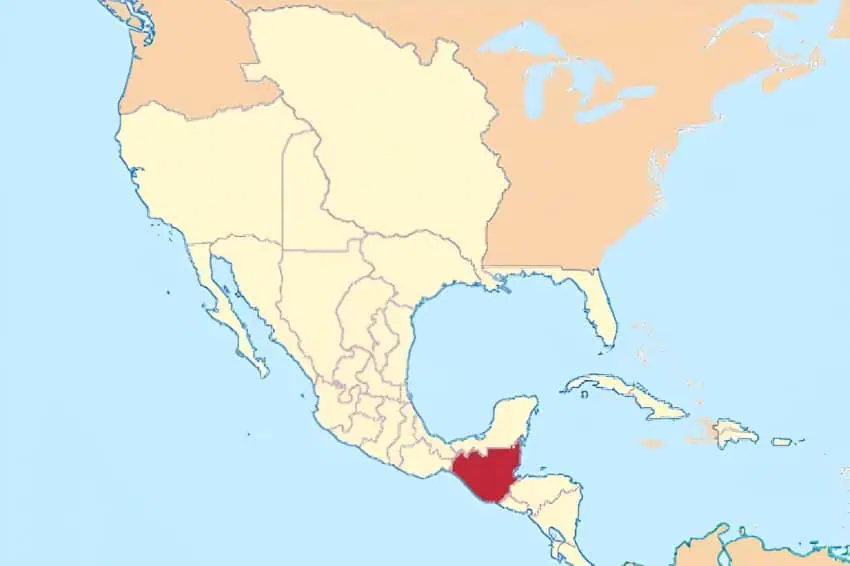
While not a state — Mexico didn’t have them yet — nearly all of Central America was once part of the country. Under Spanish rule, the territory that is now Chiapas, Guatemala, El Salvador, Honduras, Nicaragua and Costa Rica made up the Captaincy-General of Guatemala, a sister colony to New Spain. 

Central America peacefully declared independence from Spain in September 1821, and its conservative leaders favored annexation into the newly-independent Mexican Empire, a constitutional monarchy. Agustín de Iturbide, who would later become Emperor of Mexico, felt similarly, inviting Central America to join his country. The government of Guatemala City — the region’s de facto government — accepted in January 1822, bringing Mexico to the historic height of its territorial extent. Not all Central Americans agreed with Guatemalan leadership or annexation to Mexico, however, and many Salvadorans, Costa Ricans and Nicaraguans took up arms against it. 

Iturbide sent Mexican troops to pacify these regions and was largely successful, but after he abdicated in March 1823, Mexico’s interim government was willing to let Central America decide its own fate. In July of that year, Central America declared independence from Mexico and both countries came into the world as republics: Mexico as the First Mexican Republic and Central America as the United Provinces of Central America. Mexico did keep a piece of the old Guatemala, though: Chiapas voted to remain part of the country in 1824. 

Sinaloa y Sonora

(Wikimedia Commons)

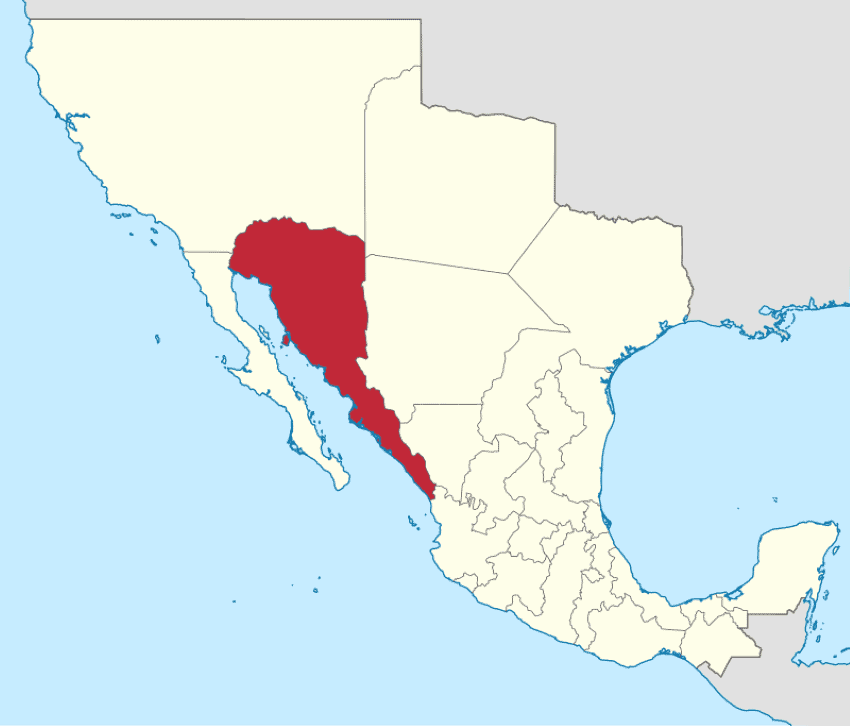
As many Sinaloans and Sonorans will tell you, their states have a lot in common — their natives’ loud, percussive accents, love of baseball and taste for seafood come to mind. These northern Pacific states are neighbors, but they were once something even closer: the single state of Sinaloa y Sonora. 

Take a look at the map of early independent Mexico and you’ll quickly notice that while the country’s central and southern states look largely as they do today, the northern states are enormous. In 1824, that made sense: northern Mexico was very sparsely populated by Mexicans and was still under the control of powerful Indigenous nations, so large states initially seemed practical for administrative and defense purposes. Three Estados Internos, or Internal States, were created on the country’s periphery; Sinaloa and Sonora were made the Internal State of the West, also called Sinaloa y Sonora, which included part of modern-day Arizona as well. 

Sonora and Sinaloa had frequently been governed as part of the same territory since the colonial era. Though this arrangement fostered a closeness between their populations that persists until today, it also created deep rivalries between the territories’ local elites, who competed for influence and commercial opportunities. Illustrating this rivalry, the state’s capital was moved several times from Sonora to Sinaloa and back again. In 1830, with disagreements becoming untenable and authorities torn about how to respond to Indigenous rebellions, Sinaloa and Sonora finally became the first states admitted to the federation ever to separate.

The Estado Interno del Norte and Estado Interno del Oriente

(Wikimedia Commons)

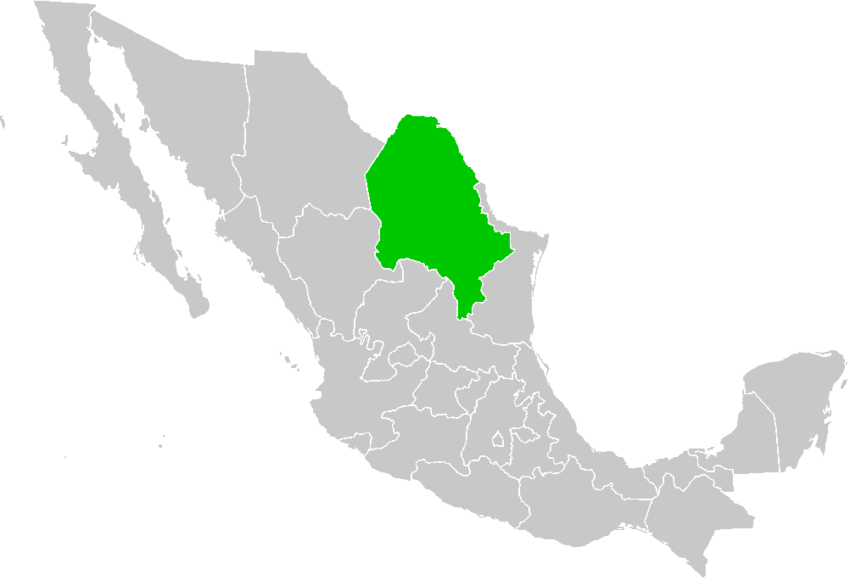
The elite rivalries that dissolved Sinaloa y Sonora were not unique in the Internal States, and in the other two, they didn’t take nearly as long to take effect. Under the Constitutive Act of 1824 — the law of the land while the Constitution of 1824 was being written — the Internal State of the North comprised Durango, Chihuahua and New Mexico, while the State of the East encompassed Coahuila, Nuevo León, Tamaulipas and Texas.

The State of the East included two major cities — Monterrey in Nuevo León and Saltillo in Coahuila — that had been commercial and political rivals since the 1600s and carried their rivalry into the independence period, angling to become the capital of the mega-state. When it became clear that this would not be possible, their leaders began advocating for separation and soon joined the republic as independent states.

Chihuahua and Durango had been governed together by Spain as the province of New Biscay, an arrangement that had worked out better for Durango, which was wealthier and more heavily populated. The two were turned into separate provinces after the collapse of the First Mexican Empire but were joined again as the State of the North in 1823, with a surprising development: the less affluent Chihuahua would be the state’s provisional capital. The Durango elite did not like this at all and agitated for separation, which they got in May 1824; in July of that year, Chihuahua became a state, while New Mexico became a territory.  

The Provincia del Istmo

(Wikimedia Commons)

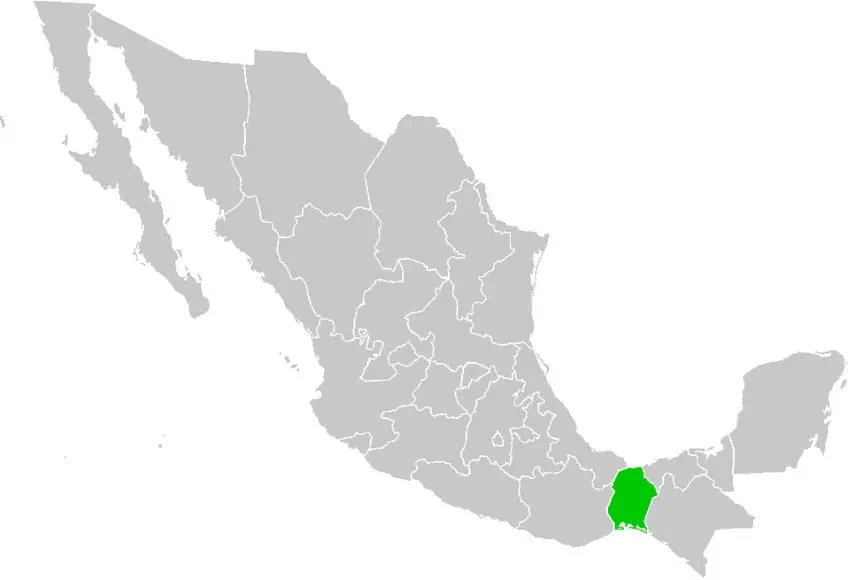
Set in the narrowest part of the Isthmus of Tehuantepec, which runs between the Oaxaca and Veracruz coastlines, Congress declared the foundation of the Province of the Isthmus in 1823. Encompassing the districts of Acayucan and Tehuantepec in present-day Veracruz and Oaxaca, respectively, the province was immediately wracked by conflict, as the government aimed to distribute the area’s rich salt flats and what it called its “wastelands” to retired military officers and settlers. There was a problem: these resources were communally owned by the area’s Indigenous Zapotec majority, who had not been asked. 

Congress abolished the province in 1824, but life had been breathed into the spirit of local and Indigenous separatism in the region between the Atlantic and the Pacific, critically important for national governments from the nineteenth century down to our own time. Unlike the other disappeared states and provinces on this list, the Province of the Isthmus was briefly resurrected after its first death, reestablished in 1852 and dissolved again in 1855, during the Porfiriato.

New Dublin-Cancún flight to take off in 2026

0
Aer Lingus flight
The seasonal Aer Lingus flight will depart from Dublin on Tuesdays, Thursdays and Saturdays at 1:30 p.m., arriving in Cancún at 6:20 p.m. (John McArthur/Unsplash)

Ireland’s flagship air carrier Aer Lingus has announced it will launch a new non-stop route between Dublin and Cancún starting next year. 

The route will be a seasonal flight, operating three times a week from January 6 to April 29, onboard an Airbus A330-300 wide-body aircraft. The service will primarily serve travelers looking to escape the Irish winter and enjoy the tropical climate of the Mexican Caribbean.  

Flights will depart from Dublin on Tuesdays, Thursdays and Saturdays at 1:30 p.m., arriving in Cancún at 6:20 p.m. The return flight from Cancún will depart on the same day at 9:05 p.m., arriving in Dublin at 11:20 a.m. the following day.

“Our research reveals a strong appetite among customers for new travel experiences, particularly seasonal destinations beyond the peak summer period,” the carrier’s CEO Lynne Embleton said in a statement. 

Aer Lingus, part of the airline group that includes Iberia, British Airways, Vueling and Level, noted that this new route also facilitates connections for passengers from other European cities and the United Kingdom via its Dublin hub.

Currently, tour operator TUI offers charter flights to Cancún from Dublin. However, Aer Lingus will become the first airline to provide a non-stop flight from Ireland, the company remarked.  

Dublin Airport
Connections from Dublin International Airport to Cancún will be available from Edinburgh and eight other UK airports, including Glasgow, Manchester, and London Heathrow. (Wikimedia Commons)

Quintana Roo Governor Mara Lezama Espinosa celebrated the announcement in a statement. 

“Quintana Roo, [and] the Mexican Caribbean, welcome and celebrate the first direct Dublin-Cancún flight from Aer Lingus. We will work together with our partner Aer Lingus to make this a successful operation,” Lezama said. 

The Mexican Embassy in Dublin also celebrated Aer Lingus’s new flight, which coincides with the 50th anniversary of the establishment of diplomatic relations between the two countries. Ambassador Carolina Zaragoza Flores noted that the move will strengthen Mexico’s position as Ireland’s largest trading partner in Latin America.  

“This important development […] will undoubtedly foster even stronger economic ties and lead to a strategic partnership,” Zaragoza said. 

Aer Lingus was founded in 1936 under the name Aer Lingus Teoranta, which means “air fleet” in Irish.

With reports from EFE and Aviación Online

How Natalia Lafourcade is writing a new chapter for Mexican music

3
Natalia Lafourcade seated onstage with guitar during Cancionera tour
Back with her latest album and tour, Mexico's Natalia Lafourcade is making a statement about self love, artistic intent and Mexican musicianship. (All photos by Natalia Lafourcade/Facebook)

After more than a decade of loving her music from afar, I finally saw Natalia Lafourcade perform live in Toluca early this month as part of her tour for her album “Cancionera.” To say it was a dream come true would fall short: the evening was intimate, theatrical and deeply moving. It wasn’t just a concert — it felt like a one-woman play. Lafourcade performed every song acoustically, accompanied only by her guitar, weaving stories between each piece.

Few artists feel as woven into the fabric of modern Mexican music as Natalia Lafourcade. With a career spanning more than two decades, she is not just one of Mexico’s most beloved voices but also one of Latin America’s most decorated and enduring songwriters. At 41, Lafourcade holds four Grammy Awards and 18 Latin Grammys — more than any other woman in history, even edging out Shakira.

Natalia Lafourcade: NPR Music Tiny Desk Concert

Over the course of 23 years, she’s released 12 albums and countless songs that have become part of Mexico’s collective soundtrack. One standout is her version of Nunca es Suficiente with Los Ángeles Azules, which has racked up more than 2.2 billion views on YouTube and still plays everywhere from taco stands to weddings, a decade after its release.

Lafourcade’s quiet power resonates beyond Mexico too. Her 2017 NPR Tiny Desk Concert is one of the 12 most-watched of all time, a testament to the global reach of her intimate, soul-stirring music.

The making of a musical icon

Born in Mexico City and raised in the lush, artistic atmosphere of Veracruz, Natalia Lafourcade was quite literally surrounded by music from the beginning. Her father was a musician, and her mother, a classically trained pianist, developed the Macarsi teaching method, which combines musical instruction with personal development. That philosophy became Natalia’s foundation.

Lafourcade attended music and art schools throughout her childhood, and by the age of 14, she joined a short-lived teen pop group called Twist. Just three years later, in 2002, she released her self-titled debut album. “En el 2000”, a playful, Y2K-era anthem from that record, became her breakout hit.

Natalia Lafourcade stands onstage at a Cancionera concert, holding a guitar
Lafourcade kicked off the Cancionera tour in Xalapa, capital of her home state of Veracruz.

In the years that followed, Lafourcade leaned into collaboration, honing her sound alongside fellow musicians and releasing “Hu Hu Hu,” her second solo album. But it was her 2012 tribute project to Agustín Lara, “Mujer Divina,” that truly drew me in. This was the album that made me fall in love with Lafourcade’s music, and the one that revealed just how timeless and touching her artistry could be.

Reimagining tradition

“Mujer Divina” marked a graceful departure from Lafourcade’s pop roots into the romantic world of bolero. In honoring one of Mexico’s most legendary 20th-century composers, she reimagined songs that had been cherished since the 1930s. With the help of other acclaimed musicians, Lafourcade brought new life to Lara’s classics, setting the tone for a new artistic era— one grounded in soulfulness and folk tradition, where her soprano voice soared.

What followed was a series of critically acclaimed albums, including “Hasta la Raíz,” a folk-inspired and emotionally raw record whose title track remains Lafourcade’s most-streamed song on Spotify, and the two-volume “Musas.” These projects, created in collaboration with Los Macorinos — best known as Chavela Vargas’ backing band — paid homage to the richness of Latin American folk music. Here, the singer found her signature sound: acoustic, timeless, reverent.

By 2018, Lafourcade’s star had risen well beyond Mexico. That year, she performed at the 90th Academy Awards alongside Miguel and Gael García Bernal, singing Remember Me from Pixar’s “Coco,” which would go on to win the Oscar for Best Original Song.

Lafourcade has remained prolific in recent years, releasing two volumes of “Un Canto por México” and later “De Todas las Flores” in 2022— her first album of entirely original music in seven years. She debuted the project at New York’s Carnegie Hall, accompanied with a book and podcast exploring the album’s themes. Describing the album, Lafourcade called it “my salvation, my relief, the replanting of seeds.”

 “Cancionera” and a new chapter

Natalia Lafourcade’s latest project, “Cancionera,” released earlier this year, feels like her most intimate offering yet— a spiritual unraveling, a love letter to Mexico’s past and perhaps to the artist herself. Recorded entirely in one take on analog tape with 18 musicians, the album echoes the warmth and imperfections of something deeply human. Its sound is steeped in the spirit of the Golden Age of Mexican Cinema and shaped by the reflective weight of turning 40.

Natalia Lafourcade stands onstage at a performance on the Cancionera tour playing a guitar and dressed in white
Lafourcade performs in Mérida, Yucatán on May 17.

“This album is full of symbolism, inspired by the surrealism of Mexico and the values of our tradition and iconography,” Lafourcade told the Associated Press in April. “I wanted to honor the songs and the path of the cancioneras and cancioneros of life.”

When Lafourcade announced the Cancionera tour in February, there was no way I couldn’t go. Although I hadn’t read about the album’s inspirations beforehand, sitting in Toluca’s Teatro Morelos it quickly became clear that the show was built around a character: her alter ego, La Cancionera. Part Chavela Vargas, part smoky mystic in a mezcal-soaked cantina, this character sang boleros and rancheras with aching, deliberate grace. Lafourcade called the performance “el teatro de la canción”— theater of song — and that’s exactly what it was.

The evening unfolded like a quiet spell. “Cancionera” is not just an album; it’s a portal. Whether you’ve been following Lafourcade’s journey for years or are only just discovering her work, this project is a moving reminder of her devotion to Mexican music— and the enduring magic of a voice that keeps finding new ways to sing the soul.

Rocio is based in Mexico City and is the creator of CDMX iykyka newsletter designed to keep expats, digital nomads and the Mexican diaspora in the loop. The monthly dispatches feature top news, cultural highlights, upcoming CDMX events & local recommendations. For your dose of must-know news about Mexico, subscribe here.

Teachers’ union blocks press from National Palace: Wednesday’s mañanera recapped

5
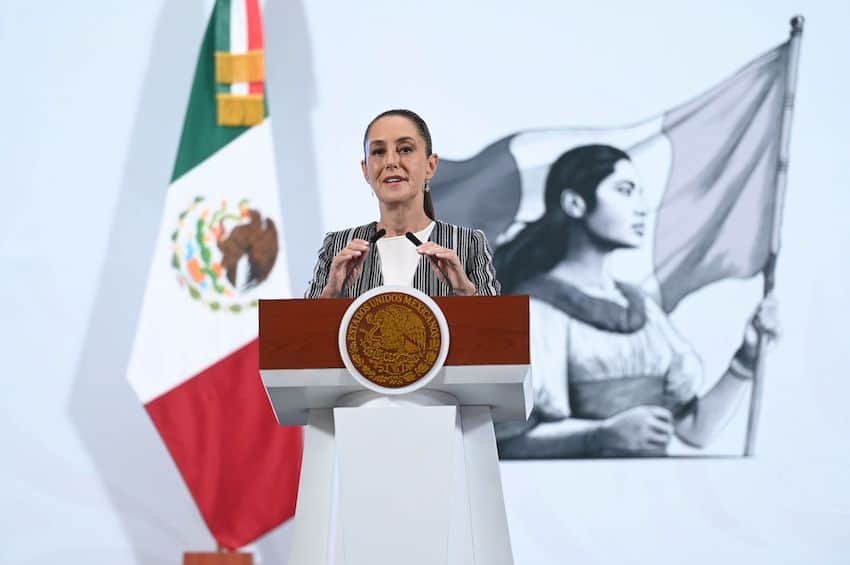
Sheinbaum May 21, 2025
Sheinbaum took questions from reporters via Zoom on Wednesday morning after the national teachers' union blocked press access. (Presidencia/Cuartoscuro)

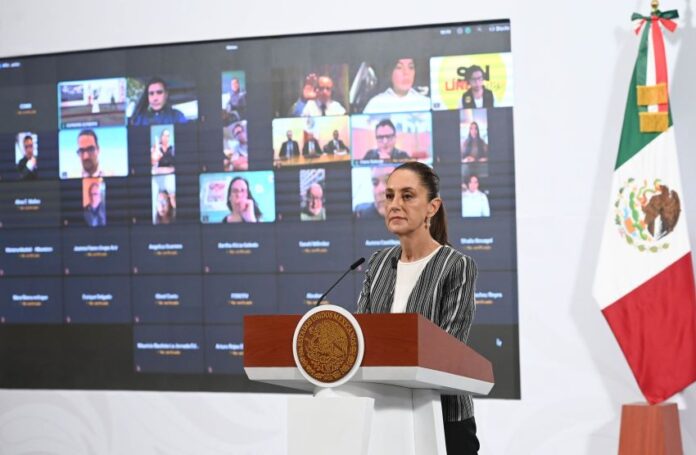
President Claudia Sheinbaum noted at the very beginning of her Wednesday morning press conference that her mañanera would be “different” as reporters (and government officials) were unable to get into the National Palace due to a teachers’ protest.

Members of the CNTE teachers’ union blocked the entrances to the seat of executive power in the historic center of Mexico City as part of their efforts to pressure the government to accede to a range of labor demands, including a much larger pay rise than the 10% hike announced by Sheinbaum last week.

The president, accompanied only by a military general, said in the largely empty Treasury Hall of the National Palace that reporters would connect “by Zoom” to participate in her Wednesday morning press conference.

Mexico hoping for more preferential trade treatment from US ‘very soon’

A reporter noted that Economy Minister Marcelo Ebrard said Tuesday that vehicles assembled in Mexico will face an average tariff of 15% when exported to the United States, significantly lower than the 25% duty the U.S. applies to most other foreign cars.

She asked the president whether any progress had been made in the negotiations with the United States over the 25% tariffs the Trump administration imposed on steel and aluminum imports from Mexico and all other countries around the world.

Sheinbaum first noted that Mexican auto parts are not subject to U.S. tariffs (provided they comply with USMCA rules) and highlighted that the duty on vehicles assembled in Mexico is “significantly” reduced because they contain “a lot of auto parts that come from the United States.”

Sheinbaum May 21, 2025
The president answered a question about whether trade discussions with the United States had reached a deal on steel and aluminum tariffs. (Presidencia/Cuartoscuro)

With regard to “the case of steel and aluminum,” she said her government hopes to “reach an agreement very soon that puts Mexico in a preferential situation compared to the rest of the world.”

Ebrard has traveled regularly to Washington D.C. in recent months to discuss trade with U.S. officials, including Commerce Secretary Howard Lutnick and Trade Representative Jamieson Greer.

‘We’re working with Clara to get justice’ 

Sheinbaum said she had the opportunity on Tuesday to speak in person with Mexico City Mayor Clara Brugada, whose personal secretary and advisor were murdered on Tuesday morning.

“She was here for a while in the afternoon,” she said.

“Above all, [we’re providing] solidarity and support to Clara,” Sheinbaum said, noting that the two victims were “very close” to the mayor.

She said that the families of the victims should know that “we’re working with Clara to get justice.”

Earlier in her press conference, Sheinbaum said that the federal government is supporting the Mexico City Attorney General’s Office in its investigation into the double homicide.

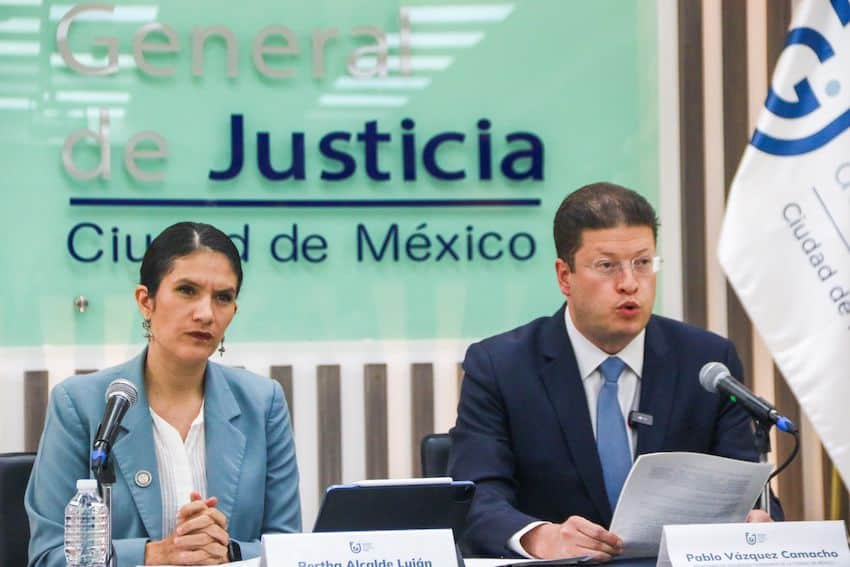
The Attorney General of Mexico City Bertha Alcalde Luján and Security Minister Pablo Vazquez Camacho
The Attorney General of Mexico City Bertha Alcalde Luján and Mexico City Security Minister Pablo Vazquez Camacho announced on Wednesday that authorities are currently seeking four people in connection with the double homicide of the mayor’s aides. (Victoria Valtierra/Cuartoscuro)

Mexico City Security Minister Pablo Vázquez said Wednesday that authorities are seeking to arrest four people — the shooter, who was captured by security cameras committing the crime, and three others who allegedly “supported in the logistics and the driving of [getaway] vehicles.”

‘There will be dialogue’ with teachers 

A reporter asked the president how the government will explain to teachers that “resources are finite” and therefore it is not possible to give them a 100% pay rise, as the CNTE union is demanding.

“There will be dialogue,” Sheinbaum responded.

She subsequently asserted that only “some teachers from some states” are protesting, whereas “the vast majority of Mexico’s teachers” are in classrooms teaching.

“There are teachers from some states that are creating this situation,” Sheinbaum said.

“And the only way to resolve everything is with dialogue. So the door is open to dialogue, the door will always be open to dialogue,” she said.

Another reporter said that he and other journalists were “victims of attacks” by teachers on Wednesday morning when they were attempting to get into the National Palace for the president’s mañanera.

Sheinbaum responded that her government will “always condemn any attack on the media and on journalists” while defending people’s right to protest peacefully.

“… We don’t agree with aggression against anyone,” she said.

By Mexico News Daily chief staff writer Peter Davies (peter.davies@mexiconewsdaily.com)