Home Blog Page 261

Rubio says Mexico is more cooperative ‘than ever before’ in cartel crackdown, aims to stop flow of arms south

17
Marco Rubio
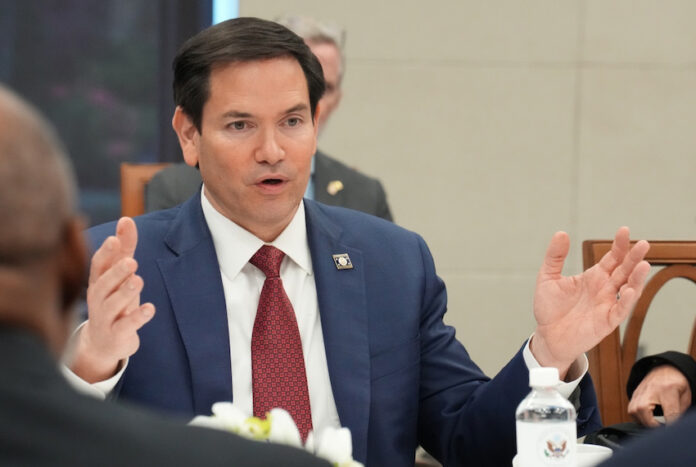
In his extended remarks Wednesday to members of the U.S. House of Representatives' Foreign Affairs Committee, Secretary Rubio mentioned the murder of two government aides in Mexico City on Tuesday and stressed that political violence is "real." (@SecRubio/X)

United States Secretary of State Marco Rubio on Wednesday acknowledged the murder of two mayoral aides in Mexico City, declared that political violence in Mexico is “real” and asserted that the U.S. wants to help stop the southward flow of weapons that often end up in the hands of cartel henchmen.

In an appearance before the United States House of Representatives’ Foreign Affairs Committee, he also said that the Mexican government has been “very responsive on our security concerns” and “increased their security cooperation with us.”

Mayor’s personal secretary and advisor murdered in Mexico City

Responding to a question from Congressman Michael McCaul of Texas, Rubio noted that he “heard last night [that] two more people were murdered in Mexico City, associated with the mayor of Mexico City.”

“The political violence there is real,” he said.

Rubio was referring to the murder on Tuesday morning of Mexico City Mayor Clara Brugada’s personal secretary, Ximena Guzmán, and José Muñoz, an advisor.

A man was captured by security cameras committing the crime on a busy avenue south of Mexico City’s historic center, but no arrests have been reported. Authorities are seeking to detain four people in connection with the murders, Mexico City Security Minister Pablo Vázquez Camacho said Wednesday.

As Rubio remarked, political violence in Mexico is indeed “real,” but Mexico City has been largely spared the kinds of attacks on politicians that are common in some other parts of the country. That made Tuesday’s double homicide — which experts believe was an organized crime hit carried out to send a message to Brugada’s administration — all the more shocking.

Among other remarks, Rubio told McCaul, the chair of the Foreign Affairs Committee, that there have been “irritants” in the United States’ relationship with Mexico, but also “areas of cooperation.”

“… It’s been actually pretty positive. They have been very responsive on our security concerns, they’ve increased their security cooperation with us in ways that have been very productive,” said the secretary of state, a former U.S. senator for Florida.

In February, President Claudia Sheinbaum deployed 10,000 National Guard troops to Mexico’s northern border region to stave off a tariff threat from U.S. President Donald Trump, while her government has ramped up enforcement against organized crime and allowed the CIA to fly drones over Mexico to spy on drug cartels and hunt for fentanyl labs.

The security concerns Rubio referred to are, most notably, the entry of narcotics, especially fentanyl, and migrants to the United States from Mexico.

The secretary of state also said on Wednesday that he “intended to travel potentially to Mexico” in “the next few weeks” along with “a couple of other cabinet members to sort of finalize some of these areas of cooperation.”

What are Rubio’s main concerns about Mexico?

“… We’ve been primarily focused with Mexico on two things. One is on trade, which is not my department, but obviously our Trade Representative Mr. Greer and also Commerce Secretary Lutnick has been engaging with them,” Rubio said, referring to negotiations over tariffs imposed by the United States on some imports from Mexico.

“And then the other is on security cooperation. We have a mutual interest in Mexico. In essence the cartels that operate within Mexico and threaten the state are armed from weapons that are bought in the United States and shipped there. We want to help stop that flow,” he said.

“The reverse is those cartels threaten the state. There are parts of Mexico that are governed by cartels,” Rubio said, referring to criminal organizations such as the Sinaloa Cartel and the Jalisco New Generation Cartel, which, along with four other Mexican cartels, were designated as foreign terrorist organizations by the U.S. government in February.

Earlier this month, the United States Bureau of Alcohol, Tobacco, Firearms and Explosives reported that nearly 9,700 firearms bound for Mexico had been seized since Trump began his second term on Jan. 20.
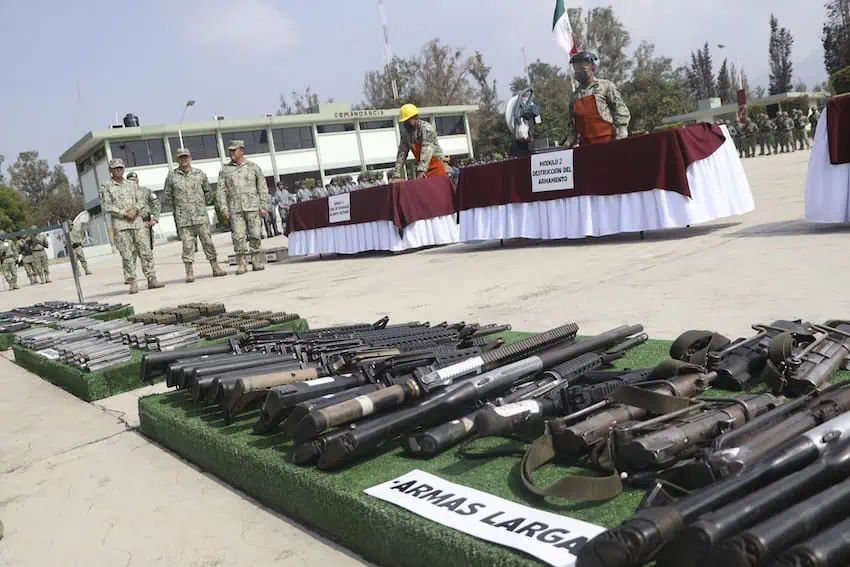
confiscated firearms on display
Rubio addressed an issue that has long been a sore spot in Mexico: the flow of firearms from the United States to the cartels in Mexico. “We want to help stop that flow,” he said. (Carolina Jiménez Mariscal/Cuaroscuro)

The Mexican government has long called on its U.S. counterpart to do more to stop the southward flow of firearms, which are commonly used by cartel members to commit murders and other crimes in Mexico.

It appears to be pleased with the efforts made by the second Trump administration so far.

On May 6, Sheinbaum described as “historic” a recent statement released by the United States government declaring what she called a new “mano dura” (heavy hand or iron fist) approach to gun smuggling from the U.S. to Mexico.

On Wednesday, Rubio said that the Mexican government has a “vested interest and a desire to go after these cartels, and we want to help equip them and provide them information.”

“They’ve also been increasingly cooperative, more than ever before, in bringing back and extraditing people wanted in this country,” he added.

“… So I think we’ve got good areas of cooperation. We still have some more work to do on migration, but they’ve been cooperative,” Rubio said.

By Mexico News Daily chief staff writer Peter Davies (peter.davies@mexiconewsdaily.com)

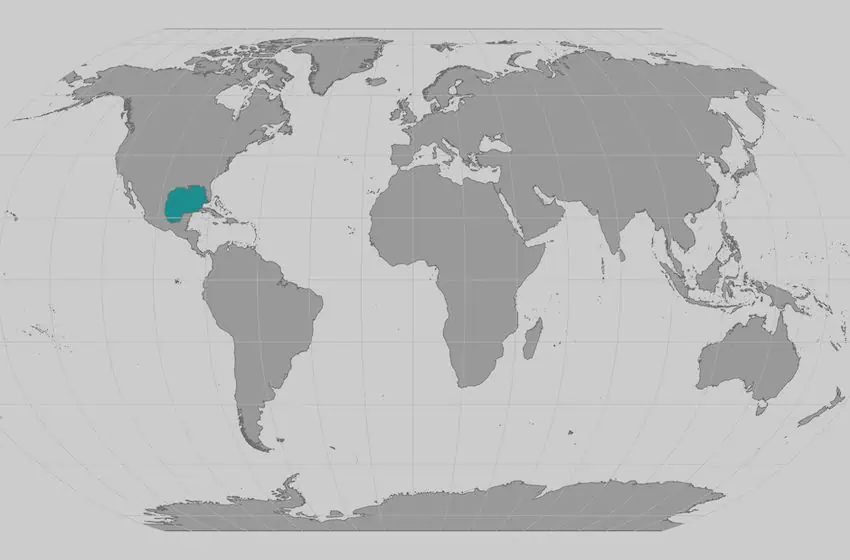
Drilling in the Gulf of Mexico is endangering one of the world’s rarest whales

4
a whale in the water
The Rice's whale is named for the scientist who first identified it as a separate species. Its population may be down to 51. (NOAA/Wikimedia Commons)

The Sierra Club and other environmental groups have filed a lawsuit to adequately protect endangered marine animals — including one of the world’s rarest whales — from being harmed or killed by fossil fuel drilling and exploration in the Gulf of Mexico.

The filing Tuesday in the U.S. District Court in Maryland came on the heels of the Trump administration’s publication of a long-awaited environmental assessment this week.

oil drilling rig
With their service vessels and periodic leaks, fossil fuel drilling rigs in the Gulf of Mexico can be lethal to the rare Rice’s whale. (Shutterstock)

The assessment from the United States’ National Marine Fisheries Service (NMFS) found that vessel strikes related to oil and gas drilling in the Gulf of Mexico are likely to jeopardize the existence of the critically endangered Rice’s whale.

The new assessment was ordered last year by a federal judge who ruled that the previous NMFS report did not adequately address risks from oil spills and vessel strikes.

The new report, meanwhile, admits offshore gas and oil activities could kill nine Rice’s whales and harm hundreds of sea turtles over the next 45 years.

The Rice’s whale, named after the scientist (Dale Rice) who first wrote about the unique population in the mid-1960s, was officially recognized as a distinct species of baleen whale in 2021.

There are an estimated 51 whales — who are up to 12.8 meters long and have pink-tinged underbellies — in the Gulf, according to the analysis, though other studies cite “fewer than 100” remaining.

The assessment serves to govern how endangered and threatened marine species should be protected from vessel strikes, oil spills and industrial noise in the region, which President Donald Trump has renamed the Gulf of America.

For example, the report sets speed restrictions and a requirement for vessels to maintain a 500-meter minimum distance from the species, if spotted.

What are the grounds for the Sierra Club’s lawsuit?

However, the new report doesn’t go far enough, the suit alleges. It was filed by the U.S. nonprofit Earthjustice on behalf of the Sierra Club, the Center for Biological Diversity, Friends of the Earth and the Turtle Island Restoration Network.

The Rice's whale's habitat is limited to the Gulf of Mexico
The Rice’s whale’s habitat is limited to the Gulf of Mexico, making it one of the most vulnerable species of whale in the world. (NOAA)

“It’s just as inadequate for protecting rare marine species as the last biological opinion was,” said Chris Eaton, an attorney with Earthjustice. “For Rice’s whales, it allows activities over the next 45 years that the Fisheries Service admits will kill nine whales and seriously injure three more.”

Losing even one breeding female could collapse the population, scientists warn.

Oil and gas industry groups welcomed the publication of the analysis. Had it not been produced by a judge’s May 21 deadline, vital operations could have been shut down.

However, they also criticized the report.

“We are concerned by the inclusion of a jeopardy finding for the Rice’s whale,” National Ocean Industries Association President Erik Milito said in a statement. “That determination appears inconsistent with the best available science and triggers unnecessary regulatory uncertainty.”

Rice’s whales inhabit the northeastern Gulf of Mexico, particularly around the De Soto Canyon off the coast of Florida, but have also been detected further west.

The Gulf of Mexico also hosts five endangered sea turtle species, which face ship strikes, explosives and oil spills under the plan.

“The Fisheries Service continues to turn a blind eye to offshore oil and gas risks,” Eaton said. “This doesn’t provide the protection the law requires.”

With reports from Reuters, Earthjustice and Whales Online

Ebrard: US content in Mexico-assembled vehicles cuts export tariffs by 40%

0
tariffs on Mexican cars
Ebrard said on Tuesday that the tariff "discount" for Mexican auto exports to the U.S. would be 40%, on average, but could be as high as 50% — if the vehicle has 50% U.S. content. (Ivana Cajina/Unsplash)

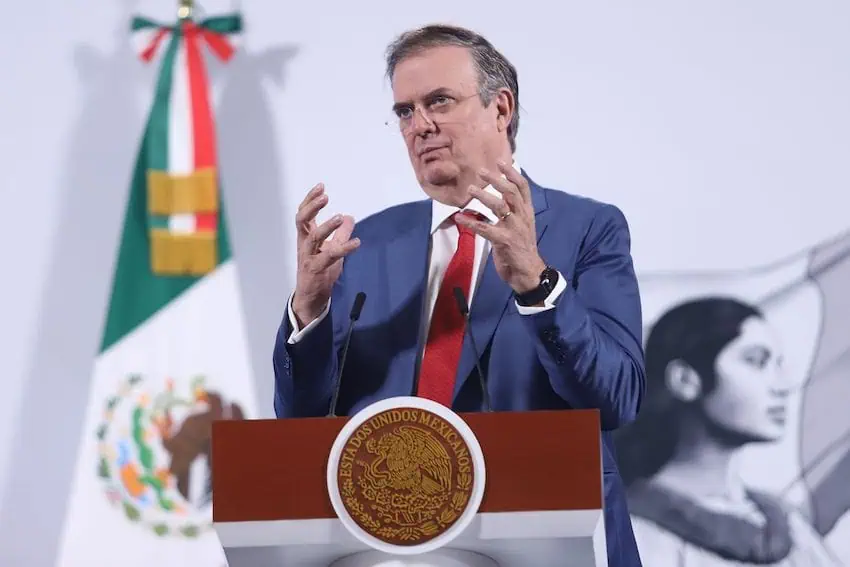
Economy Minister Marcelo Ebrard said Tuesday that vehicles assembled in Mexico will face an average tariff of 15% when exported to the United States, significantly lower than the 25% duty the U.S. applies to most other foreign cars.

“It’s a very big advantage compared to other countries that export to the United States,” Ebrard said at an event in Mexico City.

“Of course, we would love it to be zero,” he added.

His remarks came the same day that the United States Department of Commerce published the “Procedures for Submissions” by importers of automobiles that qualify for preferential treatment under the USMCA, the North American free trade pact that superseded NAFTA in 2020.

United States President Donald Trump announced in late March that he would impose a 25% tariff “on all cars that are not made in the United States,” but U.S. content in vehicles assembled in Mexico was exempted from the duty, lowering the effective tariff on vehicles made in Mexico. The tariff took effect in early April.

The “procedures” published by the U.S. Department of Commerce in the Federal Register detail what importers of vehicles from Mexico and Canada need to do to be exempt from paying a tariff on the U.S. content in those vehicles (see below).

Ebrard: Tariff ‘discount’ could be as high as 50%

Ebrard said that vehicles assembled in Mexico are eligible for a “discount” on the 25% tariff announced by Trump in late March.

Ebrard
Economy Minister Marcelo Ebrard has led Mexico’s trade negotiations with the United States, traveling to Washington on repeated occasions to present the Mexican government’s case against auto, steel and aluminum tariffs. (Daniel Augusto/Cuartoscuro)

He said that the “discount” would be 40%, on average, but could be as high as 50% — if a vehicle has 50% U.S. content.

Guillermo Rosales, president of the Mexican Association of Automotive Distributors, said in March that a vehicle made in Mexico for export to the United States has, on average, 40% U.S. content. The effective tariff on a vehicle assembled in Mexico with 40% U.S. content is 15%.

In the notice it published on Tuesday, the U.S. Commerce Department said it was making “the assumption that the approximate amount of U.S. content” in vehicles made in Mexico and exported to the U.S. “is equal to 40 percent of the value of the vehicle.”

Thus, Ebrard said that the average tariff on vehicles made in Mexico and exported to the United States will be 15%.

If a car assembled in Mexico has 50% U.S. content, it will face an effective tariff rate of 12.5% when shipped to the United States. A Mexican-made car with only 30% U.S. content will face a 17.5% U.S. tariff.

Ebrard said that the preferential treatment afforded to Mexico is the result of the frequent meetings between Mexican officials and U.S. officials, including Commerce Secretary Howard Lutnick and Trade Representative Jamieson Greer.

“You can imagine what would happen without … [this treatment],” he said, referring to the economic damage a full 25% tariff would inflict on Mexico’s auto sector, which exported more than 2.6 million cars to the United States last year, according to U.S. data.

New US tariff scheme gives Mexico’s auto industry ‘an additional comparative advantage,’ says Sheinbaum

Ebrard has led Mexico’s trade negotiations with the United States, traveling to Washington on repeated occasions to present the Mexican government’s case against auto, steel and aluminum tariffs.

Mexican auto parts that comply with the USMCA are exempt from 25% duties imposed by the U.S on imports from most other countries in early May.

The National Auto Parts Industry reported earlier this month that 92% of the Mexican auto parts sector will not be subject to the 25% U.S. tariff as nearly all manufacturing complies with current trade rules.

Importers of Mexican vehicles must submit documentation to avoid full tariff 

According to the “Procedures for Submissions by Importers of Automobiles Qualifying for Preferential Tariff Treatment Under the USMCA To Determine U.S. Content,” only vehicles imported to the U.S. from Mexico and Canada may be found to be eligible to apply the 25% tariff “exclusively to the value of the non-U.S. content of the automobile.”

As of Tuesday May 20, importers of Mexican vehicles seeking preferential treatment on the U.S. content in the automobiles “may submit documentation, on a model line basis, identifying the type and value of U.S. content attributable to each model line imported into the United States,” according to the Commerce Department notice in the Federal Register.

Their documentation will be reviewed “for completeness and compliance” by the Commerce Department, the notice said.

If a submission is deemed to be in order, an importer won’t be required to pay the 25% tariff on the U.S. content on vehicles they are bringing into the United States.

The Commerce Department notice said that the commerce secretary “may retroactively extend this [preferential] treatment to qualifying model lines for vehicles imported on or after April 3, 2025, at his discretion,” meaning that importers could be partially reimbursed for tariffs they have already paid.

The notice said that if Customs and Border Protection “determines that the declared U.S. content is overstated or inconsistent with a U.S. content figure approved by the Secretary, the [full] 25 percent tariff will apply retroactively (from April 3, 2025, to the date of the inaccurate overstatement) and prospectively.”

Ebrard said he considered the Commerce Department notice to be “very positive,” given that it establishes “preferential treatment for the auto industry in Mexico and Canada.”

‘For many companies, the tariff will continue being close to 25%’ 

While Ebrard celebrated the preferential auto tariff treatment afforded to Mexico by the United States, the president of Global Alliance Solutions, an international trade services company that specializes in Mexico-U.S. customs brokerage, highlighted that not all vehicles made in Mexico will qualify for a 15% tariff rate when shipped to the U.S.

Adrián González said that while U.S. automakers such as Ford and General Motors might have 40% (or higher) U.S. content in the vehicles they make in Mexico, Japanese and German manufacturers do not.

Therefore, “for many companies, the tariff will continue being close to 25%,” he said.

Volkswagen, Toyota and Nissan are among the non-U.S. automakers that have plants in Mexico.

Under USMCA rules — and before Trump imposed the new auto tariff — a vehicle could enter the United States tariff-free provided at least 75% of the value of its content was from North America, i.e. Mexico, the U.S. and Canada.

González highlighted that the United States has agreed to cut its auto tariff on vehicles from the United Kingdom to 10% for 100,000 cars a year, and asserted that “Mexico should aspire to something similar, or even push for zero given the economic integration with the United States.”

With reports from Reforma, El Economista, El Financiero, Reuters, López-Dóriga Digital and La Jornada  

Passenger movement at Querétaro airport up by 25% in Q1

4
passengers checking in at Querétaro airport
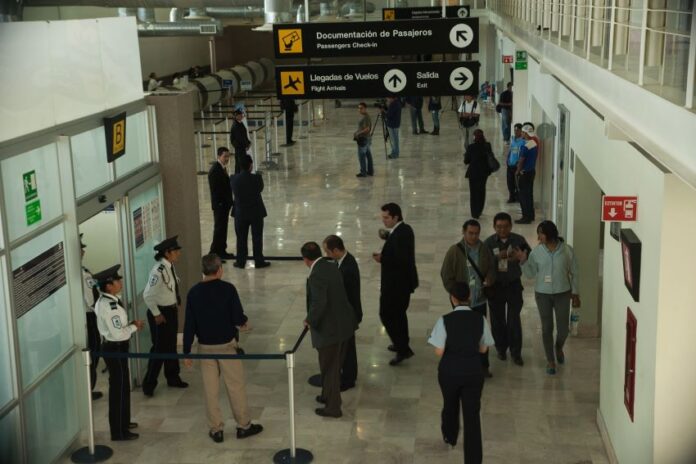
A total of 190,322 passengers used QRO this March, the busiest for that month since records began. (Demian Chávez/Cuartoscuro)

Continuing its accelerated growth, the Querétaro International Airport (QRO) saw 25% more passengers in the first quarter of 2025 compared to last year.

The Ministry of Infrastructure, Communications and Transportation (SICT) reported that in January, QRO saw a 29.2% rise in passenger numbers, followed by 18.8% growth in February and a 26.8% jump in March.

In domestic passenger traffic, QRO recorded annual growth of 34.9% in Q1. In contrast, international passenger traffic went up by 7.1%. 

March in particular saw a record number of passengers compared to previous years, moving a total of 190,322. This made it the airport’s busiest March since the start of airport traffic recordkeeping in 2006.

Domestic travel represented 70% of the flights taken from Querétaro between January and March, up from 64.9% in the same period of 2024, when the percentage of international travel was 35.1%.

Still, overall air operations at QRO, which includes non-flight activities, decreased 6.4% over 2024, with 12,094 air operations. This decline was primarily driven by a significant drop (30.3%) in air operations in February.  

Viva Aerobús announces 4-billion-peso investment in QRO

QRO moved 18,486.9 tonnes of cargo in the first three months of the year, reflecting a 4% increase. Meanwhile, cargo volume in March grew 27% year-on-year.

QRO is welcoming an increasing number of international flights after the state completed an 80-million-peso expansion project at the airport in December 2023. Some of these new destinations include a nonstop Querétaro-Madrid flight operated by Spanish airline Iberojet, starting in October this year

Querétaro Tourism Minister Marco Antonio del Prete Tercero also recently announced a new direct flight between QRO and Los Angeles, California, starting in July. He added that the airport is currently in talks with Panama-based Copa Airlines about starting a non-stop route between Querétaro and Panama City. 

With reports from NMas and El Economista

Thinking of starting a business in Mexico? Here’s what you need to know

6
A person sitting at a desk with a laptop and coffee
Starting a business in Mexico is a great idea, but there are a few differences from doing it elsewhere you need to bear in mind. (Tyler Franta/Unsplash)

Many foreigners choose Mexico as a place to set up a business. While there are some industries that exclude foreigners, and there are restrictions about the percentage of foreign investment allowed, it is still entirely possible for foreigners to start a business in the country. 

We spoke with attorney at law Charlene Gómez Covarrubias, co-founder of the online law firm Legalab, to ask her about the very first steps anyone looking to start a business in Mexico should take. From registering your brand to deciding the type of legal entity to use and how to register at the tax authority, here are all the basics you need to know to prepare. 

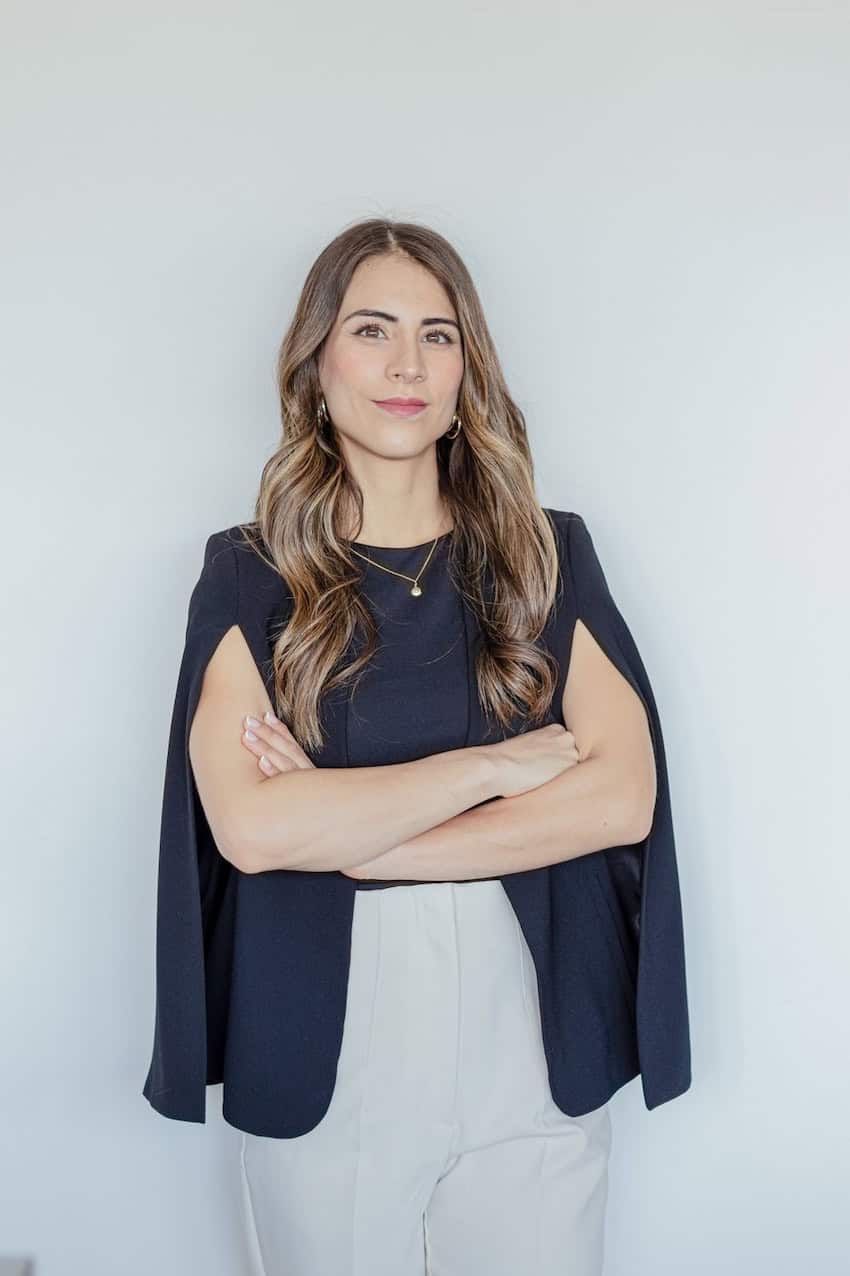
Business attorney Charlene Gómez shares her advice on starting a business in Mexico. (Legalab)

Before diving into the specifics, however, make sure you have the appropriate immigration status in Mexico. Typically, foreigners with a Temporary Resident Visa with permission to work or a Permanent Resident Visa are permitted to engage in business in Mexico.

Registering your brand

Registering a trademark gives you the right to use it exclusively across the country for your registered products or services. More importantly, it protects your brand from unauthorized use by others. 

Unlike in the United States, you don’t need to prove prior use of a trademark to register — all you need is an original name or brand design.

“You can apply for a trademark registration even if you haven’t used it before. And it is highly recommended to do so since copycats are everywhere,” Gómez says. 

While operating a business without a trademark is not illegal, using a brand without it puts you at risk of being sued by someone using a registered brand with the same name as yours. 

“If it turns out that someone else already has that trademark, or a similar one registered, that person could take you to court and the fine could go up to 40 percent of your income,” Gómez warned.  

The trademark registration process can be completed online through the Mexican Institute of Intellectual Property (IMPI). Gómez recommends hiring a specialized lawyer to assist with the application process, which includes classifying the trademark, carrying out a phonetic search to ensure no one has registered a similar brand and monitoring the IMPI’s response. 

In some cases, the IMPI might require additional information before approving the application. But once it’s granted, the trademark is valid for 10 years, after which it may be renewed. 

“The good news is you don’t need residency immigration status, nor do you need to be physically in Mexico to register it,” Gómez remarked.

Deciding whether to operate as a sole proprietorship or an incorporated company

There’s more than one option to open a business in Mexico as a foreigner. Investors can either incorporate a company or operate as a persona física con actividad empresarial (sole proprietorship).

Will you be a sole proprietor or an incorporated company? (Sumup/Unsplash)

“Various aspects must be evaluated to determine the best alternative,” Charlene Gómez says, adding that key considerations in choosing how to incorporate include whether there will be business partners involved and the business’s risk level. Both options have their advantages and disadvantages, and it’s important to understand which option is right for you and your business. 

Operating as a sole proprietor means you have unlimited liability and are personally responsible for all debts and obligations of the business. However, this route offers benefits like tax exemptions, greater flexibility and less bureaucracy when starting and operating the business.

In contrast, incorporating a company provides limited liability protection, meaning that your personal assets are separate from the company’s assets, protecting you in the event of debt or litigation.  

There is no one-size-fits-all answer, and Gómez recommends seeking the advice of a corporate lawyer in Mexico and tax attorney to help make the best decision.

Registering with the SAT

For any business to operate legally in Mexico, whether run by a natural person or an incorporated company, registering with the Tax Administration Service (SAT) is a mandatory step. This process provides the Federal Taxpayer Registry (RFC) number, a tax ID which is essential for paying taxes, issuing invoices and accessing a wide range of business services.  

“Nowadays, it is essential to be registered at the SAT to actively participate in commerce, issue invoices, open a bank account, access credit and participate in tenders, among other business activities,” Gómez says.  

Be warned: failure to register your business with SAT can lead to serious consequnces. (Unsplash)

When registering, you must choose the tax regime under which you’ll file your taxes. Additionally, you will need to obtain your password and Electronic Signature (FIEL) to access the digital services offered by the SAT.

While some steps for registration can be done online, some other steps require an in-person visit to SAT offices.  

“For instance, to issue invoices you need the FIEL, and for that you have to go in person because they take your biometrics,” Gómez explained, adding a tax lawyer can advise businesses in this crucial process. 

Failure to register with the SAT may lead to serious consequences, including fines, penalties, business closure and legal issues related to tax evasion and fraud.

Gabriela Solis is a Mexican lawyer turned full-time writer. She was born and raised in Guadalajara and covers business, culture, lifestyle and travel for Mexico News Daily. You can follow her lifestyle blog Dunas y Palmeras.

What is it like to visit Mexico’s 50 Best Bars winners?

0
Mexican bars once again won big at the 50 Best Bars awards. What are their stories? (Donde Ir)

The yearly 50 Best Bars in North America list, announced on April 29, includes an incredible sampling of the great cocktail bars across Mexico, as Mexican winners once again stud the final shortlist.

Want to know more about these impressive bars in Mexico that made the list? Here is a peek into the histories that have made these bars the exquisite experiences that they are today.

Handshake Speakeasy, Mexico City – No. 1

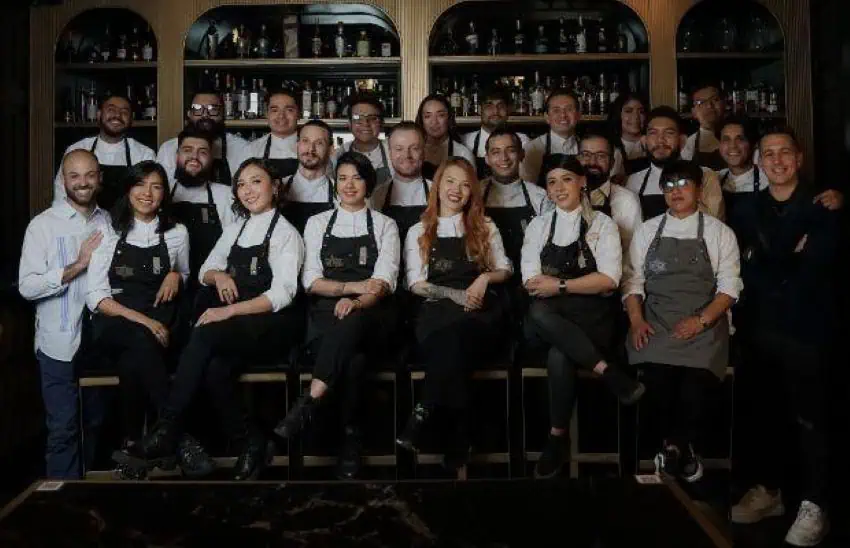
The staff at Handshake Speakeasy bar in Mexico City posed in uniform in three wide rows.
(50 Best Bars)

“We needed to find our DNA,” says Rodrigo Urraca, co-owner of Handshake, “and Erik helped us find it.”

Urraca is referring to Erik Van Beek, one of Handshake’s four partners and the master behind its mixology. Urraca and a friend originally opened Handshake in 2019, but after a short closure during the pandemic, they brought on Van Beek, and it’s been glorious ever since. 

There is little wonder Handshake has been named both No.1 in North America and No.1 in the world, as winning a spot on the list has been a top priority from the bar’s inception. In fact, the original plan for Handshake — named for the handshake deal that started it — was cooked up between Urraca and partner Marcos di Battista during a 50 Best ceremony. They were dreaming about how cool it would be to win a spot on the list. 

They are thrilled to be ranked in first place, but being the best bar in the world also comes with pressure.

“We’re doing our very best to continue spoiling our clients just as we have from the beginning,” Urraca says. “The best bar in the world can’t have an off night, you know?” 

Their menu includes steadfast versions of classics, like the butter mushroom old-fashioned, and newly minted cocktails from the masterminds behind the bar. The bar’s exclusivity — it’s almost impossible to get a reservation — combined with its notoriety — this is its fourth year in the top two spots on the North America’s 50 Best list — as well as a sexy Art Deco speakeasy ambience have skyrocketed Handshake Speakeasy to success during its short life.

Tlecān, Mexico City – No. 3

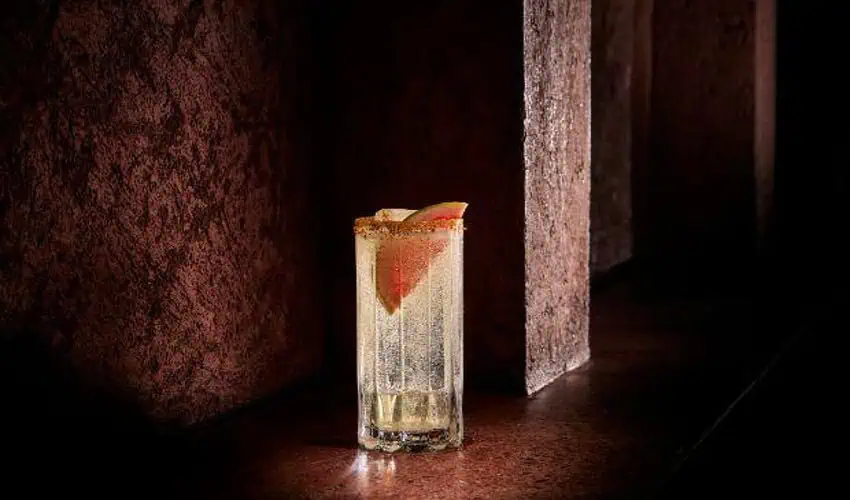
Clear cocktail in a glass beer mug sitting on a darkly stained wooden surface.
(50 Best Bars)

Newly opened in 2024, Tlecān has been making waves in the Mexico City scene as a high-end mezcalería with excellent craft cocktails. Its focus on agave spirits and its incorporation of local herbs and plants into its menu makes Tlecān one of the few places in the capital where you can get craft cocktails made with sotol, raicilla, bacanora and other regional specialties. 

Owner Eli Martínez won this year’s Altos Bartender’s Bartender Award, the only peer-voted award on the 50 Best Bars list. Tlecān is the first mezcaleria to make it on the list, a meaningful milestone for Mexican spirits’ international recognition.

El Gallo Altanero, Guadalajara – No. 8

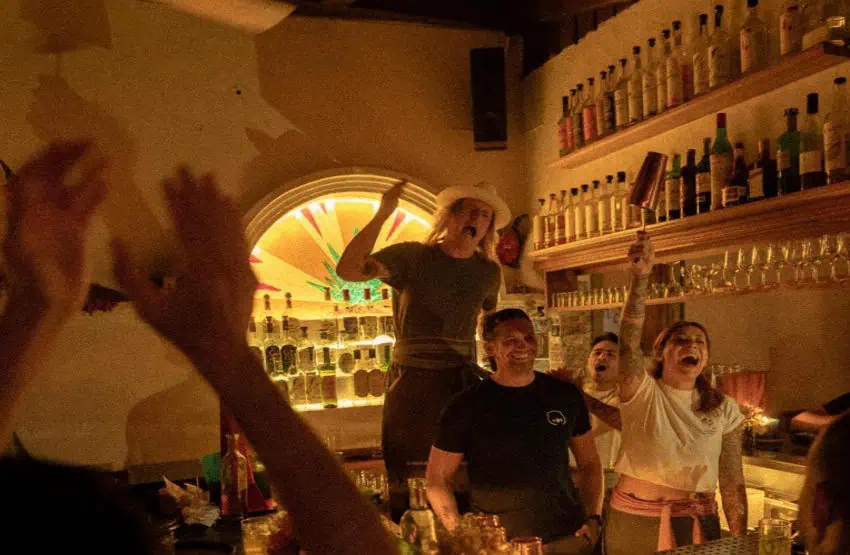
Bar staff and customers cheering and holding up a drink mixer in celebration.
(El Gallo Altanero/Instagram)

From the beginning, El Gallo Altanero has been a locals’ bar, says co-owner Freddy Andreasson. That, he says, can mean pushing back against adopting a certain aesthetic or a feel common among bars that win spots on these kinds of international lists.

There are no reservations at El Gallo Altanero, no exclusivity or secret handshake, and staff pride themselves on knowing the names and faces of the regulars who have made the bar what it is. This ethos can be felt in the loose and easy vibe you’ll find at this Guadalajara bar, whose menu highlights small-batch tequila and other Mexican distillates. The bartenders are just as geeked out on spirits as other spots, but the crowd is lively and fun and it feels like stepping into an unfussy fiesta that you never want to leave.

Licorería Limantour, Mexico City – No. 9

(50 Best Bars)

Licorería Limantour is part of Mexico City’s old guard: When the bar opened in 2011, no one was making their own bitters or participating in special ice programs. The minds behind the bar were pioneers, and according to owner José Luis Limantour, they haven’t sat on their laurels over the past 14 years.

“I think Limantour is defined by evolution,” he says. “We have changed constantly, and I think that’s what keeps us current. There’s obviously a global cocktail movement happening right now, and the fact that we continue to be included in these lists means something.” 

This hospitality group, now with two Limantours and four other spaces, has provided a training ground for many of the city’s bartenders and bar managers. Ask around, and you’ll find that many of Mexico City’s young talent worked at least briefly with Limantour.

Bar Mauro, Mexico City – No. 14

Cocktail highball glass with a cocktail from Bar Mauro in Mexico
(50 Best Bars)

Brand new and already making waves, I knew when I visited last fall that this bar would end up on the list— it just has that vibe. Brothers Ricardo and Eduardo Nava have completely revamped the ground floor of a turn-of-the century house on a block in La Roma with so few establishments that you might miss it if you’re not paying attention. 

The bar is named after the brothers’ uncle Mauro, who was a consummate host and cocktail lover, and they try to provide an atmosphere that would make him proud. Low-lit corner tables, a lively back bar and some excellently crafted cocktails are what you can expect in this mid-century hang-out, though right now, post-win, it’s  impossible to get into.

Baltra, Mexico City – No. 20

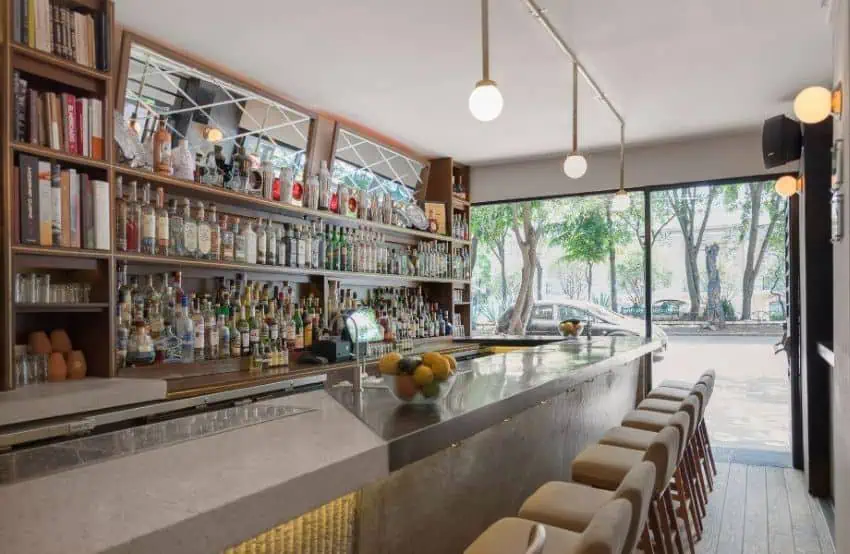
Baltra bar in Mexico City
(Vite Presenta)

“When we opened, there were people that knew about negronis or martinis or old fashioneds as part of their bar vocabulary, but no one knew anyplace where you could drink them. I think now more people know more about cocktails, and they also know places to find them,” says José Luis Limantour. 

One of those places is Mexico City’s Baltra, part of the Limantour group, whose kitschy nautical décor reflects its namesake — one of the islands visited by Charles Darwin on the HMS Beagle.

Their current menu includes “Eight Pieces of Advice You Didn’t Ask For,” featuring drinks with names like “How to Survive a Party Where You Know No One” and other such gems.

Aruba day drink, Tijuana – No. 22

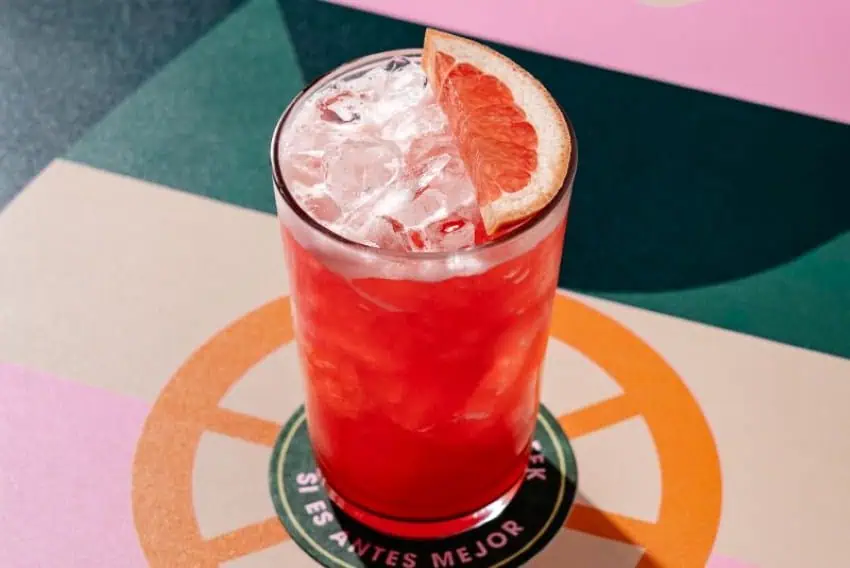
tall highball glass with a grapefruit colored drink. There is a grapefruit wedge resting atop the drink's ice cubes floating at the top of the glass.
(50 Best Bars)

Along with Tijuana’s skyrocketing popularity as a foodie paradise in the last decade, it’s also home to one of the 50 Best Bars of North America — Aruba Day Drink.

With a menu full of electric-colored cocktails and small plates that reflect the local cuisine — seafood tacos, Japanese sandos, tuna tostadas, Asian fried chicken — the party atmosphere is complete thanks to DJs spinning and a lively crowd.

Opened in 2021 by Kevin Gómez, Aruba has been listed on the 50 Best list since 2023 and prides itself on its “vacation vibes.”

Believe it or not, that’s only about half the list of Mexico’s bars that made it onto the 2025 list of the 50 Best Bars of North America. To learn about the other bars that made it onto this list, stay tuned for the second part of this article, coming soon!

Lydia Carey is a freelance writer and translator based out of Mexico City. She has been published widely both online and in print, writing about Mexico for over a decade. She lives a double life as a local tour guide and is the author of Mexico City Streets: La Roma. Follow her urban adventures on Instagram and see more of her work at www.mexicocitystreets.com.

Sundance Film Festival returns to Mexico City next weekend

0
Informative text with logo about Sundance Festival in CDMX.
The festival features 15 feature films and five short films specially selected from this year's Sundance Festival in Park City and Salt Lake City, Utah. (Sundance)

The Sundance Film Festival, back in Mexico City for a second consecutive year, announced its official program last week.

The line-up includes 15 feature films and five short films, as well as a series of panels with filmmakers, and will run from Thursday, May 29, through Sunday, June 1.

Cinépolis Mitikah
The festival will be hosted by Cinépolis Diana on Mexico City’s iconic Paseo de la Reforma boulevard, as well as Cinépolis Carso, Cinépolis Mítikah and Cinépolis Oasis Coyoacán. (Libre Acceso A.C.)

The festival’s opening film is the documentary “Prime Minister,” a portrait of Jacinda Ardern, former Prime Minister of New Zealand, directed by Michelle Walshe and Lindsay Utz. The film, which chronicles how Ardern led her nation through unprecedented challenges, implemented bold policies and became the second leader in history to give birth in office, won the 2025 Sundance Film Festival Audience Award: World Cinema Documentary.

On April 29, the Sundance Institute, the nonprofit organization dedicated to the discovery and development of independent artists, announced that it was partnering with the Mexican cinema chain Cinépolis for the second edition of Sundance Film Festival: CDMX 2025.

Amanda Kelso, acting CEO of Sundance Institute, said the partnership will also host film festivals in 2026 and 2027. 

“Following the launch of Sundance Film Festival: CDMX last year, we are delighted to be returning to audiences in Mexico City and further engaging with the local film community,” she said.

Last year’s inaugural festival screened 12 feature films and six Mexican short films.

Alejandro Ramírez, CEO of Cinépolis, said the festival highlights his company’s “dedication to fostering environments where independent films can reach broader audiences.”

“We are motivated by the chance for these exceptional movies to inspire future filmmakers and to broaden the dialogue around cinema as a powerful medium for expression and change,” he said. “We are proud that our partnership … is extending through 2027.”

The festival’s main venue is Cinépolis Diana on Mexico City’s iconic Paseo de la Reforma boulevard. Other venues that will host festival activities include Cinépolis Carso, Cinépolis Mítikah and Cinépolis Oasis Coyoacán. 

Cinépolis has 427 theaters and more than 4,100 screens in 97 cities across Mexico as of 2023, making it the largest cinema chain in Latin America and the third-largest globally. Only AMC Theatres and Cineworld are larger.

Cinépolis also has the second-highest number of tickets sold and sells more tickets per theater than any cineplex chain in the world. 

Top titles to watch

In addition to “Prime Minister,” the festival will screen seven other documentaries and seven narrative feature films.

Among the documentaries is “2000 Meters to Andriivka,” about a Ukrainian platoon on a mission to liberate the village of Andriivka. Director Mstyslav Chernov received the 2025 Sundance Film Festival Directing Award: World Cinema Documentary.

The documentary “Mr. Nobody Against Putin” follows a teacher going undercover to film what’s really happening in his school. It won the 2025 Sundance Film Festival World Cinema Documentary Special Jury Award.

Other documentaries include “One to One: John & Yoko,” “SALLY,” which was presented with the 2025 Alfred P. Sloan Feature Film Prize for its portrayal of science and technology, and the 2025 Sundance Film Festival U.S. Documentary Special Jury Award for Archival Storytelling “Selena y Los Dinos” about the Mexican-American singer Selena Quintanilla.

Among the feature films are “DJ Ahmet,” the winner of the 2025 Sundance Film Festival Audience Award: World Cinema Dramatic and World Cinema Dramatic Special Jury Award for Creative Vision, “Plainclothes,” which was recognized with the 2025 Sundance Film Festival U.S. Dramatic Special Jury Award for Ensemble Cast and “Twinless,” the recipient of the 2025 Sundance Film Festival Audience Award: U.S. Dramatic and U.S. Dramatic Special Jury Award for Acting presented to Dylan O’Brien.

With reports from Remezcla, Sundance and Infobae

Sheinbaum vows to deliver justice in double homicide of government aides: Tuesday’s mañanera recapped

1
President Sheinbaum and members of her cabinet learned of a fatal attack on two close government aides shortly after the president took the podium on Tuesday morning. (Presidencia/Cuartoscuro)

President Claudia Sheinbaum found out about the murder of Mexico City Mayor Clara Brugada’s personal secretary and a Mexico City government advisor during her Tuesday morning press conference.

During the mañanera, Security Minister Omar García Harfuch approached the president and showed her something evidently important on his phone. Sheinbaum also received a document that apparently informed her of the armed attack that occurred just six kilometers or so south of the National Palace.

Expressions of concern and consternation were visible on the faces of various officials as they learnt of the terrible news.

Toward the end of the press conference, Sheinbaum announced she had some “very, very important information” to convey, before proceeding to read out a Mexico City government statement confirming that Brugada’s personal secretary Ximena Guzmán as well as José Muñoz, an advisor, had been shot dead at the intersection of Calzada de Tlalpan and Napoleón Street in the Mexico City neighborhood of Moderna, located in the Benito Juárez borough.

‘We’re going to get to the bottom of this situation’ 

After reading out the statement, Sheinbaum conveyed condolences to the families of the victims on behalf of the federal government and declared that “all the support” Brugada needs will be given to her.

“We’re going to get to the bottom of this situation and ensure there is justice,” she said.

“And our unconditional support to the jefa de gobierno,” Sheinbaum said, using Mayor Brugada’s official title.

She said that the two victims had been “working in our movement” — the ruling Morena party — for a long time.

“We know them,” Sheinbaum added.

Later in the press conference, a reporter asked the president whether the government had any knowledge of the two aides having received threats.

“We don’t,” Sheinbaum said.

“I believe we shouldn’t speculate and we have no knowledge [of that]. … They don’t even use security, nothing,” she said.

“… We have to see the investigation in order to be able to know the cause [of the attack],” Sheinbaum said.

Mexico City Mayor Clara Brugada held a brief press conference on Tuesday morning following the murder of her aides, where she expressed her cabinet’s “profound consternation and grief” and commitment to guaranteeing public safety in the capital. (Victoria Valtierra/Cuartoscuro)

The news of the double homicide in Mexico City came after García Harfuch provided an update on the progress that has been made in combating insecurity in Mexico as a result of the new national security strategy he presented last October.

A ‘very cordial meeting’ with the new US ambassador 

Sheinbaum noted that the new United States Ambassador to Mexico, Ron Johnson, came to the National Palace with his wife on Monday to present his letter of credence.

“It was a very cordial meeting. We spoke about the importance of the Mexico-United States relationship … and about the importance of having permanent communication,” she said.

Sheinbaum specified that she and Johnson spoke about trade, migration and security, with an emphasis on the “very good coordination” between Mexico and the United States.

“We want to maintain this coordination, this collaboration,” she said.

“He was very respectful,” Sheinbaum said, adding that he recognized the work her government has done.

“I think it’s going to be a good relationship between the ambassador and the government,” she said.

The new U.S. ambassador and his wife, Alina Johnson, sent a video message to the people of Mexico on Monday evening.

Ron Johnson said it was an “honor” to be in Mexico to represent U.S. President Donald Trump and the people of the United States.

“Our relationship with you, with Mexico, is of great importance,” he said.

“… We’re more than partners. We’re neighbors and friends.  … I’m here to work with President Sheinbaum and her team on issues of interest such as security, the border and migration,” Johnson said.

27 seconds with the pope 

A reporter asked Interior Minister Rosa Icela Rodríguez about her “brief encounter” with Pope Leo XIV following his inaugural Mass in Vatican City on Sunday.

Rodríguez, who extended an invitation to the pontiff to visit Mexico, noted that the encounter was indeed “very brief.”

“It was 27 seconds according to the video I saw,” she said.

Interior minister invites pope to Mexico at first Mass in Vatican

“I just greeted him, gave him the letter. I said to him, ‘we brought a letter on behalf of the president with an invitation to come to Mexico,'” Rodríguez said.

“And he lifted up his arms and said, ‘when?’ And I just smiled and straight away showed him the gift that I took and I told him it was a Mexican handicraft and he smiled,” she said.

The interior minister noted that she gifted the pope “an engraving in silver of the Virgin of Guadalupe” on behalf of the Mexican government.

“He smiled … and I offered my hand to say goodbye. We had already said goodbye but … [then] he told me: ‘Please give greetings and blessings to the presidenta and also to the people of Mexico,'” Rodríguez said.

“… That was it,” she said.

By Mexico News Daily chief staff writer Peter Davies (peter.davies@mexiconewsdaily.com)

Mexican mountaineer sets Guinness Record after conquering world’s highest peaks and summits

9
Viridiana Álvarez
Viridiana Álvarez began her decade-long quest in January 2015. (Viridiana Álvarez/Instagram)

Viridiana Álvarez, a 39-year-old mountaineer from the city of Aguascalientes, was honored with a Guinness World Record on Monday for becoming the first woman to summit all of the world’s 14 peaks above 8,000 meters and the Seven Summits, the highest mountains on each continent.

Álvarez, who began her decade-long quest in January 2015, completed her final climb on Oct. 12, 2024, scaling the Indonesian mountain known as Carstensz Pyramid and Puncak Jaya.

“I’m very excited to receive this record because it’s proof once again that dreams do come true,” she said at the Mexico City ceremony, noting she started mountaineering at 30 despite her landlocked home state having no mountains.

Two years ago, Álvarez was honored for becoming the first woman in the Americas to climb the world’s five highest mountains: Mount Everest, K2, Kanchenjunga, Lhotse and Makalu.

Three years before that, she received a Guinness World Record by scaling the three tallest peaks — Everest, K2 and Kanchenjunga — in the shortest time on record: one year and 364 days. Her category was for females who used supplementary oxygen.

She is also the first Latin American to climb K2, the second-highest mountain in the world and regarded as the deadliest, with approximately one person dying on the mountain for every four who reach the summit.

In 2022, she became the first Mexican woman inducted into mountaineering’s Hall of Fame.


View this post on Instagram


A post shared by Viridiana Alvarez (@virialvarezmx)

At Monday’s ceremony in Mexico City, Guinness representative Alfredo Arista praised the trailblazer for her “effort, sacrifice and passion,” calling the achievement “no easy feat.”

Álvarez, whose education includes the Women’s Leadership Program at Yale University’s graduate business school, described the peaks of Everest, K2 and Annapurna as “special” due to their physical and emotional challenges. She nearly died while climbing K2.

Álvarez quit her office job — she had worked 10 years in the automotive and manufacturing industries — to pursue mountaineering. She now serves as a public speaker who promotes messages about breaking paradigms, especially to youth, and presides over Líderes de Altura (Height Leaders), a nonprofit that focuses on social causes and community improvement.

Álvarez began her journey by reaching the summit of 8,848-meter Mount Everest (Asia) on May 16, 2017 — her first of the Seven Summits. The others: Aconcagua (South America), Denali (North America), Elbrus (Europe), Kilimanjaro (Africa), Carstensz (Oceania) and Mount Vinson (Antarctica).

“She’s proven that human limits are made to be surpassed,” said Arista.

With reports from Milenio, La Jornada, Guinness World Records and El Sol del Centro

Global auto suppliers Katcon and Tata establish joint venture in Monterrey

0
Tata Mexico
Advanced composite materials from the joint venture will support next-generation vehicles and industrial applications. (Shutterstock)

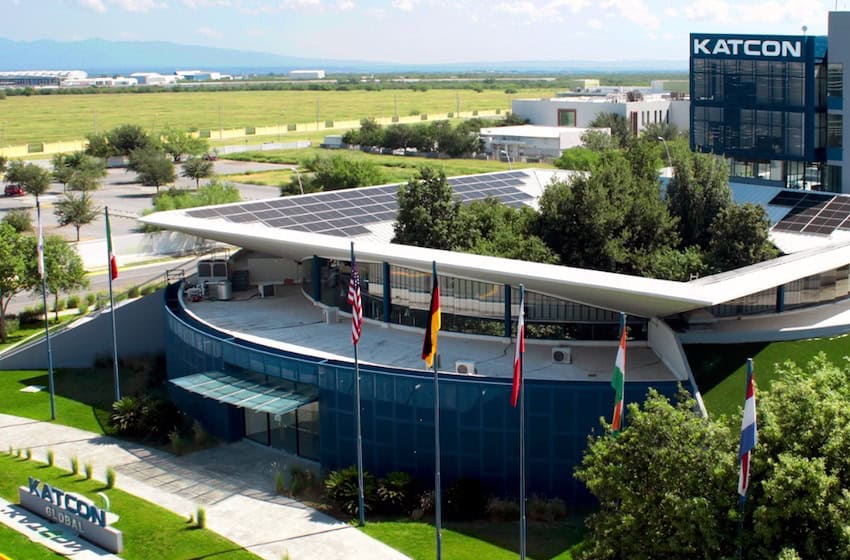
Monterrey-based Katcon Global and Indian automotive components manufacturer Tata AutoComp Systems have announced a joint venture to manufacture advanced composites for the automotive industry in Mexico.

Katcon Global — founded in Monterrey in 1993 — is a leader in exhaust systems, thermal insulation and advanced materials components with 11 manufacturing plants and five technology centers in eight countries.

Katcon supplies leading OEMs (original equipment manufacturers) across North America, Europe and Asia through its manufacturing and R&D facilities.

Tata AutoComp — established in 1995 in Pune, India, under the aegis of the Tata Group, which owns the Jaguar Land Rover brand — specializes in the design, development, manufacturing and supply of auto-component products and services, including components for next-generation electric vehicles (EVs). The company has 61 factories worldwide, including in India, North America, Latin America, Europe and China. 

According to a press release, the joint venture “will specialize in lightweight applications for passenger and commercial vehicles, agricultural tractors, off-road vehicles, and specialized non-automotive segments.”

In addition to its two plants in Monterrey, Katcon also runs The Katcon Institute of Innovation and Technology (KIIT), which is focused on CAD & CAE engineering.
In addition to its two plants in Monterrey, Katcon also runs The Katcon Institute of Innovation and Technology (KIIT), which is focused on CAD & CAE engineering. (Katcon)

The new venture builds on a 13-year partnership in India between Tata and Katcon focused on exhaust systems and emission after-treatment solutions.

Katcon CEO Carlos Turner said the new partnership “reflects our shared commitment to innovation and excellence,”  which reinforces his company’s strategy of “enabling the future of mobility through advanced materials.”

With Katcon’s advanced composite technologies and Tata’s industry expertise, Turner said the venture will deliver “innovative, lightweight solutions that address the evolving needs of the North American automotive market.”

Tata AutoComp Vice Chairman Arvind Goel called the arrangement “a significant milestone,” describing it as “a reverse model compared to our previous alliances” since this represents Tata’s first international partnership that contributes proprietary technology. In the past, Tata licensed or adopted partner technologies.

Goel pointed out that Tata’s Composite Division — recently recognized with the Deming Award for excellence in Total Quality Management — will lead on the technology front with its patented formulations and in-house capabilities for composite compounds and sheet manufacturing.

The new Mexico-based venture will rely on Katcom’s regulatory knowledge and its local operations. It is expected to strengthen both companies’ manufacturing presence in North America and support OEMs in meeting weight-reduction and regulatory targets.

With reports from El Financiero, Milenio and Cluster Industrial