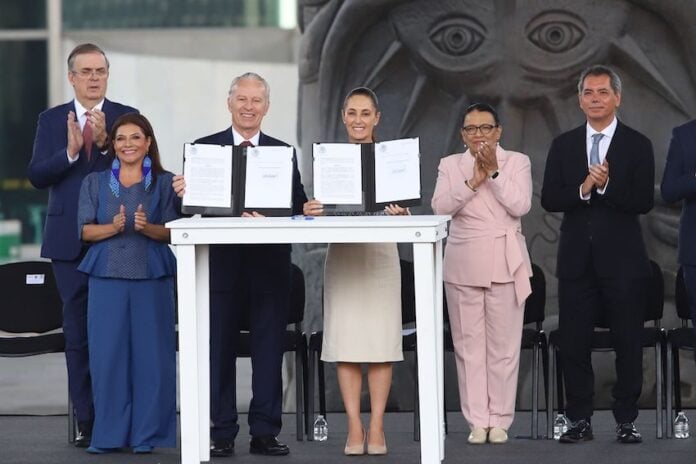
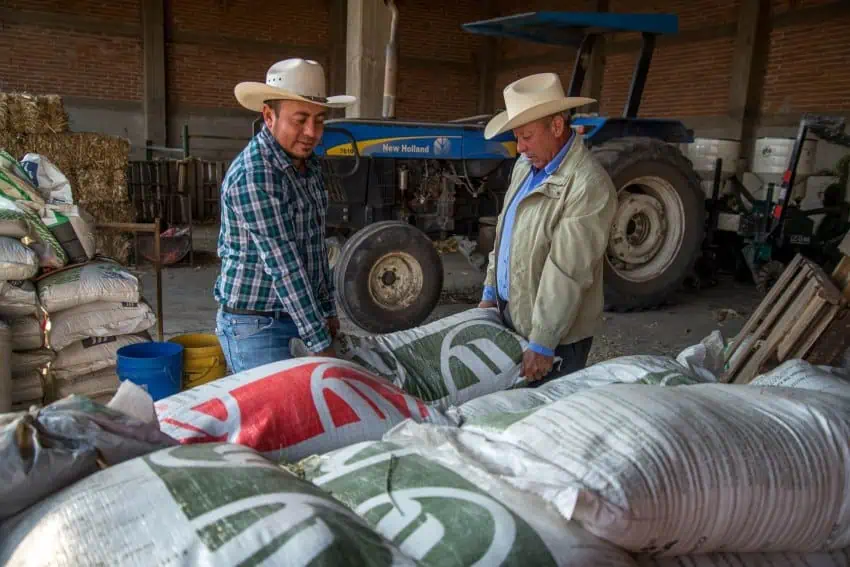
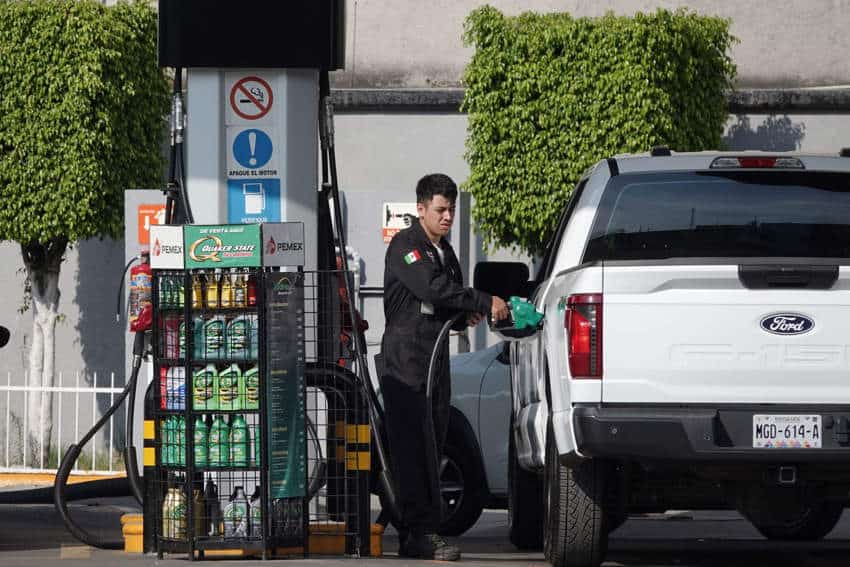
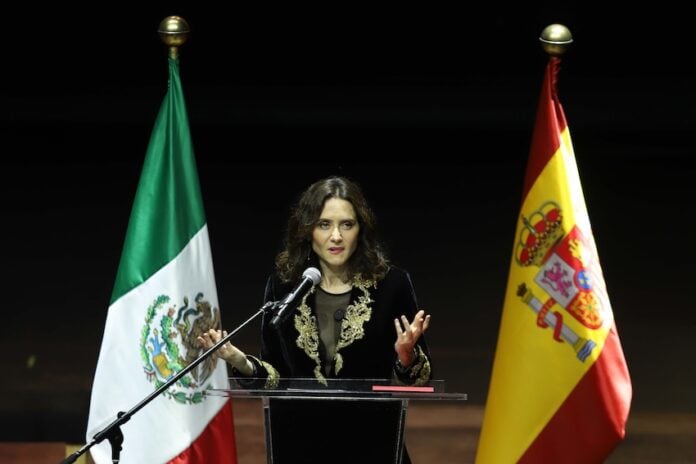
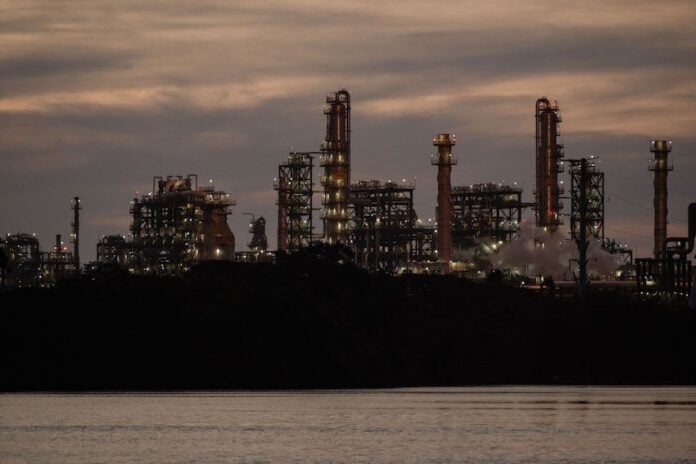
Under the new guidelines, authorities have a maximum of 30 days to approve or deny strategic projects exceeding 2 billion pesos (US $117 million) within the electronic, pharmaceutical, aerospace, energy or technology industries. (Daniel Augusto/Cuartoscuro)
The federal government announced on Monday a package of measures within the Plan Mexico framework to unlock and accelerate investments, especially large and strategic ones, by shortening authorization times, creating one-stop shops and offering greater regulatory certainty.
In an event at the National Museum of Anthropology that saw the attendance of presidential cabinet members and various business leaders, President Claudia Sheinbaum presented the measures as a direct response to requests from the sector for fewer procedures that stall investment.
“We are accelerating processes, simplifying mechanisms and strengthening legal certainty, because we know that economic development requires clear rules, mutual trust and shared responsibility,” Sheinbaum said.
Meanwhile, Economy Minister Marcelo Ebrard noted that these guidelines consist of “immediate actions for investment” and involve the participation of the entire cabinet and the state governments.
Under the new guidelines, authorities have a maximum of 30 days to approve or deny strategic projects exceeding 2 billion pesos (US $117 million) within the electronic, pharmaceutical, aerospace, energy or technology industries. For other industries, authorities have a 90-day deadline to respond to proposals.
The initiative also establishes a Presidential Investment Office, tasked with monitoring projects and coordinating the relevant government agencies, and the creation of a one-stop shop for foreign trade, integrating 132 procedures into one. This platform connects the tax and customs authorities, allowing companies to track their transactions through a single system.
Finally, the initiative introduces a single foreign trade file that allows companies to track the submission of required documents and receive permits and notifications without having to make duplicate filings.
In her intervention, head of the Regional Economic Development and Relocation Advisory Council Altagracia Gómez Sierra said that, along with the government’s initiative, the business sector has undertaken three commitments: to generate new jobs; to comply with the law, particularly environmental and social laws; and to start investment projects immediately.
The new rules will enter into force once the corresponding decrees are published in the Official Federation Gazette (DOF), which authorities expect to publish as early as this month.
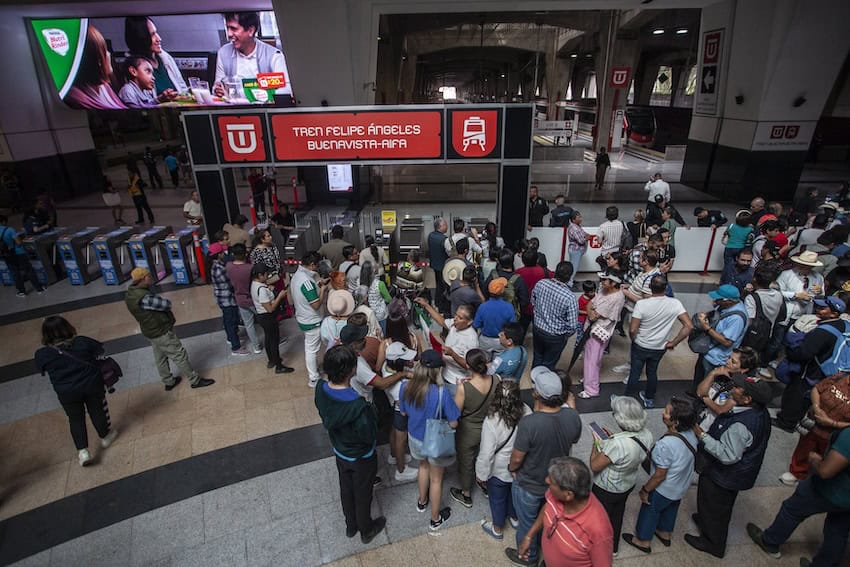
The train, inaugurated on April 26, connects Mexico City’s Buenavista station with the AIFA, located around 40 kilometers north of the city.
(Presidencia/Cuartoscuro)
The brand new train service from downtown Mexico City to the Felipe Ángeles International Airport (AIFA) has quickly become a hit with passengers, having transported 206,515 passengers in its first week of operations, Mexico’s Infrastructure, Communications and Transportation Ministry (SICT) reported on Monday.
The train, inaugurated on April 26, connects Mexico City’s Buenavista station with AIFA, located around 40 kilometers north of the city.
With AIFA 40 km out of town, the need for the rail service was clear. But the apparent popularity indicated by the early passenger figures was welcome news. (Andrea Murcia/Cuartoscuro)
The route includes six new stations — Cueyamil, La Loma, Teyahualco, Prados Sur, Cajiga and Xaltocan, plus the Clara Krause Terminal at AIFA. The Clara Krause Terminal station has six escalators and three longer platforms with capacity for nine trains, according to the SICT’s statement.
The stations are equipped with 294 surveillance cameras and 448 speakers to protect and maintain communication with passengers, the SICT said.
The line operates with 10 trains, each 100 meters long, serving 719 passengers. While initially the route will operate with only four of its 10 trains, running every half hour, the frequency will eventually increase to every 12 minutes, with a maximum capacity to transport 80,000 passengers daily. The journey time from Buenavista to AIFA is around 50 minutes, with speeds of between 65 km per hour and 130 km per hour.
Based on its initial passenger numbers, the train is currently operating at near-maximum capacity. During peak demand, it may be possible to couple two trains together to transport 1,400 passengers in a single trip, according to the statement.
For the first month of operation, a fare of 45 pesos (US $2.60) has been set, which could increase as soon as next month.
The SICT emphasized that the trains operate with the European Rail Traffic Management System (ERTMS), which is designed to allow for centralized and standardized speed, controlled distance between trains, track switches and route deviations, all of which enhance operational safety and make estimated travel times more accurate.
The train link forms part of the Morena government’s strategy to recover Mexico’s passenger rail services, which started during the López Obrador administration (2018-2024) and has accelerated with the current Sheinbaum government.
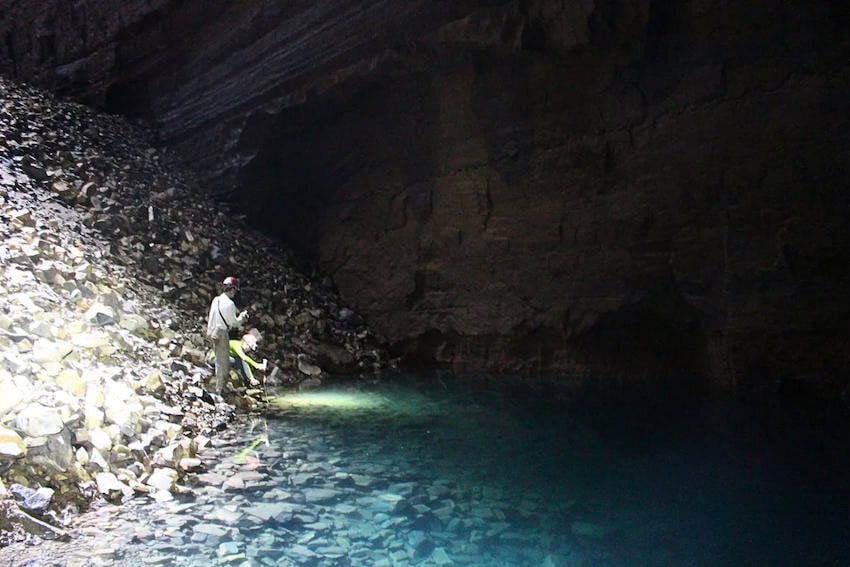
The Mexican tetra fish (Astyanax mexicanus) has evolved in underground bodies of water so that some are sighted and others have no eyes, though both are members of the same species. In a cave in Tamaulipas, both live in the same body of water. (Animalia)
A new study of an underground lake in the mountains of Tamaulipas has documented an exceptionally rare cave ecosystem — one in which Mexican tetra fish with full vision live alongside close relatives that are completely blind.
The site, Caballo Moro, is located in a limestone cave system in the Sierra de Guatemala, just south of the El Cielo Biosphere Reserve in the northern Mexican state of Tamaulipas.
The limestone cave Caballo Moro served as the study site. (Study co-author R Kellermeyer)
Thousands of years ago, part of the cave’s ceiling collapsed, creating a vertical shaft of light that strikes one stretch of an 80-meter-long pool while leaving the rest of the lake in perpetual darkness.
A study posted last month on the biology preprint server bioRxiv reported that this rare “karst window” has created two adjacent habitats: Mexican tetras (small freshwater fish) with fully functional eyes patrol the illuminated side, while eyeless cavefish dominate the shadows only meters away.
Researchers involved in the study said this side-by-side arrangement — with no physical barrier between the fish populations — has created a natural experiment for tracking how and why eyes disappear underground.
Earlier work identified about 35 cave populations of the Mexican tetra (Astyanax mexicanus) with reduced or absent eyes, but the precise genetic changes behind that shift remained unclear.
Though articles on bioRxiv are shared before peer review, in practice, about two-thirds of bioRxiv papers later get published in peer‑reviewed journals.
For this study, the team compared DNA from seeing fish with DNA from blind fish in Caballo Moro, whittling thousands of genetic differences down to 203 key mutations in 41 genes.
From there, one gene stood out: a lens gene called Cx50.
In follow-up lab work, they disabled Cx50 in normally sighted surface fish. This caused the sighted fish to quickly experience eye shrinkage and degeneration in their eyes — linking that mutation to loss of vision.
Genetic analyses indicated that the fully eyed fish in Caballo Moro descend from surface fish that invaded the cave roughly 3,300 to 4,300 generations ago and then hybridized with long-established blind cavefish.
The result is a mixed-ancestry population that still sorts into two distinct forms: fully eyed or fully eyeless, with only a small number of intermediates.
“At first glance one wouldn’t be able to tell the difference,” said co-author Nicolas Rohner, an evolutionary geneticist at the University of Münster in Germany. “However, physiologically and behaviorally they are more like cavefish. Which they genetically are.”
Rohner said the eyed fish remain aggressive and territorial in the bright zone, where vision helps them defend territory against blind neighbors.
Scientists say similar mutations in eye genes in other cavefish and underground mammals hint that some blind and eyeless fish in Mexico’s cenotes could have followed a comparable genetic path.
Between January and March, inflows totaled $14.45 billion, an increase of 1.4% compared to the first quarter of 2025. (Shutterstock)
Mexico’s remittance income hit record highs in March and in the first quarter of the year, a welcome development after inflows declined 4.6% annually in 2025.
The Bank of Mexico reported on Monday that incoming remittances totaled US $5.39 billion in March, an annual increase of 4.9%. The vast majority of remittances to Mexico are sent by Mexican workers in the United States.
Between January and March, inflows totaled $14.45 billion, an increase of 1.4% compared to the first quarter of 2025.
The totals for March and the first quarter of 2026 are the highest on record for the corresponding periods.
The annual increase in March — the second consecutive gain this year — was the best result for any month since November 2024. The annual increase in the first three months of the year was the best first-quarter result since 2023.
The incoming remittances total in March was easily the highest this year, 20.7% above the February total ($4.46 billion) and 17.4% above the January total ($4.59 billion).
Juan José Li Ng, senior economist at BBVA Research in Mexico, said that the 4.9% annual increase in remittances in March breaks the pattern of negative or low growth in recent months and “could be a sign of a possible recovery” of inflows to Mexico in 2026. He said that the increase could be partially attributed to the decline in March in the value of the Mexican peso, which depreciated amid conflict in the Middle East. A weaker peso can encourage Mexicans abroad to increase the size of their transfers to Mexico as they get more bang for their buck.
The 4.6% decline in incoming remittances last year was the worst result in 16 years and the first downturn in more than a decade.
Analysts partially attributed the decline in 2025 to fear of going out to work among U.S.-based Mexicans, of whom 4.3 million are “unauthorized” immigrants, according to the bank BBVA.
Mexico is the world’s second-largest recipient of remittances after India, with annual inflows representing around 4% of Mexico’s GDP.
Remittances data in detail
In the 12 months to the end of March, Mexico received $61.97 billion in remittances, a 0.4% increase compared to the total in the year to the end of February.
The $5.39 billion in remittances sent to Mexico in March came in 12.93 million individual transfers. The total number of transfers declined 3.6% compared to March 2025. The average individual transfer was $417, a year-over-year increase of 8.9% and a record high for March.
The $14.45 billion in remittances sent to Mexico in the first quarter of 2026 came in 35.71 million transfers. The total number of transfers declined 4% compared to the first quarter of 2025. The average individual transfer in the period was $405, an annual increase of 5.6%.
In the first quarter of 2026, 99% of all remittances were sent to Mexico electronically. The remaining 1% came in money orders (0.2%) and cash and kind (0.8%).
Michoacán and Guanajuato were the top recipients of remittances in the first quarter of 2026, with each state receiving $1.24 billion in the period, according to Li Ng, the BBVA economist. Jalisco ranked third for incoming remittances ($1.19 billion), followed by Mexico City ($1.15 billion).
Almost one-third (32.4%) of the money sent to Mexico in remittances in the first quarter of the year came from California ($4.68 billion). Around 14% of the total came from Texas ($2.03 billion). Thus, almost half (46.4%) of Mexico’s remittances total between January and March was sent from California and Texas, both of which have large populations of Mexican residents.
Remittances totaling $291 million were sent out of Mexico in the first quarter of 2026, an annual increase of 1.1%.
The second edition of the Puerto Vallarta Downhill and Freestyle bike race did not disappoint. (Nicolas Switalski/Altius)
The first riders dropped in under a hazy coastal sun, tires buzzing against pavement as morning light stretched across the hills of Puerto Vallarta. By the end of the weekend, those same tight, twisting and unforgiving streets had delivered two days of crashes, comebacks and razor-thin margins at the second edition of the Puerto Vallarta Downhill and Freestyle.
Day 1 at the Puerto Vallarta Downhill and Free Style
Friday, May 1, was a day of discovery. Riders walked the urban mountain biking course in the morning, tracing lines through narrow alleyways and steep stair sets, studying every crack in the concrete. By the time the warm-up runs began, the city had already transformed. Locals leaned out from balconies, tourists paused mid-stroll and the first wave of racers began threading their way downhill, testing grip and nerve in equal measure.
An international array of top riders provided speed and spectacle in nearly equal measure. (Omar Rosales Benitez/Ojo de Aguila Photography)
The course was short, a bit over a minute at race pace, but it packed in everything from blind corners to sudden drops to bursts of speed followed by technical choke points. There was no rhythm handed to the riders. They had to invent it on the fly.
Expectations were high for heavy hitters like Tomáš Slavík and Bernardo Cruz, both known for thriving in exactly this kind of urban chaos. But even in practice and early runs, the course hinted at how little it would forgive mistakes.
Lines that looked clean on foot became unpredictable at speed. Corners tightened and landings came faster than expected. By late afternoon, the tone was set. This weekend wouldn’t just reward speed; it would punish anything less than precision.
Day 2 winners and losers
Saturday, May 2, was when everything sharpened. The air felt heavier, the crowd thicker and the stakes unmistakable. Riders now knew the course, but familiarity didn’t make it safer. If anything, it raised the pressure. With two timed runs to decide the standings, there was no room for hesitation.
The drama came quickly. Slavík saw his weekend unravel early. A mechanical issue forced him out during his first run, ending his challenge almost as soon as it began.
Cruz came agonizingly close to holding his ground, charging toward the finish with a competitive time until his chain snapped just before the line, a split-second failure that erased his shot at the podium. In a race this tight, there’s no recovering from that.
The streets of Puerto Vallarta were the backdrop for a race requiring absolute precision, with no room for mistakes. (Omar Rosales Benitez/Ojo de Aguila Photography)
At the front, the battle condensed into fractions of a second. France’s Rémy Métailler put together a run that felt both explosive and controlled, carving through the course as if he’d smoothed it out in advance. He crossed the line in 1 minute, 21.41 seconds, a benchmark that immediately looked difficult to touch.
It almost didn’t hold. Portugal’s Pedro Ferreira came within striking distance, stopping the clock at 1:21.47. Six hundredths of a second, barely perceptible to the eye, separated first from second.
It was the kind of gap that turns a city street into a stage for millimeter-perfect racing.
Then came the loudest roar of the day. Mexico’s Raymundo Fournier surged into third with a 1:22.26, securing a podium finish that electrified the crowd. Flags waved, voices echoed off concrete walls, and for a moment, the international field gave way to a homegrown celebration.
Behind them, the depth of the field told its own story. Brazil’s Bernardo Neves and France’s Adrien Loron rounded out the top five, while Mexico’s Fabián Alcántar claimed sixth. Sweden’s Oscar Härnström, alongside Mexico’s Rayitas Ramírez, Roberto Castillo and Antonio Villoni, filled out a top ten that mixed global talent with a strong local presence.
As the final runs wrapped and the echoes faded, the city exhaled. Riders swapped stories of near-misses and perfect lines. Spectators lingered in the streets, still tracing the invisible path of the course with their eyes.
The race was decided by mere fractions of a second, with several favorites flaming out and missing a podium finish. (Omar Rosales Benitez/Ojo de Aguila Photography)
Over two days, Puerto Vallarta didn’t just host a race; it became part of it. From the lookout at La Cruz del Cerro, to the narrow alleys and staircases, to the finish at the Malecón, to the heat and to the walls closing in at speed, all of it shaped the outcome.
And in the end, victory wasn’t just about being the fastest. It was about finding out who could dance closest to the edge without falling off.
Charlotte Smith is a writer and journalist based in Mexico. Her work focuses on travel, politics, and community. You can follow along with her travel stories at www.salsaandserendipity.com.
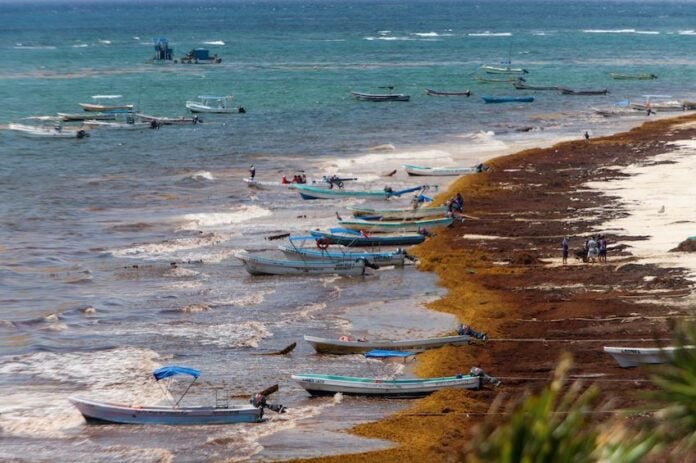
Sargassum coats the shoreline in Tulum, Quintana Roo, on April 28, 2026. (Elizabeth Ruiz/Cuartoscuro)
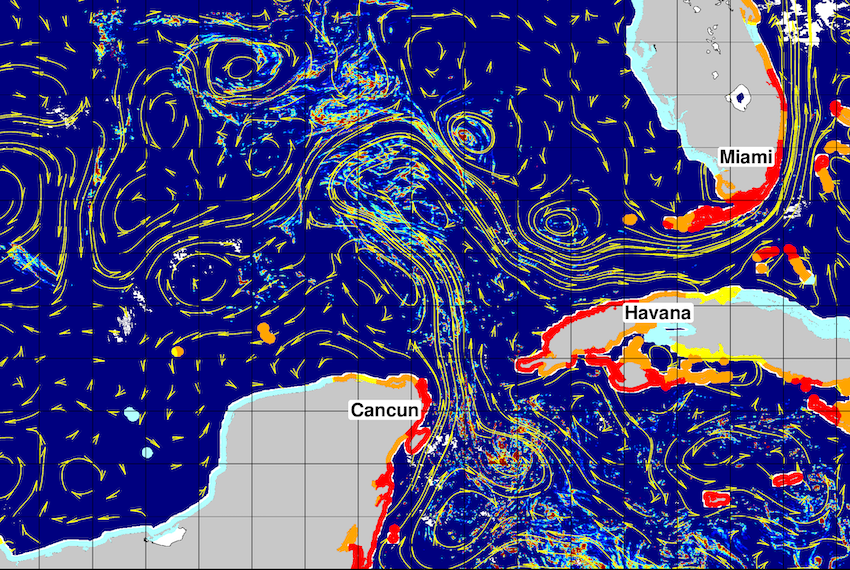
The National Oceanic and Atmospheric Administration (NOAA) has just updated its Sargassum Inundation Risk (SIR) tool to offer daily reports and more detailed tracking of sargassum influxes in the Caribbean, tropical Atlantic, and Gulf of Mexico.
Sargassum is a floating brown marine macroalga that, upon reaching the coast, begins to rot, releasing a foul smell that poses risks to humans and the environment.
The risk of coastal sargassum arrivals on May 4, 2026, in the Gulf of Mexico. (NOAA)
With the latest updates, NOAA is now able to provide daily reports with a resolution of half a mile (one kilometer). Previously, these reports were issued on a weekly basis with a resolution of three miles (five kilometers).
Designed as a risk assessment system, the SIR is intended to optimize sargassum monitoring for public use with special focus on coastal authorities, hotels, tour operators and communities so that they can anticipate and organize cleanup efforts.
“Our updated risk tool is now more timely and the higher resolution offers more detail on where sargassum is and where it is not,” Matthieu Le Henaff, an oceanographer at NOAA’s Atlantic Oceanographic and Meteorological Laboratory who oversees the SIR, said.
The maps generated by this new tool are created by integrating satellite data — which allows for the identification of sargassum in the open ocean — with ocean current models that pinpoint coastal areas with the highest probability of accumulation.
Mexican researchers also use satellite images to monitor sargassum before it reaches the Mexican coasts.
Using images from the Sentinel-2 satellite, scientists at the National Autonomous University of Mexico (UNAM) monitor the region every five days to pinpoint large sargassum blooms at sea. The study area covers the coast of Quintana Roo, in addition to those in Belize, Guatemala and part of Honduras, because currents carry the biomass to those countries first before it reaches Mexico.
To verify that the satellite images match what is happening on the coast, scientists also use floating GPS devices to track the movement of the sargassum blooms; spectroradiometers that identify the characteristic light signature of the sargassum; and drone flights to assess its impact on the reef.
This year, scientists are monitoring a mass of approximately 40 million tonnes of sargassum that is moving west across the Atlantic Ocean. Playa del Carmen has suffered the worst effects so far in 2026, with seaweed influxes set to intensify from May to July.
Mexico City police chief Pablo Vázquez said the estimated value of the drugs was 15 million pesos (US $862,400). (Unsplash)
Four people were arrested in Mexico City after more than one tonne of marijuana was found hidden in egg cartons.
The bust occurred after a cargo truck operating without license plates was stopped by police in the Álvaro Obregón borough in western Mexico City over the weekend.
En la Ciudad de México, elementos de @SSPCMexico, @SSC_CDMX y @FGRMexico, con apoyo del canino Samuel, detuvieron a cuatro personas que transportaban más de 1.2 toneladas de marihuana ocultas en cajas de huevo.
— Gabinete de Seguridad de México (@GabSeguridadMX) May 4, 2026
The arrests were announced on Monday by Mexico City police chief Pablo Vázquez who said the estimated value of the drugs was 15 million pesos (US $862,400).
Vázquez attributed the discovery of the pot to “Samuel,” a drug-sniffing dog. Alerted by security personnel in the Lomas de Plateros neighborhood that a cargo vehicle without the appropriate tags or registration stickers was circulating in the borough, police officers informed federal agencies that it was about to stop a suspicious truck for an inspection.
Agents from the federal Security Ministry and the Mexico City police were in charge of the seizure in coordination with the Defense Ministry, the Navy Ministry, the National Guard and the Federal Attorney General’s Office.
A canine unit was summoned to the scene and shortly thereafter, the marijuana was located. Thanks to Samuel, police found 1,278 kilograms of marijuana hidden inside at least 80 boxes of egg cartons.
The driver and his three companions were placed in custody, read their rights and handed over to prosecutors for processing. Media reports identified the four culprits as members of a gang linked to Los Malcriados 3AD, a criminal organization known to operate in western Mexico City, primarily involved in kidnappings and extortion.
According to official estimates, this seizure prevented the distribution of more than 430,000 doses on the illegal market.
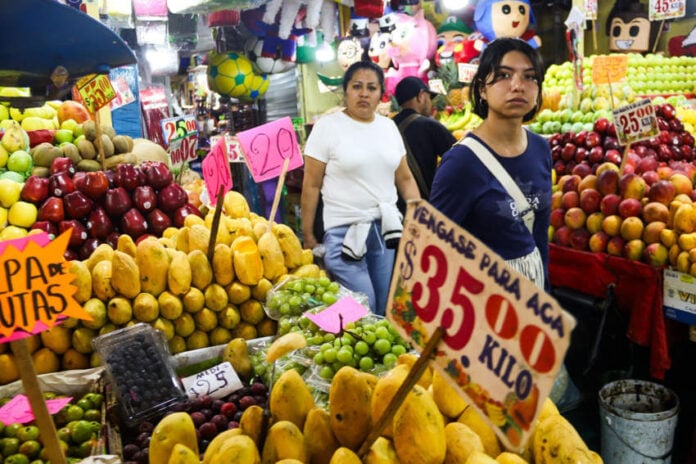
People shopping for groceries at Mexico City's La Merced public market on April 23. Rising food prices in the city are affecting everyone from household providers to small businesses. (Victoria Valtierra/Cuartoscuro)
Mexico’s national statistics agency (INEGI)reported in February of this year that the canasta básica — a group of foodstuffs and household goods that the government considers necessary for everyday life — rose to 4,877 pesos a month in Mexico City and 3,494 pesos in rural areas. That represents an increase in food costs of 4.6% in the city and 4.5% in rural areas, in comparison to February’s monthly inflation of 4.02%. Compared to 2025, it’s a 1.2% increase in urban areas, and 1.9% in rural ones.
Reports blame various issues for these hikes: a volatile climate, rising oil prices, local organized crime and recent protests that shut down national highways. We wanted to find out, abstract numbers aside, how food prices are affecting real people — business owners, diners, shoppers and farmers. Is anyone benefiting from the surge in cost?
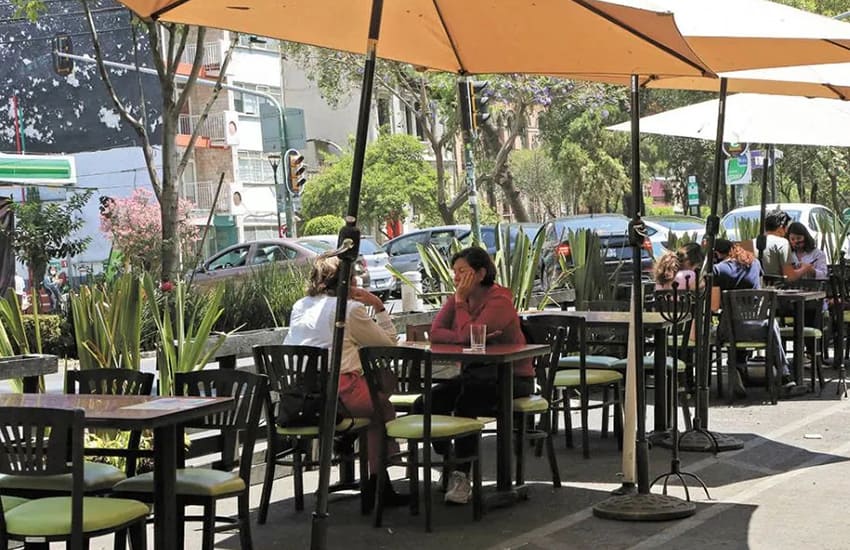
Issues both local and global are causing Mexico City denizens to experience a challenging increase in food costs. (Andrea Murcia/Cuartoscuro)
Rising prices in the restaurant industry
Jaime Henao and his family run Bolero Cafe in Colonia Roma and Cafe Mandarino next door. They are some of the few independent small businesses left in a neighborhood increasingly dominated by big restaurant groups and international chains.
“When prices rise constantly on all the products we need to run the business — meat, produce, spices, beer and liquor — as a small business, it has an outsized effect,” Henao says. “We can’t raise the prices on our menu as quickly as the prices on goods go up. Our regulars pay attention, and constantly raising prices would equal losing customers.”
Bolero, a neighborhood hangout which recently became an Independent Cultural Space, has become famous for its sourdough pizza, served alongside Mexican craft beer and wine.
“We can’t lower the quality of our products,” says Henao, “buy cheaper flour for the pizza, for example, because small businesses win clients over with the quality of what they offer and their level of service. Big chains like Tierra Garat or Starbucks are always lowering the quality of their ingredients. You can tell their menu items are full of sugar, colorants and additives, but people don’t seem to care as long as it’s cheap.”
Dining out has become a casualty of rising food prices
For some capitalinos, dining out, a familiar luxury, is now something they find themselves skimping on.
When dining out becomes too expensive for people, they often simply stop doing it, causing a trickle-down effect to everyone along the supply chain. Luza Alvarado, an editor and writer, says she and her partner have come up with a few tricks to make their lunch or dinner bill cheaper when they are out.
“If we are dining out, we try to eat meals closer together,” she says. “So, for example, if we go out for lunch, we try to have a later breakfast so we aren’t starving when we arrive. Sometimes we eat dessert at home instead of ordering it at the restaurant.” They’re also going to more casual places these days, for pizza or tacos, instead of upscale restaurants.
“Before, we could get two main dishes, two glasses of wine and dessert, but now we skip the wine and share a main dish and dessert. I also think that the quality has gone down, the portions are smaller and every place has kind of the same food, without a real concept or much heart.”
She adds that fancy places, especially in more gentrified parts of the city, can feel like a performance instead of a meal.
But while 2026 may not be the year for going out to eat, families still have to feed themselves.
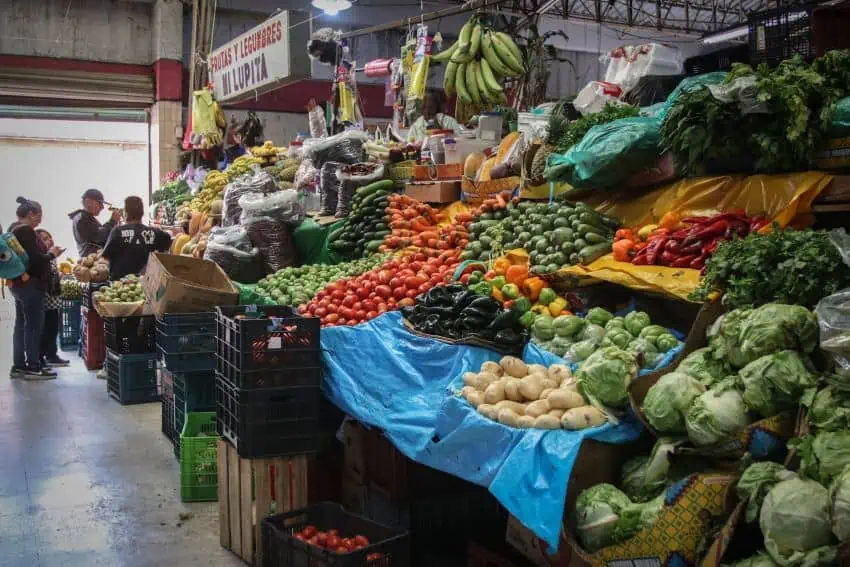
With rising food prices, some Mexico City residents are battling increasing food costs by shopping in smaller, specialized locations like butcher shops and fruit and vegetable stands. (Galo Cañas Rodríguez/Cuartoscuro)
Grocery shopping
Polo Silberman lives in Colonia Del Valle with his wife and two small children. He says the rising prices haven’t changed their diet yet, but he does feel like the 1,500 pesos that used to buy a week’s worth of groceries a year ago no longer gets him everything on his list.
“I’ve noticed a difference between buying from the grocery store and buying from a butcher shop, for example,” he says. “I usually buy everything in the supermarket closest to us, but we’ve started to buy certain things directly in the local market or wholesale market [because they are cheaper].”
Sometimes this means traveling further for better deals on basic items, says Silberman, possibly even the Central de Abastos, the city’s largest market, which can be anywhere from 20 minutes to an hour away depending on traffic.
In March of this year, reports confirmed that prices would likely continue to rise. The cost oftomatoes and limes has risen 25% from last year. These spikes are at least partially due to rising diesel prices caused by the war between the U.S., Israel and Iran.
The Middle East also provides Mexico 35% of its urea supply, a vital ingredient in the commercial fertilizers used by industrial agriculture. Recent protests by truck drivers that have shut down the country’s main highways have only exacerbated shortages.
Mexico’s federal Agriculture and Rural Development Ministry delivering fertilizer to farmers via the Fertilizers for Well-Being Program. (Cuartoscuro)
Farming costs
So what about organic producers who don’t depend on chemical fertilizers? It might seem like they would fare better in this economy, but that has not been the case for Lourdes Fuentes and her family’s farm, Granja Aurora, in Xochimilco, in the south of the city.
“Every year, the feed for the chickens goes up and we have to raise the price on our eggs,” says Fuentes. “For produce, it’s not too bad, since we have fewer inputs, but the intense amount of labor that our organic produce requires means we have to sell it at a higher price because we just don’t have the volume of an industrial farmer.”
The biggest blow for them this year came in the form of their main buyer finding another producer further away who is selling the same produce cheaper and in bigger volume in an attempt to sell to his customers a little cheaper and still make a profit. They have also been trying to manage production in the midst of a volatile climate, with entire crops lost due to recent unpredictable weather and changing seasonal patterns —last year was one of Mexico’s wettest in 50 years, and in 2024,heatwaves affected production across the country.
“What we sell is usually more expensive than the grocery store but less expensive than an organic shop, and most of our regular clients are willing to pay a little more because they know the quality of what we sell and the work it takes to produce it.”
Keeping the canasta básica affordable
Instability in the Middle East is affecting fuel prices in Mexico as well, forcing some Mexicans to make hard choices between buying gas and weathering rising food prices. (Camila Ayala Benabib/Cuartoscuro)
All these factors portend rising food prices for the foreseeable future. As families and businesses try to survive the volatile market of foodstuffs, in April, President Sheinbaum’s administration and the private sector renewed the Package Against Inflation and Shortages (PACIC) for the third consecutive year. This agreement sets the price of 24 basic goods during 2026 at a cost that attempts to keep the canasta básica under 910 pesos (US $52). Through theNational Strategy to Promote the Stabilization of the Price of Gasoline, the Federal Consumer Protection Agency is also working to keep a liter of gasoline at 24 pesos (US $1.38) or below.
Time will tell if these strategies will succeed in reducing costs that seem to only increase year after year. In the meantime, most Mexico City residents will have to tighten their belts, dine in more, choose cheaper products and comparison shop between their local supermarket and larger markets. High prices will likely affect us all, except, of course, the ultrawealthy.
Lydia Carey is a freelance writer and translator based in Mexico City. She has published extensively both online and in print, sharing her insights about Mexico for over a decade. She lives a double life as a local tour guide and is the author of “Mexico City Streets: La Roma.” Follow her urban adventures on Instagram and see more of her work at mexicocitystreets.com.
Isabel Díaz Ayuso, mayor of the Spanish capital city of Madrid, speaks during her 10-day visit to Mexico, during which she plans to meet with all four governors from the opposition National Action Party (PAN) but will have limited contact with the Sheinbaum administration. (Graciela Lopez/Cuartoscuro)
While promoting her city as “a unique platform” for Mexican trade with Spain, visiting Madrid Mayor Isabel Díaz Ayuso has waded into controversy by defending the conquistador Hernán Cortés.
Díaz Ayuso is in Mexico on a 10-day tour that has provoked protests from Indigenous groups and political figures.
Mayor Díaz Ayuso, accompanied by participants in her event on Monday at the Frontón México, titled “Celebration of Evangelization and Mestizaje in Mexico: Malinche and Cortés.” (Graciela López/Cuartoscuro)
More significantly, her visit is being ignored by the Sheinbaum administration.
The ultra-conservative Díaz Ayuso and President Claudia Sheinbaum are fiercely at odds. Díaz Ayuso has referred to Sheinbaum as “a far-left dictator,” while the Mexican president said the leader of the Spanish capital is “clinging to visions of empire.”
According to the Spanish newspaper El País, Díaz Ayuso’s visit aims “to boost the conservative opposition in Mexico … [while also] consolidating the political forces that gravitate around U.S. President Donald Trump.”
The Madrid mayor’s visit occurs at a sensitive time for Sheinbaum, who is dealing with recent U.S. accusations of drug trafficking against 10 members of Sheinbaum’s party, reinforcing Díaz Ayuso’s assertions that Mexico is “a narco-state.”
Even before arriving, Díaz Ayuso had irritated many Mexicans by defending the Conquest as a civilizing process. As a result, Monday’s tribute to Cortés was forced to change venues when the Mexico City Archdiocese said it would not allow the event to take place at the Metropolitan Cathedral. The reason given was that permits were not in order, but the Archdiocese also went to great lengths to distance itself from the tribute to Cortés.
Instead, Díaz Ayuso spoke at the Frontón México (a jai-alai venue and the site where Mexico’s conservative National Action Party (PAN) was founded in 1939), praising the mestizaje that resulted after the Conquest.
“Mestizaje is a message of hope and joy,” she said. “Faced with hate speech that divides us, those of us who see life through these alliances must find ways to speak freely.”
In expressing support for the Conquest, Díaz Ayuso is reopening old wounds by highlighting the issue that caused the diplomatic rift, Spain’s refusal to apologize for the Conquest more than five centuries ago. That rift had recently thawed as the Spanish monarchy and Prime Minister Pedro Sánchez had recently made concessions in an effort to bolster bilateral relations.
The loss, reported by Pemex to the Mexican Stock Exchange last week, is 6.2% higher than the 43.3-billion-peso loss recorded in the first quarter of 2025. (Isabel Mateos Hinojosa/Cuartoscuro)
Pemex, Mexico’s heavily indebted state oil company, posted a loss of 45.99 billion pesos (US $2.6 billion) in the first quarter of 2026, the firm’s worst start to any year since 2020.
The loss, reported by Pemex to the Mexican Stock Exchange last week, is 6.2% higher than the 43.3-billion-peso loss recorded in the first quarter of 2025.
Reuters reported that Pemex “failed to profit from a global oil price surge triggered by international conflict,” namely the war in the Middle East.
Mexican newspaper El Financiero reported that Pemex’s first quarter loss was the result of lower sales, higher depreciation of fixed assets, lower “other” income, higher costs related to derivative financial instruments and a foreign exchange loss.
The Mexican Institute for Competitiveness, a Mexico City-based think tank, highlighted that Pemex recorded its largest first-quarter loss despite receiving a 58.3-billion-peso cash injection from the federal government in the period. The federal government has also reduced Pemex’s tax burden.
Pemex’s Q1 performance in detail
Pemex’s sales decreased 7.6% annually to 365.72 billion pesos in the first quarter of 2026. That result came from a 25.3% decline in export sales and a 4.2% increase in national sales.
In the first quarter, Pemex exported an average of 405,000 barrels of crude per day, an annual decline of 38.8%. A 5.2% increase in the price of the Mexican mix of crude (mezcla mexicana) that Mexico exports could not offset the near 40% decline in barrels shipped abroad. Mexico has been keeping more crude at home as it seeks to reach self sufficiency for fuel.
Pemex sold an average of 1.31 million barrels of crude and fuel per day in Mexico in the first quarter, an annual increase of 6.4%.
Pemex’s sale costs declined 3.3% annually to 277 billion pesos in the the first quarter.
Pemex’s earnings before interest, taxes, depreciation, and amortization (EBITDA) were 117.8 billion pesos in the first quarter.
Pemex pumped an average of 1.652 million barrels of liquid hydrocarbons per day in the first quarter, an annual increase of 2.3%. The state oil company said the increase was driven by “the performance of strategic fields” such as Maloob, Ixachi, Zaap, Ayatsil and Quesqui.
Pemex produced an average of 3.925 billion cubic feet of natural gas per day in Q1, an annual increase of 423 million cubic feet per day. Pemex said that the increase was due to a greater contribution from onshore projects and non-associated gas.
Pemex processed an average of 1.14 million barrels of crude per day at its seven refineries in Mexico in the first quarter, an annual increase of 22.2%. Including refining at Pemex’s Deer Park facility in Texas, an average of 1.36 million barrels of crude were processed per day in Q1. Pemex has struggled to reach the government’s 1.8 million barrel target, and crude production has declined significantly over the past 15 years, falling almost 50% in the period. Reuters reported that “new contracts with private producers that were meant to lift output have advanced slowly and largely failed to draw big players.”
Pemex’s debt as of March 31, 2026, was just over US $79 billion. The state oil company said that was the lowest level of debt since 2014. The figure represents a reduction of 7.3% compared to the end of 2025.
Pemex owed 375.12 billion pesos to suppliers at the end of Q1, a 14.1% reduction compared to the end of 2025.