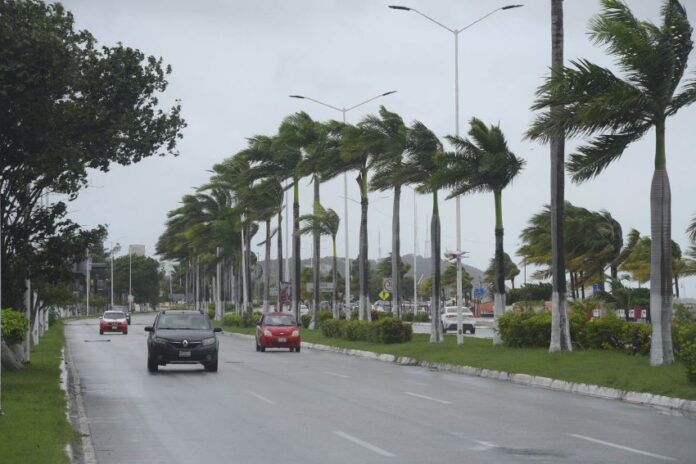
This year, Mexico's Naval Ministry (Semar) forecasts that the country will see a total of 18 hurricanes throughout the 2025 summer hurricane season. (Michael Balam/Cuartoscuro)
Due to its geography, tropical cyclones hit Mexico along both coasts every year. This year, the Naval Ministry (Semar) forecasts that the country will see a total of 18 hurricanes throughout the 2025 summer hurricane season.
According to the United States National Hurricane Center (NHC), the tropical cyclone season begins on May 15 in the Northeast Pacific Ocean and on June 1 in the Atlantic Ocean. On both coasts, the season ends on November 30.
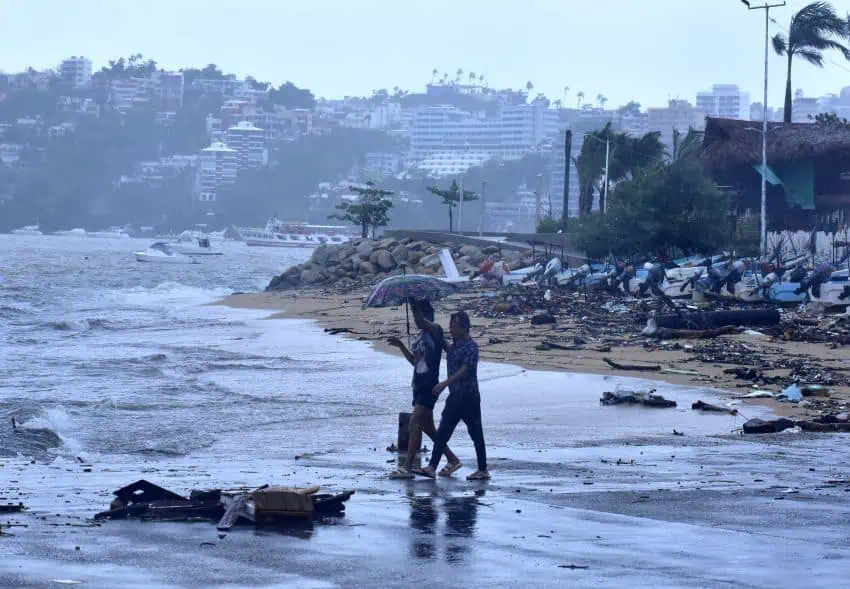
Mexico saw five major (Category 3+) Atlantic hurricanes in 2024, and four in the Pacific, the most catastrophic being Hurricane John, which hit coastal Guerrero in September 2024. (Carlos Alberto Carbajal/Cuartoscuro)
These are the tropical cyclones and hurricanes forecast for Mexico’s Pacific and Atlantic coasts this 2025 summer season.
Hurricanes forecast for Mexico’s Pacific coast in 2025
Tropical Depressions
1
Tropical Storms
8
Strong Hurricanes (Category 1 and 2)
6
Intense Hurricanes (Category 3, 4 and 5)
4
Total
19
Hurricanes forecast for Mexico’s Atlantic coast in 2025
Tropical Depressions
2
Tropical Storms
7
Strong Hurricanes (1 and 2)
4
Intense Hurricanes (3, 4 and 5)
4
Total
17
What’s the difference between a tropical cyclone and a hurricane?
Tropical cyclones are either dubbed hurricanes or typhoons, depending on the region in which they originate.
Tropical cyclone is a generic term used by weather forecasters to describe a rotating, organized system of clouds and thunderstorms that develops over tropical or subtropical regions. A cyclone’s wind circulates counterclockwise in the Northern Hemisphere and clockwise in the Southern Hemisphere.
The weakest tropical cyclones are known as tropical depressions. If a tropical depression causes winds of up to 39 miles per hour, the tropical cyclone becomes a tropical storm. If a tropical cyclone reaches sustained winds of 74 miles per hour or more, it becomes a named hurricane in the North Atlantic, central North Pacific, and eastern North Pacific, or typhoon in the Northwest Pacific.
In the South Pacific and Indian Ocean, a hurricane is known as a tropical cyclone.
About 97% of tropical cyclone activity happens during the hurricane season. Yet, hurricanes can and do happen outside of the established six-month season.
What’s the rainfall forecast for the 2025 rainy season?
Meteorologists predict that Mexico will see an average rainy season in 2025, particularly in the central-southern half of the country.
Mexico’s central, eastern, southern and Pacific coast states could see more rainfall at the start of the season, between May and June. Northwestern states are likely to see less rainfall, while the southeast will receive normal rainfall.
The Mexican monsoon, an annual weather pattern bringing increased thunderstorms, can arrive quickly, bringing abundant rain to mountainous areas of Sonora, Chihuahua, Sinaloa and Durango.
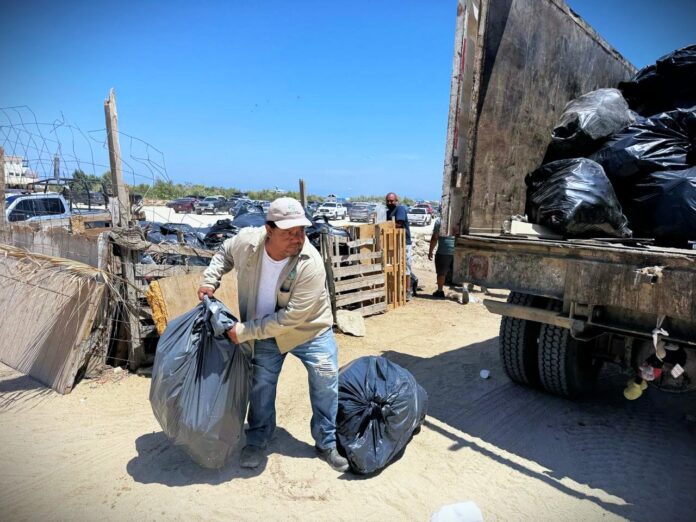
Massive cleanup operations, tax negotiations, traditional festivals: it takes a lot to keep Los Cabos running. (Ayuntamiento de Los Cabos)
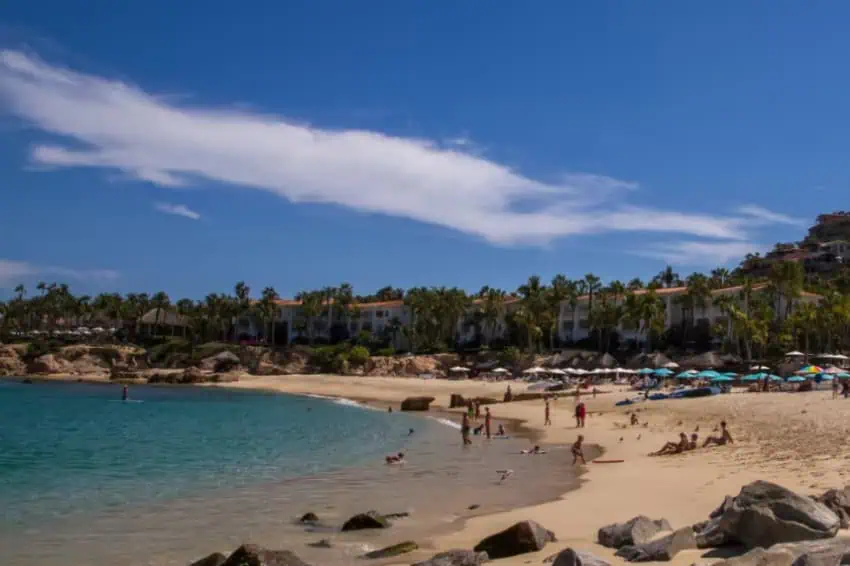
The high tourism season in Los Cabos is drawing to a close following the end of whale watching season on April 15 and the conclusion of Semana Santa (Holy Week) on April 20, making this a good time to evaluate the seasonal ups and downs for the destination. Los Cabos’s beaches, for instance, continue to be beautiful, although the effort required to keep them clean is becoming increasingly steep.
Why is it so hard to keep Los Cabos beaches clean?
Extensive clean-up efforts are often required at Los Cabos’ beaches after tropical storms or intense rains. Following rains in September 2024, the height of the rainy season, over 140,000 pounds of trash were cleaned from Cabo San Lucas’ beaches alone.
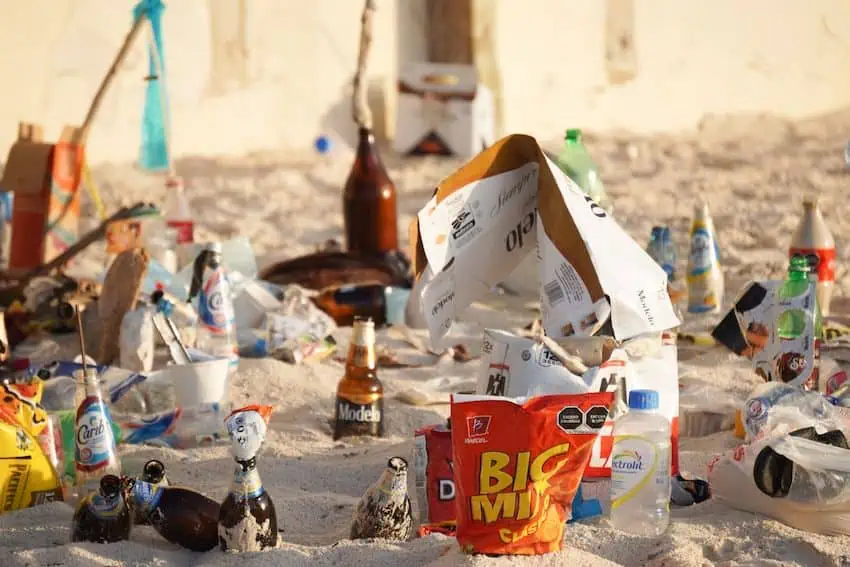
Spring breakers were projected to generate 100 tons of garbage this year in Los Cabos. (Elizabeth Ruiz/Cuartoscuro)
However, garbage accumulation on one of the region’s premier tourist attractions, its picturesque beaches, is not simply tied to weather events. It’s an ongoing issue. In March 2024, the local coordinator for the Federal Maritime Land Zone (Zofemat) — the 20-meter federal area across the country’s coastline that notably includes popular sandy stretches — noted that over 80,000 pounds of garbage were being cleaned up on Los Cabos beaches monthly. By January 2025, that number had increased to 50,000 pounds per week.
Naturally, the amounts spike even further at times like Spring Break or Semana Santa , when significantly more people flock to beaches like Playa El Médano in Cabo San Lucas. “We see a 500% increase in solid waste on the beaches during Spring Break and Easter,” Zofemat coordinator Rafael Álvarez Munguía told Tribuna de México. “Most of these tourists will be concentrated in Cabo San Lucas.”
Nearly 100 tons of garbage was expected during Spring Break this year — there was 95 tons in 2024, and 90 tons in 2023 — including glass beer bottles, plastic water bottles and cigarette butts.
Ahead of Semana Santa and its influx of vacationers, it was reported that local officials were adding additional trash containers and toilets to local beaches. Authorities in Los Cabos have stressed the importance of raising awareness on the issue, which is critical to protecting the local environment and water quality and helping the municipality maintain its many Blue Flag beaches.
Playa Palmilla is one of Los Cabos’ Blue Flag beaches. (Los Cabos Tourism Board)
Los Cabos has more Blue Flag beaches than any other municipality in Mexico — 25, to be exact — and these must be strictly maintained in terms of cleanliness to maintain their status with the Foundation for Environmental Education (FEE). They are likewise required to provide adequate toilets, trash and recycling receptacles, parking facilities and access ramps for those with disabilities.
As such efforts demonstrate, the problem isn’t coming from a lack of government interest or apathy on behalf of tourism agencies or local businesses. Zofemat, in particular, schedules regular beach cleanups, and thousands of local volunteers participate.
Residents and tourists who bask on these golden sand beaches are responsible for littering them with rubbish. Many don’t care about the consequences of their actions, however, and it’s unlikely that local officials will call tourists out either: despite the massive amounts of trash it generated, Spring Break tourism added upwards of US $40 million to local coffers.
But for those who care, there are a few basic things to do when visiting local beaches that will help them stay clean and beautiful. Plastic bags and other single-use plastics are banned in BCS, so bring a tote bag to carry away trash and dispose of items in proper containers as available. Make sure not to leave anything behind, including cigarette butts, which can take years to disintegrate.
Cabo San Lucas has good cruise season amid negotiations on new tax
Despite uncertainty regarding the federal tax on cruise ship passengers scheduled to go into effect on July 1, Cabo San Lucas has enjoyed a successful 2024-2025 cruise campaign, finishing fourth among Mexico’s ports in ship visits and second behind Ensenada on the Pacific coast.
Although the cruise season is year-round, the peak season ends after April, allowing local and national authorities to analyze the latest trends. Cabo San Lucas logged 200 ship visits for the season, up 12% from 2024. Early estimates suggest a 10% rise next year, assuming the tax issue is settled to the satisfaction of cruise lines.
Cabo San Lucas welcome over 448,000 cruise ship passengers in 2024. (Norwegian Cruise Lines)
Upset over the upcoming changes, leading cruise line companies like Carnival have threatened to leave Mexican ports off their itineraries. However, local sources report that negotiations between cruise lines and the federal government are ongoing for a substantially lower tax rate; US $21 per person instead of $42.
Whether or not this comes to pass, Cabo San Lucas will remain the most expensive cruise port in the world. This is due to factors like the absence of a cruise ship dock — passengers have to be tendered from ships at anchor in the bay — and the expense of the destination in general.
Fiestas tradicionales in San José del Cabo draw massive turnout
Known as San José del Cabo since Jesuits opened a mission by that name in 1730 to try to convert local Pericú people, the cape city celebrated its 295-year history with its annual Traditional Festival in March. To say the festivities were a success would be an understatement, as more than 275,000 locals and visitors turned out over days to see events like the equestrian parade and musical performances from acclaimed artists like Julión Álvarez, Gloria Trevi and Pancho Barranza.
Indeed, city officials are already considering how they can expand the number of venues for the event and the amount of parking spaces available next year. For those planning ahead, the Cabo San Lucas Traditional Festival will be hosted in October. Just as March 19 is the feast day for Saint Joseph and thus the birthday of San José del Cabo, Oct. 18 is the feast day for Saint Luke and the date the city’s multi-day festival is arranged around.
Chris Sands is the Cabo San Lucas local expert for the USA Today travel website 10 Best, writer of Fodor’s Los Cabos travel guidebook and a contributor to numerous websites and publications, including Tasting Table, Marriott Bonvoy Traveler, Forbes Travel Guide, Porthole Cruise, Cabo Living and Mexico News Daily. His specialty is travel-related content and lifestyle features focused on food, wine and golf.
Have you woken up to your house in disarray? Maybe it was a duende! (Interes Turistico)
As I wandered into the kitchen for my morning coffee some weeks ago, I had a feeling that something wasn’t quite right. Then I saw it: a mountain of sales receipts, business cards, grocery lists and other miscellaneous scraps of paper piled up on one of my two sofas.
The question came to my mind immediately. Did I have a duende? I had heard about them over the years from Mexicans. Duendes lived in their house, played pranks on them or followed them home. They were unseen, but they were there. In Latin America, duendes are gnome-like mythological creatures seen as the true owners of a house. Mexican duendes are said to stand two to three feet tall, with pointed elf-like ears, piercing red eyes that glow in the night and no thumbs.
Duendes are gnome-like creatures seen as the true owners of a house, especially in rural areas. (Tadeusz Zachwieja/Unsplash)
What are duendes like? Depends on where you live
The legend of the duende has roots in both Iberian and Indigenous American cultures. In Europe, the idea of a duende is related to Roman household gods like the Lares and Di Penates, and the word in Spanish is said to be a contraction of “dueño de la casa”: the owner of the house, which is what the spirit really is. Similar European household spirits include the Scottish brownie, German kobold and Slavic domovoy.
With the rise of Christianity, duendes and their cousins came to be seen as sinister spirits. They are associated with the darker, supernatural side of life, sometimes representing death and the unknown. Duendes can be mischievous and elusive; whether they are benevolent or malevolent seems to depend on where you live and the beliefs of your community.
Across the ocean, the ancient peoples of the Americas developed their own beliefs about small supernatural beings. The Nahuas of central Mexico knew of nature spirits called “ohuican chaneque,” or “dwellers in dangerous places.” While good chaneques lived near human populations and were harmless pranksters, bad chaneques lived in forests and caves and could steal children or cause travelers to lose their way.
For some Maya peoples of the Yucatán Peninsula, creatures called aluxes are another small, humanoid nature spirit that can be both helpful and a nuisance in turn. A farmer can call upon an alux to take care of his milpa (cornfield) by building a miniature house for it on his land and offering it part of his harvest, as well as other sacred foods. An alux not properly compensated for its help can turn spiteful and damage a harvest. In February 2023, then-President Andrés Manuel López Obrador made headlines when he suggested that an alux had been spotted during construction of the Maya Train.
An “Alux,” a duende-like creature of Maya mythology. (Zazil Tunich)
In some parts of Mexico, duendes live in a house’s walls. Young unkempt children are warned that duendes like to collect long toenails and might accidentally cut off an entire toe when they come out at night. In Belize, duendes play tricks on people designed to lead them astray or cause confusion, getting them lost in the woods. In other places they are benevolent, seen as guardians coming to the aid of children, and stranded hikers. However, if you are killing animals or up to mischief, duendes will punish you.
Household duendes are typically benevolent. If they like you, they may leave small gifts or perform helpful tasks around the house while you sleep. However, if you disrespect or anger them, they may hide your belongings, play pranks on you or create a disturbance in the house.
Duendes can also bring creativity. “Tener duende” means having soul, a heightened sense of expression, emotions and heart. For artists, a duende is a sign of inspiration due to their magical powers.
Learning to live with your household duende
Duendes are rarely seen due to their agility and speed. They are most often reported as being seen during the Lenten Season and Good Friday. They can be recognized by a piercing whistle and their glowing red eyes. Sometimes they will come out of the woods, sing and then hide if an inquisitive person looks for the source of the music. If you see a duende you are advised to protect yourself by hiding your thumbs so they think you are one of them.
Are duendes real or merely a part of folklore? I asked a friend who is a Mexican historian. “Duendes have been part of Mexican folklore for as long as I can remember,” he told me, “but I’ve never seen one.”
Pictured: Probably not a duende. (Bui Hoang Long/Unsplash)
“Have you ever heard of them stealing?” I asked him. His answer was quite adamant: absolutely not. Duendes never steal. They do, however, like to play pranks. “I think you had a human duende in your house,” he said. “A thief.”
So it seems my duende was just a thief who somehow entered my house at night while I was sleeping, making off with my cellphone, laptop, cash, credit cards and food from the pantry. Since duendes may play a prank or hide items from you, but don’t steal, it must have been a thief. But since duendes are also supposed to protect the house, I may have a bigger problem on my hands.
It's not always easy to know how to be polite in Mexico. (Freepik)
About a year after my husband and I bought a house in Guanajuato, my sister visited us. One day, as we were walking down the street, she asked a stranger where the nearest bakery was, starting her question without a courtesy phrase like “buenos dias”or “perdóname.”Listening to her through my new Mexican lens, I winced, realizing she sounded rude. But only a year earlier, I had been speaking like that too — before I caught on to Mexican etiquette.
Although my siblings and I were brought up by parents from the U.S. Deep South who placed a high value on courtesy — much as Mexicans tend to do — we were not raised in the South. And because I grew up during the countercultural 1960s, I thought the focus on manners was superficial and silly. It was not until I began spending long periods in Mexico that I realized that courtesy might be an important social glue.
The writer, right, with her Guanajuato city neighbors on their terrace. (Louisa Rogers)
During my 20 years living part-time in Mexico, I’ve adopted a lot of that social glue. Here are some examples.
Greetings
When we first bought our home, I was unaware how important courtesy is in Mexico, and in retrospect, my to-the-point communication style embarrasses me. Thankfully, I have since softened my style, and, in fact, have grown very fond of the gentle niceties that Mexicans use. If, for example, I’m entering a shop, I know to first say “buenos días” or “buenas tardes.” Similarly, when getting on a bus, I always greet the driver and my fellow passengers.
When leaving a restaurant, I’m sure to say “buen provecho” when passing other diners. And if I’m ending a conversation or departing a shop, I’ve adopted the phrase I hear Mexicans use: “Bonito día!”
One day, I happened to pass a neighbor twice. The second time, I said “Hola,” though I realized afterwards that I rarely hear Mexicans use that word. I asked my teacher what I should have said. The answer? “Buenos días” or ”tardes” or “noches,” no matter how many times I see the person within 24 hours!
Already seen someone today? Say hello to them again. (Usman Yousaf/Unsplash)
Even on WhatsApp, unlike in the U.S., where text messages can be haiku-like in their brevity, Mexicans tend to begin with a greeting. My Spanish teacher always starts her messages with “buenos días” or a similar greeting. I’ve learned to follow suit, though I occasionally forget, like recently, when I messaged my neighbor and began with just his name. When he responded with “buenas tardes, Louisa,” I realized my error.
Asking permission and expressing gratitude
Barry and I visited Guanajuato several times before buying our home. One year, we rented a room from Rebeca, a woman who is now our neighbor, and we would meet with our tutor in her living room.When Juan would leave, if Rebeca was nearby, he would say, “Con permiso,” later explaining that the phrase is a polite way to signal you’re departing and asking for permission to leave. It’s also a way of asking someone to make way for you when squeezing past them.
Anyone can say “muchas gracias,” but I started adding “muy amable” (very kind) after hearing other foreign residents say it. The phrase adds an extra note of warmth, and sounds less rote than just “gracias.”
I’m surprised at the situations in Mexico where I don’t expect to hear “gracias,” like when passengers get off a bus and thank the bus driver. Any opportunity!
Indirect communication
To preserve harmony, many Mexicans avoid making statements that might be perceived as negative. Instead of saying “no,” for example, they might say, “I’ll think about it.” I’ve learned that if I speak bluntly in Mexico, it can be misinterpreted as rude and offensive, since it clashes with a longer and more diplomatic communication style.
In writing, Spanish texts are longer, even in a direct communication style. If you look at an English-language paragraph and translate it into Spanish, the Spanish version will typically be about 20 to 30 percent longer because it uses more words to convey the same message.
Forms of address
My parents taught me at a young age to use the titles “sir” and “ma’am” when addressing older people. In Mexico, too, forms of address are an important sign of respect.One year, while my then 90-year-old father was visiting us in Guanajuato, I invited Rebeca, who was 75, over for a drink. Using the formal version of “you,” Rebeca addressed my father as “usted.” To me, they were both old, so what difference did it make? Meanwhile, at 59, I considered myself a mere “chica” compared to them! I address Rebeca informally because many years ago, she gave me permission to use the pronoun “tú” with her.
I still can’t bring myself to use the word joven (young man or woman), which Mexicans use to address a waiter, because when I was growing up, “boy” was the put-down my racist uncles used to address an African-American of any age. Instead, I say“disculpe” or “perdón.”
In Mexico, I’ve learned that courtesy, far from being superficial, as I once thought, is a kind of social lubricant that silkens interactions. After many years of living in Guanajuato, I find that the unexpected ways Mexicans express respect and courtesy still surprise and delight me.
Louisa Rogers and her husband Barry Evans divide their lives between Guanajuato and Eureka, on California’s North Coast. Louisa writes articles and essays about expat life, Mexico, travel, physical and psychological health, retirement and spirituality. Her recent articles are on her website, https://authory.com/LouisaRogers
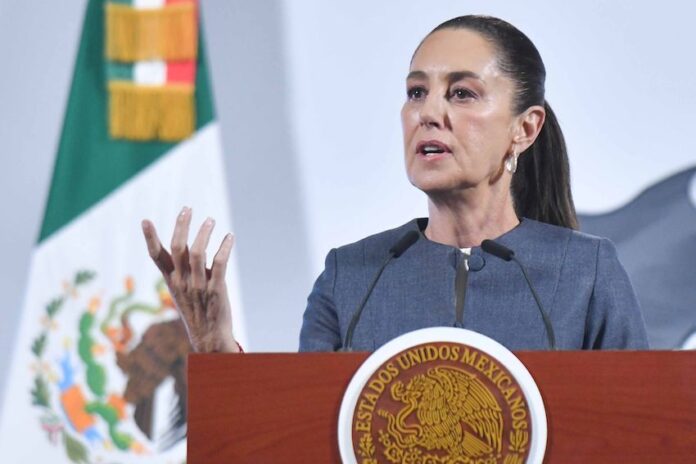
"The day we distance ourselves from the people is the day we stop being a government of and for the people," Sheinbaum said on Tuesday. (Mario Jasso/Cuartoscuro)
Federal security officials attended President Claudia Sheinbaum’s Tuesday morning press conference to present the government’s fortnightly update on the prevailing security situation in Mexico.
Later in the mañanera, Sheinbaum responded to a question about her personal security arrangements.
Homicides down since Sheinbaum took office
Marcela Figueroa Franco, head of the National Public Security system, presented the latest homicide data.
She reported that Mexico recorded an average of 58.3 homicides in the first 21 days of April, according to preliminary data provided by the country’s 32 state Attorney General’s Offices.
Figueroa highlighted that the figure represents a “preliminary reduction” of 32.9% compared to last September, the final month of the six-year term of former president Andrés Manuel López Obrador.
The data she presented showed that homicides declined on a month-over-month basis in each of the first three months of the Sheinbaum administration. After an uptick in January, murder numbers resumed their downward trend in February.
Figueroa also presented data showing that homicide numbers have decreased every year since 2021.
Preliminary data showed that Mexico recorded an average of 72.3 homicides per day between Jan. 1 and April 21, a 12% decline compared to the daily average across 2024.
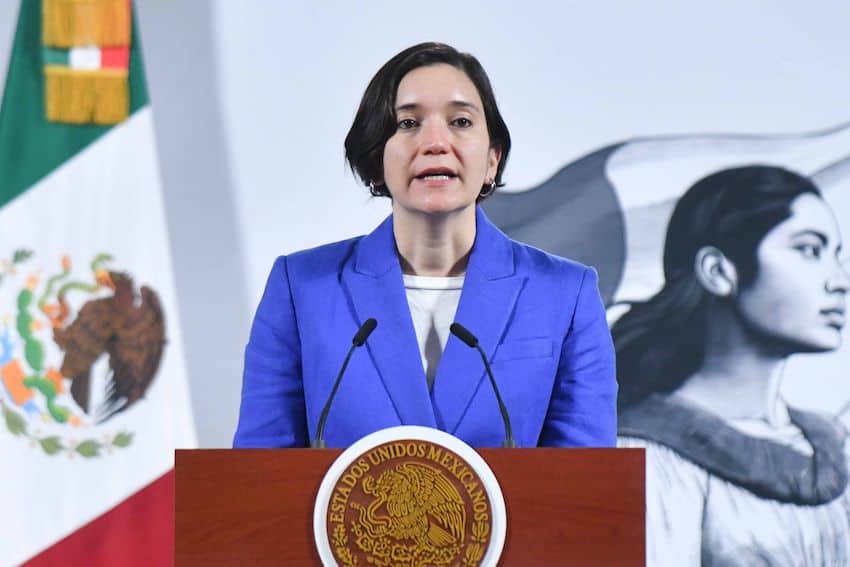
Head of the National Public Security system Marcela Figueroa noted that 51.5% of all homicides this month occurred in only seven of Mexico’s 32 states. (Mario Jasso/Cuartoscuro)
Figueroa highlighted that murder numbers are down 28.1% in 2025 compared to 2018, a year in which Enrique Peña Nieto was president for the first 11 months.
The reduction in homicides this year comes after the federal government presented a new security strategy in October. Compared to the previous federal government, the Sheinbaum administration has demonstrated a greater willingness to proactively combat organized crime groups, and has also moved to strengthen investigation and intelligence practices.
Guanajuato still Mexico’s most violent state
Figueroa also presented preliminary data that showed that Mexico recorded 1,225 homicides in the first 21 days of April.
Guanajuato — Mexico’s most violent state in terms of total murders in recent years — saw 145 homicides in the first three weeks of the month, accounting for 11.8% of total homicides in April. Various criminal groups operate in the Bajío region, including the homegrown Santa Rosa de Lima Cartel and the Jalisco New Generation Cartel. Those criminal groups have been fighting each other for years.
After Guanajuato, the most violent states in Mexico so far this month are:
México state: 101 homicides
Sinaloa: 84 homicides
Jalisco: 80 homicides
Guerrero: 75 homicides
Michoacán: 74 homicides
Baja California: 72 homicides
Figueroa noted that 51.5% of all homicides this month occurred in the aforesaid seven states.
Mexico City recorded 52 homicides in the first 21 days of the month, making it the country’s 12th most violent entity. Two states — Durango and Yucatán — haven’t reported any murders so far this month.
Almost 19,000 arrests for ‘high-impact crimes’
Security Minister Omar García Harfuch, survivor of a 2020 cartel attack in Mexico City, spoke about a range of results the federal government has achieved since Sheinbaum took office on Oct. 1.
He said that:
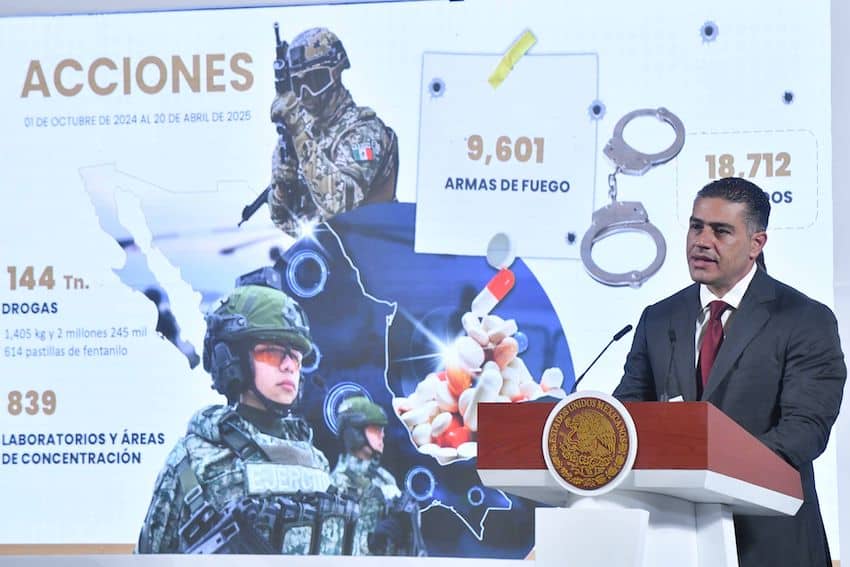
Authorities have arrested 18,712 people for “high-impact crimes” such as murder, kidnapping, drug trafficking and extortion.
Authorities have seized 144 tonnes of drugs, including over 2 million fentanyl pills.
Authorities have confiscated more than 9,600 firearms.
The army and navy have “destroyed” 839 clandestine drug labs across 17 states.
Security Minister Omar García Harfuch announced that law enforcement authorities have arrested 18,712 people for “high-impact crimes” such as murder, kidnapping, drug trafficking and extortion since Oct. 1, 2024. (Mario Jasso/Cuartoscuro)
García subsequently acknowledged that a federal security agent died on Monday after he was shot in the city of León, Guanajuato.
“Our heartfelt condolences to his family. The death of our colleague won’t go unpunished. There are already two people arrested,” he said.
‘One can’t move away from the people’
A reporter told Sheinbaum that people have expressed concerns to him about her personal security given the “great results” in security her government has achieved and the fact that she “continues to walk the country” like any other citizen.
The implication was that the president could be vulnerable to an assassination attempt during her weekend tours when she gets up close and personal with supporters in various parts of the country.
Despite the perceived (and perhaps real) risk expressed by the reporter, Sheinbaum said she won’t change her approach, one modeled on that of her predecessor and mentor, AMLO, who mixed with Mexicans from all walks of life, and no doubt benefited politically from his penchant for doing so.
“One can’t move away from the people,” the president said.
“The day we distance ourselves from the people is the day we stop being a government of the people and for the people,” Sheinbaum said.
“So we’re going to remain close [to the people], particularly on weekends,” she said.
Most of the trade revenue attributed to Hong Kong, a special administrative region of mainland China, came from "re-exports" — goods that are sent abroad after being imported without any transformation having taken place. (Canva)
Mexico was the world’s 10th largest exporter in 2024, down from 9th in 2023, according to the World Trade Organization’s (WTO) Global Trade and Statistics report.
Mexico slipped one position even though the value of its exports hit a record high last year, increasing 4.1% annually to just over US $617 billion, according to data published by Mexico’s national statistics agency INEGI in January.
The Economist: “Hong Kong’s prospects have brightened relative to its challengers’…The entrepot now looks like the only place for Chinese companies to gaze abroad and for foreigners to get a look-in on unmissable pockets of Chinese growth.”https://t.co/iDwRrfIh15
Hong Kong passed Mexico to become the ninth largest exporter in the world, but most of the Chinese special administrative region’s revenue came from “re-exports” — goods that are sent abroad after being imported without any transformation having taken place. In other words, Hong Kong is a major transshipment hub, or entrepôt, especially for goods from mainland China.
A table in the WTO report details the “leading exporters and importers in world merchandise trade” last year. The top 10 exporters were:
China — the value of Chinese exports increased 6% annually to US $3.57 trillion, accounting for 14.6% of global exports.
United States — the value of U.S. exports increased 2% annually to $2.06 trillion, accounting for 8.5% of global exports.
Germany — the value of German exports declined 1% annually to $1.68 trillion, accounting for 6.9% of global exports.
Netherlands — the value of Dutch exports declined 2% annually to $961 billion, accounting for 3.8% of global exports.
Japan — the value of Japanese exports declined 1% annually to $707 billion, accounting for 2.9% of global exports.
South Korea — the value of Korean exports increased 8% annually to $684 billion, accounting for 2.8% of global exports.
Italy — the value of Italian exports remained steady at $674 billion, accounting for 2.8% of global exports.
Hong Kong — the value of Hong Kong exports increased 12% annually to $646 billion, accounting for 2.6% of global exports. Almost 95% of the revenue came from re-exports, whose value increased 11% compared to 2023.
France — the value of French exports declined 2% annually to $640 billion, accounting for 2.6% of global exports.
Mexico — the value of Mexican exports increased 4% annually to $617 billion, accounting for 2.5% of global exports.
Mexico’s exports in 2024 were worth more than those of its USMCA partner Canada ($568 billion) and Brazil ($337 billion), the most populous country and biggest economy in Latin America.
However, the Mexican government is currently aiming to reduce reliance on imports from China and other Asian countries as it seeks to boost domestic manufacturing output as part of its Plan México economic initiative. It has recently imposed some additional tariffs on imports from China, and could impose more as it seeks to provide greater protection for Mexican industry.
WTO data also showed that Mexico was the world’s 10th largest receiver of exports last year, behind the United States, China, Germany, the United Kingdom, the Netherlands, France, Japan, Hong Kong and India.
Mexico imported goods worth more than $625 billion in 2024, according to INEGI, leaving it with a trade deficit of more than $8 billion.
By Mexico News Daily chief staff writer Peter Davies (peter.davies@mexiconewsdaily.com)
The IMF also trimmed its growth outlook for the Mexican economy in 2026, predicting a 1.4% expansion, 0.6 percentage points lower than its previous forecast. (Shutterstock)
The International Monetary Fund (IMF) is now predicting that the Mexican economy will contract in 2025, slashing its previous forecast of 1.4% growth as United States President Donald Trump pursues his “America First” protectionist agenda.
The Washington D.C.-based financial agency said Tuesday that it expects the Mexican economy to contract 0.3% this year, a downward revision of 1.7 percentage points compared to its January forecast.
The IMF also trimmed its growth outlook for the Mexican economy in 2026, predicting a 1.4% expansion, 0.6 percentage points lower than its previous forecast.
The IMF also revised downward its 2025 and 2026 growth forecasts for Latin America and the Caribbean, in large part due to its more pessimistic expectations for the Mexican economy.
It is now predicting that the regional economy will grow 2% this year — 0.5 percentage points lower than its January forecast — and 2.4% in 2026. The 2026 forecast is 0.3 percentage points lower than that made in January.
“The revisions owe largely to a significant downgrade to growth in Mexico, by 1.7 percentage points for 2025 and 0.6 percentage point for 2026, reflecting weaker-than-expected activity in late 2024 and early 2025 as well as the impact of tariffs imposed by the United States, the associated uncertainty and geopolitical tensions, and a tightening of financing conditions,” the IMF said in its World Economic Outlook report.
The United Nations financial agency said that “tariffs permanently reduce global trade and reallocate flows across countries.”
“Canada, Mexico, China, and especially the United States see the largest declines in exports, in the latter country due in large part to the long-term real appreciation of the US dollar,” the IMF said.
“Although China sees the largest tariff increase, the decline in China’s exports is mitigated by export diversion to other markets,” the agency added.
#WEO@IMFNews is out, significant downgrades and lower growth forecast as expected-> Global growth (down to 2.8%), most EMDEs, suffer from tariffs, trade wars, uncertainty, debt. pic.twitter.com/qvWZ36RlGU
“Tariffs generate global long-term output losses. … Canada and Mexico, China, and the United States are the most affected,” the IMF said.
The United States has imposed tariffs on imports from virtually all its trading partners, but has singled China out for special treatment, imposing duties of 145% on most Chinese goods as Trump escalates the trade war he initiated in his first term as president.
Mexican steel and aluminum and hundreds of products made with those metals face 25% tariffs when entering the United States, as do other Mexican goods that don’t comply with the rules of the USMCA free trade pact. U.S. tariffs are also in effect for vehicles made in Mexico, although U.S. content in those vehicles is not taxed.
The IMF also cut its 2025 growth outlooks for the United States economy and the world as a whole.
It is forecasting that the U.S. economy will expand 1.8% this year and that global output will increase by 2.8%. The outlook for the U.S. economy was lowered by 0.9 percentage points while the world output growth forecast was cut by 0.5 points.
“We are entering a new era as the global economic system that has operated for the last 80 years is being reset,” IMF chief economist Pierre-Olivier Gourinchas told reporters on Tuesday.
The agency’s World Economic Outlook report is subtitled “A critical juncture amid policy shifts,” a reference mainly to the protectionist agenda of Trump, who has raised U.S. tariffs to their highest level in 100 years, according to the IMF.
Sheinbaum: ‘We don’t agree’ with the IMF
At her Tuesday morning press conference, President Sheinbaum said that her government doesn’t agree with the IMF forecast that the Mexican economy will contract in 2025.
“It’s not that the president doesn’t agree, but rather we have [our own] economic models,” she said.
Sheinbaum on Tuesday defended her position that the Mexican government has the power to change the economy’s course. (Mario Jasso/Cuartoscuro)
Sheinbaum highlighted that the Finance Ministry’s current forecast for the Mexican economy — that it will grow by 1.5-2.3% this year — doesn’t coincide with the IMF’s outlook.
The president asserted that the IMF believes that the Mexican government “can’t do anything to change a situation that comes from the market itself.”
“We don’t agree with that vision. That’s why we created Plan México,” she said, referring to the federal economic initiative that seeks to reduce reliance on imports by boosting domestic output, create 1.5 million new jobs and make Mexico the 10th largest economy in the world by 2030, among other objectives.
A range of public infrastructure projects — including highway projects, water projects, rail projects, housing projects, port projects and airport projects — are also part of Plan México. Public spending on those projects and other initiatives will help spur growth in Mexico, according to the federal government.
“If there wasn’t public investment, there would probably be the reduction in economic growth” that the IMF is forecasting, Sheinbaum said Tuesday.
What’s the current state of the Mexican economy?
The publication of the IMF’s latest World Economic Outlook report coincided with the release of preliminary data on the performance of the Mexican economy this year.
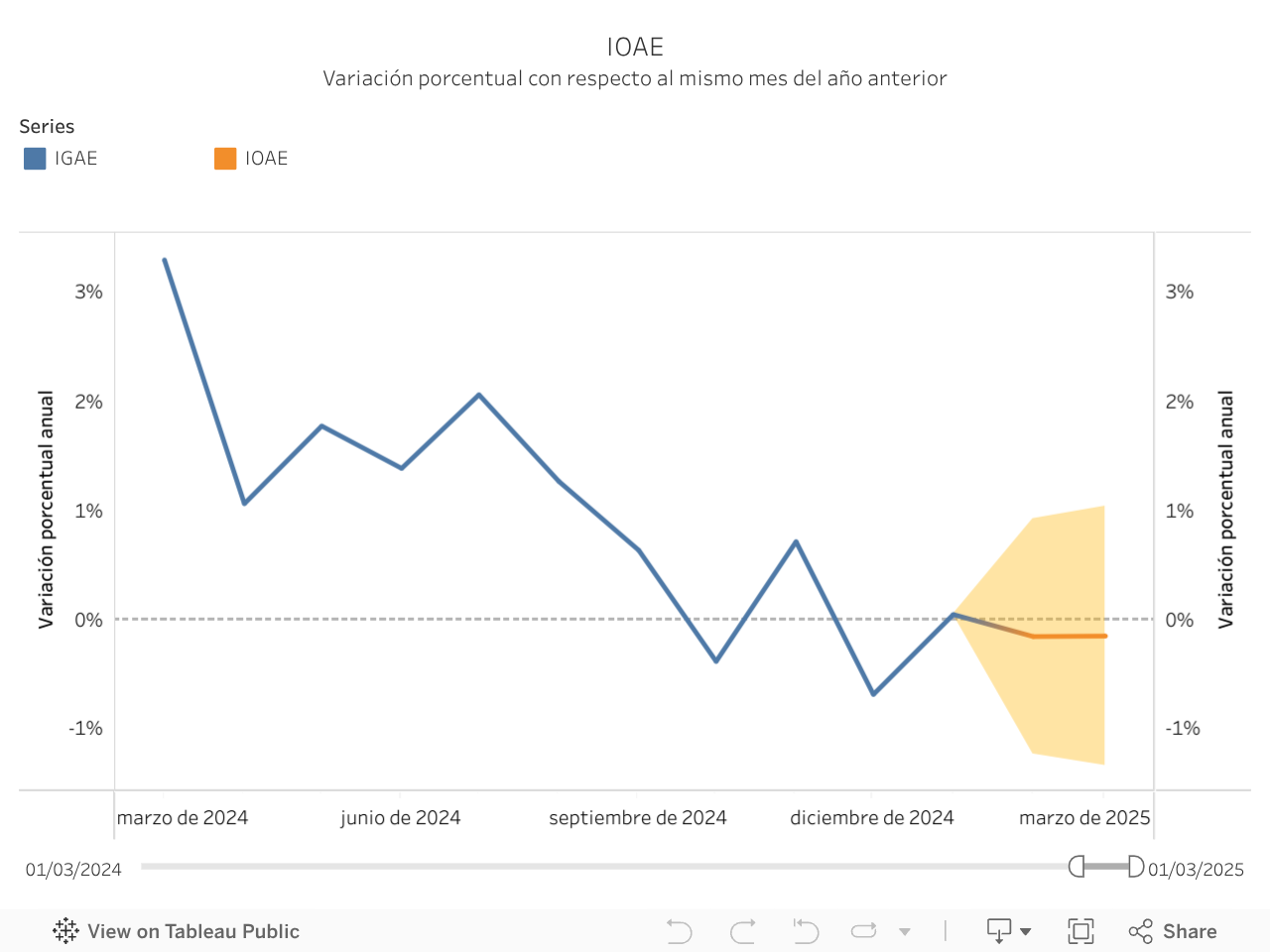
The secondary or manufacturing sector declined 0.3% in annual terms in March and recorded 0% growth compared to February.
The tertiary or services sector grew 0.3% in annual terms in March but contracted 0.1% on a month-over-month basis.
INEGI didn’t release preliminary data for the primary or agricultural sector.
Gabriela Siller, director of economic analysis at Mexican bank Banco Base, said on X that the data indicates that the Mexican economy contracted 0.04% in the first quarter of 2025 compared to the final quarter of last year.
Annual percentage changes to INEGI’s Global Economic Activity Indicator (IGAE), which analyzes monthly growth in Mexico’s primary, secondary and tertiary sectors, between March 2024 and March 2025.
Two consecutive quarters of negative GDP growth are widely considered to be indicative of a recession.
If the Mexican economy were to contract in 2025 — as the IMF is forecasting — it would be the first year of negative growth since 2020, when GDP plunged 8.5% due to the COVID pandemic and associated restrictions.
The Mexican economy grew 1.5% annually in 2024, a significant slowdown compared to a 3.2% expansion in 2023.
By Mexico News Daily chief staff writer Peter Davies (peter.davies@mexiconewsdaily.com)
Oscar-winning "Flow" has grossed more than US $6.3 million in Mexico, making it the film’s most successful territory globally. (Gints Zilbalodis/X)
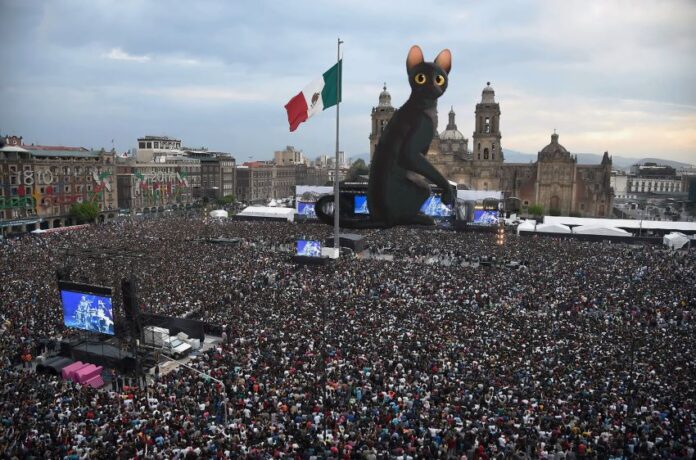
“Flow,” a dialogue-free animated film about a black cat who learns to trust other animals in a rapidly changing environment, has been such a smash hit in Mexico that Latvian filmmaker Gints Zilbalodis will visit Mexico City next week for a special outdoor screening of his film in the Zócalo.
The event, organized by Cine Caníbal and the city’s Ministry of Culture, marks a gesture of gratitude to Mexican audiences, who have embraced the 84-minute film — which won best animated feature at both the Academy Awards and Golden Globes this year — with rare enthusiasm.
New Flow trailer! Out now on @StreamOnMax It’s absolutely insane to see these quotes from filmmakers who’s work has shaped me, saying nice things about Flow! 🥹 https://t.co/K3wOEVd1Pb
The Zócalo screening will be able to accommodate up to 200,000 people, officials said.
“Flow,” an independent Latvian-Belgian-French film that also won the 2025 Film Independent Spirit Award for best international film, has grossed more than US $6.3 million in Mexico, making it the film’s most successful territory globally.
“Flow” opened in Mexico on New Year’s Day 2025, with a wide release across 800 theaters nationwide, marking its largest launch in any country — an extensive rollout that anticipated the strong support Mexicans would have for the film.
This was based on word-of-mouth (the film had opened two months earlier in the U.S. and Canada) and buzz (it had already received awards on the festival circuit plus a Golden Globe nomination); a universal story that draws on timeless myths such as Noah’s Ark; a lack of dialogue that makes it accessible to all; and Mexican audiences’ having a strong tradition of embracing animal-centric stories with visually rich animation.
The forecast proved to be right: Cinemas showing “Flow” remained busy well after opening weekend, and nearly five months later, the film is still playing at Mexican theaters, including La Cineteca Nacional in CDMX.
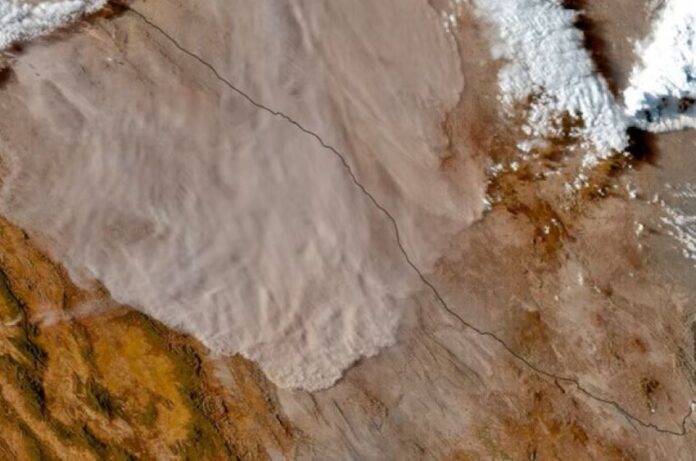
Satellite imagery of the massive dust storm over the Chihuahua Desert. (CIRA)
Time-lapse satellite imagery from the Cooperative Institute for Research in the Atmosphere (CIRA) showed a massive dust storm barreling over northern Mexico between April 19 and 20.
The type of storm, known as a “haboob,” caused hazardous weather conditions throughout the region, prompting authorities to close the Pan-American Highway due to low visibility.
A large dust storm swept through northern Mexico over the weekend. It was so massive that it was clearly visible on satellite. pic.twitter.com/4EX2eQa8AB
This extraordinary phenomenon covered a large part of the central and southern parts of Chihuahua state, affecting at least 15 municipalities, including the border city of Ciudad Juárez. The storm originated in the municipality of Ahumada and quickly spread southward, covering towns, highways and urban areas, until reaching the state capital and surrounding municipalities.
Videos on social media show a gigantic column of dust moving rapidly and covering everything in its path.
Authorities in Chihuahua noted that these types of weather events are common during the summer in desert areas of the state, with varying degrees of intensity. However, Sergio Rodríguez, head of the General Directorate of Civil Protection in Ciudad Juárez, said that there has been no record, at least in the last 15 to 20 years, of a natural phenomenon of this magnitude in the state.
So far, no injuries or significant material damage have been reported.
According to the World Health Organization, a haboob is a large, fast-moving wall of sand and dust driven by strong winds descending from a thunderstorm. The phenomenon typically occurs in arid and semi-arid regions.
Chihuahua, in northwestern Mexico, is known for its arid and extreme weather, with 40% of its territory classified as having a dry climate. The state is home to the Chihuahua Desert, North America’s largest desert. The largest expanse is located in Mexico, including regions of the states of San Luis Potosí, Zacatecas, Coahuila and Durango.
The desert also reaches into the southwestern United States, including parts of Arizona, New Mexico and southern Texas.
The Mexican navy's massive cocaine haul on display. (Semar/X)
The Mexican navy seized 4.2 tonnes of cocaine and arrested five suspects in two operations off the coast of the southwestern state of Guerrero.
The latest seizure brings the total amount of cocaine confiscated since President Claudia Sheinbaum took office on Oct. 1, 2024, to 36 tonnes.
Hoy, #21DeAbril, día en que conmemoramos la hazaña de aquellos cadetes navales que dieron hasta su vida por la patria, con orgullo demostramos que los #MarinosMexicanos mantenemos vivo ese legado de valentía, lealtad y amor por México.
In a press release, the Naval Ministry reported that the first incident occurred after a navy Panther helicopter spotted a “go-fast” boat with five people aboard in the Pacific Ocean.
Navy ships were on the scene quickly, arresting the five men and towing the boat to a navy pier. Marines confiscated 38 packages containing dozens of bricks of a white substance similar to cocaine hydrochloride. The five men and the 1.8 tonnes of contraband were turned over to the Federal Attorney General’s Office (FGR).
In the second incident, a helicopter patrol spotted 64 sacks floating in the waters off the coast of Guerrero. Navy personnel collected the packages, which also contained dozens of bricks of a white-powdered substance totaling 2.4 tonnes.
The contraband was turned over to the FGR, which has opened an investigation.
The navy said the latest seizures are part of the military’s ongoing maritime, air and land surveillance operations “to constrain the actions of criminals and guarantee and maintain the Rule of Law in Mexican waters.”
Government security officials estimate the seizures since Oct. 1 have cost drug cartels roughly 9 billion pesos (US $459 million).