Lake Texcoco will join 63 other Ecohydrology Demonstration Sites around the world that are working to protect wetlands.(@UNESCOMexico/X)
The Natural Resources Protection Area (NRPA) of Lake Texcoco in México state has been designated an Ecohydrology Demonstration Site by UNESCO,the first of its kind in Mexico.
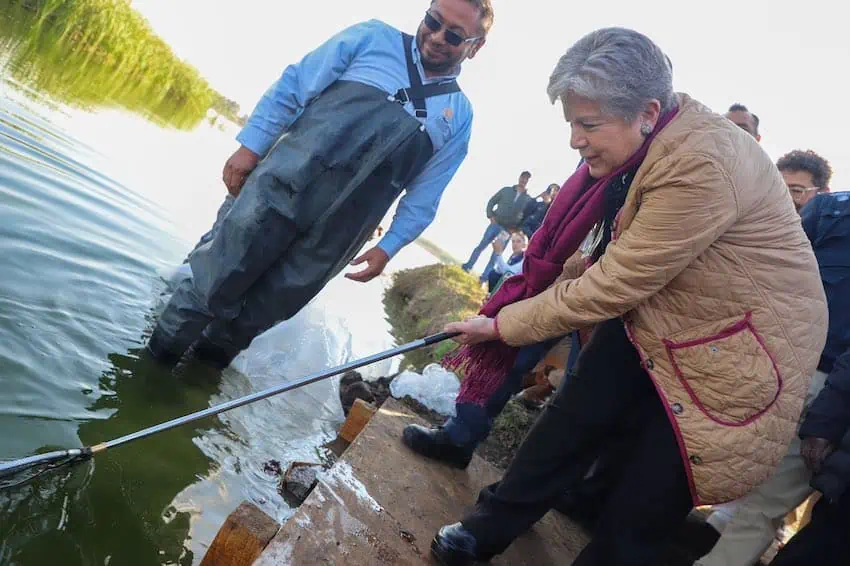
Environment Minister Alicia Bárcena and UNESCO’s representative in Mexico Andrés Morales Arciniegas made the announcement during a visit to the Texcoco Ecological Park marking World Wetlands Day on Feb. 2.
Environment Minister Alicia Bárcena stressed the importance of collaboration between the Valley of Mexico’s communities and the government to improve water quality, biodiversity and ecosystems. (@SEMARNAT_mx/X)
The designation recognizes natural sites globally where sustainable activities are underway to support ecological recovery.
“Our great crusade at the Environment Ministry (Semarnat) is the recovery of wetlands and the recovery of mangroves, these are the two ecosystems that we think are very important to protect, to restore, because they are places where life, species, mangroves [thrive],” said Bárcena in a speech.
Lake Texcoco, federally designated a Natural Protected Area in 2022, is home to over 250 species of flora, 370 species of fauna and 10 species of fungi and mosses, including some that are categorized as under threat by the International Union for Conservation of Nature (IUCN).
According to Morales, Semarnat has recovered 1,900 hectares of land and 4,000 hectares of water bodies, accounting for nearly 90% of the surrounding Texcoco Ecological Park.
The Texcoco Ecological Park in México state stretches across 14,030 hectares, 10,000 of which are lakebed. (Mario Jasso/Cuartoscuro)
Some measures implemented at Lake Texcoco have been the treatment of water using wetlands, knowledge generation about the availability of water resources and actions to revitalize the lake’s historical and cultural heritage as the largest natural lake in the Valley of Mexico.
In addition, Lake Texcoco was recognized by UNESCO for its ongoing work to strike “a balance between the potential of the ecosystem and social needs.”
During her speech, Bárcena stressed the importance of collaboration between the Valley of Mexico’s communities and the government to improve water quality, biodiversity and ecosystems, as well as mitigate the impacts of climate change.
An attending representative from the Peoples’ Front in Defense of the Earth group said his organization plans to work alongside the government to preserve the area and promote trade and the well-being of nearby communities.
The communities “have done a lot for this struggle to preserve the wetlands from excessive urbanization and to protect this place from that really senseless project by the NAICM, which they wanted to build here. (…) I believe that it is time for the water to return to its origin and that is why we have a vision that wants to combat this extractivist and predatory vision,” said Bárcena.
According to UNESCO, 64% of the world’s wetlands have already disappeared. Lake Texcoco will join 63 other Ecohydrology Demonstration Sites around the world that are working to restore wetlands.
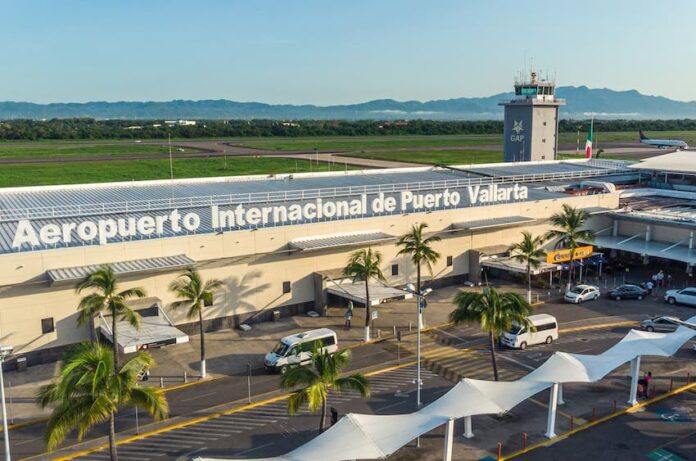
Approximately one-third of the investment will finance a new 74,000-square-meter terminal at Puerto Vallarta International Airport and expansions at Tijuana and Los Cabos. (@EsDeVoladaMX/X)
Mexico’s Grupo Aeroportuario del Pacífico (GAP) — Pacific Airport Group — reiterated on Tuesday that it will make a record investment of 52 billion pesos (US $2.54 billion) over the next five years to modernize and expand its 12 airports in the central and western parts of the country.
The plan, a 20% increase from an initial proposal, is the largest in GAP’s history, the company noted while formally presenting its Master Development Plan for 2025 to 2029.
🏗️✈️En los próximos 5 años, @Aeropuerto_GDL vivirá una transformación sin precedentes:
— Grupo Aeroportuario del Pacífico (@aeropuertosGAP) February 12, 2025
Initially announced last Augustand already approved by the corresponding federal authorities, the plan calls for a five-year spending total equal to GAP’s entire investments over the previous 20 years, CEO Raúl Revuelta Musalem said.
GAP operates airports that serve the metropolitan areas of Guadalajara and Tijuana; the medium-sized cities of Morelia, Hermosillo, Los Mochis, Aguascalientes, León and Mexicali; and the tourist destinations of Puerto Vallarta, La Paz, Los Cabos and Manzanillo.
According to reports, nearly 50% of the investment will fund a new 69,000-square-meter terminal at Guadalajara International Airport, with 32% going toward a new 74,000-square-meter terminal at Puerto Vallarta International Airport and expansions at Tijuana and Los Cabos (San José del Cabo).
“The impact of this investment … goes far beyond mobility,” Laura Diez Barroso, chair of the firm’s board of directors, said in a statement. “Airports generate jobs, strengthen economies and facilitate trade with the world.”
GAP operates the airports serving Mexico’s Bajío and Pacific coast states. (@aeropuertosGAP/X)
According to the company, the Guadalajara terminal expansion will increase infrastructure by 73% and include a new access road; and in Puerto Vallarta, the investment in a new terminal will double the airport’s capacity and will feature an elevated walkway to the main access road to ease traffic.
Tijuana’s terminal will expand by 47%, adding a new boarding area with seven apron positions, while Los Cabos’ Terminal 2 will grow by 32% with improvements to its road system, the company said.
Revuelta called the plan “truly aggressive” and said the capital demonstrates “GAP’s commitment to investing in Mexico” despite “a lot of political noise, particularly with the United States.”
Overall, the upgrades will result in a 50% increase in terminal capacity, a 45% increase in inspection points and a 25% expansion of aircraft platforms, GAP noted.
The company has issued 6 billion pesos (US $293 million) in long-term bonds to finance the plan and expects to seek more funds later this year. GAP’s shares on the New York Stock Exchange rose 9.34% over the past 40 days, closing at US $195.41 on Feb. 11, after starting the year at US $178.10.
Also, GAP confirmed its bid for the Turks and Caicos airport, with a decision expected by the end of the month. The group also operates the Kingston and Montego Bay airports in Jamaica.
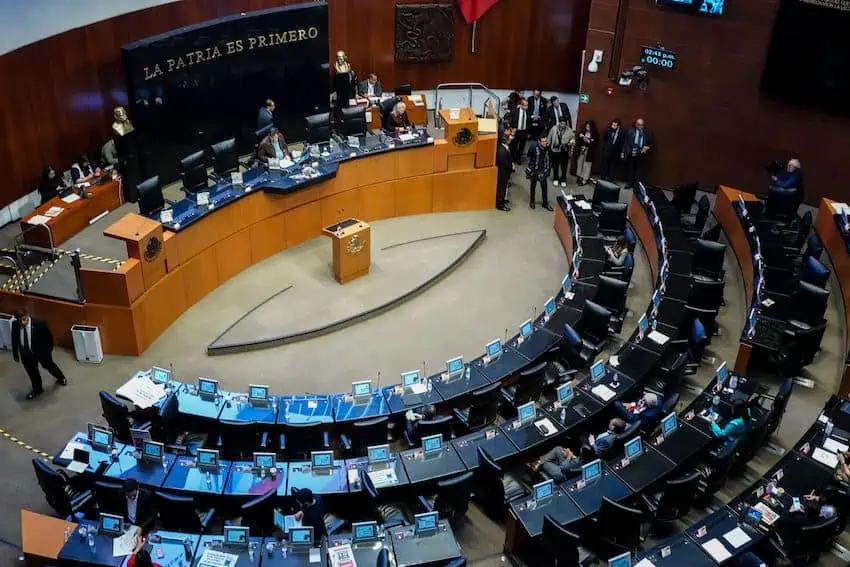
During Tuesday's Senate session, Téllez accused Sheinbaum of making up "excuses" and "pretexts" to oppose cooperation with the United States to combat cartels in Mexico. (Galo Cañas/Cuartoscuro)
Should Mexico allow the United States military to come into the country to combat violent drug cartels?
National Action Party (PAN) Senator Lily Téllez, for one, is in favor of the idea.
PAN Senator Lilly Téllez made her case during the senate vote to authorize the arrival of 10 U.S. soldiers to provide training to Mexican marines. (Galo Cañas/Cuartoscuro)
“… It’s a practice that has occurred and which always reminds us that there can be cooperation between both military forces, those of the United States and those of Mexico,” Téllez said.
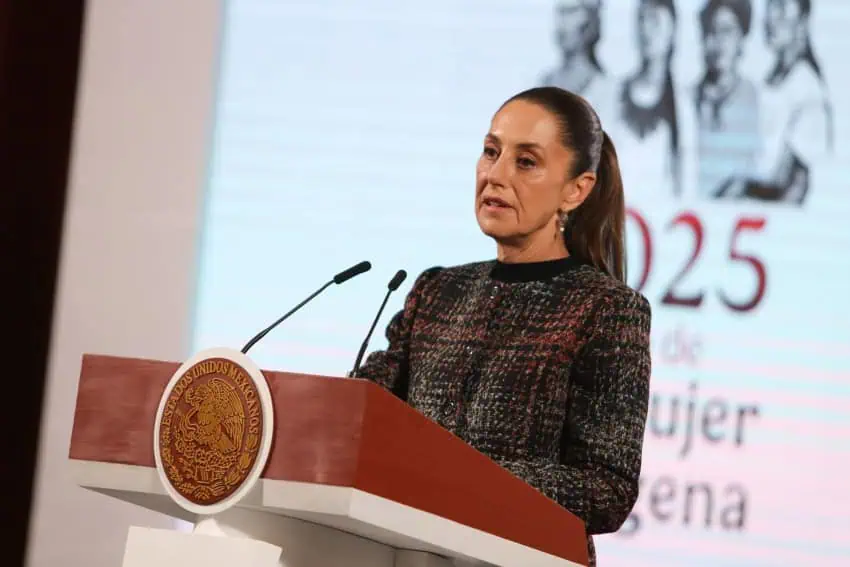
Sheinbaum has stressed that Mexico is willing to collaborate with the United States on security issues, but asserts that it will do so as an equal partner and not accept subordination. She is staunchly opposed to the use of the United States military on Mexican soil to combat Mexican cartels, an idea to which U.S. President Donald Trump, and people close to him, have expressed openness.
President Sheinbaum is opposed to “any attempt at interference in our territory” — i.e. U.S. military action against Mexican cartels on Mexican soil. (Gustavo Alberto/Cuartoscuro)
Téllez, in remarks clearly directed at Sheinbaum, said that the entry of United States forces to Mexico to “cooperate” with Mexicans on training exercises doesn’t amount to an “invasion” or a violation of Mexico’s sovereignty.
“The homeland wasn’t sold, the homeland wasn’t subjugated because constantly there is this cooperation between United States forces and Mexican forces,” she said.
“Why then not accept the cooperation of the United States to act against the cartels in Mexico?” Téllez asked.
“Why not accept it under an agreement of cooperation within a legal framework as is happening, and as has happened during all these years when these kinds of [training] exercises that we authorized today are carried out?”
The senator asserted that Mexico is incapable of combating powerful criminal organizations, such as the Jalisco New Generation Cartel and the Sinaloa Cartel, on its own.
“The reality is that the Mexican state can’t combat the cartels because if the Mexican state were able to combat the cartels, it would have already done it, right?” Téllez said.
In the second half of her Senate floor speech, Téllez said that cooperation with the United States to combat cartels in Mexico “could save the lives of Mexicans” that the ruling Morena party “has left defenseless in the face of organized crime’s war against citizens.”
“… If it is clear that there can be cooperation without subjugation, why doesn’t Morena want it?” asked the senator, who defected from Morena to PAN — Mexico’s largest opposition party — in 2020.
“It doesn’t want it because the President Claudia, the secretary of AMLO, is protecting his narco-state. The cartels are partners of Morena, to them they owe their arrival and continued presence in power,” Téllez claimed.
In the aftermath of cartel boss “El Mayo” Zambada’s 2024 arrest in the United States, Sinaloa residents have been caught in the middle of a cartel power struggle. (Cuartoscuro)
With those words, she echoed the view expressed by the White House in a Feb. 1 fact sheet on the tariffs Trump planned to impose on Mexican exports to the United States last week, but agreed to pause for one month after Sheinbaum committed to deploying 10,000 National Guard troops to the northern border.
“The Mexican drug trafficking organizations have an intolerable alliance with the government of Mexico,” said the White House, which also asserted that the Mexican government has “afforded safe havens for the cartels to engage in the manufacturing and transportation of dangerous narcotics.”
Sheinbaum unsurprisingly rejected the White House’s claims, describing them as “libel.”
In the same social media post, the president also said that the Mexican government is opposed to “any attempt at interference in our territory” — i.e. U.S. military action against Mexican cartels on Mexican soil.
Téllez accused Sheinbaum of making up “excuses” and “pretexts” to oppose cooperation with the United States to combat cartels in Mexico, and asserted that Morena puts the interests of “its criminal partners” ahead of those of ordinary Mexicans.
“In fact, there is a global scandal because the government of Sheinbaum colludes with organized crime,” she said.
“And there is some background to this. The dictator of Colombia, the guerrilla Gustavo Petro, [the current Colombian president] said that Sheinbaum was a member of the M-19 guerrilla group. … That’s why Sheinbaum now doesn’t want to act against cartels,” she said.
“… This narco-government represents the greatest threat to citizens in the history of Mexico,” Téllez asserted.
For its part, the Sheinbaum administration frequently emphasizes its commitment to combating cartels and their criminal activities.
Security Minister Omar García Harfuch told reporters on Tuesday that 11,600 people have been arrested for “high-impact crimes” since the new government took office on Oct. 1, while over 100 tonnes of drugs and more than 5,000 firearms have been seized.
Sheinbaum herself noted on Tuesday that last month was the least violent January in eight years in terms of homicides. She also highlighted that murders declined 12% in January compared to the month before she took office.
“We’re going to keep working every day to build peace and security in our country,” Sheinbaum said.
Buttermilk, move over. It's time to improvise. (Lucas Andrade/Unsplash)
Buttermilk is dead in Mexico. You won’t find it. You can beg for it, bribe someone for it, describe it in your best Spanish — no dice. The cows don’t make it. The people don’t drink it. If you mention it, someone will hand you a cold bottle of Yakult and pat you on the shoulder like you’re lost. This could, then, be a bit of a challenge when it comes to making yourself a delicious batch of Mexican Fried Chicken.
So what do you do? Give up? Move back to Kentucky? Cry into a bowl of dry flour? No. You adapt. Because Mexico, bless its heart, has all the pieces of fried chicken greatness. Just different ones.
Instead of buttermilk, you take crema — thicker, richer, as if sour cream decided to get fancy. Instead of chalkboard tasting paprika, you grab dried chiles that could light your eyebrows on fire if you’re not careful. And honey? Mexican honey tastes so fresh compared to the US and I believe it’s usually more locally sourced.
The chicken still fries up golden and crunchy. Still makes you forget your problems for at least fifteen glorious minutes. Turns out, you don’t need buttermilk. You need ingredients that make sense where you are. Kentucky isn’t Mexico. Mexico isn’t Kentucky. And that’s the whole damn point. Next time I tell a taxi that I’m from Kentucky and he says “oh, KFC”, I’m going to tell him about this recipe, like a Johnny Appleseed but for fried chicken.
To eat this way is to admit a simple truth: you cannot force what is missing. You work with what you have. You do not bring buttermilk to Mexico. You bring patience, curiosity, and the willingness to taste. In return, you are given a meal that belongs fully to its place — where the land, not nostalgia, sets the table.
Mexican-Style Fried Chicken with Chile Seco Honey Glaze
The author is from Kentucky, so please, trust him to know about fried chicken. (Canva)
Ingredients
For the Chicken Marinade:
2 lbs chicken (legs, thighs, wings, or breast)
1 cup Mexican crema (or plain yogurt for extra tang)
3 cloves garlic (minced)
1 tbsp lime juice
1 tsp cumin
1 tsp Mexican oregano
1 tsp salt
½ tsp black pepper
For the Coating:
1 ½ cups all-purpose flour
½ cup cornstarch (for extra crunch)
1 tbsp chili powder (I usually use a blend of at least 4 chilies)
1 tsp salt
1 tsp garlic powder
For Frying:
2 cups neutral oil (vegetable, canola, or avocado oil)
Chile Seco Honey Glaze (Optional but Epic):
1 part chili seco
1 part honey
1 part lime juice
Salt to taste
Instructions
1. Marinate the Chicken (at Least 1 Hour)
In a large bowl, mix Mexican crema, garlic, lime juice, cumin, oregano, salt, and black pepper.
Coat the chicken in this marinade and refrigerate for at least 1 hour (or overnight for best flavor).
2. Make the Coating
In another bowl, mix flour, cornstarch, chili powder, salt, garlic powder, and cayenne.
3. Coat and Rest
Remove chicken from marinade, letting excess drip off.
Dredge each piece in the seasoned flour mix, pressing firmly to coat well.
Let it sit for 10 minutes before frying (this helps the coating stick).
4. Fry to Crispy Perfection
Heat oil in a deep pan to 350°F (175°C).
Fry chicken in batches for 6-8 minutes per side (or until golden brown & internal temp hits 165°F).
Place on a wire rack to drain.
5. Make the Chile Seco Honey Glaze (Optional but Fire)
Mix chili seco, honey, lime juice, salt
Heat for 1-2 minutes until well combined.
Brush it over the fried chicken or serve as a dip.
Serve With:
Lime wedges
Pickled jalapeños
Warm corn tortillas
Creamy chipotle mayo
Stephen Randall has lived in Mexico since 2018 by way of Kentucky, and before that, Germany. He’s an enthusiastic amateur chef who takes inspiration from many different cuisines, with favorites including Mexican and Mediterranean.
From historical affairs to modern-day stories of learning to love again, digital streaming platforms have everything you'll need for a night in this Valentines Day. (Amazon Prime Video)
Ah, Valentine’s Day — one of the oldest and most celebrated traditions in the world. No matter what phase of life you’re in — whether you’re single, married, in love, or a little frustrated — the day of love and friendship is the perfect occasion to unwind, curl up on the couch, and revel in some very Mexican stories about relationships and their challenges. Let’s face it: There’s nothing like immersing ourselves in an intense fictional romance and accompanying lovers through their immense joys and delicate misadventures. After all, we are all human, and we can all empathize to some degree with the vibrant emotions conveyed by these series. If they’re Mexican valentines Netflix shows, well, that’s even better.
From the classic boy-meets-girl storyline to the various forms of modern relationships, the following selection of Mexican romance series has something for everyone. Here are our favorites and where you can watch them.
Como Agua para Chocolate (2024)
Como Agua Para Chocolate | Trailer Oficial | Max
For fans of heartbreak, culinary delights, and magical realism, this Mexican melodrama is a must-see. Based on Laura Esquivel’s bestselling novel of the same name — previously adapted for film, theater, and even ballet — and produced by the ever-talented Salma Hayek, Max’s Como Agua para Chocolate reimagines the passionate and turbulent romance between Tita de la Garza (Azul Guaita) and Pedro Múzquiz (Andrés Baida).
Set in early 1900s Mexico, the story follows Tita, the youngest daughter of the De la Garza family, whose romantic fate is derailed by a suffocating family tradition that forces her to remain single and care for her ruthless mother, Mamá Elena. Nevertheless, Tita takes refuge in the kitchen, where her magical recipes allow her to rebel against cruelty and express her repressed emotions.
What would happen if you lost the love of your life? This is the heartbreaking question at the center of Amazon Prime Video’s romantic series Ahora Que No Estás. Starring Erik Hayser and Ana Serradilla, this story delves into love, marriage, hope, and overcoming grief.
Consumed by the loss of his wife, Javi (Hayser) struggles to find his way out of the darkness. He rarely leaves the house, sleeps irregularly, and has lost the desire to reengage with life. His routine is disrupted when he receives an unexpected letter from Mia, his late wife. In it, Mia urges Javi to meet five specific women who will help him regain faith in life and love. Over the course of seven episodes, and not without setbacks, Javi embarks on a journey of self-discovery and healing, breaking down the emotional walls he has built around himself.
Despite its undeniably bittersweet tone, Ahora Que No Estás offers plenty to fans of emotional, heartfelt stories.
El Niñero (2023)
El niñero | Tráiler oficial | Netflix
If you’re looking for a series that combines passionate romance with laugh-out-loud moments, El Niñero (The Manny) on Netflix is a must-watch. Created by Carolina Rivera, this series follows the love story between ambitious executive Jimena Lemus (Sandra Echeverría) and her charming and charismatic male nanny, Gabriel Padilla (Iván Amozurrutia).
When El Niñero premiered in 2023, it captivated audiences with its heartwarming and humorous take on modern family dynamics. The first season follows Jimena as she struggles to balance her career and personal life. With three witty children to care for, a looming divorce, and a contentious family business, Jimena has her hands full and reluctantly hires Gabriel, a quirky rancher-turned-nanny. As Gabriel brings order to her home, it becomes clear that they are meant for each other, leading to an irresistible romance.
With 10 episodes in its first season and eight in its second, the series doesn’t shy away from tackling complex topics such as gender roles, the impact of divorce on families, and the costs of career ambition. El Niñero delivers magnetic chemistry between its protagonists and plenty of heartwarming, emotionally resonant moments.
De Brutas, Nada (2019)
De Brutas, Nada - Tráiler Oficial | Amazon Prime Video
Amazon Prime Video’s original series De Brutas, Nada is a must-watch for fans of romantic comedies. Centered on modern relationships, class disparities, emotional barriers, and second chances, this series offers a fresh and engaging take on love.
Inspired by Isabela Santodomingo’s 2006 bestseller “Los Caballeros las Prefieren Brutas” and directed by Rafael Lara, the series follows Cristina (Tessa Ía), whose world falls apart when she discovers her fiancé’s infidelity. Devastated and facing high rent, Cristina needs a roommate — but she insists it can’t be a heterosexual man. Enter Alejandro (Christian Vázquez), a struggling writer who, desperate for a place to live, pretends to be gay to secure the room. What starts as an unexpected friendship soon blossoms into a heartfelt love story.
For those looking for a sentimental, entertaining, and slightly bittersweet journey, De Brutas, Nada is an excellent choice. With three seasons available, it’s a perfect pick for Valentine’s Day.
Whether you’re in the mood for a tearjerking drama, a heartwarming romance, or a delightful romantic comedy, these Mexican series offer something for every taste. So, grab your favorite snacks, settle in, and enjoy these love-filled stories this Valentine’s Day.
Carolina Alvarado is a Venezuelan journalist and has devoted much of her career to creative writing, university teaching and social work. She has been published in Lady Science, Latina Media, Global Comment, Psiquide, Cinetopic, Get me Giddy and Reader’s Digest, among others.
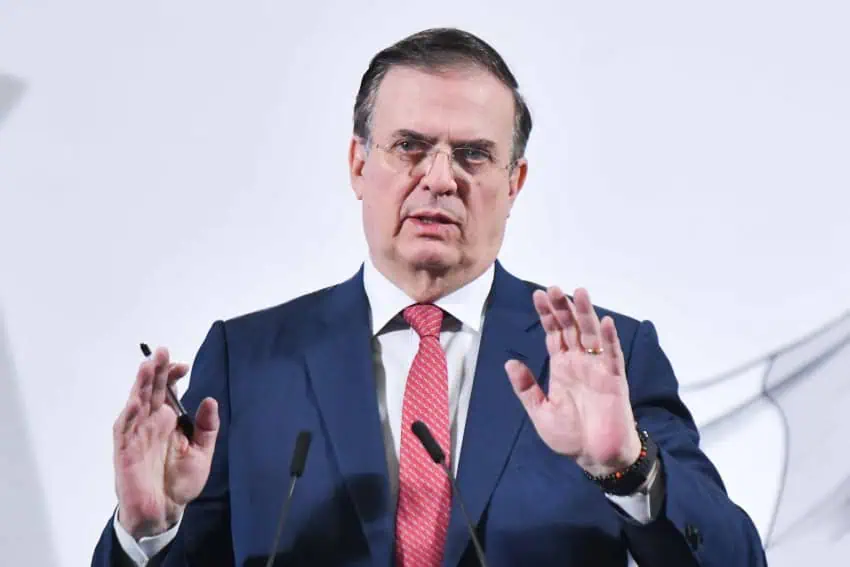
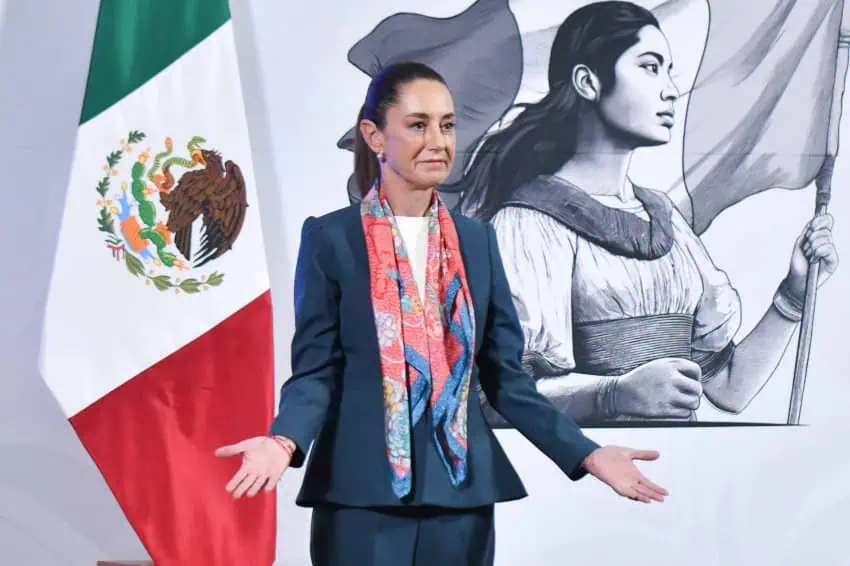
While her Economic Minister Marcelo Ebrard pointed out the poor logica of the U.S. imposing tariffs, at her press conference Tuesday, President Claudia Sheinbaum reminded reporters that tariffs on Mexico violate the US-Mexico-Canada free trade pact. (Photos by Mario Jasso/Cuartoscuro)
United States President Donald Trump announced the tariffs on Monday, saying they would be imposed “without exceptions or exemptions.”
Economy Minister Marcelo Ebrard’s argument against aluminum and steel tariffs focused on the fact that the U.S. has a trade surplus with Mexico in those metals.
They are scheduled to take effect on March 12.
The argument presented by Ebrard focused on the fact that Mexico imports more steel and aluminum from the United States than it exports to its northern neighbor.
Sheinbaum said it was pointless for the United States to impose tariffs on Mexican steel and aluminum when it has a surplus with Mexico on the bilateral trade of those metals.
Among other issues, the president also spoke about homicide statistics and her administration’s security strategy. Her remarks came after high-ranking security officials presented the government’s fortnightly security update.
Sheinbaum: Mexico’s argument against US steel tariffs is ‘very strong’
Sheinbaum said that the imposition of tariffs on Mexican steel and aluminum would be a violation of the USMCA free trade pact and noted that there are “mechanisms — panels and other schemes” that Mexico can use to express its opposition to such duties.
Sheinbaum said that the argument that imposing steel and aluminum tariffs on Mexico would be pointless is one that Ebrard would be stressing in discussions with the U.S. secretary of commerce.
She stressed that the tariffs are not due to take effect until March 12, giving Mexico time to present its case against them.
“And as Minister Marcelo Ebrard rightly points out, … the United States exports more steel and aluminum [to Mexico] than it imports [from Mexico]. So there is no deficit for the United States,” Sheinbaum said.
“… This is a very strong argument, which Minister Ebrard will set out in the different meetings he will have with the [U.S.] secretary of commerce,” she said.
“… It’s a very important argument to say that there is no point putting tariffs on the steel and aluminum the United States imports from Mexico,” Sheinbaum said.
Given that the United States had a US $6.9 billion surplus with Mexico on steel and aluminum trade in 2024, reciprocal Mexican tariffs on imports of those metals from the U.S. would have a larger economic impact than U.S. tariffs on imports from Mexico.
Sheinbaum didn’t say how Mexico would respond to the 25% tariffs if and when they take effect, emphasizing the need to wait and see what happens.
Last month was the least violent January in 8 years
According to data presented by Marcela Figueroa Franco, head of the National Public Security System, last month was the least violent January in terms of homicides since 2018.
She noted that there was an average of 76.5 homicides per day last month, a reduction of 17.4% compared to January 2019, the first month of former president Andrés Manuel López Obrador’s first full year in office.
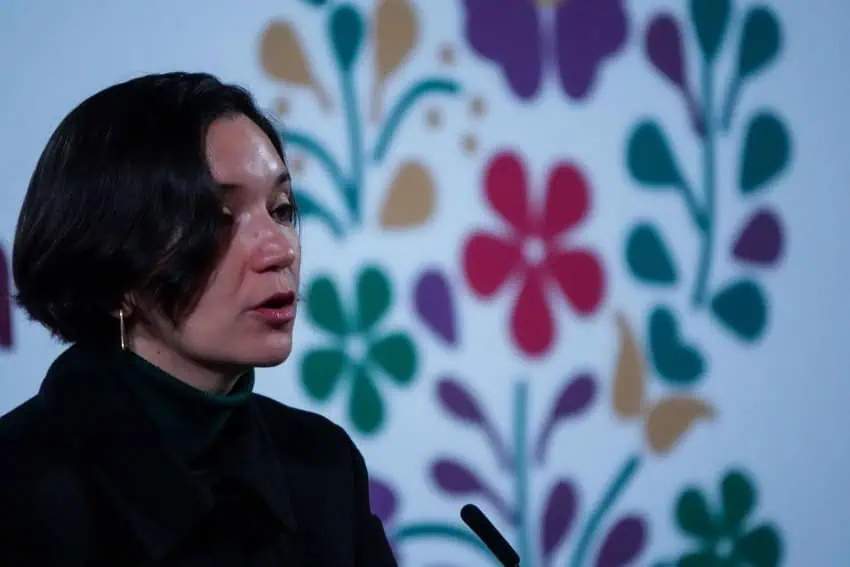
Marcela Figueroa Franco, head of Mexico’s National Public Security System. (File photo by Galo Cañas Rodríguez/Cuartoscuro)
Figueroa also reported that there were 12% fewer homicides in January than in September, the final month of López Obrador’s presidency.
Sheinbaum attributed the decline in murders to the commitment of her government and the implementation of its security strategy.
“We work every day. Now there is a lot of coordination between the Defense Ministry, the Navy Ministry, the Security Ministry, the state governments … and the Federal Attorney General’s Office,” she said.
“And this has allowed us to make progress with the strategy that we put forward, which [consists of] attention to the causes [of crime], the … strengthening of the National Guard, [and increased] intelligence and investigation,” Sheinbaum said.
“… This has enabled a reduction [in violence], it’s important to point it out. There is a 12% reduction in homicides in four months, and January of 2025 was the January with the lowest number of homicides in at least eight years,” she said.
“… And as I have said, we’re going to keep working every day to build peace and security in our country,” Sheinbaum said.
More than 11,000 people arrested for ‘high-impact crimes’ since Sheinbaum took office
Security Minister Omar García Harfuch provided an update on arrests, drug busts and seizures of weapons. He told reporters that since Sheinbaum took office on Oct. 1, authorities have:
Arrested 11,600 people for “high-impact crimes” such as murder, kidnapping, armed robbery and extortion.
Mexico did worse on Transparency International's 2024 Corruption Perceptions Index than it has ever done. (Shutterstock)
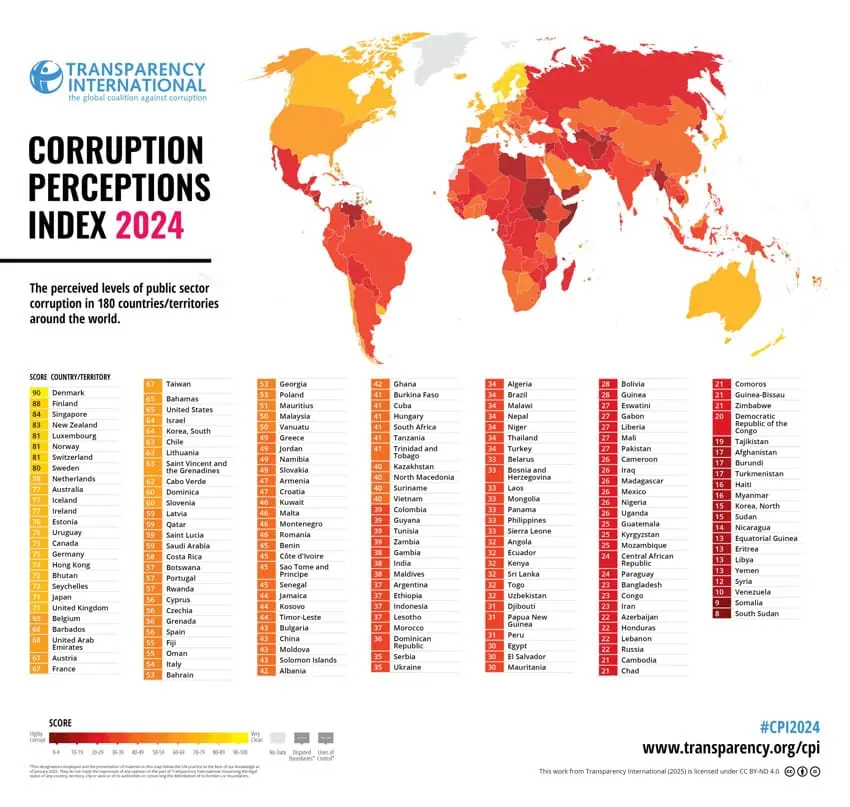
Mexico recorded its worst score ever on Transparency International’s latest Corruption Perceptions Index (CPI) and in so doing fell 14 spots to a ranking of 140 out of 180 nations surveyed.
Transparency International released its annual CPI survey on Tuesday, based on interviews of financial risk analysts, businessmen and academics, plus 13 different corruption surveys and assessments, as well as data sources that included the World Bank and the World Economic Forum.
With a score of 26 out of a possible 100, Mexico fared worse than many other Latin American nations. (Transparency International)
The survey refers to the 2024 calendar year featuring the final nine months of former president Andrés Manuel López Obrador’s six-year term and the first three months of the current Claudia Sheinbaum administration.
The findings suggest that López Obrador’s Inauguration Day promise to end corruption and improve its CPI ranking went unfulfilled. Not only did Mexico tumble in the rankings this year (to two spots below where it stood when López Obrador took office), but its points total also fell under 30 for the first time since 2019.
The report also cited a lack of accountability related to government audits that find discrepancies, and a rise in corruption cases linking state governments to organized crime.
Other findings reveal that 44% of those surveyed believed corruption in Mexico increased in 2024. Another 34% admitted that they had acquiesced to a payoff or bribe request from a public employee during the same time period.
Earning 26 out of a possible 100 points, Mexico fared poorly in comparison to its principal economic competitors in Latin America, namely Brazil and Chile. Brazil, with a score of 34, ranks No. 107, while Chile’s 63 points has it perched at No. 32.
Former Mexican president Andrés Manuel López Obrador promised to rid Mexico of corruption — and sometimes declared that corruption in Mexico had been eliminated. However, the businessmen, analysts and academics Transparency International surveyed did not agree. (Galo Cañas/Cuartoscuro)
Mexico also sits in last place among the 38 nations in the Organization for Economic Cooperation and Development and graded better than only Russia among the G20 nations.
From streetside shopping to fresh pastries, Mexico News Daily has found everything you'll ever need. (Andrea Murcia/Cuartoscuro)
I’m at the age where I can finally admit it without feeling embarrassed: I love shopping.
For years I’ve tried to act nonchalant about it, as it doesn’t pair well with my thoughtful intellectual-hippie presentation. But it’s true: I never leave a museum without first visiting the gift shop. I even enjoy grocery shopping. It’s a fleeting feeling, but I crave that satisfaction of finding exactly what I need, a satisfying end to a simple treasure hunt.
Not Sarah DeVries in Costco. (Freepik)
On my recent trip to Texas, I was — as always — mesmerized by the sheer quantity of stuff available for purchase. Walmart and HEB may as well be theme parks as far as I’m concerned. How was it possible to have so many distinct products? At one point in Target, a man asked me if I knew if a mystery bottle in the fabric shampoo aisle had fabric softener. “I am so sorry man,” I had to reply. “I have no idea. I’ve been living out of the country for so long I don’t know what half this stuff is.”
If you’ve lived in Mexico for long as a foreigner, you’ll know that shopping here is just not the same as it is in the U.S. or Canada. Actually, maybe it is in areas more heavily populated with foreigners, which I can’t really speak to. But where I live in Xalapa, there’s still quite a bit of specialty shop schlepping to be done to get everything on your list.
So, where to begin? Let’s go to largest and most well known to most obscure.
Warehouse clubs
So big, so familiar, so full of people all the time.As Mexico’s middle class grows, people’s shopping habits change. What that translates to is Costco being completely packed 100% of the time — at least in Xalapa and Veracruz.
If you want these, you’d better be prepared to fight the crowds. (Costco Mexico/Facebook)
At Costco and Sam’s, which is less popular and for some reason grimier, you can get many of the same things that you can in the United States. You can’t necessarily get exactly the same things though, unless they’re store brand. I often find that once I find something I really like — I’m looking at you, pre-seasoned salmon — it suddenly disappears from the shelves.
Both stores have online sites where you can supposedly shop and order online. In my experience so far, however, most things I want, even when I know they have them in my local store, are marked “unavailable.” Sigh. But if you want to buy in bulk or find American-style big, big furniture, they’re a good bet.
Supermarkets
Chedraui, Soriana, La Comer, Walmart: You can find most “grocery store items” here. If you’re coming from the US or Canada, however, the variety will be much less than you’re used to. Think grocery stores in the mid-1980s it’s about that selection. And if you can’t make it to the grocery store,most tienditas, including chains like Oxxo, have some of the same things at similar prices.
Department stores
Sears is pretty fancy here.Liverpool is also a main go-to in Mexico. Sanborn’s isn’t quite a department store, but it’s a popular chain for books and gifts, and there’s the restaurant, of course. In these places you’ll find much of what you would in other countries. The prices tend to be quite high, because what you’re really paying for is the experience of shopping in a well-lit, clean, climate controlled environmentwith nice bathrooms. If that’s important to you, go wild! Often, I’ll visit these stores just to wander around, and once in a while they’ll have a good sale on.
Feeling fancy? Take a trip back in time to Sears, which is curiously still pretty successful down here. (Wikimedia Commons)
Now it’s time to get a bit further into the weeds with Mexico’smany speciality shops. Where I’m from in the U.S., specialty shops tend to be boutique and expensive, and the marketing leans heavily on the buyer experience. Where I live in Mexico, it’s kind of the opposite. Specialty shops are where the masses go for their everyday needs.
Can you get by without going to any of these places? Sure. But if you want good prices, human interaction and the chance to find exactly what you want, they’re worth exploring!
The pharmacy
There are a few major pharmacy chains in Mexico, as well as some mom and pop places. And while grocery stores have pharmacies, their selection is usually smaller than what you’d find at a regular pharmacy. You don’t need a prescription for much beyond antibiotics and major painkillers. That said, most medicine is kept behind the counter, so you’ll need to ask for what you want. If they don’t have what you need, they may be able to get it from another store the same day!
The bodega
Bodega means “warehouse,” but in Mexico it’s a place where you can get products “a granel,” or by weight. So if you want dried spices, chilis, beans, and even things like pet food and candy, the bodega is where to get it. If you’re wanting to improve your diet, you can find things like chia seeds and flax at great prices, too! And while I couldn’t find unsweetened coconut flakes or dates at the store, I stocked up at the bodega. Typically, an attendant will scoop out and weigh things for you. When you’re done, you just check out!
The market
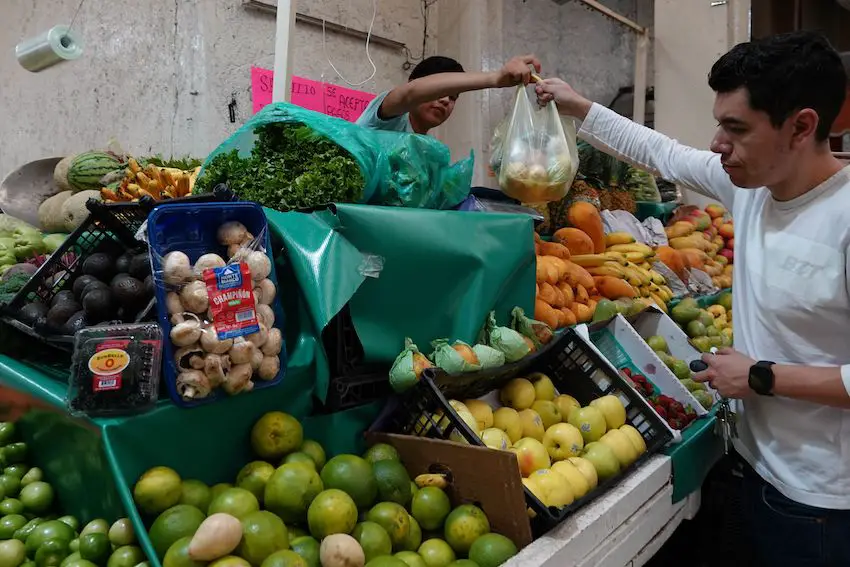
When it comes to fresh produce, local markets can’t be beaten. (Galo Cañas/Cuartoscuro)
The food at the market is not priced super differently than at the grocery store. The advantage, though, is that you have a lot more options. Who has the best peaches at the best prices? Whose green peppers look the biggest and best? You can also find fresh cuts of meat and chicken, as well as delicious varieties of cheese.
Papelerías
School supplies and stationery! Here too, you’ll need to ask for things behind the counter, which in my case meant learning a lot of vocabulary. But they usually have exactly what you need, and it’s fun! Though you can get these kinds of things at grocery stores nowadays, the variety won’t be as wide and things will be more expensive.
Fabric stores and mercerías
If you’re into sewing, Parisina is the main chain for fabric and sewing supplies. If you’re into doing things with yarn, there are actually places just for that, too, and sometimes there’s even a knitting group you can sit and knit with!
Next level: the tianguis
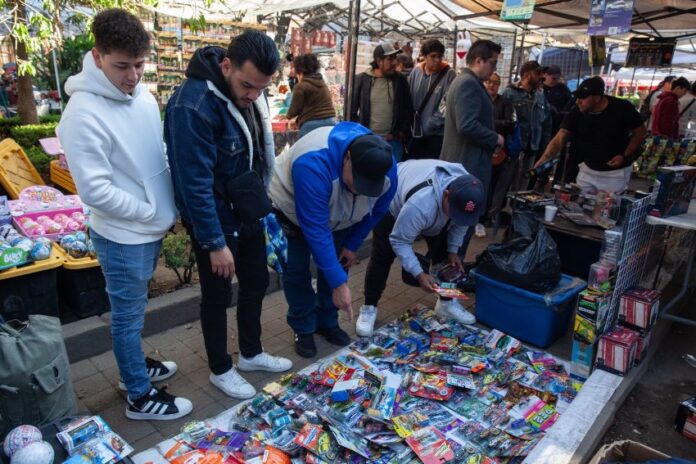
A tianguis is a street market, sometimes that’s only present in a certain spot on specific days, where you can buy things like clothes, toys or shoes. People might sell “ropa de paca” in a tianguis, or have a storefront. Basically, these are clothes that have been brought in bulk from the U.S. to resell here; think of it as a mom-and-pop Ross or TJ Maxx. If you’ve got the patience to dig through the offers, you can find some great deals!
What stores am I missing? Remind me in the comments!
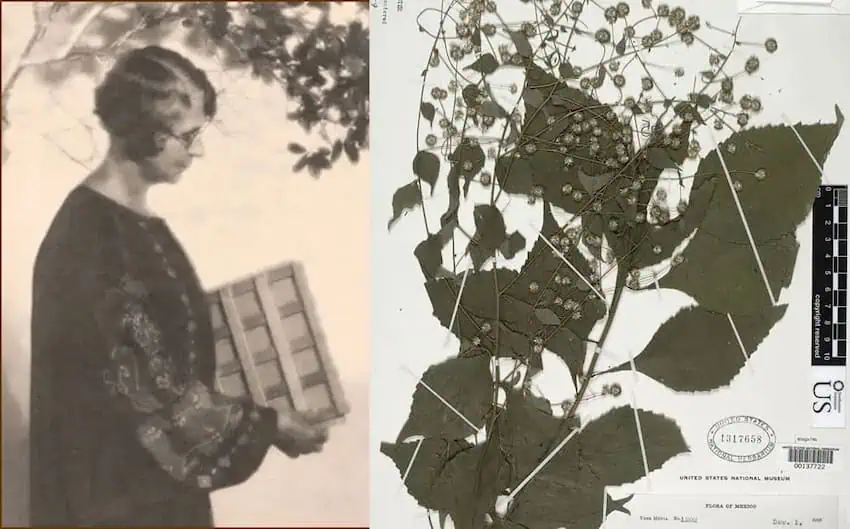
Ynés Mexía might have come to the science of botany late in life, but she made up for it with an incredible sense of adventure. (Mujeres Bacanas)
Feb. 11 is the International Day of Women and Girls in Science, the perfect opportunity to look back at the career of a most remarkable Mexican woman Ynés Enriquetta Julietta Mexía.
Mexía was born in May 1870, in Washington D.C. where her father, Enrique Mexia, was a diplomat. They were a wealthy family of some fame; a grandfather had been a general executed after picking the wrong side in one of Mexico’s numerous revolutions. Neither fame nor money are guarantees of a happy life, however, and her parents divorced while Mexía was still a toddler. Her childhood was spent living with her mother in Texas, but as a teenager she joined her father in Mexico. Little is recorded from this period of her life, but in 1897, at the age of 27, she married a Spanish-German merchant, Herman de Laue.
A photo of Mexía in the field, alongside a specimen of her work. (Smithsonian Institute)
The first indication of Mexía’s drive and organizational skills reveal themselves when she inherited land from her father and opened a pet and poultry stock raising business. The next years were traumatic. Her husband died and she married Augustin Reygados, a man who worked for her and was considerably younger. It did not prove to be a wise choice, for Reygados drove the business into bankruptcy. With her life crumbling, Mexía suffered a mental breakdown and left Mexico to seek medical care in San Francisco. At this point, Ynés Enriquetta Julietta Mexía was a middle-aged widow, separated from her second husband, and struggling with mental health problems. It was at this low point that she found a new purpose in life.
Part of Mexia’s recovery involved filing for divorce, while another factor was joining local hiking clubs. It was on long walks into the mountains that she discovered a passion for plants. Mexía still had the advantage of family money and enrolled in a natural science course at the University of California Berkeley. There she caught the eye of Roxanna Ferris, a recognized expert on the plants of California and Mexico. Ynés was invited to join an expedition that would explore remote regions of Mexico. It is uncertain why she was chosen, but being a Spanish speaker with Mexican nationality may have played a role. Despite the trip ending early when Ynés took a bad fall that required medical attention, the expedition yielded 500 botanical specimens, including several new species, one of which was given the name Mimosa mexiae. Mimosa are a remarkable family of plants with leaves that contract when touched and the newmexiae addition to the family produced a gorgeous purple flower. This was the first of around fifty new species that would be named in Mexia’s honour.
For the rest of her life, Mexía traveled from the northern regions of Alaska to the southern tip of Tierra del Fuego. Though she had a short professional career — only 13 years — she collected a large number of specimens, 145,000 according to the British Natural History Museum, 500 of which were new species. Some of these trips were of considerable length. Her exploration of the Amazon stretched from November 1929 to February 1932 and involved floating down the Amazon on a raft and flying over the Andes in an airplane. An article in the San Francisco Examiner entitled “She Laughs at Jungle Perils” tells of Ynés eating a poisonous berry and then sticking a chicken feather down her throat to make herself sick.
The reward of the Amazon expedition with all its adventures was 60,000 specimens. We need to step back a moment here to think what this means. To stand in the middle of an area of dense forest and to recognise what is of interest — perhaps a different variant of a common plant, or some small scrub that might never previously been recognized — demands a combination of knowledge and instinct.
The Mimosa Mexiae plant. (Asergeev)
Mexía was meticulous in her documentation of the samples she collected, this helped by considerable skill as a photographer. Yet, she was not the complete scientist. She did not study for her PhD, and it was collecting that fascinated her, leaving the follow up work to others. She did not shy from the public spotlight and her lectures such as“Furthest South America,” presented to the University of California, have been described as ´vivid and enlightening´. It was also a reflection on the esteem in which she was held. She was usually the only speaker at such events without the title ‘doctor’ in front of their names.
While we have a detailed log of her expeditions, Ynés Mexia’s personality remains more difficult to decipher. She did not seem to endear herself to people and has been described as spoiled, egoistical, quick tempered and argumentative, yet the evidence for this is poorly documented. The California Academy of Sciences website even claims that she stabbed a UC Berkeley graduate student in the leg after the student teased her while having lunch. Again, there are no details, but as it was over lunch, and there were no criminal charges, it was probably a stab with a piece of cutlery.
Her second marriage to a younger man might demonstrate a moment of infatuation and passion that was a marked deviation from her usual behaviour. It is notable that there is no mention of any romantic attachments after the second divorce. It was not only in her private life that Mexía enjoyed her own company. From very early in her collecting career she preferred to work alone and although her eye for interesting specimens gained her invitations to join expeditions, she seldom seemed to be invited a second time. Her expedition to Ecuador is well documented and offers clues to a side of her nature that could have made her difficult to work with. This trip was in search of her personal Holy Grail of plants, a wax palm that had been described by explorers but never cataloged by scientists. It was a wet, cold trek into one of the most remote places on earth and the way she drove her team of local guides was forceful to the point of fanatical. At one point, when her local guides refused to move, she left them. Whether she was confident they would follow, or just indifferent, is uncertain.
Her closest friend was the botanist Nina Floy Bracelin, who diligently curated the plants Mexía collected. This often involved corresponding with botanists around the world and Bracelin, a woman remembered as a cheerful, friendly person, would have made a better job of this than Mexía would ever have managed. The two women had met as students on a course at the University of California and Bracelin was probably Mexia’s only real friend. The dynamic of their relationship is interesting, for while both women came from similar privileged backgrounds, it was Mexía who held the upper hand. She was the employer and the star of the botanist community. Perhaps they got on so well because ‘Bracie’ could offer friendship without presenting a challenge. Bracelin leaves some of the most insightful comments on Mexía’s personality, that “she loved to travel and to see things and do things, but there had to be a point behind it.” Even here, while praising her friend, Ms. Bracelin seems to be excusing her for some unmentioned abrasiveness.
Mexía has also been immortalized as a Google Doodle. (Google)
In 1938, Mexía was once again away on an expedition, this time to Oaxaca, but had to abort the trip due to illness. On returning to the United States, she was diagnosed with lung cancer and died a month later, at the age of 68. Mexía’s contribution to botany was considerable, particularly for a career that started late and was tragically cut short. Yet her achievements must be measured in more than just the number of specimens she brought to the attention of science. She was also an example of what women were capable of, traveling to remote areas in considerable discomfort and occasional danger. As she said herself, “I don’t think there’s any place in the world where a woman can’t venture alone.” It was this example that is perhaps her greatest legacy.
Bob Pateman is a Mexico-based historian, librarian and a life term hasher. He is editor of On On Magazine, the international history magazine of hashing.
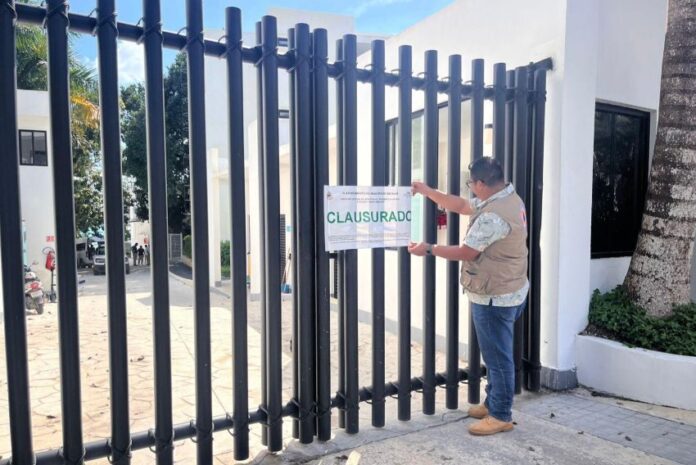
The Cristalino Lagoon Front Hotel Restaurant & Spa has been closed by Bacalar authorities until further notice. (Bacalar city government)
Authorities in the idyllic Quintana Roo vacation spot of Bacalar shut down the 13-month-old Cristalino Lagoon Front Hotel on Monday after the property’s passenger van was accidentally driven into Bacalar Lagoon.
The lagoon-front hotel sits on the shore of Mexico’s second largest freshwater body, also known as the Laguna de los Siete Colores, or Lake of Seven Colors.
La imprudencia al volante en la Laguna de 7 Colores, #Bacalar 🚗🏖️
Una camioneta de turistas sufrió un accidente tras una mala maniobra por parte del conductor.
The white van plunged into the lagoon around midday Monday due to what officials described as the driver’s lack of skill on a ramp near Cenote Esmeralda — a vividly blue sinkhole that seamlessly blends into the lagoon’s turquoise waters.
No injuries were reported, and a crane was used to extract the half-sunken vehicle from the water.
Bacalar authorities eventually determined that the Cristalino Lagoon Front Hotel Restaurant & Spa was operating without the required permits and ordered its immediate closure. It opened in December 2023.
In addition, personnel from various agencies were called to the scene.
“Investigations have been launched to determine the damage caused to the lagoon system, whether due to oil, gasoline or any other substance spill that could have serious effects on the lagoon, which is the municipality’s main natural attraction,” the Bacalar City Council said in a statement.
This is the first recorded incident of a vehicle falling into the lagoon.
The hotel van had to be extracted with a crane. No one inside the van was reported injured. (Ayuntamiento de Bacalar)
The hotel reportedly will remain closed until its legal situation is resolved and officials confirm there are no additional environmental risks.
One of the most picturesque natural wonders in Mexico, Bacalar Lagoon is a popular destination in the southern state of Quintana Roo, near the state capital of Chetumal and the Belize-Mexico border.
Circular in shape and shallow — which allows for comfortable swimming, kayaking and paddleboarding — the lagoon’s serene, mirror-like surface often breathtakingly reflects sunrises and sunsets. The lagoon is renowned for stunning blue gradients, ranging from turquoise to deep navy, due to varying depths and white limestone sediment.